Firefighters are the heroes of our society, protecting us around the clock. But those 24-hour shifts are hard on the body, and even affect our cells.
Almost every cell in the body has a 24-hour biological clock that produces circadian (daily) rhythms. These rhythms regulate behavior (e.g., when to be active and when to rest) and physiology (e.g., blood pressure, blood sugar, muscle function). Circadian rhythms coordinate with the environment in part by regular, timed cycles of light and dark and eating and fasting. Disruptions to these cycles, which can occur with shift work, can impact health, leading to increased risk for obesity, heart disease, diabetes, and cancer.
Scientists from the Salk Institute and UC San Diego Health, in collaboration with the San Diego Fire-Rescue Department, conducted a clinical trial and found that time-restricted eating improved measures of health and wellbeing in firefighters. The lifestyle intervention only required the firefighters to eat during a 10-hour window and did not involve skipping meals.
The new findings may also have implications for shift workers, such as military personnel; health care, food service, and transportation professionals; telecommunications staff; and new parents, whose schedules often mimic shift work when caring for a new baby.
“Doctors and researchers are always thinking about the magic pill that can cure or reduce disease,” says Salk Professor Satchidananda Panda, co-corresponding author of the study and holder of the Rita and Richard Atkinson Chair. “It’s not a pill, but a healthy habit called time-restricted eating that can significantly reduce disease risk without any adverse side effects.”
Nearly 30 percent of Americans are considered shift workers, in which the individual must stay awake for two to three hours between 10:00 p.m. and 5:00 a.m. for at least 50 days a year. Increasing sleep and reducing calorie intake are often difficult, but previous studies have suggested that time-restricted eating (eating only within a certain window of time) may offer a simple behavioral change to improve health.
In this clinical trial, 150 firefighters from the San Diego Fire-Rescue Department used the myCircadianClock app on their phones to track their eating for three months. Half the group ate within a 10-hour window, while the other half (the control group) changed nothing and ate within a 14-hour window. Both groups were encouraged to follow a Mediterranean diet, which is known to have health benefits. The study included both individuals who were healthy and those who were overweight or who had health conditions such as high blood pressure, cholesterol, and/or blood glucose.
The researchers found that time-restricted eating within a 10-hour eating window was feasible without adverse effects and helped the firefighters significantly decrease their VLDL (“bad”) cholesterol size by 1.34 nanometers (small VLDL is less likely to block arteries), improve their mental health, and reduce their alcohol intake by roughly three drinks per week. Time-restricted eating also significantly improved blood sugar and blood pressure in firefighters who had elevated levels at the start of the study. The researchers concluded that time-restricted eating may provide even greater benefit for those at risk for cardiometabolic disease and other chronic diseases.
According to the researchers, these findings can likely be extended to a wider population, including many shift workers and others who experience abnormal sleep-wake patterns.
For more information about the Salk Institute, visit: www.salk.edu
.
Studio S
SEPTEMBER 1, 2026
The Best Gym in San Diego Isn’t Really a Gym Anymore
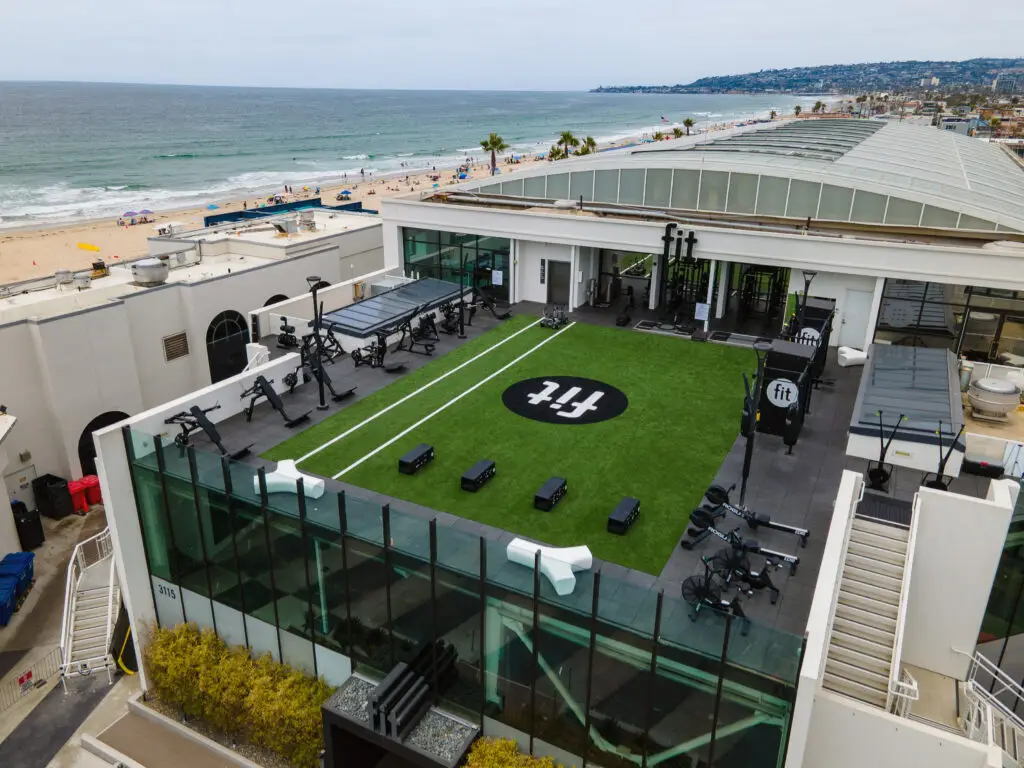
Earlier this year, Fit quietly dropped "athletic" from its brand, from Fit Athletic Clubs to simply Fit, and started calling itself something new: a social wellness club.
There’s a version of San Diego that lives in two extremes. On one side, the 5 a.m. crowd: biohackers, marathoners, people who’ve already logged a cold plunge before your alarm goes off. On the other, the after-dark crowd, the ones chasing sunset happy hours and late dinners with friends. Everyone seems to be either optimizing or unwinding, and most of us feel like we’re failing at both.
Fit, San Diego’s reigning Best Gym for the third year running, has built its entire identity around erasing that divide.
Walk into one of Fit’s three San Diego locations on a Tuesday afternoon and the lines blur fast. Someone’s mid-set on the squat rack. Someone else has a laptop open at a café table a few feet away, half-working, half-people-watching. A group is trading plans for the weekend’s event by the recovery lounge. Nobody’s in a rush to leave.
“We’re not competing for the same people,” says Emily Waybright, Public Relations Manager at Fit, addressing the arrival of a national luxury gym chain in San Diego this year. “We don’t really feel like we’re in the gym category. It’s this unique thing.”
That unique thing has a name now. Earlier this year, Fit quietly dropped “athletic” from its brand, from Fit Athletic Clubs to simply Fit, and started calling itself something new: a social wellness club.
It’s a small wording change with a bigger idea behind it. Fit was never built around escaping the workday. It was built around the people who genuinely like what they do, and who want workouts, work, and friendships to happen in the same place instead of three separate ones. Because sometimes red light therapy with a stranger turns into weekend plans.
Fit’s philosophy traces back to its founder, who started the brand nearly two decades ago after failing to find a gym he actually wanted to belong to. He looked instead to the old-school country club, where people came for a shared interest and stayed for the community. His version was made for a younger generation, minus the golf, plus the loud music.
Which makes it a little ironic that the very award putting Fit back in the spotlight this year is Best Gym.
What does the best traditional gym look like when the definition of a gym is becoming less traditional? It’s a fair question, and Fit’s answer is that the fitness industry itself is shifting. The 45-minutes-in, 45-minutes-out model is giving way to something closer to a genuine third space, the kind of role the office and the bar used to play before remote work and changing nightlife habits rearranged how people spend their time
For Fit, community isn’t a marketing add-on to fitness. It’s the through-line. Members aren’t just paying for a treadmill; they’re paying for an entire day of social wellness that’s built on performance, recovery, connection, and a plan for the next event on the calendar. That’s a much harder membership to walk away from.
Ambition and ease aren’t opposites here, they exist side by side, where passion and play share the same morning. On September 12, Fit is hosting Sol, a full day wellness festival at Fit Social. The morning focuses on wellness classes and vendors and then the evening is a full party with multiple DJ sets and an open bar. Think of it as a kick-off to locals’ summer in San Diego.
Ready to see what a social wellness club actually looks like? Visit fitclubs.com, or follow along at @thefitclubs on Instagram.
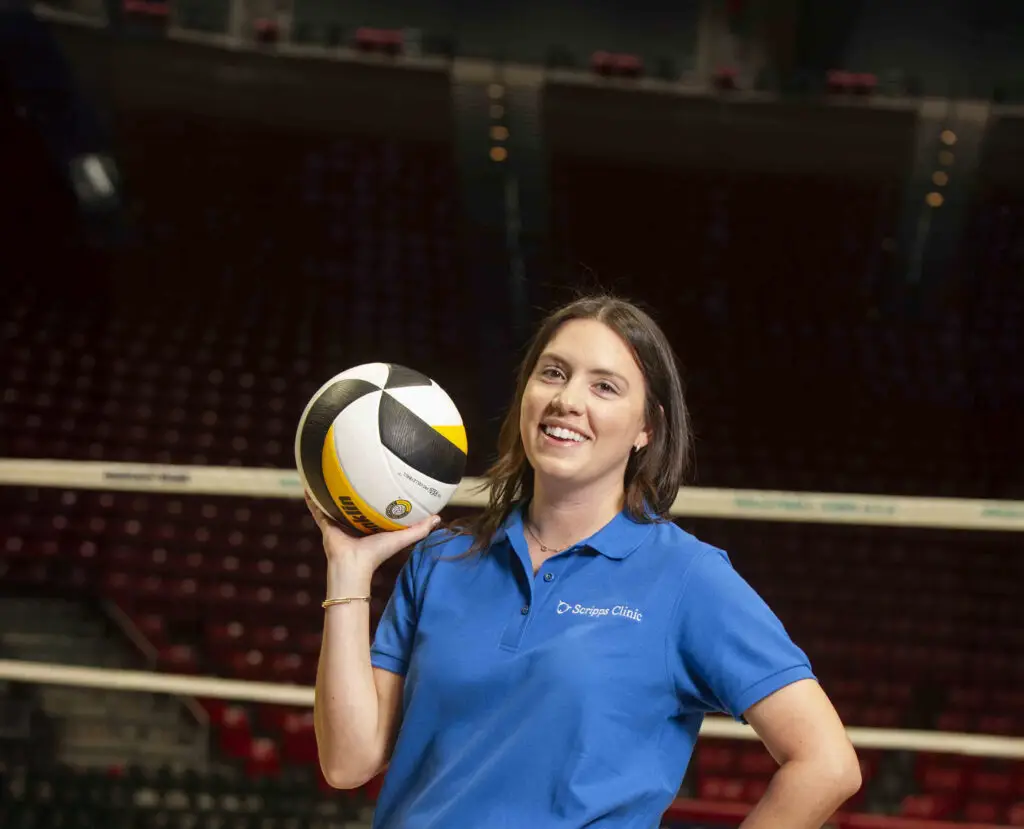
Growing up, Laika Nur, MD, Scripps Clinic sports medicine specialist, loved watching beach volleyball when the Association of Volleyball Professionals tour came to her hometown of Chicago. A talented volleyball player herself, she remembers sitting in the stands all day, and once, even got a couple autographs. Years later, Dr. Nur was attending a professional event focused on women’s sports, and the discussion turned to a new professional women’s volleyball league. The general manager and coaching staff for San Diego’s team, the Mojo, happened to be in attendance, and Dr. Nur took the opportunity to ask them if they needed a team doctor. Flash forward to the Mojo’s inaugural 2024 season, when Dr. Nur officially became the team physician. Click here to read more about Dr. Nur and how she incorporates lessons she learned on the court into her practice.
For more nutrition, wellness, and healthy living tips, sign up for the San Diego Health newsletter here.
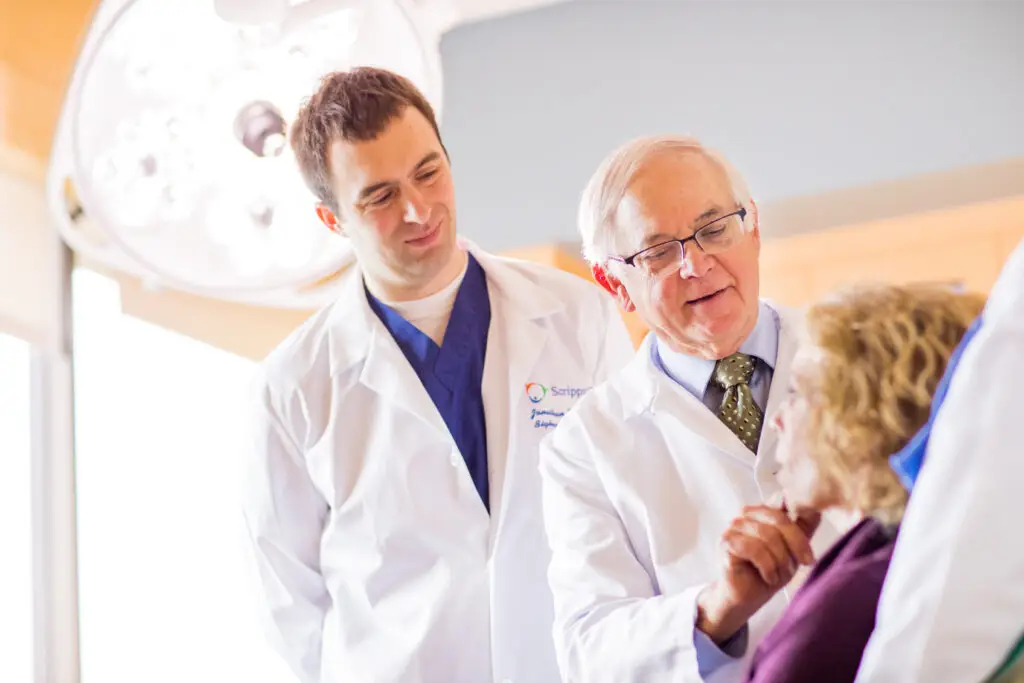
Your feet and ankles probably aren’t something you give much thought to—until something goes wrong. Orthopedic surgeons at Scripps Clinic are on the leading edge of foot and ankle reconstruction, treating patients with sports injuries, deformities, traumatic injuries and other conditions. That includes repairing torn Achilles tendons with a minimally invasive procedure that shrinks the incision site to less than a centimeter, and performing advanced ankle replacement on some patients with ankle arthritis. Read more about Scripps’ innovations in foot and ankle care here.
For more nutrition, wellness, and healthy living tips, sign up for the San Diego Health newsletter here.
Mai Vue was just 34 weeks pregnant when she delivered her baby. Her pregnancy had been complicated, and she’d had a recent second trimester pregnancy loss, which led to her receiving specialized care from Sean Daneshmand, MD, a Scripps Clinic perinatologist who oversees high-risk pregnancies. Dr. Daneshmand and his team took care of Mai during her pregnancy, through the birth of her healthy baby girl and beyond. Mai was part of a program Scripps launched to provide support to new moms in the weeks and months after delivery. The postpartum program, known as Scripps Health’s Fourth Trimester Continuum of Care, provides care for women with high-risk pregnancies to optimize their health after childbirth and reduce the risk of complications in future pregnancies. Click here to learn more.
For more nutrition, wellness, and healthy living tips, sign up for the San Diego Health newsletter here.
It’s estimated that one in five people in the U.S. will develop skin cancer at some point in their lives. When you factor in living in a sun-soaked city like San Diego and the outdoorsy lifestyle that comes with it, that figure can jump to as high as one in three, which makes early detection and intervention all the more important. Dermatologists at Bighorn Mohs and Dermatology Center are using innovative imaging methods and advanced surgical techniques to diagnose and treat skin cancer. For certain cancers in sensitive spots, like the face, dermatologists perform Mohs surgery, removing skin tissue layer by layer until reaching healthy, cancer-free tissue. They also use a process called immunohistochemistry to view tissue samples taken during Mohs surgery in far greater detail than previous methods. Read more about how Scripps is advancing skin cancer care here.
For more nutrition, wellness, and healthy living tips, sign up for the San Diego Health newsletter here.
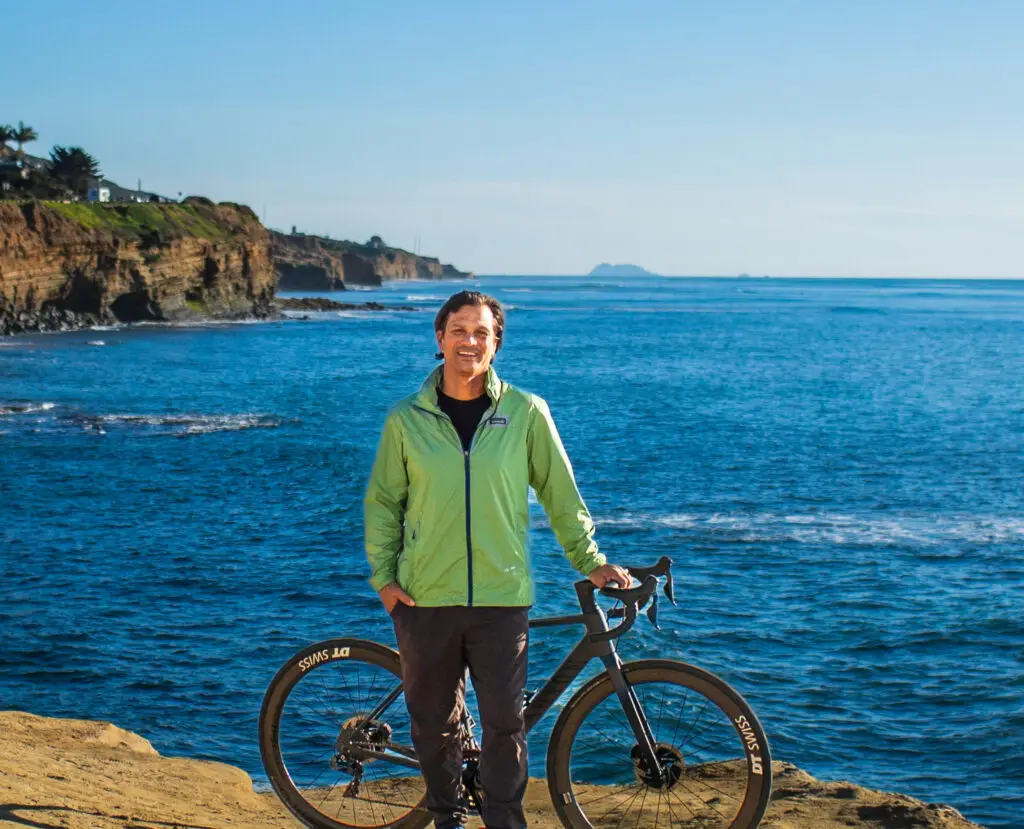
When endurance athlete Isaac Sanchez learned he had cancer, he felt blindsided. He was healthy, surfed often and was training for an Ironman triathlon. But he had to put that on hold to undergo treatment. His physicians at Scripps Cancer Center developed a plan to treat the cancer in his tonsil and lymph nodes that included six-and-a-half weeks of near-daily radiation and weekly chemotherapy. He also worked with a Scripps Cancer Center dietitian to enhance his nutrition to promote strength and healing. Today, Isaac’s back to doing what he loves. Read more of his story here.
For more nutrition, wellness, and healthy living tips, sign up for the San Diego Health newsletter here.