

Food News
The Stone Guys Just Took Back Their Famed Bistro
Read article

Featured articles
Food News
Food & Drink

Food & Drink
Featured articles
Everything SD

Everything SD

Features
Featured articles
Things to Do
Things to Do

Things to Do
Featured articles
podcast-ep
podcast-ep

podcast-ep
Featured articles
Features

Features

Features
Featured articles
Things to Do
Food News

Partner content

A weeklong charter with The Moorings inspires editor Nicolle Monico to let down her sails and relinquish control
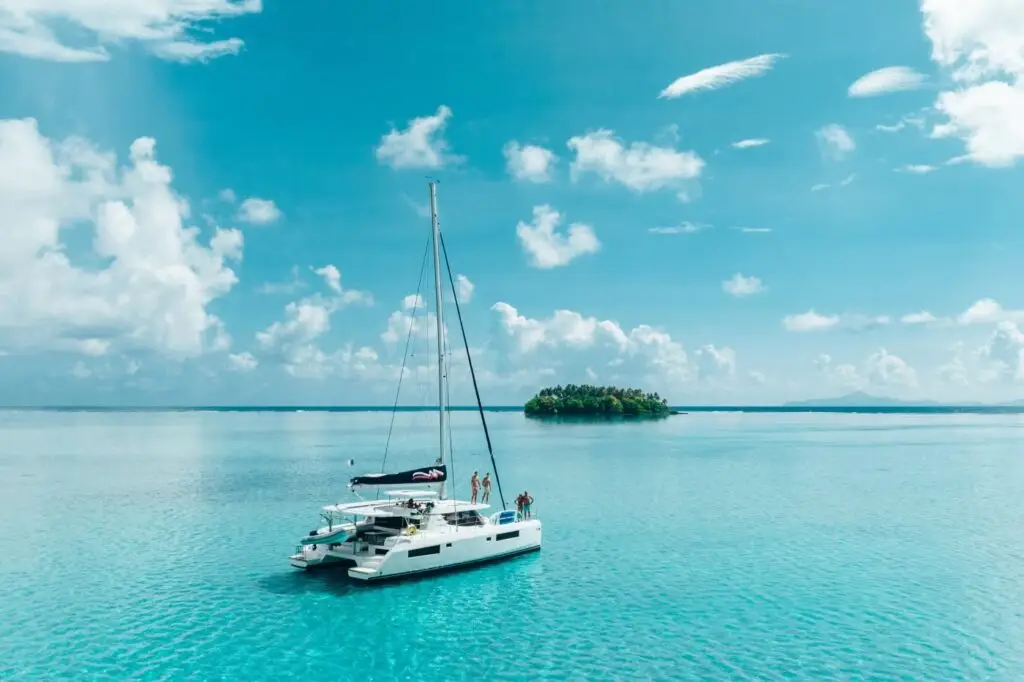
The South Pacific surrounded us. Bora Bora to one side, the private islet of Motu Piti A’au on the other. Eight of us gathered to stargaze on the top deck of a 50-foot catamaran, our unofficial living room for the week: coffee at sunrise, happy hour cocktails, and photo-ops at sunset.
Everything around us felt alive; like at any moment, the mountains could reach into the blue-purple Milky Way and drag their fingers through it, stars catching on their peaks like glitter. Olivia Dean crooned in the background and I felt my shoulders begin to drop. For the first time in months, my brain wasn’t running ahead of me. I wasn’t thinking about tomorrow, or my inbox, or what needed to get done at home. I couldn’t remember the last time I’d sat still without my mind immediately finding something to worry about.
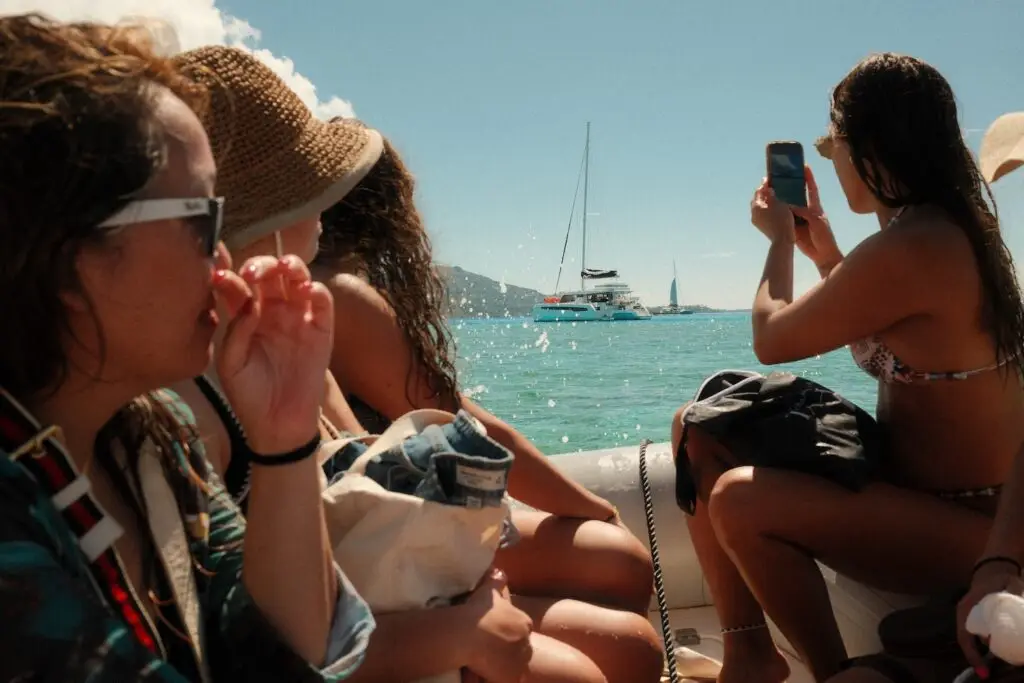
Back home, sailing has become one of my favorite ways to travel. A few years ago, I earned my American Sailing Association certification and quickly fell in love with the give-and-take between sailor and sea. The wind guides you; when it shifts, you shift. When it stops, so do you. There’s no muscling your way through a dead breeze or negotiating with the weather. You’re never fully in control as a sailor, and that may be why I love it so much.
While French Polynesia makes it very easy to check into one beautiful resort and stay put, I wanted to see it from the water. My home for the week was The Moorings Crewed 5000, a sailing catamaran with five en-suite guest cabins, a captain, private chef, and a route winding through some of French Polynesia’s most iconic islands: Raiatea, Taha’a, Bora Bora, and Moorea.
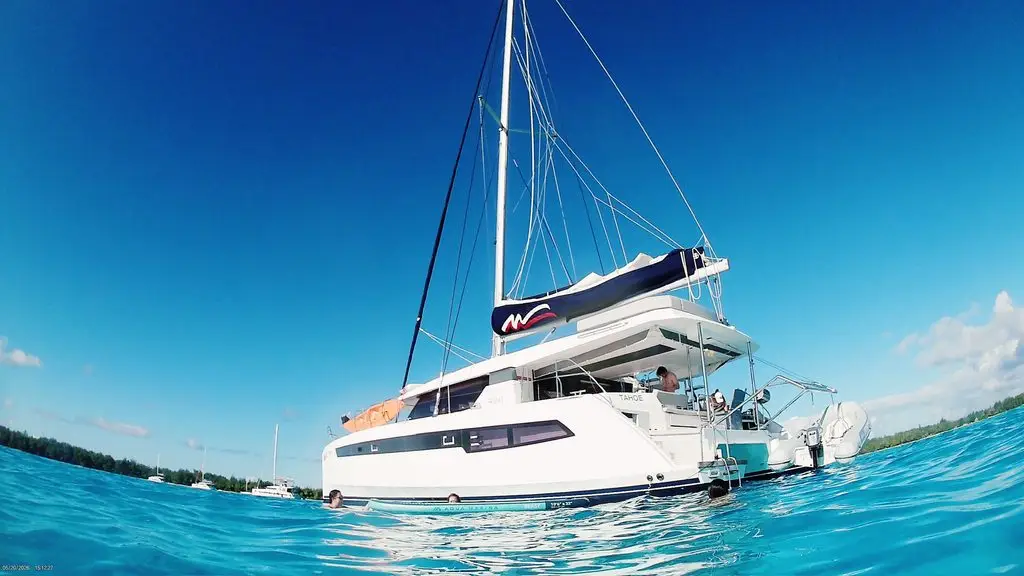
For San Diegans, going west for island adventures typically means a nonstop flight to Hawaii. Tahiti, on the other hand, takes a bit more planning. For this trip, that meant getting myself to LAX for an Air Tahiti Nui flight to Papeete, then boarding another plane to Raiatea. By the time I finally stepped onto the catamaran, I’d used nearly every form of transportation except the one I’d actually come for.
French Polynesia is 99 percent ocean: 118 islands and atolls scattered across five archipelagos in the South Pacific. For centuries, that water has been the way people reach one another. When English navigator Samuel Wallis arrived in Tahiti aboard the HMS Dolphin in June 1767, his journal recorded “great numbers” of canoes surrounding the ship, including large double-hulled vessels carrying more than a dozen men.
Of course, Polynesian sailors had already accomplished one of history’s extraordinary feats of exploration in voyaging canoes (va’a), navigating millions of square miles of open ocean via stars, ocean currents, swells, winds, and bird migrations. That relationship to the sea remains deeply embedded in daily life through French Polynesia. Sailing through its islands offers a perspective that’s difficult to appreciate from land.
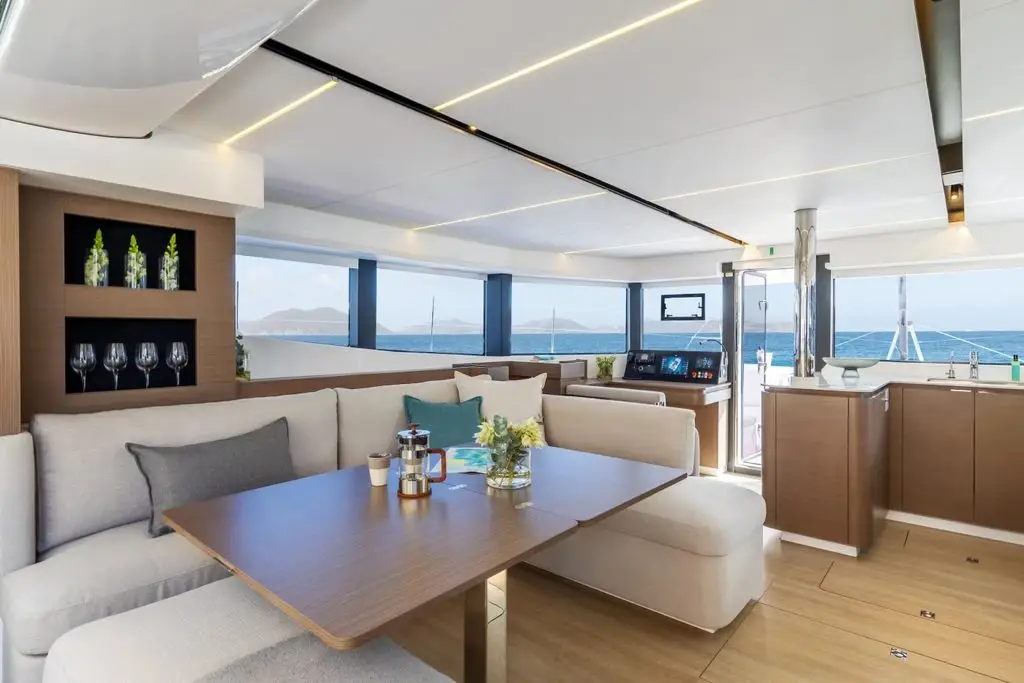
We arrived in Papeete at 4 a.m. local time before hopping onto a smaller plane headed to Raiatea where The Moorings operates its French Polynesian base from Apooiti Marina. There, we met our captain, Fabrice, and settled into our floating home for the week. At just over 50 feet long, the catamaran has an upper lounge, cockpit dining area, trampoline at the bow, and thankfully, air-conditioning at night. Before the trip, each guest fills out a preference sheet covering everything from dietary restrictions to favorite drinks, which the chef uses to plan before anyone arrives.
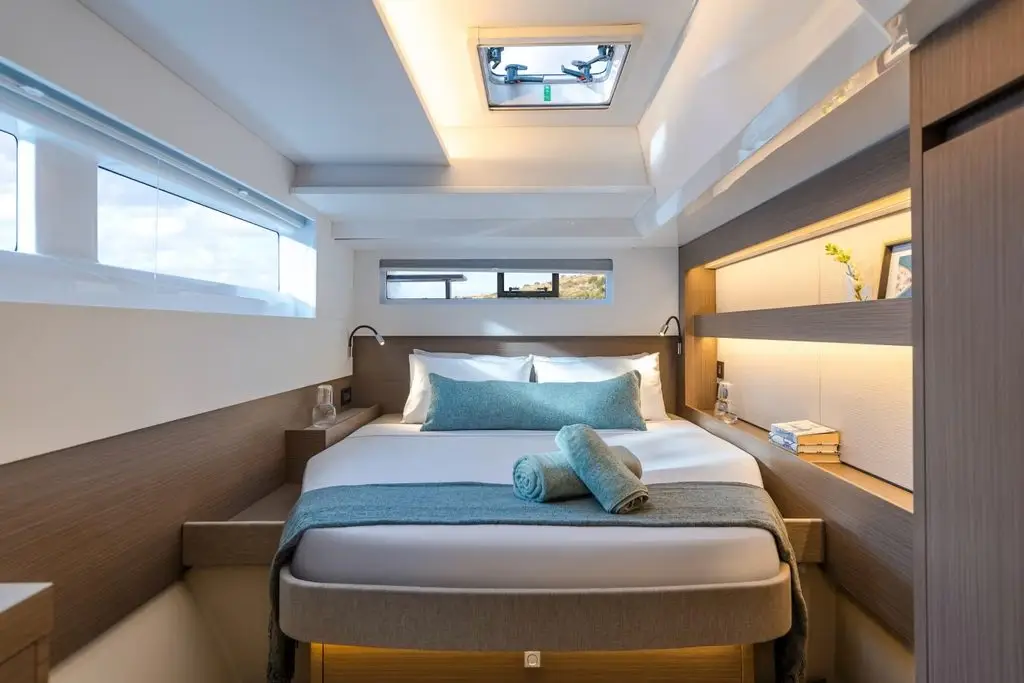
If you’ve never lived aboard a catamaran, the sleeping quarters located downstairs can take some getting used to. The bed takes up most of the space, with each side touching a wall, while a small closet (pack light: swimsuits, coverups, sandals) sits by the foot of the bed next to a (very quaint) bathroom. Showering requires additional tenacity. Until the generator turns on each night, the water remains cold (not bad for most in 90-degree weather, but it took some getting used to as someone who thinks 70 degrees is chilly).
For San Diegans, our relationship with the Pacific isn’t entirely foreign. Long before Europeans arrived at San Diego Bay in 1542, Kumeyaay communities made tule-reed boats for transportation and fishing along the coast. By 1904, the Navy had established its first permanent logistics shore operation in San Diego at Point Loma. Today, the Maritime Museum’s Star of India (built in 1863) still sits along the Embarcadero as a working reminder of that maritime history. Later, canneries, fishing boats, shipyards, and other working waterfronts crowded the bay and San Diego’s growing tuna industry eventually earned the city the nickname “Tuna Capital of the World.”
By 1904, the Navy had established its first permanent logistics shore operation in San Diego at Point Loma. Today, the Maritime Museum’s Star of India (built in 1863) still sits along the Embarcadero as a working reminder of that maritime history. From tule boats to tuna clippers and Navy Ships, San Diego has spent centuries looking west toward the Pacific.
But in French Polynesia, I began to see the ocean differently. Here, the sea is less like a backdrop and more like the main event.
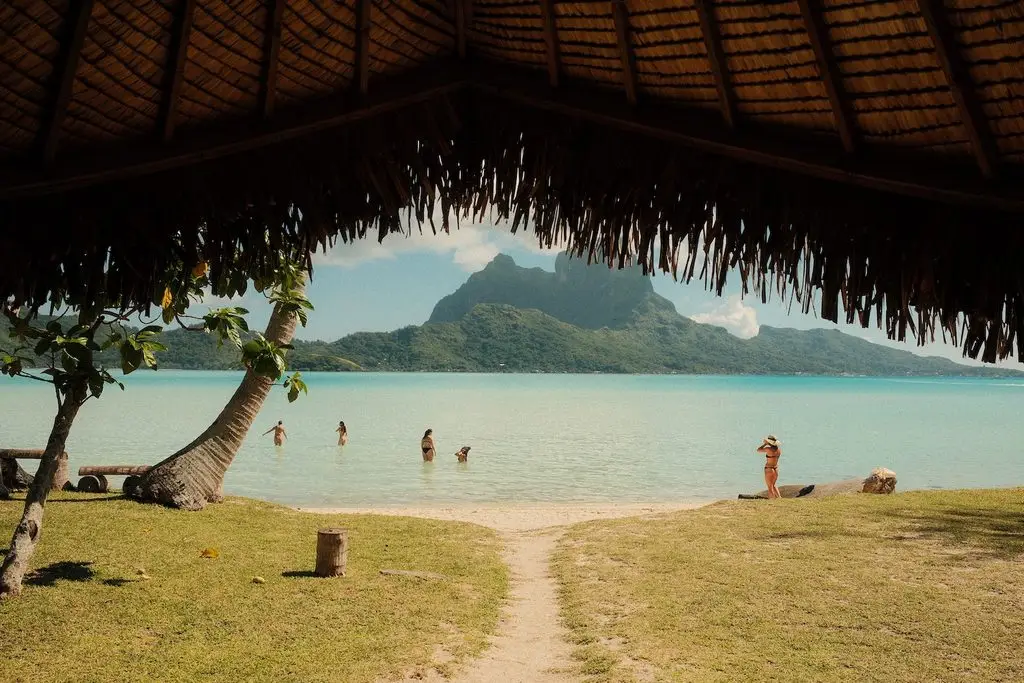
As if on cue, Bora Bora made herself known as we approached on day four, carefully orchestrating each moment like a stage director: “Clouds one to five, move to the other side of the island. Raindrops, go home for the day. Cue rainbows one and two.” This must be what American author James Michener saw when he declared Bora Bora the most beautiful island in the world, writing: “When you stepped upon it the dream expanded.”
Throughout the week, we sail into quiet lagoons, tucked-away bays, and small coves where we drop anchor to swim, snorkel, and sunbathe. My favorite destination was a place the locals call the “Swimming Pool,” where the water is so clear you can see straight to the bottom. The turquoise turns almost electric around us. Every photo is a pitiful representation of what’s in front of me.
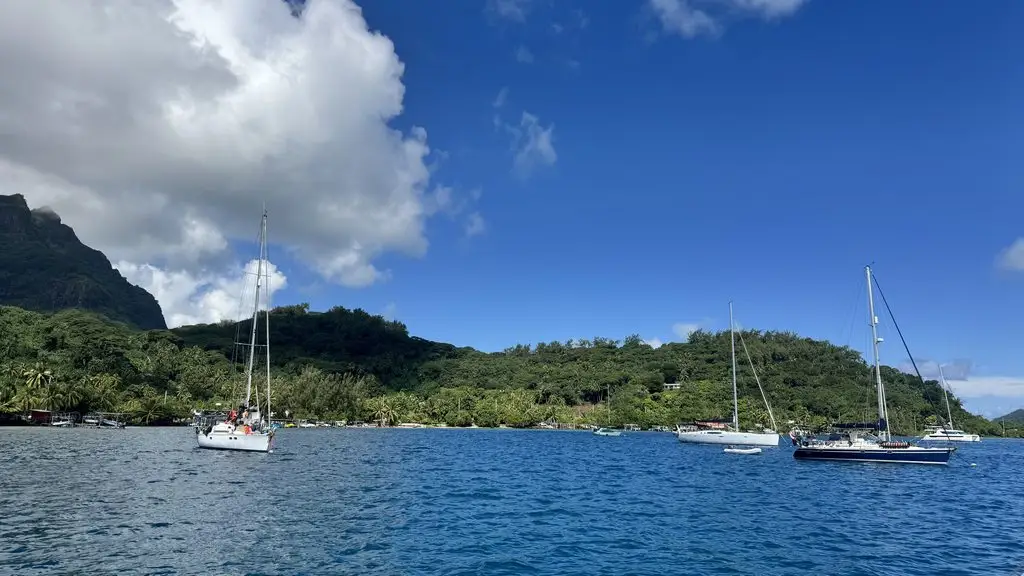
Each morning, we wake with the sunrise. No alarms, no phones, just the calming rock of the boat setting the pace for the day. It’s easy to feel at peace here, to forget that only a few days ago I had been so rushed and distracted that I slammed my finger in the trunk of my car. “Slow down!,” I imagined my body yelling at me as I wrapped up work projects and checked off tasks on my mental to-do lists. The bruising under my fingernail came to Tahiti with me, an ugly little souvenir of the pace I’d been moving back home.
Soon, though, everyone on board seemed a little lighter, including me. We belly laughed over breakfast, danced to Justin Bieber and Whitney Houston on the bow, and muttered, “I can’t believe this is real life,” more times than we could count. Meanwhile, Fabrice worried about the wind and getting us to the next island while our chef made meals—lots of fresh fish, rice, cheeses, and fruits—and their dishes disappear without us ever noticing. For once, there was almost nothing we needed to manage ourselves.
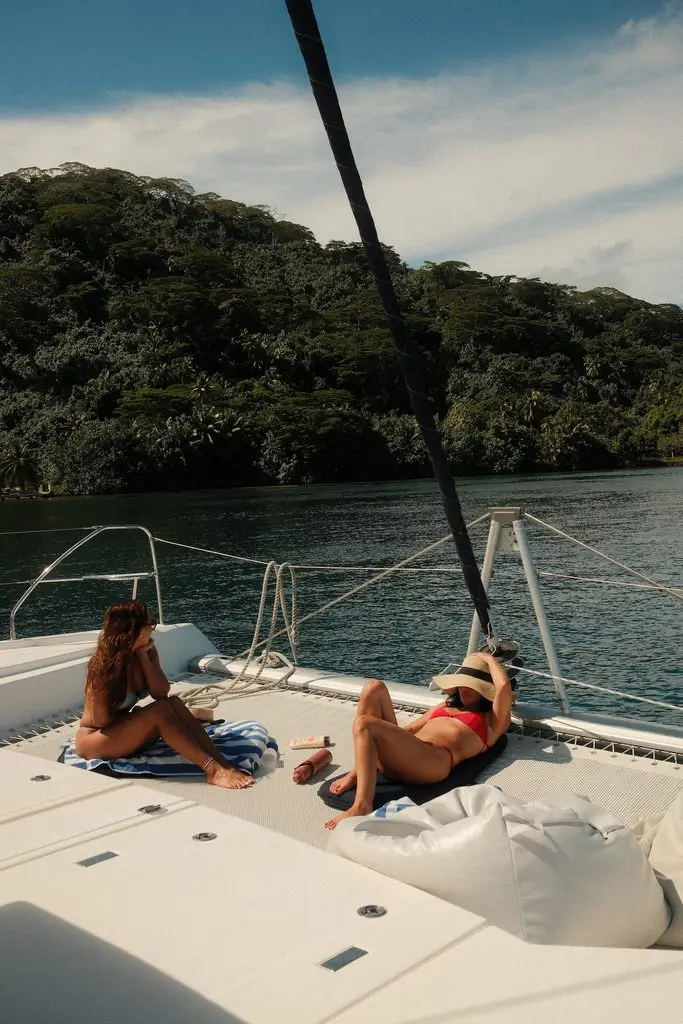
At the beginning of the trip, my type A tendencies were on full display, regularly asking when we’d arrive at each location, what was on the daily itinerary, and how long we’d be doing each activity. My anxiety likes timelines, schedules, backup plans, and backup plans for those backup plans.
The funny thing is, sailing had already taught me that gripping a plan tighter doesn’t give me any more control over it. I just needed the South Pacific to remind me. Somewhere along the way, I stopped caring. I started waking up without checking the time and sitting on the top deck with coffee in hand as our next island came into view.
At the end of the week, I thought back to that night under the Milky Way and realized what had felt so unfamiliar about it. I had spent hours on the top deck without trying to get anywhere, not mentally running through tomorrow, not planning the next stop. For generations, Polynesian navigators looked to these skies for direction. Somewhere between Raiatea and Bora Bora, I had finally stopped searching for my own.
San Diegans know something about building a life around the Pacific, but living beside the water and traveling through it are two different things. Spending a week with The Moorings gave me a different relationship with the water, and, unexpectedly, with my own anxious brain. I still went home to my calendars, I just didn’t feel quite as compelled to know what would happen next.

Nicolle Monico is an award-winning writer and the director of creative projects, digital editor for San Diego Magazine with more than 19 years of experience in media including Outside Run, JustLuxe and The San Francisco Chronicle.
