














One in four seniors falls every year. That statistic sounds abstract until it happens to someone you love. Most falls occur when people are home alone, and those moments can turn dangerous fast.
Alert systems exist to solve this exact problem. But not all devices work the same way. Some provide real protection while others just give false confidence. The difference comes down to how these systems are built and what they can do.
Professional Monitoring That Works Around the Clock
Having a device is one thing. Having someone answer when you need them is something else entirely. This distinction separates useful alert systems from expensive paperweights.
Response Speed and Information Access
Good monitoring centers pick up calls in under ten seconds. The best medical alert systems keep detailed files on every user. Medical history, current prescriptions, known allergies, family contacts. All of it sits ready for the operator to see.

Paramedics get this information before they walk through your door. They know what medications you take and which conditions to watch for. This head start can prevent dangerous drug interactions or missed symptoms.
What Quality Monitoring Provides
Professional services do more than just answer phones. The best ones offer specific advantages that you won’t find in basic systems:
- Operators who speak multiple languages fluently
- Special protocols for people with hearing loss or speech problems
- Staff who stay on calls until responders arrive at your home
- Coverage that never stops for holidays or overnight hours
- Direct lines to local fire departments and ambulance services
Training makes the difference here. Experienced operators stay calm when callers panic. They know which questions to ask and how to keep people safe until help shows up.
Automatic Fall Detection Technology
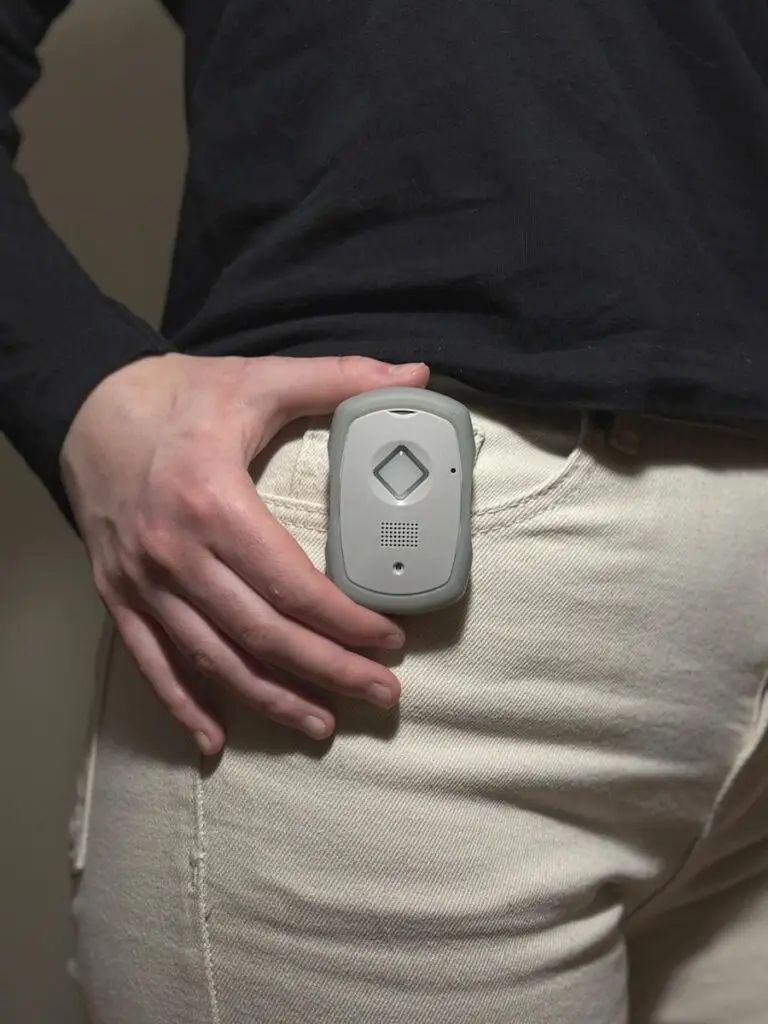
Sensors built into these devices track movement patterns throughout the day. Sudden drops combined with impact force trigger automatic alerts. The technology measures how fast your position changes and whether you’re moving after hitting the ground.
This becomes vital when someone hits their head or breaks a bone. According to the Centers for Disease Control and Prevention, falls kill more than 39,000 older adults every year in the United States. Many of these deaths could be prevented with faster response times.
False alarms do happen sometimes. You might drop the device or sit down hard in a chair. Modern systems let you cancel these alerts quickly. But if you don’t respond within 30 to 60 seconds, the call goes through anyway.
Newer models make fewer mistakes than older ones. Better sensors and smarter software help devices tell real falls from normal activities.
GPS Tracking for Mobile Protection
Home-based systems only work inside your house. That limitation becomes a problem for active seniors who spend time outdoors. Mobile devices with GPS solve this by tracking location anywhere in the country.
Location Features That Add Safety Layers
GPS technology pinpoints exact coordinates within a few meters. Emergency crews don’t waste time searching when they know precisely where to go. Some systems also include geofencing, which creates invisible boundaries around safe areas.
Families caring for someone with dementia find this feature particularly helpful. The system sends alerts if that person wanders past the designated zone. You get a notification on your phone showing exactly where they went.
Battery life varies a lot between brands and models. Heavy GPS use drains power faster than basic monitoring. Some devices last five days per charge while others barely make it 24 hours. Check how often you’ll need to plug it in before buying.
Simple Design and Reliable Construction
Technology doesn’t help anyone if it’s too complicated to use. The best alert devices work with one button press. No menus to navigate or settings to remember.
User-Friendly Controls
Large buttons make a big difference for people with arthritis or shaky hands. The button should be easy to find by touch alone. Some newer models respond to voice commands instead, which helps people who can’t press buttons easily.
Setup shouldn’t require technical skills either. Plug it in, press a test button, and you’re done. Companies that make this complicated usually have poor customer service too.
Waterproof Design and Battery Backup
Showers and baths create slippery conditions where falls happen frequently. The National Institute on Aging identifies bathrooms as high-risk areas for senior injuries. Devices need to survive getting soaked.
Real waterproof construction means different things to different manufacturers. Here’s what reliable systems include:
- IPX7 ratings that allow full underwater submersion
- Backup power that keeps base stations running during outages
- Batteries that last 30 hours or more without electricity
- Wearable pieces that go three to five days between charges
- Casings tough enough to survive drops onto tile or concrete
Cheap devices claim water resistance but fail when fully submerged. Read the fine print on waterproof ratings before trusting your safety to any device.
Choosing the Right System for Your Needs
No single system works for everyone. Active people who travel need different features than someone who rarely leaves home. Health conditions, living situations, and daily routines all factor into which device makes sense.
PARTNER CONTENT

Most companies offer trial periods of 30 days or longer. Use this time to test everything. Call the monitoring center a few times. Drop the device and see if fall detection works. Wear it in the shower. Take it outside and check GPS accuracy.
Real-world testing reveals problems that spec sheets hide. You’ll discover weak spots in your home’s cellular coverage or find that buttons are harder to press than they looked. Taking time to properly evaluate options prevents regrets later. The right system provides genuine protection and peace of mind for years to come.
