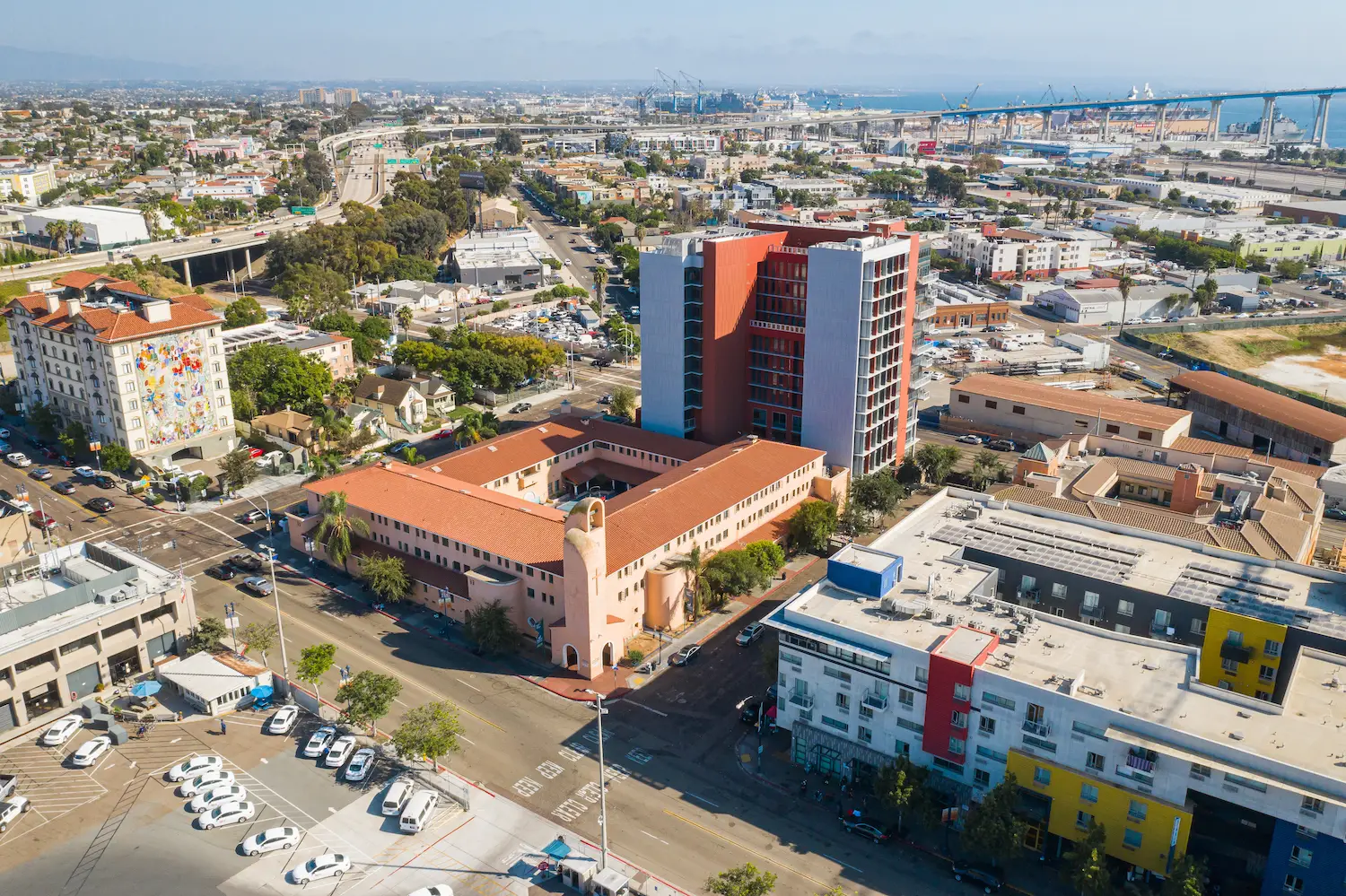
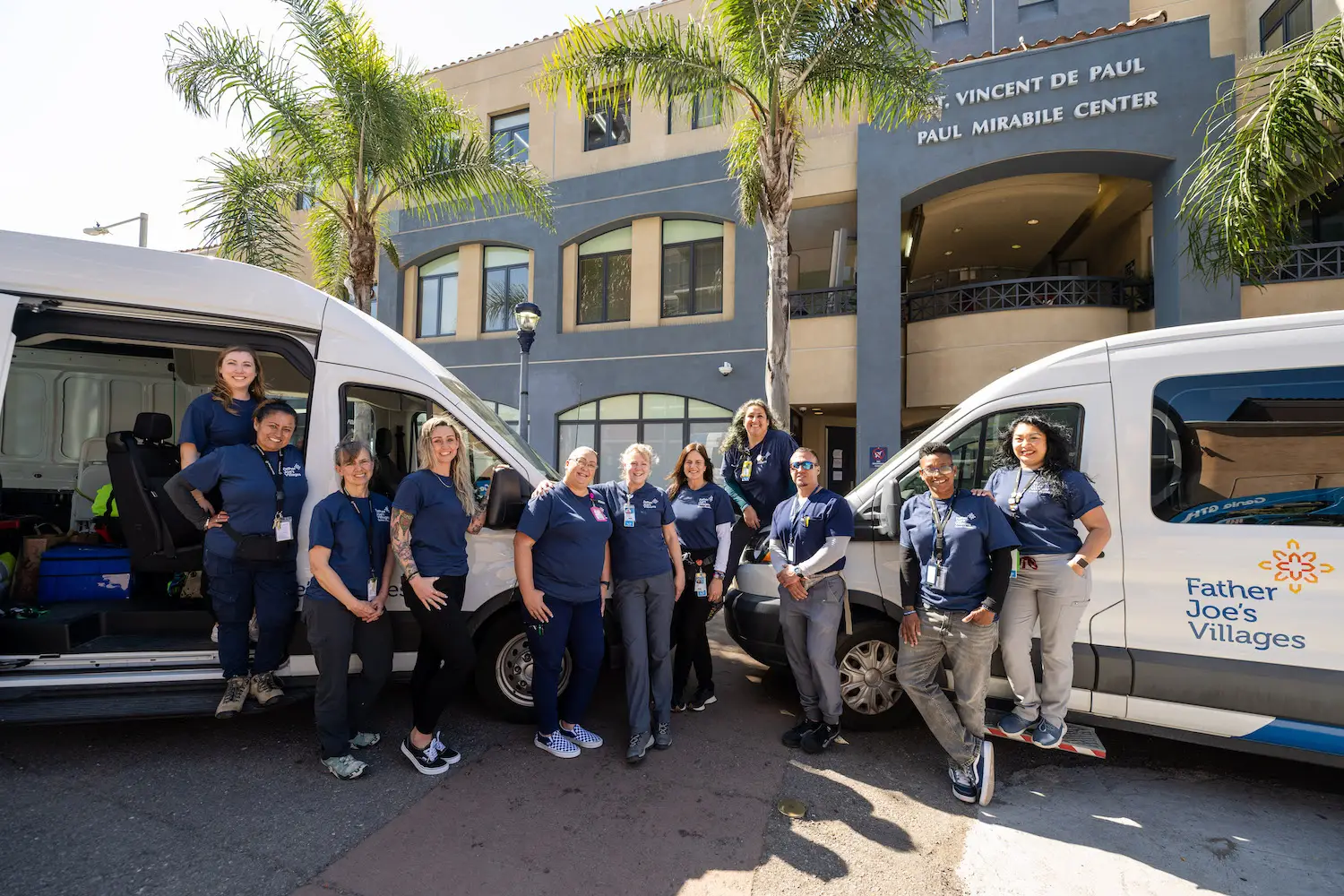
For 75 years, Father Joe’s Villages has been helping San Diegans facing homelessness transition onto the path of long-term stability and success. The nonprofit is the city’s largest provider of homelessness-related services, including shelters and housing (which serve upwards of 3,000 people each night), addiction recovery, medical care, job training, childcare, and food assistance at a rate of about a million meals per year. Father Joe’s Villages also works to overcome the root causes of homelessness, a Herculean task, especially in a high cost of living city like San Diego.
Building the Foundation
Though Father Joe’s Villages is now a large-scale operation that offers an array of services, it has humble roots. It began in 1950 as the St. Mary of the Wayside Chapel in downtown San Diego, which opened with a mission to serve the poor.
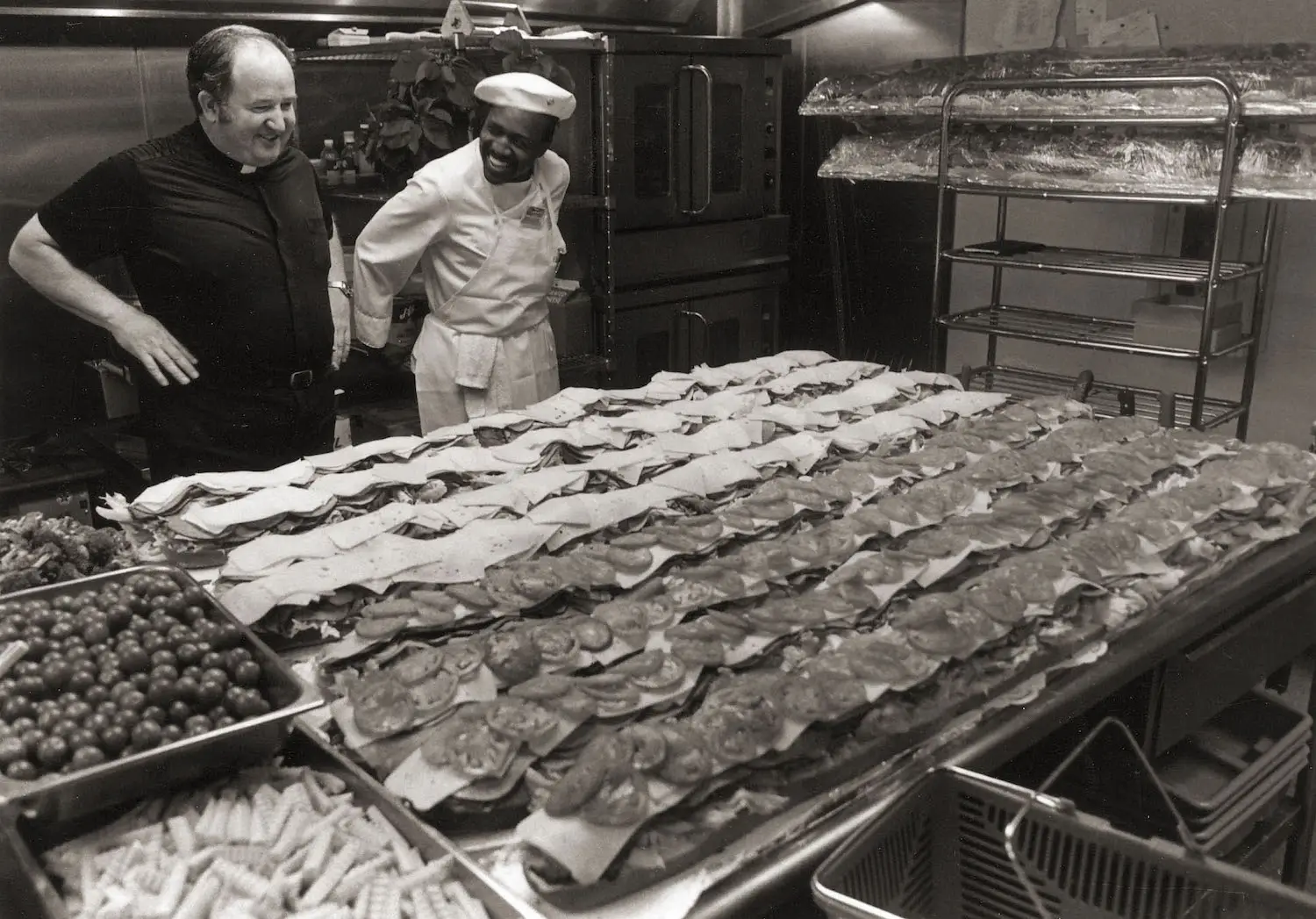
“There was an increasing number of individuals that were falling onto the streets, and, initially, it started as a soup line, in a sense, so people could catch something nutritious for lunch—PB&J sandwiches, for example—and have a compassionate ear,” says Deacon Jim Vargas, president and CEO of Father Joe’s Villages.
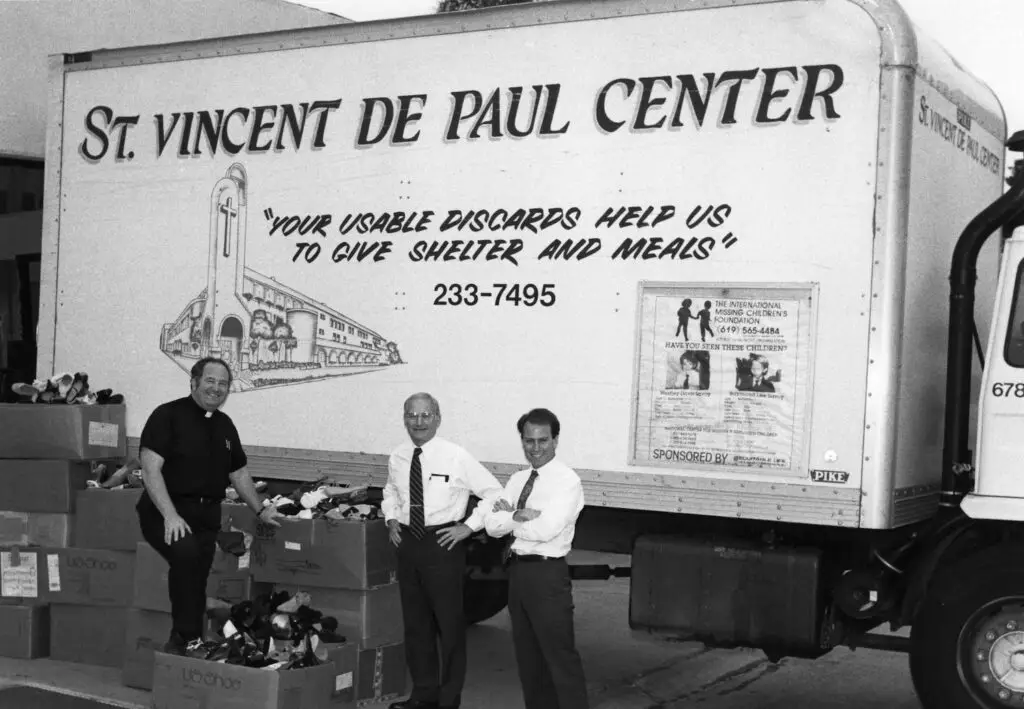
The program grew over the next several years, and the chapel added a handful of shelter beds, which led to the eventual opening of the St. Vincent de Paul Center in what’s now the Gaslamp Quarter.
As the Vietnam war wound down, a large number of returning veterans fell into homelessness due to a lack of jobs and affordable housing. As the Gaslamp Quarter was “revitalized,” residents felt the sting, Father Joe’s says, and the nonprofit was hit with massive demand.
Courtesy of Father Joe’s Villages
A Hero Comes Along
As legend has it, the bishop tasked with finding someone to take over the St. Vincent de Paul Center in the early 1980s asked for “the biggest hustler in the diocese.” Bronx-born Father Joe Carroll fit the bill. He started small, handing out peanut butter sandwiches on the streets of San Diego, then soon after garnered national attention with a commercial and a feature segment on 60 Minutes.
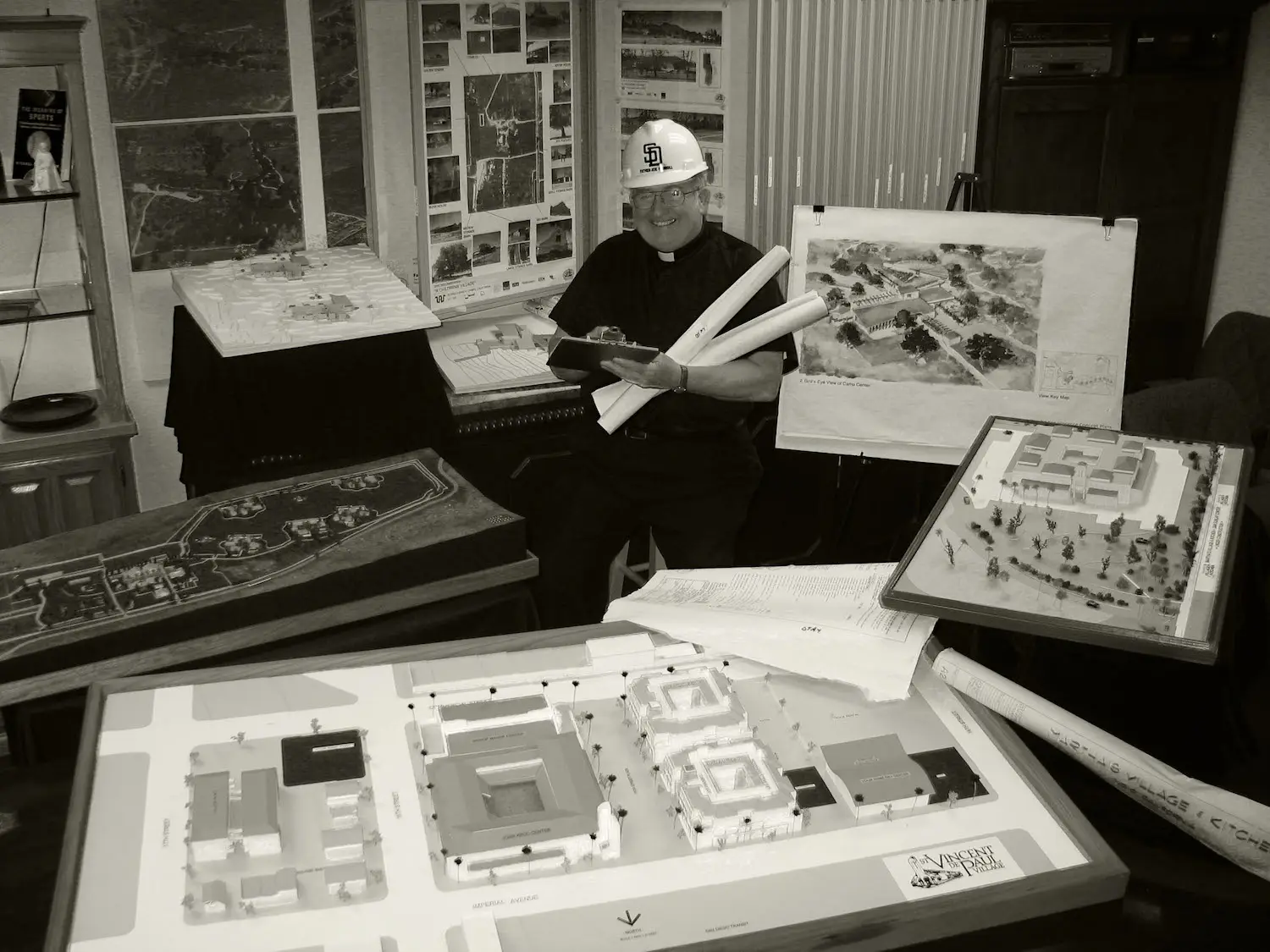
“He’s the one who initially came in and sized up the situation, then recognized that, as a community, we were sorely lacking in comprehensive services so that an individual who was on the streets didn’t have to go to multiple places,” Vargas says. “So, he decided to start building a village and a model that was able then to really address all the issues.”
The man now known as Father Joe subsequently moved the St. Vincent de Paul Center to the East Village and expanded. His impact was transformative. Within five years of arrival, Father Joe opened the organization’s Joan Kroc Center, a first-of-its-kind facility that included housing for individuals and families—“neighbors in need,” as he called them—a medical clinic, childcare, and job training all under the same roof. The nonprofit began serving three meals a day and later added a dental clinic and behavioral health care. In 1988, St. Vincent’s opened the first Josue Homes for people who were homeless and also living with HIV/AIDS.
Father Joe shifted the organization’s focus to identifying and addressing the underlying causes of homelessness by not only meeting people’s basic needs but also investing in healthcare and children’s welfare and offering a supportive path to self-sufficiency. Take the evolution of the health center, for example, Vargas points out.
“[Father Joe] recognized that some of the people [utilizing the nonprofit’s services] had children. These children, because of their circumstances, were academically, emotionally, and socially delayed. So, he came up with a therapeutic childcare center. He hired professionals, psychologists, and teachers who could work with these children and mitigate their circumstances, help them to get to peer level, and help them break that cycle,” Vargas says. “Otherwise, statistics show that one in four would be homeless in adulthood.”
Courtesy of Father Joe’s Villages
Another barrier homeless individuals face is employment. So, the organization launched an employment center that offered vocational training in culinary arts, welding, property management, and other fields and worked with area business leaders to ensure the skills taught there could be efficiently put to use long-term, Vargas adds.
By 1990, the St. Vincent de Paul Center was providing roughly 200,000 bed nights a year. The efforts were recognized nationally and internationally—the center received a United Nations International World Habitat award and earned a spot in then-president George Bush’s Thousand Points of Light.
Courtesy of Father Joe’s Villages
The St. Vincent de Paul Center split from the Roman Catholic Diocese of San Diego in the 1990s and became an independent nonprofit organization. It rebranded as the St. Vincent de Paul Village and continued to grow and add programs. The 350-bed Paul Mirabile Center was opened in 1994, and its primary care facility, the Village Family Health Center, launched in 1998.
Father Joe continued to lead the organization until his 70th birthday. He retired a household name and a local icon. In 2015, the St. Vincent de Paul Village was renamed Father Joe’s Villages in his honor. He died in 2021 at age 80.
Courtesy of Father Joe’s Villages
A New Era
The number one cause of homelessness in the San Diego region is economic, says Vargas, who has led the organization since Father Joe’s retirement. The solution, he believes, is multi-pronged: more shelter beds to get people off the streets, more affordable housing for them to transition into, wraparound services to support them along the way, and prevention and diversion programs to help those at risk of homelessness. But that’s much easier said than done.
Today, Father Joe’s Villages operates on a “housing-first” model—providing a stable place to live with low barriers to entry is a top priority. In 2017, the nonprofit launched its “Turning the Key” initiative, a push to add 2,000 affordable housing units earmarked for people transitioning out of homelessness or who are at risk for homelessness. In 2022, Saint Teresa of Calcutta Villa opened with 407 affordable homes. Father Joe’s also works with local landlords to secure existing housing.
Courtesy of Father Joe’s Villages
“We recognize that at the end of the day, what breaks the cycle of homelessness is a home,” Vargas says.
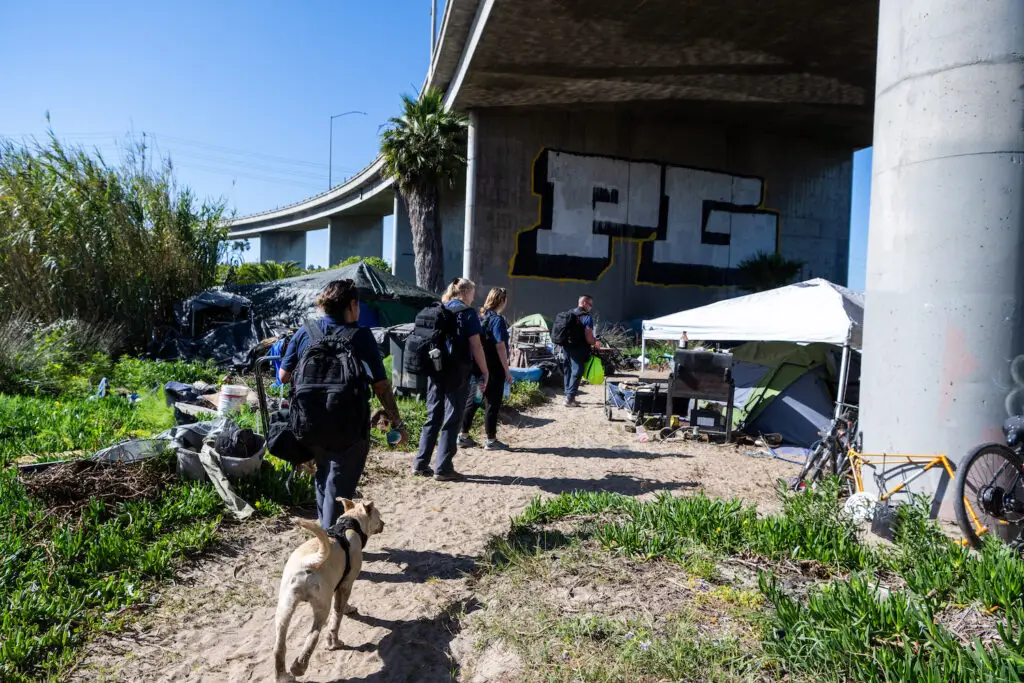
Another important aspect of the mission is what Vargas calls “meeting people where they are.” In 2019, the organization introduced its street health team program, the first of its kind in San Diego. Healthcare and psychiatric care providers deployed into areas with large homeless populations to serve those with complex medical needs who couldn’t seek help on their own.
“About a third of those who are out there in the community will not access medicine in a traditional way,” Vargas says. “So, we’ve gone out to meet them where they are and work with them to get them into a more stable setting. Why? Because we saw that was a need.”
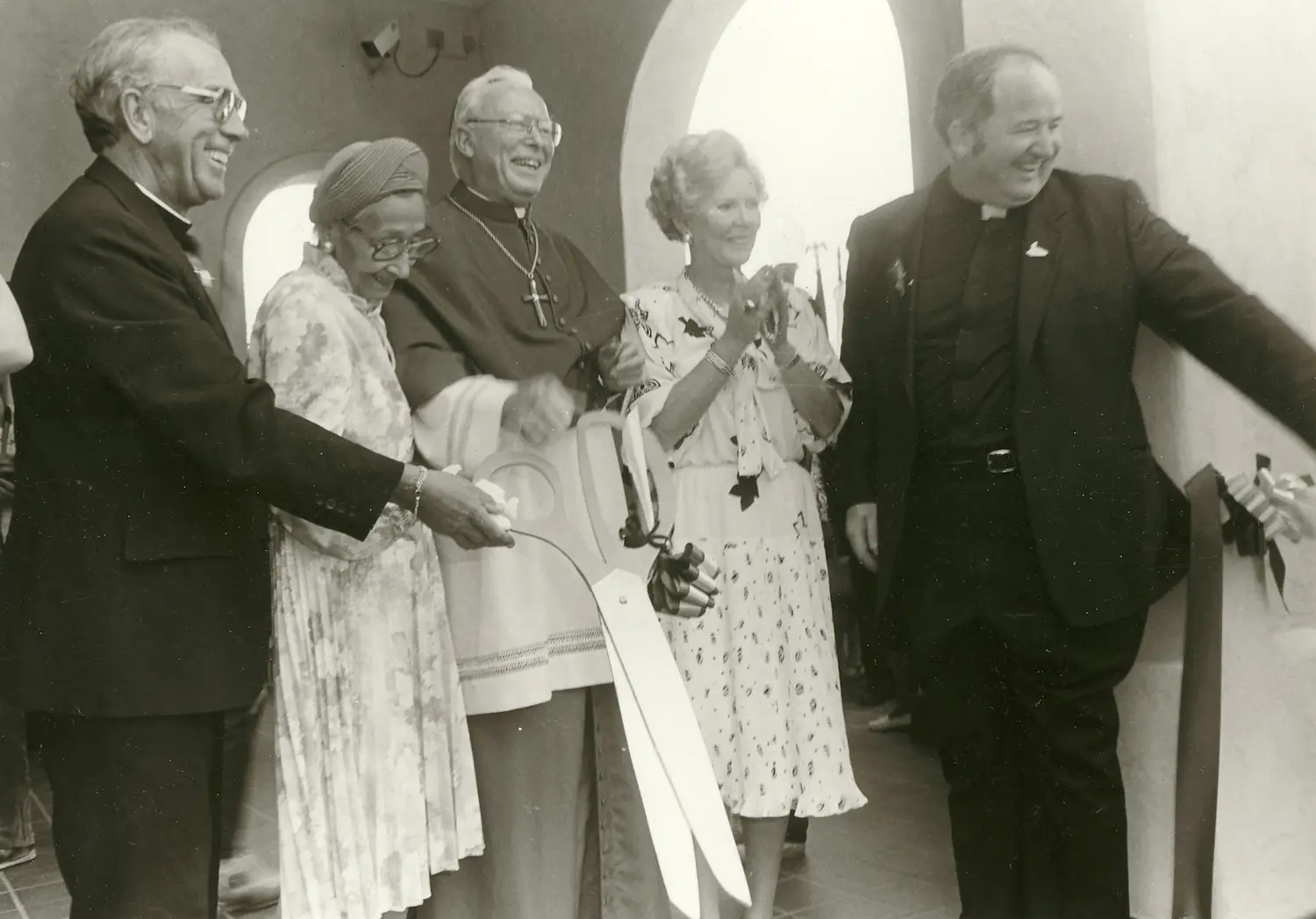
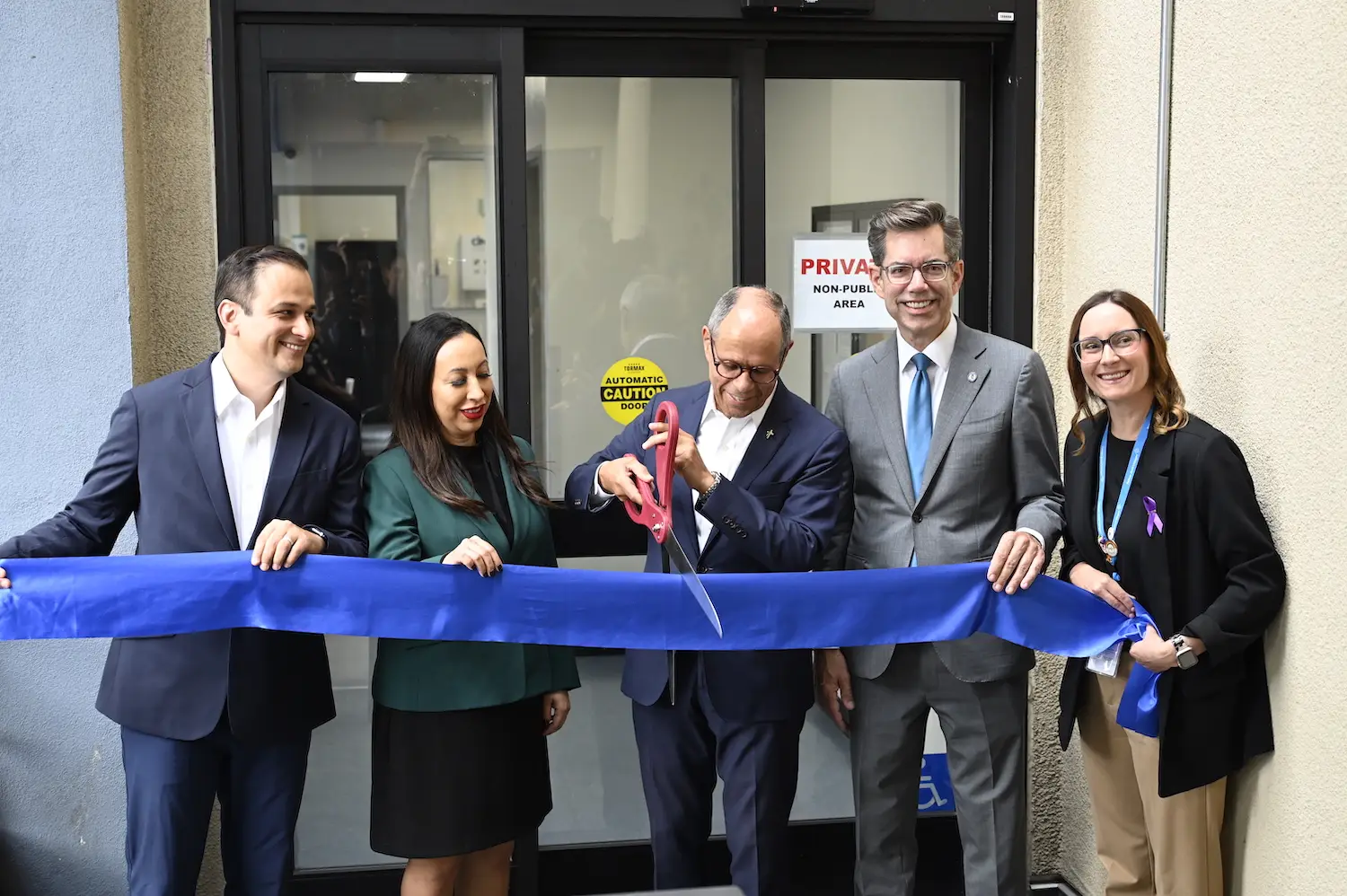
Courtesy of Father Joe’s Villages Deacon Jim Vargas cutting a ribbon at Father Joe’s Villages new detox facility
Most recently, Father Joe’s Villages opened a 44-bed sober-living shelter and detox facility at its Paul Mirabile Center for people who are both homeless and struggling with substance abuse. Prior to its opening, there were only around 80 detox beds available within San Diego County, and just two were inside San Diego city limits, Vargas explains.
Father Joe’s has also launched a recuperative care program for people recently discharged from a hospital who are still too sick to go back to the streets. It plans to expand the effort in 2026.
“The face of homelessness has changed. The situation of homelessness has changed,” Vargas says.
Though homelessness will likely be a problem well into the future, Father Joe’s Villages will continue to grow to meet the evolving needs of the population. And there are no plans of giving up—on anyone—any time soon.
“Hope lives here in our organization,” he says. “The situation seems dire, and it appears as if it’s not getting any better, and yet there is hope. We point to all these stories, we point to the work that we’re doing … so that people recognize good things are happening here.”
Sarah Sapeda is San Diego Magazine’s Custom Content Editor. In her 15 years in San Diego journalism, she has covered charitable events, health care, education, crime, current events, and more.
October 2: Drew Brees Celebrity Pickleball Tournament
Former NFL quarterback Drew Brees will host a slew of celebrity athletes, chefs, and other hunger-relief supporters for a Celebrity Pickleball Tournament to raise money for Feeding San Diego. The tournament at the Barnes Tennis Center in Point Loma is part of the Del Mar Wine & Food Festival, which has raised more than $100,000 for Feeding San Diego and other local nonprofit organizations since 2023.
October 3: Sanford Burnham Prebys Medical Discovery Institute Illumination Gala
Sanford Burnham Prebys Medical Discovery Institute will celebrate 50 years of groundbreaking research at its Illumination Gala at the Fairmont Grand Del Mar. Support from the gala will help Sanford Burnham Prebys continue to advance medicine and change lives.
Courtesy of San Diego Humane Society
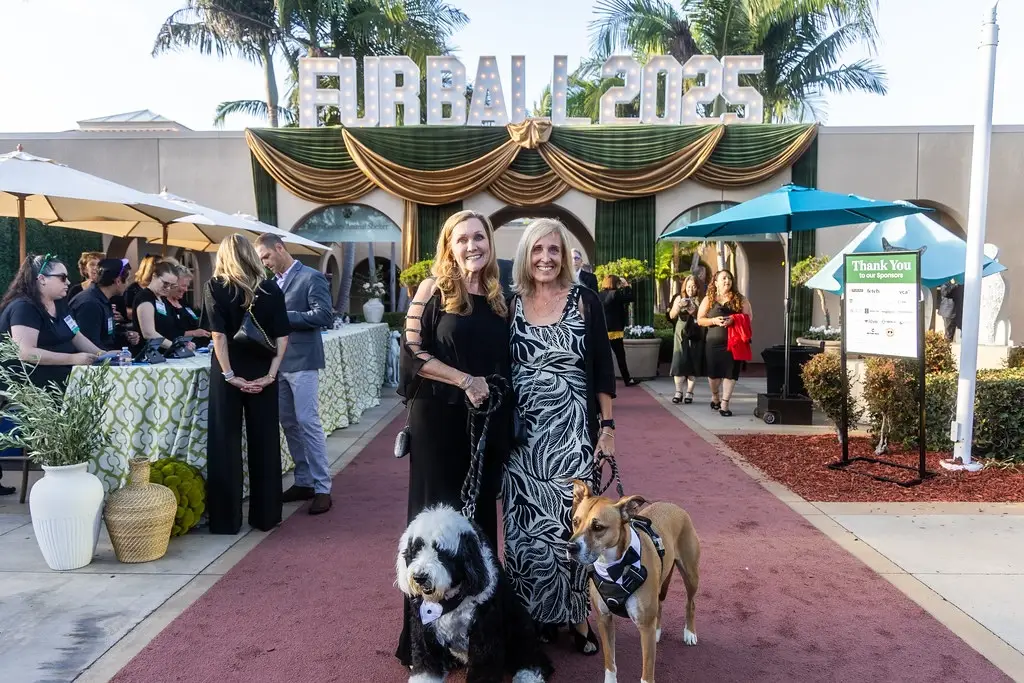
October 3: San Diego Humane Society’s 40th Annual Fur Ball
San Diego Humane Society supporters—both people and pets—will get dressed to the nines for the 40th annual Fur Ball. Proceeds from the event at San Diego Humane Society’s Gaines Street campus will support the organization’s efforts to care for more than 40,000 animals each year.
October 3: Voices for Children Starry Starry Night Gala
Voices for Children will celebrate the impact of its Court Appointed Special Advocates (CASAs) at its Starry Starry Night Gala on the Heron Lawn at the Park Hyatt Aviara Resort. The 46-year-old organization is the only agency in the county designated to provide CASAs to advocate for local foster children.
October 3: Autism Society of San Diego Diamond Anniversary Gala
Show off your sparkle at the Autism Society of San Diego Diamond Anniversary Gala at the Town & Country Resort. The nonprofit will celebrate six decades of service with dinner, entertainment, and special guests.
October 11: Robin’s Nest Rescue Rockin’ Robin Music Fest
More than 30 performers will take the stage to support Robin’s Nest Rescue at its fourth annual Rockin’ Robin Music Fest. The five-acre animal sanctuary in Ramona will also celebrate America’s 250th birthday, showcase local artisans, and introduce guests to some of its rescue animals.
October 17: Adjoin Soil to Soul Garden Party
Local nonprofit Adjoin will host a whimsical garden party fundraiser at a private home in La Mesa. The Soil to Soul Garden Party will support Adjoin’s mission to build inclusive communities and support independence for people with disabilities and veteran families experiencing homelessness.
October 24: Living Coast Discovery Center Farm to Bay
Enjoy bites, beverages, and animal encounters at Living Coast Discovery Center’s Farm to Bay fundraiser. The annual event at the nonprofit zoo and aquarium on the San Diego Bay National Wildlife Refuge will support coastal conservation efforts.
Sarah Sapeda is San Diego Magazine’s Custom Content Editor. In her 15 years in San Diego journalism, she has covered charitable events, health care, education, crime, current events, and more.
What Will It Take to Make San Diego a Global Arts City?
Jonathon Glus on the Art + Design District, investing in the creative economy, keeping artists in the city, and what we can learn from places like London and Chicago
Jonathon Glus is the Prebys Foundation senior fellow leading the development of the Art + Design District at the Downtown San Diego Partnership. He has been asked what an arts and design district is many times. In our conversation, I asked him instead to describe what it isn’t. His answer opened up a broader discussion about what San Diego has and hasn’t invested in, what it has the capacity to become, and what other cities have done that we haven’t. Glus speaks about global art fairs and architecture biennials in Chicago and long tables at dinner parties all with the same fluency. He also discusses who gets to live in the neighborhoods where creative work happens, and what it means when they can’t afford to stay.
Claire Johnson: You have been asked what an arts and design district is many times. Can you tell me what it isn’t?
Jonathon Glus: It is not a place designed intentionally and specifically for tourists. Of course there will be opportunities for tourists to come, but the district is really focused on creatives, on creative education, and on the creative workforce—as well as our major performing arts organizations. That is the emphasis.
What does the district need to do in the next five years for you to consider it a success?
[It needs to] develop greater connectivity between the anchor institutions—the symphony, Broadway San Diego, the opera, all the wonderful things happening in Balboa [Park]—and the creative workforce that will be living and working in that neighborhood 24/7.
What does San Diego not have that you wish it did?
We have not been intentionally investing in the contemporary art product that other major cities have been building. A contemporary art fair. A biennial that reflects the ethos of this region. Chicago developed an architecture biennial about eight years ago. London has a design biennial. Desert X, right here in Southern California, invests in and elevates contemporary artists inside a city. We have not really been playing in the global art market in a way that we have the capacity to.
What capacity do we have?
We have a wonderful foundation. Two theater companies that produce work that goes to Broadway more than many regional theaters in the country, major museums, artists teaching at UC San Diego and University of San Diego. What a city does when it wants to take itself to the next level is intentionally create the product. Miami went after the Art Basel fair; they did not passively receive it. You have to have the intention and the will, and you have to go after it. We haven’t done that in the way that other cities have.
Look at what we did with the tech sector; we’re now a major tech center. That was intentional. Leadership organized around it. We have to do the same thing around the arts. We have a lot of contemporary art collectors here. We have a lot of galleries. But the ecosystem of the business of contemporary art is not as organized or as visible as it should be.
Which city is your North Star?
It’s bits and pieces of different cities. Dubai has invested very quickly and very intentionally in contemporary art—art fairs, design fairs, higher education, artist residencies from all over the world. London has centered artists and creatives in the contemporary zeitgeist in a way that was not true 40 years ago. They built biennials. They ensured British artists had affordable housing and workspace. They made sure the media paid attention to what they were doing.
If you don’t have an artist at your dinner table, it’s not a dinner party. That sounds elitist, but it’s true. It shows the value that artists have in a community. Our relationship culturally with Tijuana is really significant here because artists in Baja seem to be at the table.
We’ve talked before about how food, fashion, design, and art aren’t siloed anymore.
They aren’t. When super creative people are in a community doing extraordinary work, that draws other super creative people doing extraordinary work. That’s why other arts and design districts around the world end up populated with some of the most interesting restaurants and young fashion designers. Creatives want to be around other creatives.
Which leads to the economic argument…
Our creative economy already employs about 170,000 people and generates more than $11 billion in economic activity. It’s large and robust. But we must center all of this in accessibility and affordability. Williamsburg used to be affordable. Artists can’t afford to live there anymore. Wicker Park and Bucktown in Chicago—artist central, now unaffordable. If we’re going to invest in this district, we have to be really intentional about housing and workspace, so creatives have a place in the future of this district.
I see all these new supper clubs and creative collectives popping up. What is the lesson there for San Diego in terms of the commercialization of cultural and creative groups?
I think the lesson is that nothing changes. What do people love? Long tables. Why? Because you’re with a lot of people—some you may have known your entire life, but most you don’t. And if it’s driven by a creative process, all the better. We know one of the best ways to do that is around food, but also music.
For the Art + Design District, part of why we’re leaning into the process is because, culturally, we’re bringing down the barriers between film, fashion, multimedia, tech, and architecture. It’s an experiential mashup in the best possible way.
And it’s not just about art and design, but community writ large. Creative expression is something we all desire. Whether it’s at a long table, at the opera, or in your studio, we gravitate toward creative expression as a way of building community and communicating with the people around us.
Is there a question I should have asked you but haven’t?
I hope you are writing about this in seven years when the district is fully mature. But this is just the beginning for all of this. I think that’s what’s most exciting to me. We don’t know what this is going to be like, but we know it’s going to be creatively centered, and that’s super exciting to me.
On February 28, 1926, the Fine Arts Gallery of San Diego (now called the San Diego Museum of Art) opened its Plateresque doors to 3,000 guests for opening day. Over the next century, the museum changed with the times—even once functioning as a naval hospital after Pearl Harbor. This year, the museum is celebrating its 100th birthday with an exhibit (open through January 24, 2027) featuring photographs, ephemera, and film footage spanning the museum’s history.
Courtesy of Tim Novara
Free Concerts at Spreckels Organ Pavilion
Every Sunday from 2 to 3 p.m., stop by the historic Spreckels Organ Pavilion for a free concert presented by the City of San Diego on the largest outdoor organ in the world (more than 5,000 pipes). The pavilion seats 2,400 for performances by the civic organist or guest artists.
Some think natural history museums are just cemeteries for dioramas that haven’t received an update since the Reagan administration. When it comes to The Nat, which just finished a $7.5 million rejuvenation, they’re totally wrong. The museum debuted a new rooftop that replaces its 25-year-old atrium. The old roof created a greenhouse effect that steamed up some exhibits, so the new one—which includes 200 solar panels and better temperature control—will help preserve the artifacts inside. Each Friday in the summer, The Nat also becomes one of the season’s vibiest hotspots during Nat at Night, with food from places like Wolf in the Woods and The Craft Taco, bars and signature cocktails on several floors, and a rooftop DJ.
Fleet Science Theater Remodel
The Fleet Science Center just received its most significant update since the 1990s. It expanded its exhibit space by 20 percent and introduced a newly designed entrance gallery (formerly the IMAX theater lobby) that includes free exhibits for visitors who want a taste of the science without paying an admission fee. The former ticketing area now houses the Mindbender Mansion exhibit, and there’s a new café, Element 8, that will, of course, sell the center’s famous soft serve.
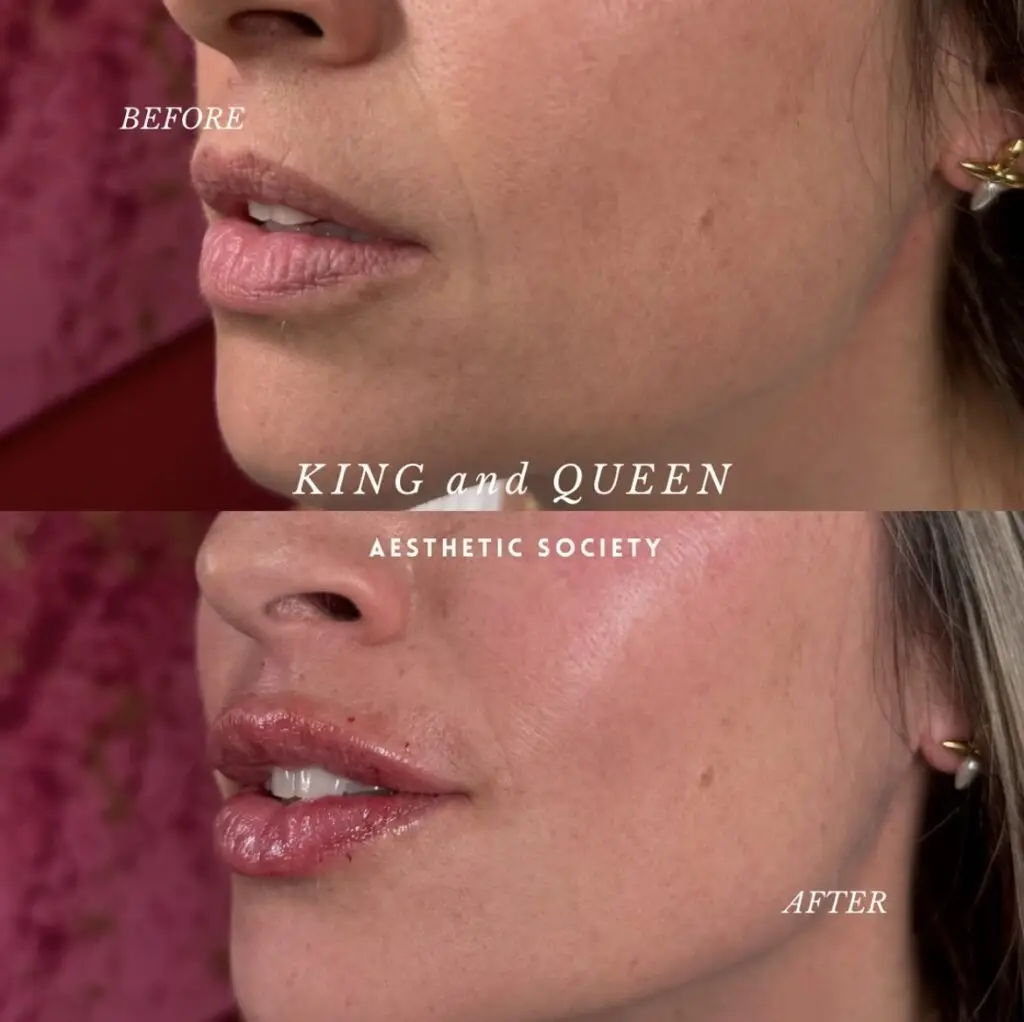
Kelly H. Harfouche, founder of KQ Aesthetic Society, knows firsthand that cosmetic treatments like fillers, neurotoxins, and microneedling, can not only enhance a person’s appearance and restore confidence, they have the power to truly change a person’s life. An expert injector has the ability to tailor treatments to each individual patient’s anatomy and goals for personalized results. Harfouche, a board-certified nurse practitioner, has spent nearly a decade perfecting her craft as an aesthetic injector and integrating her multifaceted artistic skills with precision patient care. Her commitment to continual education and training, plus a passion for helping people look—and feel—their best, set KQ Aesthetic Society apart in a sea of local medspas.
For many people considering nonsurgical treatments, the intent is to look refreshed and refined. KQ Aesthetic Society’s philosophy eschews a cookie cutter approach that bases treatments around units, instead working to understand each person’s unique goals, then curating a treatment plan to fit that vision. Harfouche focuses on “inclusive luxury,” the belief that everyone deserves access to aesthetic treatments, respective of budget restrictions. She develops long-standing trusted relationships with her patients, and works with each one to achieve their aesthetic objectives and address the underlying causes of their concerns.
“For me, forming an honest and open relationship with every patient who walks through the door is essential. This means understanding them on a deeper level and meeting them where they are to define and achieve their individual goals,” she says.
Drawing on her artistic background, which inspired her transition into medical aesthetics, Harfouche sees each client as a “unique canvas.” Rather than relying on standardized procedures, the practitioner’s distinctive approach combines her profound understanding of the physiological and anatomical changes associated with aging with an unwavering commitment to ongoing education about the newest products and their mechanisms of action. Her goal is to make each patient feel beautiful in their own skin and to embrace their individuality.
She has also pioneered a way to combine her talent for aesthetic artistry with her philanthropic nature. Harfouche is one of only a handful of providers using dermal fillers to treat patients with lip asymmetry and scarring resulting from cleft lip surgery. Patients travel from around the country for this transformative treatment, noting increased confidence and a restored identity. She hopes to eventually launch a training program to help fill the void in this space.
“My passion has always been connecting with people and giving back in any capacity that I can,” she says. In the rapidly advancing landscape of aesthetic medicine, you can place your confidence in Harfouche and KQ Aesthetic Society to deliver exceptional care. To learn more or book a consultation, please visit kqaestheticsociety.com.
September is San Diego’s unofficial second summer—the crowds thin, the weather stays warm, and the city’s calendar somehow gets even busier. This month brings stadium-sized rock shows, Broadway’s buzziest comedy, a new anime convention, world-premiere theater, gallery openings, food festivals, and the first signs of spooky season. Whether you’re ready to lean into fall or determined to keep summer going, here are the best things to do in San Diego this September.
As Guns N’ Roses storm into decade five, their appetite for destruction persists. During their Snapdragon Stadium concert, hear the hard rock anthems, new material and a set from The Black Crowes.
9/23
Kehlani is proof that the romance and earnest sensuality of old-school R&B will never go out of style. Hear her take it back to the aughts at Viejas Arena.
From the silver screen to The Old Globe stage, John Carney will Begin Again (again) with a world premiere musical adaptation featuring new songs—courtesy of Train—and a story overflowing with hope.
9/12-10/17
The concept of work is a guiding principle for San Diego native and multidisciplinary creative noé olivas. Observe his community-informed approach via Tierra y Cielo (Earth and Sky) at Best Practice Gallery.
9/18-10/25
Two workers grapple with the weight of their roles at a temporary migrant shelter in Mario Vega’s world premiere play Our Lady of the San Diego Convention Center, set for citywide performances.
9/26-2/28/2027
Luminous visions of peace and the Punjabi-American roots of Rupinder Kaloti inform The Gathering, a wondrous unification of family foretold via paintings at Oceanside Museum of Art.
9/29-10/4
It’s Mary Todd Lincoln’s world and we’re just living in it. See the presidential paramour barrel to her way to stardom at the Civic Theatre during Oh, Mary!, Cole Escola’s political spoof.
Courtesy of SeaWorld
More Fun Things to Do in San Diego This Month
9/5 & 9/6
Pros and Con(vention)s: Anime San Diego will debut at the San Diego Convention Center with cosplayers, panels and more than 400 vendors well-versed in Japanese animation.
9/11-10/31
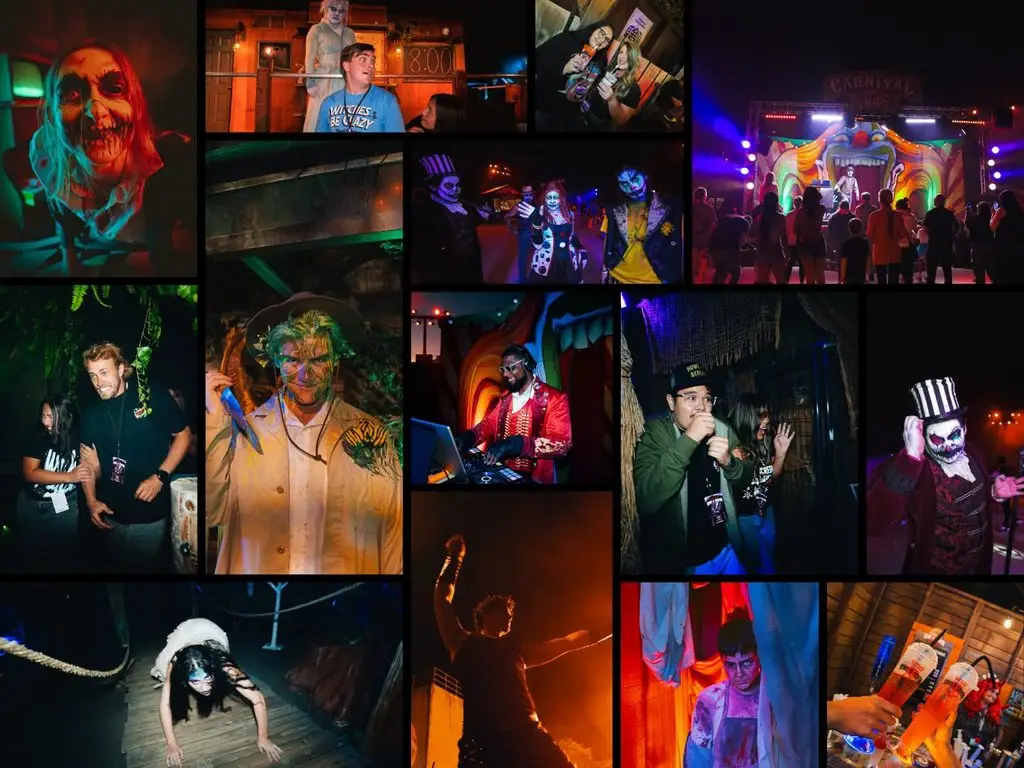
Scaredy cats beware: SeaWorld San Diego’s Howl-O-Scream embraces frights forged in darkness. Enjoy an ominous lineup of live shows, scare zones and bloody bars ahead of Halloween.
9/12
The best parts of Artivál and the Alley Cat Art Walk have united for the free Alley Cat Art Fest, an all-day outing for live music and immersive artwork in Downtown El Cajon.
9/12 & 9/13
Take a Grecian vacation for a fraction of the price during the annual Cardiff Greek Festival, two days of immersive cuisine and culture—with plenty of dancing—on the Encinitas coast.
9/13-9/20
Step away from the stove! The California Restaurant Association has eight days of eating experiences with your name on it. During San Diego Restaurant Week, explore by meal, neighborhood or cuisine for your personal dining plan.
9/16
Nourish yourself with an all-inclusive spread of Pacific Beach eats and locally-crafted artwork during the HeArt of PB Restaurant Walk on Garnet Avenue.
9/19
When it comes to stand-up comedy, Chelsea Handler is always ready to roast. See Handler tell anecdotes and skewer an assemblage of victims during her Balboa Theatre performance.
Ryan Hardison is a freelance arts and entertainment writer and recent graduate of San Diego State. When he's not staring at his laptop, he's likely eating an adobada burrito or getting sunburnt at the beach.
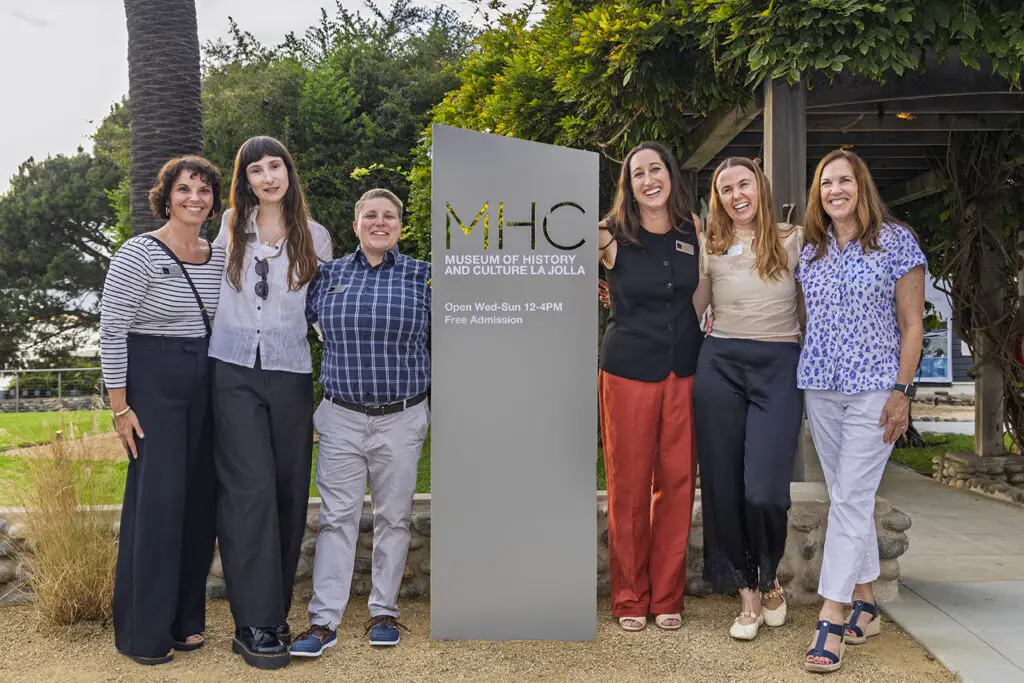
La Jolla has a rich history. From its roots as Kumeyaay territory and early days shaped by influential San Diegans like Ellen Browning Scripps to the vibrant hub for arts, culture, and education that it is today, the roughly seven-mile stretch along the coast has long been a local gem.
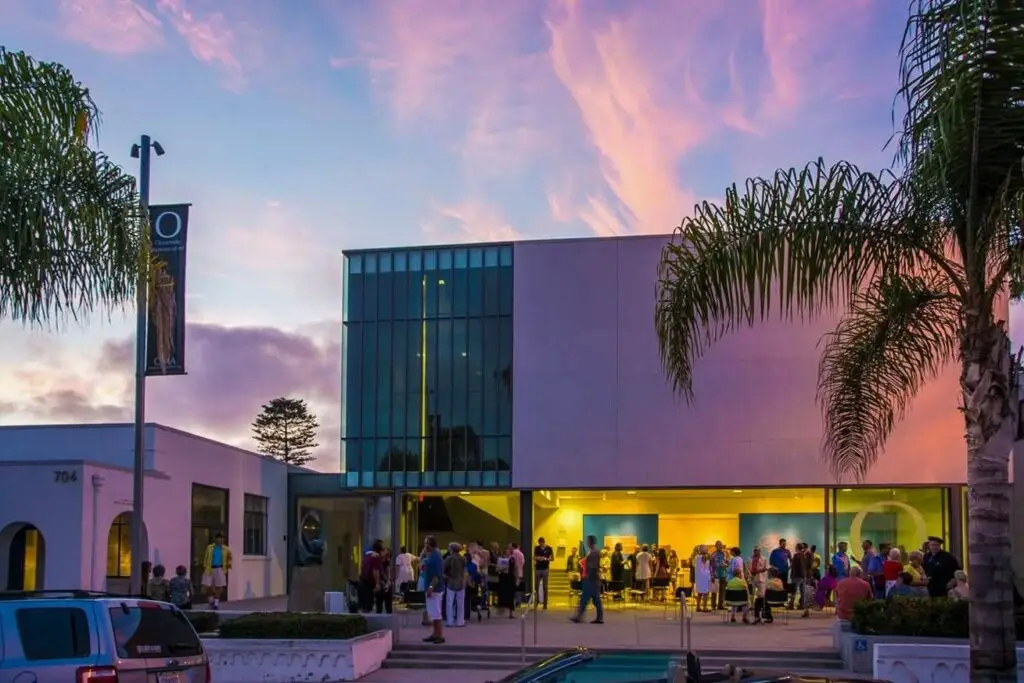
In 1964, a group of volunteers came together to preserve the history of the community. They formed the La Jolla Historical Society, which has since evolved into the Museum of History and Culture La Jolla. For the past 62 years, the organization has worked to protect historic buildings, archival materials, and recorded memories, ensuring the character of the neighborhood would endure well into the future.
“La Jolla is a small community, but it has a fascinating history,” says Lauren Lockhart, executive director of the Museum of History and Culture La Jolla. “The focus was always on how do we preserve the stories, places, and people that make La Jolla unique, and that remains central to our mission.”
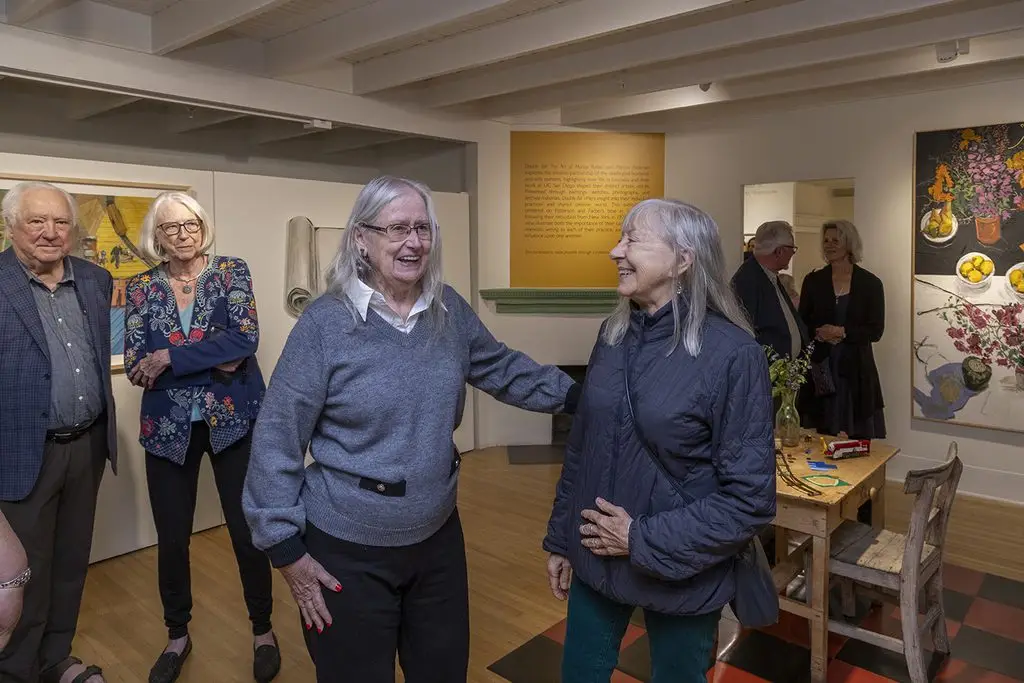
However, in its early days, the organization was limited in what types of programming it could offer because it didn’t have a permanent homebase. A pivotal point came in 2008, when it was gifted Wisteria Cottage, originally the private residence of Virginia Scripps, by descendants of the Scripps family. The historic Craftsman cottage had been remodeled by famed architect Irving Gill, whose other modernist works are peppered throughout La Jolla, adding to its distinctive look. The organization then launched a capital campaign to expand into a museum-quality space to host exhibitions and to store the tens of thousands of photos, drawings, postcards, and other materials in its collection, Lockhart explains.
“At that point the organization could really begin to invest in developing a public space and public programs that would give back to the community,” she adds. “That effort accelerated with my predecessor, Heath Fox, who pushed the organization to think about an exhibition program that was interdisciplinary in nature. It’s something that drew me to this organization and that I’ve continued to advocate for because examining history through lenses of art, architecture, science, and literature is so compelling and such a great way to bring different audiences into the fold.”
Courtesy of Museum of History and Culture La Jolla
The organization entered another period of transformation this year when it “outgrew” its previous identity as La Jolla Historical Society and officially rebranded as the Museum of History and Culture La Jolla. The organization had transitioned from a traditional historical society into a professionally operated museum and wanted to reflect that while also amplifying its ability to connect with broader audiences.
“We’ve grown so far beyond what a traditional historical society might offer to the public that we were finding that often, especially younger generations, they would come through our doors and say, ‘Wow, it’s a lot cooler than I thought it would be,’ which is a nice compliment, but it made us ask ourselves who’s not coming through our doors because they’re not sure what we have to offer or that they will see themselves reflected here,” says Lockhart. “We wanted to remove that barrier and make sure that everyone, just from recognizing our name, will think, That sounds like there’s something there for me, and that definitely is evidenced in our current programming and exhibitions.”
Courtesy of Museum of History and Culture La Jolla
The change, she says, has been a long time coming. “We’ve already made a lot of huge strides over the years,” Lockhart says. “It’s about our name catching up to our work.”
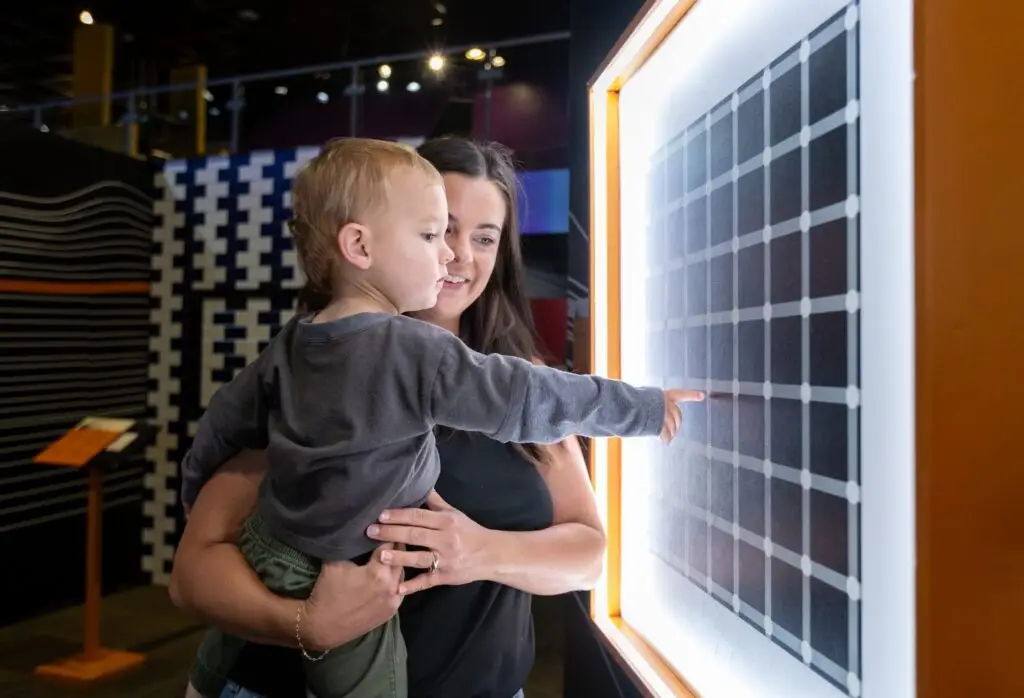
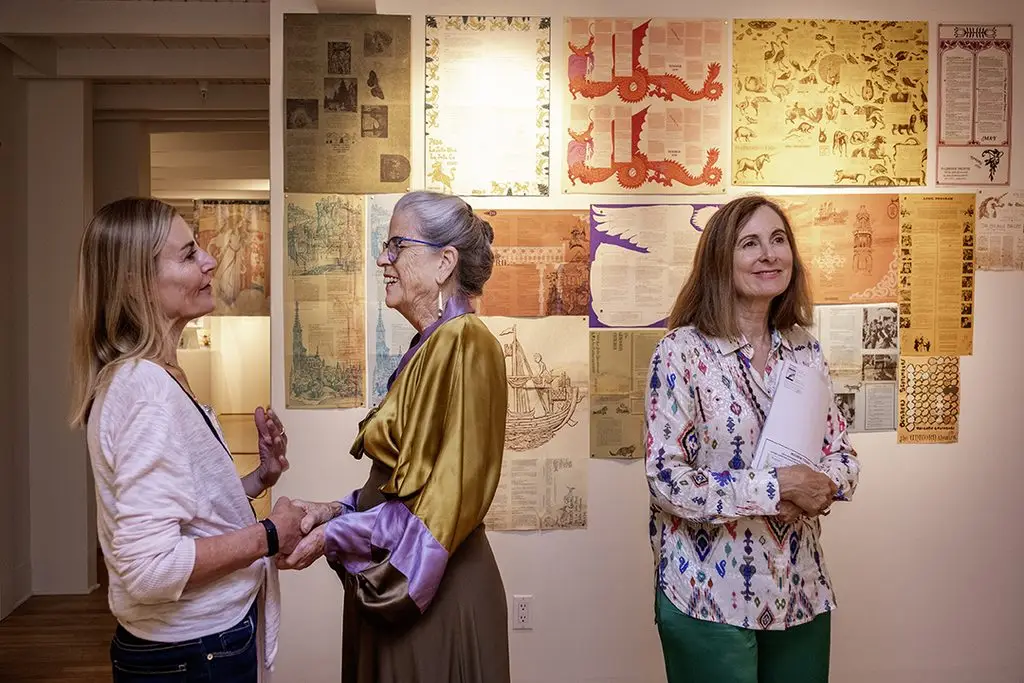
The Museum of History and Culture La Jolla’s current exhibits include Stories in Cloth: Communicating Through Textiles, presented in partnership with the Visions Museum of Textile Art at Liberty Station, on display through September 6. On deck is The Scientific Art of Historic Preservation, which explores the processes behind the museum’s mission. To honor the philanthropic spirit of the Scripps sisters, admission to the museum and many of its public programs are free of charge.
Sarah Sapeda is San Diego Magazine’s Custom Content Editor. In her 15 years in San Diego journalism, she has covered charitable events, health care, education, crime, current events, and more.
AVRP Studios’ tradition for Design Excellence and Innovation began in 1976 with Doug Austin, FAIA, in Solana Beach, California. The firm has since grown to complete major projects throughout the United States and Canada. We think of ourselves as a family and we care deeply about people. We want to inspire, help make their lives richer and more complete through our efforts. We believe that architecture is one of the most important art forms because of the impact it can have on the lives of those it touches. We’re delighted to have been recognized with over 150 awards for design excellence.
703 16th Street, Suite 200, San Diego, California 92101 | 619-704-2700 | avrpstudios.com