Accusations of “Mafia tactics” and drones sent on intelligence-gathering missions. Insinuations of opportunistic money grubbing and data manipulation. Publicity stunts and PR manifestos. Finger pointing and noise complaints. First dibs versus finders keepers.
Television melodrama? Not quite. It’s the war between pickleball and tennis in San Diego, and it doesn’t seem to be cooling down.
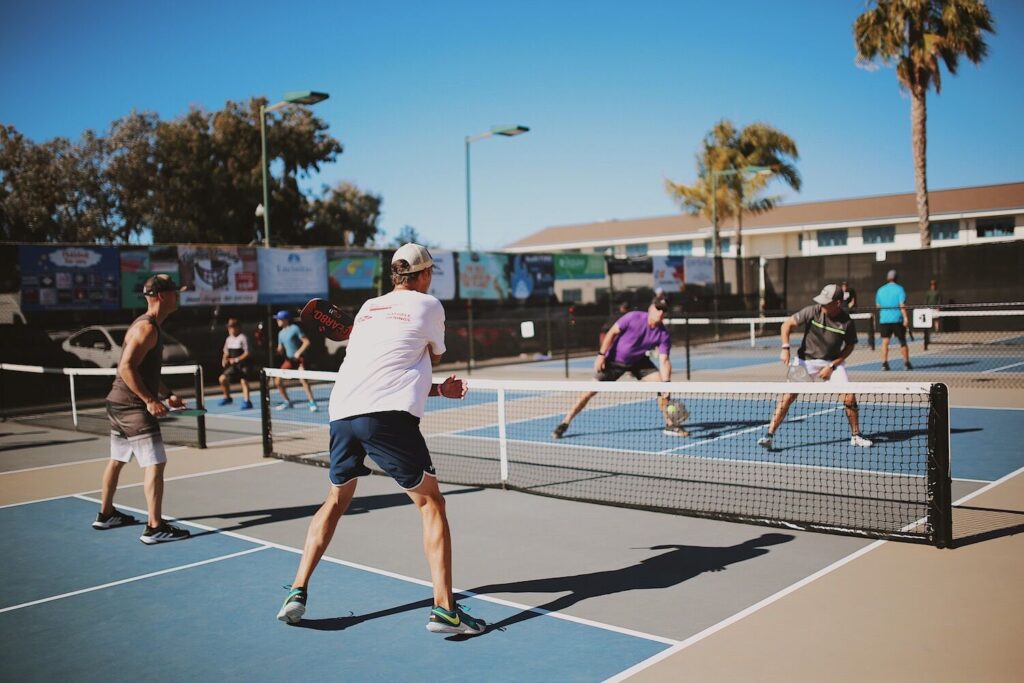
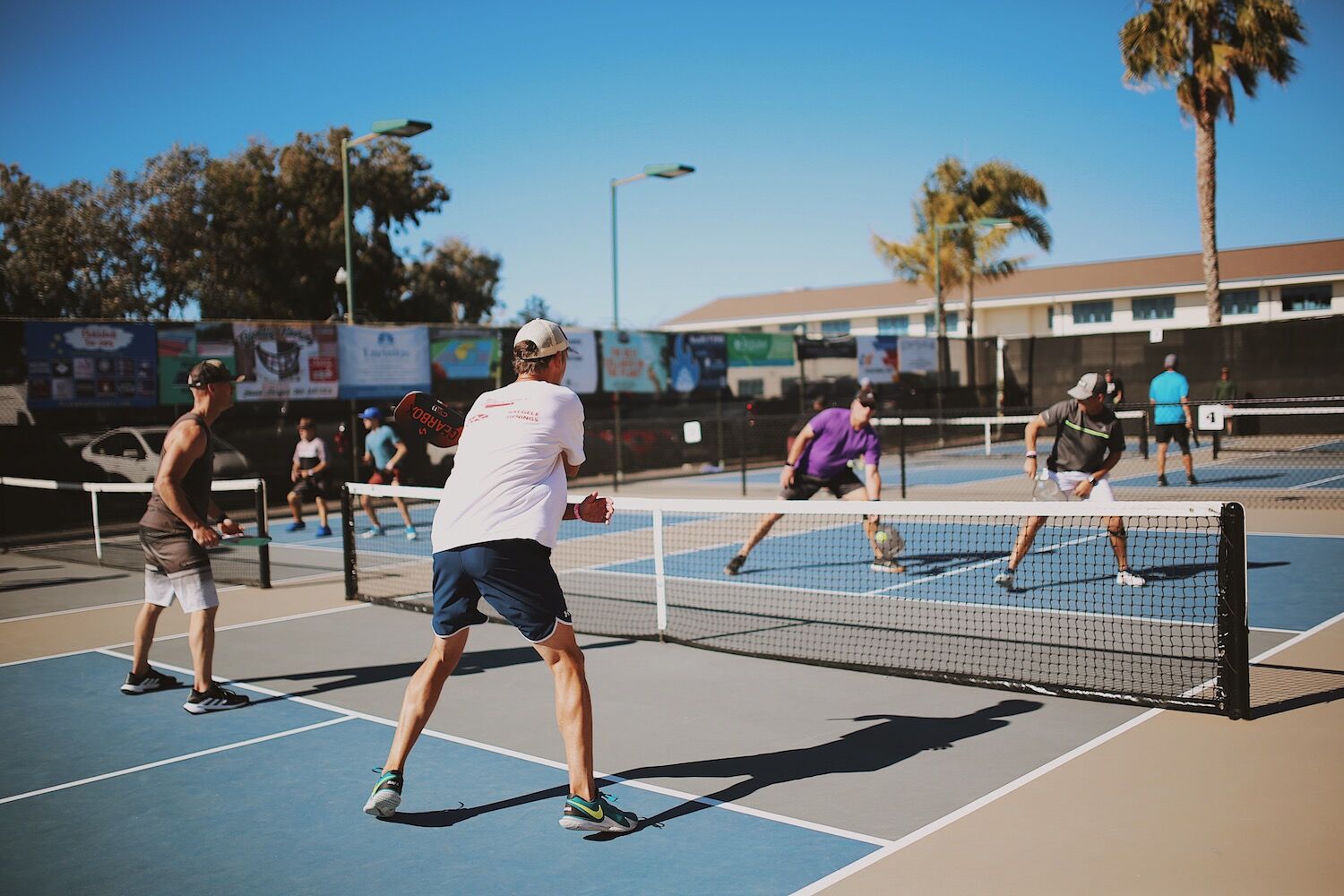
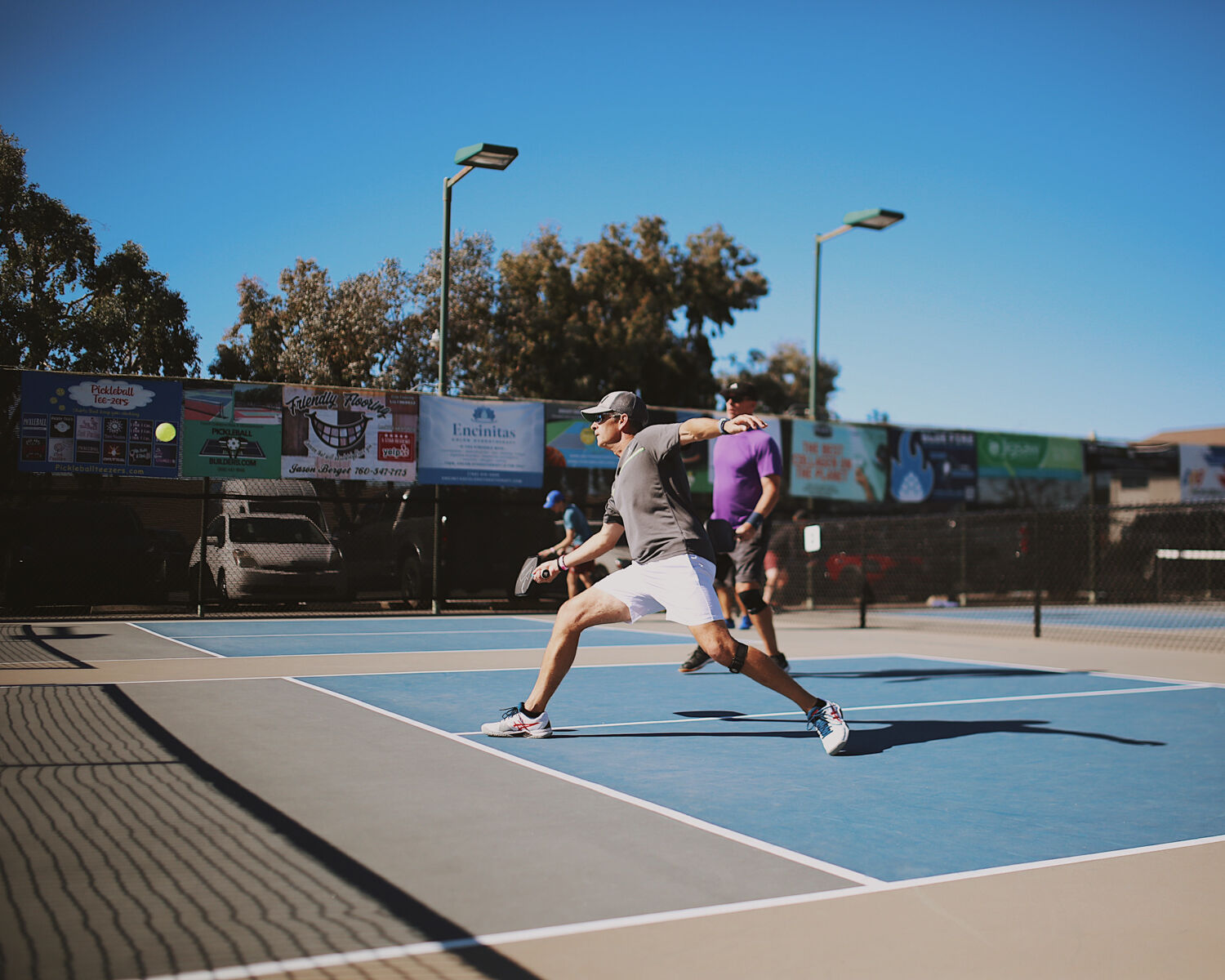
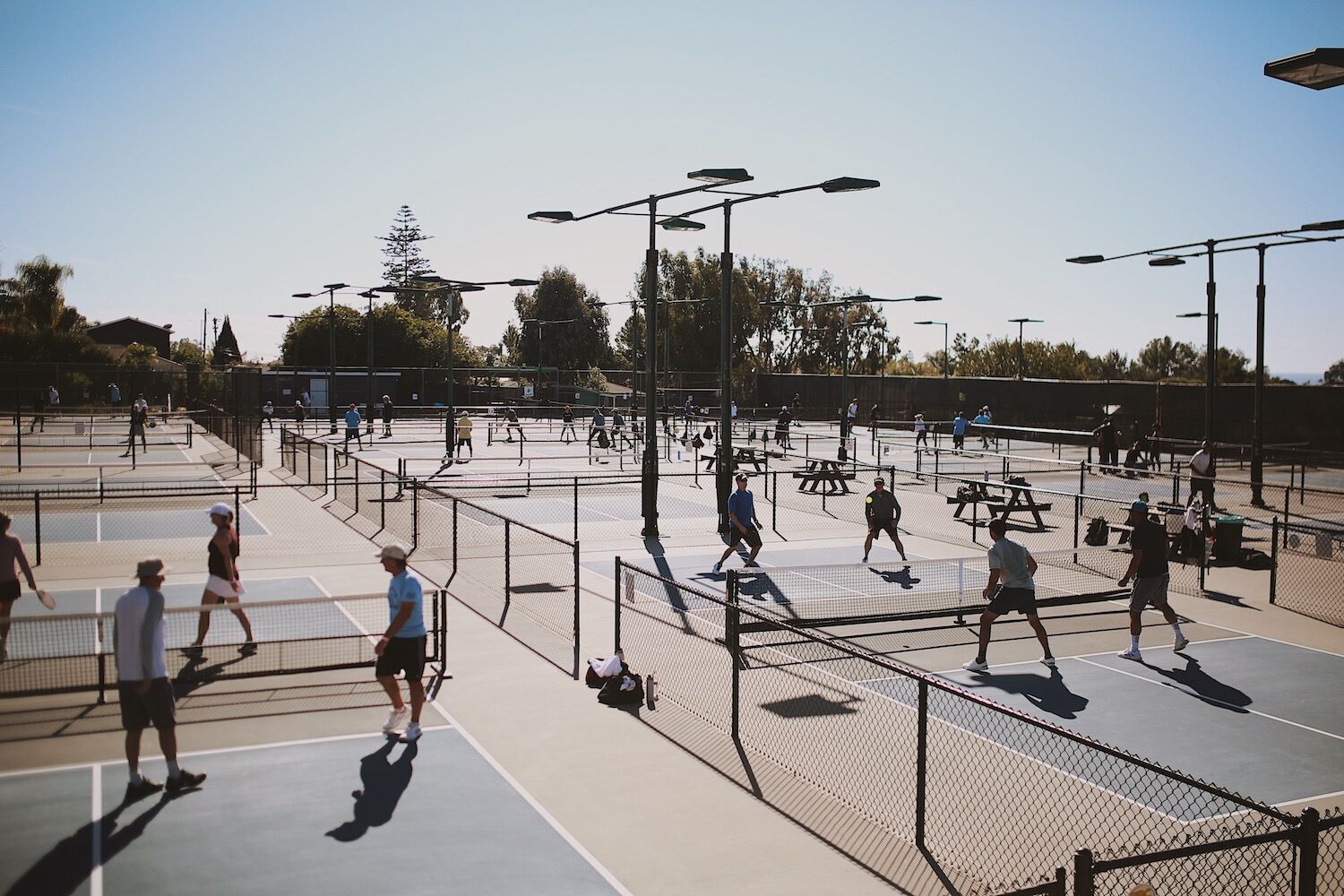
Pickleball, widely regarded as the fastest-growing sport in the United States, doubled the number of players to nearly five million over the past five years, and that stratospheric growth has yet to slow. With temperate weather and a preexisting culture of outdoor activities, San Diego is an ideal place for pickleball to thrive. Thrive it has, converting players of all ages and abilities by the thousands.
The problem San Diego faces—along with the rest of the country—is where to put all the picklers clamoring for places to play. The city and county can’t build courts fast enough to meet demand, and while there are a handful of private facilities like Bobby Riggs Racket & Paddle in Encinitas, local pickleball advocates say the lack of public venues is the sport’s number one problem.
For two and a half years, coach Kevin Bacon has taught 60 new students every nine weeks how to play pickleball through the City of La Mesa Parks and Recreation department. He says everyone asks the same question: “Where can I play?” Currently, San Diego relies on a sparse, spread-out system of public pickleball courts across the county and has only one dedicated court in the city limits.
That isn’t good enough, says Bacon. “That would be like saying we’re going to build a bowling alley, but we’re going to put one lane in every park.”
pickleball
Credit: Madeline Yang
Even if the city found enough spaces and had the money to pay to develop a number of pickleball courts that would meet demand starting today, it would take years to work through the bureaucratic process of special-use permits, environmental studies, recreation councils, and other red tape before they could even break ground.
Pickleball can’t (and won’t) wait that long. That’s why they’ve turned to what they consider a fair compromise: taking over what they call “underutilized” tennis courts.
The tennis community is reluctant to cede ground in San Diego or elsewhere. “Our sport has grown 27 percent since Covid-19,” says John Broderick, president of the board of directors for the San Diego District Tennis Association.
“We’re trying to get more courts to support the additional players… we were trying to do that even before we knew this pickleball problem was going to come up.”
He says the local pickleball community’s “underutilization” argument is based on manipulated data, sometimes from drones flown over tennis courts during off-peak times. “They claim there’s 550 tennis courts in San Diego, when those courts are mostly high schools and colleges,” he points out.
pickleball, courts
Credit: Madeline Yang
“They’re not accessible to the public.” Todd Sprague is the current President of the Board at the Peninsula Tennis Club in Ocean Beach’s Robb Field, where in July 2022, a group of pickleballers staged a well-publicized sit-in in an attempt to bring awareness to pickleball’s comparative lack of venues. Even before the sit-in, or what he and Broderick call “the stunt,” he had been in negotiations with Stefan Boyland, co-founder of the group behind the protest, The Pickleball Association of San Diego, to find common ground between the two sports.
Sprague says sharing space is a last resort, not a quick fix. “They’re very different sports,” he says. “If somebody is playing a different sport next to you than the one you’re playing, it’s just distracting as heck.”
But tennis and pickleball champion Steve Dawson, coowner of Bobby Riggs, isn’t letting tennis off the hook quite so easily. “Tennis players don’t want to see pickleballers playing on tennis courts, even if tennis players are not playing,” he says. “I had tennis pros who used to call pickleball ‘redneck tennis,’ and those pros eventually left my club because they couldn’t stand the idea of pickleball gaining popularity.”
He says the city should be stepping up to squash tension between the two sports by either building new courts or making it easier for private developers to do so. But in the meantime, advocates on both sides are holding out hope that tennis and pickleball can both thrive, if not at least coexist peacefully, in a city that’s perfectly primed to embrace the pickle.
“Throughout the United States, all we have is acrimony between tennis and pickleball,” says Sprague. “We need something much better because it needs to be win-win. It can’t be win-lose.”
Beth Demmon is an award-winning writer and podcaster whose work regularly appears in national outlets and San Diego Magazine. Her first book, The Beer Lover's Guide to Cider, is now available. Find out more on bethdemmon.com.
What makes San Diego, San Diego? That’s the question at the heart of this issue.
Over the course of eight weeks, San Diego Magazine staff and I spoke to dozens of people, from long-time leaders at some of our biggest institutions to emerging artists working alone at night in studio apartments after eight hours (or 10 or 12) at their day jobs.
Tasked with bringing this issue to life as editor at large, I’m just one member of a stellar team of artists in their own right. I repeatedly told owners Claire and Troy Johnson: This is your baby, I’m just the babysitter. Which is wink-and-smile cute, until you spend two months with the kid and realize you’d take a bullet for it.
San Diego’s beaches are gorge and the weather the envy of those who spend winter scraping ice from their windshields. But sand and sun are the least interesting things about this place. Traditional territory of the Kumeyaay people, San Diego is a majority-minority region with cultural and artistic depth that’s unmissable unless you’re looking directly at the sun (don’t do that, please).
For me, the creatives make San Diego. The composers, the painters, the sculptors, the writers. From Oceanside to the border, and Tijuana too, this is arguably the most culturally layered region in the country. That shows up in murals, music, textiles, food, dance, street art, and beyond.
Almost nobody I talked with does just one thing. The visual artist is also a musician. The culture keeper is also a painter. Their personal stories shape their work and compel them to create in San Diego, even when staying costs them more than San Diego gives back.
That world is what San Diego’s artistic and cultural community gives to us. It’s the mural on the side of the building at Ace Parking on the corner of India and A streets. It’s the buskers overlooking the pier in OB. It’s cultural drumming classes at WorldBeat Center. It shows up invited (or not: we see you, street artists), and we’re all better for it.
I believe we’re all artists, by the way. That natural state gets trained out of us early, in favor of deadlines and the idea that anything made with your hands needs to justify itself with a return on investment. A lifetime doodler, I picked up a sketchbook three years ago; watercolor followed. Talent’s debatable, but that was never the point. When I’m creating, my brain quiets; I can’t be anywhere else in my head except exactly where I am. My work won’t be on gallery walls, but it’s not a hobby either. It’s a portal to the world I want to live in.
For this issue, we reached out to dozens of people across the arts community and asked them to give us names—artists and culture makers they felt were especially crucial, compelling, moving the city forward. The result was a list of 190 artists, makers, builders, doers.
We also wanted this issue to be its own art project, not just a write-up of one. To give artists proper acreage, we enlisted one of the city’s top photographers, Matt Furman, to capture their image.
Then we began the Sophie’s Choice process of narrowing the list of talented humans—each deserving of their own 2,200-word profile—down to 31. Our criteria was broad with bumper rails: Names that kept coming up again and again had to be included; so did people doing work that reflects our diverse region; and people building something bigger than themselves, gathering others, and galvanizing pockets of scene. Individually and collectively, these creatives are reaching toward a future in which art and culture is what brings people to San Diego; a main attraction before getting a sunburn, not a side quest after.
Strip all of it away—the murals, the music, the makers, the stories—and what’s left of a city? Concrete and buildings with the Pacific Ocean and a mythological green flash. That’s it. That’s the whole inheritance.
Turns out the babysitter fell hard for this one: Seeing these artists through Furman’s lens made me feel all the things, and I hope it will do the same for you. I hope this issue compels you to get out your calendar and make a plan to buy the ticket, step into the gallery, sit in the audience. Showing up is how you tell San Diego’s creatives that art and culture matter—and that they matter, too.
This issue is my love letter—San Diego Magazine’s love letter—to them. To the people working and fighting to ensure that the stereotype is never all we are.
Aaryn Belfer is a writer and editor specializing in nonfiction across art, architecture, and culture. Once upon a time, she wrote a provocative column for San Diego CityBeat (RIP). She was a runner up in the 2025 Matchbook Stories contest at the San Diego Central Library and is irrationally happy about it. Currently in her Soft Girl Era, Aaryn has expensive taste in (mostly flat) shoes and will choose a great art exhibit or live jazz concert over almost anything else. Except, possibly, Javier Bardem.
You come home from your first day of school and your parents ask, “Did you make any new friends?” Maybe trading Lunchables or sharing a pack of Oreos helped you break out of your shell to strike up a conversation. Maybe you saw your classmate wearing a Padres hat and asked if his favorite player was also Fernando Tatis Jr. Maybe you’re a natural extrovert who has no problem inviting your entire class to your birthday party.
Making friends is an entirely different beast as an adult. You’re trying to balance your health, work, finances, family, and your sanity. And on top of that, a social life? Impossible.
Being a part of a bigger community—like a rec sports league—helps, but we all need intimacy. Witnesses to the exciting, mundane, shameful parts of our lives. Turns out, men don’t have that as much as women do, and the consequences of this are dire. Roughly 1 in 6 men say they have no close friendships, according to a 2021 American Perspectives Survey. Suicide rates in men are nearly four times higher than they are in women, according to the National Institute of Mental Health. Those numbers are even higher for men above 55, according to the U.S. Centers for Disease Control and Prevention (2023).
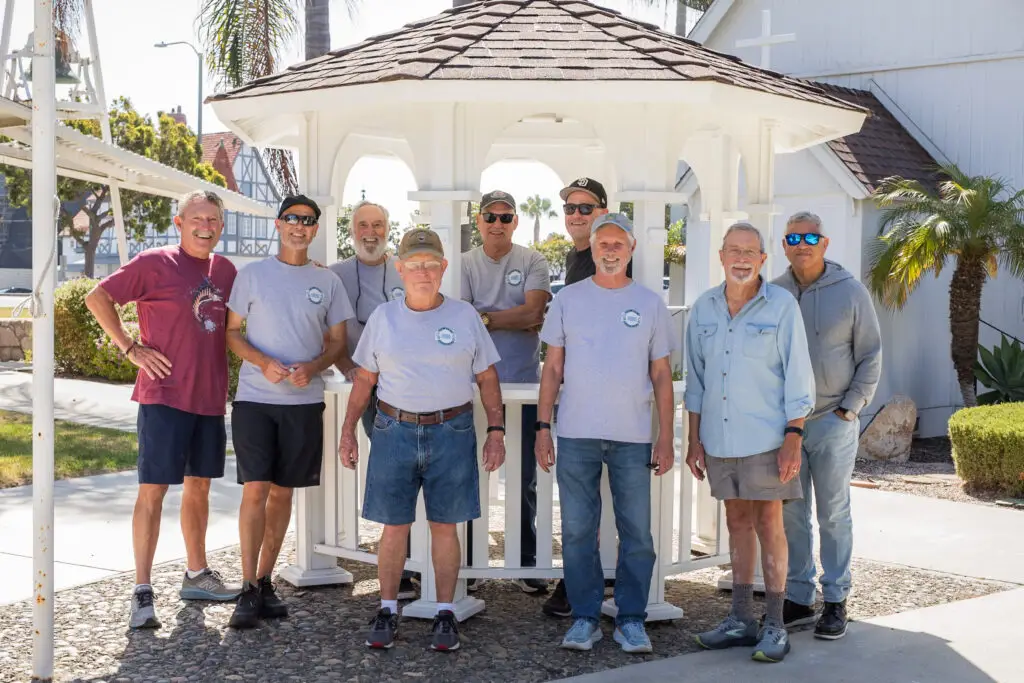
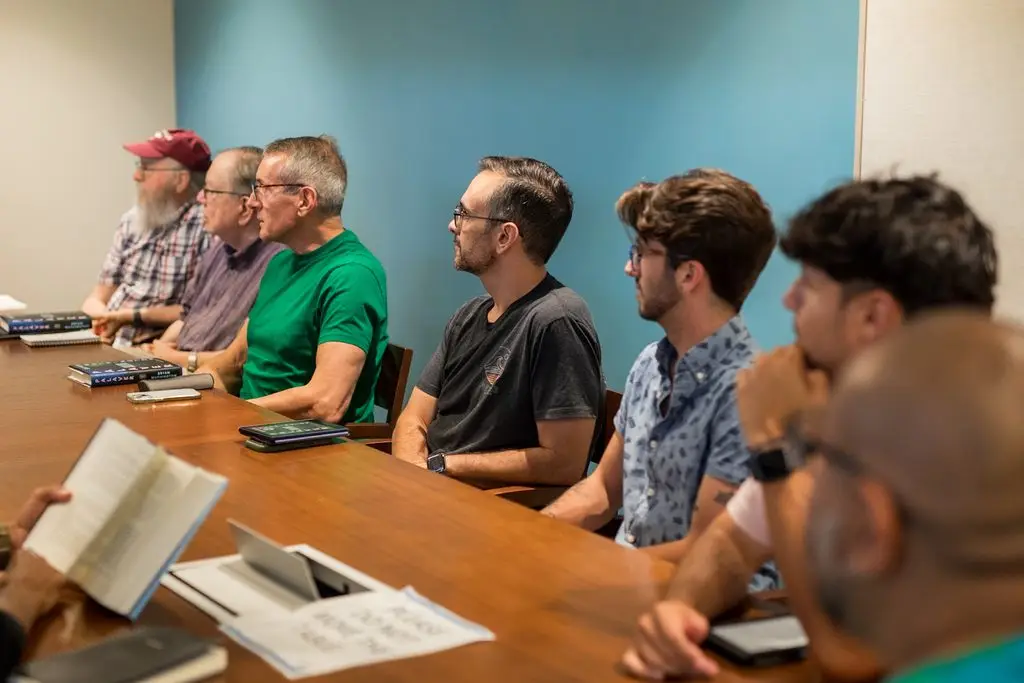
In Carlsbad, Men’s Shed helps older men build friendships as the group contributes to construction projects across North County. “Men get lonely,” says Glenn Bernard, one of more than 20 members of Men’s Shed in Carlsbad. “This is a good way to bond, socialize, share skills, and have something to do that’s worthwhile. Purposeful.”
What started in Australia in the 1990s has grown into an international nonprofit with more than 3,000 chapters worldwide, including one that meets at Carlsbad By The Sea Retirement Community. Haley DiDonato, director of life enrichment at Carlsbad By The Sea, established California’s first and only public chapter in 2023. Members (aka Shedders) meet twice a month to discuss their projects and get to work.
They’ve built bikes for the local Boys and Girls Club, a raptor shed at the Agua Hedionda Lagoon, a small birdhouse outside Front Porch Gallery, and a gazebo at St. Michael’s by-the-Sea Episcopal Church, to name a few.
Trade experience isn’t required. David Gilson, the group’s leader, was a pharmaceutical consultant before he retired. Rich Greenamyer is a retired engineering duty officer who built ships in the Navy. When John Gardella wasn’t working sales at Dupont, he woodworked projects for his family at home.
“Men are so tied up in their work all their life,” Gilson says. “Their identity was their job. Suddenly, you retire on Friday, and on Monday they don’t remember you. Now what?”
Courtesy of Dad’s Corps
Marital status also affects how men interact with the community around them. Some Shedders joined because their “wives encourage [them] to be in Men’s Shed, to get out of the house for a couple hours every couple of weeks,” Gardella says. For some widowers in the group—such as Gilson, whose wife passed away eight years ago—Men’s Shed provides a sense of purpose and place. The outings Gilson organizes breaks up the monotony of staying at home with his dog. A 2024 study in the National Library of Medicine says widowers feel long-term levels of loneliness (higher levels than widows), and they were less likely than widows to form new connections after loss. This group is changing that.
The appearance and function of male friendships have been spotlighted since the 300s BC, when Aristotle discussed them in Ethics. Fast forward to the 19th century, and these dynamics have transitioned from heroic friendships—ones built on loyalty and nobility—to ones that better symbolized the Romantic Age: more affectionate in written language (like writing letters to each other) and body language (like draping their arms around one another). By the end of the 1800s, 1 in 3 American men belonged to a fraternal organization.
But when World War II brought a homophobic “Don’t Ask, Don’t Tell” suspicion around male bonding, friendships between men became more stoic. It wasn’t common for men to talk about their feelings with each other.
In 2026, though, we’re sharing our feelings. Dads Corps, a nonprofit organization through Social Advocates for Youth San Diego, offers classes, resources, and supportive services to fathers. Twice a week for six weeks, fathers practice how to actively listen, learn how to better communicate, and gain more skills that help them in their parenting journeys.
“When dads have kids, they lose their friends because it’s all about just the baby, the mom, and the family,” says Dads Corps director Laura Soto. “When they come to our classes, they get comfortable being able to share their struggles. It does reduce the isolation and help normalize them in that struggle.”
For dads who are new to San Diego, the program helps them navigate their way around the city. For single dads, they can meet other fathers who are raising children the same age to set up playdates. Oftentimes, dads graduate from their cohort and return to volunteer and mentor new attendees.
The program is as therapeutic as it is active. Group facilitators teach dads about healthy relationship practices, answer questions about how they can be more consistent in their children’s lives. It also hosts fishing trips, barbecues, and community service events to let dads practice their learnings with each other outside a classroom.
“It’s about acknowledging that we need to be heard about the concerns that we don’t ask help for as fathers,” says Jorge Narvaez, alumni manager at Dads Corps. “We live in a society where fathers have to look through crevices—go to a bar, go to a barbershop, go to all these different places—just to have interactions with other people. It feels like we finally, as dads at this program, have a space for us to talk.”
Photo Credit: Arlene Ibarra
But some men don’t want to only talk about their inner selves; they also want to talk about books. For Ronald Alsop, the New York City Gay Men’s Book Club was a place for him to meet local bibliophiles when he lived on the opposite coast. There was no equivalent in San Diego—until he started it in 2019. He created the Mission Hills-Hillcrest Gay Men’s Book Club as a way to meet other men and talk about authors like James Baldwin and Edmund White.
Whether it’s Andrew Holleran’s fictional coming of age Dancer from the Dance (the first book the club read) or George Chauncey’s non-fiction novel Gay New York, the books Alsop chooses share a common thread: Each carries some connection with gay culture.
“Traditionally, gay men were depicted in books in a tragic way,” says Alsop, who is also a freelance writer. “In more recent years, there’s been a more positive spin on it, a more wholesome outcome.”
Alsop initially promoted the group by putting flyers around the neighborhood bars and in Uptown News. He was nervous before the first meeting, afraid no one would show up. Now, there are roughly 35 people on his email blast, and the monthly meetups regularly see 12 to 15 people participate.
“The discussion’s always lively,” Alsop says. “I think it’s a way to get to know people better.”
Throughout the county, because of these groups, people are reading books (its own win, these days) and creating community. Dads and their children are getting invited to birthday parties from their fellow fathers. And in Carlsbad, some Men’s Shed meetings are taking place at Hennessey’s Tavern down the road over brunch. As friends.
Matt Eisenberg is an award-winning writer and photographer based in San Diego. A former ESPN editor, his work has also been published by CNN, Bleacher Report and the New York Daily News.
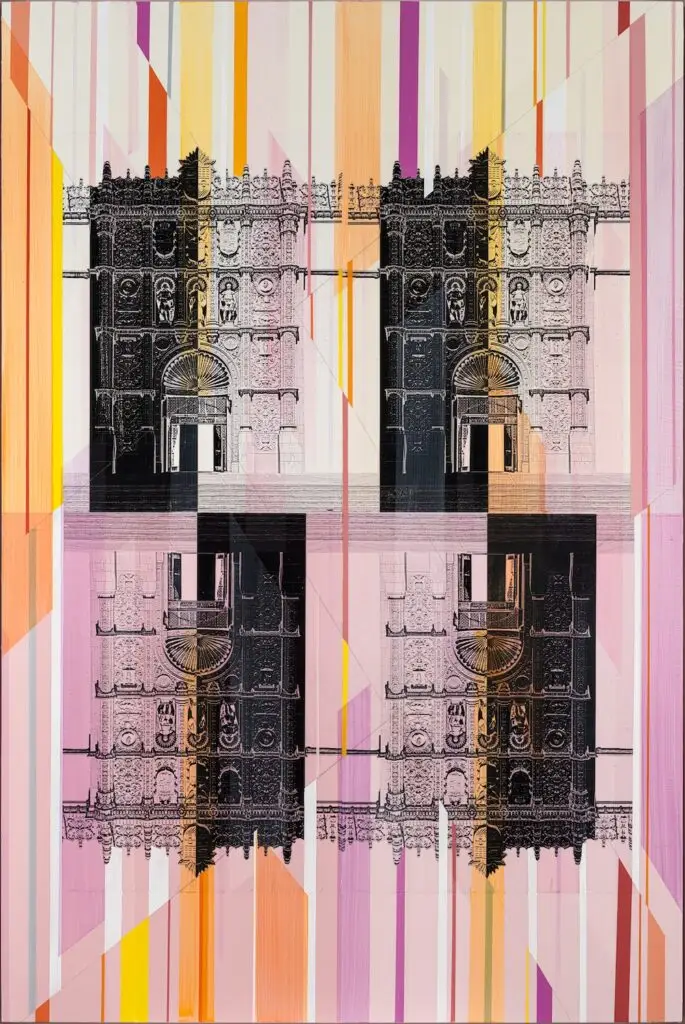
On February 28, 1926, the Fine Arts Gallery of San Diego (now called the San Diego Museum of Art) opened its Plateresque doors to 3,000 guests for opening day. Over the next century, the museum changed with the times—even once functioning as a naval hospital after Pearl Harbor. This year, the museum is celebrating its 100th birthday with an exhibit (open through January 24, 2027) featuring photographs, ephemera, and film footage spanning the museum’s history.
Courtesy of Tim Novara
Free Concerts at Spreckels Organ Pavilion
Every Sunday from 2 to 3 p.m., stop by the historic Spreckels Organ Pavilion for a free concert presented by the City of San Diego on the largest outdoor organ in the world (more than 5,000 pipes). The pavilion seats 2,400 for performances by the civic organist or guest artists.
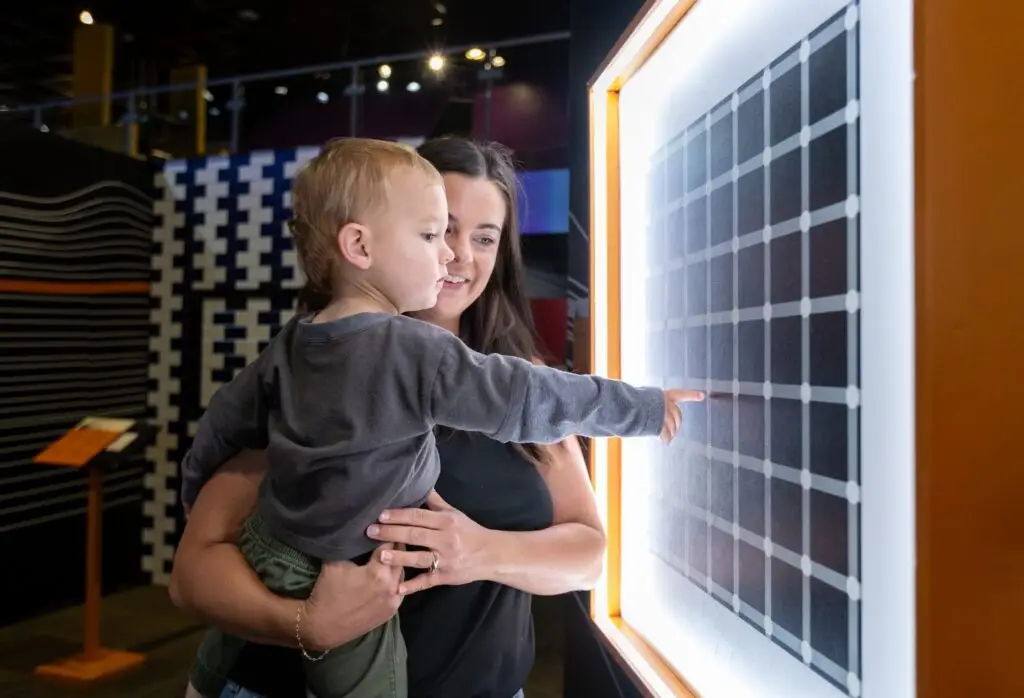
Some think natural history museums are just cemeteries for dioramas that haven’t received an update since the Reagan administration. When it comes to The Nat, which just finished a $7.5 million rejuvenation, they’re totally wrong. The museum debuted a new rooftop that replaces its 25-year-old atrium. The old roof created a greenhouse effect that steamed up some exhibits, so the new one—which includes 200 solar panels and better temperature control—will help preserve the artifacts inside. Each Friday in the summer, The Nat also becomes one of the season’s vibiest hotspots during Nat at Night, with food from places like Wolf in the Woods and The Craft Taco, bars and signature cocktails on several floors, and a rooftop DJ.
Fleet Science Theater Remodel
The Fleet Science Center just received its most significant update since the 1990s. It expanded its exhibit space by 20 percent and introduced a newly designed entrance gallery (formerly the IMAX theater lobby) that includes free exhibits for visitors who want a taste of the science without paying an admission fee. The former ticketing area now houses the Mindbender Mansion exhibit, and there’s a new café, Element 8, that will, of course, sell the center’s famous soft serve.
Inspired by the effortless charm of French cafés, this taste of France on Orange Avenue invites guests to embrace the simple pleasure of taking their time.
Strolling down Orange Avenue on a sunny afternoon, you’ll hear the hum of beach cruisers rolling by and visitors making their way toward the Hotel del Coronado. Dogs pause to greet one another on the sidewalk, palm trees sway overhead, and for a moment, you’re convinced you’re living inside the postcard from the gift shop you just passed.
Then the scene shifts. Towering white columns, black café awnings and gold-trimmed windows frame Little Frenchie, where woven bistro chairs spill onto the sidewalk and servers deliver bubbling crocks of French onion soup. The scent of caramelized onions and melted Gruyère is practically an invitation to ask, “How long for a table for two?”
That feeling of pulling up a chair and staying awhile is exactly what inspired Little Frenchie. French cuisine has a reputation for feeling a little intimidating, but the restaurant is rewriting that narrative with food and wine that feels approachable.
“Sometimes when you read a French menu, you come across words you can’t even pronounce,” David Spatafore, the owner of Little Frenchie, says. “We wanted to create a restaurant where people felt comfortable.”
Little Frenchie was designed to capture the spirit of the French sidewalk cafés that inspired it. Dating back to 1917, the space already carried the charm of a Parisian bistro, with architectural details that felt more at home on a European street corner than in Coronado. The team saw an opportunity to create a restaurant that matched the character of the space while filling a gap in the neighborhood.
The result is a French restaurant that honors tradition without taking itself too seriously.
At Little Frenchie, classic French techniques are at the heart of the menu, but there is always room for creativity. A cassoulet featuring Toulouse sausage and duck confit pays homage to the recipes and regions that inspired it, while a rich hot chocolate made with ingredients imported from France brings a taste of French café culture to Coronado.
The team loves finding unexpected ways to make familiar dishes feel new. A burger becomes a showstopper when it is finished tableside with melted raclette, while a French Dip gets elevated with prime beef and Wagyu makes its way into the burgers. Even Eggs Benedict gets a French twist, swapping the traditional English muffin for a buttery croissant. The GB&J, Little Frenchie’s take on a grilled cheese, brings that same playful approach with seasonal jam and French Brie layered into a comforting classic.
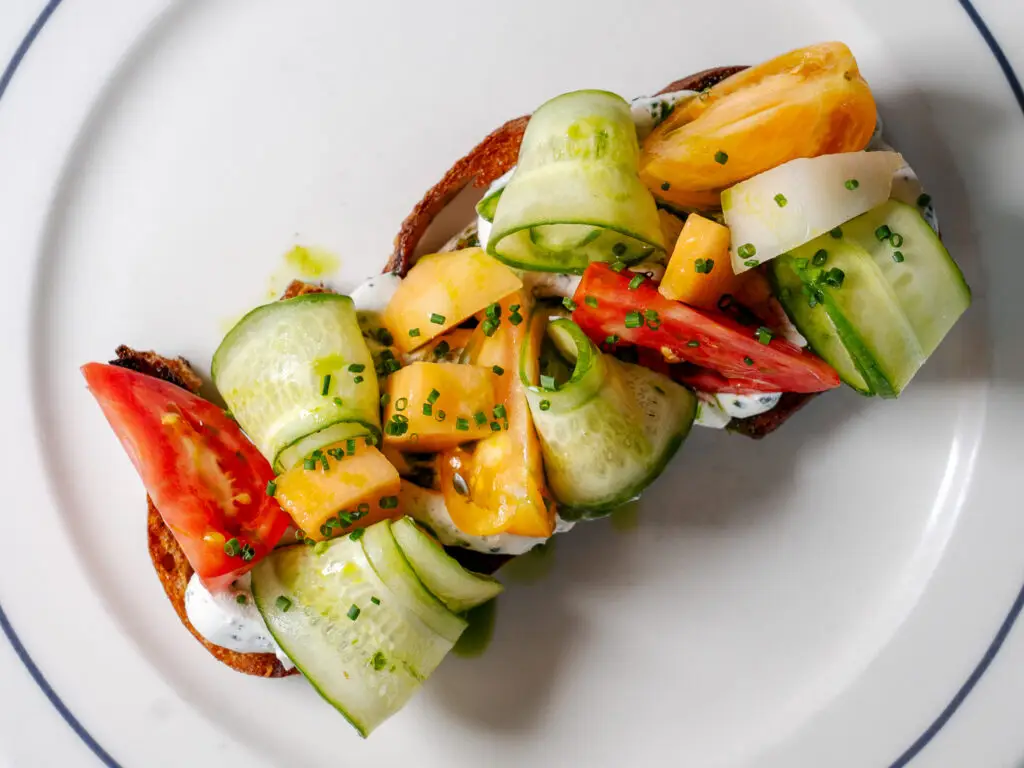
Nearly everything at Little Frenchie is made from scratch, with ingredients carefully chosen to match the restaurant’s standards. Even the bread receives special attention. Each morning, the team sends a car to Prager Brothers Artisan Bread to pick up freshly baked loaves, ensuring every element of the meal reflects the restaurant’s commitment to quality.
Wine is woven into the experience just as naturally as the food. Inspired by the effortless pairings found in French cafés and bistros, Little Frenchie’s by-the-glass selection invites guests to sip their way through different regions and discover new favorites without the pressure of knowing all the rules.
Boredom's not an option. These are a few of the top events in the city each year, including a rodeo, free summertime music festival, and a chili cook-off
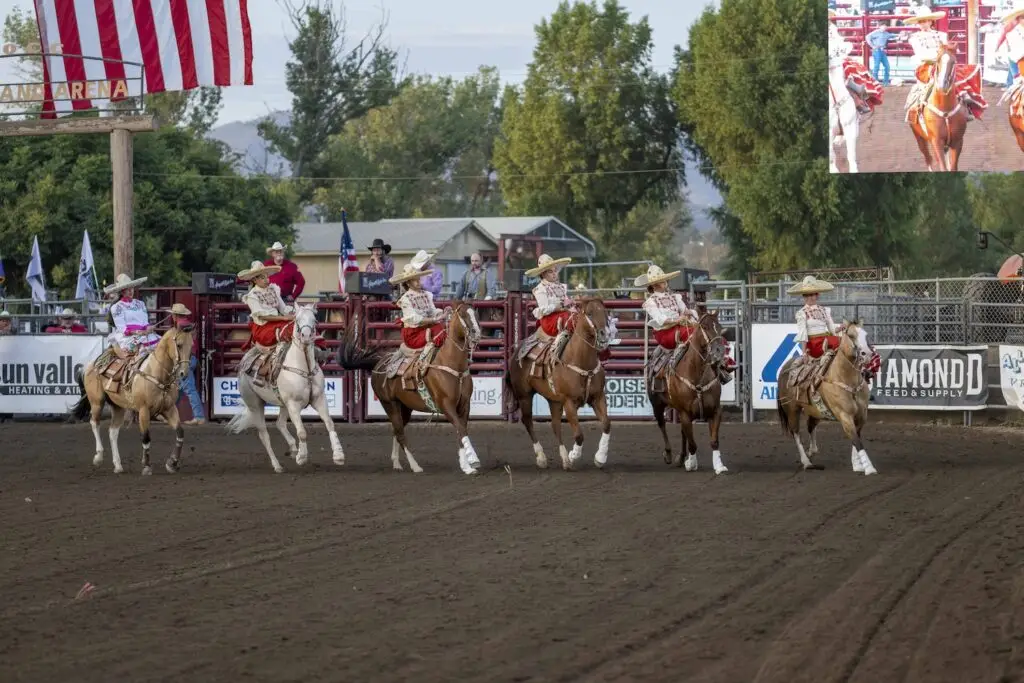
Meet some rodeo queens (or be crowned as one yourself) in R-Town’s annual celebration of the Wild West. Three days of mutton bustin’, tie-down roping, and barrel racing are all doing the community some good: Proceeds from the event funnel into local organizations like Ramona Town Hall and the Guy B. Woodward Museum. This month marks the 45th annual Ramona Rodeo, which takes place in the Fred Grand Arena and draws more than 12,000 attendees each year.
For nearly half a century, OB has hosted a chili cooking competition that has drawn thousands of hungry locals. (Buzz Cannabis presented this year’s event, so taste testers could have been under the influence of munchies-enhancing drugs.) Non-chili-related street fair festivities include beachfront live music, Fun Zone family-friendly play areas, and a Dirty Birds wing-eating contest.
Photo Credit: Cole Novak
Chicano Park Day
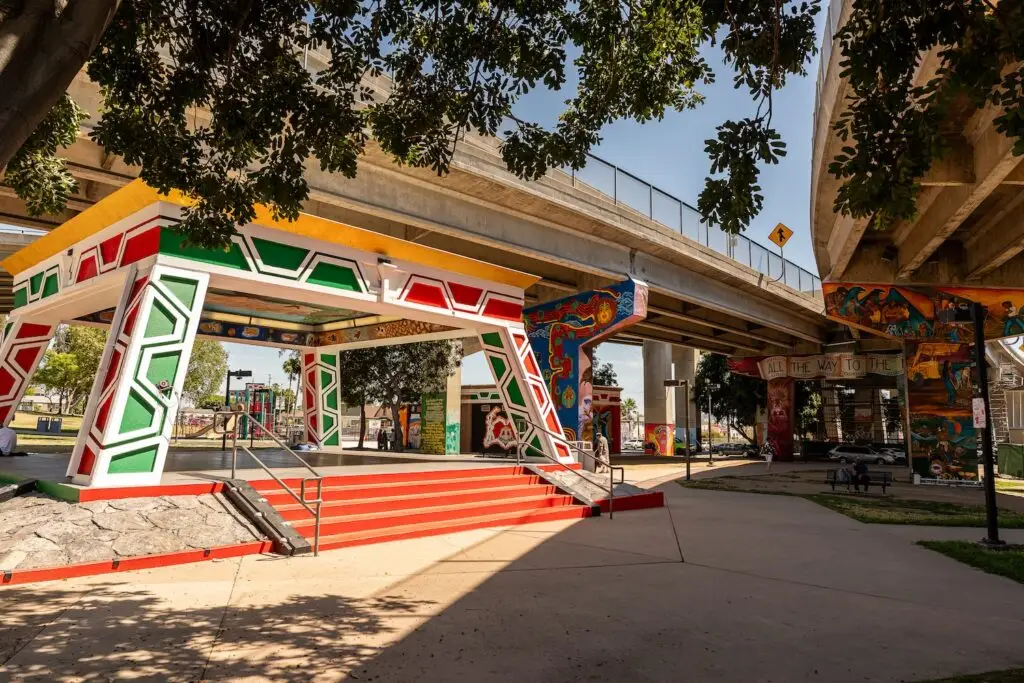
In 1970, Chicano Park was set to become a California Highway Patrol station. The problem: The city had promised a community park in that area. After decades of development fractured Barrio Logan and displaced thousands of families, Chicano locals were tapped out. So, for 12 days, locals occupied the area under the Coronado Bridge, blocking bulldozers and planting cacti. It worked. Construction stopped, and that area is now Chicano Park. Each year, locals celebrate the successful preservation of Chicano Park and the resilience of the Chicano Movement.
Solana Beach gathers at Fletcher Cove Park at the start of each summer for two days of live music ranging from country to pop to Chicano rock, plus an arts and crafts fair, an international food court, a beer and wine garden, and the Solana Beach Firefighters Association’s pancake breakfast. The event is free, but if you want an elevated experience, grab Seaside Pavilion ($75) or VIP Deck ($160) tickets for reserved seating, private cash bars, exclusive restrooms, and discounted swag.
Courtesy of North Park Music Fest
North Park Music Fest
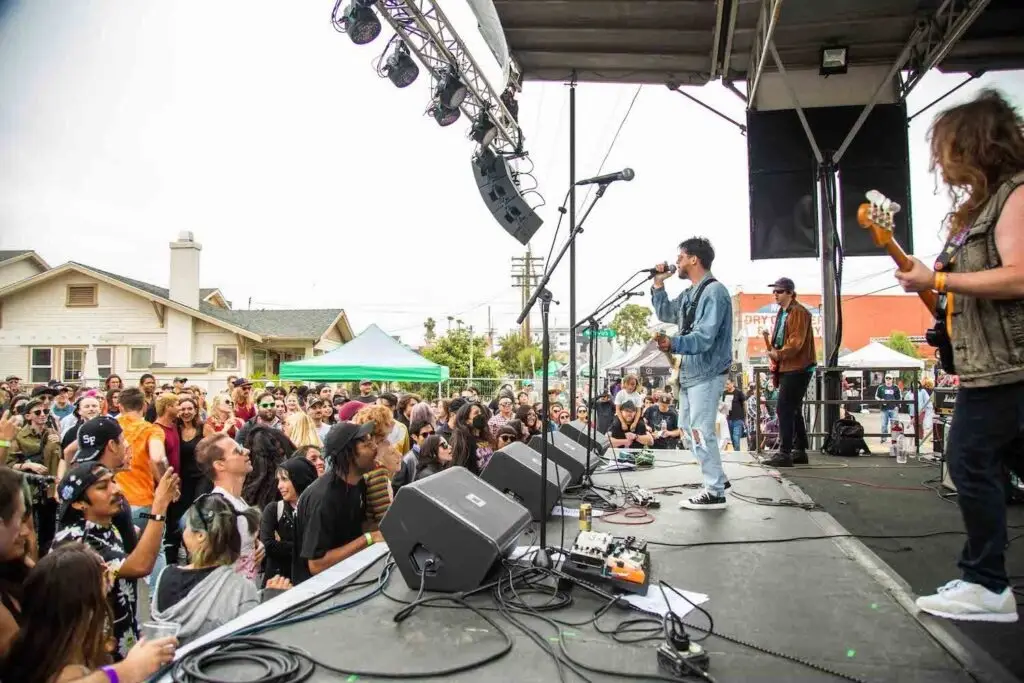
The entire North Park neighborhood hosts an annual music festival, meaning a dozen venues—from Queen Bee’s to Bacari to North Park Community Park—become live music spaces each June. Some locations are open to the public, but if you’d prefer lounge access at Granada House and line-skipping privileges, check out the $65 VIP passes. General admission otherwise starts at $25.
Lemon Festival
It’s weird if you don’t wear a lemon-themed outfit at Chula Vista’s annual Lemon Festival. For one day each August, Third Avenue pays tribute to the city’s former “Lemon Capital of the World” status with live music, citrus-themed photo ops, arts and crafts vendors, a lemon cook-off competition, and plenty of other food that doesn’t include the famed hesperidium. But who would want that at Lemon Fest?
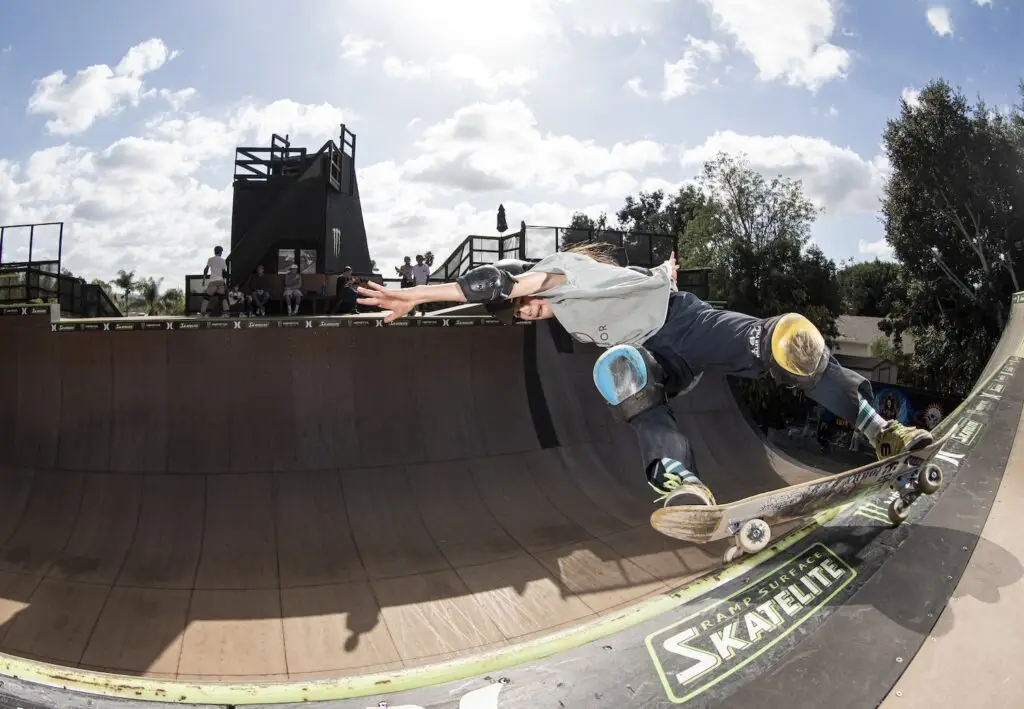
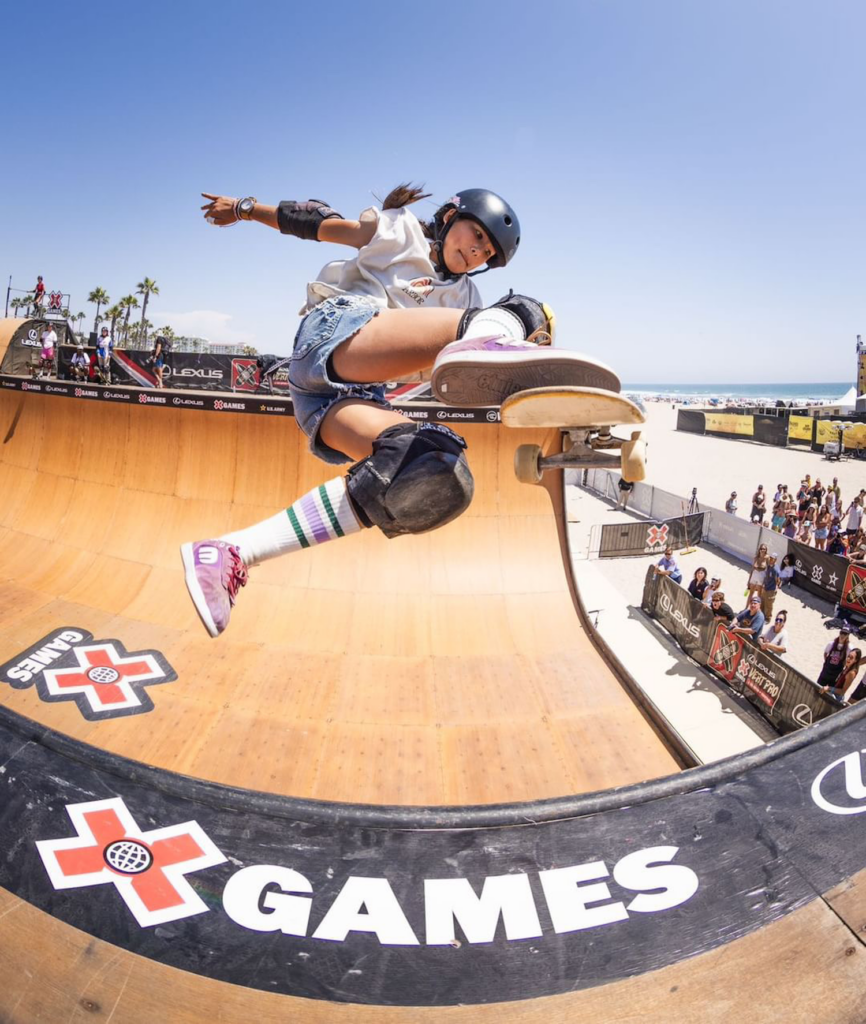
It was the summer of 1999. MTV, The Matrix, and first-generation PlayStation glowed on tube TV sets all over America. What a time to be alive. Smartphones weren’t yet stealing people from the moment. Cultural was a shared reality. During the last few minutes of the monoculture, Tony Hawk executed the first-ever 900 at X Games V in San Francisco. That’s two and a half aerial rotations with a side of the dizzies.
The time had run out on the Vert Best Trick competition long before the 11th attempt when he pulled off the fateful feat. Nobody cared. Not the judges, not the competition, and certainly not the crowd. “Let that bird fly,” they said. Once the trick was landed, they partied like it was 1999 … because it was.
That was the tipping point when the skateboarding world exploded, going from counterculture to a national phenomenon. Shortly after that, “Tony Hawk’s Pro Skater” video game came out, introducing millions of kids to what skate culture looked like. Oh, the game had a killer punk soundtrack, too.
We can all thank Hawk for the globalization of skateboarding. But we can also recognize his local influence and how San Diego County continues to be a hub for skateboarders young and old, for competitors and street skaters. To see it all, go to Park De La Cruz in City Heights—or, heck, any other skatepark in the county—which, at 19,000 square feet, is about twice the size of the average skatepark and has signature features like an M-shaped transition ramp. The amount of talent that continues to evolve in this county is a testament to deep-rooted skate culture and world-class athletes supporting the next generation.
Photo Credit: Casiel Sanchez
The Skatepark
I’m a little early for a skate lesson with pro skater Mike Owen when I get to Linda Vista Skatepark. In the 2010s, Owen ranked as one of the world’s top bowl riders. He’s the founder of San Diego Skateboarding and has “helped thousands of kids, teens, and adults learn to skate safely, confidently, and with style,” the company’s site says. And now it’s my turn. We start the lesson on the nearby tennis courts, getting my basic foot mechanics down. Safety before style.
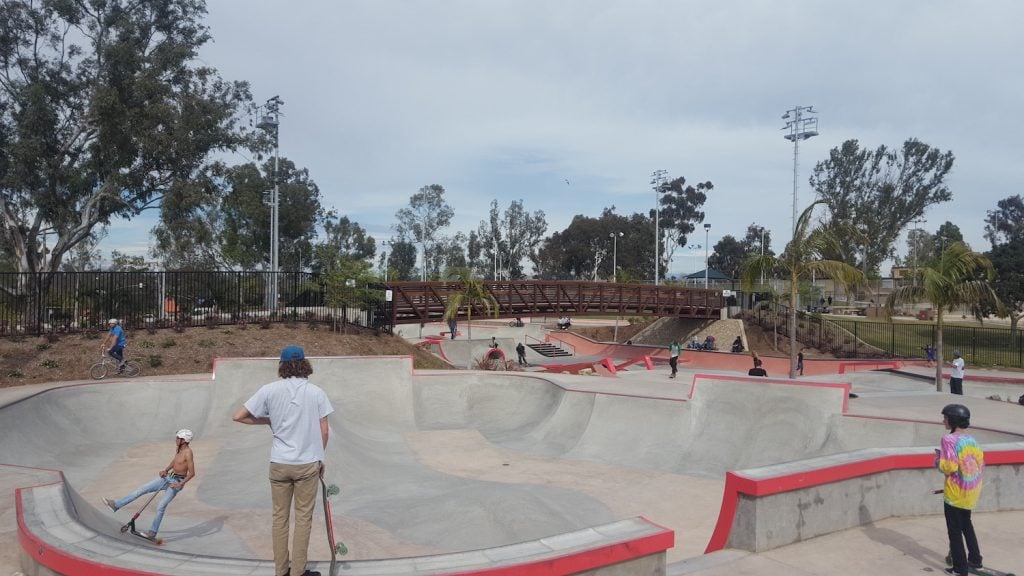
In terms of street plaza features, the massive Linda Vista Skatepark is loaded with rails, stairs, manuals, and ledges. There are more bowls than you can get from Cava: a flow bowl, backyard-style pool, and vert bowl. The main feature is a full pipe for advanced line riders. It’s a hell of a park, even if somebody just wants to watch the action from the 100-foot-long pedestrian skybridge overhead.
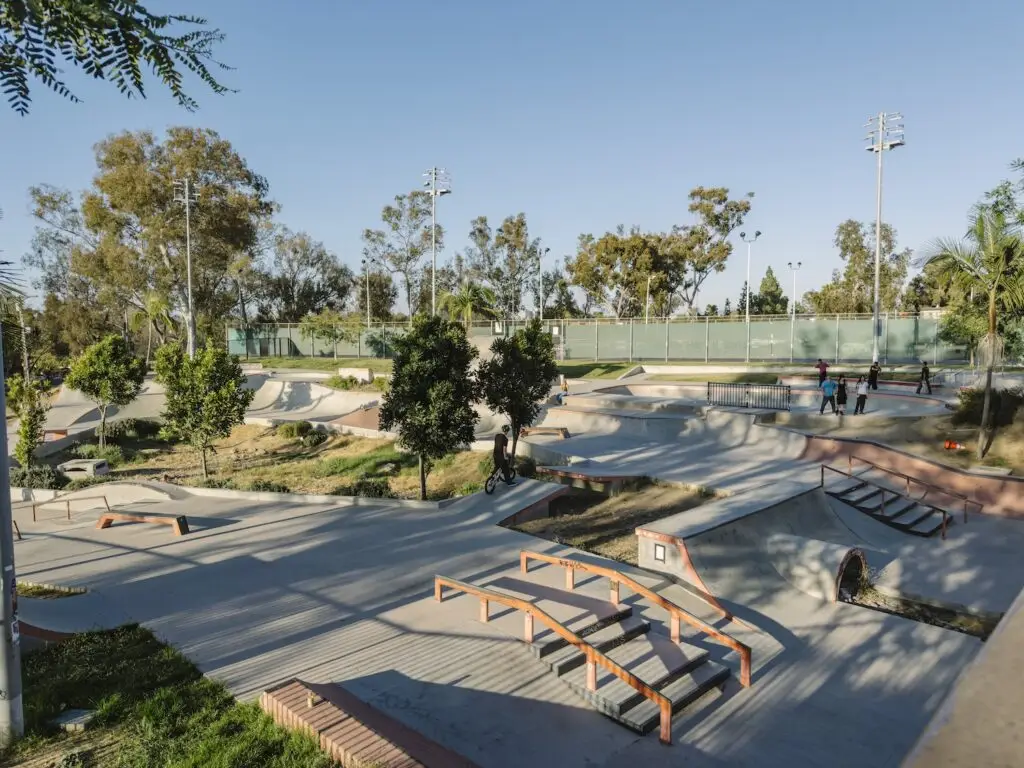
Right now, San Diego has over 50 public skateparks scattered throughout the county. “There are now more [skateparks], more resources for them, and more terrain,” Owen tells me. “Now, they’re offering different competitive style skateparks that help for competitions. The best parks have a variety of different terrain where you have things for beginners and bigger transitions. Not every town has that.”
San Diego, luckily, does. But despite the bounty, Owen believes there should still be more—public skateparks are safe spaces for all to learn and develop on-board skills. Without them, a huge portion of San Diego’s culture withers. Encinitas could be the next city to add a skatepark to the county’s roster: In early July, the Encinitas City Council appointed 12 local skaters and community members for the newly established Skate Feature Committee. In partnership with two councilmembers, the committee’s purpose is to design a working skatepark or feature for the city.
But like any big project, Owen says, it’s a long process to add another skatepark to the community.
“I wish it were easier,” he says. “When there are different contractors for different things, [there’s only] a certain amount of time to build. It gets tricky.”
Then there’s the matter of funding the actual construction and development of the skatepark. That usually comes from grants, fundraisers, and donations. For reference, Linda Vista Skatepark was built on a $4.46 million grant from the California Department of Housing and Community Development in 2014. With an additional $40,000 donated by the Tony Hawk Foundation, the park opened in 2018 and is the largest in San Diego’s Parks and Recreation system. The best way to get a skatepark in your neighborhood, Owen says, is to start a petition and reach out to your city.
Photo Credit: Blair Alley
The Street Skaters
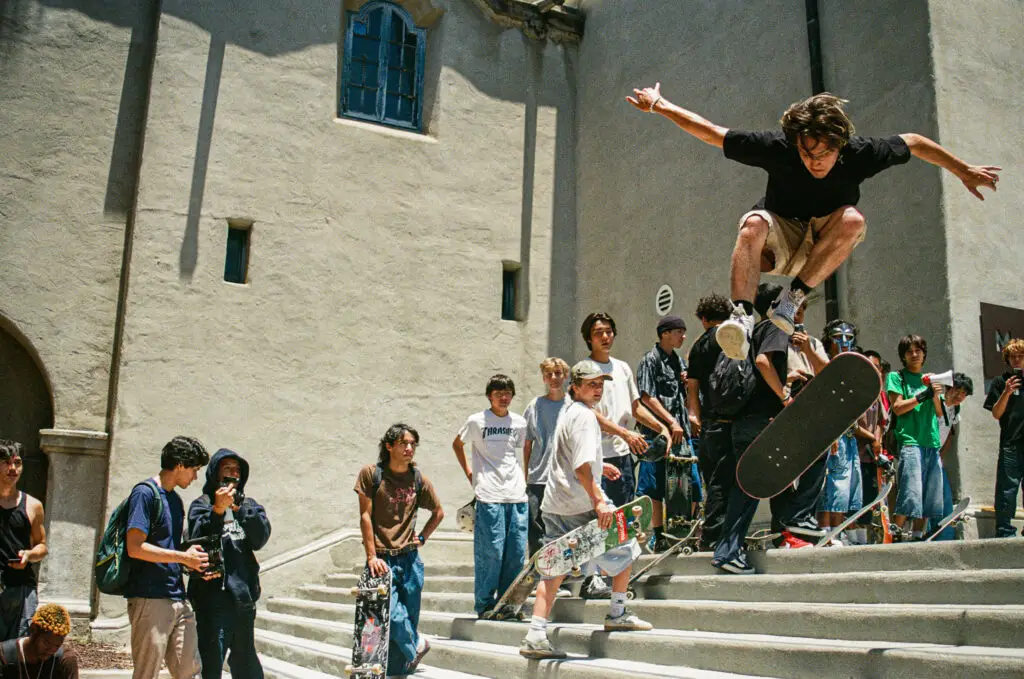
Jordan Thrower’s first street skate sesh at San Diego City College in 2003 ended with a police chase. The campus was swarming with skaters riding rails, jumping stairs, and grinding tricks on benches, curbs, and ledges. When the cops got on their loudspeaker telling them not to run, everyone obviously ran. Back then, cops would give tickets and confiscate boards. The vibe has loosened since. “Now, the police don’t really care,” Thrower says. “They just make you leave. It’s not anything crazy.”
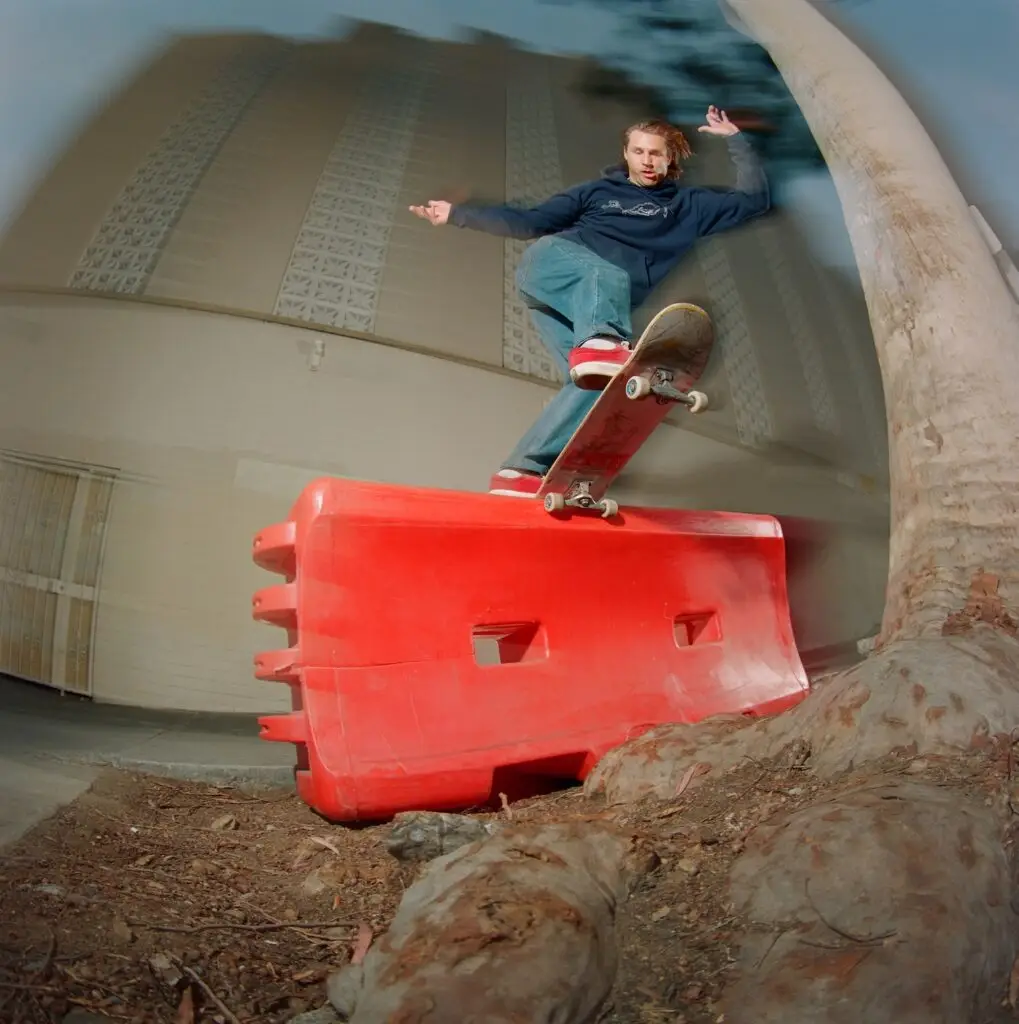
Street skating is when riders use real-world urban obstacles, rather than pristinely designed bowls or ramps—such as in college campuses, downtown areas, corporate buildings, and malls. Abandoned mini-golf courses and construction sites do the trick, too.
Thrower says the street skating hub here isn’t as huge as it once was. Thanks to modern technology and social media, skaters aren’t tied to any certain place to create skate videos. You know, those videos that could have been taken this year but have the low-fi vibe of 2004, where skaters carve down stairwells into parking lots, over mailboxes, or across park benches. The silver lining: Even though there are fewer street skaters than there once was, those who stayed in San Diego are still tight.
“Everyone skates with each other and knows each other here,” Thrower says. “In LA, it’s not really like that. It’s small there, but not everybody knows each other, and they don’t really skate with each other too much. They just have a lot of little crews.”
Back in 2015, Thrower started his own street team and brand that sells boards and shirts called Tantrum. The Tantrum team is split between San Diego and San Francisco. It doesn’t take much to be a part of a skate team. You just have to be a good hang.
“The way I pick people [for the team] is if I can get along with them,” he says. “It doesn’t even really matter if they’re that good. If you’re likable and funny, you can pretty much be on the team.”
Photo Credit: Marc Wierenega
The Future
Running it up to North County, a Vista-based nonprofit organization called Exposure Skate has been shaping up the youth since 2012. Its mission is to give more opportunities to otherwise underrepresented women, girls, and non-binary individuals by offering classes and camps. This, to build up confidence and community. We could all use a little bit of that, eh?
Thanks to Exposure Skate, 13-year-old Joey Yarbrough has found herself competing in the LA Olympic trials. (Her first time on a skateboard came at just 18 months old at an Exposure Skate Rising event.)
While competing for Team USA in Rome in June of this year, she finished 13th at the first Olympic qualifier for LA28. Currently ranked 21st in the world and 5th among American women, the young prodigy is blooming. And she’s in good company and mentorship from her biggest influence, Bryce Wettstein.
“She taught me at the first Exposure Skate Rising when I was little,” Yarbrough recalls. “I compete and skate with her all the time now, and it’s super fun. [At Exposure,] it feels so good to have someone there to help me whenever I need it. They’re like my family, always encouraging me and always there for me.”
Yarbrough will be just 15 years old when the Olympics go down in LA. She’s following the Olympic torch carried by other locals such as Wettstein, Ruby Lilley, Jordyn Barratt, and Exposure Skate’s Amelia Brodka.
“I’m working my hardest to get there,” she says. “I’ll also work my hardest to go higher in the Olympics, maybe on podium. That’s just my dream. So, hopefully it’ll come true.”
Jake Peterson is a San Diego-based journalist and culture writer. His work explores the city’s music scene, sports, local characters, and the offbeat corners of San Diego’s subcultures.
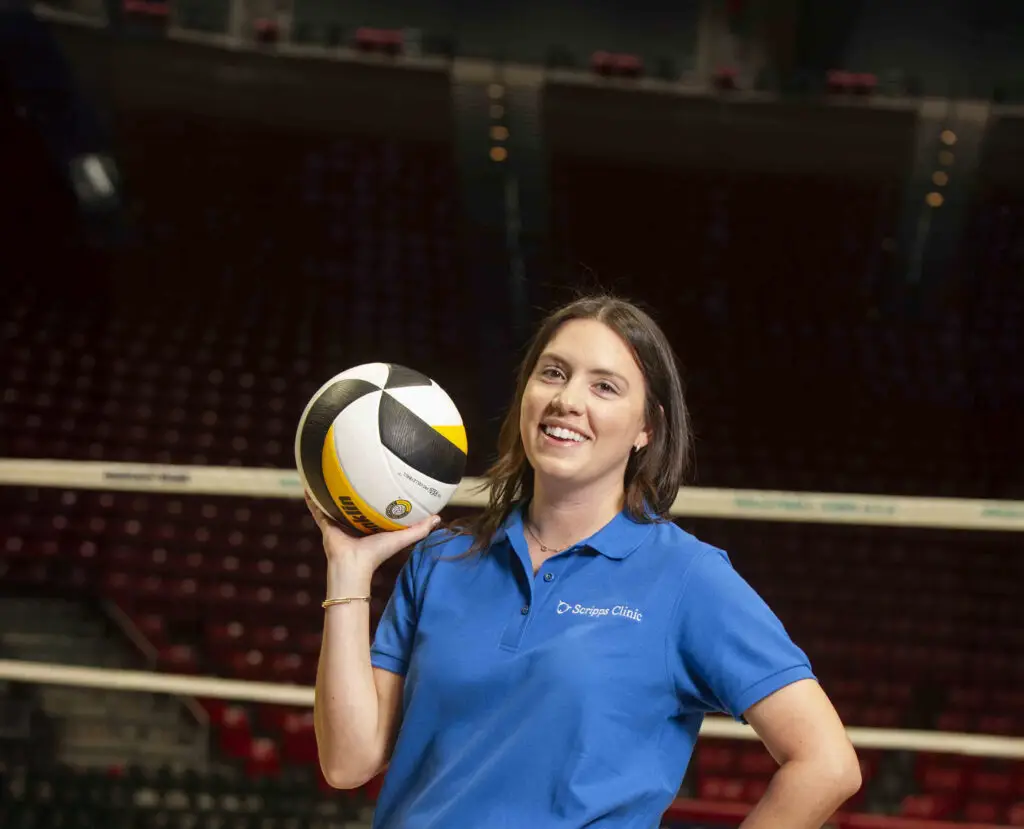
Growing up, Laika Nur, MD, Scripps Clinic sports medicine specialist, loved watching beach volleyball when the Association of Volleyball Professionals tour came to her hometown of Chicago. A talented volleyball player herself, she remembers sitting in the stands all day, and once, even got a couple autographs. Years later, Dr. Nur was attending a professional event focused on women’s sports, and the discussion turned to a new professional women’s volleyball league. The general manager and coaching staff for San Diego’s team, the Mojo, happened to be in attendance, and Dr. Nur took the opportunity to ask them if they needed a team doctor. Flash forward to the Mojo’s inaugural 2024 season, when Dr. Nur officially became the team physician. Click here to read more about Dr. Nur and how she incorporates lessons she learned on the court into her practice.
For more nutrition, wellness, and healthy living tips, sign up for the San Diego Health newsletter here.