Everything SD AUGUST 18, 2025

What to Know About the Multibillion-Dollar Midway Rising Project

The massive, 48-acre concept—complete with a new 16,000-seat stadium—is slated to transform the Point Loma district if approved
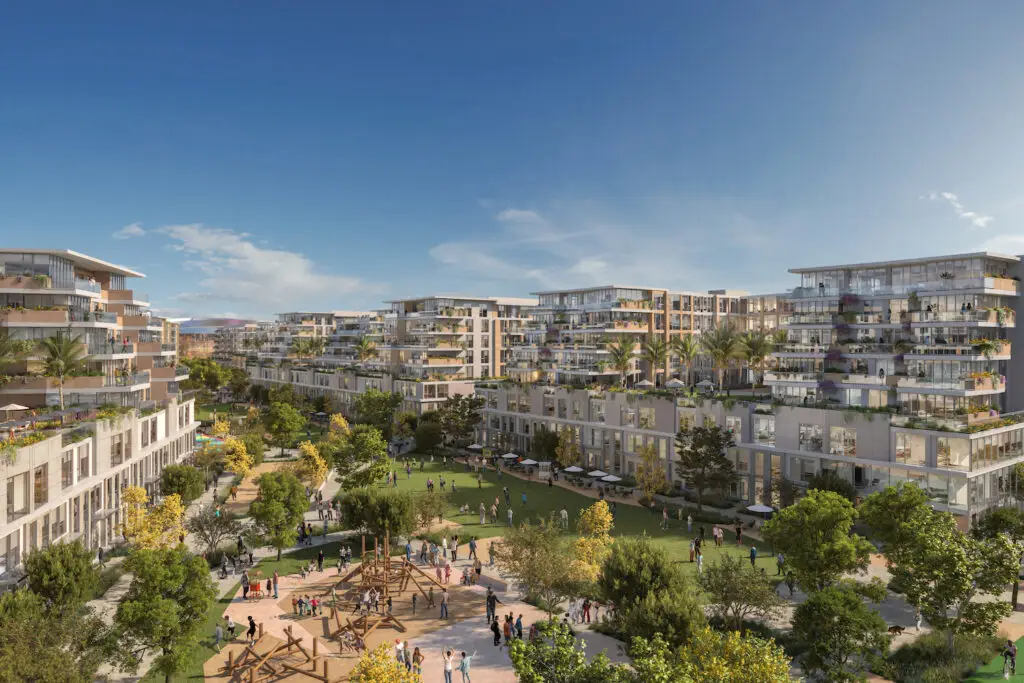
What to Know About the Multibillion-Dollar Midway Rising Project
Rendering Courtesy of Midway Rising

When the filmmaker Cameron Crowe needed a stadium to look like it was from the 1970s for his 2000 movie Almost Famous, he turned to his hometown. He filmed the scene in which protagonist William Miller meets the rock band Stillwater for the first time at Sports Arena Stadium (now called Pechanga Arena).

Twenty-five years after the release of Almost Famous, the 1966 stadium still looks much the same—but maybe not for long. Now the site is slated for a massive revamp dubbed “Midway Rising.” The plan is to replace the original Pechanga Arena (which currently seats about 14,000) with a new 16,000-seat stadium, along with 2,000 affordable apartments, 2,250 market-rate apartments, 130,000 square feet of shops and restaurants, and 14.5 acres of parks and public space.
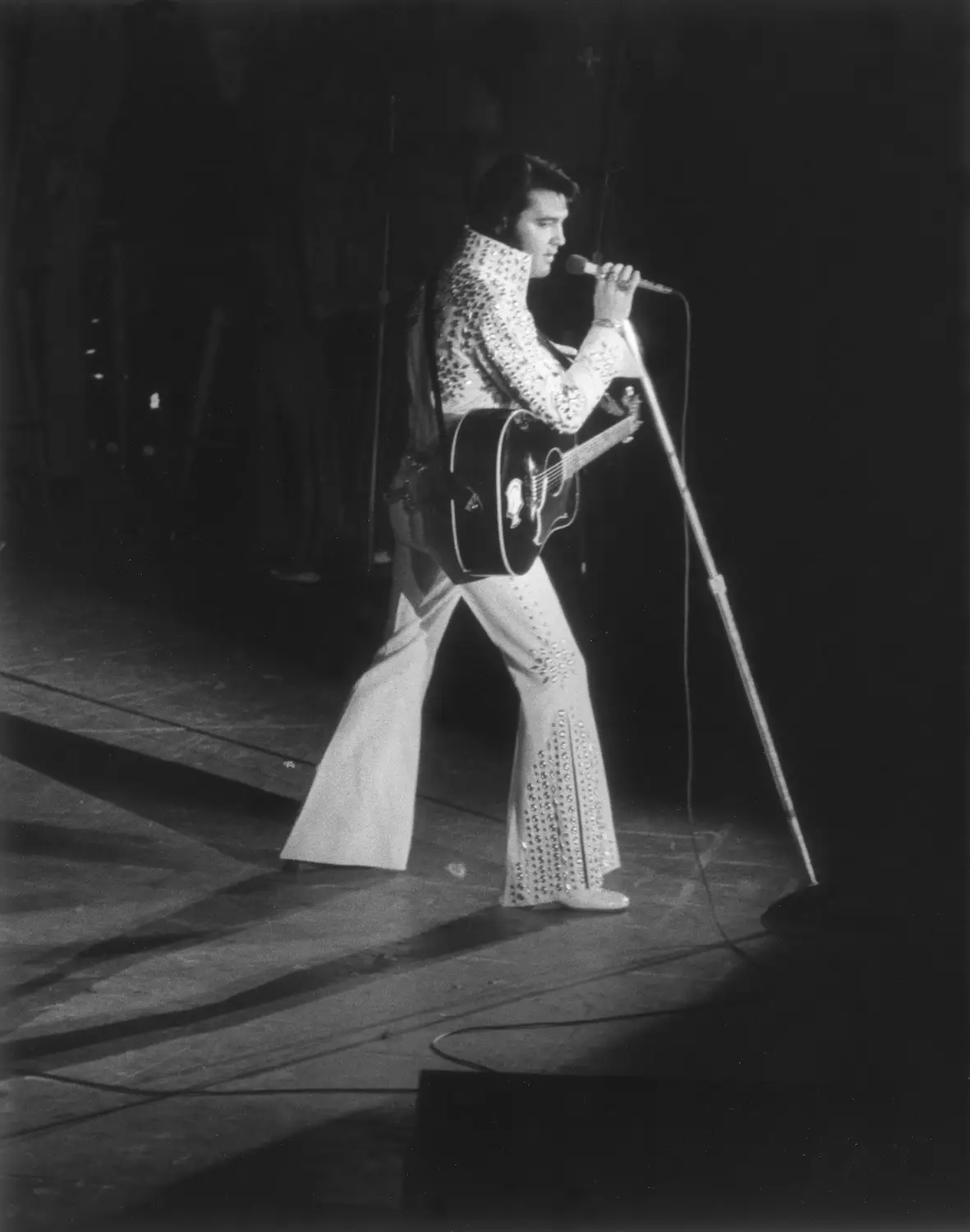
Elvis Presley concert at Sports Arena in San Diego's Midway District
Courtesy of Pechanga Arena

The team behind the project includes Chelsea Investment Corporation, sports venue developer Legends, and market-rate housing developer Zephyr. It’s funded by real estate investment firm The Kroenke Group.

“I think it’s the opportunity to bring a world-class, modernized entertainment center to the city,” says Zephyr CEO Brad Termini. “Having a new arena at the Midway has been a goal of the city for as long as I’ve lived here, and it feels like we’re really close to delivering that vision, a facility that could attract the globe’s best talent and shows for San Diego.”
The redevelopment began in September 2022, when the San Diego City Council formally selected the Midway Rising team to take on the project. This spring, the draft environmental impact report (EIR) for the project was released, and the team is holding a series of meetings to collect community feedback. The goal is for it to go to the City Council this fall for approval.
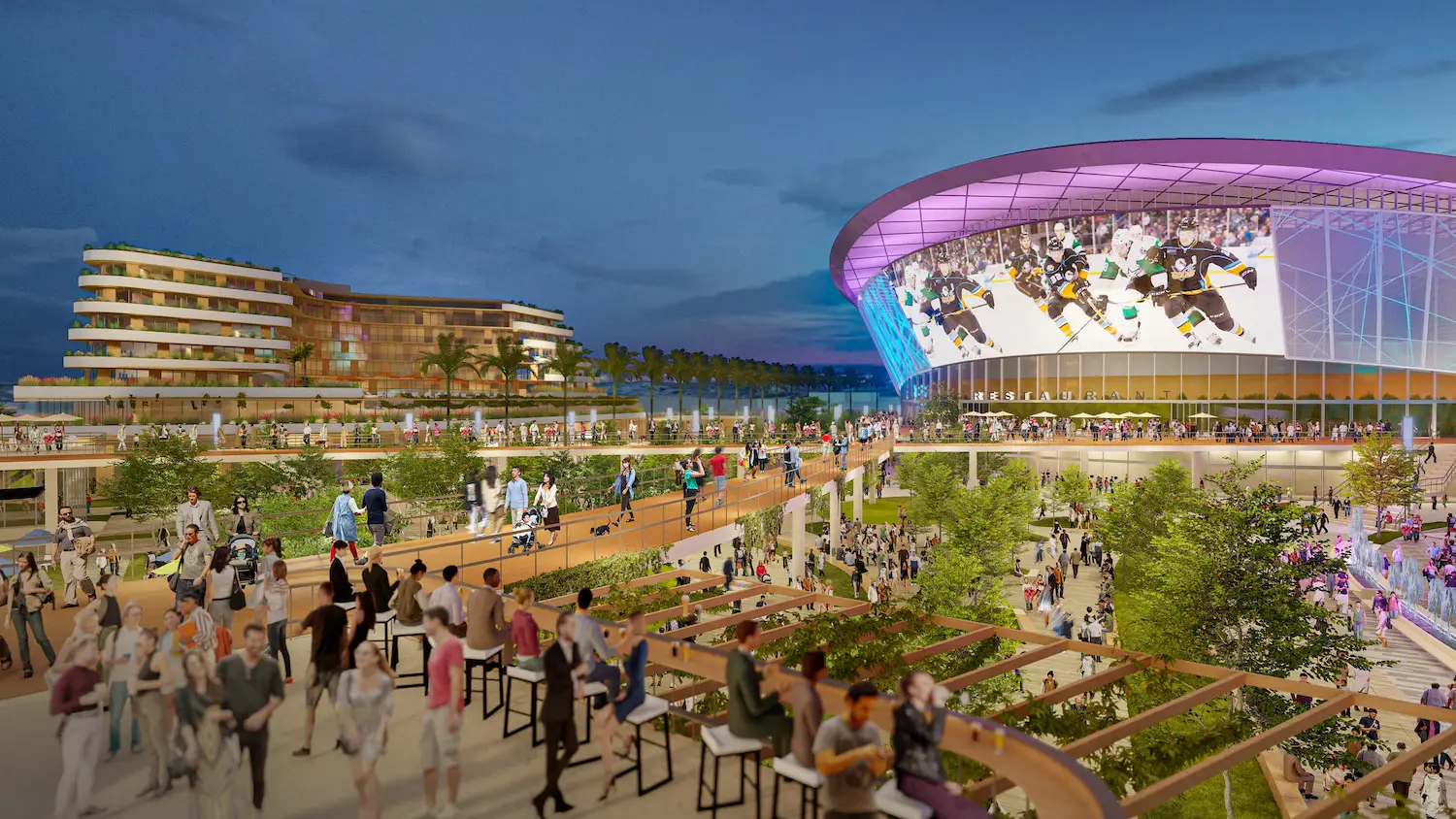
Rendering of new San Diego's new Midway Rising project to redevelop the Midway District near Point Loma and build a new stadium to replace Pechanga Arena
Rendering Courtesy of Safdie Rbaines Architects

The Kroenke Group are the majority funders of the project, but Termini says they aren’t ready to state publicly how much it will cost. “It’s evolving. With the crazy construction markets we find ourselves in today, it’s very difficult to peg that, so we’re not releasing any public budget numbers at this time,” he adds.

However, those figures have the potential to be massive. According to the City of San Diego, the project’s affordable housing developer, Chelsea Investment Corporation, led 65 projects in San Diego County and more than 120 throughout Southern California at a total cost of over $3 billion. Meanwhile, Zephyr has headed more than $1 billion in mixed-use developments.

Whatever the final investment, Pechanga Arena will be completely transformed. Termini tells us that the current iteration is too old and outdated to attract big-name concerts. Its loading dock, lighting, and sound aren’t up to current standards.
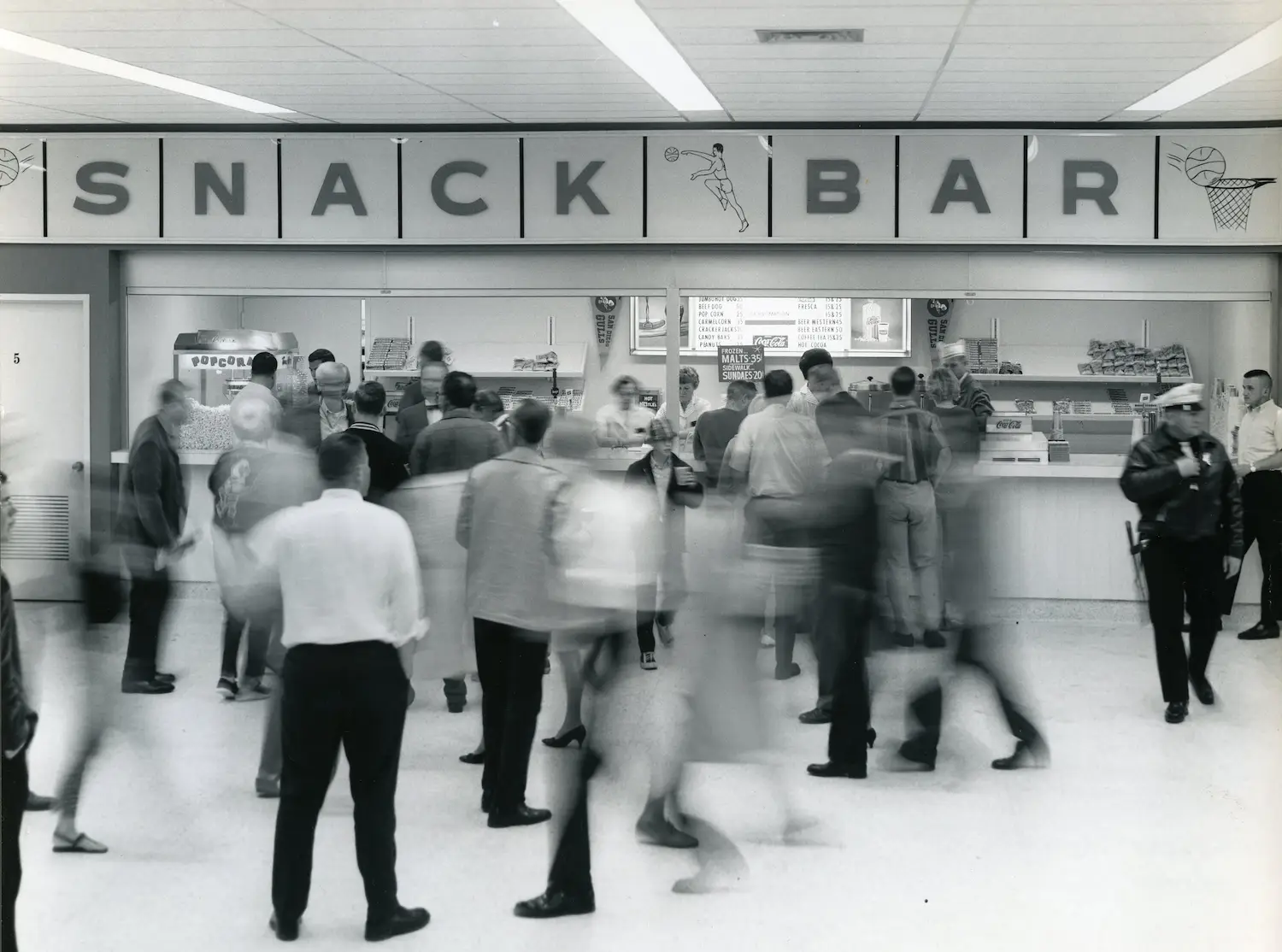
Historical photo of snack bar at Sports Arena in San Diego's Midway District
Courtesy of Pechanga Arena

“It’s kind of like a dive bar—when the lights are low and it’s full, it can still be a fun place,” he says. “But when the lights go up, you really see what’s there. It’s really lacking.”

That rings true for local sports fan Zack Tembi, who regularly attends San Diego Seals lacrosse games at the old stadium. “It’s just stale,” he says. “San Diego isn’t known for being a sports city, right? So, if we have something that can attract good events and talent, I’m all about that.”

Aerial view of San Diego's Belmont Park located in Mission Beach which celebrates its 100th anniversary in 2025

Ideally, Tembi adds, the vision would expand beyond the stadium.

“I think they should make more of a community center, like what you see with most of the modern stadiums,” he continues. “Things that are accessible around the stadium—whether it’s parks or shops or restaurants—that bring people in even when there’s no event. I’d also love to see things around the stadium that you can go to without needing a ticket. Stuff that’s fun, like a restaurant with golf simulators or interactive experiences. Just more ways people in the community can use the space all the time, not just when there’s a concert or a game.”
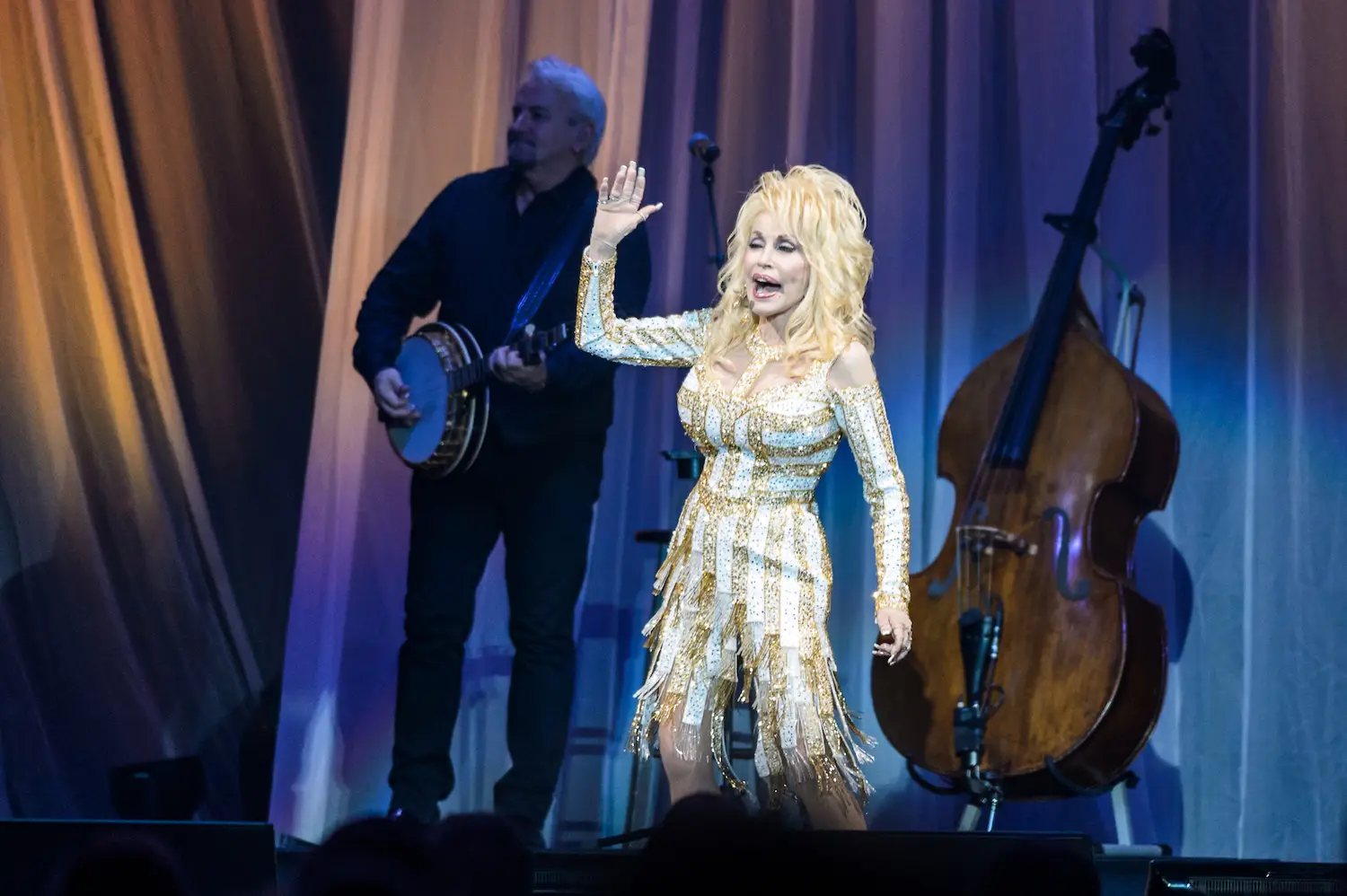
Dolly Parton concert at Sports Arena in San Diego's Midway District
Courtesy of Pechanga Arena

While there’s no promise of golf simulators just yet, developers do intend to include lots of retail and restaurant space, along with public parks. Termini says his team predicts it will have a massive economic impact—perhaps equivalent to the three largest events the San Diego Convention Center hosts every year, including Comic-Con.

Christina Bibler, director of economic development for the City of San Diego, is excited about the project’s potential effects. “Just the sheer magnitude and size of a 48-acre parcel that is going to [have a ton of housing units and create many] jobs—it will be legacy-leaving for Midway,” she says. “[We’re looking at] more amenities, increased revenue, and the revitalization of a site that hasn’t really been revitalized since the mid-1960s.”

The project is a major priority for her team, she explains, because of the affordable housing it will bring and because it will help make better use of the land owned by the city. “Its [value depreciates] when you don’t reinvest,” she says. “This is about revitalizing and catalyzing the Midway area in a way that will have a lasting impact for future generations.”
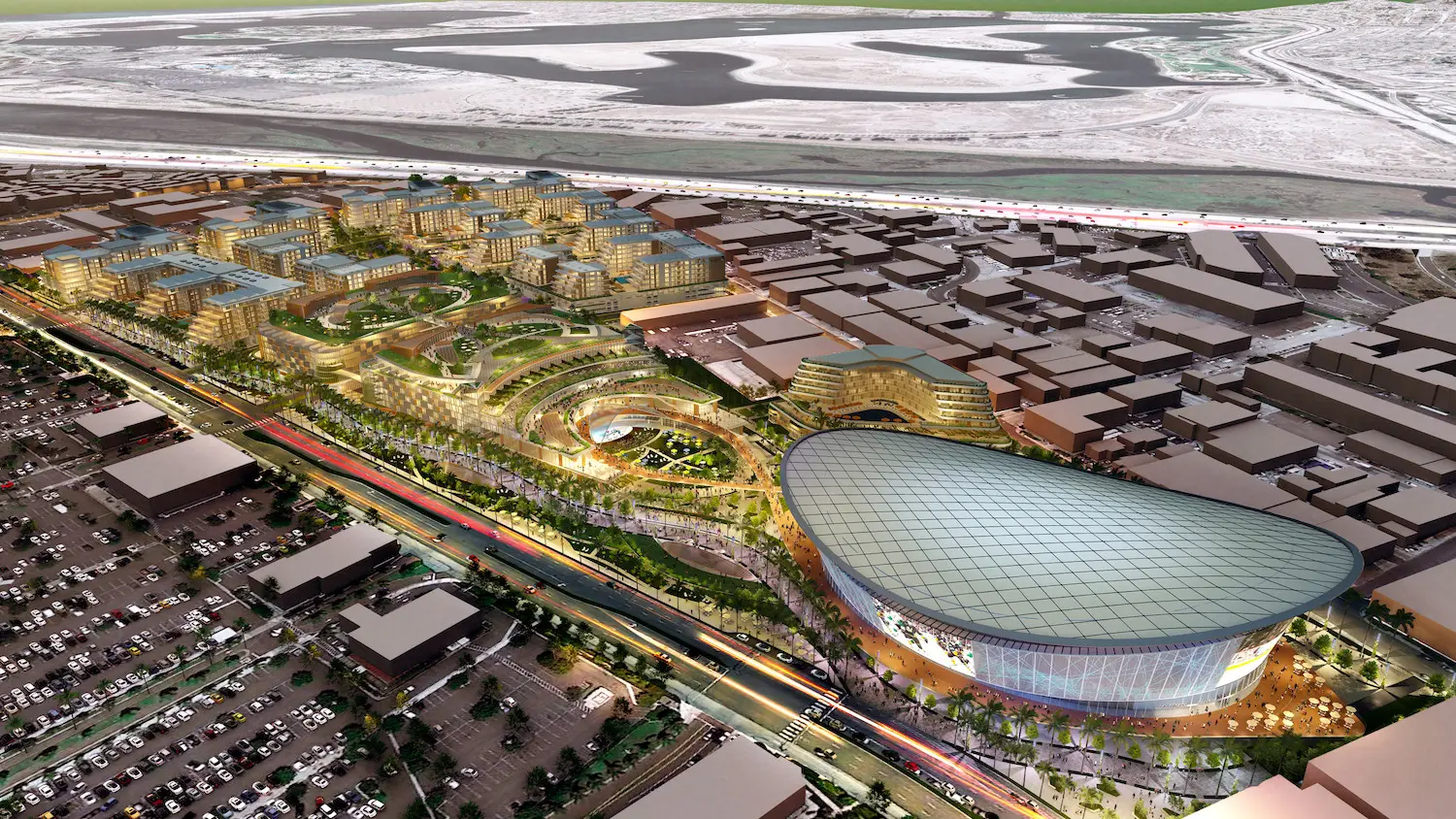
Rendering of new San Diego's new Midway Rising project to redevelop the Midway District near Point Loma and build a new stadium to replace Pechanga Arena
Rendering Courtesy of Safdie Rbaines Architects

But the surrounding community has concerns. The biggest one for the Peninsula Community Planning Board, which advises the city on developments in that area, is the traffic a bigger stadium will bring.

“Rosecrans Street is already congested, and this project doesn’t fully mitigate that,” says Javier Saunders, head of the group’s long-range planning committee. “We just feel we’re going to be saddled with additional traffic that’s not going to be addressed properly.”

According to Saunders, the project’s current suggested traffic alleviation techniques are laughable. “What they’re proposing is a shuttle bus—one shuttle bus,” he notes. “And then they’re giving their employees public transit passes for the entertainment center as mitigation. I think it’s a slap in the face to the city.”
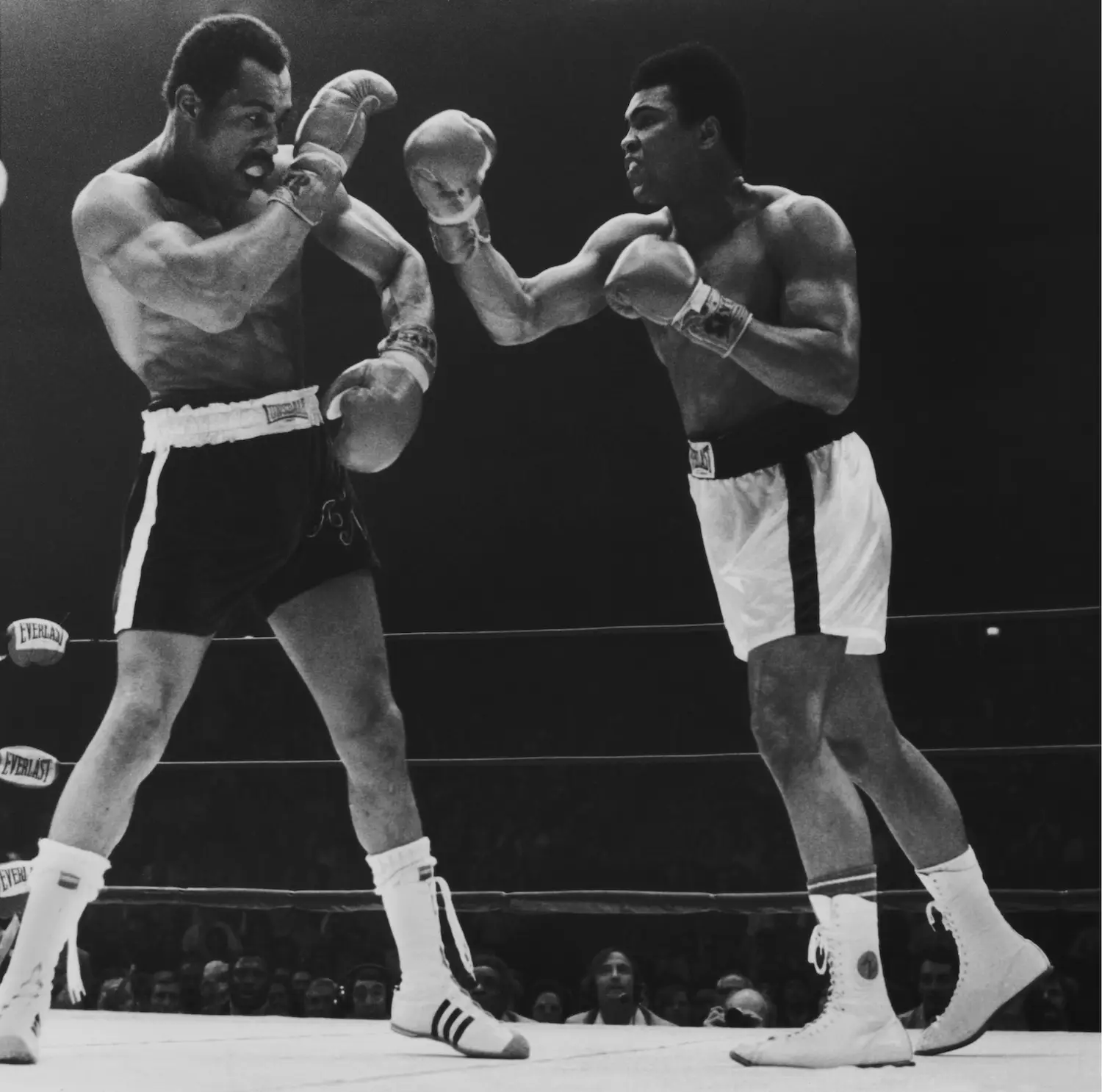
Historical photo of Muhammad Ali boxing match at Sports Arena in San Diego's Midway District
Courtesy of Pechanga Arena

Saunders says his group would like to see more—particularly a street extension on Greenwood Street and a pedestrian and bike overcrossing at Camino del Rio West—to help manage traffic. The Greenwood Street extension was in the community plan, he says, but it was removed to make more room for development.

The influx of new residences in the area may also increase traffic, but developers are exempt from having to explain how they intend to mitigate those concerns in the impact report because they plan to include affordable housing.

“The next step is to go to the City Council and present our issues,” he adds. “The council can say the benefits outweigh the impacts and approve it as is, or it can say, ‘We’re not going to approve this now. We want you to go back and address some issues.’ [The latter is] what we’re hoping for.”
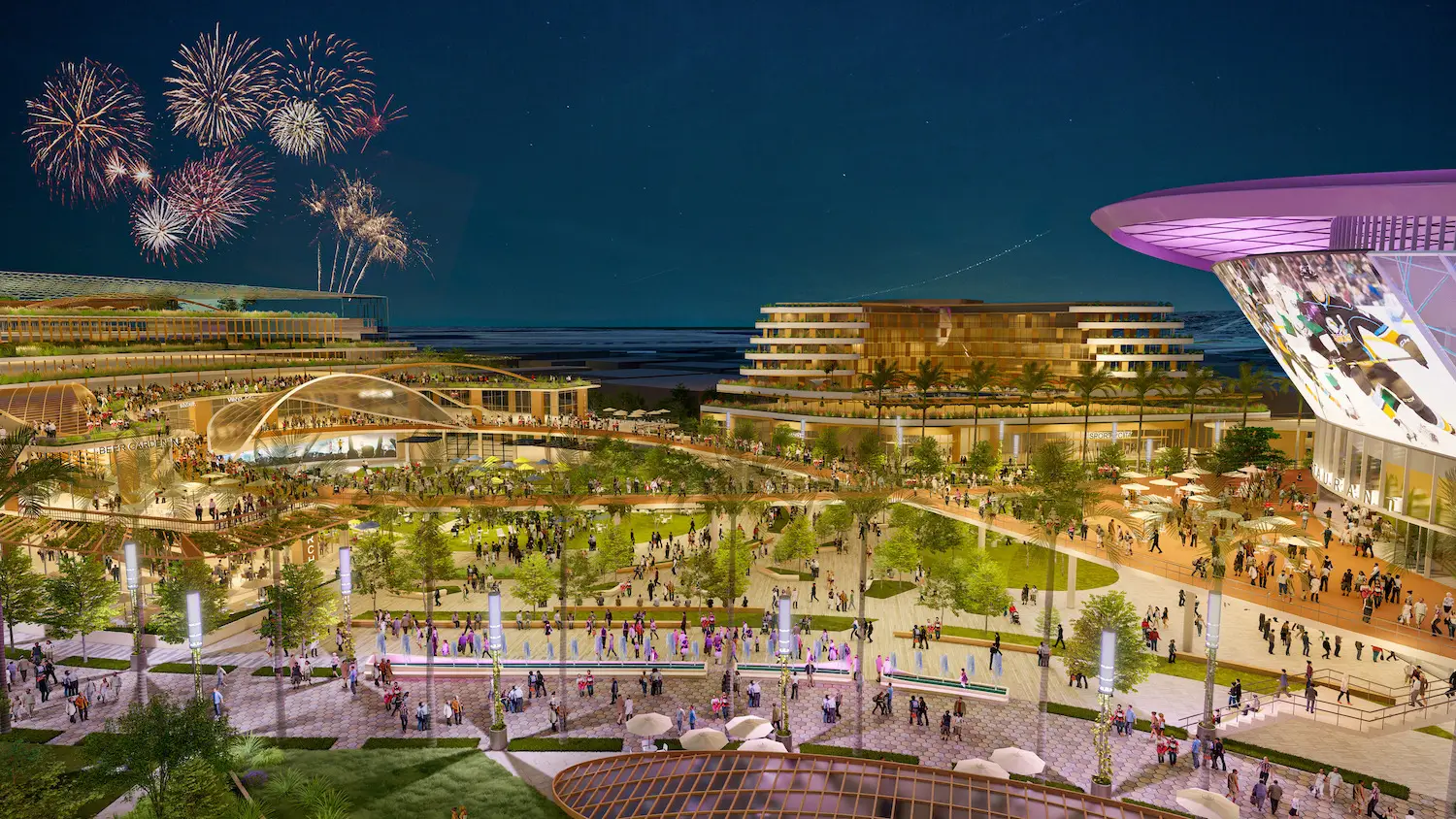
Rendering Courtesy of Safdie Rbaines Architects

Others in the community bring apprehensions, too, including Clifford Weiler, an attorney who filed a letter in response to the project’s environmental impact report. He says the ground in the area is sinking. In 50 years, he believes, people will move into Midway apartments “and [be unable to] shut their doors. The foundations [will be] cracked or the water pipes [will be] cracked. Even though I’m going to be dead—and you can print that—I want it to be done right so nobody gets stuck with a catastrophe that might happen and the expense of trying to correct it decades from now.”

Jim Royle, the environmental review committee chair for the San Diego County Archaeological Society, also feels the project has not done enough to check for and protect potential archaeological relics, including Native American artifacts, where construction will happen. “The bottom line is that there would have been an expectation for archaeological monitoring for the excavations in the area of the site. And [the developers] don’t even call for monitoring,” he says. “I was surprised, given that they basically acknowledged in the EIR that they don’t know what’s there—because no prior evaluation has been conducted.”
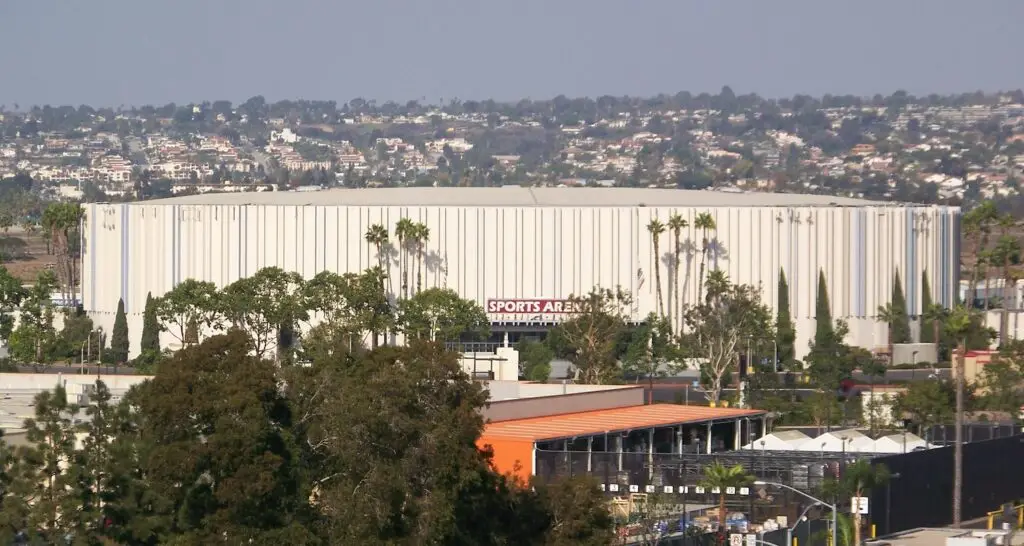
Courtesy of Wikipedia

Zephyr CEO Termini, however, argues that those worries will be addressed in time. “Before we can build anything, there’s a tremendous amount of onsite and off-site infrastructure we need to invest in,” he adds. “That infrastructure won’t just benefit the project—it will benefit the entire Midway community, with traffic improvements, bike lanes, public spaces, and more.”

Plus, he says, the project will be the largest affordable housing project in the history of California, “and those units will be intermixed with market-rate, luxury units, all in a walkable, environmentally friendly community. We plan on delivering housing for all—San Diegans from all walks of life and income levels.”

The success of that goal remains to be seen. After all, the Midway Rising team is still holding public meetings with the goal of getting full approval by the City Council. According to Termini, the soonest we’ll see them break ground is the end of 2026—so Almost Famous fans have a little more time to check out the set where it all began.

Claire Trageser has been writing for San Diego Magazine for 10 years. She also is a reporter at KPBS and writes for The New York Times, National Geographic, Marie Claire, Elle and Runner's World.

Subscribe to our newsletters

Select Options

By subscribing you confirm that you agree with our Terms and Conditions and Privacy Policy.

Arts & Culture SEPTEMBER 28, 2026

The Best Things to Do in San Diego: October 2026

From food festivals and Fashion Week to hockey games and Oktoberfest, these are the best events to add to your calendar in October

The Best Things to Do in San Diego: October 2026
Photo Credit: Sydney Valiente

It’s finally fall, and although it may not feel like it (our ceiling fans are this close to flying off their hinges), San Diego is ringing in the cozy season with a heap of fun events. Whether you’re wanting to find your new favorite outfit at Fashion Week, cheer at the Oceanside Shock’s home debut, or practice meditation at the Strength in the City Festival, these are the best things to do in October.

Concerts & Festivals | Theater & Art Exhibits | More Fun Things to Do

Photo Credit: Shay Studios

Concerts & Festivals in San Diego This Month

3

Go beyond the menu during the Taste of North Park, with over 50 food samples and 15 beverage stops, plus live music and art-driven programming to keep all the senses engaged.

7

Cross the Coronado Bridge—and bring your appetite—for A Taste of Coronado, an island-wide culinary jaunt in support of beloved businesses and the Promises2Kids nonprofit.

Courtesy of La Jolla Art & Wine Festival

Theater & Art Exhibits in San Diego This Month

10/8–11/1

In the Roustabouts Theatre Co.’s newest comedy at Scripps Ranch Theatre, roommate beef has no age limit. In “Ripcord,” a feud between Abby and Marilyn escalates to absurd heights.

10 & 11

Pay it forward to local public schools with each pet adoption, purchased piece of art—from over 170 artists—and sip of wine, beer, or spirits at the free La Jolla Art & Wine Festival.

17

Those in search of creativity and community can find both at Other Places Art Fair South, a free showcase for independent artists and galleries at California Center for the Arts, Escondido.

Photo Credit: @gabephelan

More Fun Things to Do in San Diego This Month

9/30–10/4

Where can you play pickleball with celebs, sample local eats (including that place you’ve always been meaning to try), and take part in the scenic and delicious Grand Tasting at Surf Sports Park? There’s only one answer: the Del Mar Wine & Food Festival.

2–4

Sashay your way through the 19th annual Fashion Week San Diego, home to stunning runway couture, fall designer collections, and a trunk show—perfect for shopping for your new look.

9 & 10

Dance to Y2K throwbacks all weekend long during Ocean Beach Oktoberfest, which includes a beach party, a stein-holding competition, a brat-eating contest, and for VIP attendees, a custom “OB2K Oktoberfest” liter
mug.

10

First comes the sting, then comes the shock. San Diego County’s newest sports franchise, Oceanside Shock, will make its home debut in the Federal Prospects Hockey League versus the Fresno Falcons at Frontwave
Arena
.

24

Working out is just one part of this Waterfront Park wellness experience. Practice meditation, play bingo, and recover with sauna zones during the Strength in the City Festival.

25

At the 25th annual Oceanside DÍa de los Muertos Festival, the Day of the Dead is alive and well. Walk through a chalk cemetery and Por Siempre Car Club’s decorative trunk altars during the free event.

Ryan Hardison is a freelance arts and entertainment writer and recent graduate of San Diego State. When he's not staring at his laptop, he's likely eating an adobada burrito or getting sunburnt at the beach.

Arts & Culture SEPTEMBER 24, 2026

SDFC Is Building More Than a Soccer Club

Through its Playmakers initiative, San Diego FC is working with artists, musicians, and other local creatives to shape the identity of the city’s newest professional sports team

What does a soccer team have to do with San Diego’s arts scene? Quite a lot, as it turns out. When San Diego FC launched, the club could have spent its marketing budget on billboards, bus wraps, and digital ads. Instead, it went into neighborhoods, found local artists and creatives, and started building the club’s identity with them. Through its Playmakers initiative, artists have designed limited-edition merchandise, had their work featured on the stadium’s jumbotron, and found themselves in front of thousands of fans—and, in some cases, a national TV audience.

For this special edition of the podcast, created alongside San Diego Magazine’s September arts and culture issue, host Troy Johnson talks with Sebastián Morúa, SDFC’s Senior Vice President of Brand & Innovation, and longtime San Diego native and creative Tony Martinez of Barrio Junto. The conversation gets into why a professional soccer club would make local art part of its business, how Martinez’s decades in San Diego’s creative community helped shape Playmakers, and the club’s early efforts to connect with artists across the county through its Chrome Ball Tour and neighborhood events. The goal, they explain, isn’t simply to put a local artist on a T-shirt. It’s to let the people who already understand San Diego help define what the new club looks and feels like.

The conversation also gets into the less glamorous—but important—side of supporting artists: money. They talk about how Playmakers pays local creatives, the value of the platform SDFC provides, and what it means to build an ongoing relationship between a professional sports club and the artists who help shape its identity. They also discuss the club’s growing music initiative, which will bring local musicians into the fold, and the many ways artists have already contributed to SDFC through merchandise, murals, Parks & Pitches projects, and more. Ultimately, it’s a conversation about soccer, art, community, and what can happen when a major sports franchise gives the people already making culture in San Diego a bigger platform.

This summary was provided to you by AI. To hear from the humans, listen to the podcast wherever you get your podcasts.

Everything SD SEPTEMBER 24, 2026

Special Activations at the 2026 Del Mar Wine & Food Fest’s Grand Tasting

Chef collaborations, cooking demonstrations, DJs, games, photo ops, and plenty of reasons to keep wandering on Oct 3 and Oct 4

Special Activations at the 2026 Del Mar Wine & Food Fest’s Grand Tasting
Courtesy of Del Mar Wine & Food Festival

At Del Mar Wine & Food Festival’s Grand Tasting, the walk between food tents can take a while. You might stop to watch a chef competition, get pulled toward the DJ, or find yourself playing mini golf before you remember which bite you were after.

Across the Del Mar Polo Fields, there’s also line dancing, a 1961 red Beetle ready for photos, and an aviation-themed pop-up with Reno Tahoe chefs and mixologists. Need a slower stretch? Check out the wellness stops or browse the shops. Here’s what to look for as you make your way through the festival’s zones:

Courtesy of Del Mar Wine & Food Festival

VIP First Bites & First Sips

VIP ticket holders get a head start, with the VIP Reception running from 11:15 a.m. to 1 p.m. and serving first bites, first sips, and a few surprises before the Grand Tasting officially gets going. Champagne Telmont will make the festival’s first pour, while Cohn Restaurant Group brings carajillos alongside pours from Karl Strauss, Licor 43, Tap Truck San Diego, Bebemos Tequila, and Devil’s Grin Gin.

The bites are just as good. Celebrity chef Beau MacMillan will serve a first bite, while Warung RieRie is bringing one of its highly coveted dishes. Yes, this is the restaurant that currently has an eight-month waitlist. You’ll also find bites from The Shellfish Affair, The Waverly, Wolf in the Woods, Dora Ristorante, Cori Pastificio Trattoria, An’s Gelato, Pacific 333, Vintana, and more.

And because every good first act needs a soundtrack, there will be live painting and music, with Courtney Govan bringing live jazz to the reception. It’s the perfect opening act before the main event.

Live Cooking & Culinary Moments

During the VIP Reception, chefs Tommy Gomes and Jeff Roberto will conduct a live ahi cutting. Plant Paradise brings another culinary angle, with celebrity chef Zuliya Khawaja joining the plant-based lineup. The area combines chef talent with plant-forward restaurants and brands, giving guests a chance to see just how creative plant-based cooking can get.

Throughout the weekend, The Stage keeps the cooking demonstrations coming, with celebrities and chefs sharing techniques, recipes, and plenty of inspiration for anyone who plans to actually cook something when they get home. Before you know it, you’re watching a chef demo, casting your awards vote, and sipping mezcal on the grass with friends you just met in line.

Courtesy of Del Mar Wine & Food Festival

DJs, Music, & The Party

At the Grand Tasting, dancing just sort of… happens. A DJ drops the right song. Someone’s holding a taco in one hand and a glass of wine in the other. The country zone breaks into a two-step. Friends convince friends. Strangers become temporary dance partners. By the end of the day, everyone’s forgotten they were ever worried about looking cool.

DJ TENAX will be spinning in Plant Paradise, bringing house, techno, and UKG to an open-air dance floor that’s hard to leave. Chris Cantore, a veteran San Diego broadcaster, takes over the VIP Tent, while BootScootin Line Dance and PVO Events bring country-style line dancing to the Polo Fields, so you can work off your tasting itinerary one two-step at a time.

Then a live guitar hum in the distance leads you to a fuchsia boa over at the Pride Zone, where you’ll find yourself covered in sequins and having the lawn party of a lifetime.

Sports, Tailgates, & Games

Not every activity at the festival requires a tasting glass (although it’s certainly encouraged).

The Matchday Experience brings San Diego FC and San Diego Wave FC into the Grand Tasting, complete with interactive tents and plenty of game-day energy. Athletic Brewing is also sharing activation space with San Diego Wave FC, bringing a fun nonalcoholic option into the mix.

For golf fans, the Los Angeles Golf Club is bringing a Dryve Box golf simulator to the festival. And if your competitive streak is less fairway and more miniature windmill, SD Pop Up Mini Golf has you covered.

The Beach Zone gets in on the action, too, with surfing-inspired elements and Playavole paddle courts. Hemlock Hats and other California brands add to the coastal atmosphere, but the real draw is having somewhere to actually play. And don’t worry, you can cool down in COOLA’s turquoise beach chairs, too, and when your bestie suggests reapplying sunscreen, obviously you do. Basically, there are plenty of ways to work up an appetite between tastings.

Courtesy of Del Mar Wine & Food Festival

Photo Ops & Instagram Moments

You’re going to want to take photos, and the festival has made that extremely easy.

A Timeless Day is bringing multiple photo moments to the Grand Tasting, including a 1961 red Beetle at The Italian Getaway and a teal VW bus in The Beach Zone. For something a little more polished than the standard group selfie, head to the Locals Zone for Pixster Photo Booth and San Diego’s version of a Glam-Bot, complete with a grass red carpet.

Bebemos Tequila is also bringing back its festival-favorite hidden speakeasy. If there’s ever a time for a photo, it’s here. Otherwise, people might not believe you. The speakeasy serves bone marrow shots straight from the bone, with candlelight, a lounge area that makes it hard to believe you’re in a tent outside, and little orange shot glasses. This is “first slide of your festival photo dump” material.

You can also grab your squad and head to LaCroix’s bright and ridiculously cute setup, or swing by San Diego Magazine’s area, where you might stop for a photo in front of the larger-than-life SD Magazine sign and find yourself watching a painting come to life.

But really, you’re in Del Mar. The ocean is essentially your backdrop, and every zone gives you an excuse to stop for the obligatory “totally candid” photo. And yes, the best strategy is to get the group shot before everyone has been sampling wine for three hours.

Shop, Browse, & Take Something Home

The Grand Tasting also doubles as a little shopping excursion, with local makers, fashion, vintage finds, jewelry, and lifestyle brands scattered throughout the grounds. Smoke Revival Vintage Vault brings the thrill of vintage treasure hunting, while Nortte Hats and Hemlock Hat Company make a pretty good case for leaving with a new accessory.

Keep an eye out for jewelry and creative vendors, too, including Iris Studio Jewelry and New Nightfall Jewelry, plus local artists and makers featured throughout the festival. 

You can come for an all day food and wine festival, but still leave with something shiny you definitely did not plan to buy.

Wellness & Reset Moments

We know, at some point, even the most dedicated grazer has to come up for air. The Novo Dia Wellness Zone is designed for exactly that, bringing together mocktails, coffee, hydration, wellness brands, and even bites from Parakeet Cafe.

Step away from the food and drink frenzy for a few minutes, relax in the shade, try some skincare, stretch with prAna, and maybe grab some Instant Hydration Electrolytes before round three.

There’s also nothing wrong with stopping to smell the roses at Green Air Botanicals while devouring a dairy-free cheese dip. It’s less about disappearing from the party and more about making sure you have enough energy to keep going.

The zones give you somewhere to wander, and the activities give you a reason to keep going. So grab your tasting glass, check the schedule, and leave a little room in your afternoon for something you didn’t plan on doing. At Del Mar Wine & Food, that’s usually where things get interesting.

Isabella Dallas is a freelance writer for San Diego Magazine and the Arts and Culture Editor at The Daily Aztec in her final year at San Diego State University. She previously worked as an editorial intern for SDM, but when she’s not writing, you can find her trying the best coffee spots in SD, devouring the latest rom-coms, and indulging in anything and everything pop culture.

Studio S MAY 5, 2026

Artistry, Aesthetics, and Inclusive Luxury

KQ Aesthetic Society goes beyond cosmetic to provide comprehensive care and transformative results

Artistry, Aesthetics, and Inclusive Luxury

Kelly H. Harfouche, founder of KQ Aesthetic Society, knows firsthand that cosmetic treatments like fillers, neurotoxins, and microneedling, can not only enhance a person’s appearance and restore confidence, they have the power to truly change a person’s life. An expert injector has the ability to tailor treatments to each individual patient’s anatomy and goals for personalized results. Harfouche, a board-certified nurse practitioner, has spent nearly a decade perfecting her craft as an aesthetic injector and integrating her multifaceted artistic skills with precision patient care. Her commitment to continual education and training, plus a passion for helping people look—and feel—their best, set KQ Aesthetic Society apart in a sea of local medspas. 

For many people considering nonsurgical treatments, the intent is to look refreshed and refined. KQ Aesthetic Society’s philosophy eschews a cookie cutter approach that bases treatments around units, instead working to understand each person’s unique goals, then curating a treatment plan to fit that vision. Harfouche focuses on “inclusive luxury,” the belief that everyone deserves access to aesthetic treatments, respective of budget restrictions. She develops long-standing trusted relationships with her patients, and works with each one to achieve their aesthetic objectives and address the underlying causes of their concerns. 

“For me, forming an honest and open relationship with every patient who walks through the door is essential. This means understanding them on a deeper level and meeting them where they are to define and achieve their individual goals,” she says. 

Drawing on her artistic background, which inspired her transition into medical aesthetics, Harfouche sees each client as a “unique canvas.” Rather than relying on standardized procedures, the practitioner’s distinctive approach combines her profound understanding of the physiological and anatomical changes associated with aging with an unwavering commitment to ongoing education about the newest products and their mechanisms of action. Her goal is to make each patient feel beautiful in their own skin and to embrace their individuality. 

She has also pioneered a way to combine her talent for aesthetic artistry with her philanthropic nature. Harfouche is one of only a handful of providers using dermal fillers to treat patients with lip asymmetry and scarring resulting from cleft lip surgery. Patients travel from around the country for this transformative treatment, noting increased confidence and a restored identity. She hopes to eventually launch a training program to help fill the void in this space.  

“My passion has always been connecting with people and giving back in any capacity that I can,” she says. In the rapidly advancing landscape of aesthetic medicine, you can place your confidence in Harfouche and KQ Aesthetic Society to deliver exceptional care. To learn more or book a consultation, please visit kqaestheticsociety.com.

Arts & Culture SEPTEMBER 14, 2026

What Will It Take to Make San Diego a Global Arts City?

Jonathon Glus on the Art + Design District, investing in the creative economy, keeping artists in the city, and what we can learn from places like London and Chicago

What Will It Take to Make San Diego a Global Arts City?
Photo Credit: Stacy Keck

Jonathon Glus is the Prebys Foundation senior fellow leading the development of the Art + Design District at the Downtown San Diego Partnership. He has been asked what an arts and design district is many times. In our conversation, I asked him instead to describe what it isn’t. His answer opened up a broader discussion about what San Diego has and hasn’t invested in, what it has the capacity to become, and what other cities have done that we haven’t. Glus speaks about global art fairs and architecture biennials in Chicago and long tables at dinner parties all with the same fluency. He also discusses who gets to live in the neighborhoods where creative work happens, and what it means when they can’t afford to stay.

Claire Johnson: You have been asked what an arts and design district is many times. Can you tell me what it isn’t?

Jonathon Glus: It is not a place designed intentionally and specifically for tourists. Of course there will be opportunities for tourists to come, but the district is really focused on creatives, on creative education, and on the creative workforce—as well as our major performing arts organizations. That is the emphasis.

What does the district need to do in the next five years for you to consider it a success?

[It needs to] develop greater connectivity between the anchor institutions—the symphony, Broadway San Diego, the opera, all the wonderful things happening in Balboa [Park]—and the creative workforce that will be living and working in that neighborhood 24/7.

What does San Diego not have that you wish it did?

We have not been intentionally investing in the contemporary art product that other major cities have been building. A contemporary art fair. A biennial that reflects the ethos of this region. Chicago developed an architecture biennial about eight years ago. London has a design biennial. Desert X, right here in Southern California, invests in and elevates contemporary artists inside a city. We have not really been playing in the global art market in a way that we have the capacity to.

What capacity do we have?

We have a wonderful foundation. Two theater companies that produce work that goes to Broadway more than many regional theaters in the country, major museums, artists teaching at UC San Diego and University of San Diego. What a city does when it wants to take itself to the next level is intentionally create the product. Miami went after the Art Basel fair; they did not passively receive it. You have to have the intention and the will, and you have to go after it. We haven’t done that in the way that other cities have.

Look at what we did with the tech sector; we’re now a major tech center. That was intentional. Leadership organized around it. We have to do the same thing around the arts. We have a lot of contemporary art collectors here. We have a lot of galleries. But the ecosystem of the business of contemporary art is not as organized or as visible as it should be.

Which city is your North Star?

It’s bits and pieces of different cities. Dubai has invested very quickly and very intentionally in contemporary art—art fairs, design fairs, higher education, artist residencies from all over the world. London has centered artists and creatives in the contemporary zeitgeist in a way that was not true 40 years ago. They built biennials. They ensured British artists had affordable housing and workspace. They made sure the media paid attention to what they were doing.

If you don’t have an artist at your dinner table, it’s not a dinner party. That sounds elitist, but it’s true. It shows the value that artists have in a community. Our relationship culturally with Tijuana is really significant here because artists in Baja seem to be at the table.

We’ve talked before about how food, fashion, design, and art aren’t siloed anymore.

They aren’t. When super creative people are in a community doing extraordinary work, that draws other super creative people doing extraordinary work. That’s why other arts and design districts around the world end up populated with some of the most interesting restaurants and young fashion designers. Creatives want to be around other creatives.

Which leads to the economic argument…

Our creative economy already employs about 170,000 people and generates more than $11 billion in economic activity. It’s large and robust. But we must center all of this in accessibility and affordability. Williamsburg used to be affordable. Artists can’t afford to live there anymore. Wicker Park and Bucktown in Chicago—artist central, now unaffordable. If we’re going to invest in this district, we have to be really intentional about housing and workspace, so creatives have a place in the future of this district.

I see all these new supper clubs and creative collectives popping up. What is the lesson there for San Diego in terms of the commercialization of cultural and creative groups?

I think the lesson is that nothing changes. What do people love? Long tables. Why? Because you’re with a lot of people—some you may have known your entire life, but most you don’t. And if it’s driven by a creative process, all the better. We know one of the best ways to do that is around food, but also music.

For the Art + Design District, part of why we’re leaning into the process is because, culturally, we’re bringing down the barriers between film, fashion, multimedia, tech, and architecture. It’s an experiential mashup in the best possible way.

And it’s not just about art and design, but community writ large. Creative expression is something we all desire. Whether it’s at a long table, at the opera, or in your studio, we gravitate toward creative expression as a way of building community and communicating with the people around us.

Is there a question I should have asked you but haven’t?

I hope you are writing about this in seven years when the district is fully mature. But this is just the beginning for all of this. I think that’s what’s most exciting to me. We don’t know what this is going to be like, but we know it’s going to be creatively centered, and that’s super exciting to me.

Everything SD AUGUST 28, 2026

The Best Things to See, Do & Explore in Balboa Park

Whether you're a lover of the arts, music, or a leisurely stroll through the park, these are Balboa's best attractions

The Best Things to See, Do & Explore in Balboa Park
Photo Credit: Jennifer Curry Wingrove

SDMA’s 100th Anniversary

On February 28, 1926, the Fine Arts Gallery of San Diego (now called the San Diego Museum of Art) opened its Plateresque doors to 3,000 guests for opening day. Over the next century, the museum changed with the times—even once functioning as a naval hospital after Pearl Harbor. This year, the museum is celebrating its 100th birthday with an exhibit (open through January 24, 2027) featuring photographs, ephemera, and film footage spanning the museum’s history.

Courtesy of Tim Novara

Free Concerts at Spreckels Organ Pavilion

Every Sunday from 2 to 3 p.m., stop by the historic Spreckels Organ Pavilion for a free concert presented by the City of San Diego on the largest outdoor organ in the world (more than 5,000 pipes). The pavilion seats 2,400 for performances by the civic organist or guest artists.

The New Natural History Museum

Some think natural history museums are just cemeteries for dioramas that haven’t received an update since the Reagan administration. When it comes to The Nat, which just finished a $7.5 million rejuvenation, they’re totally wrong. The museum debuted a new rooftop that replaces its 25-year-old atrium. The old roof created a greenhouse effect that steamed up some exhibits, so the new one—which includes 200 solar panels and better temperature control—will help preserve the artifacts inside. Each Friday in the summer, The Nat also becomes one of the season’s vibiest hotspots during Nat at Night, with food from places like Wolf in the Woods and The Craft Taco, bars and signature cocktails on several floors, and a rooftop DJ.

Fleet Science Theater Remodel

The Fleet Science Center just received its most significant update since the 1990s. It expanded its exhibit space by 20 percent and introduced a newly designed entrance gallery (formerly the IMAX theater lobby) that includes free exhibits for visitors who want a taste of the science without paying an admission fee. The former ticketing area now houses the Mindbender Mansion exhibit, and there’s a new café, Element 8, that will, of course, sell the center’s famous soft serve.

Partner Content MARCH 26, 2026

Design Leaders & Innovative Interiors: AVRP Studios

A look at San Diego's top designers creating unique environments that combine creativity and function

Design Leaders & Innovative Interiors: AVRP Studios


AVRP Studios’ tradition for Design Excellence and Innovation began in 1976 with Doug Austin, FAIA, in Solana Beach, California. The firm has since grown to complete major projects throughout the United States and Canada. We think of ourselves as a family and we care deeply about people. We want to inspire, help make their lives richer and more complete through our efforts. We believe that architecture is one of the most important art forms because of the impact it can have on the lives of those it touches. We’re delighted to have been recognized with over 150 awards for design excellence.

703 16th Street, Suite 200, San Diego, California 92101  |  619-704-2700  |  avrpstudios.com

Thousands of savvy locals already get it.

San Diego's best restaurants, experiences, and events—handpicked and delivered to your inbox weekly. You in?

Close the CTA

Contact Us

1230 Columbia Street, Suite 800,

San Diego, CA