
Featured articles
Food & Drink
Food & Drink
Food & Drink
Featured articles
Everything SD
Everything SD
Everything SD
Featured articles
Things to Do
Things to Do

Things to Do
Featured articles
podcast-ep
video
podcast-ep
Featured articles
Everything SD
Everything SD
Everything SD
Featured articles
Food & Drink
Food & Drink
Everything SD
Ready to know more about San Diego?
SubscribeReady to know more about San Diego?
Tips on securing a permit, training hikes, how to prepare for altitude sickness, and how to tell when you're ready
how-to-hike-mt-whitney.jpeg
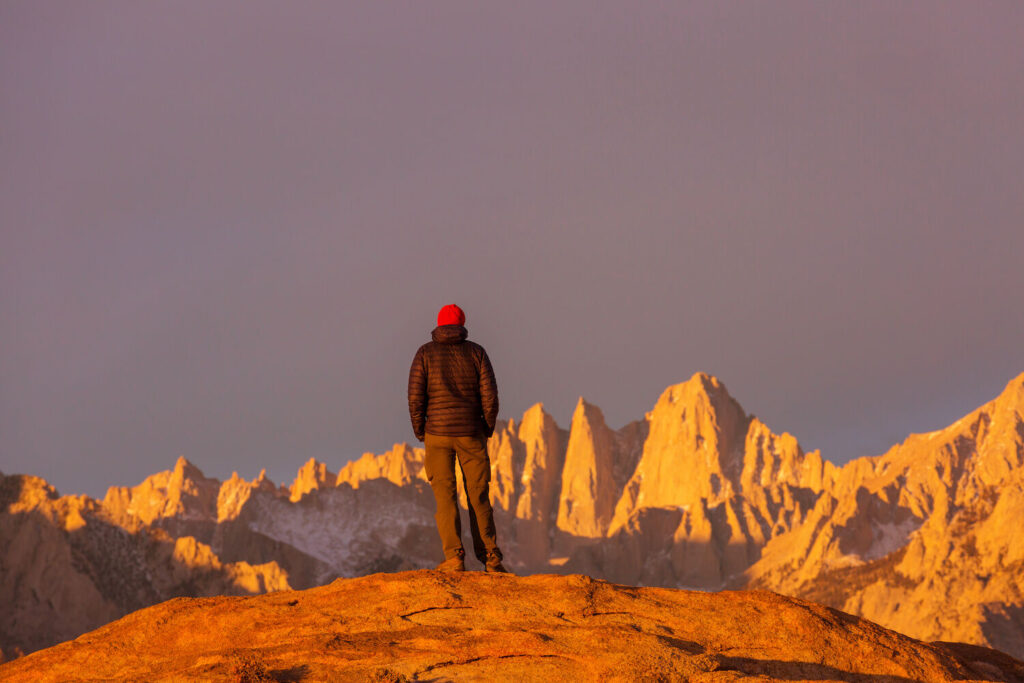
Mt. Whitney is not just the tallest mountain in California–it’s actually the highest mountain in the contiguous United States.
And yet, despite its towering 14,505 feet of elevation, it can actually be climbed without technical equipment like ice picks and crampons. This relatively doable status for the hike (and I say “doable” with many caveats), means it’s a very popular bucket list item for hikers across the country.
One expert on the hike is Cris Hazzard, who runs the website HikingGuy.com. He’s written a very thorough guide to the hike, complete with maps and photos to download so you can check while you’re on the trail.
“Mt. Whitney is the perfect bucket-list hike. The scenery is spectacular,” Hazzard says. “The route is physically challenging but not dangerous if you prepare correctly. You can complete the hike in a day or as an overnight trip. And of course, it’s the highest point in the lower 48. So you get big-time bragging rights if you make it to the top.”
But, Hazzard says, there are some big challenges to be prepared for if you attempt the hike. The first is just securing a permit (more on that below). The next is building the fitness to hike 22 miles and climb about 6,600 feet.
“It’s a tough day on the trail for even experienced hikers,” he says. “But you’d be surprised at all the different types of folks I see. It’s doable by almost everyone who prepares.”
The last big challenge is what you can’t prepare for: altitude sickness and weather. Again, more on that below. But if you prepare properly, the challenges are completely worth it, says Casey Schreiner, editor-in-chief of the Modern Hiker website.
“It’s gorgeous. It’s a beautiful, beautiful mountain to climb,” he says. “The scenery is spectacular. It’s a very beautiful trail, and the scenery is spectacular the entire way up.”
Inspired? Well, here are the steps you need to take to climb the Mt. Whitney trail.
As Hazzard says, the biggest obstacle to climbing Mt. Whitney might be getting a permit–in 2022 only 29 percent of the people who applied for a permit got one, he says.
His website has lots of details on how to apply. You pick 16 dates: one main day, and 15 alternates. “When picking a date, ideally you want a full moon in late July, August, or early September,” he says. “These months are the best option to avoid snow and ice on the trail. The full moon will be nice for the pre-dawn portion of the hike. These dates are, of course, the hardest to get.”
Some tips for getting a desirable date: keep your group size to about four, and pick alternate dates. Schreiner says he also chose mid-week dates that would be less popular.
The lottery opens on Feb. 1, and winners are announced at the end of March. On April 1, you can try to buy an unclaimed spot if there are any, and lottery winners will buy their permits on that date.
“If you didn’t win your permit in the lottery, you have another chance at hiking Mt. Whitney,” Hazzard says. “On May 1, the parks service releases all of the unclaimed permits for sale. Go to the website and check your date for availability. I’ve been successful using this method.”
Rachel Schnalzer, who writes the travel newsletter for The Los Angeles Times, decided to attempt the Mt. Whitney trail after hiking a lot with her then-boyfriend now-husband during Covid-19. But she waited until she’d secured her permit to start seriously training.
“I consider myself a fairly physically fit person, hiking regularly, probably averaging out on at least one five-mile hike every two weeks and then running maybe every other day just in my neighborhood,” she says. “Training hikes to me are essential to do something like Whitney, but it’s kind of daily cardio just around your house, around your neighborhood that also makes it, I think, a lot easier. I think I would have struggled more had I not been running, walking every day at least.”
But once she had won the permit lottery, her training got far more serious. She wrote up the sequence of increasingly-challenging hikes she did, and recommends being sure you can do those smaller hikes before attempting the Mt. Whitney trail.
Schreiner also wrote up a series of training hikes, including Mount San Jacinto, Mount Wilson, Mount Baldy and backpacking San Gorgonio Mountain.
how-to-hike-mt-whitney-2.jpeg
Hazzard says the key to training is to build up your mileage and climbing gradually. “Most folks in Southern California start with a hike to Mt. Baldy, then work their way up to bagging San Gorgonio via Vivian Creek,” he says. “If you can do San Gorgonio and feel decent at the end, you’re ready for Mt. Whitney.”
If you live elsewhere, the key is to build your mileage and climb up gradually, by about 1 to 2 miles and 500 to 1,000 feet each week. “I’ve heard that people who live away from the mountains will do hours on a Stairmaster, although that sounds pretty miserable,” Hazzard says.
If you can hike 16 to 18 miles with about 5,000 feet of climbing, you should be ready.
In rare cases, altitude sickness can be deadly, but for most people, it means a headache, nausea, and the inability to continue safely, Hazzard says. “You can acclimatize and take medications, but its onset can be random,” he says.
To avoid it as best you can, he recommends camping at nearby Cottonwood Lakes or Whitney Portal before the hike to give yourself a chance to get acclimated.
The best chance to avoid bath weather is to do the hike in late August or early September when afternoon thunderstorms are waning, and the chances of snow haven’t really started, Hazard says.
“While hiking to the top of Mt. Whitney is very doable by almost everyone who prepares, it’s important to be conservative regarding your safety on the mountain,” he says. “If you feel altitude sickness, stop, reassess, and go down if you don’t feel better. If you see thunderstorms forming, turn around. People do die on [this] hike. However, it’s usually not something dramatic, but rather a poor decision or two that compounds into something else.”
To find a hiking group, Hazzard recommends using the Six-Pack of Peaks Challenge. You can find a group also attempting the challenge and hike with them.
Schreiner says he and friends also followed the Mt. Whitney hike message portal for advice and tips, and recommends taking a wilderness travel course, which teaches wilderness and backpacking skills. There, you also will find people who are avid hikers who you can team up with to train and maybe even tackle the top challenge.
No, you must obtain a permit to hike Mt. Whitney. Permits are required year-round to visit Mt. Whitney and one-day permits are required to hike the Mt. Whitney trail. They are valid from midnight to midnight. If you go without one and get caught, you may be fined up to $100.
Day passes cost $15 per person or $5 per person depending on where you enter. The former includes entrance from the Mt. Whitney Zone.
On average, it takes most hikers around 12 to 14 hours complete the 22-mile hike the Mt. Whitney Trail.
Hiking Mt. Whitney is extremely difficult. Most people train for the 22-mile trek which includes about 6,000 feet of elevation gain. However, with the right training, it is very doable and even new hikers can complete it with enough time to prepare.

Claire Trageser has been writing for San Diego Magazine for 10 years. She also is a reporter at KPBS and writes for The New York Times, National Geographic, Marie Claire, Elle and Runner's World.
These gym, studios and programs will help get your body moving so you can meet your fitness goals
New year, new fitness goals, right? Like many people, we’re starting the new year with a focus on health and staying active. No matter what your fitness objectives may be, there are plenty of activities around town prepared to help you achieve them. From more traditional gym settings to unique ways of getting your body moving, these nine San Diego studios, wellness programs, and activities will help you start the new year off right.
Start the year on the right foot with Activate House, the San Diego fitness studio and gym located in North Park offers spin, sculpt, and yoga classes. Calling themselves a “new-age fitness studio,” AH emphasizes intentional training through movement and encourages mental balance and well-being. The sense of community the studio cultivates is accentuated with eucalyptus towels, a juice bar, and highly trained staff.
2855 El Cajon Blvd., San Diego, CA 92104

Hit the pavement with Black Girls Run, a community that’s working to tackle obesity and motivate women to get out and move their bodies. Created in 2009, Black Girls Run has served the San Diego fitness scene as a resource for those looking to practice a healthy lifestyle, whether you’re an avid gym-goer or looking to start a fitness regimen. With national meet-ups already planned throughout the year, this movement is determined to make a difference in the lives of individuals and the community.
Various locations
Regardless of your fitness level, Body University in La Mesa caters to individuals’ needs and goals. The boutique gym offers small group private training services (6-8 people at a time) and focuses solely on one-hour weight lifting sessions. Though open to all gender identities, you’ll most often find it packed with women only, which can be less intimidating for women who may be new to lifting. BU also offers body building competition services as well as customized nutrition programs and lifestyle guidance. With fitness equipment including free weights, cardio equipment, personal training, and highly trained staff, you’re sure to achieve your wellness goals.
6062 Lake Murray Blvd. #205, La Mesa, CA 91942
CorePower Yoga
A staple in the San Diego fitness scene, CorePower Yoga offers both yoga and high-intensity strength training classes. Their newest class, Strength X focuses on helping you build lean muscles via targeted weight circuits and invigorating breath work. Five San Diego studios are hosting Strength X classes currently, and the Point Loma studio also offers scholarships to the CorePower Yoga Teacher Training program for BIPOC.
Various locations

Wheelchair Dance Organization (WDO) Inclusive Dance is making dance more accessible for everyone. The nonprofit organization works to decrease feelings of isolation among those living with disabilities by building a community of dancers at any and all levels. The variety of dance classes offered—Latin jazz, samba reggae, hip hop, Bollywood—are free, taught by professionals, and include modifications for those in wheelchairs or other mobility devices.

When the Experience Fitness and Mobility Studio came onto the San Diego fitness scene, they were dedicated to creating a safe space for anyone wanting to reach their health and fitness goals, regardless of identity, race, age, sexual preference, or athletic ability. The openly LGBTQ, wife-owned gym offers a place to reach your fitness aspirations. With a variety of training styles and methodology, you’ll build muscle, improve your range of motion, and eliminate pain. Beyond physical fitness, studio recognizes the inclusion of mental and emotional well-being for overall health and wellness.
1264 University Ave., San Diego, CA 92103

Spice up your workouts with dance fitness classes at Madhouse Dance. The nightclub-inspired studio is a welcome place to try out fitness choreography and get your heart racing through movement. Daily classes include chair choreography, beginners heels, and the studio’s flagship dance cardio. These classes are only open to women, non-binary, and femme-identifying individuals. If you want to try out Madhouse Dance from home, their website also features on-demand dance workouts.
1189 Morena Blvd., San Diego, CA 92110

Jordyn Berg is a freelance writer whose favorite topics include food and travel. A Pacific Northwest native, she delights in exploring the best of San Diego, by searching for hidden gems, experiencing must-try restaurants, and soaking in the city’s amazing views.
Meet fellow hikers by joining other outdoor-enthusiasts on routes around the city
San Diego Day Hikers is one of the region’s most popular hiking groups on the social gathering website Meetup.com. But it has a pretty interesting past.
“The group started in the 1980s as a monthly hike, usually on the last Saturday, led by a professor from SDSU, and loosely affiliated with the Libertarian Party of San Diego,” says Philip Erdelsky, the group’s current leader. “Announcements were printed in the Libertarian Party newsletter, and also emailed to those who had email.”
Subscribers were mostly students and staff at SDSU, but Erdelsky took over the group in 1993. “I used email for the hike announcements, and in the late 1990s started posting the announcements on the Caltech Alumni server, which appeared on the then-new World Wide Web,” he says.
Fast forward to 2012, and Erdelsky decided to add the group to Meetup.com, calling it San Diego Day Hikers. Today, the group has nearly 22,000 members who join up for multiple hikes across the county every month.
Typically around five to 25 people show up for hikes which are free to join. Erdelsky guides many of the hikes himself, using resources such as Schad’s Afoot & Afield in San Diego county.
Joining a local hiking group is a great way to get to know other people who share similar interests and can even help with finding new routes. Thankfully, there are plenty of hiking groups like San Diego Day Hikers to check out—most of which don’t require any membership or fees.
If you’re looking for a new crew to join, here are more San Diego hiking groups to check out:

This group gathers for hikes throughout the San Diego region with easy to moderate routes. The group usually hikes on the last Saturday of each month, but also has weekday evening excursions occasionally. Recent hikes include a Mission Bay five-mile walk, an urban four-mile hike through Marian Bear Park, and the five-mile Engelmann Oak Loop at Daley Ranch in Escondido.
This group for the UCSD community has a discord channel where users plan hikes and other outings. To join, you must be a member of UCSD, either a student or staff. The group has around 2,850 members, and usually about 20 people turn out for hikes.
Recent hikes include the Santa Margarita River trail, Cowles Mountain, San Clemente Trail and the Potato Chip rock.

This group on Facebook has around 2,000 members and plans monthly hikes, including big challenges such as El Cajon Mountain. Organizers say the group is very active with regular events. They mostly focus on hiking, but also organize backpacking, camping, snowboarding, skiing, running, cycling, kayaking, paddle boarding, and road trips events. Members can also create their own events and post them to the group.
Recent hikes include El Cajon Mountain, Mt McGinty, and Black Mountain via Nighthawk Trail. Hikes are usually organized on Saturdays and Sundays early morning at 6 a.m., but also weekday shorter evening hikes at 6 pm.

This Facebook group is great for those worried about being too slow for a regular hiking group. They have nearly 7,000 members and plan regular outings on easier routes. They’ll also organize more challenging adventures such as hiking Mt. Baldy.
“San Diego Sloth Hiking Team at Mt. Baldy. Started [the] hike at 3:30 a.m. and finished at 3 p.m.! Long day of hiking, laughs, a few curse words and a ton of beautiful views,” one user wrote on TikTok. Other hikes include Kitchen Creek Falls, Cedar Creek Falls in Ramona and Devils Backbone.

For a guided experience, the San Diego Natural History Museum offers free guided hikes throughout the county led by volunteers. Hikes are organized every weekend, but are capped in size, so you need to sign up in advance. Priority registration is given to museum members, but if there’s still space then anyone can sign up.
People often join to explore the canyons near their homes that they’ve always been curious about but were hesitant to explore on their own, according to organizers. They also take treks into the desert to explore in groups.
“I sought the Canyoneers out because I was looking to do more desert hiking, but I didn’t feel comfortable going alone,” said Daniel, one of the Canyoneer leaders, on the group’s website. “It’s easy to get lost, there’s spotty cell phone coverage, I’d think ‘what if I got a flat tire?’ The Canyoneers offered the opportunity to explore new trails that I wouldn’t hike on my own.”

If you want more than just a regular hike to join, and are looking to boost your wilderness skills, you can check out the San Diego Sierra Club’s 10-week wilderness basics course. The course covers hiking, camping, and backpacking through 10 in-class lectures with four weekend outings.
Skills training includes selecting clothing, gear, and equipment; how to use a map and compass; physical conditioning; first aid and safety; food selection and preparation and water filtration; animal encounters; and sanitation. During the overnight outings, participants will have to supply their own equipment.
The course is offered each year from January to May with lectures at 7 p.m. on Tuesday nights in Escondido at San Pasqual High School and in San Diego at the First United Methodist Church – Linder Hall in Mission Valley.
This post contains affiliate links to products and services. We may receive compensation when you click on links.
Claire Trageser has been writing for San Diego Magazine for 10 years. She also is a reporter at KPBS and writes for The New York Times, National Geographic, Marie Claire, Elle and Runner's World.
When the weather starts to heat up, these trails offer breathtaking views, ocean breezes and easy to difficult ascents
It may feel a bit cold and cloudy right now thanks to May grey, but warmer weather is fast approaching. And summer is the best time to head to the coast for all your hiking and walking. But don’t let our regularly temperate weather fool you, it can quickly get very hot as you get just 10 miles off the coast.
So if you’re looking for hikes that beat the heat, we put together a list of our favorite coastal treks to enjoy as the weather starts to spike. With options that range from easy-peasy to more challenging, and all with breathtaking views, here are five of our top summer hikes in San Diego.
This trail along the cliffs in Point Loma is perfect for an easy hike with kids or pets or if you just want a relaxed outing that isn’t too challenging. You can explore Sunset Cliffs’ wandering trails throughout the park and get beautiful ocean views all along the way. Be sure to pay attention to the signs that show where the ocean walls are degrading, to avoid any accidental slips.
For a slightly more challenging (read: hilly) trek, head to Point Loma’s Cabrillo National Monument which commemorates the landing of Juan Rodríguez Cabrillo at San Diego Bay on September 28, 1542. Located here is Bayside Trail which leads down to the beach before climbing back up. It sits on the southernmost point of San Diego, and makes you feel like you are at the end of the world as you look out to the far-reaching ocean beyond you. When you reach the bottom, there are cool tide pools you can check out as well.
The Annie’s Canyon hike isn’t quite on the coast, but it’s close enough that you still get the cool breezes and beautiful views at the top. Plus, the climb to the top is exciting as you make your way up through a white slot canyon, with very narrow walls and ladders. Then you pop out on the top and can see the ocean.
The La Jolla Coast walk is is a pretty hike to take around La Jolla Village right along the ocean, with chances to take in the seals and sea lions along the way. You can explore the wandering paths all the way to La Jolla Shores Beach if you want to dip your toes in the ocean, or turn back at any point along the way.
This is one of the more challenging treks in Torrey Pines State Reserve and has beautiful cliffside views at the end. You can add to the distance to the Broken Hill Trail by taking many of the other offshoot trails—honestly, you can spend an entire day wandering through the reserve if you want to.
Claire Trageser has been writing for San Diego Magazine for 10 years. She also is a reporter at KPBS and writes for The New York Times, National Geographic, Marie Claire, Elle and Runner's World.
Behind every beautiful space is a thoughtful process, and ASID San Diego is helping homeowners understand the value of professional design.
A perfectly designed home rarely happens by accident. Those kitchens that feel effortless and rooms that seem to tell a story the second you walk in? They’re usually the work of someone who knows exactly what they’re doing.
It’s knowing which ideas will actually work, which materials will hold up over time, and how to turn a collection of choices into a space that feels intentional. That’s where a professional interior designer comes in.
For the American Society of Interior Designers (ASID) California San Diego Chapter, the goal is to help people see interior design as more than just the finished look. Behind every well-designed space is a process built on technical expertise. Designers are educated in everything from professional software and construction details to building codes, space planning, materials, and functionality.

“People don’t always realize how much goes on behind the scenes,” Kirsten Recce , current president of the ASID California San Diego Chapter, says. “Our designers are not just doing furniture placement and color selection and picking out new fluffy pillows. That’s not what they’re trained for.”
ASID members bring formal education, continued learning, and industry knowledge to their projects, helping create spaces that are not only beautiful, but designed to work. A paint color that changes completely depending on the lighting. A material that looks beautiful in a showroom but doesn’t make sense for everyday life. A layout that photographs well but doesn’t function for the people living there. These are the details where professional guidance can make all the difference.
Still, one of the biggest misconceptions about hiring an interior designer is that it’s reserved for massive renovations, luxury homes, or people who already know exactly what they want. The process can feel intimidating. Where do you begin? Is a designer worth the investment? What if you only need help with one room?
ASID’s answer: start with one hour.
ASID’s Spruce Up events break down one of the biggest barriers between homeowners and professional design: knowing where to begin. Held twice a year, the community program gives homeowners the chance to work directly with an ASID designer through a one-hour, $125 consultation in their own home. Whether you’re looking for advice on furniture placement, window treatments, kitchen and bath updates, remodeling ideas, vacation rentals, color selections or something else entirely, the upcoming September 2026 event offers an approachable way to get expert guidance before committing to a full project. Signups are open through Sept. 7, with consultations taking place Sept. 21 through Oct. 31. Proceeds benefit ASID San Diego’s educational and community programs. Register here!

“It’s a great opportunity for people who are in that exploratory phase,” Recce says. “Maybe they’re not sure they want to hire an interior designer yet, or they think it sounds daunting or expensive. This gives them a chance to discover what working with a designer is actually like.”
Design is personal. A good designer isn’t just creating a beautiful room; they’re helping create a space that fits the way someone lives.
“We’re a resource to all of San Diego County,” Recce says. “It doesn’t cost anything to pick up the phone and call and ask. We’ll answer.”
Follow ASID San Diego on Instagram, LinkedIn, and Facebook for updates on upcoming events, or connect with the chapter directly at [email protected] or 619-548-8847.
If your new year's resolution includes getting outdoors more, these backpacks, trail shoes, and GPS watches will make your hikes much more enjoyable
It’s the new year, and if the path up Cowles Mountain is any indication, people are eager to get out there and get hiking. Plus, it’s a beautiful way to take advantage of the San Diego region, get free exercise and spend time outside. I already do plenty of hiking, so this year I’m adding a family camping trip to my goals for the year (my husband and son go plenty but I haven’t gone with them yet).
It’s not required to get new gear to embark on a goal of hiking or camping or spending more time outside this year, but it can make getting out there easier and more fun. And there are some really cool new pieces of gear to try. Here are a few of my favorites.

I kept getting neck and shoulder pain from hiking with a normal backpack, so I switched to a daypack that has more support. I really like Osprey’s Tempest Velocity 20 for women, which has a running-vest-inspired harness, plus a hip belt for more support. And tons of pockets for your phone, water, snacks to bribe your kids with, and a pole-holder and emergency whistle. For kids, the Osprey Daylite Jr. is the perfect size to get your kids used to carrying a pack.

There are a lot of fancy watches out there, and most recreational runners and hikers don’t need the top of the line models. Something with a simple GPS feature has been my go-to. I use a Garmin watch that allows me to create a hiking course on their website, and then I send the course to my watch so I can stay on the trail as I hike. It also counts steps, tracks sleep, and all the other health metrics. But if you want the newest model, Garmin’s Instinct 3 is great for rugged wear, including hiking and camping. It has a metal-reinforced bezel and scratch-resistant display, a built-in flashlight, including variable intensities and an alternate red light, and 18 days of battery life.

If you’re thinking about backpacking and don’t want the extra weight of a sleeping bag, or if you’re car camping and want to be extra cozy, there are some great new camping blankets on the market that make a big difference. Rumpl recently released the Backcountry Puffy, an upgraded version of the Down Puffy. It has an inner liner for weather-resistance on the inside, a poly shell on the outside to resist stains, and upgraded insulation. It packs down to a tube that’s 5.9 x 14.2 in for one person and less than two pounds. The company also sells even smaller travel blankets–I have one stashed in my car for emergencies.

For day hiking, I really prefer trail shoes that are lighter and more versatile. I’m in love with my Salomon Ultra Glide 2 trail running shoes, which are easy to cinch up and provide the right amount of support. I also always wear SmartWool crew socks, though ankle socks are also great. And my son hikes in Speedcross Trail-Running Shoes.

I usually just hike in running shorts or maybe hiking shorts if I want a little extra coverage. But when it’s on the slightly cold side on a San Diego morning, having something slightly warm is very helpful. I really like SmartWool’s women’s active long sleeve, which is a wool blend outer layer that’s warm but breathable. The company also just released the Women’s Smartloft vest, which has a little extra warmth but not the sweat-inducing insulation of a full puffy vest.

I recently also found out about the company Weego, which sells travel jump starters. I didn’t know I needed one of these, but now that I know, it’s hard to imagine not having it. The Weego N70 is great for hiking–basically, you charge it and then can store it in your car or hiking pack for a year. It’s small and lightweight, so you can carry it with you or leave it in the car for car camping, and it can jump start large gas and smaller diesel engines. You can also use it to charge your devices and it has a 400-lumen LED flashlight.
Claire Trageser has been writing for San Diego Magazine for 10 years. She also is a reporter at KPBS and writes for The New York Times, National Geographic, Marie Claire, Elle and Runner's World.
Check out these butt-busting treks that will leave you sweating and make your wearable fitness device happy
Sure, San Diego has its picturesque hikes. Its beautiful scenic hikes where you can contemplate the exquisiteness of our surroundings and remind yourself that this is why your rent or mortgage is so high. It also has fun hikes, social hikes, hikes where you can bring your parents, your kids, and your friends who don’t usually exercise.
But sometimes you just really want a challenge. A butt-busting workout that will leave you panting and make your wearable device very happy with your step count and heart rate.
Luckily, the San Diego region has plenty of these hikes, too. But there are some cautions. Before attempting any of them, make sure you are ready—that you’ve done some easier hikes in the region and have a good base of fitness. Also bring plenty of water, food, sun protection, and go early in the morning on days that will not be as hot.

For most hikers, the El Cajon Mountain Trail is really the epitome of challenging hikes in the region. Some like to call it El Capitain, or El Cap, not to be confused with the far taller mountain in Yosemite. But this hike still has lots of steep climbs, and it’s not just a steady uphill, but times where you climb down and then up again to make it to the summit. The trail is rocky at times as well, with big boulders to cover. But if you make it to the top, you’ll feel like you really accomplished something significant. And on a clear day, you can see all the way to the ocean.
Even if you don’t make it all the way, you can stop at any of the saddles on the trail and take in the panoramic views. But be prepared, you will definitely feel sore the next day.

Mount Gower Open Space Preserve is a massive space in Ramona, and has a few trails that are very challenging but with seriously stunning views. The open space covers 1,574 acres, and has the trail to Mount Gower summit. The summit itself does not actually fall in the preserve—that’s in Cleveland National Forest. But you can reach it on the trail that goes through the preserve. And the viewpoints along the way make the long journey worth it.
There are multiple routes to take to the top. If you follow the southern trail, you get the best views of the San Vicente Valley below.

Another very challenging but rewarding hike in Ramona is Black Mountain. This is not to be confused with the smaller Black Mountain near Rancho Peñasquitos, which is a far easier hike. Sometimes it’s called Big Black Mountain to make the distinction. The trail takes you past a variety of trees and plant life, including oak groves and chaparral, as well one of the biggest growths of Engelmann Oak, a threatened species.
You can start the climb from the Santa Ysabel Truck Trail, which is also open to off-road vehicles, but is always open for hiking. In the rainy months, this road can get very muddy, so be warned.
Claire Trageser has been writing for San Diego Magazine for 10 years. She also is a reporter at KPBS and writes for The New York Times, National Geographic, Marie Claire, Elle and Runner's World.
Circadian Sleep Clinic Helps Reset the Body Clock
Nearly everyone experiences a sleepless night once in a while. But for those with a circadian sleep disorder, being well-rested can feel out of reach. A circadian sleep disorder occurs when a person’s internal clock doesn’t align with their desired or socially required sleep schedule. This can significantly impact quality of life, mental health and physical well-being. Scripps Circadian Sleep Disorders Clinic, launched in 2019, was the first of its kind in the state. Its specialists diagnose and treat conditions like delayed sleep phase disorder, shift work sleep disorder and non-24-hour sleep-wake disorder. Many patients have spent years—or even decade —thinking there was no hope for their sleep behavior. A solution can be life-changing. Read more about the Scripps Circadian Sleep Disorders Clinic here.
For more nutrition, wellness, and healthy living tips, sign up for the San Diego Health newsletter here.