This is a guest post from San Diego Magazine Associate Editor Amelia Rodriguez. She’ll be popping in from time to time to offer perspective on San Diego’s LGBTQ dating scene.
My girlfriend was tired and I was tipsy, so I danced alone at the gay bar. A woman—curly hair, Doc Martens, shirt with the sleeves cut off—shimmied over and leaned in close, shouting over the music.
I glanced at my very butch girlfriend, perched on a barstool nearby. I’d been darting over to smooch her at regular intervals. Duh, I thought, but settled for, “Yep!”
The woman gave me a once-over. “Dykes don’t wear shoes like that,” she declared. The footwear in question was a pair of black, sling-back kitten heels.
It wasn’t the first time I’d been accused of heterosexuality based solely on my affinity for uncomfortable shoes and lipstick (despite the latter being its own category of lesbianism). And most other femmes I know have faced the same scrutiny.
Being dismissed as the straight friend at the lesbian bar or having dating app matches assume you’re simply experimenting sucks—not only because it’s invalidating, but also because it makes it really hard to get dates.
While freshly out and hungry for community (and, frankly, a girlfriend), I used to go out of my way to look stereotypically “queer,” donning button-downs and chopping my hair short. As I settled into my identity, though, I found my way back to the super feminine style that felt most natural for me. I figured that any girl worth dating would find it sexy, not suspect—and while I was right, I do get approached by men far more than by women these days.
It’s a gay dating struggle that came to mind right away when Nicolle asked if I was interested in guest writing for Unhinged, especially because newly out friends of mine have commented that—regardless of their presentation—just meeting women they like is one of the hardest aspects of entering the sapphic dating world. (We have dating apps, of course, but they’re afflicted by the same issues singles face when looking for heterosexual matches, with the added bonus of encountering tons of couples “looking for a third.”)
Being regularly read as straight on top of it all has meant that I’ve had to hone my flagging and flirting skills, often taking a more active role when it comes to meeting potential partners—a great confidence-builder. If you’re single and have been in my shoes (literally), here are my tips—ranked from least to most bold—for going forth and scoring dates. Happy gay dating!
Subtle Flagging
While technically the most passive move on this list, flagging can make all the following suggestions easier, as anyone who looks will get a pretty big hint right away that you’re into women. LGBTQ t-shirts and other goodies are easy alternatives to the shag haircuts and eyebrow piercings that ping gaydars (also, femmes can have those things; I just don’t). But I will be the first to admit that a lot of Pride apparel is not that cute. (Legions of gays make TikToks dunking on Target’s Pride collection every year for a reason.)
I have found solace in cheeky baby tees like this one and this one. Though merch from lesbian-beloved artists holds less telling power as gay musicians crack mainstream charts, the classics—k.d. lang, Indigo Girls, Brandi Carlile—remain pretty firmly in the sapphic camp. Even more low-key is a rainbow pin on your tote bag or sticker on your water bottle.
Join Gay Spaces
Whether you have one gay friend or 100, it never hurts to expand your network—the more queer women you know, the more likely you are to catch feelings for a new pal or get set up with cute singles. Plus, meeting someone in an LGBTQ space saves you both the Is she gay or just nice? panic that often plagues sapphic interactions.
And you don’t have to sweat if you don’t want to. The Sapphic Book Club holds monthly events where dozens of LGBTQ folks meet to discuss a preselected gay novel or just hang out, and the queer-run Not Your Grandma’s Camera Club hosts photo walks for women and nonbinary photographers. Friends of mine have met partners while volunteering for Pride and other LGBTQ causes.
Come Out—Strategically
We all want to fall in love at first sight after locking eyes with a woman over a pile of organic tomatoes at the farmers market. But IRL, epic romances often begin with “weak ties,” the sociological term for casual acquaintances and near-strangers in your network: the cute barista who always knows you want oat milk, the friendly girl with great arms who takes the same 7 a.m. pilates class as you, the neighbor you run into while you’re each taking your rescue dog for a walk.
I believe the potential for romantic connection with a casual acquaintance goes wayup when you make a point to let them know you’re attracted to women. It doesn’t have to be awkward or forced—I once thought my hairstylist was pretty, so I joked in the chair that Harry Styles was the only man I was into. We ended up hanging out a few days after, and she brought flowers, signaling to me that it was definitely a date.
Mentioning a Pride event when your elevator crush asks about your weekend plans, citing But I’m a Cheerleader in small talk about movies, or briefly referencing an ex with she/her pronouns (without bad-mouthing her, obviously) can all help turning chatting into flirting.
Make the First Move
I know, I know—it’s scary! I’m not suggesting you walk up to the next girl you see with a mullet and ask her out (though if you are the kind of self-actualized legend who would do this, I salute you). But making meaningful eye contact with a woman at Gossip Grill—or, better yet, offering to buy her a drink—is far more effective than averting your gaze and hoping a handsome masc sends a G&T down the bar.
I’ve met women in the wild—that is, not-explicitly-gay spaces—simply by introducing myself and hoping for the best. Once, while alone at a crowded brewery, I asked a cute girl if I could join her group of friends at their table. After a couple hours, I had her number and, eventually, a date. Local events that bring a lot of people together informally, like Balboa Park’s Winyl Club or concerts and festivals, offer opportunities to compliment someone on her shirt or ask to pet her dog, kicking off a convo.
As with the casual coming-out, you don’t need to be overly ceremonious about it. After all, there is a little truth to the “useless lesbian” stereotype—most of us, whether we’re rocking a carabiner full of keys on our belt or not, are just waiting for someone to make a move.
Amelia Rodriguez is a writer and journalist and winner of the San Diego Press Club's 2023 Rising Star Award and 2024 Best of Show Award, she’s also covered music, food, arts and culture, fashion, and design for Rolling Stone, Palm Springs Life, and other national and regional publications. After work, you can find her hunting down San Diego’s best pastries and maintaining her five-year Duolingo streak.
One year ago, I ended a relationship that I thought would be my forever. It’s strange to think in those terms, the idea of forever and all that might have happened between us, and all that will never happen now. But to see how much can change and be accomplished in only 365 days, I’m re-writing my concepts of time. I’m imbuing my future with a new kind of depth and richness I never thought possible, and I’m looking forward to what comes next.
I am writing this over the sparkling pool at my new girlfriend’s apartment. It’s a cool 80 degrees in mid-October. I’m in my bathing suit, grateful to be soaking up the last few drops of San Diego’s wildly extended summer. The person I was last year at this time no longer exists. The ideas I had for my future back then are no longer relevant. In that girl’s place is a person that I am still learning, but who I respect and admire. She’s worked hard, learned how to pick herself up, faced difficult truths, she’s been brave. And so, it’s time to once again embrace change, and bring this column to an end.
Unhinged has been the perfect sandbox to play in, in a time when I needed a safe space, a place to put my thoughts, to connect with people going through their own struggles with love in San Diego. I’m unbelievably grateful to Nicolle for passing the baton, and giving me the opportunity to share my journey, my mistakes, and my musings with you. Dating is messy, vulnerable and exhilarating. It asks you to navigate your own heart and to be deeply curious about other people.
Getting out into the scene again in my mid 30s was terrifying. I had never used dating apps, and I didn’t know how to present myself in this late-stage era of their adoption. Would I be marketable among all of these savvy users? Would I come off as some post-divorce, mid-millennial luddite? At the end of these past eight months, I’ve discovered some truths about dating and wanted to share them below.
Dating in Your 30s is Fun
I found people to be far more compassionate than I expected, and that dating in my 30s is actually a lot more satisfying than dating in my 20s. People are showing up with fascinating stories and lived experiences. They’ve made mistakes and learned from them, and have room for my story and my past mistakes, too. What matters is showing up clear-eyed about the future. I also feel more resilient about dates not working out, or needing constant communication with dates that do. My confidence in myself is bolstering my bravery to put myself out there and risk being bruised.
Not All Things That Shine Are Bright
I learned how to recognize and call out some of my old patterns, moving past the “shiny” people that at first might have seemed exciting, and challenging myself to look instead for signs of maturity and intentionality from would-be matches. The old me would have been drawn to people who have some flashy story or passion, but as I’ve gotten clear on my patterns, I know that those people make me feel competitive, and are often masking deeper insecurities. Now I’m looking for people who satisfy my core needs and don’t put me on edge.
Red Flag Meters Sometimes Need Re-Tuning
I explored vetting my red flag meter against new circumstances, asking myself to understand the core of my discomfort versus just the person’s behavior on the surface. For instance, I find myself wrestling with my aversion to sports fans. Is it the sports that are the problem? Or am I just not attracted to reckless spending on merch, games and beer? Trusting your gut instincts, reflecting on your dating history, and communicating clearly with your partner about your boundaries can head off troubles before they begin.
Today’s Dater Can Benefit From Centuries-Old Traditions
First date tension? Swiping burnout? Perhaps seeking advice from a seasoned matchmaker could be the next step in finding lasting love. I talked to Sophy Singer of Sophy Love matchmaking about the benefits of seeing a matchmaker who looks at you and your relationship goals from a holistic standpoint, identifying patterns that are stopping you from finding a fulfilling, well-matched relationship. A matchmaker can help you focus on what it is you really want, show up authentically to first dates, and encourage you to move past surface level dealbreakers or checklists like height or education level.
I’ve found that sometimes getting out of my own head, and asking other people for advice can be the key to moving forward past my own stumbling blocks or an issue I’m having in my love life. I’ve allowed myself to become very vulnerable with friends that I trust and whose relationships I respect. I’ve been surprised with the ways they have shown up, thinking about my situation with honesty and focus as I’ve moved through heartbreak to rebuilding to new relationships. It’s helped center my friends in my life in a way I’ve never done before, and now I feel that I have an extended family who loves and supports me as I am.
Despite Its Stereotype, San Diego Can Be a Great Place to Date
The great news is that San Diego is an incredible place to date. The city is thriving with people from all over the world, with endless opportunities to find love. We’ve got a fascinating cultural scene, bars and restaurants galore, hiking trails, beaches, parks. Even dating on a budget is easy, so you never have to cross your own boundaries (even financially) to see if that new person could be your person.
And if you’re sick of the apps, exploring the city alone could be your next opportunity to meet the love of your life.
There is Hope After Heartbreak
Although I have met someone new, I have no idea what the future holds. All I know is that I’m hopeful, and for perhaps the first time in my life, less afraid of the unknown. I now know what I’m capable of, and that if you lead with an open heart, the world can open to you. I also know that I’ve met someone who motivates me to be my best self. She leads by example. She inspires me every day, and I’m excited to see what we can build side by side.
We are all a perpetual work in progress. You or I will never be perfect, and we will never find the perfect match. But love is more interesting than perfection. I’m open to the journey; thanks for walking a small leg of it with me.
Earlier last month, New York real estate maven Laurie Cooper made a call to singles everywhere: “Go sit at the bar this September to meet someone.” Posting on TikTok, the octogenarian influencer urged people people to “get off the apps” and into real life, recommending a roster of New York classics—The Carlyle, The Chelsea Hotel, The Gilded Age—that could serve as the perfect backdrop for a meet-cute.
It’s no secret that today’s daters are firmly fatigued with online apps and looking for screenless alternatives to meet up with other singles. How fitting, then, that an 86-year-old real estate broker should play shepherd to greener pastures. Everywhere, from The New York Times to Bon Appetit and The Washington Post, has declared “Sit at the Bar September” a movement, this year’s newest (oldest) dating trend. So why not keep it going in October in San Diego—one of the best, most crush-worthy months in the city?
While it might at first feel uncomfortably vulnerable to leave emotional-support friends, books, and screens behind, there’s nothing sexier than owning your solidarity and inviting friendly barkeeps and perhaps a lucky fellow single to join you in a drink. So, get into your main-character energy, be brave, and check out some of San Diego’s best watering holes to kick off your “Sit at the Bar October.”
Courtesy of The Waterfront Bar & Grill
The Classic: The Waterfront Bar & Grill
Tucked away somewhat unassumingly on Kettner Boulevard in Little Italy is one of San Diego’s oldest and still liveliest drinking establishments. Opened in 1933, The Waterfront Bar & Grill possesses San Diego’s longest-held full liquor license and is one of the city’s most packed bars (most times of the day). So, it’s a great place to try being on your own for the first time, because you’re always likely to meet at least one person. Plus, you’ll be in great hands with the incredibly friendly bartenders slinging stiff and affordable drinks. Grab a burger at the bar or get a basket of complimentary popcorn and see where the night takes you.
Who You’ll Meet
During the day, you’ll find the Little Italy local who’s been coming for years. They’ll introduce you to the bartender and tell you all the insider lore. At night, say hi to the young professional, ready to dump their high-stress job at the door and show you how to party Waterfront-style. Long Island iced tea, anyone?
Courtesy of the Gaslamp Quarter
The OG: Tivoli Bar and Grill
Tivoli opened in 1885 as a saloon and still features its original wooden bar inside. Known for being one of the city’s oldest watering holes, this Gaslamp Quarter dive bar is a favorite among locals, especially during baseball season. Head here before a Padres game and channel your inner Wyatt Earp. Order a whisky to give you some liquid courage and be ready to meet your soulmate—at the very least, you’ll come away with a history lesson and a story to tell.
Who You’ll Meet
The Padres die-hard who knows it’s much smarter to order $6 whiskey sodas for pregaming than it is to shell out for the $18 beer at Petco Park.
Courtesy of Aero Club Bar
The Dive: Aero Club Bar
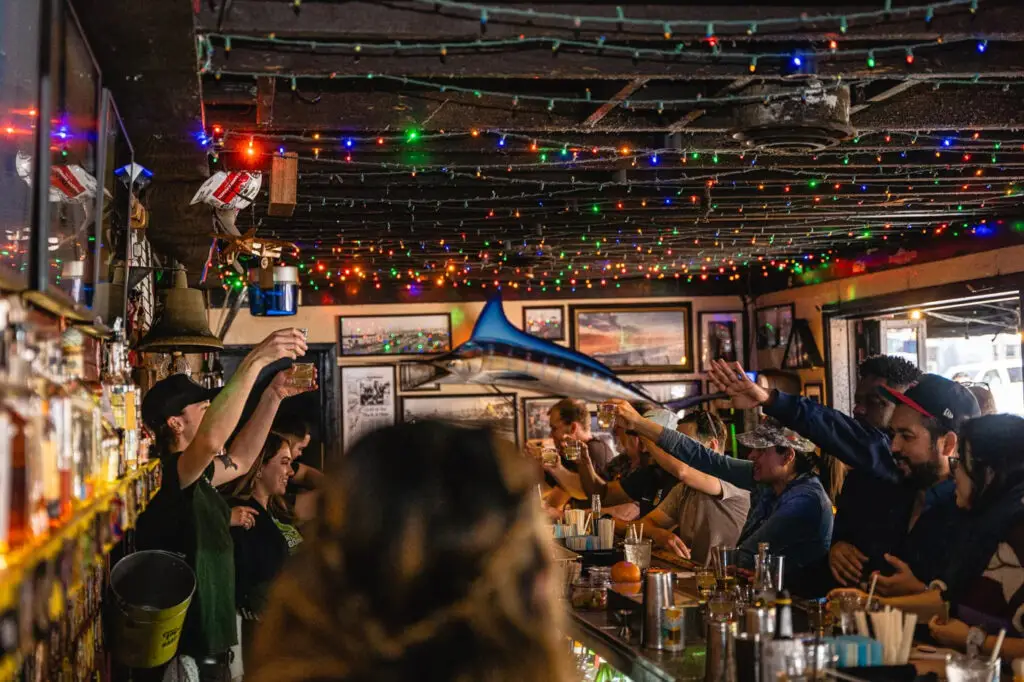
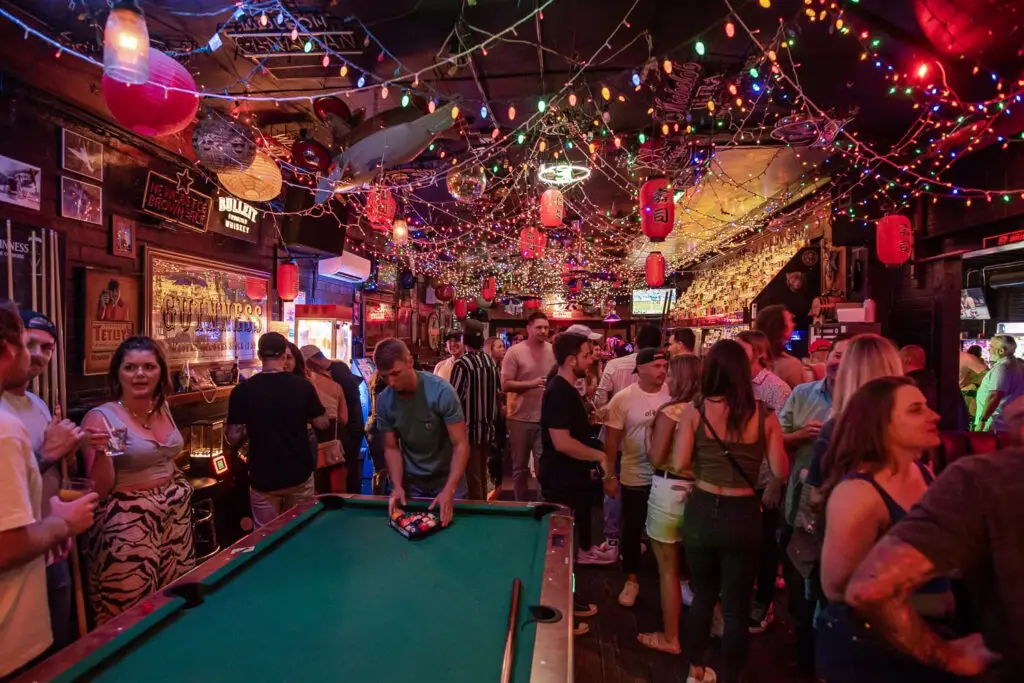
This much-beloved neighborhood spot off the 5 in Spruce Canyon supports a roster of regulars. It has all the trappings of a satisfying dive bar with strong drinks, friendly staff, flight-themed décor on every surface, and colorful Christmas lights strewn across the ceiling. (Because who doesn’t love a good holiday romance on a random Tuesday in October?) Aero Club is known for its whiskey collection, so consider having the bartender recommend one you’ve never tried and use it as a way to start a convo with the person next to you. Or, busy yourself with a round of pinball (the bar boasts a room dedicated to arcade games) while you work up your courage to approach the cutie playing Big Buck Hunter.
Who You’ll Meet
The tatted former hipster who’s buddies with all of the industry folks and can give you the rundown on their favorite ryes.
Photo Credit: Robert Benson
The Tiki: False Idol
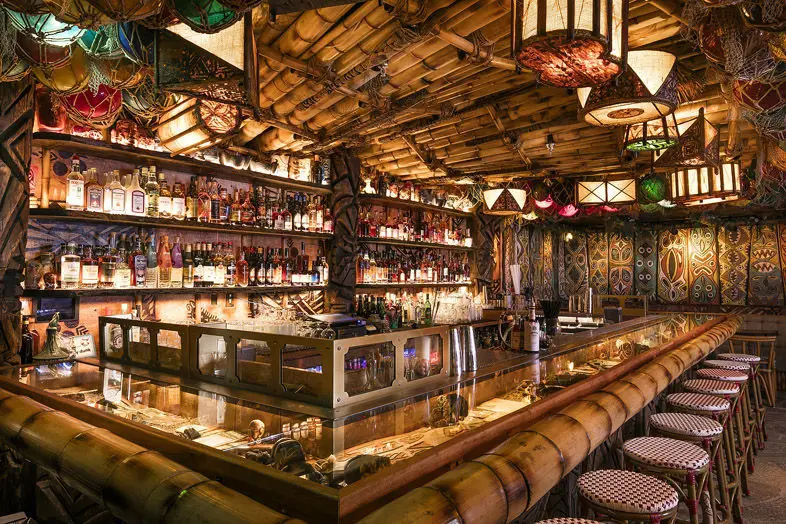
Treat yourself to this speakeasy just south of Little Italy and rub elbows with true fans of tiki. Make sure to go on a weekday night when it’s less crowded but still lively enough to give you the opportunity to chat up a stranger. The bold décor and inventive drinks draw a diverse crowd, including bigtime tiki enthusiasts. And take it from us, the local scene in San Diego is full of interesting characters who you’ll want to spend your time speaking with. For drinks, rum is the name of the game. Grab a Painkiller and offer your barmate your best dad joke about its name—it’s sure to at least get a convo going.
Who You’ll Meet
They’re in full regalia for Tiki Oasis every year and might let you sample their homemade falernum if the night goes well. You can dance to Les Baxter in their palapa.
Courtesy of Happy Medium
The Hot Spot: Happy Medium
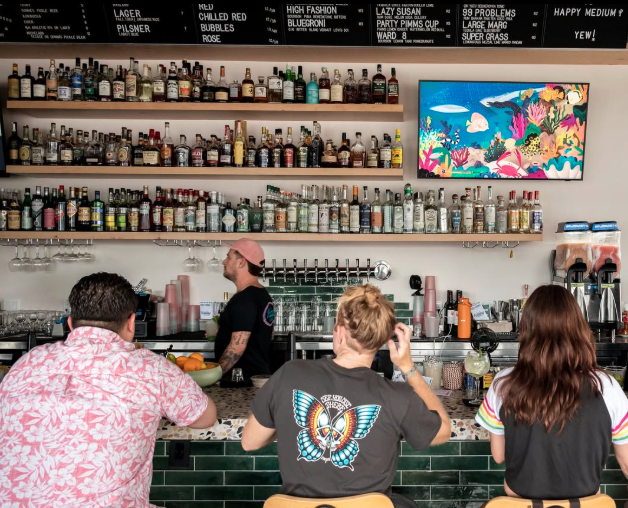
This charming corner spot in North Park opened in 2024 and offers fresh takes on cocktail classics, delicious bar bites, and a youthful vibe. Though it’s popular, there’s usually a seat at the bar. Like any good neighborhood haunt, this place is often filled with locals talking about their latest vinyl purchase or which taco shop serves the best adobada tacos. Order a Super Grass (lemongrass mezcal, tequila, lime, mango, and pandan), then get cozy and people-watch from the bar. Pro tip: Talk music to the person sitting next to you; there’s usually someone nearby who will be excited to share their album recs.
Who You’ll Meet
They’re a bookseller at Verbatim Books by day and the DJ at Soda Bar by night. They’re sweet, passionate, and impossibly cool.
Courtesy of Nine-Ten Restaurant and Bar
The Hotel: Nine-Ten Restaurant and Bar
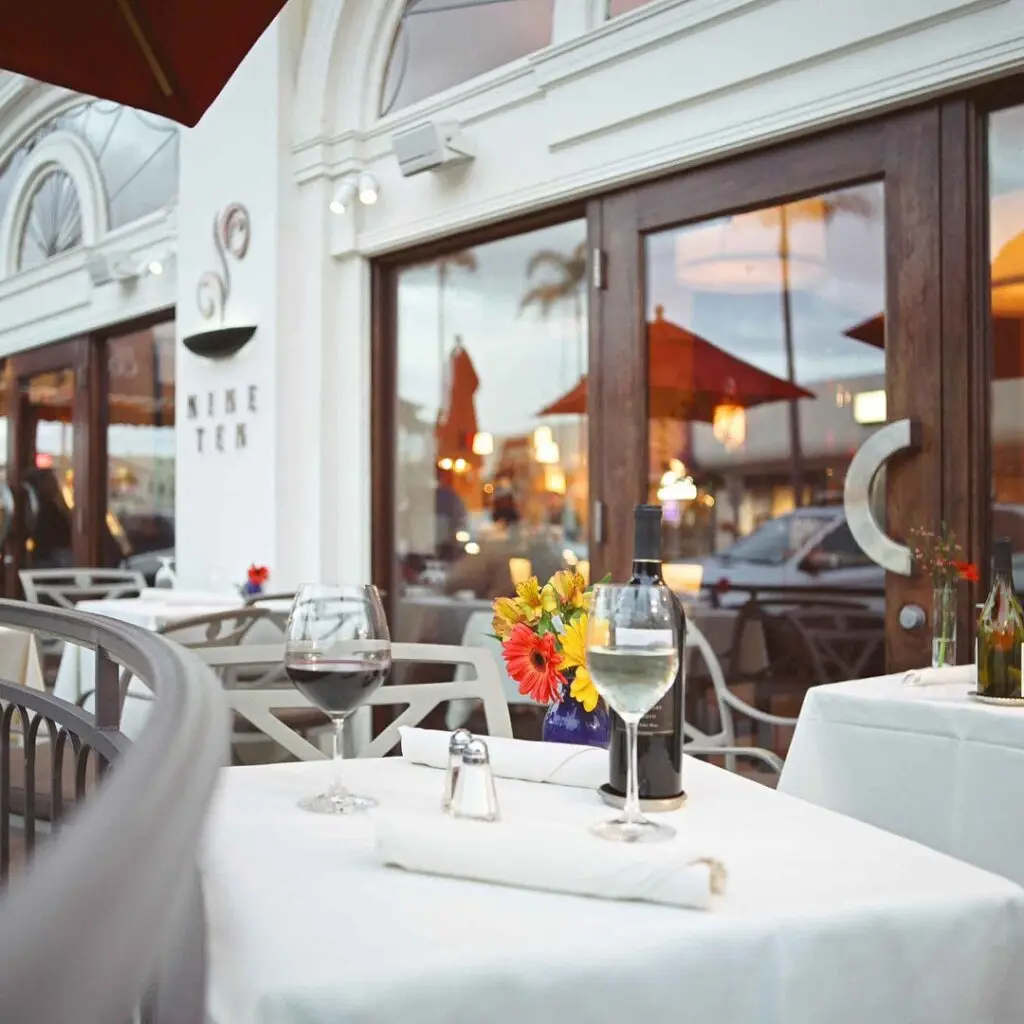
The beauty of a hotel is that you’re sure to never run into the same crowd twice. Fresh faces and new opportunities are in high supply, and if you want the heady combination of new romance and a great drink, head to Nine-Ten, tucked inside the Grand Colonial Hotel in La Jolla. Striking the right balance of upscale yet laid-back, Nine-Ten draws an elegant and professional set looking for great food and a refined ambiance. You’ll find someone here to match your ambition and discerning standards. Start at the bar, and then head outside to the patio for a more private conversation.
Who You’ll Meet
The jet-setting sophisticate. They know their way around a wine list and might have a house in Monaco. You can impress them by ordering the pork belly.
Courtesy Visit Encinitas
The Brewery: Modern Times Beer
Looking to meet a surfy, down-to-earth cutie with great taste in hazy IPAs? Modern Times in Encinitas is the spot. Delicious brews and craveable vegan food draw in a host of outdoorsy, active North County types. The generous semi-circle bar means plenty of space to find a spot, and the chilled-out ’70s vibe makes chatting up your neighbor feel breezy. Plus, dogs are welcome, so bring your fluffy buddy for emotional support. It’s easily accessible right off the 101, so head over after your next wave sesh and see if someone catches your fancy.
Who You’ll Meet
The dawn patrol devout, who just got off work at Sun Bum next door. Their rescue dog is well-behaved, and they’re planning a trip to Hawaii next month. They’ll flirt with you over a Dungeon Map IPA and ask you for a walk on the beach afterwards.
The world’s matchmakers have been atwitter lately, according to Sophy Singer, San Diego founder and executive coach behind matchmaking service Sophy Love.
In June, Materialists hit theaters, starring Dakota Johnson as Lucy, a matchmaker for fictional New York company Adore. The film navigates not only the complicated and sometimes unrealistic expectations of her clientele but the matchmaking mathematics of Lucy’s own love life, as well.
Singer, like many matchmakers in her community, waited in anticipation to see whether the movie’s portrayal of the industry would reflect their real-life experiences. I spoke with Singer about her thoughts on Materialists.
“It didn’t portray matchmaking in a wonderful light,” she admits. “But it does remove the stigma and normalizes matchmaking [to a broader audience].”
According to Materialists, matchmaking is like working at a morgue or an insurance company: Each person is reduced to a set of rote information and statistical analyses, with a price tag to match. Men are valued primarily for their height and bank accounts, women for their youthfulness and level of education.
The film’s director, Celine Song, worked at a large matchmaking company for six months early in her career to support her aspirations as a playwright. Her experience informed much of the film’s premise, including the structure of marketability upon which Lucy evaluates each of her clients. It makes modern dating feel like the stock market—a person’s valuation rises and falls according to perceived worth.
Singer laments the “check-box driven, transactional, and slightly impersonal matchmaking process” that’s portrayed in the movie.
“What it really misses is an integrative and holistic approach. It misses the deeper, more human side of matchmaking,” she says. “For my business, it’s not just the matchmaking and the matches, but understanding our clients on a deeper level and understanding what’s holding them back.”
Singer looks at her clients not as a static set of stats, she adds, but as people capable of growth and development, with the opportunity to change their lives for the better.
“What are their patterns?” Singer wonders about her clients. “They are the common denominator, in a good way. If [people] are able to look at the underlying parts and patterns of themselves that are showing up in the dating space, that’s where the work is.”
If someone is consistently unable to make it past the six-month mark in their relationships, for example, it’s probably not because they’re too short or too old. Maybe they’re meeting quality people, but their own past traumas—either with family or early romantic partners—are prompting them to put up walls and sabotage the chance for a deeper connection. It’s a lot more complicated than the 1s and 0s approach Lucy seems to take.
In Materialists, matchmakers like Lucy throw clients into the fray without really helping them unpack what’s going on internally. In fact, if Lucy had done some more digging on one of her client’s matches, she could have potentially avoided some devastating consequences—but I won’t spoil the movie for you here.
Singer’s business uses a psychology-driven and trauma-informed modality called IFS (internal family systems) to help clients tap into what’s holding them back in the dating space. She looks at dating and relationships as the next chapter of a person’s healing and growth overall, not just the avenue to lock down a spouse and somehow live perpetually in “happily ever after.”
“There’s a huge opportunity for a completely different result than [clients have] ever had before,” she says.
Sophy argues that, when you’re not addressing the internal self and “who’s at the wheel of the bus,” you may be doomed to repeat the same cycle you’ve been in, even after accessing a dating service. Singer addresses this head-on with her clients and offers IFS-based courses for clients to learn more about themselves and identify issues they’d like to work on before meeting would-be partners.
Think of it like “match-coaching” before the more traditional matchmaking begins.
Matchmaker and founder of Sophy Love, Sophy Singer
Singer points to a particular scene in the movie: One of Lucy’s clients is crying on her wedding day, minutes before she’s set to walk down the aisle. The client admits that she’s not excited to marry her groom. He checks all the boxes, but her real motivation was to one-up her sister with a husband that she believes is more impressive than her sibling’s. “So, this is about value,” Lucy points out, making the case that marrying someone because they offer you a sense of external value is a valid reason to stay with them forever. Relieved, the mascara-streaked client moves ahead with the wedding.
But Singer holds a critical eye to this scene. “A relationship built on that level of an unconscious dynamic [is ultimately unsustainable],” she argues. At some point, what everyone else sees—that external value—will become less relevant than the fact that you’re with someone who doesn’t meet your deeper, less obvious needs. Once that happens, most people find that their attraction to that person fades fast, since the motivation to be with them was misplaced in the first place.
I ask Singer about the math of matchmaking portrayed in the movie, with perfection—or “unicorn status”—being the goal. Are people even attracted to perfection?
“There’s this problem of ‘the checklist,’” she says. “The era of dating apps has led to people treating dating as a shopping endeavor. It puts you into an evaluative mindset, and that’s how you’re showing up on dates. As people stay single longer and longer, they are not only evaluating [others], but they feel that they are being evaluated. So people are showing up in a performative manner, not as an authentic version of who they really are.”
Singer has found that people actually connect to the messiest parts of the human experience the most, because everyone understands it. She notices that women, especially, act overly low-maintenance or pretend to not have any needs when it comes to presenting themselves on dates.
“That’s not relatable. I’m trying to unravel all of that. People feel lonely and disconnected and keep having the same superficial conversations over and over,” Singer says. “They’re not understanding why they can’t connect. But that’s because they haven’t tapped into what it means to be relational and share what they’re experiencing in the moment.”
The problem is, when you show up as this breezy, unbothered version of yourself, you’re setting yourself up for failure. Not only are you less relatable in the moment, but you are creating a situation where you’re bound to lose face at some point. Once that happens, the other person may feel that you weren’t truthful about who you made yourself out to be.
Singer uses an empathetic, come-as-you-are approach to dating called “authentic relating.” The practice “allows you to reveal yourself [and also] set the stage for others to reveal themselves,” she says. “Dating can then be a gift to another person to feel seen and heard. And, when you do it that way, and it’s not about checking off a checklist, the outcome of the date doesn’t matter as much as the experience itself, and more connections can happen that way.”
Authentic relating allows each date to become less about evaluating for a perfect fit. When you let real connection happen, then finding love doesn’t have to feel like a job interview, even if you ultimately decide that person isn’t for you.
I ask if Singer felt the movie got anything right.
She laughs. “Lucy’s rant made me feel seen,” she says, referring to a scene in which Lucy drops the checklists for a moment and gives her dissatisfied clients a much-needed reality check.
“This is not a simulation. People are people are people are people. They come as they are,” she says.
Singer agrees with Lucy’s sentiments. “This isn’t Build-A-Bear!” she jokes. “An endless laundry list of perceived must-haves can lead you to overlook people who might actually be great matches for you, but don’t perfectly fill out all of your criteria.” (If you’d like to watch the rant without committing to a two-hour movie, search it up on TikTok.)
In my own life, I’ve found that checklists are often defenses against insecurity—a system of rigid rules to protect from pain and disappointment. They often tend to reflect our external ideas of worth, not authentic self-awareness. As Lucy says, “You are not a catch, because you are not a fish.”
I’m holding Singer’s advice as I navigate my own dating journey. As things move forward with Robin, I truly hope to bring my authentic self to the table. I’m trying to be honest with my flaws and not pretend that I’m perfect. And I’ve been pleasantly surprised to see her share her own insecurities with me. It makes me feel like I understand her better and can communicate with her in a way that makes both of us feel more seen. That, in itself, feels like a win—and gives me some real material to work with.
Today’s seniors are more connected than ever, with a renewed focus on retirement as a time of discovery and enriching experiences. The ultimate reward for a retirement well-earned is the wisdom to appreciate it all, and what better place to enjoy that unique perspective than Vi at La Jolla Village, in the heart of San Diego.
All-access pass to good living.
As a Continuing Care Retirement Community (CCRC), Vi provides access to a connected and fulfilling community while making it easy to plan for future care, should the need ever arise. With a care plan in place, residents enjoy greater financial predictability and long-term value, freeing them to focus on making the most out of retirement.
Resort-style amenities at the epicenter of a cultural hub like San Diego offer a retirement experience unlike any other. Paired with exceptional dining, spacious accommodations and dedicated staff, the best of maintenance-free living is all around. And with the introduction of Vista 360 Well-Being, Vi’s panoramic approach to wellness, there are more ways than ever for residents to access it all.
The harmony of mind, body and community.
Courtesy of Vi at La Jolla Village
The key to longevity is striking the right balance in maintaining an active lifestyle with an active mind in a fulfilling community. With newly renovated community spaces and restaurants, Vista brings a variety of opportunities for residents to elevate their well-being through Vi-exclusive “Signature Experiences.”
Vista Enrich takes an evidence-based approach to brain vitality, keeping residents at the forefront of cognitive health through exergaming (exercising + gaming), nutritional plans and informative workshops. It is also home to The Brain Vitality Studio, an innovative facility dedicated to cognitive fitness that has garnered national recognition.
Vista Discover invites residents into stimulating educational experiences, from chef-led cooking demos and guided wine tastings to lectures at local universities and intimate lectures following cultural outings.
While Vista Enrich focuses on brain health and Vista Discover engages residents intellectually, Vista Explore cultivates a sense of adventure through curated travel and local excursions. But broadening one’s horizons doesn’t always require a plane ticket. One recent event brought a taste of the world right to the community: an onsite “jazz cruise” featuring live music and global cuisine served at a series of themed “ports” all within the community’s own ballroom.
“Location, location, location”
Courtesy of Vi at La Jolla Village
One of the biggest perks of life at Vi at La Jolla Village is its proximity to just about everything. With easy access to transportation and local attractions just steps away, residents can explore and engage with their community at their own pace.
“There are trolley and bus stops within a 5-minute walk that will get you to the beach, UCSD Campus, medical appointments, downtown La Jolla or San Diego, et cetera. We rarely use our car,” said resident Tom Yager.
With the best of San Diego just steps away, residents don’t just live in the city, they live within reach of everything that makes it special.
The best of all worlds.
Courtesy of Vi at La Jolla Village
At Vi at La Jolla Village, retirement isn’t a chapter to slow down; it’s an invitation to discover more. Tailored community experiences created by Vista, paired with the vibrant pulse of San Diego just outside the door, mean that residents don’t have to choose between security and adventure, connection and independence. They get all of it.
This is what an all-access pass to good living looks like: the comforts of an elevated lifestyle, a community built for growth and a city made for discovery – all in one place.
To learn more about Vi at La Jolla Village or for details on available floor plans, visit ViatLaJollaVillage.com/SDM.
Finding forever friends can be a lot like dating—if not harder, since there are few platonic equivalents for “I think you’re a hottie; can I take you out sometime?” You’re looking for a person who just gets you, who makes you feel safe to be yourself. Someone you can laugh and dream and travel and explore with. And, just like in romance, that fateful connection often starts with a meet-cute.
For the third year in a row, as part of our Best of San Diego issue, we asked our readers to share their personal stories for the chance to be featured in the mag. The first time around, submitters penned love letters to San Diego itself. Last year, they sent us tales of finding their romantic partners in the city. For 2025, we invited locals to tell us how they met their SD bestie and what makes that friendship so special. These are a handful of the memories that moved us the most.
Sarah & Mia, University Heights
Mia and I first met briefly in 2016 through a mutual friend who was revisiting San Diego. Our paths fatefully crossed again on Halloween night 2018 in the beautiful haze of Whistle Stop Bar‘s smoking patio. I was a blood-soaked Carrie; she was the Joker and official birthday girl. We bonded over horror movies, punk music, beach days, and our shared favorite dive bar. She is a therapist; she helped me decide to get my counseling degree that night. We were both in the early stages of a new self-discovery, both finding ourselves redefining paths. Our love of music led us to the realization of the same teenage dream: to play in a band. Why not? By the end of the night, we had decided—we, a couple of 30-somethings with no idea how to play instruments, nor any innate talent, but nothing to lose, were just crazy enough to start a band. People thought it was a joke, but we didn’t. Now, seven years later, two bands (hi, @witchfaceband), many shows, a few tours, and a million texts and phone calls later, here we are chosen sisters who barely remember a life apart.
Picture this: a travel nurse, his dad, and a dog named Moses roll out of Columbus, Ohio, with nothing but a duffel bag of scrubs, no housing plan, and blind faith that San Diego would “just work out.”
Ten minutes into arriving in the city—yes, 10—we pulled into a random dog park in Little Italy. I instantly clicked with a long haired Dalmatian while my dad talked sports with her owner. That woman became my platonic soulmate before I even had a couch to crash on.
From that moment, we’ve been inseparable—stacking Bud Light towers at Gulls games, collecting passport stamps, and dancing through NYE in Chicago. We’ve lost our voices cheering on the Padres in Mexico City (LFGSD); faked a honeymoon across Europe (shoutout to Hyatt for the castle suite in Ibiza—and, yes, Amazon rings included; and survived three surgeries, matching tattoos, and more first dates than The Bachelor.
If platonic soulmates are real, mine came with a Dalmatian and the liver of a sailor—and just so happens to live in San Diego, the place where our besties story began.
Natalie & Anna & Moanna, Point Loma
It was a fine day to no longer be the new kid. A family moved in next door. They lumbered in, and the mother released them onto the grassy lawn in front of the condominium complex.
These new kids whizzed by on scooters. One of the boys spoke, asking if he could show me his trading cards. Later, I noticed his sister, Anna, following us. Shyness gone, I proposed a game with Anna. Soon, another girl from a condo down the row asked to join—Moana. Within days, the three of us were glued at the hip. The condo complex in Point Loma was our Treasure Island. We were pirates, roaming our slice of San Diego.
We played hide-and-seek behind large trash bins. We swung from vines on eucalyptus trees. We made bushes into a bonafide palace, brushing the dirt neatly with brooms. (We allowed Anna’s brothers to join, but only as housemaids.)
While growing up, we lived through each other’s highs and lows. We may have lived in a world created by imagination, but the fortune of our reality is we loved each other deeply and will for the rest of our lives.
Amelia Rodriguez is a writer and journalist and winner of the San Diego Press Club's 2023 Rising Star Award and 2024 Best of Show Award, she’s also covered music, food, arts and culture, fashion, and design for Rolling Stone, Palm Springs Life, and other national and regional publications. After work, you can find her hunting down San Diego’s best pastries and maintaining her five-year Duolingo streak.
I wasn’t sure I’d ever feel butterflies for someone again. When my long-term relationship ended last year, I couldn’t have imagined that in several months’ time I’d be trading messages and stories, laughing over new inside jokes and finding so many points of connection with someone like Robin (not her real name).
I met Robin through Hinge one night while sipping wine with friends and talking about the kind of partner I’m looking for. When we connected, she started chatting with me immediately. It was a relief to not have to guess at her level of interest; she led with authenticity and vulnerability. With her, things seem a little brighter. I’m smiling a lot more. I feel like maybe the future will be much better than I even hoped for.
But at the same time, I’m also terrified of screwing it up. I constantly have that “other shoe” feeling, like I’ll make one wrong move and it’ll all be over.
In the early days of dating someone, when you still don’t know them that well, it’s impossible to know what they’re thinking about you or who they’ll turn out to be. I’m scared of ending up in the same type of situation I was in before: stifled, shut out, abandoning my own needs to try to fix something that was not salvageable or serving me.
I’m forcing myself to gut check, take a step back, vet Robin against the values I’ve instilled in myself since my breakup. What are my dealbreakers? Will I be able to enforce my own boundaries knowing that I’m so excited to see where this goes? It’s hard to temper excitement with guardrails, especially when you’re seeing someone through rose-colored glasses.
One benefit of leaving a long-term relationship is that you come away with absolute clarity about what you were missing while you were in that partnership. Hindsight looks clear as day, and you tell yourself, “I’m never going to put up with that again.” You walk through your single life with focused assurance you will never repeat the same mistakes.
And then inevitably, you meet someone new, and they bring a fresh set of variables, quirks, and baggage. You’re on the lookout for old ghosts: the poltergeist of chaotic living standards, the apparition of abandonment issues. But how should you contend with new information that may not look like the former foe you know so well?
It’s prompting me to get clear with what my dealbreakers actually are and which ones may no longer apply. What’s the difference between a true red flag—something that goes counter to my needs or values—and a trigger from my past that can be navigated with the right person?
For instance, I’ve often thought that I would never date someone who is a huge sports fan. What I’m realizing is that I don’t vibe well with people who are hyper-competitive, and I’m turned off by frivolous spending habits (like constantly buying merch, betting on sports, or attending expensive games super regularly). The subject matter of sports is beside the point—it’s the actions behind it that I’m focusing on. If my core values aren’t being violated, I find I’m much more willing to cheer for the home team.
Similarly, I have told myself that I wouldn’t again get involved with someone whose job took them away from home often (Robin’s does, as did my ex’s). But I’ve realized the issue was a lack of communication, planning, and reassurance—and the fact that my own world wasn’t as independent and developed as it needed to be for me to feel grounded when she wasn’t around. I’m realizing that I can sustain a situation like that much better if I feel prioritized by my partner when she is home and free to prioritize myself when she’s not, knowing she will check in and communicate with me in a way that makes me feel safe, not abandoned.
With all of this reflection, I can’t help running into a terrifying thought: What if what I bring is a dealbreaker for her? What if my imperfect life is just too much, and she heads for the hills? My new flame has a lot of rules for herself—she holds herself to an incredibly high standard in terms of personal growth, organization, and work ethic. I’m impressed… and intimidated.
I’m doing my best to rely on the work I’ve done on myself in the in-between. To not have the impulse to change myself in order to impress her, but to lead with my best self. My true self. This isn’t about trusting the other person to protect me but trusting myself to be resilient if we aren’t right for each other in the end. I’m motivated to get clarity about her dealbreakers, too. Is there anything there that is truly integral to who I am as a person, or is there a behavioral aspect here that I’m comfortable changing? I do think it’s fair to make accommodations for someone without it fundamentally changing who I am.
For example, I am more relaxed about home organization than she is. I’m not messy, but I will also leave the odd glass hanging around the sink or keep my hair products out if I’m in a rush. We have discussed our preferences, and she has shared that it’s more a tenant she holds for herself than for a partner. I don’t feel pressured to change how I am normally. At the same time, I’m inclined to do a little extra around the house if it means creating a space she feels comfortable in.
It’s early days, and we still have so much to discover. For now, I’ll be keeping these considerations in mind as I enjoy all the fun things, too.
Tell me, what are your dealbreakers? How early have you left a relationship because of one (or how late)? Have you ever had someone abandon you because you set a boundary or because you had something integral to you they couldn’t get past? I’m so curious.
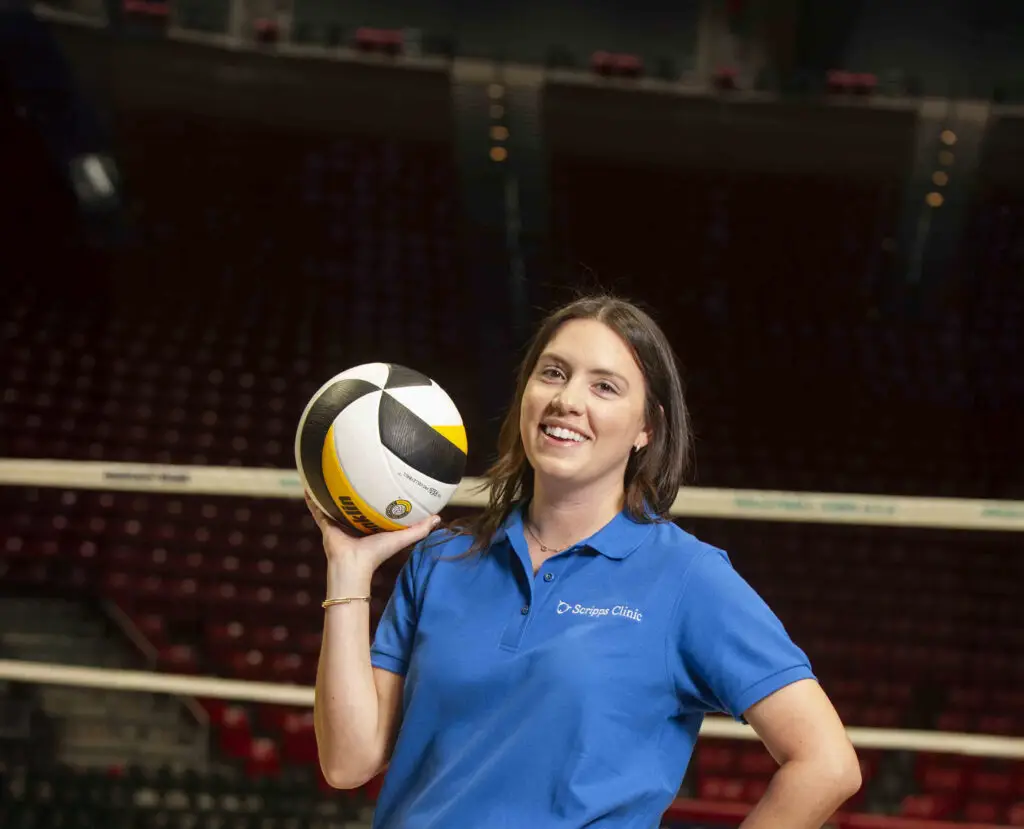
Growing up, Laika Nur, MD, Scripps Clinic sports medicine specialist, loved watching beach volleyball when the Association of Volleyball Professionals tour came to her hometown of Chicago. A talented volleyball player herself, she remembers sitting in the stands all day, and once, even got a couple autographs. Years later, Dr. Nur was attending a professional event focused on women’s sports, and the discussion turned to a new professional women’s volleyball league. The general manager and coaching staff for San Diego’s team, the Mojo, happened to be in attendance, and Dr. Nur took the opportunity to ask them if they needed a team doctor. Flash forward to the Mojo’s inaugural 2024 season, when Dr. Nur officially became the team physician. Click here to read more about Dr. Nur and how she incorporates lessons she learned on the court into her practice.
For more nutrition, wellness, and healthy living tips, sign up for the San Diego Health newsletter here.