Featured articles
Food & Drink
Food & Drink
Food & Drink
Featured articles

Everything SD

Features
Everything SD
Featured articles
Everything SD
Things to Do
Everything SD
Featured articles
podcast-ep
podcast-ep

podcast-ep
Featured articles

Features

Features

Features
Featured articles
Everything SD
Partner content
Food & Drink
Ready to know more about San Diego?
SubscribeReady to know more about San Diego?
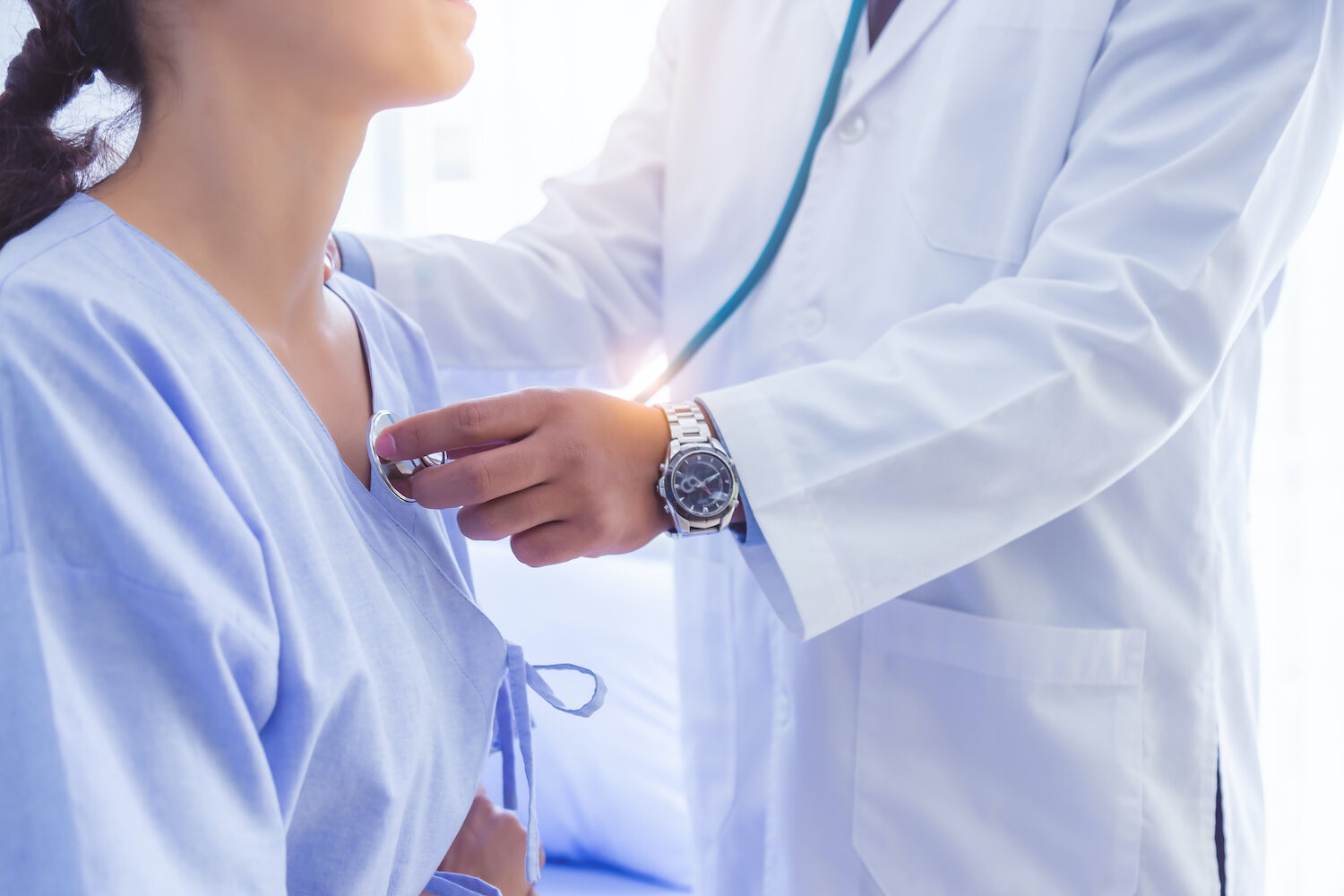
A doctor's advice on your annual physical exam
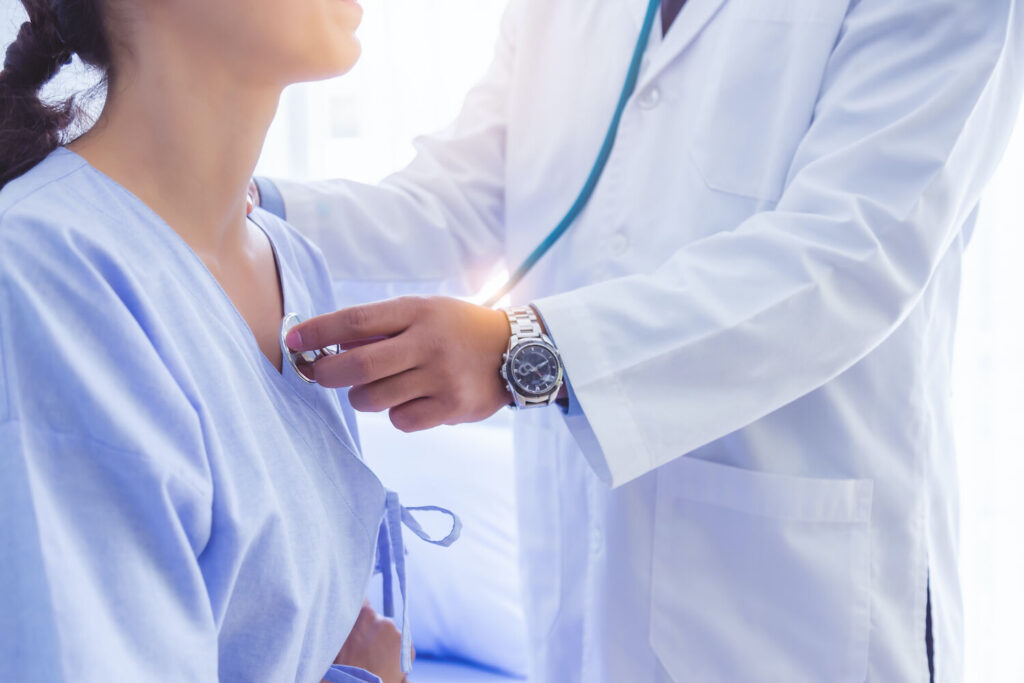
If you’ve put off scheduling your annual physical or checking in with your primary care physician since spring 2020, you’re not alone. Nearly half of Americans (47 percent) said they had delayed or canceled health care services since the pandemic started, according to a March 2021 survey by the American Psychological Association.
During a physical exam, your doctor checks your blood pressure, heart rate, lung function, height, and weight. And Heidi Marie Meyer, MD, a family medicine physician at Kaiser Permanente in San Diego, says that doctors don’t tend to find anything wrong in young, healthy individuals between the ages of 18 and 50 who feel fine.
Meyer says she doesn’t like to push yearly checkups on her patients unless their medical background suggests they need them,“but I know people who’ve gone in for a full physical, and a lump or bump was found and cancer was caught. So there’s always those incidental things. If you have a spidey sense that maybe something’s going on, and you just want a checkup, we’re happy to do it.”
These exams are important for establishing a relationship between you and your primary care doctor, and it’s easier than ever nowadays to connect with them. More health care providers are offering digital chat appointments or phone appointments for patients to address any questions or concerns and, if needed, you can schedule a physical exam online.
Meyer says that annual checkups can be more productive when the doctor is already clued in to any specific concerns, like back pain or increased fatigue: “That’s where our physical exam skills really come into play—not for screening people who otherwise feel healthy.”
So who needs an annual physical exam? Minors need routine annual exams to make sure they’re developing properly. Adults should be looking
at yearly checkups once they’re over 50 or if they have any chronic health issues like heart disease, diabetes, or arthritis. Between age 18 and 50, Meyer says that patients with no health issues should be looking into screenings instead of annual physicals.
Specifically, she suggests skin cancer screenings, depression screenings, and mammograms for women over 40. If a woman has a history of breast cancer in her family, then she may need to go in earlier. For men, colorectal cancer screenings are recommended after age 45. (She warns that, out of cancers that affect both men and women, colorectal cancer is the second-leading cancer killer in the US—but it is survivable when caught early, and screening is important for everyone, since most people diagnosed do not have a family history of the disease.)
In summary, Meyer says: “The value of your time with your doctor is not in that physical exam when you’re otherwise feeling well. It’s really in making sure that we’re checking all of those screening boxes, and that we’re establishing that rapport and relationship, so when you do have something going on, you’ll have that relationship to fall back on
Time for a Checkup
Everything you need to know about the new mental health crisis
We thought we were burned out before the pandemic. Little did we know that what was about to happen would give us a whole new definition of the phrase.
Before spring 2020, when people said they were burned out, they usually meant “overworked.” Herbert J. Freudenberger coined the term for this meaning in 1974, and in his 1980 book Burnout: The High Cost of High Achievement asked, “Why, as a nation, do we seem, both collectively and individually, to be in the throes of a fast-spreading phenomenon—burn-out?”
In a booming economy, suffering burnout is seen as a mark of success: You’re just working too hard in pursuit of the American dream. Some time off for R&R, meditation, and a scented candle, some focusing on work-life balance, and you’ll be back up to speed in no time.
The World Health Organization recognized burnout syndrome in 2019, in the 11th revision of the International Classification of Diseases, but only as an occupational phenomenon, not as a medical condition. When COVID-19 hit and turned our work and home lives upside down, all that seemed to change.
A frequently expressed sentiment online during the first pandemic shutdown was that white-collar employees didn’t start working from home, but living at work. Remote work and remote school left us no respite. Even “third spaces” like gyms and coffee shops were off limits. Mental health suffered across demographics, and “burnout” became almost too mild a term for what many were experiencing.
“The symptoms of burnout have become medical,” wrote Dr. Lucy McBride in The Atlantic in June 2021. “The work of living through a pandemic has been making us sick. As a primary-care doctor, I’m witnessing the physical-health toll of collective trauma—high blood pressure, headaches, herniated discs. And this has been before many people have returned to the office or resumed their pre-pandemic schedules.”
Dr. Dara Schwartz, a clinical psychologist with Sharp Mesa Vista Hospital, says their facility is seeing “an unprecedented volume of community calls” for their outpatient program: “Patients are reporting extremely high rates of anxiety, stress, overwhelm, and frustration. Everyday things are derailing them; their tolerance is much lower for setbacks and annoyances. They are snapping at colleagues and family members.” Schwartz also says that many physical symptoms are associated with this feeling of overwhelm, including gastrointestinal distress, joint pain and headaches, and tightness in the chest.
“As a result of higher stress levels, we see corresponding higher levels of sugar and cholesterol in the system,” she adds. “It affects sleep and eating habits negatively. Most of all, patients report feelings of loneliness, hopelessness, and helplessness.” In people under age 45, high burnout is even linked to higher mortality rates as a result of these physical effects.
Why are we suffering more from burnout now? Partly, it’s because everything feels like work. In a New Yorker article from May 2021, Jill Lepore writes,“You can suffer from marriage burnout and parent burnout and pandemic burnout partly because, although burnout is supposed to be mainly about working too much, people now talk about all sorts of things that aren’t work as if they were: you have to work on your marriage, work in your garden, work out, work harder on raising your kids, work on your relationship with God. […] Even getting a massage is ‘bodywork.’”
The numbers are startling. The results of a Kaiser Family Foundation survey published in February 2021 show that the average share of adults reporting symptoms of anxiety or depression from January to June 2019 was 11 percent, while in January 2021 it was 41 percent. The populations most affected were young adults, people of color, essential workers, and members of households with lower income.
“History has shown that the mental health impact of disasters outlasts the physical impact, suggesting today’s elevated mental health need will continue well beyond the coronavirus outbreak itself,” the study concluded. “For example, an analysis of the psychological toll on health care providers during outbreaks found that psychological distress can last up to three years after an outbreak. Due to the financial crisis accompanying the pandemic, there are also significant implications for mortality due to ‘deaths of despair.’ A May 2020 analysis projects that, based on the economic downturn and social isolation, additional deaths due to suicide and alcohol or drug misuse may continue to occur by 2029.”
Dr. Karrar Ali, emergency physician at Sharp Chula Vista Medical Center, says he’s been brought up short by physical symptoms in the emergency department that almost certainly are a result of extreme burnout: “Every single person on earth has been touched by this pandemic. What we are all dealing with is fear and the unknown. In the first few months it was just raw fear and so many unanswered questions. Then for a time in March and April 2021 there was some hope as the vaccines came out and things started opening up. But with the emergence of different strains there’s now fear of another lockdown, mask requirements returning, and the discussion about vaccinations has become even more confusing as there’s incongruency between different states and even different counties.”
Ali has observed people reporting to the ED with unexplained chest pain and numbness.“A woman came in a couple of months ago whose symptoms looked like she was having a heart attack or aneurysm. She was young and healthy; I could detect no physical reason. I ordered a full workup for her, but fortunately I had some time to just talk with her, and asked her what was going on in her life. It all came out like a tsunami: Her husband had lost his job, so they’d lost their health insurance, then her husband got COVID, and they have young kids—she talked for 20 minutes. She said she was a seemingly normal person two years ago, but then everything changed completely.” It made him wonder how many more of his patients were in the same boat but hadn’t told him.
Laurie Chapman, a licensed marriage and family therapist in San Diego who is a certified trauma specialist, says she sees patients with extreme
burnout exhibiting similar symptoms to those who’ve suffered early childhood trauma.“The feeling of helplessness and lack of control is what spurs an extreme stress response in both types of patients,” Chapman says. “When you’re under extreme stress, for whatever reason, you’re living in a constant state of hyperarousal. With so much out of your control and no possibility of resolution, it just reinforces the patient’s feelings of being depleted and burned out.”
Chapman cites studies showing that physical manifestations of extreme anxiety, like panic attacks, are a form of evolutionary fight-or-flight response left over from when early humans were at risk from predators. Though we rarely have to worry about actual mortal threats on our heels now, our bodies still get all revved up with nowhere to go. That’s why in the short term, if you’re having an anxiety attack, a short burst of intense exercise can help dissipate the adrenaline. Plunging your face into ice-cold water for up to 30 seconds can also calm you down.
“The pandemic shutdown magnified all these stresses,” Chapman says. “When you’re already stressed at work and then you come home and everything at home is also stressful, there’s no escape. What were cracks before COVID now become chasms, and whatever you were able to ignore before is now unavoidable.”
The unanswered questions continue to create unbearable levels of stress that lead to burnout. When will it be over? Maybe never. What will it take to get to a “new normal”? “It may be that we need to recalibrate,” Chapman says. “We may never feel like the crisis is over. Change is constant, and we can either suffer it, which leads to burnout, or find ways to accept a new reality.”
Burnout
Anna Sindelar, a registered nurse in the step-down unit at UC San Diego Medical Center, shares her personal account
In our August/September 2020 and April 2021 issues, we interviewed Shannon Cotton, an ICU nurse at UC San Diego Medical Center, Hillcrest, to get a firsthand account of the challenges health care workers have been experiencing over the past 18 months. Since then, the number of positive COVID-19 cases in San Diego County has been on the rise. For the third installment in this series, we checked in with Anna Sindelar, a registered nurse in the step-down unit at UC San Diego Medical Center, Hillcrest, about what they’re seeing now.
Our unit is the primary COVID-19 unit for patients who aren’t ICU patients. They’re coming directly from the ICU or from the emergency room. We’re the convalescent period—where people are hopefully getting better, but are sometimes getting worse and ending up in the ICU. And when the ICU is overloaded, that affects other parts of the hospital. When the ICU is full, those patients stay on our floor. We end up taking them and keeping a really close eye on them. That’s what happened in January 2021. We were taking care of patients who were much sicker than we normally take care of.
We’re having a hard time with discharges for COVID patients, because they need to go to a place where they can isolate if they’re still in the infectious period. That can also be difficult for some of our patients because of their living situation, and also there’s a shortage of home health services—those are nurses who go into people’s homes and provide care. In our unit, the patient population definitely seems younger, in their forties, which I don’t recall seeing before.
From what I understand, the Hillcrest ICU is filling up—we’re reaching that point again where we might have to open up other parts of the hospital for ICU beds. As far as the ER goes, the last time I went to work, there were 11 ambulances lined up out front to drop off patients—but being a floor nurse, I’m not privy to all the ins and outs of why that is.
The main issue is staffing. We’re much more full with COVID patients. We definitely started to see an uptick in mid-July, and it’s stayed steady for the last few weeks. When we have that many patients with COVID, we usually have extra staffing to facilitate the donning and doffing of PPE. When you’re in an isolation room, you’re not able to keep an eye on your other patients—you need extra staff to watch them and help bring you supplies and medications.
We’ve been short-staffed since December, and that hasn’t gotten better. It’s not just fewer nurses. It’s fewer phlebotomists [people who draw blood]. It’s fewer nurse assistants, who help with the daily care of these patients, keeping them clean, helping them walk, helping them turn to prevent pressure ulcers.
I think it’s hard to say why we’re understaffed. The administration is telling us they’re having a hard time hiring qualified nurses. That tells me that people maybe don’t want to come back. Before COVID, UCSD was one of those sought-after places to work. So it’s really surprising to me that they’re having a hard time finding anyone to even take a traveler position.
The shift is more demanding than it would’ve been. Every day you have off, they’re asking you to come in. At other hospitals, you might be required to come in—at ours, you’re not required to—but you know that your coworkers are needing help. You feel the pressure to help out when you’re off. So it’s that type of constant stress, but you also need to take care of yourself.
My coworkers are tired; they’re frustrated. They love their jobs. They are there for their patients. When people are sick, they’re at their most vulnerable (and at their most cranky, sometimes) but that’s what we’re there for. At the same time, it’s disheartening to see that this is all happening again, and there’s no changes being made [as of press time] in public health policy in San Diego. Our hospital is not the only one, and there are units at our hospital that are struggling even more.
Nationally, we have a shortage of safe and comfortable work environments for nurses. That’s the problem. If you have the appropriate help, the appropriate PPE, it’s a great job. I love being a nurse. But when you don’t have anyone to help you turn a patient, it’s your body on the line—an actual physical injury, from doing that multiple times. I think that’s part of the reason why we have tons of people going to nursing school, but then we also have people leaving.
Right now we’re just trying to get through today. We’re hoping that they hire more staff—our manager is trying really hard to help us—and we’re hoping that more people get vaccinated so they can stay out of the hospital.
If you’re eligible and you can, please, please get vaccinated.
Nurses on the Front Line
The two docs are in different specialties but share a common passion for helping people
Top Docs – Schultzel Twins
For identical twin brothers Mark and Matt Schultzel, the decision to become doctors was an easy one.
It’s a decision they made at just nine years old, stemming from a mutual desire to care for others—which stayed with them both for decades.
During a family trip to the Himalayas, the brothers were shocked to see local kids about their same age without clothes and food. Mark remembers: “We turned to our parents and we said, ‘Is there something we can do to help these people?’ We just felt terrible, because we lived very privileged lives, and our folks said, ‘If you became physicians, you could go back and help them.’ I think the lightbulb suddenly came on for us.”
Now, Mark (pictured, right) is an orthopedic surgeon specializing in shoulder and elbow surgery for Synergy Orthopedic Specialists. “We wanted to be doctors to help people—to truly help people,” he says. “We still do that today. We do medical missions, we’re involved in medical volunteering, and I think it really sets the tone for why we do what we do. It’s bigger than yourself.”
The two brothers journeyed through medical school in different cities and at different times, and eventually crossed paths at UC San Diego, where they worked together in the trauma bay.
“We’re more of a team unit,” says Matt (pictured, left). He’s now a general surgeon specializing in robotic and minimally invasive colorectal surgery, and he adds that no matter where they’re operating, they want those hospitals “to be confident that when the Schultzels are in the building, their patients are getting the top care in San Diego.”
The brothers take that top-care mentality seriously. Mark just finished an MBA program at the Rady School of Management at UC San Diego, created and sold a masking company, and developed an app to improve patient communication. He’s also the founder of a group that mentors college students every year.
Matt is approaching his 1,000th robotic patient case which, according to him, earns him the title of highest-volume robotic surgeon in San Diego County. He also uses his great Dane, Thor, as a therapy dog for his cancer patients.
Mark and Matt both speak multiple languages, enjoy traveling, and practice kendo (Japanese fencing) several times a week—and now they’re adding “Top Doctor” to their list of achievements.
Mark is being recognized as a Top Doctor for the first time, while Matt celebrates his third such honor.
“I feel incredibly humbled and thankful,” Mark says. “There are so many wonderful doctors here in San Diego, so to be selected by peers as a person they trust and would trust their patients and family and friends with is incredibly humbling.”
Matt adds, “It’s one thing to be told you’re a good doctor or to get an online review that validates your surgical acumen or your bedside manner, but it’s a different story when your peer or even your competitor may feel the same way about you. That’s a really great thing.”
NOW CFO provides scalable, on-demand accounting and finance support to companies ranging from pre-revenue startups to billion-dollar businesses
Entrepreneurs typically launch businesses because they’re passionate about a product or service, not because they want to manage its finances. While working to carve out a niche in their respective industries and drive their companies forward, many business owners find themselves bogged down by day-to-day accounting. Their existing accounting tools don’t provide the necessary visibility or insight, and they don’t have the time or resources to hire additional staff or a chief financial officer. That’s where NOW CFO comes in.
For more than 20 years, NOW CFO has been pairing businesses across the country with experienced accounting and finance professionals. Its outsourced model allows clients to customize solutions that match their individual needs, size, and financial challenges, whether that’s fractional or interim support, project-based services, or full-time placement.
NOW CFO’s clients range from startups preparing for rapid growth to established companies that need additional financial leadership without the commitment or expense of building an in-house team. However, many of these companies don’t fully understand their needs until they experience a “trigger” event: preparing for an acquisition or capital raise, navigating a first-time audit, or another period of transition. With a team of over 300 consultants nationwide, NOW CFO can start quickly and match the right expert to the right business.

“It’s important for companies to have financial visibility, and we can help them avoid a lot of the potholes that companies often run into,” says Mariah Block, a partner at NOW CFO’s San Diego branch. “Roughly half of our clients have an in-house finance person or department, and we’re resourced for more bandwidth when they need an extra set of hands at the staff or senior accountant level, or the controller or CFO level. Some clients use this a few hours a month and others use multiple people close to full-time. Our model is solution-based and customizable. We’re like a faucet you can turn on and off.”
With NOW CFO, there’s no one-size-fits-all approach. Solutions are based on the client’s individual goals, challenges, needs, and budget, meaning a client never pays for more than they need. Whether it’s a few hours of executive-level guidance or a full accounting team to support daily operations, NOW CFO meets businesses where they are and grows alongside them.
“We pride ourselves on providing our clients with the right resources at the right rate and being able to evolve as their needs evolve,” says Block.
And clients appreciate on-demand access to cost-effective support designed to improve performance and profitability.
Luxury car storage service Auto Concierge has partnered with NOW CFO to support growth over the past year. The arrangement began with a staff accountant who covered a leave of absence, but as the client’s needs changed, they also added a controller role. This allowed Auto Concierge to put effective processes in place and navigate operational challenges. Lori Church, Auto Concierge’s chief operating officer, says NOW CFO has been an “outstanding resource” and a “true strategic partner.”
“From the controller to the bookkeeper, every professional they’ve placed has brought a high level of expertise, responsiveness, and professionalism to our organization. Their team took the time to understand our business of high-profile clients and needs, adapted quickly to our fast-paced environment, and became a trusted extension of our team,” she says. “As Auto Concierge continues to grow, having a reliable financial partner like NOW CFO has allowed us to strengthen our financial and business operations while remaining focused on delivering exceptional service to our clients.”
A healthy helping of the breakthroughs, milestones, and on-the-rise practices sweeping San Diego's medical community
San Diego’s Top Doctors 2019
After Captain Keno's closed, pro surfer Benji Weatherley gave its tables, dishes, and memories a second life at Breakers Cafe Bar & Grill
Captain Keno’s No. 8 special—pancakes, sausage, toast, home fries, and eggs for $2.99—was the fuel that powered Benji Weatherley for surf competitions as a teenage pro. A couple decades later, tears were shed when the Coast Highway dive-slash-eatery called it a day after 54 years. Usually, the guts of a shuttered restaurant go to liquidation auctions or straight to the dump to decompose along with its legend. Instead, Weatherley took in Keno’s spare parts—plus other relics from Encinitas’ past—and used them to build the newest community hangout.
Every single piece in the place is from somewhere in this town,” Weatherley says about Breakers Cafe Bar & Grill. “I’m not going to settle for anything less.”
Breakers is a Hawaiian hideout in an uncool part of the coastal surf town, but it’s got the set design of an Encinitas superfan. The plates, silverware, and coffee mugs are from Keno’s. So are the tables and booths. There’s a bench made from the last table preserved in The Derby House (a building that, for over a century, was a hotel, then became a hospital, a religious retreat, and a private home). Weatherley’s not performing CPR on old upholstery because he’s a fan of antique furniture. It’s a method to bring people together.
“Representing nostalgia in this town is the only way to grasp a hold of the community,” Weatherley says. “Everyone wants to touch and feel something different from what they’re experiencing on their phones.”

Every week, locals bring him photos, artifacts, and bits of paraphernalia from Encinitas’ past and ask Weatherley to give them a new home. “I’ve had ladies who were there when [Captain Keno’s] opened cry in my arms and say, ‘This table is where I had my second birthday with my grandma,’” he says. “They tell me these stories, and I tell them I have all the same stories about my mom.” (Weatherley’s mom first brought him to Keno’s and helped raise the young surfers from the Momentum Generation documentary—Weatherley, Taylor Steele, Rob Machado, Kelly Slater, etc.—as they surfed some of the world’s most dangerous waves at Pipeline in Hawaii. Back then, she owned Breakers Restaurant & Bar in Haleiwa. Name sound familiar?)
Weatherley has always been the funniest man in the room. He calls Breakers “the Chuck E. Cheese of Encinitas.” The restaurant hosts hula dancing classes, open-mic comedy nights, and evenings bartended by longtime Captain Keno’s barkeep Vaka Kaufusi. Cult-loved reggae band Steel Pulse hit the Breakers stage recently to perform a new song that Weatherley also helped write. His longtime friend Jack Johnson has dropped by to sing a few, too.
Despite not having a fancy location along the 101, people are catching on. Fire stations and hospitals have held staff parties there. Weatherley also currently sponsors four sports teams.
“Last night, I had a girl say, ‘I want my birthday party at Breakers,’” he says. “That, to me, is community in a nutshell.”
Emma Veidt is an editor at San Diego Magazine. She earned her bachelor's and master's degrees from the Missouri School of Journalism. She loves running, hiking, and rock climbing, but really, she mostly loves encounters with the street cats around North Park.
It’s a Self-Care Summer. Because your best self is our favorite self.
If you’re anything like us, it can be easy to get so caught up in taking care of everyone else, that your own needs get lost in the ether. But while this may be a cliché, that doesn’t make it any less true: You can’t give your best self to other people unless you’re taking care of yourself.
Sometimes, that looks like stopping in for your regular acupuncture or chiropractic appointment. Other days, it means giving your body the fresh, organic fuel it needs to truly feel and function at its best. And some other times still, it involves leaving your responsibilities behind for a weekend to pamper yourself at an incredible resort and spa.
Only you can decide what your truly need. We’re just here to help you find the best ways to get it.

Island living meets desert luxury at the Tommy Bahama Miramonte Resort & Spa in Indian Wells. When you step onto the 11-acre property, you’ll be surrounded by sweeping view of the Santa Rosa Mountains with olive trees and fragrant citrus groves decorating the grounds. In other words, everything about this relaxed but refined resort is primed to help you let go of the stress from home and enjoy easy sun-soaked days and gorgeous starry nights.
The rooms blend calming, woven textures with Tommy Bahama’s signature tropical prints and feature private lanais, making it easy unwind the moment you walk in the door. If you book one of the four Villa Suites, you’ll be treated to exclusive Tommy Bahama furniture and unique personal touches to further that feeling of instant ease.
At the award-winning Spa Rosa, the expert team will help reset and recharge your body and mind using methods and rituals inspired by the desert. The 12,000-square-foot retreat includes outdoor soaking pools, eucalyptus steam rooms, and outdoor cabanas, as well as massages, facials, and body masks—all aimed at creating a day dedicated to you. We’re particularly partial to the Day Long Escape, an indulgent all-day affair of CDBs soaks, renewing scrubs, life changing massages, and transformative facials.
Following your treatment, continue the experience with a meal on the patio at Grapefruit Basil. We love the Hamachi Crudo, a light, citrus-forward dish featuring premium yellowtail, house-made ponzu, creamy avocado, and fresh seasonal garnishes.
Whether you’re strolling the gardens, relaxing beside its saltwater pools, or indulging in a restorative treatment, you’ll be able to escape in style and relax in luxury at the Tommy Bahama Miramonte Resort & Spa.

There’s no shortage of ways to stay active in San Diego—but if you really want to enjoy everything the city has to offer, you’ve got to make sure you’re giving your body its tune-ups. Enter: Healcove Chiropractic. The board-certified chiropractors and wellness professionals at Healcove are experts at addressing that stage where you’re not injured, exactly, but you’re not at 100%, either. Maybe you’re feeling a bit tense or stressed out. Or it could be that you’re not quite moving the way you want to. Sometimes, it’s just that the accumulation of days, weeks, or even years of daily strain is starting to take a toll. No matter what stage you find yourself at, the Healcove Chiropractic team can provide integrated, preventative care centered on long-term, science-backed approaches that ensure you can always stay active and live the life you want to live pain-free.
This starts by providing truly individualized care. Every patient can expect a thorough 60-minute consultation session that includes a posture and movement screening. This allows the team to develop a completely personalized plan. That plan might include chiropractic care, acupuncture, or massage therapy, as well as functional fitness training, vibration and sound therapy, and Dynamic Neuromuscular Stabilization, a clinical rehabilitation method that retrains the body’s stabilization systems. Whatever the team recommends, you can be sure that it’s tailored to meeting your body’s needs today and the future.
There’s a reason that San Diego Magazine named Healcove the “Best Chiropractor in San Diego”—don’t wait until you’re struggling with an injury to find out why. Book an appointment today for holistic, integrated care that helps ground and heal your body before it reaches a crisis point.

West Coast wellness culture meets the community feel of Southern Appalachia at Juice Holler. Juice Holler’s menu consists of made-to-order smoothies and smoothie bowls, as well as grab-and-go cold-pressed juices, wellness shots, salads, and more. It operates from the blissfully simple premise that fueling up with food and drink that’s guilt-free and good your body should be simple, accessible, and, above all else, delicious. And if you haven’t yet made it out to the Encinitas café, which opened just this year, let us be the first to tell you: Juice Holler delivers on each and every of these fronts.
We love the Supercharger smoothie, a mood-lifting and body-fueling option made with banana, almond butter, blue spirulina, maca, grass-fed whey protein, raw cacao nibs, medjool dates, and coconut milk. We’re also partial to the Thrive Alive smoothie bowl, where avocado, mango, sea moss, spirulina, mint, coconut milk, and agave are mixed and topped with coconut, chia seeds, strawberry, mango, and chocolate drizzle. The wellness shots include the Detoxifier, a cleansing blend of kale, cucumber, lemon and spirulina, plus a shot specially designed to fight inflammation (named, fittingly, Anti-Inflammation). Probiotic overnight oats, lemon turmeric bars, and strawberry shortcake chia pudding are other standouts on the grab-and-go menu.
Much of the vibe feels beachy North County chic—think green tile with orange and pink accents, grounded with greenery and natural wood—but Juice Holler founder Kelly Sergott, a longtime Encinitas local, has also enfused the space with her Kentucky roots. In Appalachia, a holler is small valley between hills and mountains, where nature reigns, community is king, and nourishment comes right from the land. At Juice Holler, Sergott has created a holler for the busy modern times, using local ingredients to create a spot for people to come together and enjoy fresh, fast, feel-good fuel for their day.

We’ve all had that experience with a medical professional where we’ve felt rushed, ignored, or misunderstood—and ultimately, like we didn’t get the answers that we needed. But at Everwell, the holistic acupuncture practice located in Solana Beach, the care team wants to transform your understanding of what healthcare can look like.
Patients at Everwell experience care rooted in intentional listening and radical empathy—and trust us, those aren’t just corporate buzzwords. This place actually puts those ideas into practice. You will always be given the time you need to tell your story— initial in-take appointments are two hours long—and you can rest assured that your story will be believed. Every single question and concern will be addressed by a dedicated practitioner who wants to find the specific solutions that work best for you, and you’ll receive care that’s aimed at healing the body, mind, and spirit.
Everwell’s highly trained, doctorate-level practitioners blend evidence-based acupuncture with the practice of classical Chinese medicine. (If you’ve never tried acupuncture before or aren’t sure if the team will be a fit, we’d highly recommended Everwell’s complimentary 20-minute consultations.) Research shows that by stimulating specific points on the body, acupuncture activates a natural healing response in the body, helping to restore balance, regulate the nervous system, and improve overall wellbeing. This allows the practice to address an incredibly wide range of conditions from chronic pain and autoimmune disorders to digestive issues, from stress and burnout to headaches migraines, fertility and postpartum struggles, hormonal imbalances, sleep concerns and more.
At Everwell, you can expect to feel heard, trusted, respected, and cared for. This is a space that doesn’t want to be just another healthcare provider you visit; it wants to provide patients with dedicated partner who will be there for their entire health journey.