Featured articles
Things to Do
Food & Drink
Food & Drink
Featured articles
Things to Do
Arts & Culture
Arts & Culture
Featured articles
Things to Do
Things to Do
Things to Do
Featured articles
podcast-ep
podcast-ep
podcast-ep
Featured articles
Arts & Culture
Arts & Culture
Features
Featured articles
Things to Do
Arts & Culture
Partner content
Ready to know more about San Diego?
SubscribeReady to know more about San Diego?
Publisher Troy Johnson on the pleasures of getting lost in San Diego
There is always a way to get lost. We manage to do it in a crowded room. Whenever we find ourselves staring, zombie-style, at nothing in particular—I’m pretty sure that’s just us detaching from the din, finding an alcove of solitude, a floaty little space for our awareness.
Spacing out is a centering instinct. Think of how good it feels to “freeze” like that. How, when someone tries to “snap you out of it,” you feel offended, done rude, as if they stole from you. Because that was us briefly and contently lost. This issue is about living an active life outdoors in San Diego. A life of hiking, biking, walking, running, yes. But also of wandering, exploring, and losting.
People are like water. We come to a place like San Diego and flow freely through it to start. But over time, we repeat ourselves, form rivulets and tracks. We could find new ways, but unless we make a conscious decision to do so, we’ll hit the end of the day and realize we poured ourselves down the same river of experience.
This year, we leaned on good friend and successful active-life podcaster Shelby Stanger (search out her Wild Ideas Worth Living podcast) to help us get lost. She pointed us to inspiring adventurers living in our midst. These bikers and runners and will-pushers share their favorite trails and back countries and moonlike nooks around San Diego County. We asked two extremely talented local photographers—Todd Glaser and Jussi Oksanen—to capture them in their losting element. Then we had them turn their cameras on each other to show their favorite outer realms.
I can’t stop staring at the photo of Iman Wilkerson (pictured above). You can feel how alive she is, how she seems to leave a vapor trail of grace behind her, how her shadow probably struggles to keep up. There’s also an epic photo of a person on a fancy bike doing a wheelie on the edge of a ravine. It looks ill-advised and dangerous and life-affirming. The ragged skyscraper of dirt he’s riding on looks like Sedona, or that alien planet where the wee robe creatures stole C-3PO.
It’s San Diego.
I’m sure some of you have ridden these trails, run these ravines, scaled those cliffs. But so many of us haven’t. I haven’t. And the whole point of what we do at San Diego Magazine—of documenting inspiring people in artful ways—is to show you invigorating ways to live a life here.
The cover photo of Todd and his girlfriend, Jenna, barefooting the cliffs of Black’s Beach with their surfboards, unleashes the memories. I can still remember, age 14, when a friend’s older brother took us surfing at Black’s. I remember parking at the glider port, where people threw themselves off the cliff at random intervals as we put on our wetsuits. I remember looking at the dizzying cliff we were about to descend and thinking in expletives. We had to traverse this thin section of the trail at the top. On each side, sheer doom—or at least reasonable peril. It was a windy day, which makes your surfboard act like a sail and throw you off balance. I remember the adrenaline starting in my gut and then through all of me. I remember making it down to the bottom. I remember being surprised by the naked members of our elder community on the beach below. I remember surfing for hours, and feeling I’d discovered a remote world in the middle of the city.
I felt perfectly lost.
Trails – Iman Wilkerson
Jussi Oksanen
Troy Johnson is the magazine’s award-winning food writer and humorist, and a long-standing expert on Food Network. His work has been featured on NatGeo, Travel Channel, NPR, and in Food Matters, a textbook of the best American food writing.
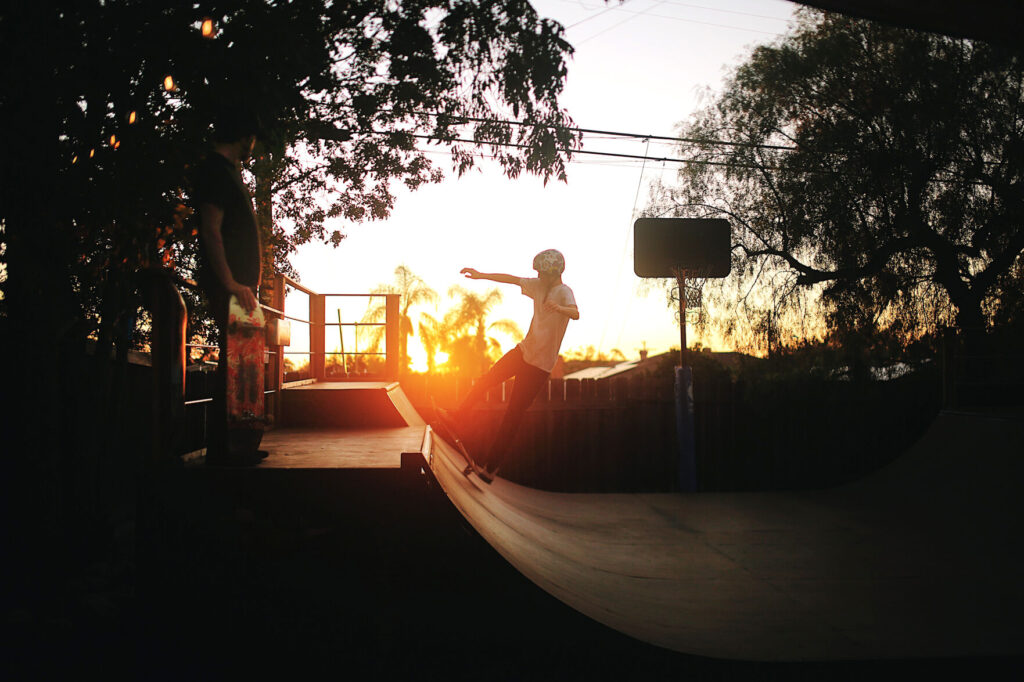
Backyard ramps offer a personal and familiar skate fix with the chance to take bigger risks
my own private ride, skater at sunset
Madeline Yang
It’s a harrowing drive to get to the Draper family’s house, and I’m not sure my Toyota Corolla will make it. I watch the RPMs rev as the little car pushes up a long, steep and twisty driveway, which actually feels more like a bobsled track.
But at the top, a breathtaking view. The Draper family—Mark, Sarah, and their two young children—live on a peak that overlooks the Dehesa Valley, a rural area nestled deep in East County San Diego. From their house, they can see for miles. For a family that loves nature, solitude and privacy, the location is perfect; but for a skateboarder…not so much. The nearest skate park—or even skateable road—is a far drive, and that twisty strip of pavement that serves as their driveway is a one-way ticket to Valhalla for anyone who chooses to skate it.
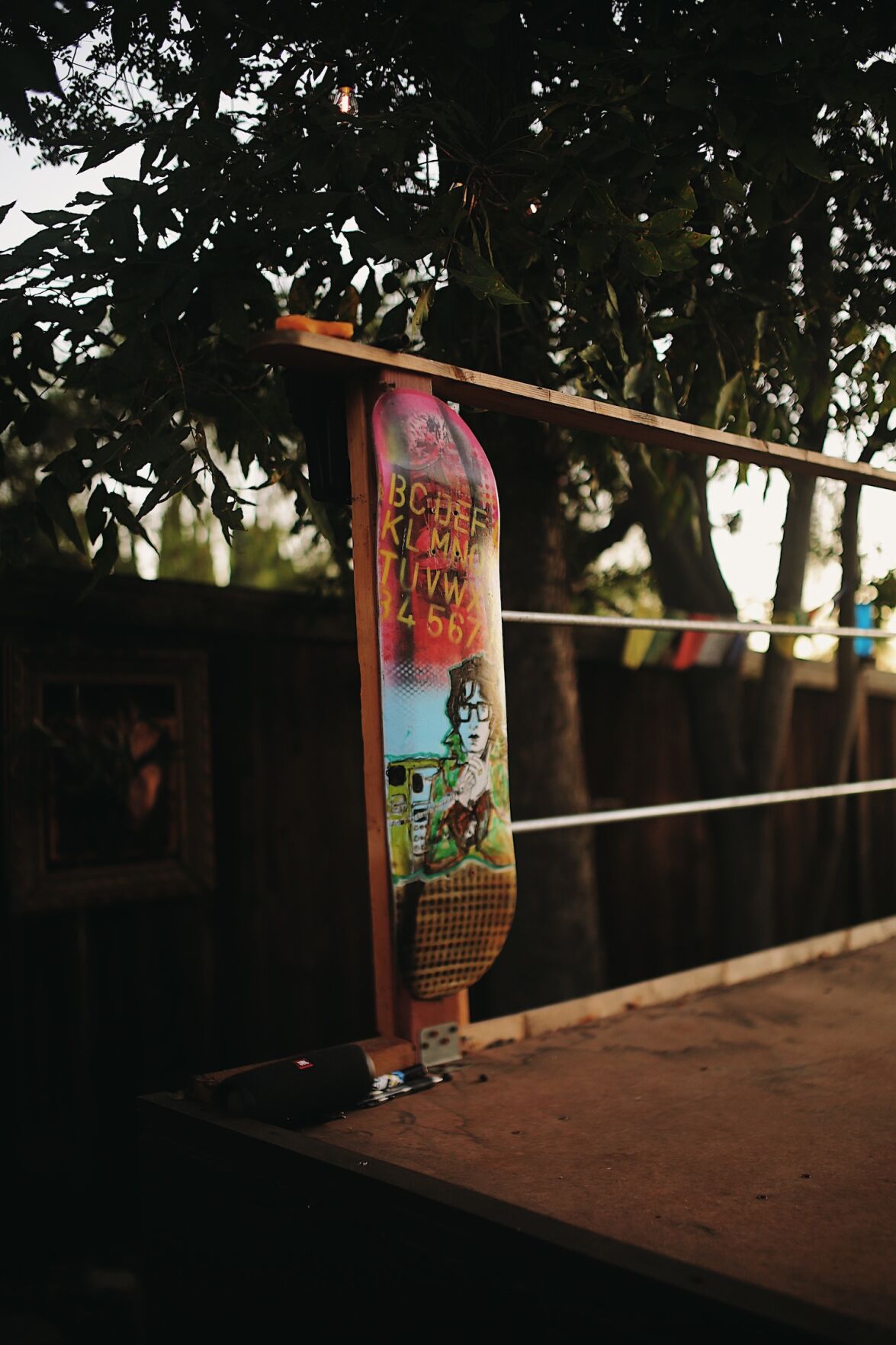
Demetrius Antuña’s backyard is host to The Unicorn Lair, a DIY skate ramp he built with his kids during the pandemic. “I watched a lot of YouTube videos,” Antuña says of how he learned to build it. He and his family raised over half the cost of the ramp through GoFundMe.
Madeline Yang
This lack of skateboard opportunities didn’t sit well with Mark Draper, who fell in love with skateboarding in college after years of playing traditional sports in high school.
“I always wanted a skateboard ramp growing up, but my dad said, ‘You’re not touching a skateboard.’ Wrestling, football, and baseball were all full-time jobs, but when I got into college, I didn’t have those sports anymore, so I picked up a skateboard.”
Mark has been infatuated with skateboarding since and was stoked when his kids immediately took to the sport as well. However, he needed an environment where both he and his kids could practice safely.
“My daughter has so much character: It was either she’s gonna go down that driveway within the next couple years, or we build something to keep her contained.”
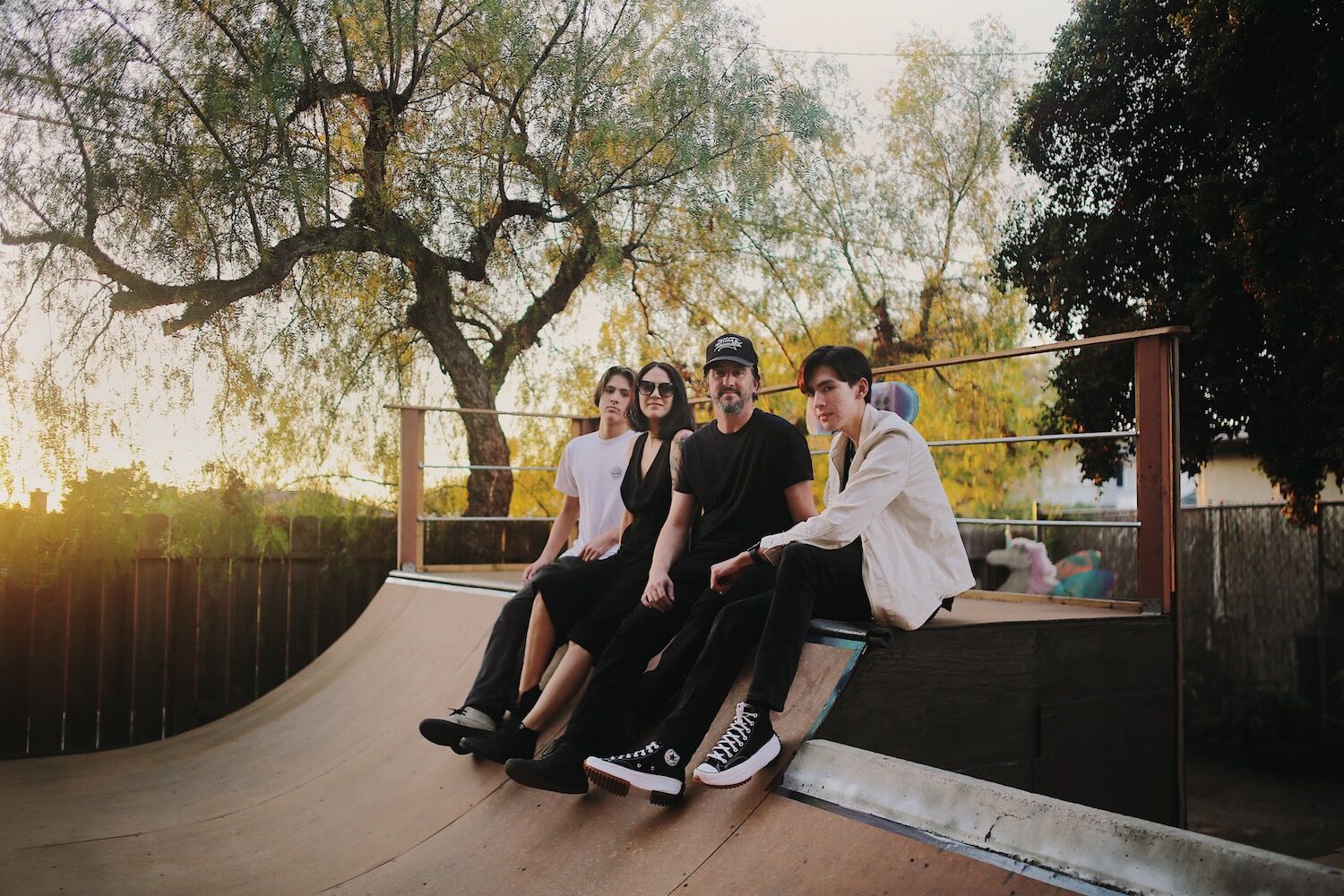
The Antuña family hangs out on the backyard ramp they made (pictured above). “My favorite thing about having ramps growing up was people would just show up,” Demetrius Antuña says. “You’d meet new people, but I feel like my kids never really had that.” Until now.
Madeline Yang
“We wanted a safe space for them to be crazy,” Sarah adds.
The Drapers got in touch with Jim Bell, the longtime veteran ramp builder behind Jim Bell Skate Ramps. Bell has built ramps and backyard skateparks for novices and pros around the world. He’s built ramps for Tony Hawk, 2021 Olympic skateboarder Bryce Wettstein, as well as an in-ground halfpipe for Mitt Romney’s kids. Bell was especially taken with the Drapers’ enthusiasm—not to mention their unique location—and together they designed a half bowl that custom fit their backyard.
The popularity of backyard skateparks has grown steadily since Bell first started building ramps. In the early-late ‘90s and early ‘00s, the rise of pro skaters like Tony Hawk did a lot to destigmatize the sport, and municipal skateparks became regular features nationwide, but finicky neighbors and draconian HOA regulations remained a hurdle for backyard ramps, pipes and bowls. But Bell says this is quickly changing. “90 percent of neighborhoods right now know what a ramp is,” Bell says. “HOAs now are [made up of ] people who’ve skated. Twenty years ago, they were like, ‘What is this thing?’ Ten years ago, it was like, ‘Oh, we kind of know what it is.’ But now, it’s cool.”
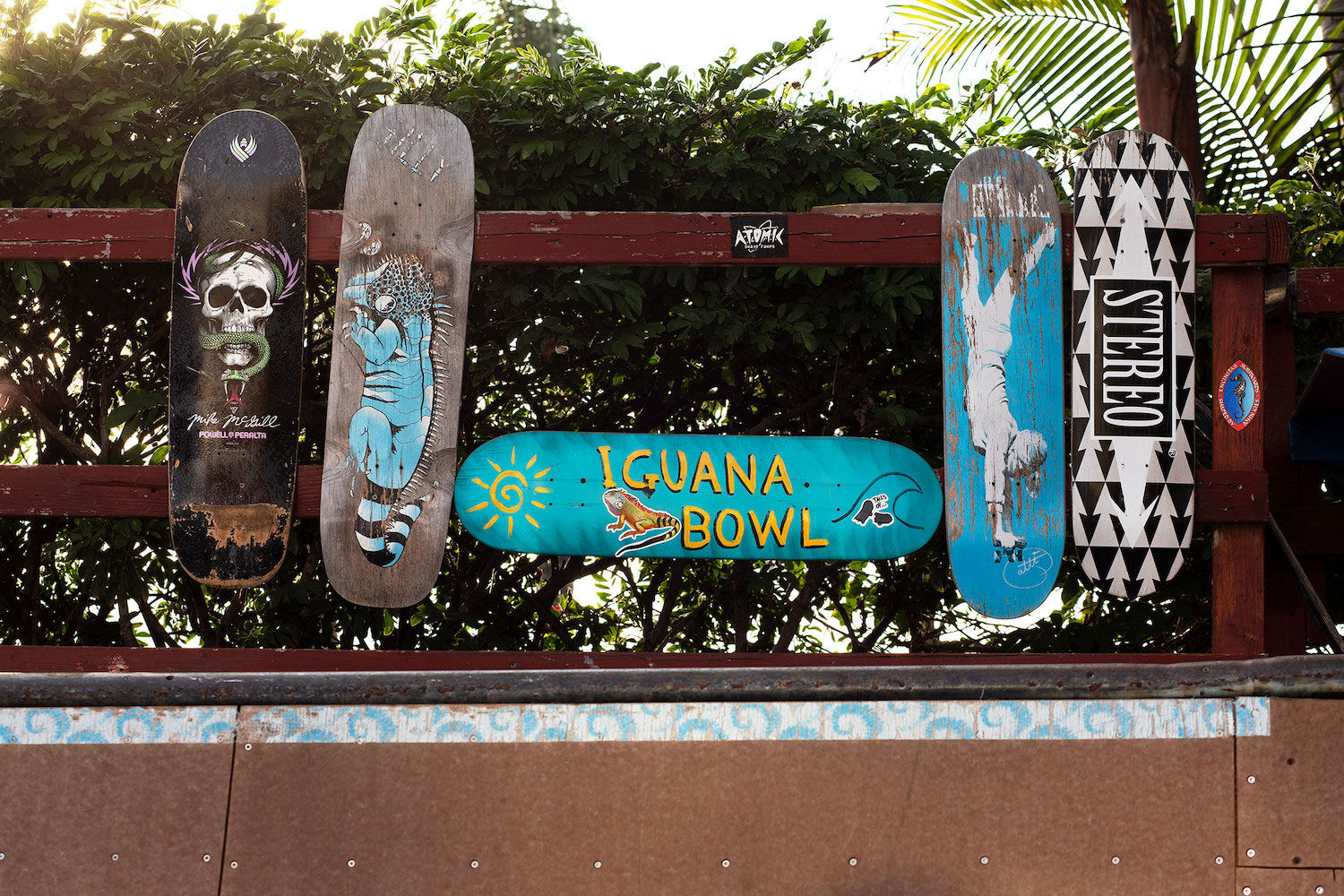
The Wettstein’s Iguana Bowl signage, appropriately on a skate deck.
J.Grant Brittain
It certainly doesn’t hurt that skateboarding was further legitimized by becoming an official Olympic sport in the 2021 Tokyo Summer Games, which featured Vista native Bryce Wettstein, the top rated women’s park rider in the country. Wettstein credits her backyard bowl (dubbed the “Iguana Bowl” [search #iguanabowl on Instagram]) with helping her hone new tricks.
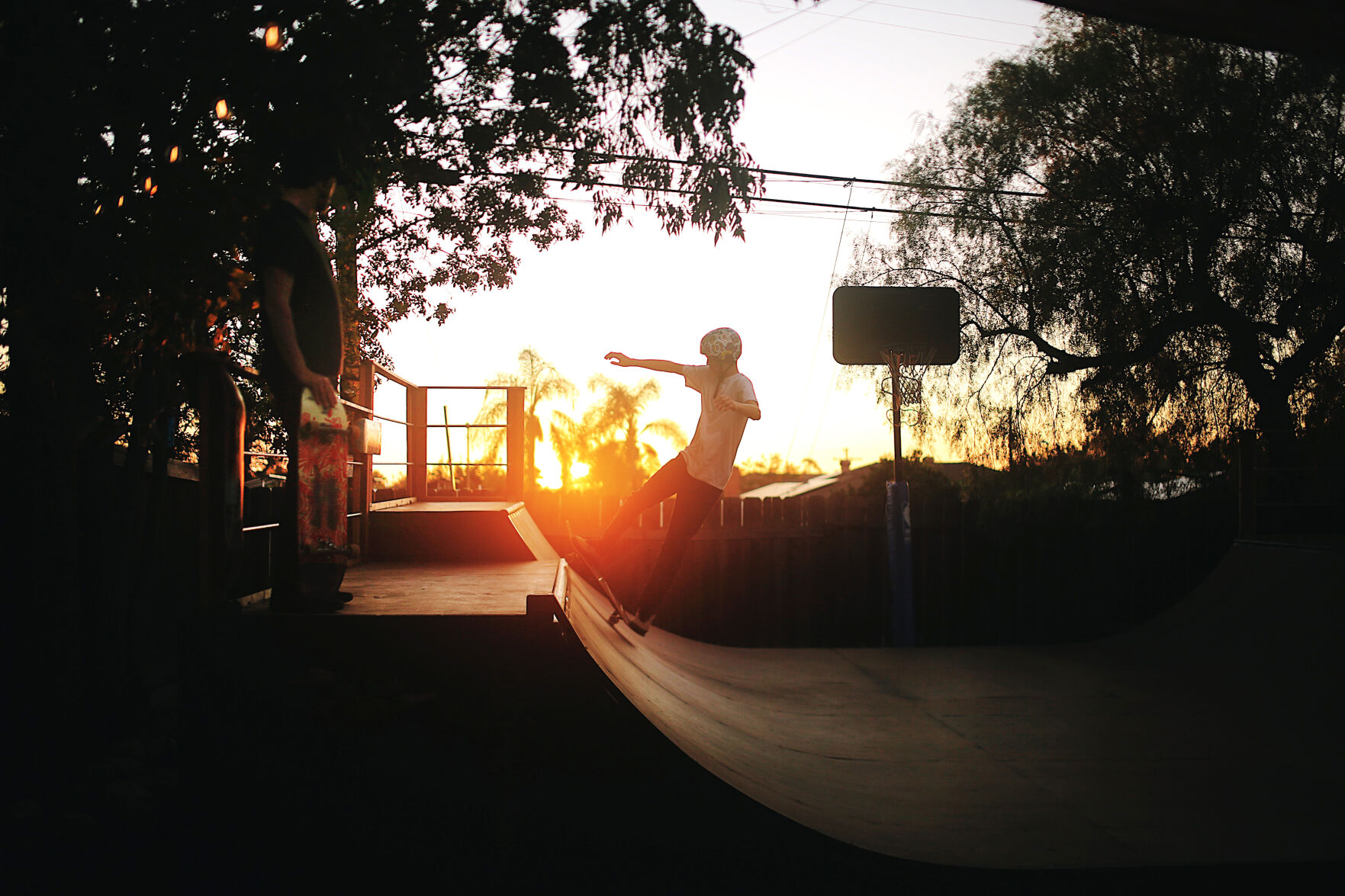
“It’s almost like having your own home,” Wettstein says. “The more you’re familiar with something, the more you feel accustomed to take more risks. There’s always this little firework of magic that happens, where you always end up wanting to try a new trick.” While San Diego companies like Jim Bell Skateboard Ramps, Front Rock Inc. and Kanten Russell will build you a custom backyard skatepark, some people have opted for more of a DIY approach, including musician and graphic designer, Demetrius Antuña.
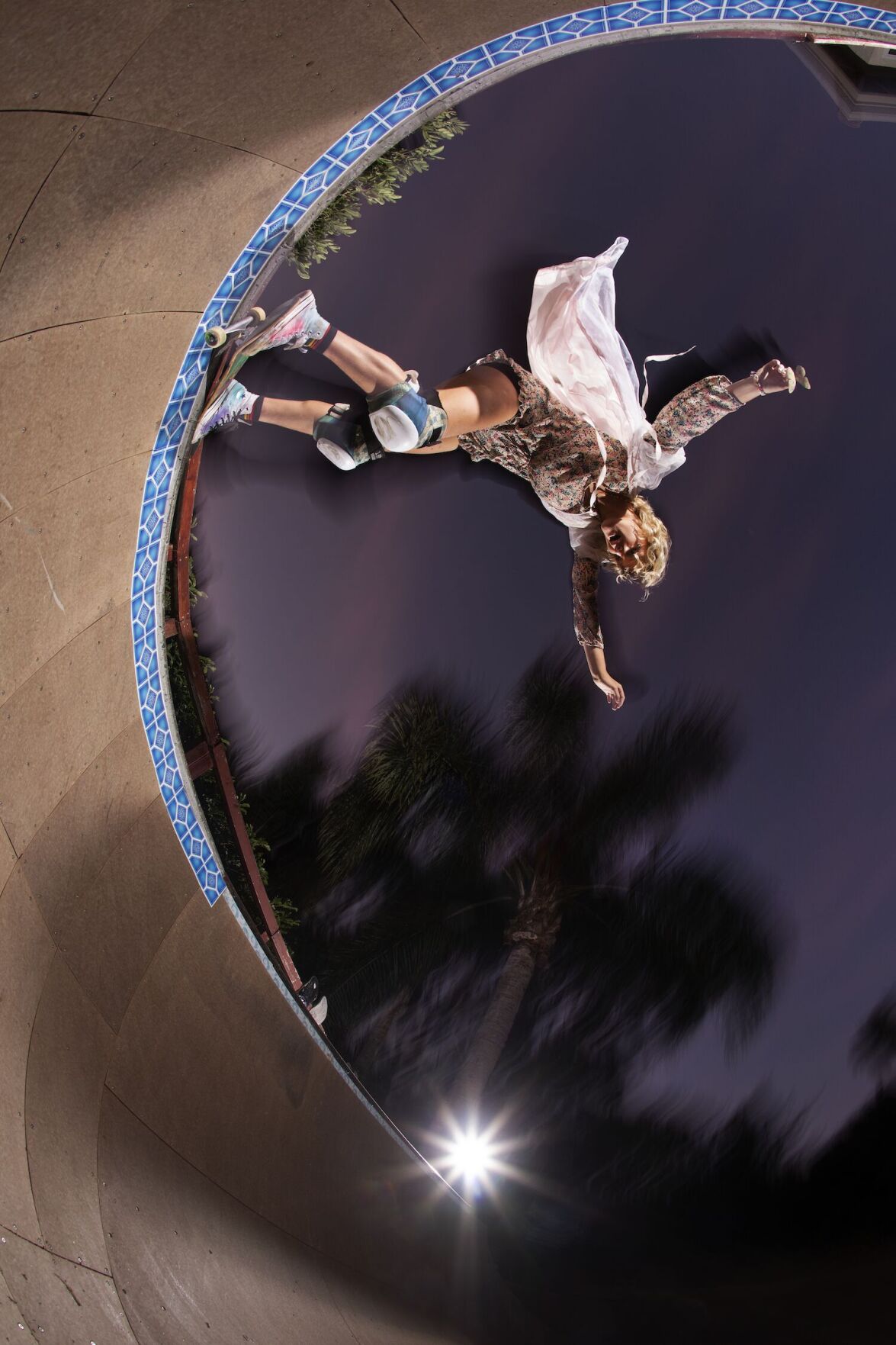
Bryce Wettstein skates in her hashtag-worthy backyard bowl, #iguanabowl, which was built by builder Jim Bell, who has completed many notable backyard skate projects in San Diego County.
J.Grant Brittain
“Covid kind of put this off,” Antuña says while showing off “The Unicorn Lair,” his family’s massive backyard halfpipe. “I got more into skating because we didn’t have anything else to do. So me and my kids would just go out skating.” The more Antuña skated, the more he wanted to revisit the ramps of his youth. “My favorite thing was skating mini-ramps, and they’re impossible to find anymore. All the skateparks are concrete. I was craving a mini-ramp so that I could learn my old stuff again without the fear of totally destroying myself.”
Although Antuña handled a lot of the construction (“I watched a lot of Youtube videos”), he is quick to admit that he had tons of help from friends and family (nearly half the $3K cost was raised through GoFundMe). He’s also found that The Unicorn Lair is creating a community entirely unto itself by becoming a destination for neighborhood skaters.
“My favorite thing about having ramps growing up was people would just show up,” Antuña says. You’d meet new people, but I feel like my kids never really had that. You don’t really meet people at skateparks now—they all have their ear buds in and are minding their own business. So here, they’re learning that whole backyard camaraderie thing.”
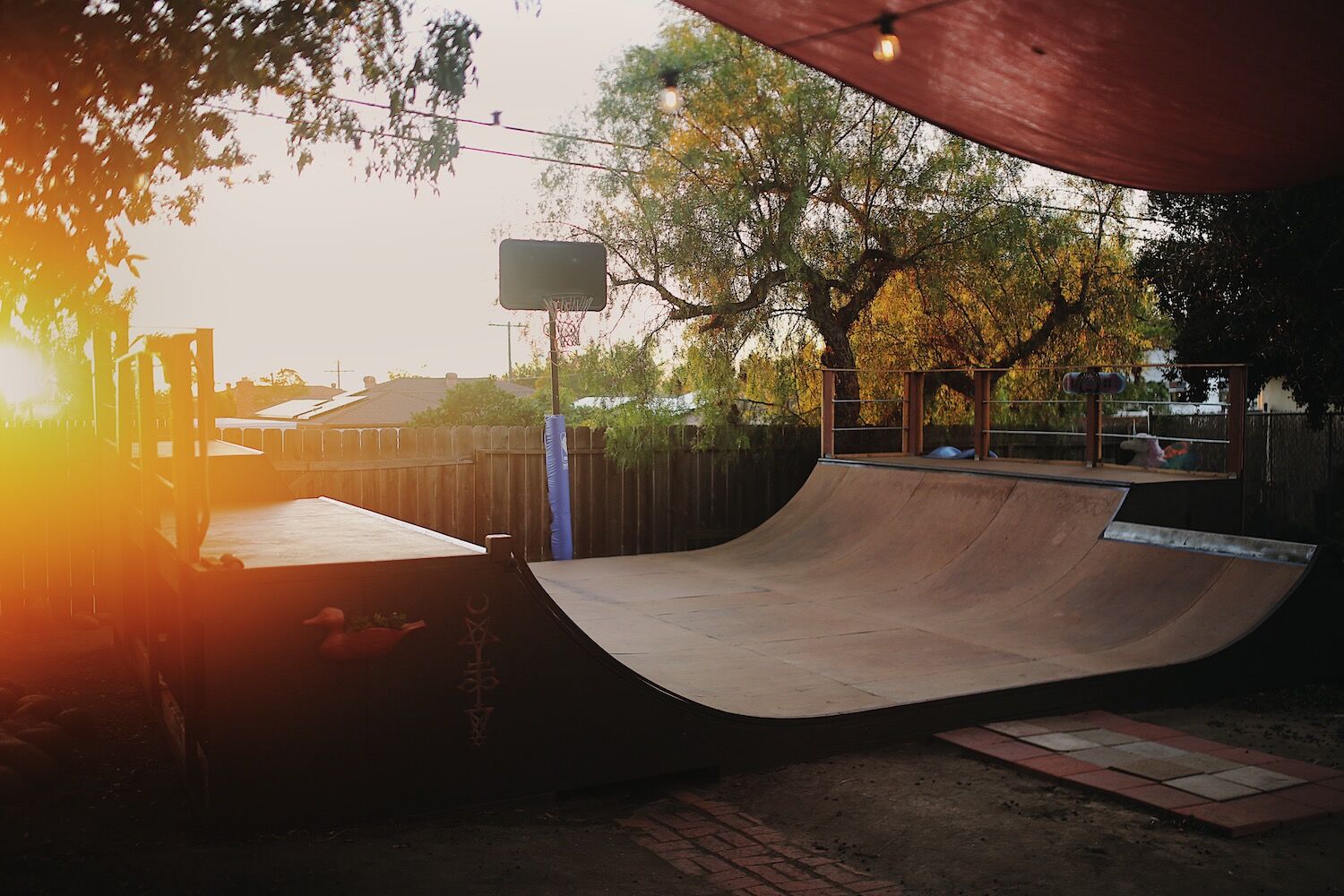
my own private ride, ramp in yard
Madeline Yang
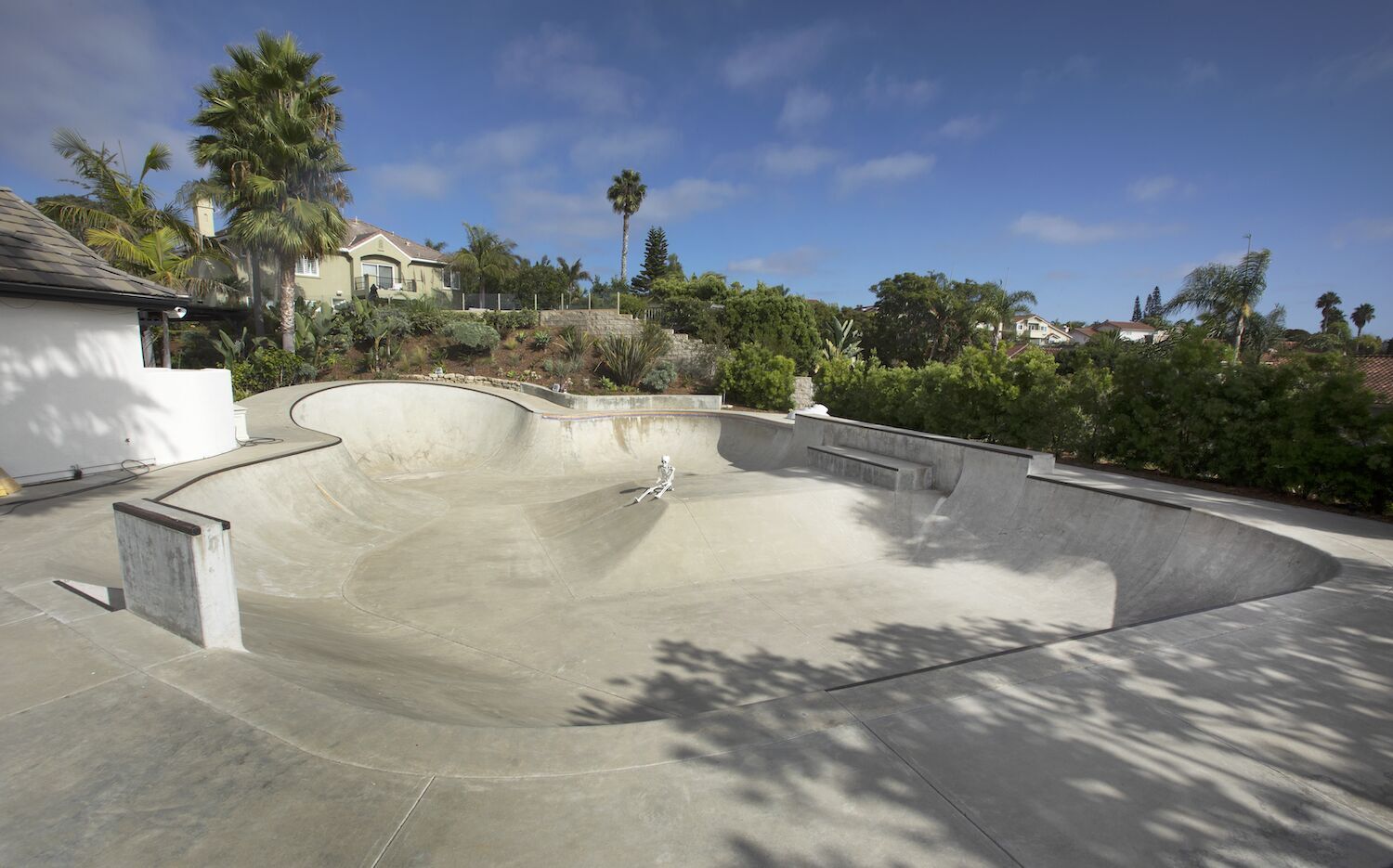
“I have a skatepark at my house,” Tony Hawk told San Diego Magazine. “It’s beyond any dream I could have imagined as a young skater. But the coolest part is the tile configuration—blue and orange—because it’s an ode to the pool I grew up riding at Del Mar Skate Ranch.”“I wanted something with plenty of variety in the limited space: bowl, street, and even a little vert.” -Tony Hawk
J.Grant Brittain

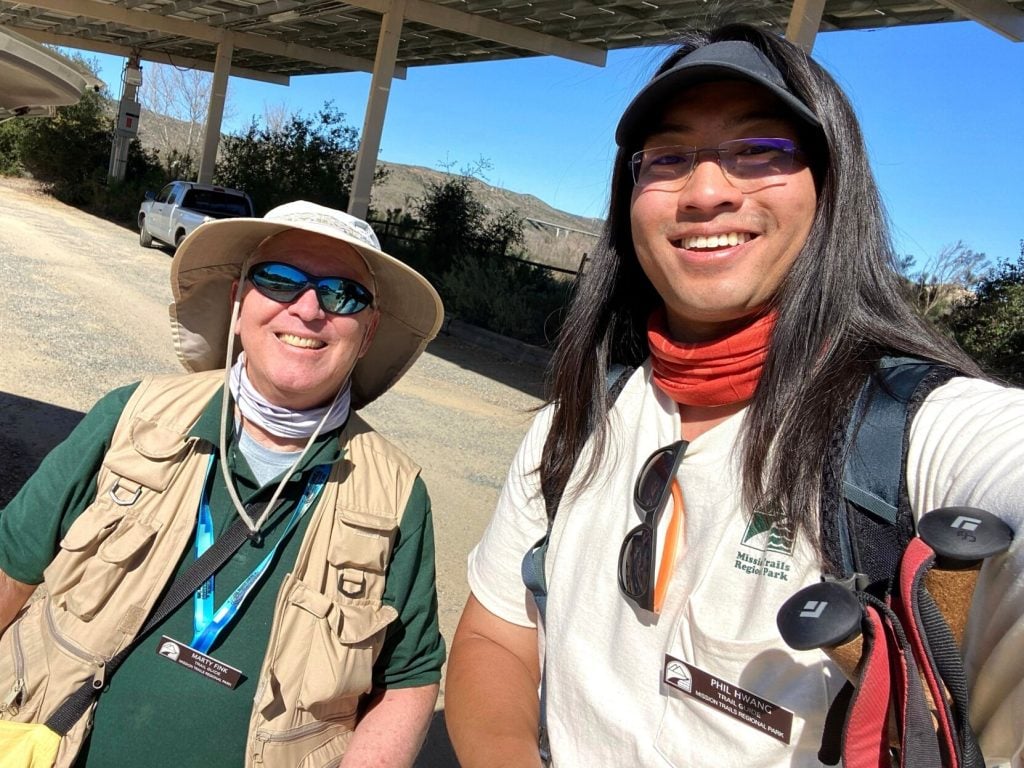
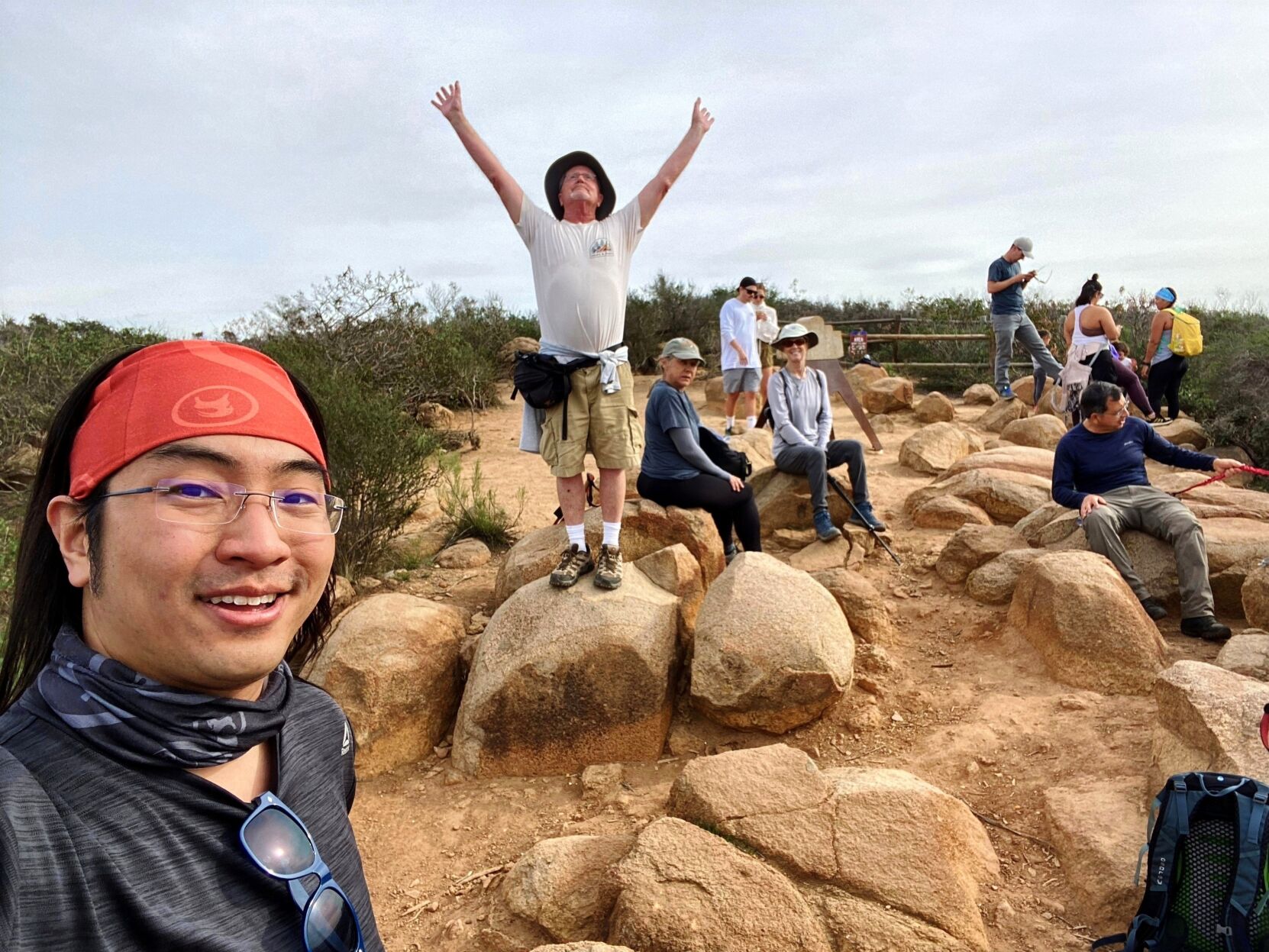
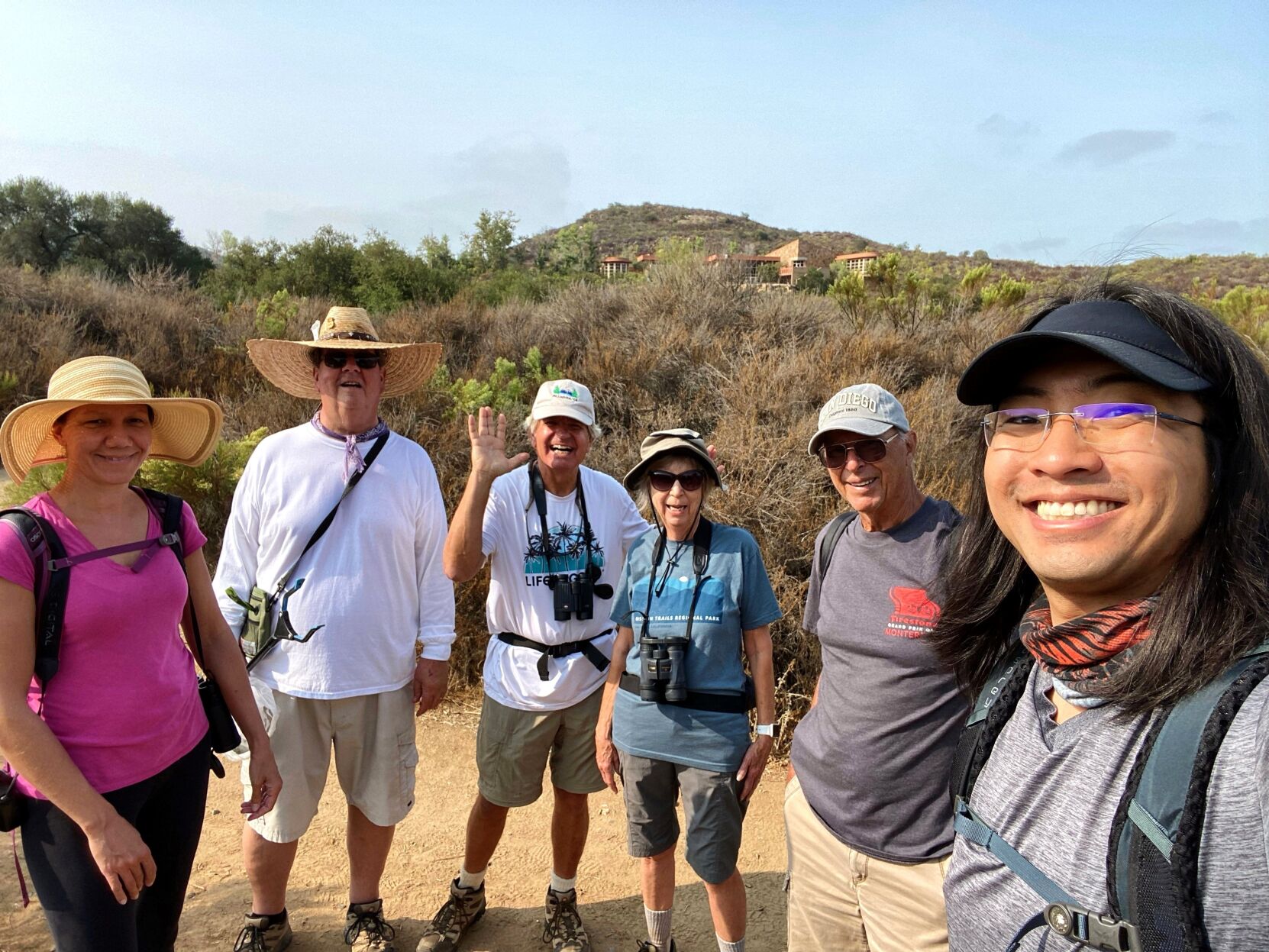
By day, Hwang is a software engineer. But in his spare time, you'll find him trekking across Mission Trails, leading hikes, and keeping an eye out for wildlife (including tarantula hawks).
At more than 8,000 acres and 2 million annual visitors, Mission Trails Regional Park is one of the largest urban parks in the US. It spans five peaks (one of which, Cowles Mountain, is the highest point in the city of San Diego), 65 miles of trails, Lake Murray and Kumeyaay Lake, a campground, the San Diego River, and Old Mission Dam, a national historic landmark.
The nonprofit Mission Trails Regional Park Foundation supports the city Parks & Rec trail guides, who lead walks on Wednesdays, Saturdays, and Sundays from the Visitor Center.
Here, we catch up with trail guide Phil Hwang. By day, he’s a software engineer; in his spare time, he’s leading visitors through Mission Trails Regional Park’s rugged terrain, sharing the region’s rich history, and keeping an eye out for wildlife (including tarantula hawks, which are just as scary as their name suggests).
Phil Hwang: The park’s 5-Peak Challenge was one of the first hikes I completed moving to San Diego over a decade ago. I learned about the trail guide program while looking up other hiking things to do, I emailed them about taking the class, and after successfully completing the course, I’m now a trail guide!

The annual training is pretty extensive and involved. There’s a weekly course lecture and a weekly field lab. There are tons of awesome guests: San Diego rangers, geologists, botanists, members of the scientific community. The program covers way more than the simplified “walk a trail,” as we are trained to be aware of all aspects of life sciences, native uses, modern history, and the park itself. I especially love stories and lore and legends, and there’s plenty of those, too! The park is alive and changing with us, so we’re always learning.
The history. There’s deeply rooted history with the Kumeyaay, with the military, and with the surrounding neighborhoods. What I find fascinating is how the park evolves throughout all time. Who knows how it will look in the future?
At Mission Trails I love seeing the graceful northern harrier. At Lake Murray I always make it a point to see the osprey. For the pure horror story of it all, I love the tarantula hawk and the nightmarish hell the prey goes through: paralyzed, buried alive, eaten from the inside out for weeks on end until the wasp larva pupates and bursts out an adult. What a growth spurt!
As trail guides, we lead tracking walks, bird walks, and all sorts of school and scouting field trips. There’s also trail maintenance, habitat restoration and beautification, and volunteering at the visitor center front desk. Groups are encouraged to work with us to organize a half day of volunteer service for their company or community.

Enjoy it! Make a donation to support the park through the MTRP Foundation, shop the park’s gift shop, book an event at the visitor center, and more! It’s fun to see Mission Trails hats and 5-Peak Challenge shirts outside the park. I’m always amazed at how many people tell me they grew up in San Diego or lived here for 50 years and never knew this place existed. Spread the word and bring others!
Plan your visit to Mission Trails here.
Outdoor Outreach offers programs that teach life-changing lessons
Lesford Duncan is no stranger to the power of the outdoors. Before he joined the team at Outdoor Outreach, he had his own memorable experiences reconnecting with himself out among nature. Whether it was hitting the trail, climbing big peaks (like Mount Kilimanjaro), or simply taking a moment to step outside—it was transformative. And he knew he wanted to share it with others.
“I’ve experienced a tremendous amount of resilience and healing just by being outdoors,” says Duncan, who is the senior director of programs at the organization. “I wanted to spark that interest in discovery and exploration in youth and help them also experience their own healing and resilience.”
That led him to Outdoor Outreach, which launched in 2001 to connect San Diego’s underserved youth to the outdoors. They do this through a wide range of activities such as hiking, rock climbing, surfing, and biking—but the impact goes beyond an extra dose of energy and exercise. Their programs foster unique opportunities for kids to reconnect with themselves, learn leadership skills and teamwork skills, and even learn about environmental stewardship, all by spending time outside.
Those lessons are integrated into all of their programs, Duncan says. While each one is tied to an activity like rock climbing or kayaking, the programs are really centered on the outcome they’re hoping to achieve with the kids—building trust, confidence, communication, or even healing from traumatic events. Duncan notes that over 91 percent of the youth they work with later say that getting outdoors helped them overcome some of the trauma brought on by the pandemic.
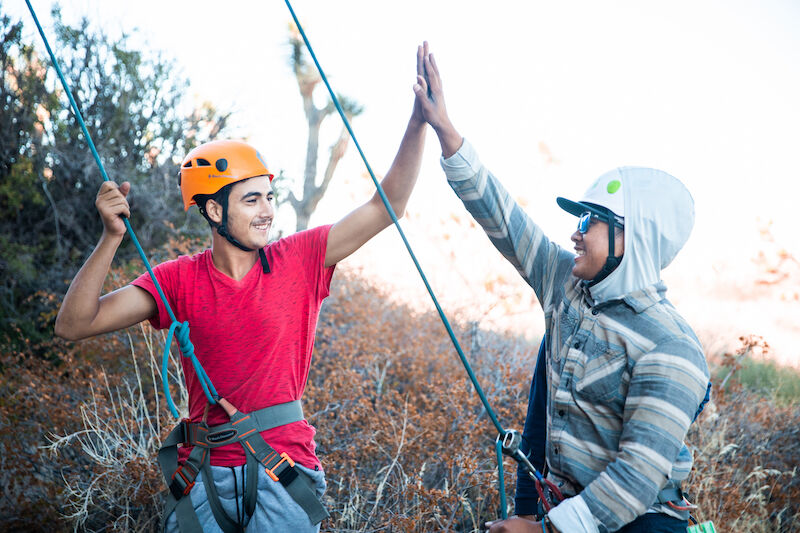
Outdoor Outreach connects with San Diego’s underserved youth through a wide range of activities such as hiking, rock climbing, surfing, and biking
The organization reaches youth from all over San Diego County, but mainly focuses on communities that typically do not have easy access to outdoor spaces. Duncan says: “We see that youth coming from low-income communities, especially youth of color, often have less access due to a number of factors, so it’s important for us to try and bridge that gap.”
He explains that the accessibility gap is twofold. For many families there are physical barriers, like a lack of parks or recreational spaces within their community. In some cases, the local parks that do exist are either poorly maintained or are crime-heavy and discourage youth and their families from spending time there. On top of that, some families don’t have easy or immediate access to transportation to take them to recreational spaces outside their neighborhood.
Duncan also says the lack of representation can be a major factor: “A lot of youth don’t see themselves represented in a lot of outdoor activities like climbing or surfing. Part of what we do here is strive to increase that representation—not only by creating those initial experiences, but to also introduce them to our leadership programs, where they can help the next wave of youth have that same experience.”
Outdoor Outreach works with over 50 community-based partners and partner schools all over San Diego County. They also work closely with San Diego County Probation, engaging youth who are currently in custody, and in the psychiatric services department at Rady’s Children’s Hospital. In partnership with The San Diego Foundation and four other organizations, Outdoor Outreach is also part of Thrive Outside. This initiative constantly works together to create new outdoor opportunities for families.
Engaging the community, and the state, is part of Ben McCue’s role as executive director, which he took over in 2013. McCue says that beyond these local partnerships, they’re also pushing for policy change at higher levels with legislation like California Senate Bill 624, which would increase environmental equity and outdoor access.
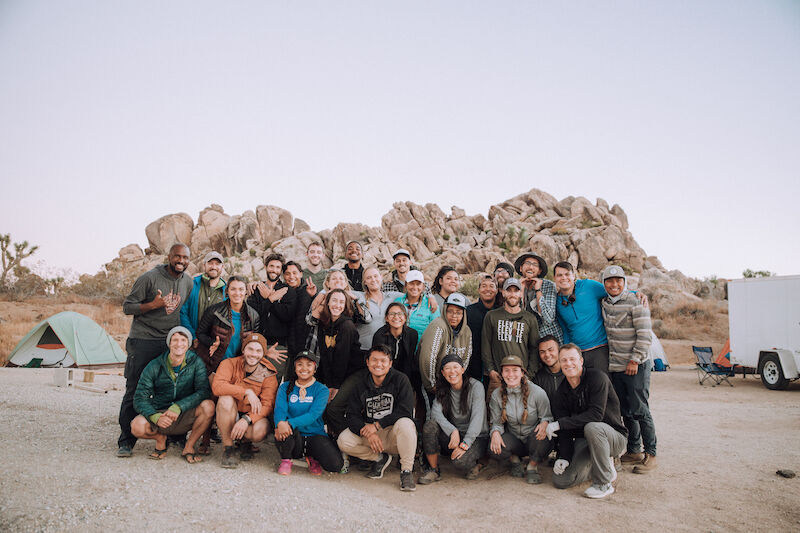
Outdoor Outreach staff in Joshua Tree
The biggest hurdle, he says, is changing perception: “There’s this idea that outdoor engagement is a luxury. Specifically during the pandemic, we’ve seen that the ability to have access to safe outdoor spaces is a necessity for our mental and physical health.”
Prior to joining the organization, McCue was in coastal conservation work. But just like Duncan, he had his own personal connection to the outdoors and saw firsthand just how impactful it could be. That takeaway, and the impact of the pandemic, have led him to develop specific family engagement programs, where family members could come together to share these experiences.
“To be able to develop and run that program was so meaningful because it connected me back to the whole purpose of this work,” says McCue. “To hear parents tell me how meaningful these moments are, that for the first time in a whole year they were able to go outside and spend time together, is really powerful.”
Many of Outdoor Outreach’s Adventure Club and Family Engagement programs are available for open enrollment this spring. Or, learn more about their leadership or summer programs to know when and how to enroll.
At Vi at La Jolla Village, residents don't have to choose between security and adventure, connection and independence. They get all of it.
Today’s seniors are more connected than ever, with a renewed focus on retirement as a time of discovery and enriching experiences. The ultimate reward for a retirement well-earned is the wisdom to appreciate it all, and what better place to enjoy that unique perspective than Vi at La Jolla Village, in the heart of San Diego.
All-access pass to good living.
As a Continuing Care Retirement Community (CCRC), Vi provides access to a connected and fulfilling community while making it easy to plan for future care, should the need ever arise. With a care plan in place, residents enjoy greater financial predictability and long-term value, freeing them to focus on making the most out of retirement.
Resort-style amenities at the epicenter of a cultural hub like San Diego offer a retirement experience unlike any other. Paired with exceptional dining, spacious accommodations and dedicated staff, the best of maintenance-free living is all around. And with the introduction of Vista 360 Well-Being, Vi’s panoramic approach to wellness, there are more ways than ever for residents to access it all.
The harmony of mind, body and community.

The key to longevity is striking the right balance in maintaining an active lifestyle with an active mind in a fulfilling community. With newly renovated community spaces and restaurants, Vista brings a variety of opportunities for residents to elevate their well-being through Vi-exclusive “Signature Experiences.”
Vista Enrich takes an evidence-based approach to brain vitality, keeping residents at the forefront of cognitive health through exergaming (exercising + gaming), nutritional plans and informative workshops. It is also home to The Brain Vitality Studio, an innovative facility dedicated to cognitive fitness that has garnered national recognition.
Vista Discover invites residents into stimulating educational experiences, from chef-led cooking demos and guided wine tastings to lectures at local universities and intimate lectures following cultural outings.
While Vista Enrich focuses on brain health and Vista Discover engages residents intellectually, Vista Explore cultivates a sense of adventure through curated travel and local excursions. But broadening one’s horizons doesn’t always require a plane ticket. One recent event brought a taste of the world right to the community: an onsite “jazz cruise” featuring live music and global cuisine served at a series of themed “ports” all within the community’s own ballroom.
“Location, location, location”

One of the biggest perks of life at Vi at La Jolla Village is its proximity to just about everything. With easy access to transportation and local attractions just steps away, residents can explore and engage with their community at their own pace.
“There are trolley and bus stops within a 5-minute walk that will get you to the beach, UCSD Campus, medical appointments, downtown La Jolla or San Diego, et cetera. We rarely use our car,” said resident Tom Yager.
With the best of San Diego just steps away, residents don’t just live in the city, they live within reach of everything that makes it special.
The best of all worlds.

At Vi at La Jolla Village, retirement isn’t a chapter to slow down; it’s an invitation to discover more. Tailored community experiences created by Vista, paired with the vibrant pulse of San Diego just outside the door, mean that residents don’t have to choose between security and adventure, connection and independence. They get all of it.
This is what an all-access pass to good living looks like: the comforts of an elevated lifestyle, a community built for growth and a city made for discovery – all in one place.
To learn more about Vi at La Jolla Village or for details on available floor plans, visit ViatLaJollaVillage.com/SDM.
From tacos to tailors and trainers to travel, these are the businesses, people, and places that earned San Diego readers' votes
San Diego Aesthetics and Med Spa
Elicia Soltesz, Elicia Marie Beauty
Ashley Fierro, Ashley Fierro Makeup
Michelle Langston, MSN, APRN, FNP-BC, HNB-BC, Starlite Aesthetics
Alysa Espiritu, Afterglo Beauty Lounge
Ronnie Page, Gold Comb Barbershop North Park

Ryleigh Hunter, Headbang Salon
Ann Teresa Degischer, Maen the Salon
Lindsay Axelrod, Pixiedot Salon
Lauren Skinker, Lucky Cat Tattoo

Father Joe’s Villages Turkey Trot
The Camp Transformation Center, West Chula Vista
Singing Hills Golf Club at Sycuan

Camila Casanueva, The Yard Gym

Austin Harrington, Captain’s Quarters
Bivouac Ciderworks, Savoy Dry Apple Cider

Missi Burns, Et Voila

Prospera Internal Medicine and Aesthetics
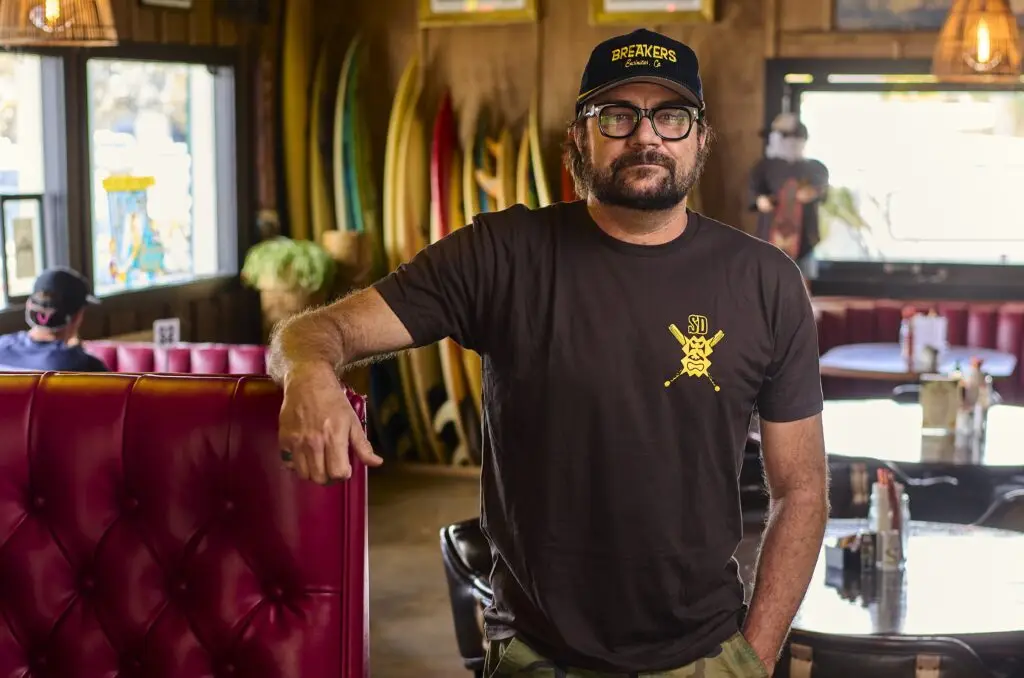
After Captain Keno's closed, pro surfer Benji Weatherley gave its tables, dishes, and memories a second life at Breakers Cafe Bar & Grill

Captain Keno’s No. 8 special—pancakes, sausage, toast, home fries, and eggs for $2.99—was the fuel that powered Benji Weatherley for surf competitions as a teenage pro. A couple decades later, tears were shed when the Coast Highway dive-slash-eatery called it a day after 54 years. Usually, the guts of a shuttered restaurant go to liquidation auctions or straight to the dump to decompose along with its legend. Instead, Weatherley took in Keno’s spare parts—plus other relics from Encinitas’ past—and used them to build the newest community hangout.


Every single piece in the place is from somewhere in this town,” Weatherley says about Breakers Cafe Bar & Grill. “I’m not going to settle for anything less.”

Breakers is a Hawaiian hideout in an uncool part of the coastal surf town, but it’s got the set design of an Encinitas superfan. The plates, silverware, and coffee mugs are from Keno’s. So are the tables and booths. There’s a bench made from the last table preserved in The Derby House (a building that, for over a century, was a hotel, then became a hospital, a religious retreat, and a private home). Weatherley’s not performing CPR on old upholstery because he’s a fan of antique furniture. It’s a method to bring people together.
“Representing nostalgia in this town is the only way to grasp a hold of the community,” Weatherley says. “Everyone wants to touch and feel something different from what they’re experiencing on their phones.”

Every week, locals bring him photos, artifacts, and bits of paraphernalia from Encinitas’ past and ask Weatherley to give them a new home. “I’ve had ladies who were there when [Captain Keno’s] opened cry in my arms and say, ‘This table is where I had my second birthday with my grandma,’” he says. “They tell me these stories, and I tell them I have all the same stories about my mom.” (Weatherley’s mom first brought him to Keno’s and helped raise the young surfers from the Momentum Generation documentary—Weatherley, Taylor Steele, Rob Machado, Kelly Slater, etc.—as they surfed some of the world’s most dangerous waves at Pipeline in Hawaii. Back then, she owned Breakers Restaurant & Bar in Haleiwa. Name sound familiar?)
Weatherley has always been the funniest man in the room. He calls Breakers “the Chuck E. Cheese of Encinitas.” The restaurant hosts hula dancing classes, open-mic comedy nights, and evenings bartended by longtime Captain Keno’s barkeep Vaka Kaufusi. Cult-loved reggae band Steel Pulse hit the Breakers stage recently to perform a new song that Weatherley also helped write. His longtime friend Jack Johnson has dropped by to sing a few, too.
Despite not having a fancy location along the 101, people are catching on. Fire stations and hospitals have held staff parties there. Weatherley also currently sponsors four sports teams.
“Last night, I had a girl say, ‘I want my birthday party at Breakers,’” he says. “That, to me, is community in a nutshell.”
Emma Veidt is an editor at San Diego Magazine. She earned her bachelor's and master's degrees from the Missouri School of Journalism. She loves running, hiking, and rock climbing, but really, she mostly loves encounters with the street cats around North Park.
San Diego Magazine's Private School Guide Fall 2026
The Children’s School (TCS) is an independent school in La Jolla working with students from toddler through eighth grade. Rooted in the belief that every child has unique strengths and limitless potential, TCS provides a joyful, challenging education that inspires curiosity, confidence, and a lifelong love of learning. Experienced teachers know each student well and create meaningful opportunities for academic, social, and emotional growth through personalized instruction and hands-on, interdisciplinary learning. A culture of respect, inclusion, and collaboration encourages students to ask questions, take thoughtful risks, and develop a strong sense of responsibility to one another and the world around them. At TCS, learning extends beyond the classroom through meaningful connections with the local community and natural environment. Graduates leave TCS with a strong academic foundation, a sense of purpose, and the character to thrive in high school and beyond as engaged learners, compassionate leaders, and thoughtful citizens.
Enrollment: 240
Grades: Toddler – Grade 8
Tuition: $10,800 – $34,000
Deadline: Priority Application & Tuition Assistance for new students: Feb. 1, 2027
Gender: All-inclusive
Details Progressive, independent school. No religious affiliation
Open House Oct. 27, 2026

2225 Torrey Pines Lane • La Jolla, California 92037
858-454-0184 • [email protected] • tcslj.org