
Featured articles
Featured articles
Featured articles
What's next
Featured articles
Featured articles
Featured articles
Ready to know more about San Diego?
SubscribeReady to know more about San Diego?
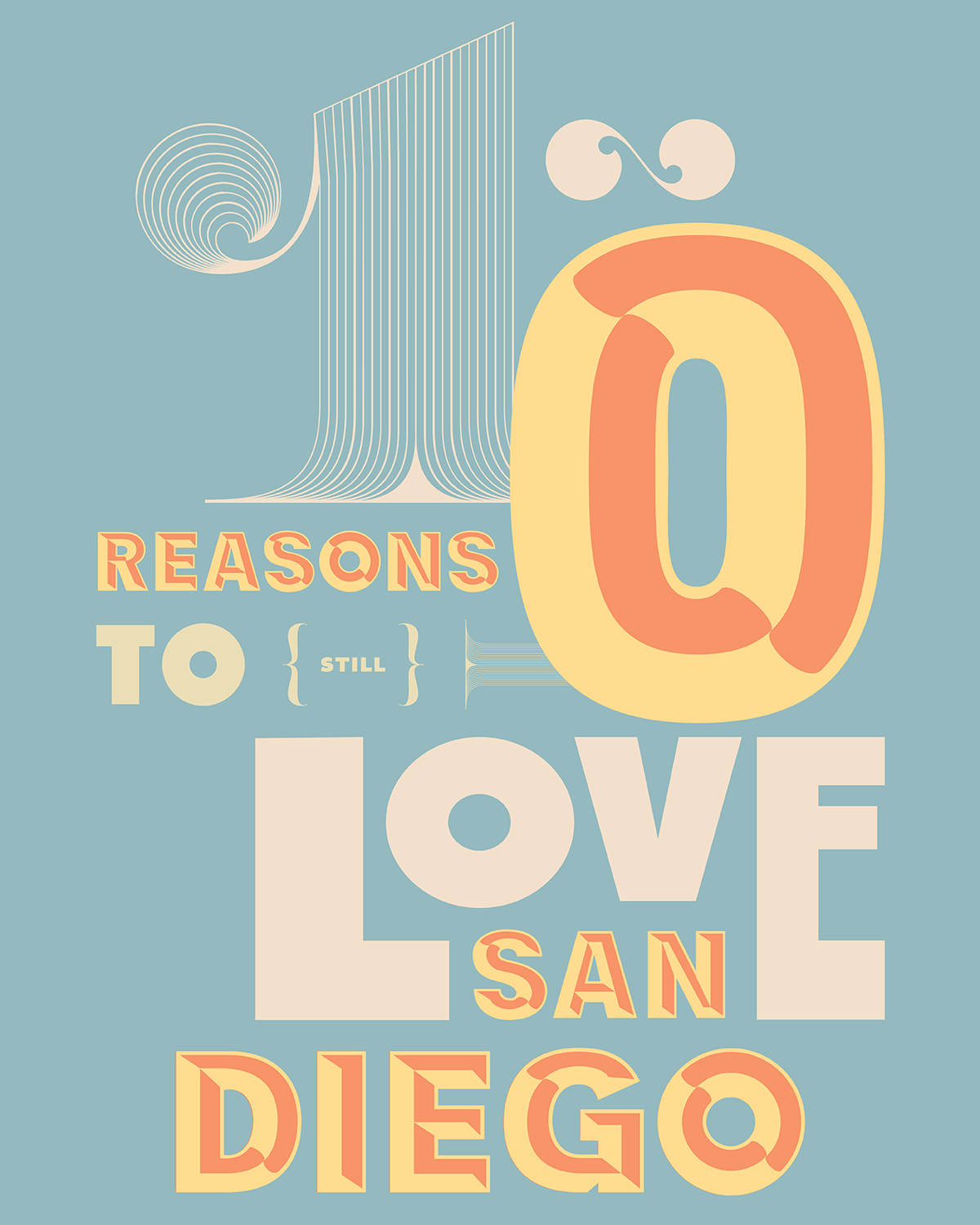
Businesses giving back, biotech leading vaccine research, and more reasons why we’re proud to call our sun-kissed city home
Reasons to Love San Diego / Feature
Graphic by Tania Roulston
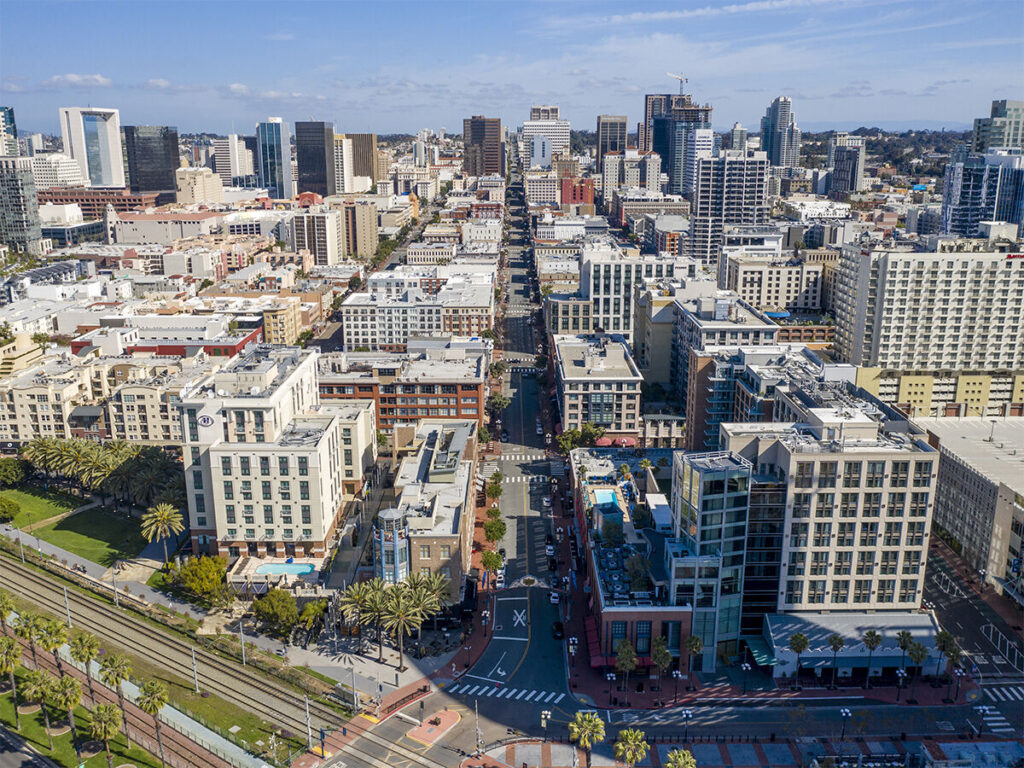
From April through September 2020, the average quarterly gift from San Diego households increased to $432, from $374 the previous year. Not only did our residents give back more, but the causes they supported shifted, too. A poll by the University of San Diego showed that over 50 percent of people who donated money chose issues they felt were the most pressing: food security, helping essential workers, and social and racial justice. For example, the annual Pack the Pantry food drive, organized by the Jacobs & Cushman San Diego Food Bank, saw a record donation amount (around $50,000), which provided 90,000 meals to community college students at 10 campuses. Here’s hoping this spirit of giving continues into 2021.
Source: 2020 Annual Report, State of Nonprofits and Philanthropy in San Diego; University of San Diego

Reasons to Love San Diego / Social Activism
We can thank our Gen Z-ers and millennials for the “cancel 2020” memes that got us through last year, but when it came to social justice, they also took more concrete action.
Because the beach is always open and the culture trends in the direction of mellowness, San Diego is often miscast as disinterested in the hard conversations the country has about justice. But the younger generations helped organize more than 45 peaceful protests countywide last summer in response to the killings of George Floyd, Breonna Taylor, and countless other Black citizens at the hands of the police.
The county’s first major protest was in La Mesa on May 29: Dozens of demonstrators assembled outside La Mesa Police Department headquarters after a viral video showed the forceful arrest of an unarmed Black man at the Grossmont Transit Center. On December 9, a city review panel upheld the firing of the officer and on January 4, 2021, the officer was charged with filing a false report. On May 31, a 25-year-old Black woman organized several hundred protestors at the Hall of Justice, marching through downtown San Diego.
But some of the largest protests came in early June. Hundreds joined a caravan from La Jolla to City Heights, National City, and Otay Mesa. Over 2,000 demonstrators marched from the San Diego Police Headquarters to North Park on June 4 and two days later, another 3,000 people gathered at the County Administration Center.
Many of these protests stood in solidarity with the Black Lives Matter movement, which advocates for nonviolent civil disobedience as a response to racist and violent acts against the Black community. Law enforcement agencies across the county took action, most notably by banning use of the carotid restraint, which is similar to the restraint that led to Floyd’s death. The protests also spurred the passage of Measure B, which establishes an independent review commission on police practices. Measure B passed with 74.6 percent of the vote.
Reasons to Love San Diego / Sweep the Shelters
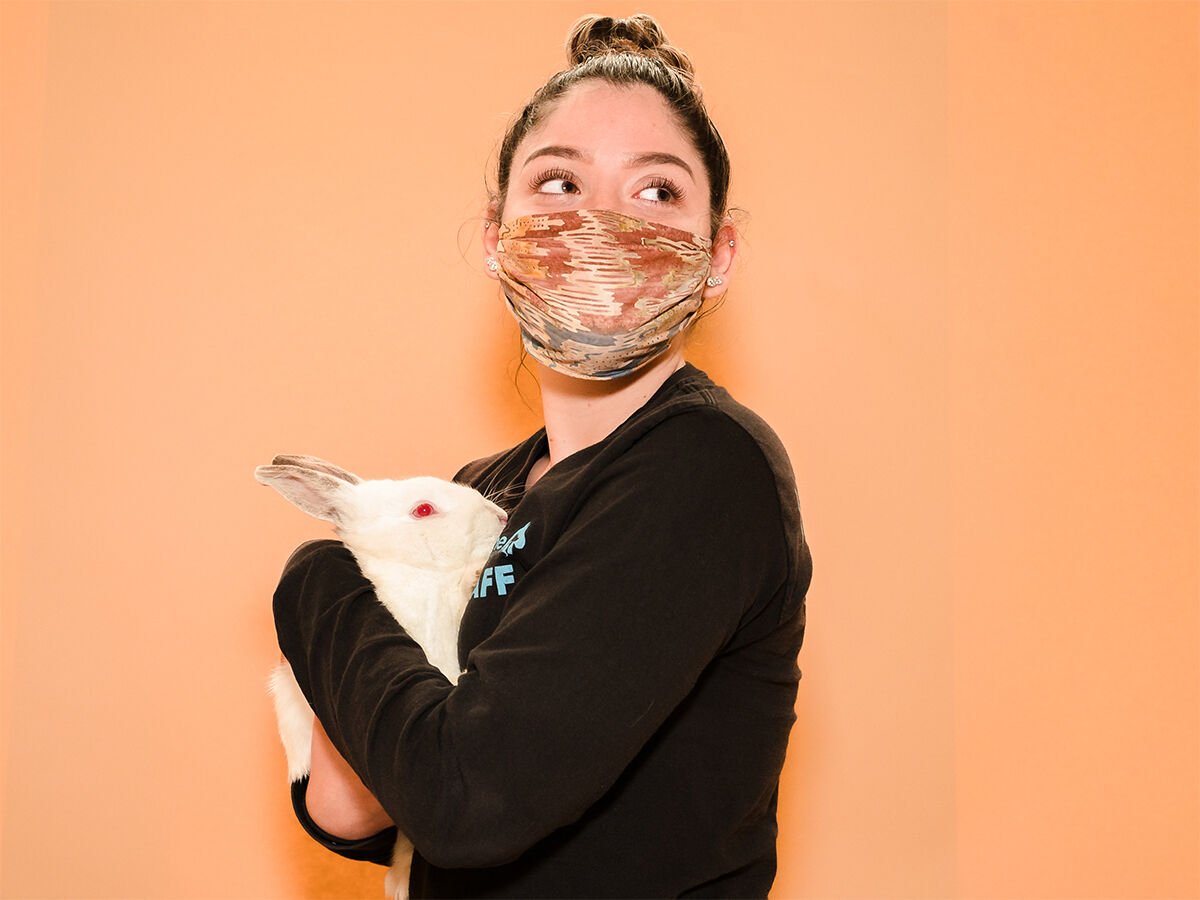
Photo courtesy of the San Diego Humane Society
With their favorite humans spending much more time at home, our four-legged friends were loving the lockdown. And for those who were still waiting for a home, San Diegans helped sweep the shelters with a record number of new fosters and adoptions at the start of the pandemic. “This county has always been there for animals, but especially so during the shutdown,” says San Diego Humane Society President and CEO Dr. Gary Weitzman. The humane society’s four campuses were virtually cleared last March, when their head count of 3,000 decreased to under 1,000 and 65 percent of their animals went into foster care. And our pets aren’t the only ones to reap the benefits: While the pandemic takes a heavy toll on our mental health, Weitzman suggests that animals are a major cure for the quarantine blues. “We’ve had less animal surrenders, more fosters, and can really feel the love San Diego has for its animals.”

Coronado Bridge
Photo courtesy of the Port of San Diego
For nearly 15 years, the port has been developing a permanent light installation for the Coronado Bridge that will change colors to reflect what’s happening in the city, much the same way the Empire State Building does for New York—celebrating holidays, sports teams, or visits from international representatives. The project made a huge leap last year when the Port of San Diego temporarily installed 170 lights to gather information on the engineering, design, and sustainability of the project. For longterm associates—like Yvonne Wise, the port’s director of the Waterfront Arts & Activation department, and Commissioner Marshall Merrifield, who spearheaded the fundraising campaign—the test was the result of years of hard work. The next steps are to raise more money (a humble $13 million) and work with an artist on the design.
When life gave Chula Vista lemons, they made lemonade for their new neighbors. The “Lemon Capital of the World” was recently named the most welcoming city for immigrants in the US by the New American Economy Cities Index. This index analyzes immigrant integration on an economic and local-policy level to find insights on how cities can maximize the potential of their newcomers—to become US citizens, small-business owners, and homeowners. Chula Vista landed perfect scores in government leadership, economic empowerment, inclusivity, job opportunities, and civic participation. It’s been a fast and steady climb to the top for the county’s second-largest city, which ranked third on the index in 2018 and moved into second place in 2019. It was a pretty sweet note in an otherwise sour year.

Reasons to Love San Diego / COVID-19
It’s the news we’ve all been waiting for: A mass rollout of COVID-19 vaccines is underway. But San Diego local Jaime Yslas already got vaccinated—at least, he thinks he was.
After reading that Latinos and seniors have been underrepresented in coronavirus research, Yslas figured that he checked all the boxes, so he signed up for a double-blind study in which two-thirds of participants received AstraZeneca-Oxford’s vaccine. In November, he stood in a Chula Vista parking lot beside a bloodmobile that’d been converted into a mobile clinical trial site. “You have to step forward, or we’re never going to find the answer,” he says.
San Diegans have also been stepping forward for clinical trials of the Moderna and Johnson & Johnson vaccines. All three local studies, overseen by UC San Diego, were part of a larger international bid to test whether the vaccines are safe and effective for all.
San Diego has been at the forefront of the fight against COVID-19 from the start, with a robust strategy of testing, contact tracing, and hatching potential vaccines. “The amount of innovation that’s come out of San Diego is broad and deep,” said Tim Scott, a biotech executive who has tracked local COVID-19 initiatives through a taskforce for the trade group Biocom.
Hologic’s San Diego facility has cranked out tens of millions of tests for SARS-CoV-2, the virus that causes COVID-19, and the company is ramping up production, thanks in part to a $119.3 million US government contract awarded in November.
“The vast majority of all our molecular diagnostics kits—not just for COVID-19—are made here,” says Hologic spokesperson Suzanne Clancy, who notes that the Massachusetts-based company has 1,100 employees right here in San Diego. “We benefit from the excellent talent pool and thriving life sciences industry in the area.”
Testing demand outpaced supply in San Diego last summer, as it did in many places. To help ease the crunch, the county’s public health department signed a contract with a startup best known for genomics. Helix, an offshoot of San Diego genomics giant Illumina, has raised more than $350 million to study the genetics of large populations to discover new ways to diagnose and treat disease. In a pandemic pivot, the company’s San Diego lab set out to process more than 100 million COVID-19 tests a day for health systems, employers, governments, pharmacies, and other organizations. In order to scale up, Helix was one of the first to win emergency approval from the Food and Drug Administration for a COVID-19 test that directly sequences genetic material, increasing the company’s testing capacity. Other companies rely solely on commonly used PCR instruments that amplify genetic matter to process nasal swab tests.
Researchers have also looked to our smartphones and wearables, like Fitbit, for potential ways to rein in the virus. In a study published in the October issue of Nature Medicine, Scripps Research found that pairing data from wearable devices with symptom self-reporting did a better job of predicting the virus’s spread than either method alone. Last summer, Scripps recorded 35,000 people in the ongoing study, with an eye toward 100,000 participants.
Before a statewide rollout in December, UC San Diego piloted an app, CA Notify, that uses a smartphone’s Bluetooth capability to tell people when they’ve been exposed to someone who was later diagnosed with COVID-19.
As of press time, the Pfizer-BioNTech and Moderna vaccines have received US approval. San Diego–based Arcturus Therapeutics and Inovio Pharmaceuticals are still in clinical trials with their vaccines and are being watched closely. Each vaccine works in different ways, meaning one may prove to be best for older adults, for instance.
Only time will tell how the vaccines fare, but San Diego’s exhaustive efforts to fight the virus have helped give the county, and the country, an extra dose of what we need most—hope.
When Todd Gloria was in the fourth grade at Hawthorne Elementary, he was a finalist in the school’s “Mayor for a Day” essay contest. “I believe the prompt was about building a better city and my response was about more homes and transit for San Diegans,” Gloria says. “I haven’t changed much over the years.” Three decades after entering that contest, Gloria was sworn in as San Diego’s mayor in December.

Todd Gloria
Photo courtesy of Todd Gloria
Gloria’s win is a historic one, as he’s the first openly LGBTQ person elected to serve in the city’s highest office. Today, just three of the eight most populous cities in the country, San Diego included, have elected an openly LGBTQ mayor: Houston (Annise Parker) and Chicago (Lori Lightfoot, in 2019).
The rainbow ceiling isn’t the only one Gloria shattered: He’s also the city’s first mayor of Asian, Latino, and Native American heritage.
During his inauguration, which was done virtually (another first for the position), Gloria said, “As a kid who grew up in Clairemont, I didn’t see people who looked like me leading practically anything—let alone the eighth largest city in the United States. But today, I stand before you as the first person of color and LGBTQ person to ascend to our city’s highest office.” His nephews and nieces watched him get sworn in on TV from their living room, and they dressed up for the occasion.
For his first 100 days in office, Gloria said he’s prioritizing the public health crisis and economic fallout caused by COVID-19, housing issues, homelessness, and the city’s Climate Action Plan, the first incarnation of which he drafted while serving as interim mayor from 2013 to 2014.
Reasons to Love San Diego / San Diego Metropolitan Transit System
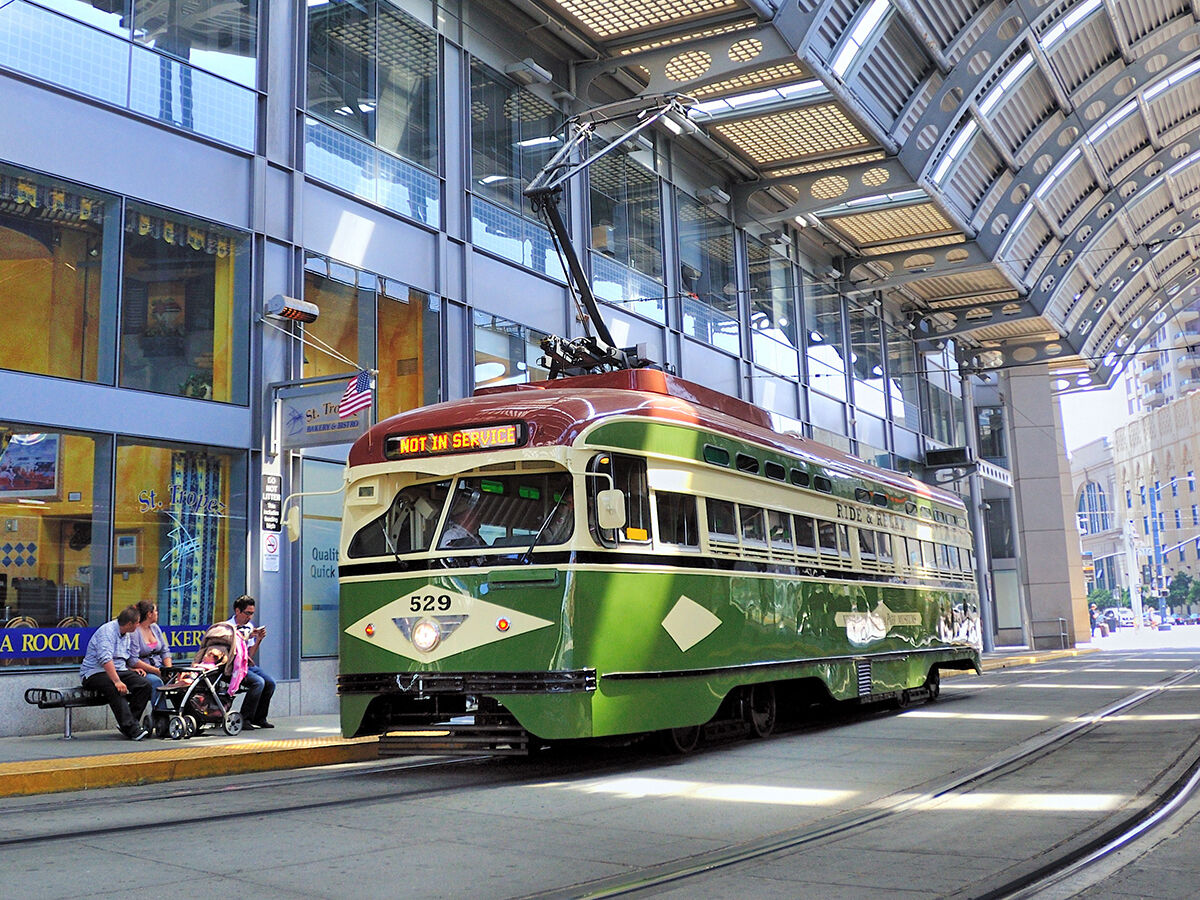
Photo courtesy of San Diego Metropolitan Transit System
Like the so-called sunshine tax, San Diego’s disjointed public transportation has long been considered part of the cost of living here. But there are smoother roads ahead, with the San Diego Metropolitan Transit System laying the final tracks for its $2.1 billion Mid-Coast Trolley Extension from Old Town to University City, with service to begin later this year. It’s the largest light rail extension in the city’s history, adding nine newly constructed stations and a fleet of 45 shiny new trolleys to its roster.
Reasons to Love San Diego / Building Boom
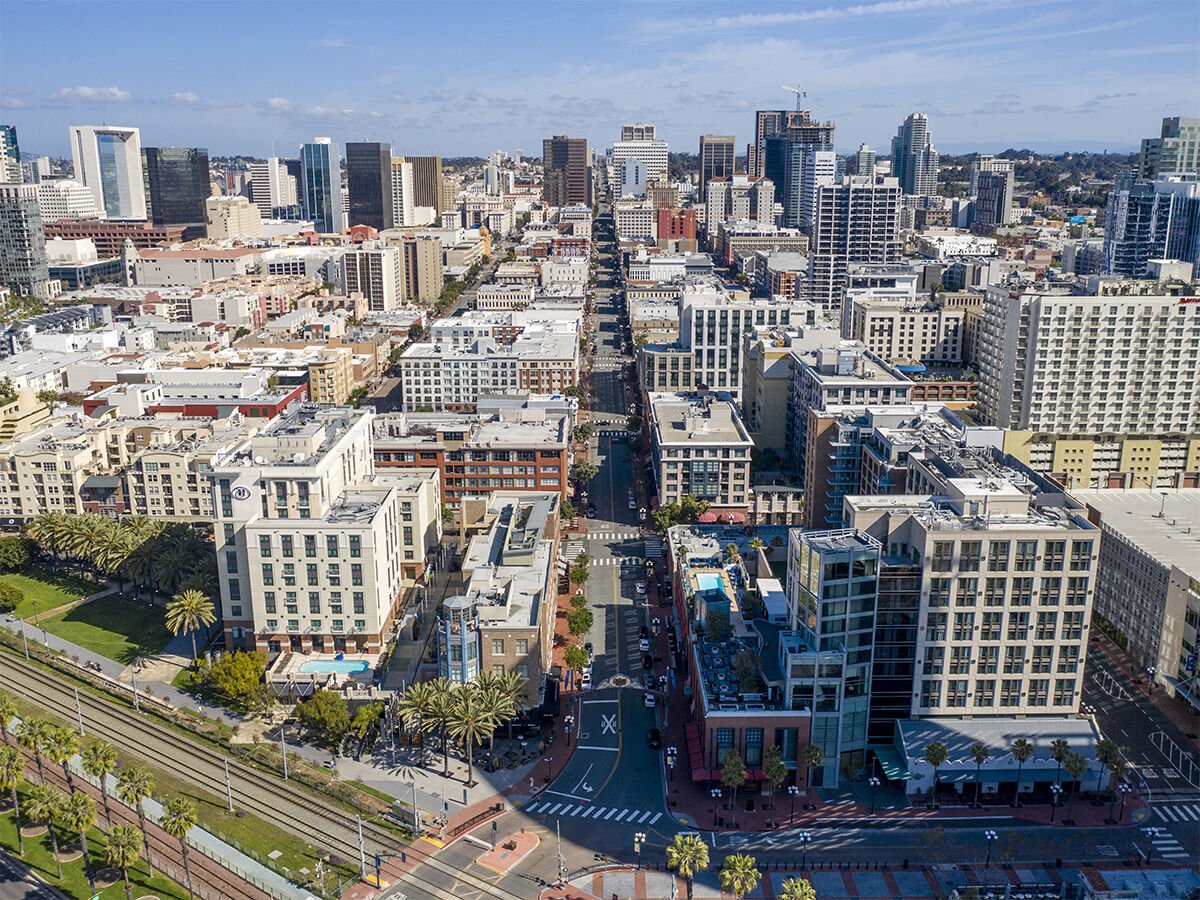
As of last fall, there were 14 new construction projects downtown alone, including more than 3,000 new apartments. There’s also major housing projects underway in Kearny Mesa (442 units), UTC (over 400 units), and the massive development at Town & Country resort in Mission Valley (over 800 units). The Riverwalk project in Mission Valley is also finally breaking ground this year: When it’s complete, the 195-acre neighborhood will have over 4,000 new homes.
No sector felt the impact of the shutdown more than San Diego’s small businesses. But where there were struggles, there was just as much support. Last year saw a wellspring of collaborative efforts from restaurant, event space, and retail shop owners helping one another stay open. It took some creativity, but the results just go to show that even during the most dire circumstances, community always comes first.
When Natalie Mitchell and Violet Navarrete faced a series of setbacks shortly after opening their clothing and gift store Timshel Shop—repeated flooding on top of the pandemic, to give you an idea—they made the difficult decision to permanently close their doors. But when they turned to online sales to keep them afloat, fellow female-owned home goods shop Thread Spun had a different idea. They’d had their own experience with flooding (all three owners refer to one another as “floodies,” for flood buddies), and they offered Timshel a long-term pop-up space inside their own store. Over last summer, Timshel donated 20 percent of their pop-up profits to local organizations and raised over $1,000. “Our community may look different now, but we’ve been blown away by the support and lasting relationships we’ve built,” Mitchell says. “Collaborating with other small businesses has been an integral part of building our community.”
Reasons to Love San Diego / COVID Collabs
Photo courtesy of Cucina Urbana
Community was always key for Gaslamp Tavern, a relaxed downtown bar popular for its good drinks and happy hour deals before 2020. But the pandemic’s toll on the restaurant industry encouraged owners Estela and Rick Borba to pursue an idea that had been brewing for years. To amplify their offerings and rally behind small pop-up eateries, the duo transformed the tavern into Gaslamp Tavern & Food Hall. Now housing Ghost Fried Chicken, San Diego Tuna Company, and Tacos el Tuerto, the food hall gave emerging businesses a home while bringing more dining options to downtown.
PARTNER CONTENT
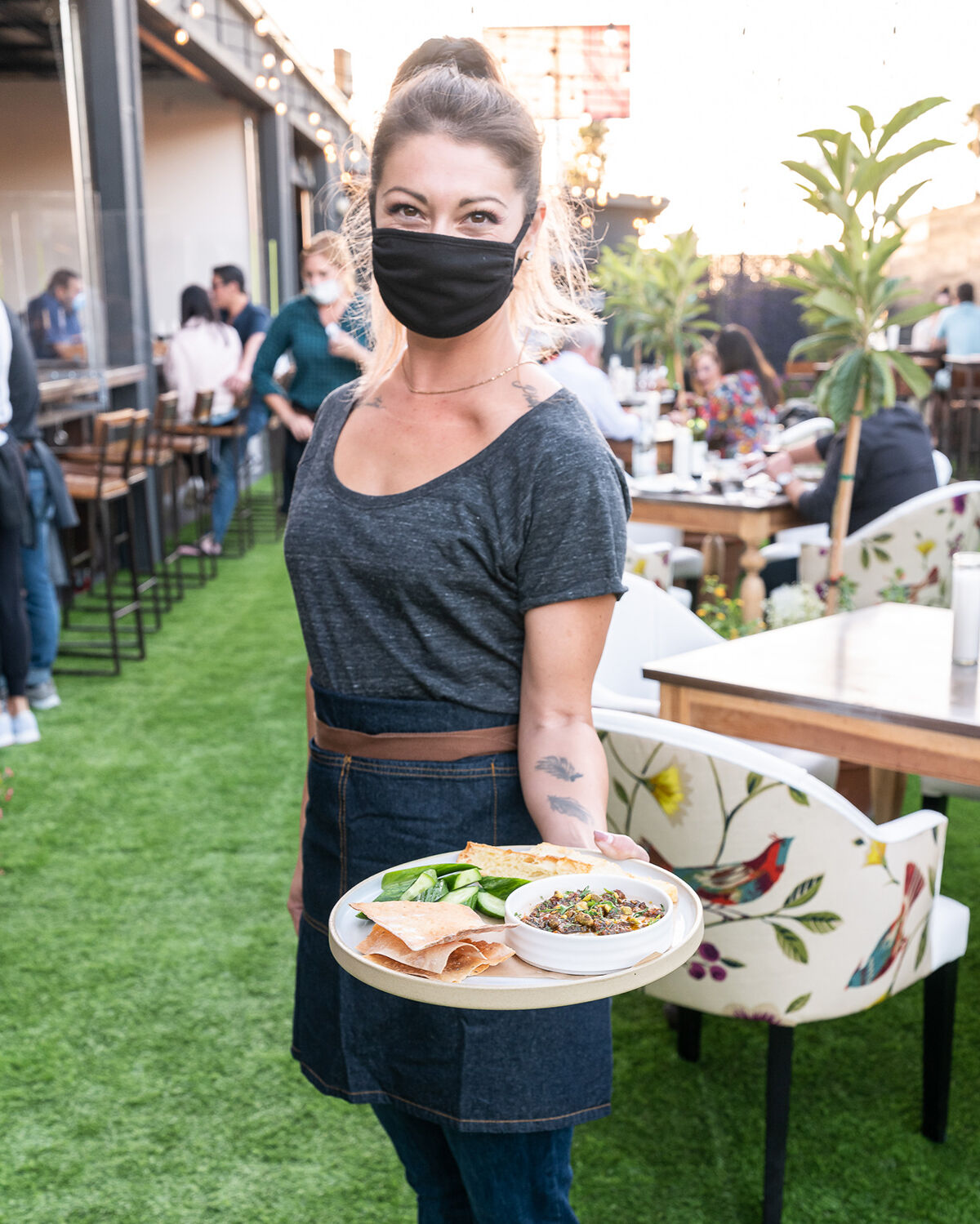
Cucina Urbana has been a vital player in that scene for years, but they struggled last summer when they were unable to create an outdoor dining space (while permitted) due to the layout of their restaurant. Their neighbors, Julep Venue, already had a string of successful virtual events under their belt when they reached out about a backup plan. “We have two large patios that were sitting there unused,” says Julep’s founder and managing partner, Michael Esposito. “It just seemed like the obvious choice to give Cucina Urbana that space.” Over one weekend, the teams got together to work out the logistics of Camp Cucina, a blend of Julep’s eye for design, Cucina’s food, and Snake Oil Cocktail Company’s craft libations. “Everyone has had their own unique challenges during this time,” Esposito adds. “If you can come together to solve those challenges with another business, it’s an absolute no-brainer to do it.”
The neighborhood blends historic charm with festive flavors and local culture—here’s what to eat, see, and do on your next visit
Tucked into a gentle slope beneath Presidio Hill and overlooking the former mouth of the San Diego River, Old Town is where the city began. Here, some of San Diego’s oldest streets wind through a state park and spill into blocks brimming with festive shops, tucked-away courtyards, and local-favorite restaurants.
Yes, there are museums, margaritas, and plenty of Mexican food, including a pozole from Casa de Freds that will “warm your soul,” says Old Town San Diego Chamber of Commerce Executive Director Alex Ward. But, while those alone are all worth the trip, Old Town is more than a place to begrudgingly rub elbows with tourists. It’s a layered, living neighborhood where history hums through weathered walls and discovery waits around many corners.

“There’s plenty of reasons for locals to visit,” says Nest Tattoo owner Melissa Anglin—including a convenient trolley stop and free parking.
Old Town really is old: The Kumeyaay people lived along the San Diego River for at least 10,000 years before the Spanish arrived in 1769, setting up camp near the village of Kosa’aay. Prominent Californios built adobes at the base of Presidio Hill in the late 1700s; the center of San Diego was there until development at “New Town” in the late 1860s moved downtown to its current location.
The state park system preserved those dusty old adobes in 1968 as “the birthplace of California.” In the 1970s, the “mother of Old Town,” Diane Powers, opened Bazaar Del Mundo, and with it came the colorful, folksy vibe that, like it or not, still defines San Diego for visitors from around the world.


In 2018, Melissa Anglin and her husband Taylor brought The Nest Tattoo to life inside a cozy 1920s bungalow on Congress Street, adding a creative spark to Old Town’s historic soul. A few years later, they moved into an apartment just up the hill on San Diego Avenue.
Anglin’s favorite reset is a run to the top of Heritage Park, where the city unfurls below in a patchwork of history and bay views. After, she’ll visit her business neighbors at Encuentro Cafe for “really tasty” breakfast, she says—do not miss La de Mano (a sweet corn pancake filled with Venezuelan cheese) or the grilled arepas (kind of like a giant English muffin made of corn and stuffed with goodies such as eggs and chorizo). The best quick lunch (between inks) is a hot dog or a torta at Que Sazón on Harney Street. “It’s the only place in Old Town I would get agua fresca,” Anglin advises.
Locals have options for dinner or date night. “Jack & Giulio’s is the place for red tablecloths and excellent service, where they treat you so nice,” Anglin says, suggesting that diners order any of the housemade pastas. Home & Away is a sports bar with a great burger, and it’s open for a late-night bite—rare in Old Town. Bring your dog and sit out on the patio when it’s warm.

If you’re into spirits (both the imbibable and the paranormal), get a reservation at Oculto 477—a private mixology experience for two, within haunting distance of El Campo Santo Cemetery. Anglin recommends Rose’s Tasting Room as another place where locals can feel brand new in their own town. A casual setting where guests can learn about local wines, it’s “a lovely, personal, magical experience with a cozy vibe,” she says.
Prolong those good vibes with crystal shopping at the “friendly and approachable” South American Imports, Anglin adds. The showroom with an extensive collection of geological gifts has been in Old Town for 40 years—even longer than its stalwart neighbor Cafe Coyote.
Every summer, Anglin sips a cup of raspberry drinking chocolate at small-batch candy maker Nibble, inside Fiesta de Reyes.

Old Town is getting some new (yet old) accommodations: Rumor has it the Hacienda Hotel’s buyers are planning a renovation. And, soon, you’ll be able to secure a night’s stay in some of Heritage Park’s charming (but possibly haunted) Victorians. “I’m sure they’ll be booked solid by ghost hunters,” Ward says.
However, some institutions are saying goodbye. Cygnet Theater Company is ending its residency at Old Town Theater, heading for new digs at Liberty Station. While the state-owned theater goes dark and figures out its next big thing, which could take up to two years, Ward says, keep an eye out for potential happenings in that space.
Post-pandemic, Ward is excited to see more locally focused businesses moving into the neighborhood alongside tourist-centric establishments. “Lower- than-average rents,” he explains, are part of the draw, along with reliable foot traffic and transit proximity. Nest Tattoo is one example; so is Garden Coffee—where you can buy plants, sip lattes, and study or chat at a cozy table.
On the edge of Old Town, a major change is coming: NAVWAR—the WWII military airplane assembly plant on Pacific Highway that later housed Naval Warfare Systems Command—could soon be developed into hotels, housing, shops, parks, and restaurants, plus a trolley stop. Local activists are hoping to prevent Old Town’s views of Point Loma and the harbor from becoming a shiny glass skyline.

El Agave Restaurant & Tequileria
Leorah Gavidor won her first essay contest at age 5. She writes features, news, and non-fiction in San Diego.
Delana Delgado and Gina Serna-Rosas of creative collective 619 Gurlz use film photography to capture their community
“La Palapa is on Reo Drive in the first neighborhood I grew up in, Paradise Hills. I remember going there with my mom. There were no major stores around, no Walmart,” Delgado says. “That block is stuck in time. Getting that lucky shot of all those cars lined up… it’s just the perfect encapsulation of the colors and the richness and everything I love.”

Delgado nabbed this shot of two South Bay women hanging out at a car show. “It’s their homie’s car, and they were just putting on eyelashes and talking,” she recalls. “They were so beautiful and cool.”

This image is an inadvertent double exposure. “The photo that I had taken originally, that’s in Tijuana. It’s a fruit market. It’s not supposed to be art, but the way that they decorate it every day, it has a personality, you know?” Delgado says.
“It happened to go over [a photo from] my project where I was documenting shopping culture [in South Bay]. My friend Angelica Grijalva, who is also an amazing photographer, was my model, and we were going to those mega discount stores in San Ysidro. These kinds of stores thrive here. They are affordable, accessible. They give us enough to feel stylish and have our personality shine through. These are the safe spaces for us to find our identities.
“Angelica was checking herself out in the reflection of the door, just making sure she looked okay. [Girls from South Bay] are always trying to look our best and making the most out of the least.”

Serna-Rosas took this picture of National City’s iconic Price Breakers shopping center during a night drive through the area. “I chose a specific stock of film … that’s supposed to have more of a cinematography type of feel,” she recalls. “So I was thinking, If I made a movie about South Bay, what would I photograph?”

“In the whole coastal area of South Bay, it’s really common to have these trailer homes,” Delgado says. “This house was one of the first in the row. This style of excess, I guess it would be called tacky [by] the mainstream, but I think people that are from this area appreciate it.”

“Quinceañeras are such a huge celebration of the majority of young people’s lives in this area,” says Delgado, who snapped this photo at the Chula Vista Mall. “They were doing a fashion show on this day. There was a huge crowd. I love that these young girls are having fun and embracing their womanhood, their girlhood, and their culture.”

Delgado captured a car show at a popular intersection in National City, photographing this cherry-red lowrider and the group of friends inside. “You could tell they’ve been homies forever,” she says. “People from South Bay, they just love nostalgia. I think that the cool thing is that all generations are there. These guys, maybe in their 40s or 50s. Me and my friends, standing on the corner taking photos. Young kids walking around with their parents. Those moments are so special to me.”
Beth Demmon is an award-winning writer and podcaster whose work regularly appears in national outlets and San Diego Magazine. Her first book, The Beer Lover's Guide to Cider, is now available. Find out more on bethdemmon.com.
Where to eat, shop, and play in East County’s most populous city
El Cajon (Spanish for “the box,” so named because it is “boxed in” by foothills on all sides) served as fertile ranchland for decades before being incorporated in 1912. Once a sleepy farming town, the city is now the largest in East County, housing more than 100,000 residents and an unrecognized wealth of eateries (especially of the Mediterranean and Middle Eastern variety), shops, and visitor-friendly farms and gardens.
Here’s where to explore next time you’re in El Cajon:

This Mediterranean spot known for its big portions offers excellent bang for your buck. Try Ali Baba’s chicken tekka, pompano fish with rice, and tannour bread. Feeding a crowd? Order a feast for up to ten people with kabab skewers, shawarma, cream chop, salad, rice, burghul, and hummus.
421 East Main Street
At this haven for Middle Eastern bites, start with hummus, tabbouleh, and cucumber salad and follow with kabobs, chicken tikka, or falafel. Drench it all with unlimited sauces from the Sahara‘s self-serve bar.
2990 Jamacha Road, Unit 116
Stepping inside this quaint breakfast spot feels like traveling back to a 1950s diner. The extensive menu at The Breakfast House offers nearly every classic American breakfast dish imaginable, as well as lunch choices like salads and sandwiches.
1464 Graves Avenue
Royal Sweets offers not only royally good Middle Eastern desserts, but also a variety of other pastries and cakes. Stop by for baklava, tiramisu, or gelato, or order a custom birthday cake that is sure to impress.
110 South Mollison Avenue
Inspired by the BBQ he ate in his youth, Andy Harris bought a smoker and set out to bring the flavors of Central Texas to San Diego County. Make sure to arrive early at Grand Ole BBQ to beat the long lines and get your share of some of the best pork, brisket, ribs, and sides the city has to offer.
15505 Olde Highway 80
Funky Fries and Burgers lives up to its name with creative combos like a bacon mac n’ cheese burger and a Philly cheesesteak burger, but the true stars of the show are the extravagant milkshakes. Piled precariously high, each “Funky Freak Shake” is topped with enough candy and treats to feed a first-grade birthday party.
101 West Washington Avenue
Happy hour and Mexican food go together like peanut butter and jelly, especially at Hacienda Casa Blanca, which offers sweet deals Monday through Saturday from 3 to 6 p.m. and all day on Sunday. They also serve brunch on Sunday mornings, laying down chilaquiles and huevos rancheros.
700 North Johnson Avenue, Suite A
The Antonelli family brought their classic, East Coast–style deli to California in 1984. Tucked away between motor shops in El Cajon, the old-school locale has almost 50 unique sandwich options, including capocollo subs, liverwurst sandos, and a French dip.
1354 North Magnolia Ave
Head to Burning Beard for punk rock vibes and good brews, from hoppy IPAs and lagers to seltzers. Pair your drink of choice with bites like smashburgers, truffle and garlic fries, and chicken tenders.
785 Vernon Way
The Yogurt Mill vends a rotating menu of classic fro-yos such as vanilla and strawberry, plus more off-the-wall flavors: toasted marshmallow, Irish mint kiss, banana cream pie. Keep an eye on their Instagram page to get the inside scoop on the flavors of the day.
935 Broadway
If you find yourself craving stuffed chicken, breakfast lentil soup, or baba ganoush, head to Al Azayem. The Middle Eastern dishes at this counter-serve joint come with a small price tag and a big flavor profile.
550 East Main Street
In addition to popular Mediterranean eats like falafel, pitas, and meat kabobs, Mal Al Sham serves the hard-to-find quzi—a roasted lamb and rice platter that’s one of Iraq’s national dishes—on weekends and holidays.
388 East Main Street

Stop by Summers Past Farms to see what the farmers are planting, harvesting, and crafting. There are shops, gardens, and wildlife to explore here, and the farm can serve as a background to any photo shoot, as it changes each season depending on what plants are growing.
15602 Olde Highway 80
The Water Conservation Garden offers fun ways to learn about saving H2O. Play and learn with the six-acre farm’s four hands-on exhibits, or simply observe the beautiful landscape as inspiration for your own home garden.
12122 Cuyamaca College Drive West
Self-taught artist Olaf Wieghorst, born Denmark in 1988, drew upon the aesthetics of the American West in his paintings of landscapes, humble abodes, cowboys, and lonely travels. This museum honors Wieghorst and fellow Western genre painters with exhibitions, workshops, and tours.
131 Rea Avenue
El Cajon is home to Sycuan, a resort and casino to rival those in Sin City. Get gaming, attend a concert, or relax at Sycuan’s full-service spa and lazy river pool. You’ll also find a wealth of dining choices, including pizza, Mexican food, and steak.
5469 Casino Way
Alpacas never make the list of oft-spotted wildlife in San Diego, but this family farm on the outskirts of El Cajon provides private tours that give you the chance to get up close and personal with the critters. Don’t forget to browse the store, where you can purchase yarn, clothes, accessories, toys, and dryer balls spun from alpaca wool.
1802 Alta Place
Reserve at this family-owned El Cajon bowling alley and entertainment center for an evening of all-ages fun. Not a fan of bowling? Hit the arcade, play a round or two of billiards, or grab a meal and drink at the in-house restaurant and bar.
1280 Fletcher Parkway

Board game store and tabletop lounge Off the Shelf offers table reservations and a retail shop with a unique library of more than 1,500 games. Join the shop’s membership program to enjoy three-day board game rentals for $20 a month and $6 a game.
173 Fletcher Parkway
Owned and operated by musicians Maria Hart and Frank Cogliana, El Cajon Guitars and Music is a friendly, community-driven spot for both guitar newbies and seasoned shredders. In addition to vending instruments and accessories, the store provides instrument repairs and guitar classes.
172 East Main Street
Taste flavors from around the world at the Harvest International Market, a one-stop shop for fresh local produce and imported goods. Visitors will discover a tasty Middle Eastern bakery onsite, too.
733 East Main Street
A rare enclosed mall in SD County (good for rainy days!), Parkway Plaza is home to more than 130 stores, from major chains like Best Buy, Ulta, and H&M to small local businesses such as 619 Underground Clothing.
415 Fletcher Parkway
Calling all comic fanatics: San Diego’s largest comic and collectibles shop is right here in El Cajon. Expand your comic collection with fairly priced, new and vintage books.
1020 El Cajon Boulevard
Maren Hawkins is a freelance writer in her last year at San Diego State University. When she is not writing, she spends her time playing beach volleyball, thrifting for the cutest clothes, and traveling whenever possible.
The annual event honors middle market companies creating jobs, scaling up, and investing in the region
San Diego is known for its startup culture and innovation economy, but what happens when the company moves beyond its early-stage years? The San Diego Business Impact Awards aim to answer that question, spotlighting the middle market businesses helping drive the region’s economy.
Hosted by San Diego Regional Economic Development Corporation (EDC) and JPMorganChase, the second annual awards celebration takes place on Thursday, July 23, from 4:30 to 7:00 p.m. at Scripps Research Auditorium. More than 200 executives, entrepreneurs, and business leaders are expected to attend the networking and cocktail event honoring some of San Diego County’s fastest-growing companies.
Businesses headquartered in San Diego County that have operated for at least two years are encouraged to submit their nomination by Thursday, June 18 at 4 p.m. Companies across industries—from technology and life sciences to tourism and consumer products, as well as pre-revenue startups—are eligible for recognition.
For EDC President and CEO Mark Cafferty, the event is as much about building connections as celebrating success. “We’ve had a longtime partnership with JPMorganChase; their work aligns with our efforts to support underserved communities and drive talent development,” says Cafferty. “And the networking was invaluable last year. I’m still in touch with people I met at last year’s awards.”

EDC is an independently-funded nonprofit that works directly with San Diego companies to help them grow the local economy, make the region as a whole more competitive, and attract and retain top-tier talent with quality jobs. Through EDC, companies can get help starting or expanding their business with support for things like site selection, permit navigation, and regulatory guidance, plus connections to local resources and potential business collaborators.
The San Diego Business Impact Awards began as an idea with one of EDC’s longtime strategic partners, JPMorganChase. The two organizations share a commitment to San Diego and are dedicated to bolstering middle market businesses.
“We’re blessed with a robust innovation economy and startup community,” says Aaron Ryan, San Diego Region Manager for JPMorgan’s Commercial and Investment Bank and vice chair of the firm’s’ San Diego Market Leadership Team. “But one of the segments of the business community we felt was overlooked was emerging middle market companies—the businesses that are no longer small but not yet large.”
Ryan says supporting those companies is critical as they scale and decide where to invest, hire, and grow.
San Diego’s high cost of living remains one of the region’s biggest business challenges, making talent recruitment and retention increasingly competitive. But local leaders point to the region’s quality of life, climate, and collaborative business community as advantages that continue to attract employers and workers.

“In order to support thriving households, there has to be enough high-quality jobs for people to be able to afford to live here,” Cafferty says. “Once a company grows and excels past that middle market point in their growth cycle, they become much more likely to pay higher wages and compete globally.”
Both Cafferty and Ryan proudly tout the unique collaboration that exists among San Diego County businesses. Bringing together top universities producing high-quality talent, cutting-edge research institutions, a robust military and defense presence, leading ocean science and environmental organizations, and a binational, cross-border identity creates a distinct business ecosystem that defines and strengthens the San Diego region.
Last year’s San Diego Business Impact Awards celebrated nearly 60 honorees from 49 industries, representing a total of 8,232 jobs across eight sectors, including: software and technology, healthcare and life sciences, consumer goods, professional services, finance, construction and manufacturing, defense, and hospitality and tourism. On average, honoree companies doubled their revenues over the previous year, employed more than 145 San Diegans each, and offered an average annual compensation of $192,415.
Top honorees included defense contractor Innoflight, environmental consulting firm Bancroft Construction Services, life sciences startup Element Biosciences, defense technology contractor GALT Aerospace, organic grocery store chain Jimbo’s, and biopharmaceutical company LENZ Therapeutics. During the event, Innoflight Founder and CEO Jeff Janicik held a fireside chat offering his insights on investing in the community and embracing San Diego culture.
This year, organizers hope to continue highlighting the middle market players driving economic impact across the region. Nominations are now open through June 18 at 4 p.m. Get your tickets to the San Diego Business Impact Awards celebration to enjoy drinks by Snake Oil Cocktail Co., light bites, live music, and networking.
The artist and graphic designer whose collaborations include Daddy Yankee & San Diego FC shares his favorite local haunts
Scenes from the border crossing, lowriders, the Coronado Bridge—many of the motifs featured prominently in artist and designer Richie Moon’s work come from his lifelong roots in South San Diego, particularly Imperial Beach. “I’ve been here since I was in kindergarten,” he says.
His love for South Bay is one he wishes more people shared. “It’s somewhere that’s constantly overlooked,” he says. “But South San Diego is the heart of San Diego.” Because the area offers so much, it was hard for Moon to pin down just a few ways to spend the day in the area—but he somehow managed.
To start a morning off right, Moon heads to Home Coffee in National City. The bright, airy space has plenty of room to work alone or chill with friends, making it a hub for the community that’s easily accessible off the 805 and 54 freeways. Plus, a set of outdoor swings are sure to bring out the kid in anyone. “I prefer it to Starbucks,” Moon laughs, recommending the Tahitian vanilla latte.

Moon says he’s had the same barber, Ray Muñoz, since high school. “Initially, he started cutting hair out of his garage then moved into shops,” he recalls. “I got to see his journey, and for him to live his dream is pretty cool.” Moon now visits him at Exclusive Cuts Barber Shop, the spot Muñoz owns in Imperial Beach.
After a fresh trim, Moon hits San Diego Kabob Shack in Chula Vista for a chicken kebab plate or Poke Etc. in National City for spicy mayo ahi tuna. As someone who focuses on eating healthy, Moon says both options hit the spot, especially after a workout.

To unwind, Moon points to Thr3e Punk Ales in Chula Vista. “I don’t drink too much, honestly, but I have a great relationship with the owners,” he says. “If I do ever crave a drink every now and then, I prefer to go there.” Moon says he reaches for lighter beers like Mexican lagers, but pretty much anything coming out of the brewhouse promises to satisfy.
Beth Demmon is an award-winning writer and podcaster whose work regularly appears in national outlets and San Diego Magazine. Her first book, The Beer Lover's Guide to Cider, is now available. Find out more on bethdemmon.com.
The San Diego–native and celebrity chef names his top 5 restaurants including one of Yelp's top taco shops in America
South Bay native, celebrity chef, and former research and former research and development chef for CH Projects, Phillip Esteban has done stints in kitchens spanning from New York City to La Jolla. Today, he’s behind multiple restaurant concepts across San Diego, including White Rice, Weapon Ramen, and early for your next shindig—the forthcoming Wildflour Delicatessen at Liberty Station.
His approach to Filipino food has helped revolutionize the cuisine for new audiences, and (perhaps unsurprisingly) his ideal day in South Bay involves eating his way through the area. Here are his five favorite places to eat in South Bay:

In Chula Vista, The House of Cuban Flavor offers comforting dishes in place of pretentiousness, focusing on Cuban eats like empanadas, arroz con pollo, mixed bowls, and, of course, Cuban sandwiches. It’s affordable and delicious—the perfect combination, unassumingly nestled in the corner of a strip mall. La Bella Pizza Garden, situated a few miles north on the same street (Chula Vista’s famed Third Avenue), has been a South Bay institution since 1955. “La Bella’s … is where families and friends gather [for] birthday parties, sporting games, and celebrations,” Esteban says.
In his native National City, 8th and B Poke reminds Esteban of growing up nearby. In his younger years, Esteban frequented Zarlitos, a Filipino fusion restaurant owned by Chris “Toppie” Aure’s family until they retired. Aure decided to use the space as a launching pad for his poke business, which rapidly grew in popularity before the pandemic forced him to pause operations.

However, demand quickly grew to a fever pitch, according to Esteban, who says it’s now a staple of the Filipino community. Party trays go fast, so he recommends ordering early for your next shindig—and, if a birthday present is in order, Esteban points to the nearby Japanese market Kyoto Gift & Food as his go-to place for gifts and goodies.
Esteban’s day across South Bay wraps up at Ed Fernandez Restaurant Birrieria in the southern San Diego neighborhood of Nestor. Renowned for their birria, the low-key spot was named the number-one taco shop in America on Yelp last year. The secret is definitely out—their slow-cooked beef is the best in town, and that’s saying a lot in San Diego.
Beth Demmon is an award-winning writer and podcaster whose work regularly appears in national outlets and San Diego Magazine. Her first book, The Beer Lover's Guide to Cider, is now available. Find out more on bethdemmon.com.
Scripps study shows that some patients may be able to taper their dose and maintain results
While glucagon-like peptide-1 (GLP-1) receptor agents have been used to treat Type 2 diabetes for more than 20 years, their recent emergence as weight-loss wonder drugs marked a new frontier in medicine. But their effectiveness has left some patients wondering what to do once they’ve reached their goal. Stopping the medication could mean regaining some, if not all, of the weight. A Scripps Clinic internal medicine physician recently conducted a small study of whether GLP-1 patients who had reached their goal weight could maintain that weight by taking their regularly prescribed injection every other week instead of weekly. Spoiler alert: 30 of 34 patients did. Read more about the study here and what that may mean as pharmaceutical companies roll out oral GLP-1s.
For more nutrition, wellness, and healthy living tips, sign up for the San Diego Health newsletter here.