












“It’s what makes everything cool.”
That’s how Eric Weiss explained it. We talked over coffee a few weeks ago at Paradis in Mission Hills about the role of design in San Diego, why it matters, how it affects our lives, and what about it made him so obsessed that he took the role of president of San Diego Design Week.

His explanation—that design is what makes a thing “cool”—gave me pause. It sounded at once too simple and too broad. What’s cool to you may not be cool to me. “Say more,” I pressed. Eric then offered a more philosophical perspective that stuck with me: Design is what takes something from merely functional to intentionally experienced.
Most things technically work. A chair holds you. A car gets you from point A to point B. But the job of a designer is to think through every step in the process—each moment someone might interact with a space or object—and shape it so naturally that you find yourself saying, “They’ve thought of everything.”
Design makes you notice the existence of something, sparks a thought, feeling, or a discussion—good or bad, but not indifferent.
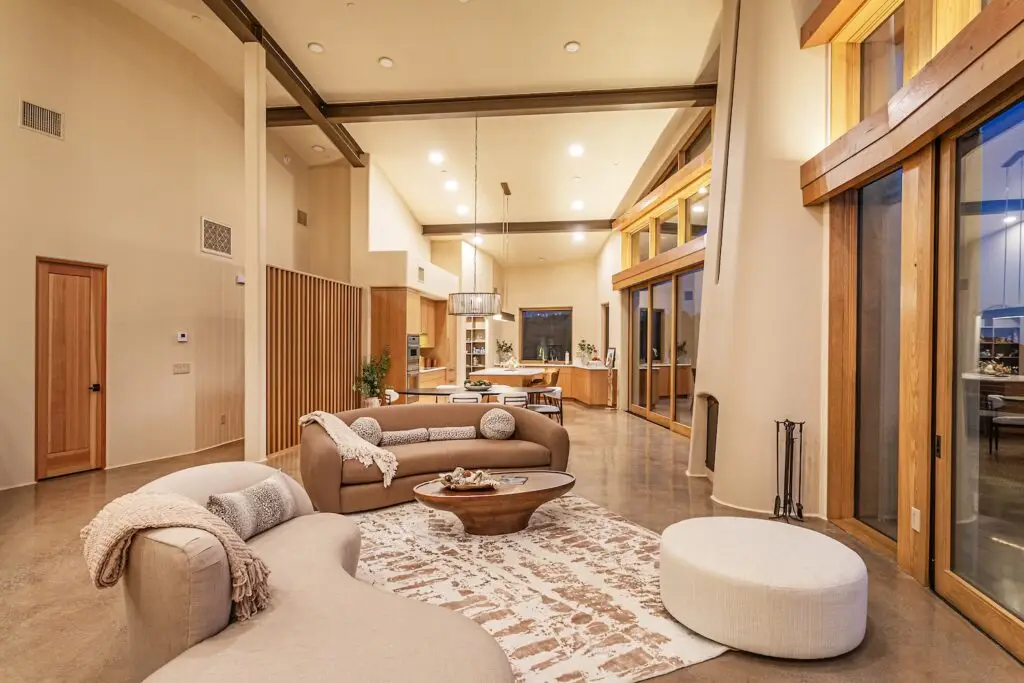
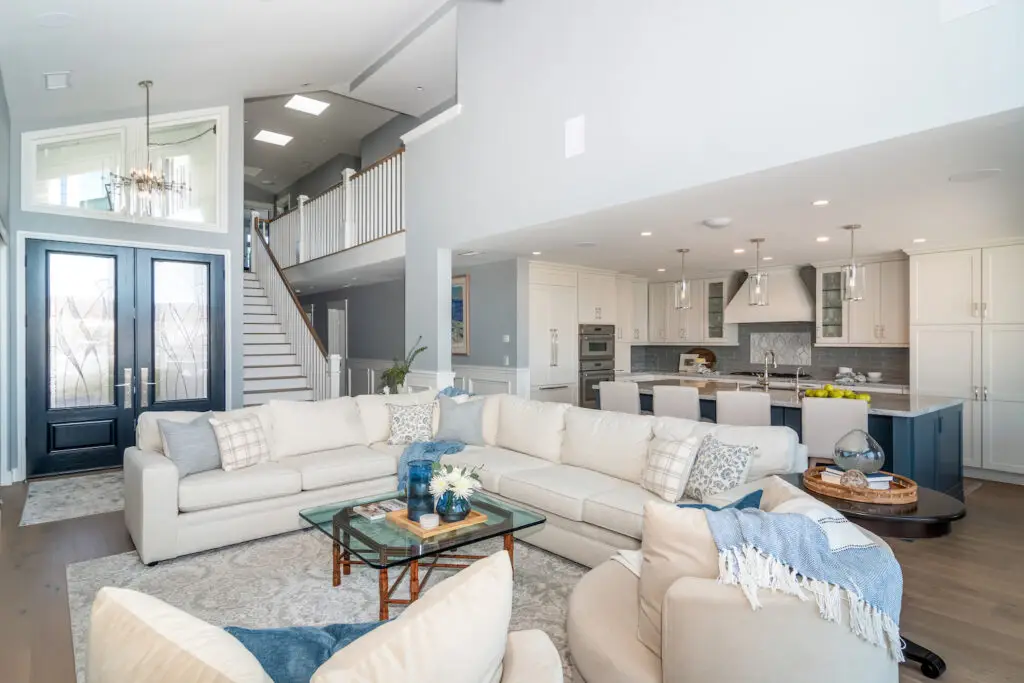
I’m thinking a lot about it right now because, obviously, this issue is about home and design in San Diego, including architecture, interiors, and landscape, as well as the people who think deeply about how spaces feel and how our lives move through them.
But also because, after seven years in Ocean Beach, Troy and I have started talking about moving to the suburbs to be closer to his daughter, my stepdaughter. What began as a quiet, hypothetical life conversation slowly changed how I see everything around me.
When you start imagining leaving a place—even as a dreamy exercise—you begin to notice the details that define it. Your senses become oddly hyper-aware of the defining structures and gathering places you’ve traveled a bazillion times. The chipped corner of the sidewalk you instinctively hop over. The light glittering through the palms at golden hour. The graffitied park bench that normally doesn’t earn a second glance because it somehow has the best view in the neighborhood. The awareness is Dorothy opening the door of Auntie Em’s black-and-white house and stepping into a world of Technicolor.
In pausing to consider those details, the idea of home expands. The imagining of elsewhere snaps you out of the autopilot of a place. A house stops being just a house and becomes the place you want your mornings to begin and your evenings to unfold. It’s the neighborhood and who you want to bump into while running errands in your old Target slippers and avocado-stained T-shirt pulled straight from the floor. It’s the kind of community you want to be part of—the kind of community you want to help build.
In reimagining your life elsewhere, you start to realize home isn’t a place. It’s a system of belonging.
But you can’t click your heels three times and build belonging. It doesn’t happen immediately or by accident. It’s built over time—piece by piece, interaction by interaction, choice by choice. The best parts of belonging feel accidental. Running into a neighbor at the grocery store. Kids from three different houses having a serendipitous gathering for pizza in someone’s driveway.
Such moments look spontaneous, but they rarely are. They happen because places like rooms, buildings, parks, neighborhoods—and, yes, driveways—have been designed to foster them. Because someone, somewhere, designed for connection. For, as Weiss says, intentional experience.
That’s how you give meaning and context to a purely functional thing. Community, in its own quiet way, redesigns the space. When Troy and I talk about moving, what we’re really talking about is redesigning our life. Choosing, with intention, a different starting and ending point each day.
Ultimately, design asks of us—not just architects or planners but all of us—to care about the details. To notice the spaces we move through every day. To invest in making them a little more thoughtful, a little more welcoming, a little more alive.
PARTNER CONTENT


That’s what we hope this issue helps inspire. Writer Ingrid Yang explores how millions are designing their homes around wellness. Some of the city’s top architects and designers point to the biggest trends they’re seeing—from undoing coastal clichés and the death of the farmhouse to turning the great outdoors into adjunct living rooms. Troy writes a tribute to and obit for Horton Plaza, the world’s most frustrating mall—an intentional experience, thanks to Ray Bradbury—that put San Diego at the international epicenter of pop art, design, punk, architecture, and capitalism.
If any of these stories give you a deeper understanding of home or illuminate what’s special about the spaces you inhabit…well, that would be very cool indeed.
