Featured articles
Featured articles
Featured articles
What's next
Featured articles
Featured articles
Featured articles
Ready to know more about San Diego?
SubscribeReady to know more about San Diego?
May 3 Craft beers, food, live music, and animal encounters are on tap for the fifth annual Brew at the Zoo in Coachella Valley. May3 Historic Vista Village welcomes 48 breweries and musicians to three different stages at the annual Rhythm & Brews Music and Beer Festival. May 12 Boost your craft beer knowledge at […]
May 3
Craft beers, food, live music, and animal encounters are on tap for the fifth annual Brew at the Zoo in Coachella Valley.
May3
Historic Vista Village welcomes 48 breweries and musicians to three different stages at the annual Rhythm & Brews Music and Beer Festival.
May 12
Boost your craft beer knowledge at the Fleet’s Suds and Science talk on “Fermentation, Flocculation and Frothy Goodness” at Callahan’s Pub and Brewery. =
May 12
Green Flash and Ensenada restaurant Malva will host an educational food pairing event called Behind the Craft.
Beer Rendezvous
Beer Rendezvous | Photo by Chris Brake Photography
May 18
SILO at Makers Quarter pours for a cause at the Brew Rendezvous fundraiser.
May 21
Waypoint Public welcomes Sierra Nevada Brewing Company for its monthly Brewery Dinner Series.
May 22
Amplified Ale Works showcases Weight of the Saison, a beer created in collaboration with local band Weight of the Sun, at a concert event at the Pacific Beach brewpub.
June 19
Learn about the history of hops and throw back some samples at the San Diego Museum of Man’s Hopfest.
June 20-22
The San Diego International Beer Festival serves up more than 400 beers from 15-plus countries at the Del Mar Fairgrounds.
July 12
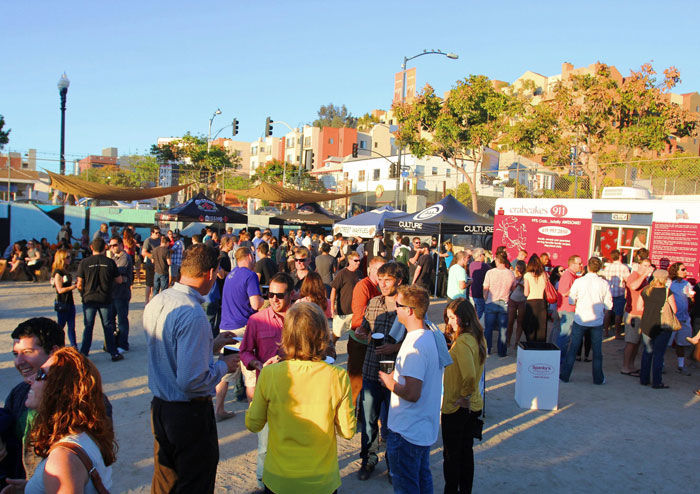
Liberty Station’s San Diego Beer Fest brings together local beers and food trucks to benefit Noah’s Bark Pet Rescue.
July 26
Grab your cape for the Heroes Brew Craft Beer Festival at Embarcadero Park during Comic-Con.
Every Sunday
10:30 a.m.–11:45 a.m.: Hoppy Yoga at the Green Flash Tasting Room ($15 for a session of yoga before they open and a post-session pint).
From her Rancho Peñasquitos kitchen, Yanira Majano is sharing family recipes through San Diego’s growing home-restaurant movement
When San Diego launched Micro Enterprise Home Kitchen Operations (MEHKO), it changed everything. Riverside County first established the experimental program in 2019, with San Diego introducing its own countywide pilot program in 2022 and granting it permanent status in 2024. The new category allowed people to launch at-home retail food operations—basically, home restaurants—with special requirements and restrictions to ensure food safety and smooth operations. Over two dozen counties across California have since adopted their own versions with over 1,200 permits issued, around 100 of them in San Diego alone.
Some have a dizzyingly long waitlist (Warung RieRie), others are still getting their name out there (The Hidden Gazebo Eatery), and still others use MEHKO for pickups rather than fully opening their home as an onsite dining facility. Love Pupusas falls into that category.
Yanira Majano came with her family from El Salvador to the United States when she was 11 years old, bringing a love of cooking and desire to share the country’s cuisine along with her. “There’s a lot of similarity [between Salvadoran food and] Central, South America, even Baja Mexico,” she says. Salvadoran cooking tends to be less spicy than some Mexican cuisines, with an emphasis on ingredients like corn, staples like yucca root (cassava), meats like crispy pork (chicharrón), and sides like curtido, a tangy cabbage slaw that’s typically either naturally fermented or vinegar-based.
And of course, the signature dish of El Salvador—pupusas.
In San Diego, Salvadoran food lacks the widespread availability of other Latin American cuisines like Mexican or Peruvian food, but Majano says she’s seen pupusas gain popularity over the past few years. But she likes to think her recipes, which have been passed down by her mother and kitchen partner Martha, contain a certain special something.
Some pupuserías use rice flour to create the handheld stuffed tortillas, but she prefers the more traditional gluten-free corn flour. Still, it’s what’s inside that really counts. “That’s where we put our own touch,” she explains. Most of Majano’s pupusas come with cheese and different fillings like carnitas, black beans, mushrooms, or zucchini, but she also offers vegan options. Every one comes with a side of curtido and salsa, each made fresh daily.
Showing people the magic of home-cooked food might not have been possible without the MEHKO program or The Cook Alliance, a MEHKO support and advocacy coalition. Opening a brick-and-mortar restaurant requires a huge amount of start-up capital—at least six figures, generally. Not exactly pocket change. “But when the MEHKO program started in 2022, I said, ‘Oh my God, this is for me,’” says Majano.
Now with four years under her belt, she says she’d love to bring Love Pupusas to more food festivals, host more pop-ups, and eventually open a food truck to keep serving the humble dish of her homeland, taking pride in every bite. “[I put] a lot of love in everything I do. You see it when you taste the food,” she promises.
Pre-order Love Pupusas for next day pickup in Rancho Peñasquitos between noon and 5 p.m.
Listen Now: The Latest in San Diego’s Food and Drink Scene
Have breaking news, exciting scoops, or great stories about new San Diego restaurants or the city’s food scene? Send your pitches to [email protected].
Beth Demmon is an award-winning writer and podcaster whose work regularly appears in national outlets and San Diego Magazine. Her first book, The Beer Lover's Guide to Cider, is now available. Find out more on bethdemmon.com.
After two years of farmers markets and pop-ups, the San Diego baker is bringing its Korean-inspired pastries to University Heights
The folks at Kairoa Brewing Company must never be lonely. It seems like there’s always a local pop-up or event at the University Heights space, from Bincho Taco slinging Japanese coal-fired tacos on the rooftop patio every Tuesday to Yipao Coffee serving coffee from a window on the ground floor. Later this year, the New Zealand-inspired brewery will bring yet another resident into the fold—Mon Chourie is launching its first bakery counter service window along Park Blvd.
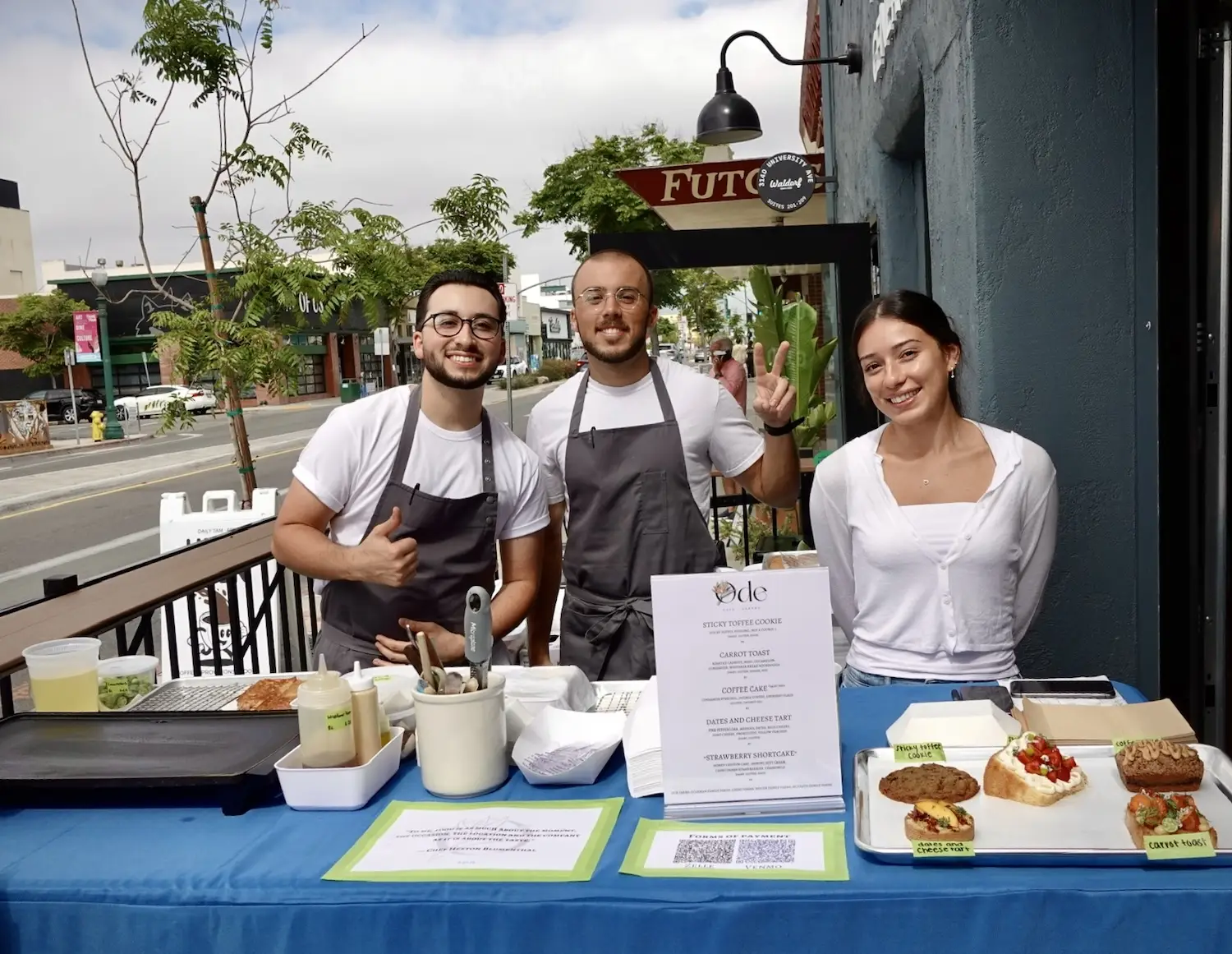
Mon Chourie owner and baker Kelly Kim first started selling her Korean-style cream puffs at farmers markets and places like Pizza Kaiju, Pho Ga Go, and Mixed Grounds, collaborating with a myriad of other makers (like Amor ice cream and Ming Oun’s) before nabbing a regular spot at Michi Michi Bakery every Wednesday. San Diego Magazine readers even voted Mon Chourie the Best Pop-Up for 2026.
In French, the word for an airy puff pastry is “choux,” which is pronounced generally the same way as “syu,” the Korean word for the same item. (Both sound like “shoe.”) Mon Chourie plays with both iterations with a dash of whimsy by referencing the song My Cherie Amour by Stevie Wonder, which translates to “my darling love.”
As long as all the permits and inspections move forward without issue, Mon Chourie should open in Kairoa before the busy holiday season. She’ll continue appearing every Wednesday at Michi Michi and other pop-ups in the meantime. Once open, expect best-selling flavors like the savory potato croquette (a collaboration with Karanchi chili crisp) and a sweet Dubai chocolate choux au craquelin, a version of puff pastry with a delicate cookie crust.
Classic cream puffs are fluffy, softs and often filled with custard cream in the United States. “What makes a difference for us is we use a very light version of diplomat cream, which is my mom’s recipe,” she explains. Diplomat cream is a lighter French pastry cream that uses whipped cream for a lighter, airier end result.
Choux au craquelin’s signature crunchy top comes from adding a thin disc of cookie-like dough on top of the pastry, which crackles as it bakes, leaving a thin layer of crispiness atop the final product. “It contrasts with the creamy, fluffy cream inside, so it gets that better, deeper texture experience,” she says.

Along with her popular cream puffs and her bite-sized “mini-choux” options, Kim is also planning on offering more of a newer-to-her item: salt bread, a rich butter pastry topped with sea salt that originated in Japan, but went completely viral in South Korea. There are a few places to get it in Los Angeles and New York, “but I know that a lot of people here are interested in trying out new stuff, or maybe they had it in Korea or Japan, and they came back, but they couldn’t find it anymore,” says Kim. At first, she didn’t really get why it was so popular. Then she tried it in South Korea earlier this year.
“I was in love,” she laughs. “This is what the hype is about.”
Ideally, Mon Chourie will eventually open its own storefront and introduce more events in North County to satisfy demand. “I would also love to have our own drink program that reflects what’s popular in Korea,” she says. And to mark two years of puffy pastry prosperity, Mon Chourie is throwing a two-year anniversary party at Easy Does It (5375 Kearny Villa Rd., Suite 112) on Wednesday, August 25 from 4 p.m. to 7 p.m. with drink specials like a misugaru latte (a Korean roasted multi-grain powder with espresso), a DJ, photo booths, special ceramic merch created by local ceramicist Whale Tran, and a few other vendors. Get there early.
Mon Chourie will open inside Kairoa Brewing Company by the end of 2026 and posts the next week’s schedule of upcoming events and pop-ups on Instagram every Monday.
Listen Now: The Latest in San Diego’s Food and Drink Scene
Have breaking news, exciting scoops, or great stories about new San Diego restaurants or the city’s food scene? Send your pitches to [email protected].
Beth Demmon is an award-winning writer and podcaster whose work regularly appears in national outlets and San Diego Magazine. Her first book, The Beer Lover's Guide to Cider, is now available. Find out more on bethdemmon.com.
No gatekeepers, no creative rules, no perfect definition—the city’s DIY publishing scene makes room for anyone with something to say.
If magazines are like the adultier eldest daughters who know exactly how much anarchy they can get away with, zines are the far less predictable younger siblings going on whim and instinct. Those who draw on the walls around the house, DIY their own piercings, and experiment with different emo/straight-edge/back to emo phases (or not-phases). Boundaries and routines are what zines were created to rail against.
Walk into Verbatim Books’ zine corner, and this rebellion is immediately clear. Zines have no singular form, no clean category or definition. Vintage magazine scraps are collaged into new meaning alongside mini fandom zines. Single sheets of plain white printer paper are covered in nothing but black ballpoint pen. Repurposed hardback book covers are folded into something entirely new. Some are duct-taped together, others stapled. Some glossy, others matte. There are guides to anything and everything, comic panels, photography, hand-drawn cartoons, poetry, recipes, diaries, and ramblings that only make sense to the person who made them—and that’s on purpose.
Zines are creative magic. And with no rules, they’re incredibly accessible. Anyone can zine and have a voice, regardless of artistic training or work life experience.
You are your own Anna Wintour, Graydon Carter, Ruth Whitney.
San Diego–based zine creator Lyssette Williams specializes in mini zines—often limited to eight pages, they’re meditations in abbreviation. Outlining, thumbnailing, and revision all move quickly from idea to page. Larger projects, including Williams’ long-form graphic novel thesis, move at a slower pace. For those, she often returns to pen and ink, a choice that resists the over-editability of digital work.
Raised by a single mother and navigating mixed-race identity in a predominantly white town, she finds a home for processing it all in zines. Her work deals in identity, belonging, self-definition, and punk-rock childhood. But it isn’t always heavy; Williams creates a mini duck-themed zine called Backyard Duck Propaganda that’s hard not to love. “When I create, I think about what would have helped me find the words back then, what my younger self would’ve needed,” Williams says. “[Zines] put the tools in your hands and democratize art. They’re translations of memories and identities.”

For Williams, a big reason she keeps creating is being surrounded by other creatives—a scene that extends across the border. She points to Verbatim and Comicbook Artists of San Diego, plus events like Zine Fest (October 17–18 this year at Woo in Barrio Logan) and Black Comix Day at the WorldBeat Cultural Center.
Zines have always been a road for subcultures. During the Harlem Renaissance, Black creatives like Langston Hughes and Zora Neale Hurston self-published one issue of Fire!!, which inspired other Black authors. In the 1930s, zines (then called fanzines) were hubs for sci-fi nerds to write fanfiction, address the fandom, and create new characters. Superman actually made his public debut in a fanzine called Science Fiction (he was originally cast as a villain with a fully receded hairline). A couple decades later, zines about feminism and riot grrrl became subculture de rigueur.
The internet nearly killed zines, of course. But now, people tired of the algorithm’s firehose are finding comfort and renewed inspiration in analog. Zines, a salve for digital fatigue.

A giant figure in San Diego zine culture is Burn All Books. Founded by Amanda and Nick Bernal, BAB started as a risograph (digital screen printing) studio and turned into one of those places that keeps expanding the whole scene around it, even forming its own archive group, SCANNNERS. Since opening in January 2023, it has published over 35 works and collaborated with more than 100 artists, writers, and zinesters.
For Duophobia, the pseudonym for local twin sisters Alora and Kiani Dotson (affectionately known as the “possum twins”), zines make room for experimentation and play that doesn’t fit anywhere else. Room for eclectic cartoons and dirty jokes. For sticker-covered sketchbooks.
It’s that same brand of nostalgia you might feel when, say, you walk past the carcass of an abandoned mall and see a faded cartoon mural. Their work lives somewhere between childhood and adulthood, where being unserious is taken very, very seriously.
“We’re born and raised in San Diego, and the community of artists here is a main reason we started publishing,” Kiani Dotson says. “There are people here like Trixxie Land who run open art gatherings. Show up, and you’re part of it.”
Land, a zinester herself (she made 250 single-page zines during 2020’s lockdown), is all about storytelling over hierarchy. Art shouldn’t be about gatekeeping or intimidation, she says. So she holds open-invite arts shows at Subterranean Coffee.

Duophobia regularly share their work at local galleries like Subterranean, filling that lowbrow space with pieces that answer: “What would’ve made us laugh as kids?” Children are often the first to pick up their zines, unfolding them in every direction while parents briefly panic at the impulsive destruction. The twins always step in. “No, no, it’s okay,” they say, before showing how one sheet of paper folds into an entire little book. “It’s like magic.” More often than not, the kids leave with a tiny zine tucked under a tiny arm, future San Diego zinesters in the making.
When asked what a zine really is, Alora Dotson’s response was simple: “It’s anything. Literally anything. The more genuine you are, the more people are going to hear what you have to say. Your voice matters, even if it’s just a silly joke or story. People want to hear about it.”
Not a perfect definition? Exactly. Zines inherently resist categories. Want to turn a single playing card into a storybook? Do it. What about your favorite graffiti artist’s signature tag at Prince Memorial Skatepark? Turn it into a zine.
Everything’s a zine.
Isabella Dallas is a freelance writer for San Diego Magazine and the Arts and Culture Editor at The Daily Aztec in her final year at San Diego State University. She previously worked as an editorial intern for SDM, but when she’s not writing, you can find her trying the best coffee spots in SD, devouring the latest rom-coms, and indulging in anything and everything pop culture.
Behind every beautiful space is a thoughtful process, and ASID San Diego is helping homeowners understand the value of professional design.
A perfectly designed home rarely happens by accident. Those kitchens that feel effortless and rooms that seem to tell a story the second you walk in? They’re usually the work of someone who knows exactly what they’re doing.
It’s knowing which ideas will actually work, which materials will hold up over time, and how to turn a collection of choices into a space that feels intentional. That’s where a professional interior designer comes in.
For the American Society of Interior Designers (ASID) California San Diego Chapter, the goal is to help people see interior design as more than just the finished look. Behind every well-designed space is a process built on technical expertise. Designers are educated in everything from professional software and construction details to building codes, space planning, materials, and functionality.

“People don’t always realize how much goes on behind the scenes,” Kirsten Recce , current president of the ASID California San Diego Chapter, says. “Our designers are not just doing furniture placement and color selection and picking out new fluffy pillows. That’s not what they’re trained for.”
ASID members bring formal education, continued learning, and industry knowledge to their projects, helping create spaces that are not only beautiful, but designed to work. A paint color that changes completely depending on the lighting. A material that looks beautiful in a showroom but doesn’t make sense for everyday life. A layout that photographs well but doesn’t function for the people living there. These are the details where professional guidance can make all the difference.
Still, one of the biggest misconceptions about hiring an interior designer is that it’s reserved for massive renovations, luxury homes, or people who already know exactly what they want. The process can feel intimidating. Where do you begin? Is a designer worth the investment? What if you only need help with one room?
ASID’s answer: start with one hour.
ASID’s Spruce Up events break down one of the biggest barriers between homeowners and professional design: knowing where to begin. Held twice a year, the community program gives homeowners the chance to work directly with an ASID designer through a one-hour, $125 consultation in their own home. Whether you’re looking for advice on furniture placement, window treatments, kitchen and bath updates, remodeling ideas, vacation rentals, color selections or something else entirely, the upcoming September 2026 event offers an approachable way to get expert guidance before committing to a full project. Signups are open through Sept. 7, with consultations taking place Sept. 21 through Oct. 31. Proceeds benefit ASID San Diego’s educational and community programs. Register here!

“It’s a great opportunity for people who are in that exploratory phase,” Recce says. “Maybe they’re not sure they want to hire an interior designer yet, or they think it sounds daunting or expensive. This gives them a chance to discover what working with a designer is actually like.”
Design is personal. A good designer isn’t just creating a beautiful room; they’re helping create a space that fits the way someone lives.
“We’re a resource to all of San Diego County,” Recce says. “It doesn’t cost anything to pick up the phone and call and ask. We’ll answer.”
Follow ASID San Diego on Instagram, LinkedIn, and Facebook for updates on upcoming events, or connect with the chapter directly at [email protected] or 619-548-8847.
SDM's staff shouts out our favorite food finds this month including bites from Glass Box, Pete's Seafood, Kimochi, and Immersion Coffee
It’s August. Corn season—that hallowed dental flossian time—is upon us. Peak summer means the fruits from local farms are downright NC-17. It’s also hot-adjacent, so we search out top-notch sashimi and interesting fruit punches. And because we’re contrarians, we also find ourselves tucking into a warm lobster roll in North Park, vying for a father’s love. Anyway, these are the stories behind the best things we found this month—things we’d recommend to friends who didn’t owe us money. Salamat.

Chef Ethan Yang grew up folding dumplings in his dad’s San Diego restaurants—such as the former Fortune Cookie in Rancho Bernardo, which drew on the family’s Taiwanese and Chinese roots. So the Taiwanese beef noodle soup on the menu at Glass Box (a lovely glass-enclosed sushi and pan-Asian spot at Sky Deck in Del Mar) is a family pride—the result of Ethan, dad, and his brother tinkering endlessly with various bones (they finally found the perfect bone, only sold by one butcher in LA).
But the dish that shows off his raw fish skills is the albacore—lightly cured in soy, mirin, and toasted sesame oil, flame-torched to caramelize, and finished with smoked shoyu, chive oil, shiso oil, house-pickled sweet peppers, and crispy rice pearls. —Troy Johnson

“Wait, where is it?” I hear this a lot when suggesting Luce for drinks or a bite. The Bay Park restaurant is smack dab in a part of the city that isn’t conventionally attractive: on the side of the 5 freeway, next to a bevy of service-looking storefronts. To be in this area, you either live here (homes here are fairly excellent with that bay view) or are getting a muffler fixed. A better reason to be in Bay Park: An evening at Luce, a locals’ haunt. Get the Duroc pork chop (the chefs’ chop, with darker meat, higher fat content, better marbling) with collard greens, toasted grits (toasting anything results in a better version of that anything), and a mustard glaze that makes you feel like you’re in the South enjoying sweet tea with friends. —Nicolle Monico

Ever walk into your kitchen during the afternoon feeling recklessly free and decide the time is exactly right for a glass of Champagne? Maybe you crushed a work project or navigated a 4-year-old’s meltdown with the elegance of a global diplomat. You ever then pour that glass and are immediately pulled away by other demanding life errata—and by the time you eventually return to celebrating being alive, you find the remaining victory-juice sits in the popped bottle, losing its steam, and serving you a metaphor for your day?
Hilary Cocalis solved this for me with Carlsbad-based Sipwell. Tiny Victories is a Champagne-style sparkling white in a 250ml can (a glass and a half—the correct amount), the first can-conditioned sparkling wine on the market, fermented with true Champagne yeast. Crisp apple, a little citrus, that biscuity thing good bubbles do, zero sugar. It’s also the first canned wine to crack Wine Enthusiast’s Top 100, so now there’s no excuse not to celebrate all of life’s tiny victories. —Claire Johnson

If my dad were to rank his favorite things, I think I’d make the podium, but there’s no way I’m outperforming this lobster roll. And why would I? We went to Pete’s on Father’s Day, and Peter DeCoste brought out 5 ounces of Maine lobster smothered in warm butter, tucked haphazardly into a grilled New England–style roll, served with a simple coleslaw and basic fries (no need to overshadow the star). Pete’s has a cold version with mayo, too, but there’s something about warm lobster that really wins over dads and their lobster-jealous daughters. –Lili Kim

Valerio’s 1979 is a quintessential San Diego family story. In the 1950s, the grandparents opened their first bakery in the historic Philippines city, Cavite. Their son, Jimmy, would bake and sell bread before school. After enlisting in the Navy and being stationed in San Diego, Jimmy and his wife, Gloria, opened his own version of the family bakery in National City in 1979—a huge hit and home-away-from-home spot for the city’s massive Filipino community.
Four-plus decades later, with four locations across SoCal, it’s on the third-gen of Valerios. The new blood is reviving the name and place with all kinds of Filipino comfort food, and the turon is a star. The classic Filipino treat is a ripe, sweet saba banana and jackfruit, rolled in lumpia wrapper, deep-fried, and covered in sticky, caramelized brown sugar. “Dessert lumpia” is a phrase to live a life by. —Troy Johnson

The long-awaited $6 million restaurant from Black Swan Hospitality brings coastal Mediterranean to Coronado
William Wordsworth’s 1807 poem “By The Sea” paints a glorious picture of a coastal sunset, elegantly describing the serenity that can only be found upon an ocean’s sandy shores.
It is a beauteous evening, calm and free,
The holy time is quiet as a Nun
Breathless with adoration; the broad sun
Is sinking down in its tranquility
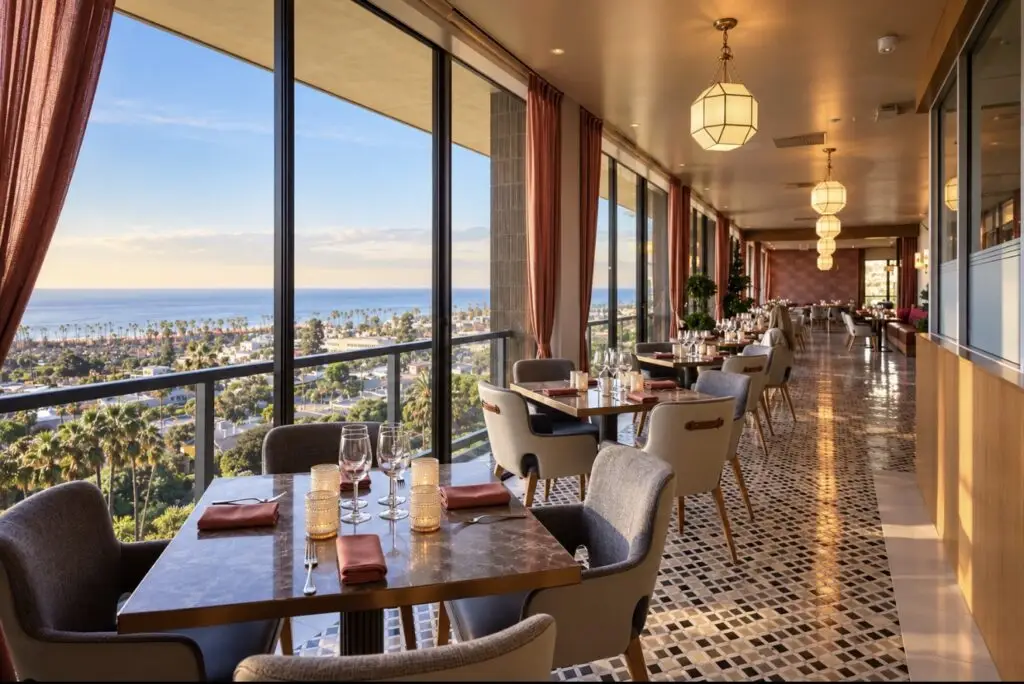
And as a San Diegan, I often have to pinch myself. We’re spoiled by this breathtaking beauty each day. Come August 12, Coronado will have a new place from which to soak in the Pacific’s peacefulness: By The Sea. Created by the team at Black Swan Hospitality (Nolita Hall), Doug and Lara Hamm brought to life a Mediterranean-meets-San Diego oasis influenced by their travels through the French Riviera, Italy’s Amalfi Coast, and the Greek Isles. (It’s not the first time the couple drew inspiration from the Mediterranean coast—their wedding took place on the island of Capri, their daughter’s namesake.)
Opening the 6,500-square-foot, second-story restaurant took longer than expected. First announced three years ago, the Hamms worked with Loren Wynn and Mellissa Ramos—their own in-house design studio (Creative House)—alongside Tecture (Lucien, Anigma Encinitas, Bivouac Ciderworks, George’s at the Cove) to create a space that feels more like a coastal villa than spartan dining room.
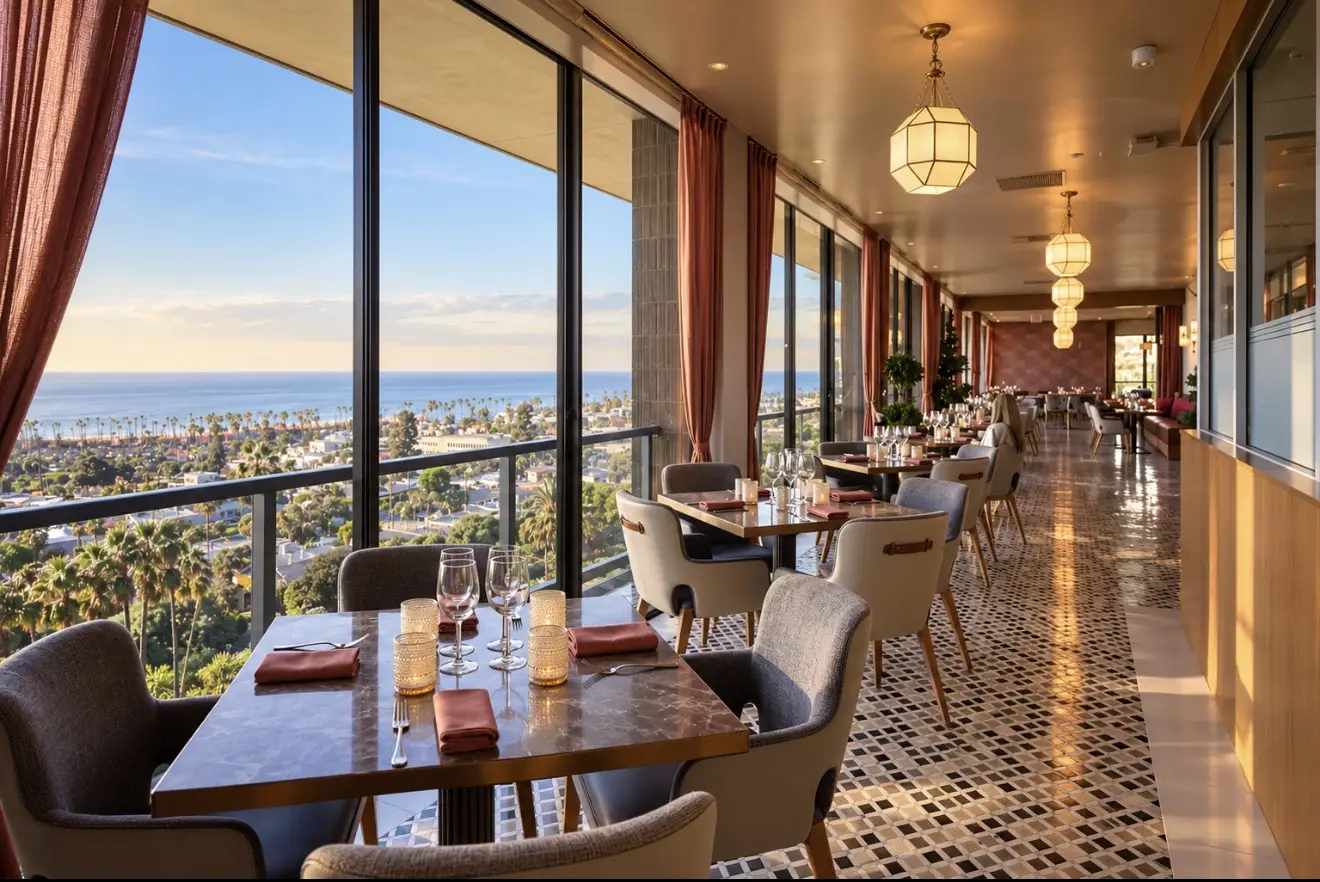
Guests enter via a cobblestone staircase to a light-drenched dining room and outdoor patio shaded by a eucalyptus wood trellis. Windows dot nearly every wall below the high ceiling of hand-stained willow reed thatching and exposed wood beams. “We have a beautiful lounge area with some textures such as velvet and marble,” says Lara. Everywhere feels organic, with materials like white oak and Italian limestone flowing throughout the open concept and semi-private dining areas.

The curvaceous travertine bar seats 24, while the 11 outdoor tables and 44 indoor tables and banquettes hold an additional 254 guests. It’s not quite oceanfront, but the peekaboo water view and floor-to-ceiling glass pocket doors allow the nearby sea breeze to drift across the dining room. (And if you’re the type of perpetually cold person once the mercury falls below 72, never fear—the outdoor fireplace and built-in heaters will keep you comfortable all year round.)
With a name like By The Sea, one can safely assume seafood features heavily on the menu. Executive chef Alex Carpio utilizes plenty of local produce and catches, with starters like scallop crudo, tuna tartare, octopus with crispy potatoes, and calamari fritti. The rest of the menu is broken into salads, vegetables, pastas, and mains, with standouts like a beet salad with feta, kale, orange, and charred lemon vinaigrette; Moroccan-spiced carrots served with lemon yogurt, mint, and parsley; classic linguine and clams with garlic, tomato, and parsley; a lamb cavatelli with fennel, chives, and breadcrumbs; grilled branzino with tahini and Castelvetrano olive tapenade; grilled half chicken with celery, cucumber, and a Calabrian chile vinaigrette; steak frites; and pan seared scallops with pickled peppers, basil, dill, and aioli.

Lara says there was one non-negotiable item for the menu: a dramatic seafood tower. Built for 2-4 guests or 4-6, each option comes with a collection of fresh oysters, shrimp, tuna tartare, scallop crudo, and caviar, with lobster and crab claws available on the larger size.
And if you’re curious about exploring the world of caviar, you’re in luck. Doug says they’re building a tasting menu of different spirits to pair with various caviars under bar manager Andrew Phillips’ purview.

Phillips’ drinks menu uses housemade syrups and fresh-squeezed juices, encapsulating both classic cocktails as well as signature inventions like All That Glitters with Cazadores Reposado, Xila Licor de Agave, Chinola Passionfruit liqueur, vanilla, and lime; Sea Glass with Dewar’s scotch, Haku yuzu vodka, green tea, vanilla, lemongrass, apple, lime, and clarified milk; and The Mariner with Appleton Signature & Reserve Rums, Ron Zacapa 23, Chinola Passionfruit, Aperol, pineapple, lemon and orgeat. Wine pairings are curated by the directors of operations Daniela DiGregorio and Gina Martinez, spotlighting small, organic producers from around the world as well as a selection of high-end Champagnes.
Lara describes By The Sea as “a place to linger together,” with director of hospitality and general manager Heather Roberto overseeing every aspect of the low-key feeling of the space. The restaurant may be European-inspired, but the Hamms say it’s wholly Coronado.
The Hamms moved to the Crown City at the end of the pandemic after years in bustling Little Italy. “Within a few weeks of moving here, we felt the magic,” says Doug. Now, they get to be a part of building it up—CH Projects’ Baby Grand hotel is across the street and the Hotel del Coronado sits just down the block. “We’re happy to be part of the scene, and we hope it continues to grow,” he says. “That’s what makes Coronado so special.”
By The Sea opens August 12 at 1300 Orange Avenue, Coronado. Initial hours of operation are Wednesday and Thursday, 4 p.m. to 11 p.m.; Friday and Saturday, 4 p.m. to midnight; Sunday and Monday, 4 p.m. to 11 p.m.; closed Tuesday. Weekend brunch and extended hours to come soon. (Subject to change.)
Photos Credit: Kimberly Motos


Beth Demmon is an award-winning writer and podcaster whose work regularly appears in national outlets and San Diego Magazine. Her first book, The Beer Lover's Guide to Cider, is now available. Find out more on bethdemmon.com.
SeaWorld dazzles with a drone show, big-name entertainers, new animal adventures and more
Nights are heating up at SeaWorld San Diego. The quintessential summertime staple on Mission Bay is transforming into a destination for unforgettable day-to-night adventures, bringing back some of its most popular Summer Nights programming and introducing exciting new experiences sure to delight both kids and adults alike.

The 2026 Summer Day to Night at SeaWorld San Diego is the park’s most ambitious season yet. SeaWorld has planned a highly anticipated entertainment lineup that features nine weeks of throwback concerts featuring R&B and hip‑hop favorites from the ‘90s and early 2000s, including Jordin Sparks, Too $hort and Warren G, Ashanti, and an array of boy band heartthrobs performing together as part of the Pop 2000 Tour.
New this season is perhaps the park’s most visible update: a nightly drone show, Ocean of Dreams, which illuminates the sky with hundreds of synchronized sparklers. Drones form sea otters, sharks, dolphins, and a majestic orca that tell a breathtaking 12-minute story of marine life and underwater ecosystems. The show culminates with a spectacular electric neon finale celebrating hope, wonder, and ocean stewardship.
Nighttime visitors are also in store for animal adventures that fuse education with high-energy fun and the dreamy ambiance of nighttime. The park has launched two all-new animal presentations: Shamu’s Celebration: Light Up the Night and Dolphins: Touch the Sky. Shamu’s Celebration: Light Up the Night features vibrant lighting, music, and dynamic choreography that celebrates the power and beauty of killer whales. Dolphins: Touch the Sky showcases playful bottlenose dolphins and the special connection between humans and the natural world. And back by popular demand is fan-favorite Sea Lions Tonite. See the charming pinnipeds splash, play, and parody pop culture in this refreshed crowd-pleaser.

More must-sees: a newly reimagined Shark Encounter, one of the country’s more immersive exhibits highlighting 11 different species up close, SeaWorld’s beloved BMX Blast! stunt show, and high-seas escapade, Pirates Ahoy! The Battle for Mermaid Cove. And don’t miss the park’s all-new Deep Sea Disco, which encourages guests to dance the night away under the glow of the SkyTower, and vibrant closing time laser light display Laser Reef Summer Spectacular.
Amp up the nighttime vibe with local craft beers, curated cocktails, and nostalgic theme park treats with $1 beer all summer long. SeaWorld is the place for day to night summer fun. When the sun goes down, SeaWorld lights up, and inspires guests of all ages to embrace their inner whimsy and see why generations of San Diegans head to SeaWorld to make memories they’ll never forget.