






Featured articles
Food & Drink
Food & Drink
Food & Drink
Featured articles
Arts & Culture
Things to Do
Features
Featured articles
Things to Do
Things to Do
Everything SD
Featured articles
podcast-ep
podcast-ep
podcast-ep
Featured articles
Arts & Culture
Features
Features
Featured articles
Partner content
Arts & Culture
Food & Drink
Ready to know more about San Diego?
SubscribeReady to know more about San Diego?
Principal librarian, and hobbyist bagpiper, Courtney Secoy Cohen makes sure the SD Symphony hits the right notes
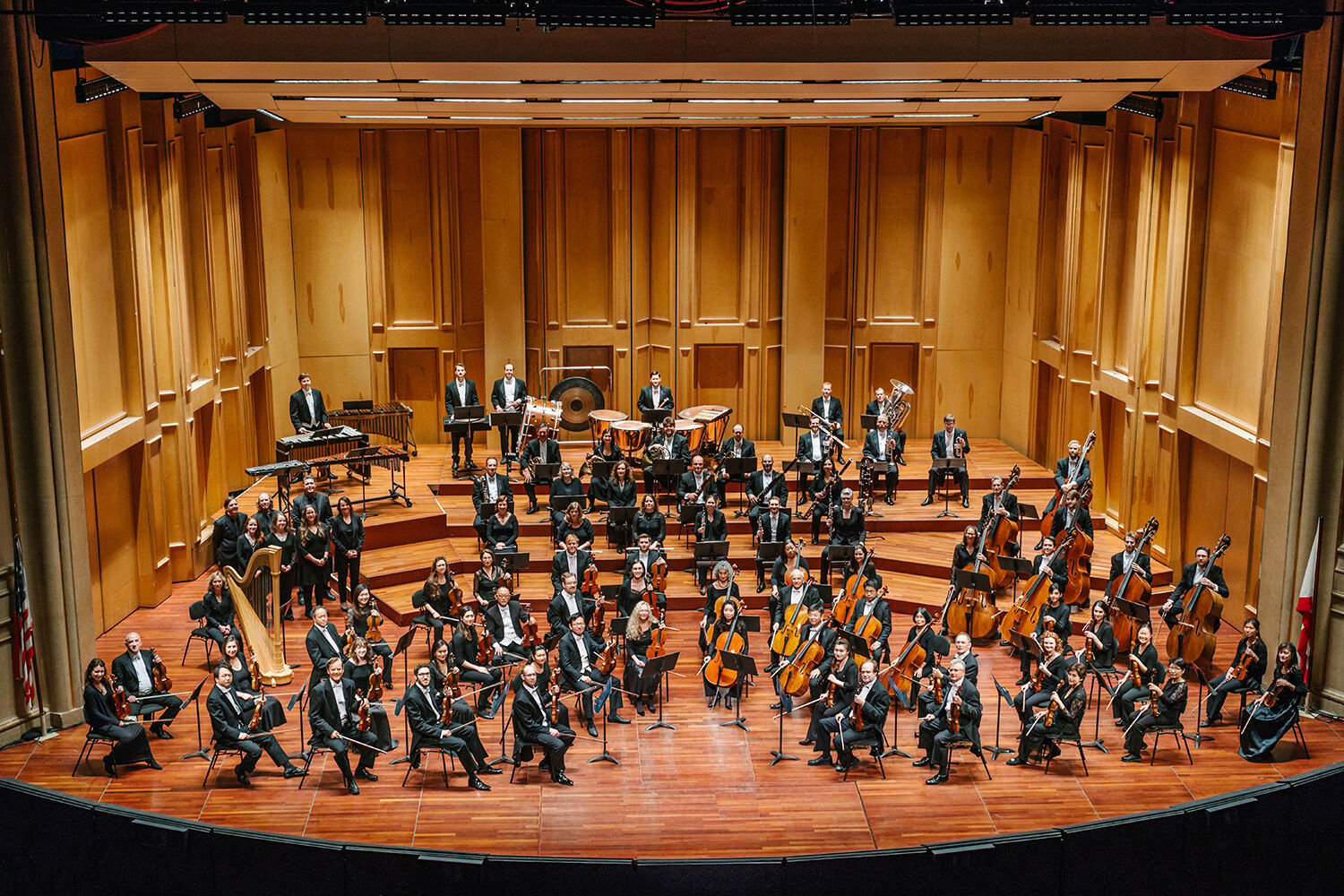
Symphony librarians acquire, prepare, proofread, store, and archive music and assist with rehearsals to help orchestras make their joyful noise.
For Courtney Secoy Cohen, the journey to becoming principal librarian for the San Diego Symphony began with a simple mystery: “I didn’t know how music got onto the stands.”
Few outside a symphony setting likely know the answer to Cohen’s question, or, for that matter, what a symphony librarian actually does, but it’s a crucial role in an orchestra’s organization. Among the librarian’s roles are acquiring music to be performed—including copyright clearance—preparing and proofreading the music for all instruments, assisting with rehearsals, and storing and archiving music. It’s a big job. As Cohen puts it, “Nobody should know we exist if we’re doing our job well.”
An oboe major in college, Cohen took interest in the behind-the-scenes work, eventually landing part-time jobs in the Boston Symphony Orchestra library and Tanglewood Music Center library. Since then, she’s worked as an assistant librarian at the Kansas City Symphony and Florida West Coast Symphony and served as the first performance librarian for the Boston Conservatory. That background prepared her for her role at the San Diego Symphony, where tasks are constantly changing.
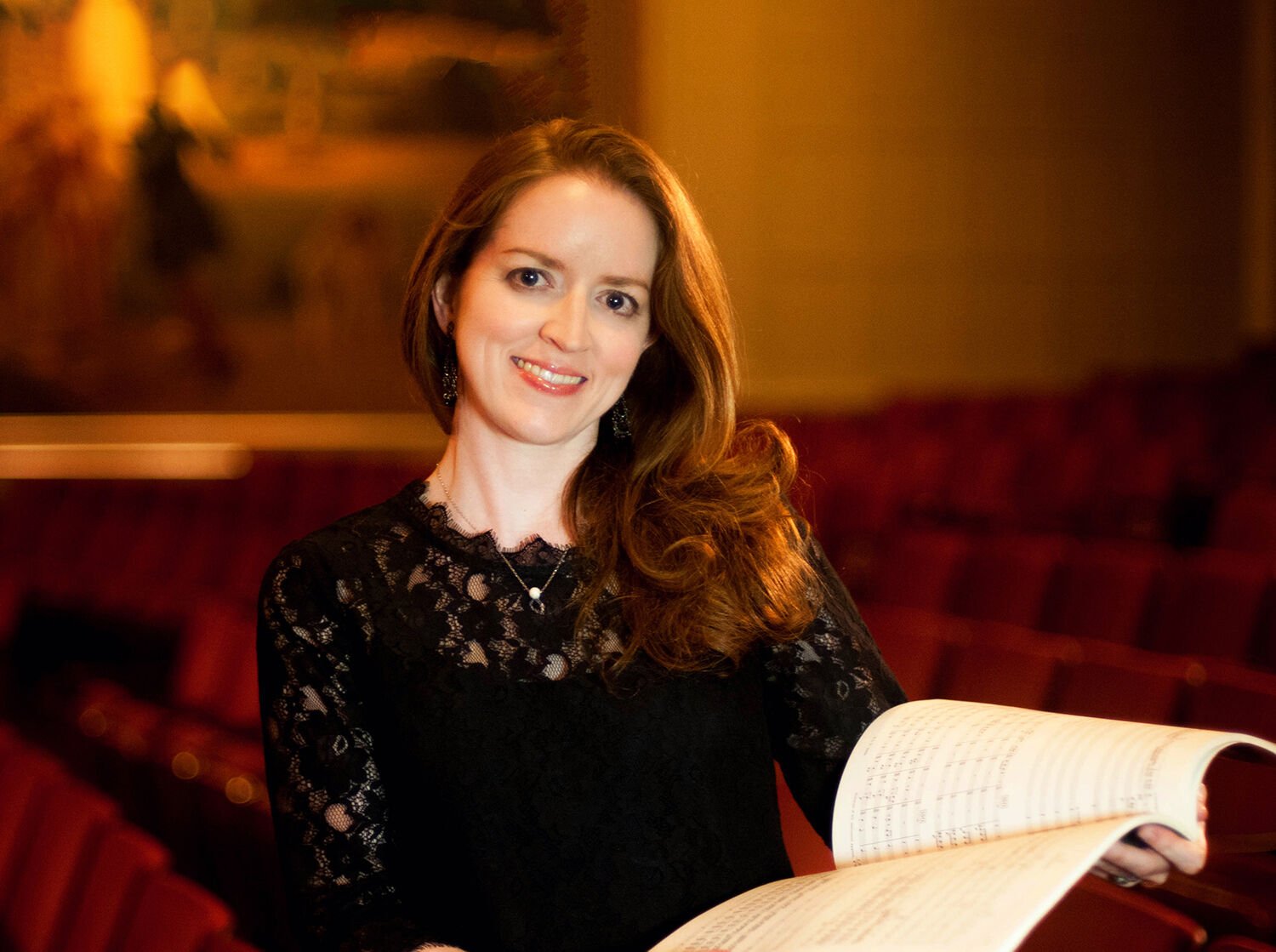
Courtney Secoy Cohen.
“Every day is different. There are so many different parts of the job,” she says. “You have to be a musician, first of all, with a background in performing, to be able to understand musicians’ needs. You’re always having to proof different parts against [one] another.”
One of the job’s benefits, she notes, is always learning something new, which at the moment includes keeping up with advancing technology. Most symphony orchestras haven’t yet transitioned to digital notation and readers yet, for instance, but that’s increasingly where they’re headed. But one of the primary benefits, Cohen says, is being surrounded by music all the time. And even off the job, she still enjoys learning new instruments—like when she took up playing bagpipes.
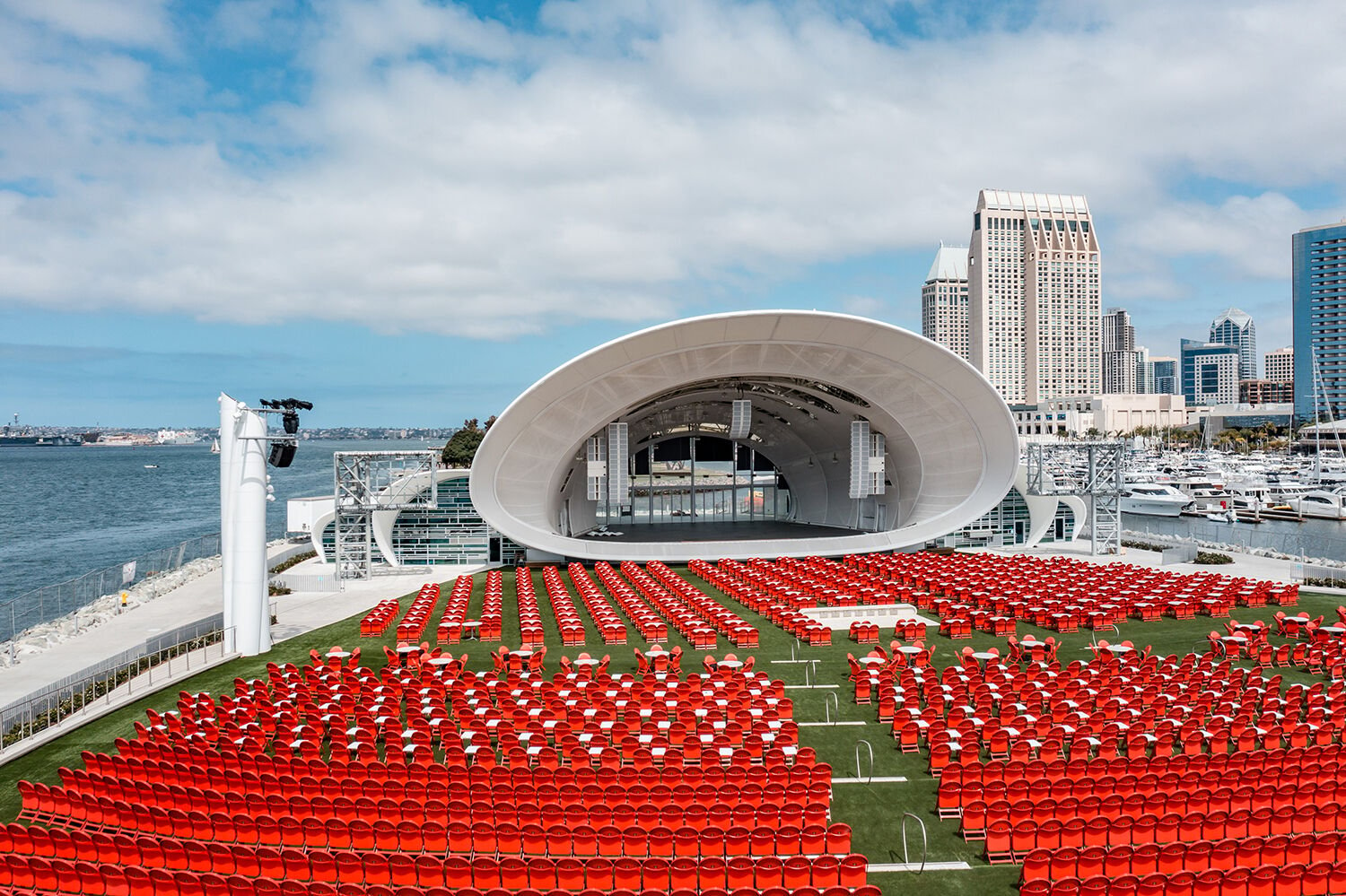
The San Diego Symphony’s summer home, the 10,000-seat Rady Shell at Jacobs Park was designed with acoustic superiority in mind.
“I have a Scotch-Irish background, and when I was with the Kansas City Symphony, I joined a piper band,” she says. “I thought, You know what? I’ll learn how to play, just to have fun. I love it. My husband’s a percussionist [San Diego Symphony principal percussionist Greg Cohen], and it’s the one instrument I can play that’s louder than him.”
Cohen recently reached her 14th anniversary with the San Diego Symphony. Among the performances she’s excited about this season are Singing with the Devil on May 26 and 27, featuring compositions by Venezuelan composers Evencio Castellanos and Antonio Estévez, with whom she wasn’t previously familiar. Additionally, she highlights upcoming performances with guest conductor Edo de Waart and the ongoing Masterworks program, which continues through May at La Jolla’s Conrad Prebys Performing Arts Center and The Rady Shell, wrapping 16 performances in six venues. (In November, the symphony returns to Copley Symphony Hall at the Jacobs Music Center, which just underwent a $125 million renovation.)
As for future performance librarians, there’s no straightforward path to end up where Cohen is—you can’t really sign up for a performance library studies major. But she suggests getting to know a performance librarian in your city and reading about the job via the Major Orchestra Librarians’ Association. It also doesn’t hurt, she notes, to be an oboist.
“As a performance librarian, I have to learn parts for every instrument. I have to be able to understand that,” she says. “As an oboist, I had to make my own reeds, and so many performance librarians are former oboists—it’s because of that attention to detail.”
Jeff Terich is the music critic behind the blog The Setlist. His writing has been published in Stereogum, Bandcamp Daily, American Songwriter, Fodor's and Vinyl Me Please.
Your checklist for the best stage performances, museum exhibits, and one-night-only cinematic events hitting San Diego this autumn
Fall Arts Preview presented by SDFC Playmakers
Now through Jan. 10, 2027
Sift through over 200 photographs, sketches, letters, and costumes from “The King of Vogue,” who photographed World War II, modernized royal portraits, and created the aesthetic for 1920s socialites in London.
Now through Feb. 28, 2027
Walk through an 18-foot whale ribcage (and a couple dozen other marine-creature sculptures) made entirely of plastic bottles, flip-flops, lighters, rope, and other plastic detritus found on the beach in the Nat’s 3,000-square-foot second-floor gallery.
Now through May 31, 2027
Part of SDMA’s centennial, “Forging a Legacy,” highlights artists from the past (Picasso, Monet) and modern day (Hugo Crosthwaite) who contributed to the museum’s collection.
Now through 2027
See the stars (without the smog) at their best from the winners of the world’s largest astrophotography competition—all in the Fleet Science Center’s new basement gallery, specifically dimmed to let the cosmos shine.
Sept. 6–Oct. 11
From the 2013 silver screen to this year’s The Old Globe stage, you can “Begin Again” (again) with a world-premiere musical adaptation featuring new songs—courtesy of Train—and a story overflowing with hope.
Sept. 9–Oct. 4
“On the outside, always looking in…” marks the emotional crux of the Tony-, Grammy-, and Emmy-award winning musical coming to the Cygnet Theatre.
Opening Sept. 12
Learn the history of the Kumeyaay Nation from the perspective of the members themselves in an immersive exhibit inspired by graphic novels “Our Past, Present, and Future,” and “Beyond Gaming.”
Sept. 16–Oct. 11
During Oscar Levant’s appearances on “The Jack Paar Show,” he explained his reality with mental illness—the institutionalizations, electroshock therapies, nothing was too taboo for him. “Good Night, Oscar” takes us backstage in the raw moments before his 1958 television appearance.
Sept. 19–Jan. 10, 2027
A disco ball isn’t just a disco ball. It’s a symbol of where queer communities can finally exhale and be their fullest selves. “Visiones Nocturnas” uses paintings, sculptures, textiles, performances, photos, and videos from Latin American artists to explore what’s at stake when nightclub lights shut off.
Sept. 21, Oct. 26, Dec. 7
Guest organists from across the country will come to the Balboa Theatre to accompany a new silent film for each performance. This year closes out with The Headless Horseman (1922), Dr. Jekyll & Mr. Hyde (1920), and a holiday triple feature of Laurel and Hardy films.
Sept. 29–Oct. 4
“What if Abe’s assassination wasn’t such a bad thing for Mary Todd Lincoln?” was the question that inspired Cole Escola’s play “Oh, Mary!” In the production, Mary Todd desperately tries to return to the cabaret stage, but her husband (President Lincoln in the midst of the Civil War) keeps getting in the way.

Oct. 3–4
Conductor Rafael Payare opens the San Diego Symphony’s 2026-2027 season with a three-part concert featuring composers Sofia Gubaidulina, Wolfgang Amadeus Mozart, and Richard Strauss.
Oct. 8
Two dozen of Emily Dickinson’s poems are turned into songs—composed by Pulitzer Prize winner Kevin Puts and performed by Grammy-winning mezzo-soprano Joyce DiDonato—for a one-night-only exploration of love, loss, loneliness, and mortality.
Oct. 8–Nov. 1
Roommate beef has no age limit. The latest play from Pulitzer Prize winner David Lindsay-Abaire turns that experience into a comedy through retirement home roommates Marilyn and Abby and the bet between them to see who will break first and move out.
Oct. 12
Composer Olivier Messiaen has chromesthia, so for him, sound evokes a visual connotation. His work “Des Canyons aux Étoiles” brings desert rock and the night sky to mind. See what he means from La Casa del Zorro in the Anza-Borrego Desert, in this performance immersed within nature.
Oct. 13–18
San Diego International Film Festival salutes the silver screen for a 25th time, now with a sixth day adding extra time for parties, screenings, and movie-star tributes.
Oct. 23–25
Considered one of the masterpieces from opera great Giuseppe Verdi, San Diego Opera’s “Rigoletto” sees what happens when the prurient Duke of Mantua and his sharp-tongued court jester become entangled in a fatal curse.
Oct. 27–Nov. 29
When the Grim Reaper’s job becomes too…grim…and he retires after 300,000 years, his daughter picks up the family business. But when she falls for a human and finds beauty in the souls she’s meant to reap, she questions her purpose.

Nov. 21–May 9, 2027
San Diego is nothing without skate culture. Mingei’s “Skate Craft” portrays skateboarding as “living folk art” via its DIY roots (skateboards built in garages) and shows how that ethos shapes the future.
Emma Veidt is an editor at San Diego Magazine. She earned her bachelor's and master's degrees from the Missouri School of Journalism. She loves running, hiking, and rock climbing, but really, she mostly loves encounters with the street cats around North Park.
Ryan Hardison is a freelance arts and entertainment writer and recent graduate of San Diego State. When he's not staring at his laptop, he's likely eating an adobada burrito or getting sunburnt at the beach.
Meet the artists, makers, and advocates whose work shapes how the city looks, sounds, gathers, and connects
San Diego is full of people who deserve a few thousand words on what they make, who they bring together, and how their work changes the city around them. The artists, makers, advocates, and behind-the-scenes talent below are a small part of that larger ecosystem.
To help us narrow our list, we looked for names that kept coming up, work that reflects the diversity of our region, and people building something bigger than themselves.
Jackie is a long-time freelance journalist covering cannabis, food/restaurants, travel, labor, wine, spirits, arts & culture, design, and other topics. Her work has been selected twice for Best American Travel Writing, and she has won a variety of national and local awards for her writing and reporting.
Isabella Dallas is a freelance writer for San Diego Magazine and the Arts and Culture Editor at The Daily Aztec in her final year at San Diego State University. She previously worked as an editorial intern for SDM, but when she’s not writing, you can find her trying the best coffee spots in SD, devouring the latest rom-coms, and indulging in anything and everything pop culture.
Matt Eisenberg is an award-winning writer and photographer based in San Diego. A former ESPN editor, his work has also been published by CNN, Bleacher Report and the New York Daily News.
Aaryn Belfer is a writer and editor specializing in nonfiction across art, architecture, and culture. Once upon a time, she wrote a provocative column for San Diego CityBeat (RIP). She was a runner up in the 2025 Matchbook Stories contest at the San Diego Central Library and is irrationally happy about it. Currently in her Soft Girl Era, Aaryn has expensive taste in (mostly flat) shoes and will choose a great art exhibit or live jazz concert over almost anything else. Except, possibly, Javier Bardem.
Leorah Gavidor won her first essay contest at age 5. She writes features, news, and non-fiction in San Diego.
Lili Kim is a content coordinator and writer for San Diego Magazine, with experience highlighting local businesses and communities. When not writing or shooting film, she is likely brewing her seventh cup of tea of the day or strolling along Sunset Cliffs.
Emma Veidt is an editor at San Diego Magazine. She earned her bachelor's and master's degrees from the Missouri School of Journalism. She loves running, hiking, and rock climbing, but really, she mostly loves encounters with the street cats around North Park.
Gail Czyszczon is owner/copywriter at Z3 Writing and best-selling author of a children’s book series. As a strategic communications professional and editorialist, she's passionate about discovering untold stories and themes that ignite fresh conversation and true change in communities.
Joe Dreamz built a local following by asking strangers about their ambitions and turning their answers into songs
People remember the first time they see Joe Dreamz.
Mine was a mile into the 2023 Carlsbad Half Marathon. He was standing on a speaker in the middle of the course, singing: “Hey you with the shoes, are you living Joe Dreamz?” Clearly not. I’m running uphill at 7 in the morning, I thought.
Months later, walking out of The Rady Shell, there he was again—parting the crowd of concertleavers Moses and the Red Sea style, singing the same song: “Hey you with the purse, are you living Joe Dreamz?”
Who’s this man at every public spectacle, singing metaphysical questions in a hand-altered, color-coordinating suit that would make James Brown proud and standing on a Soundboks speaker with a microphone and tip bucket?
A few years ago, San Carlos–born, El Cajon–based Joe Dreamz wasn’t exactly living Joe Dreamz—making $5 footlongs at Subway, dealing with croissant coworkers at Costco’s bakery, and selling life insurance. After he got let go from the life insurance gig and his car broke down in the middle of a 2020 road trip in Seattle, he used his emergency savings to buy a microphone and a speaker; a self-taught musician, he pulled from the only skillset he knew to monetize. He’d set up at Seattle’s Pier 55 and ask people what their dreams were. Then, for $5, create a freestyle rap to commemorate (and hopefully activate) those dreams.
“The goal is that someone listens to a Joe Dreamz song, and they don’t have to wait until metaphorically their car breaks down before they chase their dreams,” he says.

A chance encounter with an airport worker led to a free flight back to San Diego, and Joe Dreamz came home “transformed,” he says. He started busking at the Mission Beach boardwalk, Kate Sessions Park, outside Gaslamp bars; then Padres games, farmers markets, marathons. He also hit the mic outside of Coachella this year (“Joe-chella,” he says).
It’s not a get-viral-quick gimmick; people’s lives are changing. One fan finished writing her book after a dose of Joe Dreamzpiration. Another named his own daughter Joy Dreams.
Now, he’s working on the upstart “Tell Me Your Dream” podcast and DREAM Week in local schools, where each day represents a step toward achievement (D is destination day, R is reason day…). He doesn’t want inspiration to reach you only after hearing a song or watching a video: He believes in this message so much that he literally got DREAM tattooed onto his forehead.
“It’s on my face, so people have no choice [but to see it],” he says. “I’m a local celebrity here, so everywhere I go, people ask me for pictures. In every selfie, the message goes along for the ride too.”
Emma Veidt is an editor at San Diego Magazine. She earned her bachelor's and master's degrees from the Missouri School of Journalism. She loves running, hiking, and rock climbing, but really, she mostly loves encounters with the street cats around North Park.
At Vi at La Jolla Village, residents don't have to choose between security and adventure, connection and independence. They get all of it.
Today’s seniors are more connected than ever, with a renewed focus on retirement as a time of discovery and enriching experiences. The ultimate reward for a retirement well-earned is the wisdom to appreciate it all, and what better place to enjoy that unique perspective than Vi at La Jolla Village, in the heart of San Diego.
All-access pass to good living.
As a Continuing Care Retirement Community (CCRC), Vi provides access to a connected and fulfilling community while making it easy to plan for future care, should the need ever arise. With a care plan in place, residents enjoy greater financial predictability and long-term value, freeing them to focus on making the most out of retirement.
Resort-style amenities at the epicenter of a cultural hub like San Diego offer a retirement experience unlike any other. Paired with exceptional dining, spacious accommodations and dedicated staff, the best of maintenance-free living is all around. And with the introduction of Vista 360 Well-Being, Vi’s panoramic approach to wellness, there are more ways than ever for residents to access it all.
The harmony of mind, body and community.

The key to longevity is striking the right balance in maintaining an active lifestyle with an active mind in a fulfilling community. With newly renovated community spaces and restaurants, Vista brings a variety of opportunities for residents to elevate their well-being through Vi-exclusive “Signature Experiences.”
Vista Enrich takes an evidence-based approach to brain vitality, keeping residents at the forefront of cognitive health through exergaming (exercising + gaming), nutritional plans and informative workshops. It is also home to The Brain Vitality Studio, an innovative facility dedicated to cognitive fitness that has garnered national recognition.
Vista Discover invites residents into stimulating educational experiences, from chef-led cooking demos and guided wine tastings to lectures at local universities and intimate lectures following cultural outings.
While Vista Enrich focuses on brain health and Vista Discover engages residents intellectually, Vista Explore cultivates a sense of adventure through curated travel and local excursions. But broadening one’s horizons doesn’t always require a plane ticket. One recent event brought a taste of the world right to the community: an onsite “jazz cruise” featuring live music and global cuisine served at a series of themed “ports” all within the community’s own ballroom.
“Location, location, location”

One of the biggest perks of life at Vi at La Jolla Village is its proximity to just about everything. With easy access to transportation and local attractions just steps away, residents can explore and engage with their community at their own pace.
“There are trolley and bus stops within a 5-minute walk that will get you to the beach, UCSD Campus, medical appointments, downtown La Jolla or San Diego, et cetera. We rarely use our car,” said resident Tom Yager.
With the best of San Diego just steps away, residents don’t just live in the city, they live within reach of everything that makes it special.
The best of all worlds.

At Vi at La Jolla Village, retirement isn’t a chapter to slow down; it’s an invitation to discover more. Tailored community experiences created by Vista, paired with the vibrant pulse of San Diego just outside the door, mean that residents don’t have to choose between security and adventure, connection and independence. They get all of it.
This is what an all-access pass to good living looks like: the comforts of an elevated lifestyle, a community built for growth and a city made for discovery – all in one place.
To learn more about Vi at La Jolla Village or for details on available floor plans, visit ViatLaJollaVillage.com/SDM.
Live Nation is turning the historic Wonder Bread Building into a 4,000-capacity concert hall designed to bring more touring acts to the city
Imagine being the song continuously getting skipped on the playlist. Not because no one wants to hear you, but because you never quite fit the moment. For years, San Diego has been that song on the touring circuit. Artists who have outgrown intimate clubs but aren’t yet filling arenas and stadiums have often passed us by, heading north to venues better suited to the size of their show. San Diego wasn’t missing the audience, it was missing the room.
That’s all about to change.
On August 17, Live Nation Entertainment announced plans to transform the historic Wonder Bread Building, which it purchased in June for $16.8 million, into a 4,000-capacity indoor venue slated to open in fall 2028. The new space will host music acts as well as private, corporate, and community events.
Currently, San Diego’s concert landscape jumps quickly from intimate clubs like the Casbah, Winston’s, and Belly Up to larger theaters, amphitheaters, arenas, and stadiums. What’s largely missing—particularly downtown—is a modern indoor room built specifically for roughly 4,000 concertgoers. This leaves a gap in mid-size venues for touring acts that land stages like the Hollywood Palladium or Boston’s MGM Music Hall at Fenway.
“We are filling a void in the market,” says John Schalk, Live Nation’s Vice President, San Diego Market. “There are other venues in town, but this […] building is just something that doesn’t currently exist.” Although SDSU’s Cal Coast Credit Union Amphitheater serves the 4,000-capacity range, its outdoor, fixed-seating arrangement isn’t as versatile as the proposed Live Nation project.
Located at 171 14th Street, just a six-minute walk from Petco Park, the building carries a century of history. Architect Eugene Hoffman designed it in 1924, a year after completing the Barcelona Apartment Hotel in Bankers Hill. The landmark brick building served as a bakery and warehouse for the Southern California Baking Company before Continental Baking Company, producers of Wonder Bread, took over in the 1950s and operated there through 1988 continued at the site until 2007.
In the early 2000s, Bob and Gay Sinclair, the couple behind a portfolio of East Village properties, purchased the building. After Bob—the founder of Pannikin Coffee & Tea—died in 2011, Gay sold much of their real estate portfolio but held onto the Wonder Bread Building. Mission Brewing eventually took over the space, where it operated for more than a decade before announcing its 2026 departure.
Now, the building is preparing for another reinvention. Live Nation plans to preserve the historic bakery’s four exterior walls, red brick façade, grain silo, barrel-vaulted trusses, and skylights as part of its next chapter.
Live Nation isn’t looking to erase its history but to celebrate it, allowing the building’s past to give the new venue some soul. “It’s really important for us that we maintain the integrity and the history of that building,” Schalk says. “There will be new construction and design elements as we go through the process to create the concert venue, but we’re working really hard to preserve it.”
Blueprint Studio, Live Nation’s in-house design and development group, and Gensler, the architecture firm behind San Diego International Airport Terminal 1 and Snapdragon Stadium, will be heading the project. The plan is to design the ground-floor space as an open, general-admission area with a premium level above with 600-plus fixed seats, in addition to box and suite sections. There will also be an additional structure built on top of the historical portion of the building (the four original walls that house the lobby) called the Vinyl Room—a Japanese-inspired hi-fi listening VIP lounge serving elevated food options.
One of the most reassuring aspects of the project is the focus on the concertgoer’s experience—specifically the “pet peeves” we all know too well: long bathroom lines, cramped exits, obstructed views. According to Schalk, one of the best things about building upon the existing structure is having the ability to consider potential obstacles and tackle them before construction begins. “I’d say we are ‘purpose building’ the entirety of the project for a music venue,” says Gensler lead project architect Garrett van Leeuwen. “As part of our design process, we do an in-depth sightline analysis to make sure that sightlines are optimized from every point and seat within the venue.”
Circulation design is also being implemented to ease traffic flow, alongside acoustic optimization and a transformative outdoor beautification effort. According to van Leeuwen, this “public realm space” will grow the existing 14-foot sidewalk to a 32-foot sidewalk complete with plazas and landscaping.
“This venue is for the fans. For the music lovers,” Schalk explains. The vision is intimate: “I want a fan to walk up to that building, see that red brick facade, grab their ticket from the box office, go into the lobby and see some of the history that will present itself… and feel like you entered a home.” Schalk also expressed a “keen interest in making sure that we work with the local artists, the local bands, the local musicians in town.” It’s a project that recognizes San Diego as a growing market that is hungry and ready to see a vibrant arts and culture community thrive.
According to an analysis by Oxford Economics analysis shared by Live Nation, the venue is projected to deliver a significant boost to the local economy, generating approximately $97 million in annual economic impact and supporting 660 jobs. This also includes welcoming 316,000 fans each year—with 126,000 traveling from outside the San Diego metro area—and driving $53 million in local spending at nearby restaurants, hotels, and retail establishments.
Considering its proximity to other major event spaces and overall busy urban areas, traffic and parking may be a concern, especially on nights of overlapping events. But in those cases, Schalk said they would work together on communication efforts; parking availability; and staggering start, end, and loading times; as well as providing easy access to designated rideshare areas. With transit stations nearby (the closest one being a 4-minute walk at 12th & Imperial), public transportation is another great option for enjoying your night out.
There are still two years of design, construction, and plenty of logistics between now and opening night. But the bigger promise of the Wonder Bread Building is simple: San Diego finally gets a venue built for the artists who have historically passed it by. After years of getting skipped on the touring playlist, the city may finally be getting its turn on repeat.
Camila Ibarra Gallego is a CaliBaja native pursuing a master's degree in culinary journalism at the Basque Culinary Center. Shaped by the culturally rich, bicultural megaregion, she's passionate about sniffing out stories that connect people, territory and culture through food. When she's not tumbling down internet rabbit holes, you can find her pretending to be a wine connoisseur at a local wine bar or nose-deep in a good book.
Whether you're a lover of the arts, music, or a leisurely stroll through the park, these are Balboa's best attractions
On February 28, 1926, the Fine Arts Gallery of San Diego (now called the San Diego Museum of Art) opened its Plateresque doors to 3,000 guests for opening day. Over the next century, the museum changed with the times—even once functioning as a naval hospital after Pearl Harbor. This year, the museum is celebrating its 100th birthday with an exhibit (open through January 24, 2027) featuring photographs, ephemera, and film footage spanning the museum’s history.

Every Sunday from 2 to 3 p.m., stop by the historic Spreckels Organ Pavilion for a free concert presented by the City of San Diego on the largest outdoor organ in the world (more than 5,000 pipes). The pavilion seats 2,400 for performances by the civic organist or guest artists.
Some think natural history museums are just cemeteries for dioramas that haven’t received an update since the Reagan administration. When it comes to The Nat, which just finished a $7.5 million rejuvenation, they’re totally wrong. The museum debuted a new rooftop that replaces its 25-year-old atrium. The old roof created a greenhouse effect that steamed up some exhibits, so the new one—which includes 200 solar panels and better temperature control—will help preserve the artifacts inside. Each Friday in the summer, The Nat also becomes one of the season’s vibiest hotspots during Nat at Night, with food from places like Wolf in the Woods and The Craft Taco, bars and signature cocktails on several floors, and a rooftop DJ.
The Fleet Science Center just received its most significant update since the 1990s. It expanded its exhibit space by 20 percent and introduced a newly designed entrance gallery (formerly the IMAX theater lobby) that includes free exhibits for visitors who want a taste of the science without paying an admission fee. The former ticketing area now houses the Mindbender Mansion exhibit, and there’s a new café, Element 8, that will, of course, sell the center’s famous soft serve.
SeaWorld dazzles with a drone show, big-name entertainers, new animal adventures and more
Nights are heating up at SeaWorld San Diego. The quintessential summertime staple on Mission Bay is transforming into a destination for unforgettable day-to-night adventures, bringing back some of its most popular Summer Nights programming and introducing exciting new experiences sure to delight both kids and adults alike.

The 2026 Summer Day to Night at SeaWorld San Diego is the park’s most ambitious season yet. SeaWorld has planned a highly anticipated entertainment lineup that features nine weeks of throwback concerts featuring R&B and hip‑hop favorites from the ‘90s and early 2000s, including Jordin Sparks, Too $hort and Warren G, Ashanti, and an array of boy band heartthrobs performing together as part of the Pop 2000 Tour.
New this season is perhaps the park’s most visible update: a nightly drone show, Ocean of Dreams, which illuminates the sky with hundreds of synchronized sparklers. Drones form sea otters, sharks, dolphins, and a majestic orca that tell a breathtaking 12-minute story of marine life and underwater ecosystems. The show culminates with a spectacular electric neon finale celebrating hope, wonder, and ocean stewardship.
Nighttime visitors are also in store for animal adventures that fuse education with high-energy fun and the dreamy ambiance of nighttime. The park has launched two all-new animal presentations: Shamu’s Celebration: Light Up the Night and Dolphins: Touch the Sky. Shamu’s Celebration: Light Up the Night features vibrant lighting, music, and dynamic choreography that celebrates the power and beauty of killer whales. Dolphins: Touch the Sky showcases playful bottlenose dolphins and the special connection between humans and the natural world. And back by popular demand is fan-favorite Sea Lions Tonite. See the charming pinnipeds splash, play, and parody pop culture in this refreshed crowd-pleaser.

More must-sees: a newly reimagined Shark Encounter, one of the country’s more immersive exhibits highlighting 11 different species up close, SeaWorld’s beloved BMX Blast! stunt show, and high-seas escapade, Pirates Ahoy! The Battle for Mermaid Cove. And don’t miss the park’s all-new Deep Sea Disco, which encourages guests to dance the night away under the glow of the SkyTower, and vibrant closing time laser light display Laser Reef Summer Spectacular.
Amp up the nighttime vibe with local craft beers, curated cocktails, and nostalgic theme park treats with $1 beer all summer long. SeaWorld is the place for day to night summer fun. When the sun goes down, SeaWorld lights up, and inspires guests of all ages to embrace their inner whimsy and see why generations of San Diegans head to SeaWorld to make memories they’ll never forget.