
Ready to know more about San Diego?

Subscribe
Everything SD AUGUST 5, 2025

Review: El Indio Restaurant

The Middletown restaurant reminds us that when you invent something as iconic as the taquito, you’re allowed to rest a bit on your laurels
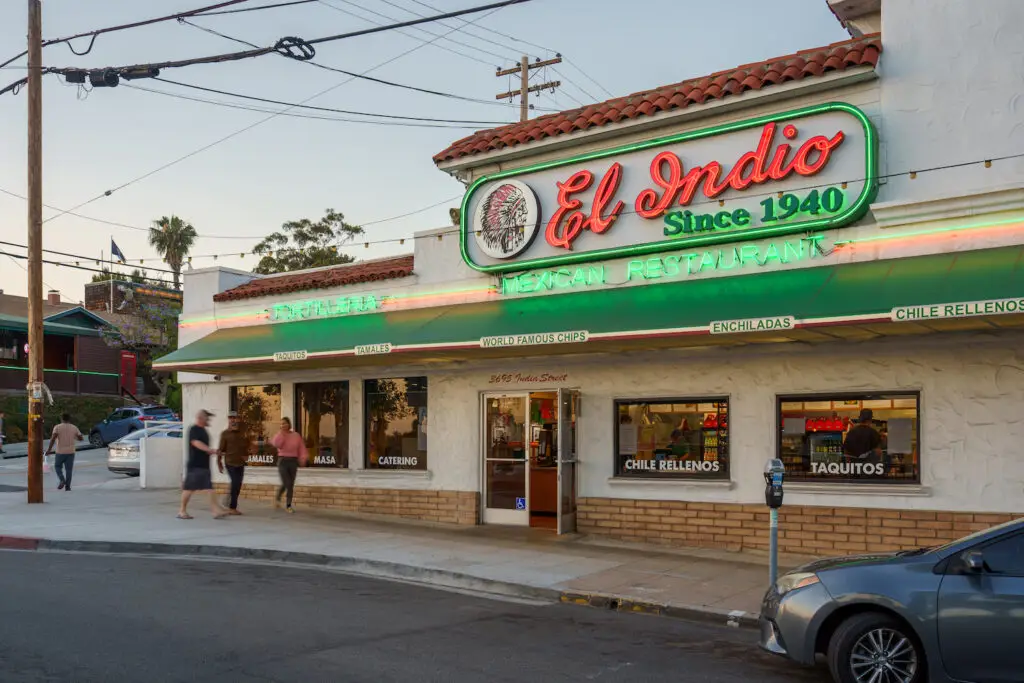
Review: El Indio Restaurant

Every year for the Best of San Diego issue, we ask readers to nominate and vote for a San Diego classic restaurant they want food critic Troy Johnson to review. Whichever they vote for, he goes. Last year, they sent him to Rocky’s Crown Pub. This year… Mexican classic, El Indio.


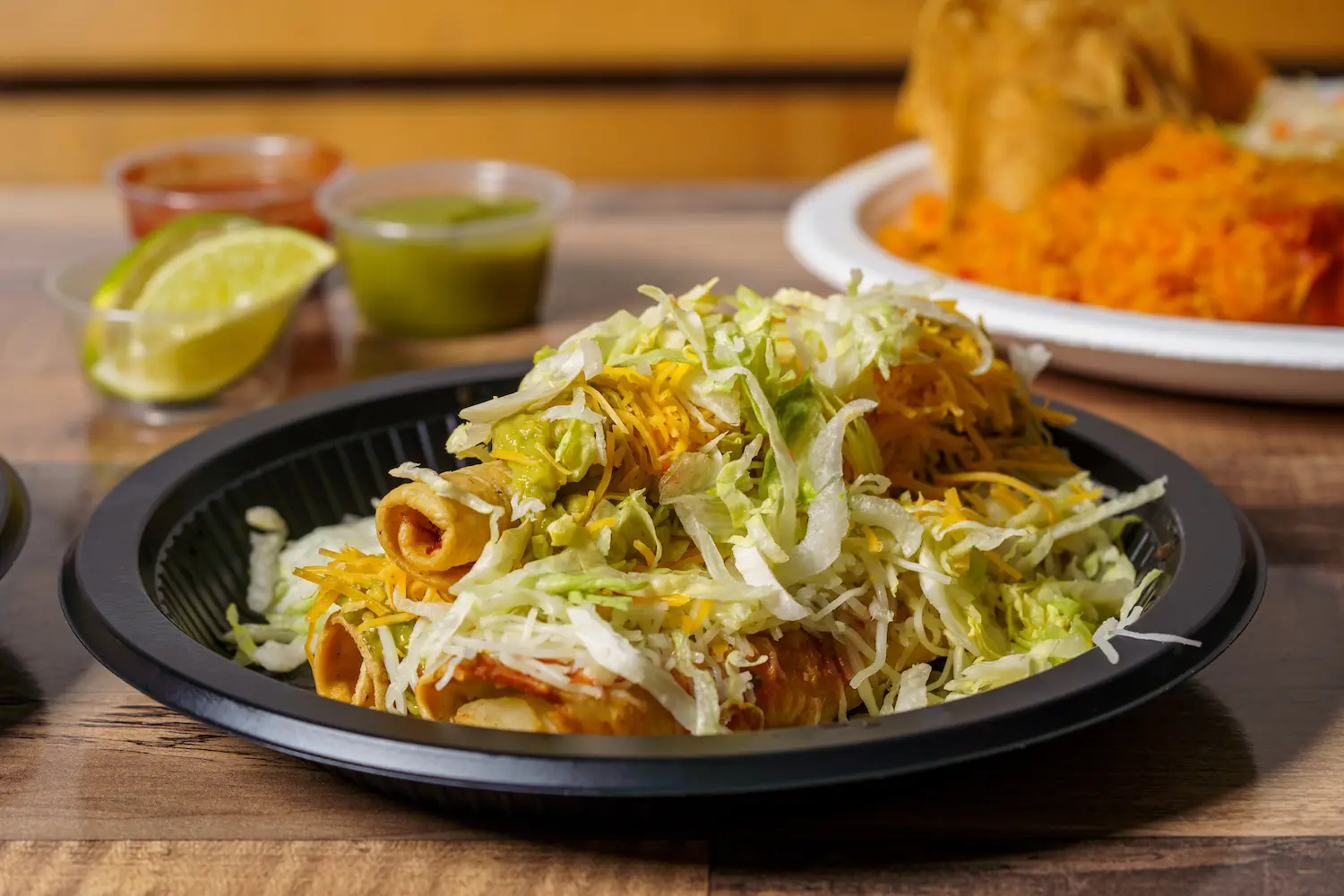
The Perfect Order: Taquitos with Everything | Chicken Tamale | Mordiditas

When you’re credited with inventing the entire concept of the taquito, pretty much every other dish you create is going to pout in that cigar-shaped shadow. Unless you sous vide a couple narwhals, the taquito is gonna dominate your story.

San Diego’s El Indio is widely cited as the global birthplace of the taquito. (Note from our nonexistent legal team: Like any food origin story, it’s contentious—many will tell you a small, rolled taco had been a staple in Mexico for generations; others claim an LA taco stand beat SD to it. But by and large, El Indio has been granted paternity for the word “taquito” and cited as the first in the US to both sell and widely popularize the iconic thing—which happens to fit our narrative nicely, so we’re leaning in.)

So, El Indio’s mordiditas are that almost-famous entourage dish that deserves more applause. Sliced segments of taquito, about the size of pigs in a blanket, are assembled in a heap on a plate and absolutely waterboarded with nacho cheese and pickled jalapeños. They’re essentially loaded taquito nachos, an idea whose glory, in a just world, will outlive us all and echo in Valhalla. They solve a longstanding problem with every single batch of nachos that has been made in humankind—that each and every chip is denied an equitable amount of cheese or load.
San Diego Mexican restaurant El Indio in Middletown which invented taquitos
Photo Credit: Kimberly Motos

Most nachos are built as an altar to American capitalism: The top couple of chips accumulate a vast majority of the cheese and the rest of the chips just keep hearing rumors of a trickle-down until they protest. If our species ever gets cut from the roster of the universe, the fact that we put a man on the moon but could never equally dress our nachos should be examined by our successor species as a possible cause.

El Indio’s taquito rubble comes in a biblical flood of nacho cheese. It’s a snack-bar treat for people whose therapists have listened to their fantasy of placing their open, eagerly receptive mouths beneath the queso pump—albeit with far better taquitos made from scratch.

The dish isn’t gonna knock your socks off, but it’s satisfying in a calorie-gargling way, a celebration of the fact that merely entering a taco shop releases us from acknowledging the physical limits of human arteries. Would El Indio’s mordiditas be better if the cheese was scaled back and partnered with a crema, or if the cheese was lovingly dirtied with chipotle in adobo, or if they came topped with a lawn-sized pile of cilantro and onions and activated charcoal ash from the sacred cenotes of Chichén Itzá? Shut up and eat your naquitos.
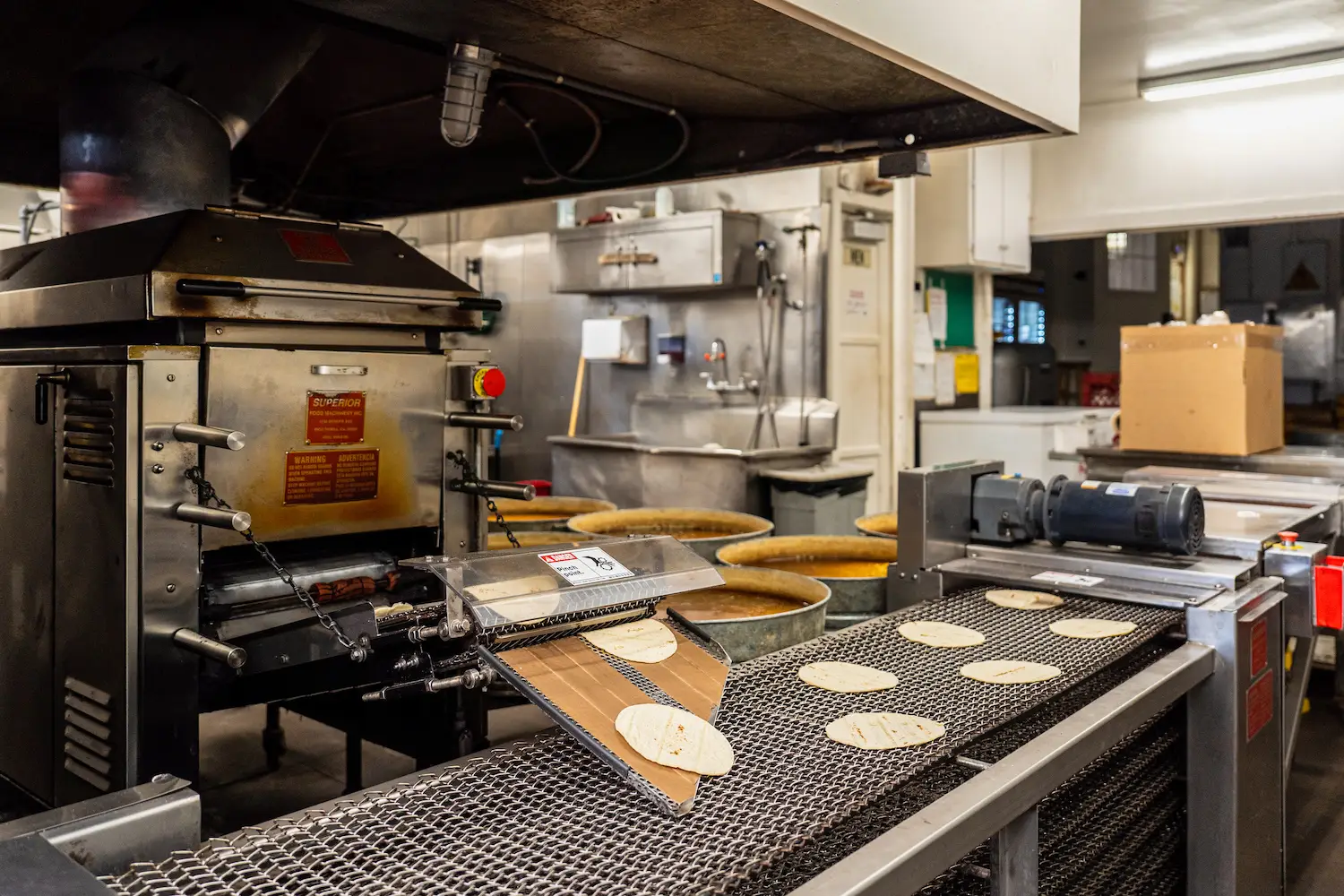
San Diego's first tortilla-making machine created by El Indio restaurant owner Ralph Pesqueira Sr.
Photo Credit: Kimberly Motos

It feels simultaneously excessive and absolutely correct to say El Indio is a San Diego legend and global food icon. In 1940, Ralph Pesqueira Sr. was working in one of the many aerospace headquarters that surrounded Lindbergh Field (the SD International Airport’s original name), building planes and war machines. As a side dream, he started making and selling fresh corn tortillas by hand on the corner of Grape and India Streets.
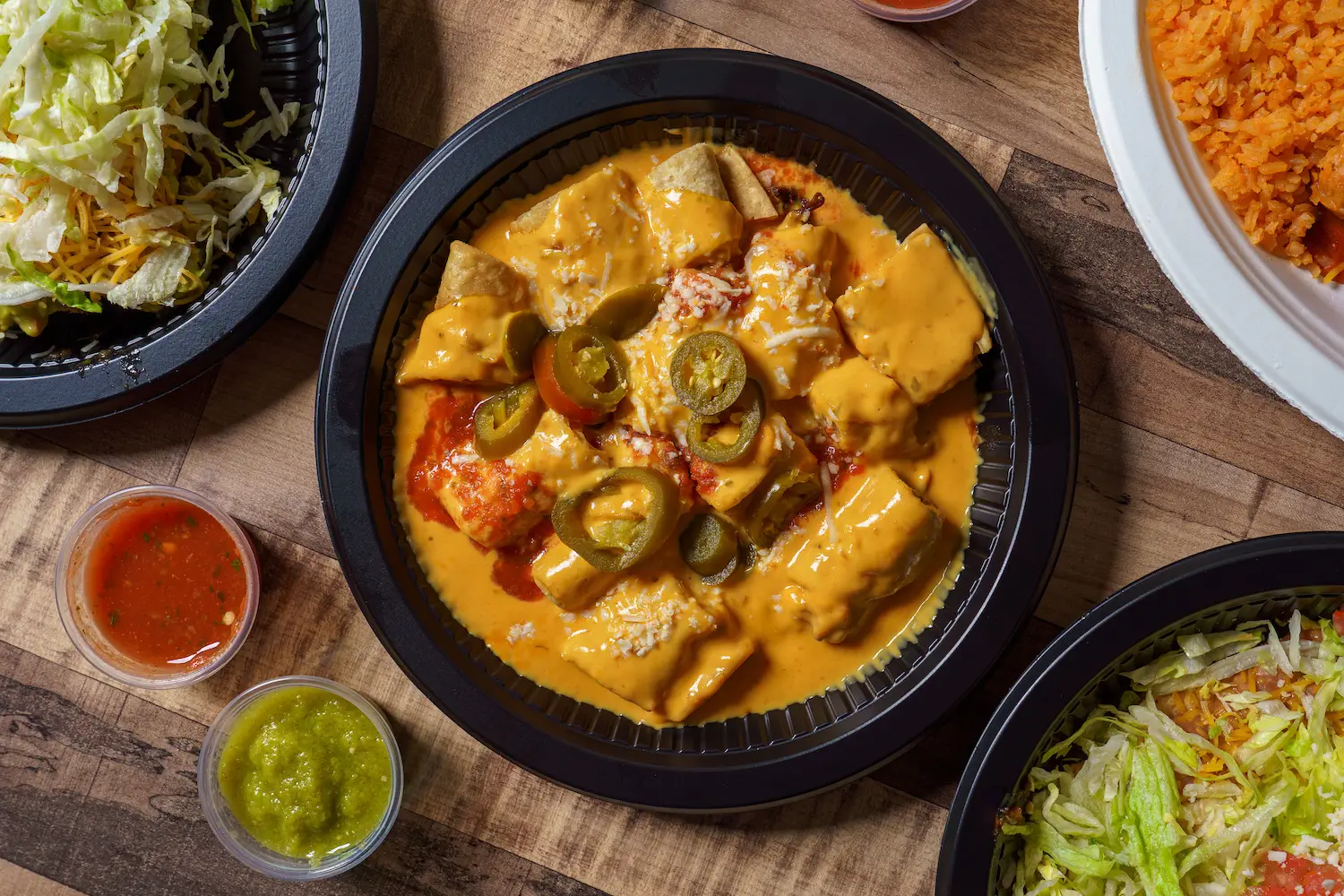
Mortiditas from San Diego Mexican restaurant El Indio
Photo Credit: Kimberly Motos

As with most food success stories, there was a key moment of technological innovation (consider In-N-Out’s invention of the two-way speaker or Pizza Hut introducing online ordering to the pie masses). Around 1945, Pesqueira—who we might call the Thomas Edison of Mexican food—invented San Diego’s first tortilla-making machine. By hand, he could whip up 30 dozen a day; with the machine, he cranked out 30 dozen an hour. A full-fledged tortilla factory was born, the effect of which was massive for putting training wheels on the local Mexican food culture that would boom decades later.

When aero coworkers asked him if he could make a handheld, good-travelin’ food for lunch pails, he thought of flautas (a Mexican staple with global roots—a flour tortilla usually wrapped around meat and rolled into the shape of a flute, then fried).

He did a smaller version with fresh masa corn tortillas. The taquito entered the world. He sold each for 18 cents.
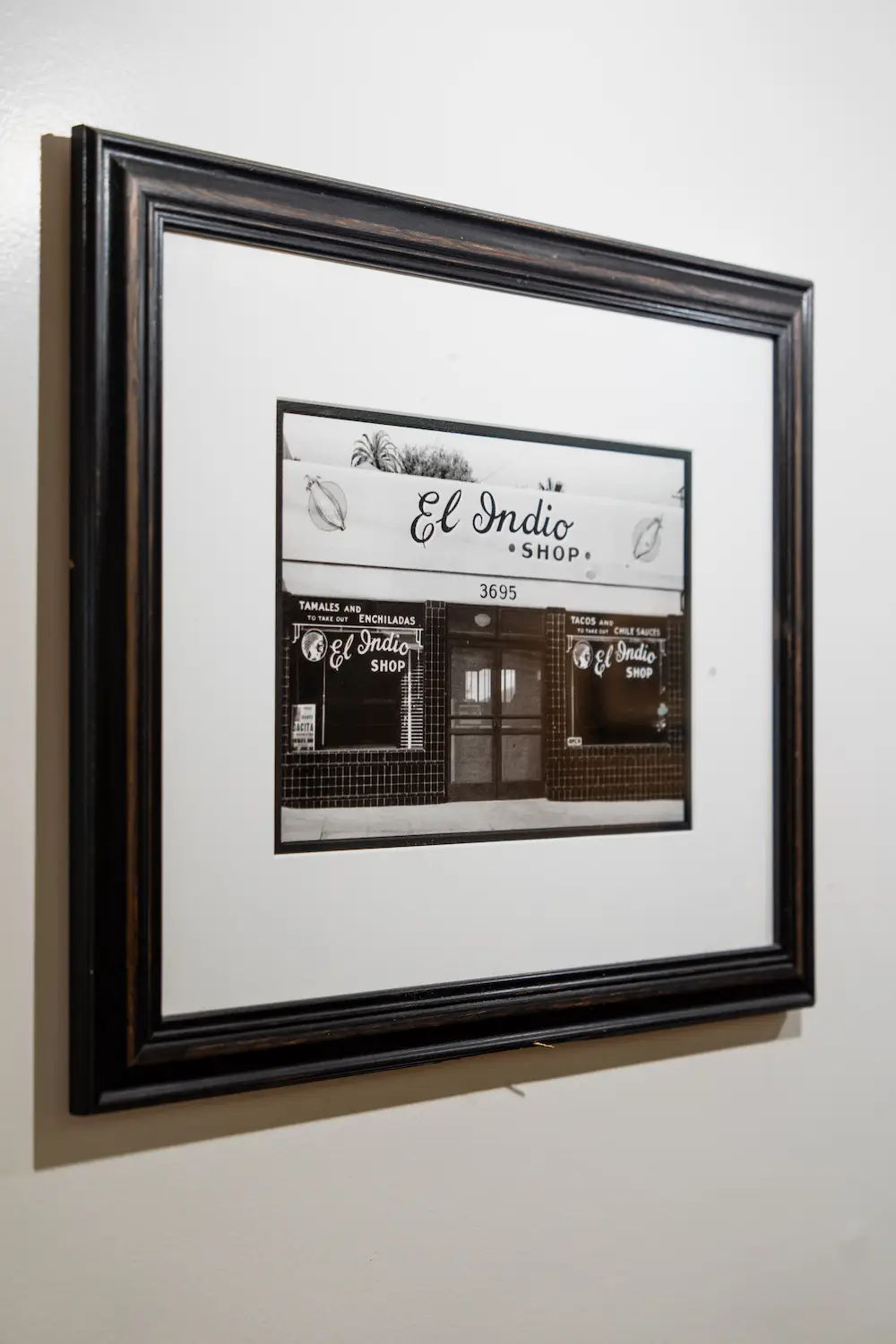
Historic photo of El Indio Mexican Restaurant in San Diego's Middletown opened in 1940
Photo Credit: Kimberly Motos
A slice of El Indio’s storied past.

The invention can’t be overstated. Sure, restaurants like Pujol and Cosme are showing us the cheffy stratospheric possibilities of Mexican cuisine, but the taquito played a huge role in getting us there. They were one of the first Mexican foods to be frozen. By 1976, frozen-food behemoth Van de Kamp was putting truckloads of them in grocery stores across the US. They were eminently affordable and, smaller than burritos, they could be microwaved or baked in a flash for any harried-parent meal situation. Dummies like adolescent me could make these.

With some cheese, sour cream, and guacamole, the San Diego invention was the gateway drug to an entire country discovering the joys of Mexican food. During WWII and the Vietnam War, El Indio sent care packages of taquitos to the front lines, a wartime MRE and meat-filled love letter from San Diego.
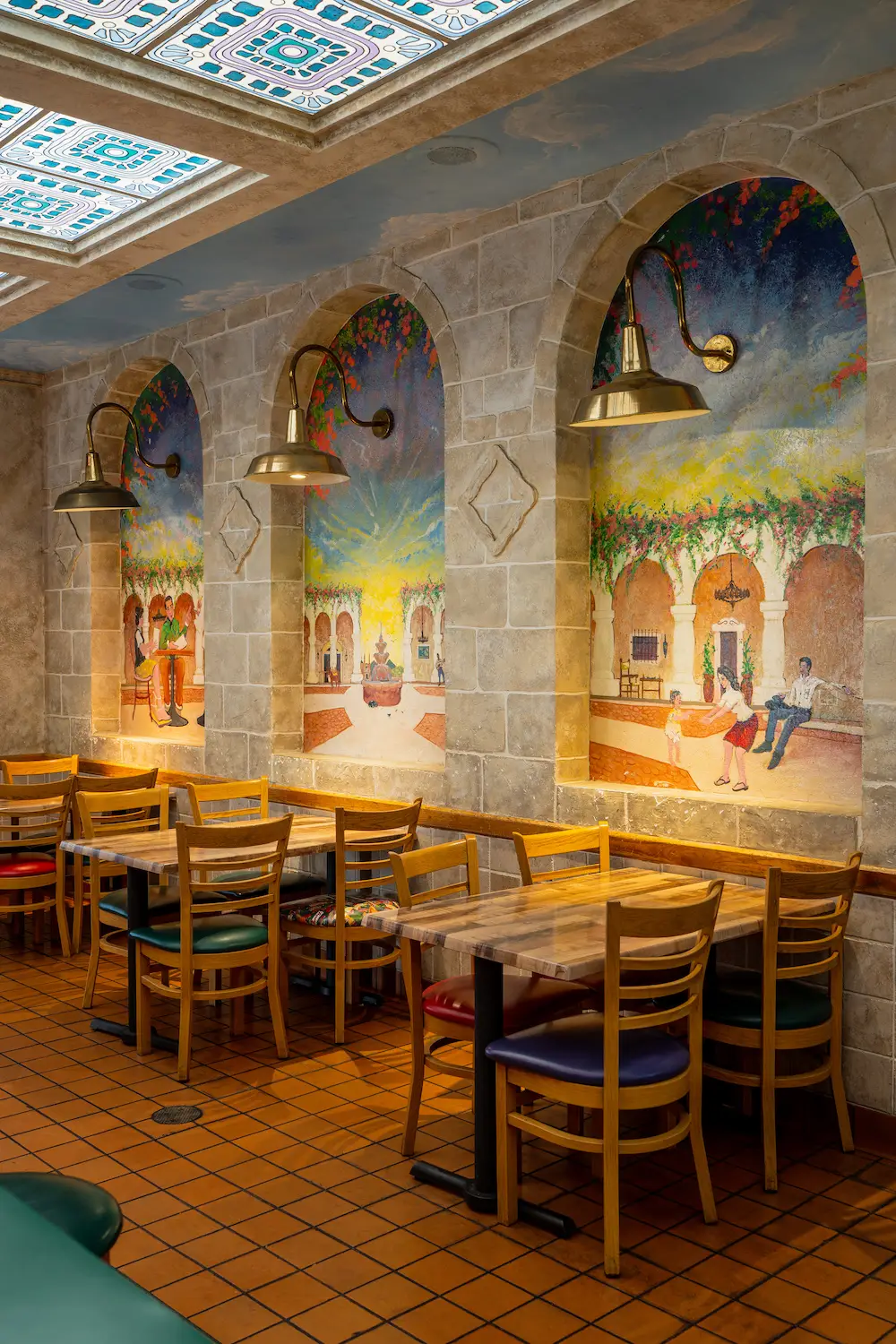
Interior of San Diego Mexican restaurant El Indio in Middletown
Photo Credit: Kimberly Motos

Riding high, Pesqueira opened his first restaurant, El Indio, in 1947 at the bottom of Washington Avenue in Middletown, eye-level with planes landing at Lindbergh and within lunch distance of the thousands of factory workers nearby.

These days, that part of the city is teeming with restaurants, and Little Italy, a mile up the road, is San Diego’s foodapalooza. But when El Indio opened, it owned the game. What little Mexican food the city had was mostly concentrated in Old Town (Aztec Kitchen, La Piñata) and Barrio Logan (Las Cuatro Milpas, El Carrito).

The 5, now a half-block away, didn’t even exist (it was finished in 1960), and Little Italy was still mostly sleepy and on the edge of a massive downturn (35 percent of the neighborhood was destroyed in constructing the I-5, and it took decades to rebuild the community and culture). For a huge chunk of San Diegans, El Indio was the first bite of Mexican food.
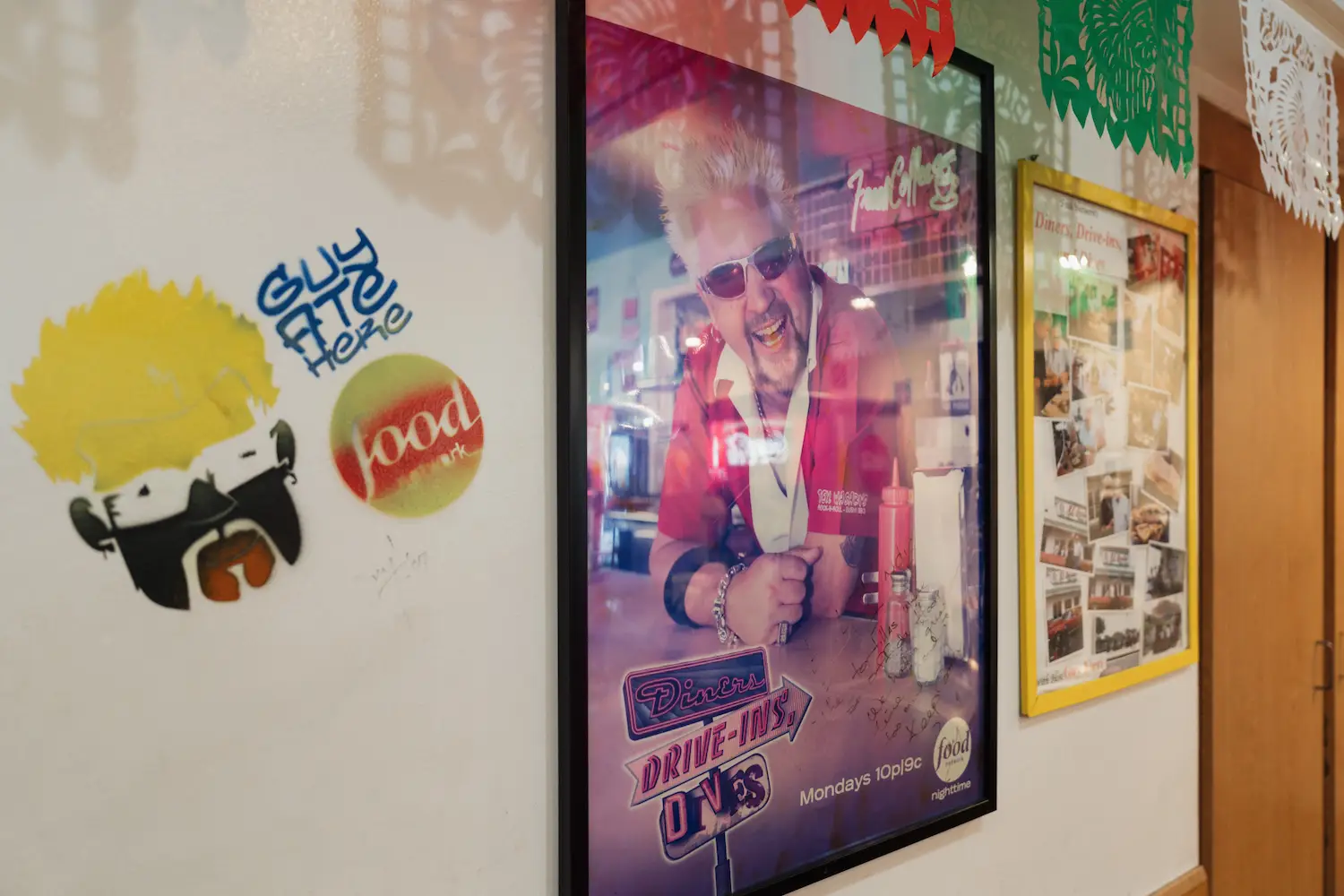
Photo of Guy Fieri in Interior of San Diego Mexican restaurant El Indio in Middletown when he visited as part of Diner's Drive-In's and Dives show
Photo Credit: Kimberly Motos
The man, the myth, the taquitoist.

Now Middletown is its own modest food and drink destination with Gelato Vero (opened 1984), Saffron Thai (1985), Shakespeare Pub (1990), Blue Water Seafood (2004), Lucha Libre Taco Shop (2008), and The Regal Beagle (2010) all within spitting distance. And, despite quantum leaps in Mexican food quality, El Indio still stands nearly 80 years later, serving what is pretty close to the original taquito recipe. Pesqueira passed it to his son, Ralph Jr., who grew up behind the register. Now it’s run by Ralph Jr.’s daughter, Jennifer Pesqueira.

I’ve learned that the best way to maximize your appreciation for El Indio is to read Yelp before you go. I’ll often skim the review app for hidden tips and tricks and secret menu orders. Once on the app, you encounter the wildest, most emotionally nuclear forms of humanity, just absolutely obliterating family-run restaurants near and far. And you’ll run into this missive a lot: “El Indio is living off its history and has fallen from actual glory, refusing to evolve and keep up with modern Mexican food standards.”
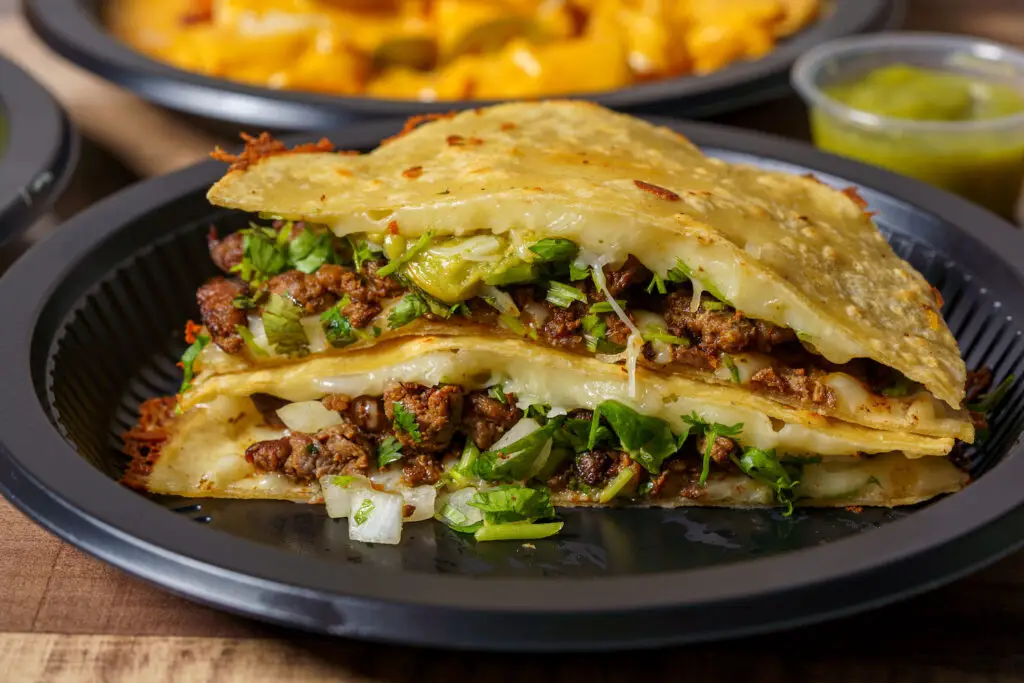
Quesadilla from classic San Diego Mexican restaurant El Indio in Middletown
Photo Credit: Kimberly Motos

To which I’d say, they’re both correct and full of crap. We live in the age of the tweezer taco—heirloom and non-GMO and fire-roasted and microgreened; farmers market arugulas replacing bulk cabbage; Wagyu asadas and Jidori adobos. Those tacos are their own little heavens. I’m glad we got ’em, and it makes sense that they cost more.

But that’s not what you go to El Indio for, nor is it what the restaurant is trying to be. It makes fresh masa tortillas, chips, and taquitos and doesn’t put tuxes on ’em. It’s both basic and affordable. Is El Indio living off its history? Yep, a history earned. Ride that prize stallion until it bucks you off and lies down in a meadow.

Is it refusing to evolve? A little. You have one job when you invented the taquito: Don’t mess with it. But it could extend itself a little at the salsa bar. The world of salsas has hit a magical evolutionary waystation, with so many different peppers and fermented things. El Indio’s salsas are fine but pretty basic. It could be the restaurant’s R&D lab for the future.
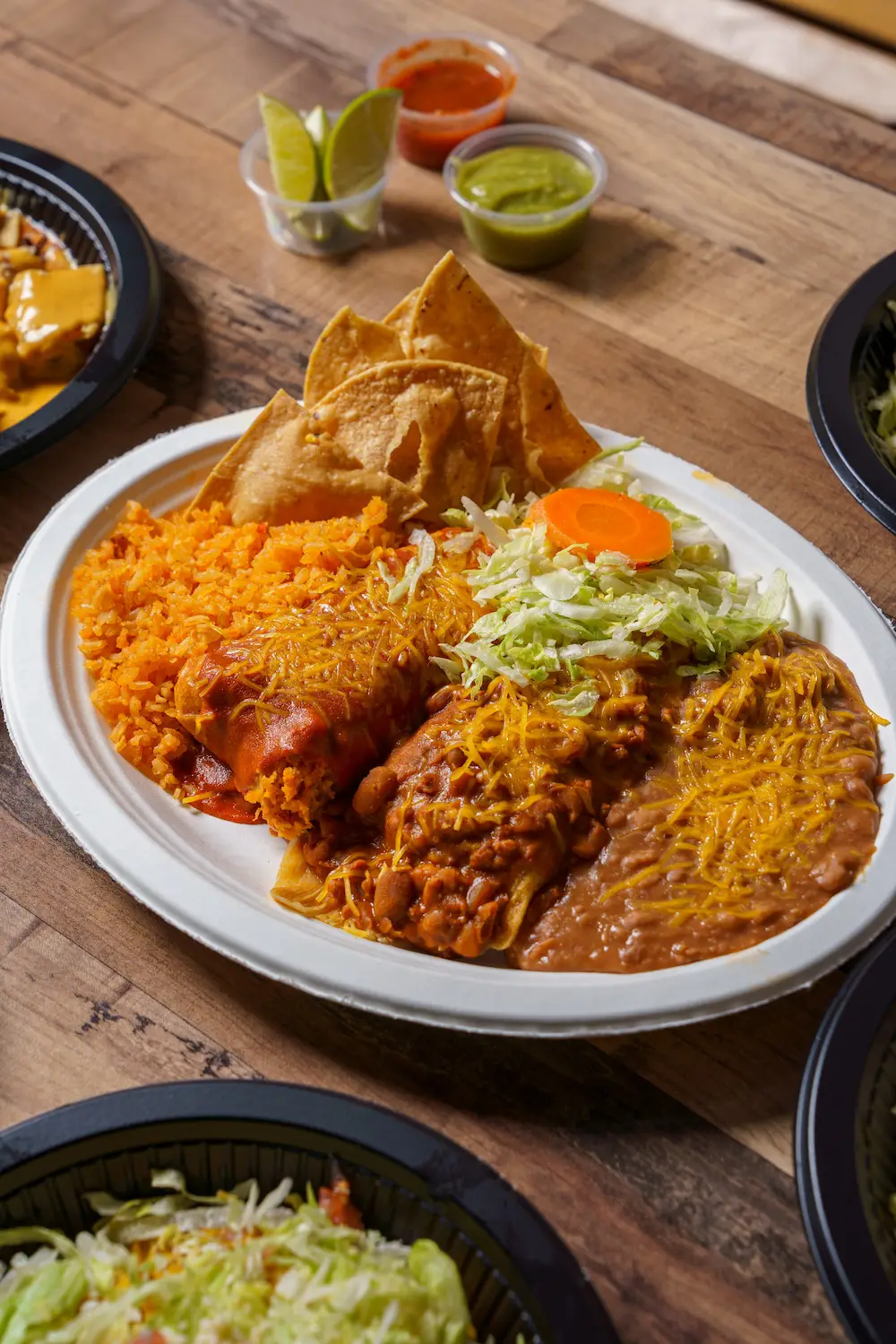
Enchiladas from San Diego Mexican restaurant El Indio in Middletown
Photo Credit: Kimberly Motos
Enchiladas, smothered within an inch of their life.

The taquito? It’s good. Crispy-soft, a straight-shooter. The problem with many taquitos is that their makers confuse it with a tortilla chip, making it all crunch. El Indio knows better. The best is the potato-filled taquito. Like you lightly fried a Thanksgiving side dish.

The biggest shine at El Indio may be the tamales. The masa has real flavor, corny and distinctive. And the kitchen stuffs it with generous amounts of beef, chicken, or cheese. A lot of tamales only give you a sliver of meat, so it’s like two burger buns with a single piece of prosciutto in the middle. El Indio knows tamal balance. The chicken tostada is also a winner. The entire table will devour it.
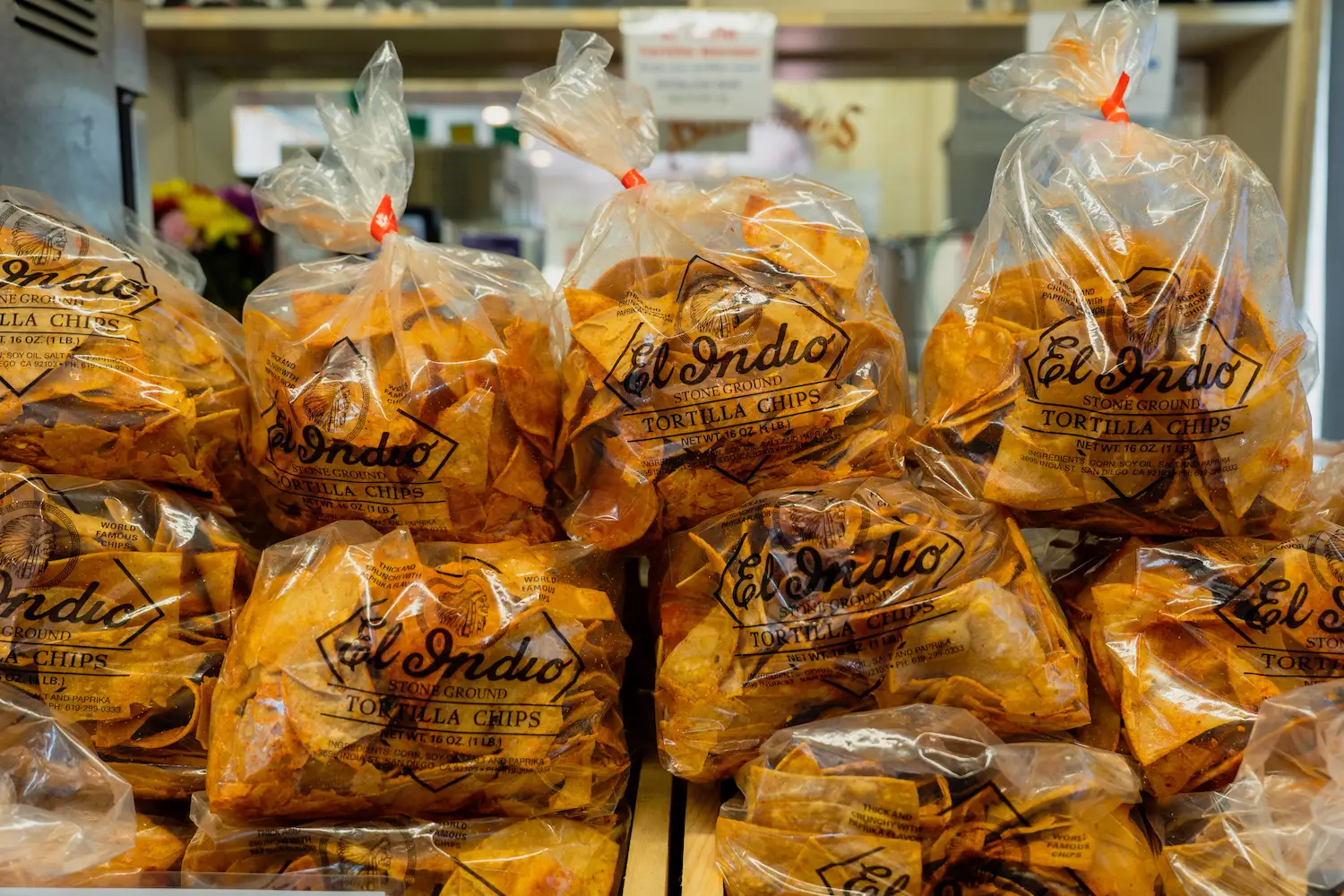
El Indio's tortilla chips freshly made
Photo Credit: Kimberly Motos
For people who come from the double-thick tortilla chip lineage, El Indio chips are fresh-made, sturdy, famous beasts.

I know it’s famous for its chips, but its chip is not my chip. The kitchen team is of the double-thick clan, so it takes some jaw muscle and resolve to bite through their chips, like you’re eating deep-fried pig ears. I’m of the thin-chip people—I prefer a lighter bite and maybe even just the tiniest bit of softness in the center.

El Indio is exactly what it has always been and always probably will be: a historical landmark taco shop that makes the most important thing—the tortilla—from scratch. It has less than zero interest in winning a James Beard Award.
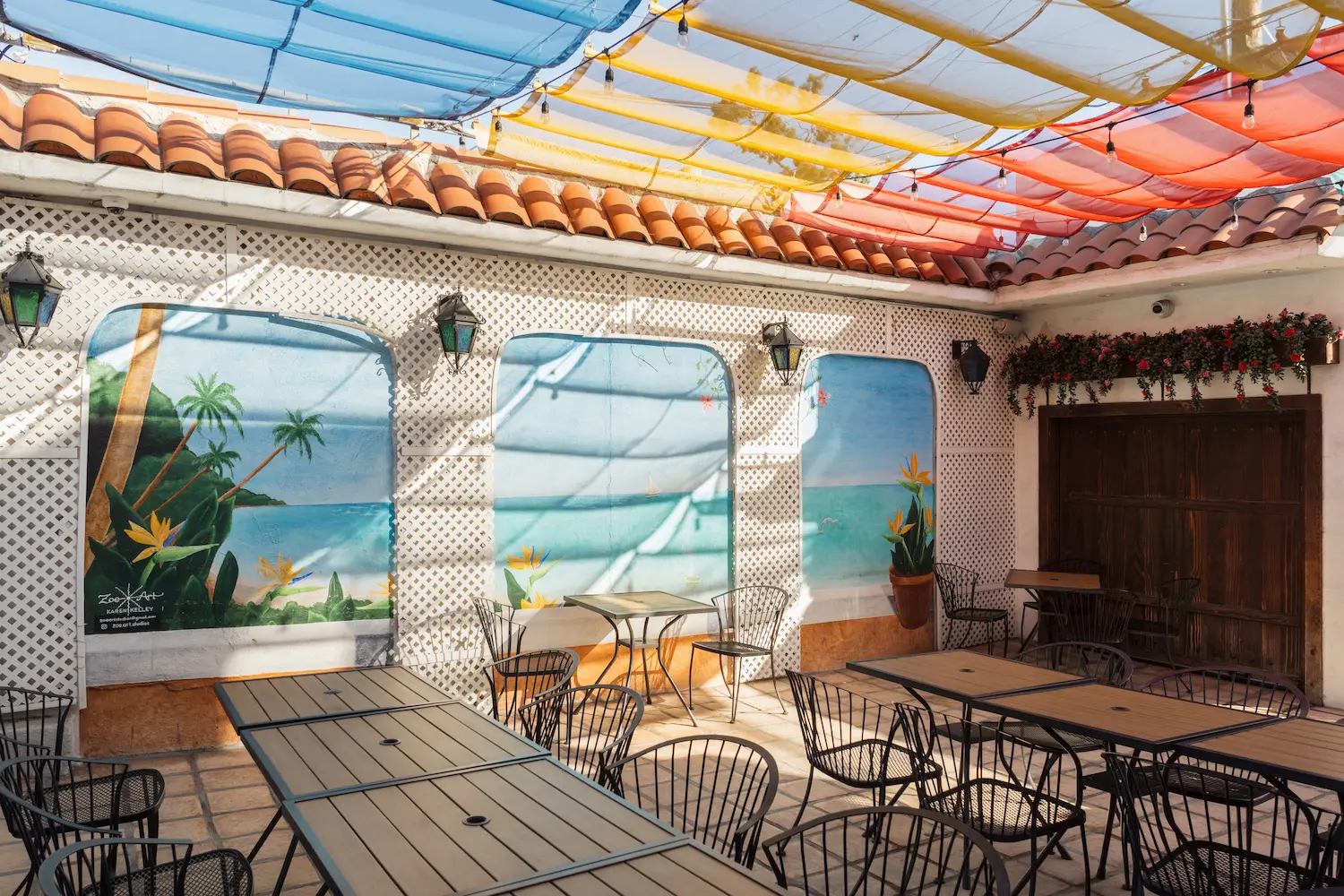
Exterior patio at San Diego Mexican restaurant El Indio in Middletown
Photo Credit: Kimberly Motos
The garden patio in search of a garden.

My only serious qualm with El Indio is that there’s absolutely no garden on its “garden patio.” Have you ever been to a friend’s house where the backyard has the military-grade steel screen door? And that leads into a lot of concrete and a “garden” of white rocks? This isn’t as bad as that, but it’s not too far off. No living flowers or shrubs. Just a few fake flowers. Few things are as depressing as fake flowers. You took a living, breathing, lovely pillar of all life on earth and turned it into a microplastic that is slowly making its way into our DNA and transforming us into a dollar store from the inside out.

I get it—few things except hope are tougher to keep alive than flowers and plants. And I don’t want El Indio to go the Instagram plant-wall route with a neon sign spelling out some life-coach phrase. But the only living things we see are an older couple who look like they’ve finally smuggled enough drugs out of Miami on their sailboat to just kind of float to beach towns and eat taquitos.

Imagine if El Indio could somehow build a garden taquito oasis. It would be wondrous, an attraction. But that feels like too much to ask. Someone call Robert Irvine.
Troy Johnson

About Troy Johnson

Troy Johnson is the magazine’s award-winning food writer and humorist, and a long-standing expert on Food Network. His work has been featured on NatGeo, Travel Channel, NPR, and in Food Matters, a textbook of the best American food writing.

Subscribe to our newsletters

Select Options

By subscribing you confirm that you agree with our Terms and Conditions and Privacy Policy.

Arts & Culture JUNE 9, 2026

17 Things to Do in San Diego This Weekend: June 10-14

Stop by the San Diego County Fair, rock out at the inaugural Field of Dreamz and visit Bikini Bottom via The Spongebob Musical

17 Things to Do in San Diego This Weekend: June 10-14
Courtesy of Switchfoot Bro-Am

Charitable gatherings, downtown music festivals and theater premieres—of both the heartwarming and thought-provoking variety—are among San Diego’s standout events this weekend. You can’t spell fundraising without ‘fun,’ and both elements are central at Poway OnStage’s Taste of the Towne and the Switchfoot Bro-Am. Listeners of blues, reggae rock and silky smooth jazz can check out the East Village Blues Fest, Field of Dreamz and the San Diego Smooth Jazz Festival, respectively. As for the city’s thespian community, new shows include Cygnet Theatre’s production of Broadway favorite The Spongebob Musical and the world premiere of the OnWord Theatre show Marti Gobel’s Adult Storytime: A Caregiver’s Guide To The Blues.

Food & Drink | Concerts & Festivals | Theater & Art Exhibits | More Fun Things to Do

Food & Drink Events in San Diego This Weekend

Switchfoot Bro-Am Benefit Party

June 11

The tasteful appetizer to Switchfoot Bro-Am’s annual Beach Fest is the laid-back Benefit Party, returning this Thursday from 6-10 p.m. at Viasat. Guests will be treated to a curated dining menu, a performance by Switchfoot with special guests, and the chance to bid on live and silent auction items, including local excursions, apparel packages, and deluxe arts experiences. Individual ticket options include general admission ($300) and reserved seating ($450); the money raised will go towards youth-centered programming at six local nonprofits

6155 El Camino Real, Carlsbad

Taste of Our Towne at Poway Center for the Performing Arts

June 13

Patrons of Poway OnStage are invited to Taste of Our Towne, the organization’s annual culinary fundraiser, this Saturday at 5 p.m. at Poway Center for the Performing Arts. The evening will begin with auctions, plus bites and libations from over a dozen local vendors before magician Chris Funk, aka The Wonderist, takes the stage for an interactive comedy show. General admission is $115 for Taste of Our Towne; proceeds from this event will benefit Poway OnStage’s Professional Performance Series and Arts in Education Initiative. 

15498 Espola Road, Poway

Concerts & Festivals in San Diego This Weekend

Rod Stewart at North Island Credit Union Amphitheatre 

June 12

Before (potentially) riding off into the sunset, British rocker Rod Stewart is strutting his stuff stateside with the unconventional voice and unquestionable verve that’s propelled his nearly six decade-long solo career. Though the “Da Ya Think I’m Sexy?” artist’s days on the road may be dwindling, that’s even more reason to give him his flowers in the present. Stewart’s upcoming show this Friday at 7:30 p.m. at North Island Credit Union Amphitheatre will feature prolific singer-songwriter Richard Marx as the opening act. Tickets start at $40.  

2050 Entertainment Circle, Chula Vista

Switchfoot Bro-Am Beach Fest

June 13

Following Thursday’s Benefit Party, the 22nd annual Switchfoot Bro-Am will switch (get it?) from its fundraiser to a free day at Moonlight Beach for Saturday’s all-day Beach Fest. From 7 a.m. to 3 p.m. there will be surf competitions—including surf jousting—and from noon to 5 p.m., Sun Room, Telephone Friends, Kimiko, a handful of special guests and, of course, Switchfoot will perform for attendees. Additionally, throughout the day, there will be a variety of vendors and brand activations to explore. Admission is free with RSVP, while VIP pit tickets are $195. 

400 B Street, Encinitas 

Field of Dreamz at Petco Park

June 13

As the mysterious saying goes, ‘If you build it, they will come,’ but instead of Iowa cornfields, this time the message is coming from inside SD’s home ballpark. This Saturday, Ocean Beach natives Slightly Stoopid will headline the first-ever Field of Dreamz Festival, and they’ve brought along a handful of ska, reggae and island-inspired rock acts for the ride. Doors will open at 3 p.m., and fans can see sets by Stephen Marley, Pepper, Sublime—whose first album with frontman Jakob Nowell drops Friday—and more. Ticket options include standard admission ($125), floor tickets ($188), plus All-Star VIP ($244) and Hall of Fame VIP ($610) passes.

100 Park Boulevard, Downtown

East Village Blues Fest

June 13

Ryan Hardison is a freelance arts and entertainment writer and recent graduate of San Diego State. When he's not staring at his laptop, he's likely eating an adobada burrito or getting sunburnt at the beach.

Features JUNE 8, 2026

4 San Diego Dishes We Can’t Stop Thinking About

Food writer Beth Demmon names local bites we love—both at the high and low ends of our budgets

4 San Diego Dishes We Can’t Stop Thinking About
Photo Credit: Kimberly Motos

We love a mega-fancy tasting menu, but let’s be honest—we’re not all blessed with unlimited Wagyu funds. So we picked some of the breakout dishes of the last year (or couple of years) from the best chefs in the city, reverse-engineered their chief charms (salty, smoky, caramelized?) in the test lab of our mouths, and found some budget-friendly alternatives that hit some of the same notes with an everyday price tag.

High: Caviar Ice Cream at Lilo

Where do delicately plucked marigold blossoms adorn Deer Isle scallops, or ingredients like fermented raspberry precede roasted coffee oil, shiro miso caramel, or bronze fennel in a parade of hit-after-hit dishes? Lilo in Carlsbad, of course. San Diego’s newest Michelin star changes its menu with the seasons, but one stalwart dish has kept tongues wagging since opening day last April: the caviar ice cream. A boat-shaped sliver of orgeat ice cream, smoked celery root bushi, and freshly pressed almond oil are topped with a generous heap of caviar. It’s a dish so good and defining that chef Eric Bost will tire of talking about it for a very long time.

Price: $265 for the tasting menu (before tax, tip, and drinks)

Low: S’mores Ice Cream at Stella Jean’s

There’s a reason Stella Jean’s s’mores ice cream is part of the local scoop shop’s “always available” menu. Made with fire-roasted marshmallows and coconut ash ice cream mixed with dark chocolate-covered graham crackers and mini marshmallows, its strangely ashen hue dabbled with flecks of tawny brown is a far cry from the wildly vibrant ube and pandesal toffee flavor seemingly made for Instagram reels. But it’s a sensation in your mouth—smoky, toasty, torched, creamy, marshmallowy, coconutty, ashy, and bitter from the dark chocolate. Pro tip: If you really want to DIY Lilo’s ultra-luxe treat, bring your own caviar.

Price: $6.25 for a single scoop

High: “The” Egg Dish at Lucien

There’s no question what comes first at Lucien. It’s the egg. Chef and co-owner Elijah Arizmendi’s 12-course tasting menu begins with welcome bites under the calamansi tree before moving inside to start the Journey (the actual name of this section of the menu). The first step is one of the most astounding—a perfectly intact, upright, ochre-hued eggshell containing his take on Japanese chawanmushi (egg custard), topped with a dollop of caviar. The accompanying ingredients have ranged from sweet corn and huitlacoche to banana and buckwheat, but each one has precisely demonstrated Arizmendi’s commitment to French technique with California experimentation and global influence.

Price: $260 for the chef’s tasting menu (before tax, tip, and drinks)

Low: Chawanmushi at Sushi Ota

The biggest difference (besides price) is that while Lucien’s dish changes with the season, Sushi Ota is comfortably predictable. A San Diego staple since 1990, the legendary Sushi Ota has been one of those if you know, you know joints that locals try to keep off the radar. (It hasn’t worked at all.) Known for ultra-fresh fish and ultra-traditional service, the small Pacific Beach restaurant also serves Japanese comfort foods like udon noodle soup alongside sashimi, nigiri, and rolls. But it’s the savory steamed egg custard, called chawanmushi, that really gives you the warm and fuzzies. Add a side of salmon roe (ikura) for a few bucks more, and this dupe is about as good as it gets.

Price: $12 for chawanmushi, $11 for ikura

Courtesy of Chick & Hawk

High: The Birdman Sandwich at Chick & Hawk

Enough ink—and tears, I’m sure—has been spilled over Chick & Hawk’s long and arduous journey to opening its doors. But now that the Encinitas eatery is in full swing, chef Andrew Bachelier’s tightly curated menu of fried chicken sandwiches, fries, and bowls command lines of hungry locals and skate-culture loyalists. The Birdman, the signature hot chicken sandwich named for partner and skateboarding legend Tony Hawk, is piled with cabbage slaw and pickles and slathered with a tangy kimchi comeback sauce on a soft brioche bun. Although this Nashville meets California meets Mississippi meets Korea sando doesn’t command a triple-digit price tag, the fact that it’s nearly a $20 chicken sandwich (sans side) has been a topic of conversation. Bachelier—who worked at Addison before opening Jeune et Jolie, then launched SDM’s 2024 “Best New Restaurant,” Atelier Manna—and his team earned that price tag.

Price: $18

Low: 5-Piece Korean Fried Wings at Cross Street Chicken & Beer

It’s hard to beat Koreans at the chicken game. Korean fried wings are defined by a double-fry technique—first at a low temperature to ensure the chicken is cooked through, then at a high temperature to ensure the famed extra-crispy, ear-splittingly crunchrageous magic. At Cross Street, they follow a similar fusion ethos as Chick & Hawk, using inspiration from the American South as well as Thailand, Korea, Vietnam, and more, with flavors like “Seoul Spicy” or “Honey Butter” for whatever you’re feeling that day. Pair it with a cold beer to go full chimaek (a popular Korean combination of pairing fried chicken and beer). Now that’s a combo—and price tag—that’s hard to beat.

Price: $8.75 for five wings

Courtesy of Trust Restaurant Group

High: Steak Frites at À L’ouest

PB&J. Captain & Tennille. Brad Wise and steak. Steak frites ranks among the iconic global duos. And when the holy union of prime cuts and twice-fried carbs comes from Wise and the meat-loving masters at Trust Restaurant Group, it’s a pretty safe bet. À L’ouest—the group’s newest fancy, but not fussy, drippy plant dreamscape of a French steakhouse on the prime corner of 30th and University in North Park—gives guests a choice: 12-ounce New York strip, 8-ounce filet mignon, or 8-ounce Wagyu hanger, topped with sauce au poivre (the classic French pan sauce—peppercorns, shallots, heavy cream, brandy) and served with a heaping pile of 24-hour salt-brined fries and a watercress salad. One bite acts as a transport to a Parisian brasserie, so if you think about the cost in terms of time-space travel, it’s a pretty great deal.

Price: starts at $48

Low: Shepherd’s Pie at The Shakespeare Pub & Grille

To satisfy the same urge for meat and potatoes, feel at least moderately European while doing so, and save a couple quid, a trip to The Shakespeare in Mission Hills ticks all the boxes. The classic British shepherd’s pie arrives in a piping hot oval au gratin dish, smothered with a thick layer of mashed potatoes. Beneath it lies a hefty portion of marinated ground beef and vegetables in the pub’s secret sauce, and while there are a few choices of sides, the correct order is peas and “proper” chips (a.k.a. chunky, thick-cut fries versus the typically thinner American “French” fries). It’s more tickety-boo than très bien, but it’s immensely satisfying in any language.

Price: $22.95

Beth Demmon

About Beth Demmon

Beth Demmon is an award-winning writer and podcaster whose work regularly appears in national outlets and San Diego Magazine. Her first book, The Beer Lover's Guide to Cider, is now available. Find out more on bethdemmon.com.

Features JUNE 8, 2026

5 Unsung Heroes of the San Diego Culinary World

From dedicated line cooks to seasoned bartenders, these are the people making magic happen in city's top restaurants

5 Unsung Heroes of the San Diego Culinary World
Courtesy of The Marine Room

Chefs have done gobs of thankless, lumbar-breaking work over years to land the role. Restaurateurs put their entire livelihoods on the line, microdosed sleep, took ultimate responsibility for every minor stress. They earned the spotlight they get. But ask one of them, and they almost always defer to a line cook who’s showed up for years, been deep in the thing, and whose absence would bring the kitchen to its knees. Or the bartender with a warmth that draws people whether they’re thirsty or not. Or the noble and spreadsheetable soul in charge of purchasing everything needed for the nightly show.

They call it the “heart of the house.”

Spotlight or not, these are the people who make a food culture hum at its daily core.

For this year’s “Best Restaurants” issue, we asked a handful of the top chefs and one restaurant owner—Tara Monsod (Animae/Le Coq), Jason McLeod (Ironside Fish & Oyster), Ananda Bareño (The Marine Room), Owen Beatty (A.R. Valentien), and Ryan Thorsen (Mister A’s)—who that person is for them.

These are the hearts of houses.

Photo Credit: Matt Furman

Roger Feria Krile

Line Cook, Animae

Roger Feria Krile is not only the guy you want to be friends with at work, but also the guy you want to hire: respectful, nose-to-the-grindstone, versatile. And he’ll drop off a fresh batch of cinnamon rolls at your house for the holidays. Born in Tijuana, Krile moved to the US with his mom and sister when he was in elementary school. He saw the sacrifices his mother made to give her children a better life, and he pushed himself to live up to that brighter future.

He came to cooking during the pandemic, asking himself, “What do I really love to do?” His answer: “Bake cakes for friends and break bread with people,” he says. That led to a culinary school degree and a stint in a Michelin-starred NYC kitchen, where he grew to “love and understand” fine dining. Now back in San Diego, Krile’s showing up at Animae in a major way. He does prep work three mornings a week and comes later in the day twice a week for dinner service. Most line cooks do one or the other, but he requested both tours of duty.

“Gotta get my reps, keep my skills sharp,” Krile says, “and I don’t want to miss the rush.” Prep work in the mornings helps him learn how Executive Chef Tara Monsod uses each ingredient to the fullest. Krile’s not just a line cook. One-quarter Filipino (and learning about his culinary heritage from mentor Monsod), he’s building his own Mexican-Filipino pop-up concept. Look for Sarsa—Filipino for salsa—where every dish is a play on words fusing Mexican and Philippine Spanish or Tagalog. He’s already R&D’d a breakfast sandwich, the tortantalong: a torta filled with a signature Filipino eggplant omelette called a tortang talong. Friends in the industry say it’s unexpectedly delicious.

“He shows up every day with a clear goal of one day opening his own restaurant, and that drive pushes him to go above and beyond,” says Monsod. “He is constantly learning, asking questions, and absorbing as much as possible, all while leading by example on the line.”

Photo Credit: Matt Furman

Ruben Martinez

Purchasing Manager, Mister A’s

Ruben Martinez knows every bottle of wine at Mister A’s—not necessarily by taste (though he was on the tasting committee for years), but by where they are in storage and whether they need replenishment. Owner Ryan Thorsen wants the wine list at 100 percent available every night, and Martinez’s job is to make that a reality. He’s been keeping inventory on Mister A’s wines since the 1970s, back when he worked for founder John Alessio. And it’s not just vino: Martinez also procures the ingredients, arriving at 5 a.m. to meet delivery trucks, stock shelves, and alert chefs if anything’s amiss.

Then he hits the dining room for a once- or twice-over to find any imperfections. If a light is out, if the plumbing acts up, if something major happens after he leaves in the afternoon, he’ll fix it all. He’s the best guy to ask, anyway; he knows every inch of Mister A’s. “Before ‘Google it,’ there was ‘Call Ruben,’” Thorsen says.

Martinez started out in hospitality at 17 with his father at Hotel Del. “I thought it would be easy working with my dad,” he says. “But early on, he caught me fooling around with the boys and told me, ‘We’re here to make money for the company. If you’re not willing to work, get out of here.’” That set him straight and set the foundation for Martinez’s lifelong dependability.

He moved to Mister A’s a couple years later, and after over five decades, he’s now the indispensable purchasing manager who worked with Alessio, Betrand Hug, and now Thorsen. Later this year, he’s planning on retiring—though he’s already offered to keep showing up a couple days a week and help out with Thorsen’s new project at Liberty Station.

Thorsen knows this man is a gem. “I don’t think we fully grasp what it will feel like without him,” he says. Last year, he threw Martinez a surprise birthday party in Mister A’s Blue Room, inviting Martinez’s family and a whole cast of coworkers going back to Alessio days. Martinez says he had to leave the room to hide his tears.

Photo Credit: Matt Furman

Patrick Mattoon

Lead Prep Cook, Ironside Fish and Oyster

There’s an hour most people never see, when a restaurant’s technically awake but not yet accountable, and that’s where Patrick Mattoon lives. He’s been the foundation of Ironside’s prep team for the past five years, quietly guiding the day toward success. He and his team are the first in, and they turn on ovens, check deliveries, catch mistakes before they become problems, and fix everything without ceremony so the chefs and line cooks walk into a day that already works.

Mattoon organizes, but more importantly, he owns. There’s no job too small, no detail beneath notice. In a kitchen, bad prep’s the one thing you can’t fix later, no matter how talented of a chef is at the helm.

Five years in, Mattoon still approaches each day with the same care and intensity that he had on day one. He takes every task seriously and sees it through completely—the kind of consistent work that doesn’t draw attention but makes everything else possible. When the restaurant got a soft serve machine, a notorious maintenance nightmare, he taught himself how to clean and run it just to make sure it never broke, not for credit but because that’s just how he’s wired.

“He is a silent leader who has the respect of the entire team due to leading by example,” says Ironside chef Jason McLeod.

Photo Credit: Matt Furman

Arturo Celestino

Lead Line Cook, A.R. Valentien at the Lodge at Torrey Pines

Through 23 years, three executive chefs, and a recent kitchen remodel, lead line cook Arturo Celestino is a constant at A.R. Valentien. He’s there at 6:30 a.m. five days a week—sometimes six—for the Lodge’s breakfast service. That means he’s up early prepping potatoes, slicing mushrooms, whisking pancake batter, and stirring sauces “always with a smile,” says Owen Beatty, the restaurant’s new chef de cuisine. “He’s a good leader.”

Celestino shows the younger guys how to make the eggs fluffy, so the omelettes are always perfect (don’t stop twirling the spatula!). He keeps his line in line when their spirits start to naturally droop during the morning shift home stretch when his crew just wants to get out of there. As the lead, he’s also the one chefs turn to when newbies need motivation.

His secret sauce: “mucho talking!” It keeps people happy, and it also helps the chefs retain talent in the kitchen.

Celestino learned to cook out of “necesidad,” he says. He cut his teeth on fine dining at Pacifica Del Mar at the Hyatt and moved to A.R. Valentien in 2003, just a few months after it opened in 2002.

“I’ve had good jefes,” Celestino says of the three executive chefs he’s known at A.R. Valentien: Jeff Jackson, Kelli Crosson, and now Michelin-starred Eric Sakai. Under Jackson—who’s known for pioneering farm-to-table dining in San Diego—Arturo learned to appreciate local ingredients.

“My favorite is basil,” he says, “added to tomato sauce with garlic, it’s mmm.” Fresh basil plays the supporting role in A.R. Valentien’s signature brunch plate, which is also Celestino’s top choice on the menu (to make and to eat), via the Bull’s Eyes: slow-roasted eggplant with sunny-side-up eggs, tomato sauce, and La Quercia prosciutto.

“I love my job,” Celestino says as he flashes that smile. “It’s not just a plate of food. It’s an experience.”

Photo Credit: Matt Furman

Tony Suarez

Bartender, The Marine Room

If you’ve been to The Marine Room, you’ve probably met bartender Tony Suarez. With his charming Cuban accent and dapper vest and tie, he makes it his business to regale guests coming and going—even while he’s pouring, mixing, shaking, polishing glasses, and taking orders.

“Over 90 percent of our guests are celebrating a special occasion,” he says. “So I keep up the celebration throughout their whole visit.” He’ll make you a sparkling toast and a customized cocktail, and on your way out, he’ll wish you a happy birthday (again) and invite you back for drinks on him.

“My goal is always to delight the guest,” he says. “I like to discover how you feel and lead you to what you would like to drink.” That spirit of experimentation has led to new signature cocktails, such as the Gerald—crafted for a neighbor who’s a regular—featuring housemade pomegranate puree and bourbon, or the I Drink of You with local Bebemos tequila, Gran Marnier, and Green Chartreuse. You won’t find this anywhere else.

“[Suarez] has mastered the art of the personalized guest experience,” says Marine Room’s Executive Chef Ananda Bareño. “He remembers the small details and favorite orders that make our regulars feel like family.”

Suarez’s tenure at the Marine Room started with a walk on the beach and a knock on the door. He was impressed by the beautiful location, and he asked if they were hiring. He immediately started as a server assistant—right before Valentine’s Day. The bartender took Suarez under his wing, and he took to the books to learn all about spirits.

He’s taken on the bartender role with wisdom and grace, offering a sympathetic ear, a pick-me-up, and a “human to human connection,” he says. Ten years into his career, the surroundings still inspire him as much as they did on day one.

“The Marine Room, the windows onto the ocean, [all] have a healing effect,” he says.

Leorah Gavidor won her first essay contest at age 5. She writes features, news, and non-fiction in San Diego.

Studio S MAY 5, 2026

Artistry, Aesthetics, and Inclusive Luxury

KQ Aesthetic Society goes beyond cosmetic to provide comprehensive care and transformative results

Artistry, Aesthetics, and Inclusive Luxury

Kelly H. Harfouche, founder of KQ Aesthetic Society, knows firsthand that cosmetic treatments like fillers, neurotoxins, and microneedling, can not only enhance a person’s appearance and restore confidence, they have the power to truly change a person’s life. An expert injector has the ability to tailor treatments to each individual patient’s anatomy and goals for personalized results. Harfouche, a board-certified nurse practitioner, has spent nearly a decade perfecting her craft as an aesthetic injector and integrating her multifaceted artistic skills with precision patient care. Her commitment to continual education and training, plus a passion for helping people look—and feel—their best, set KQ Aesthetic Society apart in a sea of local medspas. 

For many people considering nonsurgical treatments, the intent is to look refreshed and refined. KQ Aesthetic Society’s philosophy eschews a cookie cutter approach that bases treatments around units, instead working to understand each person’s unique goals, then curating a treatment plan to fit that vision. Harfouche focuses on “inclusive luxury,” the belief that everyone deserves access to aesthetic treatments, respective of budget restrictions. She develops long-standing trusted relationships with her patients, and works with each one to achieve their aesthetic objectives and address the underlying causes of their concerns. 

“For me, forming an honest and open relationship with every patient who walks through the door is essential. This means understanding them on a deeper level and meeting them where they are to define and achieve their individual goals,” she says. 

Drawing on her artistic background, which inspired her transition into medical aesthetics, Harfouche sees each client as a “unique canvas.” Rather than relying on standardized procedures, the practitioner’s distinctive approach combines her profound understanding of the physiological and anatomical changes associated with aging with an unwavering commitment to ongoing education about the newest products and their mechanisms of action. Her goal is to make each patient feel beautiful in their own skin and to embrace their individuality. 

She has also pioneered a way to combine her talent for aesthetic artistry with her philanthropic nature. Harfouche is one of only a handful of providers using dermal fillers to treat patients with lip asymmetry and scarring resulting from cleft lip surgery. Patients travel from around the country for this transformative treatment, noting increased confidence and a restored identity. She hopes to eventually launch a training program to help fill the void in this space.  

“My passion has always been connecting with people and giving back in any capacity that I can,” she says. In the rapidly advancing landscape of aesthetic medicine, you can place your confidence in Harfouche and KQ Aesthetic Society to deliver exceptional care. To learn more or book a consultation, please visit kqaestheticsociety.com.

Food & Drink JUNE 5, 2026

Del Mar Wine & Food Fest Returns With SoCal’s Top Chefs

San Diego’s biggest food and drink festival is back for a week-long celebration of SoCal’s best restaurants, chefs, and wineries from Sept. 30–Oct. 4

Del Mar Wine & Food Fest Returns With SoCal’s Top Chefs

Maybe it was when Breaking Bad stars Bryan Cranston and Aaron Paul drank mezcal with chefs from San Diego and Food Network on the cliffs over Blacks Beach. Or the dinner outside under lights with Alex Morgan, celebrating some of the country’s most badass women chefs. Or the celebrity pickleball tournament hosted by NFL Hall of Famer Drew Brees, where the star of It’s Always Sunny in Philadelphia made thwacking sounds with locals. Or when Iron Chef winner Beau MacMillan commandeered (some say “stole”) a golf cart and delivered drinks and ice to chefs.

Whatever it is, Del Mar Wine & Food seems to have become the food and wine festival for people who don’t usually like food and wine festivals. The most San Diego thing.

Courtesy of Del Mar Wine & Food Festival

Two years ago, Thrillist named it one of the best food festivals in the country. Last year, 10,000 people came out to experience it, including Guy Fieri. Afterward, the founders spent a couple days trying to put their finger on why it felt so special. They had to name it, lean into whatever that was.

“It all came back to play,” says one of those founders, SDM co-owner Troy Johnson, a longtime San Diego food writer and Food Network judge. “Making world-class bread is serious, but breaking bread shouldn’t be. We gather all these incredibly talented people who take their craft very, very seriously—work their butts off all year to make some of the best food and drink in the country—and then we all just kinda play in the grass. We believe it’s possible to create something of incredible value and make the experience of that thing a laidback, easygoing, unpretentious experience. That’s what this is, and who we are in San Diego. The whole reason we did this was to shine a national spotlight on the people who make our food and drink culture hum.”

Courtesy of Del Mar Wine & Food Festival

The festival dropped its 2026 lineup today.

Headlining the fest are Food Network chefs Jet Tila, Maneet Chauhan, and Aarti Sequeira; Top Chef winner and Michelin-starred Buddha Lo; Iron Chef alum Beau MacMillan; MasterChef winner Kelsey Murphy; MasterChef Latinos winner Michelle Mathelin, chef and Guy’s Grocery Games judge Catherine McCord,  chef and former Masterchef Mexico judge Benito Molina, Top Chef alum Jackson Kalb, Michelin-starred chef Drew Deckman, Michelin-starred chef Javier Plascencia, James Beard award-winning chef Brady Ishiwata Williams, and James Beard-nominated chef Mawa McQueen.

The party kicks off on Wednesday, September 30 at Monarch Ocean Pub with Signature San Diego, a walk-around tasting of the city’s greatest bites, from Baja seafood to bold Mexican flavors. From there, the energy carries into a celebrity pickleball tournament hosted by Drew Brees at Barnes Tennis Center on October 2, pairing friendly competition with an all-inclusive tasting experience in support of Feeding San Diego.

The main event is the two-day Grand Tasting at Surf Sports Park on Oct. 3 and 4. The city’s top chefs, food people from TV lands, and local tastemakers gather on the weirdly perfect grass to serve up everything from juicy Wagyu burgers and beef tallow fries to yellowtail tuna tostadas and veggies dressed up in their Sunday best. Wine and cocktail pairings are designed to round out the whole experience, including activations from Aperol Spritz, Hendrick’s Gin, Tequila Ocho, Mezcal Vago, Rioja wines, and Temecula producers.

Courtesy of Del Mar Wine & Food Festival

A VIP lounge offers exclusive access to curated small plates from Michelin-level chefs and pour from some of SoCal and Napa’s finest wineries and drink makers. The Official After Party at Guesthouse La Valle on October 3, a spirited walk-around tasting just steps from the Grand Tasting, where cocktails take center stage through imaginative bites inspired by the smoky, citrus-forward, and bittersweet flavors of classic drinks.

Zones return with activations including the Big Queer Food Fest celebrating queer chefs and queer-owned businesses; the Wellness Zone led by Novo Dia offering a built-in reset with non-alcoholic mocktails, movement-driven activations, and wellness-forward moments. Coastal lifestyle and locally made brands are also integrated throughout the festival.

“We are excited for the fourth edition of the Del Mar Wine & Food Festival this fall, which has quickly become one of the largest food and wine experiences on the West Coast,” says co-founder Chris Finn. “As the festival continues to grow, we are constantly looking to add events, experiences, and partners that will resonate with our San Diego community, and embody the Southern California way of life.”

Returning as the festival’s partner is local nonprofit Feeding San Diego. To date, Del Mar Wine & Food has raised $100,000 to support their ongoing fight against hunger across the region. 

Stay tuned for additional events hosted by festival partners including Rob Machado, San Diego Wave, San Diego FC, Town & Country, and San Diego Mojo.

Courtesy of Del Mar Wine & Food Festival

Del Mar Wine & Food Fest: Frequently Asked Questions (FAQs)

When is the 2026 Del Mar Wine & Food Festival?

The 2026 Del Mar Wine & Food Festival will take place September 30–October 4 throughout San Diego County.

Where is the Del Mar Wine & Food Festival?

The week culminates with the Grand Tasting at Surf Sports Park (formerly the Del Mar Polo Fields) at 14989 Via De La Valle, Del Mar. 

A wide variety of exclusive dinners, drink tastings, and other lifestyle events will be announced soon and available for purchase individually on Del Mar Wine & Food Festival’s website. These festivities include chef-curated dining experiences across San Diego’s hottest restaurants, a celebrity pickleball tournament, wine tastings, and more. 

When is the 2026 Grand Tasting?

The Grand Tasting takes place this year on Saturday, October 3 and Sunday, October 4. 

How much are tickets? 

General admission for the single-day Grand Tasting starts at $185. An Early Access option is also available at $235, which includes an extra four hours before general admission to meet, mingle, and feast. For a two-day pass, General Admission starts at $275, while Early Access is $375.

VIP tickets begin at $425 for a single day, offering access to pre-festival experiences, exclusive food vendors, a dedicated VIP area, and more. For the full weekend in VIP, passes are priced at $765.

Where can I buy tickets for the 2026 Del Mar Wine & Food Festival?

Buy tickets today at DelMar.Wine.

Are pets or kids allowed?

Unfortunately, only service animals are allowed at the venue. All attendees must be 21 years or older.

Sponsors: 

  • Alaska Airlines 
  • Aperol Spritz
  • Brandt Beef
  • Coola
  • Glenfiddich
  • Hendrick’s Gin 
  • Justin Winery
  • La Croix 
  • Mezcal Vago 
  • Milagro Tequila 
  • One World Beef
  • Pechanga Resort Casino
  • Rioja Spain’s Finest Wine Region 
  • San Simeon
  • Tequila Ocho
  • The Balvenie
  • Tito’s Handmade Vodka
  • Tullamore D.E.W
  • William Grant & Sons

Lifestyle Partners

  • Big Queer Food Fest 
  • Novo Dia Wellness Experience
  • Town & Country 
  • San Diego Mojo 
  • San Diego FC
  • San Diego Wave

Isabella Dallas is a freelance writer for San Diego Magazine and the Arts and Culture Editor at The Daily Aztec in her final year at San Diego State University. She previously worked as an editorial intern for SDM, but when she’s not writing, you can find her trying the best coffee spots in SD, devouring the latest rom-coms, and indulging in anything and everything pop culture.

Food & Drink JUNE 5, 2026

From Laguna Beach to Leucadia: Oto Sushi Lands in SD

The sustainability-focused sushi concept offering traditional favorites as well as fusion specialties will open in North County this summer

From Laguna Beach to Leucadia: Oto Sushi Lands in SD

Encinitas nigiri fanatics, I bring you good tidings. Oto Sushi is slated to open in late July. After nearly two decades of experience in operations for Tao Group Hospitality and Ace Hotel, Ash Cintas opened the first Oto in Laguna Beach in 2024. She focused on from-scratch dishes, fish sourced from Smart Catch and Seafood Watch–approved suppliers, and a wide swath of gluten-free options.

Year one worked, so she started eyeing her ideal second spot—North County San Diego. “I grew up spending time in San Diego visiting family, and my grandfather built a fishing business here, so the area has always felt familiar and meaningful to me,” says Cintas. 

Cintas’ twin sister Alysha Rabb spearheaded the Japanese coastal design of the new Oto, which takes over the former Mrkt Space. The 3,200-square-foot eatery flows from the indoor dining room to large outdoor patio, as well as a private dining room—a total capacity of 95. Chef Connor Mathison has worked as a sushi chef for over 15 years at venues like Bamboo Sushi SW in Portland, Oregon. His menu includes classic sushi offerings like nigiri and sashimi, specialty rolls, bento boxes, tempera, karaage, Wagyu burgers, and robotayaki.

Robatayaki, sometimes called robata, is a method of slow-grilling meat, seafood, and various vegetables over premium Japanese binchotan charcoal. Basically, it’s the gold standard for grilling, thanks to its intense, clean heat that imparts a smoky, savory char on the outside and a rich, tender inside. 

“One of the defining characteristics of Oto is that much of our sushi is served yakumi-style, meaning it arrives already seasoned with ingredients designed to complement the fish rather than relying on soy sauce,” Cintas explains.

Courtesy of Oto Sushi

There will also be a large number of vegan and vegetarian dishes, plus scratch cocktails with housemade syrup, fresh juice, sake, Japanese whiskey, wine, and beer selections curated by beverage partner Gavin Grum. Cintas says she hopes to continue expanding across Southern California, ideally opening six to eight locations in different coastal communities.

“The goal isn’t to build the biggest restaurant company,” she says. “Encinitas is the next step in proving that model can scale.”

Oto Sushi opens July 2026 at 782 N. Coast Hwy 101 in Encinitas. Initial opening hours are from 11:30 a.m. to 9 p.m. daily.

Courtesy of Silver Hoof Creamery

San Diego Restaurant News & Food Events

Silver Hoof Creamery Coming to Old Town

First more sushi, now more ice cream? Someone pinch me. Later this June, Silver Hoof Creamery will open in Old Town at 2548 Congress Street, Suite G, bringing artisanal soft serve, waffle tacos and waffle bowls, sundaes, and milkshakes to the Old Town Urban Market food hall. Everything is made with 100 percent California dairy milk (except for the dairy-free options, of course), and the small-batch menu of flavors ranges from dark chocolate soft serve to blueberry lavender milkshakes, matcha garden sundaes, and the signature Silver Hoof sundae made with vanilla swirl soft serve, caramel drizzle, topped with candied pecans and various candy gems and topped with whipped cream. Personally, I’m a sucker for strawberry, so I’m looking forward to giving the strawberry fields milkshake a slurp once the doors open. 

Beth’s Bites

  • The San Diego Natural History Museum (a.k.a. The Nat) tends to make good use of its rooftop space with events like Nat at Night every Friday during the summer, but now it’s getting into the brunch game as well. Brunch at the Nat kicks off Sunday, June 14 with Wolf in the Woods taking over the menu from 10 a.m. to 2:30 p.m., followed by Hash House A Go Go (July 12) and Wolf in the Woods making a sophomore appearance on August 9. (Yes, there will be Bloody Marys. How could there not be when Johnny Rivera is behind the bar?)
  • North County isn’t just getting more sushi—it’s getting a sweets upgrade as well. Desserts By Clément, the Pacific Beach-based French pastry shop is opening two new locations this summer in Del Mar and Vista. Owner (and French native) Clément Le Déoré has made a name for himself from his super realistic (and absolutely adorable beyond belief) desserts like these “Petit Bears” and fruit collection, but will also offer traditional pastries like croissants, macarons, kouign-amann, and chouquettes. There goes my summer bod… (just kidding). 
  • Non-alcoholic options are gaining major steam on drinks menus across the country, and the gang at Cesarina and Elvira are cashing in. Both concepts just released new cocktail menus to be fully 50 percent alcoholic, 50 percent non-alcoholic so people can easily jump from one to the other, if they so choose. (Or just stick with one category—it’s just nice to have options.) Bar lead Sydnee West’s concoctions range from the Super Fico at Cesarina (made with porcini-infused rye, Nonino Amaro, Averna, and clarified fig demerara) on the hard side to the Roma Esotica at Elvira (with NA gin, pineapple, passion fruit, and lemon) on the soft side.  As someone who actively enjoys zebra-striping (going back-and-forth between cocktails and mocktails), it’s very refreshing to have curated choices on either end that aren’t an afterthought.

Listen Now: The Latest in San Diego’s Food and Drink Scene

Have breaking news, exciting scoops, or great stories about new San Diego restaurants or the city’s food scene? Send your pitches to [email protected].

Beth Demmon

About Beth Demmon

Beth Demmon is an award-winning writer and podcaster whose work regularly appears in national outlets and San Diego Magazine. Her first book, The Beer Lover's Guide to Cider, is now available. Find out more on bethdemmon.com.

Partner Content MARCH 26, 2026

Design Leaders & Innovative Interiors: AVRP Studios

A look at San Diego's top designers creating unique environments that combine creativity and function

Design Leaders & Innovative Interiors: AVRP Studios


AVRP Studios’ tradition for Design Excellence and Innovation began in 1976 with Doug Austin, FAIA, in Solana Beach, California. The firm has since grown to complete major projects throughout the United States and Canada. We think of ourselves as a family and we care deeply about people. We want to inspire, help make their lives richer and more complete through our efforts. We believe that architecture is one of the most important art forms because of the impact it can have on the lives of those it touches. We’re delighted to have been recognized with over 150 awards for design excellence.

703 16th Street, Suite 200, San Diego, California 92101  |  619-704-2700  |  avrpstudios.com

Eat Like a Local (Who Knows a Guy).

Restaurant news, culinary storytelling, and Troy Johnson’s sharp takes delivered straight to your inbox twice a month.

Close the CTA

Contact Us

1230 Columbia Street, Suite 800,

San Diego, CA