Featured articles
Food & Drink
Food & Drink
Food & Drink
Featured articles
Everything SD
Everything SD
Features
Featured articles
Things to Do
Everything SD
Everything SD
Featured articles
podcast-ep
podcast-ep
podcast-ep
Featured articles
Features
Features
Features
Featured articles
Charitable SD
Food & Drink
Partner content
Ready to know more about San Diego?
SubscribeReady to know more about San Diego?
At $28 an ounce, Stake Chophouse's A5 Wagyu is worth the cost
What’s a food worth? That seems to be the question I get most when I rave about a recent meal I had at Stake Chophouse & Bar, the new modern steakhouse in Coronado. The restaurant is impressive, a white leather rooftop perch in the former Ristorante La Terazza. It boasts chef Tim Kolanko, the longtime right-hand man of Jeff Jackson at A.R. Valentien, and Greg Majors, former beverage director at Tom Colicchio’s Craft Restaurant in NYC. They serve an excellent citrus salad with citrus, pomegranate, beet, turnip, romaine and watercress. Their steak tartare with potato chips, quail egg and cornichon is a perfect mix of the meat’s natural tenderness and fat, the acid from the cornichon, the silky “sauce” of the yolk and the salt-crunch of the potato chip. Their foie gras with quince, apple and frisee on a buttery crostini is one of the best bites of food you will ever put in your mouth—the panna cotta-like texture of the fatty duck liver offset by the sweet-sharp fruit.
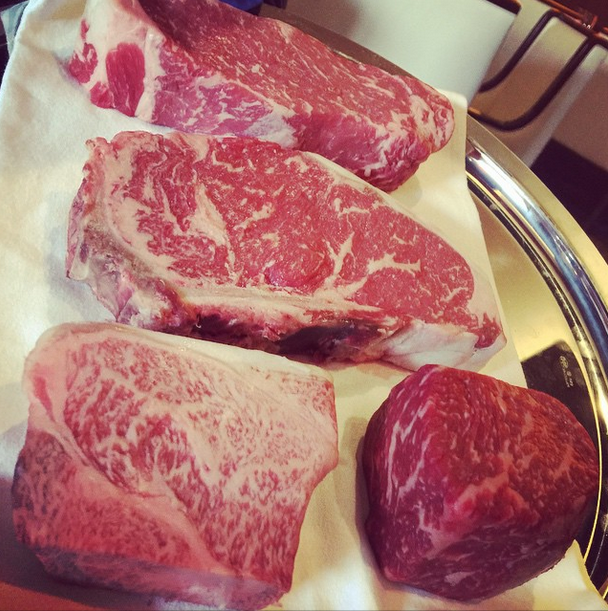
But it’s the A5 Japanese Wagyu people have asked me about the most. True Japanese Wagyu beef comes in various grades for quality, and A5 is the highest you can possibly get. The server presented the raw beef to us on a plate—dry-aged ribeye, filet mignon, and Wagyu among the cuts.
The Wagyu is immediately identifiable. While the other cuts marbling here and there, the Wagyu is almost white, a sort of impressionistic painting of red meat and pearly fat. Steak experts always talk about “marbling.” The A5 is beyond marbled. It’s snowed.
We were served three ounces of A5 Wagyu—at $28 an ounce, the cost is $84.
“Jesus!” friends have balked. “For three ounces?! No food is worth that!”
Yes, it is. This food is. There’s a primal moan most omnivores are familiar with. That first bite of a truly good steak—a tidal wave of umami that hits the pleasure center on a million years of omnivorous evolution. Take that moan, multiply it by five moans, and that is the experience of each bite of A5 Wagyu. The bite is soft, almost spongy, on account of fat. It straddles the line between a steak and the meat-butter lusciousness of foie gras. You eat it slowly. You let it linger on your tongue. You roll your head around and act in ways inappropriate of your refined setting.
It is that good.
The restaurant suggests three ounces. But I could honestly justify ordering one or two ounces (anything more than three ounces would be far too much of a rich food). Of course “worth” depends on one’s personal economy. I couldn’t afford to pay $28 an ounce for meat on a regular basis.
That said, I would absolutely pay $52 or even $84 once a year for two to three ounces of this food. I have paid $84 or more for an entire dinner. Many, many times. And the eating experience of those three ounces of A5 Wagyu blew most of those entire dinners out of the water. It’s god food.
America has a long history of over-valuing quantity in its analysis of a food’s worth. In the case of A5, its astronomical quality overrides any desire for a traditional American “meal”—meaning, a mountain of food. A5 Wagyu is not meant to be eaten every day or every week or even every month. It should, however, be eaten before your time is through.
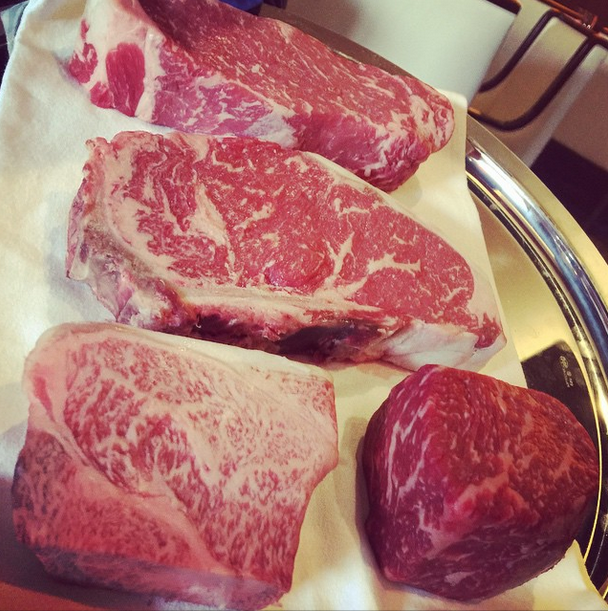
Guess which one is the Wagyu?

Replacing Sheerwater, the al fresco concept opens April 11
The hits keep coming on Coronado.
Social Syndicate is hard at work with its sprawling waterfront project set to open next year, the new Bower Hotel just debuted (complete with views and booze at Dive, its rooftop bar), and after a $550-million makeover, the Hotel del Coronado feels refreshed, revived, and ready for summer.
But global sushi phenomenon Nobu isn’t the only hot new thing coming to the Victorian icon. Next month, Veranda steps into view.
Earlier this year, the hotel tapped executive chef Brian Archibald to head all culinary operations across the property, including Serea, Sun Deck, and the forthcoming Nobu and Veranda. He’s been in the game for over 25 years, working with big names like Daniel Boulud and Alex Lee and at properties like Playa Largo Resort & Spa in Florida, and JW Marriott Desert Ridge, The Boulders Resort & Spa, and The Phoenician Resort in Arizona, to name a few. Heading restaurants in hotels is a completely different beast than running one, or even several restaurants by themselves.

“I’ve dedicated my entire adult life to working with food in restaurants and resorts,” Archibald says. “I am really excited and humbled to bring a focus on quality and simplicity to Hotel del Coronado.”
Veranda’s menu feels contemporary Californian, emphasizing continental and coastal classics like grilled California artichokes, oysters pulled from the icy Pacific, the requisite steaks, salads, and seafood. Archibald says he wants it to feel casual but upscale, and plans to introduce themed events like fried chicken night on Wednesdays, prime rib specials on Thursdays, and seafood boils on Fridays to create a sense of community, even with hotel guests. Named for the original wraparound porch, Veranda seats 159 guests at a time, with only 18 of them inside. Besides the food, the entire point is the view, and it’s well worth $550 million.
The wine list features California-grown labels, as well as global classics, but Archibald says Veranda’s goal is to highlight as much local produce and products as possible. That, and be a part of an icon that’s helped build the island-that’s-not-really-an-island into the quintessential destination it is today. “What’s exciting about the revitalization in Coronado is the energy that you can see and feel on the island,” he says. “I’m ecstatic to welcome local San Diegans to Veranda and share that experience with them.”
Reservations at Veranda are now available on OpenTable.

The Plant Lady—resident cannabis expert and SDM’s content strategist—Jackie Bryant is co-hosting the Mango Madness cannabis pairing dinner at Lia’s Lumpia. Bryant and her co-host Spencer Hunter (Lia’s Lumpia) will guide 21+ guests on a multi-course pairing of bites and puffs starting at 7 p.m. on Monday, April 21, with every morsel centered around a “mango” theme. (Think mango chicken adobo, but with an accompanying tincture and followed by THC-infused mango cheesecake.) It goes without saying, but you should probably come hungry (and plan to rideshare home).

Have breaking news, exciting scoops, or great stories about new San Diego restaurants or the city’s food scene? Send your pitches to [email protected].
Beth Demmon is an award-winning writer and podcaster whose work regularly appears in national outlets and San Diego Magazine. Her first book, The Beer Lover's Guide to Cider, is now available. Find out more on bethdemmon.com.
Coronado’s first-ever rooftop bar will soft open on March 14 featuring a California cuisine–inspired menu
How is it that Coronado is only just now getting its first rooftop bar? I know what you’re thinking. “What about the Sun Deck at the Hotel del Coronado?” It was my first thought, too. I’ve dolphin-watched and downed Bloody Marys plenty of times on the seaside terrace and figured it sort-of counted. But technically speaking, it’s on a deck, not a roof.
Luckily, this glaring oversight will soon be corrected when Dive, the signature restaurant and bar at The Bower hotel, soft opens on Friday, March 14. At three-stories high, Dive is far from a skyscraper, but ascendent enough to provide a breathtaking panoramic view spanning from Point Loma to Baja California.
“We’re trying to strike a balance between trying to have it be approachable, have it be fun, but then also have it be elevated—elevated and sophisticated at the same time,” says general manager Sean Murphy. The entire hotel embraces this duality, drawing inspiration from the location’s multifaceted history as both the site of John D. Spreckels’ Japanese tea garden and as a destination for the Hollywood “It” crowd of the 1950s and 1960s. “‘Bower’ in Japanese actually means ‘the shade of a tree,’” says Murphy. “[We’re] trying to pay homage to that real, restorative, calm, simple kind of philosophy.”

Designed by SFA Design and architecture firm Delawie, which have each created concepts like The Seabird Resort in Oceanside, Miraval Arizona in Tucson, and the Windhoek Plaza Hotel in Namibia, the hotel leans hard into clean lines and neutrals. It’s like looking through sepia-toned glasses—calming ASMR for the eyes, if you will. Dive maintains that calming vibe, but throws in splashes of moody maroon and bluish teal with midcentury elements, including neon signage like the property’s original “Villa Capri” sign behind the bar.
The space seats 65 guests over 800 square feet, with the bar area suited for mingling and wandering, as well as tables intended for sit down guests, both those staying at the hotel and from elsewhere. ‘[We’re] fully open to the public,” Murphy explains, adding they hope to start implementing events like Local’s Night to encourage non-guests to come experience the space as well.
The menu echoes the hodgepodge “high meets low” approach, with items like “Gold + Black” crispy chicken nuggets topped with crème fraîche and a dollop of black caviar. In short: expect elegance, but with a dash of fun. All-day fare starts at sunrise, with California cuisine-inspired dishes like a lemon-and-lox tartine, matcha berry bowl, and avocado brioche. Lunch brings salads, sandwiches, and small plates such as grilled fish tacos and gochujang chicken crunch salad. “Sunset Snacks & Supper Starts” is the dinner portion of the menu, which Murphy says is meant to be shared.

But for as good as the food is going to be, Murphy promises the drinks will be even better. The team tapped food and beverage director Jackie Rixe, who brings rooftop experience from her tenure at The Nolen at Courtyard San Diego Gaslamp/Convention Center. “We want that beverage program to really shine,” says Murphy.
The cocktail collection taps into the same Japanese wabi-sabi influence as well as the Hollywood heyday with names like The Duchess, made with Empress gin, Giffard passion fruit, lemon juice, and demerara; or the Glamour Splash with aperitivo, chareau aloe liqueur, guava, and prosecco. (See if you can spot the diving lady as the “i” in the Villa Capri logo stamped on the custom drinks mugs handmade in Leucadia.)

I’m not a San Diego native, but I’ve lived here for nearly 20 years and consider myself, at the very least, a local who’s witnessed the sea change across the city’s food and drink scene. Ten years ago, the only place I’d regularly eat on Coronado was from a picnic basket at the beach. Now, the island that’s-not-really-an-island is tantalizingly flush with options, and more are on the way.
Nobu opens at the Hotel Del this year. Social Syndicate’s sprawling concept is coming to the Ferry Landing. Saiko Sushi’s happy hour is a bargain in the typically high-priced area. Little Frenchie is a great brunch spot. And CH’s second hotel, The Baby Grand, will bring the group’s signature maximalism to the once-sleepy suburb. Coronado is coming up, and Dive is helping it make a splash.
Dive will be open Sunday through Thursday, 7 a.m. to 11 p.m. and Friday through Saturday, 7 a.m. to midnight.
Beth Demmon is an award-winning writer and podcaster whose work regularly appears in national outlets and San Diego Magazine. Her first book, The Beer Lover's Guide to Cider, is now available. Find out more on bethdemmon.com.
The family-owned restaurant's chilaquiles are slowly but surely taking over brunch plates everywhere
If breakfast is the most important meal of the day, and chilaquiles are the most delicious breakfast dish, then Cocina35’s chilaquiles aren’t just a tasty choice. They’re the smart choice. (At least that’s what I tell myself.) Come November, there will be one more option to get my chilaquiles fix when their fifth location opens on Coronado.
Paulina Chaidez and her brother Cesar opened the first Cocina35 in 2012, following in their restaurateur parents’ footsteps. Initially called La Loteria Comedor Casual, the family business eventually changed its name and now operates locations in downtown, Otay Mesa, Barrio Logan, and Liberty Station. The restaurant specializes in chilaquiles, a traditional Mexican breakfast dish made with fried tortilla pieces or tortilla chips smothered with different meats, salsas, and other toppings.
Chaidez explains that Cocina35 Brunch is the restaurant’s breakfast and lunch–focused arm, and the new location will mirror the menu and aesthetic of the Liberty Station location. She says they had been looking for opportunities to open in North County, but when they heard that Costa Azul closed last year, they jumped at the chance to take over the suite with sweeping views of the bay and downtown. Plus, she adds, she grew up going to Ferry Landing many times.
“My dad used to bring us to Coronado every time we visited San Diego,” she explains, saying whenever her family would come up from Mexico, they’d take the ferry over to the island. “This was just an opportunity that we couldn’t pass.”

The approximately 4,500-square-foot space seats 150 guests, and Chaidez says the menu will be the same as Liberty Station with a few customer favorites plus some new ones, like a twist on a Paloma, mimosa flights, and an upgraded lunch menu. Once this location opens up, they plan to open more restaurants in North County in the next six to seven months. But in the meantime, she couldn’t be happier about coming to Coronado.
Cocina35 Brunch will open at 1201 First Street, #115 on Coronado, in mid-November. It will open from 8 a.m. to 3 p.m., with extended late-night summer hours coming in 2025.
If you’re feeling libatious, Cutwater’s annual “Lost At Sea” spooky speakeasy runs all month long, kicking off each night at 6:30 p.m. Guests will “board” a pirate ship and move throughout the decks, checking out different cocktails and nautical-themed small plates. This event runs nightly through Halloween, but only enter if you dare (and if you’re over 21).
For those feeling peckish, the 15th annual Taste of Coronado takes place on October 9 and runs along the Coronado Ferry Landing before winding to a close at Rotary Park. Proceeds go to the San Diego Rescue Mission a nonprofit program offering housing and recovery aid to the unhoused. Find tickets and more information here.

Have breaking news, exciting scoops, or great stories about new San Diego restaurants or the city’s food scene? Send your pitches to [email protected].
Beth Demmon is an award-winning writer and podcaster whose work regularly appears in national outlets and San Diego Magazine. Her first book, The Beer Lover's Guide to Cider, is now available. Find out more on bethdemmon.com.
This month, the 2026 San Diego Business Impact Awards recognized local businesses making an impact in clean energy, biotech, hospitality, and beyond
Renewable energy companies building hundreds of power plants. Biotech startups using artificial intelligence to create personalized medicine for children with rare diseases. Hospitality companies quietly powering thousands of local events. Consumer brands growing from beach-town startups into national businesses. These are the kinds of companies driving San Diego’s economy today, and the businesses recognized at this year’s San Diego Business Impact Awards offer a snapshot of where the region is headed.
Hosted July 23 by San Diego Regional Economic Development Corporation (EDC) and JPMorganChase, the second annual awards event honored four local companies for innovation, growth, and economic impact. More than 100 nominations from San Diego’s middle-market businesses were reviewed by a 10-person judging committee, with winners selected across four categories: startup, early-stage innovator, rising star, and established heavyweight.
Two-time honoree Jimbo Someck, founder of Jimbo’s organic grocery stores, also joined the event for a fireside chat on buying local, supporting emerging brands, and giving back to the community.
“San Diego’s strength comes from its makers and builders—the resilient people who endure great risks and overcome obstacles to build and scale a company,” says Aaron Ryan, San Diego Region Manager and Middle Market Banking at JPMorganChase & Co. “These awards aren’t just recognition; they spotlight the talent, grit, and innovation shaping our region’s future. By celebrating those who create and build, we foster connections and fuel the growth that keeps San Diego thriving.”

Heavyweight honoree SOLV Energy has grown alongside the country’s rapid investment in renewable power. “It’s an exciting time for SOLV Energy as we are experiencing significant growth,” says CEO George Hershman. “The business has doubled over the last year and has almost double-digit growth since its inception.”
The Rancho Bernardo-based company designs, builds, operates, and maintains utility-scale solar and energy storage facilities. Since its founding in 2008, SOLV Energy has built more than 500 power plants.
Growth has translated directly into hiring. About 200 employees work from the company’s local headquarters, including roughly 20 interns. “Our intern program is a big part of the way that we grow our workforce,” Hershman says. “Last year, 43 percent of our interns became full-time employees. We believe San Diego is a great community to build and grow a high-tech infrastructure and technology company because of the incredible workforce—the ability to attract top talent and draw from world-class universities.”
Startup honoree La Jolla Labs is tackling one of medicine’s biggest challenges by developing personalized RNA therapeutics for patients with rare diseases—many of them children with neurological disorders like ALS. Using proprietary artificial intelligence and machine learning tools, the biotech company develops treatments tailored to each patient’s specific genetic mutation.
CEO Tamar Grossman says the recognition reflects how far the company has come despite limited resources. “We’re honored to be recognized for our ability to change and save patients’ lives and turn our lean startup into a clinical company with very minimal resources,” she says.
Grossman credits San Diego’s concentration of research institutions—including UC San Diego, the Salk Institute, and Scripps Research—with creating a pipeline of talent and collaboration. “San Diego is one of the world-leading centers for technology, genomics, and RNA therapeutics,” she says. “We have over 30 RNA therapeutics companies here, and we support each other and help with anything related to drug discovery.”
She says that collaborative spirit extends beyond formal partnerships. “You can walk around Torrey Pines, go into a café, and find colleagues from the industry and have an ad hoc conversation,” Grossman says. “That’s something very unique to San Diego.”
While Snake Oil Venue Company may not be a household name, chances are many San Diegans have attended one of its events. The early-stage innovator honoree has expanded from beverage catering and mixology consulting into venue management, operating Julep Venue in Mission Hills, Bramble Bay Venue in Imperial Beach, Vesper Venue, the Chapel at Liberty Station, and five outdoor venues throughout Liberty Station—more than 500,000 square feet of event space altogether.
“We do a lot of launch parties for corporations and new products,” says CEO Mike Esposito. “I really like working on the entrepreneur side of things, where new businesses are entering the San Diego market and looking to make a splash.”
Snake Oil has executed more than 16,000 events, employed more than 1,000 people, and partnered with more than 900 local vendors, including caterers, florists, photographers, entertainers, and other hospitality businesses. The company also works with many of San Diego’s nonprofits, museums, and cultural institutions. “We get to celebrate people’s most important moments,” Esposito says. “Whether that’s a wedding, celebration of life, or quinceañera, we’re fortunate to be involved in the community in so many different ways.”

Rising star honoree ALOHA Collection is proof that a simple idea can grow into a thriving company. Founded by two roommates who wanted a better way to carry wet swimsuits after a day at the beach, the lifestyle brand has grown into a business while maintaining strong year-over-year growth.
Now headquartered in Carlsbad, ALOHA Collection employs more than 100 people and operates its California flagship store in Encinitas, which is slated for a remodel. With roots in Hawaii, the company is known for its lightweight, splash-proof travel bags that have become a familiar sight on beaches in San Diego and beyond.
“‘Aloha’ is part of our name, but it’s also how we move through the world,” says CEO Lynna Barnard. “It’s how we show up for people, the way we travel, the way we give back.” Since day one, the company has maintained a 5 percent giveback to Hawaii conservation efforts, contributing millions of dollars over the years.
“I think what’s so inspiring about ALOHA Collection, and the founders in particular, is when you dream big, those dreams can come true when you work hard and trust in the universe,” Barnard says. “It’s inspiring to be a role model for other people wanting to start businesses from humble beginnings. Start small and watch it grow.”
Together, businesses like these form a cornerstone of San Diego’s economy—not only through the jobs and revenue they generate—but through the local workers they hire, vendors they support, and investments they make in the region. Their growth doesn’t happen in isolation; it ripples outward, strengthening the broader business community and the people who call San Diego home.

San Diego's big public market unveils three big new concepts
Every city wants one of these. A public food market on par with Pike Place in Seattle or the Ferry Building in San Francisco. A hall of food, an amusement park for your discerning mouth. And now Liberty Public Market is reportedly two months away from its debut in November (a betting man might say December is more likely). The 22,000 square-foot project next to Stone Brewing in Liberty Station, spearheaded by Coronado’s Blue Bridge Hospitality (Stake Chophouse, Leroy’s, etc.), will include 30 mostly local food vendors. It’ll have bread, coffee, wine, cheese, seafood, meat, produce, a restaurant, a bar, beer, juice bar, ice cream, lobster rolls, desserts—everything that’s legal and consumable.
Some of those vendors have previously been announced, including Venissimo Cheese, Le Parfait Paris, Liberty Meat Shop (run by local butcher icon, Tommy Battaglia), Cane Patch Pies, Cecilia’s Taqueria, Fully Loaded Juice, Local Greens, Mastiff Sausage, MooTime Creamery (a Blue Bridge concept), WestBean Coffee Roasters, Wicked Maine Lobster, Pasta Design, Stuffed, Point Loma Tea, Fishbone Kitchen and Parana Empanadas.
Today San Diego Mag breaks news on their newest projects. First, four new vendor concepts: Crafted Baked Goods (from Blue Bridge’s pastry chef Francis Laureano, formerly of Bottega Louie), Mama Made Thai, Bread & Butter (a co-op of the city’s best bakeries) and a produce section featuring San Diego farm goods. Then, four big announcements:
With Stone’s success next door, and San Diego’s top pizza joint Buona Forchetta opening their second location a few hundred feet away, it looks like Liberty Station is finally hitting its stride.
Rendering of the incoming Liberty Public Market, set for a November open (we guess more like December).
The first photos in the known universe of Coronado's new modern steakhouse.
Blue Bridge Hospitality has emerged rather quickly as one of the top restaurant groups in San Diego. First they colonized Coronado with five concepts (MooTime Creamery, Village Pizzeria, Lil’ Piggy’s Bar-B-Q, Coronado Coffee Co.) and then they announced a huge Ferry Building-esque project called Liberty Public Market. But right now, the focus is on Stake. Set to open Nov. 6, their riff on the modern steakhouse takes over the second-floor perch in Coronado formerly occupied by Ristorante La Terazza. The team is really, really impressive, with exec chef Tim Kolanko (longtime right-hand man to Jeff Jackson at AR Valentien), wine director Greg Majors from Tom Colicchio’s Craft Restaurant, and pastry chef Francis Laureano (Bottega Louie in L.A.). This won’t be your father’s rich mahogany, leather and tuxedo steakhouse. It’ll feel more like now. Expect dry-aged steaks, raw and cooked oysters, plus imaginative dishes from Kolanko. We’ll get to the food later. For now, take a look at the first photos of Stake.
FIRST LOOK: Stake Chophouse & Bar
Sam Wells
San Diego aesthetic medicine providers help you look—and feel—your best
San Diego is home to world-class aestheticians, plastic surgeons, and dermatologists who can help turn back the hands of time and revitalize tired, damaged skin. Enhancing your look is a spectrum. Treatments range from noninvasive procedures like lasers or injectables to the big guns, like a deep-plane facelift—many with better results and less downtime than ever thanks to advanced techniques and technology. Whether you’re a Botox beginner or an aesthetic medical care veteran, San Diego aestheticians and aesthetic medicine providers can help you look and feel like the best version of yourself.

Changes Plastic Surgery & Spa is San Diego’s premier destination for aesthetic surgery, led by world-renowned plastic surgeon Dr. Michael Rossi. Celebrated for his artistry, precision, and natural-looking results, Dr. Rossi is known for creating customized Mommy Makeovers that help women restore confidence and reclaim their bodies after pregnancy. His expertise also extends to comprehensive post-weight loss body contouring, addressing excess skin and skin laxity with sophisticated surgical techniques tailored to each patient’s unique anatomy and goals. From breast and body rejuvenation to deep plane facelifts and eyelid surgery, every treatment plan reflects Dr. Rossi’s commitment to surgical excellence, personalized care, and transformative results that look as beautiful as they feel.

At Cosmetic Laser Dermatology, the board-certified, internationally acclaimed team has the power to erase 10+ years of aging in a single treatment. The center’s 60+ laser, light, and energy devices do it all—refining texture and tone, calming acne, minimizing pores, and erasing that ill-advised spring break tattoo of yesteryear. Their dermatologists take it further by stacking multiple devices in one session for synergistic results—the philosophy behind their signature Take5 and Take10 treatments, the latter capable of removing a decade-plus of aging in just one visit. Add a full suite of injectables, body sculpting, and vein treatments for every skin type and tone, and it’s no wonder the practice’s medical director was named the #1 cosmetic dermatologist in America by Newsweek two years running.

If it’s subtle, lasting results you’re after, Cultivé Medical Aesthetics has you covered. Cultivé purposely combines aesthetics and wellness. The Bankers Hill practice offers a full menu of services designed to improve skin health and support the three pillars of aesthetic aging: skin tone and texture, volume loss, and laxity. Cultivé offers a wide range of aesthetic treatments, including collagen boosting powerhouse Morpheus8, biostimulators like Sculptra and Radiesse, PRP therapy, laser hair removal, VI peels, and regenerative skincare treatments. They also provide wellness-focused services such as hormone replacement therapy, IV therapy, and medical weight management programs.

Starlite Aesthetics and Wellness focuses on enhancing natural beauty through science-backed treatments tailored to each client’s goals. Michelle Langston, MSN, APRN, FNP-BC, founded Starlite on the principle that aesthetic medicine should be precise, personal, and rooted in wellness. The boutique aesthetic practice in La Jolla combines modern medical aesthetics with holistic wellness principles for refined results personalized to each patient. Langston has spent more than a decade honing her skills in advanced injectables, regenerative therapies, and anti-aging care. Starlite offers regenerative therapies rooted in science, promoting skin rejuvenation using a multiple modality approach. Service offerings include RF microneedling, wrinkle relaxers, facial balancing and more.

In the rapidly advancing field of aesthetic medicine, it can be hard to tell what’s worth the hype. Here are some of the latest, most advanced, and most popular options out there.
Morpheus8: This combination of microneedling and radiofrequency (RF) energy activates your skin’s own collagen and elastin without the downtime associated with some
laser treatments. It can be used to reduce wrinkles, tighten skin, improve skin tone, contour the jawline, and minimize acne scars.
Exosome Therapy: This cutting-edge treatment uses protein-packed nanoparticles to trigger repair and rejuvenation at the cellular level. Often used post-microneedling or lasers, exosomes penetrate deep into the skin to stimulate collagen production.
Post-GLP-1 Skin Removal: Rapid fat loss prompted by GLP-1 medications, including semaglutide, tirzepatide, and retatrutide, can leave users with sagging skin. Skilled surgeons can remove excess skin and reshape the figure.
Treatment Stacking: Sometimes it’s the more the merrier when it comes to aesthetic procedures. Combining multiple non-surgical treatments in a single session allows users to address several issues efficiently, with less downtime.