Featured articles
Food & Drink
Food & Drink
Food & Drink
Featured articles
Everything SD
Everything SD
Everything SD
Featured articles
Charitable SD
Things to Do
Things to Do
Featured articles
podcast-ep
podcast-ep
video
Featured articles
Everything SD
Everything SD
Everything SD
Featured articles
Partner content
Charitable SD
Charitable SD
Ready to know more about San Diego?
SubscribeReady to know more about San Diego?
The craft beer scene in Baja is emerging from San Diego's shadow and coming into its own
Craft beer is booming in Baja California. What was once a grassroots network of passionate homebrewers clandestinely sharing their brews with family and friends has transformed into a multimillion-dollar industry representing nearly one-fifth of Mexico’s entire economic output of cerveza artesenal.
In October 2019, the Mexican Association of Beer Makers (ACERMEX), an organization similar to the United States’ Brewers Association, estimated the country would surpass 1,000 craft beer companies by the start of 2020, many of whom are based in the state of Baja California. But this persistent rise of beer businesses has been fraught with roadblocks, forcing scrappy entrepreneurs to fight tooth and nail to operate openly.
These obstacles range from a near-complete stranglehold of the market by Anheuser-Busch InBev–owned Grupo Modelo and Heineken-owned Cuauhtémoc Moctezuma to prohibitively expensive import taxes on ingredients. When asked what’s stifling Baja breweries’ growth, Collin Corrigan, a San Diego native and founder of Ensenada’s Cervecería Transpeninsular, just laughs. “Do you have a couple days to listen? I could go on for hours.”
But these challenges have done little to stem the tide of small, independently owned craft breweries opening across Baja California, especially in cities like Tijuana, Mexicali, and Ensenada. Early pioneers like Cervecería Insurgente and Wendlandt Cervecería helped spark the revolution with a hefty dose of influence from San Diego.
“If it wasn’t for our proximity [to San Diego], not only would we not have been exposed to all the beers that marked our career, creatively and technically, but we wouldn’t have access to the fresh and readily available ingredients,” says Ivan Morales, cofounder of Insurgente. “The community of brewers between both cities have done a very good job of working together.”
Arguably, San Diego’s biggest contribution to Baja’s burgeoning beer scene is exposing drinkers to super-hoppy beers like IPAs. Mexico’s best-selling beer has long been Corona from Grupo Modelo, which is also one of the top five most consumed beers in the world. Now, brewers hope these historically flaccid lagers will serve as a gateway to more adventurous brews. Other styles that have fallen out of fashion in the US, like robust porters and amber ales, are prevalent on Baja tap lists.
But as I, a pretty frequent drinker of San Diego craft beer, began to explore the Baja beer scenes in earnest, a few obvious differences unfurled. Quality is sporadic—an issue most brewers openly admit. More than once, a brewer has poured me a not-quite-right splash straight from the tanks with a shrug and a promise that they’ll tweak it the next time. Nothing’s undrinkable, but there’s a lot that wouldn’t fly in the US.
The biggest and more attractive difference is a feeling, a vibe, an excitement—that unspoiled naivete about collectively building something from the ground up and giving the big boys of beer the middle finger at the same time. Experimentation and innovation are encouraged, and while the results don’t always land, it’s intoxicating to witness. Baja brewers are unfettered by expectations (although with a decent amount of awards already earned, that’s sure to change). Still, it must be difficult to define oneself in the shadow of San Diego beer.
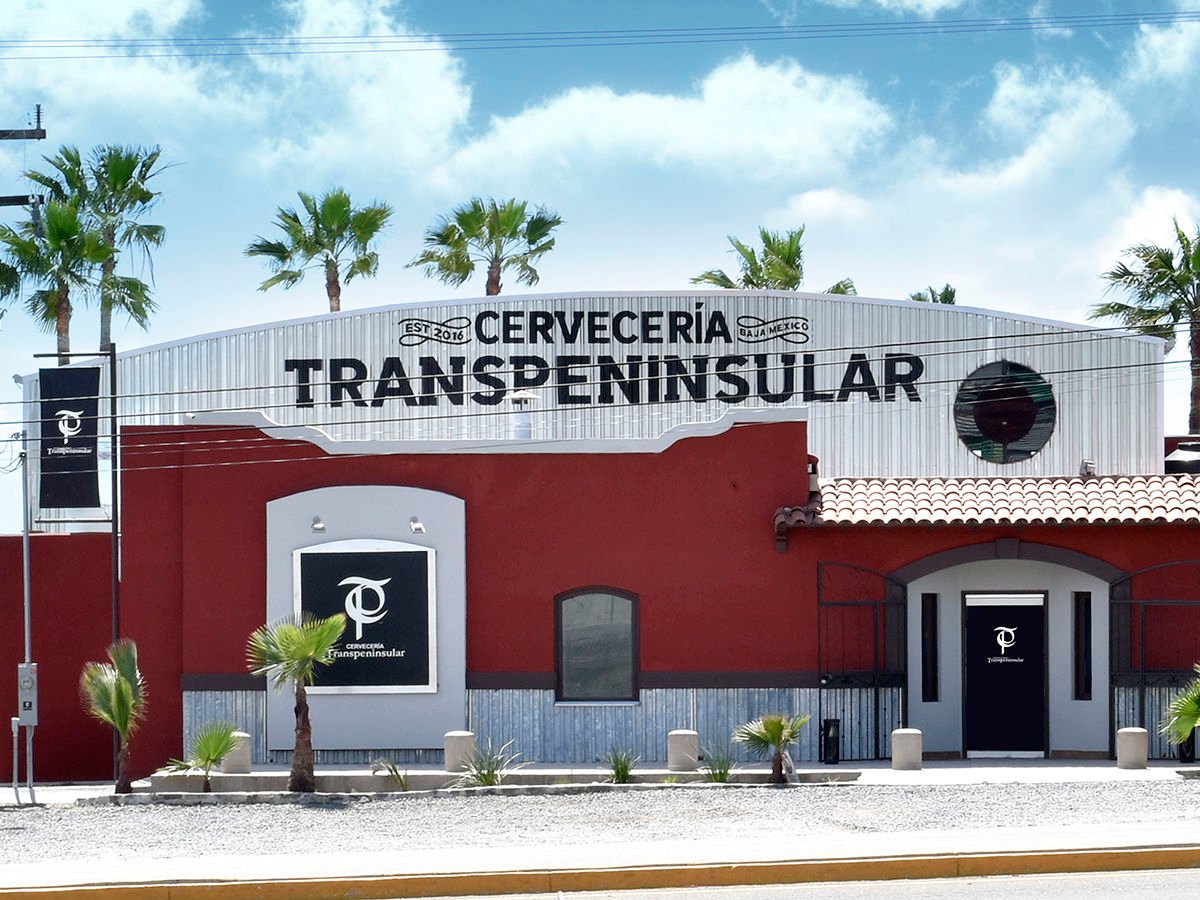
Cervecería Transpeninsular
“[Baja beer] is still trying to find its spot,” Corrigan says. “We have not established our own uniqueness.”
Morales is confident that not only will Baja get there, but they’re already there. “I think Baja will continue to be the bastion of craft beer in Mexico because of our openness and confluence of new ideas. Tijuana, in particular, is a sort of melting pot that has always allowed for an influx of different currents; it’s an ever-changing city that does a very good job of adapting to changing contexts.”
As beer quality increases and logistical barriers decrease, it’s likely that more breweries across Baja will open and garner further international recognition in competitions like the World Beer Cup. If the current course of pressure on the government to relax restrictions on independent breweries continues, the number of craft breweries exporting to the US and other countries will probably rise as well. But my one hope for the future of Baja beer isn’t “better” beer or more styles. It’s that they maintain that sense of camaraderie that we’ve somewhat lost under the weight of the crown. In that vein, long may Baja reign.
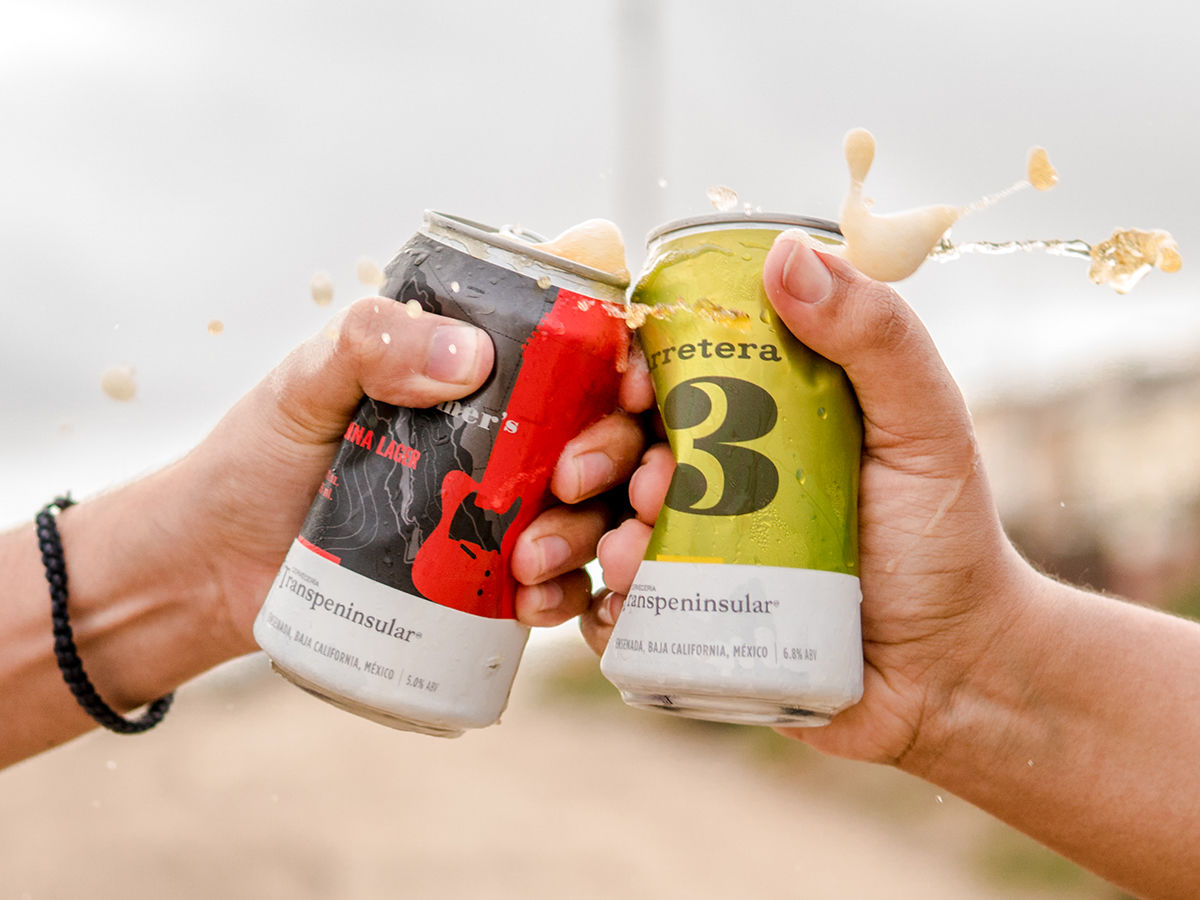
Baja Beer — Feature

Beth Demmon is an award-winning writer and podcaster whose work regularly appears in national outlets and San Diego Magazine. Her first book, The Beer Lover's Guide to Cider, is now available. Find out more on bethdemmon.com.
What's next for the 10-year-old award-winning destination? Owner Mike Tajran hopes to hand the reins to a local up-and-comer
After 10 years of rooftop dining and brewing award-winning beers, OB Brewery is for sale. A local fixture on Newport Avenue, OB Brewery owner Mike Tajran is ready to retire and hand over the reins. “It’s got so much potential,” he says, pointing to the accolades the brewpub has collected throughout the last decade (it’s more than a few).
At the 2017 Great American Beer Festival, OB’s Hidden Gem Dunkelweizen won silver in the German-Style Wheat Ale category, followed by a World Beer Cup silver medal as a South German-Style Dunkel Weizen in 2026. In 2018, GABF named OB Brewery Small Brewpub of the Year, brewer Jim Millea earned Small Brewpub Brewer of the Year, and the B. Right On pale ale nabbed a gold medal in the American-Style Pale Ale category. The Elevator Red IPA also took bronze that year at the San Diego International Beer Festival, and earlier this year, they won gold for Couple’s Therapy chili beer and silver for Rauch Me smoked beer at San Diego County Fair Craft Brew Competition.
It’s a solid foundation for the right buyer, he says—someone with brewing and business chops ready for a turnkey operation in a favorable location a block from the beach on Ocean Beach’s busiest street. (And while he’s letting go of the brewpub business, he’s also open to selling the building as part of the deal.)
Originally from Iraq, Tajran’s family ran restaurants in Baghdad, but “they were decimated by Saddam Hussein,” he explains. Once in the United States, he launched Giant New York Pizza at 5050 Newport Avenue in 1984, which eventually became Newport Pizza & Ale House. Newport Pizza felt long ahead of its time, proudly proclaiming they served “no crap on tap” years before the craft beer craze caught fire in San Diego.

When the building’s owners passed away and their son cut his lease short in 2020, Tajran says he was disappointed, but he had a nagging feeling that would happen eventually—which is why he already purchased 5041 Newport Avenue back in 2009 and opened Ocean Beach Brewery in 2016.
“For 42 years, I have been in this location in this area, the same block,” he says with pride. Ocean Beach has gone through some changes since 1984 (the OB farmers market launched in 1992, Starbucks came in 2001 and left in 2022, ADUs crept in, and the iconic OB Pier closed in 2023), but Tajran says the heart of the beachside town has remained the same.
So has most of his staff. Millea has been brewing since day one, and longtime manager Megan Schuster has worked for Tajran for 19 years, first at Newport, then at OB Brewery. Most of the employees are locals, and Tajran says he doesn’t plan on closing the business until he finds the right buyer to carry on the baton.
The property itself comes with some unique features for the area—three stories with a rooftop deck and ocean views from every level. And if you’re wondering if those uninterrupted views will remain that way, Tajran assures me they will. Part of his original building purchase included language that prohibits the three buildings between him and the ocean from building up. He also leases space next door, which would allow a new owner to expand brewing capacity with more tanks and fermenters.
“I just wanted to make sure this goes in good hands,” he says. He and his wife both hope to retire soon in order to spend time with their children. But he’ll make sure his other baby is taken care of first.
“I love Ocean Beach,” he says. “I can say nothing but thank you, OB.”
OB Brewery is still open at 5041 Newport Avenue. Hours are Sunday through Thursday, 11 a.m. to 9 p.m.; Friday, 11 a.m. to 10 p.m.; and Saturday, 10 a.m. to 10 p.m. Interested parties should contact Next Wave Commercial.
Listen Now: The Latest in San Diego’s Food and Drink Scene
Have breaking news, exciting scoops, or great stories about new San Diego restaurants or the city’s food scene? Send your pitches to [email protected].
Beth Demmon is an award-winning writer and podcaster whose work regularly appears in national outlets and San Diego Magazine. Her first book, The Beer Lover's Guide to Cider, is now available. Find out more on bethdemmon.com.
Longtime San Diego beer veteran Erik Fowler and his wife, Shannon, will open their first brewery by end of year
“You’re opening a brewery? In this economy?”
This is the question I posed to Erik Fowler, executive director of the San Diego Brewers Guild. He and his wife Shannon just announced they’re opening Good Pressure Brewing Company in Allied Gardens at the end of the year.
Don’t get me wrong—this is fantastic news coming from great people. But I’m sure I’m not the only incredulous inquirer. The latest Brewers Association report says more breweries are closing than opening across the country, and craft’s overall volume has dropped 5 percent since 2024. Even San Diego, the self-proclaimed “Capital of Craft,” isn’t immune.
Goal Brewing pulled out of the Brewery Igniter space in North Park in March. Little Miss Brewing shuttered all nine locations earlier this year. Half Door Brewing sold to Villains Brewing Company. Division 23 Brewing closed in May. The owners of Jacked Up Brewery retired. Border X Brewing tried launching a GoFundMe before closing up shop in Barrio Logan. It feels a little bleak out there.
But Fowler is far from a naive beer newbie. On the sensory side, he’s a certified Cicerone and BJCP beer judge with sommelier training. He’s studied beer at UC Davis, and gone through the San Diego State University Professional Certificate in the Business of Craft Beer program. He worked in wine retail before managing the taproom and distribution for ChuckAlek in Ramona. He was a taproom lead at Stone Brewing, head of education and hospitality at White Labs for nine years, and the executive director for the Guild for two years. He just had one more thing to cross off his beer bucket list—open his own brewery.
“I’ve always wanted to own a business in the beverage space,” he says. “That’s been a goal since I turned 21. I’ve always had the entrepreneurial mindset, and I’m at an age and an experience level where the leap and the risk makes sense.”
The Fowlers had been looking for a space to realize their dream for 18 months, hoping to stay close to their home in East County. Of all of San Diego’s 150-plus breweries, less than 10 percent of them are in East County. El Cajon, La Mesa, Valley Center, and Ramona have one apiece; Julian and Alpine each have two; there are three in Santee; and a couple production facilities that aren’t even open to the public.
“There’s still a lot of opportunity there, especially for underserved neighborhoods,” he explains.
But after a year without any luck, they decided to expand their search slightly. When they saw the former Poochie’s Hooch Urban Cidery space in Allied Gardens that came with two patios, a cellar, existing tasting room, infrastructure for a kitchen, and a wine license, it just fit. “It’s in a great neighborhood that doesn’t have a whole lot to offer,” says Fowler. “We wanted a spot that could be family-friendly, and it just ended up working out.”
Despite an address in the city of San Diego, Fowler says they plan to focus heavily on serving the eastern side of the county, both in distribution and in their marketing approach. As residents of East County, the San Diego stereotype of beaches and surfing doesn’t always resonate with them.
“San Diego to a lot of people is the beach, but from growing up and being in East County, the San Diego that we know and see isn’t that at all,” he explains. Shannon works for the Escondido-based nonprofit Center for Plant Conservation, which inspired them to incorporate a more nature-based, plant-inspired motif for the brand that better reflects the San Diego East County locals might feel more attuned to.
They’ll initially launch with food trucks and mostly beer, but hope to expand to other beverages like wine and cider and eventually build out an in-house food program. Fowler says they want to first and foremost be a place for families, and an approachable destination for people who aren’t beer experts.
“I want somebody like my mom to be able to come in and feel comfortable, and be comfortable ordering, and just be focused on themselves and having a good time,” he says. He already took the tests at beer school—guests won’t need to feel like they’re taking a quiz to place an order.
“We never want anybody to have to pull out a phone to look something up,” he says. “We want people to come in and have a good time… we want to be the brewery that people are wrapping up their kids’ soccer games.”
Good Pressure Brewing Company will open in late 2025 at 7559 Mission Gorge Road in Allied Gardens.

For decades, College Area has been more defined by fast-casual concepts and taco shops than as a serious dining destination. (I totally get why—who else remembers being a broke college kid without a car?) That’s completely changed over the last couple of years, and the College Area Business District is showing off the restaurants, bars, coffee shops, and other eateries along El Cajon Boulevard—like Scrimshaw Coffee, The Luau, The Mesa Bar & Grill, and more. The second annual Taste of College Area starts at 11 a.m. on Sunday, September 28, with stops between 54th Street and 73rd Street. Don’t want to walk? Hop on the free trolley that runs until the event ends at 3 p.m.
Listen Now: The Latest in San Diego’s Food and Drink Scene
Have breaking news, exciting scoops, or great stories about new San Diego restaurants or the city’s food scene? Send your pitches to [email protected].
Beth Demmon is an award-winning writer and podcaster whose work regularly appears in national outlets and San Diego Magazine. Her first book, The Beer Lover's Guide to Cider, is now available. Find out more on bethdemmon.com.
Pacific bluefin once dominated San Diego, but in our modern food system, wild fish come from cages
Swimming above a thousand bluefin tuna in the deep waters of the Pacific, one feels a dizzying calm. Below, the fish move in endless, unhurried loops, slowly growing plump in their monotony. Weighing around 170 pounds each, the fish in this net-pen are considerable. Heavy as a man and as wide as a surfboard, they move like hydrodynamic refrigerators, pewter backs reflecting water-filtered light like suncatchers.
Not long ago, these fish were in the open ocean, gunning 18 miles an hour through cold currents, possibly detecting our planet’s magnetic field using mineral deposits in their snouts, and tracing ancient migration patterns through the largest ocean on Earth. But here, with a gringo in a wetsuit bobbing above them, the fish merely draw lazy loops inside a giant aquaculture cage tethered far offshore, awaiting their fate as some of the most sought-after and expensive cuts of protein on the planet.
This is Baja Aqua Farms (BAF). Located in Mexican waters southwest from San Diego, BAF is, at any given time, home to tens of thousands of tuna worth tens of millions of dollars, making it one of the largest tuna ranching operations in the world and a major player in a modern global fish farming industry that now supplies more than half of the world’s seafood.

If one were to, say, fly a helicopter over this operation, the view through the omnipresent cloud of gulls would prove impressive. Thirty Olympic pool–sized net-pens float in an open-water grid, each filled with a single school of a thousand or more bluefin. Some are huge, weighing more than 400 pounds, and some are smaller, around 45 pounds (still a lot of fish). And anchored in the middle of it all is a sizable, computerized central feeding vessel where specialists sit on aging rolling chairs inside an air-conditioned cabin, monitoring each school’s food consumption and their pen’s water quality on screens 24/7. A ship that thousands of pounds of feeder fish visit briefly each day after being offloaded from sardine boats and before being pumped into the bellies of tuna.
I ventured here on an educational mission. As a lover of both the ocean and tuna, I wanted to find out how bluefin—an animal fished nearly to extinction within my lifetime—makes its way into the tartares and chirashi bowls of today. My search led me here, face down in the water, listening to the sound of my breath through a snorkel and contemplating the vast machinations that keep these incredible fish churning through the global food system.
Silent as they are, these tuna tell a story about the future of fish and the future of how we interact with the ocean.
All of which we’ll get to. But first, let’s eat.

By the time the bluefin arrives on my plate as glistening, fatty slices of pink otoro at Ophelia restaurant in Ensenada, it has already crossed oceans, boundaries, and moral terrain.
This fish was part of a school of tuna born in the open Pacific from eggs laid off the coast of Japan, captured as juveniles in Mexican waters by BAF boats in vast purse seine nets, towed for months to the BAF ranch, and fattened for many more months with feeder fish harvested from our coastal ecosystem by the BAF sardine fleet, then efficiently and bloodily killed, refrigerated, and brought to shore here in Ensenada to be packaged and driven over the border to LAX, where they either get exported—mostly to Japan— or eaten in high-end omakase and strip-mall sushi joints throughout San Diego, once the world’s tuna fishing capital.
Bluefin tuna, recent developments have shown, is both a symbol of past overfishing and a surprising conservation success. And its future now lies in operations like Baja Aqua Farms, which represent the next phase of human seafood consumption.
With me at the table, talking tuna, is Rodrigo Armada Tapia, the head of sustainability at BAF. Having grown up in Ensenada, Tapia speaks with pride about the region’s food culture—where tuna is often a star ingredient. Before taking me to the farm the next day, he wanted me to try the product, which BAF packages under the name Bluefiná.

“You can’t understand the fish until you taste it,” he tells me.
Ophelia is Michelin-recognized. It sources bluefin from BAF, as do some notable restaurants in San Diego.
Mateo Hoke is a journalist and author. His books include Six by Ten: Stories from Solitary, and Palestine Speaks: Narratives of Life Under Occupation.
Behind every beautiful space is a thoughtful process, and ASID San Diego is helping homeowners understand the value of professional design.
A perfectly designed home rarely happens by accident. Those kitchens that feel effortless and rooms that seem to tell a story the second you walk in? They’re usually the work of someone who knows exactly what they’re doing.
It’s knowing which ideas will actually work, which materials will hold up over time, and how to turn a collection of choices into a space that feels intentional. That’s where a professional interior designer comes in.
For the American Society of Interior Designers (ASID) California San Diego Chapter, the goal is to help people see interior design as more than just the finished look. Behind every well-designed space is a process built on technical expertise. Designers are educated in everything from professional software and construction details to building codes, space planning, materials, and functionality.

“People don’t always realize how much goes on behind the scenes,” Kirsten Recce , current president of the ASID California San Diego Chapter, says. “Our designers are not just doing furniture placement and color selection and picking out new fluffy pillows. That’s not what they’re trained for.”
ASID members bring formal education, continued learning, and industry knowledge to their projects, helping create spaces that are not only beautiful, but designed to work. A paint color that changes completely depending on the lighting. A material that looks beautiful in a showroom but doesn’t make sense for everyday life. A layout that photographs well but doesn’t function for the people living there. These are the details where professional guidance can make all the difference.
Still, one of the biggest misconceptions about hiring an interior designer is that it’s reserved for massive renovations, luxury homes, or people who already know exactly what they want. The process can feel intimidating. Where do you begin? Is a designer worth the investment? What if you only need help with one room?
ASID’s answer: start with one hour.
ASID’s Spruce Up events break down one of the biggest barriers between homeowners and professional design: knowing where to begin. Held twice a year, the community program gives homeowners the chance to work directly with an ASID designer through a one-hour, $125 consultation in their own home. Whether you’re looking for advice on furniture placement, window treatments, kitchen and bath updates, remodeling ideas, vacation rentals, color selections or something else entirely, the upcoming September 2026 event offers an approachable way to get expert guidance before committing to a full project. Signups are open through Sept. 7, with consultations taking place Sept. 21 through Oct. 31. Proceeds benefit ASID San Diego’s educational and community programs. Register here!

“It’s a great opportunity for people who are in that exploratory phase,” Recce says. “Maybe they’re not sure they want to hire an interior designer yet, or they think it sounds daunting or expensive. This gives them a chance to discover what working with a designer is actually like.”
Design is personal. A good designer isn’t just creating a beautiful room; they’re helping create a space that fits the way someone lives.
“We’re a resource to all of San Diego County,” Recce says. “It doesn’t cost anything to pick up the phone and call and ask. We’ll answer.”
Follow ASID San Diego on Instagram, LinkedIn, and Facebook for updates on upcoming events, or connect with the chapter directly at [email protected] or 619-548-8847.
Pick up a bottle or plan a tasting from these esteemed Baja wineries featuring everything from organic pours to a century-old icon
With more than 100 wineries in Valle de Guadalupe, knowing where to go and which to try can feel overwhelming. Luckily, we took the guesswork out of the task and put together a list of our favorite wines in the region from organic pours to a husband-and-wife team, and a century-old icon, here’s what to drink in Valle.
The first organic and biodynamic winery in Mexico (with certifications from CCOF and the USDA) is best known for its Árbol line—the 2021 grenache rosé is fresh and acidic, with notes of strawberries and red fruit.
A highlight of winemaker Phil Gregory’s vision is the 2020 Ambar, a skin-contact chardonnay that is aged for two months in neutral oak barrels, yielding a smooth trip toward the tannic pleasures of an otherwise hackneyed grape.
This husband-and-wife team does it all, from concept to harvest. Try their 2023 sauvignon blanc—its stainless fermentation gives way to a taught acidity.
Started by ex-veterinarian Pau Pijoan, this sleeper hit of the valley is best known for “El Carbónico,” a playful take of the known grapes of the region—grenache, tempranillo, and syrah—fermented through carbonic maceration.
Channeling the body and depth of Super Tuscans, the 2018 Petite Sirah from this nearly 100-year-old icon is a hearty red whose grapes hail from the Rhône Valley in France but feel just as at home in the arid landscapes of Valle de Guadalupe.
Danielle is a freelance culture journalist focusing on music, food, wine, hospitality, and arts, and founder-playwright of Yeah No Yeah Theatre company, based in San Diego. Her work has been featured in FLAUNT, Filter Magazine, and San Diego Magazine. Born and raised in Maui, she still loves a good Mai Tai.
The tastiest excuse for your next trip across the border, according to a seasoned local
No trip to TJ is complete without tacos by the kilo, so we asked TJ native Angel Miron, who runs the tour company Let’s Go Clandestino, to do the impossible: narrow down a list of great tacos in his hometown. Here are five of his favorite.
“These guys serve fried fish and shrimp tacos” on a bustling corner in El Centro de Tijuana, Miron says. “Don’t leave without trying the BBQ-grilled smoked marlin taco on a smoky tortilla.”
Miron likes the tacos dorados de birria from this Tijuana shop. “The taquero is known for pumping them out super fast and does a trick with the consomé—pouring it onto the taco without looking,” Miron says.
While Tacos El Franc’s addition to the Michelin Guide has brought an influx of attention, Miron has long been familiar with its charms. “This is the place I used to go to all the time growing up in Tijuana, especially after a night out with the boys,” Miron says. “[Its] specialty is adobada. I really like the suadero taco.”
Founded in 1960, this place keeps it simple with three taco options: shredded beef, beans and cheese, or chicharrón. “They’re what you would call ‘steamed tacos’ because they are prefilled and then kept hot or steamed in pots,” Miron explains. “Then [the restaurant staff] slaps ’em with shredded cabbage, onion, and salsa roja.”
While this casual spot has multiple locations, its original outpost in the Gabilondo neighborhood is still considered the best. “Not only [does it] have tacos dorados de birria, but amazing carnitas—get the masisa with guacamole,” Miron recommends. “And another specialty here is the torta ahogada [or ‘drowned sandwich’] with birote shipped from Guadalajara.”
Mateo Hoke is a journalist and author. His books include Six by Ten: Stories from Solitary, and Palestine Speaks: Narratives of Life Under Occupation.
Amelia Rodriguez is a writer and journalist and winner of the San Diego Press Club's 2023 Rising Star Award and 2024 Best of Show Award, she’s also covered music, food, arts and culture, fashion, and design for Rolling Stone, Palm Springs Life, and other national and regional publications. After work, you can find her hunting down San Diego’s best pastries and maintaining her five-year Duolingo streak.
Laika Nur, MD, takes her love of volleyball from the court to the clinic as team physician for the San Diego Mojo
Growing up, Laika Nur, MD, Scripps Clinic sports medicine specialist, loved watching beach volleyball when the Association of Volleyball Professionals tour came to her hometown of Chicago. A talented volleyball player herself, she remembers sitting in the stands all day, and once, even got a couple autographs. Years later, Dr. Nur was attending a professional event focused on women’s sports, and the discussion turned to a new professional women’s volleyball league. The general manager and coaching staff for San Diego’s team, the Mojo, happened to be in attendance, and Dr. Nur took the opportunity to ask them if they needed a team doctor. Flash forward to the Mojo’s inaugural 2024 season, when Dr. Nur officially became the team physician. Click here to read more about Dr. Nur and how she incorporates lessons she learned on the court into her practice.
For more nutrition, wellness, and healthy living tips, sign up for the San Diego Health newsletter here.