Ready to know more about San Diego?

Subscribe
Food & Drink FEBRUARY 26, 2020

Chefs Brian Malarkey and Joe Magnanelli Take Fusion to a New Level at Animae

The downtown restaurant serves fully self-aware, intentionally inauthentic Asian food

Chefs Brian Malarkey and Joe Magnanelli Take Fusion to a New Level at Animae
James Tran and Olivia Beall

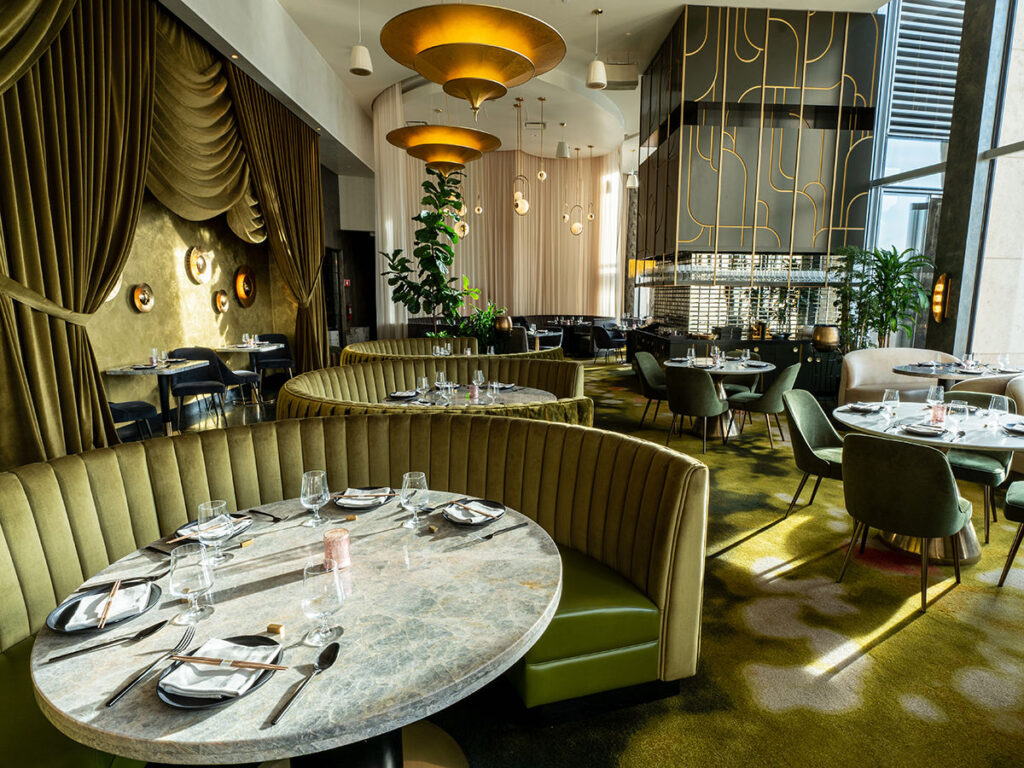
I expected way more neon. Explosive Tokyo neon, the kind that looks really cool in the rain and causes migraines. I expected the highly stylized melodrama of Japanese cartoons. I expected gaudy fantasies, definitely a sense of prolonged adolescence, maybe even a little cosplay. And all I got was an elegant, beautiful restaurant with high-quality drapery and excellently weird food.

Sure, there’s a 20-foot mural of a giant cartoon robot above the bar. He appears to be attempting flotation therapy, doing a lazy backstroke among naval ships and 400-foot koi fish. There are also a few colorful toys in a trophy case at the host’s station. But when you name your restaurant “Animae”—in honor of the wildly inventive and occasionally disturbing tradition of Japanese animation—I don’t think it’s unreasonable to demand that I be overstimulated, amused, and terrified. Instead, I just felt sexy.

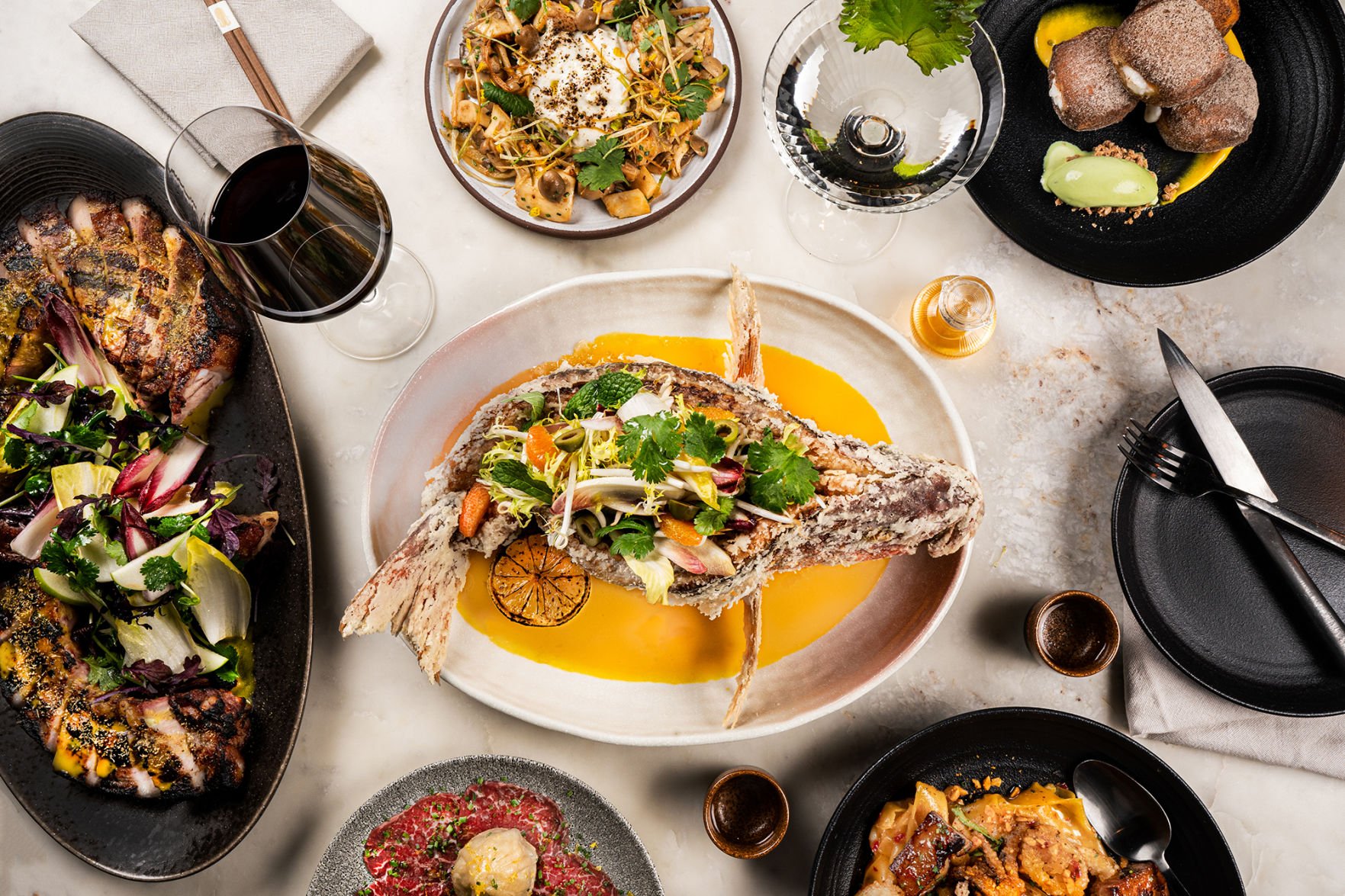
Well, at least the pork tomahawk is terrifying and phenomenal.
Animae – Feature

Pork tomahawk (left); whole fried snapper (center); pork belly and calamari (bottom right)

Photo Credit: James Tran and Olivia Beall

Animae is the new $5.5 million project from Puffer Malarkey, the partnership of operations man and designer Chris Puffer and chef Brian Malarkey, the latter known nationally for his recurring role on Top Chef. After Malarkey’s breakthrough restaurant Searsucker was sold to Hakkasan, he and Puffer put everything they had into the massive Herb & Wood in Little Italy and, well, it jackpotted. It’s an excellent, grand thing, and continues to spit out coins for everyone involved. That spawned Farmer & the Seahorse, Herb & Sea, and now this.

Success draws talented people who also enjoy doing well in life. So longtime Cucina Urbana chef Joe Magnanelli defected to Animae, as did accomplished drinks man and GM Lucien Conner (formerly of Puesto). They’re partners, not just employees. Everyone has a stake in this game, is incentivized to excel. You can feel it.

Your search for reasonable parking will be mocked by this corner of Broadway and Pacific Highway. A night’s budget for dinner at Animae will not be small and will most likely include $12–$15 to the Ace Parking valet (before tip).

The restaurant is the ground-floor attraction of Pacific Gate by Bosa, the ultra-luxury condo development on the embarcadero. This part of downtown is where all the new pretty things are being built (including a $2 billion redevelopment of the waterfront), but much of it is still a ways off. Animae is an early adopter, with a well-known brand but little to no foot traffic. Judging by the jampacked Friday night crowd—all in advanced stages of wealth accumulation—Animae doesn’t need it.
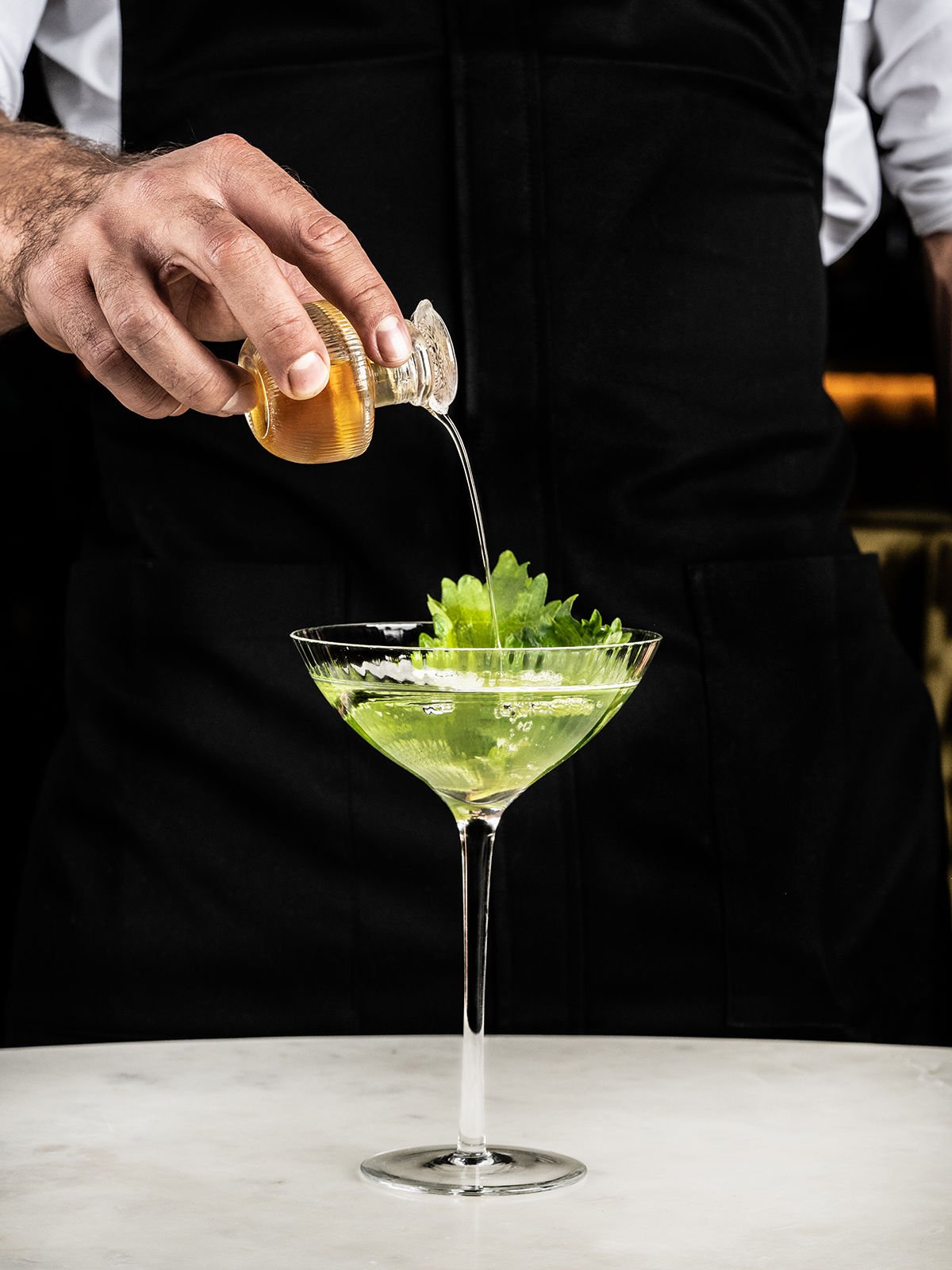
Animae – Dirty Martini

Animae’s spin on a dirty martini

James Tran and Olivia Beall

Animae is fully self-aware, intentionally inauthentic Asian food. Before you think that’s a bad thing, let me suggest that authenticity is one of the food world’s dumber demands. The idea that two accomplished chefs named Joe and Brian shouldn’t cook tom yum mushrooms (the major flavors of the Thai soup—lemongrass, lime leaf, onion, and garlic—sautéed and deliciously absorbed into hoji, king, and maitake mushrooms) is about as low-rent and insulting as suggesting a great Thai chef should not cook cioppino. One of the best cheeseburgers I’ve ever eaten was made by a Korean chef who’d never cooked a cheeseburger before.

So, at Animae you get creations like “butter dumplings,” traditional Asian soup dumplings (xiao long bao) filled with escargot and browned butter over a Wagyu carpaccio and a frico (cheese crisp). It’s French food in a Chinese handbag. Browned butter—cooked low and slow until the milk solids caramelize and develop an intoxicating nuttiness—would make mossy river rocks taste delicious. The dumpling is thicker and tougher than traditional bao (it eats like al dente pasta), and that’s probably not their ideal result. But the flavors, abnormal bedfellows though they may be, really sing. You get elotes (Mexican street corn) tossed with housemade kimchi that’s been pureed in aioli, using Japanese togarashi seasoning (chiles, orange peel, sesame seeds, ginger, seaweed) with pickled jicama and Cotija cheese. Be sure to mix it all up. We used to call this kind of thing “fusion,” but in today’s modern, globalized food culture we just call it food.
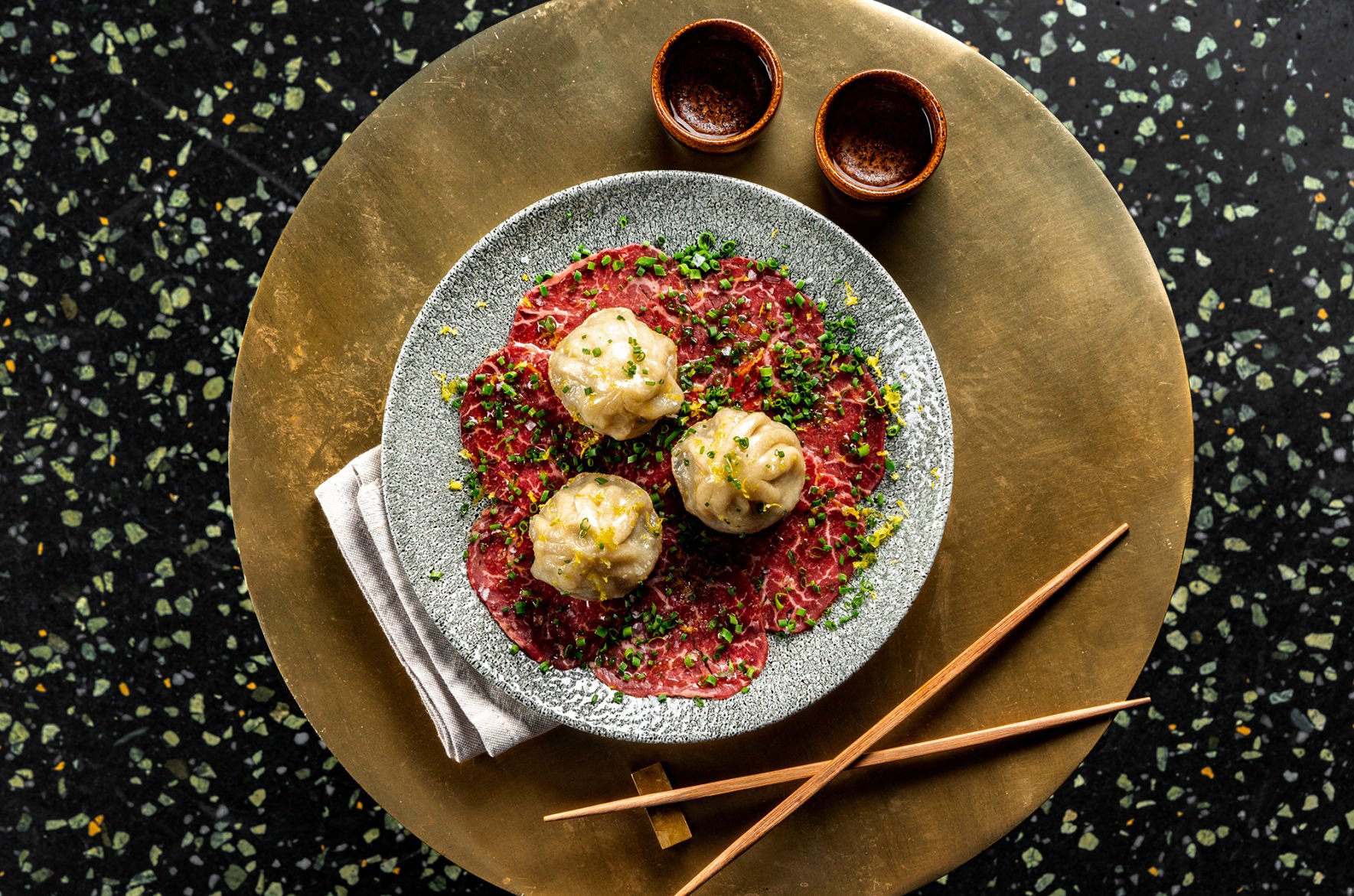
Animae – Xiao long bao

Xiao long bao filled with escargot and served atop Wagyu beef carpaccio

James Tran and Olivia Beall

Every detail in Animae seems obsessed over. Maybe it’s because the restaurant was delayed so long. (Getting a restaurant finished on time has become a cliché joke, and I’m not going to point fingers… but it’s the city’s fault.) The dirty martini, for instance: Instead of plain old olive juice, they start with dry vermouth and add koji (fermented rice), miso, furikake, dried mushrooms, black pepper, soy sauce, and a touch of Laphroaig scotch for smokiness. The result is a more interesting and delicious cocktail, even if it’s not a dirty martini.

The crab hand rolls are very good, tossed with Madras curry and Kewpie mayo (Japanese mayo, the chef’s mayo, amazing, partially because of MSG), topped with uni, shiso leaves, radish, and crunchy garlic. But it’s the chili garlic ponzu sauce that’s real wizardry. Pour it everywhere, drink it, write it poems. Then order the roasted duck bao buns. You know these by now. The Chinese figured out how to make bread clouds, because they’re Chinese and they’ve been baking bread longer than anyone. The buns are whiter than brand-new veneers. Eating them is a form of ASMR, and Animae makes theirs using duck fat, then adds maple-miso sauce, blue cheese, and persimmon.
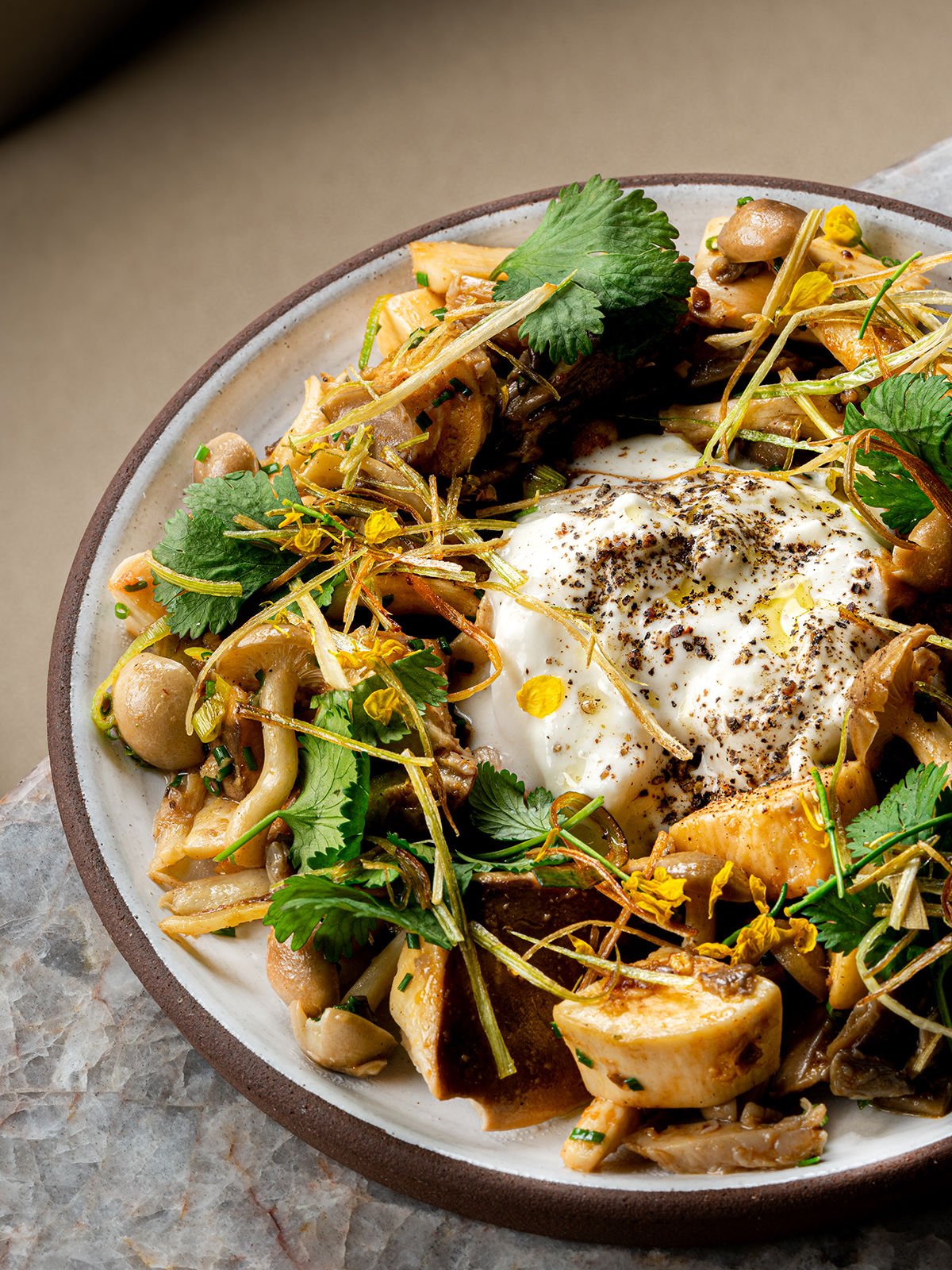
Animae – Mushrooms

Mushrooms cooked with the flavors of tom yum soup and topped with burrata

James Tran and Olivia Beall

The menu has high-end cuisine and dishes that taste like some of the best Asian takeout you’ve had. On the high end, the pork tomahawk is obscene. Juicy marinated pork cubes (loin and belly) are sliced, winding, serpentine, around the plate like some carnivorous hieroglyph. It’s marinated in koji (which gives proteins a sweet, funky umami), drizzled with Madras curry sauce, and sprinkled with fennel pollen. Do not order this massive plate for yourself, unless you are struggling emotionally and need to put those feelings somewhere, or are an offensive lineman. It’s a gaudy retort (really, enough meat for four people) to any plant-based resolutions you may have made in the new year. And it’s worth it.

For more Asian takeout vibes, try the pork belly and calamari. The belly is cured and slow roasted, the calamari is both sautéed clean and deep fried, and it’s rested on egg noodles with yuzu (Japanese citrus) in the dough. Or the fried rice, a Niigata meets Baton Rouge idea, loaded with ham hocks and mustard greens, the rice seasoned with tare (a thick Japanese sauce with miso, mirin, koji, ginger, soy), topped with a fried egg and crispy fried rice tossed with tender rice for texture.
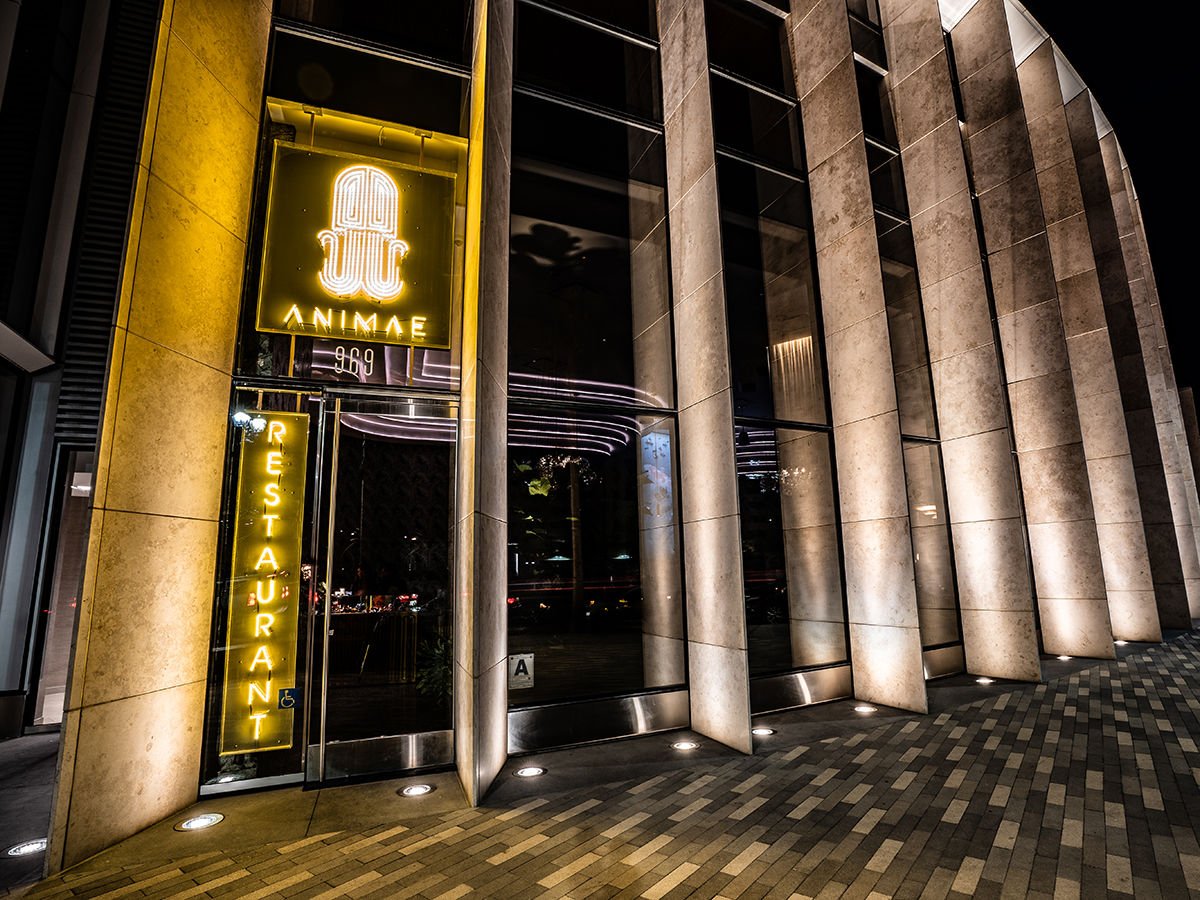
Animae – Exterior

Animae’s entrance on Pacific Highway

Photo Credit: James Tran and Olivia Beall

The only dish we don’t truly enjoy is the one that’s generated the most buzz: the brothless ramen. Chef Magnanelli spent the last decade helming a successful Italian restaurant and this is ramen as a spartan pasta dish. The broth is reduced until there’s nothing left, all the flavor absorbed into the noodles. The problem is the nori (seaweed). While jammed with umami, seaweed is, at the end of the day, ocean weed. If you truly love the taste of nori snacks (they sell them at Costco now, so many of us do), you may enjoy it. I personally love nori, but without a broth to spread its umami gospel (and tone it down), it bullies the other ingredients.

But honestly, that’s the only real miss of our 15 dishes over two nights. And even if you don’t enjoy eating it, anyone can be excited by the idea of a brothless ramen. And a major reason we dine at restaurants like Animae is to taste new ideas. We don’t pay $15 to a restaurant valet to have our expectations met. We pay it to develop new ones.
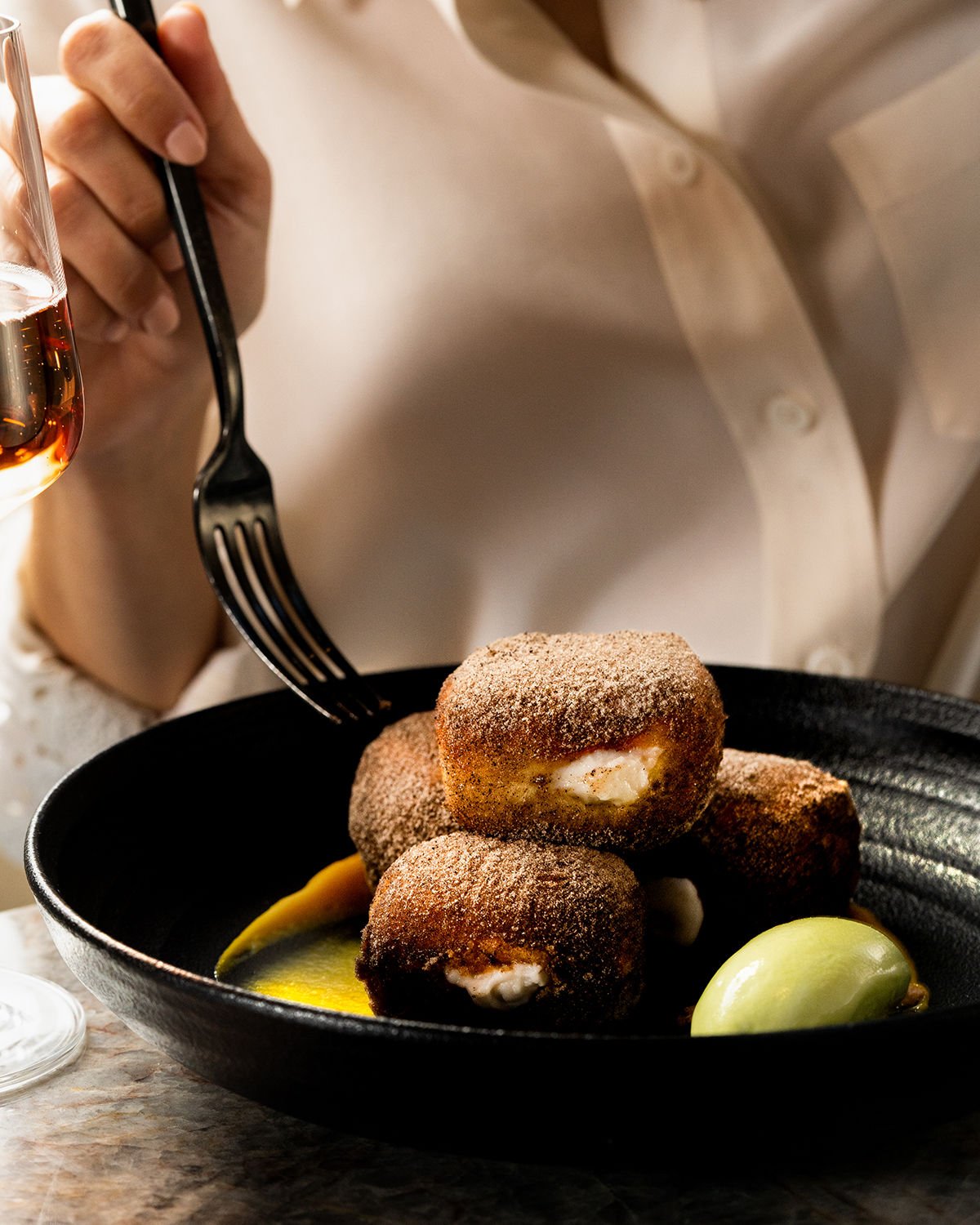
Animae – Donuts

Malasadas, Portuguese donuts, are served with green curry ice cream.

Photo Credit: James Tran and Olivia Beall

Oh, and for dessert, order the malasadas, soft doughy donuts filled with coconut cream, tossed in a mixture of coffee grounds, sugar, and sea salt, and paired with green curry ice cream (yes, ice cream with lemongrass, lime leaf, galangal, and Thai chile—amazing).

I still want more neon and stunted adolescent weirdness in a restaurant named Animae, but it’s a hell of a restaurant.


Troy Johnson

About Troy Johnson

Troy Johnson is the magazine’s award-winning food writer and humorist, and a long-standing expert on Food Network. His work has been featured on NatGeo, Travel Channel, NPR, and in Food Matters, a textbook of the best American food writing.

Subscribe to our newsletters

Select Options

By subscribing you confirm that you agree with our Terms and Conditions and Privacy Policy.

Food & Drink OCTOBER 13, 2025

Mediterranean-California Restaurant Opening in Little Italy

Orexi set to debut inside of the Courtyard by Marriott San Diego Downtown Little Italy—taps local talent from Trust Restaurant Group, Rancho Valencia

Mediterranean-California Restaurant Opening in Little Italy
Courtesy of Orexi

This November, Little Italy is adding one more destination to my lodging-and-libations list when Orexi, a Mediterranean-California fusion restaurant, opens inside the Courtyard by Marriott San Diego Downtown Little Italy (formerly The Little Italy Hotel). The name comes from the Greek word for “appetite” or “desire” (I like that the two seem synonymous, but I digress), and the menu will blend coastal ingredients from both California and the Mediterranean via from-scratch seasonal plates and shareables. 

Orexi will be open for breakfast and dinner, the former featuring the usual suspects—omelettes, pastries, and so on—but also shakshuk and an egg bowl that comes with a tahini vinaigrette. Dinner starts with dips like whipped feta and garlic hummus; small plates like beef kofte sliders with cumin spiced meatballs, tomato sauce, and feta; and burrata Mediterránea with heirloom cherry tomatoes, marinated artichoke hearts, Kalamata olives and roasted red peppers. Entrees run the gamut from fairly light (seared Pacific salmon) to hearty (grilled butcher’s steak), and I’ve really got my eye on the desserts. Olive oil and chocolate chip cookies or sweet honey donuts? Yes, please.

On the drinks side, expect local beer from breweries like Societe Brewing Co., AleSmith Brewing Co., and Harland Brewing Co., plus wine, mocktails, and cocktails like the Hotel California with Patron Silver tequila, Illegal mezcal, chile-infused Aperol, lime, pineapple, and Fever Tree club soda. Design-wise, Orexi leans fully toward San Diego’s sandy beaches and greenery. Premier Design + Build Group used neutral tones and natural textures inspired by both coasts and added lots of hanging plants, and the space seats 89 guests at a time. 

Food and beverage director James Yata comes from both a hotel and local restaurant background as the former F&B manager at Rancho Valencia Resort & Spa and general manager for Trust Restaurant Group, and it runs in the family. “My dad was a chef, so I grew up knowing that nothing brings people together like a good meal,” he says. “That’s what got me into this industry… Little Italy has such an incredible food scene, and I feel really lucky to be joining it with a fresh concept that mixes Mediterranean flavors with coastal ingredients.”

Orexi opens at the Courtyard by Marriott San Diego Downtown Little Italy (1646 Front Street) late November. Daily hours run 6:30 a.m. to 10:30 a.m. for breakfast, and happy hour and dinner from 4 p.m. to 10 p.m. 

San Diego Restaurant News & Food Events

Juniper & Ivy Hosts Cayuse Vineyards For a Rare Wine Dinner

Cayuse Vineyards’ head winemaker Christophe Baron made a name for himself by planting vineyards in a weird, stony plot of land in a little town called Walla Walla, Washington nearly 30 years ago. Today, it’s one of the United States’ top wine regions (largely thanks to Baron’s gamble) and now wine collectors can’t always get their hands on bottles of Cayuse Vineyards coveted wines. But you can for one night—Thursday, November 13, at Juniper & Ivy, during a four-course wine pairing guided by J&I’s sommelier Daniel Cools. Grab a ticket before they’re gone. 

Beth’s Bites

  • Earning a Michelin star is just one of the distinguished culinary accolades a restaurant can get. Another is a Knife, bestowed by the aptly named Best Chef Awards, an international competition recognizing the best food people around the world. Only chefs at nine restaurants in the U.S. were named in the 2025 awards, but among them were chefs Eric Bost (who earned One Knife) and William Bradley (who earned Three Knives, the highest honor). Between them, they helm Michelin-starred restaurants like Lilo, Jeune et Jolie, and three-star Addison by William Bradley. Congrats to both chefs and congrats to all of San Diego, who get to experience the pleasures of their talents!
  • There’s a new food truck in town—in South Bay, at least. La Burguesa by chef Nate Horton (formerly Izakaya Maize) is slinging Wagyu burgers with a Mexican twist (think birria burgers and tater tots tossed in secret sauce with pickled red onions and chopped chiles). Location is on the DL (you gotta DM for details). 
  • It’s prime fall season in Julian, and Patchwork Market is getting in on the apple action. On Friday, October 17, they’re throwing the first annual Julian Apple Days apple tasting with local orchardists and cider makers on hand to talk everything apples. Best of all, it’s totally free. Learn a thing or two about the amazing pome fruit, and maybe stop for a slice of pie on the way home. (I know I will.)

Listen Now: The Latest in San Diego’s Food and Drink Scene

Have breaking news, exciting scoops, or great stories about new San Diego restaurants or the city’s food scene? Send your pitches to [email protected].

Beth Demmon

About Beth Demmon

Beth Demmon is an award-winning writer and podcaster whose work regularly appears in national outlets and San Diego Magazine. Her first book, The Beer Lover's Guide to Cider, is now available. Find out more on bethdemmon.com.

Everything SD AUGUST 5, 2025

Review: El Indio Restaurant

The Middletown restaurant reminds us that when you invent something as iconic as the taquito, you’re allowed to rest a bit on your laurels

Review: El Indio Restaurant
Photo Credit: Kim Motos

Every year for the Best of San Diego issue, we ask readers to nominate and vote for a San Diego classic restaurant they want food critic Troy Johnson to review. Whichever they vote for, he goes. Last year, they sent him to Rocky’s Crown Pub. This year… Mexican classic, El Indio.


The Perfect Order: Taquitos with Everything | Chicken Tamale | Mordiditas

When you’re credited with inventing the entire concept of the taquito, pretty much every other dish you create is going to pout in that cigar-shaped shadow. Unless you sous vide a couple narwhals, the taquito is gonna dominate your story.

San Diego’s El Indio is widely cited as the global birthplace of the taquito. (Note from our nonexistent legal team: Like any food origin story, it’s contentious—many will tell you a small, rolled taco had been a staple in Mexico for generations; others claim an LA taco stand beat SD to it. But by and large, El Indio has been granted paternity for the word “taquito” and cited as the first in the US to both sell and widely popularize the iconic thing—which happens to fit our narrative nicely, so we’re leaning in.)

So, El Indio’s mordiditas are that almost-famous entourage dish that deserves more applause. Sliced segments of taquito, about the size of pigs in a blanket, are assembled in a heap on a plate and absolutely waterboarded with nacho cheese and pickled jalapeños. They’re essentially loaded taquito nachos, an idea whose glory, in a just world, will outlive us all and echo in Valhalla. They solve a longstanding problem with every single batch of nachos that has been made in humankind—that each and every chip is denied an equitable amount of cheese or load.

San Diego Mexican restaurant El Indio in Middletown which invented taquitos
Photo Credit: Kimberly Motos

Most nachos are built as an altar to American capitalism: The top couple of chips accumulate a vast majority of the cheese and the rest of the chips just keep hearing rumors of a trickle-down until they protest. If our species ever gets cut from the roster of the universe, the fact that we put a man on the moon but could never equally dress our nachos should be examined by our successor species as a possible cause.

El Indio’s taquito rubble comes in a biblical flood of nacho cheese. It’s a snack-bar treat for people whose therapists have listened to their fantasy of placing their open, eagerly receptive mouths beneath the queso pump—albeit with far better taquitos made from scratch.

The dish isn’t gonna knock your socks off, but it’s satisfying in a calorie-gargling way, a celebration of the fact that merely entering a taco shop releases us from acknowledging the physical limits of human arteries. Would El Indio’s mordiditas be better if the cheese was scaled back and partnered with a crema, or if the cheese was lovingly dirtied with chipotle in adobo, or if they came topped with a lawn-sized pile of cilantro and onions and activated charcoal ash from the sacred cenotes of Chichén Itzá? Shut up and eat your naquitos.

San Diego's first tortilla-making machine created by El Indio restaurant owner Ralph Pesqueira Sr.
Photo Credit: Kimberly Motos

It feels simultaneously excessive and absolutely correct to say El Indio is a San Diego legend and global food icon. In 1940, Ralph Pesqueira Sr. was working in one of the many aerospace headquarters that surrounded Lindbergh Field (the SD International Airport’s original name), building planes and war machines. As a side dream, he started making and selling fresh corn tortillas by hand on the corner of Grape and India Streets.

Mortiditas from San Diego Mexican restaurant El Indio
Photo Credit: Kimberly Motos

As with most food success stories, there was a key moment of technological innovation (consider In-N-Out’s invention of the two-way speaker or Pizza Hut introducing online ordering to the pie masses). Around 1945, Pesqueira—who we might call the Thomas Edison of Mexican food—invented San Diego’s first tortilla-making machine. By hand, he could whip up 30 dozen a day; with the machine, he cranked out 30 dozen an hour. A full-fledged tortilla factory was born, the effect of which was massive for putting training wheels on the local Mexican food culture that would boom decades later.

When aero coworkers asked him if he could make a handheld, good-travelin’ food for lunch pails, he thought of flautas (a Mexican staple with global roots—a flour tortilla usually wrapped around meat and rolled into the shape of a flute, then fried).

He did a smaller version with fresh masa corn tortillas. The taquito entered the world. He sold each for 18 cents.

Historic photo of El Indio Mexican Restaurant in San Diego's Middletown opened in 1940
Photo Credit: Kimberly Motos
A slice of El Indio’s storied past.
Troy Johnson

About Troy Johnson

Troy Johnson is the magazine’s award-winning food writer and humorist, and a long-standing expert on Food Network. His work has been featured on NatGeo, Travel Channel, NPR, and in Food Matters, a textbook of the best American food writing.

Everything SD JULY 8, 2025

The Best Restaurants Near Downtown San Diego

Food critic Troy Johnson shares his favorite spots for visitors and locals heading to the city center this July

The Best Restaurants Near Downtown San Diego
Photo Credit: Kimberly Motos

Over 18 years of eating through the city as a food writer—a profession that feels like it needs an “ahem” attached to it—I’ve kept a list of the dishes and drinks and places that floored me. The ones I yammer on about to strangers, or share with people I love who don’t owe me money. For Comic-Con, I picked through that list to share 50 of my favorites within striking distance of the comic core: Gaslamp, Barrio Logan, Little Italy, Mission Hills, Coronado (one simple ferry ride away), Golden Hill, and a wild place in North Park. Remember, even if you just ate and you’re a little full, the week is about role playing. Role play still being hungry.

Here are the best restaurants, and what to order, near downtown San Diego.

Downtown San Diego restaurant Callie
Photo Credit: James Tran

Callie

What to Order: Aleppo Chicken

Callie will bring home San Diego’s next Michelin star, or I will lose all faith in the system. The fermented and pickled carrots with dukkah. The Aleppo chicken. The everything. Chef Travis Swikard is on another level. 

1195 Island Ave, East Village

2025 Best Restaurants San Diego Magazine list featuring local restaurant Campfire in Carlsbad

Wolf in the Woods

What to Order: Sweet Corn & Piñon Soup

This place is so charming it hurts. If an alpaca were a restaurant. Like you’re dining in an ADU built for someone who is loved. Wolf in the Woods is a passion project for Johnny Rivera (Hash House A Go Go) and chef Carmine Lopez, and you can feel that passion. It snuggles you with Spanish wine. The sweet corn and piñon soup might be the best bowl of hot liquid in the city.
1920 Fort Stockton Dr Suite C, Mission Hills

Downtown San Diego restaurant Kingfisher in Golden Hill
Photo Credit: Kimberly Motos

Kingfisher

What to Order: Wild Mushrooms and Chino Farms Corn Congee

This is where you want to go for a Vietnamese-centric but pan-Asian exploration of fish sauce. Get the beef tartare, the whole fried rockfish in ginger sweet-and-sour sauce, and the congee with wild mushrooms.

2469 Broadway, Golden Hill

Top of the Hyatt

What to Order: Cocktails

It’s the view from the top and edge of our world—a glass box of emotion, 40 floors up, looking down on all that water and sunset. Pick a cocktail, any cocktail.

1 Market Pl, Embarcadero

Downtown San Diego restaurant Mister A's in Bankers Hill
Courtesy of Mister A’s Restaurant

Mister A’s

What to Order: Maple Leaf Farm Duck Breast

Mister A’s started as a Scorsese-type place where people enjoyed the fruits of some gray-area capitalism with a holy **** view of the entire urban core. Wave at planes as they land at eye-level and the sun sets over the watery cliff in the distance. Two years ago, longtime owner Bertrand Hug handed the reins to longtime GM (and damn good human) Ryan Thorsen. He’s breathed new life into the place with some key renovations. It’s a bucket worthy of the list. The duck with huckleberry gastrique is chef Stephane Voitzwinkler’s specialty. 

2550 Fifth Ave 12th floor, Bankers Hill

San Diego cocktail bartender Rex Yuasa at Grants Grill in downtown

Born + Raised

What to Order: Burgundy Snails 

An F.-Scott-Fitzgerald-meets-Busta-Rhymes steakhouse from the weirdos of CH Projects. A magic room that feels both alive and haunted. Bone marrow’s a pretty fantastic fat, but it needs flavor. B&R serves it with Burgundy escargot on toasted bread, and the garlic is fantastic.

1909 India St, Little Italy

Downtown San Diego restaurant El Sueño in Old Town
Courtesy of Old Town San Diego

El Sueño

What to Order: Elote & Cocktails

A hell of a patio in Old Town, run by Pietro Busalacchi, one of the better drinks people in San Diego. The elote is fantastic—half a corn cob grilled; soaked in veggie broth; and seasoned with mayo, melted butter, chili powder, cumin, smoked paprika, a touch of sugar, garlic and onion powder, Cotija cheese, and chives. Every drink here is good. 

2836 Juan St, Old Town

Cowboy Star

What to Order: A5 Japanese Omi Gyu 

There are three main names when it comes to the best Japanese Wagyu. Most people who love the melting beef know two of them (Kobe and Matsusaka). The third type is omi gyu, the original Wagyu that was served to shoguns 400-plus years ago. Compared to the other two, it’s still got that high fat content that makes the Wagyu magic, but it’s lighter, more delicate, cleaner tasting. And Cowboy Star—the beloved local steakhouse run by chef/partner Victor Jimenez—is the only place I know of in San Diego that serves it. You’re not coming to Comic-Con looking for small experiences. 

640 Tenth Ave, East Village

Downtown San Diego restaurant Las Cuatros Milpas in Barrio Logan
Courtesy of Wikipedia Commons

Las Cuatros Milpas

What to Order: Tacos

Yes, there are designer-ier tacos. But this family’s been serving homemade tacos with fried-before-your-eyes tortillas since the dawn of time. Cash only.

1857 Logan Ave, Barrio Logan

J & Tony’s Discount Cured Meats and Negroni Warehouse

What to Order: Negroni

Troy Johnson

About Troy Johnson

Troy Johnson is the magazine’s award-winning food writer and humorist, and a long-standing expert on Food Network. His work has been featured on NatGeo, Travel Channel, NPR, and in Food Matters, a textbook of the best American food writing.

Studio S JUNE 15, 2026

A Modern Take on Steak

Stake Chophouse & Bar brings contemporary classics and old-school service to the heart of Coronado

A Modern Take on Steak
Courtesy of Stake Chophouse

Stake Chophouse & Bar isn’t your average steakhouse. Blue Bridge Hospitality’s Coronado outpost is a modern interpretation of a big-city steakhouse nestled in the heart of the small coastal community. The team at Stake has reimagined the whole steakhouse experience. By prioritizing a seasonal farm-to-table sourcing philosophy, a personalized guest experience, and unique service touches, like a formal steak presentation and a bespoke knife selection process, Stake distinguishes itself in a sea of steakhouses.

Exceptional steaks, including Wagyu from Japan, Australia, and the U.S., and fresh seafood flown in daily form the core of Stake’s culinary identity. The menu features a five-course omakase-style steak experience highlighting house favorites, plus an array of cuts, and classic steakhouse staples—think a wedge salad, baked potato, or pasta carbonara—refined for a contemporary palate without losing their traditional appeal. Stake focuses on seasonal sourcing from the region’s best family farms and specialty purveyors, and incorporates intentionally unexpected touches to create something truly unique.

“I challenge our chefs and myself to take it a step further in sourcing,” says Chef Ronnie Schwandt. “It’s important to us to highlight different farms, unique one-off farms—whether it’s cattle, strawberries, a local fisherman or from anywhere in the United States, we’re always trying to find that niche.”

Beyond the menu, Stake emphasizes outstanding service, says Vinny Spatafore, Director of Hospitality Operations. Staff maintains detailed notes, allowing them to remember guests by name, recall previous orders such as a favorite martini (also memorable for the customer since it’s served in an extra tall, distinctly-shaped glass), and celebrate special occasions like birthdays and anniversaries.

“When you have those points of topic that you remember about a guest, they appreciate that,” he says. “Our servers are really good with that—we have a couple servers who have been here since the beginning and they’ll remember somebody from years ago, their name, their kids’ names, where they live. I’m really thankful to have a great front of house staff.”

Award-winning wines, rare whiskeys, special events, and a complementary black car service that provides transportation for guests throughout Coronado add to Stake’s appeal.

Schwandt stresses that Stake offers more than a meal; they aim to give patrons something unforgettable.

“It starts when you walk up the stairs and are greeted by the hostess—that sets the tone for the night. Then you’re greeted by a server, who may know you by name, and can guide you through the menu and curate as they get to know you,” says Schwandt. “Most people leave kind of blown away; they leave feeling like they just had an experience. That’s the goal, right? Whether you’re serving smash burgers or high-end steak, you want somebody to leave thinking, Wow, that was awesome.”

Partner Content
Food & Drink JUNE 24, 2025

Talented Sibling Chefs Danny and Dante Romero Become New Owners of The Lion’s Share

The two brothers and their business partner, Darius Yasiejko, are now majority owners of the iconic Marina District bar and restaurant

Talented Sibling Chefs Danny and Dante Romero Become New Owners of The Lion’s Share
Courtesy of The Lion’s Share

Once upon a time (13 years ago, to be precise), a restaurant inspired by New York City’s world-class cocktail scene opened on a once-desolate corner of Kettner Boulevard. Sandwiched between the tourist-heavy Seaport Village, the Top Gun barbecue restaurant, and trolley tracks for the Green MTS line, the location made absolutely no sense.  

And yet. Over the years, The Lion’s Share didn’t just survive. It reshaped San Diego’s drinking and dining culture in perpetuity, alongside other iconic industry bars like Starlite, Noble Experiment, and Turf Supper Club. It’s no exaggeration to say that if the brick-covered building had become a retail store, real estate office, or the most likely alternative, a dispensary, San Diego’s cocktail scene would look much different today. 

2025 Best Restaurants San Diego Magazine list featuring local restaurant Campfire in Carlsbad

Now, The Lion’s Share has a new future. Ultra-talented local industry vets and culinary innovators Danny and his brother Dante Romero (who also happens to be the restaurant’s executive chef), and their business partner Darius Yasiejko acquired the restaurant from operating partners Carlos Valente and Roy Ledo, effective July 2025. 

Danny says a few changes are inevitable, but it’ll be more of an evolution than anything else.

“It would be unwise of us to make any major changes when it comes to what The Lion’s Share is,” the new owner explains. “We really want to keep what it is—it’s a local favorite.” General manager Joshua “JB” Becker and bar director John Gibian are both staying on (as well as the whole staff, Danny hopes).

It’s the first time the brothers have co-owned a brick-and-mortar together. Before Danny helped launch Service Animals, the hospitality group behind Ponyboy at the Pearl Hotel, with another industry superstar Ian Ward, both Ward and Danny worked at three Michelin–starred Addison by William Bradley (Danny as chef de partie, Ward as bar director).

In the past, the Romeros’ launched pop-up concepts like Tortoise and Two Ducks, the latter of which operated out of The Lion’s Share’s upstairs loft as a fine-dining tasting menu with a third partner, Darius Yasiejko. It was actually that search for a permanent home for Two Ducks earlier this year is what eventually led them to taking over The Lion’s Share. 

Courtesy of The Lions Share | Photo Credit: Arlene Ibarra

“We were just kind of shopping locations, trying to see what we were going to do next with our pop up, and in that process, Roy from The Lion’s Share reached out to us and said, ‘Why don’t you guys just buy this?’” Danny explains. “We were like, ‘Okay, yeah!’ It’s kind of switching gears for us, but it’s a good thing—this is exactly the space we want to be in eventually, so it just felt natural.”

One future change Danny does hope to eventually implement is transforming that loft space into a permanent home for Two Ducks. (There’s no timeframe for that—just a dream.) During the initial transition, Two Ducks’ pop-up series will be on a temporary hiatus as they get their ducks in a row (c’mon, that pun is unavoidable!), but the game-heavy, cocktail-driven bar and dining room menus will remain generally intact, still largely catering to San Diego’s industry crowd and locals. Over the next six months, Service Animals will work with the restaurant’s current management company The Sporting Fraternity before taking over operations.

Danny knows taking over a legacy project like this can spark big feelings. But he’s confident this new beginning will be a happily ever after. “That’s a big thing that we want to make sure that we don’t lose out on—the neighborhood,” he promises. “One of the things we learned from Addison is when something’s right and when something’s wrong. And I think that the bulk of what’s going on here at The Lion’s Share is pretty right.”


Listen Now: The Latest in San Diego’s Food and Drink Scene

Have breaking news, exciting scoops, or great stories about new San Diego restaurants or the city’s food scene? Send your pitches to [email protected].

Beth Demmon

About Beth Demmon

Beth Demmon is an award-winning writer and podcaster whose work regularly appears in national outlets and San Diego Magazine. Her first book, The Beer Lover's Guide to Cider, is now available. Find out more on bethdemmon.com.

Food & Drink APRIL 8, 2025

5 Must-Try Dishes from STK Steakhouse’s Spring Menu

We break down the best bites from the restaurant's new Bounty of the Seven Seas menu on offer this month

5 Must-Try Dishes from STK Steakhouse’s Spring Menu
Courtesy of STK Steakhouse

The Gaslamp is the kind of place where anything goes. A country bar with a mechanical bull (Double Deuce) and a hookah lounge serving Russian food (Pushkin) share a block with a hip-hop nightclub (F6ix) and an ’80s arcade bar with boozy Capri Suns (Coin-Op). 

Tourists stroll by in flip flops and shorts during the winter while locals walk over in SoCal’s version of business attire for a quick drink after work. Late night, college students don sneakers and clubwear to stalk their favorite DJs. In downtown, restaurants and shops tend to disappear as quickly as they arrive. But STK has lasted 14 years as the show pony restaurant in the Andaz hotel.

Interior of San Diego steakhouse STK in the Gaslamp Quarter
Courtesy of STK Steakhouse

Back in 2018, you’d find me on the Rooftop by STK (long heels, short dress) to pregame while overlooking the city we were about to conquer. The original STK launched in New York City in 2006 with celebrity chef Stephen Hopcraft—a modern steakhouse idea that caught fire and expanded to Las Vegas, Miami, Atlanta, and Nashville. 

It earned its reputation as a sexy haven for those who liked eating quality ribeyes in a place that felt right for girl’s night rather than 60th anniversaries: white booths and chairs, dim lights, pink LEDs that cast a neon blush over white flowers in oversized vases that damn near touch the ceiling. 

San Diego steakhouse Cowboy Star

The night I’m here, a bachelorette party breaks out in the private room upstairs. Cheers ring out any time a bridesmaid walks up the stairs. In other words, it’s not the hushed and highbrow steakhouse model, by design. 

I’m here to try a mix of STK hits from executive chef Bobby Borja Jr. (hailing from the former Prep Kitchen and Break Point), plus new material from its Bounty of the Seven Seas menu. Because to last as long as STK has, you can’t just play old songs. Future preserves the past.

Here are the dishes that won over our table, should you feel the mood for a sexier surf and turf night downtown:

San Diego steakhouse STK offering a special seafood menu called Bounty of the Seven Seas featuring grilled octopus
Courtesy of STK Steakhouse

Dishes to Try from STK’s New Seafood Menu

Grilled Octopus

Cooked perfectly, slightly sweet (the charm of octopus) and tender, meaty but not chewy. Comes with fingerling potatoes, olives, paprika aioli, and sala verde.

Brioche Bread with Blue Cheese Butter

Between each course, I found myself reaching for the warm pull-apart bread offered with bleu cheese butter and chive off its everyday menu. That melty warm slightly blue cheese-funked butter, smothered on a brioche roll—heaven call me home, I’m ready.

Spicy Yellowtail Crispy Rice Cakes 

Made with yellowtail, pickled fresno chiles and unagi sauce, this dish comes with five rice cakes. It was so good we ended up ordering another round almost as quickly as it was dropped off at the table.

Mushroom and Truffle Tagliatelle

If you’re a pasta lover, get this dish, which is also available on STK’s regular menu. Pecorino cheese, braised mushrooms, tagliatelle pasta and shaved black truffle, it’s just the right amount of rich mixed with a little bit of earthiness from the mushrooms. 

10 oz. Filet

Of course, since you’re at a steakhouse, don’t skip the goods. All cuts come paired with a sauce of your choosing: STK, STK Bold, au poivre, béarnaise, horseradish, chimichurri, and red wine. The obvious answer is to order all of them and have your own sauce tasting menu. 

Nicolle Monico is an award-winning writer and the director of creative projects, digital editor for San Diego Magazine with more than 16 years of experience in media including Outside Run, JustLuxe and The San Francisco Chronicle.

Partner Content JUNE 10, 2026

New Options for GLP-1 Users

Scripps study shows that some patients may be able to taper their dose and maintain results

New Options for GLP-1 Users
Courtesy of Scripps Health

While glucagon-like peptide-1 (GLP-1) receptor agents have been used to treat Type 2 diabetes for more than 20 years, their recent emergence as weight-loss wonder drugs marked a new frontier in medicine. But their effectiveness has left some patients wondering what to do once they’ve reached their goal. Stopping the medication could mean regaining some, if not all, of the weight. A Scripps Clinic internal medicine physician recently conducted a small study of whether GLP-1 patients who had reached their goal weight could maintain that weight by taking their regularly prescribed injection every other week instead of weekly. Spoiler alert: 30 of 34 patients did. Read more about the study here and what that may mean as pharmaceutical companies roll out oral GLP-1s.

For more nutrition, wellness, and healthy living tips, sign up for the San Diego Health newsletter here.

Partner Content

Eat Like a Local (Who Knows a Guy).

Restaurant news, culinary storytelling, and Troy Johnson’s sharp takes delivered straight to your inbox twice a month.

Close the CTA

Contact Us

1230 Columbia Street, Suite 800,

San Diego, CA