Featured articles
Featured articles
Things to Do
Guides
Things to Do
Featured articles
Things to Do
Things to Do
Things to Do
What's next
Featured articles
Featured articles
Featured articles
Things to Do
Things to Do
Guides
Ready to know more about San Diego?
SubscribeReady to know more about San Diego?
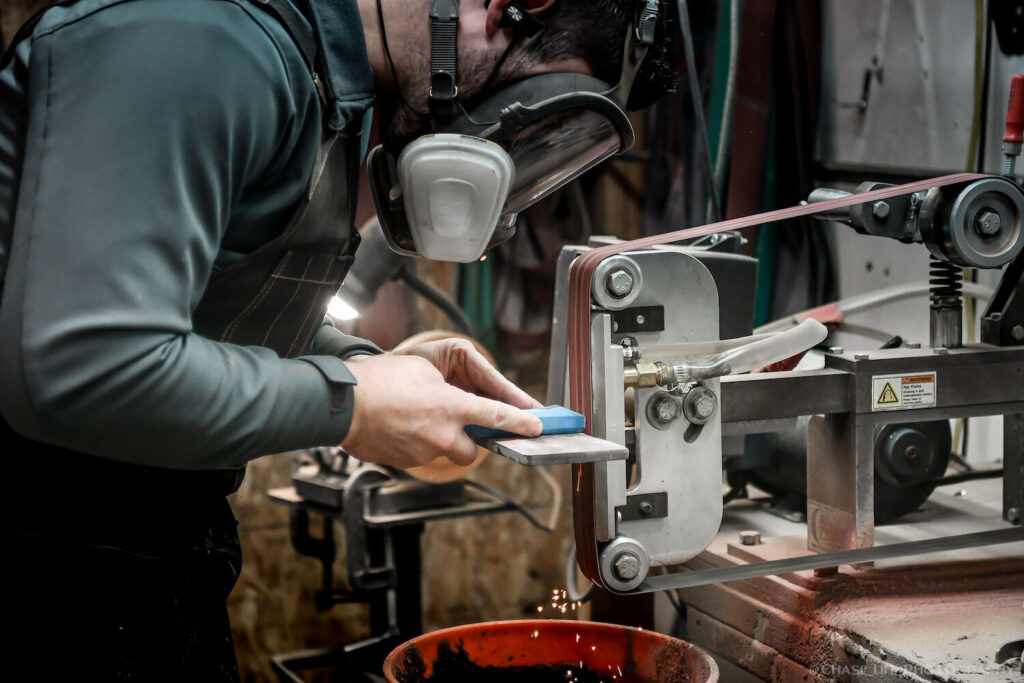
Though Brandon Hampton comes for a long line of restaurateurs, it's his knife-making skills that are slowly creating waves in the hospitality industry
Meglio Knives, hero
In Brandon Hampton’s dim office, a fan whirs and his pet snake—a black and white 7.5-foot-long Argentine Boa constrictor—lies coiled and unmoving in a huge glass case. “When we got her, she kept licking the heat lamp, so we named her Brick, because ‘Brick loves lamp,’” he explains, a nod to actor Steve Carell’s character in Anchorman.
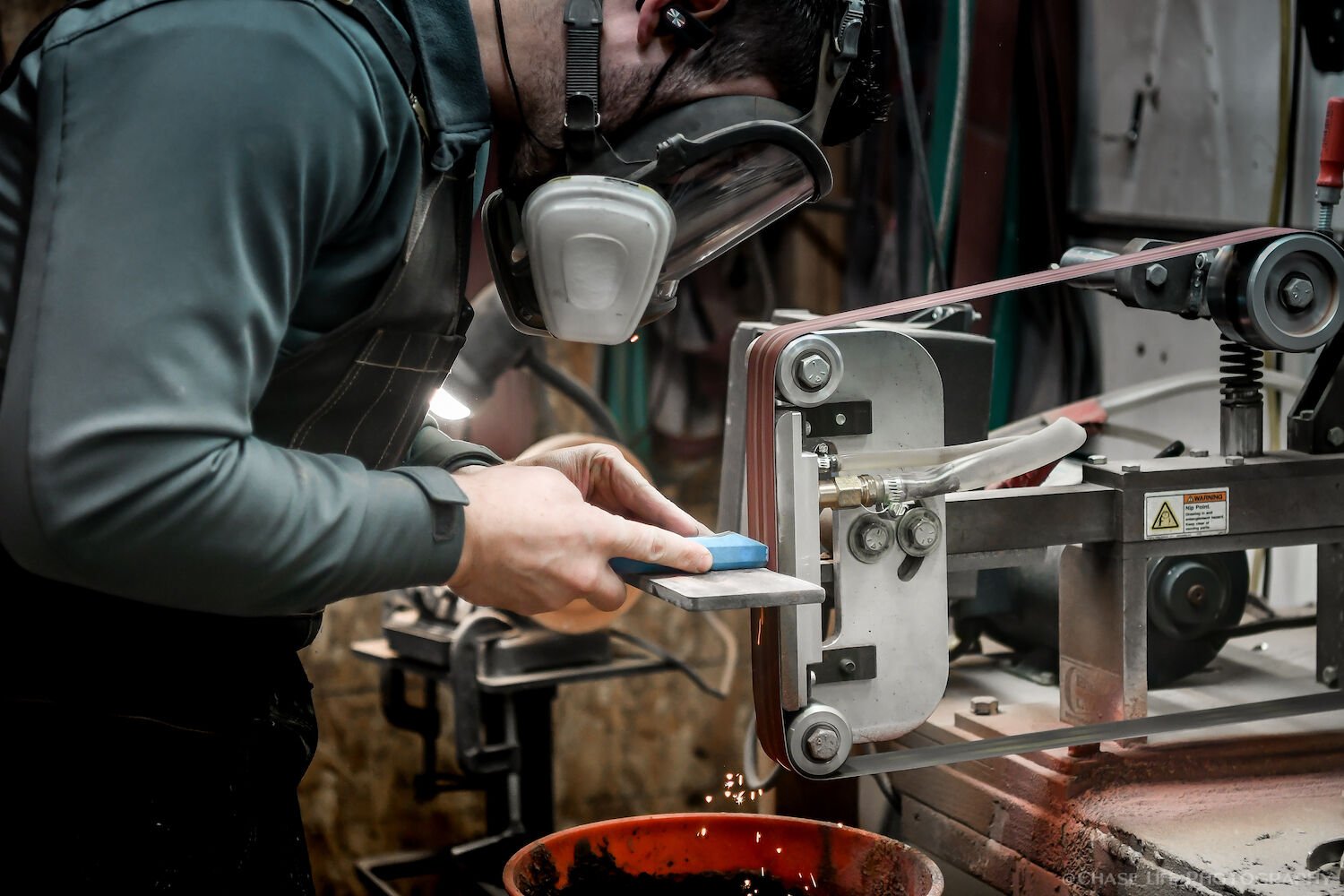
We’re at Hampton’s workshop in an industrial part of Escondido, home of Meglio Knives, where Hampton works as owner and lead knifemaker. Right now, he’s got a 100-person waitlist for his custom knives. In a different universe, though, he might have been a lawyer. “I graduated and went to law school and failed out because all my notes were drawings of knives,” the North County native says.
To fund his undergraduate history degree at CSU San Marcos, Hampton took up work at Strider Knives during the late 2000s. The company amassed superlative status among the armed forces and tactical knife communities in the 20+ years Strider was in business.
Hampton worked primarily under Duane Dwyer, business partner of owner Mick Strider. “He’s a material science guy. He taught me application-specific uses for different types of steel,” Hampton recalls of his mentor. They still hang out and drink whiskey together. Before that, in high school, he sold kitchen knives at a mall.
Growing up, he often helped out around his family’s Italian restaurant in Escondido. His great grandparents ran Laura Scardino’s on Escondido Boulevard and 10th Avenue. It’s a mariscos spot now, but back in the 1940s, great grandma Laura sold pasta and lasagna out of her house. “Servicemen would walk by and smell her cooking,” Hampton shares.
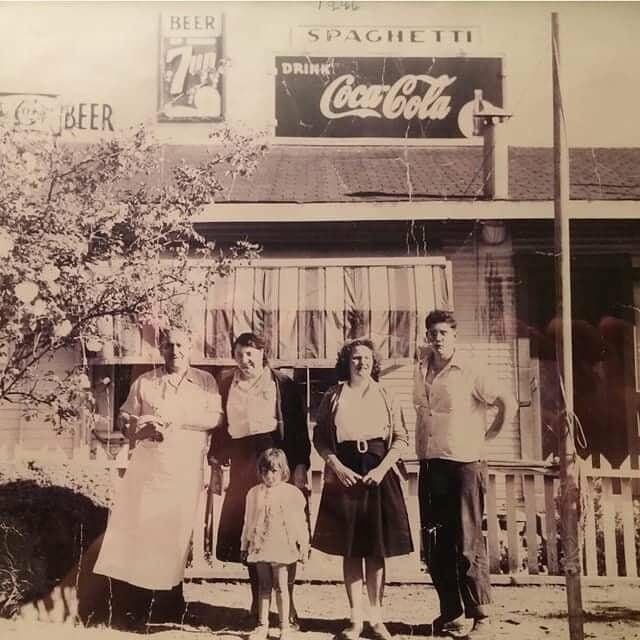
The former Scardino family restaurant
In the ‘70s, they tore down the house and built two buildings: Laura Scardino’s the restaurant— where Hampton would spend much of his youth wandering into the kitchen— and a smaller residential house.
“I remember going back there and making garlic bread pizzas. I was not a thin child,” he admits. His Mexican-Italian mother and tias taught him to cook. When he’s not cooking or working these days, he’s roving the county for good eats, such as Lola55’s tacos and beans and Izola bakery’s Tahitian vanilla knots.
Hampton’s also got words for those who think of San Diego as anything less than a dynamic food hub. “I hear a lot of bougie chefs get really critical about the food scene in San Diego, and I’m like, ‘speak for yourself, man.’”
During Meglio’s infancy, Hampton cycled through a number of paying jobs. There were shifts at UPS, a 9-to-5 as an admissions counselor, and a stint at a medical device company. In between, he spent just as much time in his shop “grinding away til the wee hours.”
Back then, Hampton visited a lot of restaurants, pitching his wares one by one, asking for feedback and making some industry friends along the way. Though it took a while to get his knives into the chef community, his clientele now reads like a best of list, including Chef Tara Monsod of Animae and Chef Accursio Lota of Cori Pastificio in North Park, a 2020 Best Restaurant winner.
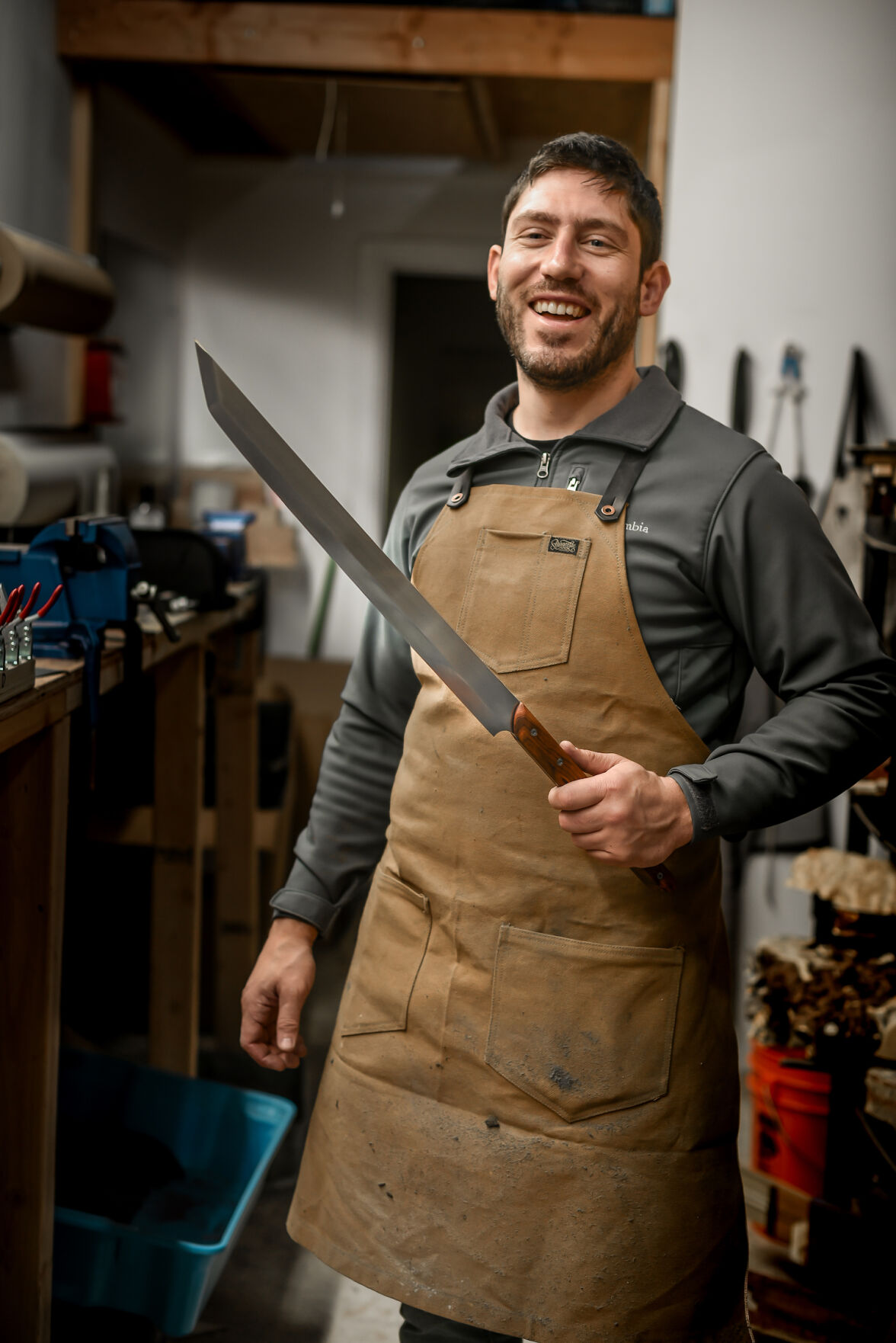
Meglio Knives Brandon Hampton

Meglio Knives, product
However, the admin required for custom orders can be overwhelming. So, once he gets through his waitlist, he’ll focus on his production line of chef’s and paring knives for everyone, not just professional chefs.
Unless of course, someone’s got a good challenge for him. Need a left-handed eel knife, for example? Hampton is in—as long as the knife actually gets used. “If you don’t use your knife, send it back,” he says. “I don’t want my knives in a safe.”
And although Hampton clocks in considerable elbow grease designing, grinding, and shaping metal, he doesn’t consider himself an artist, but a craftsman.
“I make a tool,” he says. Compared to art, which is meant for emotional evocation, he believes, “there’s definitely a wrong way to make a knife. If it doesn’t cut, I’ve failed in my task.” On the other hand, “Seeing [chef] Tara create what she creates and knowing that she’s got my 8-inch Gyuto in the back just tearing it up, and my offset fillet back there… ” Hampton trails off for a beat. That’s art.

Ligaya Malones grew up in Kaua’i, Hawai’i and is a San Diego-based writer covering the intersection of food, travel, and culture. Her work has appeared in publications including Food52, Condé Nast Traveler, Lonely Planet, and Salt & Wind Travel.
Talking farm to table, fraud-to-table, and the feasibility of the movement with the beloved restaurateur who saw it all
Garden Kitchen was special. During its seven-year run on a quiet street in Rolando, even the farmiest-to-table devotees were pointing to chef-owner Coral Strong and slow-clapping. When the restaurant’s lease was up without the option to renew, which forced her to close in 2022, Strong wasn’t sure what to do next.
Farm-to-table wasn’t new by any means—chef Alice Waters spawned the movement at her pioneering restaurant Chez Panisse in Berkeley in the early ‘70s, and many San Diego chefs did it right. But by the mid-2000s, the idea had been so co-opted by the mainstream that the meaning was almost completely lost.
“In the beginning, I used to get very honestly angry and upset when I would go to other restaurants that were claiming they were farm-to-table, but knowing some of the chefs or prep cooks inside [telling me] ‘Oh no, that comes from Restaurant Depot,’” she says.
Food critic Troy Johnson’s cover story in 2015 documented the fraud, titled “Farm to Fable.” At Garden Kitchen, Strong only used produce and meat sourced from local San Diego farms—an honorable, if not arduous endeavor.
Strong grew up in Cardiff before her parents moved the family to Costa Rica in 1989. They’d bounce between the two countries for months at a time, but when they lived in a motel by the beach while building their own house, she witnessed an incredibly tight-knit food culture. “As a Latin American country, everyone kind of cooks together,” she says. Everyone chopped, prepped, prepared, and served as a unit. “[That] definitely shaped my adolescence as to how I thought about food and the community of food.”

When her father, a commercial fisherman, brought the family back to San Diego, Strong leaned into an entrepreneurial streak, moving from coffee to accounting and eventually bartending to pay the bills. But food remained a passion, especially after she met her future husband, who introduced her to his Be Wise CSA and the wonderful world of truly fresh, farm-grown vegetables.
“We were just always disappointed with the vegetables out at restaurants and were like, ‘Why can’t they just make vegetables taste good?” she wondered. She realized that despite having more small farms than any other county in the country, most restaurants in San Diego simply weren’t using local ingredients.
So she decided to do it herself.
Strong opened Garden Kitchen without any formal culinary training—just a commitment to getting the freshest vegetables, meat, fruits, and other produce onto people’s plates. Her first chef quit within a month, telling her it was impossible. “So I got in the kitchen one day and said, ‘I can do this, let’s figure it out.’ I taught myself how to cook.”
She already had connections with farmers, fishermen, and ranchers, and designed a different menu almost daily based on what she could get. “My farmers sometimes delivered in the middle of dinner service,” she laughs.
Garden Kitchen lasted until after the pandemic, but before the current economy cut into already razor-thin margins. Could Garden Kitchen exist today? She’s not sure.
“The biggest thing right now is just looking at the finances and how expensive it is,” says Strong. “Obviously, the cost of food is up right now, gas is crazy right now… it just crushes you.” Despite that, she believes that committing to the true farm-to-table ethos is as easy as one decides to make it.
“If you think it’s hard to order directly from your farmer, if you don’t understand the absolute pleasure in doing that and you’d rather order from a computer, then that’s your own difficulty,” she says. “People say they’re into it, but are they willing to make the effort like I am, to drive an hour to go get my meat, or drive 35 minutes to go to my farm to go pick it up? I don’t know.”
Today, Strong works as a private chef, hosts pop-ups, and offers catering services, all still using seasonally available ingredients from San Diego. And while she has no intentions of opening another restaurant, she says we might see even more of her in the future.
“I have a large property [in Valley Center], and let’s say that there will be more of my food to come,” she promises.

Listen Now: The Latest in San Diego’s Food and Drink Scene
Have breaking news, exciting scoops, or great stories about new San Diego restaurants or the city’s food scene? Send your pitches to [email protected].
Beth Demmon is an award-winning writer and podcaster whose work regularly appears in national outlets and San Diego Magazine. Her first book, The Beer Lover's Guide to Cider, is now available. Find out more on bethdemmon.com.
The art of presentation. The Marine Room's chef Bernard Guillas prepares Alaskan halibut with red walnuts, quinoa, cara cara orange, and an absinthe infusion
The Marine Room’s Chef Bernard Guillas
The Marine Room’s chef Bernard Guillas prepares Alaskan halibut with red walnuts, quinoa, cara cara orange, and an absinthe infusion
The Marine Room’s Chef Bernard Guillas
The Marine Room’s chef Bernard Guillas prepares Alaskan halibut with red walnuts, quinoa, cara cara orange, and an absinthe infusion
The Marine Room’s Chef Bernard Guillas
The Marine Room’s chef Bernard Guillas prepares Alaskan halibut with red walnuts, quinoa, cara cara orange, and an absinthe infusion
The Marine Room’s Chef Bernard Guillas
Alaskan halibut with red walnuts, quinoa, cara cara orange, and an absinthe infusion
The art of presentation. The Marine Room's chef Bernard Guillas prepares Alaskan halibut with red walnuts, quinoa, cara cara orange, and an absinthe infusion
The Marine Room’s Chef Bernard Guillas
The Marine Room’s chef Bernard Guillas prepares Alaskan halibut with red walnuts, quinoa, cara cara orange, and an absinthe infusion
The Marine Room’s Chef Bernard Guillas
The Marine Room’s chef Bernard Guillas prepares Alaskan halibut with red walnuts, quinoa, cara cara orange, and an absinthe infusion
The Marine Room’s Chef Bernard Guillas
The Marine Room’s chef Bernard Guillas prepares Alaskan halibut with red walnuts, quinoa, cara cara orange, and an absinthe infusion
The Marine Room’s Chef Bernard Guillas
Alaskan halibut with red walnuts, quinoa, cara cara orange, and an absinthe infusion
NOW CFO provides scalable, on-demand accounting and finance support to companies ranging from pre-revenue startups to billion-dollar businesses
Entrepreneurs typically launch businesses because they’re passionate about a product or service, not because they want to manage its finances. While working to carve out a niche in their respective industries and drive their companies forward, many business owners find themselves bogged down by day-to-day accounting. Their existing accounting tools don’t provide the necessary visibility or insight, and they don’t have the time or resources to hire additional staff or a chief financial officer. That’s where NOW CFO comes in.
For more than 20 years, NOW CFO has been pairing businesses across the country with experienced accounting and finance professionals. Its outsourced model allows clients to customize solutions that match their individual needs, size, and financial challenges, whether that’s fractional or interim support, project-based services, or full-time placement.
NOW CFO’s clients range from startups preparing for rapid growth to established companies that need additional financial leadership without the commitment or expense of building an in-house team. However, many of these companies don’t fully understand their needs until they experience a “trigger” event: preparing for an acquisition or capital raise, navigating a first-time audit, or another period of transition. With a team of over 300 consultants nationwide, NOW CFO can start quickly and match the right expert to the right business.

“It’s important for companies to have financial visibility, and we can help them avoid a lot of the potholes that companies often run into,” says Mariah Block, a partner at NOW CFO’s San Diego branch. “Roughly half of our clients have an in-house finance person or department, and we’re resourced for more bandwidth when they need an extra set of hands at the staff or senior accountant level, or the controller or CFO level. Some clients use this a few hours a month and others use multiple people close to full-time. Our model is solution-based and customizable. We’re like a faucet you can turn on and off.”
With NOW CFO, there’s no one-size-fits-all approach. Solutions are based on the client’s individual goals, challenges, needs, and budget, meaning a client never pays for more than they need. Whether it’s a few hours of executive-level guidance or a full accounting team to support daily operations, NOW CFO meets businesses where they are and grows alongside them.
“We pride ourselves on providing our clients with the right resources at the right rate and being able to evolve as their needs evolve,” says Block.
And clients appreciate on-demand access to cost-effective support designed to improve performance and profitability.
Luxury car storage service Auto Concierge has partnered with NOW CFO to support growth over the past year. The arrangement began with a staff accountant who covered a leave of absence, but as the client’s needs changed, they also added a controller role. This allowed Auto Concierge to put effective processes in place and navigate operational challenges. Lori Church, Auto Concierge’s chief operating officer, says NOW CFO has been an “outstanding resource” and a “true strategic partner.”
“From the controller to the bookkeeper, every professional they’ve placed has brought a high level of expertise, responsiveness, and professionalism to our organization. Their team took the time to understand our business of high-profile clients and needs, adapted quickly to our fast-paced environment, and became a trusted extension of our team,” she says. “As Auto Concierge continues to grow, having a reliable financial partner like NOW CFO has allowed us to strengthen our financial and business operations while remaining focused on delivering exceptional service to our clients.”
Dockside Night Market returns to Tuna Harbor Dockside Market on August 6 for one night only
Ask any local, human or shark—San Diego summer doesn’t really start until August. After June Gloom lifts and children file back into the halls of academia, our coastline comes to life with more space on the sand and a water temperature that finally rises above muscle-clenchingly frigid.
What better way to welcome Local’s Summer than by celebrating the bounty of the sea? At least, that’s what the gang at Puffer Malarkey Collective (PMC) figured when they launched Dockside Night Market four years ago.
Despite being born and raised in San Diego, Lillian Dang (the event’s co-producer and marketing director for PMC) says she didn’t know how abundant our local seafood scene was until she left and came back. “We are spoiled here,” she says, pointing not only to our plentiful produce from local farms, but also our sea-borne treasures.
When she and her co-producer Lucien Conner (PMC’s director of operations) brainstormed over what they felt the city’s food scene lacked, they realized: “What’s missing is an event that really celebrates the local seafood,” explains Dang.

Dockside Night Market is meant to be a “San Diego summer party on the pier,” she says, bringing together local fishermen and local chefs to highlight the fruits of the local seas. Chefs from some of San Diego’s best restaurants clamor to be a part of the 15-chef-max roster, including Travis Swikard (Callie and Fleurette), David Sim (Kingfisher), Aidan Owens (Herb & Wood), Chianne Mallari (Herb & Sea), Tara Monsod (Animae), Jacob Ruck and Eric Bost (Jeune et Jolie), not to mention Mabel’s Gone Fishing, Bica, The Lion’s Share, Nine-Ten, Marisi… you get the idea.
Part of the intrigue is not knowing exactly what seafood will appear—in past years, there’s been uni, bluefin tuna, halibut, black cod, but it ultimately comes down to what’s fresh and what’s available. And with a chef lineup like that, it’s fun to imagine what sorts of surprises await. (If you’d like a small hint, there are calendars of seasonal availability in the area.)
The one-night-only annual event takes place at Tuna Harbor Dockside Market on Tuna Harbor Pier (598 Harbor Lane), the same spot as the weekly fish market every Saturday from 8 a.m. until 1 p.m. or sellout (it’s usually the latter). VIPs get in at 6 p.m. and general admission is 7 p.m., and 100 percent of all ticket profits go to support the San Diego Fishermen’s Working Group, a 501(c)(3) nonprofit created to support the best interests of the region’s commercial fishermen. There’s also four cash bars and a live DJ (but leave the kids and pets at home).
“I think this is an event that can only happen in San Diego,” says Dang. Our city’s culinary cache is on the rise, and our proximity to some of the best fishing waters in the world make it a pretty dynamic duo. “It’s curated, it’s intimate, it’s all the things,” she promises.
Dockside Night Market takes places on Thursday, August 6, from 6 p.m. to 10 p.m. at Tuna Harbor Dockside Market.

Listen Now: The Latest in San Diego’s Food and Drink Scene
Have breaking news, exciting scoops, or great stories about new San Diego restaurants or the city’s food scene? Send your pitches to [email protected].
Beth Demmon is an award-winning writer and podcaster whose work regularly appears in national outlets and San Diego Magazine. Her first book, The Beer Lover's Guide to Cider, is now available. Find out more on bethdemmon.com.
Harrah’s Resort Southern California introduces its brand-new signature restaurant, featuring Mexican cuisine from across the country
Ten million dollars can buy 30 small helicopters, two or three houses in Del Mar (depending on how many bathrooms there are), or one really, really extravagant restaurant remodel. Harrah’s Resort Southern California went with that last one, revamping the former Salt & Fin space into Tierra y Mar, the resort’s new signature restaurant next to Hell’s Kitchen by Gordon Ramsay.
The 25-year-old Valley Center casino and resort went through its first major expansion in 2014, adding more pools, more restaurants, a convention center, and hundreds of new rooms—basically, the full works. In 2016, the Rincon Band of Luiseño Indians officially renamed the land the resort sits on as “Funner, California,” dubbing David Hasselhoff (excuse me, The Hoff) as the rechristened town’s first mayor and inviting guests to leave their hassles behind.
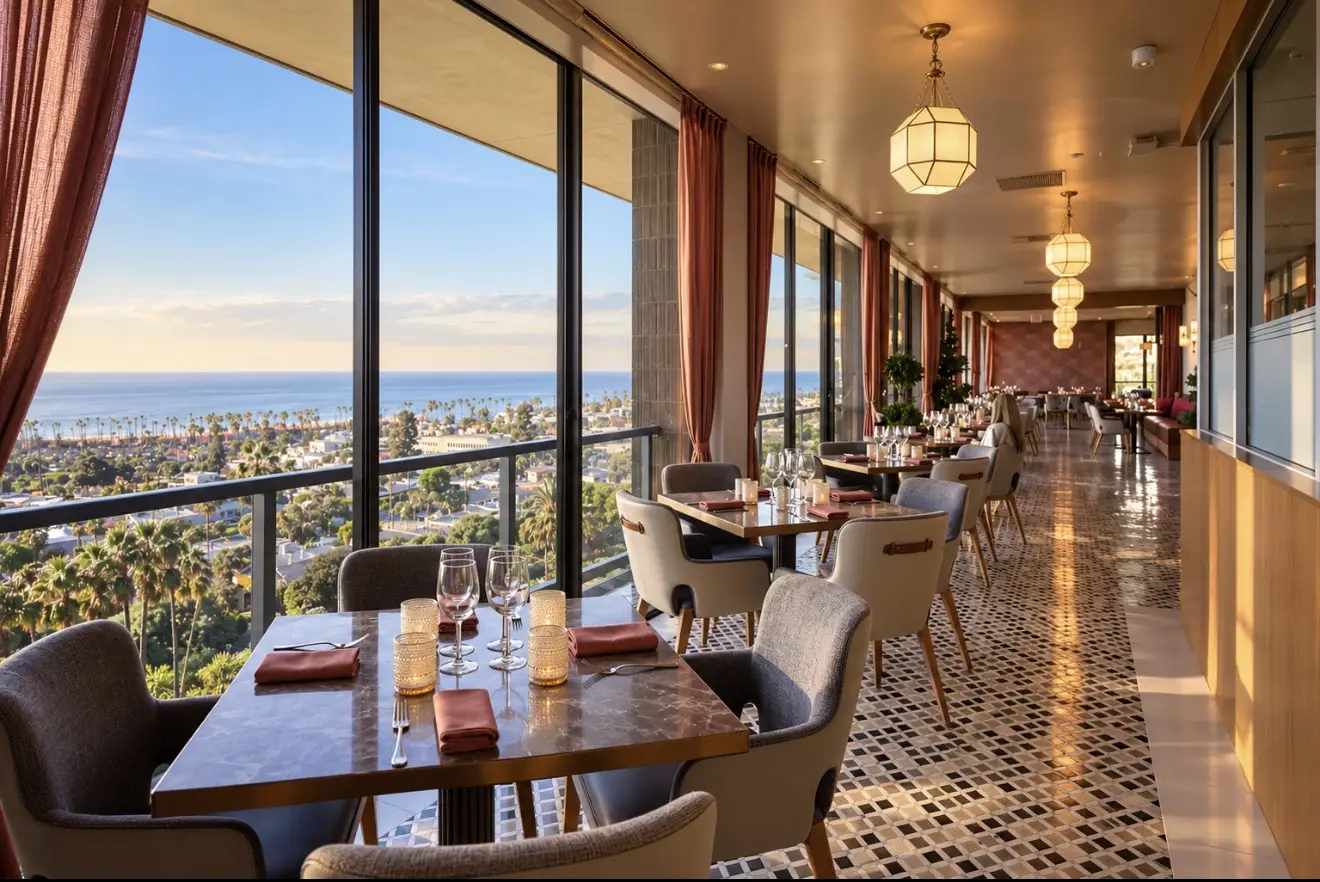
Still, any respectable resort knows the spectacle has to be fresh to keep guests coming back for the newest, most eye-popping, droolworthy, thrill-inducing, jackpot-hitting experiences. So Harrah’s spared no expense with Tierra y Mar, tapping JCJ Architecture to completely reimagine the 7,245-square-foot restaurant as a transportive Mediterranean-meets-Mexico space bridging Cycladic and Moorish architecture details with mid-century glamour.

Derek Sola, design principal at JCJ and project lead, says his team had to completely demolish Salt & Fin to create Tierra y Mar from the ground up—literally. The Tini Bar? Adios. The fixtures and furnishings? Vayan con Dios! The very floors, walls, kitchen, and ceiling? Gone. New plumbing, new kitchen equipment, new HVAC—tabula rasa.
Now, the natural wood-lined, mosaic-laden, greenery-rich space feels like a coastal hacienda, with woven elements and artisan accents that seem surprisingly intimate in such a sprawling room. Sola says by moving the kitchen and back-of-house operations out of view, guests can focus more on the dining experience than the cooking process. And yes, it’s meant to feel wildly different from the flashing lights and ding-ding-dings of the casino floor. That’s why the entry portal uses columns and archways—it’s like a bridge from buzzy commotion to complete calm.

Considering Tierra y Mar translates to “land and sea,” specialty chef Bryan Texis highlights both as forefronts of the menus, incorporating his birthplace of Mexico City, childhood home in Baja California, and current proximity to Baja. It’s that all-encompassing influence that Harrah’s food and beverage Director Ryan Adams says served as inspiration. “We pulled influences from all over the country,” he says, pointing to items like birria (Jalisco), whole Pacific rockfish (Baja California), salmon zarandeado (Nayarit), and tacos al pastor (Mexico City).
“Our goal was to create just a fully immersive menu for all to enjoy, despite whether or not you grew up in Mexico, eating your abuelita’s food, or you are new to the area and just want something that just tastes amazing,” says Adams.
Highlights include salmon marinated in a chipotle sauce and served with arroz verde and a petite frisée salad with cucumber, cherry tomatoes, citrus segments, and honey citrus vinaigrette; a shrimp aguachile appetizer with cucumber, red onion, radish, avocado, and cilantro; a salsa sampler with three heat levels; the “siete mares,” or “seven seas,” with seared seabass, mussels, littleneck clams, scallops, shrimp, and fried crab cakes, all served in a lobster tomato consommé; and their house birria: an eight-ounce braised short rib wrapped in hoja santa (an aromatic herb from Mexico), served with consommé reduction and a sweet corn purée. Texis’ pan de elote provides a sweet-and-savory end to a meal, made with fried corn bread, chantilly (whipped cream) banana mousse, pecans, and totomoxtle (corn husk).

While menudo and brunch (think breakfast burrito, huevos rancheros, and a masa waffle) will only be available on the weekends, the bar is always open. Naturally, Tierra y Mar’s bar emphasizes tequila, with plenty of beer, wine, cocktails, and margaritas. Like Old Fashioneds? Try the Tequila Old-Fashioned, made with Callfino Añejo, agave, orange bitters, orange peel, and dark cherry. Or kick up your margarita by opting for a blended Mangonada, with Casa Dragones blanco tequila, passion fruit liqueur, blue curaçao, mango puree, Chamoy, and fresh lime, served with a chamoy and tajin rim and tamarind candy stick.
Pulling off such an ambitious, far-reaching restaurant revamp required a group effort, says Adams. General manager Jill Barrett, vice president of resort operations Shannon Upson, and the Rincon Band of Luiseño Indians have worked for a year-plus to bring Tierra y Mar to life. It might not be “traditional” Mexican food, according to Adams. But he invites guests to take a chance on their approach.
In other words: come for the fun, stay for the food.
Tierra y Mar opens at Harrah’s Resort Southern California on July 22 for daily lunch and dinner service, plus weekend brunch.
Beth Demmon is an award-winning writer and podcaster whose work regularly appears in national outlets and San Diego Magazine. Her first book, The Beer Lover's Guide to Cider, is now available. Find out more on bethdemmon.com.
It’s a Self-Care Summer. Because your best self is our favorite self.
If you’re anything like us, it can be easy to get so caught up in taking care of everyone else, that your own needs get lost in the ether. But while this may be a cliché, that doesn’t make it any less true: You can’t give your best self to other people unless you’re taking care of yourself.
Sometimes, that looks like stopping in for your regular acupuncture or chiropractic appointment. Other days, it means giving your body the fresh, organic fuel it needs to truly feel and function at its best. And some other times still, it involves leaving your responsibilities behind for a weekend to pamper yourself at an incredible resort and spa.
Only you can decide what your truly need. We’re just here to help you find the best ways to get it.

Island living meets desert luxury at the Tommy Bahama Miramonte Resort & Spa in Indian Wells. When you step onto the 11-acre property, you’ll be surrounded by sweeping view of the Santa Rosa Mountains with olive trees and fragrant citrus groves decorating the grounds. In other words, everything about this relaxed but refined resort is primed to help you let go of the stress from home and enjoy easy sun-soaked days and gorgeous starry nights.
The rooms blend calming, woven textures with Tommy Bahama’s signature tropical prints and feature private lanais, making it easy unwind the moment you walk in the door. If you book one of the four Villa Suites, you’ll be treated to exclusive Tommy Bahama furniture and unique personal touches to further that feeling of instant ease.
At the award-winning Spa Rosa, the expert team will help reset and recharge your body and mind using methods and rituals inspired by the desert. The 12,000-square-foot retreat includes outdoor soaking pools, eucalyptus steam rooms, and outdoor cabanas, as well as massages, facials, and body masks—all aimed at creating a day dedicated to you. We’re particularly partial to the Day Long Escape, an indulgent all-day affair of CDBs soaks, renewing scrubs, life changing massages, and transformative facials.
Following your treatment, continue the experience with a meal on the patio at Grapefruit Basil. We love the Hamachi Crudo, a light, citrus-forward dish featuring premium yellowtail, house-made ponzu, creamy avocado, and fresh seasonal garnishes.
Whether you’re strolling the gardens, relaxing beside its saltwater pools, or indulging in a restorative treatment, you’ll be able to escape in style and relax in luxury at the Tommy Bahama Miramonte Resort & Spa.

There’s no shortage of ways to stay active in San Diego—but if you really want to enjoy everything the city has to offer, you’ve got to make sure you’re giving your body its tune-ups. Enter: Healcove Chiropractic. The board-certified chiropractors and wellness professionals at Healcove are experts at addressing that stage where you’re not injured, exactly, but you’re not at 100%, either. Maybe you’re feeling a bit tense or stressed out. Or it could be that you’re not quite moving the way you want to. Sometimes, it’s just that the accumulation of days, weeks, or even years of daily strain is starting to take a toll. No matter what stage you find yourself at, the Healcove Chiropractic team can provide integrated, preventative care centered on long-term, science-backed approaches that ensure you can always stay active and live the life you want to live pain-free.
This starts by providing truly individualized care. Every patient can expect a thorough 60-minute consultation session that includes a posture and movement screening. This allows the team to develop a completely personalized plan. That plan might include chiropractic care, acupuncture, or massage therapy, as well as functional fitness training, vibration and sound therapy, and Dynamic Neuromuscular Stabilization, a clinical rehabilitation method that retrains the body’s stabilization systems. Whatever the team recommends, you can be sure that it’s tailored to meeting your body’s needs today and the future.
There’s a reason that San Diego Magazine named Healcove the “Best Chiropractor in San Diego”—don’t wait until you’re struggling with an injury to find out why. Book an appointment today for holistic, integrated care that helps ground and heal your body before it reaches a crisis point.

West Coast wellness culture meets the community feel of Southern Appalachia at Juice Holler. Juice Holler’s menu consists of made-to-order smoothies and smoothie bowls, as well as grab-and-go cold-pressed juices, wellness shots, salads, and more. It operates from the blissfully simple premise that fueling up with food and drink that’s guilt-free and good your body should be simple, accessible, and, above all else, delicious. And if you haven’t yet made it out to the Encinitas café, which opened just this year, let us be the first to tell you: Juice Holler delivers on each and every of these fronts.
We love the Supercharger smoothie, a mood-lifting and body-fueling option made with banana, almond butter, blue spirulina, maca, grass-fed whey protein, raw cacao nibs, medjool dates, and coconut milk. We’re also partial to the Thrive Alive smoothie bowl, where avocado, mango, sea moss, spirulina, mint, coconut milk, and agave are mixed and topped with coconut, chia seeds, strawberry, mango, and chocolate drizzle. The wellness shots include the Detoxifier, a cleansing blend of kale, cucumber, lemon and spirulina, plus a shot specially designed to fight inflammation (named, fittingly, Anti-Inflammation). Probiotic overnight oats, lemon turmeric bars, and strawberry shortcake chia pudding are other standouts on the grab-and-go menu.
Much of the vibe feels beachy North County chic—think green tile with orange and pink accents, grounded with greenery and natural wood—but Juice Holler founder Kelly Sergott, a longtime Encinitas local, has also enfused the space with her Kentucky roots. In Appalachia, a holler is small valley between hills and mountains, where nature reigns, community is king, and nourishment comes right from the land. At Juice Holler, Sergott has created a holler for the busy modern times, using local ingredients to create a spot for people to come together and enjoy fresh, fast, feel-good fuel for their day.

We’ve all had that experience with a medical professional where we’ve felt rushed, ignored, or misunderstood—and ultimately, like we didn’t get the answers that we needed. But at Everwell, the holistic acupuncture practice located in Solana Beach, the care team wants to transform your understanding of what healthcare can look like.
Patients at Everwell experience care rooted in intentional listening and radical empathy—and trust us, those aren’t just corporate buzzwords. This place actually puts those ideas into practice. You will always be given the time you need to tell your story— initial in-take appointments are two hours long—and you can rest assured that your story will be believed. Every single question and concern will be addressed by a dedicated practitioner who wants to find the specific solutions that work best for you, and you’ll receive care that’s aimed at healing the body, mind, and spirit.
Everwell’s highly trained, doctorate-level practitioners blend evidence-based acupuncture with the practice of classical Chinese medicine. (If you’ve never tried acupuncture before or aren’t sure if the team will be a fit, we’d highly recommended Everwell’s complimentary 20-minute consultations.) Research shows that by stimulating specific points on the body, acupuncture activates a natural healing response in the body, helping to restore balance, regulate the nervous system, and improve overall wellbeing. This allows the practice to address an incredibly wide range of conditions from chronic pain and autoimmune disorders to digestive issues, from stress and burnout to headaches migraines, fertility and postpartum struggles, hormonal imbalances, sleep concerns and more.
At Everwell, you can expect to feel heard, trusted, respected, and cared for. This is a space that doesn’t want to be just another healthcare provider you visit; it wants to provide patients with dedicated partner who will be there for their entire health journey.