Ready to know more about San Diego?

Subscribe
Food & Drink SEPTEMBER 17, 2016

Fired Up

Why open-flame cooking is now the biggest restaurant trend
Fired Up

Mom was right. Playing with fire is dangerous. And yet as a kid you doused that tennis ball in gasoline, lit it up like a comet, and played kick in the streets of suburbia, anyway. (Or was that just my neighborhood?)

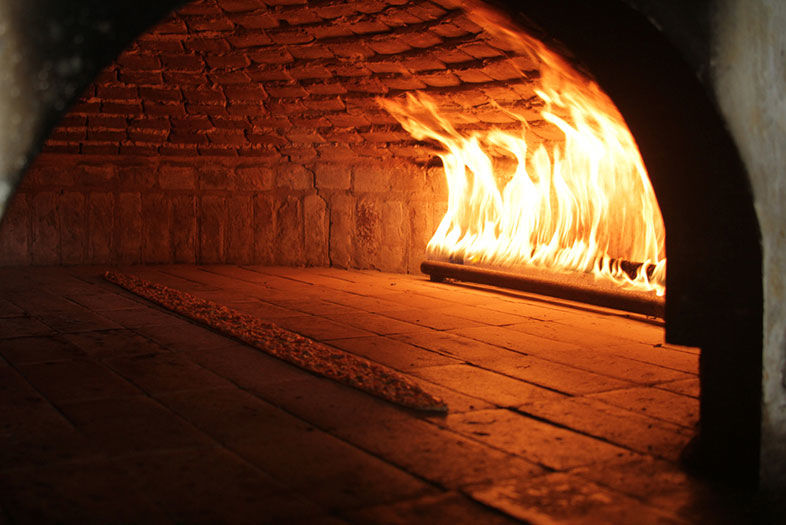
The hottest thing in San Diego’s restaurant scene right now is fire. Braising and sous vide is out. Grilling and roasting are in. Gas stovetops are giving way to wood-burning ovens.

When Brian Malarkey opened Herb & Wood, he and chef de cuisine Shane McIntyre made wood-burning flame the focus. Same thing at Bottega Americano in East Village, Trust Restaurant in Hillcrest, the new Grill at the Lodge at Torrey Pines, and Campfire in Carlsbad.

After decades of advanced cooking techniques, our old Francophillic love of sauces, and our modern-day sous vide addiction, why go back to the flame? Latent caveman impulse? A cook’s version of texting an ex?

“I’m working to build layers of flavoring and getting that perfect caramelization on proteins, vegetables, breads and other ingredients,” says chef Brad Wise at Trust. “Cooking over wood fire allows you to achieve that.”

“I’m excited to once again be working with the wood fire,” says Andrew Bachellier at Campfire. “It’s a truly uncontrollable element that takes tremendous focus and technique, but when harnessed can yield unbelievable layers and complexity of flavor.”

As for the always quotable Malarkey, he explains: “Don’t fear the burn! Black is back! Caramelization is the secret sauce! It’s Francis Mallmann’s world … We’re just burning it up!”

The Mallmann in reference is an Argentinian chef, famous for applying Patagonian, open-fire barbecuing techniques to high-end food. In America, our renewed love for dry heat can be seen in Dallas chef Tim Byre’s 2013 book, Smoke: New Firewood Cooking, which was nominated for a James Beard Award.

Cooking over open flame is advantageous for three main reasons: caramelization, the Maillard reaction, and smoke. All three famously add thousands of flavor compounds to food. They are nature’s MSGs.

First, caramelization, which happens when high heat hits sugars. That’s what gives the crust on pizza or bread its phenomenal flavor. It’s what turns a sharp, raw onion into a sweet, flavorful, soft brown string of sweetness. That’s what makes Herb & Wood’s roasted carrots so tantalizing (see bottom of article for full description).

Second, the Maillard Reaction, named after its discoverer, French scientist Louis Camille Maillard. This is what makes bacon so incredibly good. When an amino acid (the building block of every protein) interacts with a sugar and heat, it creates another few thousand flavor molecules. America’s obsession with bacon is essentially a Maillard obsession, but Mallaird doesn’t translate into funny memes quite as well.

Third, smoke. Anyone who’s eaten a good piece of barbecue brisket (Smitty’s in Lockhart, Texas, remains my favorite) or dad’s charcoal-grilled kielbasa knows that smoke from burning wood (cedar, oak, white pine, applewood, whatever), when used correctly, imparts a rich, ancient flavor to food. Gas flames do not. Bacon is the ultimate proof of what a little smoke can do to the magical combo of protein, salt, fat and sugar.

Evaporation also helps. When you use dry heat to cook a piece of meat, you evaporate some moisture inside, which amplifies its flavor (same thing happens when you “reduce” a sauce). The concept also works with dry-aging—meat loses moisture over time, thus concentrating the flavor molecules (that’s not the whole magic show of dry-aging, which includes breakdown of muscle fibers, but it’s part of it).

Oh, and there’s time. That’s the thing about fire: it’s hot. So it takes much less time to caramelize and cook a protein near a flame than it would, say, if you put it in the sous vide machine at 167 degrees for 26 years. And on a busy Friday night in a restaurant kitchen? Chefs would shank someone for a couple extra minutes on the clock.

In his book Cooked, Michael Pollain suggests that we’re evolutionarily designed to crave foods roasted over fire. After all, fire is the only thing that made certain foods (raw meat, for one) edible for millions of years.

So why not cook everything over an open flame? Why doesn’t every restaurant set stuff on fire?

Because open-flame is a real pain. It’s wild and unpredictable, like presidential candidates.

“Cooking over wood requires a cook to actually cook, to control the heat source the distance of the item from the source for the desired effect,” says Trey Foshee of George’s at the Cove and Galaxy Taco. “That’s one of the reasons I like it besides the obvious flavor advantages.”

Braising a meat in liquid, you can afford to take your eye off of it. Liquid isn’t going to burn. But ignore a dish in a wood-burning oven? It ends up looking like a stocking stuffer for the bad kid in the family. Food gets ruined. Cooks get fired. Owners raise the cost of booze to try and make up for the loss of inventory. Sober customers cry. The restaurant closes, in comes a 7/11 in its place. America becomes a territory of China.

No one wants that.

“It’s challenging to make sure you’re creating the correct burn pattern, or coal circulation,” explains Wise. “It’s especially challenging on a Friday night during service when there’s a full ticket rail and a full grill. You have to watch closely so you aren’t burning too hot or letting the fire die on you. There are also obstacles that mother nature throws your way when using wood for cooking. Each piece is different, each piece burns differently.”

Fire’s comeback, specifically in San Diego, might also be a Mexican thing. The influence of open-fire cooking from Baja has invaded menus across town in the last few years. You get the ash, the smoke, the primitive glee. It tastes like you’re on a nameless beach or ranch south of the border, with stars and the moon instead of push notifications.

Plus, it’s fire. Humans like playing with it. We like to stick our plastic army men in it to see what happens (also maybe an act specific to my neighborhood). Some scientists argue fire is what helped us leapfrog our monkey pals in the evolutionary conga line. People are transfixed by it. We sit around and watch it, despite its lack of Kardashians. There’s a simian excitement to it, a cowboyness.

If there’s one singular thing that chefs really love most in this life, it’s definitely fire and knives and booze. And math.

With all of this open flame in San Diego’s kitchens, you can expect some mistakes. Food will be burned. Food will be cooked on the outside, but slaughterhouse raw in the middle. Maybe poke a fork into it for inspection before you dive in.

But, used right, fire is a lightning fast route to well-tanned food loaded with flavor.

COME ON BABY BITE MY FIRE

Five open-flame dishes to try in San Diego.

Wood-Grilled Trout @ Galaxy Taco. Adobo rub, shishito-watercress salad, and hoja santa.

Fire-Grilled Fingerling Potatoes @ Trust. Served with vinegar whipped cream, butter, and chives.

Roasted Baby Carrots @ Herb & Wood. Tossed in a cashew-sesame dukkah, espellette yogurt, and carrot top pesto.

Monte Cristo @ The Grill at the Lodge at Torrey Pines. Wood-roasted turkey, Applewood ham, gouda on raisin brioche with a strawberry-green pepper jam.

Leeks @ Campfire. With fungi and creamy Tallegio.

Subscribe to our newsletters

Select Options

By subscribing you confirm that you agree with our Terms and Conditions and Privacy Policy.

Food & Drink JULY 10, 2020

5 Online Cooking Classes in San Diego

A roundup of local chefs offering virtual culinary school during quarantine

5 Online Cooking Classes in San Diego
Claudette Zepeda Cooking Class

Chef Claudette Zepeda has launched an online cooking club.

Want to learn how to make a new dish at home? Here are five cooking classes you can take online, all led by local chefs


Mexican Cuisine 101

Cook alongside a Top Chef alum while learning the art of Mexican cuisine. Claudette Zepeda launched a cooking club and has a lineup of classes on her website, where she’s teaching how to make everything from pan dulce (July 18) to carnitas estilo Michoacan (July 22) on Zoom in an approachable way. Two days before the class, you’ll receive a shopping list and a note of what equipment you’ll need. If you want to just have a glass of wine and watch, that’s fine too—classes are recorded, and you’ll be sent a link afterward. A portion of the $30 ticket price is donated to No Kid Hungry.


Cook as a Group

Jodi Abel is a self-taught chef, and for the past 12 years she has been teaching group cooking and team-building classes through her company LaJollaCooks4U. Her group classes are now virtual on Zoom: pick either a 60-minute or 90-minute session, and you’ll be given a selection of two or three dishes to make. Contact them for a quote.


Bring a Celebrity Chef Into Your Kitchen 

Brian Malarkey has been hosting virtual cooking classes focusing on dishes with Baja and Asian influences, and teaching how to grill meats. During a one-hour class, you learn how to make one entrée and one side dish along with general cooking tips. After you’ve plated your dish, you can show it to him for feedback. Classes are interactive, and you can ask questions through Zoom’s chat feature—he also shares behind-the-scenes info about what it’s like to be on Top Chef. Proceeds from the classes have been going to the PMC Relief Fund. His site has a library of short videos on basic cooking techniques, and he regularly invites guest chefs to cook (virtually) alongside him. On Monday, August 10, the special guest chef is Rocco DiSpirito, who will be showing how to make an authentic Milanese risotto.


Cross-Border Cooking

Chef Alma Fernanda is a San Diego local who has cooked in restaurants in LA, Mexico City, and Madrid, and she offers virtual cooking classes every Thursday evening that have become popular on both sides of the border. Classes cover a wide variety of cuisines, from traditional Mexican seafood to Mediterranean and Italian, or are focused on specific ingredients. She saves a recording of each class for five days after the live stream so attendees have time to look back for reference. Fernanda conducts her classes predominantly in Spanish. Classes are $25 US per session; email her at [email protected] or direct message her on Instagram to sign up.


A Taste of Tuscany

Chef Giacomo Lenzi moved to San Diego from his native Tuscany, Italy, and launched catering company A Casa Mia. Just before the pandemic he had secured a new event space, but shortly afterward he needed to come up with a new business plan. He launched a virtual cooking school that hosts a class every week, and the price of admission includes an ingredient kit that will be delivered to you the day before the online session. The next class, which covers how to make a pizza from scratch ($40), is on August 7.

Food & Drink MARCH 27, 2020

Ordering Pizza in a Pandemic

It’s March 21st. I am sitting in my car outside of Tribute Pizza in North Park. I’m a little nervous. I have never been nervous to order a pizza. The restaurant is closed. All restaurants have been ordered closed by the state of California, only allowed to do takeout and delivery. Boxes and boxes of […]

Ordering Pizza in a Pandemic
New signage in the window at Tribute explain pizza in a time of coronavirus. Photo Credit: Claire Johnson

It’s March 21st. I am sitting in my car outside of Tribute Pizza in North Park. I’m a little nervous. I have never been nervous to order a pizza. The restaurant is closed. All restaurants have been ordered closed by the state of California, only allowed to do takeout and delivery. Boxes and boxes of food and relief goods and sanitation supplies are packed against Tribute’s windows. Construction zone barricades on the sidewalk designate pickup zones. I park my CRV. As instructed, I use my cell phone to call them and let them know I’ve arrived. New signs are posted on the windows explaining how to do this. People have to relearn how to order pizza in a pandemic.

A woman emerges. She wears gloves and carries our pizza and a CSA box of veggies from local farmers. We are careful to give her six feet of space. Anyone working serving the public right now is at risk. She gives us two options. She will put our pizza on top of our hood, or in our trunk. She will not hand us the food, and we do not want the food handed to us. We opt for the trunk, though afterward I feel the hood would’ve been safer.

On the drive home, the car smells of hand sanitizer and pizza. Once home, I place everything outside of our front door. I remove all the food from the to-go bag. I won’t allow it in the house where my eight year old is. I take a tube of Clorox wipes, and wipe down all of the containers of food on our porch.

“Is this crazy?” I ask my wife.

Wiping Down boxes

Sanitizing the pizza boxes before bringing it into the house.

Photo Credit: Claire Johnson

Italy and Spain and China are on lockdown. California and New York are on lockdown. A third of the country is on lockdown. “Death toll” is a number well wake up to, hospitals are getting crushed with the flood of sick people, healthcare workers are working to the point of exhaustion while exposing themselves to coronavirus every minute of their lifesaving work. For the first time in my life I know what a ventilator is, how many are available in the U.S., and that it’s not enough.

It is definitely crazy. Everything is crazy. Nothing is normal.

Hand sanitizer to-go station

Hand sanitizer at the to-go station inside Tribute Pizza.

Photo Credit: Claire Johnson

I carry the food containers into the house, making sure not to put them down on our kitchen counters. I sanitize one free hand, use that hand to grab a clean plate from the cupboard, and dump the contents of the meatballs onto the plate. I do the same with the pizza.

Once all the food is safely on clean plates, I discard the containers. I go to the sink and wash my hands thoroughly for two birthday songs. Finally, we sit down to eat. It is delicious. And yet I’m not totally comfortable doing this. Maybe there is no comfortable way to eat in the pandemic.

Let’s back up to how we got here.

It’s March 8th. I’m at a crowded Mexican restaurant in San Diego taking notes on ceviche. This is my job. I take it very seriously. I’m unaware how wildly luxurious it will be a week from now to think about ceviche. I’m unaware how wildly free it was to be in a crowded restaurant and not worry about endangering a healthcare worker or a grandparent or humanity. Beyond washing our hands every hour or so, life is relatively normal. There are many birthday parties happening around us.

It’s March 9th. In four days, I’m scheduled to fly to the Midwest to film a TV show about restaurants. But the country’s starting to quiver a little bit. My wife and I decide to keep our two-day trip to the mountains. It’s important. I’m going to be gone for weeks. I need her to remember who I am.

It’s March 10th. I wake up in Big Bear to a text from my co-host: “I’m a little nervous.” She’s not a nervous type. Five days earlier I had asked her if she was concerned and she said she would kick coronavirus’s ass. I believed her. We laughed it off, a tad uneasily.

I get on a call with our producers to gauge their concern. They just don’t know. Nobody knows. We’re not epidemiologists. Just average people binging on the news cycle, trying to not be on the wrong side of history. At that point it was still valid to ask, “Is it bad enough to cancel things and ruin people’s lives economically?” Our TV show helps restaurants by telling their stories. At this point they are struggling because the virus has reduced customers to a trickle, and their people—dishwashers, cooks, servers, bussers, bartenders, owners, suppliers—need help. Four hours after that call, the WHO declares coronavirus a pandemic. We cancel our flights, postpone the show. It feels terrible and right, but even then we’re not sure.

Car park

Construction cones denote where to park for curbside pickup.

Photo Credit: Claire Johnson

Food & Drink FEBRUARY 26, 2020

Chefs Brian Malarkey and Joe Magnanelli Take Fusion to a New Level at Animae

The downtown restaurant serves fully self-aware, intentionally inauthentic Asian food

Chefs Brian Malarkey and Joe Magnanelli Take Fusion to a New Level at Animae
James Tran and Olivia Beall

I expected way more neon. Explosive Tokyo neon, the kind that looks really cool in the rain and causes migraines. I expected the highly stylized melodrama of Japanese cartoons. I expected gaudy fantasies, definitely a sense of prolonged adolescence, maybe even a little cosplay. And all I got was an elegant, beautiful restaurant with high-quality drapery and excellently weird food.

Sure, there’s a 20-foot mural of a giant cartoon robot above the bar. He appears to be attempting flotation therapy, doing a lazy backstroke among naval ships and 400-foot koi fish. There are also a few colorful toys in a trophy case at the host’s station. But when you name your restaurant “Animae”—in honor of the wildly inventive and occasionally disturbing tradition of Japanese animation—I don’t think it’s unreasonable to demand that I be overstimulated, amused, and terrified. Instead, I just felt sexy.

Well, at least the pork tomahawk is terrifying and phenomenal.

Animae – Feature

Pork tomahawk (left); whole fried snapper (center); pork belly and calamari (bottom right)

Photo Credit: James Tran and Olivia Beall

Animae is the new $5.5 million project from Puffer Malarkey, the partnership of operations man and designer Chris Puffer and chef Brian Malarkey, the latter known nationally for his recurring role on Top Chef. After Malarkey’s breakthrough restaurant Searsucker was sold to Hakkasan, he and Puffer put everything they had into the massive Herb & Wood in Little Italy and, well, it jackpotted. It’s an excellent, grand thing, and continues to spit out coins for everyone involved. That spawned Farmer & the Seahorse, Herb & Sea, and now this.

Success draws talented people who also enjoy doing well in life. So longtime Cucina Urbana chef Joe Magnanelli defected to Animae, as did accomplished drinks man and GM Lucien Conner (formerly of Puesto). They’re partners, not just employees. Everyone has a stake in this game, is incentivized to excel. You can feel it.

Your search for reasonable parking will be mocked by this corner of Broadway and Pacific Highway. A night’s budget for dinner at Animae will not be small and will most likely include $12–$15 to the Ace Parking valet (before tip).

The restaurant is the ground-floor attraction of Pacific Gate by Bosa, the ultra-luxury condo development on the embarcadero. This part of downtown is where all the new pretty things are being built (including a $2 billion redevelopment of the waterfront), but much of it is still a ways off. Animae is an early adopter, with a well-known brand but little to no foot traffic. Judging by the jampacked Friday night crowd—all in advanced stages of wealth accumulation—Animae doesn’t need it.

Animae – Dirty Martini

Animae’s spin on a dirty martini

James Tran and Olivia Beall

Animae is fully self-aware, intentionally inauthentic Asian food. Before you think that’s a bad thing, let me suggest that authenticity is one of the food world’s dumber demands. The idea that two accomplished chefs named Joe and Brian shouldn’t cook tom yum mushrooms (the major flavors of the Thai soup—lemongrass, lime leaf, onion, and garlic—sautéed and deliciously absorbed into hoji, king, and maitake mushrooms) is about as low-rent and insulting as suggesting a great Thai chef should not cook cioppino. One of the best cheeseburgers I’ve ever eaten was made by a Korean chef who’d never cooked a cheeseburger before.

So, at Animae you get creations like “butter dumplings,” traditional Asian soup dumplings (xiao long bao) filled with escargot and browned butter over a Wagyu carpaccio and a frico (cheese crisp). It’s French food in a Chinese handbag. Browned butter—cooked low and slow until the milk solids caramelize and develop an intoxicating nuttiness—would make mossy river rocks taste delicious. The dumpling is thicker and tougher than traditional bao (it eats like al dente pasta), and that’s probably not their ideal result. But the flavors, abnormal bedfellows though they may be, really sing. You get elotes (Mexican street corn) tossed with housemade kimchi that’s been pureed in aioli, using Japanese togarashi seasoning (chiles, orange peel, sesame seeds, ginger, seaweed) with pickled jicama and Cotija cheese. Be sure to mix it all up. We used to call this kind of thing “fusion,” but in today’s modern, globalized food culture we just call it food.

Animae – Xiao long bao

Xiao long bao filled with escargot and served atop Wagyu beef carpaccio

James Tran and Olivia Beall

Every detail in Animae seems obsessed over. Maybe it’s because the restaurant was delayed so long. (Getting a restaurant finished on time has become a cliché joke, and I’m not going to point fingers… but it’s the city’s fault.) The dirty martini, for instance: Instead of plain old olive juice, they start with dry vermouth and add koji (fermented rice), miso, furikake, dried mushrooms, black pepper, soy sauce, and a touch of Laphroaig scotch for smokiness. The result is a more interesting and delicious cocktail, even if it’s not a dirty martini.

The crab hand rolls are very good, tossed with Madras curry and Kewpie mayo (Japanese mayo, the chef’s mayo, amazing, partially because of MSG), topped with uni, shiso leaves, radish, and crunchy garlic. But it’s the chili garlic ponzu sauce that’s real wizardry. Pour it everywhere, drink it, write it poems. Then order the roasted duck bao buns. You know these by now. The Chinese figured out how to make bread clouds, because they’re Chinese and they’ve been baking bread longer than anyone. The buns are whiter than brand-new veneers. Eating them is a form of ASMR, and Animae makes theirs using duck fat, then adds maple-miso sauce, blue cheese, and persimmon.

Animae – Mushrooms

Mushrooms cooked with the flavors of tom yum soup and topped with burrata

James Tran and Olivia Beall

The menu has high-end cuisine and dishes that taste like some of the best Asian takeout you’ve had. On the high end, the pork tomahawk is obscene. Juicy marinated pork cubes (loin and belly) are sliced, winding, serpentine, around the plate like some carnivorous hieroglyph. It’s marinated in koji (which gives proteins a sweet, funky umami), drizzled with Madras curry sauce, and sprinkled with fennel pollen. Do not order this massive plate for yourself, unless you are struggling emotionally and need to put those feelings somewhere, or are an offensive lineman. It’s a gaudy retort (really, enough meat for four people) to any plant-based resolutions you may have made in the new year. And it’s worth it.

For more Asian takeout vibes, try the pork belly and calamari. The belly is cured and slow roasted, the calamari is both sautéed clean and deep fried, and it’s rested on egg noodles with yuzu (Japanese citrus) in the dough. Or the fried rice, a Niigata meets Baton Rouge idea, loaded with ham hocks and mustard greens, the rice seasoned with tare (a thick Japanese sauce with miso, mirin, koji, ginger, soy), topped with a fried egg and crispy fried rice tossed with tender rice for texture.

Animae – Exterior

Animae’s entrance on Pacific Highway

Photo Credit: James Tran and Olivia Beall

The only dish we don’t truly enjoy is the one that’s generated the most buzz: the brothless ramen. Chef Magnanelli spent the last decade helming a successful Italian restaurant and this is ramen as a spartan pasta dish. The broth is reduced until there’s nothing left, all the flavor absorbed into the noodles. The problem is the nori (seaweed). While jammed with umami, seaweed is, at the end of the day, ocean weed. If you truly love the taste of nori snacks (they sell them at Costco now, so many of us do), you may enjoy it. I personally love nori, but without a broth to spread its umami gospel (and tone it down), it bullies the other ingredients.

But honestly, that’s the only real miss of our 15 dishes over two nights. And even if you don’t enjoy eating it, anyone can be excited by the idea of a brothless ramen. And a major reason we dine at restaurants like Animae is to taste new ideas. We don’t pay $15 to a restaurant valet to have our expectations met. We pay it to develop new ones.

Animae – Donuts

Malasadas, Portuguese donuts, are served with green curry ice cream.

Photo Credit: James Tran and Olivia Beall

Oh, and for dessert, order the malasadas, soft doughy donuts filled with coconut cream, tossed in a mixture of coffee grounds, sugar, and sea salt, and paired with green curry ice cream (yes, ice cream with lemongrass, lime leaf, galangal, and Thai chile—amazing).

I still want more neon and stunted adolescent weirdness in a restaurant named Animae, but it’s a hell of a restaurant.

Troy Johnson

About Troy Johnson

Troy Johnson is the magazine’s award-winning food writer and humorist, and a long-standing expert on Food Network. His work has been featured on NatGeo, Travel Channel, NPR, and in Food Matters, a textbook of the best American food writing.

Studio S JUNE 15, 2026

A Modern Take on Steak

Stake Chophouse & Bar brings contemporary classics and old-school service to the heart of Coronado

A Modern Take on Steak
Courtesy of Stake Chophouse

Stake Chophouse & Bar isn’t your average steakhouse. Blue Bridge Hospitality’s Coronado outpost is a modern interpretation of a big-city steakhouse nestled in the heart of the small coastal community. The team at Stake has reimagined the whole steakhouse experience. By prioritizing a seasonal farm-to-table sourcing philosophy, a personalized guest experience, and unique service touches, like a formal steak presentation and a bespoke knife selection process, Stake distinguishes itself in a sea of steakhouses.

Exceptional steaks, including Wagyu from Japan, Australia, and the U.S., and fresh seafood flown in daily form the core of Stake’s culinary identity. The menu features a five-course omakase-style steak experience highlighting house favorites, plus an array of cuts, and classic steakhouse staples—think a wedge salad, baked potato, or pasta carbonara—refined for a contemporary palate without losing their traditional appeal. Stake focuses on seasonal sourcing from the region’s best family farms and specialty purveyors, and incorporates intentionally unexpected touches to create something truly unique.

“I challenge our chefs and myself to take it a step further in sourcing,” says Chef Ronnie Schwandt. “It’s important to us to highlight different farms, unique one-off farms—whether it’s cattle, strawberries, a local fisherman or from anywhere in the United States, we’re always trying to find that niche.”

Beyond the menu, Stake emphasizes outstanding service, says Vinny Spatafore, Director of Hospitality Operations. Staff maintains detailed notes, allowing them to remember guests by name, recall previous orders such as a favorite martini (also memorable for the customer since it’s served in an extra tall, distinctly-shaped glass), and celebrate special occasions like birthdays and anniversaries.

“When you have those points of topic that you remember about a guest, they appreciate that,” he says. “Our servers are really good with that—we have a couple servers who have been here since the beginning and they’ll remember somebody from years ago, their name, their kids’ names, where they live. I’m really thankful to have a great front of house staff.”

Award-winning wines, rare whiskeys, special events, and a complementary black car service that provides transportation for guests throughout Coronado add to Stake’s appeal.

Schwandt stresses that Stake offers more than a meal; they aim to give patrons something unforgettable.

“It starts when you walk up the stairs and are greeted by the hostess—that sets the tone for the night. Then you’re greeted by a server, who may know you by name, and can guide you through the menu and curate as they get to know you,” says Schwandt. “Most people leave kind of blown away; they leave feeling like they just had an experience. That’s the goal, right? Whether you’re serving smash burgers or high-end steak, you want somebody to leave thinking, Wow, that was awesome.”

Partner Content
Archive SEPTEMBER 19, 2019

First Look: Animae

Puffer Malarkey Restaurants unveil 5.5 million-dollar pan-Asian concept

First Look: Animae

Herb & Wood could’ve been named We’re Back. 

When chef Brian Malarkey and partner Chris Puffer opened the massive Little Italy restaurant, their name had taken a bit of a hit. Malarkey had risen to prominence through Top Chef and the “fabric” restaurants, Searsucker and Herringbone. Then those were sold to Hakkasan, and the duo found themselves adrift. Herb & Wood was the first major project of their own (with plenty of investors), and Malarkey’s not shy about saying it was a redemption project.

“The fabric restaurants were good but not that good,” Malarkey says. “It took a bit for us to resolidify and attract talent after that.”

With chef Shane McIntyre (who recently left), cocktail man Willem Van Leuven and pastry chef Adrian Mendoza, Herb & Wood became one of those runaway successes restaurateurs dream about. A successful chef once told me, “There is no money in restaurants unless you do a simple concept and do 20 of them, or do a multimillion-dollar place like Malarkey.”

“I never thought I was the most talented chef in the kitchen,” says Malarkey. “The other day I looked around and it was like a chef university, a culinary think tank. We had Joe Magnanelli [formerly the longtime chef of Cucina Urbana], Carlos Anthony [Herb & Wood chef], Mike Ground [former exec chef at Patio Group], Sara [ex-Searsucker], Adrian Mendoza, and a couple guys Joe brought over from Nobu. We’re to look back on this as one of the greatest moments of our lives.”

That think tank has been brainstorming and tweaking the menu for Animae—a 9,300 square-foot, $5.5 million art deco-ish restaurant on the bottom floor of Pacific Gate by Bosa, an ultra-luxury condo development in the Embarcadero Marina. It opens Sept. 20, with Magnanelli at the reigns as exec chef and partner. Later this year, Harris will head up the next Puffer Malarkey concept, Herb & Sea in Encinitas.

Animae is a coal-fired pan-Asian concept, which may seem a stretch for Magnanelli, who for a decade was known for his Italian food at Urban Kitchen Group. But we no longer call it “fusion,” because everything has been fused. Chef pantries look like excessively stamped passports, with everything from thyme to za’atar to furikake. Even mom and pop shops are using fish sauce these days.

If you build a fancy restaurant and you don’t pay your people, you’re going to fail. – Brian Malarkey

Plus, Malarkey says of Magninelli, “I could walk into any restaurant in Urban Kitchen Group, order one of his dishes, and it would taste exactly the same. He’s not just good, he’s consistently good. I wish I could walk into my own restaurants and say the same thing.”

Animae will fit between 170-190 people. Craft cocktails will be handled by Adam Ono (ex-Yeast of Eden, Bourbon & Branch). Like Herb & Wood, it will have an adjacent coffee shop with to-go food from the Animae kitchen. At night, they’ll transform the area into an event space. 

I asked Malarkey a few tough questions on the eve of his open: 

You’re running marathons. You look kind of ripped. Helping with the stress? 

Whenever I do a new opening, I get really intense and in shape. When you’re playing with a lot of money you gotta be real responsible and focused. To the investors, but also to your wife and kids. You’ve got to have clarity. Thank god for the Peloton and the healthy eating. I’ve been able to get on the line cooking with Joe and these guys. I’m like Rocky Balboa chasing the chicken. 

Embarcadero Marina is in flux. Huge projects in the work, but they’re still a ways off. It’s not a dining destination like Little Italy. Why there, why now? 

Really came around with meeting Nat Bosa. He doesn’t have restaurants in his other buildings. He’d eaten dinner at Herb & Wood, came in here casually and said, “I want a premium restaurant, and I don’t want to have problems with the group who runs it, so I’m going to make you a sweetheart deal.” He’s so straightforward and honest, so we felt we could be, too. He asked if Animae would do really well there. Puffer and I looked at each other and said, “We have no idea, Nat. We’re either going to kill it, or we’re going to close.”  

Plus, there’s no foot traffic in the area. Where’d you go to business school? Help me understand. 

Herb & Wood and Juniper & Ivy [Richard Blais’ restaurant next door] aren’t in the heart of Little Italy where people walk by and think “Oh, this place is cute.” I’d put the number of walk-ins at about 10 a night. The other 300 people are ride-sharing or valeting. Uber and Lyft have has changed our entire industry. Everyone just wants to go out and not worry about having to drive. You don’t need parking, and you can be off the beaten path. Look at Major Domo in L.A. Granted, that’s David Chang. But, still, it’s changed.

Animae is carpeted. Restaurant carpet is gross. Please explain yourself. 

It took Puffer a while to talk me into it. We’re getting old. Our hearing’s going. I want to be able to sit across from people and have a great conversation. Plus, it’s the funkiest carpet ever. The whole place is so soft and has giant curtains. We used to be the ones cleaning up warehouses and making super-loud restaurants. Now I think we’re at the forefront of restaurateurs getting back to places you can talk to people. 

Why has Herb & Wood done so damn well, and how will that translate to Animae?

Puffer and I were never allowed to have this much talent in the olden days. We no longer have people who tell us what our budgets are. Plus, all of our new GMs and chefs are our business partners. We gave them ownership stake. Ask any young chef or old chef what they want in life and they’re going to say, “I want my own restaurant.” Well, now you got it. We’d much rather make less money and sleep at night. That’s helping us get the best talent. We give them budgets that are reasonable, and beautiful venues to work with. If you build a fancy restaurant, and you don’t pay your people, you’re going to fail. 

Wrap up the food concept for me in a neat little bow.

Coal-fired, Asian inspired. We’re not doing authentic Asian. There are no rules. So much fun to break them together. Almost every single dish is a mashup of Asian and Mediterranean. It’s incredible steaks, seafood, Asian crudo. Joe has taken his pasta skills and he’s making brothless ramen noodles. Whole roasted duck. Udon lobster dish with shaved parmesan. Whole fried chicken. We’re making our own bao buns. 

What’s your contribution to Joe’s menu?

Joe got more into Chinese flavors that are rich and bold. All I wanted was Thai and Japanese, super light with acid and spice. So I’m the guy who runs around putting a bunch of herbs and salt on everything. 

Animae opens Sept. 20. 969 Pacific Hwy, Embarcadero Marina. 

First Look: Animae

First Look: Animae

First Look: Animae

First Look: Animae

First Look: Animae

First Look: Animae

First Look: Animae

First Look: Animae

First Look: Animae

First Look: Animae

First Look: Animae

First Look: Animae

First Look: Animae

First Look: Animae

First Look: Animae

First Look: Animae

First Look: Animae

First Look: Animae

First Look: Animae

First Look: Animae

First Look: Animae

First Look: Animae

First Look: Animae

First Look: Animae


First Look: Animae

Troy Johnson

About Troy Johnson

Troy Johnson is the magazine’s award-winning food writer and humorist, and a long-standing expert on Food Network. His work has been featured on NatGeo, Travel Channel, NPR, and in Food Matters, a textbook of the best American food writing.

Food & Drink MAY 5, 2018

San Diego’s Best Restaurant of 2018: The Finalists

San Diego Magazine's Best Restaurants issue comes out in June. Here are food critic Troy Johnson's finalists for the best of the best.

San Diego’s Best Restaurant of 2018: The Finalists
Trust Restaurant in Hillcrest is one of the finalists for top restaurant of the year in San Diego. | Photo: Sam Wells

The restaurant business didn’t get any easier this year. Costs went up across the board. Operating a restaurant is like trying to tame a wild animal that feeds on your life savings. With our annual Best Restaurants issue coming up, I have to pick the “Best of the Best” category. Meaning the best dang dining option in town. We have established chefs and restaurants who’re always in consideration. But new blood must be recognized if new blood is good. My finalists for this year are a mix of new and old. The winner, along with our readers’ picks, will come out in the June issue. And for me it came down to these:

Addison

Addison at the Grand Del Mar will always be in play. Under the technical mastery of chef William Bradley, it’s simply one of the best restaurants on the planet, let alone San Diego. The fact that it’s not won a James Beard Award yet is a product of bias, not value. It’s a special occasion restaurant, for sure, based in the Fairmont Grand Del Mar resort. It’s not cheap. It’s very, very formal. And it’s pretty spell-binding.

5200 Grand Del Mar Way, Del Mar

Juniper & Ivy

Although the headlines have been taken by the Crack Shack, their casual fried chicken offshoot, Richard Blais’ marquee fine-dining warehouse has continued to exceed expectations since opening in 2014. Blais lives locally, takes a very active role for someone with a TV and book career, and his team is one of the best in town, especially Executive Chef Anthony Wells, who spent a year at Thomas Keller’s Per Se and was the opening-day butcher at Jonathan Benno’s Lincoln Ristorante.

2228 Kettner Blvd, Little Italy

Herb & Wood

First off, it’s the most beautiful restaurant in town. Chef Brian Malarkey and his partner/GM Chris Puffer captured some Victorian magic in the old Mixture art warehouse. Malarkey and chef de cuisine Shane McIntyre have never been short on talent. It’s always just been a question of, “How involved will Malarkey be?” When he left Searsucker, quality suffered. But H&W is his baby, and it’s arguably the best restaurant he’s ever done.

2210 Kettner Blvd., Little Italy

George’s California Modern

Chef Trey Foshee is one of the best in the country. To boot, he’s also one of the most sustainable, ethical chefs around, meaning that his kitchen cooks for the head and the mouth. Doesn’t hurt that he’s perched over La Jolla Cove. But what really pushed the George’s empire up in recent years is the bar program, which, under Stephen Kurpinsky, has finally reached the same level as the kitchen.

1250 Prospect St., La Jolla

Trust

Chef Brad Wise seemed to come out of nowhere. His tenure at JRDN in Pacific Beach wasn’t buzzed about. But when he partnered with GM Stephen Schwob (ex-Addison) to open this hip, minimalist restaurant in Hillcrest, they’ve both consistently blown minds of anyone I’ve sent there. That oxtail raviolini, the vinegar whipped-cream potatoes, the whole damn thing, is excellent.

3752 Park Blvd., Hillcrest

Market

Carl Schroeder seems to get overlooked, possibly because of Market’s quirky location between Del Mar and Rancho Santa Fe. It’s not a road traveled much unless you own a horse and an Aston Martin. But Schroeder’s a perfectionist and incredibly talented chef, and his staff totally buys in and knows the food and wine down to the smallest detail.

3702 Via de la Valle, Del Mar


Pick up San Diego Magazine‘s June issue later this month to see who wins.

San Diego’s Best Restaurant of 2018: The Finalists

Trust Restaurant in Hillcrest is one of the finalists for top restaurant of the year in San Diego. | Photo: Sam Wells

Partner Content JUNE 10, 2026

New Options for GLP-1 Users

Scripps study shows that some patients may be able to taper their dose and maintain results

New Options for GLP-1 Users
Courtesy of Scripps Health

While glucagon-like peptide-1 (GLP-1) receptor agents have been used to treat Type 2 diabetes for more than 20 years, their recent emergence as weight-loss wonder drugs marked a new frontier in medicine. But their effectiveness has left some patients wondering what to do once they’ve reached their goal. Stopping the medication could mean regaining some, if not all, of the weight. A Scripps Clinic internal medicine physician recently conducted a small study of whether GLP-1 patients who had reached their goal weight could maintain that weight by taking their regularly prescribed injection every other week instead of weekly. Spoiler alert: 30 of 34 patients did. Read more about the study here and what that may mean as pharmaceutical companies roll out oral GLP-1s.

For more nutrition, wellness, and healthy living tips, sign up for the San Diego Health newsletter here.

Partner Content

Eat Like a Local (Who Knows a Guy).

Restaurant news, culinary storytelling, and Troy Johnson’s sharp takes delivered straight to your inbox twice a month.

Close the CTA

Contact Us

1230 Columbia Street, Suite 800,

San Diego, CA