Featured articles
Food & Drink
Features
Food & Drink
Featured articles
Food & Drink
Things to Do
Things to Do
Featured articles
Food & Drink
Food & Drink
Food News
Featured articles
podcast-ep
podcast-ep
podcast-ep
Featured articles
Food & Drink
Features
Food & Drink
Featured articles
Food & Drink
Features
Partner content
Ready to know more about San Diego?
SubscribeReady to know more about San Diego?
It’s March 21st. I am sitting in my car outside of Tribute Pizza in North Park. I’m a little nervous. I have never been nervous to order a pizza. The restaurant is closed. All restaurants have been ordered closed by the state of California, only allowed to do takeout and delivery. Boxes and boxes of […]
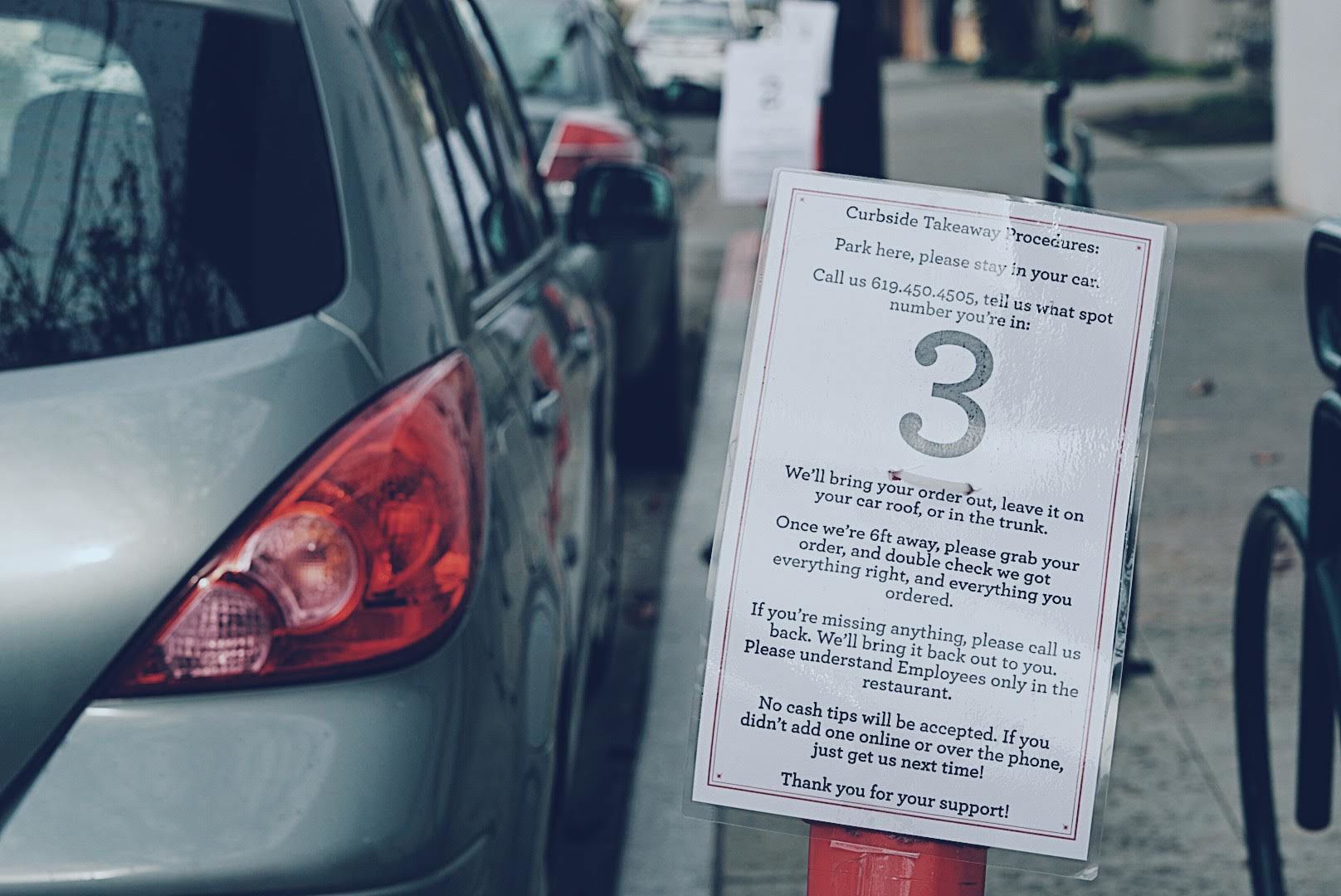
It’s March 21st. I am sitting in my car outside of Tribute Pizza in North Park. I’m a little nervous. I have never been nervous to order a pizza. The restaurant is closed. All restaurants have been ordered closed by the state of California, only allowed to do takeout and delivery. Boxes and boxes of food and relief goods and sanitation supplies are packed against Tribute’s windows. Construction zone barricades on the sidewalk designate pickup zones. I park my CRV. As instructed, I use my cell phone to call them and let them know I’ve arrived. New signs are posted on the windows explaining how to do this. People have to relearn how to order pizza in a pandemic.
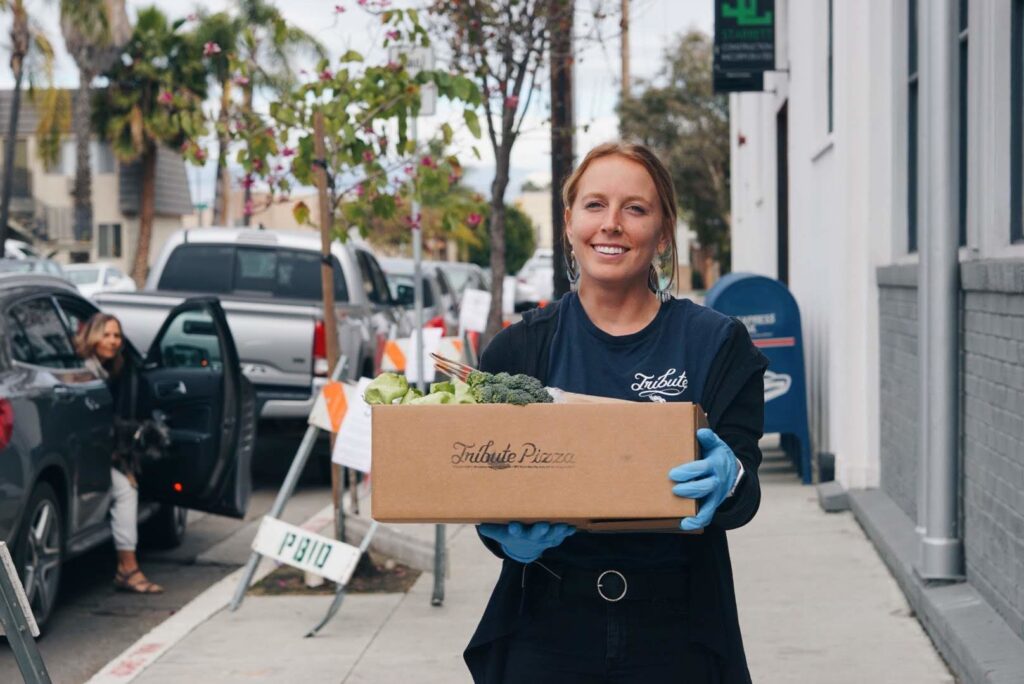
A woman emerges. She wears gloves and carries our pizza and a CSA box of veggies from local farmers. We are careful to give her six feet of space. Anyone working serving the public right now is at risk. She gives us two options. She will put our pizza on top of our hood, or in our trunk. She will not hand us the food, and we do not want the food handed to us. We opt for the trunk, though afterward I feel the hood would’ve been safer.
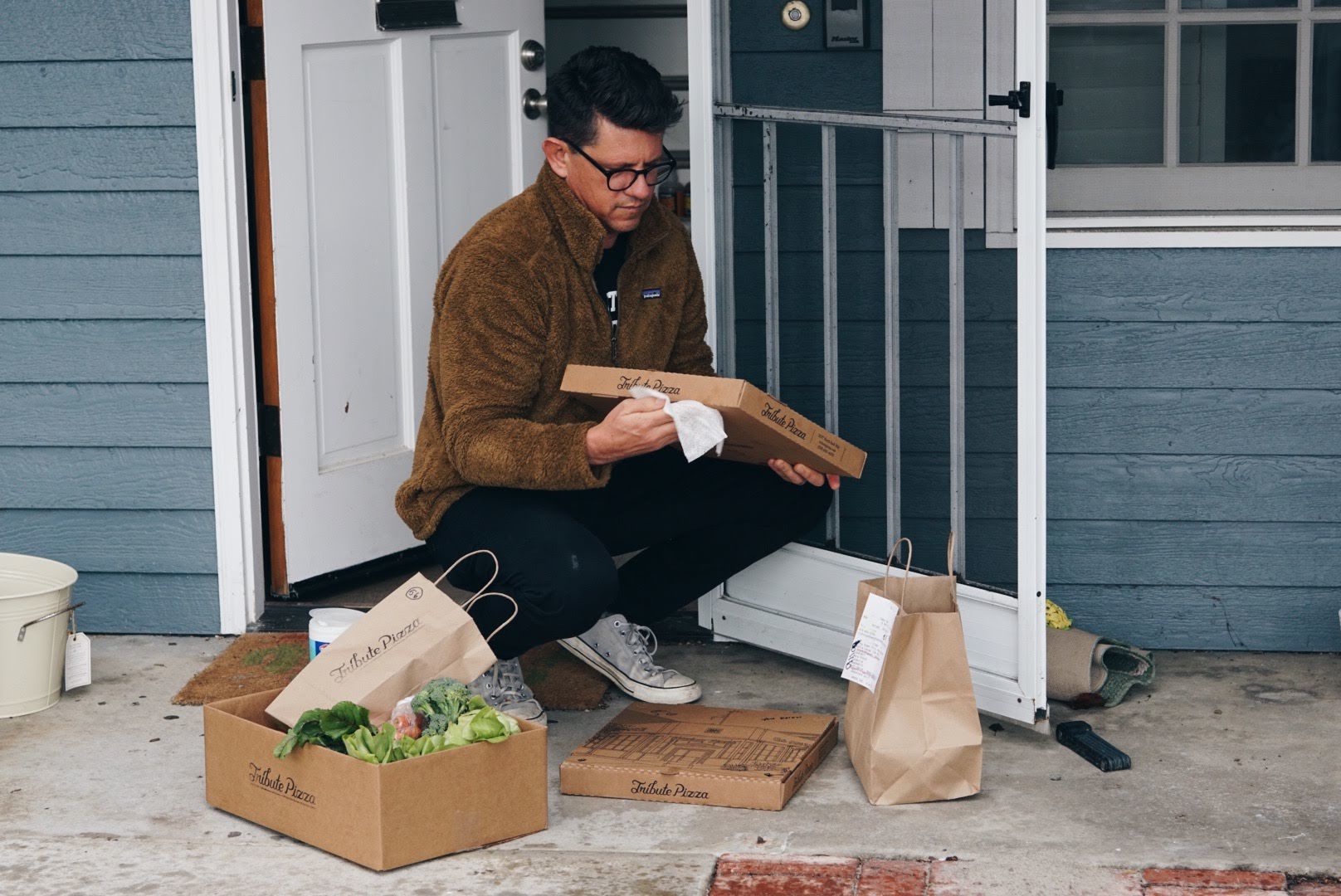
On the drive home, the car smells of hand sanitizer and pizza. Once home, I place everything outside of our front door. I remove all the food from the to-go bag. I won’t allow it in the house where my eight year old is. I take a tube of Clorox wipes, and wipe down all of the containers of food on our porch.
“Is this crazy?” I ask my wife.

Sanitizing the pizza boxes before bringing it into the house.
Photo Credit: Claire Johnson
Italy and Spain and China are on lockdown. California and New York are on lockdown. A third of the country is on lockdown. “Death toll” is a number well wake up to, hospitals are getting crushed with the flood of sick people, healthcare workers are working to the point of exhaustion while exposing themselves to coronavirus every minute of their lifesaving work. For the first time in my life I know what a ventilator is, how many are available in the U.S., and that it’s not enough.
It is definitely crazy. Everything is crazy. Nothing is normal.

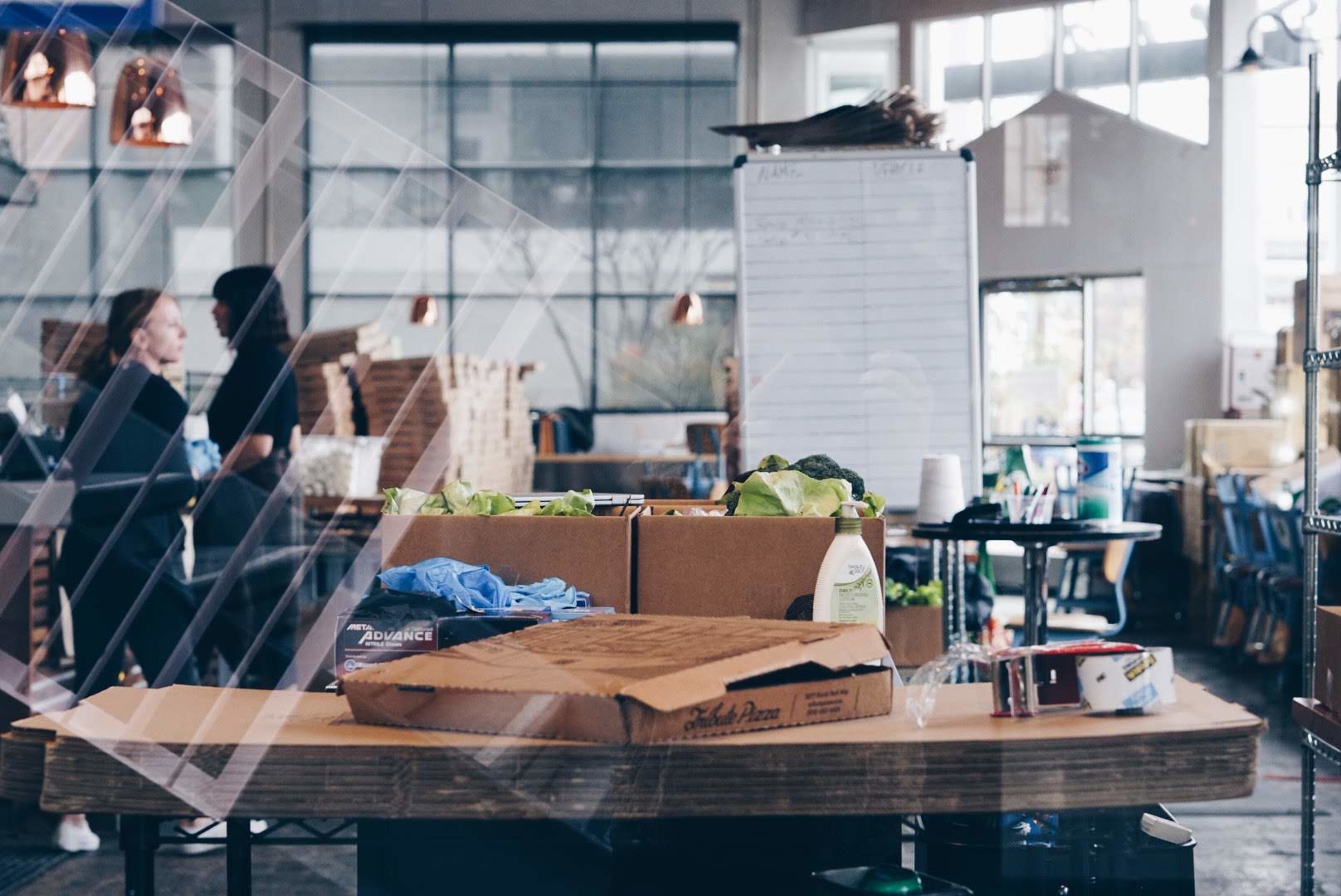
Hand sanitizer at the to-go station inside Tribute Pizza.
Photo Credit: Claire Johnson
I carry the food containers into the house, making sure not to put them down on our kitchen counters. I sanitize one free hand, use that hand to grab a clean plate from the cupboard, and dump the contents of the meatballs onto the plate. I do the same with the pizza.
Once all the food is safely on clean plates, I discard the containers. I go to the sink and wash my hands thoroughly for two birthday songs. Finally, we sit down to eat. It is delicious. And yet I’m not totally comfortable doing this. Maybe there is no comfortable way to eat in the pandemic.
Let’s back up to how we got here.
It’s March 8th. I’m at a crowded Mexican restaurant in San Diego taking notes on ceviche. This is my job. I take it very seriously. I’m unaware how wildly luxurious it will be a week from now to think about ceviche. I’m unaware how wildly free it was to be in a crowded restaurant and not worry about endangering a healthcare worker or a grandparent or humanity. Beyond washing our hands every hour or so, life is relatively normal. There are many birthday parties happening around us.
It’s March 9th. In four days, I’m scheduled to fly to the Midwest to film a TV show about restaurants. But the country’s starting to quiver a little bit. My wife and I decide to keep our two-day trip to the mountains. It’s important. I’m going to be gone for weeks. I need her to remember who I am.
It’s March 10th. I wake up in Big Bear to a text from my co-host: “I’m a little nervous.” She’s not a nervous type. Five days earlier I had asked her if she was concerned and she said she would kick coronavirus’s ass. I believed her. We laughed it off, a tad uneasily.
I get on a call with our producers to gauge their concern. They just don’t know. Nobody knows. We’re not epidemiologists. Just average people binging on the news cycle, trying to not be on the wrong side of history. At that point it was still valid to ask, “Is it bad enough to cancel things and ruin people’s lives economically?” Our TV show helps restaurants by telling their stories. At this point they are struggling because the virus has reduced customers to a trickle, and their people—dishwashers, cooks, servers, bussers, bartenders, owners, suppliers—need help. Four hours after that call, the WHO declares coronavirus a pandemic. We cancel our flights, postpone the show. It feels terrible and right, but even then we’re not sure.

Construction cones denote where to park for curbside pickup.
Photo Credit: Claire Johnson
It’s March 11th. We are now sure. The NCAA basketball championships are canceled, along with the NBA, MLB, NHL, Broadway plays, St. Patrick’s Day parades, South by Southwest and Coachella. Elementary schools close, college campuses shutter. Then they turn off whole cities, entire countries. Tom Hanks contracts COVID-19, which feels like a personal attack on America. Then the guy from James Bond movies. An NBA player gets it. In a year that “cancel culture” became a national exercise, coronavirus cancels culture.
The media flashes images of people standing in long lines to buy guns. People joke that it’s not like we can shoot coronavirus. It isn’t a skeet flung into the air off the side of a cruise ship. But we all know the guns aren’t for the virus. Nothing forms lines at the gun shop quite like fear.
Overnight, two-thirds of my income is “postponed.” It’s harder to play with your eight year-old when you know existentially bad news that affects the both of you. You make her a fort with a little less gusto, no matter how hard you try to manufacture joy.
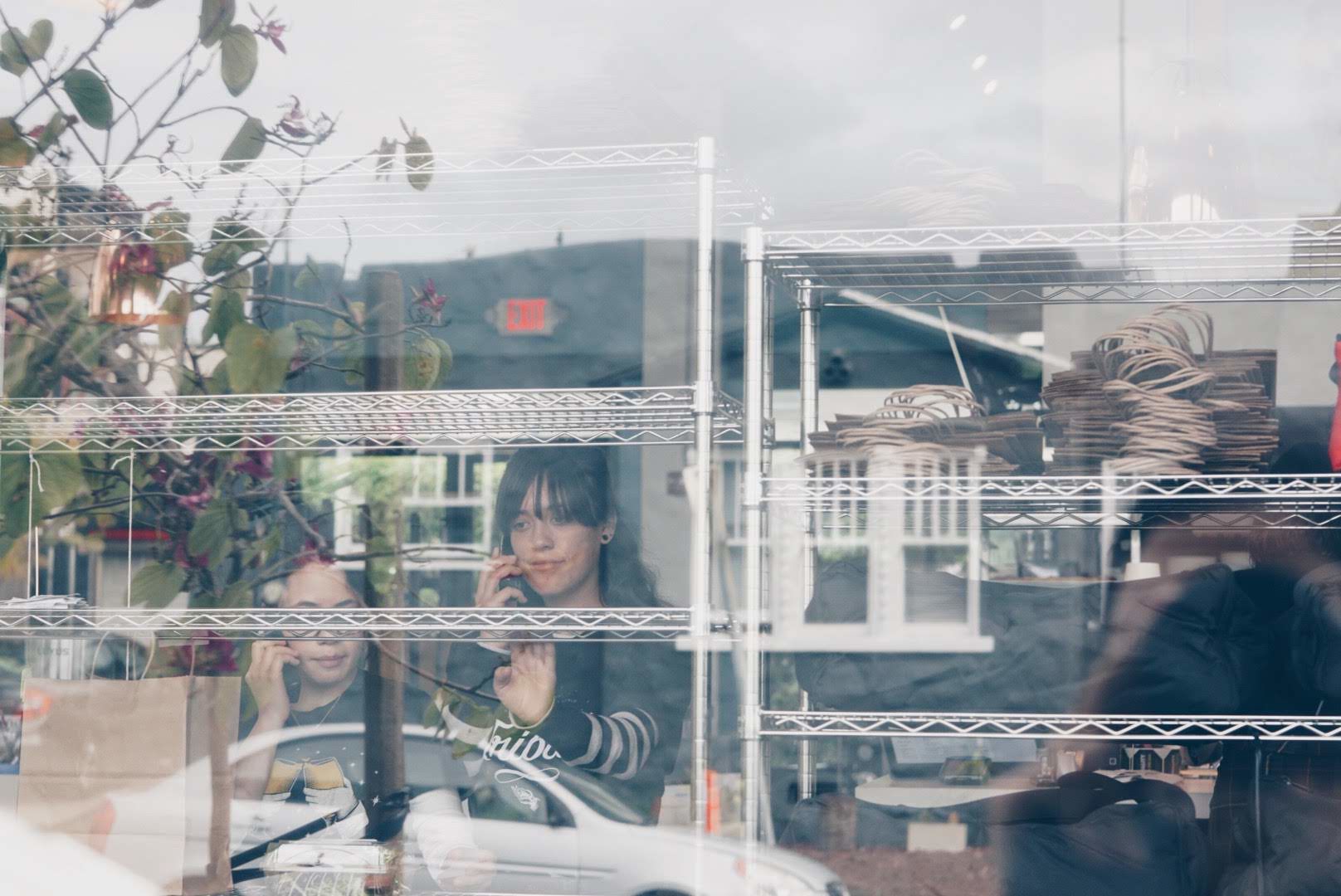
Workers inside Tribute monitor the customers arriving.
Photo Credit: Claire Johnson
Corona is a social virus. “Social distancing” becomes the global slogan, that awful refrain, as common in conversations as “um.” The tragic realization is that this means the people who create social spaces have to fall on the sword. Restaurants’ and bars’ entire purpose is to shrink the ever-increasing space between us. To bring people together, within feet or inches, very much on purpose. Recently, as tech has isolated a lot of us, that function seemed especially important and vital. And now, the thing that makes them vital and special is making them life-threatening.
It’s still March 11. A chart begins to circulate from online reservation platform, OpenTable. The numbers for the San Diego market for the beginning of the month are green, showing an increase in business. Then on March 8th the numbers began to sink: -7%. March 9th it was negative 13 percent. Then 31 percent. On March 11, there is a small uptick of three percent. People heard their cries of help, and they showed up to eat and drink and support the small business owners and their employees. And then, March 12th, hell breaks loose. Restaurant business nosedives, down 43%. For an industry that exists week-to-week on tiny profit margins (the industry standard is 3-5%), this is the point of no-return. It’s not just unsustainable, it’s fatal.
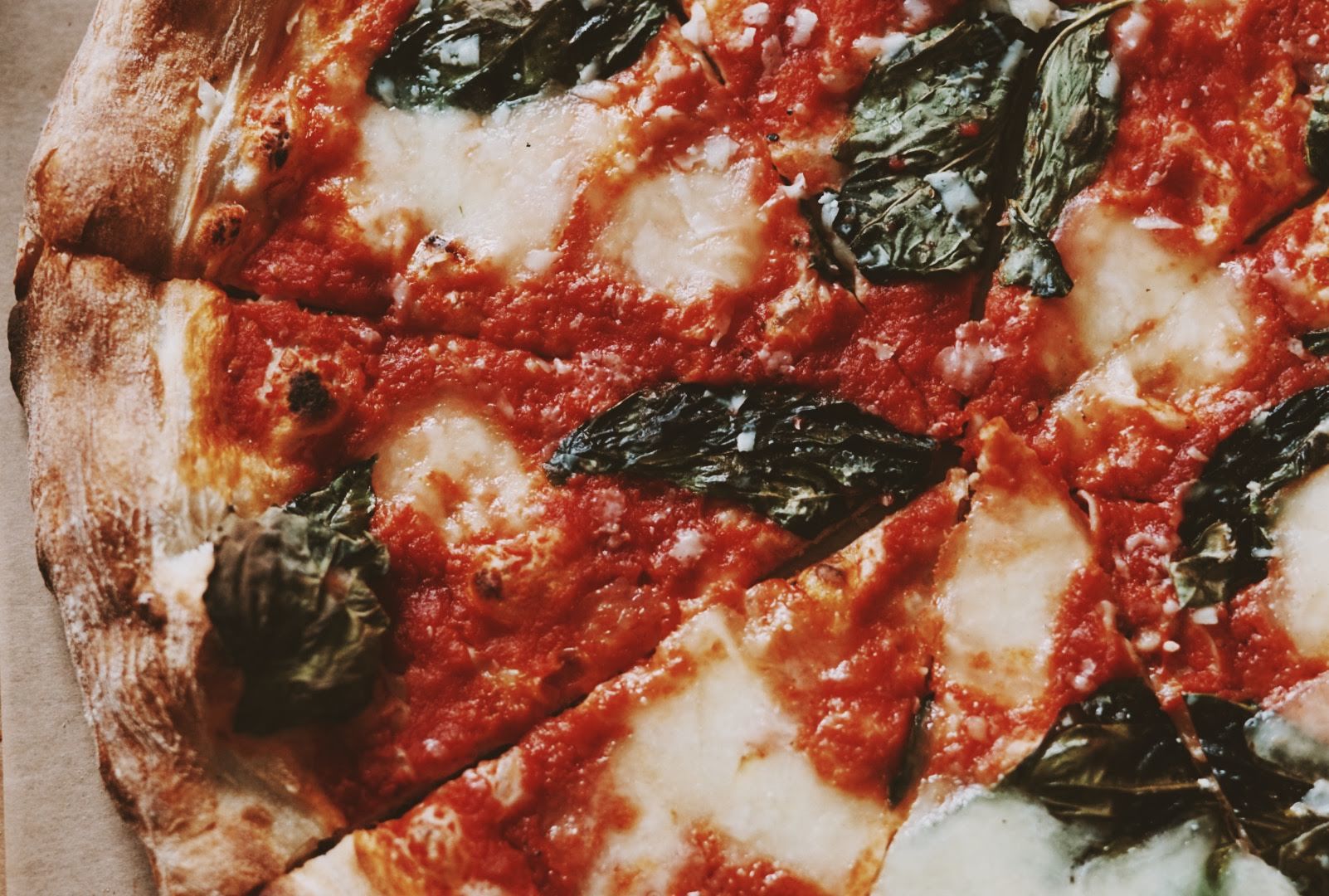
Tribute makes a real good pizza. Owner Matt Lyons got advice from pizza legend, Chris Bianco.
Photo Credit: Claire Johnson
The message from restaurants is that they are being extraordinarily safe. And it’s true, part of a restaurant’s daily task is preventing pathogens from getting their customers sick. For decades, they have been governed and inspected by health agencies. Sure, there are some that look like a dumpster fire, but most of the good ones are cleaner than your own.
Still, restaurants poise a problem—a crowd, touching common items (menus, condiments, tables, chairs, credit card machines, etc.). So they begin taking drastic measures, removing tables to make sure there is the recommended six-foot safety distance, removing condiments and menus, increasing the concentration in their sanitizing solvents, handing out hand sanitizer with orders. Desperate measures for desperate times.
I do hundreds of pages of research, speak with a friend who’s an epidemiologist. I try to determine whether professionals are saying it’s safe to dine out and help these people. Most of the experts say as long as you’re safe and not in the at-risk category, it is. The L.A. Times critic Peter Meehan writes a story that basically says it’s safe. The piece seems a tad cavalier, but not tone deaf. I try strike a middle ground, relaying experts who say it’s safe if you’re not in the at-risk category and take precautions.
Within 48 hours, that all changes. I have to adjust the story, relay the CDC’s recommendations that everyone avoid restaurants. (Meehan will do the same to his story). On my personal social media, I post a long admission that after all the research I believe restaurants need to shut down. I feel like I’ve betrayed the people in my industry. But the facts about coronavirus are too dire.
It’s March 15. Chef Brian Malarkey calls me to say he’s closing all of his restaurants, the first major closures in San Diego. He lets his staff shop in the walk-in refrigerator, taking home duck and lamb and eggs and cheese and produce. It’s a nice gesture no one wants. But Malarkey is confident every restaurant will be ordered closed soon. Calling it early gives his people a jump on the unemployment line, which will buckle under the strain in days to come.
The night before they close, customers enjoy one last meal, leaving generous tips to help the staff. One man tips $700. At Garden Kitchen in Rolando, a man walks in and buys a $750 gift certificate and says he’ll see them when this is over. At Little Lion, regular people who don’t appear to be wealthy (a description from the owner) are handing out $200 tips.
It’s March 16. The County of San Diego orders all bars closed, and closes all dine-in spaces at restaurants. They are now allowed to do only takeout and delivery. For many restaurants, this is their financial apocalypse. My email inbox is flooded with hundreds of messages from restaurant owners small and large, begging for help. I begin frantically posting their messages on social media. I post stories on San Diego Magazine’s website.
Nationwide rallying cries go out on social media, urging people to buy gift certificates from the restaurants, buy their merchandise, do anything they can to help them. The industry’s low-income employees flood the unemployment lines. GoFundMe pages are set up for them. Some restaurants dedicate a portion of sales to them. Some restaurant owners simply can’t. There’s a myth that every restaurant owner is wealthy, will just go home and lay by their pools until this subsides. But anyone who knows this industry knows that’s the cruelest lie, that most restaurant owners are small business owners who are only one bad month or two away from closing.
Every morning, I wake up to dozens of messages asking for help. There are just too many. The heartbreaking stories are just coming too fast. I feel a crushing guilt for not being able to help them all. At the same time, it feels insanely unfair for me to choose who to help. The process of interviewing them, writing a story, editing that story, fact checking, getting images, and posting that story is far too slow. My work rapidly morphs from longform story writing to informational triage. I’m just trying to relay SOS messages as quickly as possible.
In the middle of this, my eight year old daughter sits on the couch. With county schools canceled, she’s home all day with my wife and I. She needs love and attention and schooling and food. Normally my parents could help take care of her, but they are over age 70 and all have underlying medical conditions, so we can’t risk it. With most restaurants closed, my wife and I find ourselves continually loading up on groceries, cooking three meals a day, doing dishes, so many dishes, trying to work in the moments between.
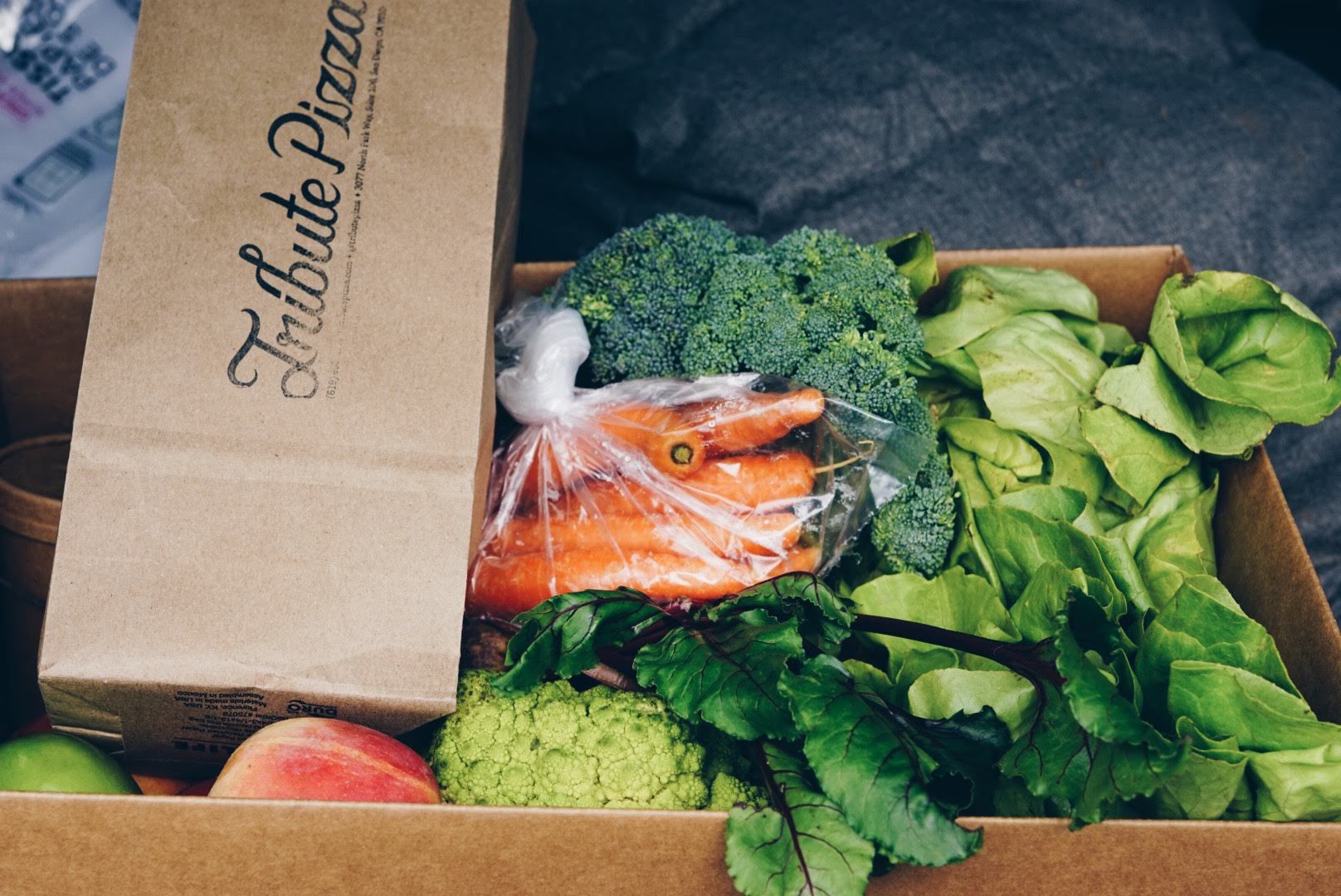
Tribute offers CSA boxes now to get local food to its customers and help local farmers.
Photo Credit: Claire Johnson
So I take a few days to develop a new system. I start doing Instagram Live interviews with people in the food and drink community. The videos put a human face to the disaster. I’m able to use my social media channels to connect these people directly with my followers—a network of about 60,000 people. That’s not huge, but it helps. My followers can see into their kitchens, see what efforts these people are making to ensure their food setup is safe and responsible. They’re able to see these people’s eyes. The community responds to it.
In the beginning, to be fair, I refuse to choose who to help. I just let anyone into my Instagram videos to tell their story. My wife, who’s also in media, is nervous about this. She says it’s vaguely irresponsible. I push back at her. I tell her people need help, this is the fastest and most democratic process. We nearly argue.
“What if someone joins in and is naked?” she asks. “What if someone uses this platform to scam people?”
God, she’s right. Sad as it is, this is irresponsible. I have to verify these people. I have to choose who to help. It’s brutal.
So I start setting up scheduled times with various local food and drink people. I want to be inclusive—include people from every neighborhood, every nationality, mom and pops, people really in need. But even the big companies like Specialty Produce need help, because what they employ hundreds of people.
The live Instagram interviews are also a little too long. People have a lot to say, so much chaos to work through. I know as a journalist and writer and TV person that viewers don’t have the attention span for this. The videos need to be shorter. But any shorter, and they lose humanity.
At the same time, a large portion of the planet starts to quarantine, shelter in place. Everyone on the globe, it seems, begins to go live on Instagram. The channel becomes clogged with musicians, artists, employees, writers, journalists, TV people, everyone—isolated and trying to connect with an audience who can help. It’s like an open-source crisis hotline. In doing so, the app becomes its own pandemic. Jokes start circulating making fun of everyone doing Instagram Live.
And yet, still, we do. There are only so many ways to help, and this seems the fastest, the most immediate.
Restaurants and food people and their customers are doing amazing, hopeful things. Some of them are turning their restaurants into general stores or bodegas, selling essential goods to locals who can’t get to the grocery store, or get there and find the grocery store empty. Local company Skrewball Whiskey pledges up to $500,000 to U.S. bartenders out of work. Most restaurants that have stayed open for delivery and takeout are not making money. Sales do help keep the lights on, but most of them are doing it as a community service. There’s a reason governor Gavin Newsom included them as “essential businesses” that could stay open. Because adding food insecurity to a pandemic is never a good idea. Grocery stores can only do so much.
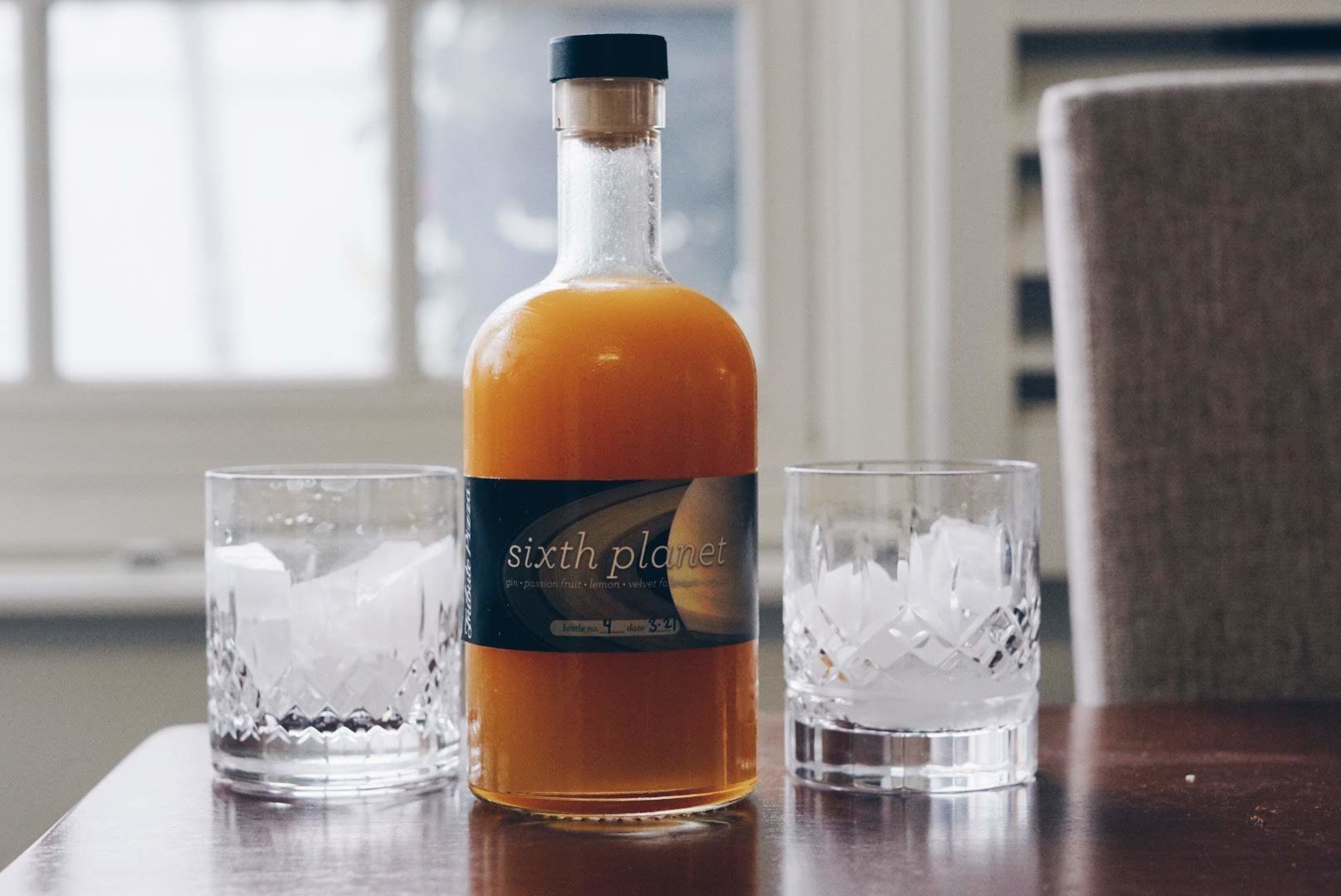
The toughest thing is that many restaurants only make money at the bar. Food is often a loss leader. And with no one ordering bottles of wine or sitting at their happy hour, restaurants can’t make that money. The ABC makes an emergency change to its laws, allowing any restaurant with a license to serve booze to-go as with food. Restaurants start selling Negronis out the front door. It helps a little.

Restaurants can now serve cocktails to go if you’re also ordering food.
Photo Credit: Claire Johnson
But it’s not enough. None of this will likely be enough. Some restaurants will be able to weather it. So, so many of them will not. Small business owners will be financially ruined without help. But help from where? The landlords? Can we expect them to take the financial burden? From banks? From the government? If we’re going to save these people, it’s going to have to be a combination of them all.
And so I sit here wiping a Tribute Pizza box with a hand sanitizer, as my phone explodes with messages from food and drink people, from my mom wondering if she’s allowed to have her housecleaner still come to her house (absolutely not, pay the cleaner to not come for a month), from friends checking in on me, from news alerts about COVID, from friends with explosive political opinions and memes to help distract us for a second.
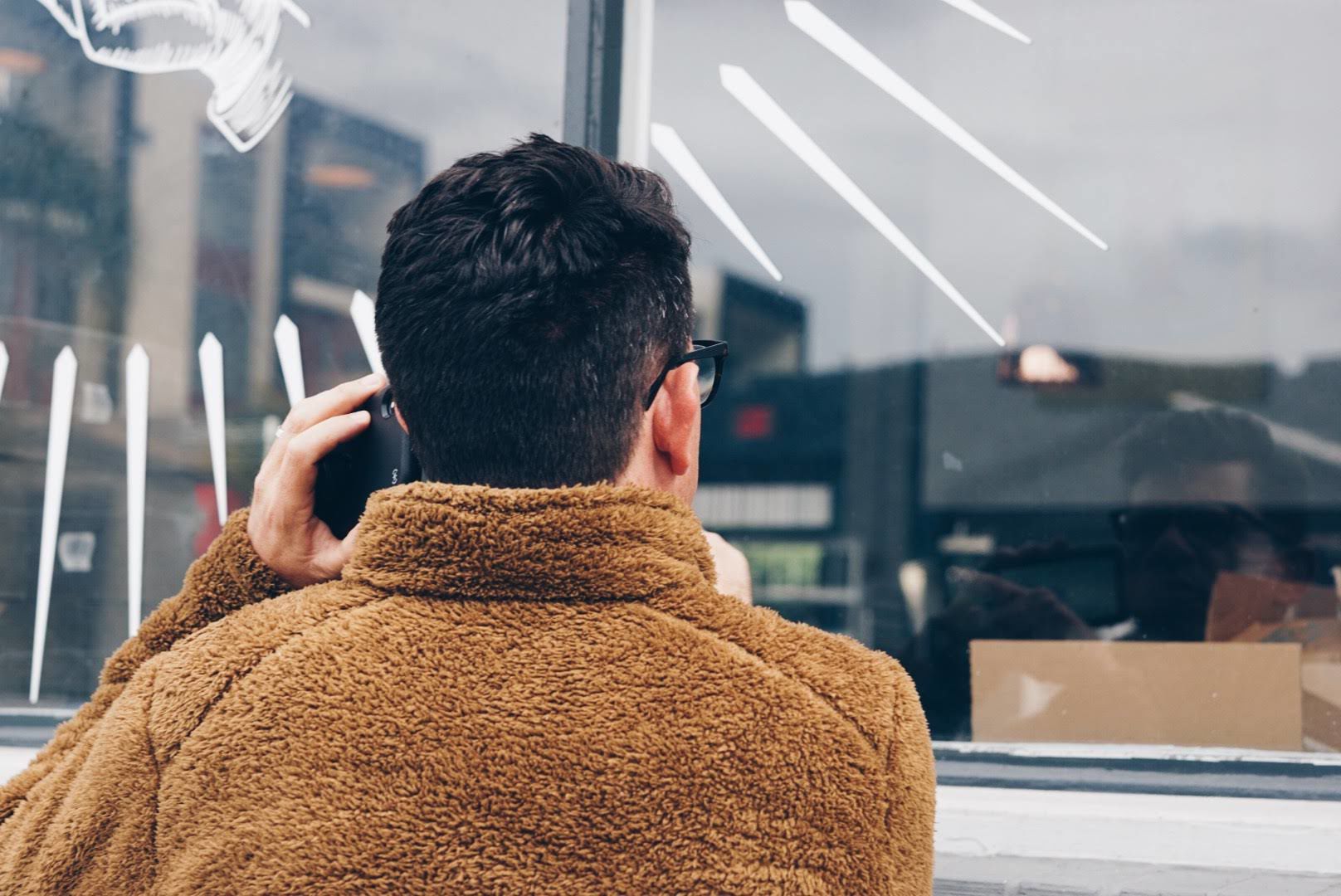
When you arrive at Tribute, you call the restaurant and they’ll walk your food outside.
Photo Credit: Claire Johnson
I sit down on the couch, eyes puffy, exhausted. My daughter tries to keep quiet at the dining room table doing her homework. My wife takes a conference call in her office, trying to keep us financially afloat. I briefly think about the broccoli in the fridge that has to be cooked today before it goes bad, about my need to Google signs an eight year old is depressed, about how to keep your marriage solid during a quarantine.
I face the tripod with my phone loaded to Instagram. I push “Go Live.” I see another tired face on the other end of the video, a restaurateur or a small business owner. We say a tired hello and this goes on.
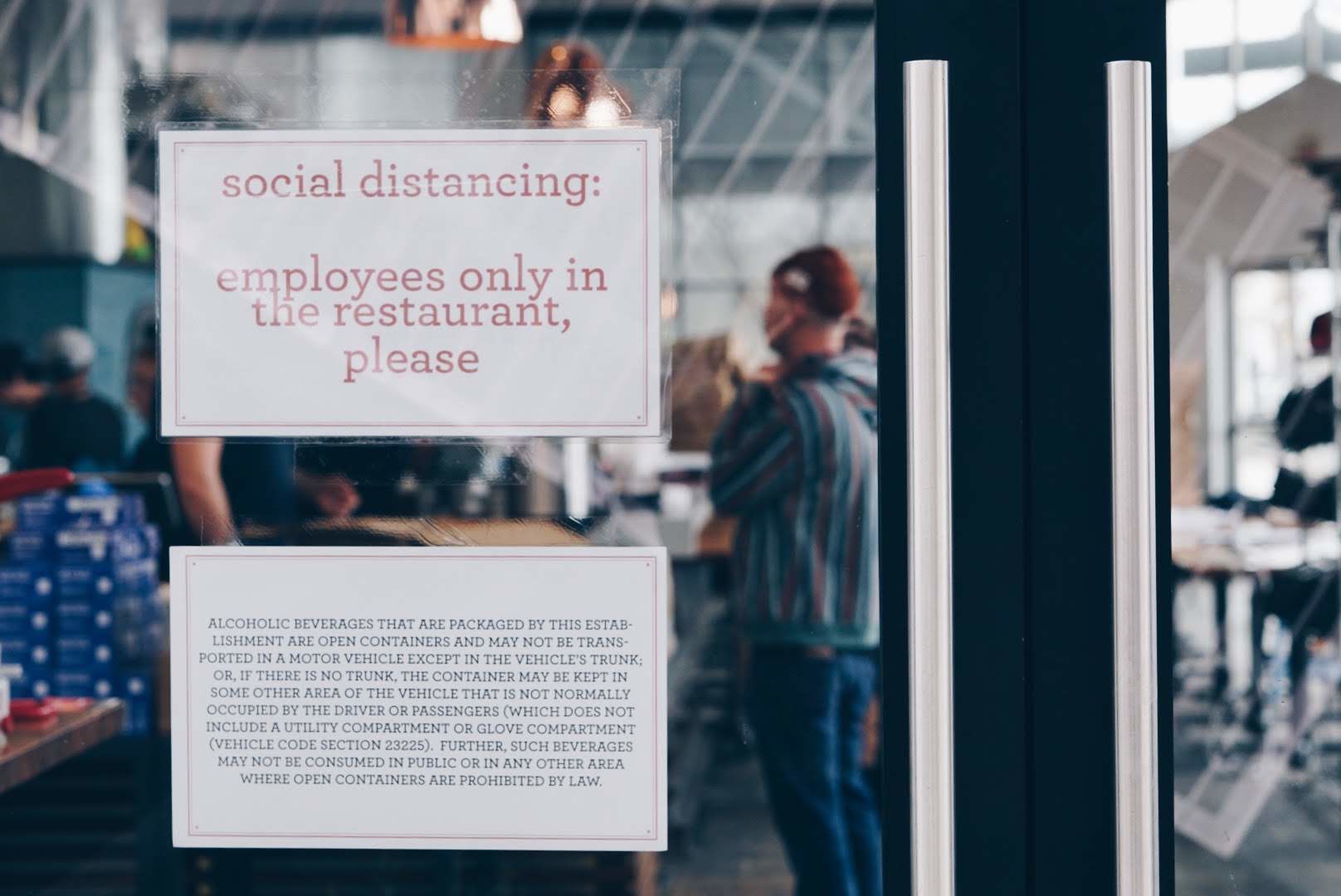
New signage in the window at Tribute explain pizza in a time of coronavirus.
Photo Credit: Claire Johnson
The good news is that people are rallying behind these small business owners and their employees. They’re buying gift certificates. They’re buying merch. Restaurants have never been about food. They’re about people. And now the people need to be about restaurants.
This virus will have a lasting, unimaginable effect on restaurant life and our culture long after the virus itself has gone dormant. I don’t really know what that will look like. No one does. In the meantime, I’ll continue telling the people’s stories here and on Instagram Live.
PARTNER CONTENT
And as long as the CDC says it’s safe and the restaurants remain open for takeout and delivery, they will be part of how we all get through this.
Tribute Pizza, 3077 North Park Way.

Food writer Beth Demmon names local bites we love—both at the high and low ends of our budgets
We love a mega-fancy tasting menu, but let’s be honest—we’re not all blessed with unlimited Wagyu funds. So we picked some of the breakout dishes of the last year (or couple of years) from the best chefs in the city, reverse-engineered their chief charms (salty, smoky, caramelized?) in the test lab of our mouths, and found some budget-friendly alternatives that hit some of the same notes with an everyday price tag.
Where do delicately plucked marigold blossoms adorn Deer Isle scallops, or ingredients like fermented raspberry precede roasted coffee oil, shiro miso caramel, or bronze fennel in a parade of hit-after-hit dishes? Lilo in Carlsbad, of course. San Diego’s newest Michelin star changes its menu with the seasons, but one stalwart dish has kept tongues wagging since opening day last April: the caviar ice cream. A boat-shaped sliver of orgeat ice cream, smoked celery root bushi, and freshly pressed almond oil are topped with a generous heap of caviar. It’s a dish so good and defining that chef Eric Bost will tire of talking about it for a very long time.
Price: $265 for the tasting menu (before tax, tip, and drinks)
There’s a reason Stella Jean’s s’mores ice cream is part of the local scoop shop’s “always available” menu. Made with fire-roasted marshmallows and coconut ash ice cream mixed with dark chocolate-covered graham crackers and mini marshmallows, its strangely ashen hue dabbled with flecks of tawny brown is a far cry from the wildly vibrant ube and pandesal toffee flavor seemingly made for Instagram reels. But it’s a sensation in your mouth—smoky, toasty, torched, creamy, marshmallowy, coconutty, ashy, and bitter from the dark chocolate. Pro tip: If you really want to DIY Lilo’s ultra-luxe treat, bring your own caviar.
Price: $6.25 for a single scoop
There’s no question what comes first at Lucien. It’s the egg. Chef and co-owner Elijah Arizmendi’s 12-course tasting menu begins with welcome bites under the calamansi tree before moving inside to start the Journey (the actual name of this section of the menu). The first step is one of the most astounding—a perfectly intact, upright, ochre-hued eggshell containing his take on Japanese chawanmushi (egg custard), topped with a dollop of caviar. The accompanying ingredients have ranged from sweet corn and huitlacoche to banana and buckwheat, but each one has precisely demonstrated Arizmendi’s commitment to French technique with California experimentation and global influence.
Price: $260 for the chef’s tasting menu (before tax, tip, and drinks)
The biggest difference (besides price) is that while Lucien’s dish changes with the season, Sushi Ota is comfortably predictable. A San Diego staple since 1990, the legendary Sushi Ota has been one of those if you know, you know joints that locals try to keep off the radar. (It hasn’t worked at all.) Known for ultra-fresh fish and ultra-traditional service, the small Pacific Beach restaurant also serves Japanese comfort foods like udon noodle soup alongside sashimi, nigiri, and rolls. But it’s the savory steamed egg custard, called chawanmushi, that really gives you the warm and fuzzies. Add a side of salmon roe (ikura) for a few bucks more, and this dupe is about as good as it gets.
Price: $12 for chawanmushi, $11 for ikura

Enough ink—and tears, I’m sure—has been spilled over Chick & Hawk’s long and arduous journey to opening its doors. But now that the Encinitas eatery is in full swing, chef Andrew Bachelier’s tightly curated menu of fried chicken sandwiches, fries, and bowls command lines of hungry locals and skate-culture loyalists. The Birdman, the signature hot chicken sandwich named for partner and skateboarding legend Tony Hawk, is piled with cabbage slaw and pickles and slathered with a tangy kimchi comeback sauce on a soft brioche bun. Although this Nashville meets California meets Mississippi meets Korea sando doesn’t command a triple-digit price tag, the fact that it’s nearly a $20 chicken sandwich (sans side) has been a topic of conversation. Bachelier—who worked at Addison before opening Jeune et Jolie, then launched SDM’s 2024 “Best New Restaurant,” Atelier Manna—and his team earned that price tag.
Price: $18
It’s hard to beat Koreans at the chicken game. Korean fried wings are defined by a double-fry technique—first at a low temperature to ensure the chicken is cooked through, then at a high temperature to ensure the famed extra-crispy, ear-splittingly crunchrageous magic. At Cross Street, they follow a similar fusion ethos as Chick & Hawk, using inspiration from the American South as well as Thailand, Korea, Vietnam, and more, with flavors like “Seoul Spicy” or “Honey Butter” for whatever you’re feeling that day. Pair it with a cold beer to go full chimaek (a popular Korean combination of pairing fried chicken and beer). Now that’s a combo—and price tag—that’s hard to beat.
Price: $8.75 for five wings

PB&J. Captain & Tennille. Brad Wise and steak. Steak frites ranks among the iconic global duos. And when the holy union of prime cuts and twice-fried carbs comes from Wise and the meat-loving masters at Trust Restaurant Group, it’s a pretty safe bet. À L’ouest—the group’s newest fancy, but not fussy, drippy plant dreamscape of a French steakhouse on the prime corner of 30th and University in North Park—gives guests a choice: 12-ounce New York strip, 8-ounce filet mignon, or 8-ounce Wagyu hanger, topped with sauce au poivre (the classic French pan sauce—peppercorns, shallots, heavy cream, brandy) and served with a heaping pile of 24-hour salt-brined fries and a watercress salad. One bite acts as a transport to a Parisian brasserie, so if you think about the cost in terms of time-space travel, it’s a pretty great deal.
Price: starts at $48
To satisfy the same urge for meat and potatoes, feel at least moderately European while doing so, and save a couple quid, a trip to The Shakespeare in Mission Hills ticks all the boxes. The classic British shepherd’s pie arrives in a piping hot oval au gratin dish, smothered with a thick layer of mashed potatoes. Beneath it lies a hefty portion of marinated ground beef and vegetables in the pub’s secret sauce, and while there are a few choices of sides, the correct order is peas and “proper” chips (a.k.a. chunky, thick-cut fries versus the typically thinner American “French” fries). It’s more tickety-boo than très bien, but it’s immensely satisfying in any language.
Price: $22.95
Beth Demmon is an award-winning writer and podcaster whose work regularly appears in national outlets and San Diego Magazine. Her first book, The Beer Lover's Guide to Cider, is now available. Find out more on bethdemmon.com.
The sustainability-focused sushi concept offering traditional favorites as well as fusion specialties will open in North County this summer
Encinitas nigiri fanatics, I bring you good tidings. Oto Sushi is slated to open in late July. After nearly two decades of experience in operations for Tao Group Hospitality and Ace Hotel, Ash Cintas opened the first Oto in Laguna Beach in 2024. She focused on from-scratch dishes, fish sourced from Smart Catch and Seafood Watch–approved suppliers, and a wide swath of gluten-free options.
Year one worked, so she started eyeing her ideal second spot—North County San Diego. “I grew up spending time in San Diego visiting family, and my grandfather built a fishing business here, so the area has always felt familiar and meaningful to me,” says Cintas.
Cintas’ twin sister Alysha Rabb spearheaded the Japanese coastal design of the new Oto, which takes over the former Mrkt Space. The 3,200-square-foot eatery flows from the indoor dining room to large outdoor patio, as well as a private dining room—a total capacity of 95. Chef Connor Mathison has worked as a sushi chef for over 15 years at venues like Bamboo Sushi SW in Portland, Oregon. His menu includes classic sushi offerings like nigiri and sashimi, specialty rolls, bento boxes, tempera, karaage, Wagyu burgers, and robotayaki.
Robatayaki, sometimes called robata, is a method of slow-grilling meat, seafood, and various vegetables over premium Japanese binchotan charcoal. Basically, it’s the gold standard for grilling, thanks to its intense, clean heat that imparts a smoky, savory char on the outside and a rich, tender inside.
“One of the defining characteristics of Oto is that much of our sushi is served yakumi-style, meaning it arrives already seasoned with ingredients designed to complement the fish rather than relying on soy sauce,” Cintas explains.

There will also be a large number of vegan and vegetarian dishes, plus scratch cocktails with housemade syrup, fresh juice, sake, Japanese whiskey, wine, and beer selections curated by beverage partner Gavin Grum. Cintas says she hopes to continue expanding across Southern California, ideally opening six to eight locations in different coastal communities.
“The goal isn’t to build the biggest restaurant company,” she says. “Encinitas is the next step in proving that model can scale.”
Oto Sushi opens July 2026 at 782 N. Coast Hwy 101 in Encinitas. Initial opening hours are from 11:30 a.m. to 9 p.m. daily.

First more sushi, now more ice cream? Someone pinch me. Later this June, Silver Hoof Creamery will open in Old Town at 2548 Congress Street, Suite G, bringing artisanal soft serve, waffle tacos and waffle bowls, sundaes, and milkshakes to the Old Town Urban Market food hall. Everything is made with 100 percent California dairy milk (except for the dairy-free options, of course), and the small-batch menu of flavors ranges from dark chocolate soft serve to blueberry lavender milkshakes, matcha garden sundaes, and the signature Silver Hoof sundae made with vanilla swirl soft serve, caramel drizzle, topped with candied pecans and various candy gems and topped with whipped cream. Personally, I’m a sucker for strawberry, so I’m looking forward to giving the strawberry fields milkshake a slurp once the doors open.
Listen Now: The Latest in San Diego’s Food and Drink Scene
Have breaking news, exciting scoops, or great stories about new San Diego restaurants or the city’s food scene? Send your pitches to [email protected].
Beth Demmon is an award-winning writer and podcaster whose work regularly appears in national outlets and San Diego Magazine. Her first book, The Beer Lover's Guide to Cider, is now available. Find out more on bethdemmon.com.
The team behind The Roxy launches Arcana, a hidden cocktail bar with small bites
If your dopamine rush comes from stepping into an experiential esoteric escape that also serves cocktails, then the newly-opened Arcana might just be up your alley. Brought to life by the owners of The Roxy Encinitas and Roxy on Broadway in Denver, Encinitas’ new hidden cocktail lounge spirals around the idea that nothing is quite as it seems. Stepping into the moody 47-seat space, which is tucked behind the retail store Archive, should feel like an out-of-this-world experience, says Paula Vrakas, one of the four partners behind Arcana.
Vrakas worked with architecture and design firm Tecture—which designed restaurants like Lucien, Haven at Fox Point Farms, and Kettner Exchange—to concoct an environment that begins when guests walk through the secret portal into a world of velvety folklore and myth. No two experiences will be identical, she promises.
“The concept itself is a changing concept, and so this sort of mysticism, the occult, or these dark arts, they’re ever-changing within themselves,” she explains. “So we can lean in…. at any given moment without completely changing the entire concept. That’s actually what we intend to do.”
If this sounds very abstract, that’s okay. Let’s center ourselves around the cocktails, which are very real and created in part by bar lead Sam Reinke.
Initially, there will be around 16 cocktails (and a few mocktails) in three sections. “Archive” features traditional drinks like Old Fashioneds and Manhattans, while “Myth & Memory” offers rotating cocktails inspired by Southern California folklore, like the monster of Proctor Valley Road or the legend of Charles “The Rainmaker” Hatfield.

But the menu starts with “Sigils,” four drinks that break down Arcana’s logo into its individual features: the Celtic Knot, the tria prima (the Latin philosophy of three foundational elements of alchemy being salt, sulfur, and mercury), the All-Seeing Eye of Providence, and the Alchemist’s Stone. The ingredients in each reference key aspects of each concept; for example, the Alchemist’s Stone (sometimes called the Philosopher’s Stone) is made with red powder to mimic the same flaming hue of the legendary item. The Eye of Providence includes carrot juice, an ingredient rich in beta-carotene that also happens to be excellent for eye health.
The fifth drink, called “The Arcana” and based on the logo as a whole, will never be listed. “But if you ask, you can find out,” promises Vrakas.
Since the concept is meant to be cocktail-forward, only a few small bites will be available, like chocolate-covered strawberries and wasabi pea pub mix. “It’s fancy snacks,” laughs Vrakas. But considering how Encinitas’ dining options have upped their game as of late, she says focusing on providing a high-end cocktail experience will fill a void in the area not yet overwhelmed with similar choices. Once inside, it’s an intimate space, with seating for 47 guests over 800-square-feet lit by candles and cocooned with dark velvet curtains sewn by Vrakas’ mother.
For now, Arcana is reservation-only, but will likely introduce opportunities for walk-ins in the future. In the meantime, expect surreality and perhaps a bit of discombobulation, says Vrakas. “It’s just meant to [feel] like, ‘Wait, where was I? Where was that? And how do I get back?’”
Arcana opens May 28 at 517 S. Coast Hwy 101 in Encinitas. Hours are Tuesday through Wednesday, 5 p.m. to 10 p.m.; Thursday, 5 p.m. to 11 p.m.; and Friday through Saturday, 5 p.m. to midnight.

Call it the Michelin effect—after earning Michelin recognition in December, Cloak & Petal in Little Italy is ready to expand its Japanese-inspired offerings by launching a coffee shop-slash-cafe experience this August.
Called Black Mizu Café, the 1,000-square-foot space situated within Cloak & Petal will serve Torque Coffee and Compa Coffee beans and Asa Bakery pastries, as well as Japanese comfort food dishes like a tamago sandwich, bánh mì panini, edamame hummus toast, and various parfaits. Signature drinks include specialties like a honey yuzu sparkling matcha, cherry blossom latte, white miso caramel latte, and a cardamom cinnamon latte. Next spring, Black Mizu will also launch a Pacific Rim-inspired brunch menu by executive chef Robert Cassidy.
With space for 25 to 30 guests, the Japanese-meets-Scandinavian minimalist design will also be able to accommodate a private dining space for Cloak & Petal during non-café hours. Managing partner Cesar Vallin anticipates the initial hours of operation will be daily from 6:30 or 7 a.m. through around 2 p.m., with extended hours on Thursdays, Fridays, and Saturdays until approximately 9 p.m. It’s not a pop-up, per se, but it’s certainly a creative way to make the most of the restaurant’s off-hours floor space.
Listen Now: The Latest in San Diego’s Food and Drink Scene
Have breaking news, exciting scoops, or great stories about new San Diego restaurants or the city’s food scene? Send your pitches to [email protected].
Beth Demmon is an award-winning writer and podcaster whose work regularly appears in national outlets and San Diego Magazine. Her first book, The Beer Lover's Guide to Cider, is now available. Find out more on bethdemmon.com.
The 29-year-old culinary director at Herb & Sea is making seafood sexy (and approachable) again
Implementing a farm-to-table model hardly deserves acknowledgement these days. It’s not a stretch. It’s not innovative. “It’s the bare f**king minimum,” says Herb & Sea‘s executive chef Aidan Owens.
When I arrive at the Encinitas restaurant, I’m ready to talk sustainability, farm-to-table stuff, with Owens. “Did you see the chin on that?” he says of the extra big jiggly chin on the sheephead that just arrived with the day’s fresh catch. I did. It was Jay Leno adjacent.
I learn quickly that he somehow oozes both charm and stone-cold honesty. Maybe he could construct a new dish with chin goo, like he did when he had a bunch of tuna scraps and voila’d it into a smooth and crowd-pleasing ‘nduja. “I want to know what’s in there,” he says.

The instinct to look closer, to dig into what others might discard, says a lot about the chef’s approach. I guide him back to our topic, but he has something else on his mind. “We’re overcomplicating food—what happened to just cooking good food and having fun with it?”
Owens grew up on a farm in Byron Bay, Australia, where sustainability wasn’t a concept you chat about so much as a way of life. Think dirt roads, backyard chickens, pulling vegetables straight from the ground, and a mother who believed that if you couldn’t pronounce the ingredients on a package, you shouldn’t eat what was inside.
Food wasn’t precious or performative. Making it was what you did because you were hungry and that’s still what inspires Owens today. “I like to cook good food because I like to eat good food,” he says.
His approach to sustainability at Herb & Sea began so naturally that it felt just like instinct. “I was just like, ‘Let’s order food from the people who live and work here,’” he says.

And why wouldn’t he when lives in San Diego? Cities all over the world vie for our goods. Our tuna is sent overseas. Our spiny lobsters hit dinner plates in China and Japan. Not to mention California’s producing a third of the country’s vegetables and three-quarters of its fruits and nuts.
“Why would we outsource when it’s all here?” Owens asks.
Sustainability, in this context, is about cooking what exists in abundance, nearby, right now. “I love the local fish here. It’s f**king delicious and San Diego citrus, I mean, it is so f**ing good,” he says.
Instead of importing ingredients, Owens also looks for nearby alternatives. “You can find really cool things in the local waters,” he says, pointing out that stingray cheeks taste similar to scallops.

Whatever he finds in that sheephead chin might just be the next substitute for marrow. But to make this work, it means getting diners amped up about the slightly unfamiliar.
Tasting menus, where diners are completely in his hands, become an opportunity to gently push boundaries. “I’ll serve mackerel, because people think they hate it,” Owens says, noting that the abundant local fish can have some fishiness. “But when it’s fresh, it’s arguably one of the best fish in the ocean.”
He also tweaks the language on the menu so people might feel more compelled to give dishes a try without preconceived notions. He might use “lengua” instead of “tongue.” “Whelk” instead of “snail.” When he puts “stingray throat” on the menu, he disarmingly calls it “skate.”
To reduce waste, scraps aren’t always discarded but rather turned into something new. Sometimes they’re smoked, cured or fermented. Apples going bad turn into apple ponzu. Lemons turn to marmalade, which stretches their usefulness far beyond peak season. “And it’s super tasty on our pizza,” he says.
What makes the food even richer, is the relationships he’s built with farmers. Though it didn’t always feel natural, Owens sought personal connection first. He recalls approaching a fisherman at the Tuna Harbor Dockside Market. “I was awkward,” he says. “I went up to him and said, ‘I like your fish.’”
Owen’s is now so close to his suppliers—like fishermen Ryan Sebo and Joe Daly—that he gets texted pictures of fresh catches right as they flop on the boat. The messages always ask if he wants first dibs. “I say yes to a lot of fish,” Owens says, noting that Herb & Sea can go through 2,000 pounds of seafood a week.

The next evolution of sustainability, in his view, will be chefs working directly with producers such as his alliance with Sebo, cutting out middlemen and purveyors where possible. “It will put more money in the pockets of the people doing the work,” he says.
It will mean that chefs can’t just know their local farmers and producers, but they’ll choose to work with the ones who have the best practices. Dining and sustainability will become much less about the final plate. “It will be more about the impact that plate has on the Earth,” he says.
Ultimately, he believes sustainability doesn’t need to be loud. It doesn’t need hashtags. It just needs to be honest.
“We aren’t saving lives. We’re feeding people good food,” he says.
And yet, in feeding people well—simply, thoughtfully, responsibly—something meaningful happens. Guests leave satisfied. Ingredients are respected. Local ecosystems are supported and food returns to what it has always been at its core: nourishment, pleasure, and a quiet reflection of the place it comes from.
No buzzwords required.
The specialty coffee and dessert shop will open in late June to early July
Hospitality-centric businesses are starting to work smarter, not harder. Some are leaning into experiential concepts, like Harland Brewing’s golf course taproom. Some are joining up with other businesses to share space and costs, like Scoopy Scoopy. Then there’s the multi-hyphenate approach, using food and drink as a jumping-off point for bigger aspirations—like Infusion Lab, a specialty dessert and coffee shop opening in Pacific Beach this summer.
The name is strategically vague, explains co-founder and finance director Baran Aydin. Initially, the space will offer a menu of specialty coffee—traditional espresso-based drinks, plus matcha and signature ube beverages alongside breakfast, lunch sammies and desserts like cookies made in-house and European-inspired desserts.
Aydin and co-founder/coffee director Aselin Bay plan to expand into a lifestyle brand with streetwear-inspired merch—shirts, hats, bags, socks, and more that are “designed to reflect the lifestyle and culture behind Infusion Lab,” he explains.
“The goal is to create a space where people can work, socialize, create content, and become part of a growing community,” says Aydin.
Pacific Beach is growing, with major residential expansions like AVA Pacific Beach adding units to a market that’s tightened nearly 30 percent over the last year, according to the Whissel Beer Group real estate team. Currently, there are fewer than 20 coffee shops in Pacific Beach for a population of around 41,000—plus 10,000 to 20,000 more people visiting during summer and weekends.
Infusion Labs’ design is elemental white-and-maroon, with line drawing art. Their space, next to the now-closed Copper Top Coffee & Donuts, will feature some Chesterfield-style seating (deep button sofas) and a dedicated social media area.
Holy Matcha may have helped start the “camera eats first” coffee shop experience with its explosive pink floral wall backdrop, but between Saya Brasserie’s entire social media-centric business strategy, S3 Coffee Bar’s over-the-top coffee concoctions, and Infusion Labs’ online oasis, it seems San Diego coffee shops are still making sure they feed your body and your follower count.
Infusion Lab opens at 4638 Mission Blvd. in Pacific Beach in late June or early July.
The owners behind Hermosa Surf in Bird Rock soft-launched their new cafe, Sungold Point—right next door at 5632 La Jolla Blvd. It’s a modern take on an old-school diner, explains Stirling, with seating for around 35 people and lots of pink, burgundy, turquoise, checkerboard, and terrazzo to feast your eyes on. Owners Stirling and Benny Walter designed the breakfast and lunch menu to use organic ingredients whenever possible and make everything from scratch, including breakfast sandwiches, salads, bowls, and a full espresso menu.

PARTNER CONTENT
Beth Demmon is an award-winning writer and podcaster whose work regularly appears in national outlets and San Diego Magazine. Her first book, The Beer Lover's Guide to Cider, is now available. Find out more on bethdemmon.com.
North Park’s Encontro has been secretly serving these buttery loaves with the Sarkisian family’s original recipe
If you lived in or around San Diego in the early ’90s, there’s a good chance you remember the legendary breadsticks at Pat & Oscar’s. Yes, I’m talking about those warm, glorious, soft, bizarrely addictive breadsticks served fresh to order with a side of dipping sauce that no one could resist. Gluten intolerance be damned.
I’m sure adults of that era ordered reasonable amounts of breadsticks and conducted themselves with at least the appearance of manners. But if you were between middle and high school age, it’s more likely you ripped through heaps of them like a pack of starving piranhas fighting over an abandoned carcass. It’s not like the restaurant was going to run out of them, but what if they did? Worst case scenario.
The breadsticks were the reason many people went to Pat & Oscar’s and what many people remember most after Sizzler bought the concept in 2000 and basically sucked the magic out of the family-owned business.
If your inner breadstick fiend hasn’t felt that same satisfaction in the better part of 30 years, prepare your salivary glands for a walk down memory lane. They still exist, and are ready to be devoured—straight from the Encontro kitchen in North Park.
Around 10 years ago, Encontro chef and owner Jason Hotchkiss catered the 60th anniversary party for Pat and Oscar Sarkisian—yes, that Pat and Oscar. Their son John was Hotchkiss’ business partner (and the original owner of Encontro before Hotchkiss and his sister Linde bought it in 2019) and helped design and set up some of the Sarkisian family restaurants. Rather than relegate Pat & Oscar’s classic recipes to the black hole of restaurant recipes lost in time, John had given some of them to Hotchkiss, who, somewhat nervously, decided to make the breadsticks for the party.
“Oscar’s eating the bread, and he goes, ‘Oh, my God, where’d you get this recipe?’” he recalls. “I said, ‘It’s yours.’ And he said, ‘No, this is much better.’”
Oscar would know—Encontro’s version is (mostly) true to the original in that it’s still all the same ingredients and cooked fresh to order, but pumped up with a bit more yeast, extra sea salt sprinkled on top, and served with a side of truffle or honey butter. But to guests yearning to relive the era of dial-up internet and Beanie Baby mania, Encontro’s golden buttery braid is a welcome (and incredibly close) re-creation.
To this day, Hotchkiss has guests who come in just for the bread and the memories it sparks—things like Little League parties, post-soccer game hangouts, family dinners, dates, and other formative experiences.
“People come in and they’re like, ‘Oh, my God, I can’t believe this. This brings back so many different memories that I have,’” he says. “I love being a part of that.”
Before influencers, foodie culture, and iPhones capturing every meal we eat, family-run restaurants like Pat & Oscar’s were local treasures. This is probably the closest you’ll ever get to those bygone days of breadstick glory. That is, unless you hike up to the only other place you can still find the original breadsticks—the last remaining Sarkisian family business, Oscar’s Brewing Company in Temecula. (Hilariously, the URL breadstick.com literally redirects to the Oscar’s Brewing Company website.) So if you’re ready to time-travel to the past via a portal of buttered, braided bread, Encontro has you covered.
Listen Now: The Latest in San Diego’s Food and Drink Scene
Have breaking news, exciting scoops, or great stories about new San Diego restaurants or the city’s food scene? Send your pitches to [email protected].
Beth Demmon is an award-winning writer and podcaster whose work regularly appears in national outlets and San Diego Magazine. Her first book, The Beer Lover's Guide to Cider, is now available. Find out more on bethdemmon.com.
In a world overflowing with shortcuts, marketing fluff, and “good enough,” there are still companies that choose a different answer. And in San Diego, there are plenty of them.
In a world overflowing with shortcuts, marketing fluff, and “good enough,” there are still companies that choose a different answer.
Integrity guides how they show up every day. They make hard decisions, hold themselves accountable, and build trust the old-fashioned way, one action at a time. At the Better Business Bureau, we call these businesses Torch Heroes: leaders who demonstrate that ethical leadership strengthens businesses and drives long-term success.
And in San Diego, there are plenty of them.
Take House Collective Marketing Solutions, a Carlsbad-based digital agency that won the 2025 Torch Award for Ethics for its people-first approach to marketing. Instead of pushing flashy campaigns, the team often takes a step back to make sure clients’ foundations are strong before going big. Their philosophy? Truth over transaction builds partnerships that last.
Or look at Young Black & N’ Business, where integrity shows up through community action. When a local school lost art funding, founder Roosevelt Williams III and his team stepped in with workshops, mentorship, and hands-on support to help restore creative opportunity. That kind of engagement reflects ethical leadership rooted in real impact.
And in Vista, Lotus Sustainables carried its commitment to ethics all the way to the product line. After discovering defects in a shipment of eco-friendly products, the company issued full refunds and redesigned its offerings at its own expense, a choice that shaped its identity and reinforced to customers that ethics guide every decision.
In North County, Greenway Landscape Design & Build brings integrity into everyday service. When a client’s glass was damaged, likely not by their crew, owner Scott Lawn chose responsibility over blame and covered the repair personally. For Greenway, doing the right thing serves as a north star, guiding every interaction through transparent pricing, accountable partnerships, proactive communication, and follow-through long after the job is done.
Other honorees include At Your Home Familycare, whose leadership turned down a lucrative state contract during the pandemic to protect vulnerable clients and staff, and Bill Howe Family of Companies, where hiring practices, training, and service centers around shared values, every day, on every call.
What connects these diverse businesses, from marketing to nonprofit support to home services, isn’t size, industry, or revenue. It’s something deeper: a commitment to trust as a business strategy.
In San Diego’s competitive marketplace, that trust gives companies an edge. Clients invest in relationships. They refer friends. They stay loyal when others fade.
As one Torch Award winner puts it, integrity isn’t a section in the employee handbook. It’s the operating system of the company, the invisible code that determines every choice, every day.
And that’s exactly the point of the BBB Torch Awards for Ethics: to spotlight companies that dispel the myth that ethics and success are at odds. These businesses show that when leaders choose honesty, fairness, and accountability, especially when it’s hard, they build brands that matter.
At BBB, we see nominations come in from clients, employees, and business partners who have witnessed ethical leadership up close. These submissions aren’t polished promotions. They’re stories of moments when a company chose people over profit, clarity over confusion, and trust over convenience.
The nomination window for the 2026 Torch Awards for Ethics is open through March 31, 2026, and there are more Torch Heroes waiting to be recognized.
Who comes to mind in San Diego’s business community?
And yes, businesses can nominate themselves. We encourage it. If you’ve built your business on principles rather than buzzwords, we want to hear your story.
Because in a world full of noise, integrity still deserves the spotlight, and San Diego is full of stories worth telling. Nominate your hero now.