Featured articles
Food & Drink
Food & Drink
Food & Drink
Featured articles
Everything SD
Everything SD
Things to Do
Featured articles
Things to Do
Things to Do

Things to Do
Featured articles

podcast-ep

podcast-ep

podcast-ep
Featured articles

Features

Features

Food & Drink
Featured articles
Everything SD
Partner content
Everything SD
Ready to know more about San Diego?
SubscribeReady to know more about San Diego?
Troy Johnson reviews Veladora
Veladora
5921 Valencia Circle, Rancho Santa Fe
ranchovalencia.com
TROY’S PICKS
Maine lobster salad
Scottish trout
Olive-oil cake
Dear Grandma,
It’s with a heavy heart that I write today. I wanted to tell you in person, but with your valves not as valve-like as they once were, I felt I should prepare you for your annual respite in Rancho Santa Fe.
San Diego is different. Shamu still draws a crowd, but a smaller and sadder one. Bartenders are extinct; the polite nomenclature is now “mixologist.” They’re very artistic, and sensitive.
So much change. Including your favorite spot in all of life—The Restaurant at Rancho Valencia Resort & Spa. Remember the blue-and-yellow Spanish tiles? How you said they reminded you of a swimming pool at a very affordable motel? They’re gone. Remember how you’d have me recite the jokes from Ladies’ Home Journal while you crocheted by the sunny window? How some jokes, especially ones about ironing, were so funny that you spilled your tea? Well, the restaurant is less Ladies’ Home these days.
There’s no easy way to say it. The place you loved is gone, Grandma. But if I can convince you of anything in this letter, it’s that… it’s beautiful! World-class! They spent $30 million making the Relais & Châteaux property even more Relais-y.
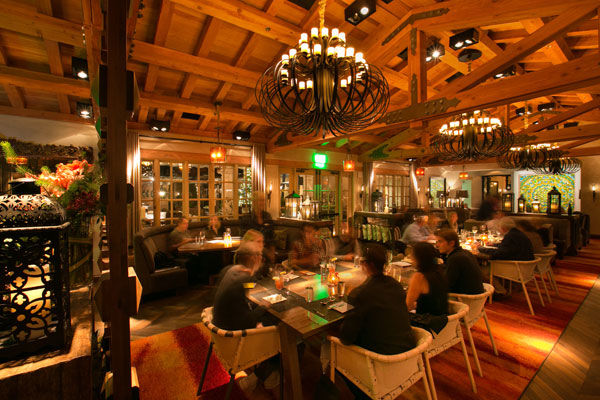
The new owners (their dad created Qualcomm, which makes phones without cords) brought in a flashy designer. His business name is Mr. Important Design, which I’ll take at face value because the new room looks important. The restaurant is now called Veladora, which is I believe is Italian for “over budget.”
It’s appointed with beautiful hunting-lodge wooden frames, iron chandeliers, and candles galore (I just consulted the Internet—it seems veladora is actually Spanish for “candle”). The centerpiece is a huge, brightly colored piece of art that looks like a Buddhist mandala, or a splayed-out collection of tie-dyed t-shirts. But it’s made of hundreds of real butterfly wings and cost $1.1 million! The artist’s name is Damien Hirst. He’s British and famous for putting dead animals behind glass.
There’s a new cocktail den called the Pony Room. I know, I know. Grandpa said places named after animals were always “sellin’ flesh.” And I guess they are—Kobe beef sliders on brioche with Béarnaise, candied garlic chicken wings, wood-fired pizzas, and salamis they make themselves. They have more than 100 tequilas, so I tried the Neck Shot cocktail with blanco tequila, serrano-infused simple syrup, and house-made grapefruit soda. My wife you don’t approve of chose the Peachy Paddock Mule with Bulleit Rye, fresh peaches, house-made ginger beer, and lime juice. Both were remarkably fresh, as if some prankster spiked your hand-squeezed juice. That said, our cocktails tasted nearly identical; some nuance is desired.
The Pony Room is, however, one of the most stunning places I’ve ever had an indistinguishable cocktail. The wooden barstools are branded like cattle, standing on hoof-shaped feet! The wallpaper is textured. There are deep leather chairs, oil paintings, candle-shaped light bulbs, and a massive hutch filled with stemware. It smells like new leather and feels like home, if my home were prettier.
We’ve eaten there twice now. The first evening, the maître d’ walked us through Veladora’s warm, lovely main dining room and its legion of throw pillows, and sat us in the Sunrise Room. Remember this room? Such sentimental value! Unfortunately, that’s its only allure. Compared to the main dining room’s $1.1 million supply of butterfly wings, both Unapproved Wife and I felt like we’d been banished to the kids’ table. So remember to ask to sit in Veladora’s main area, or just eat in the Pony Room.
Veladora’s chef is Eric Bauer, formerly of that jazz club called Anthology, and the Four Seasons. He uses produce from local farms, including a famous patch of earth called Chino. All of his herbs are grown on-property. He also has six honeybee hives! And an olive grove to make his own oil! He is The Luckiest Chef in the World.
Do try his slow-poached Maine lobster salad, Grandma. You won’t miss the mayonnaise dressing, I swear. It has pickled and roasted beets, so sweet, with avocado and tufts of burrata cheese in a lemon vinaigrette. It’s art on a plate. The wild-caught ono crudo we didn’t love as much. The tang from pickled apples, white soy, and poached black mustard seeds overwhelmed the roasted pepper oil and silky ono. The steak tartare comes out in a generous roll. It looks like a sausage someone forgot to cook; but just scrape off a bit of the salty lemon-and-caper aioli and it’s very good.
Bauer is making excellent extruded pastas! The kind pressed through bronze dies (like a gun chamber for pasta) with durum wheat for that rough, textured surface that catches every bit of sauce! Both the lamb osso bucco and Bolognese with Reggiano cheese were lovely. The wild mushroom risotto with whipped mascarpone and Reggiano had great creamy-forest flavor—though we did find the rice a bit hard-centered, as if someone had a lapse and added cold stock.
Now, I know you’ve called vegetarians “bony fanatics,” but they’ve spawned and grown in number. Bauer is thoughtful to include two options for them. The Anson Mills polenta with wood-roasted ratatouille ragout and smoked tomato sauce is sinfully creamy, with enough vegetable acid to give it a kick. I’d like a touch less cream and a bit more polenta grit, but that’s a quibble.
You must try the sautéed Scottish trout with braised millet (it’s a very old grain, apparently good for your constitution), roasted and smoked turnips, mussels, and fennel-orange reduction. Oh, my. The skin cracks like glass, and the meat is perfectly cooked (a few degrees past raw in center). Bauer also manages to keep his Berkshire pork tenderloin from drying out—a feat. It’s a touch salty, but the sunchoke purée and roasted local figs balance that out if eaten as a composed bite.
For dessert, pastry chef Jean Marie Verhoeven makes an olive-oil cake with honey-roasted figs and lemon-thyme tuile (fancy thin cookie) and sliced Marcona almonds. It’s good, as is the spiced fruit consommé, served with strawberry bits, lemon verbena, a pistachio tuile, and citrus mascarpone. A light treat.
I know change is hard, Grandma. I know you loved the old restaurant, but I always felt the phrase “dull torpor” described my feelings about it. I was concerned the new designers would ruin the “soul” of the place. But, I assure you, that $30 million was incredibly well spent.
After a childhood obsession with the Barefoot Contessa and years in Michelin-starred kitchens, Juan Lopez is bringing Poppy Bakeshop to Liberty Station
It wasn’t his mother who inspired Juan Lopez to start baking. Nor was it pandemic boredom. It was Ina Garten. Lopez remembers it clearly—he was in third grade, watching TV at home in San Diego when the Food Network’s Barefoot Contessa appeared on the screen. She was in Paris, France, making profiteroles, which are essentially French cream puffs. He’d never seen them before. “That stuck with me forever,” Lopez says.
Forever, or at least present day. It was enough inspiration for him to launch his own pop-up bakery this June: Poppy Bakeshop, which now appears every weekend from 7 a.m. to 12:30 p.m. (or sellout) at Moniker Coffee in Liberty Station.
But let’s not fast-forward how he went from a third-grader to burgeoning bakery entrepreneur. After falling under Garten’s spell—I mean, who among us hasn’t at one point or another—Lopez decided to try his hand at making cookies, which proved equal parts satisfying (making something from scratch) and frustrating (not actually knowing what on Earth he was doing). But that itch never went away through high school, when he decided to pursue culinary school. But before enrolling, prospective students had to complete a six-month internship in a professional kitchen.
So Lopez went to the first French restaurant he ever visited—Cafe Chloe in East Village, where chef Katie Grebow took him under her wing. School didn’t pan out, but his education was just beginning.
In the early 2010s, San Diego’s culinary scene was still an afterthought on the national scale. Lopez recalls Grebow encouraging him to move to San Francisco to really hone his skills. “I was 18 and was like, ‘Well, I’ve got nothing else to do,’” he laughs. He walked into the one Michelin-starred La Folie in the Russian Hill neighborhood, resume in hand, and asked chef Roland Passot for a job. He started the next day.
After a few years in San Francisco, he returned to San Diego with the intention of moving out of restaurants and focusing on perfecting the foundations of pastry. After stints at Con Pane Rustic Breads, Herb & Wood, and Hommage Bakehouse, he landed at Wayfarer Bread & Pastry in 2023.
The Bird Rock bakery was already well on its way to national acclaim—it was named one of the best 100 bakeries in America by Food & Wine Magazine in 2020, not to mention the Critic’s Pick for “Best Bakery” by San Diego Magazine in 2022, 2024, 2025, 2026, runner-up in 2023, critic’s pick and runner-up in 2021, and then I stopped counting (because I’m pretty sure we all get the picture).
He still works part-time at Wayfarer while growing Poppy, but Lopez says he hopes to increase his pop-up schedule and collaborate more with other local makers. “The ultimate goal is to get a storefront,” he says. Normal Heights would be ideal, but he’s flexible on location and timeframe.
One thing he’s not flexible on is boxing himself into one type of pastry or flavor profile. “I really want Poppy to be this overwhelming abundance of items with different colors and different textures… I don’t want to be known for one thing,” he says. French-inspired, Mexican-influenced, and yes, even taking cues from the fashion industry. Take his plum cornbread, for instance. It’s an homage to Belgian designer Dries Van Noten’s vibrant palette.
“They had this one outfit that had this very, very bright kind of burgundy with this khaki-ish color. Then I went to the farmer’s market, and one of my favorite farmers, Heritage Family Farms, they had these gorgeous, gorgeous plums, and I was like, ‘Well, those are literally the color of that.’” The result? A sweet slice of rich reddish-purple plum cake.
He also draws inspiration from his own family. Every year, he makes coffee cake for Mother’s Day. Cinnamon rolls for Christmas. Basically, anything and everything that makes it onto his shelves is “based on what I’m craving,” Lopez laughs.
And he’s ready to share his cravings with you. “I’ve had so many bad days, and so many of them have been made better through pastry or through food,” he says. “I think as long as everyone just takes the time to just really enjoy what’s in front of them, that’s kind of all I hope for.”

Listen Now: The Latest in San Diego’s Food and Drink Scene
Have breaking news, exciting scoops, or great stories about new San Diego restaurants or the city’s food scene? Send your pitches to [email protected].
Beth Demmon is an award-winning writer and podcaster whose work regularly appears in national outlets and San Diego Magazine. Her first book, The Beer Lover's Guide to Cider, is now available. Find out more on bethdemmon.com.
The Mexican restaurant continues the Barrio Logan tradition of art in unexpected places
I’m sitting in a slab of concrete under a freeway, eating a ceviche black as eyeliner.
There might be seven seats in this restaurant. Or maybe it’s 12 minus five. That area under the stairs might also be a couple seats, or it might just be a very inviting storage area with a flower vase. The restaurant is so small your core instinct is to count seats and tabulate if Alchemy – Choose Thy Poison is a real place with a sane business plan or if it’s a social art project designed to question the reality of restaurants and business plans.
There’s a large, floor-to-human-height window near our table. Through it, I notice someone didn’t make their bed this morning. It’s a decision I deeply empathize with. It’s moments like this that make you acutely aware that Alchemy is also technically the courtyard of a six-room micro-hotel called Narcissus. Not the kind of massagey boutique hotel you’re thinking of with soft woods, obscene amounts of linen, and opinions on bonsai therapy. It’s a near-Brutalist cube of base industrial materials—concrete and acrylics bent and molded into a series of alcoves, with pods to sleep in. Sculptures lie behind glass like Tilda Swinton circa 2013.
The window to the unmade bed forcibly crams light voyeurism into the dining experience. The hotel and Alchemy feel like the parts of Mexico I love the most. Although Mexico has its multimillion-dollar restaurants, a vast majority of the best street-level places feel like you’re temporarily recreating in a very lovely construction project.
Alchemy’s location is what most people comment on (“I can’t believe a place like this exists on a block like this.”)—jammed at the bottom of the freeway embankment on the northeast side of Barrio Logan. But that makes it distinctly Barrio, the historic cradle of San Diego’s Hispanic and Chicano culture. The I-5 freeway was built through Barrio in 1963—a fairly traumatic gashing of the neighborhood—and residents responded by painting epic murals on the ugly concrete belly of eminent domain. Where some would’ve just accepted the industrial blight, locals saw shade for a park. There is a deep history here of turning concrete into art, and Alchemy carries that on.

The vision for the property came from owner Benjamin Longwell, whose company—The Society of Master Craftsmen—sounds like it wears a monocle. Longwell is part of the new guard of developers who focus on urban infill. Instead of adding to the city sprawl, they find unused or underutilized parcels of land in established neighborhoods, then build creative mixed-use spaces that, in perfect scenarios, add something of value for locals.
I’m not making a case for architectural sainthood, but there isn’t a huge list of developers who would look at the line of cars exiting the freeway in front of Alchemy and think, “We must build here.” So in that sense, Narcissus and Alchemy feel additive to the community, not extractive.

I stare back at Alchemy’s ceviche negro, a glossy mound of halibut that looks inspired by the La Brea Tar Pits or melted vinyl records. Chef-owner and Mexico City–native Eddy Cortes saves all the trimmings of his dishes (garlic and onion skins, vegetable shavings), then chars them into an ash to create a recado negro—a Yucatán specialty that usually involves toasted chiles, achiote paste, vinegar, and a ton of warm spices. He tosses local halibut with squid ink, tamari, charred pineapple, and citrus. The usual charm of ceviche is that it’s light, bright, full of color. Not here.
It is fantastic—acidic but with a whole world of toasted, warm flavors, like ceviche that’s seen some things.
The menu from Cortes—a home cook his whole life, only having taken it professional a few years ago with his popular pop-up, Barracruda—is really a tour of specialties from various states in Mexico.

A crema de poblano has the blended ghost of rajas at its core: an emulsion of roasted poblanos with butter-sautéed onions and garlic, plus a touch of milk that’s topped with queso fresco, chile ancho, and morita oil. Morita—a smoky Mexican condiment made from dried and smoked red jalapeños for a less intense, fruitier cousin of chipotle—is the key here. It specializes in spiking fats (guacamole, fried eggs, burritos). Sop up the crema with house-baked garlic-rosemary sourdough, blackened from the ash of a corn husk.
Smoked tuna is a Baja gift that’s become an anchor for most San Diego taco shops, and Alchemy combines mesquite-smoked yellowtail with caramelized onions, sweet peppers, and Chihuahua cheese (the OG quesadilla filling), then stuffs it in a perfectly baked masa empanada. The result is somewhere between a TJ Oyster Bar taco, a calzone, and a tamale—but with extra flavor and more black hue from cuttlefish ink.
Alchemy’s huaraches de res is Cortes’ ode to where he’s from. Huaraches are the New Haven–style pizza of Mexican food—thick, oblong masa flatbread layered with refried beans and a payload inspired by the Mexico City markets the chef grew up roaming with his dad: braised beef (braseado), avocado salsa, pickled vegetables, salsa macha, and jocoque (Mexico’s fermented dairy product, like a cross between crema and labneh).
Alchemy’s seared tuna crudo gets a tad abused by the riot of big flavors: charred hibiscus salsa, avocado salsa, pickled grapes, pomegranate salsa macha, and chipotle aioli. It’s a fate that also tempers the joy of the zarandeado, with the adobo marinade on the shrimp fighting a bit with recado negro and chipotle crema. Sticking with curmudgeonly food critic notes, flies are a part of the Alchemy experience, at least during our visit. They’re fairly hard to evict from the outside world, but more measures could be taken to discourage their participation.

The oxtail tetelas—like a Mexican pupusa—are a diary note from Cortes’ travels to Tlaquepaque, where they famously superboost their salsa with a touch of instant coffee. First, Cortes braises the oxtail with beer and Mexican spices. Then he blends that braising liquid into a salsa with beef tallow, guajillo, charred onions, tomatoes, and black garlic. Keeping with the goth food theme, the oxtail goes into masa negra infused with squid ink.
Desserts are where you realize just how deeply Alchemy is committed to the art bit. Rarely do you see a neighborhood bistro trying to pull off trompe l’œil—the French specialty of making pastries and other desserts look like fruit or other everyday objects. (The phrase means “to deceive the eye” and is the historical precedent for the Is It Cake? phenomenon.) Pastry chef Catherinne Avila does, though. A “Naranja” comes out in the form of a mandarin, but inside is orange blossom mousse, apricot jelly, and sablée (a delicate, crumbly shortcrust). A “Philosopher’s Stone” comes in the form of a brick of gold with a serpent on top; inside are mango mousse, mango-Tajín jelly, and a coconut dacquoise.
As Barrio Logan enters an apprehensive phase—its creative culture and restaurant scene growing rapidly, bringing economic promise face-to-face with the need to protect the Chicano way of life—this concrete tuckaway from a Mexico City kid feels like a good step. The Barrio has a long history of making art in unexpected places, and Alchemy carries that a little further.
Photos Credit: Dee Sandoval


Troy Johnson is the magazine’s award-winning food writer and humorist, and a long-standing expert on Food Network. His work has been featured on NatGeo, Travel Channel, NPR, and in Food Matters, a textbook of the best American food writing.
After building a loyal following through coffee shop pop-ups, Scoopy Scoopy is putting down roots in Leucadia
There’s a saying in business that if you’re not evolving, you’re dying. I personally have a saying that if you’re not eating ice cream, you’re also probably dying, but of sadness.
Scoopy Scoopy doesn’t have either of those problems. The premium ice cream pop-up launched last year with the idea of setting up in coffee shops after hours, helping those businesses maximize their profitability while also avoiding the costs of a brick and mortar. But it turns out, a lot of people in Leucadia really like ice cream—so much so that Scoopy Scoopy decided to open their own scoop shop in the same building as Moto Deli and Cadence Cyclery (in the former Queenstage Coffee House space) on July 8.
Evolving doesn’t mean leaving the old ways behind. Zach Zien, who runs Scoopy with his partner Steven Segal and wife Sophia, says they will continue to pursue the shared space model on weekends at Coffee Coffee in Leucadia through the summer and are still open to popping up at other venues. “That’s still a core part of our business,” he says. But with steady demand in the Encinitas area, it gave them the confidence to put down roots of their own.
“People have really welcomed us and we’ve been well-received,” he explains. “We think this is the market to succeed in.”
The super-premium ice cream is still sourced from Chocolate Shoppe Ice Cream in Wisconsin, but instead of the eight flavors they’re limited to for popups, the permanent storefront will be able to offer 12. “There will be three or four that regularly rotate, with probably eight staples that are our best sellers,” says Zien, pointing to flavors like peanut butter, oatmeal cookie, and the alternating vegan options. They’ll also be able to fill pints to order, something they haven’t been able to do in the past.
Currently, Moto Deli closes at 4 p.m. daily, but once Scoopy Scoopy is up and running, it will offer beer and wine until 8 p.m. for a shared drinks-and-dessert Happy Hour. “We’re hoping to get a food truck vendor on regular rotation to have food options available after hours as well,” says Zien.
The spontaneity of pop-ups can be as exciting as it is efficient. But when it comes to ice cream, I like knowing exactly when and where I can get a scoop—before the sadness kicks in.
Scoopy Scoopy soft opens on July 8 at 190 N. Coast Hwy 101 in Encinitas. Initial operating hours are Wednesday and Thursday, noon to 8 p.m.; and Friday through Sunday, noon to 9 p.m. (subject to change).

Speaking of pop-ups, San Diego’s culinary entrepreneurs keep ramping things up with more concepts launching every week. But after a parade of pastry prodigies and brilliant breadmakers, it might be nice to sink your teeth into something with a bit of protein. (Shoutout to all my carboholic brethren out there.)
Jim Adamski is joining the ever-swelling ranks of MEHKO (Micro Enterprise Home Kitchen) businesses alongside the likes of The Hidden Gazebo Eatery in Lemon Grove and Warung RieRie in Serra Mesa with his new venture, Cold Smoke BBQ. He’s not following a specific regional barbecue style like Central Texas, Kansas City, or St. Louis—he’s driven by whatever inspires him at the time (or, whatever he’s craving). He’s also not following a specific schedule. “My loose plans are weekends… then eventually maybe during the week,” he says. His menu and pick-up schedule get updated regularly, with pre-orders available to pick up from his house in 4S Ranch. So far, he says the dry-rubbed ribs and rib tips have been the best-sellers. But if you absolutely can’t resist adding a bread-adjacent item, you’re still in luck—he’s got cornbread.
Beth Demmon is an award-winning writer and podcaster whose work regularly appears in national outlets and San Diego Magazine. Her first book, The Beer Lover's Guide to Cider, is now available. Find out more on bethdemmon.com.
A customized memory-filled explosion gift box is a creative way to show someone you care
Finding a gift that feels truly personal can be surprisingly difficult. In a sea of generic options — flowers, gift cards, candles, and the like — Xplosion Box offers something more lasting: a customized keepsake built around the photos, messages, and memories that matter most.
Founded by Southern California entrepreneur Jay Vijay, Xplosion Box LLC creates fully customized explosion gift boxes that arrive professionally designed, printed, assembled, and ready to gift. Each box opens layer by layer to reveal personal photos, heartfelt messages, pull-out albums, origami-style photo pockets, and hidden notes, turning a simple gift into an emotional reveal.

The brand was built for people who want to give something meaningful without spending hours printing photos, cutting paper, folding cardstock, or assembling a DIY project. Customers simply choose a box, upload their favorite photos, add personal messages, and the Xplosion Box team transforms those details into a polished keepsake that feels thoughtful, personal, and beautifully made.
Xplosion Box offers personalized gift boxes for birthdays, anniversaries, weddings, graduations, Mother’s Day, Father’s Day, Valentine’s Day, Christmas, proposals, bridesmaid gifts, long-distance relationships, and thoughtful “just because” moments.

Customers can choose from flexible customization options starting at $27. The Mini Surprise Box includes 10 photos, three message cards, and one hidden secret note, while the Mega Surprise Box offers a fuller keepsake experience with 40 photos, three message cards, and one hidden secret note.
What sets Xplosion Box apart is its high level of customization combined with convenience. Filled with personal photos, custom text, decorative details, and layered surprises, each box gives customers the freedom to create a gift that feels one-of-a-kind — without having to make it themselves.
At its core, Xplosion Box helps people turn favorite photos, stories, and words into something tangible: a keepsake that can be opened, revisited, and remembered long after the occasion has passed. asion has passed.
After eight years and numerous awards, the cafe and roastery expands its operations in North County
San Diego’s coffee industry has yet to hit its ceiling. There are at least 850 coffee shops across the county (possibly over 1,000 at this point) and more specialty cafes and roasters seem to join the roster every other week.
Some newcomers, like Chance’s Coffee, focus on specialties like Vietnamese coffee; other stalwarts, like Bird Rock Coffee Roasters, have helped put the local coffee scene on the map with internationally acclaimed beans and baristas for 20 years. You can get a classic pour-over or an ultra, whipped cream–topped strawberry lavender basil blueberry matcha latte sprinkled with unicorn glitter—whatever your coffee style, San Diego’s got it… somewhere.
Steady State Roasting falls more in the former category, focusing on traceable, sustainable sourcing and no-nonsense roasting (no unicorn glitter here, sorry!). Founder and lead roaster Elliot Reinecke first started Steady State in a garage behind his house, roasting small batches until expanding slightly to a shared and not-quite-permitted space before landing in a lucky spot on State Street in Carlsbad.
Now, eight years later, Steady State is scaling up once more, opening its second cafe in San Marcos next to their roastery. The new location offers the same food and drink menu as the original Carlsbad location, and Reinecke says he plans to add an onsite bakery to bake items like English muffins and country loaves to supplement Prager Brothers’ more specialized pastries.
He doesn’t plan on opening more cafes, though. Rather, Reinecke plans to expand roasting operations and strategic sourcing. Currently, he sources beans from Colombia, Panama, across Africa, and as of this year, Costa Rica. “We’ve had Costa Rican coffee before, but we went to origin a few months ago and bought six different lots from there, all from really good high-end local farmers,” he explains.
The rising cost of sourcing does present some challenges, as does changes within coffee culture itself. Coffee has moved from a mass-market beverage to a highly personalized artisanal experience, but the current feeling is moving back towards focusing on quality over flashiness, says Reinecke.
If Reinecke’s prediction is right, coffee is headed on a similar trajectory to craft beer. Ten years ago, no one knew what Citra hops were. Now, even casual beer fans are versed in hop varieties, and that attention to detail is spilling over to coffee as well. How many of San Diego’s 1,000 coffee shops will remain once the unicorn glitter’s luster fades? My bet is on anyone remaining steadfast to sourcing, sustainability, and simplicity.
Steady State San Marcos is now open at 1320 Grand Avenue, Suite #9, San Marcos. Initial operating hours are Tuesday through Saturday, 7 a.m. to 2 p.m.
Listen Now: The Latest in San Diego’s Food and Drink Scene
Have breaking news, exciting scoops, or great stories about new San Diego restaurants or the city’s food scene? Send your pitches to [email protected].
PARTNER CONTENT
Beth Demmon is an award-winning writer and podcaster whose work regularly appears in national outlets and San Diego Magazine. Her first book, The Beer Lover's Guide to Cider, is now available. Find out more on bethdemmon.com.
The team behind Harumama and Blue Ocean will open Little Kiki Katsu & More on June 15, serving premium cutlets, Japanese sandos, and curated sake pairings
Every culture has its own comfort foods—cozy dishes that nurture the soul as much as the body. In the US, dipping a grilled cheese sandwich in a bowl of tomato soup can feel as satiating as pulling a warm sweater out of the dryer. In China, a steaming bowl of congee is basically a miracle remedy for anything you can imagine. I’m pretty sure Italian carbonara could achieve world peace. And in Japan, katsu remains one of the most universally satisfying inventions of the past century.
Katsu was originally invented as a riff on côtelette de veau, the classic French veal cutlet coated with breadcrumbs and pan-fried in butter. In 1899, a Western-style restaurant called Rengatei in Tokyo decided to put their own spin on the dish by pounding the cutlets until thin, then coating them with softer panko and deep-frying versus pan frying (like tempura) for a crispier, lighter, crunchier bite. Today, pork—called tonkatsu in Japanese—tends to be the most common base for katsu.
The dish has yet to achieve the same mainstream status as say, chicken nuggets, in the US. But Little Kiki Katsu & More hopes to change that, when the katsu-focused restaurant opens in Carlsbad on June 15.
Created by the team behind Harumama and Blue Ocean, Little Kiki will focus on premium katsu dishes paired with sake and around a dozen small bites like miso soup, karaage, edamame, and Japanese pickles. Executive chef James Pyo, who co-owns all three restaurants with his wife Jenny, created a menu that features proteins like Berkshire Kurobuta pork, Jidori chicken, salmon, scallops, and dry-aged Pacific cod for the katsu and grilled stone selections. (Note: the grilled stone options will be offered for dinner only.)

The lunch menu includes Japanese-style sandos like a tonkatsu sandwich with pork, housemade bread, and tonkatsu sauce (available regular or spicy). Dessert options are simple to start—yuzu cheesecake, matcha crème brûlée, and mango/yuzu mochi ice cream. The Pyos curated a selection of premium sakes as well, specifically for pairing purposes, as well as offering some beer and cocktails.
Little Kiki, which is named for Jenny’s cat, seats 25-30 guests inside with room for only a few more on the small outdoor patio as well. Designer and assistant Yoojin Jang says the vibe is meant to be warm and welcoming but modern, using colors like olive green, cream, and pops of orange against Japanese-style wood slats.
Initially, Little Kiki will only be open for dinner service, but aims to introduce lunch hours for the grand opening on July 1. Due to the limited seating, Jang encourages guests to make reservations, and while the restaurant will offer takeout, it will not be available on food delivery apps like Uber Eats or DoorDash to motivate guests to come experience it for themselves.
“Come in curious and leave satisfied,” says Jang. And keep your eyes open for subtle cat motifs—she promises they are hidden all over the place. Whimsy, it seems, is also on the menu.
Little KiKi Katsu & More soft opens on June 15, 2026 at 2958 Madison Street, Suite 101 in Carlsbad. Hours are Monday, Wednesday, Thursday, and Sunday from 11:30 a.m. to 3 p.m. for lunch and 5 p.m. to 9:30 p.m. for dinner; Friday and Saturday from 11:30 a.m. to 3 p.m. for lunch and 5 p.m. to 10 p.m. for dinner; closed Tuesday.

Listen Now: The Latest in San Diego’s Food and Drink Scene
Have breaking news, exciting scoops, or great stories about new San Diego restaurants or the city’s food scene? Send your pitches to [email protected].
Beth Demmon is an award-winning writer and podcaster whose work regularly appears in national outlets and San Diego Magazine. Her first book, The Beer Lover's Guide to Cider, is now available. Find out more on bethdemmon.com.
SeaWorld dazzles with a drone show, big-name entertainers, new animal adventures and more
Nights are heating up at SeaWorld San Diego. The quintessential summertime staple on Mission Bay is transforming into a destination for unforgettable day-to-night adventures, bringing back some of its most popular Summer Nights programming and introducing exciting new experiences sure to delight both kids and adults alike.

The 2026 Summer Day to Night at SeaWorld San Diego is the park’s most ambitious season yet. SeaWorld has planned a highly anticipated entertainment lineup that features nine weeks of throwback concerts featuring R&B and hip‑hop favorites from the ‘90s and early 2000s, including Jordin Sparks, Too $hort and Warren G, Ashanti, and an array of boy band heartthrobs performing together as part of the Pop 2000 Tour.
New this season is perhaps the park’s most visible update: a nightly drone show, Ocean of Dreams, which illuminates the sky with hundreds of synchronized sparklers. Drones form sea otters, sharks, dolphins, and a majestic orca that tell a breathtaking 12-minute story of marine life and underwater ecosystems. The show culminates with a spectacular electric neon finale celebrating hope, wonder, and ocean stewardship.
Nighttime visitors are also in store for animal adventures that fuse education with high-energy fun and the dreamy ambiance of nighttime. The park has launched two all-new animal presentations: Shamu’s Celebration: Light Up the Night and Dolphins: Touch the Sky. Shamu’s Celebration: Light Up the Night features vibrant lighting, music, and dynamic choreography that celebrates the power and beauty of killer whales. Dolphins: Touch the Sky showcases playful bottlenose dolphins and the special connection between humans and the natural world. And back by popular demand is fan-favorite Sea Lions Tonite. See the charming pinnipeds splash, play, and parody pop culture in this refreshed crowd-pleaser.

More must-sees: a newly reimagined Shark Encounter, one of the country’s more immersive exhibits highlighting 11 different species up close, SeaWorld’s beloved BMX Blast! stunt show, and high-seas escapade, Pirates Ahoy! The Battle for Mermaid Cove. And don’t miss the park’s all-new Deep Sea Disco, which encourages guests to dance the night away under the glow of the SkyTower, and vibrant closing time laser light display Laser Reef Summer Spectacular.
Amp up the nighttime vibe with local craft beers, curated cocktails, and nostalgic theme park treats with $1 beer all summer long. SeaWorld is the place for day to night summer fun. When the sun goes down, SeaWorld lights up, and inspires guests of all ages to embrace their inner whimsy and see why generations of San Diegans head to SeaWorld to make memories they’ll never forget.