Featured articles
Food & Drink
Food & Drink
Food & Drink
Featured articles
Everything SD
Everything SD
Everything SD
Featured articles
Things to Do
Things to Do
Everything SD
Featured articles
podcast-ep
podcast-ep
podcast-ep
Featured articles
Everything SD
Everything SD
Everything SD
Featured articles
Everything SD
Everything SD
Everything SD
Ready to know more about San Diego?
SubscribeReady to know more about San Diego?
The results of food editor Troy Johnson’s quest for the best donuts and donut shops in the city
Donuts saved my soul.
Sunday school was kind of a drag. All due respect to Jesus, but I was six years old and preferred kickball to disciple-based coloring books. Only thing that got me up on Sundays was lingering fear of a fiery eternal resting place, and the fact that mom was in choir. Choir people always smelled like donuts—there was a constant dozen lingering around their ranks. And mom would let me come down and pilfer a rainbow sprinkle.
Another true story: When I was 14 years old, I exercised at an alarming rate. I was playing at least three hours of tennis a day, surfing in between, burning thousands of calories. That’s not the remarkable part.
The remarkable part is that I didn’t die that year. Because every morning, we’d stop at Rosie’s Donuts in Rancho Peñasquitos on the way to school. I would order a buttermilk bar, an old fashioned glaze, a rainbow sprinkle, and a half-dozen donut holes. I would eat every crumb before school started. Not an exaggeration.
Whenever I do something a tad suspect as an adult—fail at simple math, respond to a group text, expect Florida to regain its sanity—I wonder if it was the 500 milligrams of sugar coursing through my bloodstream at a critical time in my development.
Anyway, point is, over the last few years, I went out on a quest to uncover the best donuts and shops in San Diego. I’ve tried more than 30 spots, and these were the ones that won my fritter-shaped heart. For me, a great donut is about more than taste. It’s about the shop, the people, the ambience, the welcoming vibe. A special thing in a special place.
The list here includes my favorites from the epic quest. As always, the title of this article is poking fun at the very idea of “best” lists. I don’t eat with your mouth, and so I don’t purport this to be the “only list you’ll need.” It’s just mine after a really, really exhaustive search. There are very fancy donut shops in San Diego that many people love, and I tried them all. But the ones on this list struck me in all the right places. You’ll notice one place is mentioned three times. That’s intentional. Oh dear, those donuts.
Please feel free to point out my oversights, and I encourage you to make your own ultimate list. And in trying a handful of their best things, you’re supporting a lot of moms and pops who wake up in the wee hours and create a place where neighbors can huddle over a relatively inexpensive treat.
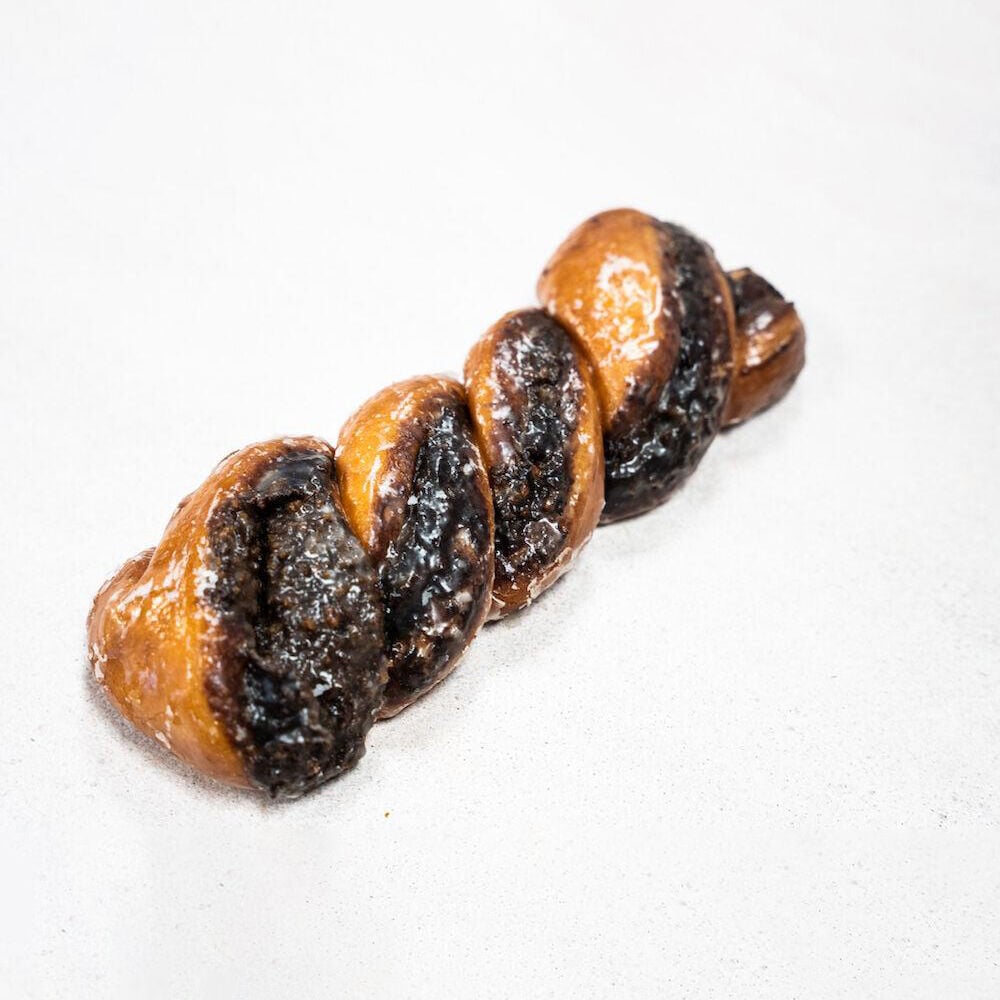
Photo Credit: James Tran
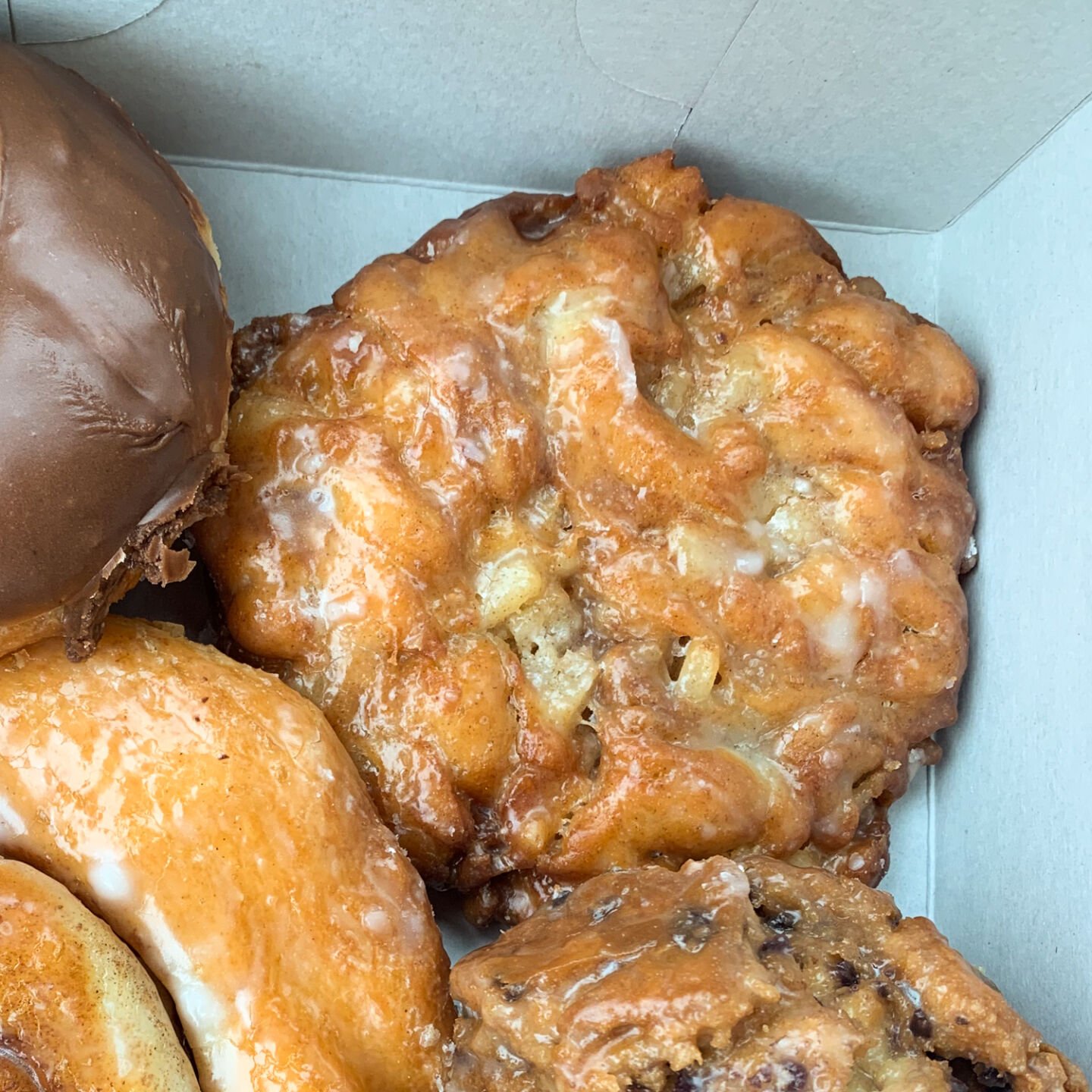
Mary Hennesy is a local legend. Since she’s now in her 90s, her granddaughter is mostly running the shop. But you’ll still see Mary in there, finishing donuts, visiting with longtime regulars, playing host. This is the kind of place that anchors a community, especially our elders, who come to Mary for companionship. What an absolute gem—and her extra-large Super Twist with cinnamon and glazed is as good as her famed apple fritters.
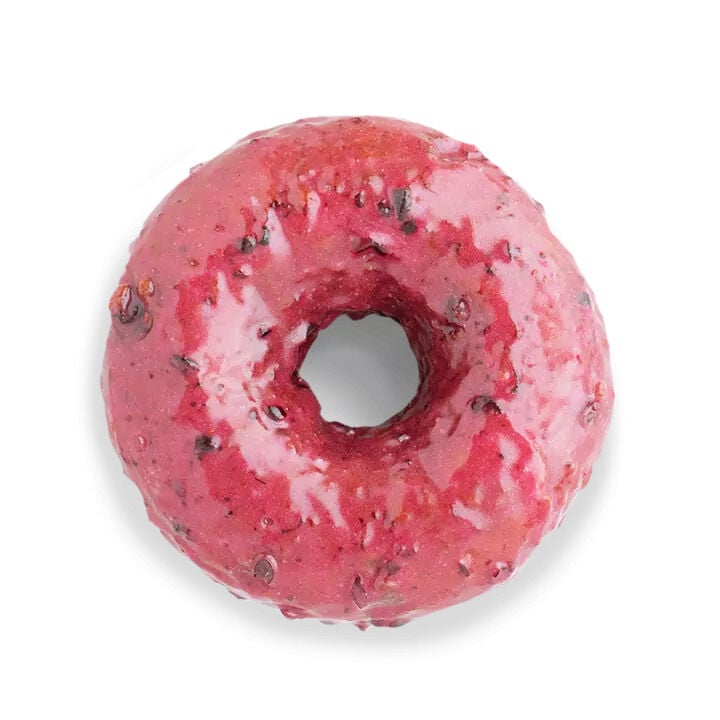
Sidecar is one fancy donut shop, like a Sharper Image of fried morning treats. It’s not inexpensive, but using better, more costly ingredients to build a better donut—and charging more for the result—is a-okay in my book as long as you can taste the difference. And, at Sidecar, you absolutely can. Gotta say these are my favorite donuts in San Diego, and the staff isn’t snobby or aloof about it; they’re downright neighborly. The fruit-glazed cake donut is that generational gap-filler. A kid might not love a cruller and an adult might not jibe with rainbow sprinkle, but this huckleberry glaze is for everyone.
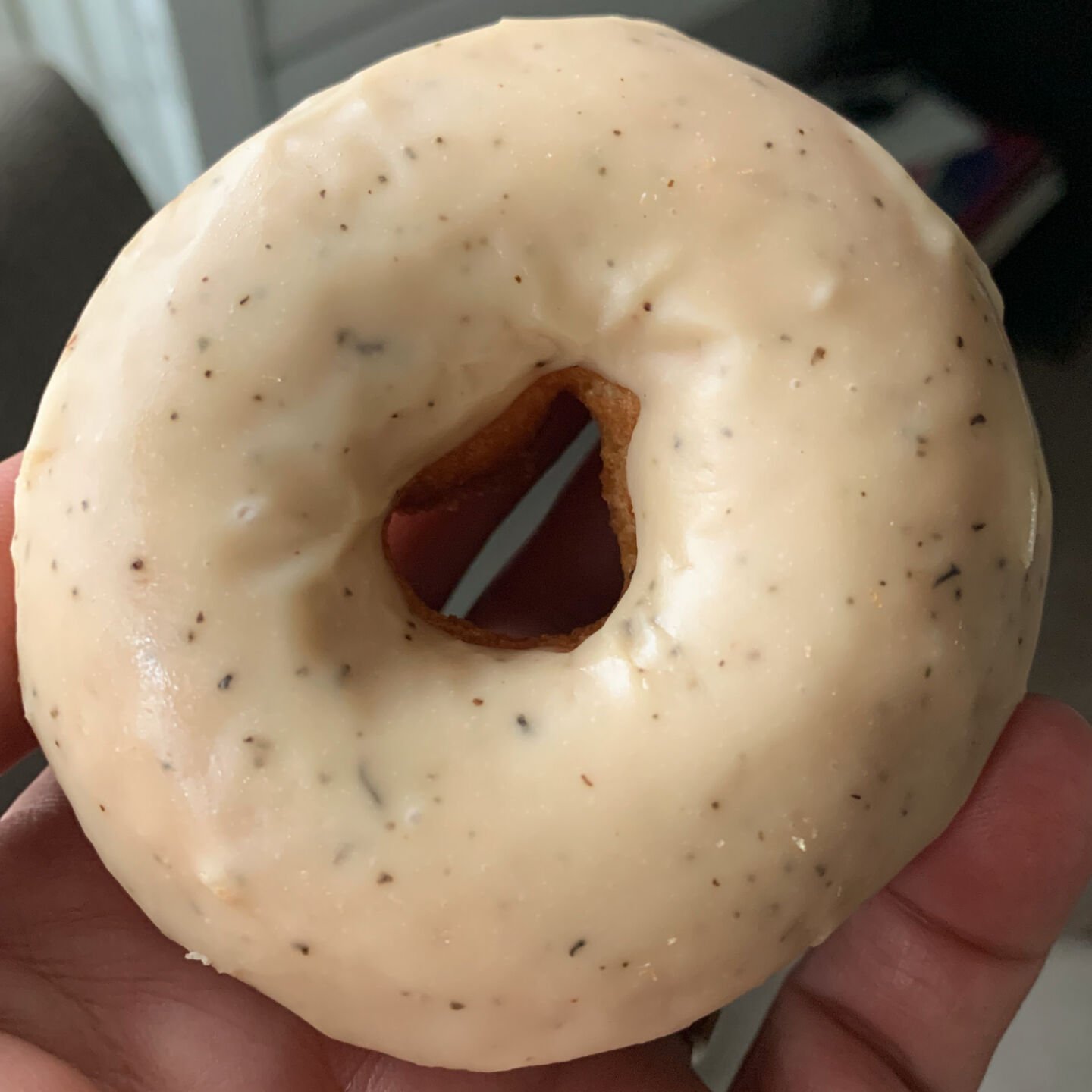
Vegan donuts often taste better in your heart. They’re simply harder to make without eggs. At Dark Horse, one of the top coffee roasters in San Diego, the vegan Early Gray is a marvel. Know what that frosting tastes like? Froot Loops. For those of us who grew up coveting the sugar cereal section of the grocery store, that’s a magical flavor (recreated here without whacky commercial food ingredients).
Much as I appreciate creativity and evolution in the donut arts, I think modern donut media goes a bit too far in writing off a simple donut simply done well. Rose Donuts has been serving the community in Linda Vista for almost 30 years. A beacon for the neighborhood. Simple, honest, iconic. Their chocolate glaze is light and fuffy, and that icing is perfect (not too oily, doesn’t slide apart, etc.).
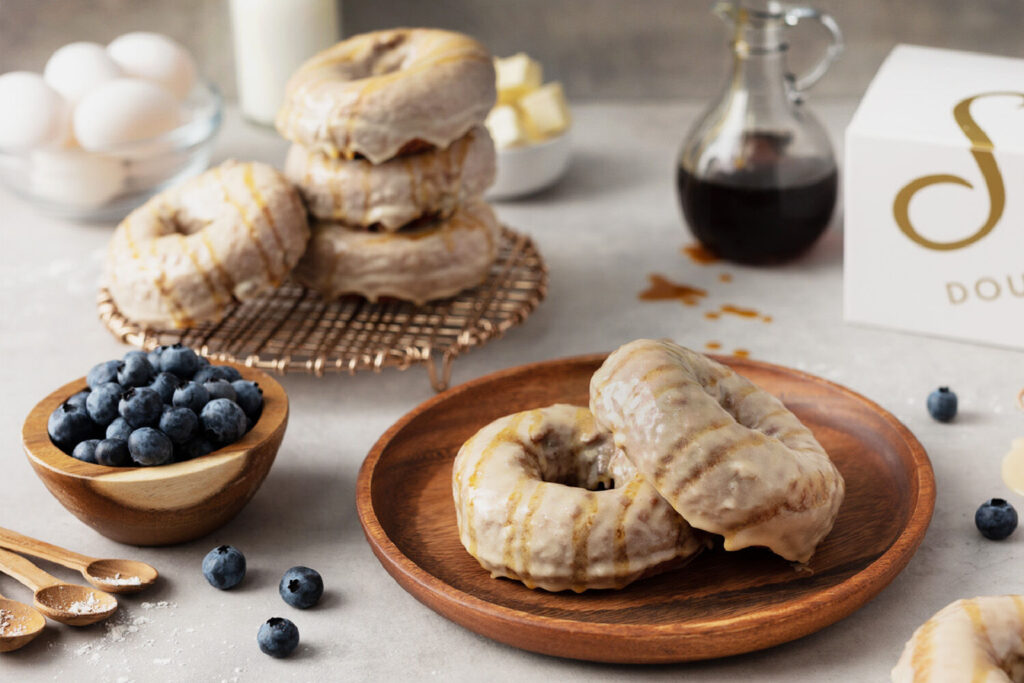
The name alone is three of my favorite food groups. And it’s not just any butter, but brown butter—which is one of cooking’s great magic tricks, butter warmed until the solids caramelize and release one of the greatest flavors on earth. This is a vanilla bean cake donut at Sidecar, its brown butter and sugar glaze offset with just the right amount of salt.
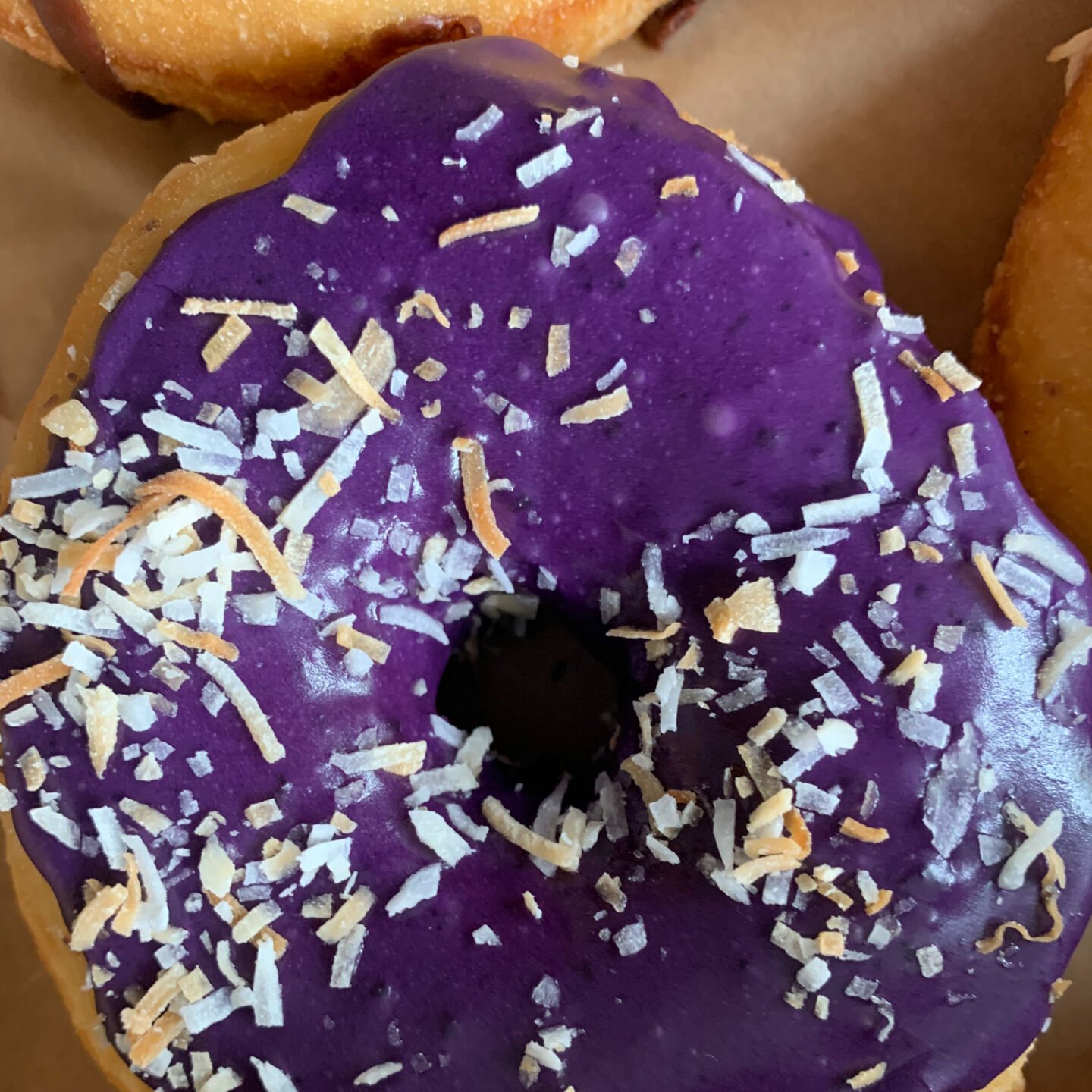
Nomad Donuts owner Brad Keiller is what a donut shop proprietor should be in all of our minds—a community-builder who gives a damn and helps local causes. His shop is a warm, creative place that feels like an ad hoc bread church for North Park. That’s all good and nice, but his donuts are also fantastic, especially the famed ube taro coconut. Purple and delicious.
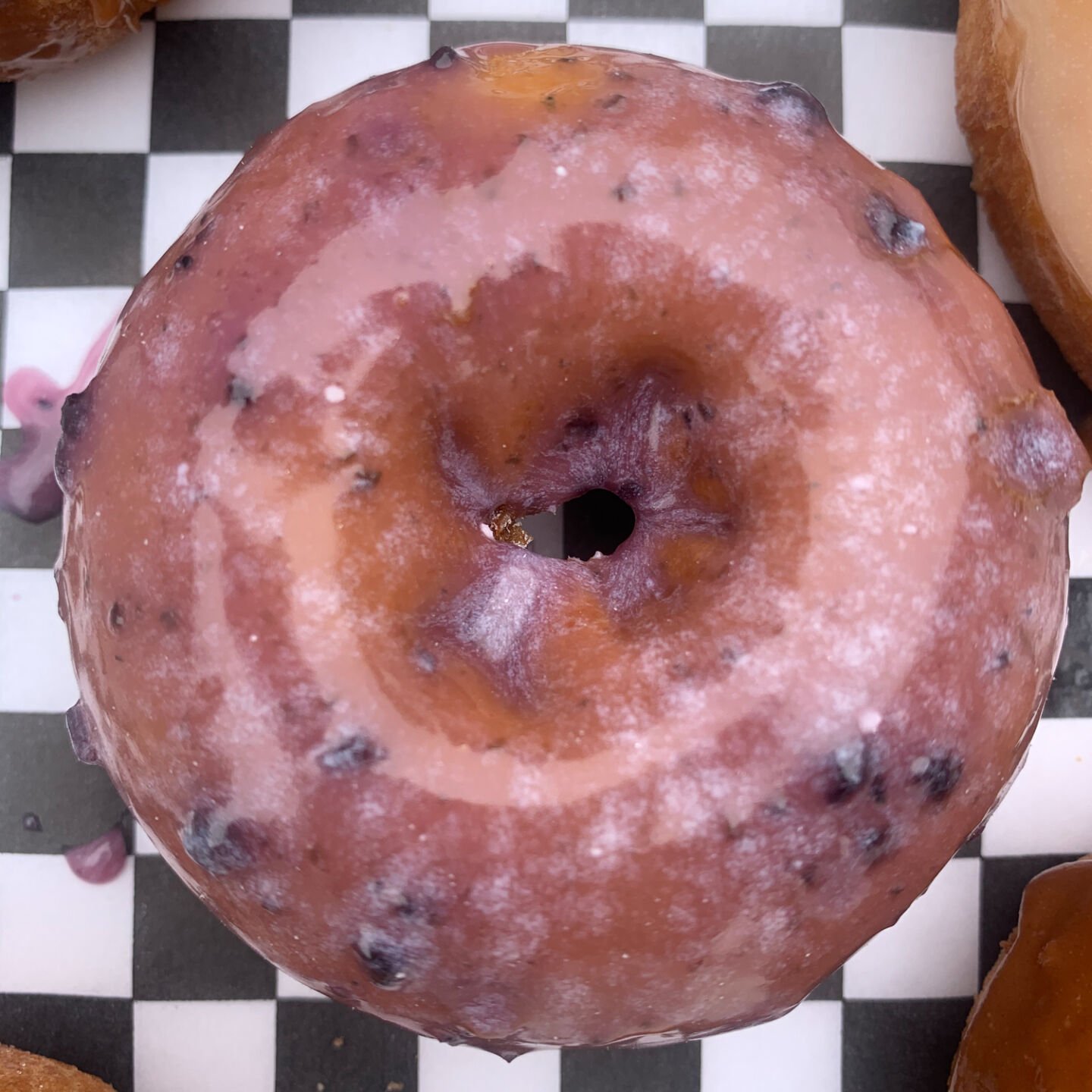
Broad Street launched first on the east coast, then a west coast family member opened this sister location in Encinitas. Their uniqueness is making donuts to order. You say the word, they drop the dough in the fryer and glaze them right there. Their churro bites (tossed in cinnamon and sugar, drizzled with icing) are pretty incredible, but the recipe for their blueberry donut is out of this world. Us blueberry glazed people are not many, but we are proud.
Anyone who’s left classic neighborhood hangout The Leucadian Bar at or around 2 a.m. has smelled Leucadia Donut owners Tom and Emily Cheu in there baking a fresh batch—and wanted to courteously and awkwardly knock on the window. This is where surf culture stacks calories to get them through a long session at Grandview or Ponto. I politely explained that I was in media and I’d love to talk to Tom or Emily to tell their story, and was told flatly they are not interested in stories. I honestly respect the hell out of that. All about the donuts.
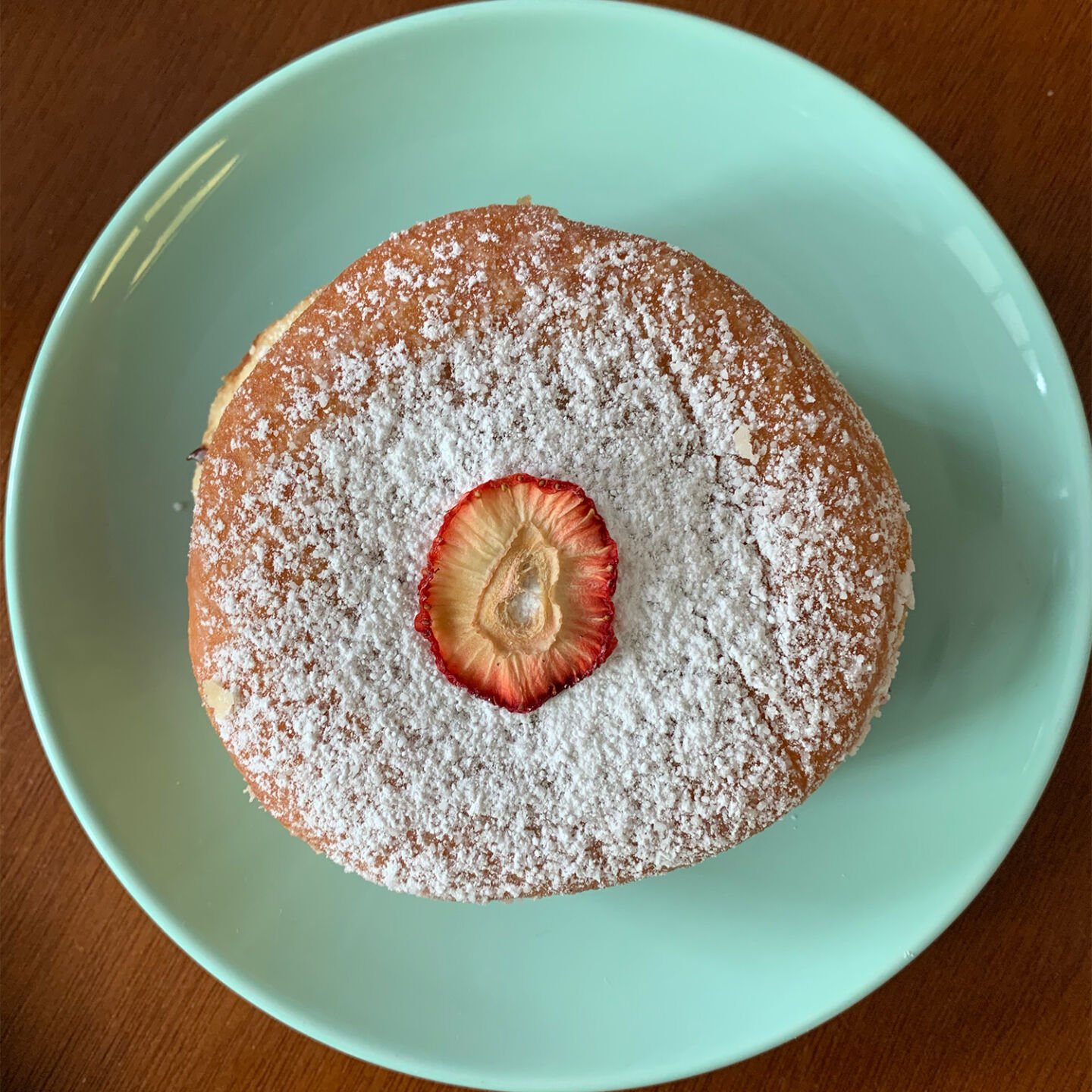
I don’t even like jelly-filled donuts. Tastes like I was trying to eat a donut and some kid stuck his sandwich in my mouth. But the strawberry-filled donut at this charming, stark-white shop called The Goods in Carlsbad converted me. Baker/owner Jacquie Barille (her family also owns Cafe Topes, where they’re known for their cinnamon rolls) make their donuts with seasonal fruits, so it comes and goes with the ripeness. Their brown butter with sea salt is also exquisite.
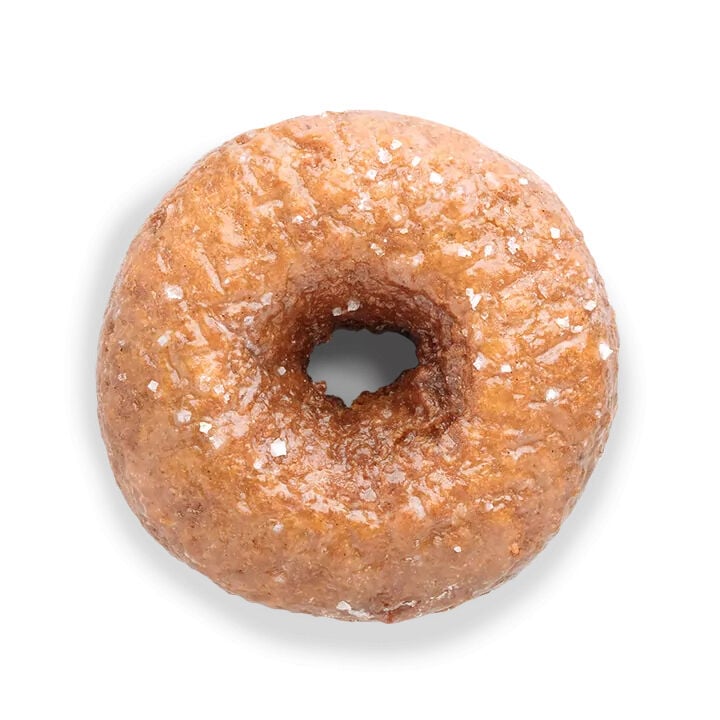
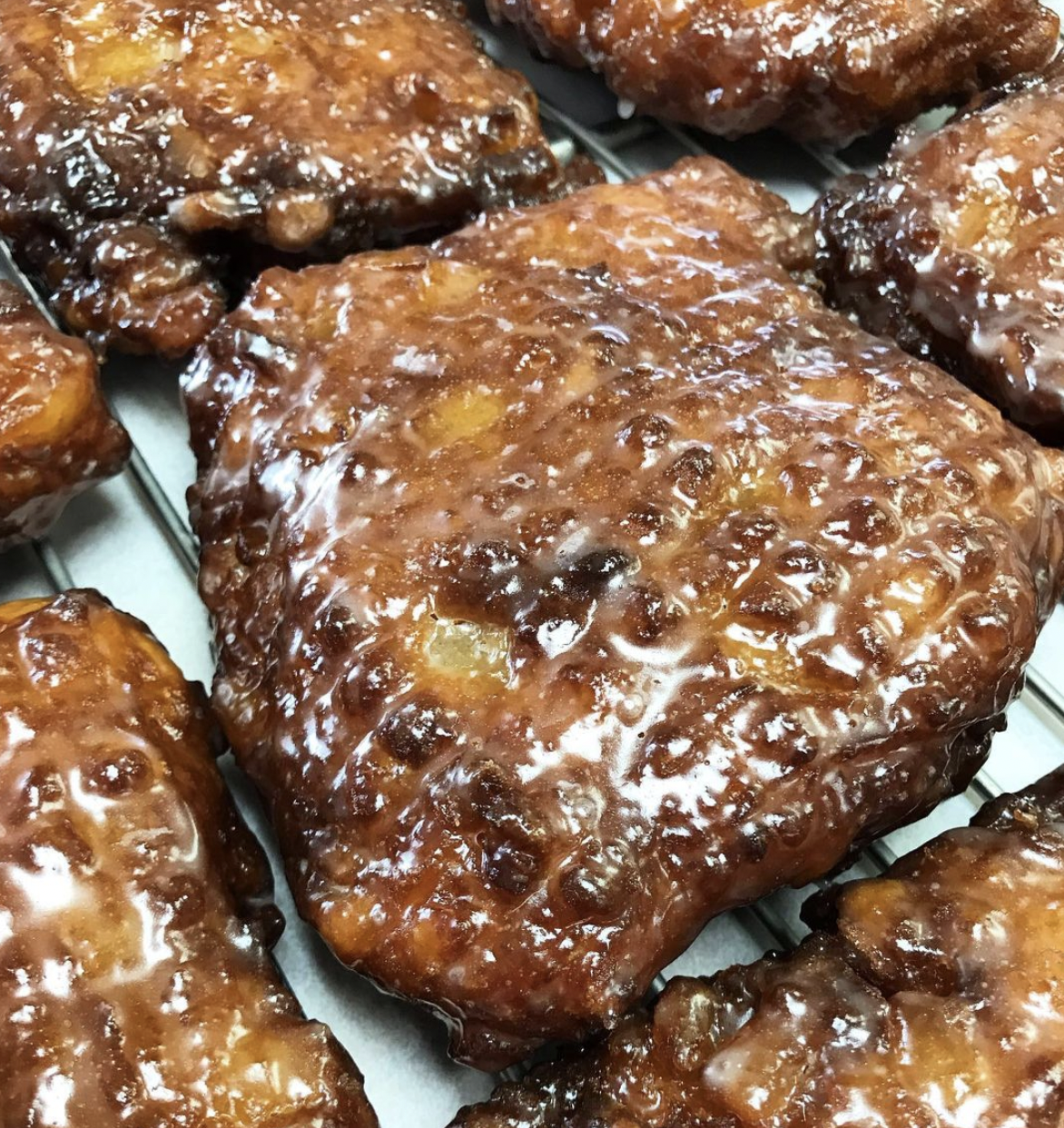
VG Donut is legend. Opened in 1969 as a tiny hole in a strip mall, campers at the San Elijo State Beach across the 101 would wake up and smell their immediate future. VG became the city’s surf donut. One before surf, one after surf, one instead of surf. Their interior decor is linoleum and wet sand. Designer donuts are going for $2.50-$4.50 now; VG’s base models go for $1.35. VG apple fritters are flat and square and thin, which increases the crispy edges (the best part of a fritter). They’re also ribbed, which creates little luges to collect the glory of the glaze.
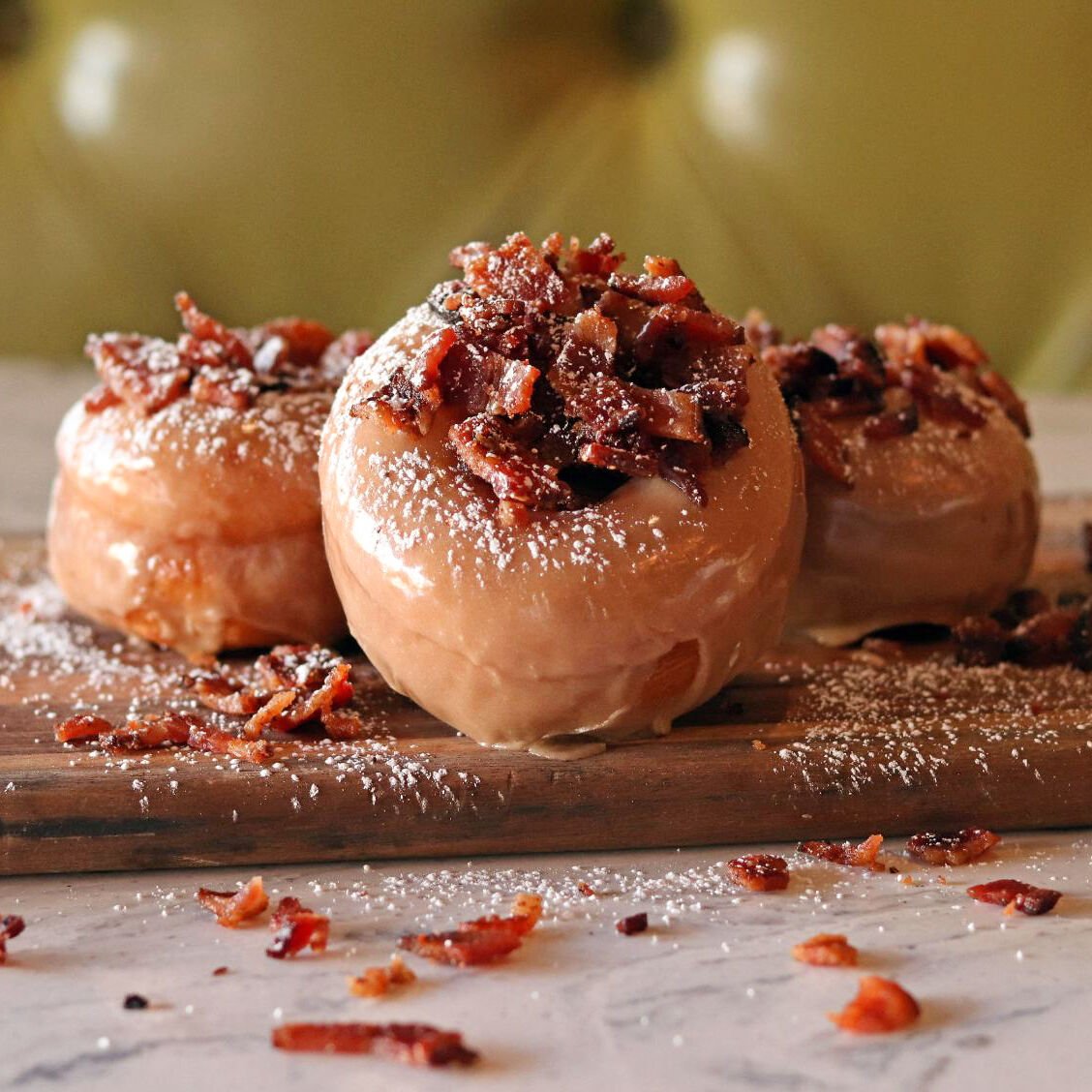
When this iconic Hillcrest location came open years ago, someone called Johnny Rivera about it. Johnny had Hash House and didn’t really need another restaurant at the time. But he lived in the neighborhood, and he didn’t want to see it go to a bad out-of-town chain. So the place is a local guy creating something for his neighborhood, which is easy to get behind. And the maple-bacon donut at Great Maple is the icon. He was doing it before bakers started putting bacon in everything.
Peterson’s has been a San Diego institution since the Petersons bought it in 1981. Now new owner Anthony Deeb is carrying on the tradition. They’re famous for face-sized cherry fritters, a welcome riff on the classic apple. But the butter log is the dreamiest, a nine-inch yeast-raised donut that’s lathered with butter and sugar—like a lighter, fluffier cinnamon roll.
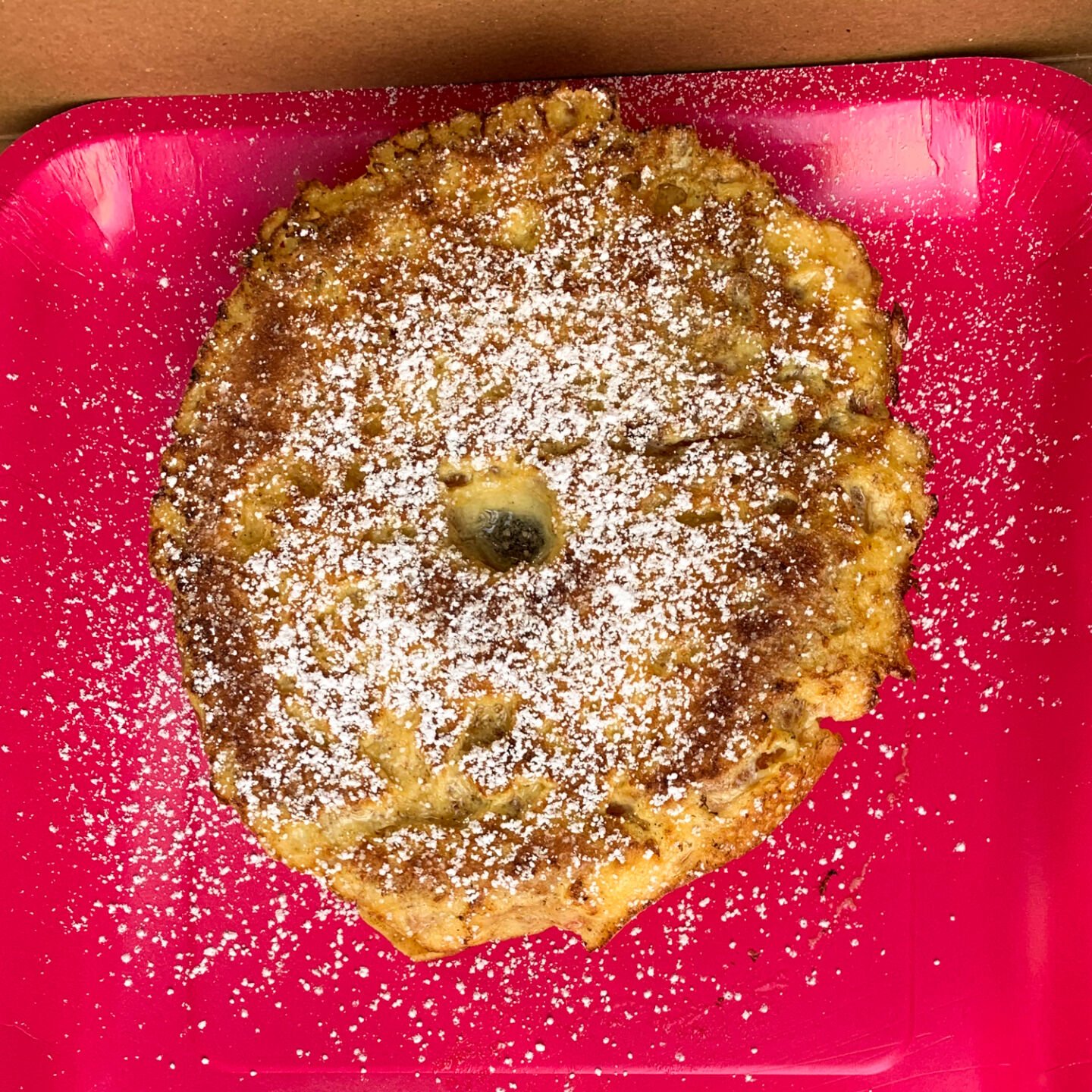
Donut Bar is famed for its wild, oversized creations; its pinkness; its neon; its branding. But when I walked into his bake station, owner Santiago Campa explained the real, simple reason he’s kept the buzz for so long: he changes that oil every single day, religiously. Some honestly don’t, and you can taste the difference. The French toast donut is the knockout, a donut dipped in an egg wash and griddled, then sprinkled with sugar.
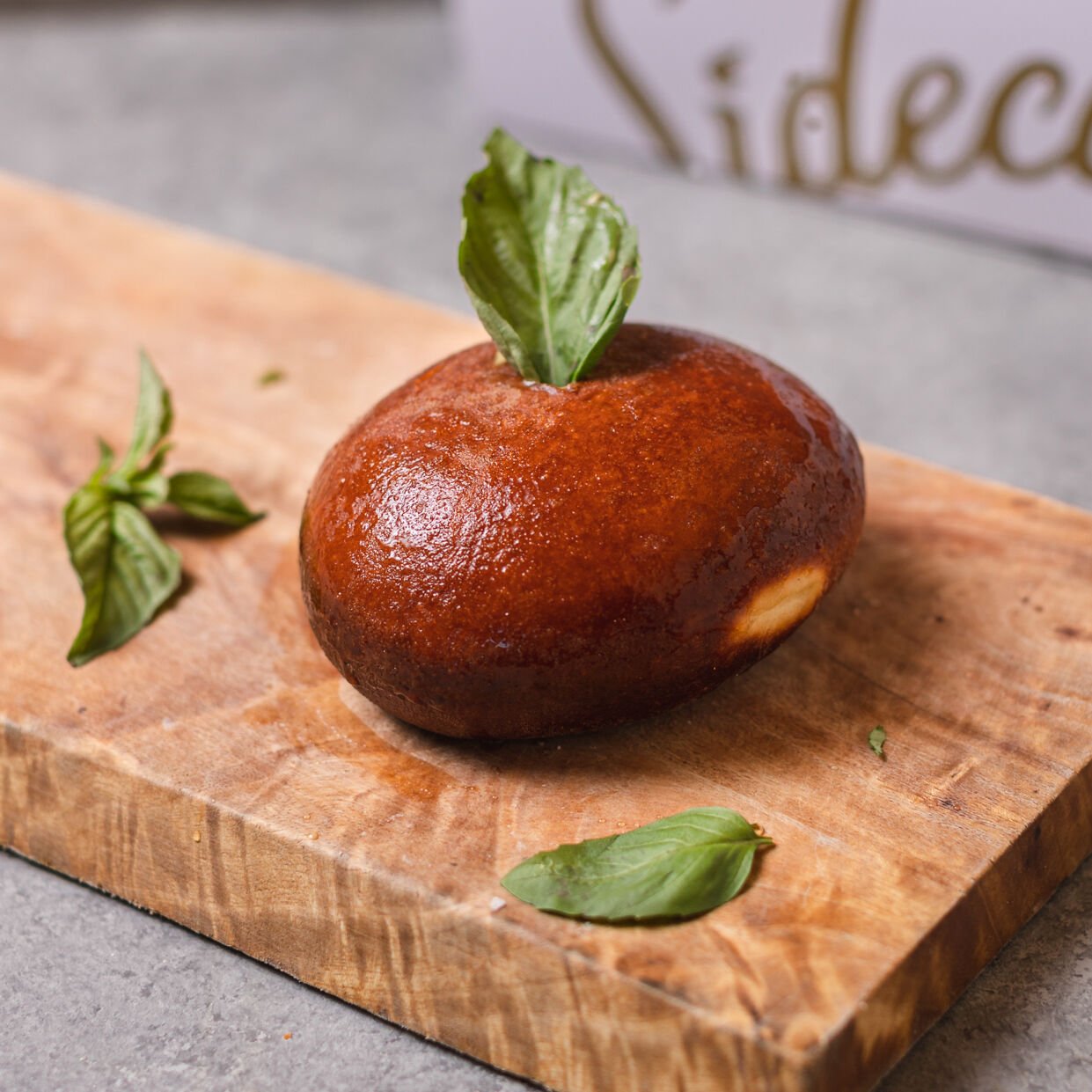
As you can tell, I was blown away by Sidecar. There’s a reason why this small-ish chain has been so successful. This one is wild, the stuff viral TikToks are made of. A lightly sweet, malasada (Portuguese-style) donut with an entire eggs benedict inside. They poach the eggs, roll the dough around ’em, deep fry, then pipe basil hollandaise inside, along with a full basil leaf. Is it the best benedict you’ve had? No. But it’s still very good, and brings thrill to food.

Troy Johnson is the magazine’s award-winning food writer and humorist, and a long-standing expert on Food Network. His work has been featured on NatGeo, Travel Channel, NPR, and in Food Matters, a textbook of the best American food writing.
Fresh openings, inventive pours, and can't-stop-thinking-about-it dishes—here's what has defined our food scene this year
Most San Diego spots serve phở bò—the dark-brothed, beef-boned Southern Vietnamese specialty, loaded with the loud spices (star anise, cloves, cardamom, etc.). But Kim Pham, one of the sisters behind Crab Hut and perennial best-restaurants list-maker Kingfisher, is doing her mom’s phở gà.
The Northern Vietnamese original has a lighter, cleaner broth, using runner chickens (free-range diet and action means more flavor), the garlic from Gilroy’s famed Christopher Ranch (intense garlic-garlic), organic ginger, and housemade noodles. For condiments, Phở Gà Go uses Red Boat (the gold standard, barrel-aged 12 months). It’s essentially the same broth made at Kingfisher, served casual in Mira Mesa.
This issue isn’t about shame, but let’s add a touch for emotional tension. We live on the water, but only about 10 percent of seafood eaten in San Diego is caught locally. Meanwhile, the local fishing industry that once employed 40,000 people is down to about 130 commercial fishers. Local fishing families are a crucial (my words, and they feel right) but endangered species. And three groups have joined forces for one pretty killer event that does a lot about it.
Puffer Malarkey Group (operator Chris Puffer and celeb chef Brian Malarkey) joined with Tuna Harbor Dockside Market—the spot where local boats drop their catch every weekend, a waterline treasure. Each year, Dockside Night Market gathers live musicians and the city’s top chefs who cook with local boat fish on the water. Even better: 100 percent of the profits go to the San Diego Working Fishermen’s Group (the third group—the actual fishers). Make it a quarterly/monthly thing, for chrissakes.
Hard to find a more special place to eat lunch than Make Cafe. Finally with a permanent address, Make is where refugee women new to life in the US cook recipes from their various home countries: like mandazis (East African fry bread, like a beignet), koftas, congees (Asian ginger-rice bowls), lemongrass soda waters, and clean-eating creations. Exec chef Ashley McBrady (who helped turn Cellar Hand into a farm-obsessive hit) oversees the operation and teaches the women everything she’s learned.
Make Projects (which includes a farm and a training center) is a nonprofit that director Anchi Mei spun off from the International Rescue Committee—and now includes the cafe, a farm, and a training center. The idea is to help women refugees—often those who’ve worked fields and didn’t get great access to education—develop job, language, and cultural skills to adjust to this radically new and disorienting life. Even if you’re immune to an emotional backstory: Normal Heights has a charming new 5,000-square-foot bistro with a talented chef.

The slander of SPAM is part of its allure. Those who have either been raised in the musubi arts or converted to the minor food religion tend to exude a higher-than-expected life happiness. This Musubi Love, a Leucadia musubi speakeasy (you heard that right), focuses exclusively on the Hawaiian/Asian tradition of SPAM “sushi.” It’s a MEHKO (Micro Enterprise Home Kitchen Operation) from founder Roger Post, serving classics and riffs like the Cordon Bleu-Subi made with panko-fried SPAM, shredded rotisserie chicken, Swiss cheese, and Bachan’s Japanese BBQ sauce. Or try the Dawn Patrol with SPAM, egg, bacon, cheddar cheese, and spicy mayo.
How many of your favorite bands don’t have a talented lead singer? Due respect to Charles Mingus, but kinda hard to get emotional without someone expressing a story in a compelling way. The same is true for restaurants: a likable storyteller who deeply knows their stuff and can translate the stories of the food, drink, people, and place is both key and exceedingly, exceedingly rare. Well—found one.
Valentina General Manager Todd Henderson is a likable certified sommelier who can wax on about the history of the breed of pigs used to create the famed jamón (Cinco Jotas), trace each Spanish pintxo back to its origin tale, or orate the Ken Burns doc of 20 different types of Champagne. Valentina had the design charm and the roots (Leucadia locals wanted better restaurants, so they built them). But with Henderson and chef Enrique Ñol (who trained under Davin Waite at Wrench & Rodent), Leucadia’s date-night bistro feels like it pulled up a rung.
Some local legends engrave so deep that it’d feel wrong if even their original locations they outgrew became, like, some chain lamp store. Kiku Room feels like a rightful heir to the Casbah’s first throne. Kurt Cobain played in this tiny box on Kettner, dammit. Kiku’s a minimalist steel-concrete-and-punky-wheatpaste box, loaded with enough red lights to summon some beanie diehards and chill demons. One “bar” is a DJ deck (dark disco, Balearic house, everything), and the other is proper craft cocktails. They even brought back Midori Sours. The room is small and the line is not, so plan ahead or amiably accept fate.
Some locals would prefer if Coronado’s historic charms were flash-frozen and preserved. Others feel that Elisha Babcock and Hampton Story (the 19th-century developers who modernized the “island” and birthed the Hotel del) were radical change agents, and that spirit should be renewed. Undoubtedly, Baby Grand is a renewal. The newest hotel from CH Projects (Lafayette Hotel) turned an old, meh motor lodge (La Avenida Inn) into a freshly feral cocktail lagoon with Greek food and statues and plus-sized plant life, a tuckaway bar (Fallen Empire), and rooms with clamshell beds and obscenely giant bathrooms. All due respect to our hearts’ desire to embalm old magic—this feels like a grand Coronado win.
Two local dreamers truly understood the emotional voltage of Captain Keno’s, Leucadia’s affordable family restaurant/dive bar (a real hospitality mullet). When owner Gerry Sova closed it after 54 years, they basically battled it out to buy Keno’s beloved bones—knickknacks, plucky furniture, signage—and memorialized that old meatloaf-and-vodka-cranberry voodoo in their own places. The first is Encinitas’ tuckaway bar, the highly designed, Tarot-fied Anigma (from the DIY industry vets who own The Roxy). Second is Breakers, the Hawaiian-inspired hang from pro surfer Benji Weatherley, who grew up between Encinitas and Oahu. Long live Cap.

When it opened in 2014, Ironside Fish & Oyster hit all the right notes. A giant fish house and craft cocktail spot dedicated to local fishing lore—created by locals. They put in the area’s first oyster bar at the time. It didn’t make the rapid evolution of Little Italy feel like a cheap land grab, and filled holes rather than piling more glitter on already-filled holes. A key part of that magic was opening chef Jason McLeod, who was in charge of Ria in Chicago when it earned two Michelin stars. Twelve years later, after bouncing between big projects, he came back this year and set down permanent roots in a landmark kitchen.
Word of Mouth skips endless scrolling and lets two longtime industry pros choose what members drink each month
If I have to choose between letting a trusted friend pick a bottle of wine or some random algorithm boosted by a faceless entity, I’m gonna go with the human 10 out of 10 times. And when you have friends like Amanda Sarich and Robert Blair, it’s pretty easy to trust their picks are going to be unique, tasty, and probably something I haven’t seen before.
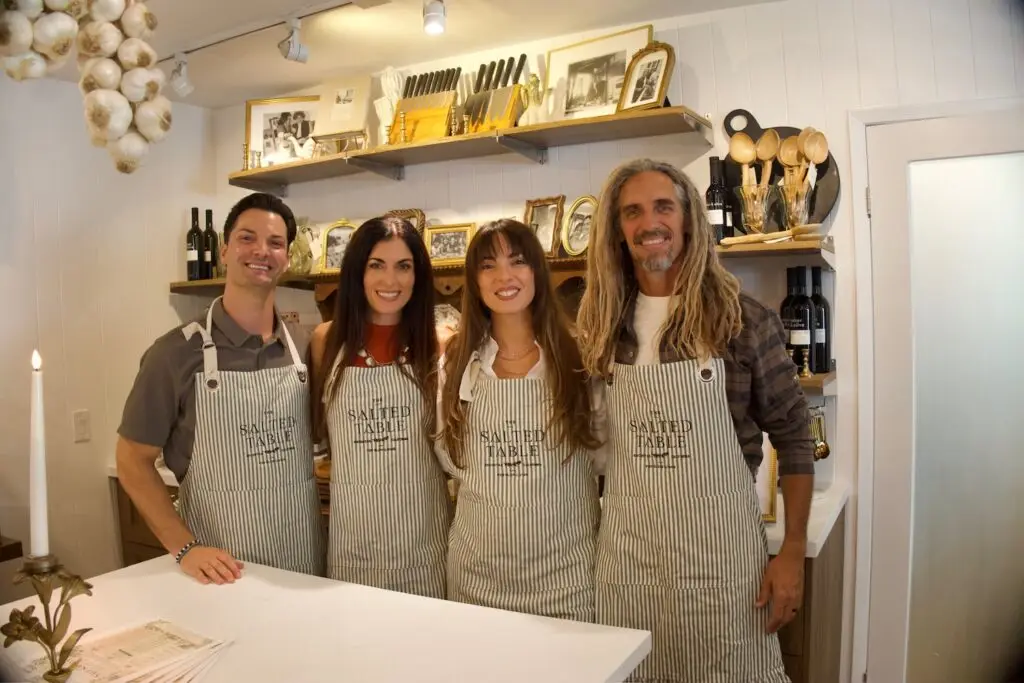
Between the two of them, they have over three decades of experience working in wine. From buying to operations to building wine lists, they’ve worked together, wined together, and now, are going into business together with the Word of Mouth Wine Club.
Word of Mouth is a members-only monthly subscription that sends you two handpicked bottles each month, chosen entirely by the duo’s palates. It’s less “build your own box” and more “enjoy the surprise.” “The goal with the wine club was basically to get members that want to turn over their faith in our collections,” Sarich says. “Trust us—we’ll send you the cool stuff.”
The two first met while working at We Olive wine bar and shop in La Jolla, where Sarich joined the opening team in 2011 before eventually becoming a corporate wine director overseeing stores and franchises throughout California. Blair arrived the following year, after stints at Holiday Wine Cellar in Escondido and Alternative Wines in Carmel Valley, later spending nearly a decade helping build Village Vino in Kensington.
When Village Vino closed last November, Sarich had recently returned home to San Diego after years in the Bay Area and brought Blair on board for a project she’s working on—Serafino, a cafe and wine bar slated to open in Mission Hills next fall. But to bridge the gap between Village Vino closing and Serafino opening, the two partners kept the momentum going by launching Word of Mouth.
Blair says once Serafino opens, the team will launch a wine club for that business that will focus on everyday drinking wines from anywhere. Word of Mouth is for us “to geek out a little bit,” he says, with more adventurous or hard-to-find options from small production family farmers. (But as a bonus, Word of Mouth subscribers will become Seraphino’s founding members, receiving exclusive benefits for supporting the project from day one.)
Current memberships include two bottles delivered monthly—usually a red and a white, though sparkling, rosé, orange, or skin-contact wines are always fair game. Members can choose three-month, six-month, or annual subscriptions, and every shipment includes detailed tasting notes, producer stories, pairing suggestions, and fun extras like playlists, puzzles, and the occasional surprise.
The selections often revolve around loose themes. For instance, they used the idea of what wines they’d drink at a summer barbecue to select the two bottles in the July box—which happened to be a pale French rosé and Mourvèdre from the Languedoc-Roussillon region of southern France.
Over the last decade, places like Rumi, Clos, and Vino Carta have helped transform the San Diego wine scene from mainstream labels and a stodgy vibe to eclectic discoveries that break a lot of the former rules. Word of Mouth hopes to continue that evolution.
“I think it’s fostered a more adventurous sense of exploration,” Blair says. “There’s room in San Diego to keep expanding people’s palates.” Sarich agrees. “We’re trying to bring our fun wine palate to the world.” Bottoms up.
Listen Now: The Latest in San Diego’s Food and Drink Scene
Have breaking news, exciting scoops, or great stories about new San Diego restaurants or the city’s food scene? Send your pitches to [email protected].
Beth Demmon is an award-winning writer and podcaster whose work regularly appears in national outlets and San Diego Magazine. Her first book, The Beer Lover's Guide to Cider, is now available. Find out more on bethdemmon.com.
Dockside Night Market returns to Tuna Harbor Dockside Market on August 6 for one night only
Ask any local, human or shark—San Diego summer doesn’t really start until August. After June Gloom lifts and children file back into the halls of academia, our coastline comes to life with more space on the sand and a water temperature that finally rises above muscle-clenchingly frigid.
What better way to welcome Local’s Summer than by celebrating the bounty of the sea? At least, that’s what the gang at Puffer Malarkey Collective (PMC) figured when they launched Dockside Night Market four years ago.
Despite being born and raised in San Diego, Lillian Dang (the event’s co-producer and marketing director for PMC) says she didn’t know how abundant our local seafood scene was until she left and came back. “We are spoiled here,” she says, pointing not only to our plentiful produce from local farms, but also our sea-borne treasures.
When she and her co-producer Lucien Conner (PMC’s director of operations) brainstormed over what they felt the city’s food scene lacked, they realized: “What’s missing is an event that really celebrates the local seafood,” explains Dang.

Dockside Night Market is meant to be a “San Diego summer party on the pier,” she says, bringing together local fishermen and local chefs to highlight the fruits of the local seas. Chefs from some of San Diego’s best restaurants clamor to be a part of the 15-chef-max roster, including Travis Swikard (Callie and Fleurette), David Sim (Kingfisher), Aidan Owens (Herb & Wood), Chianne Mallari (Herb & Sea), Tara Monsod (Animae), Jacob Ruck and Eric Bost (Jeune et Jolie), not to mention Mabel’s Gone Fishing, Bica, The Lion’s Share, Nine-Ten, Marisi… you get the idea.
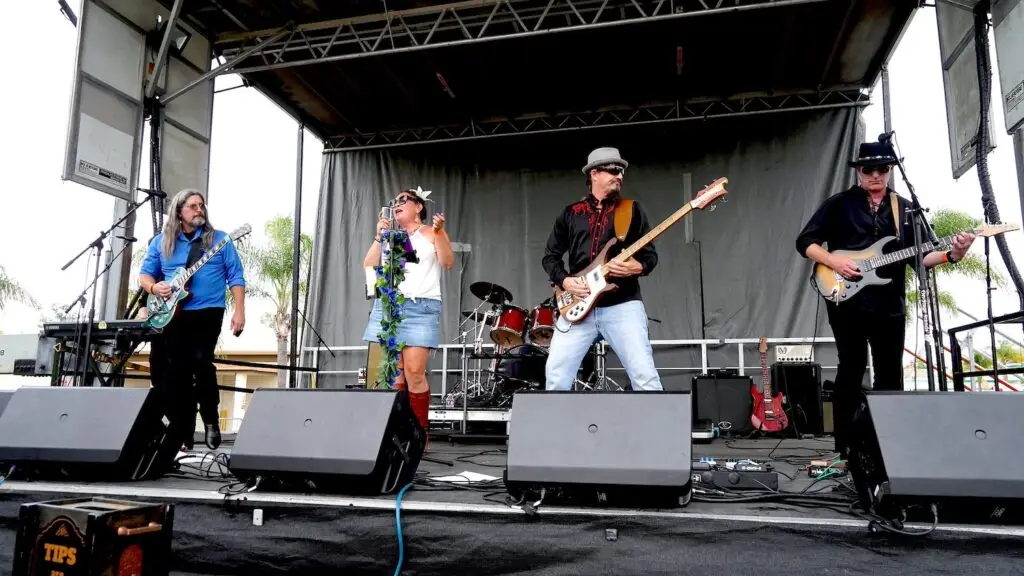
Part of the intrigue is not knowing exactly what seafood will appear—in past years, there’s been uni, bluefin tuna, halibut, black cod, but it ultimately comes down to what’s fresh and what’s available. And with a chef lineup like that, it’s fun to imagine what sorts of surprises await. (If you’d like a small hint, there are calendars of seasonal availability in the area.)
The one-night-only annual event takes place at Tuna Harbor Dockside Market on Tuna Harbor Pier (598 Harbor Lane), the same spot as the weekly fish market every Saturday from 8 a.m. until 1 p.m. or sellout (it’s usually the latter). VIPs get in at 6 p.m. and general admission is 7 p.m., and 100 percent of all ticket profits go to support the San Diego Fishermen’s Working Group, a 501(c)(3) nonprofit created to support the best interests of the region’s commercial fishermen. There’s also four cash bars and a live DJ (but leave the kids and pets at home).
“I think this is an event that can only happen in San Diego,” says Dang. Our city’s culinary cache is on the rise, and our proximity to some of the best fishing waters in the world make it a pretty dynamic duo. “It’s curated, it’s intimate, it’s all the things,” she promises.
Dockside Night Market takes places on Thursday, August 6, from 6 p.m. to 10 p.m. at Tuna Harbor Dockside Market.

Listen Now: The Latest in San Diego’s Food and Drink Scene
Have breaking news, exciting scoops, or great stories about new San Diego restaurants or the city’s food scene? Send your pitches to [email protected].
Beth Demmon is an award-winning writer and podcaster whose work regularly appears in national outlets and San Diego Magazine. Her first book, The Beer Lover's Guide to Cider, is now available. Find out more on bethdemmon.com.
This month, the 2026 San Diego Business Impact Awards recognized local businesses making an impact in clean energy, biotech, hospitality, and beyond
Renewable energy companies building hundreds of power plants. Biotech startups using artificial intelligence to create personalized medicine for children with rare diseases. Hospitality companies quietly powering thousands of local events. Consumer brands growing from beach-town startups into national businesses. These are the kinds of companies driving San Diego’s economy today, and the businesses recognized at this year’s San Diego Business Impact Awards offer a snapshot of where the region is headed.
Hosted July 23 by San Diego Regional Economic Development Corporation (EDC) and JPMorganChase, the second annual awards event honored four local companies for innovation, growth, and economic impact. More than 100 nominations from San Diego’s middle-market businesses were reviewed by a 10-person judging committee, with winners selected across four categories: startup, early-stage innovator, rising star, and established heavyweight.
Two-time honoree Jimbo Someck, founder of Jimbo’s organic grocery stores, also joined the event for a fireside chat on buying local, supporting emerging brands, and giving back to the community.
“San Diego’s strength comes from its makers and builders—the resilient people who endure great risks and overcome obstacles to build and scale a company,” says Aaron Ryan, San Diego Region Manager and Middle Market Banking at JPMorganChase & Co. “These awards aren’t just recognition; they spotlight the talent, grit, and innovation shaping our region’s future. By celebrating those who create and build, we foster connections and fuel the growth that keeps San Diego thriving.”

Heavyweight honoree SOLV Energy has grown alongside the country’s rapid investment in renewable power. “It’s an exciting time for SOLV Energy as we are experiencing significant growth,” says CEO George Hershman. “The business has doubled over the last year and has almost double-digit growth since its inception.”
The Rancho Bernardo-based company designs, builds, operates, and maintains utility-scale solar and energy storage facilities. Since its founding in 2008, SOLV Energy has built more than 500 power plants.
Growth has translated directly into hiring. About 200 employees work from the company’s local headquarters, including roughly 20 interns. “Our intern program is a big part of the way that we grow our workforce,” Hershman says. “Last year, 43 percent of our interns became full-time employees. We believe San Diego is a great community to build and grow a high-tech infrastructure and technology company because of the incredible workforce—the ability to attract top talent and draw from world-class universities.”

Startup honoree La Jolla Labs is tackling one of medicine’s biggest challenges by developing personalized RNA therapeutics for patients with rare diseases—many of them children with neurological disorders like ALS. Using proprietary artificial intelligence and machine learning tools, the biotech company develops treatments tailored to each patient’s specific genetic mutation.
CEO Tamar Grossman says the recognition reflects how far the company has come despite limited resources. “We’re honored to be recognized for our ability to change and save patients’ lives and turn our lean startup into a clinical company with very minimal resources,” she says.
Grossman credits San Diego’s concentration of research institutions—including UC San Diego, the Salk Institute, and Scripps Research—with creating a pipeline of talent and collaboration. “San Diego is one of the world-leading centers for technology, genomics, and RNA therapeutics,” she says. “We have over 30 RNA therapeutics companies here, and we support each other and help with anything related to drug discovery.”
She says that collaborative spirit extends beyond formal partnerships. “You can walk around Torrey Pines, go into a café, and find colleagues from the industry and have an ad hoc conversation,” Grossman says. “That’s something very unique to San Diego.”

While Snake Oil Venue Company may not be a household name, chances are many San Diegans have attended one of its events. The early-stage innovator honoree has expanded from beverage catering and mixology consulting into venue management, operating Julep Venue in Mission Hills, Bramble Bay Venue in Imperial Beach, Vesper Venue, the Chapel at Liberty Station, and five outdoor venues throughout Liberty Station—more than 500,000 square feet of event space altogether.
“We do a lot of launch parties for corporations and new products,” says CEO Mike Esposito. “I really like working on the entrepreneur side of things, where new businesses are entering the San Diego market and looking to make a splash.”
Snake Oil has executed more than 16,000 events, employed more than 1,000 people, and partnered with more than 900 local vendors, including caterers, florists, photographers, entertainers, and other hospitality businesses. The company also works with many of San Diego’s nonprofits, museums, and cultural institutions. “We get to celebrate people’s most important moments,” Esposito says. “Whether that’s a wedding, celebration of life, or quinceañera, we’re fortunate to be involved in the community in so many different ways.”

Rising star honoree ALOHA Collection is proof that a simple idea can grow into a thriving company. Founded by two roommates who wanted a better way to carry wet swimsuits after a day at the beach, the lifestyle brand has grown into a business while maintaining strong year-over-year growth.
Now headquartered in Carlsbad, ALOHA Collection employs more than 100 people and operates its California flagship store in Encinitas, which is slated for a remodel. With roots in Hawaii, the company is known for its lightweight, splash-proof travel bags that have become a familiar sight on beaches in San Diego and beyond.
“‘Aloha’ is part of our name, but it’s also how we move through the world,” says CEO Lynna Barnard. “It’s how we show up for people, the way we travel, the way we give back.” Since day one, the company has maintained a 5 percent giveback to Hawaii conservation efforts, contributing millions of dollars over the years.
“I think what’s so inspiring about ALOHA Collection, and the founders in particular, is when you dream big, those dreams can come true when you work hard and trust in the universe,” Barnard says. “It’s inspiring to be a role model for other people wanting to start businesses from humble beginnings. Start small and watch it grow.”
Together, businesses like these form a cornerstone of San Diego’s economy—not only through the jobs and revenue they generate—but through the local workers they hire, vendors they support, and investments they make in the region. Their growth doesn’t happen in isolation; it ripples outward, strengthening the broader business community and the people who call San Diego home.

Harrah’s Resort Southern California introduces its brand-new signature restaurant, featuring Mexican cuisine from across the country
Ten million dollars can buy 30 small helicopters, two or three houses in Del Mar (depending on how many bathrooms there are), or one really, really extravagant restaurant remodel. Harrah’s Resort Southern California went with that last one, revamping the former Salt & Fin space into Tierra y Mar, the resort’s new signature restaurant next to Hell’s Kitchen by Gordon Ramsay.
The 25-year-old Valley Center casino and resort went through its first major expansion in 2014, adding more pools, more restaurants, a convention center, and hundreds of new rooms—basically, the full works. In 2016, the Rincon Band of Luiseño Indians officially renamed the land the resort sits on as “Funner, California,” dubbing David Hasselhoff (excuse me, The Hoff) as the rechristened town’s first mayor and inviting guests to leave their hassles behind.
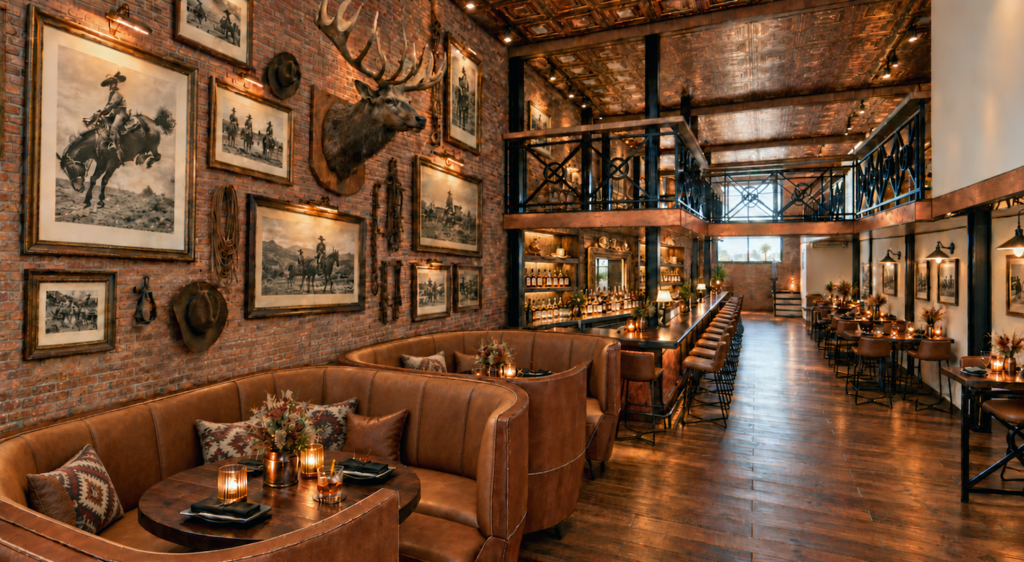
Still, any respectable resort knows the spectacle has to be fresh to keep guests coming back for the newest, most eye-popping, droolworthy, thrill-inducing, jackpot-hitting experiences. So Harrah’s spared no expense with Tierra y Mar, tapping JCJ Architecture to completely reimagine the 7,245-square-foot restaurant as a transportive Mediterranean-meets-Mexico space bridging Cycladic and Moorish architecture details with mid-century glamour.

Derek Sola, design principal at JCJ and project lead, says his team had to completely demolish Salt & Fin to create Tierra y Mar from the ground up—literally. The Tini Bar? Adios. The fixtures and furnishings? Vayan con Dios! The very floors, walls, kitchen, and ceiling? Gone. New plumbing, new kitchen equipment, new HVAC—tabula rasa.
Now, the natural wood-lined, mosaic-laden, greenery-rich space feels like a coastal hacienda, with woven elements and artisan accents that seem surprisingly intimate in such a sprawling room. Sola says by moving the kitchen and back-of-house operations out of view, guests can focus more on the dining experience than the cooking process. And yes, it’s meant to feel wildly different from the flashing lights and ding-ding-dings of the casino floor. That’s why the entry portal uses columns and archways—it’s like a bridge from buzzy commotion to complete calm.

Considering Tierra y Mar translates to “land and sea,” specialty chef Bryan Texis highlights both as forefronts of the menus, incorporating his birthplace of Mexico City, childhood home in Baja California, and current proximity to Baja. It’s that all-encompassing influence that Harrah’s food and beverage Director Ryan Adams says served as inspiration. “We pulled influences from all over the country,” he says, pointing to items like birria (Jalisco), whole Pacific rockfish (Baja California), salmon zarandeado (Nayarit), and tacos al pastor (Mexico City).
“Our goal was to create just a fully immersive menu for all to enjoy, despite whether or not you grew up in Mexico, eating your abuelita’s food, or you are new to the area and just want something that just tastes amazing,” says Adams.
Highlights include salmon marinated in a chipotle sauce and served with arroz verde and a petite frisée salad with cucumber, cherry tomatoes, citrus segments, and honey citrus vinaigrette; a shrimp aguachile appetizer with cucumber, red onion, radish, avocado, and cilantro; a salsa sampler with three heat levels; the “siete mares,” or “seven seas,” with seared seabass, mussels, littleneck clams, scallops, shrimp, and fried crab cakes, all served in a lobster tomato consommé; and their house birria: an eight-ounce braised short rib wrapped in hoja santa (an aromatic herb from Mexico), served with consommé reduction and a sweet corn purée. Texis’ pan de elote provides a sweet-and-savory end to a meal, made with fried corn bread, chantilly (whipped cream) banana mousse, pecans, and totomoxtle (corn husk).

While menudo and brunch (think breakfast burrito, huevos rancheros, and a masa waffle) will only be available on the weekends, the bar is always open. Naturally, Tierra y Mar’s bar emphasizes tequila, with plenty of beer, wine, cocktails, and margaritas. Like Old Fashioneds? Try the Tequila Old-Fashioned, made with Callfino Añejo, agave, orange bitters, orange peel, and dark cherry. Or kick up your margarita by opting for a blended Mangonada, with Casa Dragones blanco tequila, passion fruit liqueur, blue curaçao, mango puree, Chamoy, and fresh lime, served with a chamoy and tajin rim and tamarind candy stick.
Pulling off such an ambitious, far-reaching restaurant revamp required a group effort, says Adams. General manager Jill Barrett, vice president of resort operations Shannon Upson, and the Rincon Band of Luiseño Indians have worked for a year-plus to bring Tierra y Mar to life. It might not be “traditional” Mexican food, according to Adams. But he invites guests to take a chance on their approach.
In other words: come for the fun, stay for the food.
Tierra y Mar opens at Harrah’s Resort Southern California on July 22 for daily lunch and dinner service, plus weekend brunch.
Beth Demmon is an award-winning writer and podcaster whose work regularly appears in national outlets and San Diego Magazine. Her first book, The Beer Lover's Guide to Cider, is now available. Find out more on bethdemmon.com.
The fast-growing taqueria will open its third restaurant on Newport Avenue after a viral social media moment fueled its rapid expansion
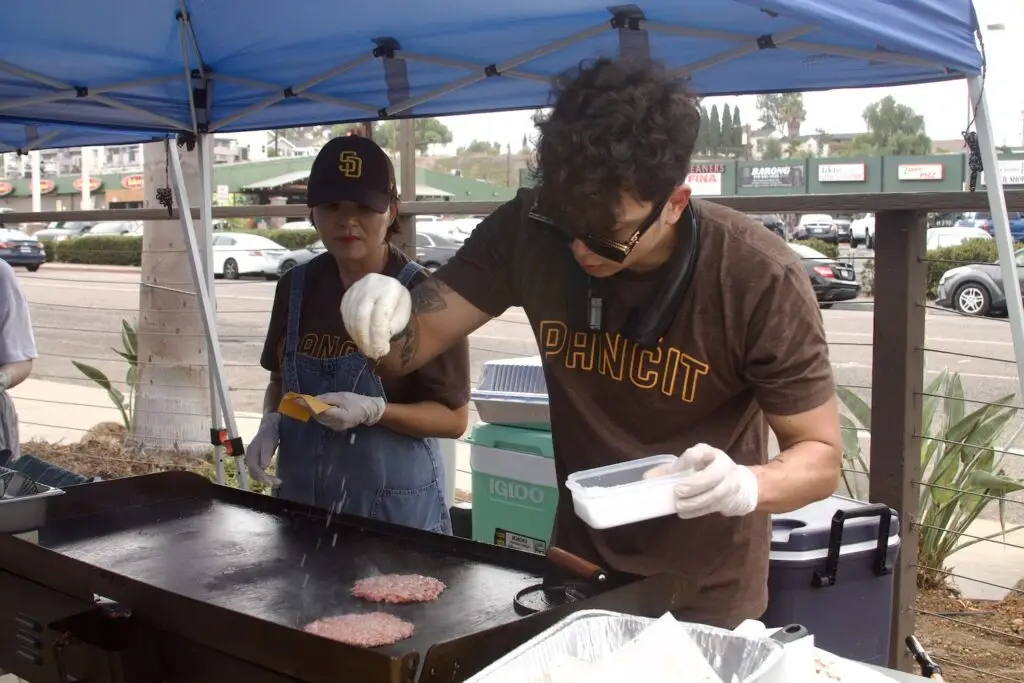
When Rigo Munoz opened a weekends-only taco stand on Market Street in 2018, at first, he was just hoping to sell his tacos to however many customers he could. That low-key, word of mouth approach worked well for a couple years. Very well.
“Then, the line started,” he laughs. He began to double his sales week after week, until an influencer from Tijuana paid them an undercover visit in 2024. Munoz was hanging out in his backyard the next Monday when his phone started pinging and ringing off the hook. “So I go onto my social media and there, lo and beyond, the video already had 10,000, 12,000 views in like, less than an hour,” he says. The next day, there was a line of customers waiting for him before he opened at 5 p.m. The Chula Tacos revolution sparked there.
Now, he’s ready to open his third location on August 1 at 4994 Newport Avenue in Ocean Beach. It wasn’t an easy or straightforward path—the city shut down his original location citing too much noise and traffic. But Munoz was looking ahead, already in talks with a restaurateur to take over his space at 1719 Palm Avenue in the Nestor neighborhood of southeast San Diego. From the time he got shut down to getting the keys of his first brick-and-mortar was less than two days.
The second location in Chula Vista caught fire on Valentine’s Day and is slated to reopen later this fall (689 H Street). Munoz says he also plans to open a fourth location somewhere between the Ocean Beach and Morena Boulevard areas, but has aspirations for more.
“I’d like to become the In-N-Out of tacos,” he says. He’s actively looking for places that could support either a drive-thru or the typical fast-casual taqueria style, but no matter what, he’s going to keep his menu simple.
Each location has the same menu, except labio, which are ox lips, and beef intestines. They’re top-sellers at Palm Avenue, but might not translate as well to the OB crowd, he says. But guests can still get their fix of vampiro tacos, tacos de trompo, and from-scratch horchata and jamaica.
Chula Tacos is best known for its kekas (pronounced keh-kuhs), which are extra-large quesadillas stuffed with your choice of meat. “It’s a hefty thing,” Munoz promises. It’s such a trademark that he filed for a patent, which is still pending.
Building a taco empire has been a long time coming. Munoz first started making tacos at age 12, and has operated a number of cafes, delis, and other businesses on both sides of the border ever since. “We’re a family business,” he says. He’s been trying to hit that mother lode for years—and all it took was one video to light the fuse.
The newest location of Chula Tacos opens August 1 at 4994 Newport Avenue, Suite A in Ocean Beach. Hours of operation are 11 a.m. to midnight daily. (Opening date subject to change.)

Listen Now: The Latest in San Diego’s Food and Drink Scene
Have breaking news, exciting scoops, or great stories about new San Diego restaurants or the city’s food scene? Send your pitches to [email protected].
Beth Demmon is an award-winning writer and podcaster whose work regularly appears in national outlets and San Diego Magazine. Her first book, The Beer Lover's Guide to Cider, is now available. Find out more on bethdemmon.com.
Hypertension is the leading cause of cardiovascular disease and premature death in women
It’s estimated that 44% of women in the U.S. have high blood pressure, also known as hypertension, but many don’t know it. The disease often has no symptoms, and when symptoms do present, they can appear similar to many other conditions. High blood pressure increases the risk for heart disease and stroke, so it’s critical that it’s detected and treated early. And for women at risk of developing high blood pressure, prevention is key. Click here for the basics of high blood pressure and how Scripps physicians at Scripps use screenings not just as a diagnostic tool, but as part of routine preventive care.
For more nutrition, wellness, and healthy living tips, sign up for the San Diego Health newsletter here.