Featured articles
Food & Drink
Food & Drink
Food & Drink
Featured articles
Features
Everything SD
Features
Featured articles
Things to Do
Things to Do
Things to Do
Featured articles
podcast-ep
podcast-ep
podcast-ep
Featured articles
Features
Features
Features
Featured articles
Features
Everything SD
Features
Ready to know more about San Diego?
SubscribeReady to know more about San Diego?
Eat a beachside brunch at Duck Dive, have a country Christmas with Sara Petite at The Casbah, and watch a holiday marathon of The Office at Rooftop Cinema Club
Want a festive weekend in San Diego? We’ve got yearly yuletide events like the Golden State Ballet’s production of The Nutcracker, plus new traditions like Project [BLANK]’s Fates, Boots and Bob, which introduces an alien adventure into the Christmas canon. Of course, that’s not all of San Diego’s seasonal shindigs. The Vandals will play rowdy holiday tracks at the House of Blues and Exclusive Collection Gallery will exhibit original Grinch drawings by Dr. Seuss, in addition to 10 more can’t-miss happenings.
Food & Drink | Concerts & Festivals | Theater & Art Exhibits | More Fun Things to Do

Chef Fabrizio Cavallini and GBOD Beverage Director Ryan Andrews will lead a four-course pairing dinner at Monello featuring Woodford Reserve Bourbon this Friday at 7 p.m. Guests will dine on handmade pasta and sip bourbon-infused cocktails. Andrews will also explore the history and production process of the whiskey. This meal is $125 and only open to 24 guests. To RSVP, you must submit a $50 reservation deposit.
750 West Fir Street, Little Italy
Enjoy a cozy meal in Pacific Beach at Duck Dive’s annual Holiday Onesie Brunch from 10 a.m. to 2 p.m. Come in your most comfortable onesie or pajamas and indulge in sweet and savory breakfast items like chorizo potato hash and stuffed French toast. Buying an entrée gets you $19 bottomless mimosas, also available until 2 p.m.
4650 Mission Boulevard, Pacific Beach
Spend your Winter Solstice at Garibaldi‘s fun and frosty Coastal Chill event at 4 p.m. this Saturday on the third floor of InterContinental San Diego. The event includes music from DJ Ayla Simone, luxe winter parkas, a snow machine, heaters, and an all-you-can-eat buffet that features oysters, lobster, and mussels. Also included in the ticket price are bottomless Amaro hot chocolate and Mediterranean s’mores with a dessert wine pairing, as well as an intention-setting station, where every card completed marks a $1 donation to the conservation nonprofit Wildcoast. Tickets can be purchased on Resy for $85.
901 Bayfront Court, Downtown

Legendary hip hop groups from opposite coasts—Brooklyn-based Digable Planets and LA’s The Pharcyde—will collide for a night of alternative rap at The Sound this Thursday at 8 p.m. Tickets start at $61 for this concert.
2260 Jimmy Durante Boulevard, Del Mar
Orange County–bred punk rockers The Vandals have always had a soft spot for Christmas, dating back to their 1996 holiday album Oi to the World! This year, the band is bringing its annual Christmas Formal concert to San Diego this Friday night at the House of Blues. Tickets start at $42 for this show.
1055 Fifth Avenue, Gaslamp
This Friday at 7:30 p.m. at the Balboa Theatre, Las Posadas will tell the story of Mary and Joseph’s journey to Bethlehem and the birth of Jesus through traditional Mexican carols and American holiday tunes. Tickets start at $34.
868 Fourth Avenue, Gaslamp
Local americana artist Sara Petite will channel the country storytelling of the legendary Loretta Lynn in a performance with her band and some special guests this Sunday at 6 p.m. at The Casbah. Petite will debut her track “Honky Tonk Angel” and sing a handful of Christmas essentials in this intimate performance. Tickets are $20 for this concert.
2501 Kettner Boulevard, Harborview

Ted Geisel, known to readers worldwide as Dr. Seuss, penned iconic children’s books like How the Grinch Stole Christmas! In the new Merry Grinch-Mas exhibition from Exclusive Collection Gallery’s The Arts of Dr. Seuss collection, the gallery will display private images featuring Seuss’ beloved green grump, including works signed by his wife, Audrey Geisel.
621 Fifth Avenue, Gaslamp
This Friday at Bread & Salt Gallery, performers from Project [BLANK] will present the intergalactic comedy Fates, Boots and Bob: A Hijacked Hootenanny Holiday Hullabaloo. It’s A Christmas Carol with several twists, including an extraterrestrial visitor and a piece of sacred toast. This event has all-in pricing—you can choose your cost, from $5 to $50. Attendees are also invited to bring items like new clothing, undergarments, reusable water bottles, and non-perishable food items to donate to Border Angels.
1955 Julian Avenue, Logan Heights
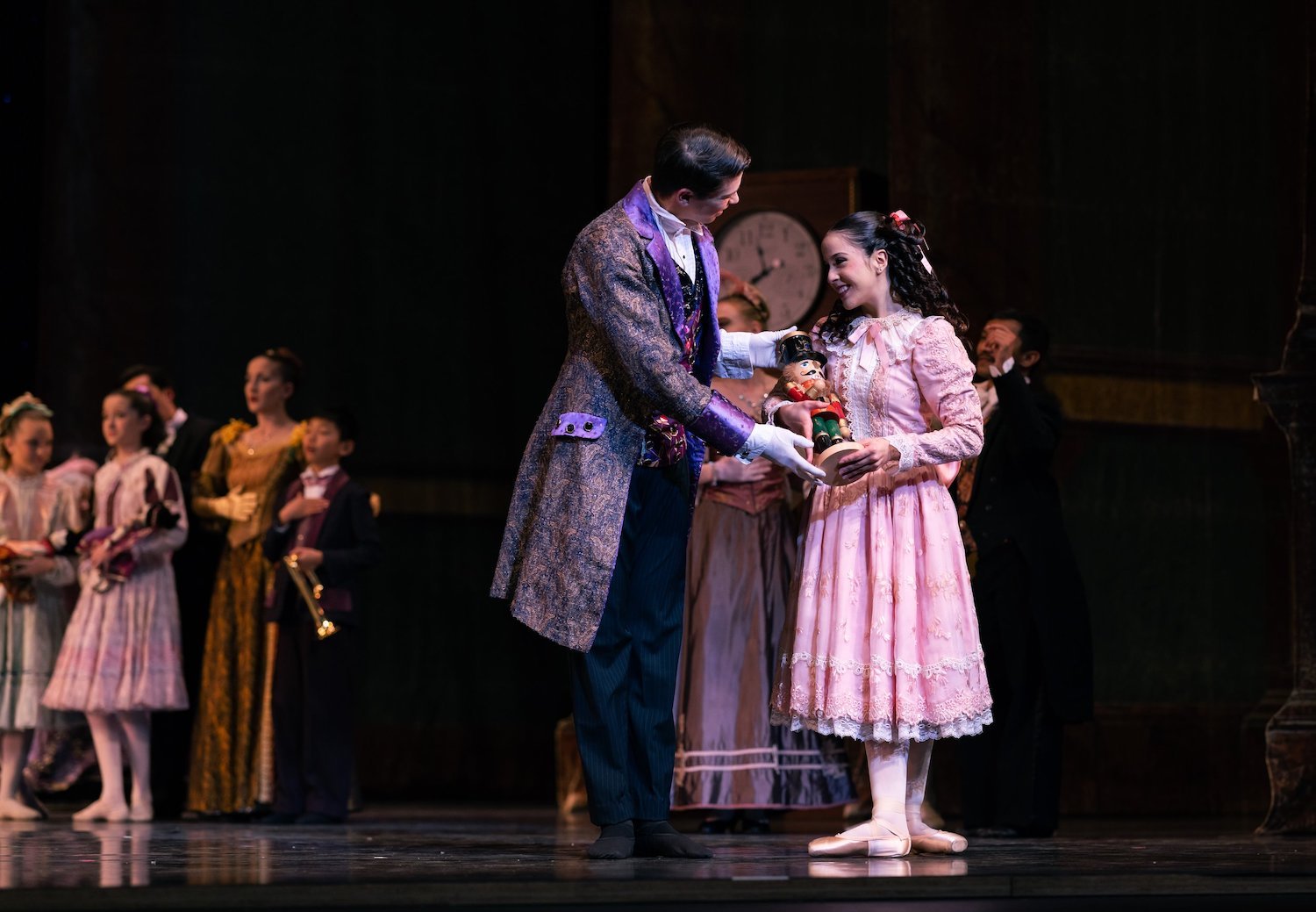
Travel to the Land of the Sweets with Clara and the Nutcracker Prince at Golden State Ballet’s production of The Nutcracker at the Civic Theatre. There will be five performances of The Nutcracker this weekend. Tickets start at $48 for this timeless holiday ballet.
1100 Third Avenue, Downtown
The Lighthouse Players offer a musical version of A Christmas Carol with period-era costumes and a live orchestra this weekend. There will be performances on Saturday and Sunday at 2 p.m. and 7 p.m. at The Bornemann Theatre. Tickets range from $25 to $35 and can be purchased here.
555 Deer Springs Road, San Marcos

Test out your putt-putt skills this Wednesday from 4 to 9 p.m. as Swing Social sets up 18 holes of mini golf in the Gaslamp. Golfers can enjoy nearby food and drink specials, such as $16 draft beers and $10 Wagyu smash burgers and fries at Swing Social, long happy hours at Huntress (6 to 9 p.m.) and Lumi (4 to 9 p.m.), and $12 Wagyu sliders and spicy chicken sliders at Rustic Root. Tickets for this all-ages pop-up are $20; ticket prices will rise to $39 the day of the event.
527 Fifth Avenue, Gaslamp
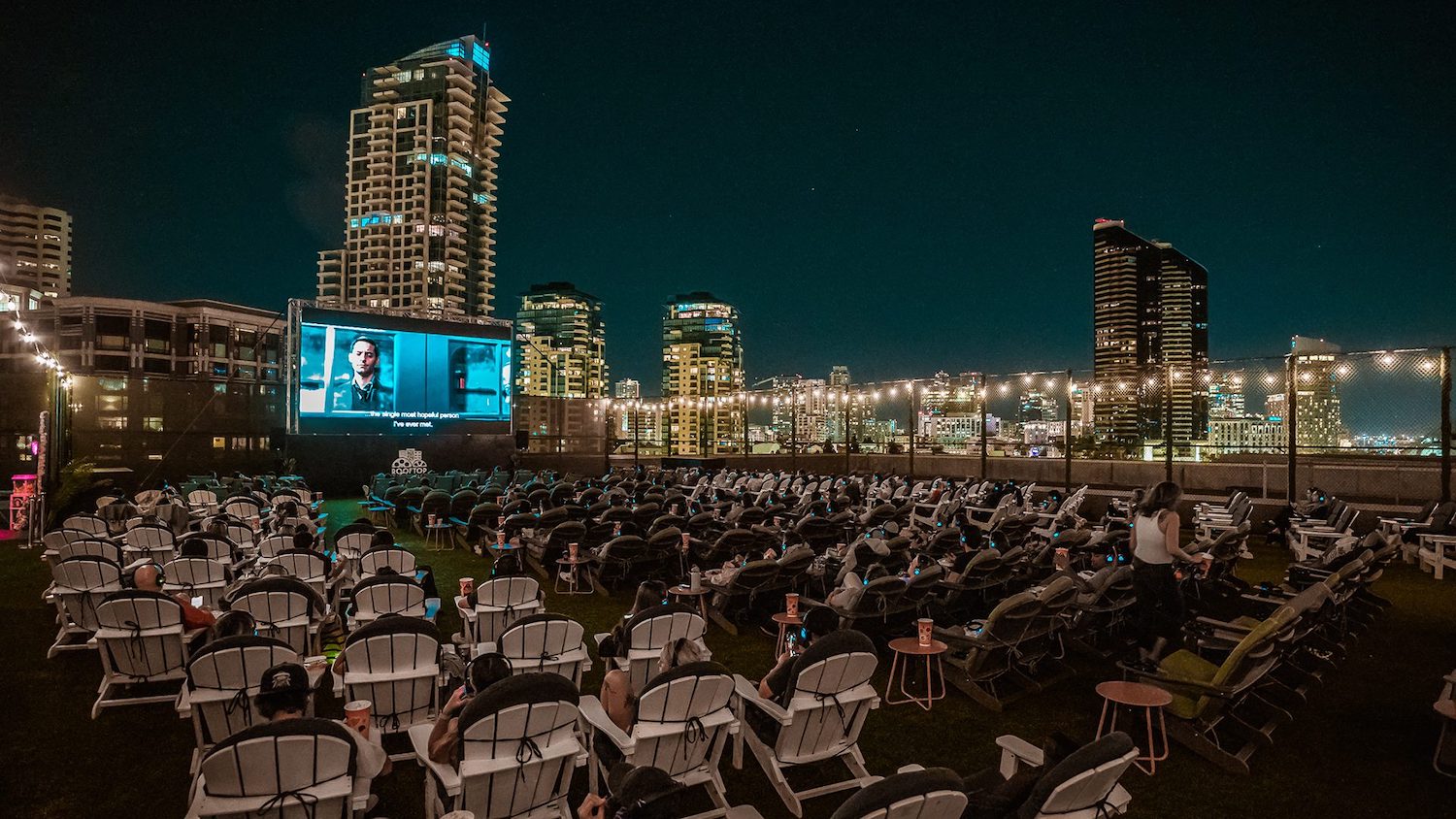
Spend your Thursday evening with Dunder Mifflin employees and superfans of The Office at the Rooftop Cinema Club Embarcadero. The Office: Holiday Party will run through the show’s iconic holiday party episodes: “Christmas Party,” “A Benihana Christmas – Parts 1 & 2,” and “Moroccan Christmas.” The screening at 6:30 p.m. is already sold out, but tickets ($33) for the 9:45 showing are still available. Your booking comes with a reserved loveseat; a heater; and a hot, seasonal, non-alcoholic beverage of your choice.
1 Market Place, Embarcadero
Beat the holiday stress with a free group yoga session this Saturday morning on the grass lawn of the Rady Shell at Jacobs Park. Instructor Viktoria Talbot of FIT Athletic leads the class from 9:30 to 10:30 a.m.. Anyone interested in attending can RSVP on Eventbrite.
222 Marina Park Way, Embarcadero
Ryan Hardison is a freelance arts and entertainment writer and recent graduate of San Diego State. When he's not staring at his laptop, he's likely eating an adobada burrito or getting sunburnt at the beach.

Jonathon Glus and Grant Oliphant discuss the emerging Art + Design District and the bigger ecosystem needed to support San Diego’s creative community
San Diego has beaches, sunshine, biotech, and enough stucco to wallpaper a small country. But what actually gives a city its personality? The artists, musicians, designers, dancers, galleries, theaters, museums, and all the other creative people making things that give a place its identity. That’s the question at the center of this special edition of the podcast, recorded as part of San Diego Magazine’s September arts and culture issue, created in collaboration with the Art + Design District and San Diego FC Playmakers.
Host Troy Johnson sits down with Jonathon Glus, former director of the City of San Diego’s Department of Cultural Affairs; and Grant Oliphant, president and CEO of the Prebys Foundation. Glus now serves as the Prebys Foundation’s senior art & design fellow in residence at the Downtown San Diego Partnership, where he’s helping develop the emerging Art + Design District around the Civic Center. Together, Glus and Oliphant bring two sides of the conversation to the table: what it takes to build the physical and cultural infrastructure for a creative city, and what role philanthropy, government, businesses, and artists themselves play in making that happen.
The conversation gets into San Diego’s recent fight over arts funding, the city’s cultural ecosystem, and why supporting artists means more than simply writing checks. They talk about the Art + Design District’s roots in city planning work dating back to 2016, the cultural institutions already clustered around the Civic Center, and examples from cities like Miami and Austin that used major cultural initiatives to help shape their identities.
And, naturally, Troy gets nostalgic about San Diego’s old jazz scene, including his best friend’s dad’s club, The Crossroads, and the unfortunate fate of a very valuable vinyl collection.
This summary was provided to you by AI. To hear from the humans, listen to this episode wherever you get your podcasts.
The in-demand sourdough treats from ultra-small batch, family-run microbakery are popping up more and more across San Diego
There’s a blink-and-you’ll-miss-it sign tacked on a utility pole on a residential street in La Mesa with one word scrawled across it: SOURDOUGH. Megan Loney has lived in the Academy Heights neighborhood all her life—in fact, her parents reside next door and she lives in the house she grew up in. Out of her kitchen, she runs Gemini Twins Bakery. But based on demand, she may need to start looking for space somewhere else.
“We already have, let’s see, one, two, three…” she counts the equipment around the room. “Six fridges in the house.” (One fridge even gets delivered in the middle of our conversation.) Of course, not all of them are for the bakery, she adds. Half are dedicated to fermentation, from pickling peppers to making kombucha.
Scientists have long touted the benefits of yeast and bacteria converting sugars as a way to improve digestion and overall gut health (among other benefits) for many years. Handmade, housebaked sourdough bread has particularly regained popularity after a dip in production during the commercial bread heyday of the mid-20th century, driven in part by at-home attempts during the pandemic. Loney began experimenting with her sourdough starter in 2019, hoping to improve her family’s nutrition and eating habits.
It didn’t click right away. “It took me a year to keep my starter alive,” she laughs. “I didn’t bake any bread until 2020.” Once she did manage to nurture her starter to life, she taught herself how to bake better versions of store-bought items. “Look at anything on a label in a store these days, and it’s terrifying!” she says. “I was like, ‘No, no, no, we can do this fresh.’”
Loney started selling loaves and baked goods to friends and family before officially launching Gemini Twins (named after her twins, naturally) in 2024, first appearing at La Mesa Oktoberfest. Now, you can pick up her products at the Lakeside farmers market on Thursday afternoons, the Sharp Grossmont farmers market every other Friday morning, Cardiff farmers market on Saturday mornings (although not as the main bread vendor), and the first and third Saturdays of every month in her driveway—just follow the sourdough signs.
Gemini Twins mainly sells sourdough loaves, both traditional and flavors like blueberry lemon basil (made with lemon basil, not lemon and basil) and Dilly Jack (dill, Monterey Jack cheese, and dried onion), plus cookies, cinnamon rolls, scones, and bagels. Loney makes her own in-house blend of fresh-milled whole grain wheat that she mills herself, along with Central Milling organic high-mountain bread flour, a blend of spring wheat and high protein winter wheat. Using organic is key, she says, to avoid negating the health benefits of fermentation with possible exposure to pesticides, herbicides, or other chemicals.
After leaving a steady job in construction to launch Gemini Twins, she’s determined to make it work by any means necessary—literally. When she was pregnant with her youngest child, she was baking up until and actually on the day she gave birth. “It’s a dedication for sure, but it’s one that I love,” she says. Launching a viable sourdough brand isn’t exactly the easiest business to get into—most farmers markets and small grocers already have an overabundance of products. But the chance to be her own boss, support her wife who’s currently going to school full-time (as well as their kids), work from home, and share her wares across San Diego? It’s worth it. “The most important part is that it’s family-based,” she says. “We’re just hoping to see it grow… there’s a pretty big horizon in front of us.”
Beth Demmon is an award-winning writer and podcaster whose work regularly appears in national outlets and San Diego Magazine. Her first book, The Beer Lover's Guide to Cider, is now available. Find out more on bethdemmon.com.
From food festivals and Fashion Week to hockey games and Oktoberfest, these are the best events to add to your calendar in October
It’s finally fall, and although it may not feel like it (our ceiling fans are this close to flying off their hinges), San Diego is ringing in the cozy season with a heap of fun events. Whether you’re wanting to find your new favorite outfit at Fashion Week, cheer at the Oceanside Shock’s home debut, or practice meditation at the Strength in the City Festival, these are the best things to do in October.
Concerts & Festivals | Theater & Art Exhibits | More Fun Things to Do

Go beyond the menu during the Taste of North Park, with over 50 food samples and 15 beverage stops, plus live music and art-driven programming to keep all the senses engaged.
Cross the Coronado Bridge—and bring your appetite—for A Taste of Coronado, an island-wide culinary jaunt in support of beloved businesses and the Promises2Kids nonprofit.

In the Roustabouts Theatre Co.’s newest comedy at Scripps Ranch Theatre, roommate beef has no age limit. In “Ripcord,” a feud between Abby and Marilyn escalates to absurd heights.
Pay it forward to local public schools with each pet adoption, purchased piece of art—from over 170 artists—and sip of wine, beer, or spirits at the free La Jolla Art & Wine Festival.
Those in search of creativity and community can find both at Other Places Art Fair South, a free showcase for independent artists and galleries at California Center for the Arts, Escondido.

Where can you play pickleball with celebs, sample local eats (including that place you’ve always been meaning to try), and take part in the scenic and delicious Grand Tasting at Surf Sports Park? There’s only one answer: the Del Mar Wine & Food Festival.
Sashay your way through the 19th annual Fashion Week San Diego, home to stunning runway couture, fall designer collections, and a trunk show—perfect for shopping for your new look.
Dance to Y2K throwbacks all weekend long during Ocean Beach Oktoberfest, which includes a beach party, a stein-holding competition, a brat-eating contest, and for VIP attendees, a custom “OB2K Oktoberfest” liter
mug.
First comes the sting, then comes the shock. San Diego County’s newest sports franchise, Oceanside Shock, will make its home debut in the Federal Prospects Hockey League versus the Fresno Falcons at Frontwave
Arena.
Working out is just one part of this Waterfront Park wellness experience. Practice meditation, play bingo, and recover with sauna zones during the Strength in the City Festival.
At the 25th annual Oceanside DÍa de los Muertos Festival, the Day of the Dead is alive and well. Walk through a chalk cemetery and Por Siempre Car Club’s decorative trunk altars during the free event.
Ryan Hardison is a freelance arts and entertainment writer and recent graduate of San Diego State. When he's not staring at his laptop, he's likely eating an adobada burrito or getting sunburnt at the beach.

The 29-year-old culinary director at Herb & Sea is making seafood sexy (and approachable) again
Implementing a farm-to-table model hardly deserves acknowledgement these days. It’s not a stretch. It’s not innovative. “It’s the bare f**king minimum,” says Herb & Sea‘s executive chef Aidan Owens.
When I arrive at the Encinitas restaurant, I’m ready to talk sustainability, farm-to-table stuff, with Owens. “Did you see the chin on that?” he says of the extra big jiggly chin on the sheephead that just arrived with the day’s fresh catch. I did. It was Jay Leno adjacent.
I learn quickly that he somehow oozes both charm and stone-cold honesty. Maybe he could construct a new dish with chin goo, like he did when he had a bunch of tuna scraps and voila’d it into a smooth and crowd-pleasing ‘nduja. “I want to know what’s in there,” he says.

The instinct to look closer, to dig into what others might discard, says a lot about the chef’s approach. I guide him back to our topic, but he has something else on his mind. “We’re overcomplicating food—what happened to just cooking good food and having fun with it?”
Owens grew up on a farm in Byron Bay, Australia, where sustainability wasn’t a concept you chat about so much as a way of life. Think dirt roads, backyard chickens, pulling vegetables straight from the ground, and a mother who believed that if you couldn’t pronounce the ingredients on a package, you shouldn’t eat what was inside.
Food wasn’t precious or performative. Making it was what you did because you were hungry and that’s still what inspires Owens today. “I like to cook good food because I like to eat good food,” he says.
His approach to sustainability at Herb & Sea began so naturally that it felt just like instinct. “I was just like, ‘Let’s order food from the people who live and work here,’” he says.

And why wouldn’t he when lives in San Diego? Cities all over the world vie for our goods. Our tuna is sent overseas. Our spiny lobsters hit dinner plates in China and Japan. Not to mention California’s producing a third of the country’s vegetables and three-quarters of its fruits and nuts.
“Why would we outsource when it’s all here?” Owens asks.
Sustainability, in this context, is about cooking what exists in abundance, nearby, right now. “I love the local fish here. It’s f**king delicious and San Diego citrus, I mean, it is so f**ing good,” he says.
Instead of importing ingredients, Owens also looks for nearby alternatives. “You can find really cool things in the local waters,” he says, pointing out that stingray cheeks taste similar to scallops.

Whatever he finds in that sheephead chin might just be the next substitute for marrow. But to make this work, it means getting diners amped up about the slightly unfamiliar.
Tasting menus, where diners are completely in his hands, become an opportunity to gently push boundaries. “I’ll serve mackerel, because people think they hate it,” Owens says, noting that the abundant local fish can have some fishiness. “But when it’s fresh, it’s arguably one of the best fish in the ocean.”
He also tweaks the language on the menu so people might feel more compelled to give dishes a try without preconceived notions. He might use “lengua” instead of “tongue.” “Whelk” instead of “snail.” When he puts “stingray throat” on the menu, he disarmingly calls it “skate.”
To reduce waste, scraps aren’t always discarded but rather turned into something new. Sometimes they’re smoked, cured or fermented. Apples going bad turn into apple ponzu. Lemons turn to marmalade, which stretches their usefulness far beyond peak season. “And it’s super tasty on our pizza,” he says.
What makes the food even richer, is the relationships he’s built with farmers. Though it didn’t always feel natural, Owens sought personal connection first. He recalls approaching a fisherman at the Tuna Harbor Dockside Market. “I was awkward,” he says. “I went up to him and said, ‘I like your fish.’”
Owen’s is now so close to his suppliers—like fishermen Ryan Sebo and Joe Daly—that he gets texted pictures of fresh catches right as they flop on the boat. The messages always ask if he wants first dibs. “I say yes to a lot of fish,” Owens says, noting that Herb & Sea can go through 2,000 pounds of seafood a week.

The next evolution of sustainability, in his view, will be chefs working directly with producers such as his alliance with Sebo, cutting out middlemen and purveyors where possible. “It will put more money in the pockets of the people doing the work,” he says.
It will mean that chefs can’t just know their local farmers and producers, but they’ll choose to work with the ones who have the best practices. Dining and sustainability will become much less about the final plate. “It will be more about the impact that plate has on the Earth,” he says.
Ultimately, he believes sustainability doesn’t need to be loud. It doesn’t need hashtags. It just needs to be honest.
“We aren’t saving lives. We’re feeding people good food,” he says.
And yet, in feeding people well—simply, thoughtfully, responsibly—something meaningful happens. Guests leave satisfied. Ingredients are respected. Local ecosystems are supported and food returns to what it has always been at its core: nourishment, pleasure, and a quiet reflection of the place it comes from.
No buzzwords required.
Chantal Partolan’s growing food business blends her Filipino and Chinese heritage with a creative, memory-driven approach to cooking
As a child, Chantal Partolan never considered cooking as a viable job route. Rather, it was a passion she could turn to as a way to flex her creative muscle, from the time she was in school all the way into adulthood working in a corporate space.
“I never felt like [cooking] was a chore, like some other people feel,” she says. To feed that passion, she started hosting supper clubs in 2022, creating menus and full tablescapes to bring together friends and family. With each successful gathering, she wondered: Could she take this further?
In 2024, she did. Officially launching as Bik-Lun, she began small, hosting baking pop-ups in Long Beach before moving back to her hometown of San Diego in 2025. Now, Partolan still mostly pops up at small local businesses like Moniker General and Joon Shoppe, but now also offers small batch catering and private chef services, all centered around her father’s Filipino and her mother’s Chinese heritages.

Bik-Lun (pronounced bik-LUHN, like “fun”) is named for her mother. “When she migrated to America when she was younger with all her siblings, they all got American names,” Partolan says. She doesn’t strictly adhere to rigid culinary rules—instead, she lets memories drive her creations.
“Now that my grandparents are no longer here, trying to revisit those memories and share them with others has been a really important part of this journey for me,” she explains. Ingredients like red bean and black sesame reflect her Chinese roots, while more savory items like sinigang (a sour and savory Filipino soup) pay homage to her father’s family.
Collaborating with other children of immigrants is another way she experiences flavors through a fresh lens. There are so many Filipino-run small businesses willing to share their own familial memories and inspiration, she says. “Hearing their experiences sometimes helps me recount my own.”

You can next catch Bik-Lun on September 27 at Home Ec + Best Bud with Magnaye (formerly One of One), October 3 at Patine’s new location in Bankers Hill, and October 10-11 at the Mingei Museum for Merkado Kultura, a makers market for Filipino producers. Partolan says since most customers are familiar with her sweet products, she’s planning to offer more savory items—like a breakfast sandwich—at the Home Ec event to give people a taste of her creative versatility.
Eventually, she hopes to add some permanent residencies to Bik-Lun’s schedule—a few are already in the works, so stay tuned—while also looking for ways to combine her food and photography expertise. (A cookbook? Maybe, she says.) But in the meantime, Partolan will remain curious about where she comes from—and how it can take her to where she’s going.

Listen Now: The Latest in San Diego’s Food and Drink Scene
Have breaking news, exciting scoops, or great stories about new San Diego restaurants or the city’s food scene? Send your pitches to [email protected].
Beth Demmon is an award-winning writer and podcaster whose work regularly appears in national outlets and San Diego Magazine. Her first book, The Beer Lover's Guide to Cider, is now available. Find out more on bethdemmon.com.
Through its Playmakers initiative, San Diego FC is working with artists, musicians, and other local creatives to shape the identity of the city’s newest professional sports team
What does a soccer team have to do with San Diego’s arts scene? Quite a lot, as it turns out. When San Diego FC launched, the club could have spent its marketing budget on billboards, bus wraps, and digital ads. Instead, it went into neighborhoods, found local artists and creatives, and started building the club’s identity with them. Through its Playmakers initiative, artists have designed limited-edition merchandise, had their work featured on the stadium’s jumbotron, and found themselves in front of thousands of fans—and, in some cases, a national TV audience.
For this special edition of the podcast, created alongside San Diego Magazine’s September arts and culture issue, host Troy Johnson talks with Sebastián Morúa, SDFC’s Senior Vice President of Brand & Innovation, and longtime San Diego native and creative Tony Martinez of Barrio Junto. The conversation gets into why a professional soccer club would make local art part of its business, how Martinez’s decades in San Diego’s creative community helped shape Playmakers, and the club’s early efforts to connect with artists across the county through its Chrome Ball Tour and neighborhood events. The goal, they explain, isn’t simply to put a local artist on a T-shirt. It’s to let the people who already understand San Diego help define what the new club looks and feels like.
The conversation also gets into the less glamorous—but important—side of supporting artists: money. They talk about how Playmakers pays local creatives, the value of the platform SDFC provides, and what it means to build an ongoing relationship between a professional sports club and the artists who help shape its identity. They also discuss the club’s growing music initiative, which will bring local musicians into the fold, and the many ways artists have already contributed to SDFC through merchandise, murals, Parks & Pitches projects, and more. Ultimately, it’s a conversation about soccer, art, community, and what can happen when a major sports franchise gives the people already making culture in San Diego a bigger platform.
This summary was provided to you by AI. To hear from the humans, listen to the podcast wherever you get your podcasts.
The 53rd Annual National Philanthropy Day Takes Place on November 21. Join us from 11:00 a.m. – 1:30 p.m. at the new Gaylord Pacific Resort & Convention Center!
Once yearly, AFP San Diego joins with others worldwide to celebrate National Philanthropy Day (NPD), a special day set aside to recognize the great contributions of donors and nonprofits that enrich of our community and the world. San Diego’s NPD is one of the largest and most successful in the U.S., attracting nearly 900 participants, including philanthropists, nonprofit leaders, CEOs, board members, development professionals, and business, community, and civic leaders.
Sponsorship proceeds from National Philanthropy Day are reinvested in education, training, scholarships, career development, and the advancement of fundraising professionals throughout San Diego. These resources and training provide fundraising professionals with the tools necessary to support our region’s diverse array of nonprofit organizations, which rely on charitable giving for close to half of their annual revenues.
The National Philanthropy Day Honorees are selected by the NPD Honorary Committee, a group of highly respected, diverse nonprofit and business leaders. Our 2025 Honorees include:
National Philanthropy Day San Diego provides an opportunity to reflect on the meaning of giving and to celebrate the selfless contributions of individuals and organizations across the region. We look forward to celebrating with you!
Sponsorship opportunities and individual tickets are available. Please visit www.afpsd.org for more information.