Featured articles
Food & Drink
Food & Drink
Food & Drink
Featured articles
Features
Features
Features
Featured articles
Things to Do
Everything SD
Everything SD
Featured articles
podcast-ep
podcast-ep
podcast-ep
Featured articles
Features
Features
Features
Featured articles
Food & Drink
Food & Drink
Features
Ready to know more about San Diego?
SubscribeReady to know more about San Diego?
After the rescue: the Kaufman family speaks
The Kaufmans’ journey on their sailboat, Rebel Heart, comes to an alarming and heartbreaking end, igniting a surge of media attention and fury at the rescue’s estimated $663,000 price tag and raising concerns for the safety of their young children. Charlotte Kaufman, mother of two, speaks publicly for the first time.
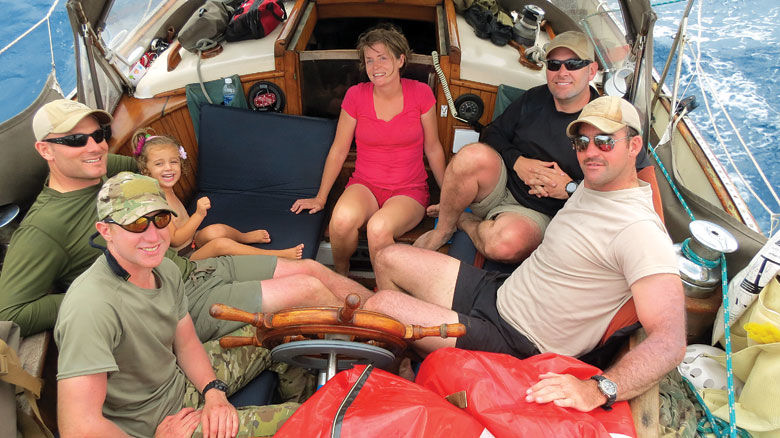
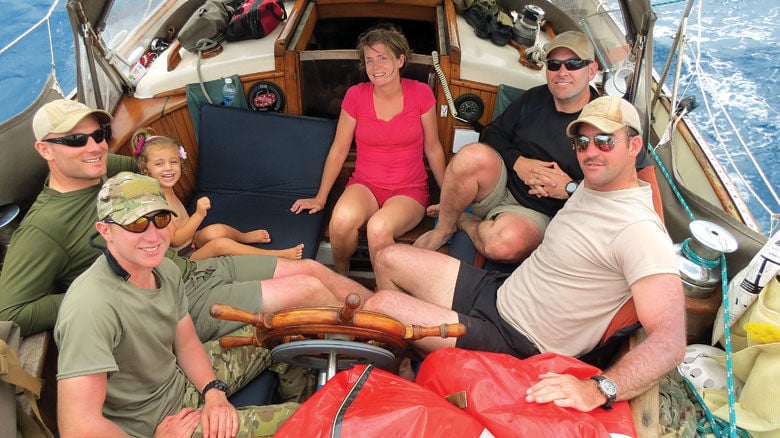
Charlotte and Cora Kaufman with parajumpers
Cora and Charlotte Kaufman in the cockpit of Rebel Heart with the four parajumpers of California’s Air National Guard 129th Rescue Wing.
We were 900 nautical miles off the coast of Mexico when we made the decision to push the EPIRB (an emergency beacon) on our sailboat, signaling for help. Put simply, our one-year-old daughter, Lyra, became sick while we were underway. Her condition continued to deteriorate, even on antibiotics, and we needed to get her help. Additionally, our boat suffered damage during several squalls in the Inter-Tropical Convergence Zone, leading to a complicated, culminating series of events requiring a rescue and the scuttling of our boat to prevent it from becoming a navigational hazard (scuttling is cutting holes in a boat to force it to sink).
While sitting on the boat, awaiting rescue, we never expected to be greeted by such a firestorm of criticism upon our arrival at home. Frankly, we can’t take any of the criticisms thrown at us seriously.
My husband Eric and I believe that traveling with our children will enrich their lives (and ours), give them a great advantage over their peers, and teach them life skills that many Americans who never travel and who can’t speak another language will ever know.
We believe in living without debt, in living with few material possessions, and in saving and planning studiously to have the kind of life that brings that type of freedom. To us, the experiences you accumulate in life are worth much more than what you own or what you can buy.
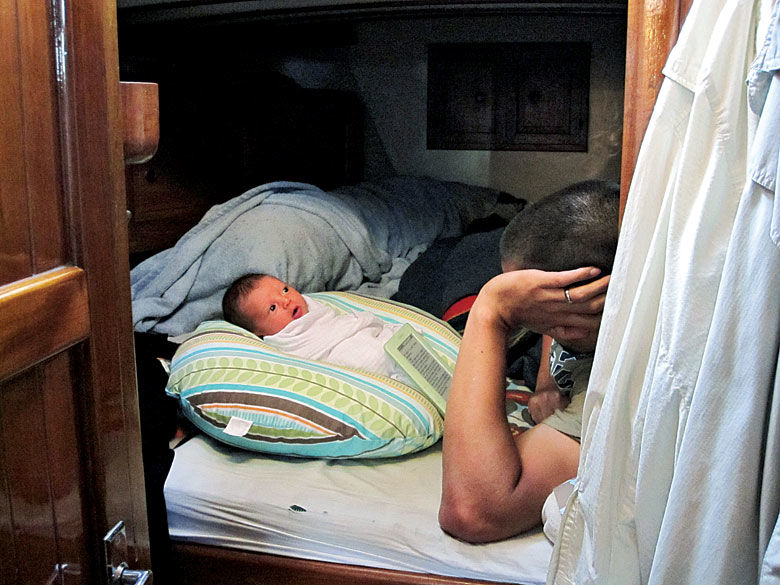
Eric Kaufman reading Thoreau to Cora
Eric Kaufman reading Thoreau to Cora, one week old, in the v-berth of Rebel Heart.
We believe that children who grow up with parents who are actively trying to achieve their dreams will be empowered and motivated to reach for their own life’s dreams in turn. Likewise, children who are “too young to remember” a voyage across the Pacific Ocean, like our daughter Lyra, will still benefit from living in a family that is meeting challenges and enriching its lives together. We had (and have) no desire to sit in stasis in the suburbs until our youngest child is approximately five or six years old, and then begin adventuring in the world. We have actively set up our lives to give us the ability to not live in the blasé, “safe” world of suburbia or Middle America. We understand real versus perceived risks and know that a life at sea is far less dangerous than a life with school shootings, car accidents, processed foods, and sedentary living.
Our children, like most boat kids, experience life as it has been lived for far longer than the reality of America’s current style of living. Kids on boats grow up around knowledgeable, competent adults who have to make serious decisions about life every day. They learn the accurate meaning of safety and caution, and become invested in these decisions much earlier than their peers. My three-year-old’s world has geography, geometry, algebra, and the natural sciences intertwined from morning until night. Our “poor” children don’t have a pet dog, a white picket fence, or a Strider Balance Bike; they also don’t have Nature Deficit Disorder. I’ll take a child who can talk to you about tidal flows, wave sets, and navigating by the stars any day over the alternative of discussions about Monster High dolls, TV shows, and the latest version of their iPads.
We believe that most people lead lives of quiet desperation, and we have vowed to not let our lives end up accordingly. We want to squeeze out every precious drop of our existence together, because tomorrow maybe I’ll die, or Eric will die, and where will we be then? We don’t believe in waiting for far-off “afters,” like after Eric gets a promotion, after Cora finishes kindergarten, after the girls graduate, or after we retire. No. Life is too short and too valuable to gamble on pushing your dreams off until later. We believe in going now, and doing it with gusto.
Lastly, we believe that despite everything, people are really good at heart. Coming back from a monumental event like having a sick child at sea and simultaneously losing your home is beyond world-changing; we have decided to ignore the bleating of some Internet commenters and instead focus on the humanity of the people who have supported us in our lifestyle choice, and in our careful decision to seek help when our daughter and our vessel needed it.
It is not easy to pursue a life at sea, or a life outside of the “box,” but it is worth it. If you are thinking of doing the same thing with your life,
I say do not hesitate for a (rebel) heartbeat.

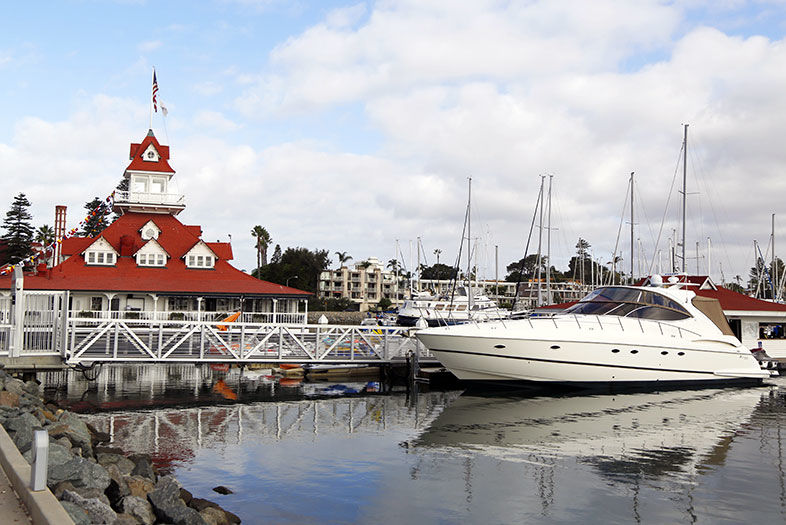
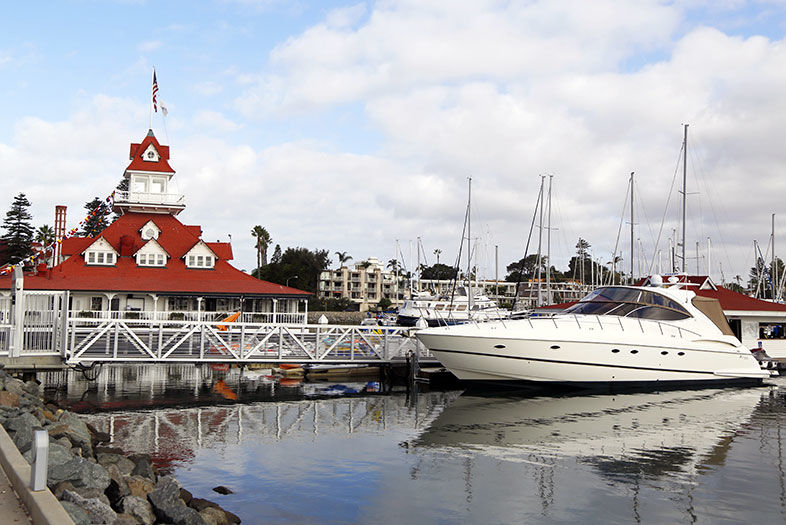
Leave the car at the marina and sail right up to San Diego's best waterfront eateries
When Juan Rodriguez Cabrillo sailed into San Diego Bay in 1542, he clearly realized this: It’s a lovely place to drop anchor and have a bite to eat. All these years later, it still is!
Arguably it’s even better now given that you can dock a boat steps from dozens of restaurants around San Diego Bay—and 60 if you include Mission Bay.
The point is this: Sunning yourself on the deck of a boat beats sweating in traffic. Throwing a line over a cleat beats scrapping for a parking spot. If you don’t have a boat, make a friend who does. Or take some of our other advice below, where you’ll also find everything you need to know about showing up dockside for a meal and sailing off into the sunset.
This page and this page have comprehensive listings of every eatery that boasts a dock for a parking lot, listed by area where you’ll be sailing, whether it’s the Bay, Coronado Island, Shelter Island, Mission Bay, South Bay, and so on. Many but not all restaurant docks are first-come, first-served, and prices vary; call the restaurant or marina ahead of time to find out.
Dock-and-dine options include notable spots like Bali Hai, Bluewater Boathouse Seafood Grill, Joe’s Crab Shack, Quarterdeck, Humphreys, Pizza Nova, and Island Prime. Too many to name them all. Pick your pleasure and cast off.
If you don’t have a boat, these are your best options:
The Best Places to Dock and Dine in San Diego (and How to Get There)
Bluewater Boathouse Seafood Grill
After the rescue: the Kaufman family speaks
The Kaufmans’ journey on their sailboat, Rebel Heart, comes to an alarming and heartbreaking end, igniting a surge of media attention and fury at the rescue’s estimated $663,000 price tag and raising concerns for the safety of their young children. Charlotte Kaufman, mother of two, speaks publicly for the first time.
Charlotte and Cora Kaufman with parajumpers
Cora and Charlotte Kaufman in the cockpit of Rebel Heart with the four parajumpers of California’s Air National Guard 129th Rescue Wing.
We were 900 nautical miles off the coast of Mexico when we made the decision to push the EPIRB (an emergency beacon) on our sailboat, signaling for help. Put simply, our one-year-old daughter, Lyra, became sick while we were underway. Her condition continued to deteriorate, even on antibiotics, and we needed to get her help. Additionally, our boat suffered damage during several squalls in the Inter-Tropical Convergence Zone, leading to a complicated, culminating series of events requiring a rescue and the scuttling of our boat to prevent it from becoming a navigational hazard (scuttling is cutting holes in a boat to force it to sink).
While sitting on the boat, awaiting rescue, we never expected to be greeted by such a firestorm of criticism upon our arrival at home. Frankly, we can’t take any of the criticisms thrown at us seriously.
My husband Eric and I believe that traveling with our children will enrich their lives (and ours), give them a great advantage over their peers, and teach them life skills that many Americans who never travel and who can’t speak another language will ever know.
We believe in living without debt, in living with few material possessions, and in saving and planning studiously to have the kind of life that brings that type of freedom. To us, the experiences you accumulate in life are worth much more than what you own or what you can buy.
Eric Kaufman reading Thoreau to Cora
Eric Kaufman reading Thoreau to Cora, one week old, in the v-berth of Rebel Heart.
We believe that children who grow up with parents who are actively trying to achieve their dreams will be empowered and motivated to reach for their own life’s dreams in turn. Likewise, children who are “too young to remember” a voyage across the Pacific Ocean, like our daughter Lyra, will still benefit from living in a family that is meeting challenges and enriching its lives together. We had (and have) no desire to sit in stasis in the suburbs until our youngest child is approximately five or six years old, and then begin adventuring in the world. We have actively set up our lives to give us the ability to not live in the blasé, “safe” world of suburbia or Middle America. We understand real versus perceived risks and know that a life at sea is far less dangerous than a life with school shootings, car accidents, processed foods, and sedentary living.
Our children, like most boat kids, experience life as it has been lived for far longer than the reality of America’s current style of living. Kids on boats grow up around knowledgeable, competent adults who have to make serious decisions about life every day. They learn the accurate meaning of safety and caution, and become invested in these decisions much earlier than their peers. My three-year-old’s world has geography, geometry, algebra, and the natural sciences intertwined from morning until night. Our “poor” children don’t have a pet dog, a white picket fence, or a Strider Balance Bike; they also don’t have Nature Deficit Disorder. I’ll take a child who can talk to you about tidal flows, wave sets, and navigating by the stars any day over the alternative of discussions about Monster High dolls, TV shows, and the latest version of their iPads.
We believe that most people lead lives of quiet desperation, and we have vowed to not let our lives end up accordingly. We want to squeeze out every precious drop of our existence together, because tomorrow maybe I’ll die, or Eric will die, and where will we be then? We don’t believe in waiting for far-off “afters,” like after Eric gets a promotion, after Cora finishes kindergarten, after the girls graduate, or after we retire. No. Life is too short and too valuable to gamble on pushing your dreams off until later. We believe in going now, and doing it with gusto.
Lastly, we believe that despite everything, people are really good at heart. Coming back from a monumental event like having a sick child at sea and simultaneously losing your home is beyond world-changing; we have decided to ignore the bleating of some Internet commenters and instead focus on the humanity of the people who have supported us in our lifestyle choice, and in our careful decision to seek help when our daughter and our vessel needed it.
It is not easy to pursue a life at sea, or a life outside of the “box,” but it is worth it. If you are thinking of doing the same thing with your life,
I say do not hesitate for a (rebel) heartbeat.
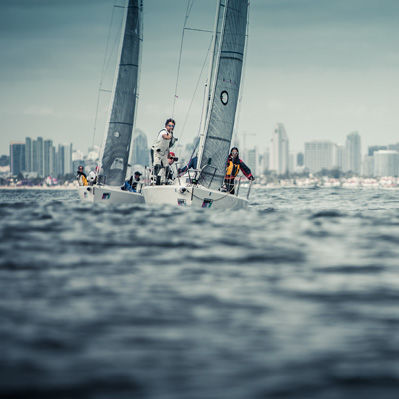
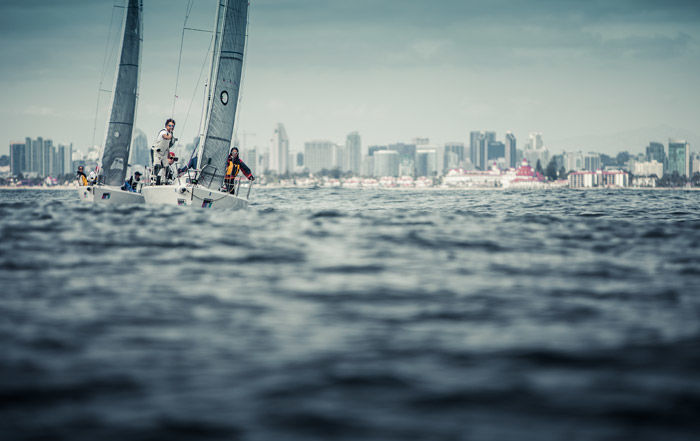
Southwest of Coronado Island
Submit your best San Diego shots
to [email protected].
March 6, 2012 2:47 p.m.
Location: Southwest of Coronado Island
Camera: Canon 5d mkii using the 70-200 f/2.8L @ 200mm and f/2.8
“Sailing is not in the mainstream—and that’s something that interests me,” says John Trice, a commercial photographer and University Heights resident. “That, and my wife used to be a sailing instructor.” During the National Offshore One-Design Series in 2012, the San Diego Yacht Club invited Trice to shoot the regatta (happening again this month, March 14–16). For this shot, he was on one of the chase boats, right next to one of the marks the boats have to round. “With such a long focal length (200mm) and a wide open aperture (f2.8), the entire frame gets super compressed,” says Trice. “So anything in the immediate foreground gets really blurry. In this shot there was a swell between me and the J80 and so it almost looks like I’m below the surface of the water.” The result: We can feel the intensity of the race.
Swell photo southwest of Coronado Island
John Trice
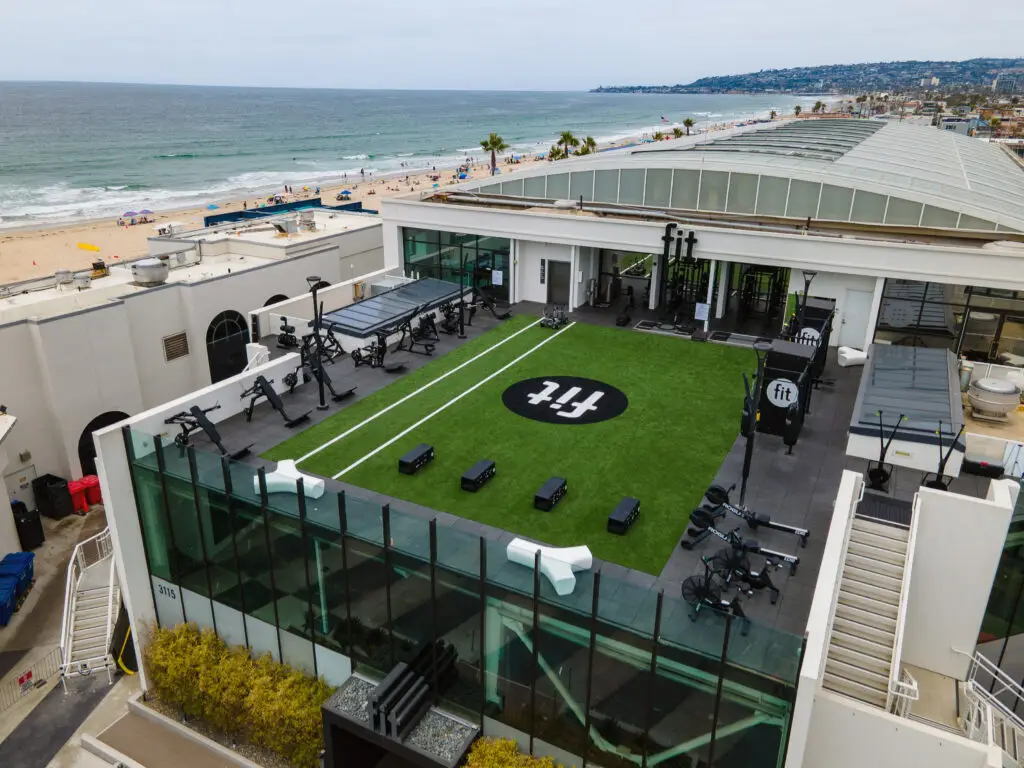
Earlier this year, Fit quietly dropped "athletic" from its brand, from Fit Athletic Clubs to simply Fit, and started calling itself something new: a social wellness club.
There’s a version of San Diego that lives in two extremes. On one side, the 5 a.m. crowd: biohackers, marathoners, people who’ve already logged a cold plunge before your alarm goes off. On the other, the after-dark crowd, the ones chasing sunset happy hours and late dinners with friends. Everyone seems to be either optimizing or unwinding, and most of us feel like we’re failing at both.
Fit, San Diego’s reigning Best Gym for the third year running, has built its entire identity around erasing that divide.
Walk into one of Fit’s three San Diego locations on a Tuesday afternoon and the lines blur fast. Someone’s mid-set on the squat rack. Someone else has a laptop open at a café table a few feet away, half-working, half-people-watching. A group is trading plans for the weekend’s event by the recovery lounge. Nobody’s in a rush to leave.
“We’re not competing for the same people,” says Emily Waybright, Public Relations Manager at Fit, addressing the arrival of a national luxury gym chain in San Diego this year. “We don’t really feel like we’re in the gym category. It’s this unique thing.”
That unique thing has a name now. Earlier this year, Fit quietly dropped “athletic” from its brand, from Fit Athletic Clubs to simply Fit, and started calling itself something new: a social wellness club.
It’s a small wording change with a bigger idea behind it. Fit was never built around escaping the workday. It was built around the people who genuinely like what they do, and who want workouts, work, and friendships to happen in the same place instead of three separate ones. Because sometimes red light therapy with a stranger turns into weekend plans.
Fit’s philosophy traces back to its founder, who started the brand nearly two decades ago after failing to find a gym he actually wanted to belong to. He looked instead to the old-school country club, where people came for a shared interest and stayed for the community. His version was made for a younger generation, minus the golf, plus the loud music.
Which makes it a little ironic that the very award putting Fit back in the spotlight this year is Best Gym.
What does the best traditional gym look like when the definition of a gym is becoming less traditional? It’s a fair question, and Fit’s answer is that the fitness industry itself is shifting. The 45-minutes-in, 45-minutes-out model is giving way to something closer to a genuine third space, the kind of role the office and the bar used to play before remote work and changing nightlife habits rearranged how people spend their time
For Fit, community isn’t a marketing add-on to fitness. It’s the through-line. Members aren’t just paying for a treadmill; they’re paying for an entire day of social wellness that’s built on performance, recovery, connection, and a plan for the next event on the calendar. That’s a much harder membership to walk away from.
Ambition and ease aren’t opposites here, they exist side by side, where passion and play share the same morning. On September 12, Fit is hosting Sol, a full day wellness festival at Fit Social. The morning focuses on wellness classes and vendors and then the evening is a full party with multiple DJ sets and an open bar. Think of it as a kick-off to locals’ summer in San Diego.
Ready to see what a social wellness club actually looks like? Visit fitclubs.com, or follow along at @thefitclubs on Instagram.
Southwest of Coronado Island
Submit your best San Diego shots
to [email protected].
March 6, 2012 2:47 p.m.
Location: Southwest of Coronado Island
Camera: Canon 5d mkii using the 70-200 f/2.8L @ 200mm and f/2.8
“Sailing is not in the mainstream—and that’s something that interests me,” says John Trice, a commercial photographer and University Heights resident. “That, and my wife used to be a sailing instructor.” During the National Offshore One-Design Series in 2012, the San Diego Yacht Club invited Trice to shoot the regatta (happening again this month, March 14–16). For this shot, he was on one of the chase boats, right next to one of the marks the boats have to round. “With such a long focal length (200mm) and a wide open aperture (f2.8), the entire frame gets super compressed,” says Trice. “So anything in the immediate foreground gets really blurry. In this shot there was a swell between me and the J80 and so it almost looks like I’m below the surface of the water.” The result: We can feel the intensity of the race.
Swell photo southwest of Coronado Island
John Trice
Three San Diego youth sailors and their teammates might be the last best hope for the future of the America's Cup
John Driscoll’s boat
John Driscoll’s boat named Chimaera
Heard about the troubles plaguing this year’s America’s Cup? Well, three San Diego youth sailors and their team are part of a bright spot in what is shaping up to be a tough year for the oldest active trophy in sports. Larry Ellison’s over-the-top design of the official America’s Cup vessels has a disastrous safety record and a $10 million price tag, which didn’t do much to attract competitors to build and bring them to San Francisco to compete. Only three teams are racing, which isn’t helping bring out crowds. Louis Vuitton asked for a partial refund of its $10 million sponsorship.
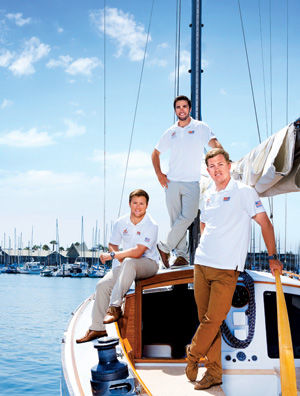
But Ellison did at least one thing right this year: He greenlit a youth competition leading up to the main race for the first time in the sport’s history. The Red Bull Youth America’s Cup boasts much more of the traditional spirit of the regatta. Nine teams on the water at the same time (a “fleet race”), racing the same exact boats, real America’s Cup 45-foot catamarans (smaller than the 72s raced in the main race). The idea is that the best sailors, not the best boats, win. With so many boats flying across the bay, the tension and potential for close calls should be palpable. Three San Diego natives are headlining the American team (Jake LaDow, Jake Reynolds, and Nevin Snow, all San Diego Yacht Clubbers currently in college), racing against teams from nine other countries. The program is to be an international feeder for the sport, attracting and training the best young sailors in the world. The teams had to do their own fundraising and compete for a bid to this first-ever Youth Cup. “We’ve been sailing together since we were seven and eight years old, and have been best friends since,” says LaDow. “It’s definitely an exciting and special opportunity that we have been given.”
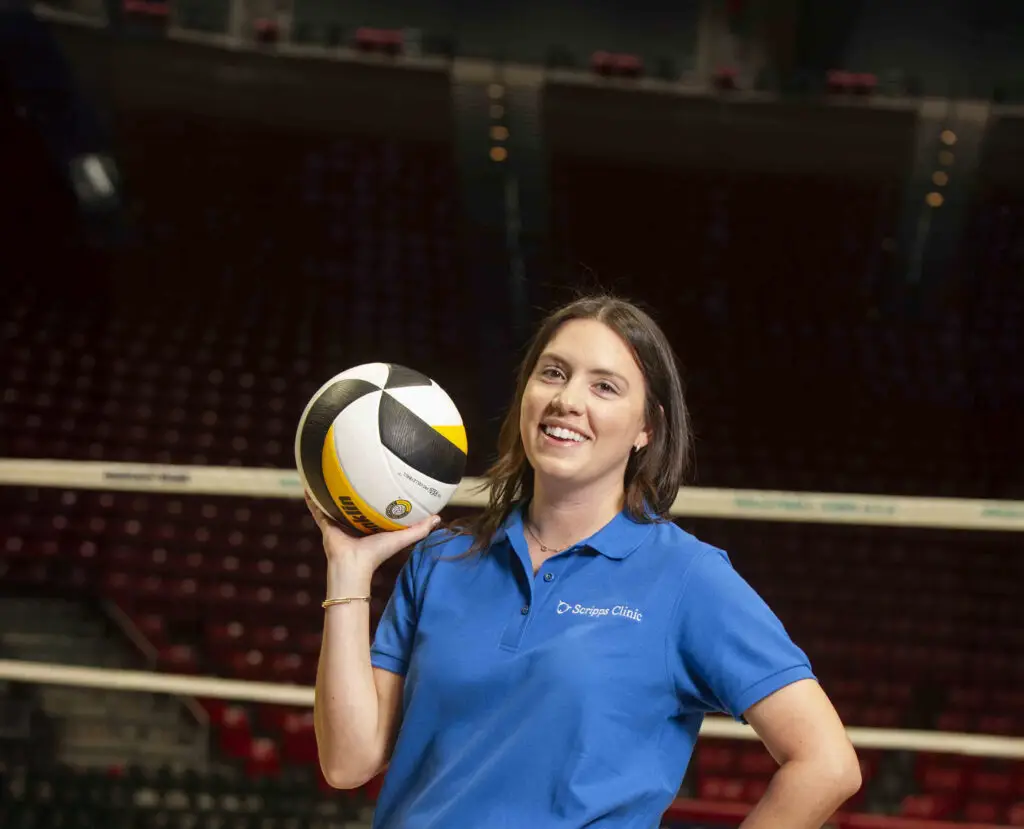
Laika Nur, MD, takes her love of volleyball from the court to the clinic as team physician for the San Diego Mojo
Growing up, Laika Nur, MD, Scripps Clinic sports medicine specialist, loved watching beach volleyball when the Association of Volleyball Professionals tour came to her hometown of Chicago. A talented volleyball player herself, she remembers sitting in the stands all day, and once, even got a couple autographs. Years later, Dr. Nur was attending a professional event focused on women’s sports, and the discussion turned to a new professional women’s volleyball league. The general manager and coaching staff for San Diego’s team, the Mojo, happened to be in attendance, and Dr. Nur took the opportunity to ask them if they needed a team doctor. Flash forward to the Mojo’s inaugural 2024 season, when Dr. Nur officially became the team physician. Click here to read more about Dr. Nur and how she incorporates lessons she learned on the court into her practice.
For more nutrition, wellness, and healthy living tips, sign up for the San Diego Health newsletter here.