Featured articles
Food & Drink
Food & Drink
Food & Drink
Featured articles
Everything SD
Everything SD
Everything SD
Featured articles
Things to Do
Things to Do
Things to Do
Featured articles
podcast-ep
podcast-ep
video
Featured articles
Everything SD
Everything SD
Everything SD
Featured articles
Partner content
Partner content
Partner content
Ready to know more about San Diego?
SubscribeReady to know more about San Diego?
It’s no secret that cats get a bad rap, and catfishing is certainly no exception to the rule, especially in dating.
Catfish Story
It’s no secret that cats get a bad rap, and catfishing is certainly no exception to the rule, especially in dating. If you haven’t been a victim of it, you’re truly one of the lucky ones.
For those who’ve been catfishing victims, you know what I’m about to explain. For those unfamiliar with catfishing, listen up because not only am I going to help you identify when it’s happening, but I’m going to give you some tips on how to avoid falling prey.
But first, let’s begin with a discussion of what catfishing is.
Catfishing is an online scam where the catfisher pretends to be someone they’re not. The catfisher then zeroes in on their target, usually with the intention of getting that target to fall in love with them so they can ask for money. It should be noted that there can be other reasons for catfishing, discussed below.
Catfishers lure their prey through various means that generally build over time. The deception can involve sending online messages or texts as well as images of individuals they pretend are them. Depending on the catfisher’s style, there may also be emails, letters, and phone calls.
Once the catfisher gains their target’s trust, they’ll move in for what they’re really after, which isn’t love. They’ll often say they need “help” to accomplish some type of task, such as meeting their target in person. Depending on the catfisher’s goal, this in-person meeting will likely never occur.
With financial catfishing, once the target sends the payment the catfisher requested, the promise of a visit goes unfulfilled. At that time, either the catfisher disappears or comes up with further excuses about why they need more money to accomplish their goal. This can go on for as long as the target stays hooked.
The reasons for catfishing vary, and you’ll likely never know why someone was motivated to do it in the first place. A common reason for catfishing is money. Other reasons people catfish are to stalk or harass their target, cyberbully them, have the target perform illegal acts on the catfisher’s behalf, sexually abuse the target, and for the purposes of obtaining information from the target. Yet another is loneliness.
Sometimes there is more than one reason for catfishing, as revealed in the recent Netflix documentary, “Untold: The Girlfriend Who Didn’t Exist.” The two-hour documentary details the story of Hawaiin-born Notre Dame football player Manti Te’o, who was catfished online.
A rising football star who appeared both intelligent and kind, he demonstrated how easy it is to become the victim of catfishing. Not to mention the damage it can cause, which can be far-reaching and long-lasting.
Fortunately, a catfisher often exhibits certain signs that they may not be on the up and up. The most common of them are:
They have no online presence or one that is very limited. (A caveat: some catfishers are skilled at creating what appears to be a well-developed social media presence.)
When pressed, they decline any interactions, such as FaceTime or in-person meetings.
Their profile was created very recently. (They may have numerous posts within a short period of time to make the profile appear older than it is, so always look at the dates of the posts).
The pictures appear to be professional or stock photos. Or something about the photos makes you suspect the images may have been stolen. (Tip: If you’re suspicious, try doing an image search.)
The person asks you for money (or some other favor, including explicit photos) fairly quickly.
Your gut tells you something isn’t quite right.
Unfortunately, it’s pretty difficult to avoid attempts from catfishers altogether, even if you keep your social media accounts private and are protective of your personal information. People who catfish can be pretty crafty and persistent when they want something.
Your intuition is your best friend, so be sure to listen to them if they’re whispering in your ear that something smells fishy about an interaction online.
Don’t honor the catfisher’s request; don’t send money, photos, or anything else the catfisher requests, including personal information.
Block the suspicious account.
Report the suspicious account to the platform it came from.
If you’ve already been a victim of catfishing and have, for example, sent money to an individual you now realize catfished you:
Block the suspicious account.
Report the suspicious account to the platform it came from.
Contact law enforcement or file a complaint with the FBI’s Internet Crime Complaint Center.
According to recent data, as of January 2022, in the U.S. alone, 13% of those surveyed said they had “definitely believed they had interacted with a catfish online.” Seventeen percent said they “probably” did.
In the U.S., other data reveals that the average catfishing victim lost more than $15,000. Equally as disturbing, catfishing costs victims more than $187 million yearly.
The bottom line? Catfishing is a major problem that doesn’t appear to be going away anytime soon. But with enough attention, you can help prevent yourself from becoming a statistic. If you have any questions about your interactions online, I can help. Call me today.
Cassie Keim
CEO and Founder of Innovative Match
415-259-8714
https://www.innovative-match.com/

.
Behind every beautiful space is a thoughtful process, and ASID San Diego is helping homeowners understand the value of professional design.
A perfectly designed home rarely happens by accident. Those kitchens that feel effortless and rooms that seem to tell a story the second you walk in? They’re usually the work of someone who knows exactly what they’re doing.
It’s knowing which ideas will actually work, which materials will hold up over time, and how to turn a collection of choices into a space that feels intentional. That’s where a professional interior designer comes in.
For the American Society of Interior Designers (ASID) California San Diego Chapter, the goal is to help people see interior design as more than just the finished look. Behind every well-designed space is a process built on technical expertise. Designers are educated in everything from professional software and construction details to building codes, space planning, materials, and functionality.

“People don’t always realize how much goes on behind the scenes,” Kirsten Recce , current president of the ASID California San Diego Chapter, says. “Our designers are not just doing furniture placement and color selection and picking out new fluffy pillows. That’s not what they’re trained for.”
ASID members bring formal education, continued learning, and industry knowledge to their projects, helping create spaces that are not only beautiful, but designed to work. A paint color that changes completely depending on the lighting. A material that looks beautiful in a showroom but doesn’t make sense for everyday life. A layout that photographs well but doesn’t function for the people living there. These are the details where professional guidance can make all the difference.
Still, one of the biggest misconceptions about hiring an interior designer is that it’s reserved for massive renovations, luxury homes, or people who already know exactly what they want. The process can feel intimidating. Where do you begin? Is a designer worth the investment? What if you only need help with one room?
ASID’s answer: start with one hour.
ASID’s Spruce Up events break down one of the biggest barriers between homeowners and professional design: knowing where to begin. Held twice a year, the community program gives homeowners the chance to work directly with an ASID designer through a one-hour, $125 consultation in their own home. Whether you’re looking for advice on furniture placement, window treatments, kitchen and bath updates, remodeling ideas, vacation rentals, color selections or something else entirely, the upcoming September 2026 event offers an approachable way to get expert guidance before committing to a full project. Signups are open through Sept. 7, with consultations taking place Sept. 21 through Oct. 31. Proceeds benefit ASID San Diego’s educational and community programs. Register here!

“It’s a great opportunity for people who are in that exploratory phase,” Recce says. “Maybe they’re not sure they want to hire an interior designer yet, or they think it sounds daunting or expensive. This gives them a chance to discover what working with a designer is actually like.”
Design is personal. A good designer isn’t just creating a beautiful room; they’re helping create a space that fits the way someone lives.
“We’re a resource to all of San Diego County,” Recce says. “It doesn’t cost anything to pick up the phone and call and ask. We’ll answer.”
Follow ASID San Diego on Instagram, LinkedIn, and Facebook for updates on upcoming events, or connect with the chapter directly at [email protected] or 619-548-8847.
A new program guides new moms through high-risk pregnancy and into the “fourth trimester”
Mai Vue was just 34 weeks pregnant when she delivered her baby. Her pregnancy had been complicated, and she’d had a recent second trimester pregnancy loss, which led to her receiving specialized care from Sean Daneshmand, MD, a Scripps Clinic perinatologist who oversees high-risk pregnancies. Dr. Daneshmand and his team took care of Mai during her pregnancy, through the birth of her healthy baby girl and beyond. Mai was part of a program Scripps launched to provide support to new moms in the weeks and months after delivery. The postpartum program, known as Scripps Health’s Fourth Trimester Continuum of Care, provides care for women with high-risk pregnancies to optimize their health after childbirth and reduce the risk of complications in future pregnancies. Click here to learn more.
For more nutrition, wellness, and healthy living tips, sign up for the San Diego Health newsletter here.
Scripps Clinic’s Mohs surgery center is one of the most sophisticated in the country.
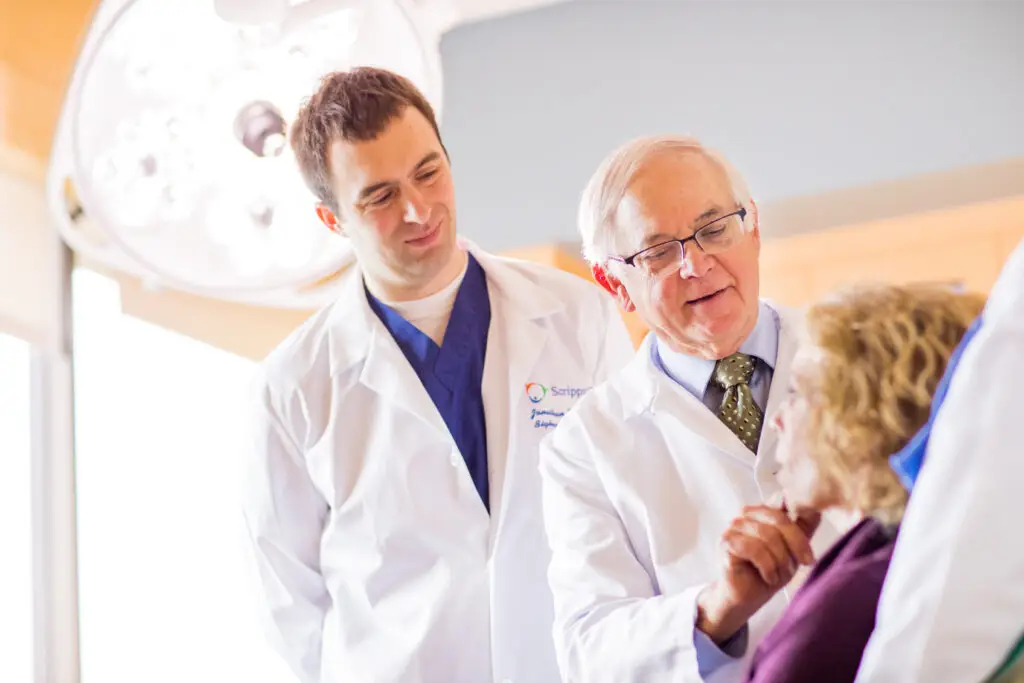
It’s estimated that one in five people in the U.S. will develop skin cancer at some point in their lives. When you factor in living in a sun-soaked city like San Diego and the outdoorsy lifestyle that comes with it, that figure can jump to as high as one in three, which makes early detection and intervention all the more important. Dermatologists at Bighorn Mohs and Dermatology Center are using innovative imaging methods and advanced surgical techniques to diagnose and treat skin cancer. For certain cancers in sensitive spots, like the face, dermatologists perform Mohs surgery, removing skin tissue layer by layer until reaching healthy, cancer-free tissue. They also use a process called immunohistochemistry to view tissue samples taken during Mohs surgery in far greater detail than previous methods. Read more about how Scripps is advancing skin cancer care here.
For more nutrition, wellness, and healthy living tips, sign up for the San Diego Health newsletter here.
Scripps Cancer Center helps an endurance athlete overcome his greatest challenge yet and get back in the race
When endurance athlete Isaac Sanchez learned he had cancer, he felt blindsided. He was healthy, surfed often and was training for an Ironman triathlon. But he had to put that on hold to undergo treatment. His physicians at Scripps Cancer Center developed a plan to treat the cancer in his tonsil and lymph nodes that included six-and-a-half weeks of near-daily radiation and weekly chemotherapy. He also worked with a Scripps Cancer Center dietitian to enhance his nutrition to promote strength and healing. Today, Isaac’s back to doing what he loves. Read more of his story here.
For more nutrition, wellness, and healthy living tips, sign up for the San Diego Health newsletter here.
Scripps study shows that some patients may be able to taper their dose and maintain results
While glucagon-like peptide-1 (GLP-1) receptor agents have been used to treat Type 2 diabetes for more than 20 years, their recent emergence as weight-loss wonder drugs marked a new frontier in medicine. But their effectiveness has left some patients wondering what to do once they’ve reached their goal. Stopping the medication could mean regaining some, if not all, of the weight. A Scripps Clinic internal medicine physician recently conducted a small study of whether GLP-1 patients who had reached their goal weight could maintain that weight by taking their regularly prescribed injection every other week instead of weekly. Spoiler alert: 30 of 34 patients did. Read more about the study here and what that may mean as pharmaceutical companies roll out oral GLP-1s.
For more nutrition, wellness, and healthy living tips, sign up for the San Diego Health newsletter here.
Innovative treatment could offer cancer patients new options with fewer side effects
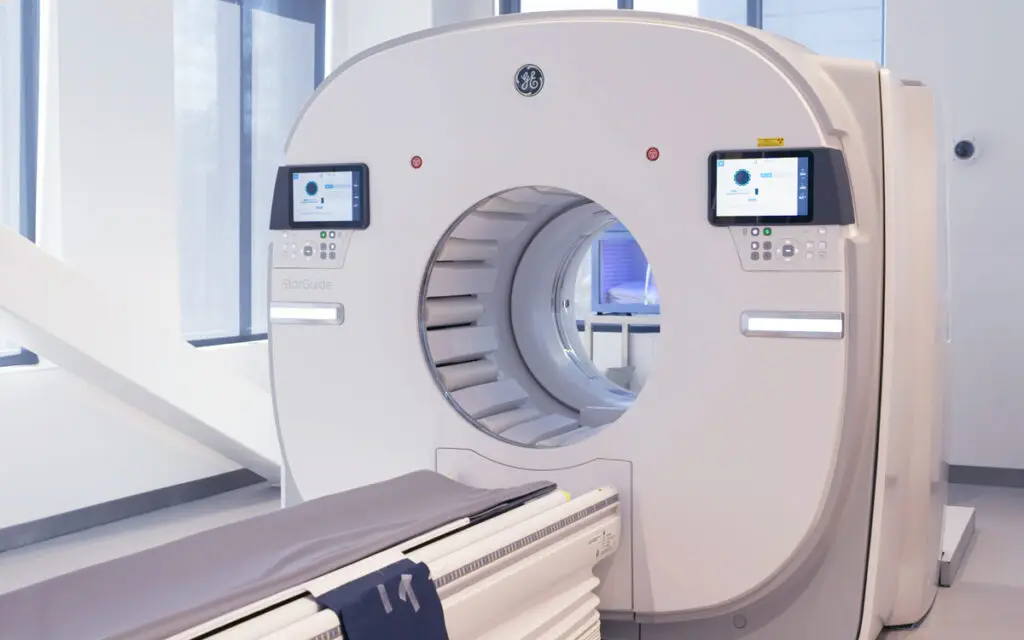
Chemotherapy and radiation have long been considered gold standards of cancer treatment, but they can cause severe side effects. A promising new approach called theranostics—a combination of “therapeutics” and “diagnostics”—could offer patients with certain types of metastatic cancers new hope. It’s a two-step process that uses a drug that binds to specific receptors on cancer cells. Advanced imaging detects this radioisotope, allowing doctors to then use a second radioisotope that binds to the cancer cells and destroys them. Click here to learn more about how specialists at Scripps Cancer Center are using theranostics.
For more nutrition, wellness, and healthy living tips, sign up for the San Diego Health newsletter here.