

Food & Drink
Where To Get Thanksgiving Dinner in San Diego, 2026
Read article

Featured articles

Food & Drink

Food & Drink

Food & Drink
Featured articles
Everything SD
Everything SD
Features
Featured articles
Food & Drink
Things to Do
Things to Do
Featured articles
podcast-ep
podcast-ep
podcast-ep
Featured articles
Features
Features
Everything SD
Featured articles

Partner content
Partner content
Food & Drink

It grew from an industrial corridor into a thriving Pan Asian district, and now it's redefining what a neighborhood can be
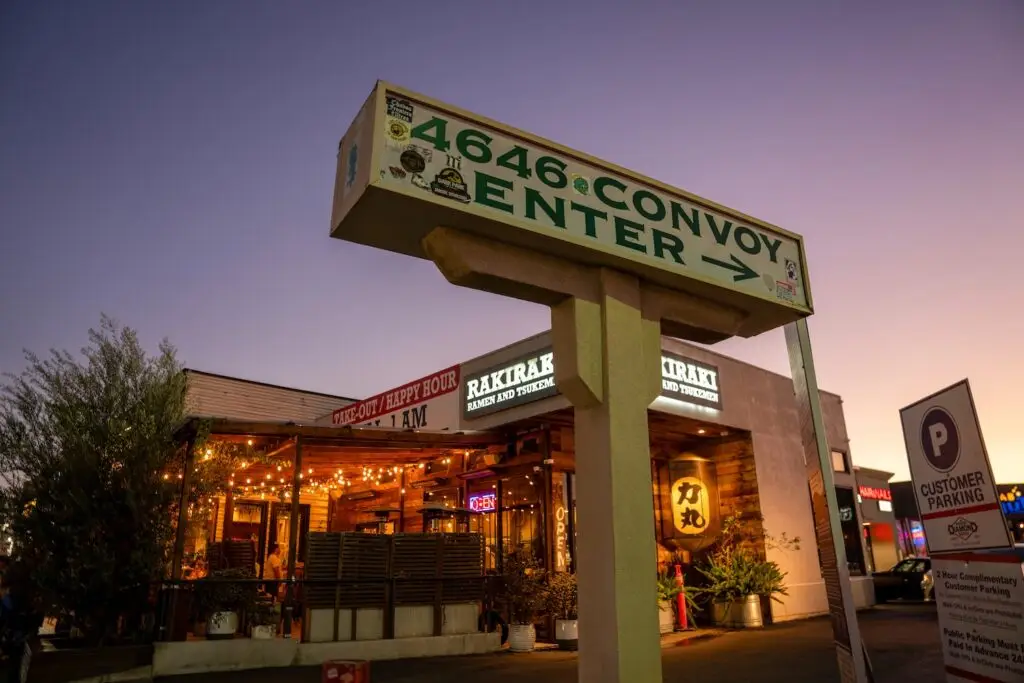
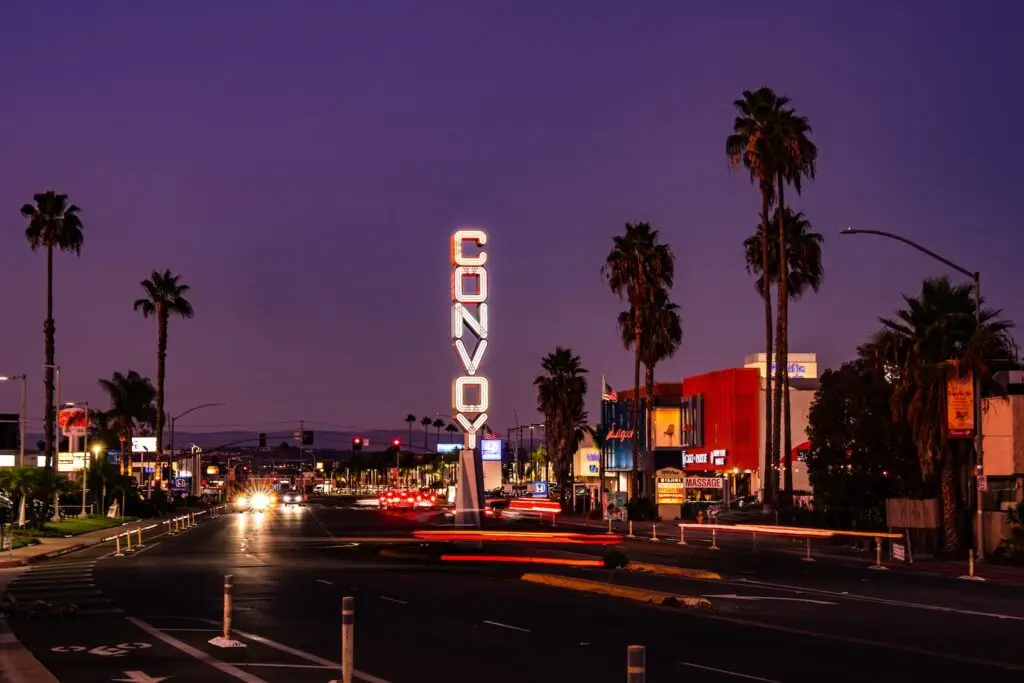
Marinated beef sizzles on hot stones, large pots of tonkotsu broth simmer on stovetops, and thin-sliced strips of al pastor brown on a rotating spit—a trompo—in the kitchens of a plaza on Convoy Street in Kearny Mesa.
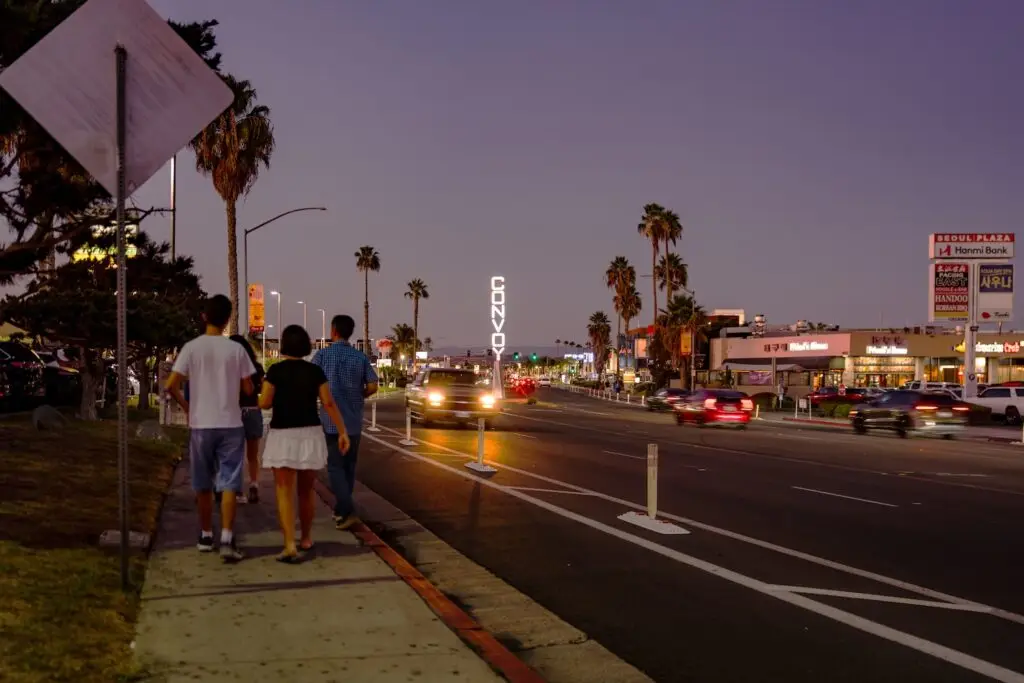
On a temperate Saturday night in mid-September, the intoxicating aroma mingles with car exhaust fumes. Sedans circle the strip’s stuffed parking lot. Each driver is poised to slide into the first spot that opens.
“You can find everything in Convoy,” says Jason Paguio, CEO of the Asian Business Association of San Diego (ABASD), “except for parking.” Over the past 20 years, the Pan-Asian cultural district—wedged between three of San Diego’s major highways: the 805, the 52, and the 163—has evolved from an IYKYK open secret into an unignorable foodie destination. Hungry customers flood in for conveyor belt sushi, Korean BBQ, and hot pot. The parking lots can’t fit all of their cars.
The City has big ideas to change that. In 2020, City Council adopted the Kearny Mesa Community Plan, envisioning roughly 27,000 homes and 62,000 residents by 2050, up from the 5,400 homes and 11,500 residents reported in 2025. The plan designates three mixed-use, walkable “villages,” including the Convoy Corridor, which will hopefully emulate Little Italy. That means shaded sidewalks, mid-block paseos through long “superblocks,” pocket parks, protected bike lanes, and a community shuttle loop, so thousands of people could live, work, and eat there without stepping into a car.
But that’s 2050. Today, Convoy is stranded between the car-dominated economy of yesterday and the green future of tomorrow. The stakes are climbing as developers bet big that people won’t just shop and eat in Convoy, but live and sleep there, too. Can Convoy become a neighborhood without losing what made it worth the drive?
Convoy’s diners come for the food, but they come back for the relationships. “You can go into most of the businesses here and still find either the owner or a family member of the owner working behind the counter,” says Sandy Vuong Tobin, who runs Dumpling Inn & Shanghai Saloon with her family.
Structural engineer-turned-developer Frank Wong helped define Convoy’s early culture. Frank and his brother-in-law and business partner, Stanley Wong, developed and rented properties, mostly to other immigrants. In 1979, Frank partnered with Jennings Hom to bring Woo Chee Chong, a Chinese grocery established in 1899, to Convoy Street.
“We value family relationships above all,” says Stanley. “I think this is one of the main factors that helped us band together.”
Lillian Chu practically grew up next to the Woo Chee Chong building, now occupied by Dumpling Inn. Her father, Peter Chu, opened his immigration law office next door in the mid-’80s. “Uncle Frank was probably like, ‘Come move your office over here, I’m gonna give you a break on the rent,’” she recalls.
It works because the businesses fit together. Cris Liang keeps just two desserts on the menu at Common Theory, his Mexican-Asian fusion restaurant and craft beer hall, so he can send customers to the sweet shops down the block. “Why try to fight against that?” he says. “That’s the beauty of having all these mom-and-pop shops nearby.”
Today’s Convoy was built on generations of trust. Crab Hut founders Ky and Kim Phan were untested 19- and 24-year-olds when they pitched the Wongs their Cajun-Asian fusion joint over 20 years ago. “The Wong family had faith in us,” Ky says.
But the magic comes from more than a single family. “I would hate to say our ‘glorious master plan’ catalyzed things, because that would be inaccurate,” says Stanley’s son, Alan Wong, who now runs his father’s insurance agency. “It’s all like this big circle of a village that supports each other.”
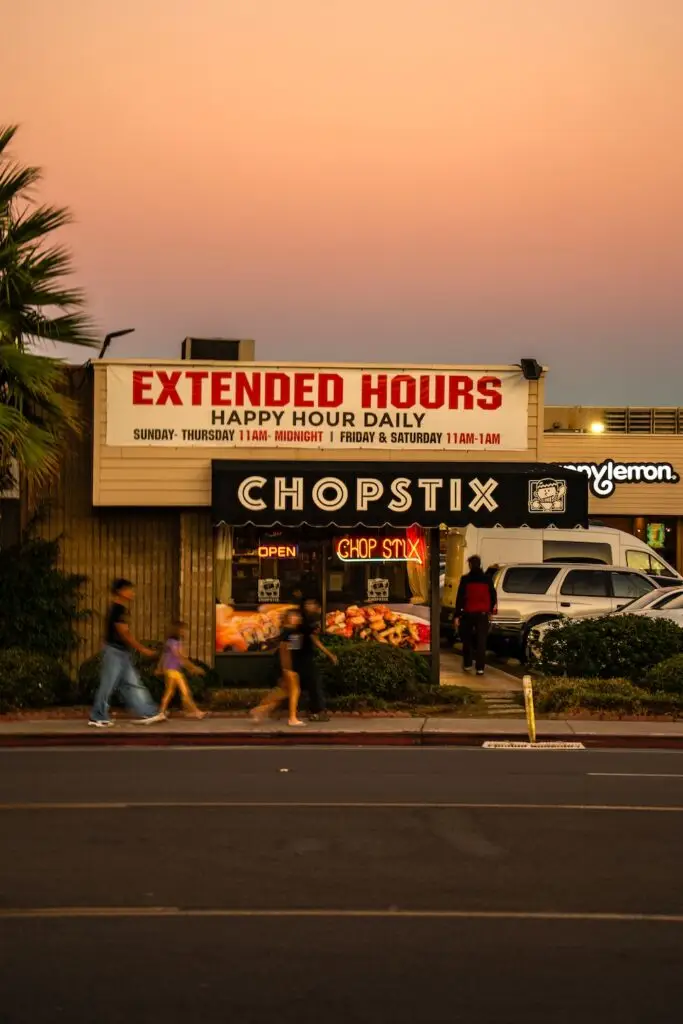
The village ethos has kept Convoy strong. When Covid shut down San Diego’s dining rooms, Dumpling Inn served customers in its parking lot. Tyson Blake, owner of O’Brien’s Pub, traded supplies with Crab Hut and Tofu House next door, down to a spare jug of degreaser.
The Kearny Mesa Community Plan passed in the midst of the mayhem: November 2020. The Convoy District Partnership (CDP) and the ABASD had won the City’s commitment to help transform Convoy—but as Blake puts it, at that time “everybody was just trying to stay in business.”
In August 2022, the CDP invited community members to talk with city officials about the plan to replace Convoy Street’s parking with protected bike lanes.
Some business owners felt that outreach came too late for them to have a say. Vuong Tobin emailed others that the City wanted them to “agree to this bike lane without any solutions” for the displaced cars. “Personally, I feel like we are putting the cart before the horse,” she wrote at the time. Blake says he went to every single meeting: “Probably about meeting three or four we realized we’re just way too late, and they’re just basically meeting with us to let us ****ing vent.”
The City moved forward. By spring 2023, it had converted parallel parking on nearby side streets to 171 angled spaces. That September, crews began repaving Convoy Street, with 3 miles of protected bike lanes (that ended up replacing nearly 300 street parking spaces) to follow.
The problem: The 2020 Community Plan called for strategies to address parking—including a parking district that would manage shuttles and shared lots—before removing street parking. Angled spaces were also part of the plan, but they fell well short of replacing what Convoy was about to lose. In December 2023, City Council created the Kearny Mesa Community Parking District, with the CDP expected to run it. But parking districts typically run on parking meter revenue. Convoy doesn’t have meters. No meters means no money.
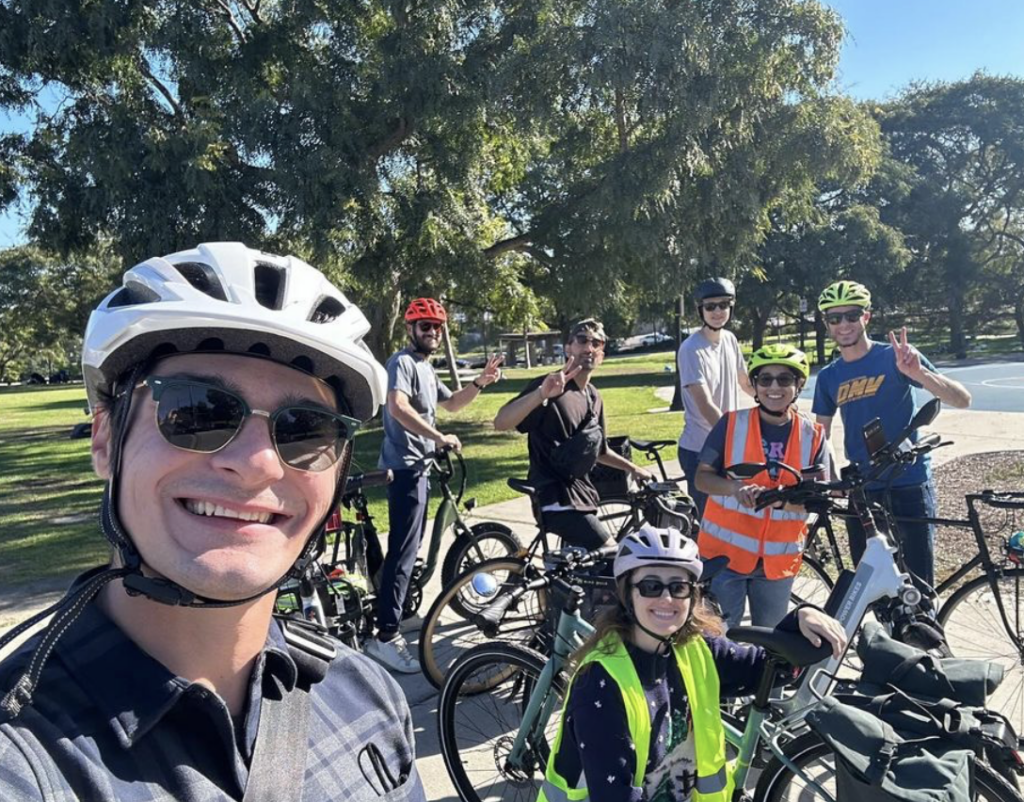
Anar Salayev, executive director of BikeSD, says self-reported stats from Strava and Ride with GPS show ridership did increase after the lanes went in. However, the lanes need more public transit and paths to San Diego’s other bike routes to really work. “Connectivity is the biggest hurdle to the Convoy Street bike lanes being more adopted,” he says. That said, he’s sympathetic to owners who felt excluded from the decision. “Change is hard. That’s why the communication piece is especially important.”
District 6 Councilmember Kent Lee, who inherited the plan when he took office in 2022, concedes the bike lanes arrived years before the people they were built for: those living in residential buildings on Convoy Street, which didn’t start opening until 2026. “It’s hard for anyone, including us, to explain how that has a benefit,” he says. Tait Galloway, a Planning Department deputy director who oversaw the plan, counsels patience, saying Little Italy took 25 years or so to become Little Italy.
Business owners feel they can’t afford to wait. “Our leaders for D6, they’re thinking 20 years in advance,” Ky says. “We’re seeing what ground zero looks like at the moment.”
The wait got worse in 2025. A San Diego County Grand Jury faulted older parking districts for high overhead and weak transparency. That October, City Council voted 8–1 to pause the San Diego’s community parking district program for two years. Lee cast the only no vote, wanting to give Kearny Mesa’s new parking district a chance to get funded and running. “The City basically gutted parking districts,” he says.
Dr. Ping Wang, a CDP board member, says the community was disappointed. He and CDP Chair Chris Cate pressed City Hall, asking, “Does it have to be all or nothing?”
Convoy paid for the other districts’ alleged mismanagement. The pause undermined the Community Plan’s policy to address parking before removing spaces. Asked how the City tracks the plan’s progress, Galloway says planners revisit plans and amend them when needed, but they “don’t necessarily have a performance checklist.”
Nobody I spoke to intended for Convoy to struggle. But as the plan, the bike lanes, and the parking district moved through different bureaucracies, the vision was lost in translation.
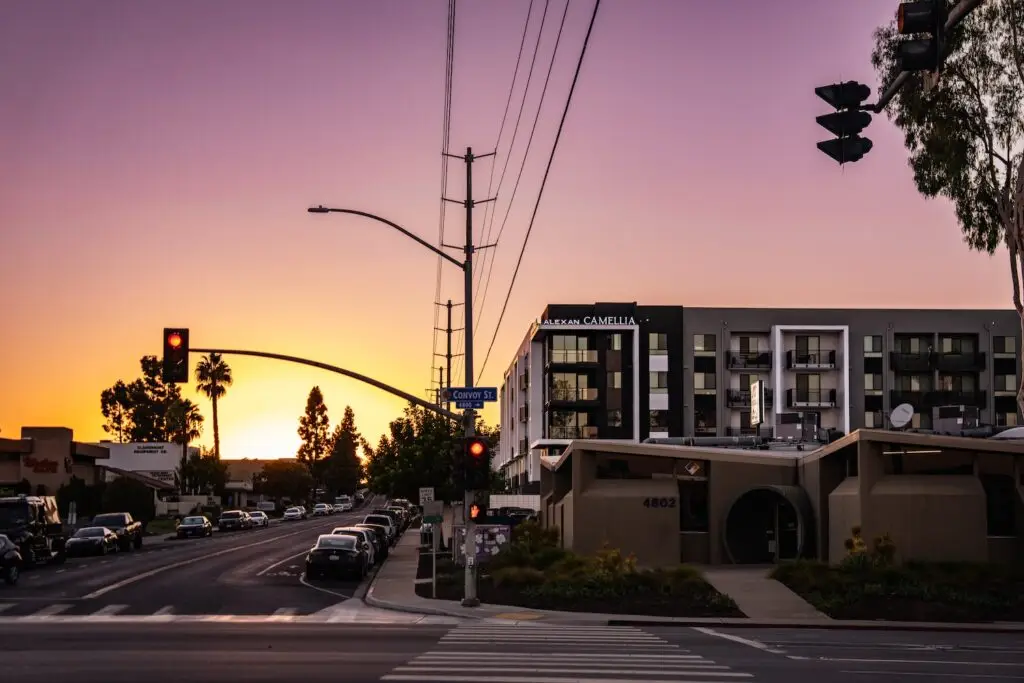
In 1978, CBS 8’s Doug McAllister couldn’t imagine anyone living here. “Convoy Street is not a place to live. It’s not zoned for living,” he reported at the time, bookended by cortisol-inducing footage of Ford Mustangs and Volkswagen Beetles surging through an intersection. “It’s an 8-to-5, Monday-through-Friday workplace.” A city planner told him the area’s zoning had been a “mistake.”
Sue Peerson, who was Kearny Mesa’s city planner in the 1980s and now teaches urban studies at UCSD, rejects that framing. “I absolutely disagree with the statement ‘Convoy Street is a mistake,’” she wrote in an email after watching the clip. “I don’t see it as a zoning error either.”
Anthony Harper Jr., 95, remembers what Convoy was like, even before the industrial buildings. In the 1950s, he owned a service station at Balboa Avenue and Clairemont Drive. Interstate 5 didn’t exist yet. The landscape was chaparral and mesa dirt. He remembers hunting critters not far away. “There was nothing up here,” he says with a grin. “This was rabbit country.”
This year, people started living on Convoy Street. The Alexan Camellia, a resort-like six-story complex, is its first residential building, and Harper is one of its oldest residents. Its 531 units rent for about $2,700 to $4,500 a month, plus a spot or two in its 676-stall garage. The architect is, naturally, a Wong: Frank’s younger brother Joe. Frank passed away less than a year before it opened. Joe says he felt a “heavy shoulder” of responsibility designing the space: “On this first project, we’ve got to do well.”
Joe calls his creation “a laboratory.” Six months in, he says, it’s almost 70 percent leased, including young families. Business owners next door told Paguio they’ve had increased sales. Farther down Convoy, though, Vuong Tobin hasn’t seen the expected foot traffic.
More housing is coming. At Convoy Street and Clairemont Mesa Boulevard, Los Angeles–based G.H. Palmer Associates leveled the old Zion Market and Kearny Mesa Bowl to build about 1,650 apartments. A few blocks east, AAA Management is building the 251-unit Ion Convoy. In 2023, the city counted more than 3,000 housing units in the pipeline along the Convoy corridor.
Convoy is no longer the “8-to-5” workplace of 1978. Today, it’s busy from lunch until last call, but almost everyone still goes home elsewhere. In 2022, SANDAG counted nearly 10 jobs in Kearny Mesa for every resident. To become a walkable village, the district will need more groceries and pharmacies, plus safer sidewalks, better transit, and bike routes that connect to each other.
If there’s a recipe for Convoy’s magic, the secret ingredients are trust and cheap rent. Convoy can grow “in such a way that you don’t lose the magic, but you must make the rents affordable for businesses and residents,” Peerson says.
Low costs let the Wongs take chances: a rent break for an immigration lawyer, a lease for two untested sisters. Alan says most centers are owned by local families, which is a key ingredient as well: “If Blackstone starts buying up retail centers by the handful and charging from $3 a square foot to $10 a square foot, then that would be a troubling sign.”
The Community Plan credits low rents with drawing the entrepreneurs who built Convoy, but plans like it govern land use, not rents, and California law bars cities from capping commercial rents. That leaves affordability up to whoever owns the buildings.
Lee is working with local businesses and the CDP to explore “short-term and long-term opportunities” to address parking, his office says. Last December, he secured $500,000 to design a pedestrian refuge on Convoy at Opportunity Road, a crossing the community had asked for alongside the district’s gateway sign.
For now, though, no one I spoke to at the Planning Department, the Kearny Mesa Planning Group, the ABASD, or the CDP could point to a funded parking plan.
So Convoy’s businesses continue to find their own solutions. Some claim their parking spots with signs, like banners over asphalt fiefdoms. Dr. Wang champions a communal approach, opening a family parking lot to the public and urging others to do the same. In the meantime, the Asian Business Association Foundation is building DiscoverConvoy.com, a free guide to the district’s businesses, cultural events and parking, set to soft-launch by early November.
At UCSD, urban design students like Heidi Galan plan potential futures for Convoy as part of Peerson’s curriculum. Galan’s model widens the sidewalks, plants trees, and turns travel lanes into bus lanes, while tucking a large garage behind buildings for residents and visitors. She keeps existing tenants like Common Theory, adds a bowling alley to replace Kearny Mesa Bowl, and stacks 300 affordable housing units on top.
If Convoy is able to transform from a driver’s destination to a walkable neighborhood, it will require patience, vision, and the same village ethos that built it, now this time between immigrant entrepreneurs and City Hall’s politicians.
Until then, the sedans still circle on Saturday nights, searching for a spot.

Beckett Mufson is an independent creative strategist, community organizer, photographer, and journalist whose work appears in publications such as VICE, the New York Times, MTV News, Forbes, and Double Blind Magazine (fun fact: he's been cited in over 50 Wikipedia articles). He's the founding secretary of the San Diego Printmaking Society, and is currently developing an art collective & media consultancy.
