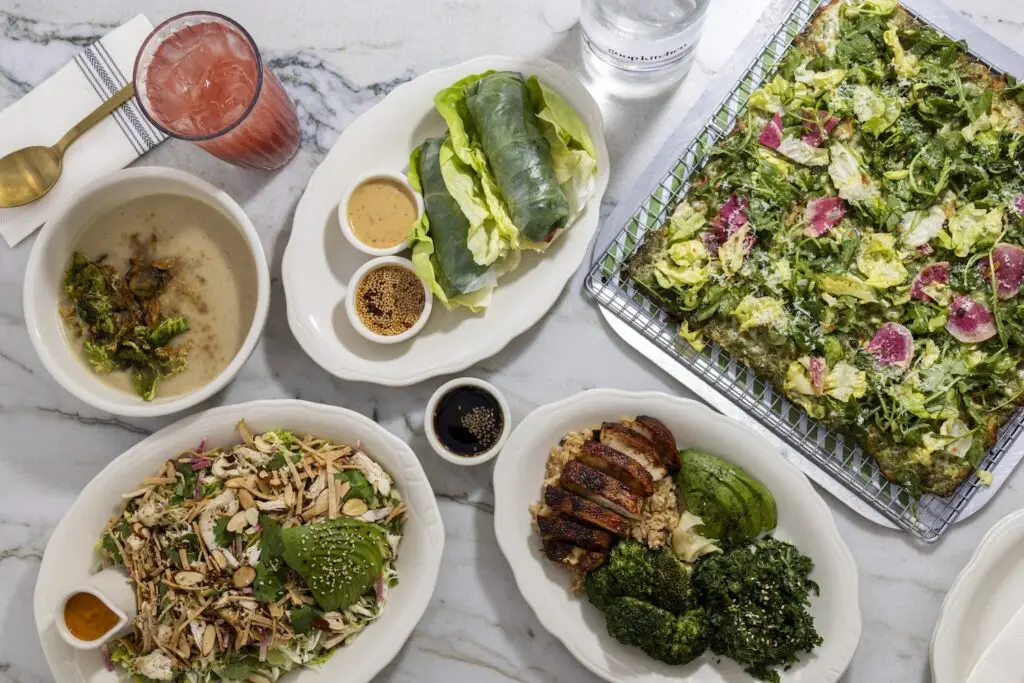
The Perfect Order: summer salad rolls, field of greens pizza, half roasted chicken
It’s been a pretty wild ride for arugula. Ancient Roman poet Virgil hailed the curvy leaf as an aphrodisiac, which is pretty hard to trust. Humans have had a real long list of turn-on foods. Either they were exceptional horndogs, or food was such a crapshoot back then that any edible thing that didn’t kill them was hailed for its sensual prowess, seeing as how sex is largely the province of the living.
Arugula was the secret star of Italian grandma salads for most of modern history. Then Jeremiah Tower and Alice Waters adopted the bracingly fresh little green—tasting somewhere between watercress and pepper spray—and turned it into an icon of California cuisine. It had a minor PR crisis when Obama mocked its trendy price tag on the campaign trail. Now it has settled in as the communion leaf of the farmers-market parish.
Point is: Arugula is the unlimited breadstick of the new Goop Kitchen in Del Mar—adored, with towering piles on every table.
Photo Credit: Dee Sandoval
Goop started in 2008 as a weekly email newsletter that actress Gwyneth Paltrow sent from her London kitchen. She’d include recipes, travel tips, and some steam engine–era diet advice like “eliminate white foods.” For four years, Goop sold nothing. Then it sold everything: skincare, supplements, fashion, wellness summits, a Netflix series, a podcast, eight retail stores, and a pretty legendary candle. In 2021, the brand got into food with Goop Kitchen, a delivery and takeout operation that spent five years engineering meals to thrive in travel (its quality-control team would literally let food sit around for 45 minutes and then try it).
For Goop’s first full-service, dine-in location, they chose San Diego—specifically, One Paseo where it opened in August. The ghost kitchen has grown a body.
I’m not sure people eat here as much as bathe in the aura of what “here” embodies. Goop has successfully created a social movement of people interested in the best-guess purification rituals that float Gwynethcore. I have a theory that a decent portion of Goop’s power comes from the fact that, on screen in some of the most famous movies of all time, Paltrow comes across as a genetically beautiful human who is—more importantly—likable, humble, with a little aw-shucks bumpkinry. Of course, we don’t know if any of this is true of off-screen Paltrow; for all we know, she could be tossing strychnine-laced commodity meat sticks to neighborhood dogs who tarnish her yard.
But Iron Man’s smart and kind love interest wants us to be better? I’ll take a pile of her arugula.
We also have to talk about the name. Paltrow used to sign her newsletters, “love, gp,” and that apparently picked up a couple o’s along the way. Among least appetizing words, “goop” runs a pretty tight race with “moist,” “sludge,” and “Olestra.” Goop is admittedly a cuter word than the others. Given current times—as a steady stream of AI employees keep running to the internet to let us know humanity’s got the shelf-life of yogurt and a Super El Niño is coming for San Diego like it owes Dean Spanos money—cute feels important. But even just reading the word, you can hear it: a dorky splat, propelled out of a squeeze bottle and probably pretty effective at sculpting hair.
As a restaurant, Goop is a no-brainer for the healthmaxxing era. We’re all trying to dine cleaner or poke ourselves with enough GLPs that our desire for food becomes a muffled scream. To satiate our increasingly dire craving for micronutrients, we could order a meal-delivery service with elaborately pickled and fermented twigs (which is how Goop started). But that means we’re eating it at home, which isn’t nearly as fun.
Photo Credit: Dee Sandoval
Goop invites us to eat healthy-ish together on a nice, coastal-ish patio with very fine boutiques nearby, under white umbrellas with black trim, staring at a gluten-free pizza that tastes shockingly good—blistered, browned, chewy, salty, and none of the things you normally associate with GF pizza dough (a general wan feeling that joy has been siphoned).
Guess this shouldn’t be shocking, since Goop’s VP of Culinary is Kim Floresca, whose résumé is the kind people frame: El Bulli, Mugaritz, Per Se, and executive sous chef at the three-Michelin-starred Restaurant at Meadowood. It’s her job to take Goop’s rules—gluten-free, no seed oils, no refined sugars, no corn, no processed additives—and turn them into reasonably tasty salads and roasted chickens and miso dipping sauces and pastas.
Those rules are half science-backed and half wellness culture why-nots. The research is pretty clear that sugar and processed foods treat your body like a rental car. Gluten-free is essential for people with Celiac (about 1 percent of Americans) and those who are sensitive to it (another 5 or 6 percent); for the remaining 93-ish percent of us, there’s not much evidence gluten does anything but make bread worth chewing. Seed oils are America’s newest villain, though the science is mixed (Harvard and Stanford aren’t sold). I have no idea what corn did to anyone, and I refuse to read Dr. Alejandro Junger’s views on it out of respect for elotes.
Photo Credit: Dee Sandoval
For decades, gluten-free people were fairly bummed about pizza. Great pizza requires fermentation and something (gluten) to hold all those awesome gasses in place. Without gluten, the dough could ferment all it wanted, but it couldn’t hold on to anything. Gas leaked out, water wandered off. That’s why GF crusts were (are) somehow gummy and dry at the same time, tasting remarkably similar to being dead inside. GF dough also refused to stretch. Great pizza dough slowly bounces back from trauma, like Chargers fans do.
The first food scientist to crack the GF pizza dough problem would become a yacht-owning national hero. So they worked pretty hard at it and found a few things. First, they realized good ole xanthan gum sucked as a binder in comparison to alternatives like psyllium husk (from psyllium seeds, the stuff in Metamucil). When hydrated, psyllium stretches and folds. They also discovered higher water content helped dough trap more gas—which is what gives pizza its trademark airiness, spring, and cornicione (pizza blisters). Fermentation brings the flavor, too.
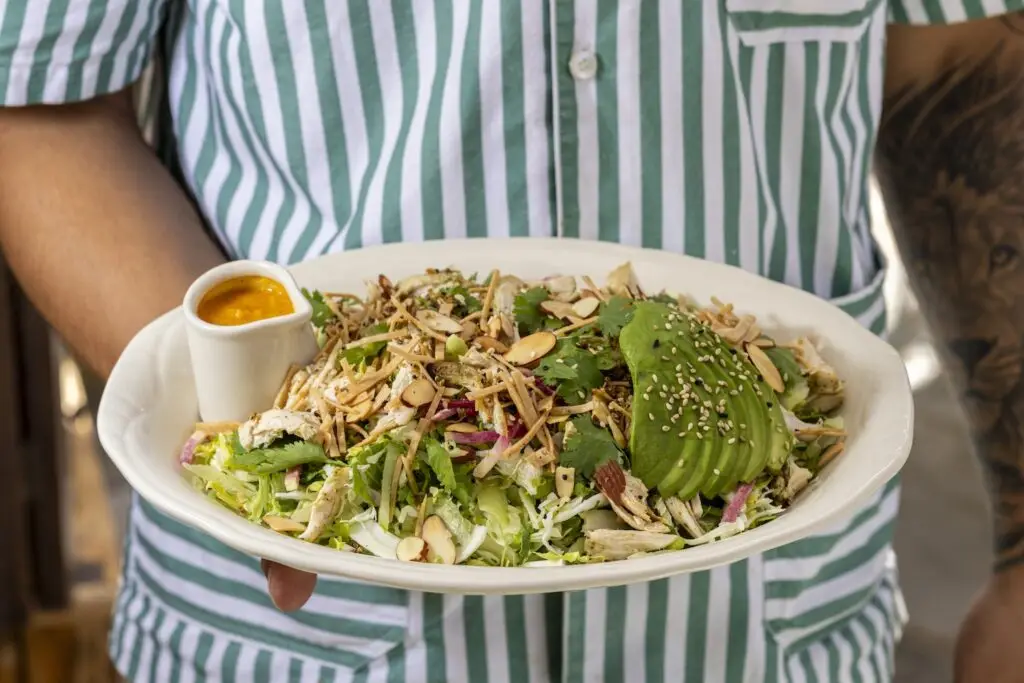
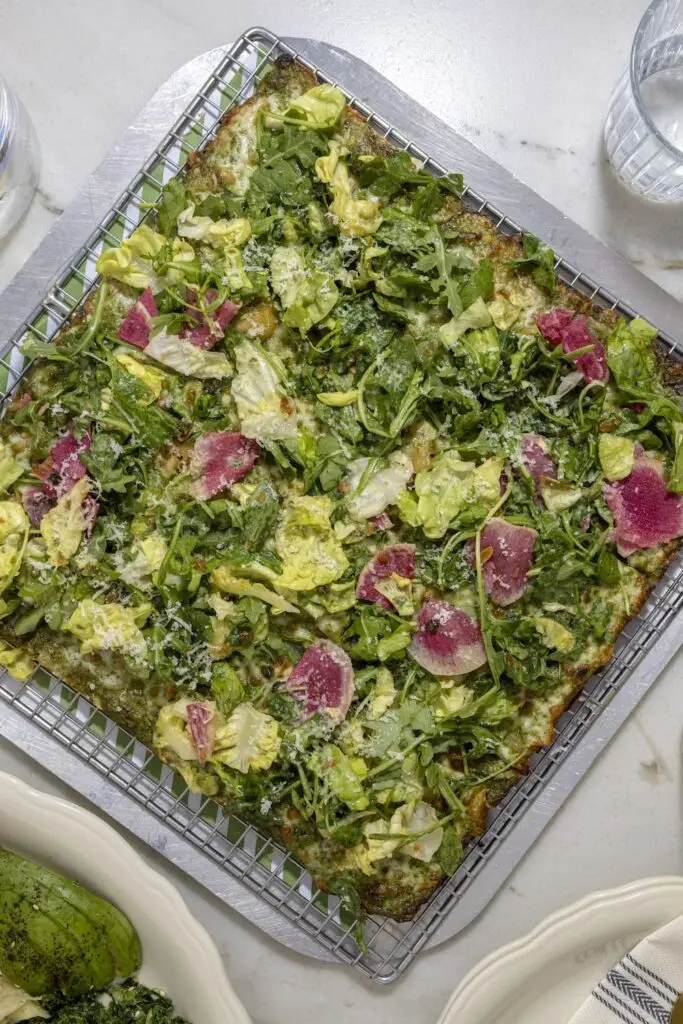
Not sure what tricks Floresca is using on her pepperoni crust, but it’s one of the better GF crusts I’ve encountered. The Field of Greens “pizza”—really, it’s a pizza salad—doesn’t even try to be a pizza crust. It’s like a thin, semi-hard, chewy cracker—or a vegetarian headcheese made of grains and seed stuff—that you’d buy for $30 at a health-food store near a woman with strong opinions on red-light therapy. Sounds awful, but it tastes pretty great, especially with the creamy pesto, garlic confit, mozzarella, Parm, and topped with the signature arugula salad in lemon vinaigrette. No shot you can eat it without also taking a leaf shower, but it’s a delicious compromise between wanting to eat healthy and not wishing to do so.
Photo Credit: Dee Sandoval
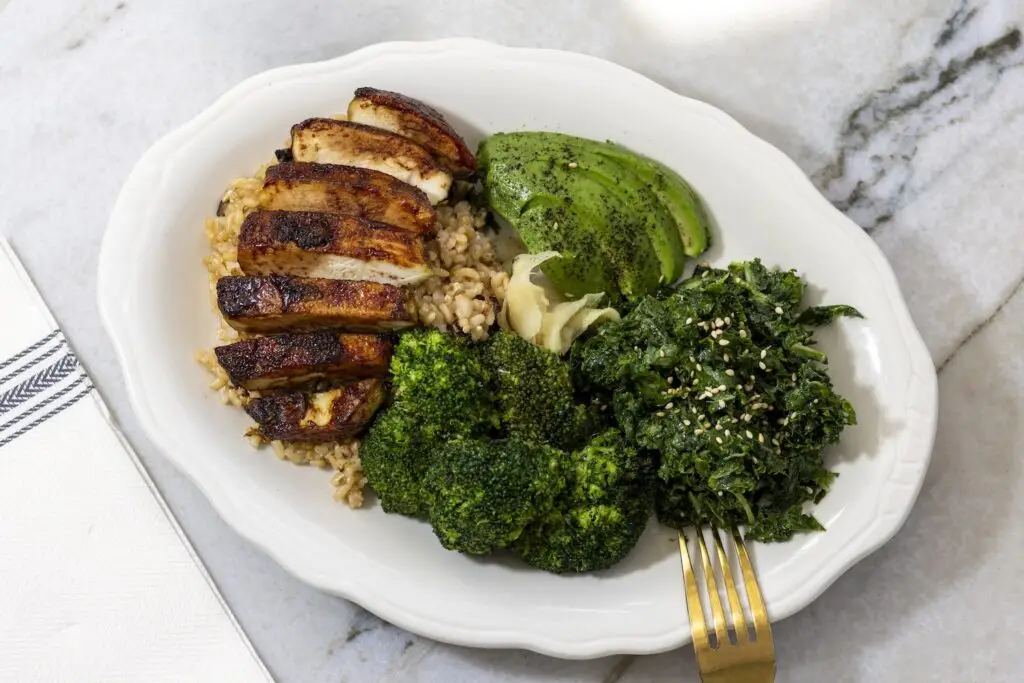
The best from Goop includes the summer salad rolls—rice paper filled with sweet-and-spicy BBQ-glazed tofu, marinated glass noodles, basil, mint, cilantro, shredded veggie (cabbage, zucchini, carrots), and avocado. Both sauces show how Floresca has adapted her classical training (French sauces) for the Goop realm with pretty great success: cashew-butter dipping sauce with tamari, lime juice, hot sauce, and maple syrup, and a chili crunch oil. (I’m not sure you’re allowed to own a restaurant without a chili crunch recipe these days.) The organic teriyaki chicken comes over shiitake rice, sesame kale (absolutely delicious), pickled ginger, and housemade furikake. Furikake is Japan’s version of everything bagel seasoning, only better. The roasted half chicken is the best chicken on the menu, though, an excellent rotisserie job.
The bad from Goop includes a garlic broccoli that tastes like it’s been steamed in a kitchen where garlic (and salt) may have once been used by a previous tenant, but not the current one. That said, if you douse it with some chili crunch or cashew-butter sauce, it’s fine. The mac ’n’ cheese suffers from that grainy distant nut cousin of béchamel, and the gluten-free pasta nearly apologizes as you eat it.
Though we think of restaurants as our favorite way to commit all kinds of clown-show food sins, healthy-ish ones have a deep past. The modern restaurant took shape in 18th century Paris in establishments serving restorative broths (the word comes from “restoratives”). The challenge is to make food that doesn’t taste like rules, and Goop largely succeeds.
It’s a perfectly nice—sometimes delicious—place to channel your inner mustard green.
Troy Johnson is the magazine’s award-winning food writer and humorist, and a long-standing expert on Food Network. His work has been featured on NatGeo, Travel Channel, NPR, and in Food Matters, a textbook of the best American food writing.