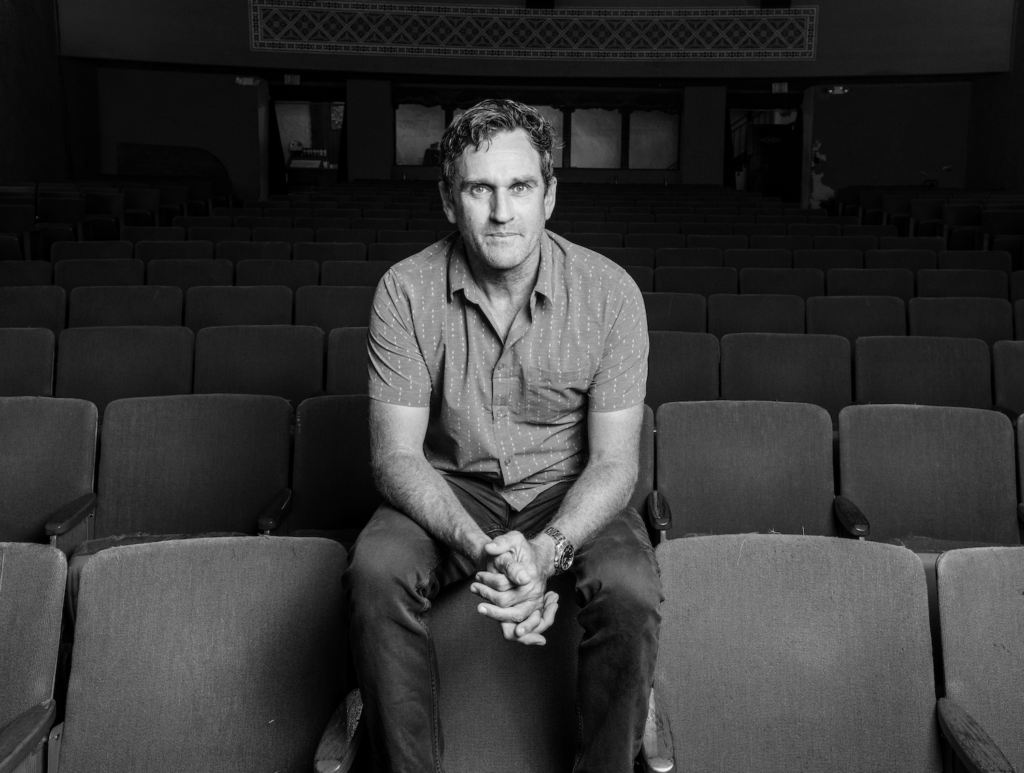
A man with no cultural scene will often invent his own. Taylor Steele did just that. When the award-winning producer and director returned to North County two years ago after living in NYC, Australia, and Bali, he sought to reignite the creative community at home, and only one place would do: the historic La Paloma Theater in Encinitas, where he grew up watching films like Searching for Tom Curren on the ratty seats.
“La Paloma is the mecca for surf premieres, but there was no festival here,” says Steele, whose explosive 1992 rockumentary-style film Momentum inspired a generation of surfers to elevate the sport into an art form. His second annual Solento Film Festival takes place Sept. 22-25 at the 1928 Spanish Colonial icon. It’s a legacy story for Steele, who flipped the script with Sipping Jetstreams and Proximity and went on to art direct campaigns for Corona, Apple and HBO.
Last year’s festival debuted to a full house that included industry giants like Kelly Slater, Rob Machado and Mick Fanning. They were lured by more than movies; music has been a crucial part of Steele’s oeuvre ever since his early VHS films helped to boost SoCal bands like The Offspring and blink-182. During this year’s festival, concerts will be held on an outdoor stage at Seaside Reef, Steele’s home break.
One of the festival’s sponsors is Steele’s very own certified organic tequila brand, Solento, packaged in a Chanel N°5-inspired bottle. It’s a long way from the early days of surf films at La Paloma. “There was always the sound of beer bottles rolling down the aisle,” says Steele, legs outstretched on the seats in front of him. “It’s a rite of passage for every filmmaker to show here.”
Last year’s Olympics in Paris delivered plenty of unforgettable moments—a metal band performing alongside a headless Marie Antoinette in a 13th-century castle, breakdancing’s short-lived debut (sorry, Raygun), and even Snoop Dogg serving as a torchbearer. But some of the most memorable concerned our own hometown heroes.
Sixty San Diegans competed for Team USA, earning 25 medals across eight sports, with gold medalists including then-Wave FC players Naomi Girma and Jaedyn Shaw, basketball star Kelsey Plum, and cyclist Jennifer Valente. Encinitas’ own Jagger Eaton hit the street park as one of only three Americans representing the country in men’s street skateboarding, nabbing a silver medal finish. And while TikTok-famous local “rave horse” Suppenkasper and his rider Steffen Peters, beloved for their EDM-fueled dressage routines, didn’t make it to the finals, the 17-year-old gelding had audiences eating out of the palm of his, uh, hoof from the very first beat drop.
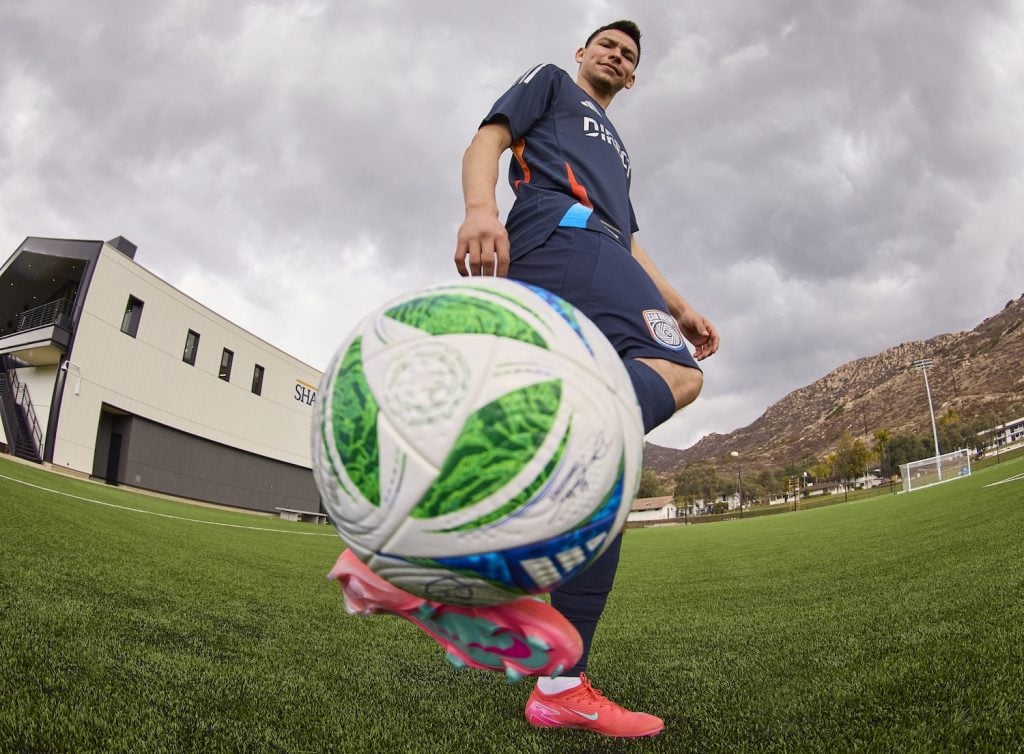
The next Chucky Lozano might soon be honing his skills right down the road in El Cajon. San Diego FC kicked off its inaugural season in February and quickly proved itself a force within MLS (at press time, it sits at number one in the Western Conference). With it came the Right to Dream Academy, a scholarship-based academic and training facility where promising players as young as 11 will prepare for a bright future in the pro league under top-tier tutelage.
Best Triple Play
San Diego Padres
Picture it: Padres against the hated Dodgers in LA. With two runners on, the fate of the Padres’ 2024 postseason rests on one play. Bottom of the ninth inning. No outs. Padres closer Robert Suárez is looking to hang on to a 4–2 lead. Crack—a ground ball to Manny Machado. Machado tags third and fires to second. Jake Cronenworth turns it and beats the runner at first. Just like that, San Diego pulls off an unforgettable triple play and clinches their playoff berth. Easily the most cathartic moment in San Diego sports in the last year.
Best Next Step For a Fútbol Phenom
Alex Morgan
As one chapter ends, another kicks off. San Diego’s favorite WNSL icon, Alex Morgan, officially hung up her cleats (along with her number-13 jersey, which the team is retiring in her honor) for good in September 2024 after her final game with San Diego Wave FC against the North Carolina Courage. But before you get too emotional, she also dropped the much happier news that baby number two was on the way.
True to form, she’s not slowing down anytime soon. She’s staying in the game as a minority investor in the Wave, continuing her mission to uplift women in sports and ensure the next generation has even more room to shine.
2024 was a big year for San Diego State alum and world-ranked number-three golfer Xander Schauffele. Following a near-perfect round of 62 at Kentucky’s Valhalla Golf Club, tying the lowest round ever scored in a Major championship, he secured a narrow PGA Tour win over titan Bryson DeChambeau. Fast forward to July, and Schauffele brought his A-game to the Open Championship at Royal Troon Golf Club in Scotland. Battling wind, rain, and the course’s punishing bunkers, Schauffele was one of only 17 golfers to break par throughout the tournament.
Courtesy of Lori Walton
Best Legend We’ll Miss
Bill Walton
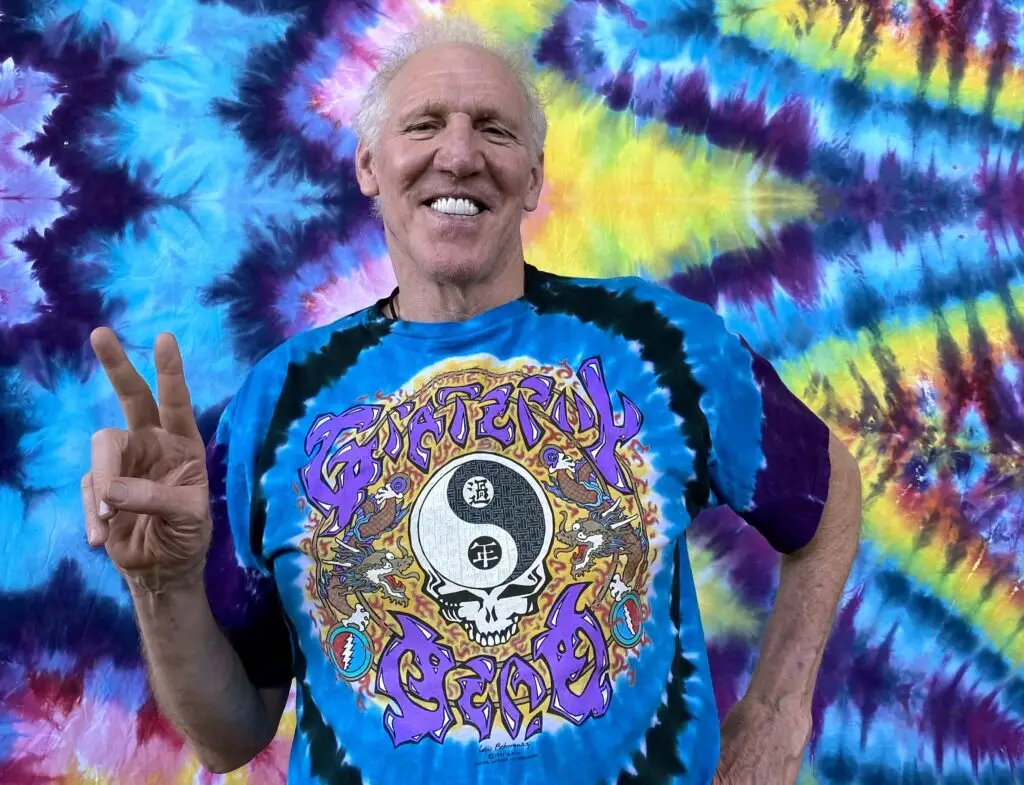
We said goodbye to a local icon this year: 6’11 NCAA Hall of Famer Bill Walton. Born in La Mesa, Walton played basketball at Helix High with his brother Bruce (who later became an NFLer) before making his mark at UCLA under legendary coach John Wooden. He won three straight NCAA Player of the Year awards (’72–’74) and was the first overall pick in the 1974 NBA Draft. Leading the Portland Trail Blazers to their only NBA championship in 1977, Walton became a beloved sports legend. A devoted Deadhead, he attended more than 800 Grateful Dead concerts and spent his later years deeply involved in community work, leaving a lasting legacy.
Best Record Breaker
Caitlin Simmers
Growing up in Oceanside, Caitlin Simmers had always gravitated toward the activities that make a California beach city what it is. She dabbled in BMX, dance, martial arts, and skateboarding, but found her calling in surfing at age 6. Now, at 19, she is in her third year of the World Surf League Champions Tour and part of the USA Olympic team. Last year, at Lower Trestles, only 20 miles from her hometown, she notched a pretty serious resume builder: She became the youngest woman winner of the World Surf League Final.
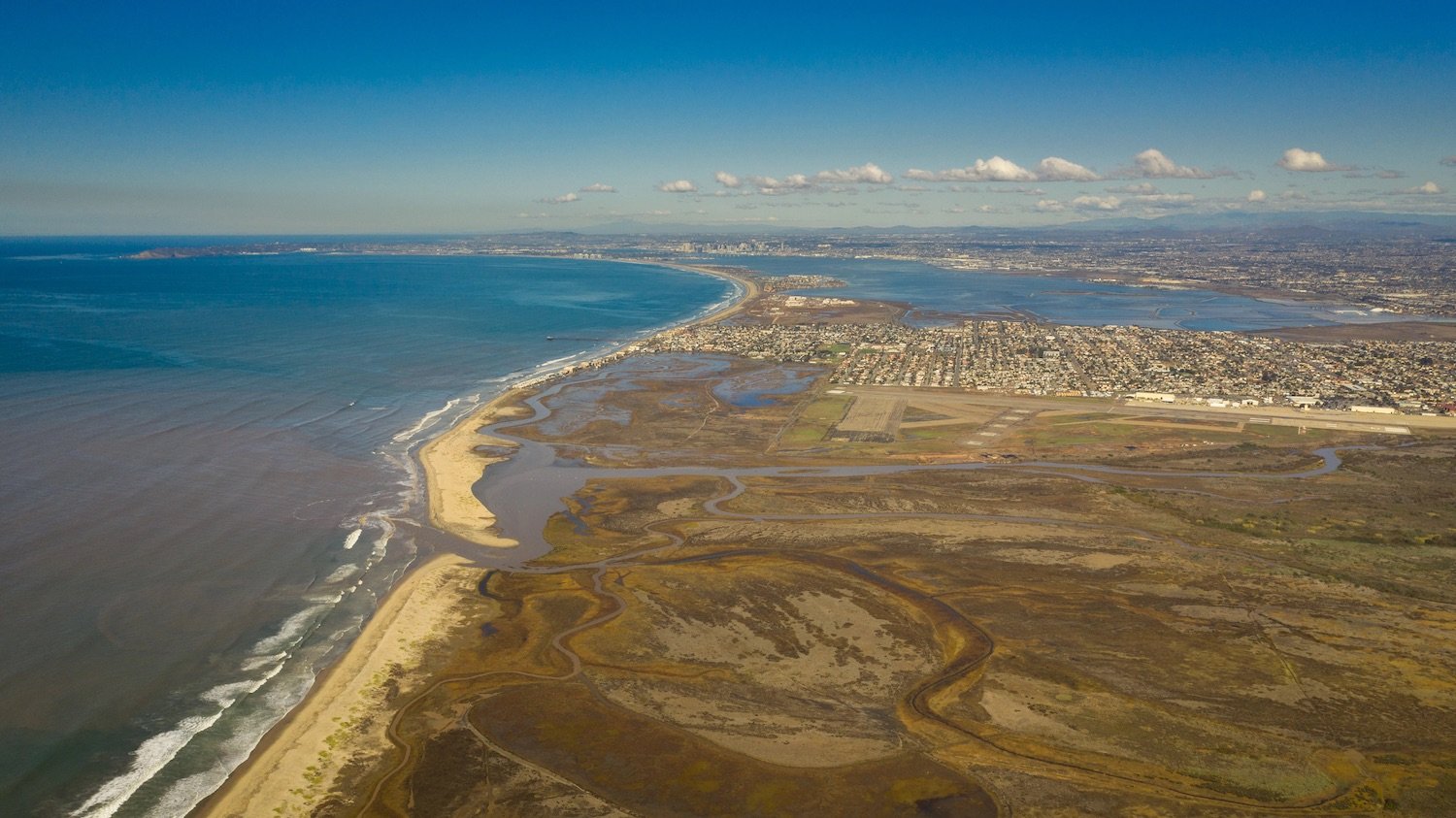
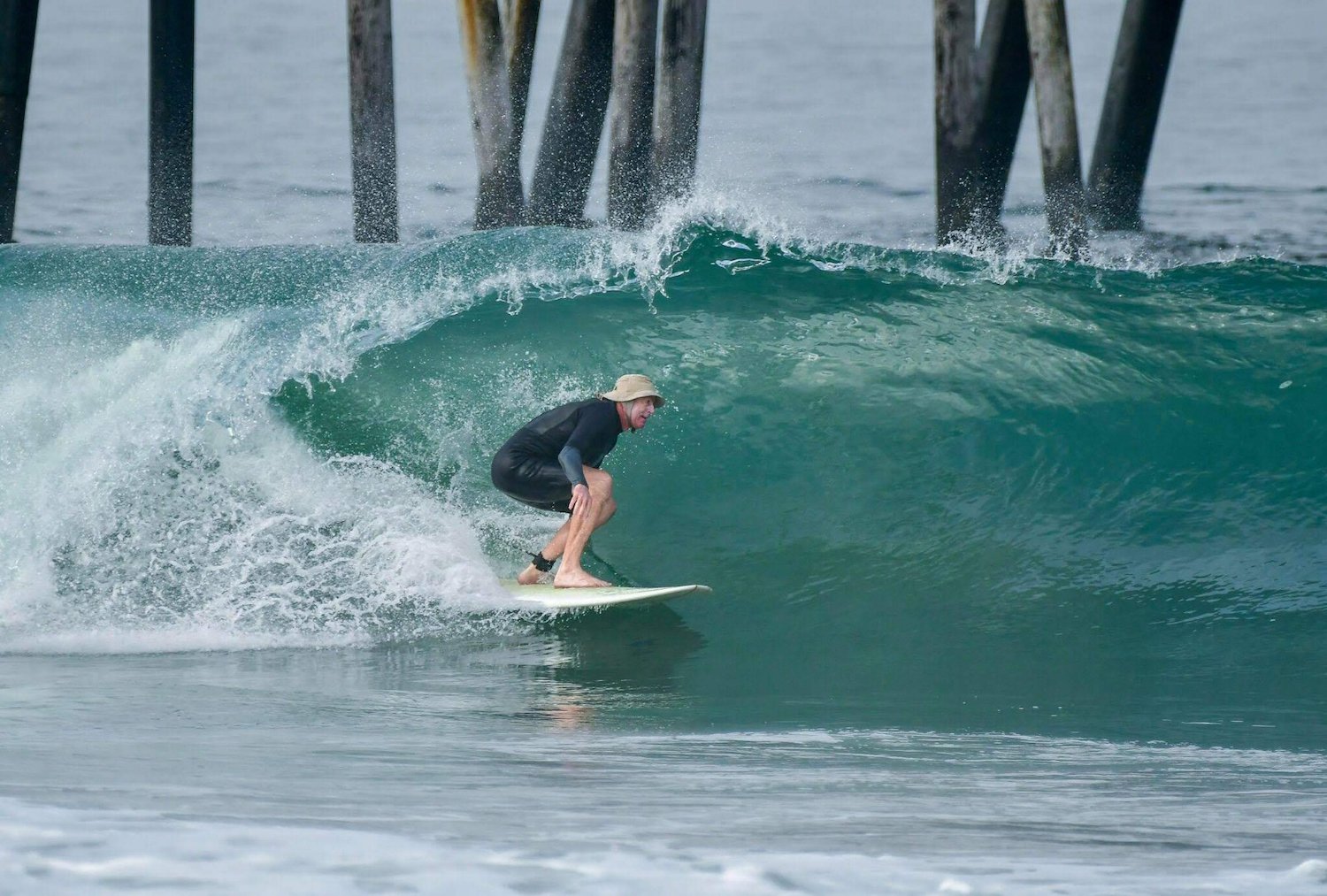
Every year, when winter swells bring San Diego’s best waves to their fullest potential, local surfers flood the lineups of popular spots like Black’s and Swami’s. But some of the heaviest and most dangerous surf lies further south, off the coast of Imperial Beach. The area’s crown jewel, Tijuana Sloughs, sometimes serves up 20-plus-foot waves that break up to a half-mile from shore.
Even as the surfing population has exploded, however, IB remains empty in comparison to the rest of San Diego, thanks to the pollution that plagues its waters. Surfers in IB don’t just check the surf cams and swell forecasts—they monitor the water data from the nearby International Boundary and Water Commission.
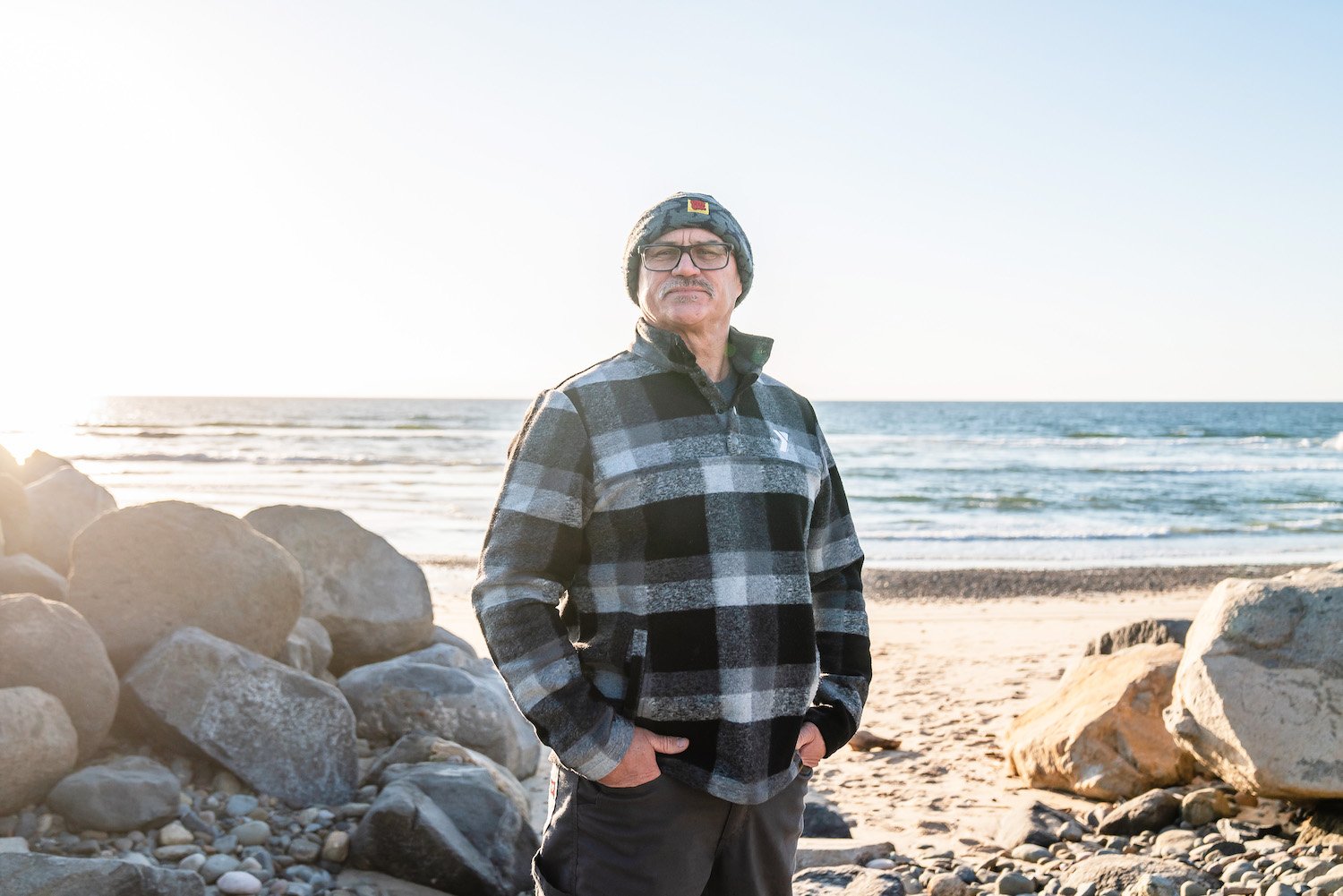
“It’s almost a science to go out for a surf and not get sick,” says resident Dwayne Fernandez. “My wife hates that I still surf here; she gets worried. I check the reports every day to see if it’s safe, which has been rare these days. If it’s not, I may have to drive over an hour just to get in the ocean—and I live minutes from the beach in IB.”
Photo Credit: Ariana Drehsler Dwayne Fernandez says his wife hates that he still surfs in IB. He lives near the beach but often must drive more than an hour to surf where water conditions are safer.
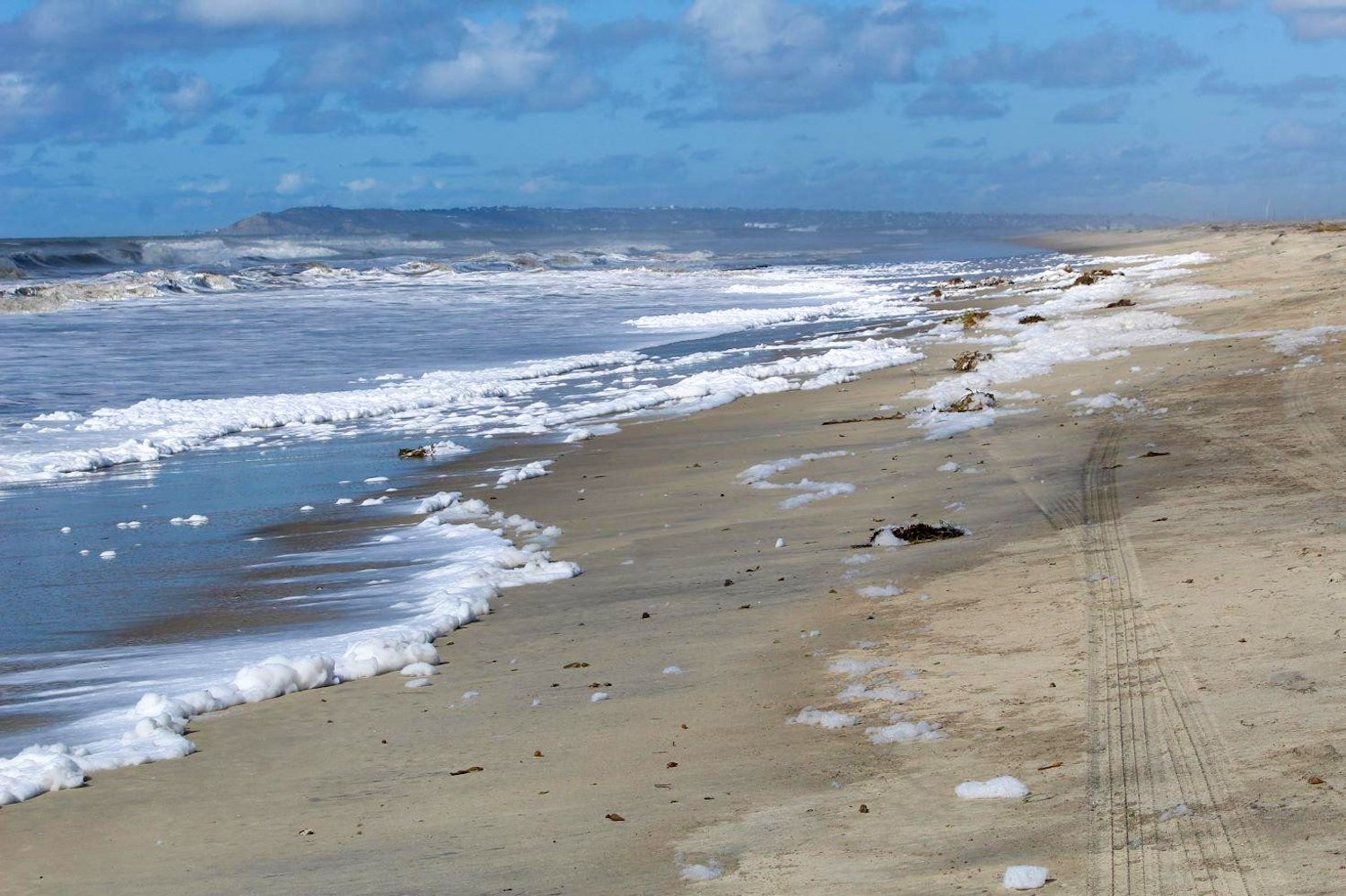
According to the Surfrider Foundation, IB has the unfortunate distinction of being the most polluted beach in America. Built in 1996 with the capacity to manage 25 million gallons of wastewater a day, the nearby South Bay International Wastewater Treatment Plant (SBIWTP) is frequently overwhelmed. Anything that exceeds the limits of the SBIWTP comes out as raw sewage, clearly visible in the water as a dark brown plume with an accompanying nasty smell.
The sewage flow can sometimes hit hundreds of millions of gallons in a single day. “You don’t want to be out there when that happens, and it can happen quickly,” says Adam Wraight, an Imperial Beach lifeguard sergeant, junior lifeguard coordinator, and longtime local surfer.
Courtesy of Surfrider Foundation
But that hasn’t stopped some residents, despite mandates prohibiting surfing and swimming during beach closures. If the waves are good, surfers are probably out there. Why take the chance, though, when there are so many other good waves—with cleaner water—in the county?
It’s partly a point of local pride. The surf history in IB runs deep. Stories of the Tijuana Sloughs on its good days are the stuff of legend, discussed in hushed tones in the core San Diego surf community.
Photo Credit: Kevin Stuart Former lifeguard and IB resident Jeff Knox braves toxic conditions to surf his local waves.
“The Sloughs was never a spot meant for everyone,” says Jeff Knox, a former lifeguard and lifelong IB surfer. “The paddle-out alone was enough of a deterrent for most. The shorebreak took care of the rest. It’s mostly locals out there; we like it that way. It’s one of the best waves around and, for that very reason, we never used to talk about it. But those days are long gone. We need all the help we can get—the more attention, the better. Because this is a huge problem.”
It’s also been part of the deal for decades. “I started surfing IB in the ’60s, [and] we’ve always had to deal with pollution,” Knox adds. “Throughout my entire life, it’s never been as bad as the last 10 years. The last five have been absolutely terrible.”
Additionally, there’s the simple fact of convenience. While IB’s median rent cost of $3,000 is well under the staggering housing costs in other surf-adjacent ’hoods like Encinitas and Del Mar, locals still pay a pretty penny to live a few blocks from the beach. And they often pay a price for surfing there.
Photo Credit: Jeff Knox Imperial Beach is considered the most polluted beach in the United States, with dangerous levels of bacteria caused by millions of gallons of raw sewage regularly flowing directly into the sea.
Scientists have identified 175 toxic pollutants in IB’s waters. Surfers have contracted everything from diarrhea and bacterial infections like MRSA to neurological disorders and hepatitis A.
“As a lifeguard, I see all the data. I check the flows daily and monitor the testing just to see if I can go for a surf during my break or after work. There are plenty of people who don’t check anything—they just see waves and go out—but even they get spooked when they hit the water and everything feels and smells wrong,” Wraight says. “Our responsibilities are definitely different from other [lifeguard] stations and, unfortunately, so much of what we do revolves around the pollution. It can get pretty negative, and it takes a toll on morale and recruitment.”
The problem has driven some local diehards from the water completely. Ramon Chairez, an activist and educator with the nonprofit Un Mar de Colores, has lived in IB for decades, but in 2020, he “made a conscious decision to stop surfing IB,” he says. “I saw too many people around me getting sick. It wasn’t worth it. The last five to 10 years have really been pivotal in the consciousness of the population, especially the kids—they know it’s polluted and unsafe.”
As a junior lifeguard coordinator, Wraight once trained the next generation in IB. But, now, he and the local kids he works with must travel to other beaches in the county. YMCA’s Camp Surf, a program that attracts children and teens from all over the nation with the allure of learning to surf in San Diego, can no longer take participants into the area’s waters.
Photo Credit: Ariana Drehsler
They must head to other neighborhoods or stick to land-based activities. “The biggest tragedy is the youth,” Wraight says. “They’re growing up not being able to enjoy the ocean like we did—their whole life experience is affected by the pollution.”
Despite the toxic water, IB still feels like a classic beach town, a callback to a time before $8 lattes and luxury condos dominated the coast. It’s charming, quaint, and beautiful, with the open space of the Tijuana Estuary to the south, mountains in the distance, and the mighty Pacific to the west. It has one of the most unique coastal views of all of San Diego—and some of its best waves. If only you could safely surf them.
Chris Dodds has been falling in love with San Diego for the past 10 years. He's passionate about the protection and preservation of our natural areas, especially our coastline and waterways.
The bike shop sits on a popular commute route and is staffed by affable mechanics who have worked the Tour de France. Hardcore bicycle people don’t have the friendliest rep, but MJ’s is different. They’ve got the skill set to equip racers, but they don’t treat commuters or parents buying bikes like tourists in their world.
Way to Become the Pickleball
PB Tennis Club
One minute you’re casually playing a game of pickleball, the next thing you know, you’ve helped design Gearbox’s newest paddle. The brand is based in San Diego and PBTC is their local court, where they play with locals to gain insights on how to improve their rackets. This sounds like free lessons to us.
Boujee Boat Picnic
Picnic Voyage
When a relative was giving away their boat, local architect Vilchis saw an opportunity to design a 10/10 Instagrammable experience. Now you can class up your day date by recreating The Notebook—a pristinely refurbished tiny boat with padded seats, plant garlands, snacks and drinks, and even parasols. Ryan Gosling not included.
Beach Volleyball Where Everyone Knows Your Name
South Mission
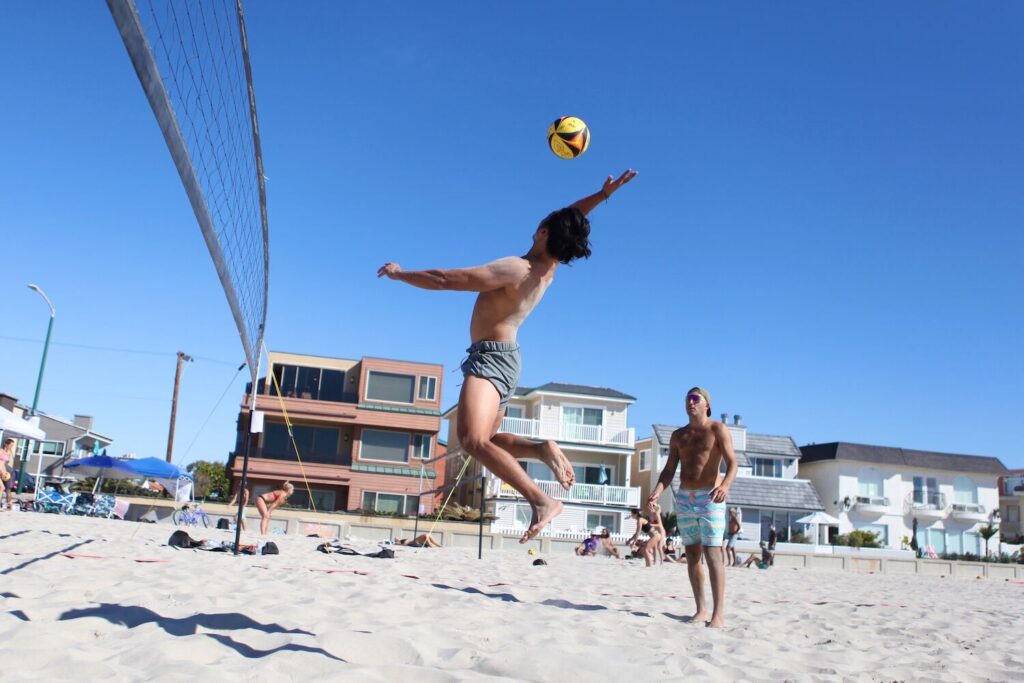
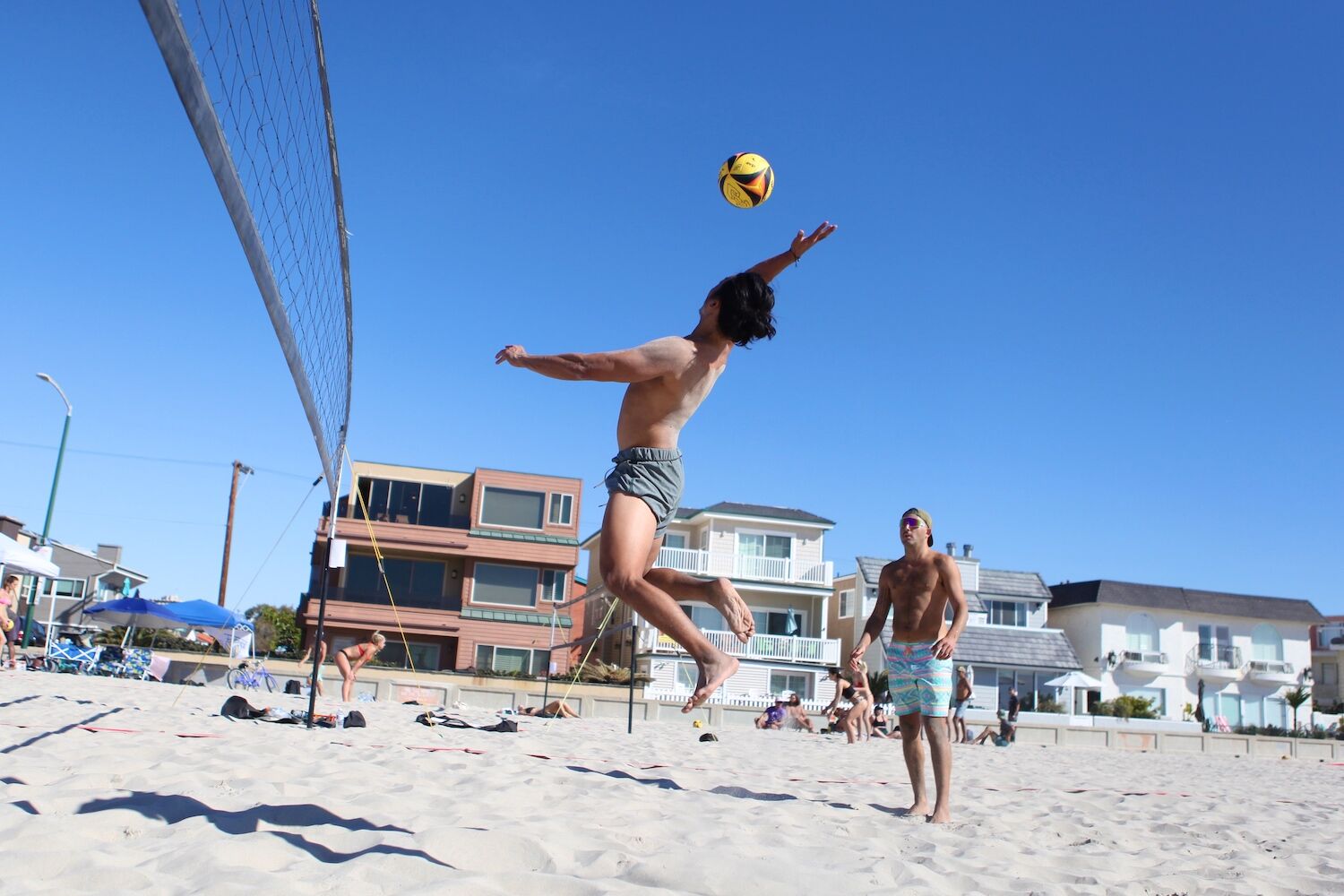
Each weekend on the courts of South Mission Beach, the sand is taken over by 2v2 players—many of which are ESL speakers from various countries. They’ve made this plot of sand their sacred community, where the universal language is bump, set, and spike.
Running Shop That Doubles as Bumble BFF
Milestone Run Club
On any given Wednesday on Hamilton Ave., 100 to 200 runners gather to run the streets of North Park. It’s put on by Milestone Running, a shop created by locals Greg Lemon and Chad Crawford. Go a few times and you’re pretty much guaranteed at least ten new friends—might even get “Smirnoff Iced” during the post-run raffle. You win some, you lose some.
Reward-Based Running
Waterfront Social Run Club
Even avid runners can lose motivation. This year, Waterfront introduced a new tradition: beer stops. The three- mile loop starts at Eppig Brewing in Point Loma, then heads to Fathom Bistro for a beer before completing the next 1.5 miles. Finish up with a post-run brew at Eppig, obviously.
Mission Bay Basketball Court
Madeline Yang
Sailing Lessons by Jack Sparrow Himself
Harbor Sailboats
San Diego’s maritime history runs deep. America’s Cups have a permanent home here. Harbor Sailboats—seven-time winner of the “ASA School of the Year”—offers sailing courses taught by longtime sea dogs. You know, the type of no- nonsense skippers who know how the wind will change by the way the breeze hits their beard hair.
Hikes in Real Nature
Palomar Mountain
If you want sky-high firs, oak forests that shade your path, and mountain peaks that overlook actual foliage (read: no palm tree in sight), head to Palomar Mountain State Park. And, since the inaugural California State Parks Week took place this year, there’s no better time to dust off your hiking boots on one of the six hiking trails (five for running).
An Apparently Easy Climb That’s a Lie
Mission Gorge
A mellow 5.7 climb on paper, The Tower at Mission Gorge will have you clipping the first few bolts like you’ve been dirtbagging in Yosemite all your life. You’ll have to dig deep into your courage reserves to tackle the crux, but you’ll be walking down that mountain with your head held high when the sun starts to set.
Floor Exercise
Mission Bay Basketball Court
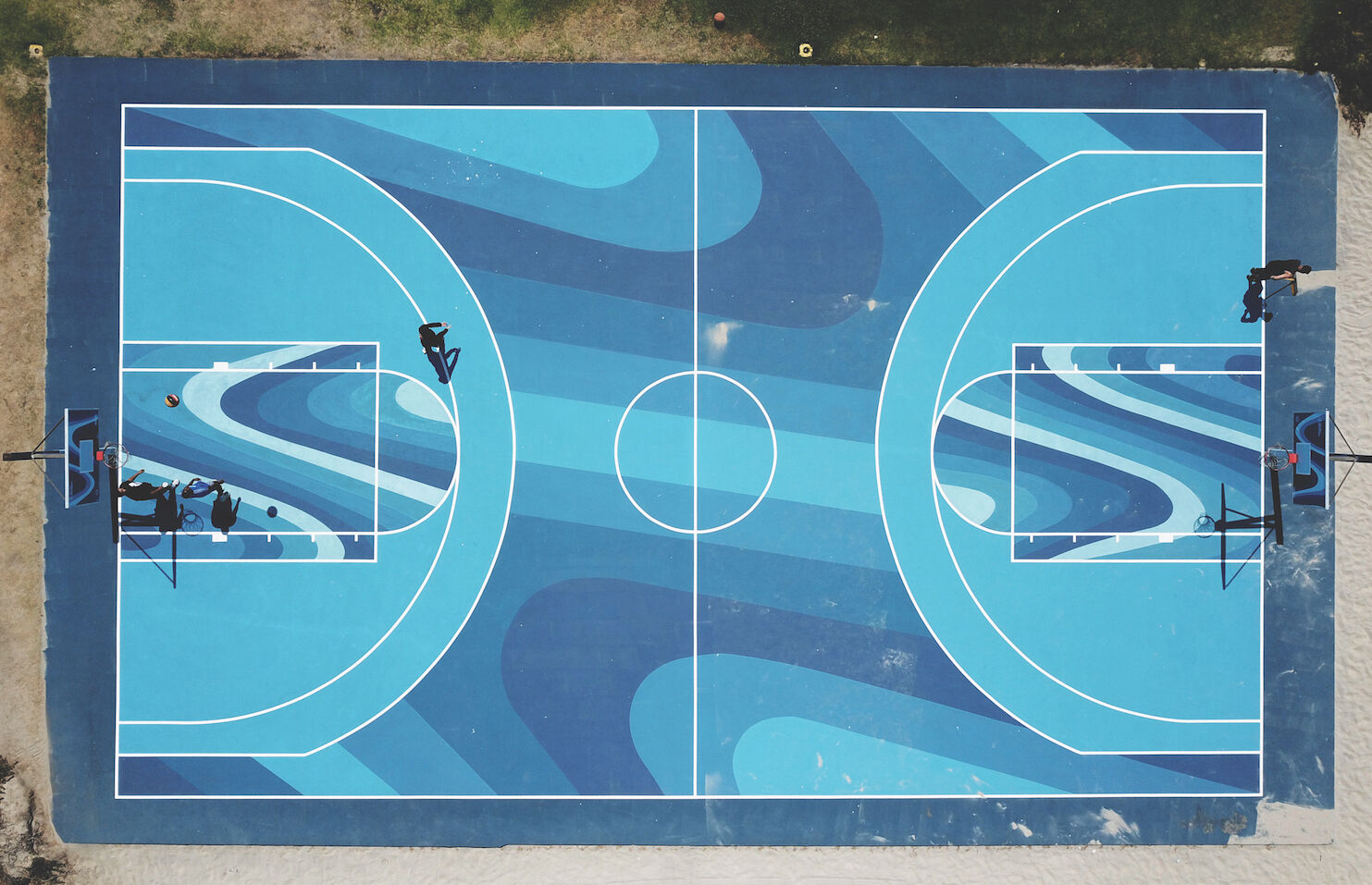
Hoops here have always had a magical effect—a full regulation court, smack dab on the beach. The ball smells like sunscreen. No fence; out of bounds is in the sand. And it just got an artful resurfacing in honor of local basketball legend, Bill Walton—who’s been a member of the South Mission Beach Sports Park & Rec for 25 years.
Best Surf Shop Nowhere Near Water
Happy Battle Surf Co.
Yep, in City Heights. Specializing in boards from local shapers, owner Mark Polintan (who grew up on a pineapple farm in the Philippines) has created an infectious gathering place for surfers to support their peers. Like chasing tubes in exotic locations, you never know what or who you’ll find here, but you’re guaranteed to leave stoked.
Best Way to Justify Surfing All Day to Your Family
100 Wave Challenge
Surfers are selfish. No matter how many waves we catch, we always want more. And while there’s no shot we’ll ever change, we can at least direct that impulse toward a good cause. At the annual 100 Wave Challenge, participants commit to riding 100 waves in one day to raise funds for the local nonprofit Boys to Men Mentoring.
Nicolle Monico is an award-winning writer and the director of creative projects, digital editor for San Diego Magazine with more than 19 years of experience in media including Outside Run, JustLuxe and The San Francisco Chronicle.
Today’s seniors are more connected than ever, with a renewed focus on retirement as a time of discovery and enriching experiences. The ultimate reward for a retirement well-earned is the wisdom to appreciate it all, and what better place to enjoy that unique perspective than Vi at La Jolla Village, in the heart of San Diego.
All-access pass to good living.
As a Continuing Care Retirement Community (CCRC), Vi provides access to a connected and fulfilling community while making it easy to plan for future care, should the need ever arise. With a care plan in place, residents enjoy greater financial predictability and long-term value, freeing them to focus on making the most out of retirement.
Resort-style amenities at the epicenter of a cultural hub like San Diego offer a retirement experience unlike any other. Paired with exceptional dining, spacious accommodations and dedicated staff, the best of maintenance-free living is all around. And with the introduction of Vista 360 Well-Being, Vi’s panoramic approach to wellness, there are more ways than ever for residents to access it all.
The harmony of mind, body and community.
Courtesy of Vi at La Jolla Village
The key to longevity is striking the right balance in maintaining an active lifestyle with an active mind in a fulfilling community. With newly renovated community spaces and restaurants, Vista brings a variety of opportunities for residents to elevate their well-being through Vi-exclusive “Signature Experiences.”
Vista Enrich takes an evidence-based approach to brain vitality, keeping residents at the forefront of cognitive health through exergaming (exercising + gaming), nutritional plans and informative workshops. It is also home to The Brain Vitality Studio, an innovative facility dedicated to cognitive fitness that has garnered national recognition.
Vista Discover invites residents into stimulating educational experiences, from chef-led cooking demos and guided wine tastings to lectures at local universities and intimate lectures following cultural outings.
While Vista Enrich focuses on brain health and Vista Discover engages residents intellectually, Vista Explore cultivates a sense of adventure through curated travel and local excursions. But broadening one’s horizons doesn’t always require a plane ticket. One recent event brought a taste of the world right to the community: an onsite “jazz cruise” featuring live music and global cuisine served at a series of themed “ports” all within the community’s own ballroom.
“Location, location, location”
Courtesy of Vi at La Jolla Village
One of the biggest perks of life at Vi at La Jolla Village is its proximity to just about everything. With easy access to transportation and local attractions just steps away, residents can explore and engage with their community at their own pace.
“There are trolley and bus stops within a 5-minute walk that will get you to the beach, UCSD Campus, medical appointments, downtown La Jolla or San Diego, et cetera. We rarely use our car,” said resident Tom Yager.
With the best of San Diego just steps away, residents don’t just live in the city, they live within reach of everything that makes it special.
The best of all worlds.
Courtesy of Vi at La Jolla Village
At Vi at La Jolla Village, retirement isn’t a chapter to slow down; it’s an invitation to discover more. Tailored community experiences created by Vista, paired with the vibrant pulse of San Diego just outside the door, mean that residents don’t have to choose between security and adventure, connection and independence. They get all of it.
This is what an all-access pass to good living looks like: the comforts of an elevated lifestyle, a community built for growth and a city made for discovery – all in one place.
To learn more about Vi at La Jolla Village or for details on available floor plans, visit ViatLaJollaVillage.com/SDM.
What Will It Take to Make San Diego a Global Arts City?
Jonathon Glus on the Art + Design District, investing in the creative economy, keeping artists in the city, and what we can learn from places like London and Chicago
Jonathon Glus is the Prebys Foundation senior fellow leading the development of the Art + Design District at the Downtown San Diego Partnership. He has been asked what an arts and design district is many times. In our conversation, I asked him instead to describe what it isn’t. His answer opened up a broader discussion about what San Diego has and hasn’t invested in, what it has the capacity to become, and what other cities have done that we haven’t. Glus speaks about global art fairs and architecture biennials in Chicago and long tables at dinner parties all with the same fluency. He also discusses who gets to live in the neighborhoods where creative work happens, and what it means when they can’t afford to stay.
Claire Johnson: You have been asked what an arts and design district is many times. Can you tell me what it isn’t?
Jonathon Glus: It is not a place designed intentionally and specifically for tourists. Of course there will be opportunities for tourists to come, but the district is really focused on creatives, on creative education, and on the creative workforce—as well as our major performing arts organizations. That is the emphasis.
What does the district need to do in the next five years for you to consider it a success?
[It needs to] develop greater connectivity between the anchor institutions—the symphony, Broadway San Diego, the opera, all the wonderful things happening in Balboa [Park]—and the creative workforce that will be living and working in that neighborhood 24/7.
What does San Diego not have that you wish it did?
We have not been intentionally investing in the contemporary art product that other major cities have been building. A contemporary art fair. A biennial that reflects the ethos of this region. Chicago developed an architecture biennial about eight years ago. London has a design biennial. Desert X, right here in Southern California, invests in and elevates contemporary artists inside a city. We have not really been playing in the global art market in a way that we have the capacity to.
What capacity do we have?
We have a wonderful foundation. Two theater companies that produce work that goes to Broadway more than many regional theaters in the country, major museums, artists teaching at UC San Diego and University of San Diego. What a city does when it wants to take itself to the next level is intentionally create the product. Miami went after the Art Basel fair; they did not passively receive it. You have to have the intention and the will, and you have to go after it. We haven’t done that in the way that other cities have.
Look at what we did with the tech sector; we’re now a major tech center. That was intentional. Leadership organized around it. We have to do the same thing around the arts. We have a lot of contemporary art collectors here. We have a lot of galleries. But the ecosystem of the business of contemporary art is not as organized or as visible as it should be.
Which city is your North Star?
It’s bits and pieces of different cities. Dubai has invested very quickly and very intentionally in contemporary art—art fairs, design fairs, higher education, artist residencies from all over the world. London has centered artists and creatives in the contemporary zeitgeist in a way that was not true 40 years ago. They built biennials. They ensured British artists had affordable housing and workspace. They made sure the media paid attention to what they were doing.
If you don’t have an artist at your dinner table, it’s not a dinner party. That sounds elitist, but it’s true. It shows the value that artists have in a community. Our relationship culturally with Tijuana is really significant here because artists in Baja seem to be at the table.
We’ve talked before about how food, fashion, design, and art aren’t siloed anymore.
They aren’t. When super creative people are in a community doing extraordinary work, that draws other super creative people doing extraordinary work. That’s why other arts and design districts around the world end up populated with some of the most interesting restaurants and young fashion designers. Creatives want to be around other creatives.
Which leads to the economic argument…
Our creative economy already employs about 170,000 people and generates more than $11 billion in economic activity. It’s large and robust. But we must center all of this in accessibility and affordability. Williamsburg used to be affordable. Artists can’t afford to live there anymore. Wicker Park and Bucktown in Chicago—artist central, now unaffordable. If we’re going to invest in this district, we have to be really intentional about housing and workspace, so creatives have a place in the future of this district.
I see all these new supper clubs and creative collectives popping up. What is the lesson there for San Diego in terms of the commercialization of cultural and creative groups?
I think the lesson is that nothing changes. What do people love? Long tables. Why? Because you’re with a lot of people—some you may have known your entire life, but most you don’t. And if it’s driven by a creative process, all the better. We know one of the best ways to do that is around food, but also music.
For the Art + Design District, part of why we’re leaning into the process is because, culturally, we’re bringing down the barriers between film, fashion, multimedia, tech, and architecture. It’s an experiential mashup in the best possible way.
And it’s not just about art and design, but community writ large. Creative expression is something we all desire. Whether it’s at a long table, at the opera, or in your studio, we gravitate toward creative expression as a way of building community and communicating with the people around us.
Is there a question I should have asked you but haven’t?
I hope you are writing about this in seven years when the district is fully mature. But this is just the beginning for all of this. I think that’s what’s most exciting to me. We don’t know what this is going to be like, but we know it’s going to be creatively centered, and that’s super exciting to me.
Sebastián Morúa is the Senior Vice President of Brand & Innovation for San Diego FC. He oversees Playmakers, the program through which the club has, over the past three years, engaged with over 80 working artists—not as marketing partners, but as co-creative directors.
Morúa didn’t build Playmakers as a community-outreach program bolted onto a Major League Soccer franchise. He built it as the identity of the franchise. When we sat down, he talked about the World Cup, San Diego’s creative workforce, his challenge to other sports franchises in the city, and the mural of heroes he hopes people will see one day when they close their eyes and picture San Diego FC.
Claire Johnson: Why does an MLS team invest in arts and culture?
Sebastián Morúa: I want to answer that in two parts. Philosophically first—because I think what you’re really asking is why should any sports team do this when most don’t.
Sport is a platform for transformation. It has proven that over and over. We saw it this summer with countries participating in the World Cup for the first time and what that did in their home countries—the sense of self-identification, pride, possibility. That is the power of sport.
When you take a sports team that’s fueled by that principle and understands what it could mean for other stakeholders in a community, you start to think about what you can accomplish in collaboration with them. One of those stakeholders, very early on, was the creative community. If we were going to build a team that represents this place and its people, we needed to go to the source. Artists are uniquely positioned to translate the essence and the soul of a community. When you zoom out and look at the multitude of artists in a place, you start to see the fabric of that local culture. That’s where the sense of pride and possibility gets unlocked.
But you’re also San Diego FC specifically. That matters.
Our mission is to create opportunities for talent to flourish and make San Diego shine. That means the club is a platform. When we started doing the early research for the brand, we brought artists into our focus groups. The response was immediate. There was a clear need. In 2024, we ran the first full year of what became Playmakers, working with more than 20 artists to help us tell the story of how San Diego FC could weave 18 distinct communities together.
We’re in the business of developing communities through sport. We’re not in the business of fútbol to entertain communities. That is an outcome—but not the purpose.
When you started, were you thinking about the profitability of this type of program?
No. I wasn’t thinking about where this was going or how much it would cost. It instinctively felt aligned with our organizational purpose, and we made a decision to go for it. Now it’s become what it’s become.
What does Playmakers look like in 10 or 20 years?
If a fan closed their eyes 20 years from now and tried to paint a mural of the heroes that make up the club, they would see a big percentage of Playmakers artists on that mural. Ask any fan about the team they’ve supported for decades, and they’ll tell you about players, maybe a coach, maybe an owner. We’re expanding that. In our mural, there’ll be artists, entrepreneurs, community leaders, youth coaches. The community will be present.
Three to five years from now, Playmakers is an established community of creatives who have co-directed the identity of the club and the evolving identity of San Diego. If we keep the pace we’ve kept, we should have collaborated with 150 to 200 artists whose stories we’ve told and whose next steps we’ve helped support.
What would you tell another organization considering this kind of investment?
There’s a huge benefit for us as a club and as a brand. This is symbiotic. The artists have a need, we can support that need, and in return the community cares more about our club because of the investment we’re doing in the community. That’s what I would tell another organization.
What excites you most about how San Diego is changing?
San Diego is waking up to how much it has to offer the global conversation around culture. There’s a purity to life here—partly because of the weather, which allows us to spend so much time outside, in nature—and that exists alongside this incredible richness in food, music, art, and now sports.
I have a sense that San Diego is ready to unlock its full potential. You see it in the artists and creatives here. They’re ready. There’s very little hesitation. It’s more like: “Hell yeah, of course I want to do this. I know I’m talented. I’ve been waiting for something like this.”
That energy, combined with the unique lifestyle and character of this place, creates a really exciting sense of what San Diego can become in the years ahead.
Is there a question I should have asked you that I haven’t?
I would ask: What would you say to the other big players in San Diego who are—or could be—shaping the cultural fabric of our community? Do they understand the symbiotic benefit? Are they supporting it?
Because Playmakers, in the end, is a cultural compass. It’s making sure that San Diego still feels—and will always feel—represented in the creative process of building San Diego FC and what that means for San Diego.
The pitch is a canvas. Athletes are painting collectively during every game. There is a story in every game. That’s the link between sport and art. At the core, it’s the same creative process.
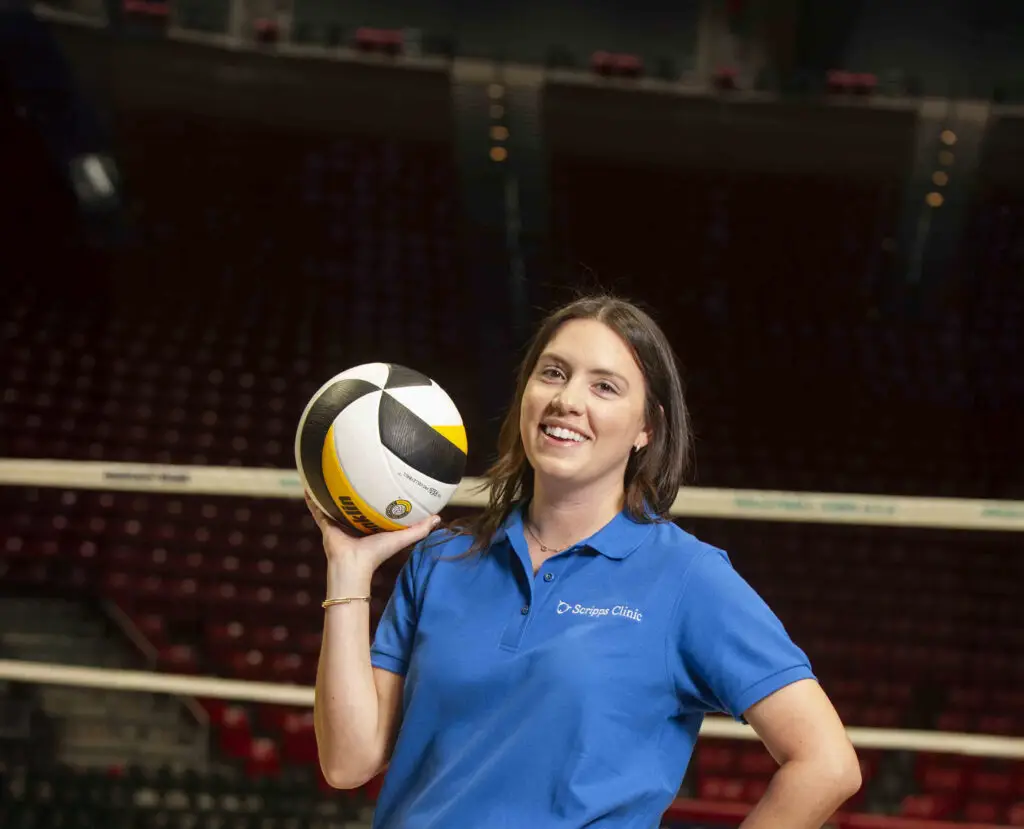
Growing up, Laika Nur, MD, Scripps Clinic sports medicine specialist, loved watching beach volleyball when the Association of Volleyball Professionals tour came to her hometown of Chicago. A talented volleyball player herself, she remembers sitting in the stands all day, and once, even got a couple autographs. Years later, Dr. Nur was attending a professional event focused on women’s sports, and the discussion turned to a new professional women’s volleyball league. The general manager and coaching staff for San Diego’s team, the Mojo, happened to be in attendance, and Dr. Nur took the opportunity to ask them if they needed a team doctor. Flash forward to the Mojo’s inaugural 2024 season, when Dr. Nur officially became the team physician. Click here to read more about Dr. Nur and how she incorporates lessons she learned on the court into her practice.
For more nutrition, wellness, and healthy living tips, sign up for the San Diego Health newsletter here.