Featured articles
Food & Drink
Food & Drink
Things to Do
Featured articles
Things to Do
Arts & Culture
Arts & Culture
Featured articles
Charitable SD
Things to Do
Things to Do
Featured articles
podcast-ep
podcast-ep
podcast-ep
Featured articles
Arts & Culture
Arts & Culture
Features
Featured articles
Charitable SD
Charitable SD
Food & Drink
Ready to know more about San Diego?
SubscribeReady to know more about San Diego?
Jensen Cummings is reinventing beer-centric cuisine
It’s the most exciting thing happening in the world of beer and food today. Instead of simply pairing a certain finished beer with a finished dish, Colorado-based chef (but SoCal native!) Jensen Cummings actually prepares his dishes with many of the same techniques and ingredients that are used to make beer. Fermenting. Souring. Curing. Blending. Aging. These are the foundations of the Brewed Food technique. And they are redefining the boundaries of pairing beer with food.
Part of what’s so exciting about Jensen’s approach is that he’s questioning and rebelling against what have become tired and overused assumptions about pairing food with beer: Citrusy dishes pair with wheat beers, spicy foods pair with hoppy beers, chocolate desserts pair with stouts.
As Jesse Smith (Green Flash tasting room manager and certified cicerone) puts it, “Jensen is thought-forward as far as food and drink goes.” In his work, Jensen and his team are actually experimenting (in a lab!) and focus-testing flavor combinations of every conceivable kind, all in a quest to break down the barriers of what we commonly hold as food pairing truisms.
Jensen took an interest in exploring new cooking and preparation techniques beginning in 2014, while he was a chef and beer buyer for a restaurant in Denver, Colorado. [He was also the first chef in Denver to become a certified cicerone.] At that time, he had become, as he puts it, “bored with stale beer dinners” and felt strongly that chefs and brewers could collaborate on a deeper, more meaningful level by actually sharing the methods and procedures that form the foundations of brewing. “It was a very self-aware moment that I had,” Jensen recalls, “where I realized I was the problem. I knew I wanted to disrupt something, and I was the culprit for saying here’s a dish that will very safely make sense; it’s simple and it’s easy. But while I was cooking with the beer, I began to think, ‘Why would I marinate and cook with the beer that I’m pairing with? Of course they pair together! They taste the same!’ So it was an epiphany where I realized— shit—I was the problem.” That’s when the light bulb went on and it all became clear to Jensen. He realized that you have to look at brewing as a culinary art. And once you do that, a whole new world of possibilities opens up to you as a chef.
“Brewers are chefs,” Jensen says. “They’re cooking a liquid medium, but they’re cooking.” He points out that brewing requires attention to detail, care for ingredients, and a vision of the end product. All those things, he says, are nearly identical to what a chef does in a kitchen. Making this connection was a turning point in Jensen’s career. As he recalls, “Then it was no longer about beer, it was about brewing and cooking—and cooking as brewing.” That paradigm shift was the catalyst for the birth of the Brewed Food concept.
The next phase in the development of his ideas was figuring out, as he puts it, “How do I brew my food? How do I use those ingredients and those techniques and that inspiration and apply them as a core philosophy in cuisine?”
“It was no longer about beer, it was about brewing and cooking—and cooking as brewing.”
The most central process and technique in “brewing” food is fermentation. Jensen sees fermentation as a unique way to “coax out” a whole new level of flavor from ingredients. Plus, he adds, there’s the extra health bonus that comes built right into consuming probiotic-rich fermented foods.
When he first started out, Jensen was fermenting foods in a fridge in his garage. “I just had to experiment,” he recalls. “There were no resources for this. No cookbook. No YouTube videos. There was nothing to show me how to use lactobacillus and Belgian ale yeast strains to ferment kimchi. It just didn’t exist. So we had to test and test and test.” Jensen admits there were some early fermentation mishaps. Once, when a batch of kimchi exploded, he said his garage looked like “a scene from CSI with blood-spattered brain matter on the ceiling.”
The process of fermenting ingredients is at the very heart of the Brewed Food approach—but it’s only one of many. Jensen also incorporates brewing ingredients, such as wort, hops, and grain into his recipes. Even brewing by-products play a role; he has developed a number of recipes that use spent grain and hops. “Utilizing the by-products is a thoughtful means of usage in the kitchen,” Jensen says. “I remember the first time I walked outside at a brewery and saw thirty-two trash cans filled with spent grain, with flies all over them. I was mortified! At the same time, I’m smelling the grain and it has this amazing smell—like Grape-Nuts—and I just loved it!” Jensen was aware that some people had used spent grain in things like bread and pizza dough, but he was convinced that there were a whole lot more possibilities. So he started to brainstorm about all the ways to use spent grain in recipes. The benefits of this approach, as Jensen sees it, is twofold: he gets to innovate with ingredients that most chefs have not explored, but he also gets to develop a more sustainable relationship between brewing and cooking. The more that ingredients can be cross-utilized, the less waste there is on both sides.
Creating food with brewing techniques also—almost by default—creates pairings that are more complex and more potentially satisfying than those created along the old “traditional” pairing guidelines. Because brewed food itself is prepared in similar ways to the beer it accompanies, Jensen feels there’s a more natural affinity between the food and the beer. “You’re bringing out a whole new relationship that already exists,” Jensen says, “the interplay of inspiration, fermentation, and ingredients; it’s something that’s ever-present in the way that we interact with food and beverages. We’re just opening up a new ‘lane’ to be able to really connect the two.”
The more that ingredients can be cross-utilized, the less waste there is on both sides.
Jensen is quick to point out that the Brewed Food movement is not meant to negate or deny the beauty of many well-established, simple pairings. Yes, certain foods simply go well with certain beers. That’s a given. “I’m not trying to say that a nice crisp German Pilsner with a proper Bratwurst and a really fine brown mustard isn’t one of the most amazing things ever; it is. But we’ve been there. And I’m not trying to say that all those preconceived notions are wrong,” he says, “they’re just one-dimensional.” The challenge now, as Jensen sees it, is to understand the “building blocks” of what makes up those beautiful harmonies and to apply those building blocks and truisms to all styles of cuisine.
I was lucky enough to experience an evening of brewed food a few weeks ago, when Jensen collaborated with the folks at The Patio on Goldfinch to create a four-course dinner that featured a variety of innovative and exciting dishes with beer pairings from Green Flash/Cellar 3 and New Belgium. [Jensen, who is based in Denver, has been touring the country and presenting dinners in major cities like Austin, Portland, San Diego, and Brooklyn. He is supported by a number of great organizations, including New Belgium Brewing, Tender Belly Pork Company, and the Colorado Tourism Office.]
The dinner at The Patio was an mind-blowing mix of dozens of culinary brewing techniques that created dozens of flavors and an almost infinite variety of sensory combinations on the plates. For that reason, I won’t provide a full description of each dish and pairing—there’s just too much to say and you’d be reading this piece into next week. You can, however, get a good sense of the dishes and techniques used from a simple description of the courses:
The evening began with two small bites: First, a Tea-Smoked Scallop with Pickled Strawberry and Kaffir Lime that was paired with Green Flash’s Passion Fruit Kicker Wheat Ale. Second was a small piece of Pig Heart Yakitori sitting on a dollop of Malted Barley Miso and topped with a thinly sliced Grain-Zuke Radish. Paired with this was New Belgium’s Lips of Faith Tart Lychee, which somehow developed awesome notes of cinnamon when paired with the miso.
Inside the Brewed Food Movement
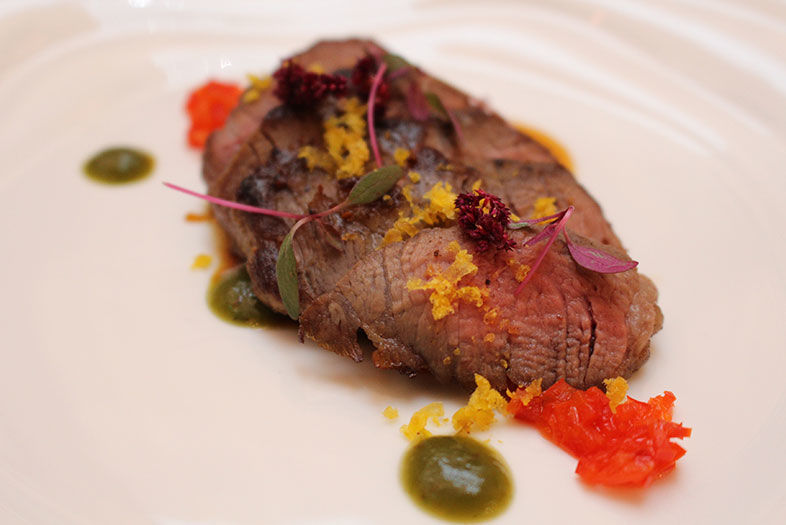
Beef Tataki with Wort Soy and Hop-Cured Egg Yolk. | Photo: Bruce Glassman
The first course featured Beef Tataki with Wort Soy, Fermented Yuzu Kosho (spicy green pepper sauce), and a sprinkling of Egg Yolk that had been cured in hops. Two contrasting beers were presented with this dish: New Belgium Fat Tire Amber Ale and New Belgium Citradelic Tangerine IPA. Each beer paired with the ingredients in a completely opposite way, but both worked surprisingly well.
Inside the Brewed Food Movement
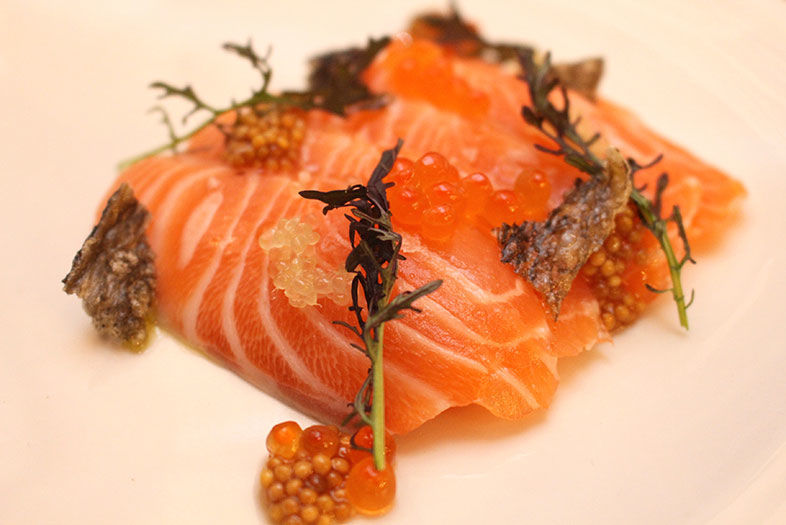
Salmon Crudo with Belgian-Beer-Cured Ikura and Pickled Mustard Seeds. | Photo: Bruce Glassman
A Salmon Crudo with Crispy Salmon Skin, Cured Ikura (roe that’s been soaked in beer!), Pickled Mustard Seed, and Mustard Frill made up the second course, paired with Green Flash’s amazing Oculus Sauvage Belgian IPA. When I bit into the salmon roe, each little orange egg burst with a tiny bit of Belgian beer… amazing!
Inside the Brewed Food Movement
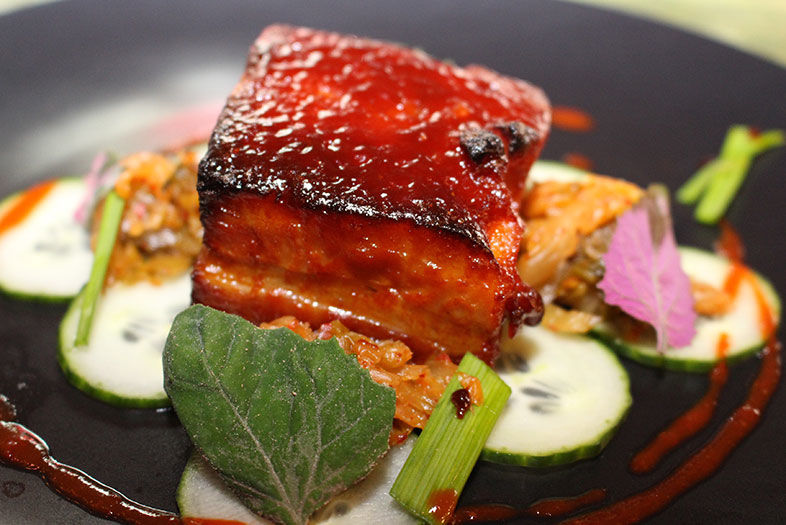
Pork Belly Bulgogi with Wild Yeast Kimchi and Funky Cherry Sriracha. | Photo: Bruce Glassman
The third course featured a cube of tender Pork Bulgogi served atop a bed of Wild Yeast Baechu Kimchi (which was made with 4 different lactobacillus strains) and adorned with a ring of Funky Cherry Sriracha. New Belgium’s Trippel—with its deep malty character and banana notes—was the perfect foil for this spicy, rich, tart, and tangy dish.
Inside the Brewed Food Movement
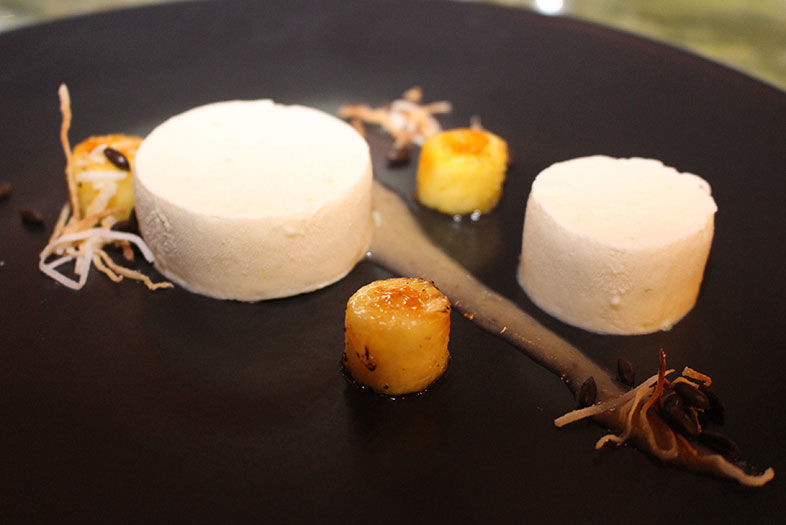
Coconut Semifreddo with Fermented Banana and Spent Grains. | Photo: Bruce Glassman
The evening ended with a dessert of Coconut Semifreddo and Caramelized Pineapple, accompanied by a sauce made from Fermented Banana and sprinkled with spent grain. Bourbon Barrel Divine Frumento (the Belgian Trippel from Green Flash) was the dark and delicious partner for this dish. The rich, heavy body of the beer, which had hints of coconut, was a delightful counterpoint to the lightness and coolness of the semifreddo and pineapple.
Jensen hopes that his Brewed Food ideas can inspire people to explore a whole host of new flavors and textures while dining, but he also hopes that his techniques will get folks to start experimenting with fermentation on their own. “Brewed Food has two lanes,” he explains. “First, we have our food lab and our test kitchen where we’re really pushing innovation hard. And then we have our movement side. That’s about getting out there and finding people who are more talented and way smarter than I am. People who can take this to a place that I can’t even imagine, doing things that are relevant to them.”
More than anything else, Jensen wants the Brewed Food movement to shake up the old embedded notions about what beer and food can achieve together. “It’s about exploration. And it’s very thought-provoking,” he says. “The dinner we did at The Patio was not just about coming, sitting down, relaxing, and enjoying the show; the diners were active participants in what was going on. They were the ‘fifth element’… the ‘sixth taste’ we’re trying to learn about. We need them because the human variable is always the hardest variable to understand.”
You can learn more about the Brewed Food movement at:
Facebook: Brewed Food
Twitter: @brewedfood
Instagram: @brewedfood
Inside the Brewed Food Movement
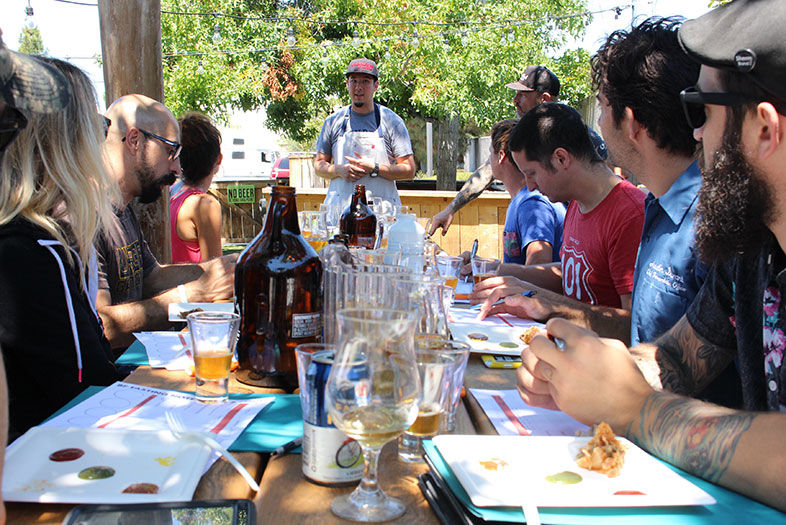
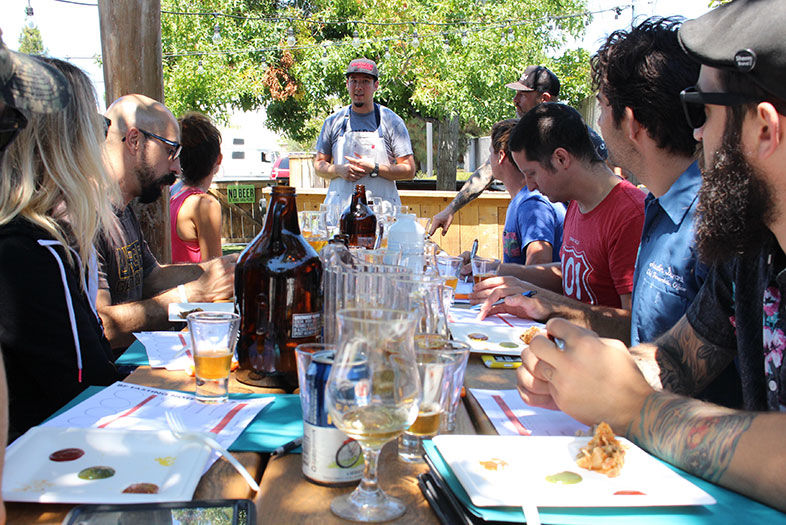
Jensen Cummings led a sensory tasting panel for local chefs at Green Flash. | Photo: Bruce Glassman

The new Hawaiian- and Japanese-inspired cafe will serve locally caught bluefin, fresh spring rolls, housemade sauces, and plenty of matcha
Not all monsters have to be scary. In fact, entrepreneur Pinyada “Ada” Primpray’s is delightful. Sea Monster, a small cafe that will serve poke bowls, fresh spring rolls, and matcha, will open in Mission Valley by the end of the year.
“The concept is a Hawaiian- and Japanese-style cafe,” Primpray explains. She calls it Sea Monster in homage to her friend’s popular restaurant Big Monster Sushi & Thai in Hawaii, but “the idea really started to take shape after I came back from a solo trip to Italy,” she says. The experience inspired her to start her own concept that mixed her culture, experience, and passion for food.
Sea Monster will be her first restaurant as an owner, but Primpray has worked in restaurants for 15 years in places like Kauai, Chicago, New York, and San Diego. She realized a similar health-conscious, seafood-forward, quick-service restaurant could work here, especially in that corner of Mission Valley where pizza and burgers reign. Plus, she points to the massive development plans for the area—between Riverwalk bringing thousands of new homes to the area and even more coming from San Diego State University, there are lots of new locals looming on the horizon.
She brought on Head Chef Wasu Gibb Palipote from Sushisamba in Los Angeles to develop the menu and signature sauces, like ink wasabi and a larb sauce. “Every couple of months, we plan to introduce a new signature sauce created exclusively for Sea Monster by [Chef Palipote],” she says. All the sauces will be homemade, including a basil creamy sauce and sesame vinegar.

Sea Monster’s menu centers around fresh poke bowls—mostly locally-caught bluefin tuna and hamachi as well as salmon, served California-style rather than Hawaiian-style (the sauces are added to order rather than marinating on the fish, which can overpower its flavor). Toppings will range from the usual, like edamame and green onion, to upscale, like uni (sea urchin). She’ll also serve fresh salad rolls, a popular light snack in Vietnam and her native Thailand, with vegetables and seafood like salmon, shrimp, and imitation crab. Everything will be served to-go, although there will be very limited seating for people who want to dive in right away.
The matcha program will start small, with six iterations planned for opening and potentially more in the future. “I really want to have mango sticky rice,” she adds. Beyond adding items to the menu, Primpray says she hopes Sea Monster will be more than a restaurant. “I want it to grow into a lifestyle brand with its own little world,” she says, pointing to the restaurant’s mascot, Smoo. A monster with aspirations of growing bigger and bigger until it takes over? Yeah, sounds about right.
Sea Monster will open daily for lunch and dinner in late 2026 at 6110 Friars Road in Mission Valley.
Listen Now: The Latest in San Diego’s Food and Drink Scene
Have breaking news, exciting scoops, or great stories about new San Diego restaurants or the city’s food scene? Send your pitches to [email protected].
Beth Demmon is an award-winning writer and podcaster whose work regularly appears in national outlets and San Diego Magazine. Her first book, The Beer Lover's Guide to Cider, is now available. Find out more on bethdemmon.com.
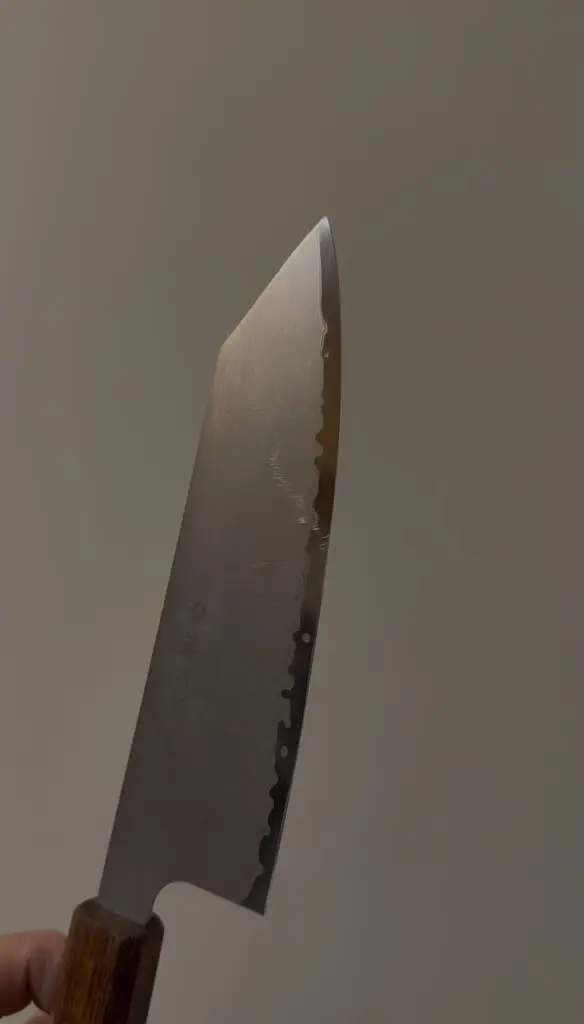
Kuya Sharpens owner Joshua “Jhun” de Andres turned a meditative practice into a business caring for prized kitchen knives—one whetstone at a time
“A sharp knife is a safe knife,” says Joshua “Jhun” de Andres, owner of Kuya Sharpens. It only takes a light touch to guide a properly-sharpened knife, while dull knives require much more force to cut through an object, increasing the likelihood and severity of an injury. “If you slip, that’s a lot of force that is now going into your finger, your hand, and that’s where it becomes extremely dangerous.”
De Andres started sharpening knives as a meditative practice during a time of personal grief, a way to zone in on a task with a useful and satisfying outcome. “[It was a] reminder to myself that you can fix something that’s broken and give it purpose again.” Once he ran through his own collection of knives, he started asking friends and family if he could sharpen theirs. When he’d sharpened everyone’s knives he could think of, he started posting videos on TikTok, where his first professional chef customer found him: Chef Tanner Stanich, chef de cuisine at Michelin-recognized Bib Gourmand Mabel’s Gone Fishing.

“That’s when things really started to take off,” he laughs. He uses whetstones rather than motorized belt sanders to sharpen, which gives him the ability to make microadjustments during the process for a more customized and controlled result. Whetstones also preserve steel more efficiently than other mechanical processes, which are faster, but take off more of the knife’s edge in exchange, reducing the lifespan of the knife.
Learning how to master whetstones takes a lot of time and practice, and while de Andres specializes in sharpening Japanese knives, he’ll sharpen a knife from anywhere. “Every knife deserves to be sharp,” he says.
Japanese kitchen knives are designed for extremely specific purposes: there’s a knife to break down a fish (deba), cut through boneless raw fish for sushi and sashimi (yanagiba), slice vegetables (nakiri), carve meat (sujihiki), debone poultry (honesuki), and even knives only the executive chef can use (kiritsuke). Few other culinary cultures utilize such ultra-specialized tools, and Japanese steel is prized for its extreme hardness and ability to maintain a razor-thin edge for decades when properly cared for.
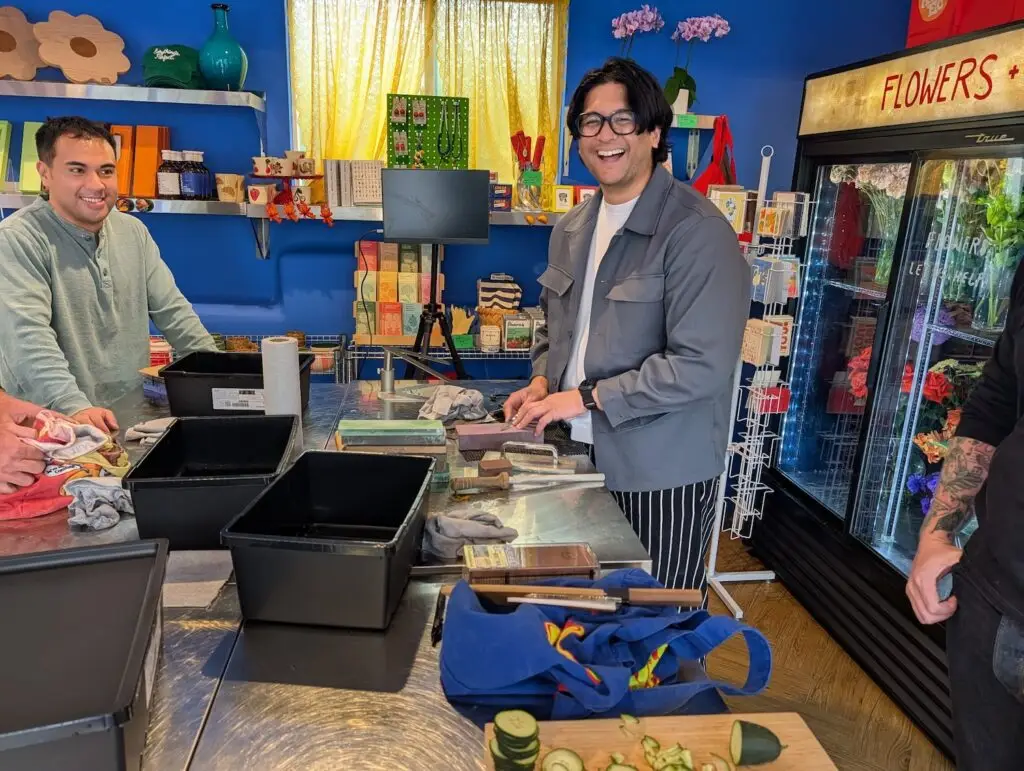
De Andres is still figuring out different ways to expand his business: hosting workshops at Home Ec on Adams Avenue, creating knife restoration tutorials, and launching private lessons, all while continuing to sharpen knives people bring to him or even send from across the country. And he knows that for both home cooks and professional chefs, sharpening a knife that may have cost hundreds of dollars on a whetstone can feel overwhelming. Will I ruin it? Will I break it?
“You’re most likely not going to break it,” he promises. “But you are going to make it yours, and you have to kind of be okay with that.” Knives age and change just like humans do. Sharpening is an essential part of maintenance, and shaving away the dull edges to restore a shine takes care. And de Andres cares a lot.
“It’s just been really life-giving to me,” he says. “I know it seems really silly that taking a knife and putting it on a whetstone can change your perspective on how you view the world, but for me, it came to me at a time when I needed it most.”

Listen Now: The Latest in San Diego’s Food and Drink Scene
Have breaking news, exciting scoops, or great stories about new San Diego restaurants or the city’s food scene? Send your pitches to [email protected].
Beth Demmon is an award-winning writer and podcaster whose work regularly appears in national outlets and San Diego Magazine. Her first book, The Beer Lover's Guide to Cider, is now available. Find out more on bethdemmon.com.
Check out the stacked lineup of talent participating in this year’s celebration of food, cocktails, wellness, and SoCal energy
Tickets to the Del Mar Wine & Food Festival get you in the door. The real fun is figuring out who you’ll run into once you’re there. This year’s weeklong schedule of exclusive events, running September 30–October 4, includes dinners, tastings, and loosely-supervised chaos where celebrity chefs and local icons finally let their hair down.
The festival has a track record of the unexpected: Bryan Cranston and Aaron Paul once toasted their mezcal brand Dos Hombres with an intimate dinner at the Lodge at Torrey Pines (and then, evidently unsatisfied, kept drinking it on the cliffs above Blacks Beach with a rotating cast of San Diego and Food Network chefs. Alex Morgan showed up for a dinner under the lights honoring the country’s most badass women chefs). Drew Brees ran a celebrity pickleball tournament where the guy from It’s Always Sunny in Philadelphia got absolutely humbled by locals.
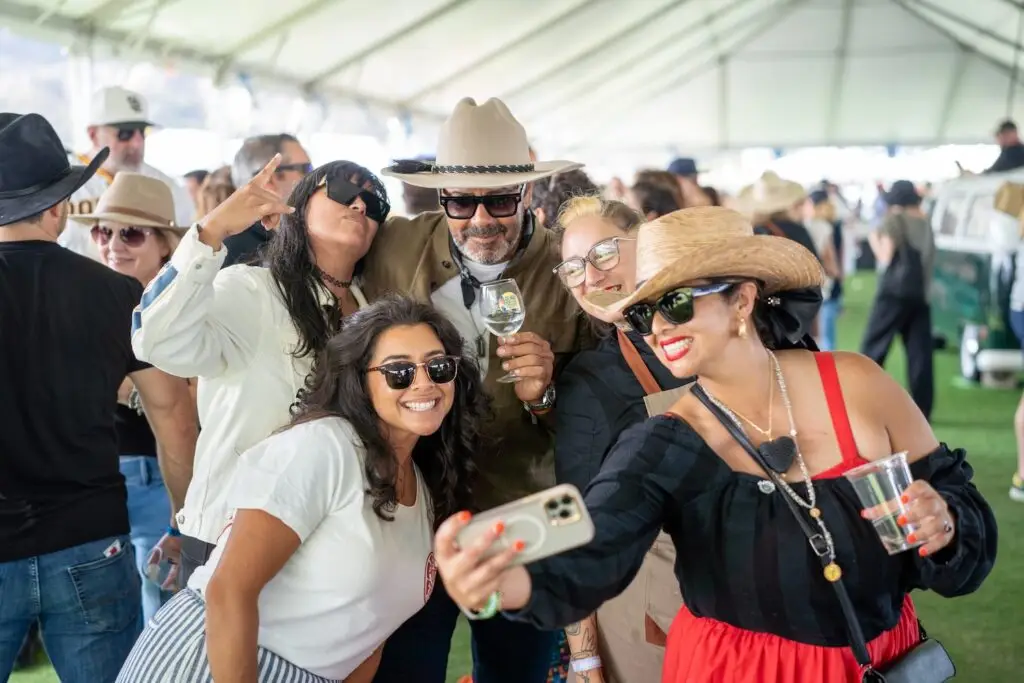
If you scored a ticket to last year’s Grand Tasting, you might’ve caught Guy Fieri doing exactly what Guy Fieri does: strolling the grass, signing t-shirts and foreheads, and hanging off the DJ surf van like it was built for him. Meanwhile, local chef Ethan Yang of Glass Box walked off with the Chef Competition surfboard.
So whether your plan for 2026 is to corner legendary San Diego chefs like Victor Jimenez of Cowboy Star and Jon Sloan of Juniper & Ivy in person, or just aim for a spontaneous golf cart ride with a Food Network star—here’s your cheat sheet for where to run into a celebrity chef, TV personality, award-winning winemaker, or pro athlete at this year’s Del Mar Wine & Food Festival.

Consider this your soft landing into festival week—the walk-around tasting that eases you in before things get chaotic later on. Monarch Ocean Pub hands its patio over to the flavors that define San Diego eating: Baja seafood done right, coastal bites, Mexican flavors with some heat behind them, all the staples locals will fight you over.
The celebrity sightings here lean more “bump into” than “spot from across the room.” Troy Johnson—Food Network judge, San Diego Magazine chief content officer and co-owner, Emmy-winning host, a man who has eaten his way across the entire country professionally—is the type to materialize at whichever station has the longest line, because he already knows it’s worth the wait. Ask him what he’s had so far. He’ll have opinions.

Then there’s celebrity pastry chef Karen Krasne, owner and executive pastry chef of Extraordinary Desserts, James Beard House alum, and a woman Forbes once ranked among the top 10 pastry chefs in the country—which tracks, because you might find her holding court next to a tray of her roasted pecan shortbread dipped in white chocolate, explaining exactly why this is the flavor combination. You will listen to every word, too, because you’ll want to try that cookie.
This is an opening night party where the person next to you in line might just be the one who baked the thing you’re about to eat.

Fifty years ago, a Napa Chardonnay beat France at its own game and rewrote what the world thought it knew about wine. This dinner is that legacy, poured by the family who built it, course by course.
Under the arches at Fairmont Grand Del Mar, Ernie Hahn and the Hahn family, who partnered with the Barretts to revive Chateau Montelena into the Napa powerhouse it is today, host an evening built entirely around the winery’s most iconic pours. Every course gets its own pairing straight from the Montelena portfolio, so you’re not just hearing about the Judgment of Paris, you’re tasting the wine that started it.
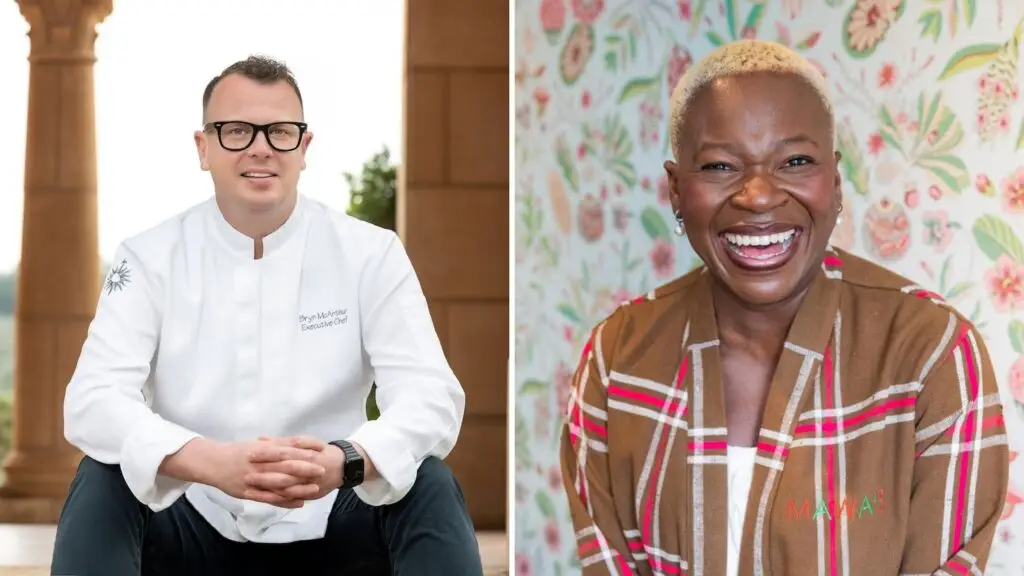
Chef Mawa McQueen, a former James Beard Best of the West winner out of Aspen, brings globally inspired cuisine and serious technique to the table. Alongside her, Fairmont Grand Del Mar’s executive chef Bryn McArthur leans into farm-to-table sensibility shaped by a career of global kitchens. Together they’re building a menu meant to hold its own against wine that already changed history once.
This is the rare dinner where the wine isn’t just accompanying the meal, it’s the reason the meal exists. Fifty years after Paris, the rematch is happening right here in Del Mar.

Isabella Dallas is a freelance writer for San Diego Magazine and the Arts and Culture Editor at The Daily Aztec in her final year at San Diego State University. She previously worked as an editorial intern for SDM, but when she’s not writing, you can find her trying the best coffee spots in SD, devouring the latest rom-coms, and indulging in anything and everything pop culture.
At Vi at La Jolla Village, residents don't have to choose between security and adventure, connection and independence. They get all of it.
Today’s seniors are more connected than ever, with a renewed focus on retirement as a time of discovery and enriching experiences. The ultimate reward for a retirement well-earned is the wisdom to appreciate it all, and what better place to enjoy that unique perspective than Vi at La Jolla Village, in the heart of San Diego.
All-access pass to good living.
As a Continuing Care Retirement Community (CCRC), Vi provides access to a connected and fulfilling community while making it easy to plan for future care, should the need ever arise. With a care plan in place, residents enjoy greater financial predictability and long-term value, freeing them to focus on making the most out of retirement.
Resort-style amenities at the epicenter of a cultural hub like San Diego offer a retirement experience unlike any other. Paired with exceptional dining, spacious accommodations and dedicated staff, the best of maintenance-free living is all around. And with the introduction of Vista 360 Well-Being, Vi’s panoramic approach to wellness, there are more ways than ever for residents to access it all.
The harmony of mind, body and community.

The key to longevity is striking the right balance in maintaining an active lifestyle with an active mind in a fulfilling community. With newly renovated community spaces and restaurants, Vista brings a variety of opportunities for residents to elevate their well-being through Vi-exclusive “Signature Experiences.”
Vista Enrich takes an evidence-based approach to brain vitality, keeping residents at the forefront of cognitive health through exergaming (exercising + gaming), nutritional plans and informative workshops. It is also home to The Brain Vitality Studio, an innovative facility dedicated to cognitive fitness that has garnered national recognition.
Vista Discover invites residents into stimulating educational experiences, from chef-led cooking demos and guided wine tastings to lectures at local universities and intimate lectures following cultural outings.
While Vista Enrich focuses on brain health and Vista Discover engages residents intellectually, Vista Explore cultivates a sense of adventure through curated travel and local excursions. But broadening one’s horizons doesn’t always require a plane ticket. One recent event brought a taste of the world right to the community: an onsite “jazz cruise” featuring live music and global cuisine served at a series of themed “ports” all within the community’s own ballroom.
“Location, location, location”

One of the biggest perks of life at Vi at La Jolla Village is its proximity to just about everything. With easy access to transportation and local attractions just steps away, residents can explore and engage with their community at their own pace.
“There are trolley and bus stops within a 5-minute walk that will get you to the beach, UCSD Campus, medical appointments, downtown La Jolla or San Diego, et cetera. We rarely use our car,” said resident Tom Yager.
With the best of San Diego just steps away, residents don’t just live in the city, they live within reach of everything that makes it special.
The best of all worlds.

At Vi at La Jolla Village, retirement isn’t a chapter to slow down; it’s an invitation to discover more. Tailored community experiences created by Vista, paired with the vibrant pulse of San Diego just outside the door, mean that residents don’t have to choose between security and adventure, connection and independence. They get all of it.
This is what an all-access pass to good living looks like: the comforts of an elevated lifestyle, a community built for growth and a city made for discovery – all in one place.
To learn more about Vi at La Jolla Village or for details on available floor plans, visit ViatLaJollaVillage.com/SDM.
Surf’n Slaw founder Kumi Alexander is introducing local farmers market crowds to okonomiyaki, the savory Japanese pancake she grew up eating
After 15 years married, my husband and I tend to agree on most things. But there’s one argument we both refuse to bend on—I prefer okonomiyaki Osaka-style, and he’s a die-hard Hiroshima-style devotee. (To be fair, we both adore both styles, but at this point, it’s just fun to have a low-stakes disagreement.)
Okonomiyaki is one of Japan’s greatest comfort foods, a savory pancake that’s about the size of a DVD, if you aren’t too young to know what that is. It’s not terribly hard to make—it’s flour, eggs, dashi stock or water, and a whole heap of shredded cabbage, plus optional fillings like green onions, pork belly, or bonito flakes, all cooked fresh on a flat top griddle. Drizzle some kewpie mayo and okonomiyaki sauce on top, and you’re hot to go.
However, it’s not easy to make well, and as you now know, people have capital-O Opinions about Osaka-versus-Hiroshima. Hiroshima-style layers the ingredients one by one rather than mixing them together, adding a layer of soba or udon noodles and topping it all off with a fried egg. For Osaka-style, all the ingredients are mixed together and then cooked on the griddle, so every bite includes every ingredient in a hodgepodge of deliciousness. (One Osaka variation called modan-yaki does include soba noodles mixed in the batter, but they’re not traditionally used in that regional version.)
Despite a childhood spent in Osaka, Japan, Kumi Alexander specializes in making Hiroshima-style okonomiyaki. “Okonomiyaki has been part of my life for as long as I can remember,” she explains. “My parents ran their own business when I was growing up, so Saturdays were often busy, and okonomiyaki was one of my mother’s go-to lunches because it was simple and easy to make.”
Alexander came to San Diego seven years ago with a desire to bring a part of her culture with her—not just a product, but a feeling. “When I thought about what could do that, the answer was almost obvious: okonomiyaki,” she says.
She originally launched Surf’n Slaw as a mobile pop-up food stand in August 2025, offering what Alexander calls Japanese-meets-California okonomiyaki. “Our full Surf’n Slaw includes cabbage, noodles, umami dough, beef, shrimp, and vegetables,” she explains. The menu also has a “Green Wave Slaw,” an Osaka-style version that can be made vegan and gluten-free, as well as matcha drinks.
Currently, Surf’n Slaw pops up at farmers markets in North Park, Scripps Ranch, Hillcrest, La Jolla, and La Mesa, as well as other local markets and community events. Eventually, she may expand to a permanent location, but that’s a future goal. And while Alexander hopes that one day okonomiyaki will be as well-known to American audiences as ramen or sushi, for now, she’s just happy to share a bit of home with San Diego.
Listen Now: The Latest in San Diego’s Food and Drink Scene
Have breaking news, exciting scoops, or great stories about new San Diego restaurants or the city’s food scene? Send your pitches to [email protected].
Beth Demmon is an award-winning writer and podcaster whose work regularly appears in national outlets and San Diego Magazine. Her first book, The Beer Lover's Guide to Cider, is now available. Find out more on bethdemmon.com.
San Diego entrepreneur Kenji Blouin-Ito is turning a tiny Uptown Inn space into a destination for bentos, coffee, snacks, and more
Tokyo unquestionably holds the title as one of the best, if not the best, food cities of the world. But despite the plethora of Michelin-starred kaiseki restaurants and hole-in-the-wall ramen joints, you’d be remiss in walking past glowing signs beckoning you to enter one of the 56,000-plus konbini across the country.
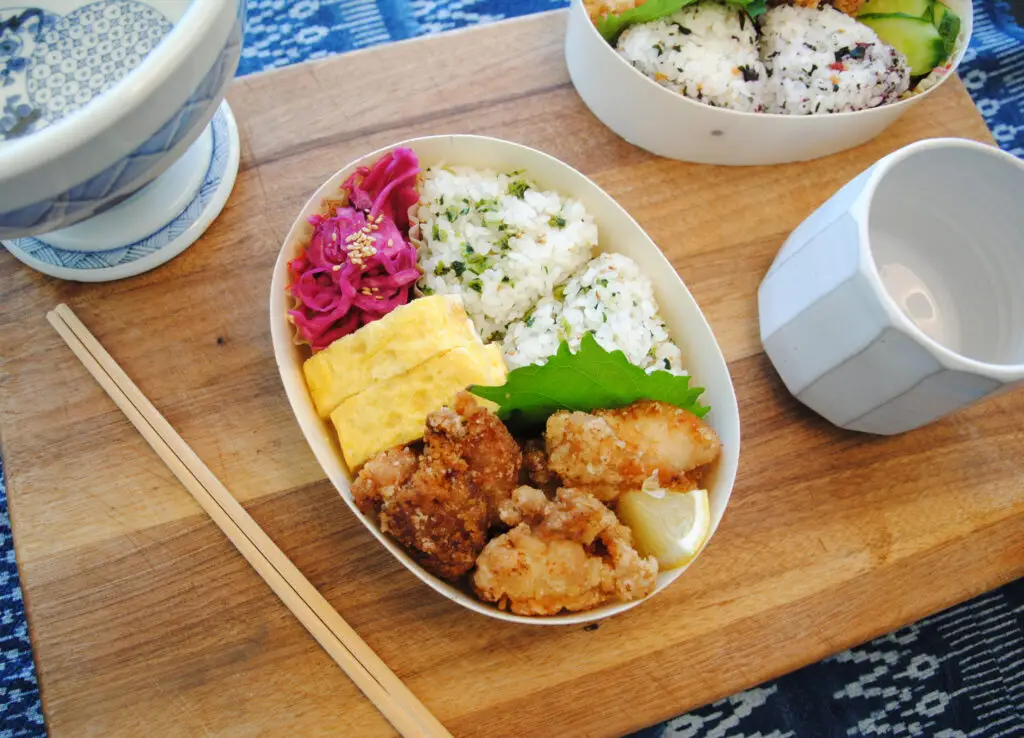
Konbini cafes like Lawson’s, FamilyMart, and 7-Eleven may look like run-of-the-mill convenience stores, but convenience store culture is a completely different animal there. Absent are the sad, floppy hot dogs sizzling sweatily on a rotating wheel of misery. Instead, konbini are stocked with a bevy of hot and cold drinks in every imaginable flavor, meals like tamago sandos (Japanese egg salad sandwiches) and prepacked bento boxes, snacks like onigiri (handheld triangles of rice and seaweed, often filled with fish or pickled plum), and even limited-edition merchandise (not unlike Wawa’s line of merch).
Soon, Hillcrest will get a taste of konbini culture. Hako Hako opens in front of Uptown Inn by Vantaggio, next to Ramen Ryoma, in early 2027.
Kenji Blouin-Ito, a half-Japanese, half-French San Diego native grew up eating Japanese food at home and during trips across the Pacific. “I remember looking forward to eating bentos on the train,” he says, grabbing quick items to munch on without sacrificing quality or succumbing to cost. When in France, he saw a rise of appreciation for casual Japanese cuisine, “long before it happened here.”

So he decided to bring it here. After AB 626 passed in 2018 to allow different jurisdictions to permit Microenterprise Home Kitchen Operations (MEHKOs), Blouin-Ito joined Foodnome, the first legal marketplace for homemade food in the US, as a co-founder. Eventually, the national nonprofit The Cook Alliance took over the project, leaving him open to the next new idea but with the experience of running a food-based business.
“That experience changed how I think about food, not just what makes it good but what makes it work,” he explains. Bento boxes felt affordable in a time of inflation, convenient in a bustling world, and versatile to a variety of palates. When he got the chance to open a konbini himself, he went for it.
His family runs Uptown Inn, a mix of apartments and hotel rooms that’s seen increased food traffic over the past few years. “We had a small space in front of the building that wasn’t being used, and it just made sense,” he says. Hako means “box” in Japanese, a reference to both bentos and small space from where he’ll sling freshly made bentos, coffee, drinks, pastries, snacks, and a small retail selection.
Hako Hako will initially open for morning and afternoon hours, but you don’t have to wait until next year to get a taste of Japanese culture. Blouin-Ito’s concept is popping up at various coffee shops around San Diego, with a few coming up: Easy Does It on September 19 and Cafe Moto on October 17. Until then, practice the art of gaman: patience with grace.
Hako Hako opens at 819 University Avenue in Hillcrest in early 2027.
Listen Now: The Latest in San Diego’s Food and Drink Scene
Have breaking news, exciting scoops, or great stories about new San Diego restaurants or the city’s food scene? Send your pitches to [email protected].
Beth Demmon is an award-winning writer and podcaster whose work regularly appears in national outlets and San Diego Magazine. Her first book, The Beer Lover's Guide to Cider, is now available. Find out more on bethdemmon.com.
San Diego Magazine's Private School Guide 2026
NewBridge School is San Diego’s only school dedicated to the education of students with dyslexia and related learning profiles. For 30 years we have successfully served students with dyslexia, dysgraphia, dyscalculia, receptive/expressive language disorders, ADHD, executive functioning and memory deficits. Students transition successfully into academically rigorous high schools and colleges across the country. Why NewBridge? Training, training, training (plus intensive individualization, and comprehensive program design). All teachers are trained and retrained biennially in Orton-Gillingham, the only approach proven to remediate dyslexia based on Science of Reading research, and complete a year-long training program. Every aspect of our program is designed around our students’ learning styles and needs. Every class is taught by a highly-trained expert, and our Speech/Language and Occupational Therapy teams embed throughout the day. Our multisensory, multi-tiered math program has been developed in conjunction with sister schools and experts across the country. Don’t wait—early intervention is magic!
Enrollment: 100
Grades: K – 8
Tuition: $30,000
Deadline: Rolling
Gender: All-inclusive
Details Nonsectarian
Open House Tours by appointment

12285 Oak Knoll Road • Poway, California 92064
858-679-5744 • [email protected] • thenewbridgeschool.com