Featured articles
Featured articles
Things to Do
Guides
Things to Do
Featured articles
Things to Do
Things to Do
Things to Do
What's next
Featured articles
Featured articles
Featured articles
Things to Do
Things to Do
Guides
Ready to know more about San Diego?
SubscribeReady to know more about San Diego?
The chamber opera addressing human trafficking made a lasting impression
So just what do scientists do on a Friday night in La Jolla? Last Friday they were rockin’ out to the sounds of a bitchin’ surf band. Nothing like crashing a party filled with some of the world’s most brilliant minds, but hey—I came bearing gifts. The stack of pizzas I brought was devoured by the grad students in 10 seconds flat.
The host of Friday’s shindig on the cliffs was San Diego’s very own B. Greg Mitchell, renowned research biologist at Scripps Institute of Oceanography. Mitchell knows how to throw a party, jumping up with the band to whale on his harmonica. He is an absolute character with pure magnetism and was the host with the most. Surrounded by some of the smartest in the city, all donning plaid flannels mind you, the dance floor really began to fill when the band knocked out some old classics like “Mustang Sally” and Zepplin’s “Immigrant Song.”
Like food or wine, this time it was the music that pulled all the people together onto the dance floor. Scared that I wasn’t smart enough to hang with this new crowd of marine biologists, that fear melted away as the music got louder and we all started to let down our guards and sway. The band was whaling and we were jammin’. That house on the cliff transformed from a bunch of shy guys and gals to a raging mosh pit. Okay, maybe not a mosh pit. But everyone was rocking out in a major way. Clearly great tunes are another common denominator that connect all the lively characters here on the Mesa.
After Friday’s party, I shot Greg an e-mail thanking him for letting me crash and asking if he’d let me chat him up in the coming days. Our meet-up was a success and I can’t wait to reveal more about this brilliant mind that does not rest. Rock on my friends. Rock on.
Fitbit Local San Diego
Am I behind the times? Fitbit? That’s the second time I have heard that buzzword this week. Apparently there is a neighborhood chapter, La Jolla Fitbit Local, that meets up at our treasured Torrey Pines State Reserve this Saturday. What better place to get some exercise while meeting new friends? Torrey Pines is one of my favorite spots to get a good workout. Great conversation with perhaps a special someone new? Set to our majestic cliffs? It’s a no brainer.
January 16, 9:00 a.m.-10:00 a.m.
Helen Edison Lecture Series
Myrlie Evers-Williams, Thomas Piketty, Bob Woodward, Alex Butterfield… Who has the Queen Bee of the Mesa, Ms. Mary Walshok curated for her top notch Helen Edison Lecture series in 2016? Next week Barry Lopez, award-winning author and environmentalist will headline in a conversation with Steven Schick, UC San Diego Professor of Music. Topic of discussion: “Music and Nature.”
January 20, 7 p.m., UC San Diego Price Center East Ballroom
San Diego Magazine’s Big Ideas Party 2016
“Let’s build a smarter city infrastructure.” “Let’s put a farm in every community.” “Let’s develop an arts district downtown.” “Let’s make our neighborhoods about community and connection, not about isolation and consumerism.” YES! I have found my people and perhaps you will too. Who wouldn’t want to be a part of this year’s SD Mag Big Ideas Party 2016? It’s like the ultimate think tank of visionaries. Man, I can’t wait to hear what these people are doing and have I got a few ideas for them to chew on—like branding the coast from Carlsbad/Oceanside to Baja, bike stations on the Mesa to push connectivity, collisions, and innovation, social credit as a next step to microfinance loans, cuisine for a cause… Perhaps the biggest—working collectively to get shit done and move this city forward! This will be at the latest hot spot on the Mesa, Malarkey’s Farmer & the Seahorse. Be sure to grab your tix now and come throw your big ideas in the mix!
January 21, 6 p.m., Farmer & the Seahorse
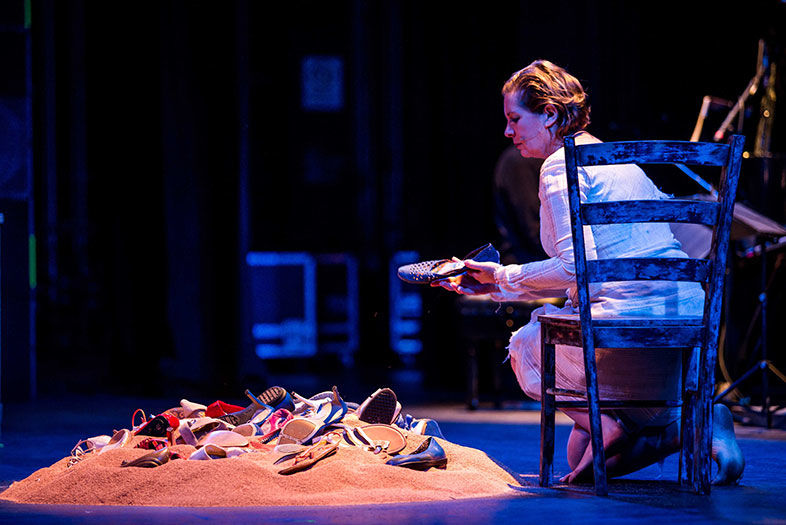
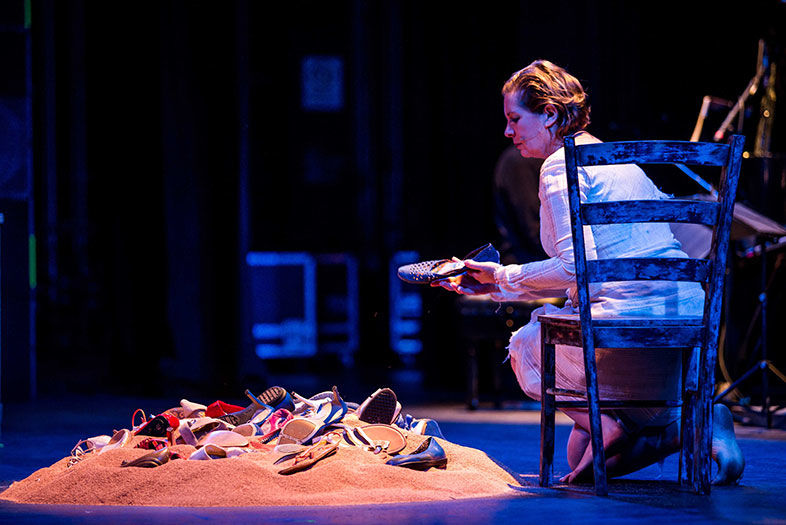
The sight and sound of the chair as she dragged it across the stage made me cringe. When I headed last night to the opera Cuatro Corridos on campus at the Conrad Prebys Concert Hall, I didn’t know what to expect. The only operas I had ever seen were Aida and Madame Butterfly. And rock operas are my favorite, Jesus Christ Super Star, Elton John’s Aida, and yes, Phantom. Melodic, catchy, powerful. Music that you would want to download and listen to again and again while driving, cleaning the house, or daydreaming about a lover. Cuatro Corridos was anything but catchy and melodic, with its trio pounding and plucking away the cacophonic scores. What it was, however, was powerful. Unnerving and disturbingly powerful.
The sight of the chair scraping against the stage mixed with the chords the pianist played to mimic the movement of the protagonist got under my skin and made me want to scream. Think fingernails on a chalkboard. Times 10. But maybe that’s just the reaction Cuatro Corridos is trying to provoke? Repugnance and disgust for what happened in the lives of these innocent victims of human trafficking. I noticed I was uncomfortable the entire performance and that the music pushed me to places I didn’t want to go. But the subject matter was an uncomfortable one and the way the libretto unfolded on the screen, it was as if the music and the unveiling of the story verse by verse kept us moving forward, unwillingly at times. And then there were moments when you knew the ending but remained intrigued. Fascination with the abomination? Perhaps.
Cuatro Corridos paints four perspectives of women involved in the human trafficking that went on between the small village of Tenancingo and the U.S.–Mexico border. A young victim, a female member of the Salazar Juárez brothers’ kidnapping ring, a Chicano policewoman in San Diego, and another young woman forced to work in the “Fields of Love.”
This opera is definitely an experience that strikes a harsh chord in your gut. The music, the singing and the visuals projected on the screen all played integral roles in the telling of the stories. Unlike your usual opera, the three musicians were on stage and with a solo performer the audience was able to change their focus between the three. They could move from the pianist, guitarist, and percussionist to the soprano center stage, to the images and libretto on the screen stage left. Back and forth, letting the music and images take them on the journey. In an opera, we usually don’t focus on the musicians themselves. This chamber opera gave us the opportunity to do just that. At a symphony or concert, when on stage, a musicians performance is perceived as passionate yet graceful. The pianist last night, standing to hit high notes or pluck the strings of the piano from his baby grand, played with passion but broke from the norm. The guitarist created such odd sounds cradling his guitar while the percussionist switched neurotically from one instrument to the other. Their awkward movement added to the element of uncomfortability, mimicking the tone of the opera. At times it didn’t make sense. Yet the weaving of the three—sound, song and visuals—together had such a powerful impact. Part of me wanted to stand and run from the ugly truth. Another part of me was too intrigued to stop listening.
Is my interpretation of this production completely off? Perhaps. But art is subjective and this was my experience with the opera. I would have given anything to read the minds of the others in the audience. Were they as uncomfortable? What questions or reactions were swimming through their minds? Were they shifting in their seat, uneasy, unsettled, wanting the music to stop? It will be interesting to read about other people’s reactions. Art is meant to push and challenge us, to provoke conversation, to leave a lasting impression. Cuatro Corridos did just that.
This month is human trafficking month. Let’s not turn a blind eye. Let’s discuss.
Life on the Mesa: ‘Cuatro Corridos’ is Disturbingly Powerful
Susan Narucki in ‘Cuatro Corridos’
The winners received more than $15,000 altogether for their businesses
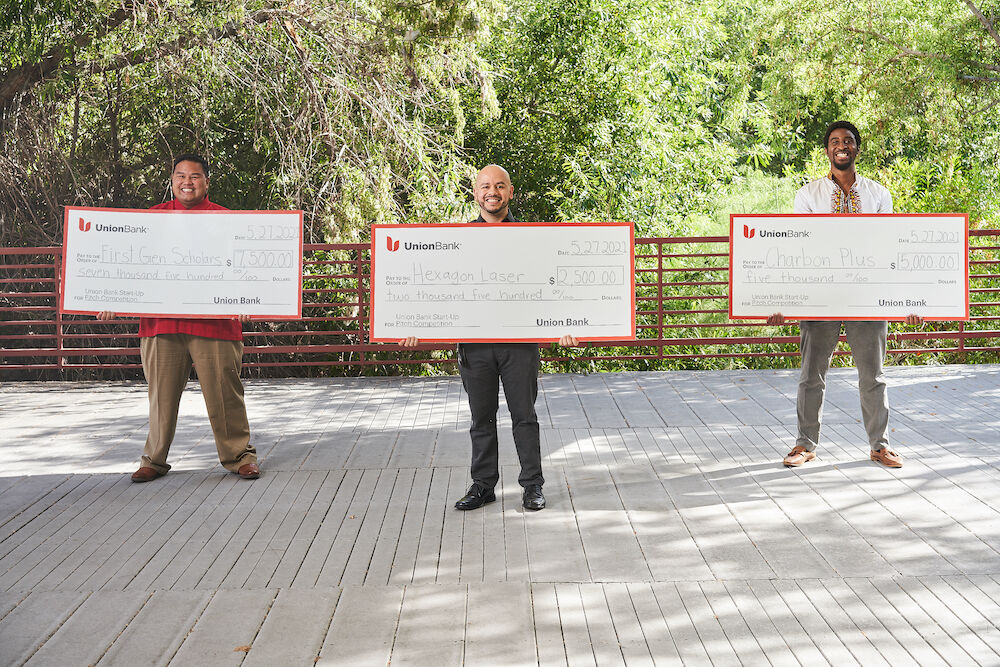
The founders of 11 small businesses competed in Union Bank’s fourth startup pitch competition on May 27, and three were awarded a total of more than $15,000 in funding. All the entrepreneurs are recent graduates of a business accelerator program hosted by Connect All @ the Jacobs Center, which is dedicated to minority-owned companies. Contestants completed a four-month training program, and then had just five minutes to pitch their ideas in a video presentation to a panel of judges. (Full disclosure: I participated as a judge in this year’s program.)
The first-place winner was First Gen Scholars, a startup founded by Jonathan Burgos. First Gen Scholars’ mission is to help high school students who are the first person in their family to attend college—they not only assist with the college application process, but provide mentorship until the students graduate. Burgos won the $7,500 prize, and he also won this year’s Audience Choice award, which was decided by public vote through the Jacobs Center’s YouTube channel.
“Jonathan Burgosdid an outstanding job showcasing the importance of First Gen Scholars and highlighting the market opportunity and the long-term vision for the company,” said Bruno Rodriguez, Union Bank branch manager for the El Cajon Valley location and a judge on the panel. “Union Bank is proud to support the future of business in San Diego through this competition.”
The second-place winner was Charbon Plus, founded by Lucien Eloundou, which produces skincare products for Black and brown skin. The unique ingredients for the charcoal mask are sourced from Cameroon. Eloundou won a prize of $5,000 to expand the line.
Taking third place this year was Hexagon Laser, a design and manufacturing company founded by Oscar Corral that specializes in artwork using laser engraving on wood. The company has created coasters and tap handles for local craft breweries such as Novo Brazil, and it also has a line of wall art and home decor. Corral won a prize of $2,500.
Other companies that participated in this year’s pitch competition included Hola Swim, Girlie Garage, and Tabby Manor.
Connect All is a partnership between the city of San Diego, the Jacobs Center for Neighborhood Innovation, and Connect with San Diego Venture Group.
Jonathan Burgos, Oscar Corral, and Lucien Eloundou won the fourth Union Bank Start-Up Pitching Competition.
From beer tech to the next big idea, here's something to do for everyone June 13-17
This year’s Startup Week is jam-packed with events, spread out over 5 days and 10 different tracks. We have rounded up the best talks, panels, and parties for beer lovers, designers, tech geeks, and aspiring entrepreneurs.
June 13, 4:30 p.m., 101 West Broadway Ste 800
Can you run a successful craft brewery in 2016 without solid tech integration? Find out what technology can do for San Diego beer at this Monday afternoon session.
June 16, 4:45 p.m., 550 West B Street 4th Floor
Are you new to beer, or just want to refine your taste? TapHunter’s panel of brew experts are here to help! This session is guaranteed to have you thirsting for a cold pint afterwards.
#CraftBeer: Building a Fan Base Through Social Media
June 15, 3:30 p.m., 101 West Broadway Ste 800
Many successful San Diego breweries are already utilizing social media to create brand buzz and drive sales. Here they’ll be sharing all their secrets.
June 13, 9:30 a.m., 101 West Broadway Ste 800
There’s a fine line between genius and madness. This interactive session will help you identify that line.
From Idea to App with User-Centered Design Techniques
June 13, 1:30 p.m., 1 Columbia Place CR 300
There’s not an app for it yet? Learn how to turn your idea into a functioning app with Zipdev Co-Founder Mike Lenny.
Design Forward: A Designer<>Entrepreneur Mixer
June 16, 5:00 p.m., Broadway Pier Pavilion
Put on your networking pants and connect with some of San Diego’s most brilliant design and entrepreneur minds.
June 13, 10:45 a.m., 707 Broadway Conference Room B1
Indulge in the three Ts during this panel focused on entrepreneurial opportunities across the border.
3D Printing: What´s all the Fuss about
June 13, 3:15 p.m., SD Library Innovation Center
It’s the future! Learn what 3D printing is really about, in terms you don’t need a PhD to understand.
Multi-Use Technology Symposium
June 15, 7:30 a.m.-5:00 p.m., San Diego Central Library
This all-day event is focused on defense and cyber security, and includes a panel titled “Be the Next Tony Stark.”
June 13, 9:30 a.m., 1 Columbia Place 24th Floor Room B
Come out sounding like a seasoned player in the startup game after this fun talk with Derric Hayne, CEO of SplashOPM.
Getting Started Guide – The Idea
June 13, 10:45 a.m., 1 Columbia Place 24th Floor Room B
Ideas are crucial for anyone looking to get into entrepreneurship, but not all ideas are good ideas. The Lean Brand author Jeremiah Gardner can help you identify the bad ones early.
Shit Startup Founders Don’t Talk About
June 15, 4:45 p.m., EvoNexus
If the title wasn’t enough to get you intrigued, this session will include honest conversation on “the good, bad and ugly” with some top San Diego startup founders.
San Diego Startup Week is June 13-17. View the full schedule of events here.

The Best Events at San Diego Startup Week 2016
San Diego Startup Week is June 13-17

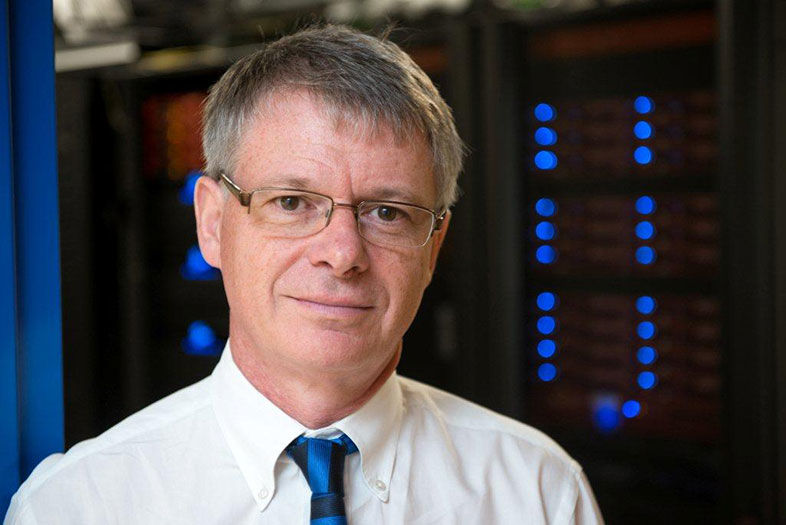
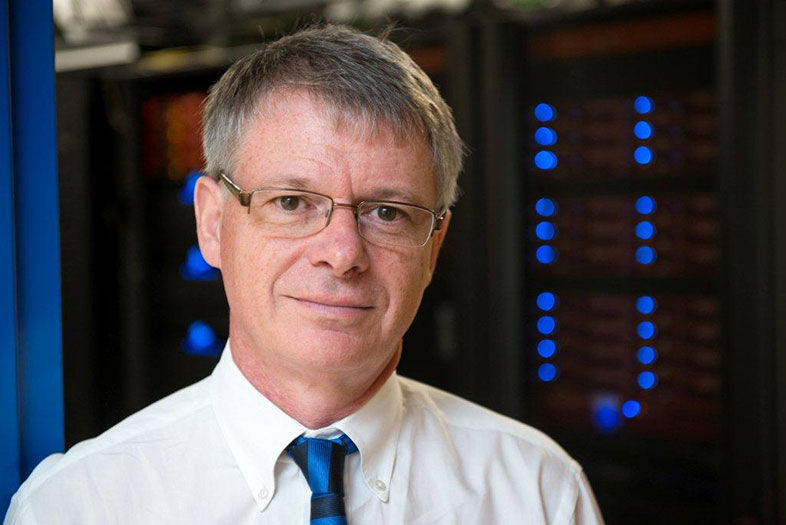
Dr. Stephen Kingsmore's team is the first to achieve a genetic diagnosis in just 26 hours
The first effort to sequence our genome, the Human Genome Project, took 13 years—an amazing feat, though not immediately relevant for patients. But now researchers from San Diego and Kansas City have made that leap, achieving genetic diagnoses in 26 hours—a new Guinness World Record.
This is a big deal. Many children born with genetic conditions wait years for answers. Infants with acute conditions can die before being diagnosed. Sequencing a sick kid’s genome—finding the genetic variants hidden in DNA’s four billion bases and quickly determining the significance of those variants—could provide crucial diagnostic information and drive life-saving treatments.
On April 25, National DNA Day, Stephen Kingsmore, president and CEO of the Rady Children’s Institute for Genomic Medicine, along with collaborators from Children’s Mercy Hospital in Kansas City and San Diego-based Illumina and Edico Genome, celebrated their world record at Rady Children’s Hospital. But the achievement means far more than international bragging rights.
“Diagnosing acutely ill babies is a race against the clock, which is why it’s so essential for physicians to have access to technology that will provide answers faster and help set the course of treatment,” said Kingsmore a few days before the ceremony.
The project, which was conducted by Kingsmore at Children’s Mercy, bested the team’s previous record of 50 hours. To shave off those crucial hours, the group used an Illumina sequencing machine optimized to move faster (kind of like putting a Tesla in insane mode). From there, the gene reads were put through Edico’s DRAGEN platform, which is designed to analyze genomic data.
The whole process took 26 hours from blood sample to initial diagnosis, results that could have a big impact on sick infants. In the original study, 65 percent of the diagnoses improved care.
But this was only one study on a handful of kids. The next step for Kingsmore and colleagues is to scale up the process so that every hospital NICU can take advantage of fast sequencing.
“I look forward to collaborating with both parties (Illumina and Edico) to implement this approach at Rady Children’s Institute for Genomic Medicine and ultimately neonatal and pediatric intensive care units across the country,” said Kingsmore.
The World Record That Could Save Lives
Stephen Kingsmore is the president and CEO of the Rady Children’s Institute for Genomic Medicine
This month, the 2026 San Diego Business Impact Awards recognized local businesses making an impact in clean energy, biotech, hospitality, and beyond
Renewable energy companies building hundreds of power plants. Biotech startups using artificial intelligence to create personalized medicine for children with rare diseases. Hospitality companies quietly powering thousands of local events. Consumer brands growing from beach-town startups into national businesses. These are the kinds of companies driving San Diego’s economy today, and the businesses recognized at this year’s San Diego Business Impact Awards offer a snapshot of where the region is headed.
Hosted July 23 by San Diego Regional Economic Development Corporation (EDC) and JPMorganChase, the second annual awards event honored four local companies for innovation, growth, and economic impact. More than 100 nominations from San Diego’s middle-market businesses were reviewed by a 10-person judging committee, with winners selected across four categories: startup, early-stage innovator, rising star, and established heavyweight.
Two-time honoree Jimbo Someck, founder of Jimbo’s organic grocery stores, also joined the event for a fireside chat on buying local, supporting emerging brands, and giving back to the community.
“San Diego’s strength comes from its makers and builders—the resilient people who endure great risks and overcome obstacles to build and scale a company,” says Aaron Ryan, San Diego Region Manager and Middle Market Banking at JPMorganChase & Co. “These awards aren’t just recognition; they spotlight the talent, grit, and innovation shaping our region’s future. By celebrating those who create and build, we foster connections and fuel the growth that keeps San Diego thriving.”

Heavyweight honoree SOLV Energy has grown alongside the country’s rapid investment in renewable power. “It’s an exciting time for SOLV Energy as we are experiencing significant growth,” says CEO George Hershman. “The business has doubled over the last year and has almost double-digit growth since its inception.”
The Rancho Bernardo-based company designs, builds, operates, and maintains utility-scale solar and energy storage facilities. Since its founding in 2008, SOLV Energy has built more than 500 power plants.
Growth has translated directly into hiring. About 200 employees work from the company’s local headquarters, including roughly 20 interns. “Our intern program is a big part of the way that we grow our workforce,” Hershman says. “Last year, 43 percent of our interns became full-time employees. We believe San Diego is a great community to build and grow a high-tech infrastructure and technology company because of the incredible workforce—the ability to attract top talent and draw from world-class universities.”
Startup honoree La Jolla Labs is tackling one of medicine’s biggest challenges by developing personalized RNA therapeutics for patients with rare diseases—many of them children with neurological disorders like ALS. Using proprietary artificial intelligence and machine learning tools, the biotech company develops treatments tailored to each patient’s specific genetic mutation.
CEO Tamar Grossman says the recognition reflects how far the company has come despite limited resources. “We’re honored to be recognized for our ability to change and save patients’ lives and turn our lean startup into a clinical company with very minimal resources,” she says.
Grossman credits San Diego’s concentration of research institutions—including UC San Diego, the Salk Institute, and Scripps Research—with creating a pipeline of talent and collaboration. “San Diego is one of the world-leading centers for technology, genomics, and RNA therapeutics,” she says. “We have over 30 RNA therapeutics companies here, and we support each other and help with anything related to drug discovery.”
She says that collaborative spirit extends beyond formal partnerships. “You can walk around Torrey Pines, go into a café, and find colleagues from the industry and have an ad hoc conversation,” Grossman says. “That’s something very unique to San Diego.”
While Snake Oil Venue Company may not be a household name, chances are many San Diegans have attended one of its events. The early-stage innovator honoree has expanded from beverage catering and mixology consulting into venue management, operating Julep Venue in Mission Hills, Bramble Bay Venue in Imperial Beach, Vesper Venue, the Chapel at Liberty Station, and five outdoor venues throughout Liberty Station—more than 500,000 square feet of event space altogether.
“We do a lot of launch parties for corporations and new products,” says CEO Mike Esposito. “I really like working on the entrepreneur side of things, where new businesses are entering the San Diego market and looking to make a splash.”
Snake Oil has executed more than 16,000 events, employed more than 1,000 people, and partnered with more than 900 local vendors, including caterers, florists, photographers, entertainers, and other hospitality businesses. The company also works with many of San Diego’s nonprofits, museums, and cultural institutions. “We get to celebrate people’s most important moments,” Esposito says. “Whether that’s a wedding, celebration of life, or quinceañera, we’re fortunate to be involved in the community in so many different ways.”

Rising star honoree ALOHA Collection is proof that a simple idea can grow into a thriving company. Founded by two roommates who wanted a better way to carry wet swimsuits after a day at the beach, the lifestyle brand has grown into a business while maintaining strong year-over-year growth.
Now headquartered in Carlsbad, ALOHA Collection employs more than 100 people and operates its California flagship store in Encinitas, which is slated for a remodel. With roots in Hawaii, the company is known for its lightweight, splash-proof travel bags that have become a familiar sight on beaches in San Diego and beyond.
“‘Aloha’ is part of our name, but it’s also how we move through the world,” says CEO Lynna Barnard. “It’s how we show up for people, the way we travel, the way we give back.” Since day one, the company has maintained a 5 percent giveback to Hawaii conservation efforts, contributing millions of dollars over the years.
“I think what’s so inspiring about ALOHA Collection, and the founders in particular, is when you dream big, those dreams can come true when you work hard and trust in the universe,” Barnard says. “It’s inspiring to be a role model for other people wanting to start businesses from humble beginnings. Start small and watch it grow.”
Together, businesses like these form a cornerstone of San Diego’s economy—not only through the jobs and revenue they generate—but through the local workers they hire, vendors they support, and investments they make in the region. Their growth doesn’t happen in isolation; it ripples outward, strengthening the broader business community and the people who call San Diego home.

A new data-mining project can help downtowns stay vibrant, and TwitchCon is moving to San Diego
A new report in The Atlantic CityLab by well-known urban studies guru Richard Florida puts San Diego at 7th on the list of Metro areas with the largest venture capital investment, ahead of Seattle. Topping the list are the obvious places such as San Francisco, San Jose, New York, and Boston. For San Diego, a town that is always lamenting the lack of venture funding, this may help dispel that thinking.
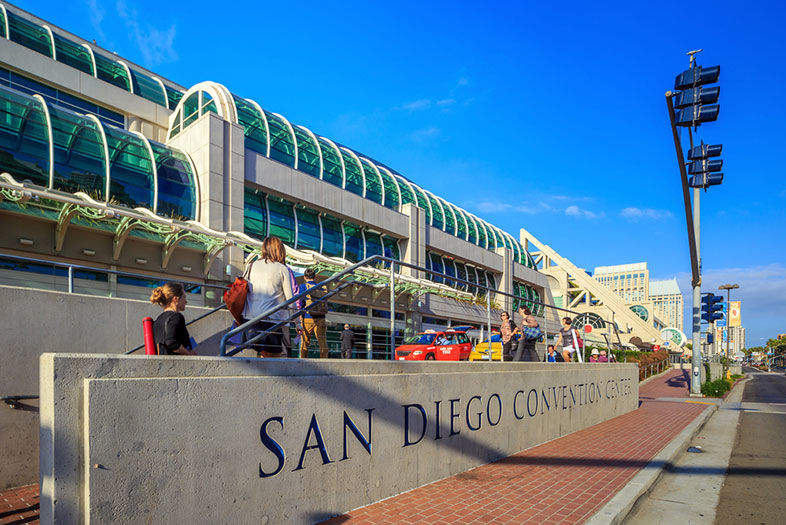
Amazon-owned Twitch has just announced it is moving its annual gaming convention, TwitchCon, from the Marscone Center in San Francisco to more spacious digs at the San Diego Convention Center.
Twitch is the world’s leading social video platform and community for gamers. It boasts 100 million community members and 1.7+ million broadcasters per month, catering to the entire video game industry.
Last year’s convention—the inaugural event—brought 20,000 people to San Francisco. With an added day and the positive buzz surrounding the event and the move, they are expecting to top that number this year.
The event takes place September 30-October 2 and you can find the details here. Game on.
Andrew Gazdecki, CEO and founder of Bizness Apps, penned this piece for TechCrunch about why he moved his San Francisco based mobile app builder business to San Diego. He makes a pretty good case. (Read a Q&A with Gazdecki here.)
A new data-mining project out of the University of Trento in Italy might help shed some light on how to ensure a vibrant city. In her 1961 book, The Death and Life of Great American Cities, urban sociologist Jane Jacobs identifies four conditions that are essential for a vibrant city. Overall she argues a physically diverse city will flourish. Specifically, she says cities need the following four characteristics. First, the city must serve more than two functions so it attracts people with different purposes at different times of the day. Second, she recommends small city blocks that give people a chance to interact with each other. Third, the buildings must also be diverse with old and new to attract diverse economic groups. Last, it’s all density—of people and buildings. Until now there has been no cost effective way to test these ideas.
The new research has used technology to create a faster, easier way to analyze a city. By using OpenStreetMap, census data, land use data, and Foursquare data, researchers were able to prove that Jacobs actually knew what she was talking about. For downtowns striving to stay vibrant centers, like San Diego, this new research could help identify areas for improvement. I would love to see some of our local open data minds (I’m looking at you, Ben Katz) take this on.
Reflexion Health, a digital health solution for physical therapy, has a new CEO. Replacing Spencer Hutchins who left in December is Dr. Joe Smith. Smith is moving to the streets of downtown from the Mesa, where he has been leading the health cost savings charge as the chief medical and science officer at West Health for the last several years. He recently stepped in as interim CEO at Reflexion and now has made it official. (Disclosure: this is my client.)
Tech Coast Angels is recruiting analysts for their Spring Volunteer Analyst Training Program. Applications are due Thursday, April 14.
1 Million Cups: Pet Wireless
Wednesday, April 6, 9 a.m.
The VineSD, 101 West Broadway
Startup San Diego hosts Startup Night at the Gulls Game
Every company attending receives a scoreboard message, a free t-shirt and $2 beers
Wednesday, April 6, 6 p.m.
Valley View Casino Center
Startup Grind San Diego hosts Steven Cox, Founder and CEO of Take Lessons
Thursday, April 14, 6 p.m.-9 p.m.
101 West Broadway
Things Will Be Great When You’re Downtown
Amazon-owned Twitch is moving its annual gaming convention, TwitchCon, to the San Diego Convention Center | Photo by f11photo / Shutterstock.com
At the annual Future of Genomic Medicine Conference, geeks are revered
#FOGM16 The closest I’ll ever be to George Church #legend pic.twitter.com/YB9DQTr9OI
— Hunter Ferrel (@hferrel08) March 3, 2016
The fan tweet seemed more fitting to Coachella than Scripps Pier. A selfie included a bearded man in the background: “The closest I’ll ever be to George Church #legend.”
George Church, right?! You know, professor of genetics at Harvard Medical School and serial entrepreneur. He helped invent genomic sequencing in 1984, created the Personal Genome Project and The Brain Initiative, cloned a woolly mammoth, co-founded nine companies.
So maybe Church doesn’t normally get the Mick Jagger treatment, but at the annual Future of Genomic Medicine Conference, geeks are revered.
Hosted by Eric Topol and the Scripps Translational Science Institute (STSI), the conference was held on March 3 and 4 at Scripps Seaside Forum and offered a quick snapshot of genomic science: successes, shortcomings, ethical considerations and everything else. It’s about as inclusive as scientific conferences get. Researchers share the stage with MDs, entrepreneurs, policy wonks, technology gurus, journalists, and patients.
And there was plenty to discuss: the Cancer Moonshot; patient access to their own genetic data; incorporating genomic sequencing into daily care; crunching petabytes of data; and what to make of CRISPR, the revolutionary genomic editing technique that allows scientists to add or remove specific genes.
CRISPR was the cause célèbre at this year’s conference. The technique offers great promise and ethical pitfalls. Many rare diseases could be repaired with a single gene fix. On the other hand, the technique is a little Gattaca for some. One of the cool things about the conference is watching scientists work through these issues in real time.
In addition to Church, the conference featured Biotech billionaire Patrick Soon-Shiong, who recently announced Cancer MoonShot 2020; Anne Wojcicki, who co-founded consumer genomics company 23andMe; Andrew Conrad, CEO of Google Life Sciences and Atul Butte, who leads the UCSF Institute for Computational Health Sciences and slayed the standing-room audience with arcane medical code humor. Okay, you had to be there.
With head-high surf pounding in the background, Soon-Shiong detailed plans to embrace immunotherapy against cancer. Rather than targeting the cancer, he believes we must target the patient, giving the immune system new tools to wipe out the disease. The Moonshot is a massive collaboration between researchers, drug companies, government agencies and others to share data and develop groundbreaking therapies.
George Church discussed more in 20 minutes than some people do in a lifetime: disease prevention, age reversal, gene editing. The buzz for his presentation was especially intense as one of his companies, Veritas, had just announced full genome sequencing and genetic counseling for $999, a new low.
The enthusiastic crowd included MDs, corporate and academic researchers, curious consumers and a high school group from Reno. Each year, science teacher Laurie Bissonette brings some of her brightest Sage Ridge High School students to the conference and STSI comps the fee—good job STSI.
The students prepare by reading some of the presenters’ research and sharing with the group. These kids are no joke. Senior Elyse Olesinski has her fingers crossed for Harvard and wants to be an oncologist and a bench researcher—attacking the problem from both sides. Junior Hunter Ferrel is looking forward to studying biology—it was her George Church tweet.
“I met George Church; that was the highlight of my trip,” said Ferrel. “He’s a legend; he’s my absolute role model. The research he’s doing in gene editing, it’s just so cool.”
La Jolla’s Geek Woodstock
The Future of Genomic Medicine Conference was held on March 3 and 4 at Scripps Seaside Forum
It’s a Self-Care Summer. Because your best self is our favorite self.
If you’re anything like us, it can be easy to get so caught up in taking care of everyone else, that your own needs get lost in the ether. But while this may be a cliché, that doesn’t make it any less true: You can’t give your best self to other people unless you’re taking care of yourself.
Sometimes, that looks like stopping in for your regular acupuncture or chiropractic appointment. Other days, it means giving your body the fresh, organic fuel it needs to truly feel and function at its best. And some other times still, it involves leaving your responsibilities behind for a weekend to pamper yourself at an incredible resort and spa.
Only you can decide what your truly need. We’re just here to help you find the best ways to get it.

Island living meets desert luxury at the Tommy Bahama Miramonte Resort & Spa in Indian Wells. When you step onto the 11-acre property, you’ll be surrounded by sweeping view of the Santa Rosa Mountains with olive trees and fragrant citrus groves decorating the grounds. In other words, everything about this relaxed but refined resort is primed to help you let go of the stress from home and enjoy easy sun-soaked days and gorgeous starry nights.
The rooms blend calming, woven textures with Tommy Bahama’s signature tropical prints and feature private lanais, making it easy unwind the moment you walk in the door. If you book one of the four Villa Suites, you’ll be treated to exclusive Tommy Bahama furniture and unique personal touches to further that feeling of instant ease.
At the award-winning Spa Rosa, the expert team will help reset and recharge your body and mind using methods and rituals inspired by the desert. The 12,000-square-foot retreat includes outdoor soaking pools, eucalyptus steam rooms, and outdoor cabanas, as well as massages, facials, and body masks—all aimed at creating a day dedicated to you. We’re particularly partial to the Day Long Escape, an indulgent all-day affair of CDBs soaks, renewing scrubs, life changing massages, and transformative facials.
Following your treatment, continue the experience with a meal on the patio at Grapefruit Basil. We love the Hamachi Crudo, a light, citrus-forward dish featuring premium yellowtail, house-made ponzu, creamy avocado, and fresh seasonal garnishes.
Whether you’re strolling the gardens, relaxing beside its saltwater pools, or indulging in a restorative treatment, you’ll be able to escape in style and relax in luxury at the Tommy Bahama Miramonte Resort & Spa.

There’s no shortage of ways to stay active in San Diego—but if you really want to enjoy everything the city has to offer, you’ve got to make sure you’re giving your body its tune-ups. Enter: Healcove Chiropractic. The board-certified chiropractors and wellness professionals at Healcove are experts at addressing that stage where you’re not injured, exactly, but you’re not at 100%, either. Maybe you’re feeling a bit tense or stressed out. Or it could be that you’re not quite moving the way you want to. Sometimes, it’s just that the accumulation of days, weeks, or even years of daily strain is starting to take a toll. No matter what stage you find yourself at, the Healcove Chiropractic team can provide integrated, preventative care centered on long-term, science-backed approaches that ensure you can always stay active and live the life you want to live pain-free.
This starts by providing truly individualized care. Every patient can expect a thorough 60-minute consultation session that includes a posture and movement screening. This allows the team to develop a completely personalized plan. That plan might include chiropractic care, acupuncture, or massage therapy, as well as functional fitness training, vibration and sound therapy, and Dynamic Neuromuscular Stabilization, a clinical rehabilitation method that retrains the body’s stabilization systems. Whatever the team recommends, you can be sure that it’s tailored to meeting your body’s needs today and the future.
There’s a reason that San Diego Magazine named Healcove the “Best Chiropractor in San Diego”—don’t wait until you’re struggling with an injury to find out why. Book an appointment today for holistic, integrated care that helps ground and heal your body before it reaches a crisis point.

West Coast wellness culture meets the community feel of Southern Appalachia at Juice Holler. Juice Holler’s menu consists of made-to-order smoothies and smoothie bowls, as well as grab-and-go cold-pressed juices, wellness shots, salads, and more. It operates from the blissfully simple premise that fueling up with food and drink that’s guilt-free and good your body should be simple, accessible, and, above all else, delicious. And if you haven’t yet made it out to the Encinitas café, which opened just this year, let us be the first to tell you: Juice Holler delivers on each and every of these fronts.
We love the Supercharger smoothie, a mood-lifting and body-fueling option made with banana, almond butter, blue spirulina, maca, grass-fed whey protein, raw cacao nibs, medjool dates, and coconut milk. We’re also partial to the Thrive Alive smoothie bowl, where avocado, mango, sea moss, spirulina, mint, coconut milk, and agave are mixed and topped with coconut, chia seeds, strawberry, mango, and chocolate drizzle. The wellness shots include the Detoxifier, a cleansing blend of kale, cucumber, lemon and spirulina, plus a shot specially designed to fight inflammation (named, fittingly, Anti-Inflammation). Probiotic overnight oats, lemon turmeric bars, and strawberry shortcake chia pudding are other standouts on the grab-and-go menu.
Much of the vibe feels beachy North County chic—think green tile with orange and pink accents, grounded with greenery and natural wood—but Juice Holler founder Kelly Sergott, a longtime Encinitas local, has also enfused the space with her Kentucky roots. In Appalachia, a holler is small valley between hills and mountains, where nature reigns, community is king, and nourishment comes right from the land. At Juice Holler, Sergott has created a holler for the busy modern times, using local ingredients to create a spot for people to come together and enjoy fresh, fast, feel-good fuel for their day.

We’ve all had that experience with a medical professional where we’ve felt rushed, ignored, or misunderstood—and ultimately, like we didn’t get the answers that we needed. But at Everwell, the holistic acupuncture practice located in Solana Beach, the care team wants to transform your understanding of what healthcare can look like.
Patients at Everwell experience care rooted in intentional listening and radical empathy—and trust us, those aren’t just corporate buzzwords. This place actually puts those ideas into practice. You will always be given the time you need to tell your story— initial in-take appointments are two hours long—and you can rest assured that your story will be believed. Every single question and concern will be addressed by a dedicated practitioner who wants to find the specific solutions that work best for you, and you’ll receive care that’s aimed at healing the body, mind, and spirit.
Everwell’s highly trained, doctorate-level practitioners blend evidence-based acupuncture with the practice of classical Chinese medicine. (If you’ve never tried acupuncture before or aren’t sure if the team will be a fit, we’d highly recommended Everwell’s complimentary 20-minute consultations.) Research shows that by stimulating specific points on the body, acupuncture activates a natural healing response in the body, helping to restore balance, regulate the nervous system, and improve overall wellbeing. This allows the practice to address an incredibly wide range of conditions from chronic pain and autoimmune disorders to digestive issues, from stress and burnout to headaches migraines, fertility and postpartum struggles, hormonal imbalances, sleep concerns and more.
At Everwell, you can expect to feel heard, trusted, respected, and cared for. This is a space that doesn’t want to be just another healthcare provider you visit; it wants to provide patients with dedicated partner who will be there for their entire health journey.