I wanted a dog for over 20 years. I dreamed about having a dog, cried about not having a dog, studied dog encyclopedias, and read dog training manuals. I was obsessed. But I also knew to wait for the right time and city before making it a reality. College in Chicago wasn’t it, and I learned during my postgrad years in New York City that Manhattan’s cramped apartments and unimpressive dog parks (if you could call them that) weren’t right either.
But then came a move to San Diego in 2013—San Diego with its dozens of parks and multiple beaches just for dogs; hiking, kayaking, and stand-up paddleboarding that include a four-legged friend; restaurants with liberal treat policies and even dog menus; and a blissful climate that means never having to walk a dog in snow, hail, or even much rain. True, the rental market doesn’t make it easy to live with a dog, especially larger breeds, but when you tally the number of things to do with your pooch (you’ll read about them in this story), you realize that San Diego takes “dog friendly” to the next level.
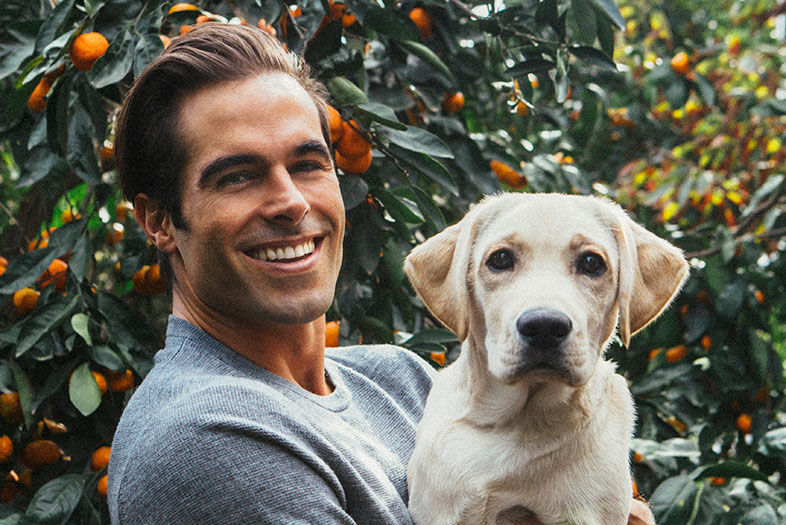
So three months after moving here, I welcomed my golden retriever, Teddy. At the time I was a newbie with no local friends or family, but Teddy forced me to get outside and, in the process, make friends. (News flash: People love puppies.) Even on the days when I felt completely friendless, he still needed to go outside, so I went, too. He kept me going, and I owe a lot of my acclimation to him.
We arrived in San Diego—him a native, me a transplant—around the same time, so all our San Diego experiences have revolved around each other. And Teddy and I do everything together: We enjoy Saturday mornings at coffee shops, kayaking in Mission Bay, and long walks on the beach. For us, like many dog owners, it’s all about the outdoors. And fortunately, the outdoors here just happen to be some of the most friendly, engaging, and accommodating places to hang with your dog. San Diego, you’re pawsome!
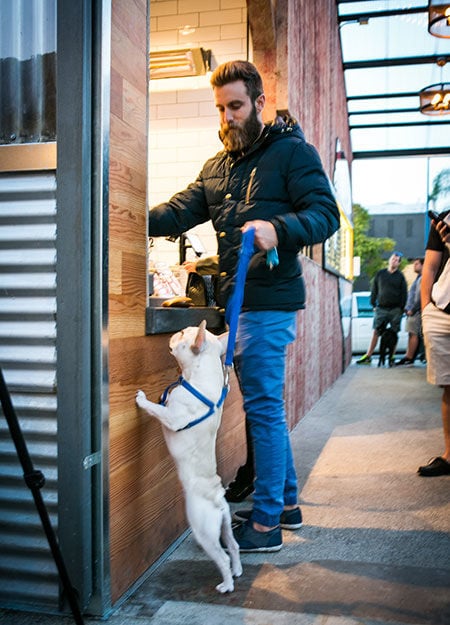
At this casual, dog-friendly counterpart to Herb & Wood, Executive Pastry Chef Adrian Mendoza has created two dog treat varieties—one with flaxseed, short rib, and bone broth, and another with peanut butter and seasonal ingredients, like pumpkin.
2210 Kettner Boulevard, Little Italy
The Quartyard
Dogs are welcome in the East Village lot-turned-community-park composed of a beer bar, coffee shop, and canteen, but they can also clock in some off-leash fun at the dog run.
1301 Market Street, East Village
The Wine Pub
Beyond a dog menu on the patio, the Point Loma wine bar hosts Woofer Wednesdays, where diners who bring their pups get 10 percent of their bill donated to Canine Companions for Independence, a nonprofit that trains assistance dogs for people with disabilities.
2907 Shelter Island Drive, Point Loma
The Dog Lover’s Guide to San Diego
The Patio on Goldfinch
Landini’s Pizzeria
The Little Italy restaurant hosts its Doggies on the Deck Yappy Hour every first Tuesday of the month with complimentary dog treats, as well as pizza, beer, and wine (for humans). Proceeds from each Yappy Hour raffle benefit a different local dog welfare organization each month.
1827 India Street, Little Italy
In-N-Out Burger
When you order a Double-Double Animal Style, don’t forget about your own animal. Ask for the unsalted Puppy Patty—a secret menu item!—for your pooch. Doggy bags are encouraged.
Various Locations
Sprinkles Cupcakes
The dessert pros are sweet on dogs, too. They offer mini sugar-free “pupcakes” topped with yogurt frosting and a bone-shaped sprinkle.
8855 Villa La Jolla Drive, UTC
The Dog Lover’s Guide to San Diego
Sally’s Fish House & Bar
The Patio on Goldfinch
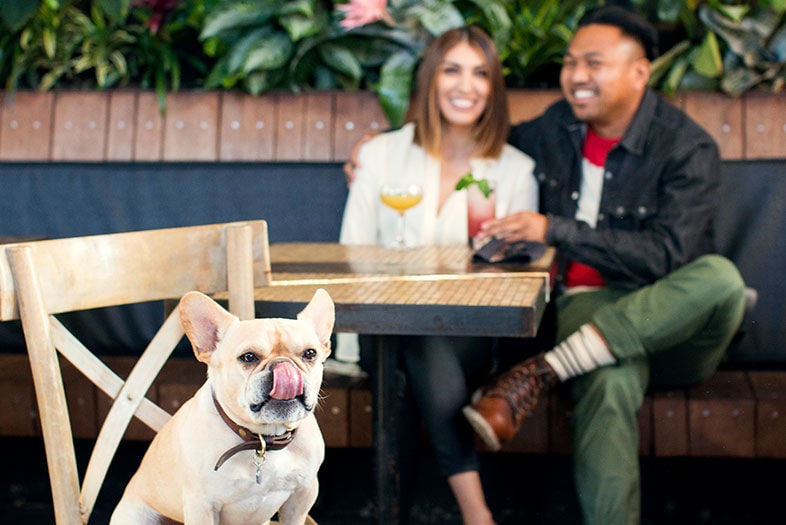
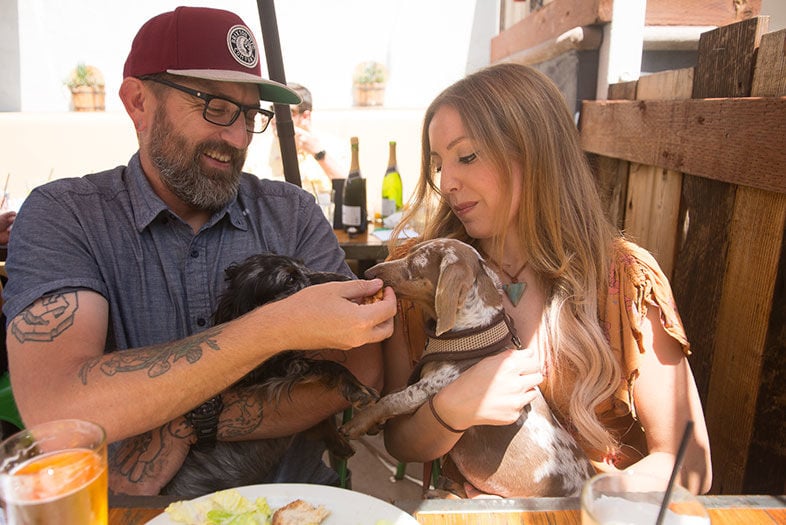
Pooches aren’t relegated to the outdoor patio at this Mission Hills restaurant; dogs and their parents are welcome in the front half of the building. Waiters promptly bring dog treats made in-house from beef trimmings, peanut butter, eggs, and water.
4020 Goldfinch Street, Mission Hills
The Patio on Lamont
Bring your dog to The Patio’s original outpost in PB, and you’ll receive half off “dogtails,” like the Bloodhound or Pomeranian.
4445 Lamont Street, Pacific Beach
Pardon My French
Hillcrest’s new French restaurant is très dog friendly, with a pup menu that includes eggs, bacon, and chicken breast.
3797 Park Boulevard, Hillcrest
Claire’s on Cedros
While you brunch on their Benedicts and “Clairecakes,” your dog is treated to house-made biscuits on the breezy patio.
246 North Cedros Avenue, Solana Beach
Sally’s Fish House & Bar
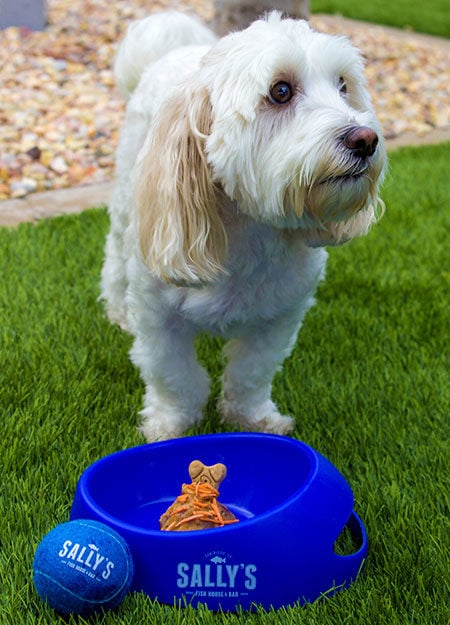
Dogs can sit, stay, and play at this Manchester Grand Hyatt restaurant, where they’ll nibble on treats like carrot peanut-butter muffins and also receive a complimentary tennis ball.
One Market Place, Marina District
Backyard Kitchen & Tap
Sure, they make their own dog treats in house, but the PB eatery also hosts quarterly dog adoption parties with raffle prizes, drink specials (for humans), and goody bags for Fido.
832 Garnet Avenue, Pacific Beach
The Dog Lover’s Guide to San Diego
The Brew Project
Woof ’n Rose Winery
The vintners behind this family-owned Ramona winery pay homage to their beloved shepherd-husky and lab in the dog-themed decor and a few of the vintage names, like the 2013 Happy Tails (a merlot–cabernet sauvignon) and the 2012 Puppy Love (a grenache noir–cabernet sauvignon). And unlike most wineries, Woof ’n Rose allows dogs on property.
17073 Garjan Lane, Ramona
The Brew Project
What’s better than beer? Puppies and beer! Brew Project’s Puppies and Pints event, held on the last Saturday of every month, includes gift basket raffles with puppy toys and treats, beer raffles, and even “pawdicures.”
3683 Fifth Avenue, Hillcrest
Encontro North Park
Their new dog offerings read like a pooch’s dream menu, including the Mutt Melt (a beef patty with cheese), hot dogs, peanut butter cheddar biscuits, and Pooch Pops, a frozen blend of shredded ice and chicken. Trust us, they’ll love it.
3001 University Avenue, North Park
The Dog Lover’s Guide to San Diego
Crack Shack
La Jolla Brewing Company
There’s the kids’ menu (fish and chips, grilled cheese, etc.), and then there’s the fur kids’ menu. Dogs can dine on burger patties, grilled chicken, and biscuits.
4536 Fay Avenue, La Jolla
Lazy Dog Restaurant & Bar
The name is a dead giveaway—this place is more than just accommodating to four-legged friends. The menu includes an entire set of dishes for dogs, including brown rice, grilled chicken, and a hamburger patty.
1202 Camino del Rio North, Mission Valley
Slater’s 50/50
You won’t be the only one indulging in carnivorous eats. Slater’s dog menu turns out the signature 50/50 patty, as well as chicken or bacon strips.
2750 Dewey Road, Liberty Station; 110 Knoll Road, San Marcos
Anthony’s Fish Grotto
Sit on the peaceful lakeside patio, where pooches can choose from a menu that includes a protein-packed mix of salmon, white fish, and rice.
9530 Murray Drive, La Mesa
Crack Shack
With an all-outdoor space, dogs are allowed anywhere at the chicken- and egg-centric eatery, preferably while munching on one of the house-made treats: a blend of rolled oats, carrot, peanut butter, and agave.
2266 Kettner Boulevard, Little Italy
Starbucks
The omnipresent coffee shop may be a part of your daily routine, but it can be a special occasion treat for your dog thanks to the Puppuccino, an espresso-cup-size dollop of whipped cream.
Various Locations
The Dog Lover’s Guide to San Diego
Yappy Hour at Hotel Del
Yappy Hour at Hotel Del
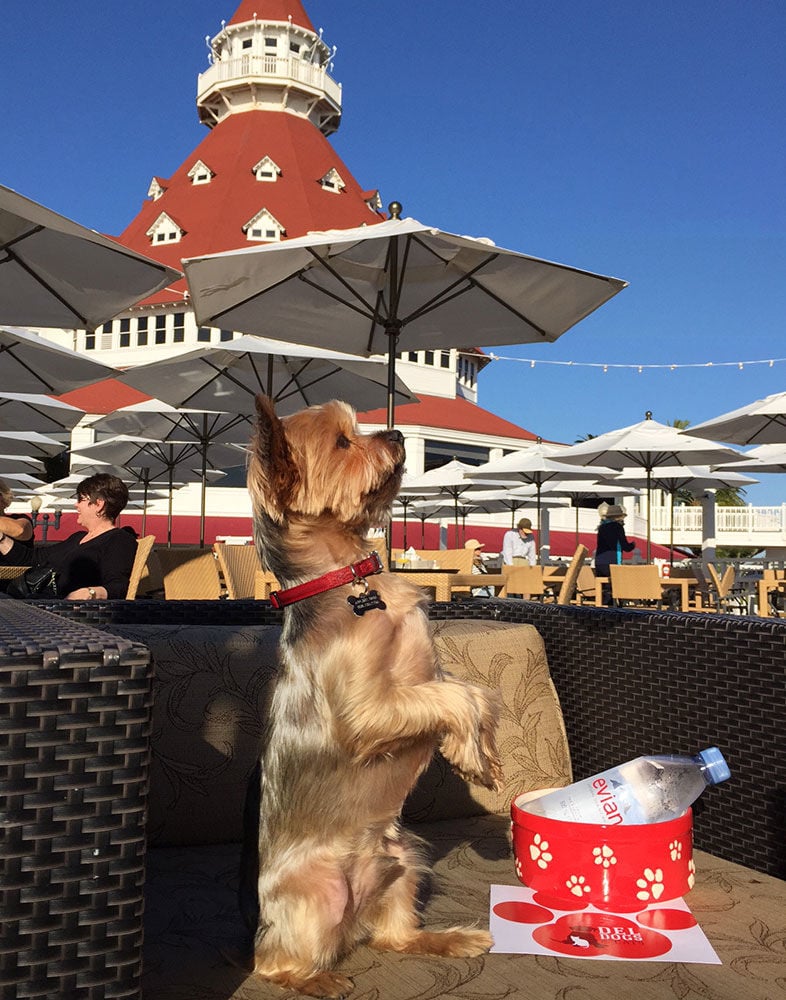
Life is anything but ruff for dogs at The Del. Their long-standing Yappy Hour holds court Sundays on the Sun Deck with “dogtail” cocktails for humans (like a Greyhound), and free Evian water and organic treats for dogs.
Last year the ballpark unveiled six semiprivate, dog-friendly viewing booths in left-center field for up to four people and two dogs. The $100 price tag includes four tickets, a pet relief area, umbrellas for sun protection, a complimentary treat for each dog, and a concierge to escort guests and their pups to their seats. Or look for Petco Park’s annual Dog Days of Summer event (typically in June or July) when pooches are allowed inside for a tail-gate party and pet parade.
The local health food store has a 20-year legacy thanks to founder Tori Rosay, who realized early on the connection between pet health and nutrition. She stocks her three locations with raw food, natural brands, and the store’s eponymous line of healthy biscuits baked in Oceanside.
2508 El Camino Real, Carlsbad; 1229 Camino Del Mar, Del Mar; 3773 30th Street, North Park
Westfield UTC
After you work out your wallet, you can work out Rover at Westfield’s on-site Bark Park, which includes a pergola for shade.
The heated pool is available year-round for rehabilitation, private swims, and pool parties for up to five dogs. The resort also offers dog parties in their yard with toys, decor, and pool access.
4393 Carmel Valley Road, Carmel Valley; markimpet.com
Urban Wolf
The new East Village pet boutique is a proponent of organic, all-natural pet diets. They sell raw meals, grass-fed bones, and organic frozen yogurt made from raw goat’s milk, as well as pet blankets, beds, and leashes.
475 10th Avenue, East Village
Animals Talk
Animal communicator Jerri Carroll has been breaking down the language barrier between pets and their owners since 2000. During hour-long sessions—conducted either in person or via photograph—Carroll gives the animal a chance to “talk” and owners an opportunity to ask questions, and all conversation between Carroll and the pets are done in silence. Noise fear? Separation anxiety? End of life woes? She’s heard it all. Results vary from the pet pinpointing a specific need (“can my human leave the music on when she’s gone?”) to helping the pet understand the owner’s concerns. She also offers homeopathic remedies.
$150/hour and $100/hour prorated thereafter, with $35 travel fee; animalstalk.net
Muttropolis
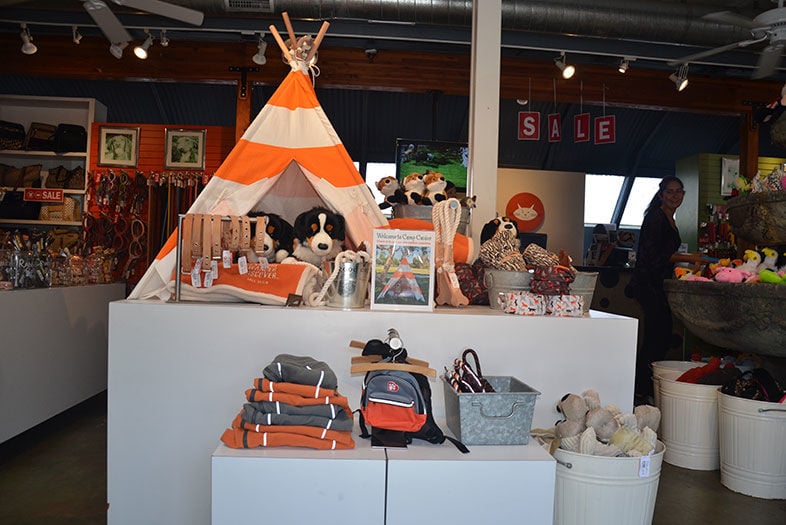
You don’t know high-end doggy fashion until you step into this boutique stocked with plaid dog coats, bejeweled leather collars, a “Chewey Vuitton” plush toy, and yes, even dog strollers.
7755 Girard Avenue, La Jolla; 227 South Cedros Avenue, Solana Beach
The Dog Lover’s Guide to San Diego
Three Dog Bakery
Leeds Dog Supply
The Encinitas-based brand is dedicated to doggy style and do-goodery. Their line of patterned, California-made collars and leashes are durable for indoor and outdoor wear, and 15 percent of every online sale is donated to no-kill rescues and shelters. For fashion that good, it’s the leash you can do.
Lucy Postins—founder of San Diego–based The Honest Kitchen, a natural pet food brand that’s even safe for human consumption—just released Dog Obsessed, a playful guidebook for living with your pooch. It includes 45 recipes (turkey frittata with basil and peaches, anyone?), tips for bringing a new puppy home, health regimens (like a diagram of how to clean dog ears), and essentials for the ultimate dog birthday party. There’s even a forward written by actress Jane Lynch. Pawsome!
Birthdays are a specialty at this North Park pet bakery. They bake custom cakes (even grain-free varieties) and a selection of frosted biscuits, and offer a discount on your pet’s birthday. If Fido really wants to get dolled up for his big day, the bakery is also home to Peticures by Tess.
2818 University Avenue, North Park
Three Dog Bakery
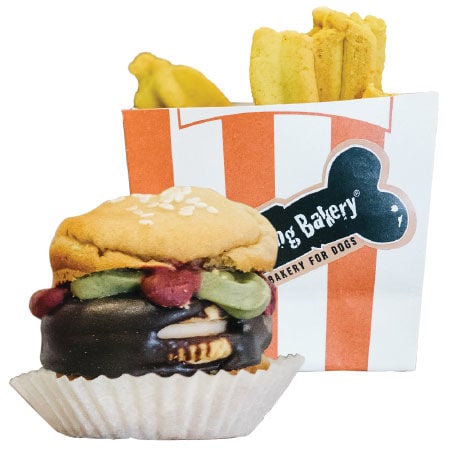
Known for their made-from-scratch ethos, Three Dog has a lineup that includes “pup-kin” spiced latte cookies, peanut butter “beg-als,” and more. The bakery uses the same ingredients we would in our own kitchens, like all-purpose and rice flours.
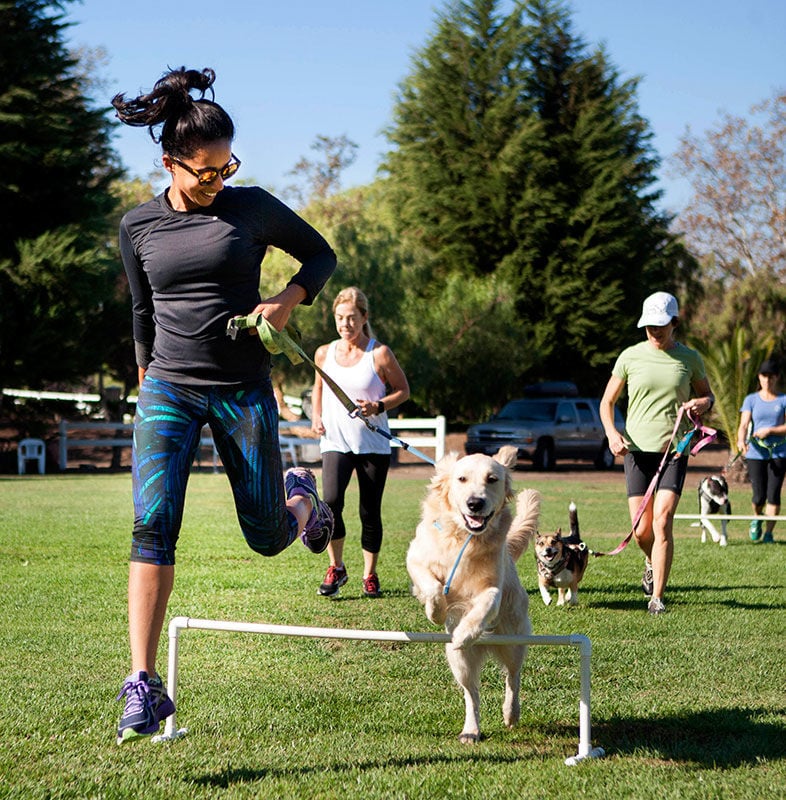
Dawn Celapino launched her doggy-and-me outdoor workout series in 2005 when she didn’t want to leave her new cairn terrier behind while she was at the gym. The series offers group hikes, boot camps, running clubs, yoga, and more across the county—all with your dog and obedience training woven into each workout. She also lends and sells leashes that tie around your waist for a hands-free workout.
Fitness pro Corey Butts leads a popular boot camp at Liberty Station—and dogs are welcome. Pups can run alongside during ladder drills, hill sprints, and more.
Yoga teacher Marjorie Nass leads Downward Dog Yoga every month at Yogasmoga boutique in La Plaza La Jolla. Once the initial chaos of the canine meet-and-greet subsides—and after a half-hour training session with Dog Zenergy—sun salutations and forward folds follow. Small pups become a part of the routine (e.g. raised with hands in tree pose), larger dogs sit alongside yogis in triangle, and all pooches get a leg stretch that’s been proven to induce tail wagging. Plenty of water and treats are provided, and proceeds from the donation-based class benefit Canine Companions for Independence. The next class is January 10.
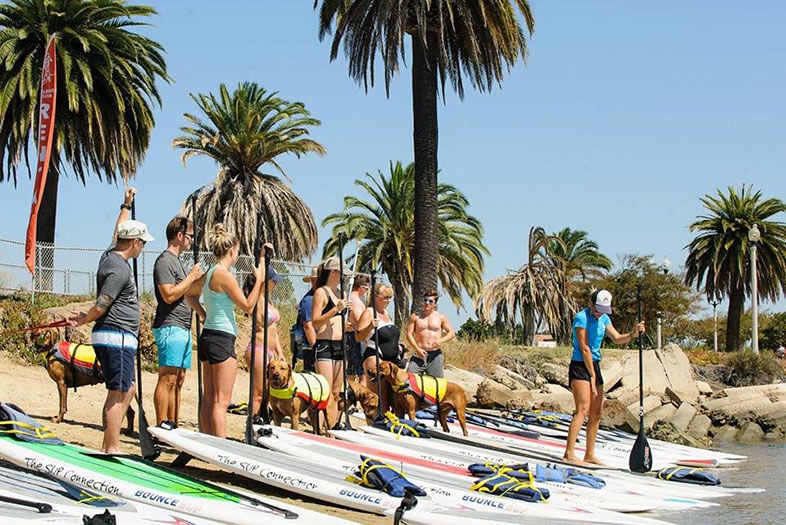
Liberty Station–based SUP Connection leads one-hour weekend SUP Pups classes (reservations required) that begin with your life-vest-clad pooch sniffing the board to get comfortable before pushing out into the water, where you’ll paddle under the North Harbor Bridge and spot dolphins at the Navy’s dolphin training facility. They’ve had every breed from German shepherds to wolf-dog hybrids, and the instructor captures all the fun via GoPro.
Aqua Adventures Kayaks & Paddleboards encourages hydrophilic dogs to join their humans for an excursion around Mission Bay and also provides doggy life vests. (Even if your hound knows how to swim, the handle on the jacket makes it easier to pull larger dogs back into the kayak after they inevitably jump out.) Don’t forget the tennis ball for a game of aqua fetch!
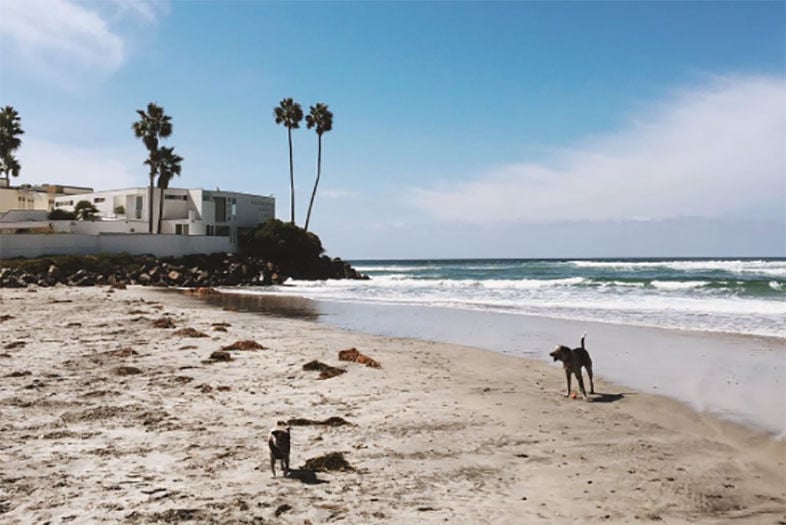
With views of Hotel Del and Point Loma, and the iconic gold-flecked sand to frolic on, Coronado is one of the most scenic landscapes, period. The dog-friendly northern section has litter bag posts, as well as a handy hose-equipped washing station so you don’t bring the beach back home with you.
311 Ocean Boulevard, Coronado
OB Dog Beach
This sprawl, often dubbed “The Original Dog Beach,” adopts the nabe’s relaxed vibe and has waves on the ocean side and a strong current (beware!) along the channel.
5156 West Point Loma Boulevard, Ocean Beach
North Beach
The petite half-mile dog beach in Del Mar is off-leash Labor Day through June 15. Street parking is $3 per hour closest to the entrance, but free spots abound just north and south. 29th Street to Solana Beach, Del Mar
Fiesta Island
Recently named America’s best dog park by USA Today, the peninsular park has plenty of space for dogs to run, as well as bonfire rings. It’s also supported by the nonprofit FIDO (Fiesta Island Dog Owners), dedicated to preserving the area as a leash-free zone.
The bright, super-clean East Village spot has separate sections for small and big dogs, further subdivided for calmer and more hyper pups—all cage-free. Staffers ask that you watch your pooch via one-way mirror for 30 minutes during your dog’s first daycare visit as a temperament test. Then you can spy on him via webcam during his stay.
First daycare session free, then $36/day; boarding from $52/night; doozydogclub.com
Dog Days San Diego
Another East Village option. The knowledgable staff at the cage-free Dog Days are one of its best assets (we’ve asked them for training and behavior advice more than a few times). They also have separate rooms for large and small dogs, as well as grooming and walks for an additional fee.
First daycare session free, then $34/day; boarding from $55/day; dogdayssandiego.com
Snug Pet Resort
Amenities at this Sorrento Valley facility include indoor and outdoor play areas, a pool, on-site vet, live pet cam, training, a midday snack, and nap time. Owners who want cage-free boarding must have their dog pass a test beforehand.
First daycare session free, then $30/day; boarding from $49/day; snugpetresort.com
Camp Run-a-Mutt
With seven locations in San Diego County, including Mission Hills, Kearny Mesa, and Chula Vista, there’s likely a CRAM near you. The cage-free facility offers a synthetic lawn, splash pond with waterfall and sun deck, ramps, bridges, dog houses, dog beds, and even a bubble machine. Plus a TV nightcap for those sleeping over.
Rather have your hound stay in a real home? DogVacay’s online interface is similar to Airbnb’s: plug in the location and dates, apply filters like daily budget and whether a yard is a must, and choose from hundreds of local sitters who’ve undergone thorough background checks. There’s 24-hour customer support, daily photos, and insurance with each reservation.
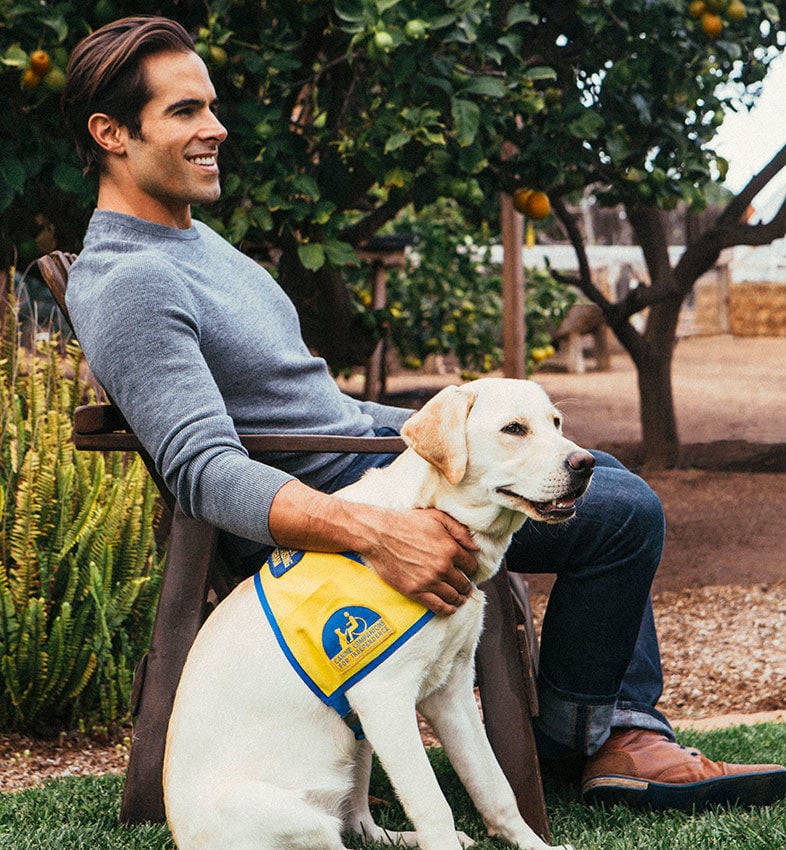
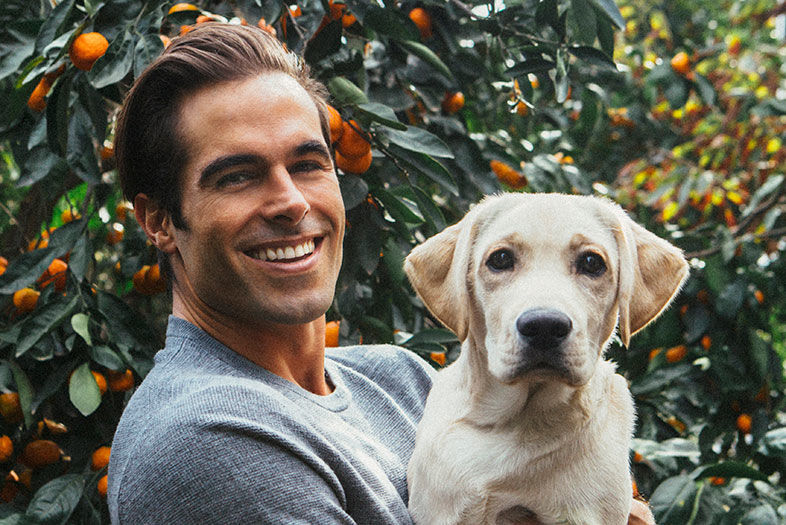
The Northern California–based group trains assistance dogs for the disabled. At their Oceanside outpost, a pressing need is puppy raisers, who foster the animals temporarily, taking financial responsibility and teaching commands. They also need photographers and help preparing lunches for training sessions. (Our cover models are CCI dogs!)
Opportunities at the Rancho Santa Fe nonprofit include delivering meals to pets of disabled citizens, fostering orphaned animals, walking and playing with dogs, and taking your own dog to visit patients in convalescent homes, hospitals, shelters, and mental health facilities.
As part of the Canine Ambassador program, dogs who pass the Canine Good Citizen certification can promote the organization at events, volunteer with Girl Scouts, and partake in a weekly Fur Fix event, when visitors can clock in animal snuggles at the SDHS Morena campus. Other volunteer posts include walking dogs and organizing events.
15 Things to Do in San Diego This Weekend: September 15-20
Stop by Adams Avenue Street Fair, sample the Capital of Craft Beer Fest, and experience the new exhibition Visiones Nocturnas: Queer Nightlife in Contemporary Art
This week marks summer’s last hurrah before the seasonal transition to fall, and there are plenty of ways to make the most of it. There’s the Surf Lounge Festival, the fifth annual BirdStock, and the two-day Adams Avenue Street Fair, all of which boast a plethora of live music options and local artisans. There are also world premieres, including the first chances to see the play A Black-billed Cuckoo at La Jolla Playhouse and MCASD’s Visiones Nocturnas: Queer Nightlife in Contemporary Art exhibition. On top of that, the Padres are back in town, and fans can pack the stands at Petco Park to support the team in their playoff push.
With September being Childhood Cancer Awareness Month, the Emilio Nares Foundation will present its 23rd annual Harvest for Hope fundraiser dinner this Thursday (5:30 p.m.). Guests will have the chance to try food from a curated selection of more than 20 chefs, breweries, and wineries from the SoCal and Baja regions while supporting a worthwhile cause. General admission is $250 online; tickets support free medical transportation, emotional care and critical services through the Emilio Nares Foundation for kids facing cancer and life-threatening diseases.
5300 Grand Del Mar Court, Del Mar
Capital of Craft Beer Fest
September 19
Though San Diego Beer Week won’t start pouring until Nov. 6, Christmas has come early for enjoyers of locally crafted brews. The 21-plus Capital of Craft Beer Fest returns Saturday (1-4 p.m.) at Broadway Pier, with local food and merchant vendors, performances by 80s Resurrection and Agent 51, and best of all, more than 70 beers to sample via unlimited two-ounce tastings.Ticket options include general admission ($57) and VIP passes ($78), which come with in-and-out privileges and an exclusive hour of premium beer sampling from noon to 1 p.m.; a portion of proceeds will go towards the San Diego Brewers Guild.
1000 North Harbor Drive, Embarcadero
Taste of Bonita
September 19
Toast to Bonita’s culture, history, and cuisine this Saturday (5-9 p.m.) during the Taste of Bonita. Held at the Bonita Museum and Cultural Center, this charitable and educational soirée will feature tastings from local restaurants, as well as silent auction drawings, children’s activities, artisans and craft items, and a gallery exhibit on BonitaFest. Tickets, which come with unlimited tastings and a beverage, are $55 for guests ages 12 and older, $20 for ages 5-12 years old, and free for kids ages four and younger; proceeds will help support the year-round free programming offered by the Bonita Historical Society.
4355 Bonita Road, Bonita
Courtesy of We the Commas
Concerts & Festivals in San Diego This Weekend
BirdStock Music Festival & Artisan Market
September 19
Who needs Woodstock when there’s BirdStock? This Saturday from 10 a.m. to 7 p.m., all are invited to La Jolla’s Bird Rock neighborhood for entertainment from local musicians, an artisan market, and all-day activities to fundraise for arts and music programming at La Jolla Coastal Conservancy and Bird Rock Elementary. The 5th annual BirdStock Music Festival & Artisan Market will also include live DJs, a wine and beer garden, VIP libation areas, food trucks, pro BMX athletes and skateboarders, pickleball, a pet parade, and a custom hat bar.
5500-5700 La Jolla Boulevard, La Jolla
Surf Lounge Festival
September 19
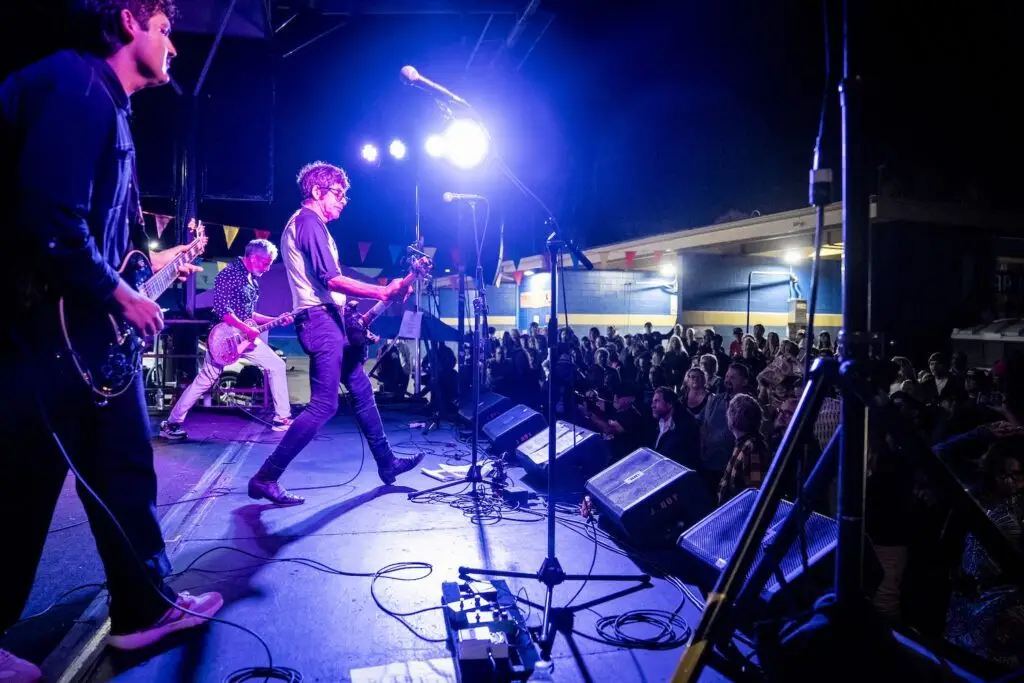
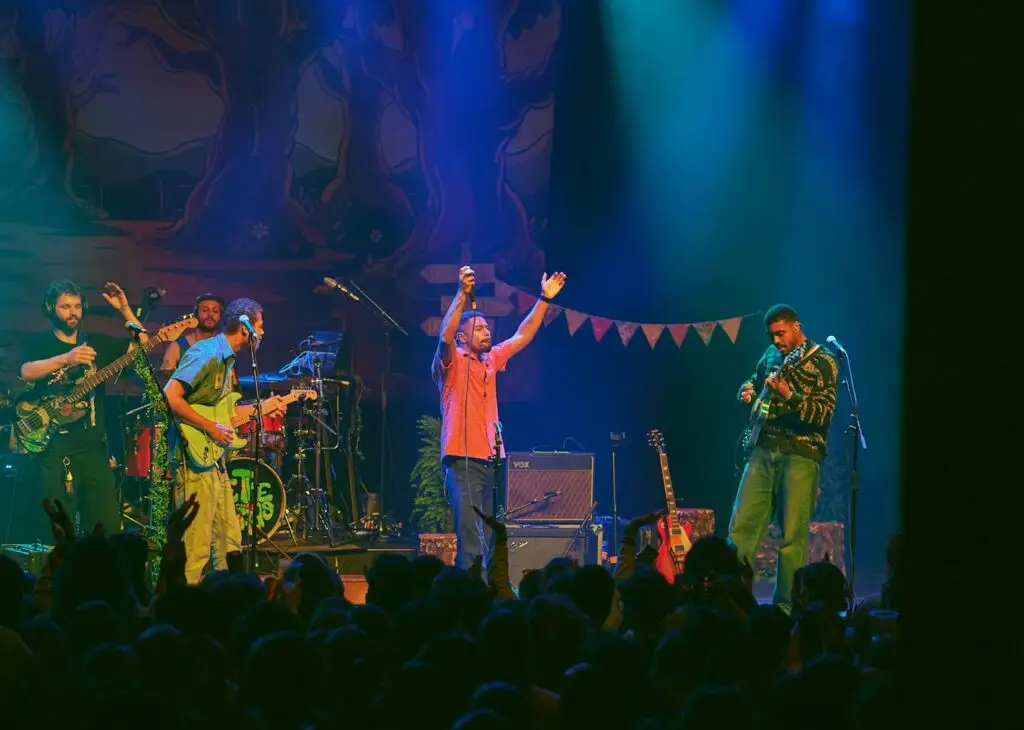
The legend of Pacific Beach’s bygone Surf Lounge lives on this Saturday from 2-10 p.m. during this 21-plus party at The Soap Factory. Surf Lounge Festival is a passionate celebration of surf culture with a healthy dose of indie rock, featuring performances by the bands Summer Salt, Three-Legged Dog, Tropa Magica, Couch Dog, and Bēd. The festivities will also include five vinyl DJs, tattoos, and 20 local vendors. General admission is $50, and $60 the day of the festival.
2995 Commercial Street, Logan Heights
Earth, Wind & Fire at Civic Theatre
September 19
Technically, “the 21st of September” doesn’t arrive until Monday, but any concert from Earth, Wind & Fire is certainly cause for celebration. The legendary group is still carrying its legacy of love, soul, and R&B brilliance more than five decades after its formation. Experience the jubilant rhythms of the band’s greatest, most danceable hits when they play the Civic Theatre this Saturday (8 p.m.). Tickets start at $138 for this concert.
Ryan Hardison is a freelance arts and entertainment writer and recent graduate of San Diego State. When he's not staring at his laptop, he's likely eating an adobada burrito or getting sunburnt at the beach.
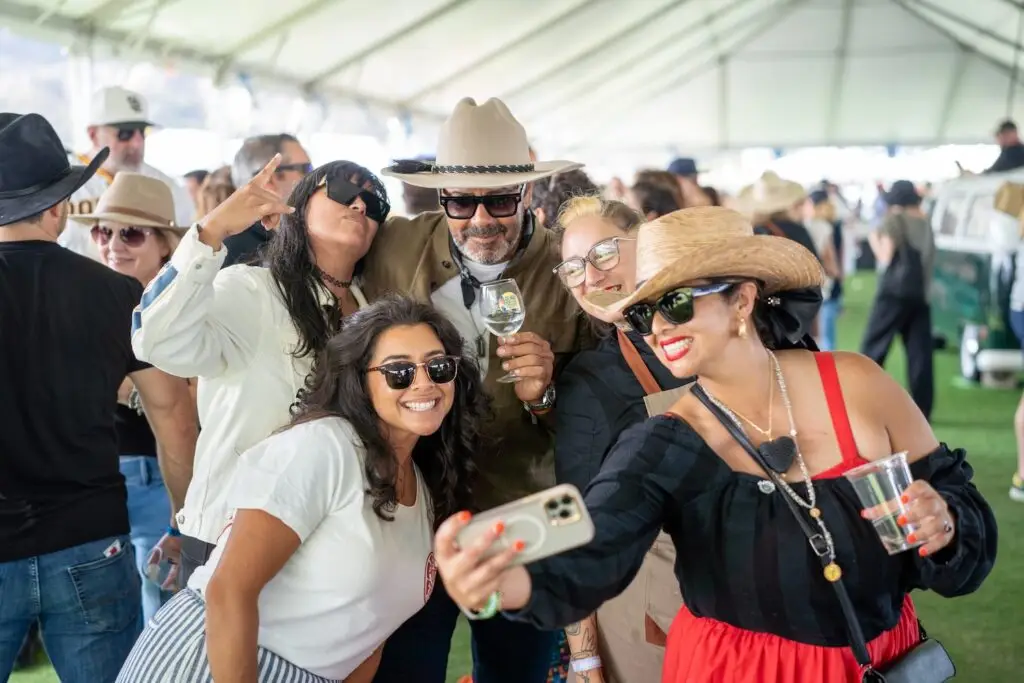
Tickets to the Del Mar Wine & Food Festival get you in the door. The real fun is figuring out who you’ll run into once you’re there. This year’s weeklong schedule of exclusive events, running September 30–October 4, includes dinners, tastings, and loosely-supervised chaos where celebrity chefs and local icons finally let their hair down.
The festival has a track record of the unexpected: Bryan Cranston and Aaron Paul once toasted their mezcal brand Dos Hombres with an intimate dinner at the Lodge at Torrey Pines (and then, evidently unsatisfied, kept drinking it on the cliffs above Blacks Beach with a rotating cast of San Diego and Food Network chefs. Alex Morgan showed up for a dinner under the lights honoring the country’s most badass women chefs). Drew Brees ran a celebrity pickleball tournament where the guy from It’s Always Sunny in Philadelphia got absolutely humbled by locals.
If you scored a ticket to last year’s Grand Tasting, you might’ve caught Guy Fieri doing exactly what Guy Fieri does: strolling the grass, signing t-shirts and foreheads, and hanging off the DJ surf van like it was built for him. Meanwhile, local chef Ethan Yang of Glass Box walked off with the Chef Competition surfboard.
So whether your plan for 2026 is to corner legendary San Diego chefs like Victor Jimenez of Cowboy Star and Jon Sloan of Juniper & Ivy in person, or just aim for a spontaneous golf cart ride with a Food Network star—here’s your cheat sheet for where to run into a celebrity chef, TV personality, award-winning winemaker, or pro athlete at this year’s Del Mar Wine & Food Festival.
Courtesy of Del Mar Wine & Food Festival
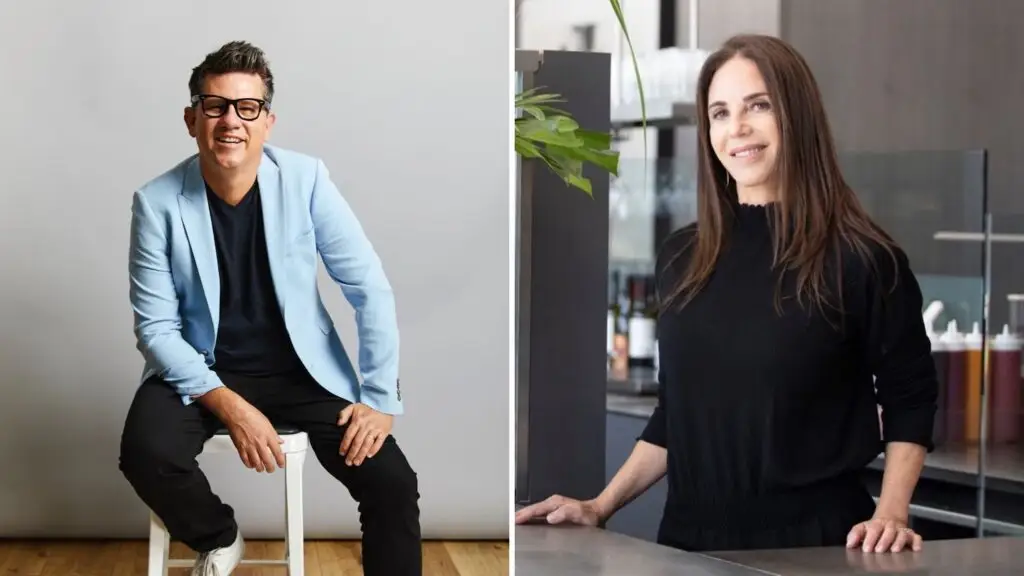
Troy Johnson, Karen Krasne
Signature San Diego Opening Night Party
September 30 | 6 – 9 p.m. | Monarch Ocean Pub
Consider this your soft landing into festival week—the walk-around tasting that eases you in before things get chaotic later on. Monarch Ocean Pub hands its patio over to the flavors that define San Diego eating: Baja seafood done right, coastal bites, Mexican flavors with some heat behind them, all the staples locals will fight you over.
The celebrity sightings here lean more “bump into” than “spot from across the room.” Troy Johnson—Food Network judge, San Diego Magazine chief content officer and co-owner, Emmy-winning host, a man who has eaten his way across the entire country professionally—is the type to materialize at whichever station has the longest line, because he already knows it’s worth the wait. Ask him what he’s had so far. He’ll have opinions.
Then there’s celebrity pastry chef Karen Krasne, owner and executive pastry chef of Extraordinary Desserts, James Beard House alum, and a woman Forbes once ranked among the top 10 pastry chefs in the country—which tracks, because you might find her holding court next to a tray of her roasted pecan shortbread dipped in white chocolate, explaining exactly why this is the flavor combination. You will listen to every word, too, because you’ll want to try that cookie.
This is an opening night party where the person next to you in line might just be the one who baked the thing you’re about to eat.
Courtesy of Del Mar Wine & Food Festival
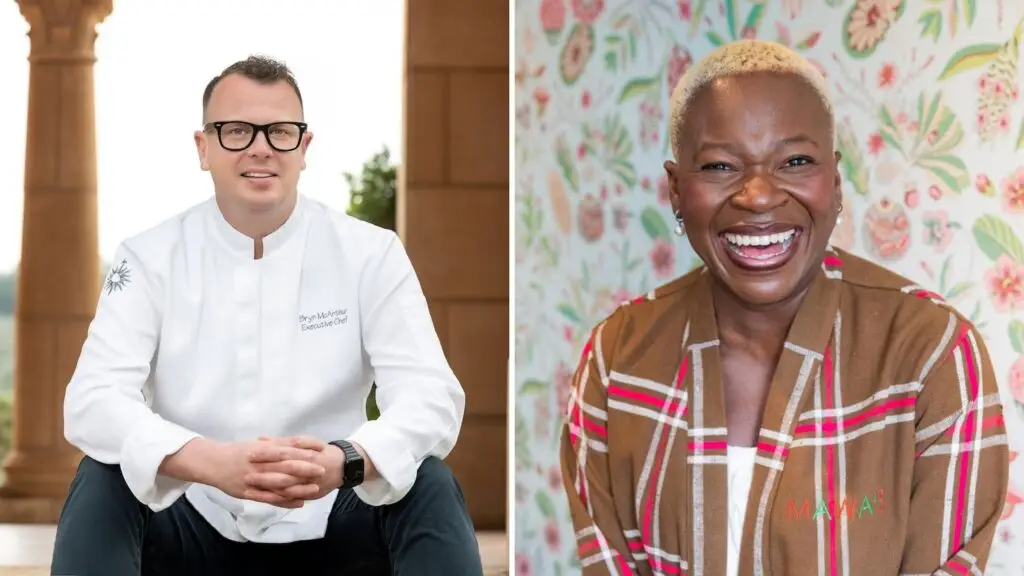
Bryn McArthur, Mawa McQueen
Chateau Montelena’s 50th Anniversary Celebration
October 1 | 6 – 9 p.m. | Fairmont Grand Del Mar
Fifty years ago, a Napa Chardonnay beat France at its own game and rewrote what the world thought it knew about wine. This dinner is that legacy, poured by the family who built it, course by course.
Under the arches at Fairmont Grand Del Mar, Ernie Hahn and the Hahn family, who partnered with the Barretts to revive Chateau Montelena into the Napa powerhouse it is today, host an evening built entirely around the winery’s most iconic pours. Every course gets its own pairing straight from the Montelena portfolio, so you’re not just hearing about the Judgment of Paris, you’re tasting the wine that started it.
Chef Mawa McQueen, a former James Beard Best of the West winner out of Aspen, brings globally inspired cuisine and serious technique to the table. Alongside her, Fairmont Grand Del Mar’s executive chef Bryn McArthur leans into farm-to-table sensibility shaped by a career of global kitchens. Together they’re building a menu meant to hold its own against wine that already changed history once.
This is the rare dinner where the wine isn’t just accompanying the meal, it’s the reason the meal exists. Fifty years after Paris, the rematch is happening right here in Del Mar.
Isabella Dallas is a freelance writer for San Diego Magazine and the Arts and Culture Editor at The Daily Aztec in her final year at San Diego State University. She previously worked as an editorial intern for SDM, but when she’s not writing, you can find her trying the best coffee spots in SD, devouring the latest rom-coms, and indulging in anything and everything pop culture.
What Will It Take to Make San Diego a Global Arts City?
Jonathon Glus on the Art + Design District, investing in the creative economy, keeping artists in the city, and what we can learn from places like London and Chicago
Jonathon Glus is the Prebys Foundation senior fellow leading the development of the Art + Design District at the Downtown San Diego Partnership. He has been asked what an arts and design district is many times. In our conversation, I asked him instead to describe what it isn’t. His answer opened up a broader discussion about what San Diego has and hasn’t invested in, what it has the capacity to become, and what other cities have done that we haven’t. Glus speaks about global art fairs and architecture biennials in Chicago and long tables at dinner parties all with the same fluency. He also discusses who gets to live in the neighborhoods where creative work happens, and what it means when they can’t afford to stay.
Claire Johnson: You have been asked what an arts and design district is many times. Can you tell me what it isn’t?
Jonathon Glus: It is not a place designed intentionally and specifically for tourists. Of course there will be opportunities for tourists to come, but the district is really focused on creatives, on creative education, and on the creative workforce—as well as our major performing arts organizations. That is the emphasis.
What does the district need to do in the next five years for you to consider it a success?
[It needs to] develop greater connectivity between the anchor institutions—the symphony, Broadway San Diego, the opera, all the wonderful things happening in Balboa [Park]—and the creative workforce that will be living and working in that neighborhood 24/7.
What does San Diego not have that you wish it did?
We have not been intentionally investing in the contemporary art product that other major cities have been building. A contemporary art fair. A biennial that reflects the ethos of this region. Chicago developed an architecture biennial about eight years ago. London has a design biennial. Desert X, right here in Southern California, invests in and elevates contemporary artists inside a city. We have not really been playing in the global art market in a way that we have the capacity to.
What capacity do we have?
We have a wonderful foundation. Two theater companies that produce work that goes to Broadway more than many regional theaters in the country, major museums, artists teaching at UC San Diego and University of San Diego. What a city does when it wants to take itself to the next level is intentionally create the product. Miami went after the Art Basel fair; they did not passively receive it. You have to have the intention and the will, and you have to go after it. We haven’t done that in the way that other cities have.
Look at what we did with the tech sector; we’re now a major tech center. That was intentional. Leadership organized around it. We have to do the same thing around the arts. We have a lot of contemporary art collectors here. We have a lot of galleries. But the ecosystem of the business of contemporary art is not as organized or as visible as it should be.
Which city is your North Star?
It’s bits and pieces of different cities. Dubai has invested very quickly and very intentionally in contemporary art—art fairs, design fairs, higher education, artist residencies from all over the world. London has centered artists and creatives in the contemporary zeitgeist in a way that was not true 40 years ago. They built biennials. They ensured British artists had affordable housing and workspace. They made sure the media paid attention to what they were doing.
If you don’t have an artist at your dinner table, it’s not a dinner party. That sounds elitist, but it’s true. It shows the value that artists have in a community. Our relationship culturally with Tijuana is really significant here because artists in Baja seem to be at the table.
We’ve talked before about how food, fashion, design, and art aren’t siloed anymore.
They aren’t. When super creative people are in a community doing extraordinary work, that draws other super creative people doing extraordinary work. That’s why other arts and design districts around the world end up populated with some of the most interesting restaurants and young fashion designers. Creatives want to be around other creatives.
Which leads to the economic argument…
Our creative economy already employs about 170,000 people and generates more than $11 billion in economic activity. It’s large and robust. But we must center all of this in accessibility and affordability. Williamsburg used to be affordable. Artists can’t afford to live there anymore. Wicker Park and Bucktown in Chicago—artist central, now unaffordable. If we’re going to invest in this district, we have to be really intentional about housing and workspace, so creatives have a place in the future of this district.
I see all these new supper clubs and creative collectives popping up. What is the lesson there for San Diego in terms of the commercialization of cultural and creative groups?
I think the lesson is that nothing changes. What do people love? Long tables. Why? Because you’re with a lot of people—some you may have known your entire life, but most you don’t. And if it’s driven by a creative process, all the better. We know one of the best ways to do that is around food, but also music.
For the Art + Design District, part of why we’re leaning into the process is because, culturally, we’re bringing down the barriers between film, fashion, multimedia, tech, and architecture. It’s an experiential mashup in the best possible way.
And it’s not just about art and design, but community writ large. Creative expression is something we all desire. Whether it’s at a long table, at the opera, or in your studio, we gravitate toward creative expression as a way of building community and communicating with the people around us.
Is there a question I should have asked you but haven’t?
I hope you are writing about this in seven years when the district is fully mature. But this is just the beginning for all of this. I think that’s what’s most exciting to me. We don’t know what this is going to be like, but we know it’s going to be creatively centered, and that’s super exciting to me.
Today’s seniors are more connected than ever, with a renewed focus on retirement as a time of discovery and enriching experiences. The ultimate reward for a retirement well-earned is the wisdom to appreciate it all, and what better place to enjoy that unique perspective than Vi at La Jolla Village, in the heart of San Diego.
All-access pass to good living.
As a Continuing Care Retirement Community (CCRC), Vi provides access to a connected and fulfilling community while making it easy to plan for future care, should the need ever arise. With a care plan in place, residents enjoy greater financial predictability and long-term value, freeing them to focus on making the most out of retirement.
Resort-style amenities at the epicenter of a cultural hub like San Diego offer a retirement experience unlike any other. Paired with exceptional dining, spacious accommodations and dedicated staff, the best of maintenance-free living is all around. And with the introduction of Vista 360 Well-Being, Vi’s panoramic approach to wellness, there are more ways than ever for residents to access it all.
The harmony of mind, body and community.
Courtesy of Vi at La Jolla Village
The key to longevity is striking the right balance in maintaining an active lifestyle with an active mind in a fulfilling community. With newly renovated community spaces and restaurants, Vista brings a variety of opportunities for residents to elevate their well-being through Vi-exclusive “Signature Experiences.”
Vista Enrich takes an evidence-based approach to brain vitality, keeping residents at the forefront of cognitive health through exergaming (exercising + gaming), nutritional plans and informative workshops. It is also home to The Brain Vitality Studio, an innovative facility dedicated to cognitive fitness that has garnered national recognition.
Vista Discover invites residents into stimulating educational experiences, from chef-led cooking demos and guided wine tastings to lectures at local universities and intimate lectures following cultural outings.
While Vista Enrich focuses on brain health and Vista Discover engages residents intellectually, Vista Explore cultivates a sense of adventure through curated travel and local excursions. But broadening one’s horizons doesn’t always require a plane ticket. One recent event brought a taste of the world right to the community: an onsite “jazz cruise” featuring live music and global cuisine served at a series of themed “ports” all within the community’s own ballroom.
“Location, location, location”
Courtesy of Vi at La Jolla Village
One of the biggest perks of life at Vi at La Jolla Village is its proximity to just about everything. With easy access to transportation and local attractions just steps away, residents can explore and engage with their community at their own pace.
“There are trolley and bus stops within a 5-minute walk that will get you to the beach, UCSD Campus, medical appointments, downtown La Jolla or San Diego, et cetera. We rarely use our car,” said resident Tom Yager.
With the best of San Diego just steps away, residents don’t just live in the city, they live within reach of everything that makes it special.
The best of all worlds.
Courtesy of Vi at La Jolla Village
At Vi at La Jolla Village, retirement isn’t a chapter to slow down; it’s an invitation to discover more. Tailored community experiences created by Vista, paired with the vibrant pulse of San Diego just outside the door, mean that residents don’t have to choose between security and adventure, connection and independence. They get all of it.
This is what an all-access pass to good living looks like: the comforts of an elevated lifestyle, a community built for growth and a city made for discovery – all in one place.
To learn more about Vi at La Jolla Village or for details on available floor plans, visit ViatLaJollaVillage.com/SDM.
Sebastián Morúa is the Senior Vice President of Brand & Innovation for San Diego FC. He oversees Playmakers, the program through which the club has, over the past three years, engaged with over 80 working artists—not as marketing partners, but as co-creative directors.
Morúa didn’t build Playmakers as a community-outreach program bolted onto a Major League Soccer franchise. He built it as the identity of the franchise. When we sat down, he talked about the World Cup, San Diego’s creative workforce, his challenge to other sports franchises in the city, and the mural of heroes he hopes people will see one day when they close their eyes and picture San Diego FC.
Claire Johnson: Why does an MLS team invest in arts and culture?
Sebastián Morúa: I want to answer that in two parts. Philosophically first—because I think what you’re really asking is why should any sports team do this when most don’t.
Sport is a platform for transformation. It has proven that over and over. We saw it this summer with countries participating in the World Cup for the first time and what that did in their home countries—the sense of self-identification, pride, possibility. That is the power of sport.
When you take a sports team that’s fueled by that principle and understands what it could mean for other stakeholders in a community, you start to think about what you can accomplish in collaboration with them. One of those stakeholders, very early on, was the creative community. If we were going to build a team that represents this place and its people, we needed to go to the source. Artists are uniquely positioned to translate the essence and the soul of a community. When you zoom out and look at the multitude of artists in a place, you start to see the fabric of that local culture. That’s where the sense of pride and possibility gets unlocked.
But you’re also San Diego FC specifically. That matters.
Our mission is to create opportunities for talent to flourish and make San Diego shine. That means the club is a platform. When we started doing the early research for the brand, we brought artists into our focus groups. The response was immediate. There was a clear need. In 2024, we ran the first full year of what became Playmakers, working with more than 20 artists to help us tell the story of how San Diego FC could weave 18 distinct communities together.
We’re in the business of developing communities through sport. We’re not in the business of fútbol to entertain communities. That is an outcome—but not the purpose.
When you started, were you thinking about the profitability of this type of program?
No. I wasn’t thinking about where this was going or how much it would cost. It instinctively felt aligned with our organizational purpose, and we made a decision to go for it. Now it’s become what it’s become.
What does Playmakers look like in 10 or 20 years?
If a fan closed their eyes 20 years from now and tried to paint a mural of the heroes that make up the club, they would see a big percentage of Playmakers artists on that mural. Ask any fan about the team they’ve supported for decades, and they’ll tell you about players, maybe a coach, maybe an owner. We’re expanding that. In our mural, there’ll be artists, entrepreneurs, community leaders, youth coaches. The community will be present.
Three to five years from now, Playmakers is an established community of creatives who have co-directed the identity of the club and the evolving identity of San Diego. If we keep the pace we’ve kept, we should have collaborated with 150 to 200 artists whose stories we’ve told and whose next steps we’ve helped support.
What would you tell another organization considering this kind of investment?
There’s a huge benefit for us as a club and as a brand. This is symbiotic. The artists have a need, we can support that need, and in return the community cares more about our club because of the investment we’re doing in the community. That’s what I would tell another organization.
What excites you most about how San Diego is changing?
San Diego is waking up to how much it has to offer the global conversation around culture. There’s a purity to life here—partly because of the weather, which allows us to spend so much time outside, in nature—and that exists alongside this incredible richness in food, music, art, and now sports.
I have a sense that San Diego is ready to unlock its full potential. You see it in the artists and creatives here. They’re ready. There’s very little hesitation. It’s more like: “Hell yeah, of course I want to do this. I know I’m talented. I’ve been waiting for something like this.”
That energy, combined with the unique lifestyle and character of this place, creates a really exciting sense of what San Diego can become in the years ahead.
Is there a question I should have asked you that I haven’t?
I would ask: What would you say to the other big players in San Diego who are—or could be—shaping the cultural fabric of our community? Do they understand the symbiotic benefit? Are they supporting it?
Because Playmakers, in the end, is a cultural compass. It’s making sure that San Diego still feels—and will always feel—represented in the creative process of building San Diego FC and what that means for San Diego.
The pitch is a canvas. Athletes are painting collectively during every game. There is a story in every game. That’s the link between sport and art. At the core, it’s the same creative process.
After 15 years married, my husband and I tend to agree on most things. But there’s one argument we both refuse to bend on—I prefer okonomiyaki Osaka-style, and he’s a die-hard Hiroshima-style devotee. (To be fair, we both adore both styles, but at this point, it’s just fun to have a low-stakes disagreement.)
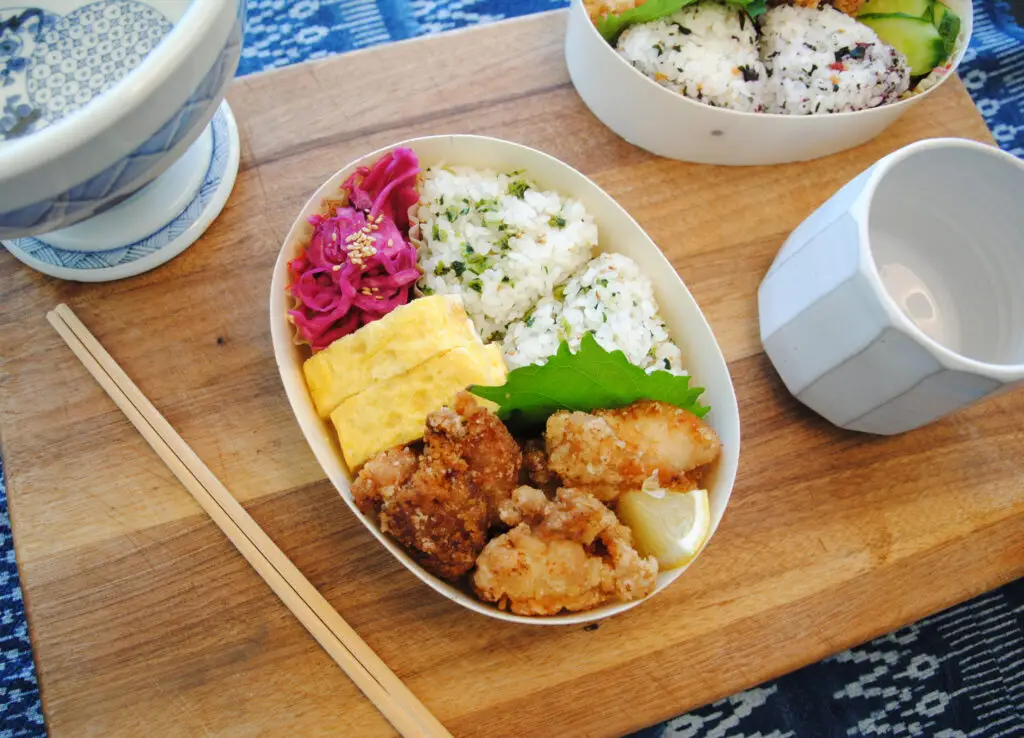
Okonomiyaki is one of Japan’s greatest comfort foods, a savory pancake that’s about the size of a DVD, if you aren’t too young to know what that is. It’s not terribly hard to make—it’s flour, eggs, dashi stock or water, and a whole heap of shredded cabbage, plus optional fillings like green onions, pork belly, or bonito flakes, all cooked fresh on a flat top griddle. Drizzle some kewpie mayo and okonomiyaki sauce on top, and you’re hot to go.
However, it’s not easy to make well, and as you now know, people have capital-O Opinions about Osaka-versus-Hiroshima. Hiroshima-style layers the ingredients one by one rather than mixing them together, adding a layer of soba or udon noodles and topping it all off with a fried egg. For Osaka-style, all the ingredients are mixed together and then cooked on the griddle, so every bite includes every ingredient in a hodgepodge of deliciousness. (One Osaka variation called modan-yaki does include soba noodles mixed in the batter, but they’re not traditionally used in that regional version.)
Despite a childhood spent in Osaka, Japan, Kumi Alexander specializes in making Hiroshima-style okonomiyaki. “Okonomiyaki has been part of my life for as long as I can remember,” she explains. “My parents ran their own business when I was growing up, so Saturdays were often busy, and okonomiyaki was one of my mother’s go-to lunches because it was simple and easy to make.”
Alexander came to San Diego seven years ago with a desire to bring a part of her culture with her—not just a product, but a feeling. “When I thought about what could do that, the answer was almost obvious: okonomiyaki,” she says.
She originally launched Surf’n Slaw as a mobile pop-up food stand in August 2025, offering what Alexander calls Japanese-meets-California okonomiyaki. “Our full Surf’n Slaw includes cabbage, noodles, umami dough, beef, shrimp, and vegetables,” she explains. The menu also has a “Green Wave Slaw,” an Osaka-style version that can be made vegan and gluten-free, as well as matcha drinks.
Currently, Surf’n Slaw pops up at farmers markets in North Park, Scripps Ranch, Hillcrest, La Jolla, and La Mesa, as well as other local markets and community events. Eventually, she may expand to a permanent location, but that’s a future goal. And while Alexander hopes that one day okonomiyaki will be as well-known to American audiences as ramen or sushi, for now, she’s just happy to share a bit of home with San Diego.
Izola Bakery announced big plans for a second location and bakery HQ (checks notes) over three years ago and it’s kind of been crickets since then. But there may be movement in the expansion plan—the East Village bakery recently put out a hiring call for “the people we need to help us build what’s next.” Here’s hoping things get cooking (or baking, as the case may be) soon.
As a California-born, East Coast-raised foodie, I can confidently say the East Coast has the deli game on lock. So whenever anyone announces they’re bringing an East Coast-style sandwich to the West Coast, I remain cautiously optimistic until proven otherwise. (Big Jim’s in Pacific Beach is a phenomenal example of a transplant done exceptionally well.) Los Angeles-based Ggiata Delicatessen recently announced plans to open a location in Encinitas, promising authentic Italian staples like meatball parmesan subs, cheesesteaks, and Italian cold cuts. Don’t let me down, guys!
Unfortunately, it’s not all openings and expansions. Nola on 5th in Hillcrest permanently ceased operations without warning or explanation. We can probably pick from one (or more) squares on Restaurant Closure Bingo for the reason (increased costs for ingredients, labor, equipment, etc.), but for the jambalaya enthusiast, it doesn’t really matter why. It’s simply adieu to a slice of The Big Easy in San Diego.
Listen Now: The Latest in San Diego’s Food and Drink Scene
Have breaking news, exciting scoops, or great stories about new San Diego restaurants or the city’s food scene? Send your pitches to [email protected].
Beth Demmon is an award-winning writer and podcaster whose work regularly appears in national outlets and San Diego Magazine. Her first book, The Beer Lover's Guide to Cider, is now available. Find out more on bethdemmon.com.
NewBridge School is San Diego’s only school dedicated to the education of students with dyslexia and related learning profiles. For 30 years we have successfully served students with dyslexia, dysgraphia, dyscalculia, receptive/expressive language disorders, ADHD, executive functioning and memory deficits. Students transition successfully into academically rigorous high schools and colleges across the country. Why NewBridge? Training, training, training (plus intensive individualization, and comprehensive program design). All teachers are trained and retrained biennially in Orton-Gillingham, the only approach proven to remediate dyslexia based on Science of Reading research, and complete a year-long training program. Every aspect of our program is designed around our students’ learning styles and needs. Every class is taught by a highly-trained expert, and our Speech/Language and Occupational Therapy teams embed throughout the day. Our multisensory, multi-tiered math program has been developed in conjunction with sister schools and experts across the country. Don’t wait—early intervention is magic!