Ready to know more about San Diego?

Subscribe
Features NOVEMBER 25, 2015

The Beer Lover’s (Ice) Bucket List

Need a New Year's resolution? Further your beer education by trying these 15 must-drink brews.

The Beer Lover’s (Ice) Bucket List

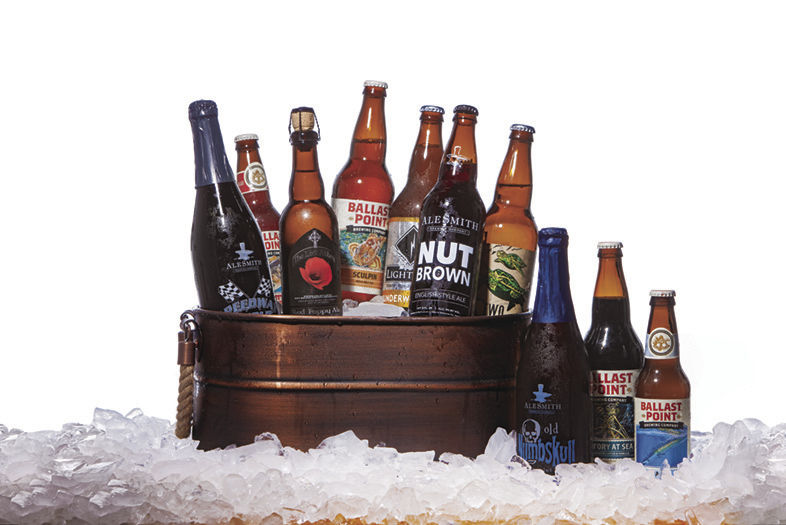
One city, thousands of beers and counting. San Diego’s craft beer industry is growing by the day, by the gallon, by hops and bounds. As obsessive list-makers who love to catalogue and rank, we feel it has become necessary to put down our pint glasses and identify the classics, entering them into a San Diego craft beer canon. After much debate, and having talked to professional brewers all over the county, we compiled a list of the 15 most iconic, must-try brews, one for each of the major beer styles found in San Diego. Each beer either won medals and accolades or has been a sort of longstanding gold standard for other brewers. If you haven’t already, make a pint, er point, to taste each one on the list—heck, make it a New Year’s resolution.


1

Red Trolley

Red Ale | Karl Strauss Brewing Company

Compared to ambers, reds tend to be a bit hoppier against a solid malty frame, with caramel, toffee, and roasty malt flavors in balance. Jason Stockberger of Mike Hess Brewing says, “Red Trolley is one of the original beers of San Diego. I’ve seen Red Trolley win awards at World Beer Cup and Great American Beer Festival back-to-back. I can definitely attest to how awesome it is.”

ALSO TRY: Shark Attack (Port Brewing Company) and Shark Bite (Pizza Port Brewing Company)


2

Carnevale

Belgian Style (Light) | The Lost Abbey

In general, the lighter Belgian-styles showcase the bready, biscuity character produced by Belgian yeast, along with varying degrees of spiciness and fruity aroma. These beers are often highly carbonated and are relatively low ABV (though Le Freak is an exception, at 9.2 percent), which makes them refreshing warm-weather favorites. Scot Blair from Monkey Paw and South Park brewing companies says: “What I like the most about Carnevale is the use of American hops and how they work in concert with that subtle touch of brett [brettanomyces yeast] funk. Simply put, it’s just a great all-around go-to beer.”

ALSO TRY: Le Freak (Green Flash) and The Harlot (Societe) 


3

Elemental Pilsner

Pilsner/Helles | Lightning Brewery

The pilsner category has some of the lightest styles out there, often with restrained hop and malt characters. These are the “crisp and clean” beers, and fairly low alcohol by volume (ABV). Shawn DeWitt of Coronado Brewing Company says: “Elemental is one of the hoppiest pilsners around. I like the fact that Lightning was brewing a pilsner when everyone else was brewing IPAs. It fits in with San Diego so perfectly.”

ALSO TRY: Longfin Lager (Ballast Point Brewing & Spirits)


4

Arrogant Bastard

American Strong Ale | Stone Brewing Co. 

This is a very broad category, defined mostly by alcohol levels, which are commonly 7 percent and above. These beers can resemble anything from double IPAs to malty barley wines. Most are on the heavy side, with aggressive maltiness and hoppiness. Local beer writer Peter Rowe says: “By its name alone, Arrogant Bastard Ale helped make Stone famous. Yet this is much more than a rude publicity stunt. Packed with malts, hops, and alcohol, the Bastard and its illegitimate offspring—double, oaked, bourbon barrel-aged—embody Stone’s turn-it-up-to-11 ethos.”

ALSO TRY: Decadence ’10 or Old Ale (AleSmith)


5

30th Street Pale Ale

Pale Ale | Green Flash Brewing Company

Our city’s pale ales are light- to medium-bodied beers that are mostly about hoppiness—moreso than pales from other American regions or England. The typical pale features hops with floral, fruity, piney, grassy, or citrus characters that are often framed by low-to-medium maltiness. Jim Crute of Lightning Brewery says: “30th Street Pale Ale really does embrace that ‘30th Street / Beer Street, USA’ ideal for beer, which is malty, but not too malty; bitter, but not too bitter; with a nice hop finish. This beer set a trend for pale ales.”

ALSO TRY: Pintail (Karl Strauss) and .394 (AleSmith)


6

Speedway Stout

Stout | AleSmith Brewing Company

Much like porters, stouts are all about rich, malty flavors and aromas balanced by bitterness. Caramel and chocolate notes are often accompanied by roasted coffee flavors, which can come from the use of roasted malts. Jim Crute from Lightning Brewery says, “Speedway is big, bold, and flavorful! My go-to big beer for cooler months!”

ALSO TRY: Silva Stout (Green Flash) and Zumbar (New English)


7

Calico

Amber | Ballast Point Brewing & Spirits

Ambers are mostly about light-to-medium maltiness and medium body, with caramel and toffee flavors and midlevel hops bitterness. Tom Nickel of Nickel Beer Company says: “Calico has great flavor, but not too much of any one thing. The hops and malts are in balance with a medium-dry finish that is perfect for our mild climate.”

ALSO TRY: Amber Lager (Karl Strauss)


8

Thunderweizen

Hefeweizen | Lightning Brewery

Straw to golden yellow, this medium-bodied style must be made with at least 50 percent malted wheat. The typical yeast used to ferment hefeweizen produces unique fruity and spicy flavors of banana and clove, and a cloudy appearance. Peter Zien of AleSmith says: “Authentic to the core, Lightning’s Thunderweizen is a well-made example of this German style of beer. Banana and clove in the aroma, crisp and well-attenuated fermentation profile, and a wheat-based flavor conjures images of German beer halls and enthusiastic drinkers yelling ‘PROST!’”

ALSO TRY: Hefeweizen (Mission) and Hefeweizen (Gordon Biersch)


9

Red Poppy

Flander/Sour | The Lost Abbey

With sourness created by the addition of Lactobacillus bacteria, these tart, crisp, bracing beers (typically emulating Belgian styles) usually have cherrylike or raspberry-like fruitiness. They are often highly acidic but commonly mellowed somewhat by aging in barrels. Travis Smith from Societe says: “Red Poppy is one of the iconic beers that has fueled the sour craze in the U.S. Many have tried to mimic it, but it remains one of the best in the United States.”

ALSO TRY: Framboise de Amorosa (The Lost Abbey)


10

Sculpin

IPA | Ballast Point Brewing & Spirits

San Diego is known for its hoppiness. The term “San Diego style” connotes an extra-hoppy style of IPA the world over. Like their sibling pale ales, IPAs are all about putting hop aroma and bitterness front and center, with malt character taking a backseat. Tomme Arthur of The Lost Abbey says: “While there is no shortage of amazing IPAs being made in San Diego, it’s easy to see why Sculpin gets the nod. The beer is a juggernaut and it’s on tap and available everywhere I turn.”

ALSO TRY: Stone IPA (Stone Brewing Co.) and The Pupil (Societe Brewing Company)


11

Nut Brown

Brown Ale | AleSmith Brewing Company

Caramel and chocolate flavors, accompanied by a roasty maltiness, will dominate a good brown. Generally, these light- to medium-bodied beers have low hop flavor and aroma but medium hop bitterness. Marty Mendiola of Second Chance Brewing says, “AleSmith Nut Brown is always near perfect with a nice, mellow character. Especially when I am sick of big IPAs—hey, it happens once in a while—I love a good brown ale and theirs is one of the best.”

ALSO TRY: Brewers Special Brown (New English Brewing Company) and Skid Mark Brown Ale (Pizza Port)


12

Two Tortugas

Two Tortugas’ ridiculously limited edition bottles, last released in 2011, will be available for purchase at the Karl Strauss Tasting Room on December 19, with more on the way in February 2016.

Belgian Style | Karl Strauss Brewing Company

The darker Belgian styles, which also include dubbels, tripels, and quadrupels (in ascending order of strength) are characterized by big, rich, caramel, molasses, and dark brown sugar flavors and a medium hop bitterness. Most are 7.5–12 percent ABV. Tyson Blake, general manager of O’Brien’s Pub, says: “Two Tortugas is a really well-brewed Belgian strong dark with layers of roasted dark fruits and brûléed sugar, really nicely attenuated and smooth for scary drinkability.”

ALSO TRY:  Judgment Day (The Lost Abbey) and Grand Cru (AleSmith)


13

Old Numbskull

Barley Wine | AleSmith Brewing Company

big, malty sweetness with caramel and toffee flavors balanced by significant hops. Medium- to heavy-bodied, these beers are often high in ABV, from 8 and 12 percent. Scot Blair says, “Old Numbskull is a brilliantly smooth-finishing and well-balanced barley wine, laden with notes of caramel, toffee, and dark fruits. Excellence personified.”

ALSO TRY: Old Guardian (Stone Brewing Co.)


14

Victory at Sea

Porter | Ballast Point Brewing & Spirits

Deep and rich, these beers showcase caramel and chocolate flavors with a creamy mouthfeel, low hop character, and pleasing sweetness. Many San Diego brewers add vanilla, coffee, or chocolate. Paul Segura, from Karl Strauss, says, “I love Victory at Sea. Porter is probably my favorite beer category, and Ballast added vanilla and coffee to it. All my favorite things in one beer. No single component of this beer dominates the other, and the elements all play well together, which is brilliant.”

ALSO TRY: Black Marlin (Ballast Point)


15

Wahoo Wheat

Wheat Beer | Ballast Point Brewinng & Spirits

In San Diego, wheat beers are usually inspired by the classic Belgian-style wits, meaning “whites.” They are crisp, lightly hopped, brewed using unmalted wheat, and most commonly spiced with coriander and orange peel. John Egan of Mission Brewery says: “Wahoo Wheat is a great example of the classic witbier style. With a slight tanginess from the wheat and coriander, it’s super-refreshing wheat beer and has become a go-to for summertime enjoyment.”

ALSO TRY: Orange Avenue Wit (Coronado Brewing Company)
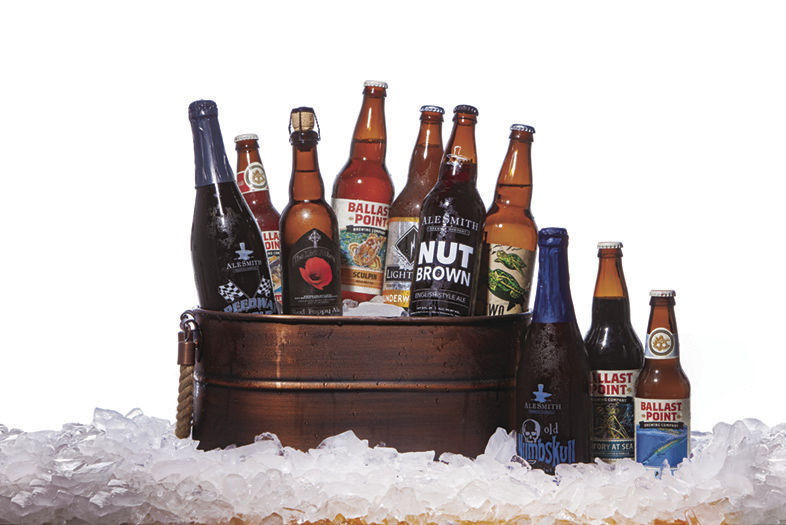
 

The Beer Lover’s (Ice) Bucket List

Subscribe to our newsletters

Select Options

By subscribing you confirm that you agree with our Terms and Conditions and Privacy Policy.

Food & Drink AUGUST 11, 2026

Mon Chourie Is Opening Its First Permanent Bakery

After two years of farmers markets and pop-ups, the San Diego baker is bringing its Korean-inspired pastries to University Heights

Mon Chourie Is Opening Its First Permanent Bakery
Courtesy of Kelly Kim

The folks at Kairoa Brewing Company must never be lonely. It seems like there’s always a local pop-up or event at the University Heights space, from Bincho Taco slinging Japanese coal-fired tacos on the rooftop patio every Tuesday to Yipao Coffee serving coffee from a window on the ground floor. Later this year, the New Zealand-inspired brewery will bring yet another resident into the fold—Mon Chourie is launching its first bakery counter service window along Park Blvd.

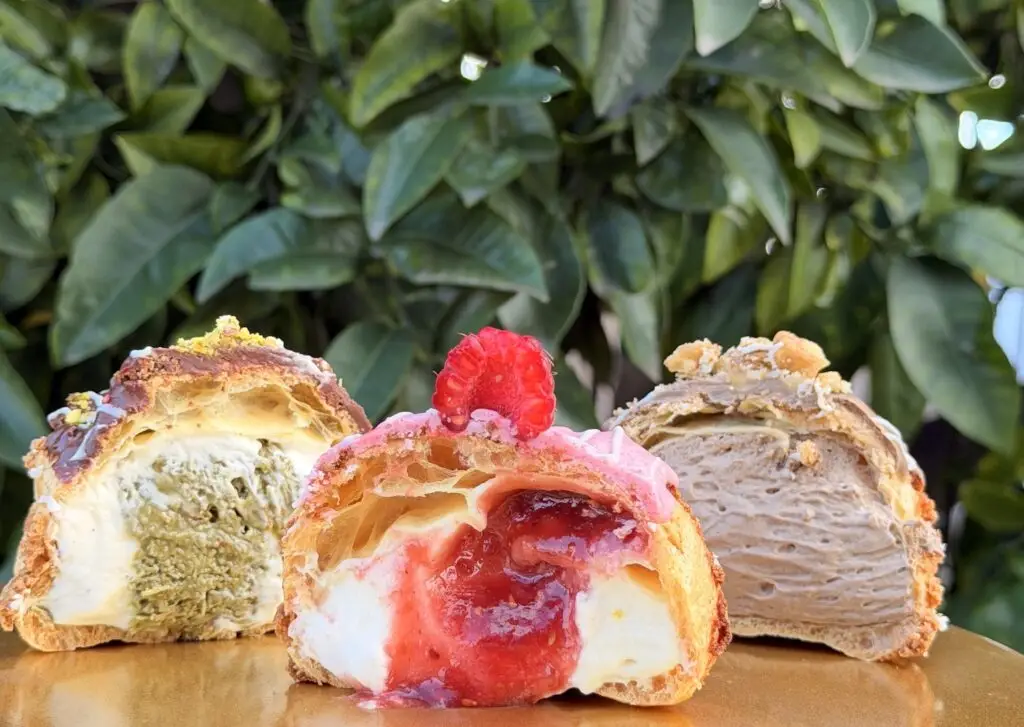
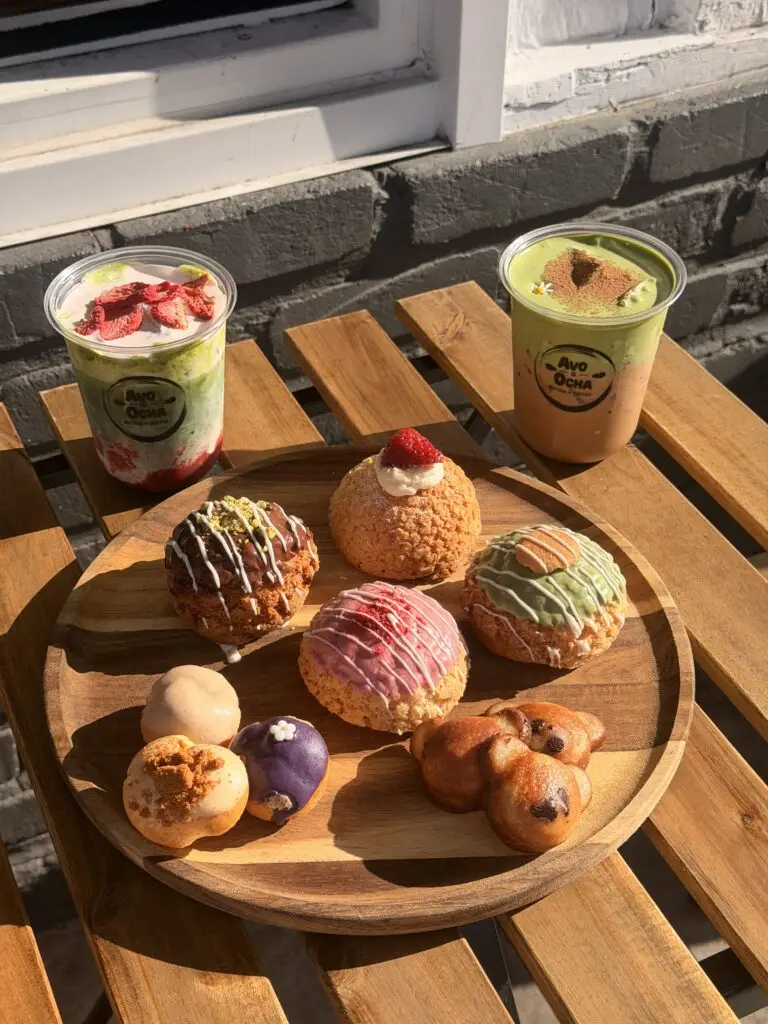
Mon Chourie owner and baker Kelly Kim first started selling her Korean-style cream puffs at farmers markets and places like Pizza Kaiju, Pho Ga Go, and Mixed Grounds, collaborating with a myriad of other makers (like Amor ice cream and Ming Oun’s) before nabbing a regular spot at Michi Michi Bakery every Wednesday. San Diego Magazine readers even voted Mon Chourie the Best Pop-Up for 2026.

In French, the word for an airy puff pastry is “choux,” which is pronounced generally the same way as “syu,” the Korean word for the same item. (Both sound like “shoe.”) Mon Chourie plays with both iterations with a dash of whimsy by referencing the song My Cherie Amour by Stevie Wonder, which translates to “my darling love.”

As long as all the permits and inspections move forward without issue, Mon Chourie should open in Kairoa before the busy holiday season. She’ll continue appearing every Wednesday at Michi Michi and other pop-ups in the meantime. Once open, expect best-selling flavors like the savory potato croquette (a collaboration with Karanchi chili crisp) and a sweet Dubai chocolate choux au craquelin, a version of puff pastry with a delicate cookie crust. 

Classic cream puffs are fluffy, softs and often filled with custard cream in the United States. “What makes a difference for us is we use a very light version of diplomat cream, which is my mom’s recipe,” she explains. Diplomat cream is a lighter French pastry cream that uses whipped cream for a lighter, airier end result. 

Choux au craquelin’s signature crunchy top comes from adding a thin disc of cookie-like dough on top of the pastry, which crackles as it bakes, leaving a thin layer of crispiness atop the final product. “It contrasts with the creamy, fluffy cream inside, so it gets that better, deeper texture experience,” she says.

Courtesy of Kelly Kim

Along with her popular cream puffs and her bite-sized “mini-choux” options, Kim is also planning on offering more of a newer-to-her item: salt bread, a rich butter pastry topped with sea salt that originated in Japan, but went completely viral in South Korea. There are a few places to get it in Los Angeles and New York, “but I know that a lot of people here are interested in trying out new stuff, or maybe they had it in Korea or Japan, and they came back, but they couldn’t find it anymore,” says Kim. At first, she didn’t really get why it was so popular. Then she tried it in South Korea earlier this year. 

“I was in love,” she laughs. “This is what the hype is about.”

Ideally, Mon Chourie will eventually open its own storefront and introduce more events in North County to satisfy demand. “I would also love to have our own drink program that reflects what’s popular in Korea,” she says. And to mark two years of puffy pastry prosperity, Mon Chourie is throwing a two-year anniversary party at Easy Does It (5375 Kearny Villa Rd., Suite 112) on Wednesday, August 25 from 4 p.m. to 7 p.m. with drink specials like a misugaru latte (a Korean roasted multi-grain powder with espresso), a DJ, photo booths, special ceramic merch created by local ceramicist Whale Tran, and a few other vendors. Get there early.
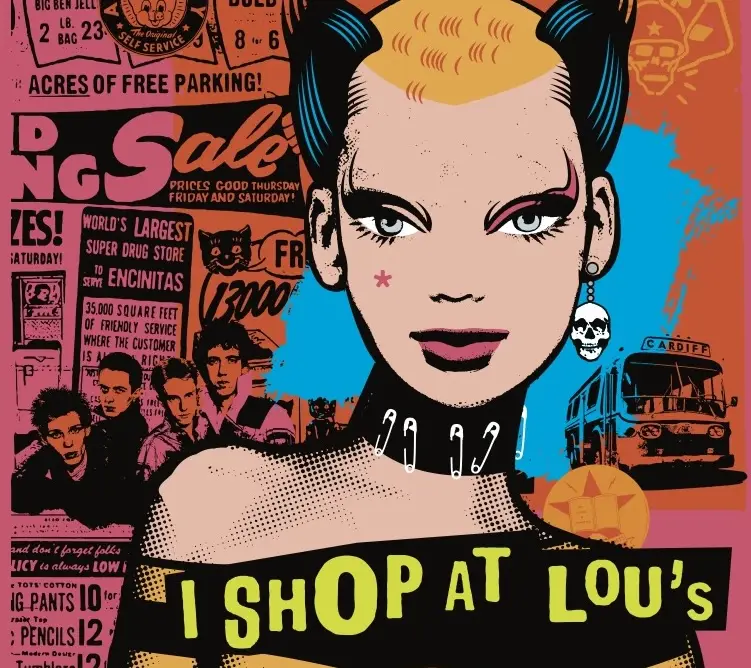
Mon Chourie will open inside Kairoa Brewing Company by the end of 2026 and posts the next week’s schedule of upcoming events and pop-ups on Instagram every Monday.

San Diego Restaurant News & Food Events

Beth’s Bites

  • Mabel’s Gone Fishing has always supported the arts—see their Fishbowl Artist Series—and they’re keeping things going this month with The Studio Table, an immersive dining event on Saturday, August 29 from 6 p.m. to 9 p.m. at Barrio Logan-based ceramic studio Tao of Clay. For $160, guests can slurp down oysters and other Spanish-inspired pintxos, Basque ciders, cocktails, and take home a handmade oyster bowl made with reclaimed oyster shells. Gratuity is included for this 21+ event, so be prepared to slow down and enjoy the tangible fruits of nature.

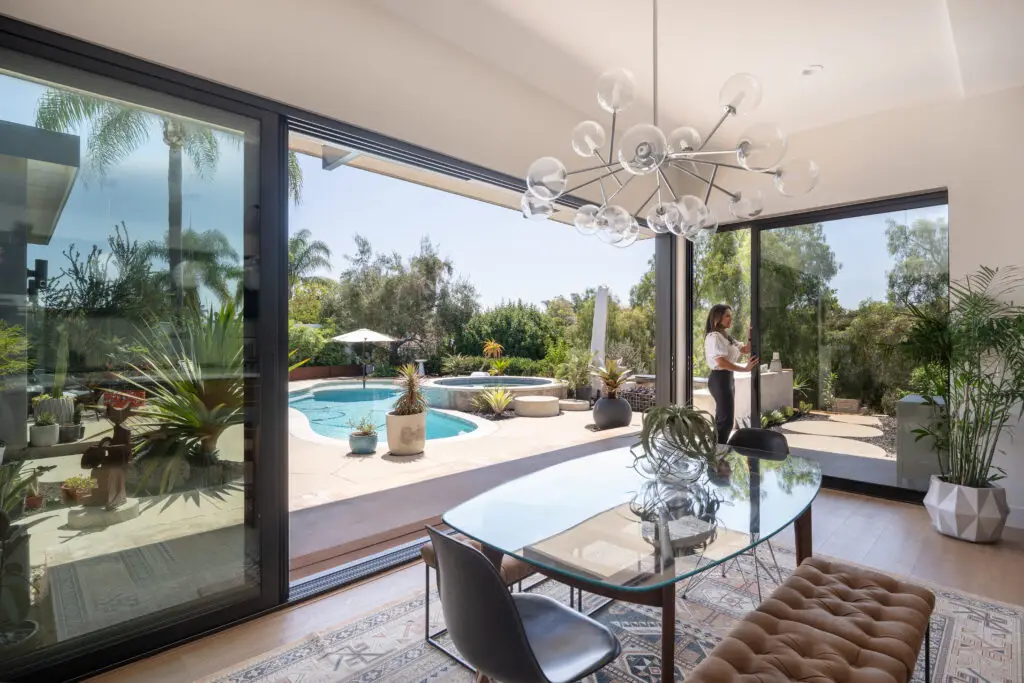
  • City Tacos keeps moving and shaking, and the restaurant group’s next landing place is Liberty Station. El Punto by City Tacos is slated to open in October in the former El Jardin space (2885 Perry Road, Suite 102). Once destined to become another Lola55 outpost, the space will now become a full-service, family-friendly, and dog-friendly restaurant with seafood, tacos, cocktails, and more.
  • For as many closings as we’ve seen over the past year, restaurant openings seem to be back on track. The long-awaited Honor Bar finally opened its doors in Del Mar this summer, and Soul Sip in North Park is soft open from 4 p.m. to midnight daily. Still on the way are The Shackhouse by Julian Beer Company (slated to open by Labor Day) and Sprouts Farmers Market plans to open in the former Pancho Villa’s building in North Park this October. (La Mesa is still waiting patiently for Stella Jean’s and Pop Pie to make their debuts.)

Listen Now: The Latest in San Diego’s Food and Drink Scene

Have breaking news, exciting scoops, or great stories about new San Diego restaurants or the city’s food scene? Send your pitches to [email protected].

Beth Demmon

About Beth Demmon

Beth Demmon is an award-winning writer and podcaster whose work regularly appears in national outlets and San Diego Magazine. Her first book, The Beer Lover's Guide to Cider, is now available. Find out more on bethdemmon.com.

Food & Drink AUGUST 11, 2026

8 San Diego Food Gifts Your Friends Actually Want

Bring home a taste of the city with local coffee, conchas, chili crisp, hot sauce, and other suitcase-worthy finds

8 San Diego Food Gifts Your Friends Actually Want
Courtesy of Provecho! Coffee Co.

Snacks are the best vacation souvenirs. You get all the novelty of having something to unwrap without any of the burden of keeping random crap around. I’m always game to try some chips from a place I can’t find on a map with ingredients I can’t identify by taste. Gimme that spice mix from that Southern barbecue pit whose wine list consists of light beers from lesser-known appellations. Don’t think I won’t lick the inside wrapper of some chocolate bar homemade by a grandma at a farmers market you stumbled upon in a small Midwestern town best known for giant yarn balls.

Even though San Diego is best known for our thigh-sized burritos, fish tacos, and craft beers, those travel about as well as room-temp mayo. So we gathered some of the city’s best food souvenirs: snacks, spices, and sauces worth sliding into your carry-on or gifting to a lucky out-of-towner.

Courtesy of Provecho! Coffee Co.

Bulk Coffee

Provecho! Coffee Co.

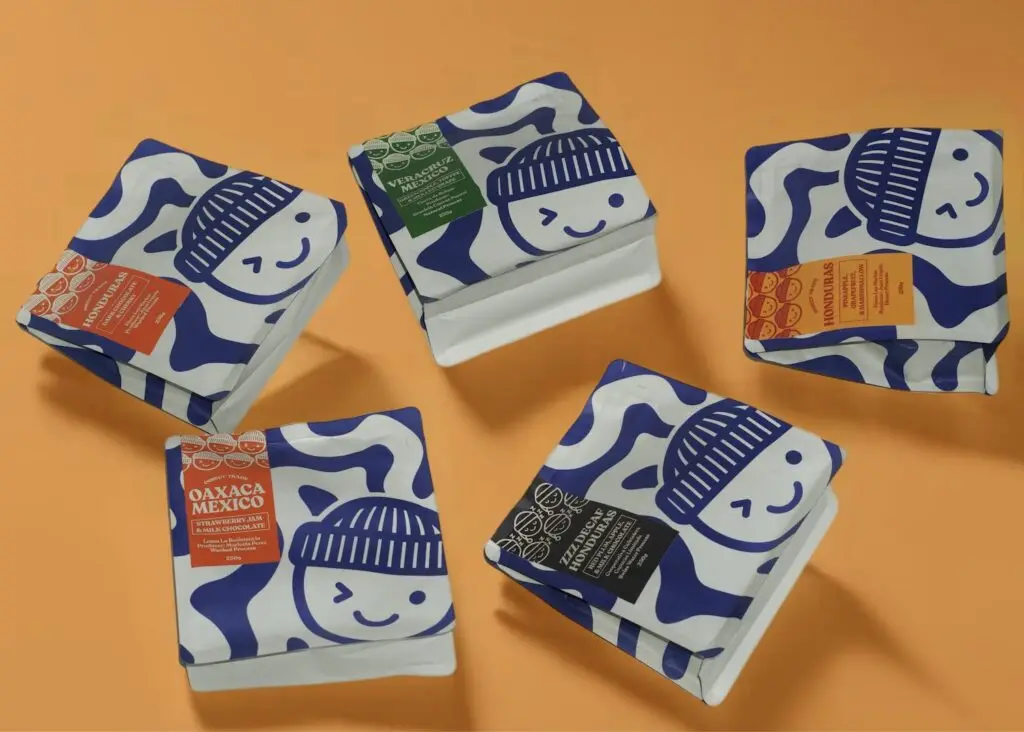
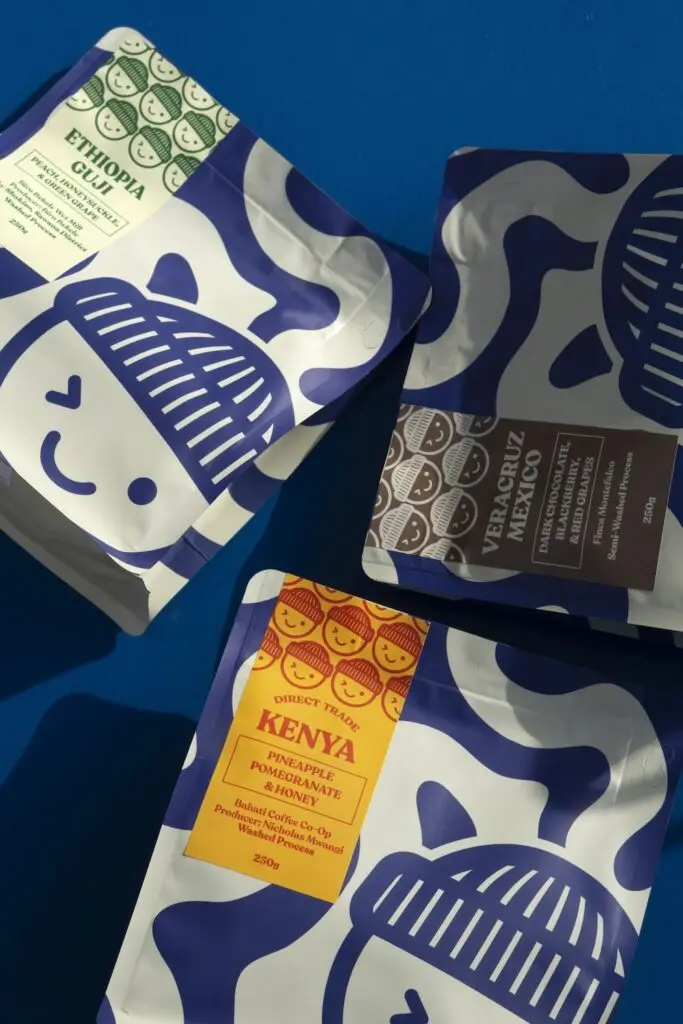
Inside Bread & Salt—Barrio Logan’s old Weber Bread Factory turned into one of the city’s most vibrant art, culture, and community spaces—there’s a cafe in front of a giant, now-defunct bread mixer. Mexican-owned specialty brew shop and roastery Provecho! Coffee started as a pop-up in 2020, but its success quickly bricked-and-mortared. Although Provecho! specializes in sourcing and roasting Mexican coffees, its consistency is variety: The lineup changes regularly as Provecho! finds new sources around the world. Get a to-go taste via the coffee bags that range between 250 g and 2 kg.

Courtesy of Superlova!

Sesame Sauce

Superlova!

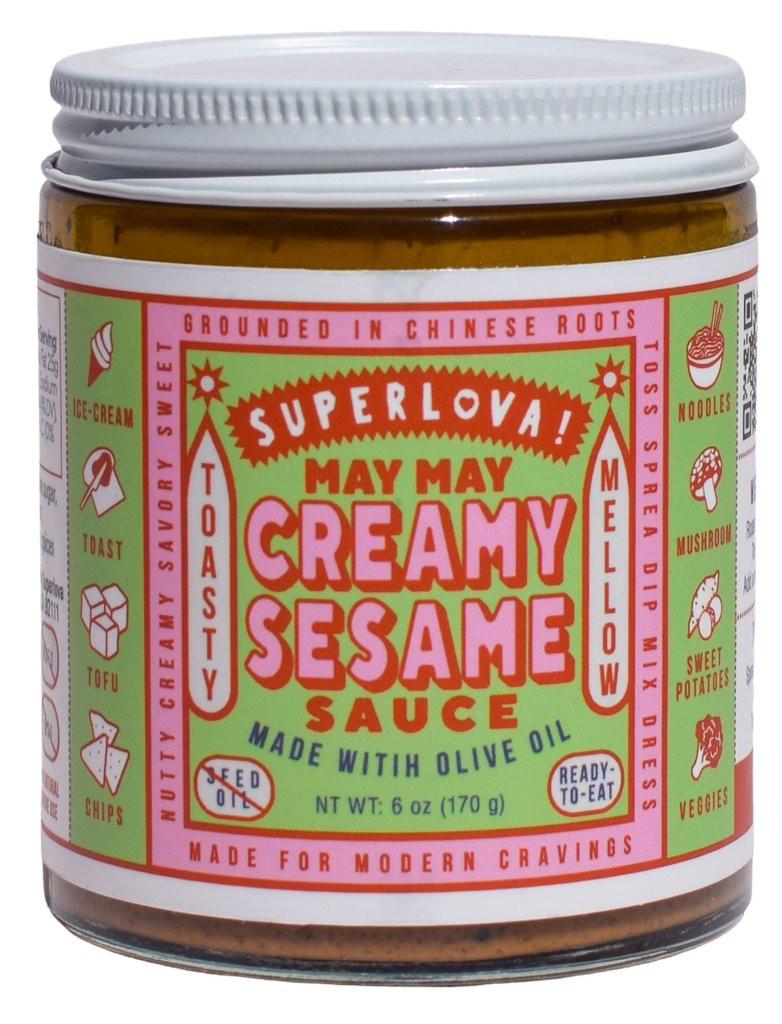
Superlova!’s Chinese-inspired, seed oil–free sauces are grocery list mainstays for San Diegans. The sesame sauces (Dan Dan is spicy, May May is tame) pair with noodles, dumplings, or any meal that could use a little more oomph. They don’t have tahini, which is de-hulled; they have Chinese sesame paste, which is dark-roasted for a nuttier flavor and packed with fiber and calcium.

Courtesy of JuneShine

Hard Kombucha

JuneShine

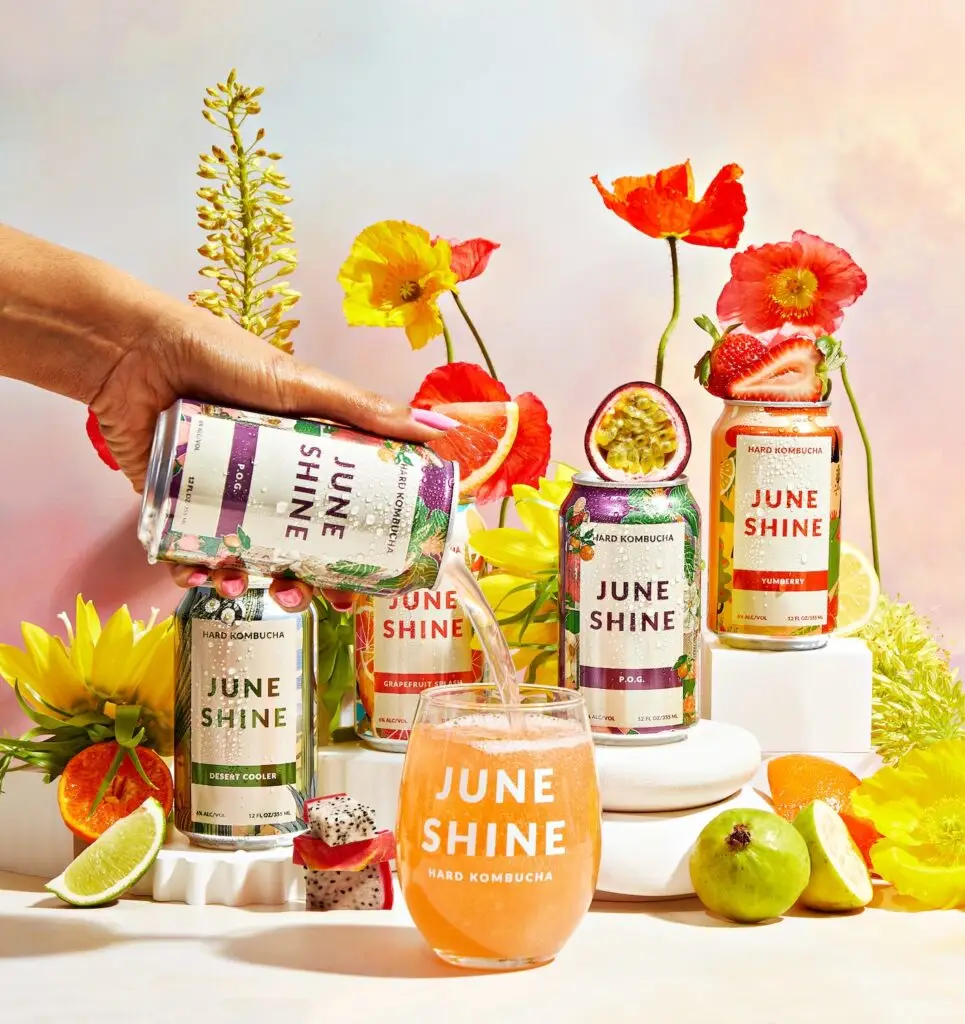
San Diego is known for beer, sure. But real locals pour from a different tap. JuneShine’s low-sugar, yet still refreshingly sweet, hard kombucha is an SD favorite. The brand has joined the canned cocktail tidal wave and now sells vodka mules, tequila palomas, and vodka sodas—all with about two shots per can, real juice, and sparkling water. But for a classic food gift, get a variety pack of the booch. Fit it into your checked bag. It’s worth it.

Courtesy of Down to Ferment

Hot Sauce

Down To Ferment

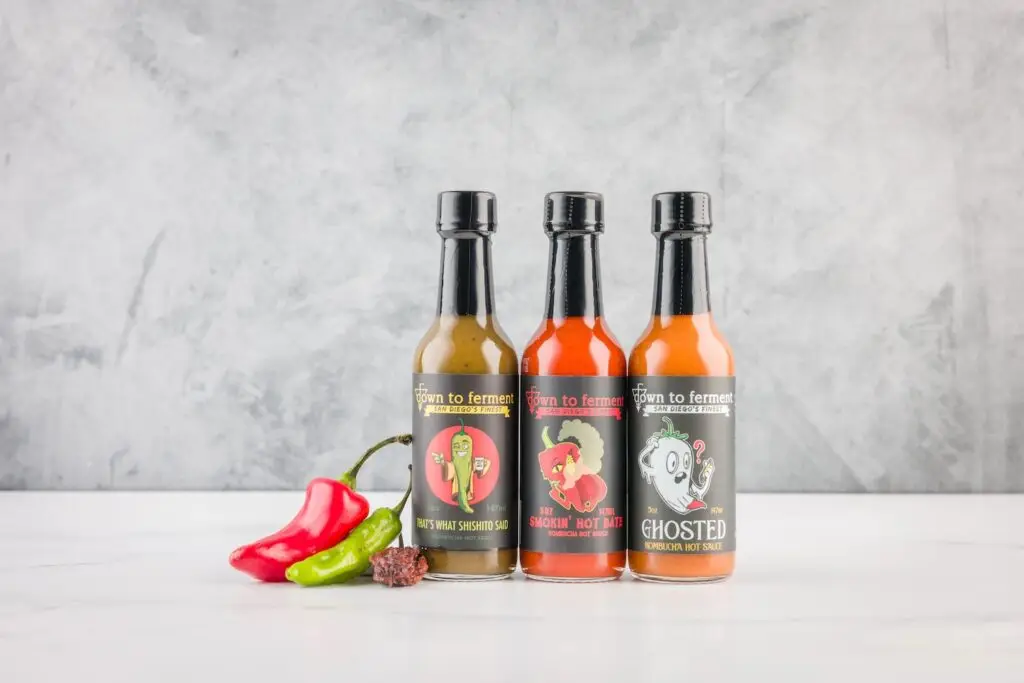
Double entendre is key to hot sauce brand Down To Ferment, aka DTF. (Popular sauces have flavor names like CornHub, Smokin’ Hot Date, and Ghosted.) But it’s no gimmick. The homemade, kombucha-based sauce is seriously good: DTF’s That’s What Shishito Said made it onto Season 30’s lineup on Internet-famous interview show Hot Ones.

Courtesy of Tortilleria Los Reyes

Fresh Tortillas

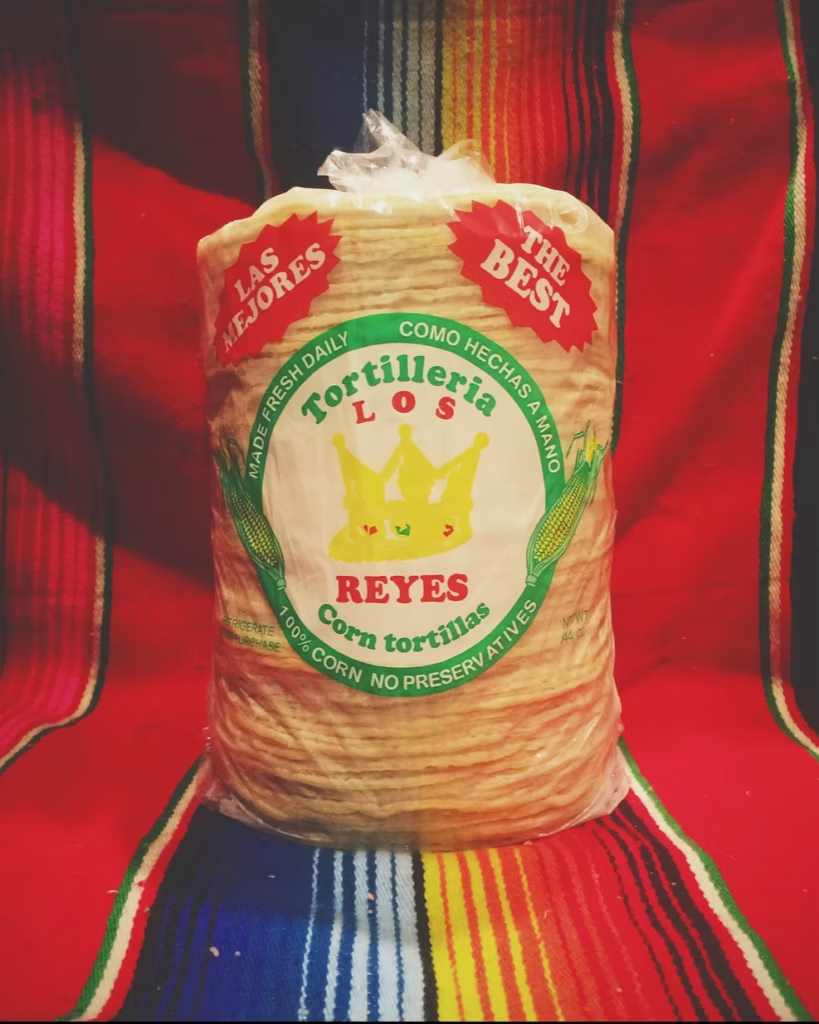
As discussed, carne asada burritos travel about as well as a toddler with emotional-regulation issues. But the soul of a truly great, San Diego burrito? It’s not the fillings. It’s the tortilla. You can’t go wrong from any locally owned spots, but our favorites are Tortilleria Los Reyes in Vista, Windmill Farms Market in Del Cerro (which uses Pancho Villa’s old tortilla press), Esperanza’s Tortilleria in Escondido, and Tortilleria Lily in City Heights.

Courtesy of Karanchi

Chili Crisp

Karanchi

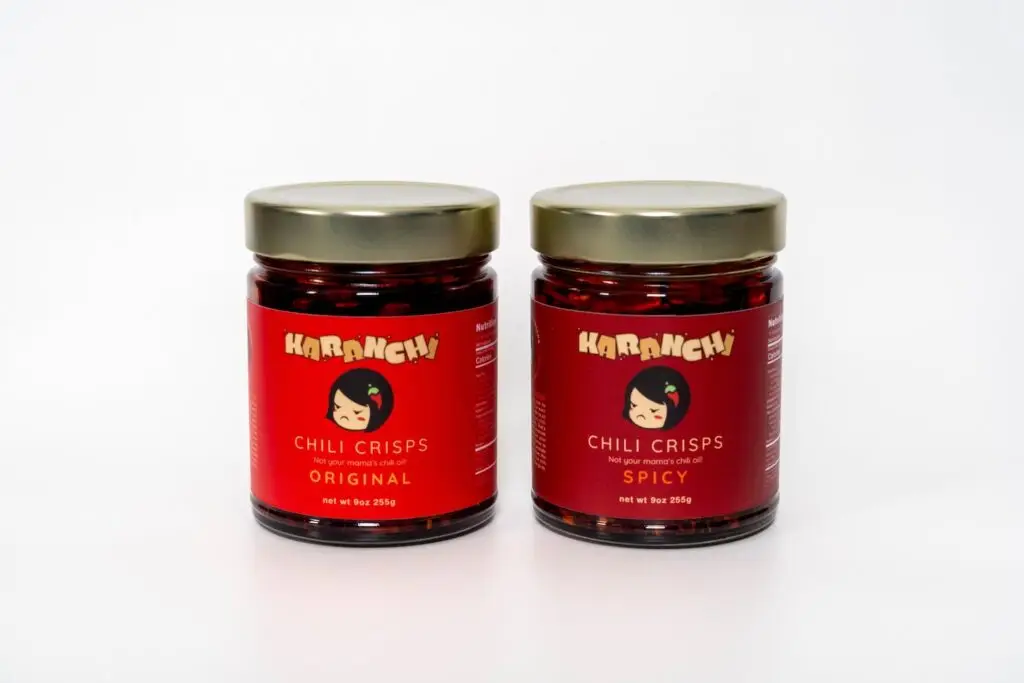
Handcrafted in small batches, Karanchi’s Sichuan peppercorn–packed chili oil comes in two varieties: original and spicy. The original warms your palate and adds depth to your meal, and the spicy is a form of mealtime masochism. Founder Nguyen Le’s favorite way to eat his garlic-studded chili crisp is on avocado toast—which makes an already San Diego meal even more San Diegan—but it’d make old shoes taste pretty good.

Canned Local Tuna

Tuna Harbor Dockside Market

Fresh fish ranks low on society’s acceptable realms of carry-on items. But canned fresh fish straight from local fishermen? You’re the best part of a bruschetta. Every Saturday at the docks behind Seaport Village, fishermen step off their boats and sell what they caught as recently as that morning. While getting yourself some fresh sea urchin and squid, grab a couple cans of locally caught albacore tuna for the tinned-fish lover in your life.

Photo Credit: Salsa Digital Agency

Conchas

Tus Chefs Favoritas

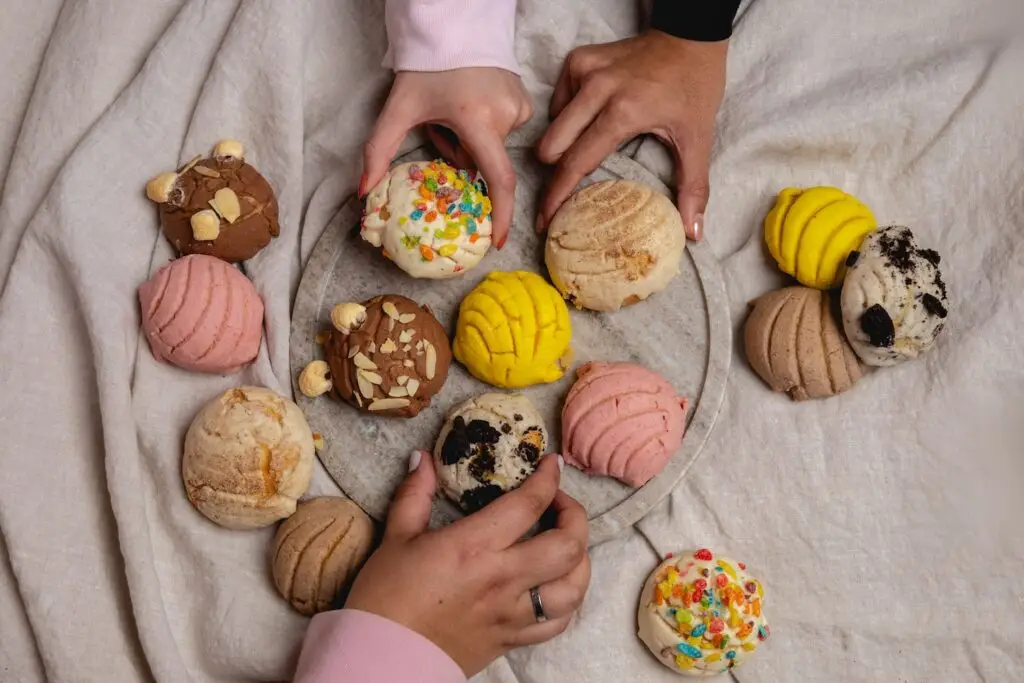
Started as a pandemic baking hobby for BFFs Natalie Rodriguez and Lesly Mendoza, Tus Chefs is now a South County favorite spot for conchas with a twist. The menu is expansive enough to get over a baker’s dozen without any repeats—why not get one of each, anyway?—but if you only have enough space in your carry-on for a few, start with popular “chocolate abuelita,” churro, mazapan, horchata, and brownie conchas.

Emma Veidt

About Emma Veidt

Emma Veidt is an editor at San Diego Magazine. She earned her bachelor's and master's degrees from the Missouri School of Journalism. She loves running, hiking, and rock climbing, but really, she mostly loves encounters with the street cats around North Park.

Everything SD AUGUST 10, 2026

San Diego’s Zine Scene Has No Rules

No gatekeepers, no creative rules, no perfect definition—the city’s DIY publishing scene makes room for anyone with something to say.

San Diego’s Zine Scene Has No Rules
Courtesy of Duophobia

If magazines are like the adultier eldest daughters who know exactly how much anarchy they can get away with, zines are the far less predictable younger siblings going on whim and instinct. Those who draw on the walls around the house, DIY their own piercings, and experiment with different emo/straight-edge/back to emo phases (or not-phases). Boundaries and routines are what zines were created to rail against.

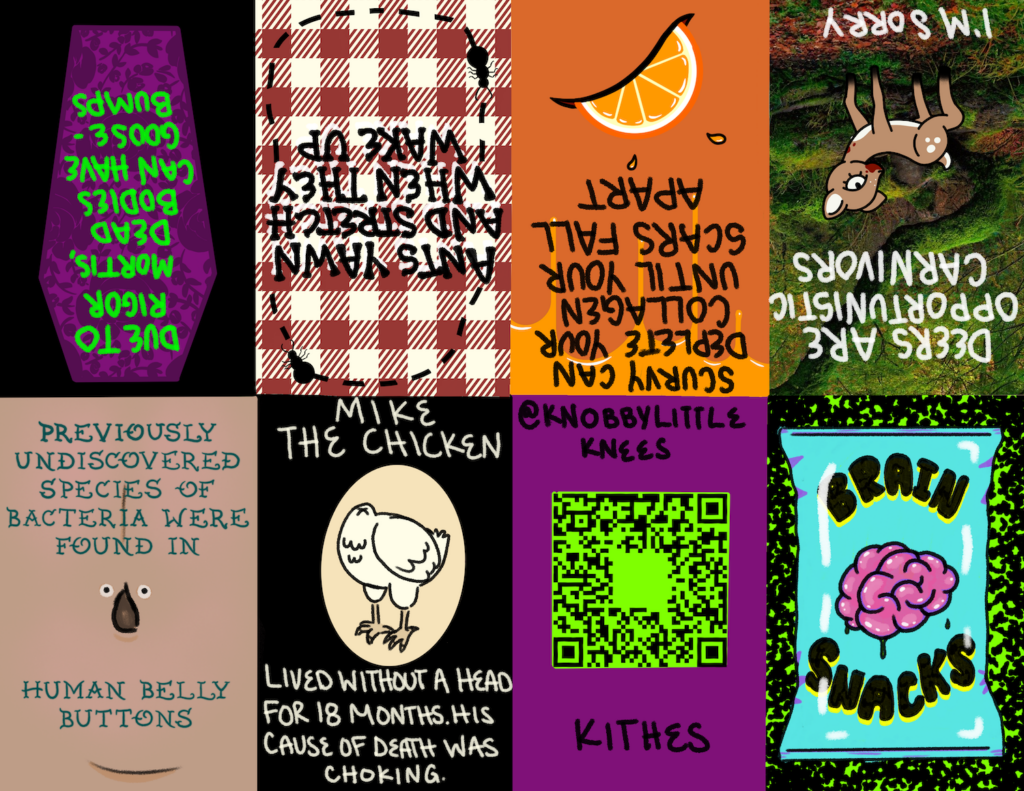
Walk into Verbatim Books’ zine corner, and this rebellion is immediately clear. Zines have no singular form, no clean category or definition. Vintage magazine scraps are collaged into new meaning alongside mini fandom zines. Single sheets of plain white printer paper are covered in nothing but black ballpoint pen. Repurposed hardback book covers are folded into something entirely new. Some are duct-taped together, others stapled. Some glossy, others matte. There are guides to anything and everything, comic panels, photography, hand-drawn cartoons, poetry, recipes, diaries, and ramblings that only make sense to the person who made them—and that’s on purpose.

Zines are creative magic. And with no rules, they’re incredibly accessible. Anyone can zine and have a voice, regardless of artistic training or work life experience.

You are your own Anna Wintour, Graydon Carter, Ruth Whitney.

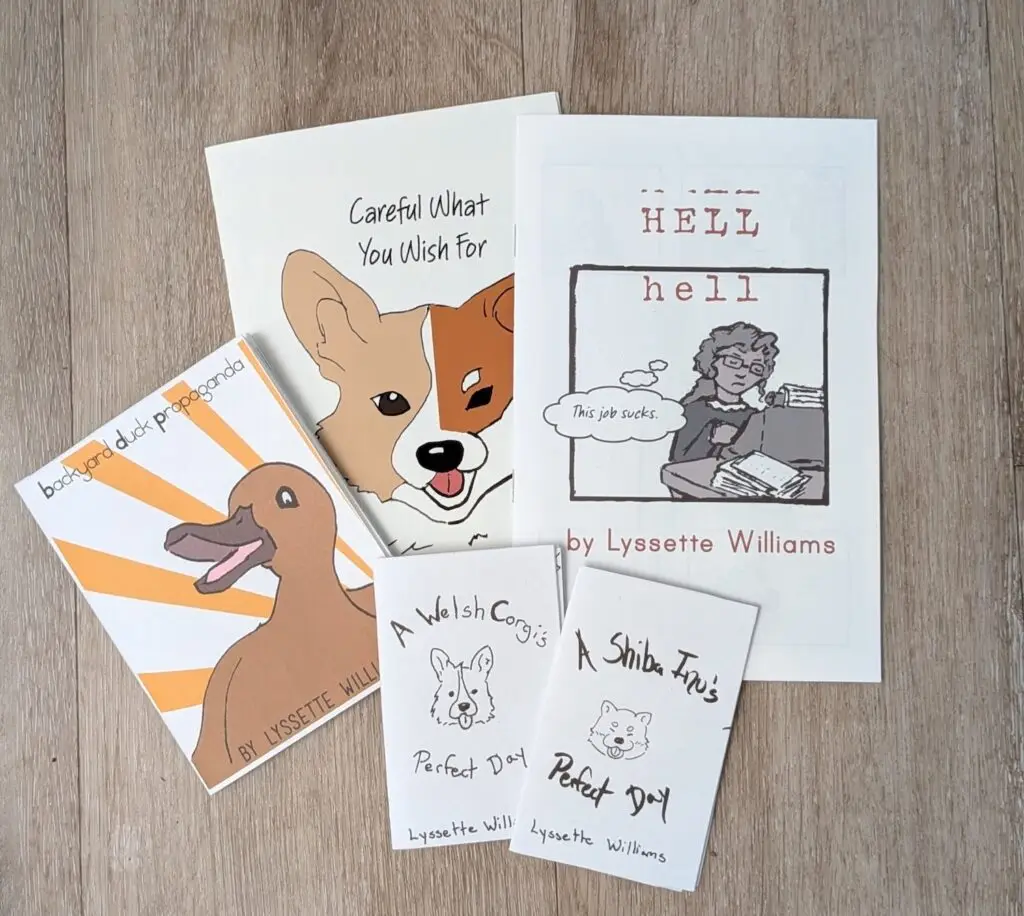
San Diego–based zine creator Lyssette Williams specializes in mini zines—often limited to eight pages, they’re meditations in abbreviation. Outlining, thumbnailing, and revision all move quickly from idea to page. Larger projects, including Williams’ long-form graphic novel thesis, move at a slower pace. For those, she often returns to pen and ink, a choice that resists the over-editability of digital work.

Raised by a single mother and navigating mixed-race identity in a predominantly white town, she finds a home for processing it all in zines. Her work deals in identity, belonging, self-definition, and punk-rock childhood. But it isn’t always heavy; Williams creates a mini duck-themed zine called Backyard Duck Propaganda that’s hard not to love. “When I create, I think about what would have helped me find the words back then, what my younger self would’ve needed,” Williams says. “[Zines] put the tools in your hands and democratize art. They’re translations of memories and identities.”

Courtesy of Lyssette Williams

For Williams, a big reason she keeps creating is being surrounded by other creatives—a scene that extends across the border. She points to Verbatim and Comicbook Artists of San Diego, plus events like Zine Fest (October 17–18 this year at Woo in Barrio Logan) and Black Comix Day at the WorldBeat Cultural Center.

Zines have always been a road for subcultures. During the Harlem Renaissance, Black creatives like Langston Hughes and Zora Neale Hurston self-published one issue of Fire!!, which inspired other Black authors. In the 1930s, zines (then called fanzines) were hubs for sci-fi nerds to write fanfiction, address the fandom, and create new characters. Superman actually made his public debut in a fanzine called Science Fiction (he was originally cast as a villain with a fully receded hairline). A couple decades later, zines about feminism and riot grrrl became subculture de rigueur.

The internet nearly killed zines, of course. But now, people tired of the algorithm’s firehose are finding comfort and renewed inspiration in analog. Zines, a salve for digital fatigue.

Courtesy of Duophobia

A giant figure in San Diego zine culture is Burn All Books. Founded by Amanda and Nick Bernal, BAB started as a risograph (digital screen printing) studio and turned into one of those places that keeps expanding the whole scene around it, even forming its own archive group, SCANNNERS. Since opening in January 2023, it has published over 35 works and collaborated with more than 100 artists, writers, and zinesters.

For Duophobia, the pseudonym for local twin sisters Alora and Kiani Dotson (affectionately known as the “possum twins”), zines make room for experimentation and play that doesn’t fit anywhere else. Room for eclectic cartoons and dirty jokes. For sticker-covered sketchbooks.

It’s that same brand of nostalgia you might feel when, say, you walk past the carcass of an abandoned mall and see a faded cartoon mural. Their work lives somewhere between childhood and adulthood, where being unserious is taken very, very seriously.

“We’re born and raised in San Diego, and the community of artists here is a main reason we started publishing,” Kiani Dotson says. “There are people here like Trixxie Land who run open art gatherings. Show up, and you’re part of it.”

Land, a zinester herself (she made 250 single-page zines during 2020’s lockdown), is all about storytelling over hierarchy. Art shouldn’t be about gatekeeping or intimidation, she says. So she holds open-invite arts shows at Subterranean Coffee.

Courtesy of Lyssette Williams

Duophobia regularly share their work at local galleries like Subterranean, filling that lowbrow space with pieces that answer: “What would’ve made us laugh as kids?” Children are often the first to pick up their zines, unfolding them in every direction while parents briefly panic at the impulsive destruction. The twins always step in. “No, no, it’s okay,” they say, before showing how one sheet of paper folds into an entire little book. “It’s like magic.” More often than not, the kids leave with a tiny zine tucked under a tiny arm, future San Diego zinesters in the making.

When asked what a zine really is, Alora Dotson’s response was simple: “It’s anything. Literally anything. The more genuine you are, the more people are going to hear what you have to say. Your voice matters, even if it’s just a silly joke or story. People want to hear about it.”

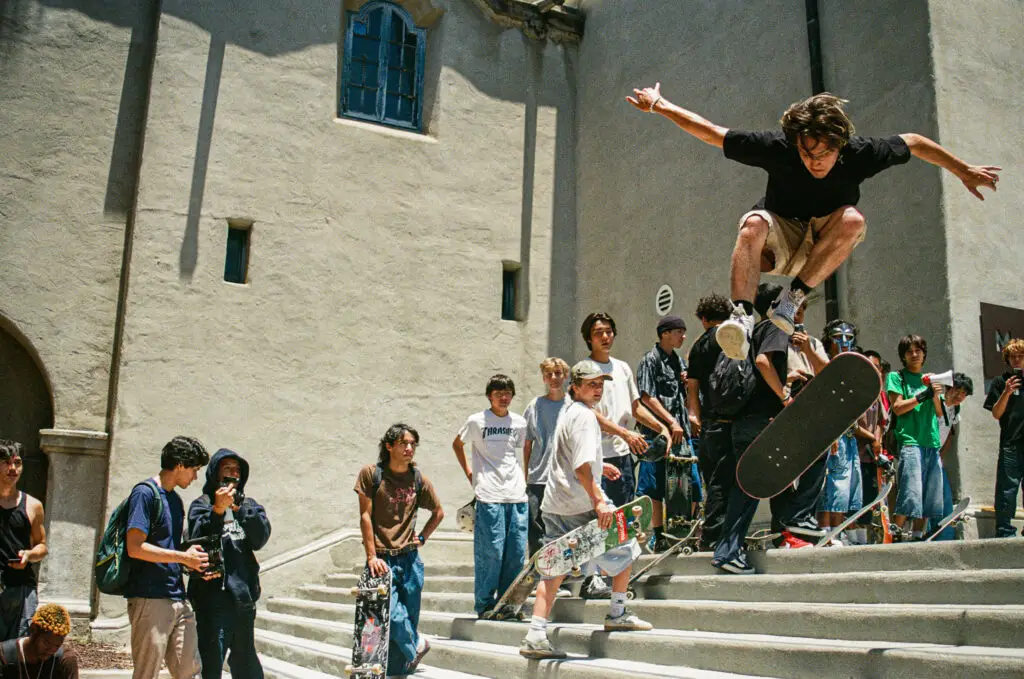
Not a perfect definition? Exactly. Zines inherently resist categories. Want to turn a single playing card into a storybook? Do it. What about your favorite graffiti artist’s signature tag at Prince Memorial Skatepark? Turn it into a zine.

Everything’s a zine.

Isabella Dallas is a freelance writer for San Diego Magazine and the Arts and Culture Editor at The Daily Aztec in her final year at San Diego State University. She previously worked as an editorial intern for SDM, but when she’s not writing, you can find her trying the best coffee spots in SD, devouring the latest rom-coms, and indulging in anything and everything pop culture.

Studio S AUGUST 10, 2026

The Secret to a Home That Feels Just Right

Behind every beautiful space is a thoughtful process, and ASID San Diego is helping homeowners understand the value of professional design.

The Secret to a Home That Feels Just Right
Courtesy of ASID

A perfectly designed home rarely happens by accident. Those kitchens that feel effortless and rooms that seem to tell a story the second you walk in? They’re usually the work of someone who knows exactly what they’re doing.

It’s knowing which ideas will actually work, which materials will hold up over time, and how to turn a collection of choices into a space that feels intentional. That’s where a professional interior designer comes in.

For the American Society of Interior Designers (ASID) California San Diego Chapter, the goal is to help people see interior design as more than just the finished look. Behind every well-designed space is a process built on technical expertise. Designers are educated in everything from professional software and construction details to building codes, space planning, materials, and functionality.

Courtesy of ASID

“People don’t always realize how much goes on behind the scenes,” Kirsten Recce , current president of the ASID California San Diego Chapter, says. “Our designers are not just doing furniture placement and color selection and picking out new fluffy pillows. That’s not what they’re trained for.”

ASID members bring formal education, continued learning, and industry knowledge to their projects, helping create spaces that are not only beautiful, but designed to work. A paint color that changes completely depending on the lighting. A material that looks beautiful in a showroom but doesn’t make sense for everyday life. A layout that photographs well but doesn’t function for the people living there. These are the details where professional guidance can make all the difference.

Still, one of the biggest misconceptions about hiring an interior designer is that it’s reserved for massive renovations, luxury homes, or people who already know exactly what they want. The process can feel intimidating. Where do you begin? Is a designer worth the investment? What if you only need help with one room?

ASID’s answer: start with one hour.

ASID’s Spruce Up events break down one of the biggest barriers between homeowners and professional design: knowing where to begin. Held twice a year, the community program gives homeowners the chance to work directly with an ASID designer through a one-hour, $125 consultation in their own home. Whether you’re looking for advice on furniture placement, window treatments, kitchen and bath updates, remodeling ideas, vacation rentals, color selections or something else entirely, the upcoming September 2026 event offers an approachable way to get expert guidance before committing to a full project. Signups are open through Sept. 7, with consultations taking place Sept. 21 through Oct. 31. Proceeds benefit ASID San Diego’s educational and community programs. Register here!

Courtesy of ASID

“It’s a great opportunity for people who are in that exploratory phase,” Recce says. “Maybe they’re not sure they want to hire an interior designer yet, or they think it sounds daunting or expensive. This gives them a chance to discover what working with a designer is actually like.”

Design is personal. A good designer isn’t just creating a beautiful room; they’re helping create a space that fits the way someone lives.

“We’re a resource to all of San Diego County,” Recce says. “It doesn’t cost anything to pick up the phone and call and ask. We’ll answer.”

Follow ASID San Diego on Instagram, LinkedIn, and Facebook for updates on upcoming events, or connect with the chapter directly at [email protected] or 619-548-8847.

Partner Content
Food & Drink AUGUST 10, 2026

9 Must-Try Meals in San Diego Right Now

SDM's staff shouts out our favorite food finds this month including bites from Glass Box, Pete's Seafood, Kimochi, and Immersion Coffee

9 Must-Try Meals in San Diego Right Now
Courtesy of Pete’s Seafood and Sandwich

It’s August. Corn season—that hallowed dental flossian time—is upon us. Peak summer means the fruits from local farms are downright NC-17. It’s also hot-adjacent, so we search out top-notch sashimi and interesting fruit punches. And because we’re contrarians, we also find ourselves tucking into a warm lobster roll in North Park, vying for a father’s love. Anyway, these are the stories behind the best things we found this month—things we’d recommend to friends who didn’t owe us money. Salamat.

Glass Box

Sesame-Torched Albacore

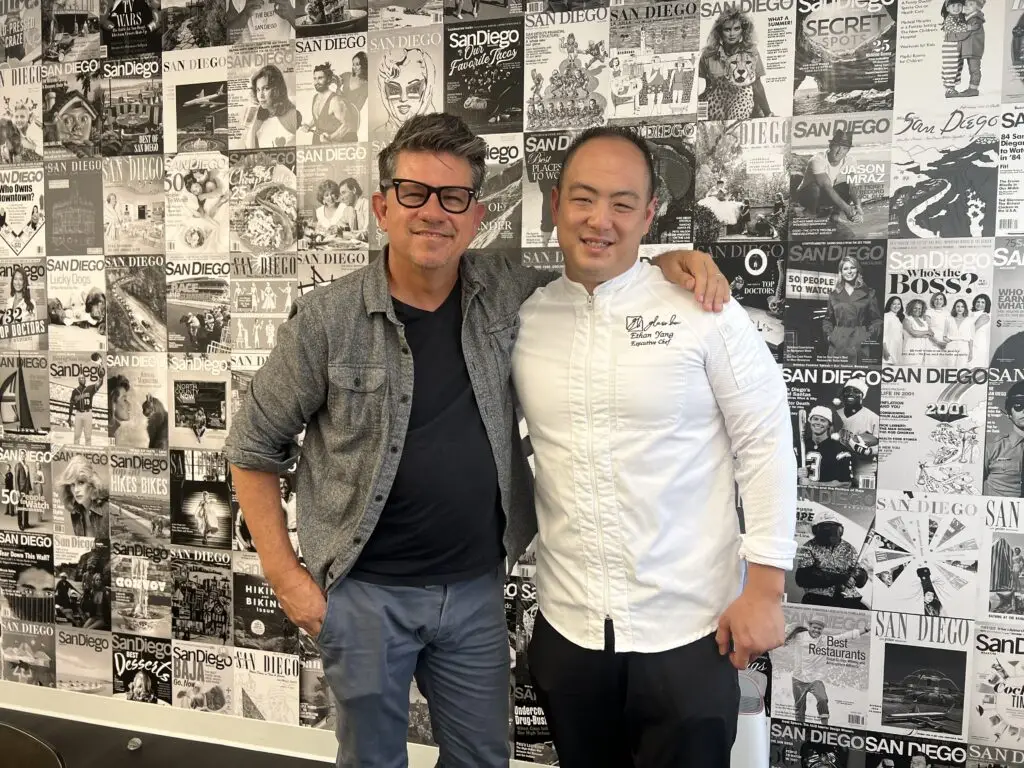
Chef Ethan Yang grew up folding dumplings in his dad’s San Diego restaurants—such as the former Fortune Cookie in Rancho Bernardo, which drew on the family’s Taiwanese and Chinese roots. So the Taiwanese beef noodle soup on the menu at Glass Box (a lovely glass-enclosed sushi and pan-Asian spot at Sky Deck in Del Mar) is a family pride—the result of Ethan, dad, and his brother tinkering endlessly with various bones (they finally found the perfect bone, only sold by one butcher in LA).

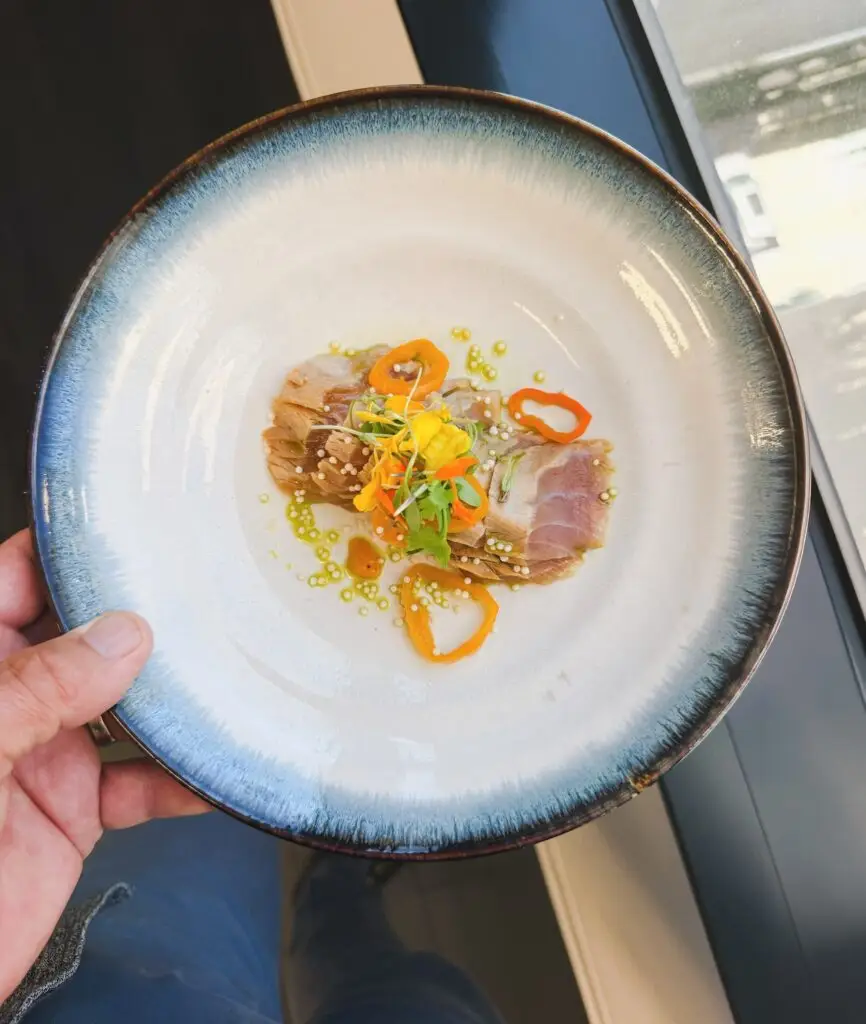
But the dish that shows off his raw fish skills is the albacore—lightly cured in soy, mirin, and toasted sesame oil, flame-torched to caramelize, and finished with smoked shoyu, chive oil, shiso oil, house-pickled sweet peppers, and crispy rice pearls. —Troy Johnson

Luce Bar & Kitchen

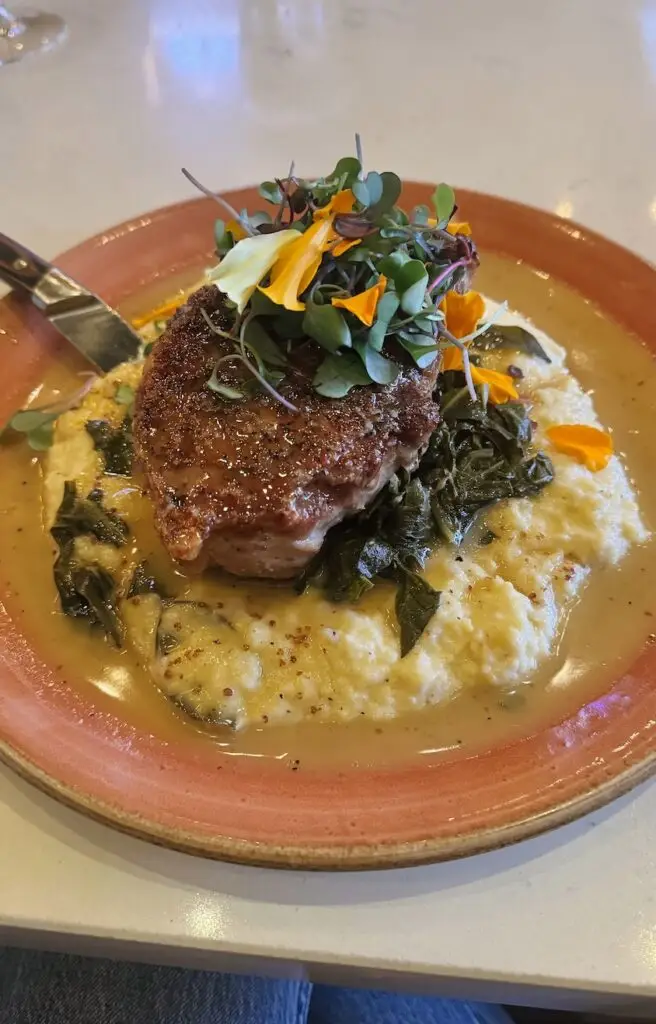
Double-Cut Duroc Pork Chop

“Wait, where is it?” I hear this a lot when suggesting Luce for drinks or a bite. The Bay Park restaurant is smack dab in a part of the city that isn’t conventionally attractive: on the side of the 5 freeway, next to a bevy of service-looking storefronts. To be in this area, you either live here (homes here are fairly excellent with that bay view) or are getting a muffler fixed. A better reason to be in Bay Park: An evening at Luce, a locals’ haunt. Get the Duroc pork chop (the chefs’ chop, with darker meat, higher fat content, better marbling) with collard greens, toasted grits (toasting anything results in a better version of that anything), and a mustard glaze that makes you feel like you’re in the South enjoying sweet tea with friends. —Nicolle Monico

Courtesy of Sipwell Wine Co.

Sipwell Wine Co.

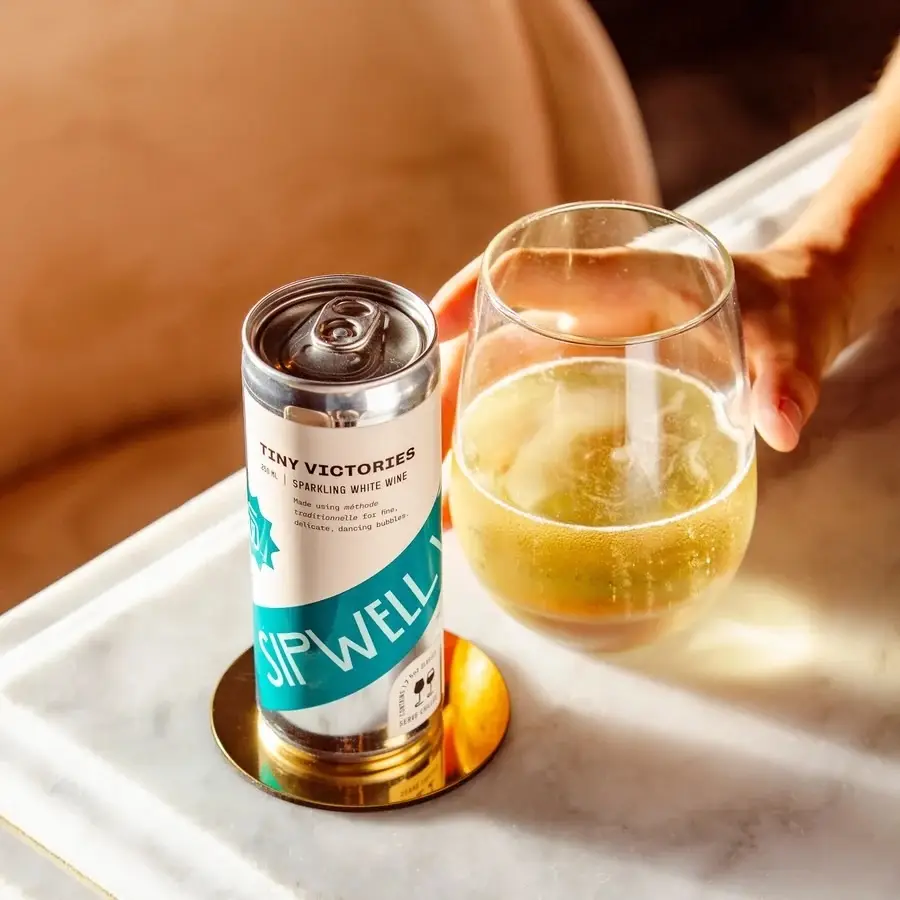
Tiny Victories

Ever walk into your kitchen during the afternoon feeling recklessly free and decide the time is exactly right for a glass of Champagne? Maybe you crushed a work project or navigated a 4-year-old’s meltdown with the elegance of a global diplomat. You ever then pour that glass and are immediately pulled away by other demanding life errata—and by the time you eventually return to celebrating being alive, you find the remaining victory-juice sits in the popped bottle, losing its steam, and serving you a metaphor for your day?

Hilary Cocalis solved this for me with Carlsbad-based Sipwell. Tiny Victories is a Champagne-style sparkling white in a 250ml can (a glass and a half—the correct amount), the first can-conditioned sparkling wine on the market, fermented with true Champagne yeast. Crisp apple, a little citrus, that biscuity thing good bubbles do, zero sugar. It’s also the first canned wine to crack Wine Enthusiast’s Top 100, so now there’s no excuse not to celebrate all of life’s tiny victories. —Claire Johnson

Courtesy of Pete’s Seafood and Sandwich

Pete’s Seafood and Sandwich

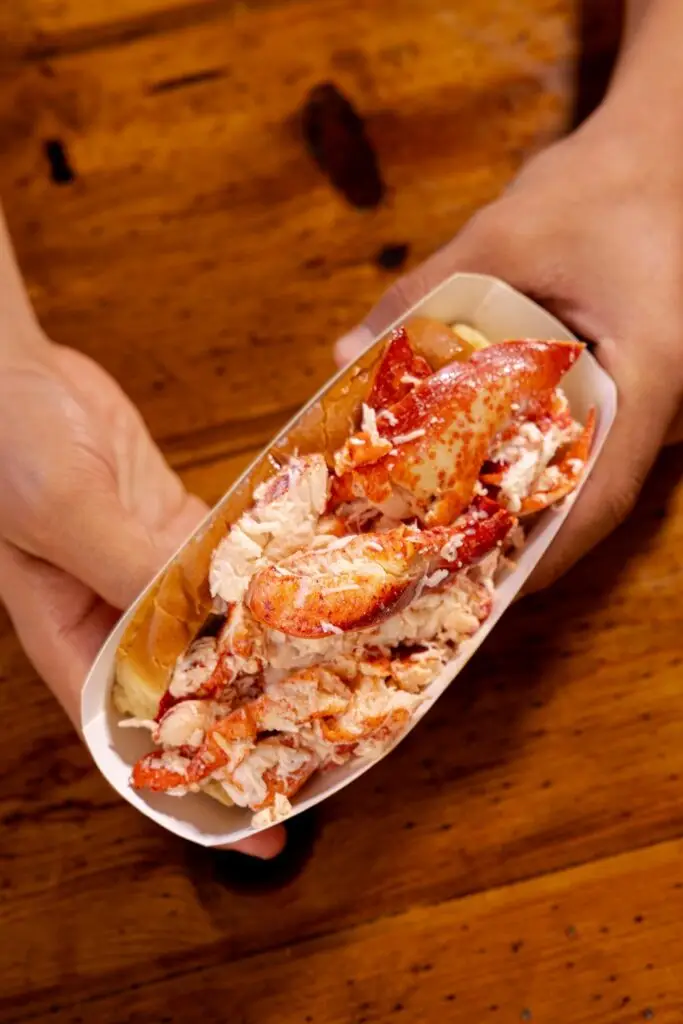
Warmed Lobster Roll

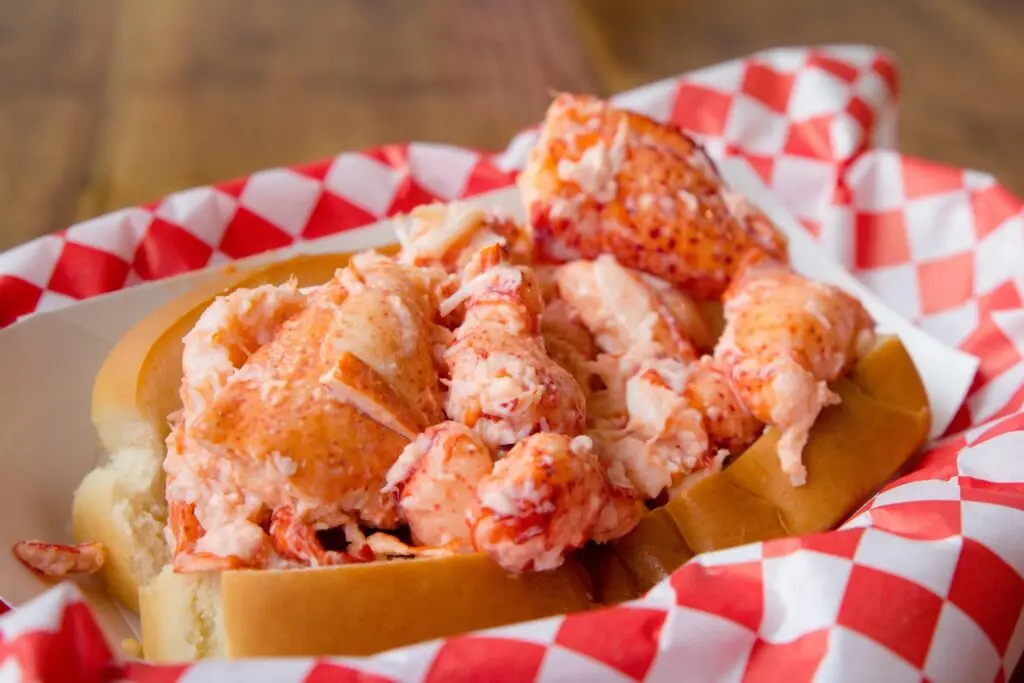
If my dad were to rank his favorite things, I think I’d make the podium, but there’s no way I’m outperforming this lobster roll. And why would I? We went to Pete’s on Father’s Day, and Peter DeCoste brought out 5 ounces of Maine lobster smothered in warm butter, tucked haphazardly into a grilled New England–style roll, served with a simple coleslaw and basic fries (no need to overshadow the star). Pete’s has a cold version with mayo, too, but there’s something about warm lobster that really wins over dads and their lobster-jealous daughters. –Lili Kim

Valerio’s 1979

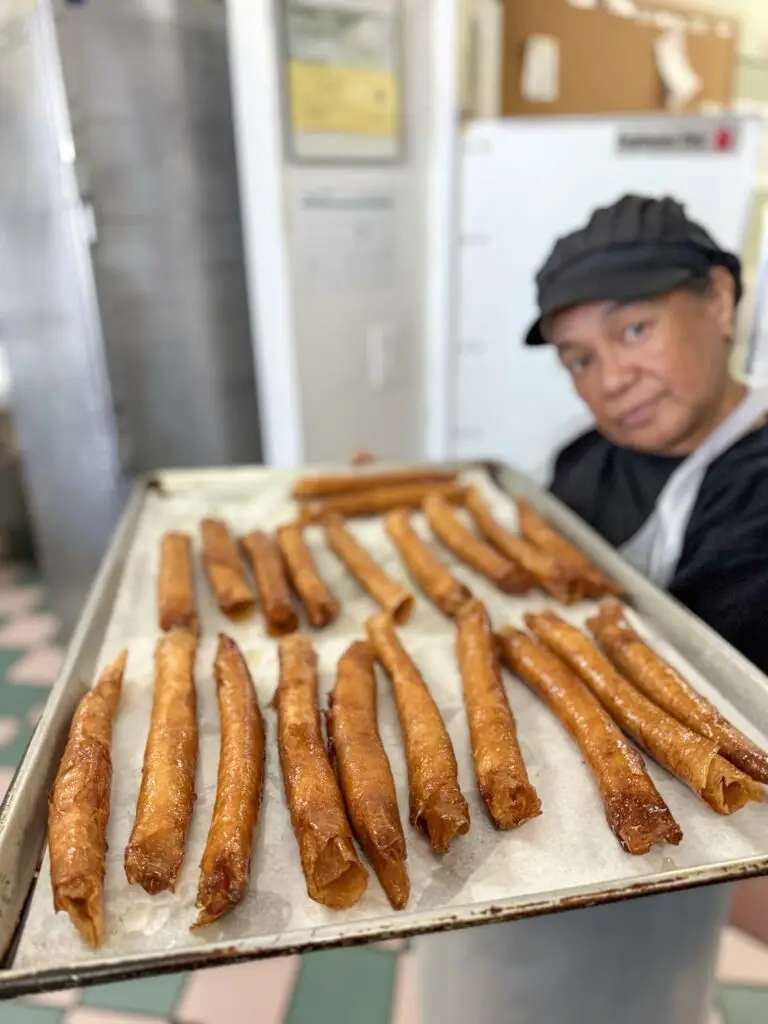
Turon

Valerio’s 1979 is a quintessential San Diego family story. In the 1950s, the grandparents opened their first bakery in the historic Philippines city, Cavite. Their son, Jimmy, would bake and sell bread before school. After enlisting in the Navy and being stationed in San Diego, Jimmy and his wife, Gloria, opened his own version of the family bakery in National City in 1979—a huge hit and home-away-from-home spot for the city’s massive Filipino community.

Four-plus decades later, with four locations across SoCal, it’s on the third-gen of Valerios. The new blood is reviving the name and place with all kinds of Filipino comfort food, and the turon is a star. The classic Filipino treat is a ripe, sweet saba banana and jackfruit, rolled in lumpia wrapper, deep-fried, and covered in sticky, caramelized brown sugar. “Dessert lumpia” is a phrase to live a life by. —Troy Johnson

Courtesy of Kimochi

Kimochi

Cantaloupe Mochi

Food & Drink AUGUST 8, 2026

First Look: Zuma San Diego

The contemporary Japanese restaurant lands in San Diego as part of its global expansion

First Look: Zuma San Diego
Courtesy of Zuma

For years, writers (even me, I’ll admit) have spilled gallons of ink lauding San Diego’s up-and-coming dining scene. No, we’re not Los Angeles’ little sibling. Yes, we’re more than fish tacos—and have been for a while. We hosted this year’s California Michelin Guide ceremony. Southern California’s first three Michelin-starred restaurant (Addison by William Bradley) calls San Diego home. I think it’s safe to say we’re not on the way—we’ve arrived.

If anyone needs more proof that San Diego has truly made it to the world’s stage, all you need to do is look toward downtown’s newest arrival: Zuma, the globally-acclaimed contemporary Japanese restaurant and izakaya

Located inside The Guild Hotel, Zuma San Diego is the sixth US outpost of the London-born brand, which now includes restaurants in destinations like Bangkok, Thailand; Ibiza, Spain; and Cannes, France. And there are on the way, including Saint Barth in the Caribbean; Los Cabos, and Mexico.

Each Zuma outpost has its own local flair, but share a few key elements no matter where it is in the world: a large, energetic bar area; an open sushi counter; and Zuma’s signature robata grill. 

Rainer Becker and Arjun Waney founded Zuma in Knightsbridge, London, in 2002 after Becker spent six years cooking in Tokyo, connecting Japanese elegance with vibrant design. After opening locations in Miami, New York City, Las Vegas, Boston, and Vail, vice president of operations Nick Fielding says San Diego felt like a natural fit.

Courtesy of Zuma

“There’s something uniquely special about San Diego in terms of energy and culture,” he says. “You’ve got a city that is extremely, extremely well versed in culture, in food, in hospitality, in luxury. It’s a quiet luxury, which is very much in keeping with what we believe in.”

The Guild Hotel makes sense as the host location. The historic Italian Renaissance property dates back to 1924, featuring a European-style courtyard, plush lobby, and an abundance of restored original details, like 1920s-era tilework. 

One important note: while guests can access Zuma via the hotel lobby, the restaurant has its own dedicated entrance located on  Columbia Street. And if you want the full Zuma experience, that’s where you’ll want to start, promises Fielding.

Courtesy of Zuma

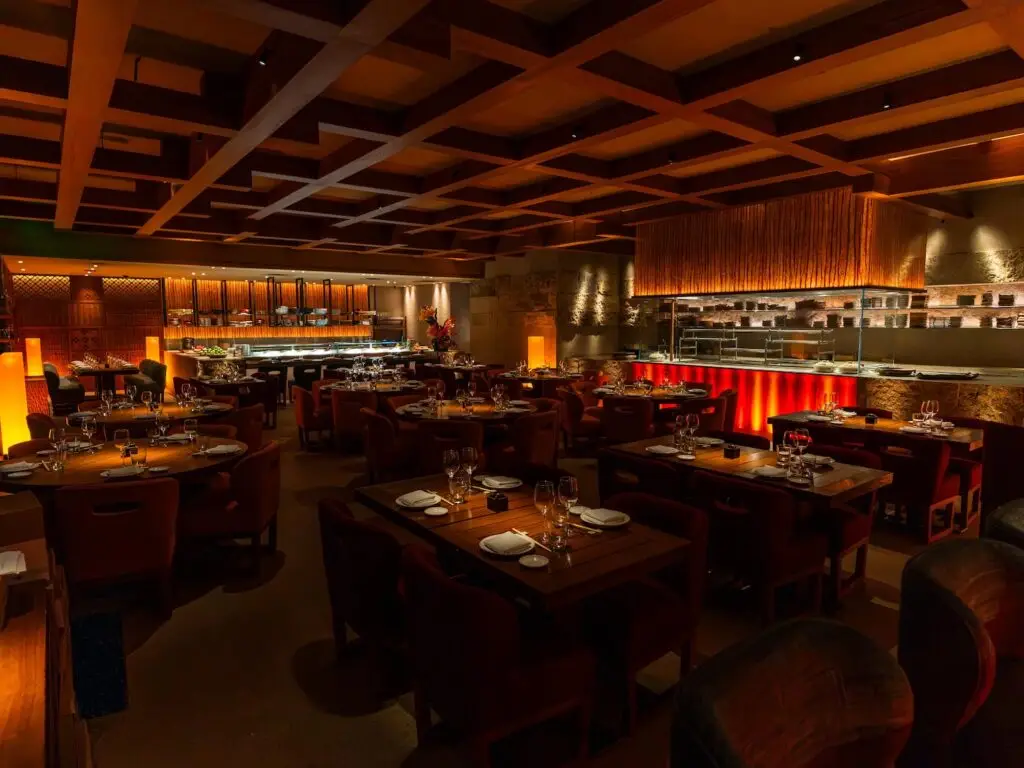
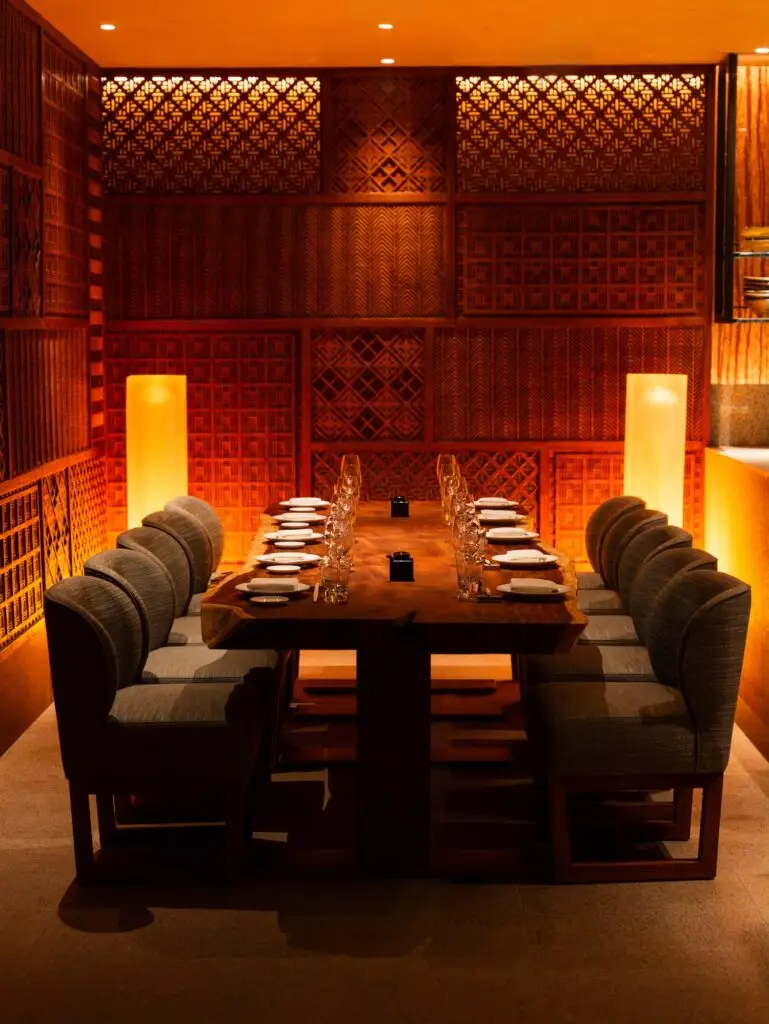
“The entrance is a big part of the arrival experience,” he says. Upon entry, guests walk through an elongated tunnel made from solid teak before arriving at an oversized boulder wall. Each stone has been hand-cut and carved by a team of artisans in Mexico, with a design meant to reflect the rugged California coastline. Next steps guide you across a Japanese garden–style walkway among a Zen pebble garden (inspired in part by the Japanese Friendship Garden in Balboa Park) straight to the indoor-outdoor bar made with hand-cast resin panels designed to emulate the sunset over the ocean. 

As for the patio, it’s a jungle out there—literally. Luscious greenery and towering palms drape across the space to create a secret tropical garden framed by hand-carved, uplit teak screens from Indonesia. By design, there’s no question it’s a Zuma restaurant, but the San Diego location’s style rotates around five pillars, according to the restaurant group’s head of design, Lucy Robinson.

Courtesy of Zuma

One: embracing a sense of understated luxury. Two: highlighting the year-round climate with a 50/50 indoor/outdoor split of the space. Three: blending local architectural details (like the botanical garden references) with Japanese aesthetics. Four: creating a bespoke palette of bold pinks, oranges, and yellows inspired by minerals found in coastal stones along the coast. Five: Creating a vibrantly energetic space (a goal for every Zuma location).

Inside, the robata grills crowns the center of the dining room, featuring a Japanese paper hood and fire element-inspired resin wainscot base to create a striking tower of red, yellow, and orange. “We always try to bring the four elements into our projects, which are fire, water, wind, and earth,” explains Robinson. San Diego also features Zuma’s first ice box centered on the sushi counter. “It’s almost like on an island—a big lit-up ice block, which will be chipped down to make the base of our sushi platters.”

The 6,600-square-foot dining space seats 221 guests, with a natural flow between the two—another nod to the nearby coast. From hand-woven details by an artist in Germany to the granite tiles on the walls, scale, pattern, texture, and color are everywhere. 

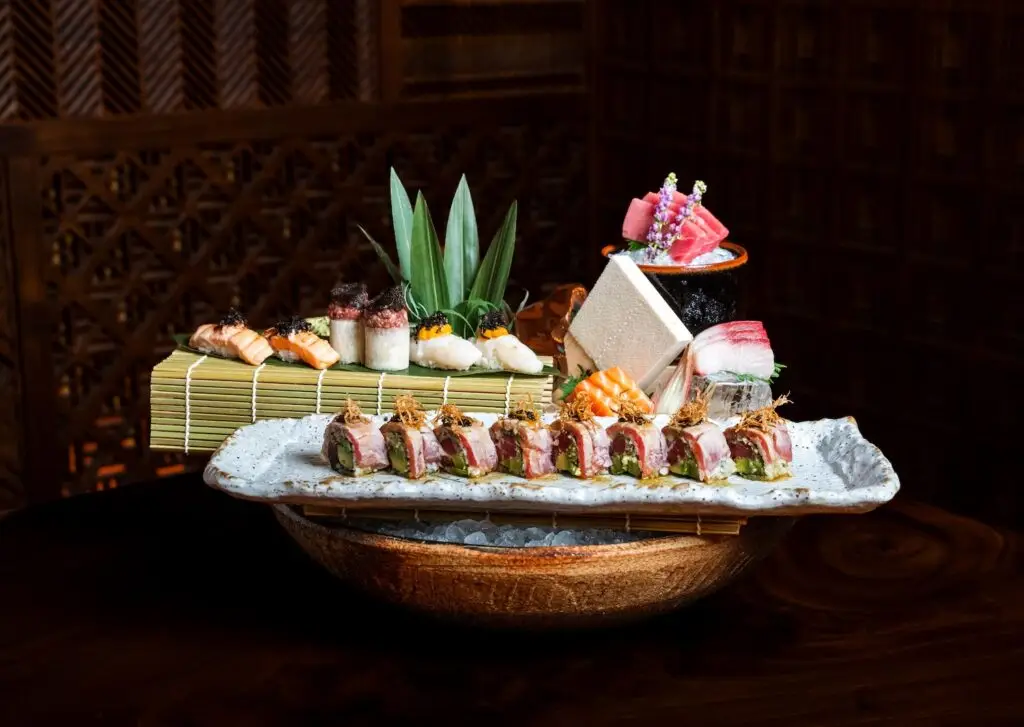
That’s true for the plates as well. Head chef Briant Arciniega says to recognize all Zuma’s big hits—spicy beef tenderloin, saikyo miso-marinated black cod, barley miso-marinated baby chicken, as well as signature sushi and sashimi options, and robata dishes like grilled scallop skewers, beef with shishito pepper and smoked chili soy, jumbo tiger prawn with yuzu pepper, and ribeye with wafu sauce and garlic crisps.

Courtesy of Zuma

Beverage-wise, the menu follows the same diversity of flavors and price points to offer high-end staples, but remain approachable, says Fielding. Expect concoctions like a Japanese margarita made with Mijenta blanco tequila, mezcal, yuzu, orange, and yuzu koshu, opt for an easy-drinking Sapporo pale lager, ask the lead bartender Eric Howell for a wine recommendation, or explore the sake selection.

At minimum, expect vibes. Robinson says the Zuma team has watched certain San Diego restaurant groups go all-in on experiential, eye-popping, energetically-designed spaces. “We wanted to make sure we stood out when coming into the area,” she says. When you have to compete with things like speakeasies-within-speakeasies and man-made barside beaches of imported Turkish sand, you better bring it. 

Zuma San Diego opens at The Guild Hotel (500 West Broadway) on August 10. Initial operating hours are seven days a week for dinner service. Reservations are now open. 

Beth Demmon

About Beth Demmon

Beth Demmon is an award-winning writer and podcaster whose work regularly appears in national outlets and San Diego Magazine. Her first book, The Beer Lover's Guide to Cider, is now available. Find out more on bethdemmon.com.

Partner Content AUGUST 12, 2026

Theranostics: New Hope for Patients with Metastatic Cancers

Innovative treatment could offer cancer patients new options with fewer side effects

Theranostics: New Hope for Patients with Metastatic Cancers
Courtesy of Scripps Health

Chemotherapy and radiation have long been considered gold standards of cancer treatment, but they can cause severe side effects. A promising new approach called theranostics—a combination of “therapeutics” and “diagnostics”—could offer patients with certain types of metastatic cancers new hope. It’s a two-step process that uses a drug that binds to specific receptors on cancer cells. Advanced imaging detects this radioisotope, allowing doctors to then use a second radioisotope that binds to the cancer cells and destroys them. Click here to learn more about how specialists at Scripps Cancer Center are using theranostics.

For more nutrition, wellness, and healthy living tips, sign up for the San Diego Health newsletter here.

Partner Content

Eat Like a Local (Who Knows a Guy).

Restaurant news, culinary storytelling, and Troy Johnson’s sharp takes delivered straight to your inbox twice a month.

Close the CTA

Contact Us

1230 Columbia Street, Suite 800,

San Diego, CA