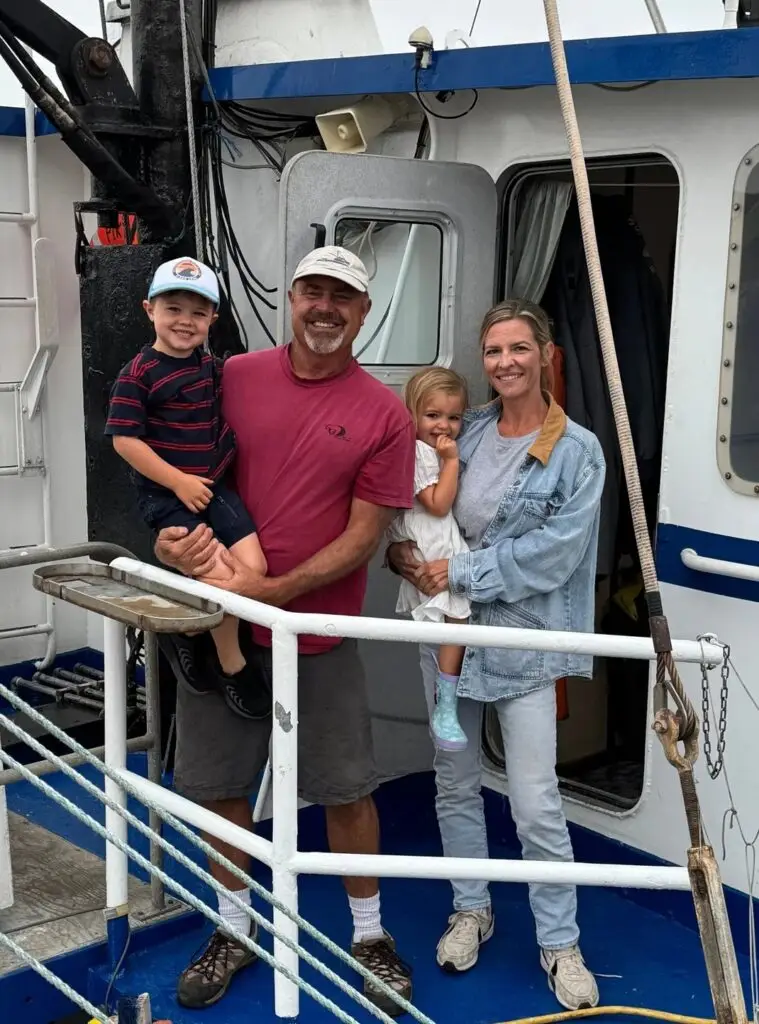
San Diego has always been a tuna town, and our collective love for all things craft—from our beer to the arts and culture scene—has been well documented throughout the years. So when it came to launching Craft Fish Co., a family-owned line of small-batch, pole-and-line-caught tinned albacore, JJ and Jessica Gerritsen decided to keep things (mostly) local.
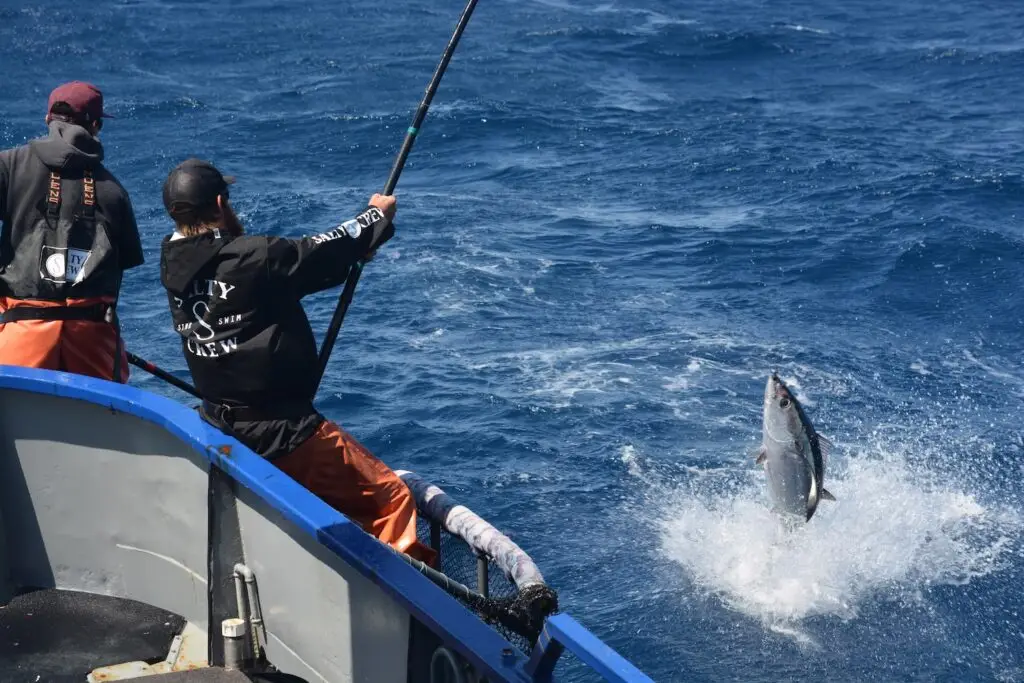
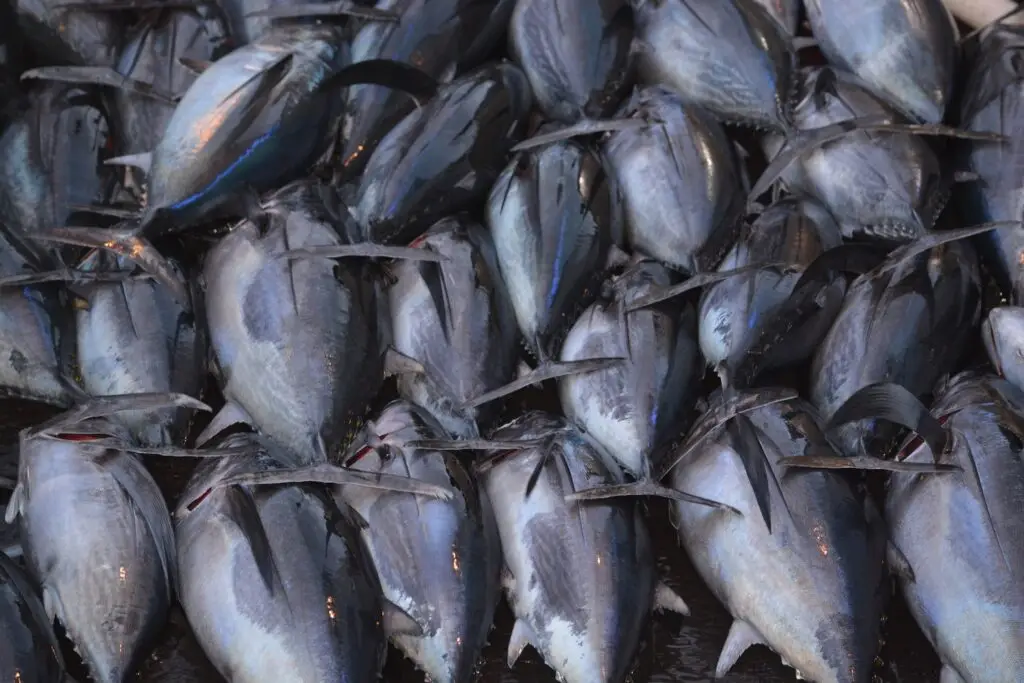
For around five months every summer, JJ sails his commercial fishing boat The Piky from G Street Pier in San Diego to the cold waters off the coast of the Pacific Northwest. He keeps things old-school, catching one albacore at a time using the pole-and-line method to eliminate bycatch. It’s considered one of the most eco-friendly ways to fish, ensuring sustainability and traceability for every single tuna.
Due to the industry standard of bulk processing, and despite federal law regulating the US commercial fishing industry, very few tinned fish companies can claim complete traceability. Fish caught by different people, on different boats, sometimes in different countries make it impossible to know the exact origin. Craft Fish Co., on the other hand, can trace its tuna down to the name of the fisherman who caught it.
Courtesy of Craft Fish Co.
“Every single fish that is put into a tin has been caught on The Piky by JJ himself or his small crew,” says Jessica.
The second pillar of their mission is just as important. “For us, sustainability is only catching what we intend to catch, and not having any of those accidental other bycatch in there,” says Jessica. Other common commercial fishing methods, like longlining (a miles-long single fishing line with hundreds, if not thousands, of baited hooks branching off the main line) and purse seining (using a giant drawstring net) can result in bycatch, including sharks, turtles, rays, or other species of fish. Pole-and-line fishing avoids that.
All of Craft Fish Co.’s tuna is sushi-grade quality and processed in the US—another rarity in the industry. (San Diego’s last cannery closed in 2001, and the closest one is in Oregon.) Overseas processing cuts labor and material costs significantly, and allows companies to still label their products as “U.S. caught fish.” Technically accurate, but a bit disingenuous to people who want to know where their food comes from.
Because it’s a family operation, Craft Fish Co. has kept its product line small—variations of albacore in extra virgin olive oil, organic EVOO, with sea salt, or with no salt added. Once caught, the tuna gets hand-filleted and cut, then put into a tin to be cooked one time, not twice, as is common in the industry. Jessica says the process helps preserve nutrients like omega-3 fatty acids.
Currently, you can find Craft Fish Co. through San Diego -based distributor Sosal Line, their online shop, or locally at Fox Point Farms, Clos, and Hook & Cleaver Ranch in Temecula (close enough). The next product they plan to add is a smoked albacore, but beyond that, it’s up in the air.
“We will always only use fish from The Piky that JJ caught,” she promises. “There have been times when we needed more fish and we could have bought it from other people. But we didn’t… to not compromise on any of those things, the product will speak for itself.”
Photo Credit: Suprwavy Studios
San Diego Restaurant News & Food Events
Get Buzzed About Latte Week
San Diego isn’t just a fish town—our coffee scene is just as red-hot. This week, San Diego’s first Latte Week kicks off its celebration of local coffee and the people behind it. Now through November 8, participating cafes all over the county are offering $5 latte specials, like “Chained to a Cloud” at Fuzz Coffee, a Cacao Krisp Latte at Maya Moon, or the Short Filipina latte from Kaphé Muna’s residency at I’m Still Developing in Chula Vista. Things wrap up at Marta on Sunday, November 8 from 4 p.m. to 7 p.m. with a latte art throwdown, live screen printing, music, and more.
It’s the first for San Diego, but hopefully not the last, says Latte Week co-founder Delia Tethong. “Hopefully, it’s in a lot of cities in the future,” she says, pointing to the next event in Portland in February 2027—perhaps Los Angeles, Houston, or New Orleans. Tethong and her partner Jenna Winkler want people to know this is about fun and accessibility. “It’s a reason to get people out of their homes,” says Winkler. “A $5 latte is supposed to be an accessible way for people to come in and experience a shop, and hopefully return again and again.”
Speaking of cafes, there’s a new one in Escondido. BewBew Home Cafe opened its second location at 1022 W El Norte Parkway this week, offering Vietnamese specialties like chocolate pistachio matcha, a Biscoff caramel butter cookie latte, fruit teas, milk teas, and all sorts of yummy-looking stuff. Plus, it’s open daily from 8 a.m. to 6 p.m., so you can still get your sugar (or caffeine) fix all day.
Señor Mango’s Hillcrest, we barely had time to enjoy your fresh-squeezed juices before your location closed. I mean, we’ve still got two other locations to get our smoothie on—but stopping by that iconic A-frame on Washington Street was always a mid-morning treat. What’s next for the former Weinerschnitzel building? Time will tell.
Once November hits, it’s open season for making holiday plans. For something a little different than the typical mistletoe and spiked cocoa, give your holiday schedule a punch of pirate-y spirit at Margaritaville Hotel San Diego’s Yo Ho Ho-liday Tavern starting November 21. LandShark Bar & Grill inside the hotel will transform into a nautical-inspired holiday bonanza with food and drink specials, and rumor has it a live pirate will make a few appearances on select Saturdays before the event wraps up. Shiver me Christmas tree timbers, indeed.
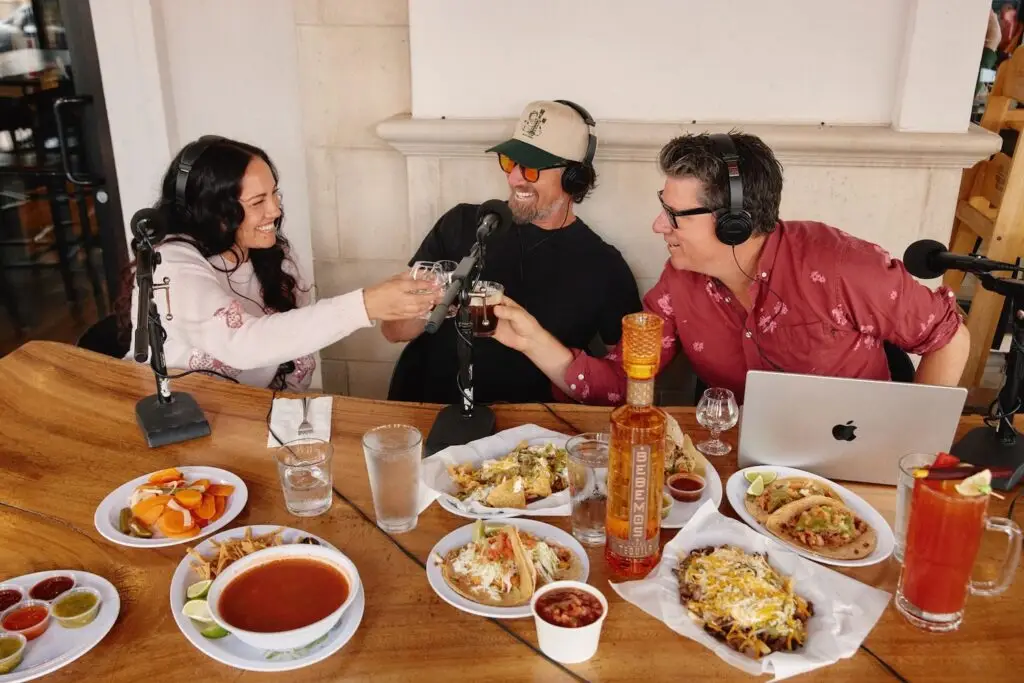
Listen Now: The Latest in San Diego’s Food and Drink Scene
Have breaking news, exciting scoops, or great stories about new San Diego restaurants or the city’s food scene? Send your pitches to [email protected].
Beth Demmon is an award-winning writer and podcaster whose work regularly appears in national outlets and San Diego Magazine. Her first book, The Beer Lover's Guide to Cider, is now available. Find out more on bethdemmon.com.