Featured articles
Food News
Food News
Food & Drink
Featured articles
Things to Do
Things to Do
Everything SD
Featured articles
Things to Do
Things to Do
Everything SD
Featured articles
podcast-ep
podcast-ep
podcast-ep
Featured articles
Food & Drink
Everything SD
Everything SD
Featured articles
Food News
Things to Do
Things to Do
Ready to know more about San Diego?
SubscribeReady to know more about San Diego?
"Dining Review" politely withdraws from the race to be first
Our dining review in this month’s issue of SD Mag is of 100 Wines in Hillcrest. It opened last August. Most media in San Diego have already given their critical opinion. Am I a tragic slacker? Do I start in Lodi when a restaurant opens and walk slowly, as David Carradine in Kung Fu, toward the restaurant? What the hell took us so long?
It’s because we identified a critical error in this age of digital media, how it unfairly hurts restaurateurs, and our role in it. SD Mag will no longer review restaurants until they’ve been open at least three months, give or take a few days.
New media champions pole position. It champions first. Second? Sorry, slow-thumb. Why don’t you go over to that dark corner of Twitter with your friends, Mr. Third and Mrs. Fourth, plus the other million people who ceased to matter 16 seconds ago when some guy’s avatar had a premonition that this specific cultural event was going to occur. Sanjay Gupta just called that guy. That’s why you see Yelp reviews of restaurants before they open (happens all the time).
YELP REVIEW: “First review of this overrated hot spot! Admittedly, I liked the idea of Mr. Chang’s Un-Fusion when I heard about it six months before any of you did. Fusion went out with leg warmers (ha!). But now I’ve seen the logo on Logo.com and I can’t support this restaurant. The logo looks like a bunch of chopsticks having a really unorganized orgy. I expected more. Plus, the construction workers are malodorous and failed to whistle when I walked by (yes I walked by twice). When they open next August, I hope no one will waste their time. One star.”
But restaurants are not consumer products. They are not a TV or a Chrysler LeBaron. When a new TV or stylish LeBaron is released, they are as perfect as their designers thought they could possibly make them for the target audience and price point. They don’t need time to evolve, adjust practices or “hit a groove.” So it’s fair to evaluate them the exact moment they are released to the general public.
With restaurants, it’s the polar opposite. Restaurants could be no less perfect than the first day they open. Sadly, the only way to get it right is by letting the public in for real-world trial and error.
A restaurant, like any business or entity that depends on flawed things called human beings, is a living, breathing organism. It needs time to learn how to make all the moving parts walk together in a straight line, let alone run. Some of the newly hired waitstaff will need to be fired because they’re doing illicit things in the walk-in fridge. Some sous chefs will have exaggerated resumes (“Six months under Joel Rubochon” means “I squatted in his basement.”) There’s new kitchen equipment to master, new knobs to gauge, noise-levels to fine-tune in the dining room. Maybe the seafood guy is farming the Dover Sole in his college dorm fishtank.
In my half-decade plus as a restaurant writer, I’ve often asked operators and chefs: How long before a restaurant should be firing on all cylinders? I’ve heard one to two years. I’ve heard months and weeks. No one has ever said, “Opening night.”
“It depends on the operator, but I wait at least three months to eat somewhere,” says Trey Foshee (Note: We’d already settled on three months when I asked him). “I believe the New York Times waits six weeks before their first visit.”
I didn’t check with the NYT. I Googled it, but all I could find was a lot of mean stuff about Guy Fieri. Six weeks sounds logical.
The Dining Review in San Diego Magazine is an estimable space. I read it and wished to be writing it long before I started doing so. I am paid to inform and entertain. I’m a research-based word monkey. But my specific skill and area of study—day after day after day—is restaurants. I’ve seen thousands of ‘em by now, and like to think I can take a look at a restaurant, identify its peer group, hold it up against those, and make a somewhat well-founded, if not at least painstakingly obsessive, critical evaluation of where it lands on the sliding scale of awesomeness.
Why? I just like writing about dinner. And you only have so many nights out. You only have so many dollars we can expend toward pan-seared halibut. I’m trying to find you the best one, in the best environment, with the best service. I’m trying to find you the best experience.
And to do that, I’ve finally decided: **** the digital age. We won’t be first media outlet to review restaurants. But we feel that when we do, that restaurant will have had the right amount of time to become all that it can be. Or have failed at it pretty miserably.
After all, first is very rarely best. Just ask the guy who first tried to fly by jumping off a building with a kite strapped to his back.
(NOTE: This just applies to the Dining Review. SD Mag will continue to cover news about new restaurants in other areas, including here.)
How a survival technique deepened my love affair with eating
“How are you not morbidly obese?”
For the past 11 years, it’s been my job to write about food. Longer than I expected, especially since my first reaction when told I’d have to edit the dining section of a magazine was, “**** food.” I’d spent the first 20 years of my career writing about music—punk and jazz and experimental bands I often wonder if I championed as a challenge rather than pleasure. I wrote about art, man. I didn’t think of food as art. The food writing I’d read up until that point was flowery, indulgent, comically aristocratic. Microgreens sounded like something people named Perry and Genevieve would discuss around a fire feature in their Aspen timeshare, wearing soft sweaters.
But it was 2007, the American economy was muttering to itself in an alley that smelled like broken homes and Enron’s deplorable musk. I’d lost two-thirds of my freelance income in the span of a week. I needed a job. So I lied and told my prospective editor that I would love to write about what people eat. Having gotten myself in far, far over my head, I studied like mad. I read food dictionaries and cookbooks and Gael Greene and Anthony Bourdain and Calvin Trillin. In my Golden Hill apartment, I huddled every night in a tornado of flashcards and cigarette smoke, and gave myself an ad hoc culinary degree. I ate at restaurants and learned from chefs. I ate at more restaurants. And more. When I wasn’t eating out, I was cooking to learn.
After 4,000-plus days in this profession, I’ve stared down more warm calories than many humans will in an entire lifetime. I eat at anywhere between three and 25 restaurants a week (during special issues, I taste five dishes at five restaurants every day). I’ve shot over 100 episodes of Guy’s Grocery Games on Food Network, and each episode we taste nine dishes. And these dishes are usually not dainty affairs. Though restaurant culture is starting to cook lighter, a great portion of menus are still a tantalizing alchemy of butter, meat, salt, fat, and sugar. Yesterday in Ann Arbor, Michigan, filming Campus Eats for the Big Ten Network, I sampled a chorizo sandwich (pork sausage, coleslaw, guacamole, spicy aioli, shoestring fries, a sunnyside egg, on a brioche bun), four shakes (coconut, passion fruit, espresso, and chocolate), and churros with chocolate sauce.
My Instagram, which is where I document my favorite foods I find in San Diego and across the country, looks like a delicious way to demise. When dining at restaurants, my table looks like a cry for help, as I often sit alone in front of six or seven plates of food. Other diners point and whisper and wonder what terrible life event has crash-landed me at this point. And why I’ve chosen to try and spackle the dent in my soul with pork bellies and sabayons.
Other diners point and whisper and wonder what terrible life event has crash-landed me at this point.
Being a food writer is a very lucky, inspiring profession. I’ve been honored to taste food made by some of the most talented, creative chefs and cooks in the country. But it’s also a dangerous job. When former New York Times food critic Frank Bruni retired, he went on a small crusade to warn people that the food writing career is unhealthy, if not deadly. We inhabit bodies, not compost machines.
There is a very real potential for a food writer to become unhealthily obese. Yet, somehow, I’ve so far managed to contain the caloric assault without requiring medical intervention. How? The two-bite rule. Sure, I do the normal things like exercise (I surf, and replaced my dining room table in my tiny Ocean Beach cottage with a treadmill). Every breakfast is an insanely healthy smoothie. Though I’m no gym rat, my position is occasionally plank.
None of my close friends would ever accuse me of excessive restraint. I’ve smoked cigarettes. I’m a friend of the wine and the whiskey. But somehow, I’ve managed to restrain myself from crushing every donut I’ve encountered over the past 11 years because of the two-bite rule. The first is just for sheer pleasure. I don’t overthink it. The second bite is a math problem. I look at the elements on the plate and try to imagine what the chef intended as the perfect bite, and construct it onto a utensil. I close my eyes. I let the bite sit in my mouth for extra seconds, and I start forming opinions and writing its story, good or bad. And then I’m done.
I do everything I possibly can to make sure the food I leave on the plate doesn’t go to waste. Sometimes I’ll take it home and cook with the ingredients. I’ll ask if the kitchen staff will eat the leftovers, and try not to get my dirty fork all over the uneaten portions. If the staff declines, I’ll take it to go and try to find someone on the streets who looks hungry.
I’m not a professional eater. I’m a professional taster, much like wine critics who spit $50 sips of Bordeaux into a bucket. By no means am I thin. My abs took refuge years ago and haven’t been seen since. My underwear modeling prospects were never very bright, but they were doomed the day I took this job.
The two-bite rule has has taught me how to truly appreciate my food.
The two-bite rule has not only extended my lifespan and saved money I’d have to spend on pants, but it’s also taught me a whole new way of eating that I will carry on long after this job is done. It’s taught me how to truly appreciate my food. Buddhists and health professionals talk about mindful eating, and that’s essentially what the two-bite rule is.
When you only have two bites to make an informed impression of a meal, you get off your phone, you stop talking, you eat slow, you tune out as much noise as possible. You focus on that ancient pleasure of tasting food. The temporary tattoo in your memory lasts longer. The pleasure meter goes higher. Raised in a household that admonished “finish what’s on your plate,” I realized that no, thank you, I don’t have to. I can eat until a comfortable satiation, and then take the rest for a later snack.
For much of my life I ate mechanically. The fork was a shovel and my mouth was an efficient, fast machine to break it down. I notice many of my friends still eat this way, and I wish they could experience what I have—the slow, thoughtful, focused enjoyment of tasting food. The two-bite rule has not only saved my mortal coil, but it’s intrinsically altered the way I eat. It’s made it better, and deepened my love affair with what America is cooking.
The Two-Bite Rule
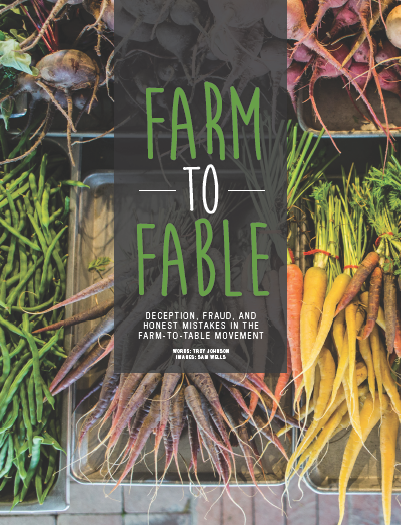
Why I waited two years to write about fraud in the farm-to-table movement
“You really should do something on all this farm-to-table fraud.”
I was first told something like this two years ago by multiple restaurant insiders who knew how rampant it was. Some restaurants claim to buy fresh fruit and veggies from local farmers. When, in truth, they’re not using local farms. They’re using a semi-truck from a corporate food distributor full of produce that could have come from Chile, for all they know.
Call it truck-to-table. Warehouse-to-table. Catalog-to-table.
Not farm.
Initially, I didn’t want to write the piece. It risked casting the entire restaurant industry in a negative light because of a few ethically challenged morons. Was it really that big of a crime to lie about which farm grew your salad? How often did it actually happen? It sounded a little exaggerated.
I’m willing to report a monster, but I didn’t want to create one.
That’s why interviews for this story have sat in a folder on my computer labeled “Farm to Fable” for two years. I needed more proof.
Plus, would the average eater care?
It seems so. And they should. Because farm-to-table fraud is ripping off customers, farms, farm workers and ethical restaurant owners. And it happens far more often than I originally thought. Small farmers and farm workers are not driving Porsches. Stealing from them is like pick-pocketing a hospice worker.
Recently, a friend and restaurant lifer recently told me, “Know that story you’ve been talking about forever? If you don’t do it, I’m going to. It’s happening all the time. Everyone’s talking about it.”
Even then I hesitated.
Finally, a different friend sent me a menu from a local restaurant that was selling tickets to a “Suzie’s Farms Dinner.”
“Call Suzie’s and see if they’re involved in that dinner,” the friend said.
So I did. And Suzie’s was not involved. They weren’t even growing the fruits and vegetables listed on the menu.
It was time to tell the story.
“Farm to fable” is fraud. It preys on your good intentions as a diner. It steals from farms and their workers. It gives frauds an unfair competitive advantage over real, ethical farm-to-table restaurants (because doing it right costs a lot).
I didn’t name the specific restaurants guilty of farm-to-fable in my story. I know the names. But to call them out would’ve required multiple sources of foolproof evidence (some of which I have). It also would’ve required multiple lawyers.
That said, if I see it happening in the future, I will take the steps to report the restaurant(s) in San Diego Mag. If we let the frauds know that we’re watching this pretty closely, maybe they’ll find the motivation to be honest so that their name doesn’t appear in the follow-up story.
Honest mistakes happen. Sometimes menus simply haven’t been updated since the restaurant last purchased from the local farm. A chef told me the story of how one of his servers erroneously told a customer they were serving a Chino Farms Salad. Chino Farms wasn’t happy. “I had to go to the farm and apologize for his mistake,” said the chef. “I would never claim to be serving a farm’s food when I wasn’t.”
But after talking with dozens of restaurant insiders, I can say without question that intentional fraud is happening. Pretty regularly. And it’s not always on the restaurant side. Right now, there is a local company claiming to sell nothing but local, sustainable, organic [Product X]. No fewer than three people who know their operation have told me that they’ve seen the company buying and selling product that is anything but local, sustainable or organic.
The solution seems to be education. Get to know your chef and restaurateur. The names of honest farm to table restaurants that came up most commonly when talking to farmers included Terra American Bistro, The Red Door/Wellington, George’s at the Cove, Mille Fleurs, even the Marriott Hotel in Downtown. Suzie’s Farm has a portion of their website that lists the restaurants that regularly buy their produce.
Those aren’t the only honest restaurants buying from local farms, of course. And I feel safe in assuming most restaurateurs and chefs are honest people.
The thing I can’t get over is: Why lie? There’s no shame in not being a farm-to-table restaurant. Plenty of customers don’t care if their corn or asparagus or meat is local, organic or sustainable. There’s only shame in fraud.
At this point, “farm-to-table” is a pretty limp, useless term. That’s sad. Because it used to be a meaningful way to describe restaurants and chefs who were going the extra mile for their customers and the local food economy.
This excellent article by Corby Kummer in Vanity Fair is a good survey of farm-to-table’s ineptitude. It even points to an organic farmer in Atlanta, Cory Mosser, who’s registered the website farmtofable.net to document the fraud in his area.
Ironically, the media is often to blame. Sometimes writers describe a restaurant as “farm to table” simply because the produce looks fresh.
If you see or suspect someone of fraud, please email me at [email protected]
I’d like to thank the farmers, restaurateurs and others who talked to me about the story. Doing so takes guts. You should know that none of them came across as pissy, sour whiners. They simply agreed to talk with me about real fraud that happens in their industry.
Cheers to good, ethical eating.
Behind the Story: Farm to Fable
Sam Wells
Ten facts about how it's made and why San Diego has arrived
Behind the Best Restaurants List
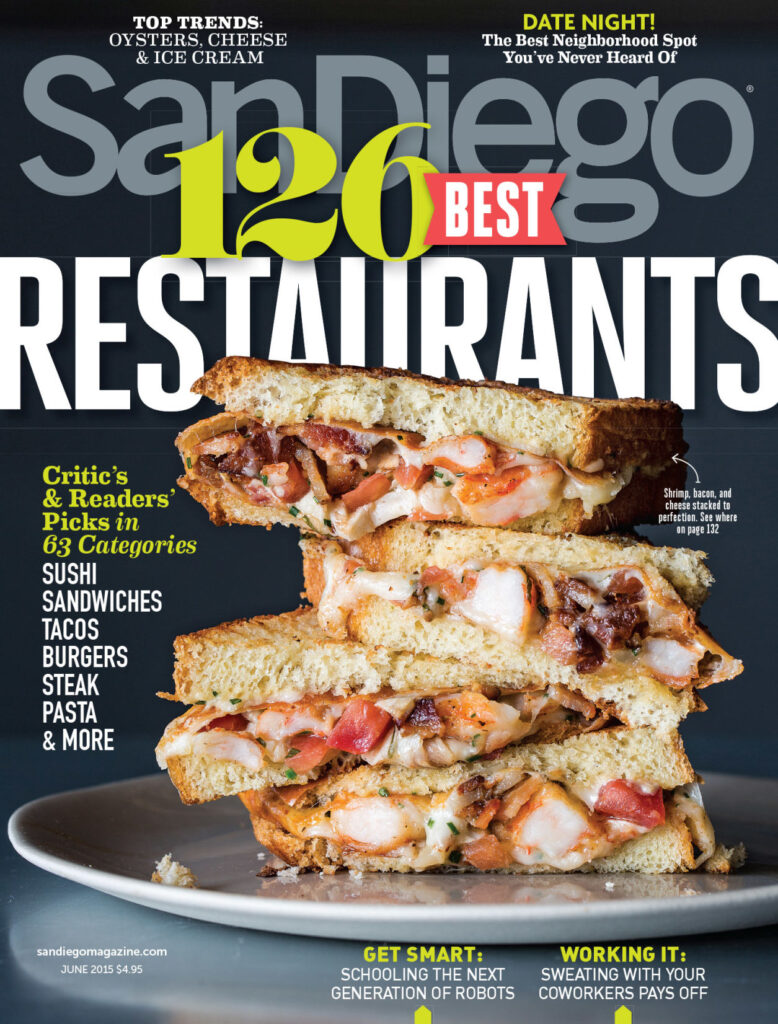
Our annual “Best Restaurants” issue has hit the streets of San Diego with a thud. It’s a monster. It is one of our most popular issues. You people like food, and I respect that about you. This issue is our recollection of the best places we’ve eaten over the last year. Our restaurant bible. A step-by-step guide to mouth rapture. A lot of talented people—San Diego Magazine’s editors, art directors, writers, photographers, videographers—put a lot of their creativity, care and extramarital time into creating it.
People often ask me how I come up with the “Critic’s Picks.” Well, here’s a little bit of the behind the scenes on that, plus a few facts about why San Diego’s food scene is phenomenal right now.
FACT: Most Americans eat out about 4.8 times a week. I eat at between 5-12 a week. I am the human lipid. I don’t complain about my job. Although taking notes is difficult. I’m forced to pretend that I’m texting while my dinner companion sits there ignored. I’m quite certain diners have seen me dine with my wife and said, “What a tool.” To make my list in this issue, I went through every one of those notes and meals and compiled my dream list. It’s my answer to the email or text from friends who ask, “Where should I eat?” I hope it helps.
FACT: The average meal in a chain restaurant has 1,128 calories. I’m no mathematician, but I’m fairly certain that plus X is why Americans lead the world in sweatpants. And that’s why it’s so much more important to find good local restaurants you love—ones that don’t just toss the butter in the deep fryer—and patronize the hell out of them. Good chefs do not cook to kill. Those chefs are in this issue.
FACT: I have a two-bite rule. I take two bites of every dish, sometimes three maximum. That’s it. Otherwise I would be so big that I’d block the sun and my loved ones would not get adequate sunlight that they need to grow. Friends who dine with me often think I’m crazy. They have a 12 bite rule. And indigestion.
FACT: If god was a hipster, he’d set up his farm in San Diego. Actually, has anyone seen god and Tom Chino in the same place at the same time? Point is, San Diego has the best fruits, veggies and seafood of almost anywhere in the world. San Diego County has more small farms per capita than any other county in the US. Granted, some of those are decorative flower farms. But, still. Strawberries are in season NINE months out of the year in San Diego. A fun thing to do is tell that to a New Yorker because sometimes it’s fun to watch a New Yorker cry. San Diego is like the all you can eat Vegas buffet of the world’s best raw ingredients.
FACT: Portland is rainy and cold and it sucks and its beards per capita are far, far out of control. Actually, Portland is amazing and I can’t grow a single chest hair let alone a beard so maybe I’m just bitter. But I’ve been lucky enough to eat my way through Portland, San Francisco, L.A., New York, Chicago, Austin and most of the major American cities. And I will tell you that San Diego is not some backwater red-headed stepchild of national cuisine. It is equal to or superior to those cities in many ways.
FACT: Marine Room is now an Asian-Fusion restaurant. Making this list is like a math problem. I had Marine Room as “Best French,” but then realized one of my favorite chefs in San Diego—Patrick Ponsaty of Bellamy’s in Escondido—didn’t fit anywhere else. So I decided that Marine Room is now an Asian Fusion restaurant because chef Bernie and Ron Oliver are fond of Asian ingredients. Bellamy’s, then, got the French vote. I’m sure that was a surprise to Bernie—who is more French than a poodle in a beret bragging about its prowess in bed. But that’s how it works. Headed by a Master French Chef, Marine Room is now Asian fusion. Tell your friends.
FACT: In 1988 there was not a single brewery in San Diego. When they opened in 1989, Karl Strauss became the first brewer in San Diego since the Prohibition. Now we’ve got over 100 local breweries. A friend in the industry predicts there is room for about 250. We are the undisputed craft beer capital of the U.S., if not the world.
FACT: We eat with our eyes first. For a long time, it seemed like Jimmy Buffet was getting drunk and designing all of the San Diego restaurants. If I wanted decent food in an uninspiring environment, I’d eat fried chicken in my garage. But now we’re getting top architects and designers involved. We’re creating memorable, inspiring, artful spaces.
FACT: There’s a shortage of good bourbon in San Diego. A liquor distributor just told me this. Why is that a good thing? Well, there’s a shortage because of the craft cocktail movement. Our bars are serving better stuff than they ever have—making it hard for the rest of us to find some decent Kentucky gold. That’s a form of happiness.
FACT: No San Diego chef has won a James Beard Award. I publicly predicted that would change this year with the third nomination for William Bradley of Addison. I was wrong. But it will happen, and soon.
Cheers to another good year of eating.
Troy
Stake Chophouse & Bar brings contemporary classics and old-school service to the heart of Coronado
Stake Chophouse & Bar isn’t your average steakhouse. Blue Bridge Hospitality’s Coronado outpost is a modern interpretation of a big-city steakhouse nestled in the heart of the small coastal community. The team at Stake has reimagined the whole steakhouse experience. By prioritizing a seasonal farm-to-table sourcing philosophy, a personalized guest experience, and unique service touches, like a formal steak presentation and a bespoke knife selection process, Stake distinguishes itself in a sea of steakhouses.
Exceptional steaks, including Wagyu from Japan, Australia, and the U.S., and fresh seafood flown in daily form the core of Stake’s culinary identity. The menu features a five-course omakase-style steak experience highlighting house favorites, plus an array of cuts, and classic steakhouse staples—think a wedge salad, baked potato, or pasta carbonara—refined for a contemporary palate without losing their traditional appeal. Stake focuses on seasonal sourcing from the region’s best family farms and specialty purveyors, and incorporates intentionally unexpected touches to create something truly unique.
“I challenge our chefs and myself to take it a step further in sourcing,” says Chef Ronnie Schwandt. “It’s important to us to highlight different farms, unique one-off farms—whether it’s cattle, strawberries, a local fisherman or from anywhere in the United States, we’re always trying to find that niche.”
Beyond the menu, Stake emphasizes outstanding service, says Vinny Spatafore, Director of Hospitality Operations. Staff maintains detailed notes, allowing them to remember guests by name, recall previous orders such as a favorite martini (also memorable for the customer since it’s served in an extra tall, distinctly-shaped glass), and celebrate special occasions like birthdays and anniversaries.
“When you have those points of topic that you remember about a guest, they appreciate that,” he says. “Our servers are really good with that—we have a couple servers who have been here since the beginning and they’ll remember somebody from years ago, their name, their kids’ names, where they live. I’m really thankful to have a great front of house staff.”
Award-winning wines, rare whiskeys, special events, and a complementary black car service that provides transportation for guests throughout Coronado add to Stake’s appeal.
Schwandt stresses that Stake offers more than a meal; they aim to give patrons something unforgettable.
“It starts when you walk up the stairs and are greeted by the hostess—that sets the tone for the night. Then you’re greeted by a server, who may know you by name, and can guide you through the menu and curate as they get to know you,” says Schwandt. “Most people leave kind of blown away; they leave feeling like they just had an experience. That’s the goal, right? Whether you’re serving smash burgers or high-end steak, you want somebody to leave thinking, Wow, that was awesome.”
An American writer silences his fear echo and rediscovers Baja
Some people don’t go to Tijuana because of the smell. Some don’t go because of its violent reputation. Some don’t go because of an unnamable, generalized fear.
Maybe that’s not such a bad thing.
The cover story of this month’s San Diego Magazine is my account of going back to Baja for the first time since all the blood. I had written off Tijuana. I knew the violent years were over. I’d seen the crime statistics (you have a greater chance of getting murdered in Chicago). I just had a fear echo.
As a kid growing up in San Diego, there was no shortage of slander about Mexico. The country was like that reclusive man in your neighborhood with the limp and the dead lawn who was known to bury children in his backyard. Adults told us bad men lurked on the other side of the border fence, waiting for white people with nice shoes. They pointed guns at you until you jumped in their sack. Then they called your family and asked for money. You might make it home. All of your fingers would not.
I started sneaking down there in 1987 when I was 14. At 4’11″ and still pre-pubescent, I had all the manliness of a Christmas elf. But I was able to get a fake ID at a small store in Downtown San Diego whose relationship with the Better Business Bureau was probably complicated. I drank buckets of Coronas at Peanuts & Beer, dancing to Salt N Pepa under black lights next to 18 year-old SDSU freshmen and menopausal hookers. I showed Tijuana far too little respect, partially because it didn’t seem interested in much.
I never got drugged or kidnapped. I did get shaken-down by two police officers. Paid one off with $6. The other got $50 after he took issue with the Swiss Army Knife in my pocket and told me I was going to jail forever and ever.
But I also saw another side of Baja. We’d drive 160 kilometers south of Ensenada and turn down nameless dirt roads until we hit water. We parked our trucks on the sand, camping and surfing for days. Just us, a wet horizon and sweet boredom. Gentle old fishermen traded us lobsters for t-shirts, knowing full well we were getting a deal in the exchange. The locals at the occasional side-road tienda welcomed us with warmth, looked after us.
That part of Baja seemed like a home. Like people had roots, a sense of place and pride. Whereas no one—not the cops or the curio shop owners or the bat shit crazy white people—seemed compelled to honor or preserve or make Tijuana better.
Then Nortec Collective happened. That band of Tijuana DJs, musicians and artists stole the spotlight back from the donkeys painted like zebras (zonkeys). My San Diego art friends moved to TJ. Partially because rent was $200. Partially because TJ was the only thing south of L.A. that was remotely edgy or artistic.
And then 2006 happened. The Mexican government stopped doing blow at parties with the cartels and started arresting them. That seemed like great news, but it wasn’t. When you remove the big dog from the yard, the smaller dogs fight over the bone. Up-and-coming cartels fought in the streets for control of the crime market. Tijuana became a bloodbath. Kidnapping became municipal sport.
Now, the dust has settled and—lo and behold—Baja is one of the most buzzed-about food and drink destinations on the planet. “Baja Med” is the name of its famous cuisine (even if some locals and chefs chuckle at it). News headlines about the food scene in the warm-climate region tend to use the word “hot” or “sizzling.”
Two years ago, star Tijuana chef Javier Plascencia told the New Yorker and the New York Times that he wanted to turn Baja into an international food destination. Just like San Francisco or Mexico City. Two months ago, photographer Jaime Fritsch and I set out on a series of day trips to see how far Plascencia and his colleagues had come.
I am a very different sort of tourist than I was in 2006. Which is good, because Baja is a very different sort of tourist destination. The pattern of consumption is moving away from the excessive intake of mediocre things, and more toward moderate intake of good things. Less tequila poppers, more snifter Mezcal.
After spending time there speaking with its innovators, I left with so many reasons why Baja’s food, wine and culture is terribly, terribly exciting. But the one idea locals expressed again and again goes something like this:
The violent years were awful. But this cultural surge might not have happened without them. When tourists stopped coming, Baja created a culture for its own people. They stopped catering to tourists’ wants and desires, and catered to their own. Ironically, that’s what’s made it especially attractive. After all, who wants to arrive in Paris only to realize it’s been designed to live up to American stereotypes of Paris (painters in berets talking snootily about sex)?
I want to experience Baja on its terms, not my own.
My story, “The Baja Moment,” ends with an anecdote some people feel I shouldn’t have told. Driving back from Valle de Guadalupe, we were pulled over by a police officer in Tecate. He said we didn’t come to a complete stop and we’d have to go down to the station. We were intimidated, missed our families, and didn’t know how to properly handle the situation. So we asked if we could take care of the ticket right there. We paid him off.
I was incredibly bummed. It’s my job to tell a true, firsthand experience as an American writer returning to Baja. And now he forced himself into my experience. When I relayed the story to the Baja tourism director, he was livid. He asked for his badge number (I didn’t think to get it), and told me about a hotline that Americans can call in situations like that. If it ever happens again, maybe I will.
But a crooked cop won’t keep me away from Baja. Neither will the fact that in some parts, Tijuana smells like shit. As more than a few locals told me: Baja isn’t for everyone, and that’s OK.
It’s definitely for me.
I hope you enjoy the story. I researched it exhaustively and relay a lot of statistics and ideas from the people who are creating Baja. It’s not meant to be a complete history or almanac. There are so many innovators and important people who helped shape the region’s food and drink scene that I wasn’t able to include simply due to space and time.
I start the story with Derrik Chinn, an American journalist living in Tijuana who has been bringing Americans down to experience the city in a real, non-tourist way for years. I felt apprehensive that the first voice you hear in a story about the region is a non-Mexican. But I wanted to organize the story as the typical American might experience it themselves—start through another American’s eyes—and then get to know the natives and influential people who have been building their native culture for a long, long time. Plus, Chinn is an eloquent, passionate participant in Baja culture.
The hardest part for me with this story is limitations. I could have written a book. I ended up with 5,000 words. But we also needed space in the magazine for Jaime’s beautiful photos. So I cut it down to 3,000 words. Fernando Gaxiola, owner of Baja Wine + Food and the largest importer of Baja wines, has a fascinating perspective on the wine regions that I need to tell. One of my favorite humans in Valle de Guadalupe—Natalia Badan, a sort of spiritual mother of the Valle—isn’t included here at all. Javier Plascencia’s phenomenal assistant Diana Jimenez was basically our tour guide and gave us invaluable insight. We had to cut it for space.
I had so many insightful conversations with people in Baja. We would talk for a half hour, maybe an hour. Then it was my job to bottle our entire conversation into one paragraph. Then take that one paragraph and bottle it into a sentence or two. There are so many great truths and ideas in the story; and yet so much is lost, too.
Over the next few weeks, I’ll present some of those ideas and interviews on SD Food News. Because they were so insightful and helpful to understanding the region, and I don’t like wasting people’s breath.
I’d like to thank everyone who took their time to help me on this story and yet who aren’t included: Diana Jimenez, Fernando Gaxiola, Jay Porter, Antonio from Life + Food and Club Tengo Hambre, Genaro Valladolid (Bustamante Realty Group), Flor Franco and Natalia Badan.
Thanks for reading. Now go to Baja.
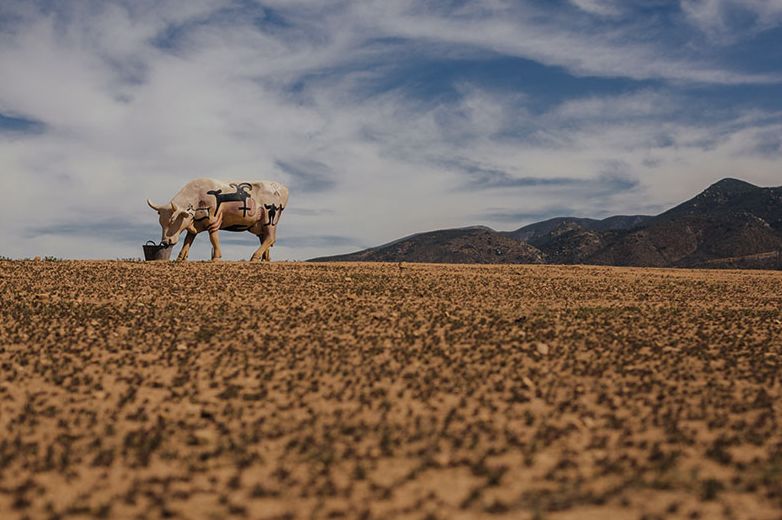
Baja. Desert magic.
Jaime Fritsch

An American writer silences his fear echo and rediscovers Baja
Some people don’t go to Tijuana because of the smell. Some don’t go because of its violent reputation. Some don’t go because of an unnamable, generalized fear.
Maybe that’s not such a bad thing.
The cover story of this month’s San Diego Magazine is my account of going back to Baja for the first time since all the blood. I had written off Tijuana. I knew the violent years were over. I’d seen the crime statistics (you have a greater chance of getting murdered in Chicago). I just had a fear echo.
As a kid growing up in San Diego, there was no shortage of slander about Mexico. The country was like that reclusive man in your neighborhood with the limp and the dead lawn who was known to bury children in his backyard. Adults told us bad men lurked on the other side of the border fence, waiting for white people with nice shoes. They pointed guns at you until you jumped in their sack. Then they called your family and asked for money. You might make it home. All of your fingers would not.
I started sneaking down there in 1987 when I was 14. At 4’11″ and still pre-pubescent, I had all the manliness of a Christmas elf. But I was able to get a fake ID at a small store in Downtown San Diego whose relationship with the Better Business Bureau was probably complicated. I drank buckets of Coronas at Peanuts & Beer, dancing to Salt N Pepa under black lights next to 18 year-old SDSU freshmen and menopausal hookers. I showed Tijuana far too little respect, partially because it didn’t seem interested in much.
I never got drugged or kidnapped. I did get shaken-down by two police officers. Paid one off with $6. The other got $50 after he took issue with the Swiss Army Knife in my pocket and told me I was going to jail forever and ever.
But I also saw another side of Baja. We’d drive 160 kilometers south of Ensenada and turn down nameless dirt roads until we hit water. We parked our trucks on the sand, camping and surfing for days. Just us, a wet horizon and sweet boredom. Gentle old fishermen traded us lobsters for t-shirts, knowing full well we were getting a deal in the exchange. The locals at the occasional side-road tienda welcomed us with warmth, looked after us.
That part of Baja seemed like a home. Like people had roots, a sense of place and pride. Whereas no one—not the cops or the curio shop owners or the bat shit crazy white people—seemed compelled to honor or preserve or make Tijuana better.
Then Nortec Collective happened. That band of Tijuana DJs, musicians and artists stole the spotlight back from the donkeys painted like zebras (zonkeys). My San Diego art friends moved to TJ. Partially because rent was $200. Partially because TJ was the only thing south of L.A. that was remotely edgy or artistic.
And then 2006 happened. The Mexican government stopped doing blow at parties with the cartels and started arresting them. That seemed like great news, but it wasn’t. When you remove the big dog from the yard, the smaller dogs fight over the bone. Up-and-coming cartels fought in the streets for control of the crime market. Tijuana became a bloodbath. Kidnapping became municipal sport.
Now, the dust has settled and—lo and behold—Baja is one of the most buzzed-about food and drink destinations on the planet. “Baja Med” is the name of its famous cuisine (even if some locals and chefs chuckle at it). News headlines about the food scene in the warm-climate region tend to use the word “hot” or “sizzling.”
Two years ago, star Tijuana chef Javier Plascencia told the New Yorker and the New York Times that he wanted to turn Baja into an international food destination. Just like San Francisco or Mexico City. Two months ago, photographer Jaime Fritsch and I set out on a series of day trips to see how far Plascencia and his colleagues had come.
I am a very different sort of tourist than I was in 2006. Which is good, because Baja is a very different sort of tourist destination. The pattern of consumption is moving away from the excessive intake of mediocre things, and more toward moderate intake of good things. Less tequila poppers, more snifter Mezcal.
After spending time there speaking with its innovators, I left with so many reasons why Baja’s food, wine and culture is terribly, terribly exciting. But the one idea locals expressed again and again goes something like this:
The violent years were awful. But this cultural surge might not have happened without them. When tourists stopped coming, Baja created a culture for its own people. They stopped catering to tourists’ wants and desires, and catered to their own. Ironically, that’s what’s made it especially attractive. After all, who wants to arrive in Paris only to realize it’s been designed to live up to American stereotypes of Paris (painters in berets talking snootily about sex)?
I want to experience Baja on its terms, not my own.
My story, “The Baja Moment,” ends with an anecdote some people feel I shouldn’t have told. Driving back from Valle de Guadalupe, we were pulled over by a police officer in Tecate. He said we didn’t come to a complete stop and we’d have to go down to the station. We were intimidated, missed our families, and didn’t know how to properly handle the situation. So we asked if we could take care of the ticket right there. We paid him off.
I was incredibly bummed. It’s my job to tell a true, firsthand experience as an American writer returning to Baja. And now he forced himself into my experience. When I relayed the story to the Baja tourism director, he was livid. He asked for his badge number (I didn’t think to get it), and told me about a hotline that Americans can call in situations like that. If it ever happens again, maybe I will.
But a crooked cop won’t keep me away from Baja. Neither will the fact that in some parts, Tijuana smells like shit. As more than a few locals told me: Baja isn’t for everyone, and that’s OK.
It’s definitely for me.
I hope you enjoy the story. I researched it exhaustively and relay a lot of statistics and ideas from the people who are creating Baja. It’s not meant to be a complete history or almanac. There are so many innovators and important people who helped shape the region’s food and drink scene that I wasn’t able to include simply due to space and time.
I start the story with Derrik Chinn, an American journalist living in Tijuana who has been bringing Americans down to experience the city in a real, non-tourist way for years. I felt apprehensive that the first voice you hear in a story about the region is a non-Mexican. But I wanted to organize the story as the typical American might experience it themselves—start through another American’s eyes—and then get to know the natives and influential people who have been building their native culture for a long, long time. Plus, Chinn is an eloquent, passionate participant in Baja culture.
The hardest part for me with this story is limitations. I could have written a book. I ended up with 5,000 words. But we also needed space in the magazine for Jaime’s beautiful photos. So I cut it down to 3,000 words. Fernando Gaxiola, owner of Baja Wine + Food and the largest importer of Baja wines, has a fascinating perspective on the wine regions that I need to tell. One of my favorite humans in Valle de Guadalupe—Natalia Badan, a sort of spiritual mother of the Valle—isn’t included here at all. Javier Plascencia’s phenomenal assistant Diana Jimenez was basically our tour guide and gave us invaluable insight. We had to cut it for space.
I had so many insightful conversations with people in Baja. We would talk for a half hour, maybe an hour. Then it was my job to bottle our entire conversation into one paragraph. Then take that one paragraph and bottle it into a sentence or two. There are so many great truths and ideas in the story; and yet so much is lost, too.
Over the next few weeks, I’ll present some of those ideas and interviews on SD Food News. Because they were so insightful and helpful to understanding the region, and I don’t like wasting people’s breath.
I’d like to thank everyone who took their time to help me on this story and yet who aren’t included: Diana Jimenez, Fernando Gaxiola, Jay Porter, Antonio from Life + Food and Club Tengo Hambre, Genaro Valladolid (Bustamante Realty Group), Flor Franco and Natalia Badan.
Thanks for reading. Now go to Baja.
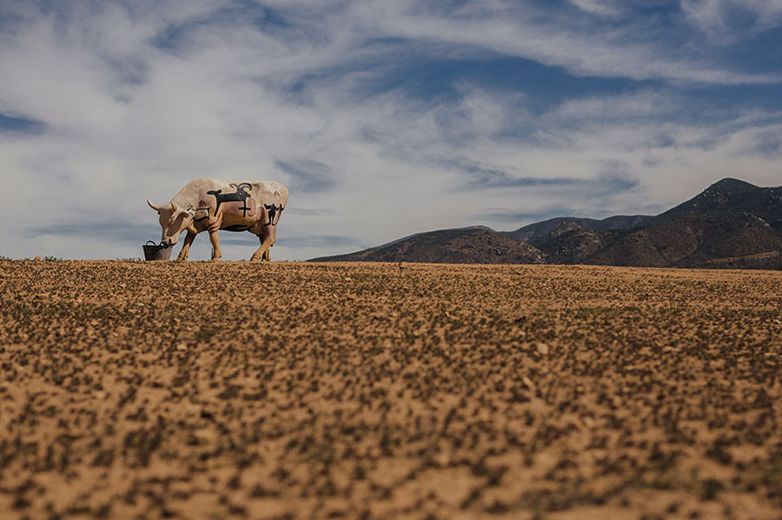
Baja. Desert magic.
Jaime Fritsch
Scripps study shows that some patients may be able to taper their dose and maintain results
While glucagon-like peptide-1 (GLP-1) receptor agents have been used to treat Type 2 diabetes for more than 20 years, their recent emergence as weight-loss wonder drugs marked a new frontier in medicine. But their effectiveness has left some patients wondering what to do once they’ve reached their goal. Stopping the medication could mean regaining some, if not all, of the weight. A Scripps Clinic internal medicine physician recently conducted a small study of whether GLP-1 patients who had reached their goal weight could maintain that weight by taking their regularly prescribed injection every other week instead of weekly. Spoiler alert: 30 of 34 patients did. Read more about the study here and what that may mean as pharmaceutical companies roll out oral GLP-1s.
For more nutrition, wellness, and healthy living tips, sign up for the San Diego Health newsletter here.