Featured articles
Things to Do
Food & Drink
Food & Drink
Featured articles
Everything SD
Things to Do
Everything SD
Featured articles
Things to Do
Things to Do
Things to Do
Featured articles
podcast-ep
podcast-ep
podcast-ep
Featured articles
Everything SD
Everything SD
Everything SD
Featured articles
Everything SD
Things to Do
Food & Drink
Ready to know more about San Diego?
SubscribeReady to know more about San Diego?
The long-awaited $6 million restaurant from Black Swan Hospitality brings coastal Mediterranean to Coronado
William Wordsworth’s 1807 poem “By The Sea” paints a glorious picture of a coastal sunset, elegantly describing the serenity that can only be found upon an ocean’s sandy shores.
It is a beauteous evening, calm and free,
The holy time is quiet as a Nun
Breathless with adoration; the broad sun
Is sinking down in its tranquility
And as a San Diegan, I often have to pinch myself. We’re spoiled by this breathtaking beauty each day. Come August 12, Coronado will have a new place from which to soak in the Pacific’s peacefulness: By The Sea. Created by the team at Black Swan Hospitality (Nolita Hall), Doug and Lara Hamm brought to life a Mediterranean-meets-San Diego oasis influenced by their travels through the French Riviera, Italy’s Amalfi Coast, and the Greek Isles. (It’s not the first time the couple drew inspiration from the Mediterranean coast—their wedding took place on the island of Capri, their daughter’s namesake.)
Opening the 6,500-square-foot, second-story restaurant took longer than expected. First announced three years ago, the Halls worked with their own in-house design studio (Creative House) alongside Tecture (Lucien, Anigma Encinitas, Bivouac Ciderworks, George’s at the Cove) and Hauck Architecture (Gravity Heights, North Park Beer Company) to create a space that feels more like a coastal villa than spartan dining room.
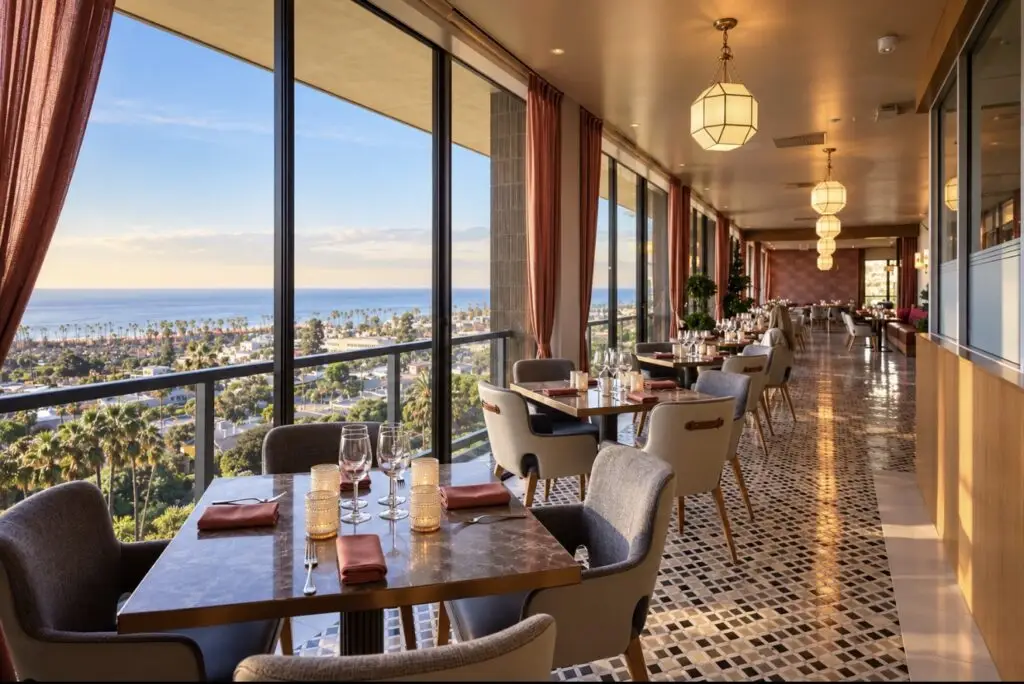
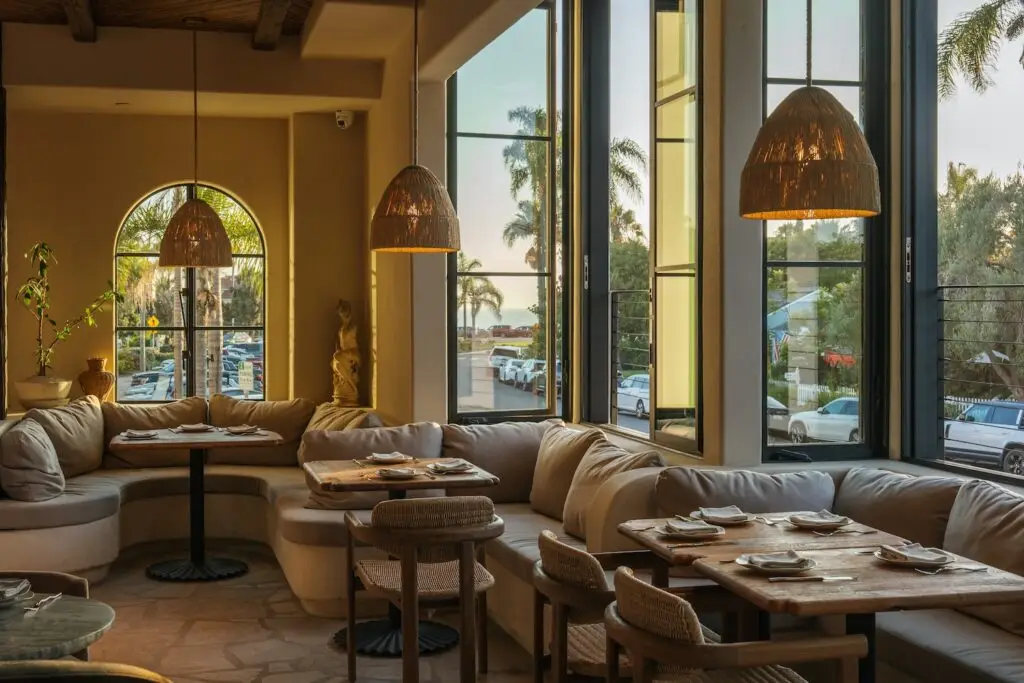
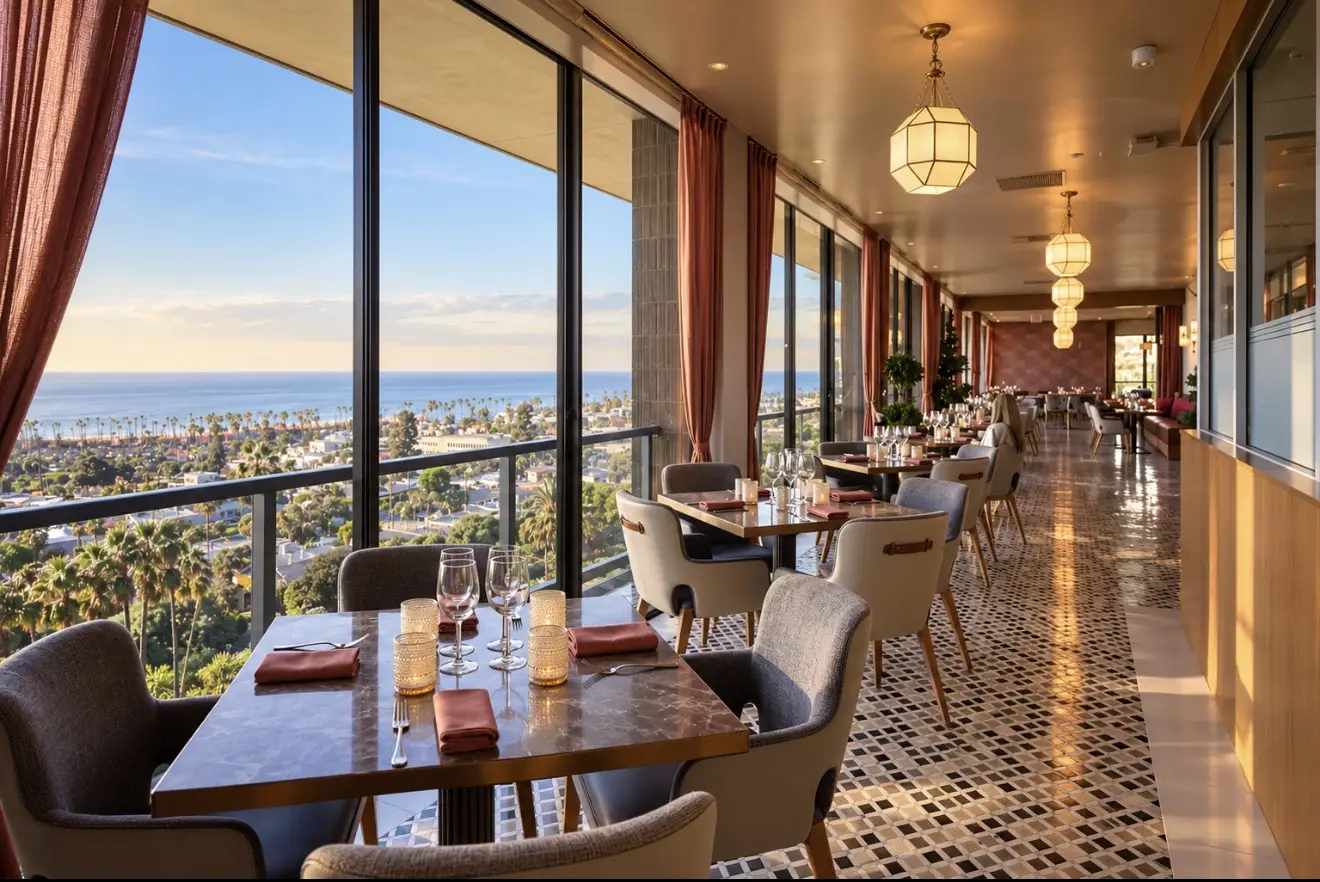
Guests enter via a cobblestone staircase to a light-drenched dining room and outdoor patio shaded by a eucalyptus wood trellis. Windows dot nearly every wall below the high ceiling of hand-stained willow reed thatching and exposed wood beams. “We have a beautiful lounge area with some textures such as velvet and marble,” says Lara. Everywhere feels organic, with materials like white oak and Italian limestone flowing throughout the open concept and semi-private dining areas.

The curvaceous travertine bar seats 24, while the 11 outdoor tables and 44 indoor tables and banquettes hold an additional 254 guests. It’s not quite oceanfront, but the peekaboo water view and floor-to-ceiling glass pocket doors allow the nearby sea breeze to drift across the dining room. (And if you’re the type of perpetually cold person once the mercury falls below 72, never fear—the outdoor fireplace and built-in heaters will keep you comfortable all year round.)
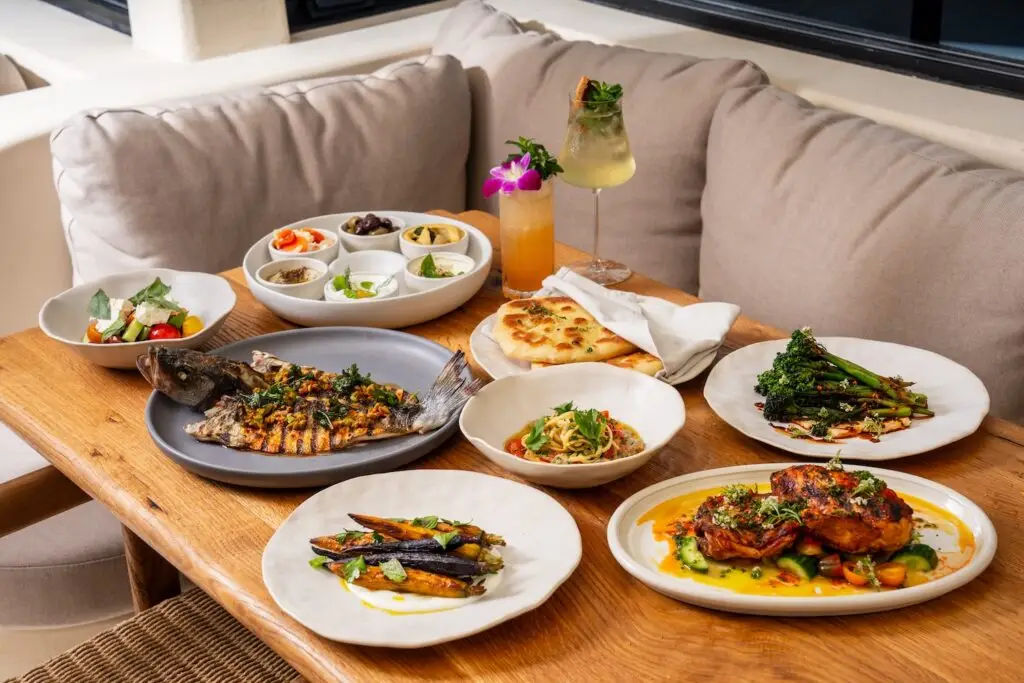
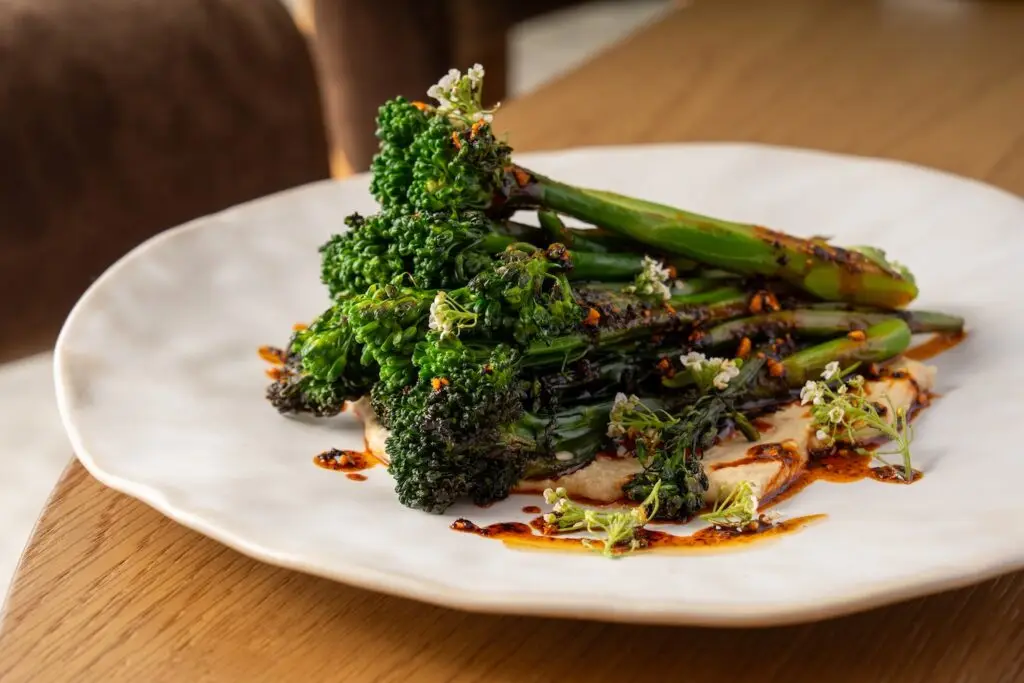
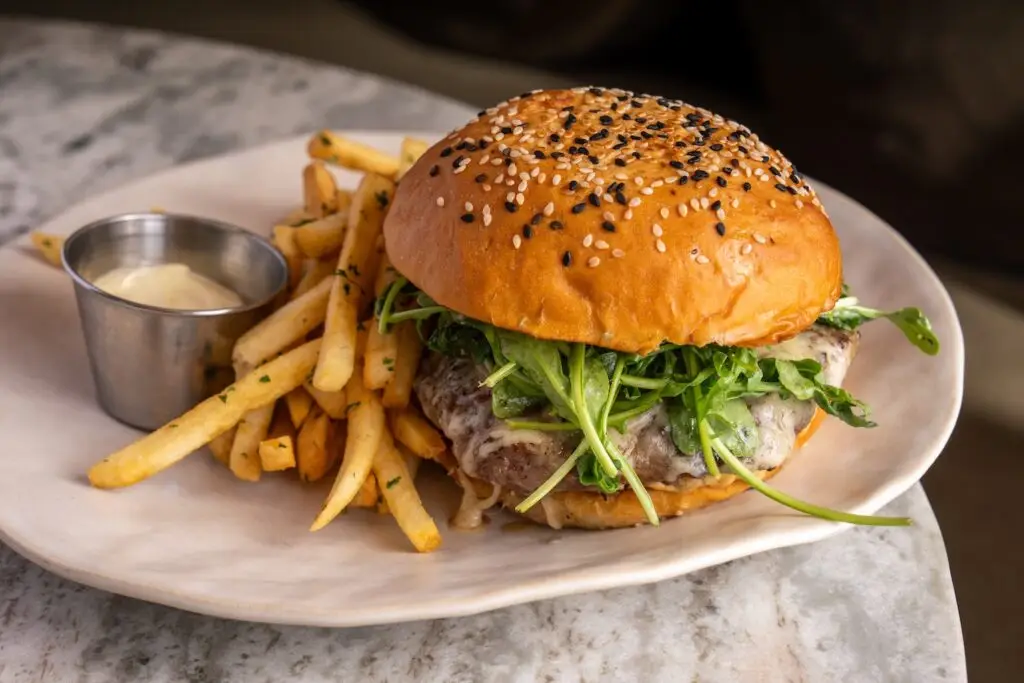
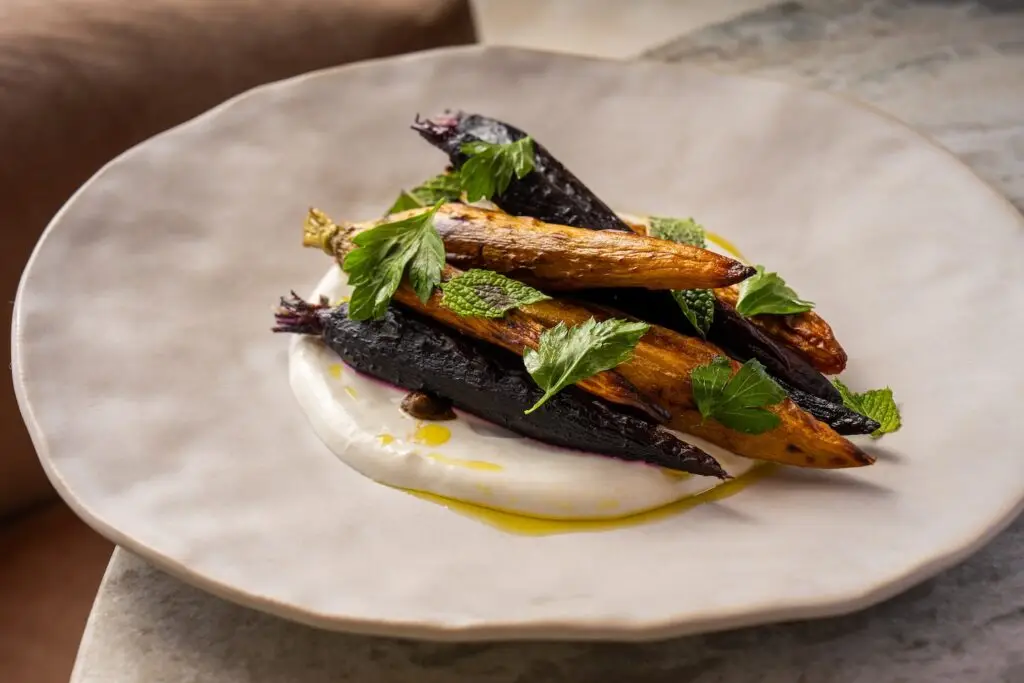
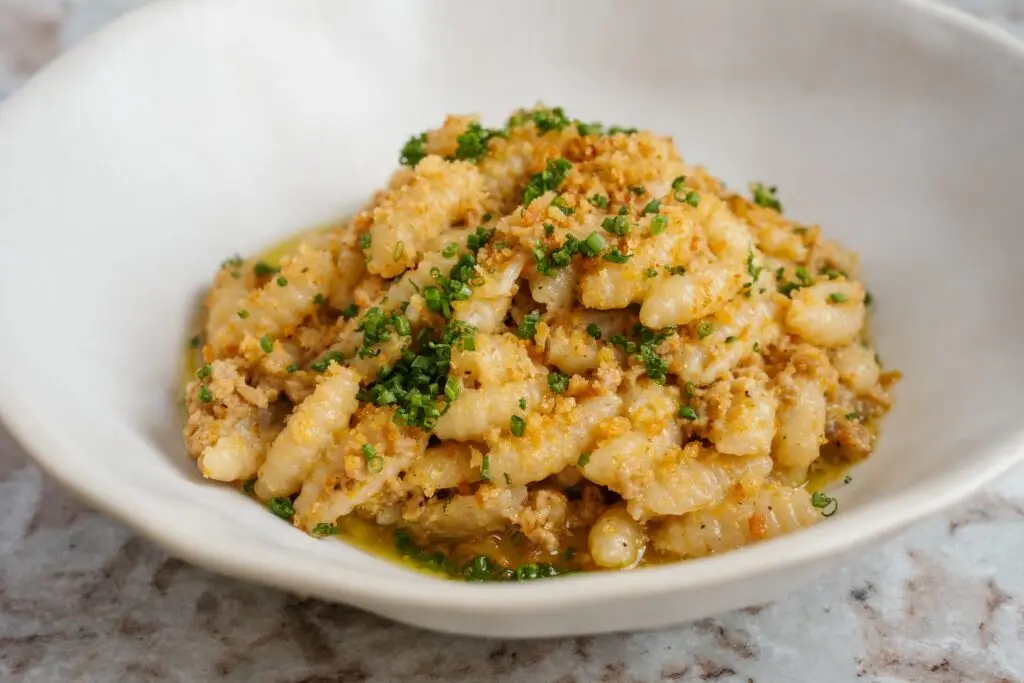
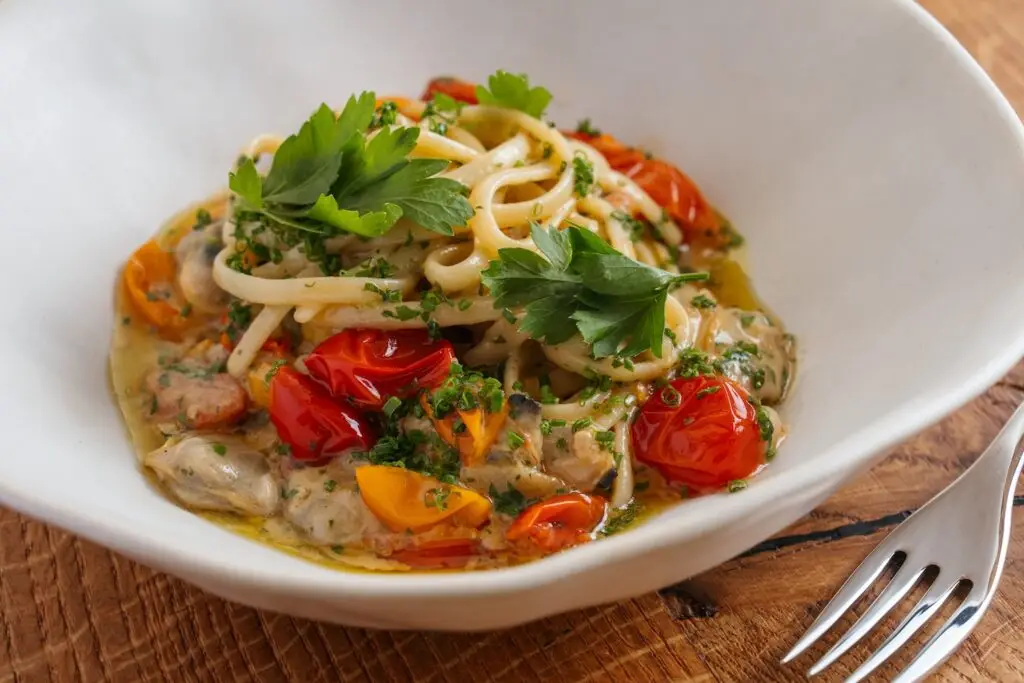
With a name like By The Sea, one can safely assume seafood features heavily on the menu. Executive chef Alex Carpio utilizes plenty of local produce and catches, with starters like scallop crudo, tuna tartare, octopus with crispy potatoes, and calamari fritti. The rest of the menu is broken into salads, vegetables, pastas, and mains, with standouts like a beet salad with feta, kale, orange, and charred lemon vinaigrette; Moroccan-spiced carrots served with lemon yogurt, mint, and parsley; classic linguine and clams with garlic, tomato, and parsley; a lamb cavatelli with fennel, chives, and breadcrumbs; grilled branzino with tahini and Castelvetrano olive tapenade; grilled half chicken with celery, cucumber, and a Calabrian chile vinaigrette; steak frites; and pan seared scallops with pickled peppers, basil, dill, and aioli.

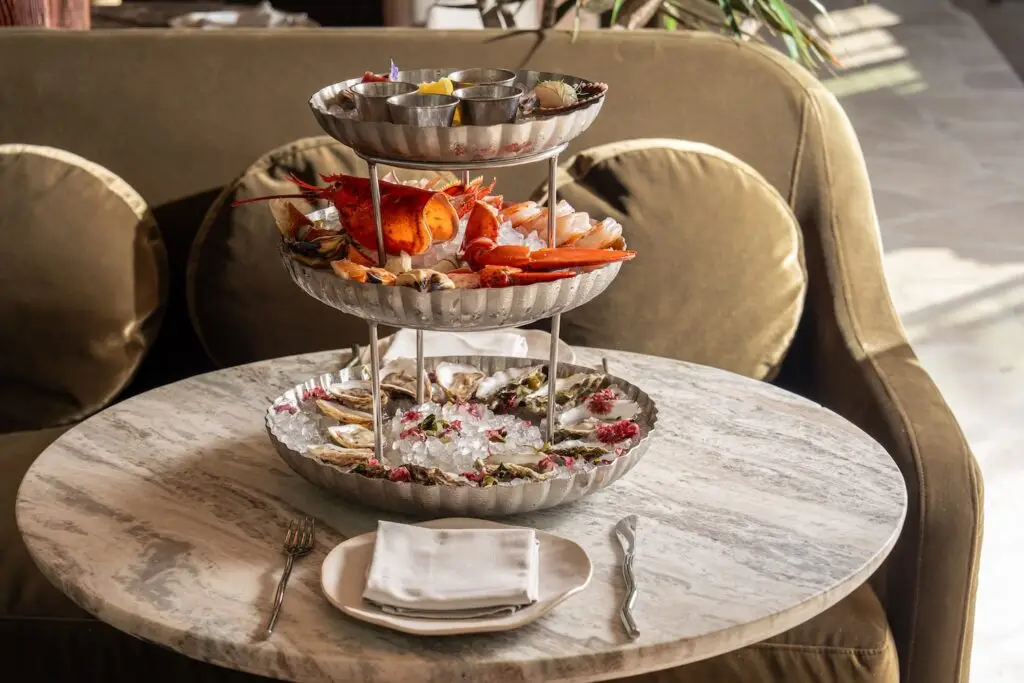
Lara says there was one non-negotiable item for the menu: a dramatic seafood tower. Built for 2-4 guests or 4-6, each option comes with a collection of fresh oysters, shrimp, tuna tartare, scallop crudo, and caviar, with lobster and crab claws available on the larger size.
And if you’re curious about exploring the world of caviar, you’re in luck. Doug says they’re building a tasting menu of different spirits to pair with various caviars under bar manager Andrew Phillips’ purview.

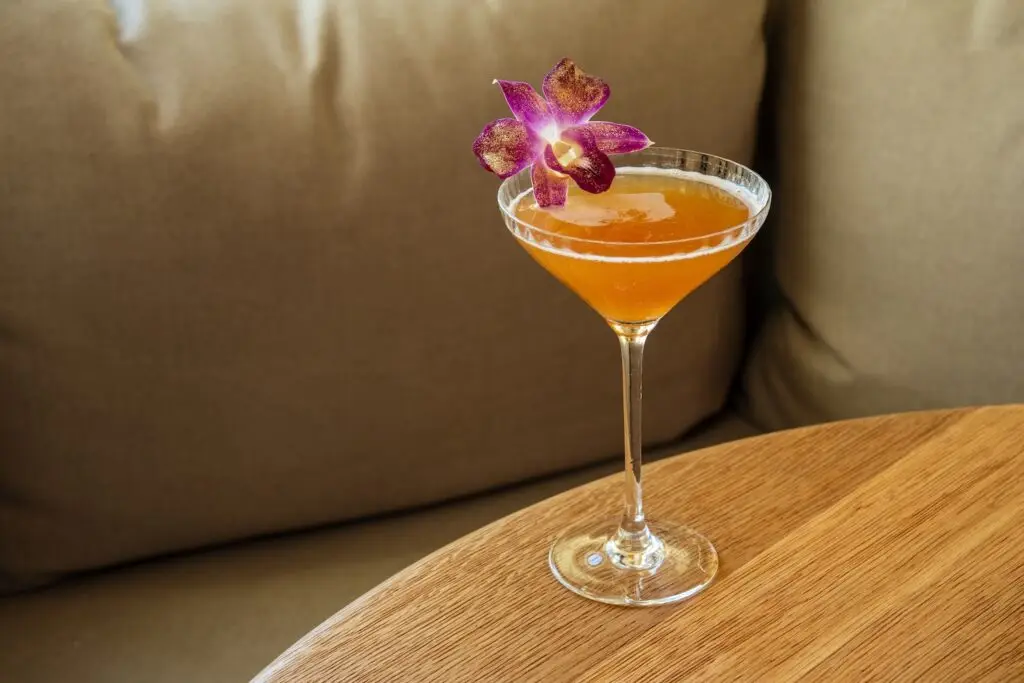
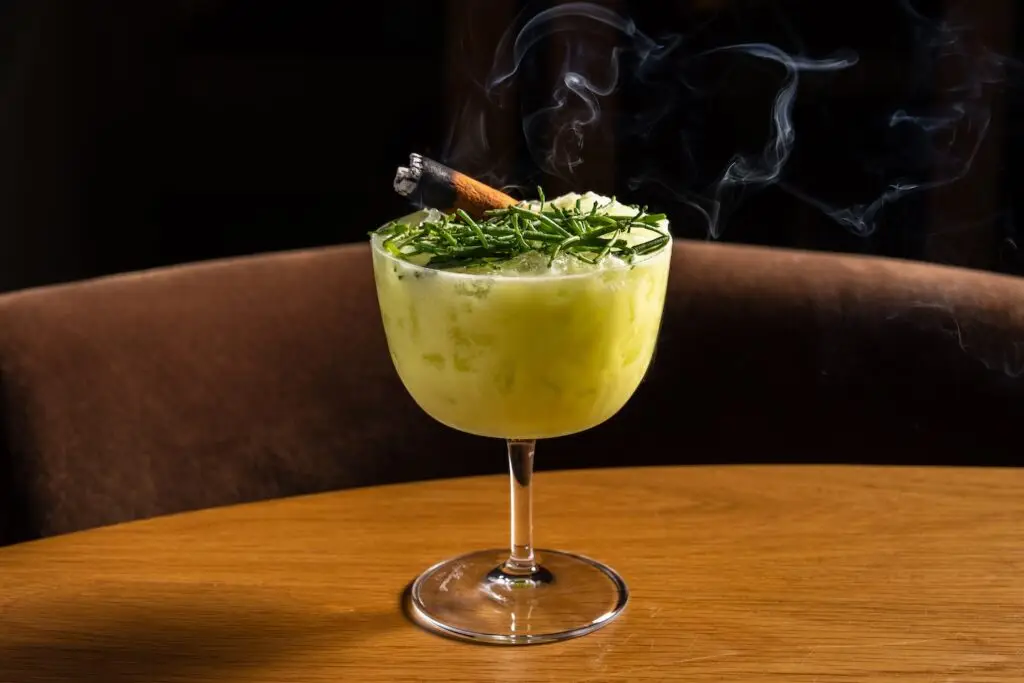
Phillips’ drinks menu uses housemade syrups and fresh-squeezed juices, encapsulating both classic cocktails as well as signature inventions like All That Glitters with Cazadores Reposado, Xila Licor de Agave, Chinola Passionfruit liqueur, vanilla, and lime; Sea Glass with Dewar’s scotch, Haku yuzu vodka, green tea, vanilla, lemongrass, apple, lime, and clarified milk; and The Mariner with Appleton Signature & Reserve Rums, Ron Zacapa 23, Chinola Passionfruit, Aperol, pineapple, lemon and orgeat. Wine pairings are curated by the directors of operations Daniela DiGregorio and Gina Martinez, spotlighting small, organic producers from around the world as well as a selection of high-end Champagnes.
Lara describes By The Sea as “a place to linger together,” with director of hospitality and general manager Heather Roberto overseeing every aspect of the low-key feeling of the space. The restaurant may be European-inspired, but the Hamms say it’s wholly Coronado.
The Hamms moved to the Crown City at the end of the pandemic after years in bustling Little Italy. “Within a few weeks of moving here, we felt the magic,” says Doug. Now, they get to be a part of building it up—CH Projects’ Baby Grand hotel is across the street and the Hotel del Coronado sits just down the block. “We’re happy to be part of the scene, and we hope it continues to grow,” he says. “That’s what makes Coronado so special.”
By The Sea opens August 12 at 1300 Orange Avenue, Coronado. Initial hours of operation are Wednesday and Thursday, 4 p.m. to 11 p.m.; Friday and Saturday, 4 p.m. to midnight; Sunday and Monday, 4 p.m. to 11 p.m.; closed Tuesday. Weekend brunch and extended hours to come soon. (Subject to change.)
Photos Credit: Kimberly Motos


Beth Demmon is an award-winning writer and podcaster whose work regularly appears in national outlets and San Diego Magazine. Her first book, The Beer Lover's Guide to Cider, is now available. Find out more on bethdemmon.com.

From celebrity pickleball tournaments to intimate dinner parties with your favorite Food Network chefs, here are all of the can’t-miss events going on Sept 30–Oct 4
Play is underrated. Somewhere along the way, someone decided it was something we should outgrow. That you A good song comes on, and they dance. A game appears, and they’re in. Someone hands them a melting ice cream cone, and somehow it’s the best part of the day.
Adults tend to need a reason. Or maybe just the right setting.
That’s part of what makes the Del Mar Wine & Food Festival feel different. Yes, the week revolves around food and wine, with celebrated chefs, winemakers, and restaurants drawing crowds from across the region. But what lingers afterward is the conversations that stretch a little longer than expected, the strangers who become dinner companions, the live music that pulls people out of their seats, and the rare chance to spend a few hours simply enjoying yourself without much of an agenda.
The Grand Tasting is the festival’s centerpiece, bringing thousands of guests together over two days for hundreds of bites and pours. But some of the week’s most memorable experiences happen on a smaller scale. In the days leading up to the main event, intimate dinners, chef collaborations, and guided tastings create opportunities for guests to interact more closely with the people behind the food and wine and with each other.
Here’s your guide to the 2026 Del Mar Wine & Food Festival happening September 30–October 4.

Start festival week the San Diego way: ocean views, Baja-inspired bites, and a drink in hand as the sun goes down. The Signature San Diego Opening Night Party at Monarch Ocean Pub sets the tone for the week ahead with a walk-around tasting experience celebrating the flavors that make this city impossible to replicate. It’s an evening of fresh coastal cuisine, bold Mexican flavors, Baja seafood, and plenty of local favorites—all served against one of Del Mar’s most iconic backdrops. Consider it your first official toast to the weekend ahead…

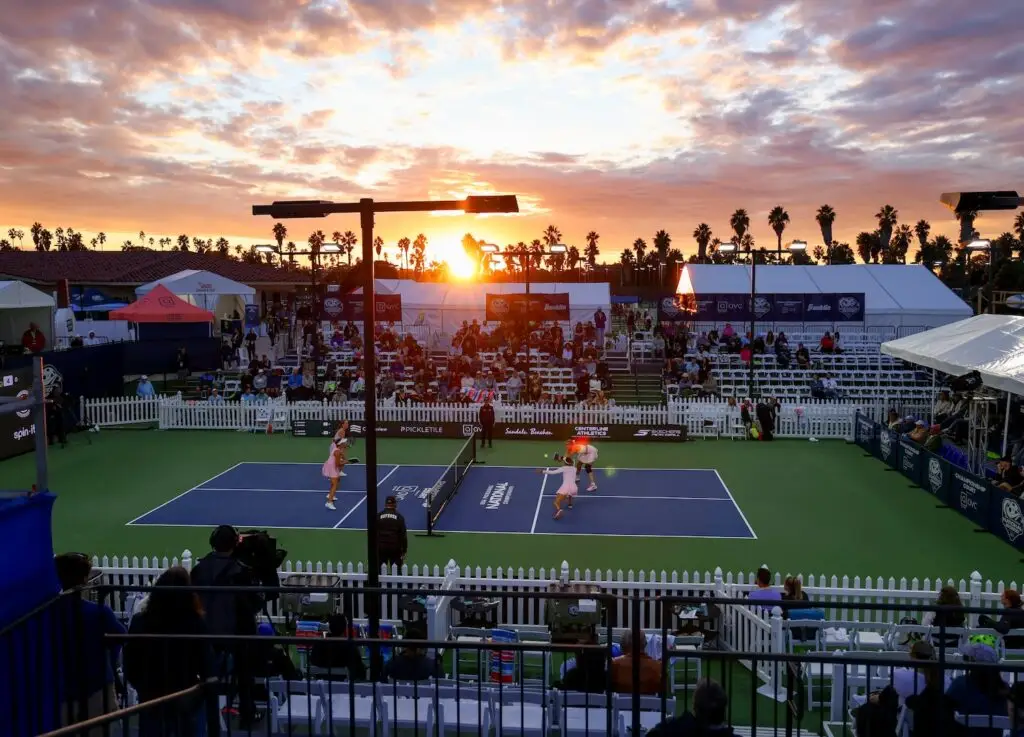
Wine and competition make an unexpectedly perfect pair. You can join Drew Brees and celebrity players at Barnes Tennis Center for a pickleball tournament benefiting Feeding San Diego, where the sidelines are just as exciting as the court. Grab a paddle, cheer from the sidelines, or simply enjoy a glass of wine while the action unfolds. The day blends friendly competition with an all-inclusive tasting experience.
Since year one, Del Mar Wine & Food Festival has partnered with Feeding San Diego to raise $100,000 in support of the organization’s mission to fight hunger across the region. Every serve, sip, and bite helps give back to the community that makes this festival possible.
Remember that pickleball paddle you swore you’d use? Time to put it to work.

This is essentially a passport to Spain with no airport required. Set among the lush grounds of Rancho Valencia, Rioja Uncorked celebrates one of Spain’s most iconic wine regions with an evening of exceptional pours and thoughtfully paired bites. Guests will sip their way through Rioja wines while enjoying a menu featuring everything from Hiramasa crudo and uni toast to duck rillette, birria mini tacos, Cardiff Crack tri-tip sandwiches, and a sweet finale from Karen Krasne of Extraordinary Desserts (date night plans, solved).

Justin Wine Dinner sounds simple: three chefs, one unforgettable table. But chefs Kaitlyn Weber (Estancia La Jolla), Buddha Lo (Top Chef), and Jackson Kalb (Top Chef) are taking you on a one-night-only culinary ride where three styles collide over a multi-course menu paired with exceptional pours from Justin Vineyards & Winery. Set in Estancia’s coastal estate, the evening unfolds course by course with pairings from Justin wines as each chef brings their own style to a menu focused on craft, connection, and a bit of friendly culinary overlap. It’s the kind of culinary conversation that only happens when very, very talented people cook together.

Isabella Dallas is a freelance writer for San Diego Magazine and the Arts and Culture Editor at The Daily Aztec in her final year at San Diego State University. She previously worked as an editorial intern for SDM, but when she’s not writing, you can find her trying the best coffee spots in SD, devouring the latest rom-coms, and indulging in anything and everything pop culture.
Secret menus and last-minute details help drive human connection through food and the unexpected
“Are you sure this isn’t a dating thing?” asked my husband as I headed out the door. Fair question, considering we’ve been happily, monogamously married for 15 years. But where I was headed—a Dinner With Strangers Co. collaborative dinner with Rasa Table—is a curated culinary experience emphasizing conversation and encouraging connection with whoever the universe decides to seat at your table.
Okay, I can see how that might sound like a blind date-type of matchmaking app. While I happen to love dining solo or with friends and loved ones, the idea of getting trapped at a table with a bunch of randos rockets me past my comfort zone somewhere in the realm of Neptune. Still, I’m nothing if not motivated by a good meal, and the duo’s Nigerian-meets-Malaysian collaborative menu this July at Millport in Imperial Beach ranged from the semi-familiar (savory jollof rice) to the completely new-to-me, like egusi, a rich West African stew made from melon seeds, palm wine, spices, assorted greens, and a mix of meats like beef and crayfish, along with a dollop of starch like yams or cassava to mop up every absolutely spectacular morsel.
(Quick note: if anyone has a rec on where to get good egusi in San Diego, please let me know immediately.)
Founder/chef Onyinyechukwu “Onyi” Akpa launched Dinner With Strangers in Houston before returning to her hometown of San Diego a little over a year ago. Not only did she see a widespread need for opportunities to meet new people, she says San Diego lacks some diverse cuisines. “One thing that made me move back is the actual lack of West African food,” she points out.
As a first-generation Nigerian-American and San Diego native, Akpa draws a lot of influence from Mexican, West African, and Black American culinary traditions, all of which were on full display alongside Vanishaa Doshi’s Southeast Asian fare from Rasa Table. (Think slow-braised oxtail meets coconut curry.)
It felt surprisingly easy to chit-chat with my fellow diners, most (but not all) of which came alone. Turns out when everyone is there to meet people, there’s no such thing as a cold shoulder. Long before the end of the night, the woman I ended up sitting next to captivated me with pictures of her recent travels to the brutalist Casa To boutique hotel in Puerto Escondido, Mexico and the ruins of La Recolección convent and church in Antigua, Guatemala.
We live our lives largely online, directed by the whims of The Invisible Algorithm and paid ads. A 2023 U.S. Surgeon General report categorizes loneliness and isolation as an epidemic, so cultivating opportunities for human connection has spawned a movement of supper clubs like these, each designed around the idea of making friends rather than networking opportunities or blind dates.
For some, there’s also an element of surprise. Local pop-up Cow by Bear is a 20-person, five-course dinner party series every Friday and Saturday at a secret location only revealed the day before. Another is The Blank Table, a pop-up dining series by Alexandria Ott and chef Frederick Keller centered around “cuisine, cocktails, and creativity,” which takes place six times a year. Details like the location and menu don’t get announced until the night before, and Ott says she tends to select venues that feel unexpected or off-the-beaten-path.
That’s how I found myself wandering around the lower floor of the Institute of Contemporary Art in Balboa Park, checking out Cat Gunn’s installation while sipping a cocktail created by Kiku Room and munching on an amuse bouche by chef Kassandra De Leon of Two Ducks. I cheated a tiny bit and brought a friend, but did manage to make small talk with some other attendees in the spirit of socializing with strangers. None of us knew what we were eating until we arrived, so there’s a level of trust required—not unlike prix fixe or omakase menus.
Rising demand for experiential dining alongside San Diego’s creative renaissance make it the perfect time to embrace these sorts of low-risk, high-reward types of endeavors. It’s less pressure than a blind date—everyone’s already paid and no one has to awkwardly browse the menu while also trying to keep the conversation going—and there’s no expectation of seeing each other again. That is, unless you really want to.
“Most people don’t think they’re gonna meet somebody they will like,” says Akpa. At both The Blank Table and Dining With Strangers, that proved true for this adventurous-in-food, introverted-by-nature, once skeptical, now convinced San Diegan.
Listen Now: The Latest in San Diego’s Food and Drink Scene
Beth Demmon is an award-winning writer and podcaster whose work regularly appears in national outlets and San Diego Magazine. Her first book, The Beer Lover's Guide to Cider, is now available. Find out more on bethdemmon.com.

SDM readers asked food critic Troy Johnson to kick tires on a classic, which is how he found himself surrounded by birds at Mitch’s Seafood
The bird has a plan. You stand between that bird and that plan. For the remainder of your ceviche, you’ll identify as collateral damage.
There are many other nearby birds with the same plan, absolutely sucking at trying to be nonchalant about it. The pigeons are by far the boldest on account of what we can all agree just by looking at them is sheer stupidity. They come right up and ask with their red murder clown eyes: “Can bite?”
Pelicans are the silverback gorillas of this bird gang, hulking and alpha. They periodically flaunt the acreage of their wingspan in the same way a schoolyard bully puffs out his chest. One could casually land on your plate and maintain constant eye contact as it slowly enjoyed your fish taco. You share this tacit awareness with it. But it doesn’t approach because there are always a couple off-duty fishermen eating at Mitch’s Seafood. Those salty dogs have been forced to beat the shit out of a pelican or two in their day, and they and the pelican also know that.
The snowy egrets pretend to not really want your food. They seductively lord on the tops of the sportfishing boats moored in front of the restaurant, fully aware of how hot they are—svelte fashion models, Ozempic with wings. They just turn their faces to the wind so that it blows their fabulous hair. They seem to expect tourists to be overcome by their avian Brad Pittness and just throw swordfish sandwiches to them in tribute. They refuse to demean themselves like the gulls do.

The gulls are shameless menaces. The linebackers of seabirds—a lot quicker than you expect given their big butts, full of schemes and microaggressions. They stand at a distance and mad-dog everyone, intimidate with their beaks the color of old bananas. Fear is not a seagull emotion. When they take a plate—and they will take a plate—there is so much flapping and fighting. They desperately bite and claw at fishermen’s stews like zombies who finally caught up to Rick Grimes. We see one that’s missing a foot.
At some point you will hear a baby cry. It’s not a baby. It’s a gull, who has learned to mimic the sound of human babies in distress so that parents feel the great evolutionary ache—and throw fries at the crying.
“Watch out for the crab cakes,” says a server to every person she drops them to. “Those are their favorite.”
The birds have opinions on the menu. And their presence at Mitch’s is better than any Yelp review. Think they’d risk life and limb for some recently unboxed frostbite tilapia down at the local skate rink? Yeah, probably so.

But these birds know the backstory of three longtime local fishing families who own Mitch’s: Brian Kiyohara and his wife, Viola; Randy Toussaint and his wife, Tracy; and namesake Mitch Conniff. Conniff cut his teeth as a young sous chef at Jsix (a long-gone restaurant that was, 20 years ago, a slow-food star under chef Christian Graves). Then he was executive chef of American Angler, the long-range Baja fishing vessel co-owned by Kiyohara.
It was on the Angler that Mitch reportedly looked at the restaurant that was previously in this location—on stilts over the water at Point Loma Sportfishing Dock—and said to Kiyohara, “Wouldn’t it be cool if a restaurant in that space used local fish from local boats and local people like us?”
And that’s how Mitch’s was born. Its doors opened in 2008.
The real story of Mitch’s is the wheelbarrows. Every morning, the crew rolls them along Driscoll’s Wharf down to Tunaville—the market also owned by local fishing families (including Conniff). The shop has a parking spot for local boats, who bring their daily haul there every morning. Mitch’s crew fills the wheelbarrows with fresh fish and wheels them back to the kitchen. Within hours or a day or so, some of it will be lunch, dinner, and bird crack.

There are no reservations at Mitch’s. More often than not, there’s a long line snaking out the door. It moves fast. Their tiny kitchen is remarkably efficient. Locals know to go for breakfast (get the crab avocado toast) or in the off-hours (11 a.m., 3 p.m.—just not noon and 6 p.m.). There’s a small-ish indoor dining room, tables that appear more lacquer than wood. It’s a shrine to local fishers, the wall’s a family photo album of tan locals beaming with pride over a record catch, pleasantly fatigued boat captains, sun-gnarled deckhands. Leave your partner in the line, and go peruse, get a sense for the humans out there in local waters, leaving their families for days and weeks and months at a time to provide. It’s a core San Diego way of life that built this city (tuna money poured the concrete at Point Loma High), once robust and now rare.
The prized seats are on the deck. Thirty or so metal bar stools are ponied up to a small counter attached to the wooden rail. Bendy metal rods cascade from the roof like eyelashes. “They were put in to deter the birds,” a server tells me. “It worked for about a week.”
The swordfish sandwich is just about perfect and a mission statement of the place—humble and simple, like fishing. A big-ole torta, a grilled filet not cooked to sawdust like American restaurants once did, with tomato, tartar sauce, and cilantro. It shouldn’t taste as good as it does, but clean local fish cooked well on bread is satisfying in an essential, basal way. Plus, that tartar sauce blows lesser tartars away. Conniff swaps out the pickle and onion for garlic, fresh parsley, and cilantro, so that it tastes closer to an herbed Baja crema. It should be criminalized and governed by people who make laws to atone for the lack of our own self-regulation.

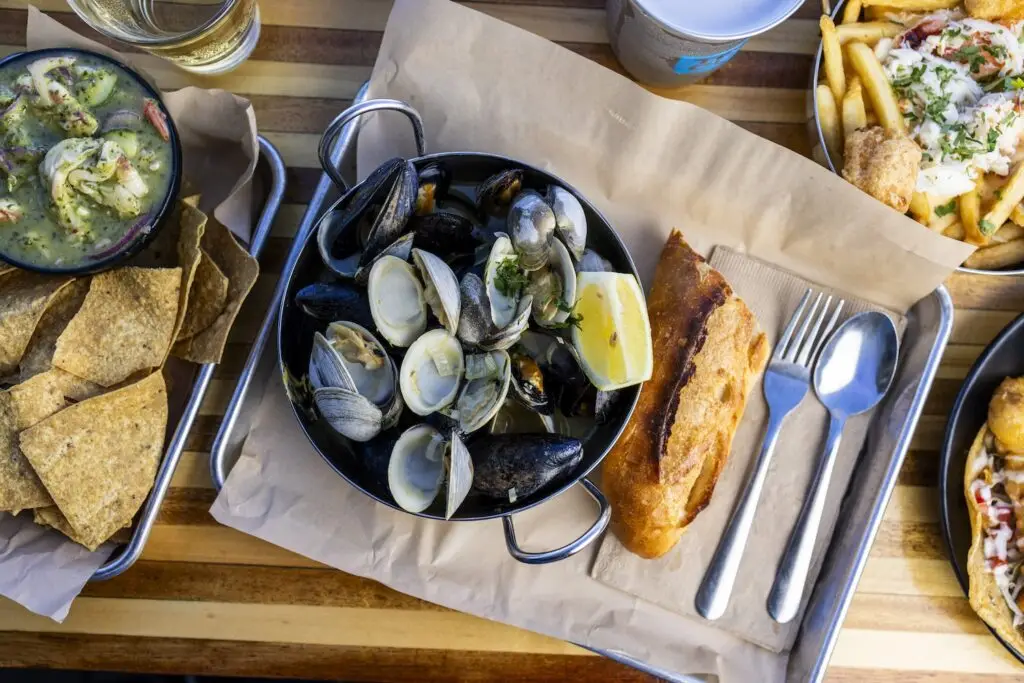
The bowl of mussels and clams are the can’t-miss of Mitch’s—somewhere between French moules marinières, New England steamers, and Baja shellfish pots. The science: As shellfish steam, they release their own briny liquor, meaty ocean broth in a shell. The chef’s job is to complement that gift without clobbering it. Mitch’s uses white wine for acid and leeks (a milder, sweeter, more flavorful onion), Dijon, and butter. Their clams and mussels are bigger than normal, which brings stronger flavor, making that broth one of the best in the city, sopped with the baguette.
From the cold case, get the shrimp aguachile with housemade chips—a small bowl, green as radiator fluid, the chili water a light-pain blend of habaneros (the best tasting chili by a long shot), serranos, lime, and the soft, fat glove of avocado. They also serve a campechana—a Baja mariscos specialty with shrimp, Dungeness crab, octopus, and oysters in cocktail sauce and clamato. Important note here: Don’t eat either of these dishes right away. They come out fridge-cold (there are laws about storing raw seafood), which muzzles the flavor. Order them to sit. After 20 minutes, dig in.
The crab cakes get mixed reviews, but ours are delicious. They lean cake more than crab, which isn’t what you’d expect from a fisherman-chef’s stilt house, but that’s personal preference.

You’re going to order the fresh fish plate, blackened, because you’re good at ordering. It’s the truest expression of fisherman and fish. And what you’ll receive is a shockingly spartan plate—a paprika-crusted filet, a ramekin of slaw, some herb pistou. It is excellent, even if the universal governing body of wooden-spooned grandmas would suggest it needs a rice, a tater, a proper side dish.
My argument is that the slaw is side dishing. Coleslaw is, by and large, the great American fail. Most restaurants treat it like the younger sibling their parents made them bring along on a date. At Mitch’s, they treat slaw with respect. Starts with traditional cabbage, but then gets both fresh orange and lime juice, jicama, grilled corn, and cilantro. It’s Baja meets San Diego picnic food.
If, as dictated by the most basic laws of food criticism, I needed to find quibbles with Mitch’s, fine. I’ll be that guy who walks into a runaway hit dream of three local fishing families and pretends everything isn’t entirely perfect. I’ll express them in wishes.
I wish the baguette with the clams and mussels was lightly charred. The broth is nearly sweet, and sweet loves a good burn.

I wish there was an obscene amount of slaw with the fish plate. It’s that good, and the plate looks a bit bare.
I wish there was one housemade sauce in the condiment basket. You’ve got Heinz, Tabasco, Tapatío—all of which are fine and should stay. While I realize the kitchen is limited and the line of customers is eternal, Mitch’s would go up an even higher notch if there were squeeze bottles of one killer original dressing—housemade crema, a mojo, macha, or just an unending supply of that garlicky tartar. It feels a tad crimey to go through all this effort to source local fish and cook them well, and then top it with a sauce that has no San Diego or Baja or Mitch in it.
I honestly didn’t expect Mitch’s to be as good as it still is. Everything we ate (except maybe an octopus taco with tentacle bits fried into nubs) was good to excellent. The constant onslaught of locals and tourists and the excruciating intricacies of operating a business in California should have exhausted the will to live by now, let alone cook.
There’s a reason the birds are still outside, with crimes in their eyes and menu preferences.
Troy Johnson is the magazine’s award-winning food writer and humorist, and a long-standing expert on Food Network. His work has been featured on NatGeo, Travel Channel, NPR, and in Food Matters, a textbook of the best American food writing.
The 29-year-old culinary director at Herb & Sea is making seafood sexy (and approachable) again
Implementing a farm-to-table model hardly deserves acknowledgement these days. It’s not a stretch. It’s not innovative. “It’s the bare f**king minimum,” says Herb & Sea‘s executive chef Aidan Owens.
When I arrive at the Encinitas restaurant, I’m ready to talk sustainability, farm-to-table stuff, with Owens. “Did you see the chin on that?” he says of the extra big jiggly chin on the sheephead that just arrived with the day’s fresh catch. I did. It was Jay Leno adjacent.
I learn quickly that he somehow oozes both charm and stone-cold honesty. Maybe he could construct a new dish with chin goo, like he did when he had a bunch of tuna scraps and voila’d it into a smooth and crowd-pleasing ‘nduja. “I want to know what’s in there,” he says.

The instinct to look closer, to dig into what others might discard, says a lot about the chef’s approach. I guide him back to our topic, but he has something else on his mind. “We’re overcomplicating food—what happened to just cooking good food and having fun with it?”
Owens grew up on a farm in Byron Bay, Australia, where sustainability wasn’t a concept you chat about so much as a way of life. Think dirt roads, backyard chickens, pulling vegetables straight from the ground, and a mother who believed that if you couldn’t pronounce the ingredients on a package, you shouldn’t eat what was inside.
Food wasn’t precious or performative. Making it was what you did because you were hungry and that’s still what inspires Owens today. “I like to cook good food because I like to eat good food,” he says.
His approach to sustainability at Herb & Sea began so naturally that it felt just like instinct. “I was just like, ‘Let’s order food from the people who live and work here,’” he says.

And why wouldn’t he when lives in San Diego? Cities all over the world vie for our goods. Our tuna is sent overseas. Our spiny lobsters hit dinner plates in China and Japan. Not to mention California’s producing a third of the country’s vegetables and three-quarters of its fruits and nuts.
“Why would we outsource when it’s all here?” Owens asks.
Sustainability, in this context, is about cooking what exists in abundance, nearby, right now. “I love the local fish here. It’s f**king delicious and San Diego citrus, I mean, it is so f**ing good,” he says.
Instead of importing ingredients, Owens also looks for nearby alternatives. “You can find really cool things in the local waters,” he says, pointing out that stingray cheeks taste similar to scallops.

Whatever he finds in that sheephead chin might just be the next substitute for marrow. But to make this work, it means getting diners amped up about the slightly unfamiliar.
Tasting menus, where diners are completely in his hands, become an opportunity to gently push boundaries. “I’ll serve mackerel, because people think they hate it,” Owens says, noting that the abundant local fish can have some fishiness. “But when it’s fresh, it’s arguably one of the best fish in the ocean.”
He also tweaks the language on the menu so people might feel more compelled to give dishes a try without preconceived notions. He might use “lengua” instead of “tongue.” “Whelk” instead of “snail.” When he puts “stingray throat” on the menu, he disarmingly calls it “skate.”
To reduce waste, scraps aren’t always discarded but rather turned into something new. Sometimes they’re smoked, cured or fermented. Apples going bad turn into apple ponzu. Lemons turn to marmalade, which stretches their usefulness far beyond peak season. “And it’s super tasty on our pizza,” he says.
What makes the food even richer, is the relationships he’s built with farmers. Though it didn’t always feel natural, Owens sought personal connection first. He recalls approaching a fisherman at the Tuna Harbor Dockside Market. “I was awkward,” he says. “I went up to him and said, ‘I like your fish.’”
Owen’s is now so close to his suppliers—like fishermen Ryan Sebo and Joe Daly—that he gets texted pictures of fresh catches right as they flop on the boat. The messages always ask if he wants first dibs. “I say yes to a lot of fish,” Owens says, noting that Herb & Sea can go through 2,000 pounds of seafood a week.

The next evolution of sustainability, in his view, will be chefs working directly with producers such as his alliance with Sebo, cutting out middlemen and purveyors where possible. “It will put more money in the pockets of the people doing the work,” he says.
It will mean that chefs can’t just know their local farmers and producers, but they’ll choose to work with the ones who have the best practices. Dining and sustainability will become much less about the final plate. “It will be more about the impact that plate has on the Earth,” he says.
Ultimately, he believes sustainability doesn’t need to be loud. It doesn’t need hashtags. It just needs to be honest.
“We aren’t saving lives. We’re feeding people good food,” he says.
And yet, in feeding people well—simply, thoughtfully, responsibly—something meaningful happens. Guests leave satisfied. Ingredients are respected. Local ecosystems are supported and food returns to what it has always been at its core: nourishment, pleasure, and a quiet reflection of the place it comes from.
No buzzwords required.
Fresh openings, inventive pours, and can't-stop-thinking-about-it dishes—here's what has defined our food scene this year
Most San Diego spots serve phở bò—the dark-brothed, beef-boned Southern Vietnamese specialty, loaded with the loud spices (star anise, cloves, cardamom, etc.). But Kim Pham, one of the sisters behind Crab Hut and perennial best-restaurants list-maker Kingfisher, is doing her mom’s phở gà.
The Northern Vietnamese original has a lighter, cleaner broth, using runner chickens (free-range diet and action means more flavor), the garlic from Gilroy’s famed Christopher Ranch (intense garlic-garlic), organic ginger, and housemade noodles. For condiments, Phở Gà Go uses Red Boat (the gold standard, barrel-aged 12 months). It’s essentially the same broth made at Kingfisher, served casual in Mira Mesa.
This issue isn’t about shame, but let’s add a touch for emotional tension. We live on the water, but only about 10 percent of seafood eaten in San Diego is caught locally. Meanwhile, the local fishing industry that once employed 40,000 people is down to about 130 commercial fishers. Local fishing families are a crucial (my words, and they feel right) but endangered species. And three groups have joined forces for one pretty killer event that does a lot about it.
Puffer Malarkey Group (operator Chris Puffer and celeb chef Brian Malarkey) joined with Tuna Harbor Dockside Market—the spot where local boats drop their catch every weekend, a waterline treasure. Each year, Dockside Night Market gathers live musicians and the city’s top chefs who cook with local boat fish on the water. Even better: 100 percent of the profits go to the San Diego Working Fishermen’s Group (the third group—the actual fishers). Make it a quarterly/monthly thing, for chrissakes.
Hard to find a more special place to eat lunch than Make Cafe. Finally with a permanent address, Make is where refugee women new to life in the US cook recipes from their various home countries: like mandazis (East African fry bread, like a beignet), koftas, congees (Asian ginger-rice bowls), lemongrass soda waters, and clean-eating creations. Exec chef Ashley McBrady (who helped turn Cellar Hand into a farm-obsessive hit) oversees the operation and teaches the women everything she’s learned.
Make Projects (which includes a farm and a training center) is a nonprofit that director Anchi Mei spun off from the International Rescue Committee—and now includes the cafe, a farm, and a training center. The idea is to help women refugees—often those who’ve worked fields and didn’t get great access to education—develop job, language, and cultural skills to adjust to this radically new and disorienting life. Even if you’re immune to an emotional backstory: Normal Heights has a charming new 5,000-square-foot bistro with a talented chef.

The slander of SPAM is part of its allure. Those who have either been raised in the musubi arts or converted to the minor food religion tend to exude a higher-than-expected life happiness. This Musubi Love, a Leucadia musubi speakeasy (you heard that right), focuses exclusively on the Hawaiian/Asian tradition of SPAM “sushi.” It’s a MEHKO (Micro Enterprise Home Kitchen Operation) from founder Roger Post, serving classics and riffs like the Cordon Bleu-Subi made with panko-fried SPAM, shredded rotisserie chicken, Swiss cheese, and Bachan’s Japanese BBQ sauce. Or try the Dawn Patrol with SPAM, egg, bacon, cheddar cheese, and spicy mayo.
How many of your favorite bands don’t have a talented lead singer? Due respect to Charles Mingus, but kinda hard to get emotional without someone expressing a story in a compelling way. The same is true for restaurants: a likable storyteller who deeply knows their stuff and can translate the stories of the food, drink, people, and place is both key and exceedingly, exceedingly rare. Well—found one.
Valentina General Manager Todd Henderson is a likable certified sommelier who can wax on about the history of the breed of pigs used to create the famed jamón (Cinco Jotas), trace each Spanish pintxo back to its origin tale, or orate the Ken Burns doc of 20 different types of Champagne. Valentina had the design charm and the roots (Leucadia locals wanted better restaurants, so they built them). But with Henderson and chef Enrique Ñol (who trained under Davin Waite at Wrench & Rodent), Leucadia’s date-night bistro feels like it pulled up a rung.
Some local legends engrave so deep that it’d feel wrong if even their original locations they outgrew became, like, some chain lamp store. Kiku Room feels like a rightful heir to the Casbah’s first throne. Kurt Cobain played in this tiny box on Kettner, dammit. Kiku’s a minimalist steel-concrete-and-punky-wheatpaste box, loaded with enough red lights to summon some beanie diehards and chill demons. One “bar” is a DJ deck (dark disco, Balearic house, everything), and the other is proper craft cocktails. They even brought back Midori Sours. The room is small and the line is not, so plan ahead or amiably accept fate.
Some locals would prefer if Coronado’s historic charms were flash-frozen and preserved. Others feel that Elisha Babcock and Hampton Story (the 19th-century developers who modernized the “island” and birthed the Hotel del) were radical change agents, and that spirit should be renewed. Undoubtedly, Baby Grand is a renewal. The newest hotel from CH Projects (Lafayette Hotel) turned an old, meh motor lodge (La Avenida Inn) into a freshly feral cocktail lagoon with Greek food and statues and plus-sized plant life, a tuckaway bar (Fallen Empire), and rooms with clamshell beds and obscenely giant bathrooms. All due respect to our hearts’ desire to embalm old magic—this feels like a grand Coronado win.
Two local dreamers truly understood the emotional voltage of Captain Keno’s, Leucadia’s affordable family restaurant/dive bar (a real hospitality mullet). When owner Gerry Sova closed it after 54 years, they basically battled it out to buy Keno’s beloved bones—knickknacks, plucky furniture, signage—and memorialized that old meatloaf-and-vodka-cranberry voodoo in their own places. The first is Encinitas’ tuckaway bar, the highly designed, Tarot-fied Anigma (from the DIY industry vets who own The Roxy). Second is Breakers, the Hawaiian-inspired hang from pro surfer Benji Weatherley, who grew up between Encinitas and Oahu. Long live Cap.

When it opened in 2014, Ironside Fish & Oyster hit all the right notes. A giant fish house and craft cocktail spot dedicated to local fishing lore—created by locals. They put in the area’s first oyster bar at the time. It didn’t make the rapid evolution of Little Italy feel like a cheap land grab, and filled holes rather than piling more glitter on already-filled holes. A key part of that magic was opening chef Jason McLeod, who was in charge of Ria in Chicago when it earned two Michelin stars. Twelve years later, after bouncing between big projects, he came back this year and set down permanent roots in a landmark kitchen.
Word of Mouth skips endless scrolling and lets two longtime industry pros choose what members drink each month
If I have to choose between letting a trusted friend pick a bottle of wine or some random algorithm boosted by a faceless entity, I’m gonna go with the human 10 out of 10 times. And when you have friends like Amanda Sarich and Robert Blair, it’s pretty easy to trust their picks are going to be unique, tasty, and probably something I haven’t seen before.
Between the two of them, they have over three decades of experience working in wine. From buying to operations to building wine lists, they’ve worked together, wined together, and now, are going into business together with the Word of Mouth Wine Club.
Word of Mouth is a members-only monthly subscription that sends you two handpicked bottles each month, chosen entirely by the duo’s palates. It’s less “build your own box” and more “enjoy the surprise.” “The goal with the wine club was basically to get members that want to turn over their faith in our collections,” Sarich says. “Trust us—we’ll send you the cool stuff.”
The two first met while working at We Olive wine bar and shop in La Jolla, where Sarich joined the opening team in 2011 before eventually becoming a corporate wine director overseeing stores and franchises throughout California. Blair arrived the following year, after stints at Holiday Wine Cellar in Escondido and Alternative Wines in Carmel Valley, later spending nearly a decade helping build Village Vino in Kensington.
When Village Vino closed last November, Sarich had recently returned home to San Diego after years in the Bay Area and brought Blair on board for a project she’s working on—Serafino, a cafe and wine bar slated to open in Mission Hills next fall. But to bridge the gap between Village Vino closing and Serafino opening, the two partners kept the momentum going by launching Word of Mouth.
Blair says once Serafino opens, the team will launch a wine club for that business that will focus on everyday drinking wines from anywhere. Word of Mouth is for us “to geek out a little bit,” he says, with more adventurous or hard-to-find options from small production family farmers. (But as a bonus, Word of Mouth subscribers will become Seraphino’s founding members, receiving exclusive benefits for supporting the project from day one.)
Current memberships include two bottles delivered monthly—usually a red and a white, though sparkling, rosé, orange, or skin-contact wines are always fair game. Members can choose three-month, six-month, or annual subscriptions, and every shipment includes detailed tasting notes, producer stories, pairing suggestions, and fun extras like playlists, puzzles, and the occasional surprise.
The selections often revolve around loose themes. For instance, they used the idea of what wines they’d drink at a summer barbecue to select the two bottles in the July box—which happened to be a pale French rosé and Mourvèdre from the Languedoc-Roussillon region of southern France.
Over the last decade, places like Rumi, Clos, and Vino Carta have helped transform the San Diego wine scene from mainstream labels and a stodgy vibe to eclectic discoveries that break a lot of the former rules. Word of Mouth hopes to continue that evolution.
“I think it’s fostered a more adventurous sense of exploration,” Blair says. “There’s room in San Diego to keep expanding people’s palates.” Sarich agrees. “We’re trying to bring our fun wine palate to the world.” Bottoms up.
Listen Now: The Latest in San Diego’s Food and Drink Scene
Have breaking news, exciting scoops, or great stories about new San Diego restaurants or the city’s food scene? Send your pitches to [email protected].
Beth Demmon is an award-winning writer and podcaster whose work regularly appears in national outlets and San Diego Magazine. Her first book, The Beer Lover's Guide to Cider, is now available. Find out more on bethdemmon.com.
SeaWorld dazzles with a drone show, big-name entertainers, new animal adventures and more
Nights are heating up at SeaWorld San Diego. The quintessential summertime staple on Mission Bay is transforming into a destination for unforgettable day-to-night adventures, bringing back some of its most popular Summer Nights programming and introducing exciting new experiences sure to delight both kids and adults alike.

The 2026 Summer Day to Night at SeaWorld San Diego is the park’s most ambitious season yet. SeaWorld has planned a highly anticipated entertainment lineup that features nine weeks of throwback concerts featuring R&B and hip‑hop favorites from the ‘90s and early 2000s, including Jordin Sparks, Too $hort and Warren G, Ashanti, and an array of boy band heartthrobs performing together as part of the Pop 2000 Tour.
New this season is perhaps the park’s most visible update: a nightly drone show, Ocean of Dreams, which illuminates the sky with hundreds of synchronized sparklers. Drones form sea otters, sharks, dolphins, and a majestic orca that tell a breathtaking 12-minute story of marine life and underwater ecosystems. The show culminates with a spectacular electric neon finale celebrating hope, wonder, and ocean stewardship.
Nighttime visitors are also in store for animal adventures that fuse education with high-energy fun and the dreamy ambiance of nighttime. The park has launched two all-new animal presentations: Shamu’s Celebration: Light Up the Night and Dolphins: Touch the Sky. Shamu’s Celebration: Light Up the Night features vibrant lighting, music, and dynamic choreography that celebrates the power and beauty of killer whales. Dolphins: Touch the Sky showcases playful bottlenose dolphins and the special connection between humans and the natural world. And back by popular demand is fan-favorite Sea Lions Tonite. See the charming pinnipeds splash, play, and parody pop culture in this refreshed crowd-pleaser.

More must-sees: a newly reimagined Shark Encounter, one of the country’s more immersive exhibits highlighting 11 different species up close, SeaWorld’s beloved BMX Blast! stunt show, and high-seas escapade, Pirates Ahoy! The Battle for Mermaid Cove. And don’t miss the park’s all-new Deep Sea Disco, which encourages guests to dance the night away under the glow of the SkyTower, and vibrant closing time laser light display Laser Reef Summer Spectacular.
Amp up the nighttime vibe with local craft beers, curated cocktails, and nostalgic theme park treats with $1 beer all summer long. SeaWorld is the place for day to night summer fun. When the sun goes down, SeaWorld lights up, and inspires guests of all ages to embrace their inner whimsy and see why generations of San Diegans head to SeaWorld to make memories they’ll never forget.