Featured articles
Featured articles
Featured articles
What's next
Featured articles
Featured articles
Featured articles
Ready to know more about San Diego?
SubscribeReady to know more about San Diego?
Our city is a food-lovers dream; add these restaurants, bars, and bakeries to the top of your reservation wish list
Ambrogio by Acquerello
Say it’s a Friday night, the kids are bouncing off the walls, and cooking dinner in that chaos feels like a very difficult form of astrophysics. Enter Del’s Hideout in Del Cerro, a Cohn Restaurant Group spot. It’s got tasty barbeque, sandwiches, and salads, plus a good kid’s menu with their favorites: burgers, mac ’n cheese, grilled cheeses. But elementary schoolers don’t sit for food no matter how much fromage is present. Del’s knows this, so they turned a shipping container into a play area with foam blocks, push carts to ride around in, and a small climbing structure. So you can sink down at a table, grab a craft beer, and send the little ones to get their zoomies out. Bonus: Every Wednesday you get a free kid’s meal with the purchase of an adult entrée. –CT
The new modern Italian tasting-menu restaurant is a partnership between the owners of Ambrogio15 and the chefs behind Milan’s Michelin-starred Acquerello. One of those chefs, Silvio Salmoiraghi, got his first star at vegetarian restaurant Joia, which explains the choice to offer two menus: omnivore (wow, the Alaskan cod) and vegetarian (featuring his signature dish, Acquerello Rossini). A knockout linguine and the “omelette surprise” appear on both lineups. The omelette is presented with four mystery fillings under each quadrant that the server asks you to taste and identify, gamifying a gourmet meal. –KO
Snapdragon Stadium promised a lot from the get-go. So far they’ve done a damn good job delivering with Major League Rugby, one of the most electric women’s sports teams in the country (Wave FC), concerts, and concessions. That final bit is especially key, because why bother watching a game in real time unless the food is as exciting—if not more—as the spectacle? Snapdragon’s curated selections run the gamut. Petco Park started this star local-food game, and Snapdragon carries the torch well with Crack Shack, Cali BBQ, Hodad’s, and more. –BD
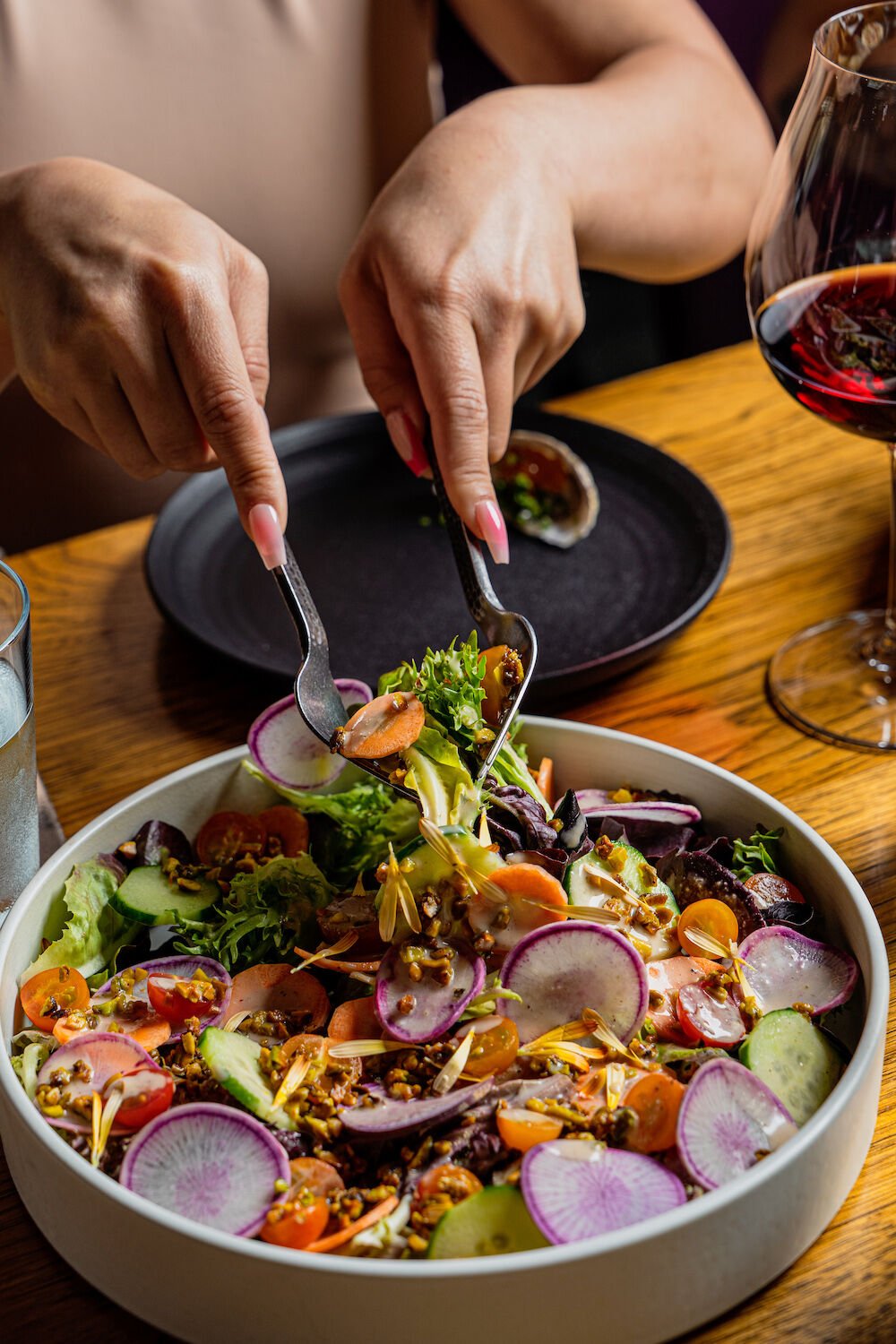
Juniper & Ivy Restaurant Kimberly Motos
Photo Credit: Kimberly Motos
J&I was one of the restaurants that put Little Italy on the serious-food map. It opened with Richard Blais holding the reins. Now, for nearly 10 years, it’s been Anthony Wells (protégé of Thomas Keller and Jonathan Benno) who keeps it flying high. While they’re usually a nice-shirt kinda place, they’ve introduced a Sunday Supper, a more casual, family-style, three-course meal using the best of hyper- local farms, fish, and ferments. It’s set to return in September. Wipe great food on your jeans. –TJ
When beloved College Area dive The Ugly Dog Pub closed and became Majorette, the transition breathed new life into a neighborhood thirsty for more upscale options. Yes, there are still billiards (now free, in fact), a cozy patio, and big screens showing sports. But owner Will Remsbottom is serving seasonal plates, low-ABV cocktails, and plenty of smashburgers paired with natty wine. Rah rah, indeed. –BD
If the line of SUVs at Starbucks seems a little long and life-draining, happyfastdelicious in Hillcrest is an introverted nine-to-fiver’s dream. Opened in 2022, the grape-and-yellow, A-framed coffee drive-thru offers indie-shop creativity with the speed and convenience of mobile ordering. Grab espresso, energy drinks, seltzers, and sodas in 30-plus flavors to get a customizable fix for that uber-specific craving. From banana-bread lattes to cocoa marshmallow cold brew, it’s fast done well. –MK
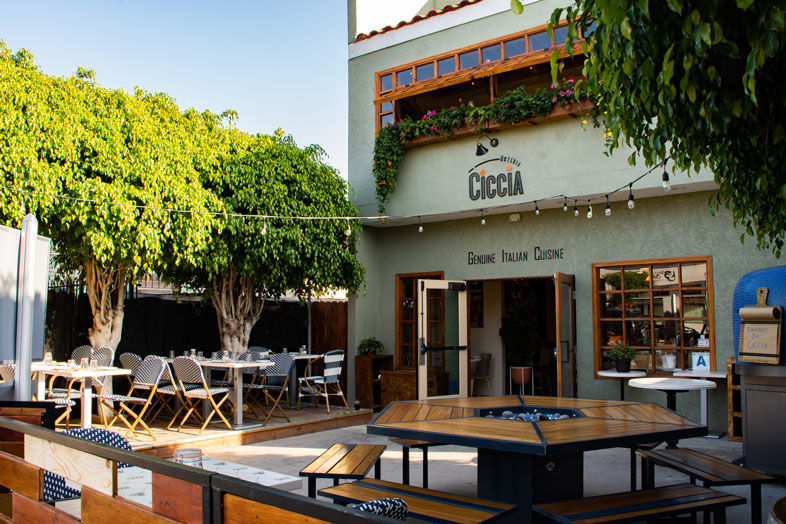
First Look: Ciccia Osteria
Photo Credit: James Tran
Mario Cassineri and Francesca Penoncelli had been angling toward this little house for a long time. The married Italian transplants started a decade-plus ago as the food engine at Bice in Downtown (he was the chef; she, the cheese expert). In 2019, they threw everything into this cottage of their own. They can make pasta from scratch in their sleep, but it’s the mushroom flan that snatches breaths: a little truffle, a little cream sauce, and a pecorino crust. –TJ
How did Cardiff not have a farmers market til recently? The beach burg is so rustic that parts of it don’t even have sidewalks. Well, that’s fixed now. Saturdays bring the Cardiff Farmers Market to Mira Costa College’s San Elijo Campus from 10 a.m. to 2 p.m. Located just off the 5, the market has close, ample parking and 70 vendors, including Cardiff Tiny Farm and Seas Greens Microgreens. –KO
Devouring all-you-can-eat Asian hot pot at Shabumi with friends and family is best done in stretchy pants. Choose your steamy soup base before selecting three meats, such Angus brisket, pork belly, and lamb leg. Top it off with bok choy, bean sprouts, onions, broccoli, and other veggies. Korean barbecue is also bottomless, which means you’ll probably be back—real soon. —MK
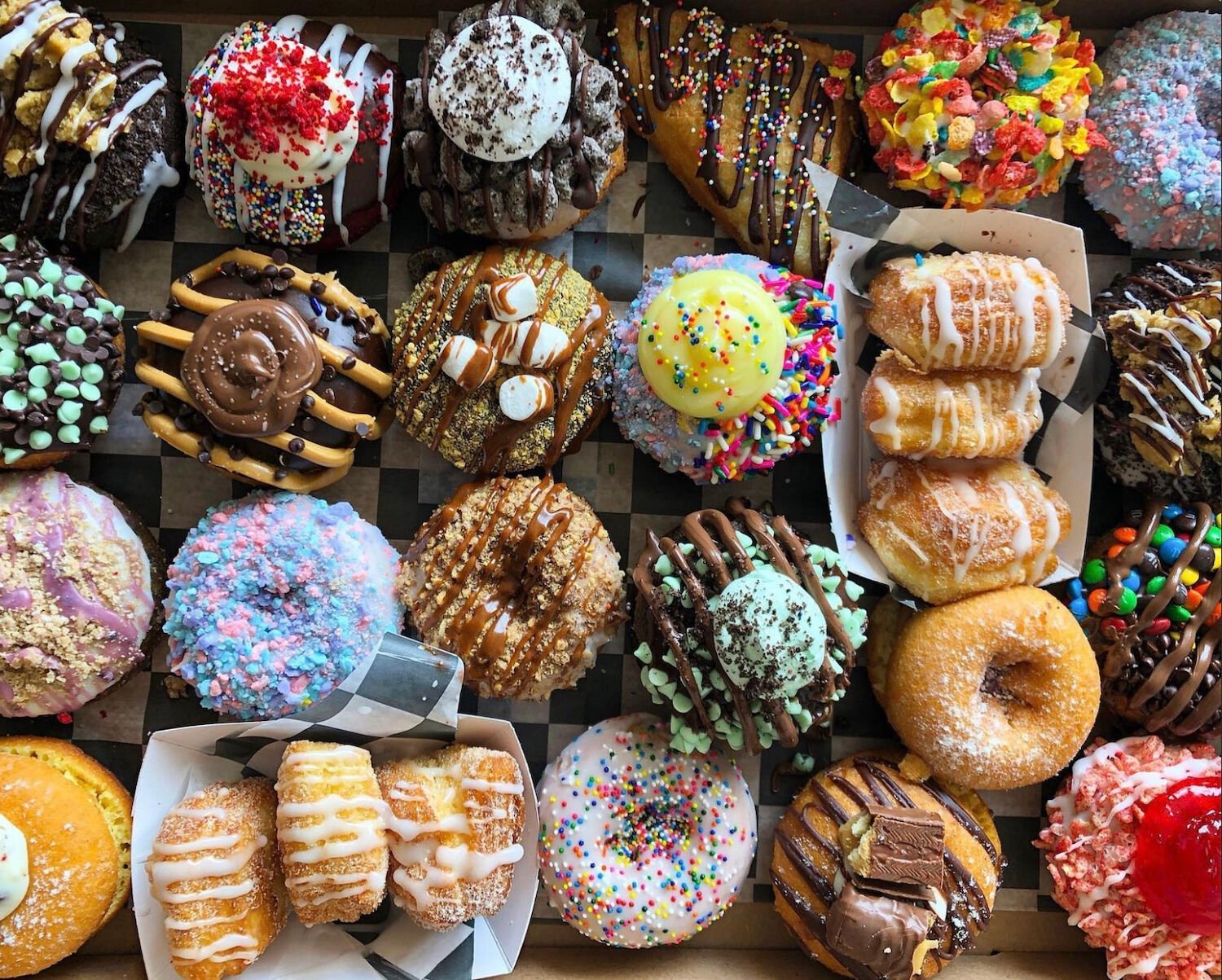
A collection of colorful doughnuts from Broad Street Dough Co. in Encinitas
Like a dating app for donuts. Patrons select their sugary soulmate from a roundup of photos pinned to the wall, then the lovely folks at Encinitas’ Broad Street drop dough in the fryer; glaze it, stuff it, and spackle it with Fruity Pebbles; and serve it still warm. Most of the menu can be made vegan and/or gluten-free and is 99 percent less likely to disappoint than your latest Hinge match. –AR
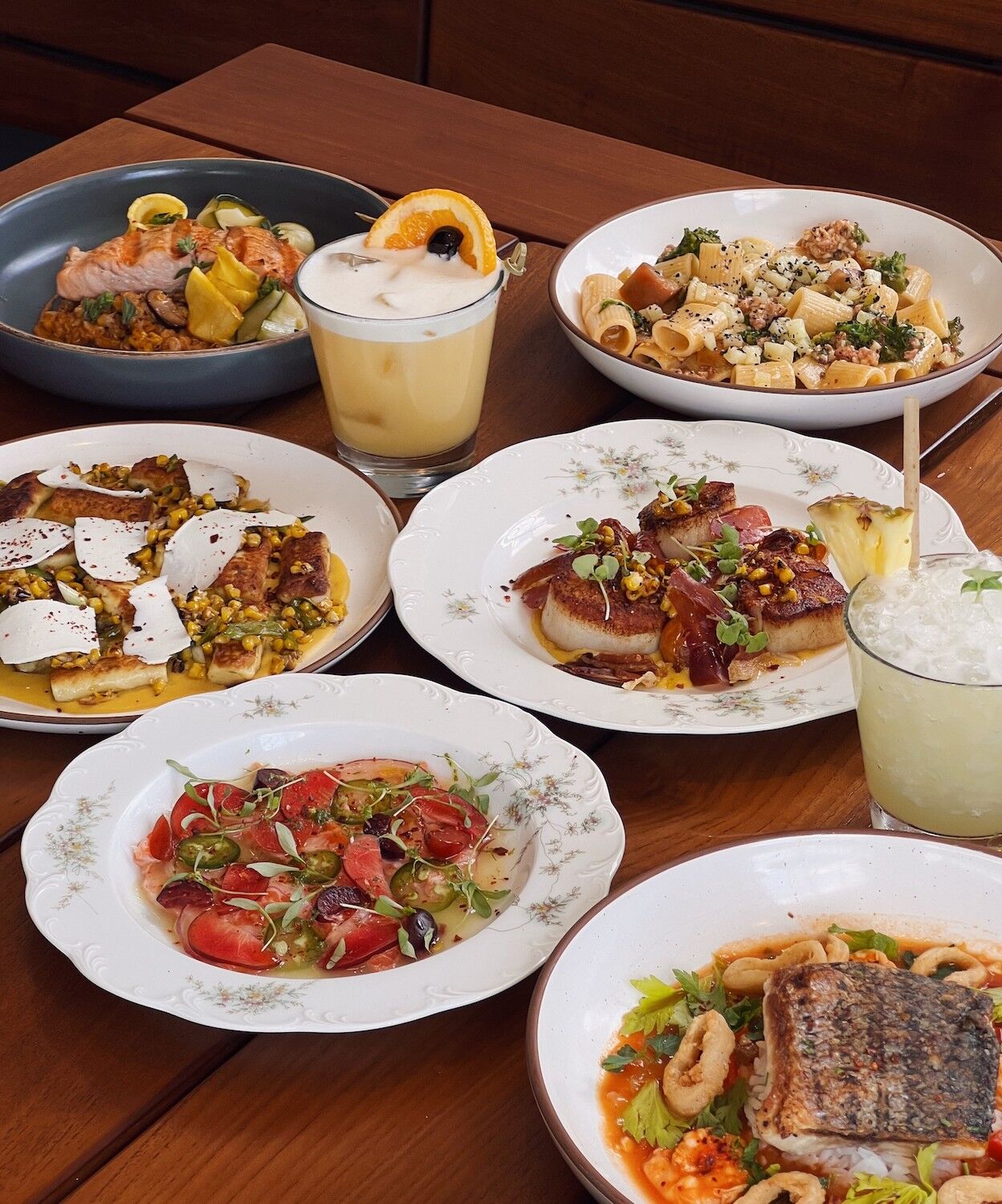
Sandpiper Restaurant La Jolla
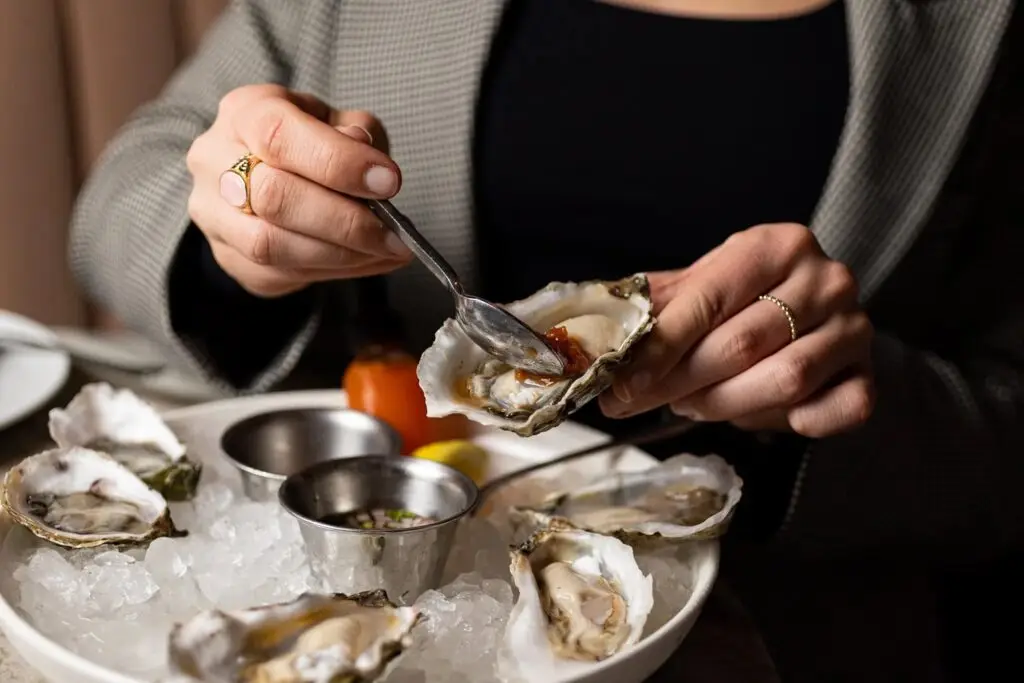
Sandpiper is the offshoot of George’s at the Cove, which means one of the most respected chefs in the country (Trey Foshee) is on the QC. If you blink when driving into La Jolla Shores (by the beach we all go to, not up top at the Cove with the fancy galleries), you’ll miss it. Stop missing it. There are oysters and good beer and oak-smoked, fire charred dishes (the Niman Ranch pork chop is life), but that blue-corn cake with spicy macha agave steals all shows. –TJ
It’s no surprise that Amalfi is a runaway hit in San Marcos, since chef-partner Marcello Avitabile is a six-time World Pizza Champion. The tiles on his woodfired cauldron are gold because that’s what his oven makes. However, the best menu item comes crust-free: The pan-fried Roman artichokes with arugula and Grana Padano Parmesan prove why they import most of their ingredients directly from Italy. –TJ
View this post on InstagramA post shared by Mujer Divina Burrito and Coffee House (@mujerdivinacoffee)
Bedecked with bright murals and faux flowers, Mujer Divina is a beacon of coffee and community in National City. You can order online to grab a café de olla and slim chorizo burrito on the fly. But if you can nab a table, it’s worth lingering over a big plate of green chilaquiles, a veritable feast in comparison to other quick-service cafés’ dainty pastries and toasts. Add machaca or birria to power a full afternoon of errands. –AR
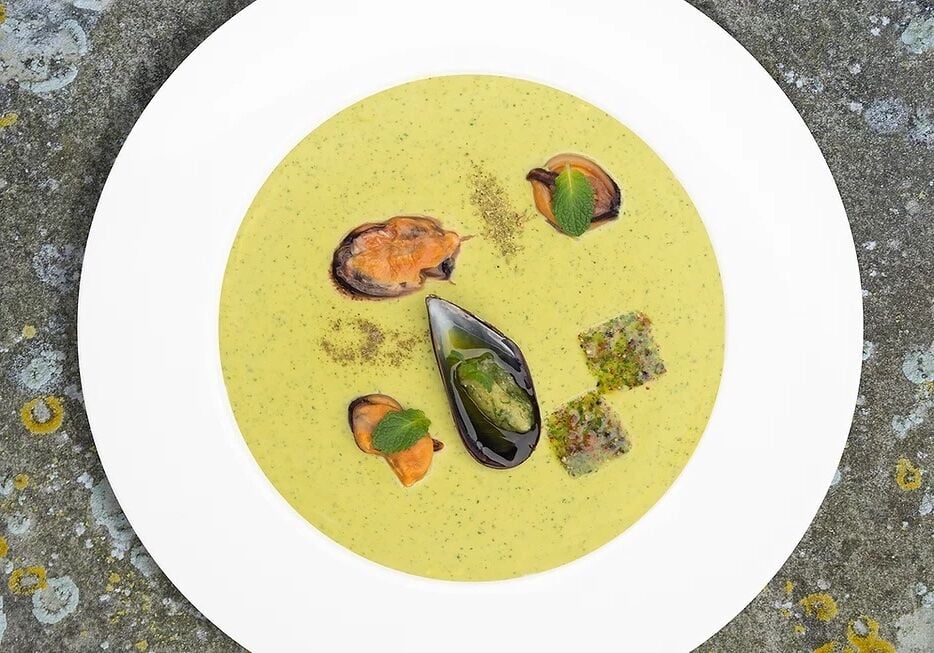
Little Frenchie’s roasted beet salad is a microcosm of the Coronado bistro’s knack for balance. The petrichor sweetness of the beets and subtle salt of goat cheese cut the bitterness of the dish’s radicchio base and temper its bright citrus. Also melodic: its entreés, including two takes on mussels, the sexy butter of the sea. –AR
Crab Hut is owned by the local family behind the breakout restaurant Kingfisher. Tidiness and polite, methodical eating happen at some other, more boring place. Here, they hand you a bib and gloves and bring your seafood feast in a giant bag. Just put your whole you into the experience. In that bag—as long as you did this right and ordered the “full house sauce”—is one of the best seafood-boil sauces in the city, plus snow-crab clusters, lobster, crawfish, sausage, corn, and potatoes. Regulars beat the crowd at their four-hour happy hour (3 to 7 p.m.). Also, they have pretty fantastic cocktails. –TJ
View this post on InstagramA post shared by The Craft Creamery x Moniker Coffee Co (@craftcreamerysd)
You know how you can go into a bar in SD and order a kolsch from Colorado or a pilsner from Pennsylvania? At The Craft Creamery near Shelter Island, the idea is the same, but with ice cream. Here you can find rotating flavors from the best ice cream makers in the country, such as Fat Elvis (banana ice cream with peanut butter and chocolate chips) from Wisconsin’s Chocolate Shoppe and Marionberry Pie from Tillamook in Oregon. Grab a four-flavor flight for $12. –MH
This is a husband-and-wife-owned little casual-bites and gourmet-goods store in the design district. Work up a hunger buying vintage lamps, then regain life here. The roast beef dip is a winner. Tuna salad is one of those things you don’t realize you require in your life until you see it on a menu and it feels like a religious need, and their tuna toastie is excellent. The star, however, is the Korean twist on a reuben: pastrami with kimchi and swiss on toasted rye. –TJ
Making it as a steakhouse these days usually requires coast-to-coast financial backing, so this one’s special. It’s San Diego’s indie steakhouse, started by a trio of industry vets, little butcher shop attached. The’ve got all of the fancy meats, all aged in-house–Wagyu skirt, bone-in ribeyes, the works–but it’s the relatively homely New York strip that slays after 21 days of dry aging. Also, the bread pudding will roll your eyes back into your personal sweet spot. –TJ
Valentina Restaurant Kimberly Motos
Courtesy of Valentina Restaurant
Every neighborhood needs one of these pheromone-boosting little spots, a minimalist charmer with mussels and wine and a couple well-placed lamps. Valentina is owned by Mario and Morgan Jean Guerra, whose Leucadia Co. restaurant group (Moto Deli, Corner Pizza, Hamburger Hut) has thrived up here. They named this Spanish tapas bistro after their daughter. Get the tomato toast with the famed jamon Iberico, a garlicky, salty, lightly sweet piece of bread art. –TJ
The secret’s out about dry-aging. Won’t be long before we get the dry-aged Whopper. And bone marrow is the activated charcoal of the beef world, a silky collagen bomb people on the internet claim reverses the aging process and brings the Chargers back to San Diego. But the only folks I know that are dry-aging bone marrow are husband-and-wife duo Aron and Pam Schwartz in their Solana Beach restaurant-slash-butcher-shop. Spread it on toast, on steak, on your life. –TJ
A midcentury post office turned into a pizza haven with a farmer-focused ethos (get the kale salad with aleppo pepper), Tribute has knockout focaccia, soft-serve ice cream with olive oil and sea salt (sounds weird, is glorious), and world-class pies (order the mushroom whitestone). Lots of yes here, especially the “handsome board”—specifically, the “Big One”— with all kinds of cured meat snacks and fancy cheeses and housemade sauces beside in-season farm fruits and nuts and such, served on a fallen tree ring. –TJ
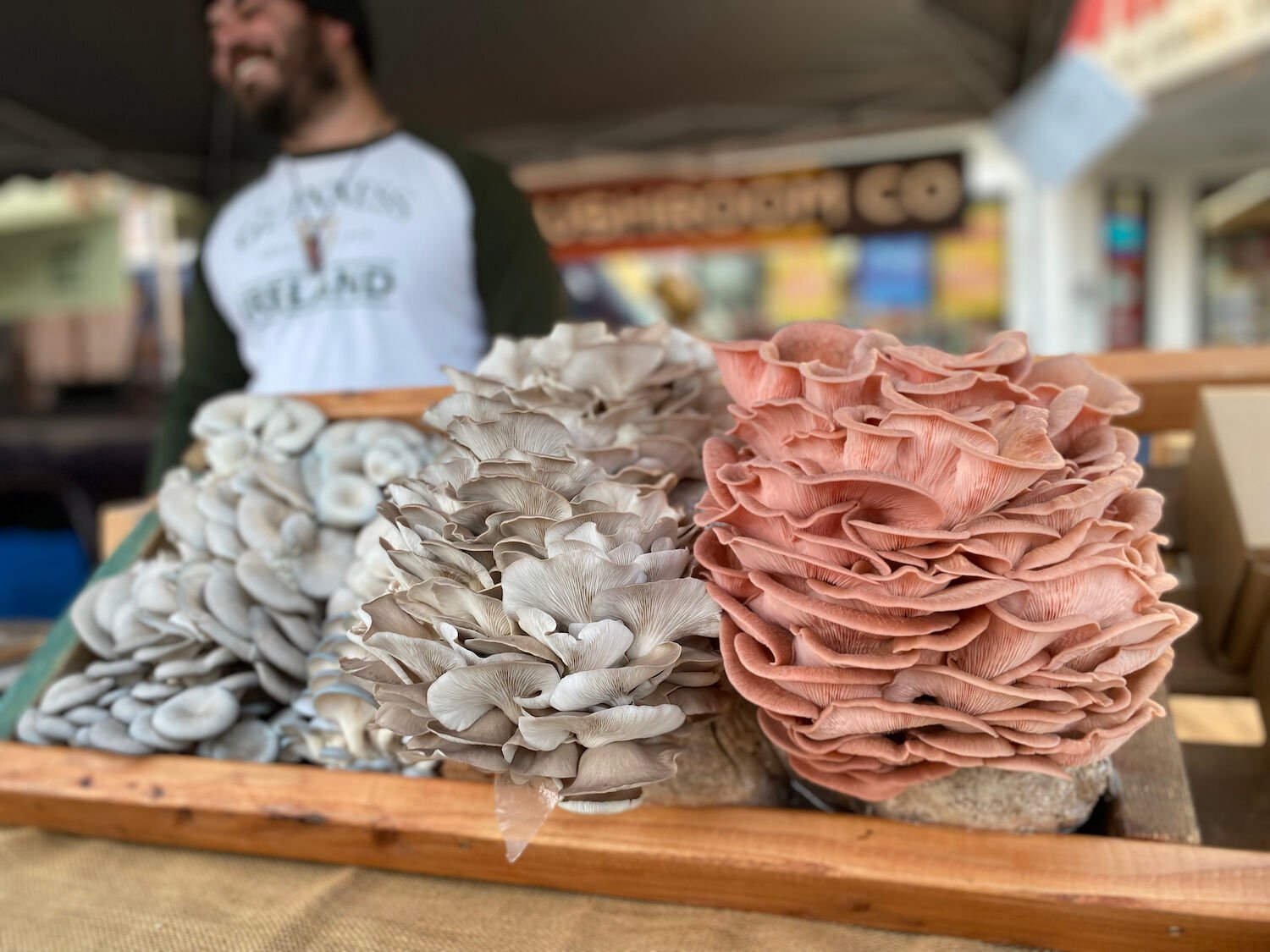
Golden Mushroom

From getting your sweat on at hip-hop class to celebrating with a zero-proof cocktail, here are San Diego's top fitness and wellness spots
For thousands of years, the Kumeyaay who lived in this area called a mountain south of Julian Cush-pii, meaning “sharp peak.” Then, after the Civil War, Confederate sympathizers saw that same mountain and decided to rename it Stonewall Peak—after General Stonewall Jackson. The name stuck for nearly a century and a half, until Cuyamaca Rancho State Park announced earlier this year that the name will return to its original, Cush-pii. Hike to the summit for expansive views of the Coronado Islands to the west and Mexico to the south.

In 1993, Angie Bunch gathered a group of hip-hop dancers—called Culture Shock Dance Troupe—and gave them a space to practice and perform. As hip hop grew through the ’90s, so did Culture Shock. It has since become a nonprofit, a space for young and old, beginner and expert dancers. Culture Shock has also expanded to Los Angeles, Oakland, Las Vegas, Chicago, Atlanta, New York City, and Washington, D.C., as well as Ottawa and Toronto, Canada.
In 2019, Amanda Leach created the Yoga Box method, which takes high-energy flows and adds strength-building poses in heated, vibey, lava-lamp-lit studios. What started on Grand Avenue in Pacific Beach has spread to 15 locations across the county, with even more trickling into Denver, Chicago, and Brooklyn. The best part? Mindfulness newbies who can’t touch their toes and six-packed contortionists can hang in the same class. You can customize each session based on your ability and fitness level.

A gym taking over a historic beachfront pool sounds like the setup for a new season of Love Island, but Fit Mission Beach operating the nearly 100-year-old Plunge at Belmont Park is real. The independent fitness brand has spent the past several years building a loyal following through group fitness classes, community events, and a members’ social club overlooking the ocean. Upstairs, members can work remotely, meet friends, or hang out long after their workout ends. Between the Plunge, the coworking-style lounge, and a packed calendar of events, Fit has evolved into something bigger than a gym. It’s a clubhouse for San Diego’s fitness crowd.
The wellness world is finally transitioning away from HIIT workouts and cult-like spin classes, where your heart rate hits Zone 5 within minutes and stays there until cooldown. Good. At Breathe Degrees, wellness takes the form of zenned-out communal breathing sessions or vagus nerve–activating cold plunges. Breathwork is said to boost your mood in the short term and improve your heart health in the long term, and maybe that’s why everyone’s coming back for more. You can’t run into someone in Carlsbad who hasn’t dropped into at least one breathwork session, and now the studio has opened a second location in Liberty Station.

Pilates wasn’t just popular this year; it was practically a requirement for maintaining your San Diego residency. New studios seemed to appear weekly across San Diego, each promising stronger cores and better posture, but Soul Pilates and Care found a way to stand out by addressing a challenge many parents know well: finding time to exercise at all. Fitness doesn’t have to compete with parenting responsibilities. Parents can drop their kids off with trained caregivers while they head into reformer classes, eliminating one of the biggest barriers to working out. The studio has earned strong reviews for both its instruction and family-friendly approach.
The Hotel del Coronado’s sweeping $550 million restoration touched nearly every corner of the historic resort, but one of the most anticipated unveilils was the debut of its redesigned spa. The oceanfront wellness destination now features 21 treatment rooms, a relaxation lounge, a sauna, steam room, and a treatment menu inspired by the coastal environment just steps away. The redesign blends the Del’s Victorian legacy with a cleaner, more contemporary aesthetic, creating a space that feels distinctly SoCal rather than generic luxury hotel. For locals who don’t have time for a vacation, it’s the next best thing.
As non-alcoholic beverages continue their meteoric rise, Good News Bar has become one of San Diego’s most compelling arguments for a booze-free evening. The University Heights hotspot serves a menu of carefully crafted zero-proof cocktails that borrow techniques and ingredients from traditional cocktail programs (it’s not just fancy juices and soda water), minus the hangover. The space also hosts regular community events and has quickly become a gathering place for everyone from sober San Diegans to the merely sober-curious. In a nightlife industry built around alcohol sales, Good News proved there’s plenty of demand for connection without the buzz.
From elephant encounters to escape rooms, these are the adventures that kept San Diego families busy all year long
If you can’t quite swing the cost of a trip to the African outback, the Safari Park’s new Elephant Valley is a pretty convincing Plan B. The 13-acre immersive habitat—the largest project in the San Diego Zoo Wildlife Alliance’s 109-year history—is home to eight African elephants, but it’s the thoughtful details that steal the show. Keep your eyes open for intricate Kenyan-inspired artwork, native landscaping, and stop by the Mkutano House, where you can grab lunch with a front-row view of the herd.
Pepper Park became the emotional anchor of the bayfront overhaul when the National City park reopened this March with a 2.5-acre expansion. Hopefully that’s just the start. The California Coastal Commission also approved the city’s ambitious waterfront plan, clearing the way for a long-envisioned 77-acre bayfront makeover with more green space, better bike paths, and improved waterfront access. Money still has to be raised, but head to Pepper Park, sit on a brand-new bench, and gaze out at the future of the South Bay.
Not every family destination comes with roller coasters—sometimes, they have paint rollers. The Willie Henderson Sports Complex in southeast San Diego recently received a new paint job and major facelift (courtesy of San Diego FC, the Prebys Foundation, and community advocates), giving thousands of kids a safer, smoother, and more colorful place to play basketball or soccer. If your weekends revolve around sports gear, folding chairs, and orange slices, you’ll definitely appreciate the upgrade.
Parents come for the pizza. Kids come for the games. Sci-fi nerds come for it all. Killer Pizza From Mars is an Oceanside mainstay for families who love arcades, vintage Star Wars memorabilia, and piled-high pizzas with outrageously silly names like the “Mars”gherita pizza. Order a basket of Killer Fries, sink your teeth into a Martian Melt sandwich, and don’t be surprised if your kids clamor for a return mission.
After what must have felt like an eternity for Pacific Beach families, Fanuel Street Park’s playground is finally back. The old play structure got the heave-ho nearly two years ago, but this spring, the community raised enough donations to replace it with modern climbing structures, new swings, and better accessibility. It’s finally back to being a low-key locals spot perfect for picnicking, splashing around, and letting the kids burn off some energy.

If screen time has obliterated your attention span, try giving your brain a workout at an escape room. Lara’s Labyrinth provides a few options ranging from kid-friendly to “try not to pee your pants in fright,” where participants can attempt to escape an enchanted forest or decipher clues left by Leonardo da Vinci. (Some rooms have G, PG-13, and R-rated versions for your family’s comfort level, but maybe save the “Cannibal” room for an adults-only excursion.)

Birch Aquarium has always made a splash, but the $18.7 million Living Seas exhibit is a tidal wave of awesome. The immersive exhibit features different marine ecosystems throughout the Pacific Ocean, from the warm aqua waters of tropical zones to the frigid (but nourishing) Pacific Northwest. Bigger is better here: There are areas designated for the gigantic sunflower sea star and giant Pacific octopus, so prepare for oceanic marvels to wow you.
Forget “don’t touch the art.” At Artopia, touching, building, climbing, experimenting, and making a colorful mess are all exactly the point. Created by the museum’s in-house Creative Studios team, the interactive space invites kids to become artists through hands-on projects like weekend ceramics workshops and after-school programs. When creativity gets a little chaotic is when it’s at its most fun.
The Fairmont Grand Del Mar used to feel like someplace you admired from afar. Grand Social changed that. Three levels of outdoor space are now home to a bar and grill, bocce courts, and other lawn games, as well as a summertime concert series and other family-friendly events that welcome locals just as much as overnight guests. It’s proof that one of San Diego’s fanciest addresses also knows how to have a little fun.
You don’t need a cage to come face-to-face with sharks anymore. SeaWorld’s revamped Shark Encounter lets you get startlingly close to species like reef sharks, massive sand tigers, and endangered Australian leopard sharks, all inside newly redesigned habitats. It’s equal parts adrenaline and education, and a good reminder that these misunderstood predators are closer to Bruce in Finding Nemo than Jaws in… well, Jaws.

Houston, we have a new reason to visit LEGOLAND California. LEGO Galaxy is the plastic-brick haven’s biggest in-park investment ever, including the first new roller coaster in 20 years. Between the customizable Galacticoaster experience, build-your-own spacecraft stations, and interactive space adventures, aspiring astronauts can easily spend hours exploring this brick-built universe.
Fresh openings, inventive pours, and can't-stop-thinking-about-it dishes—here's what has defined our food scene this year
Most San Diego spots serve phở bò—the dark-brothed, beef-boned Southern Vietnamese specialty, loaded with the loud spices (star anise, cloves, cardamom, etc.). But Kim Pham, one of the sisters behind Crab Hut and perennial best-restaurants list-maker Kingfisher, is doing her mom’s phở gà.
The Northern Vietnamese original has a lighter, cleaner broth, using runner chickens (free-range diet and action means more flavor), the garlic from Gilroy’s famed Christopher Ranch (intense garlic-garlic), organic ginger, and housemade noodles. For condiments, Phở Gà Go uses Red Boat (the gold standard, barrel-aged 12 months). It’s essentially the same broth made at Kingfisher, served casual in Mira Mesa.
This issue isn’t about shame, but let’s add a touch for emotional tension. We live on the water, but only about 10 percent of seafood eaten in San Diego is caught locally. Meanwhile, the local fishing industry that once employed 40,000 people is down to about 130 commercial fishers. Local fishing families are a crucial (my words, and they feel right) but endangered species. And three groups have joined forces for one pretty killer event that does a lot about it.
Puffer Malarkey Group (operator Chris Puffer and celeb chef Brian Malarkey) joined with Tuna Harbor Dockside Market—the spot where local boats drop their catch every weekend, a waterline treasure. Each year, Dockside Night Market gathers live musicians and the city’s top chefs who cook with local boat fish on the water. Even better: 100 percent of the profits go to the San Diego Working Fishermen’s Group (the third group—the actual fishers). Make it a quarterly/monthly thing, for chrissakes.
Hard to find a more special place to eat lunch than Make Cafe. Finally with a permanent address, Make is where refugee women new to life in the US cook recipes from their various home countries: like mandazis (East African fry bread, like a beignet), koftas, congees (Asian ginger-rice bowls), lemongrass soda waters, and clean-eating creations. Exec chef Ashley McBrady (who helped turn Cellar Hand into a farm-obsessive hit) oversees the operation and teaches the women everything she’s learned.
Make Projects (which includes a farm and a training center) is a nonprofit that director Anchi Mei spun off from the International Rescue Committee—and now includes the cafe, a farm, and a training center. The idea is to help women refugees—often those who’ve worked fields and didn’t get great access to education—develop job, language, and cultural skills to adjust to this radically new and disorienting life. Even if you’re immune to an emotional backstory: Normal Heights has a charming new 5,000-square-foot bistro with a talented chef.

The slander of SPAM is part of its allure. Those who have either been raised in the musubi arts or converted to the minor food religion tend to exude a higher-than-expected life happiness. This Musubi Love, a Leucadia musubi speakeasy (you heard that right), focuses exclusively on the Hawaiian/Asian tradition of SPAM “sushi.” It’s a MEHKO (Micro Enterprise Home Kitchen Operation) from founder Roger Post, serving classics and riffs like the Cordon Bleu-Subi made with panko-fried SPAM, shredded rotisserie chicken, Swiss cheese, and Bachan’s Japanese BBQ sauce. Or try the Dawn Patrol with SPAM, egg, bacon, cheddar cheese, and spicy mayo.
How many of your favorite bands don’t have a talented lead singer? Due respect to Charles Mingus, but kinda hard to get emotional without someone expressing a story in a compelling way. The same is true for restaurants: a likable storyteller who deeply knows their stuff and can translate the stories of the food, drink, people, and place is both key and exceedingly, exceedingly rare. Well—found one.
Valentina General Manager Todd Henderson is a likable certified sommelier who can wax on about the history of the breed of pigs used to create the famed jamón (Cinco Jotas), trace each Spanish pintxo back to its origin tale, or orate the Ken Burns doc of 20 different types of Champagne. Valentina had the design charm and the roots (Leucadia locals wanted better restaurants, so they built them). But with Henderson and chef Enrique Ñol (who trained under Davin Waite at Wrench & Rodent), Leucadia’s date-night bistro feels like it pulled up a rung.
Some local legends engrave so deep that it’d feel wrong if even their original locations they outgrew became, like, some chain lamp store. Kiku Room feels like a rightful heir to the Casbah’s first throne. Kurt Cobain played in this tiny box on Kettner, dammit. Kiku’s a minimalist steel-concrete-and-punky-wheatpaste box, loaded with enough red lights to summon some beanie diehards and chill demons. One “bar” is a DJ deck (dark disco, Balearic house, everything), and the other is proper craft cocktails. They even brought back Midori Sours. The room is small and the line is not, so plan ahead or amiably accept fate.
Some locals would prefer if Coronado’s historic charms were flash-frozen and preserved. Others feel that Elisha Babcock and Hampton Story (the 19th-century developers who modernized the “island” and birthed the Hotel del) were radical change agents, and that spirit should be renewed. Undoubtedly, Baby Grand is a renewal. The newest hotel from CH Projects (Lafayette Hotel) turned an old, meh motor lodge (La Avenida Inn) into a freshly feral cocktail lagoon with Greek food and statues and plus-sized plant life, a tuckaway bar (Fallen Empire), and rooms with clamshell beds and obscenely giant bathrooms. All due respect to our hearts’ desire to embalm old magic—this feels like a grand Coronado win.
Two local dreamers truly understood the emotional voltage of Captain Keno’s, Leucadia’s affordable family restaurant/dive bar (a real hospitality mullet). When owner Gerry Sova closed it after 54 years, they basically battled it out to buy Keno’s beloved bones—knickknacks, plucky furniture, signage—and memorialized that old meatloaf-and-vodka-cranberry voodoo in their own places. The first is Encinitas’ tuckaway bar, the highly designed, Tarot-fied Anigma (from the DIY industry vets who own The Roxy). Second is Breakers, the Hawaiian-inspired hang from pro surfer Benji Weatherley, who grew up between Encinitas and Oahu. Long live Cap.

When it opened in 2014, Ironside Fish & Oyster hit all the right notes. A giant fish house and craft cocktail spot dedicated to local fishing lore—created by locals. They put in the area’s first oyster bar at the time. It didn’t make the rapid evolution of Little Italy feel like a cheap land grab, and filled holes rather than piling more glitter on already-filled holes. A key part of that magic was opening chef Jason McLeod, who was in charge of Ria in Chicago when it earned two Michelin stars. Twelve years later, after bouncing between big projects, he came back this year and set down permanent roots in a landmark kitchen.
The 29-year-old culinary director at Herb & Sea is making seafood sexy (and approachable) again
Implementing a farm-to-table model hardly deserves acknowledgement these days. It’s not a stretch. It’s not innovative. “It’s the bare f**king minimum,” says Herb & Sea‘s executive chef Aidan Owens.
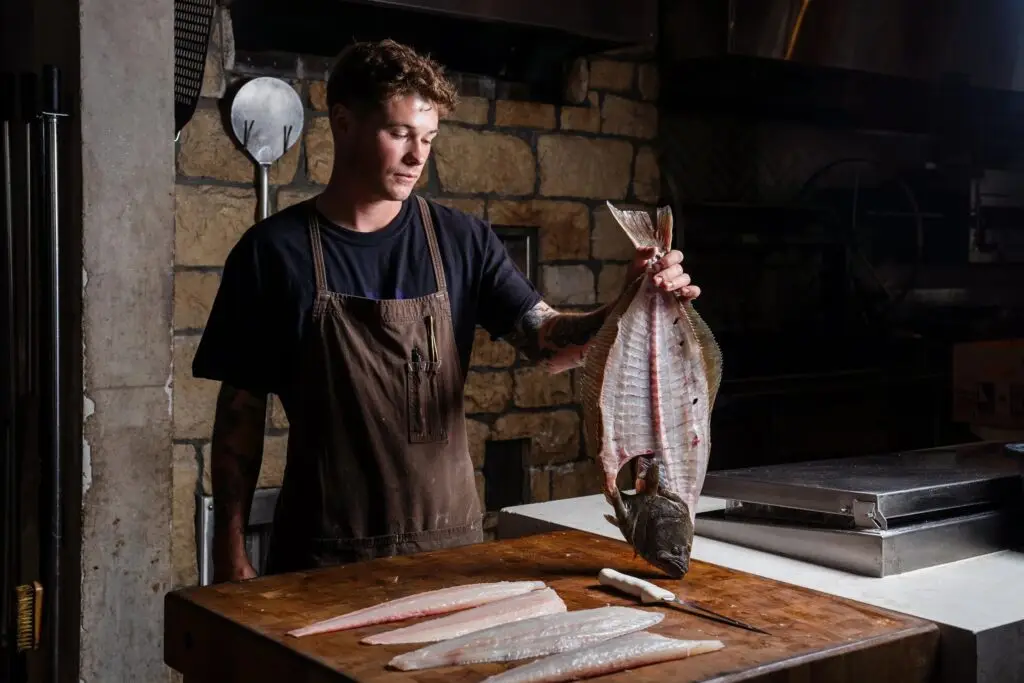
When I arrive at the Encinitas restaurant, I’m ready to talk sustainability, farm-to-table stuff, with Owens. “Did you see the chin on that?” he says of the extra big jiggly chin on the sheephead that just arrived with the day’s fresh catch. I did. It was Jay Leno adjacent.
I learn quickly that he somehow oozes both charm and stone-cold honesty. Maybe he could construct a new dish with chin goo, like he did when he had a bunch of tuna scraps and voila’d it into a smooth and crowd-pleasing ‘nduja. “I want to know what’s in there,” he says.

The instinct to look closer, to dig into what others might discard, says a lot about the chef’s approach. I guide him back to our topic, but he has something else on his mind. “We’re overcomplicating food—what happened to just cooking good food and having fun with it?”
Owens grew up on a farm in Byron Bay, Australia, where sustainability wasn’t a concept you chat about so much as a way of life. Think dirt roads, backyard chickens, pulling vegetables straight from the ground, and a mother who believed that if you couldn’t pronounce the ingredients on a package, you shouldn’t eat what was inside.
Food wasn’t precious or performative. Making it was what you did because you were hungry and that’s still what inspires Owens today. “I like to cook good food because I like to eat good food,” he says.
His approach to sustainability at Herb & Sea began so naturally that it felt just like instinct. “I was just like, ‘Let’s order food from the people who live and work here,’” he says.

And why wouldn’t he when lives in San Diego? Cities all over the world vie for our goods. Our tuna is sent overseas. Our spiny lobsters hit dinner plates in China and Japan. Not to mention California’s producing a third of the country’s vegetables and three-quarters of its fruits and nuts.
“Why would we outsource when it’s all here?” Owens asks.
Sustainability, in this context, is about cooking what exists in abundance, nearby, right now. “I love the local fish here. It’s f**king delicious and San Diego citrus, I mean, it is so f**ing good,” he says.
Instead of importing ingredients, Owens also looks for nearby alternatives. “You can find really cool things in the local waters,” he says, pointing out that stingray cheeks taste similar to scallops.

Whatever he finds in that sheephead chin might just be the next substitute for marrow. But to make this work, it means getting diners amped up about the slightly unfamiliar.
Tasting menus, where diners are completely in his hands, become an opportunity to gently push boundaries. “I’ll serve mackerel, because people think they hate it,” Owens says, noting that the abundant local fish can have some fishiness. “But when it’s fresh, it’s arguably one of the best fish in the ocean.”
He also tweaks the language on the menu so people might feel more compelled to give dishes a try without preconceived notions. He might use “lengua” instead of “tongue.” “Whelk” instead of “snail.” When he puts “stingray throat” on the menu, he disarmingly calls it “skate.”
To reduce waste, scraps aren’t always discarded but rather turned into something new. Sometimes they’re smoked, cured or fermented. Apples going bad turn into apple ponzu. Lemons turn to marmalade, which stretches their usefulness far beyond peak season. “And it’s super tasty on our pizza,” he says.
What makes the food even richer, is the relationships he’s built with farmers. Though it didn’t always feel natural, Owens sought personal connection first. He recalls approaching a fisherman at the Tuna Harbor Dockside Market. “I was awkward,” he says. “I went up to him and said, ‘I like your fish.’”
Owen’s is now so close to his suppliers—like fishermen Ryan Sebo and Joe Daly—that he gets texted pictures of fresh catches right as they flop on the boat. The messages always ask if he wants first dibs. “I say yes to a lot of fish,” Owens says, noting that Herb & Sea can go through 2,000 pounds of seafood a week.

The next evolution of sustainability, in his view, will be chefs working directly with producers such as his alliance with Sebo, cutting out middlemen and purveyors where possible. “It will put more money in the pockets of the people doing the work,” he says.
It will mean that chefs can’t just know their local farmers and producers, but they’ll choose to work with the ones who have the best practices. Dining and sustainability will become much less about the final plate. “It will be more about the impact that plate has on the Earth,” he says.
Ultimately, he believes sustainability doesn’t need to be loud. It doesn’t need hashtags. It just needs to be honest.
“We aren’t saving lives. We’re feeding people good food,” he says.
And yet, in feeding people well—simply, thoughtfully, responsibly—something meaningful happens. Guests leave satisfied. Ingredients are respected. Local ecosystems are supported and food returns to what it has always been at its core: nourishment, pleasure, and a quiet reflection of the place it comes from.
No buzzwords required.
Word of Mouth skips endless scrolling and lets two longtime industry pros choose what members drink each month
If I have to choose between letting a trusted friend pick a bottle of wine or some random algorithm boosted by a faceless entity, I’m gonna go with the human 10 out of 10 times. And when you have friends like Amanda Sarich and Robert Blair, it’s pretty easy to trust their picks are going to be unique, tasty, and probably something I haven’t seen before.
Between the two of them, they have over three decades of experience working in wine. From buying to operations to building wine lists, they’ve worked together, wined together, and now, are going into business together with the Word of Mouth Wine Club.
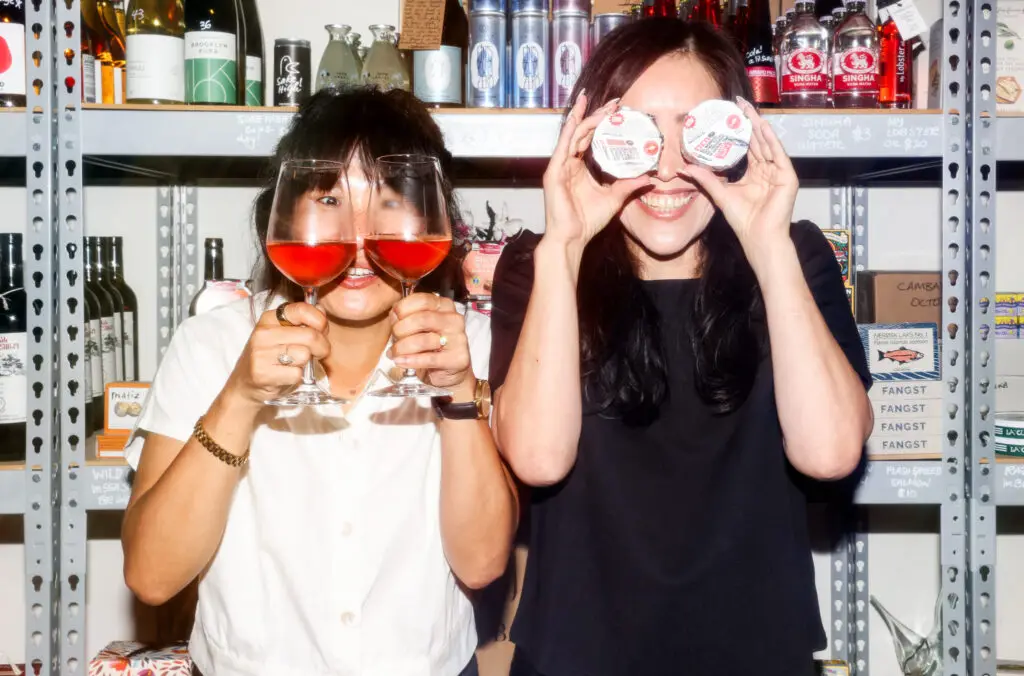
Word of Mouth is a members-only monthly subscription that sends you two handpicked bottles each month, chosen entirely by the duo’s palates. It’s less “build your own box” and more “enjoy the surprise.” “The goal with the wine club was basically to get members that want to turn over their faith in our collections,” Sarich says. “Trust us—we’ll send you the cool stuff.”
The two first met while working at We Olive wine bar and shop in La Jolla, where Sarich joined the opening team in 2011 before eventually becoming a corporate wine director overseeing stores and franchises throughout California. Blair arrived the following year, after stints at Holiday Wine Cellar in Escondido and Alternative Wines in Carmel Valley, later spending nearly a decade helping build Village Vino in Kensington.
When Village Vino closed last November, Sarich had recently returned home to San Diego after years in the Bay Area and brought Blair on board for a project she’s working on—Serafino, a cafe and wine bar slated to open in Mission Hills next fall. But to bridge the gap between Village Vino closing and Serafino opening, the two partners kept the momentum going by launching Word of Mouth.
Blair says once Serafino opens, the team will launch a wine club for that business that will focus on everyday drinking wines from anywhere. Word of Mouth is for us “to geek out a little bit,” he says, with more adventurous or hard-to-find options from small production family farmers. (But as a bonus, Word of Mouth subscribers will become Seraphino’s founding members, receiving exclusive benefits for supporting the project from day one.)
Current memberships include two bottles delivered monthly—usually a red and a white, though sparkling, rosé, orange, or skin-contact wines are always fair game. Members can choose three-month, six-month, or annual subscriptions, and every shipment includes detailed tasting notes, producer stories, pairing suggestions, and fun extras like playlists, puzzles, and the occasional surprise.
The selections often revolve around loose themes. For instance, they used the idea of what wines they’d drink at a summer barbecue to select the two bottles in the July box—which happened to be a pale French rosé and Mourvèdre from the Languedoc-Roussillon region of southern France.
Over the last decade, places like Rumi, Clos, and Vino Carta have helped transform the San Diego wine scene from mainstream labels and a stodgy vibe to eclectic discoveries that break a lot of the former rules. Word of Mouth hopes to continue that evolution.
“I think it’s fostered a more adventurous sense of exploration,” Blair says. “There’s room in San Diego to keep expanding people’s palates.” Sarich agrees. “We’re trying to bring our fun wine palate to the world.” Bottoms up.
Listen Now: The Latest in San Diego’s Food and Drink Scene
Have breaking news, exciting scoops, or great stories about new San Diego restaurants or the city’s food scene? Send your pitches to [email protected].
Beth Demmon is an award-winning writer and podcaster whose work regularly appears in national outlets and San Diego Magazine. Her first book, The Beer Lover's Guide to Cider, is now available. Find out more on bethdemmon.com.
Dockside Night Market returns to Tuna Harbor Dockside Market on August 6 for one night only
Ask any local, human or shark—San Diego summer doesn’t really start until August. After June Gloom lifts and children file back into the halls of academia, our coastline comes to life with more space on the sand and a water temperature that finally rises above muscle-clenchingly frigid.
What better way to welcome Local’s Summer than by celebrating the bounty of the sea? At least, that’s what the gang at Puffer Malarkey Collective (PMC) figured when they launched Dockside Night Market four years ago.
Despite being born and raised in San Diego, Lillian Dang (the event’s co-producer and marketing director for PMC) says she didn’t know how abundant our local seafood scene was until she left and came back. “We are spoiled here,” she says, pointing not only to our plentiful produce from local farms, but also our sea-borne treasures.
When she and her co-producer Lucien Conner (PMC’s director of operations) brainstormed over what they felt the city’s food scene lacked, they realized: “What’s missing is an event that really celebrates the local seafood,” explains Dang.

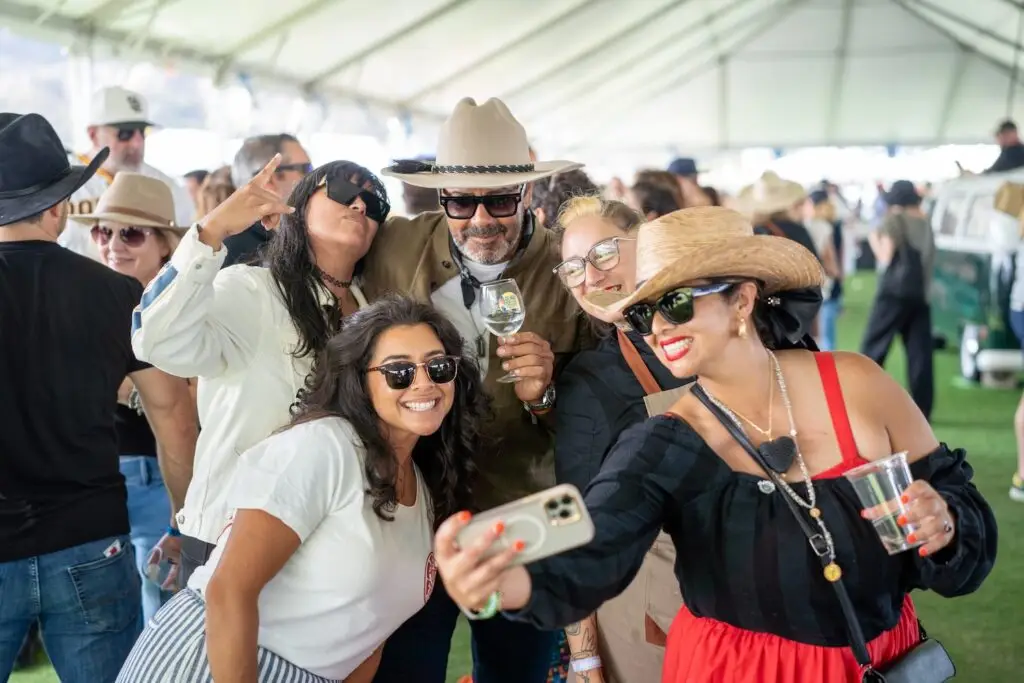
Dockside Night Market is meant to be a “San Diego summer party on the pier,” she says, bringing together local fishermen and local chefs to highlight the fruits of the local seas. Chefs from some of San Diego’s best restaurants clamor to be a part of the 15-chef-max roster, including Travis Swikard (Callie and Fleurette), David Sim (Kingfisher), Aidan Owens (Herb & Wood), Chianne Mallari (Herb & Sea), Tara Monsod (Animae), Jacob Ruck and Eric Bost (Jeune et Jolie), not to mention Mabel’s Gone Fishing, Bica, The Lion’s Share, Nine-Ten, Marisi… you get the idea.
Part of the intrigue is not knowing exactly what seafood will appear—in past years, there’s been uni, bluefin tuna, halibut, black cod, but it ultimately comes down to what’s fresh and what’s available. And with a chef lineup like that, it’s fun to imagine what sorts of surprises await. (If you’d like a small hint, there are calendars of seasonal availability in the area.)
The one-night-only annual event takes place at Tuna Harbor Dockside Market on Tuna Harbor Pier (598 Harbor Lane), the same spot as the weekly fish market every Saturday from 8 a.m. until 1 p.m. or sellout (it’s usually the latter). VIPs get in at 6 p.m. and general admission is 7 p.m., and 100 percent of all ticket profits go to support the San Diego Fishermen’s Working Group, a 501(c)(3) nonprofit created to support the best interests of the region’s commercial fishermen. There’s also four cash bars and a live DJ (but leave the kids and pets at home).
“I think this is an event that can only happen in San Diego,” says Dang. Our city’s culinary cache is on the rise, and our proximity to some of the best fishing waters in the world make it a pretty dynamic duo. “It’s curated, it’s intimate, it’s all the things,” she promises.
Dockside Night Market takes places on Thursday, August 6, from 6 p.m. to 10 p.m. at Tuna Harbor Dockside Market.

Listen Now: The Latest in San Diego’s Food and Drink Scene
Have breaking news, exciting scoops, or great stories about new San Diego restaurants or the city’s food scene? Send your pitches to [email protected].
Beth Demmon is an award-winning writer and podcaster whose work regularly appears in national outlets and San Diego Magazine. Her first book, The Beer Lover's Guide to Cider, is now available. Find out more on bethdemmon.com.
Hypertension is the leading cause of cardiovascular disease and premature death in women
It’s estimated that 44% of women in the U.S. have high blood pressure, also known as hypertension, but many don’t know it. The disease often has no symptoms, and when symptoms do present, they can appear similar to many other conditions. High blood pressure increases the risk for heart disease and stroke, so it’s critical that it’s detected and treated early. And for women at risk of developing high blood pressure, prevention is key. Click here for the basics of high blood pressure and how Scripps physicians at Scripps use screenings not just as a diagnostic tool, but as part of routine preventive care.
For more nutrition, wellness, and healthy living tips, sign up for the San Diego Health newsletter here.