Best BJJ Gi Brands: Our Top 6 Jiu Jitsu Gis Ranked
If you're training Jiu Jitsu (BJJ), you'll need a uniform called a gi. But with so many Jiu Jitsu gi brands out there how do you find the best BJJ gi for your size, style, and training type?
Best BJJ Gi Brands- Our Top 6 Jiu Jitsu Gis Ranked
If you’re training Jiu Jitsu (BJJ), you’ll need a uniform called a gi. But with so many Jiu Jitsu gi brands out there how do you find the best BJJ gi for your size, style, and training type?
In this article we’re going to cover the Best BJJ gi brands on the market today.
Best BJJ Gi Brand: Gold BJJ
San Diego based Gold BJJ is our pick for the best BJJ gi brand. Established in 2016, and located in the Bay Park area of San Diego, Gold BJJ is a Jiu Jitsu brand owned and operated by BJJ athletes.
Their line of gis is popular with both casual Jiu Jitsu enthusiasts, as well as elite competitors. If you check out the podium of any major tournament, you’re bound to see Gold BJJ gis.
Here are a few Gold BJJ gis you might want to consider…
Gold BJJ’s Foundation Gi is the flagship uniform in their lineup. It features a medium weight 450gsm Pearl Weave jacket backed with an interior rash guard liner.
Diving deeper into its design, the 10oz Ripstop pants strike a perfect harmony between durability and flexibility, which is critical for fluid movement on the mats.
Competitors will appreciate this gi’s compliance with IBJJF standards. The medium weight gi material becomes a strategic advantage in this regard: it’s not so heavy to make weight cuts a hassle, yet it’s substantial enough to give an edge in grip battles.
The Foundation Gi is an excellent “jack of all trades” gi. It caters to the rigorous demands of a competitive environment while being comfy enough for everyday training. If you’re looking to invest in a reliable, versatile gi, you can’t go wrong with this one! Check out the Foundation Gi here.
If you’re in the market for a lightweight BJJ gi, the Aeroweave is what you’re looking for. First off, it’s super light – about 40% lighter than the usual pearl weave gi you might be used to. On those hot days in the academy, this is a game-changer.
The 275 GSM jacket combined with the 10oz Ripstop Pants means you won’t be sweating buckets within the first 10 minutes of rolling. Now, if you’re worried about it tearing apart because of its lightweight, don’t. This gi’s been reinforced in all the right places, like the high-stress points, and even comes with a solid EVA Bolstered Collar.
On the design side, it’s sleek and minimal. The G Shield Logo and the ‘For The Journey’ tag on the inner lapel give it a clean look without screaming for attention. Plus, there’s enough room if you want to throw on a few patches.
So if you prefer a gi that is lightweight and durable, the Aeroweave Gi should be your next pickup! Check out the Aeroweave Gi here.
If you’re ever thinking about getting into competition or just want an extra sturdy heavyweight gi, the Valiant is a strong contender.
So, starting with the build: it’s got a 550gsm Pearl Weave jacket and 12oz ripstop pants. Sounds heavy, right? Well, it is, but in a good way. Especially if you’re someone who hates opponents gripping your gi. The weight actually helps in making those grips easier to break.
Here’s a cool touch: the neck liner has a rash guard that features Teddy Roosevelt’s “Man in the Arena” speech. Pretty inspiring stuff when you’re about to hit the mats. And as for the look? It’s neat. You’ve got the option of white-on-white or black-on-black, both giving it a clean, no-nonsense aesthetic.
Now, if you’re thinking of competing, the Valiant Gi is IBJJF compliant, which is obviously super important. But even if competing isn’t your thing, it’s a solid pick for everyday training, especially when it gets chilly.
To wrap it up, whether you’re gearing up for competition or just wanting a sturdy gi for those colder sessions, the Valiant Gi should be on your radar. Check out the Valiant gi here.
Overall, Gold BJJ makes some of the best BJJ gis around. According to a Jiu Jitsu expert known as The MMA Guru, pricing on Gold BJJ gis is very competitive. They aren’t the cheapest gis on the market, but for the quality level they deliver they are priced reasonably when compared to other top BJJ gi brands.
Best BJJ Gi Brands: Runner Ups
While Gold BJJ is our pick for the best BJJ gi brand, there are several other brands that are worth mentioning – some of which are also based in our hometown of sunny San Diego!
Here are a few other brands that make some of the best BJJ gis you can find.
Fuji
Since 1969, FUJI Sports has been synonymous with unparalleled quality and commitment to the world of martial arts. While Fuji started off as a Judo brand, they’ve expanded their product line into Jiu Jitsu gear and do make some great BJJ gis.
FUJI’s commitment isn’t just about top-tier products; it’s about crafting gear that’s battle-tested. Every product under the FUJI name has been subjected to the most rigorous training sessions and competitive scenarios.
This ensures that when an athlete chooses FUJI, they’re not just selecting a product; they’re becoming part of a legacy that stands resilient on the global martial arts stage.
Origin
There’s something undeniably powerful about a brand that stays true to its roots, and Origin epitomizes this ideal. Proudly bearing the label “Made in America. Without Compromise,” Origin takes its commitment to craftsmanship and authenticity to the next level.
With its establishment in Farmington, Maine, Origin’s journey began in 2009 under the vision of Pete Roberts. But Pete wasn’t just aiming to create another “fight brand”; he envisioned a Brazilian Jiu-Jitsu lifestyle brand tailored for the aficionados of the sport.
By 2011, Origin had taken its first steps into the industry, and by 2013, it showcased its dedication in an unprecedented manner. Roberts, with a band of supportive friends and family, embarked on an audacious endeavor, clearing a forest to raise a timber-frame factory. This was not just any factory but a beacon of Pete’s dream to produce the world’s finest Brazilian Jiu-Jitsu gear.
While Farmington remains its nerve center, Origin’s influence and range have spread far and wide. Their offerings have expanded from exclusively BJJ gear to encompass a broad spectrum: from streetwear to workwear, from rugged footwear—the first to be manufactured in Franklin County, Maine in three decades—to outerwear. They’ve even delved into the realm of nutritional supplements with their JOCKO FUEL line. And while their products diversify, one thing remains consistent: an unwavering commitment to creating heirloom-quality, durable goods that span from the forests of Maine to North Carolina.
The meticulous attention to detail and passionate drive that stems from 15 years of branding experience makes Origin not just another company vying to be the best BJJ gi brand in the market, but as they proclaim, “America’s next big brand.” In an age of outsourced manufacturing and fleeting trends, Origin stands as a testament to home-grown quality and the enduring spirit of American craftsmanship.
Kingz
Since its inception in 2011, Kingz Kimonos has consistently pushed the envelope to deliver some of the finest Jiu-Jitsu gis in the market.
Another brand that hails from our stomping grounds of San Diego, California, this brand comes with over three decades of hands-on experience on the mat, combining technical know-how with personal passion.
Kingz gis are not just comfortable to wear but are crafted with a resilience that stands up to even the most aggressive grips and pulls. The brand promises not just durability but also affordability, ensuring that quality doesn’t come with an exorbitant price tag.
Whether you’re a seasoned pro or a newcomer to the world of Brazilian Jiu-Jitsu, Kingz Kimonos offers a blend of function, flair, and fiscal sense, making them a worthy contender in the realm of top-tier BJJ gis.
Final Thoughts on Selecting the Best BJJ Gi Brand
Choosing the right Brazilian Jiu-Jitsu gi is a vital decision for every practitioner, from the beginner just stepping onto the mat to the seasoned pro preparing for their next competition. The gi isn’t just a piece of clothing; it’s an extension of a martial artist, affecting performance, comfort, and confidence.
While brand reputation can be a reliable indicator, it’s essential to understand what makes a gi exceptional. First and foremost, the material quality is paramount. A BJJ gi must withstand rigorous training sessions, so durability is a must. Look for gis made of strong, yet breathable fabric to ensure longevity without compromising comfort.
Fit is another crucial factor. A well-fitting gi can make a significant difference in your movement and flexibility. Ensure the gi isn’t too loose, which might give your opponent an advantage, but also not too tight, which can restrict your motion. Many brands offer size charts and guidelines, so take the time to measure and pick the right fit.
Design and aesthetics might be subjective, but for many, a gi is a statement of personal style. Whether you prefer minimalist designs, unique patches, or vibrant colors, select a gi that resonates with your personality.
Moreover, consider price and value. While it might be tempting to go for the cheapest option, remember that a gi is an investment. Sometimes, spending a bit more upfront can save money in the long run if the gi lasts longer and performs better.
Gold BJJ, our pick for the best BJJ gi brand, excels in all of these categories. Whether you’re looking for a lightweight everyday gi, or a battle tested competition gi, they’ve got you covered. Check out their full line of Jiu Jitsu gis here.
.
Studio S
OCTOBER 22, 2026
Milan Design + Build Helps San Diegans Remodel With Confidence
The San Diego home remodeling company works on full homes, kitchens, bathrooms, home additions, ADUs, garages, landscapes, and hardscapes.
Most homeowners want two things before they commit to a remodel: a realistic sense of cost and a clear picture of what the finished space will look like. Milan Design + Build helps deliver both through its online remodeling estimator and personalized design consultations, supported by a showroom experience and 3D renderings.
“The online estimate gives homeowners a starting number in about a minute, and the showroom and 3D renderings let them see materials and layouts before anything is built,” says David Noriani, CEO of Milan Design + Build. “Keeping design, permits, and construction with one team helps us manage expectations and keep everyone working toward the same vision.”
Courtesy of Milan Design
Modern design is a particular focus for Milan, with an emphasis on clean lines, natural light, functional layouts, and carefully selected materials. The team adapts each design to the homeowner’s lifestyle and the character of the property. Milan Design + Build combines thoughtful design with construction expertise, creating spaces that are as functional as they are beautiful.
The online estimator covers kitchen remodels, bathroom renovations, full-home remodels, and ADU construction. At Milan’s showroom on Carroll Road, visitors can review real materials, finishes, and design options, meet the design-build team, and discuss project scope, budget, and timing. Consultations can also be held virtually for homeowners who prefer to start remotely.
At Milan Design + Build, one integrated team works on the entire project. Design and construction aren’t divided between separate firms. The process begins with a consultation and feasibility review, followed by design, space planning, and 3D renderings developed from detailed measurements and digital scans. The team also coordinates architectural plans, structural engineering, city approvals, and material selection, with construction overseen by a dedicated project manager.
Homeowners can explore their remodeling options, get an initial estimate, or request a design consultation at MilanBuild.com.
Philanthropists and Scientists Join Forces for a Bold $55 Million Campaign
La Jolla Institute for Immunology (LJI) is going public with a bold bet: a $55 million campaign to propel medical research into a new era. The Campaign for LJI will fuel discovery, empower scientific innovation, and expand the impact of immunology on human health.
The Institute quietly kicked things off in 2023, guided by its Board, campaign volunteers, and early believers. Nearly 80% of the $55 million goal is already in hand. Now LJI is opening the doors and inviting the whole community to carry their visions across the finish line and back discoveries that change how LJI researchers understand, treat, and prevent disease.
And there’s a bonus. To mark the public launch, LJI Board member and Campaign Honorary Chair Anthony R. Carr is offering a special matching gift so new donors can double their impact. Full details are here.
The Promise of Immunology
Immunology has already rewritten human history. Advances in immune science helped wipe out smallpox, pushed polio to the brink of elimination, and revolutionized how we prevent and treat infectious disease. Today, immune-based therapies are opening doors for patients with cancer, autoimmune disorders, and other serious illnesses once considered untreatable.
For nearly four decades, LJI scientists have stood on the front lines, driven by one insight: the immune system shapes disease in virtually every organ in the body. By decoding how the immune system works and how to harness it to prevent and treat disease, LJI researchers are chasing the Institute’s ultimate mission: Life Without Disease®.
To make that mission real, the Institute pairs world-class scientists with cutting-edge technology, speeding up breakthroughs and turning discoveries into transformative new therapies that ease suffering worldwide.
The Campaign for LJI supercharges that momentum, uniting the vision of the Institute’s scientists with a community that believes in research. Focused on advancing LJI’s most promising areas of study, the campaign aims to help build a future free from the burden of disease, a goal that demands bold ideas, lasting partnerships, and generous philanthropic support.
The Campaign for LJI will advance research across three critical pillars:
1. President’s Priority Fund. Flexible, unrestricted dollars let big ideas move now, not later. Scientists can launch high-risk, high-reward projects, bring experts together across disciplines, build transformative technologies, and train tomorrow’s scientific leaders.
2. Center for Sex-Based Differences in the Immune System. Male and female immune systems don’t respond the same way, and LJI researchers are tracing the fundamental differences down to individual cells and molecular pathways. The Campaign will speed up this pioneering work, revealing hidden drivers of disease and paving the way for more precise, biologically informed therapies for autoimmune disorders, infectious diseases, cancer, and beyond.
3. Center for Vaccine Innovation. Immunologists, bioengineers, and vaccine experts are teaming up to design the next generation of vaccines and immune-based therapies. With donor support, LJI scientists can engineer longer-lasting and more personalized vaccines, pinpoint the cellular mechanisms driving protective immunity, and refine delivery methods to prevent autoimmune disease and treat cancer.
A Lasting Impact
As the campaign enters its public phase, LJI welcomes new partners and supporters to join this landmark initiative. Community support is essential to accelerating scientific discovery, and there are many meaningful ways to help shape the future of immunology. Donors may direct their gifts to any campaign priority or other area of interest. As a comprehensive campaign, all gifts to LJI count toward the campaign goal, regardless of designation. Join the campaign, and multiply your impact with our limited-time matching opportunity.
Shiley Center for Orthopaedic Research and Education at Scripps Clinic recently received a $12.7 million grant from the California Institute for Regenerative Medicine to investigate whether they can transform stem cells into tissue that can repair some types of knee injuries. Currently, if a patient has lost most, if not all, of the cartilage in their knee, then their doctor will recommend a total joint replacement. Joint replacement is safe and effective, but patients who’ve only lost part of their cartilage often don’t qualify. A stem cell-based treatment would provide these patients an option that doesn’t involve donor tissue. Click here for more on the preclinical trial process.
For more nutrition, wellness, and healthy living tips, sign up for the San Diego Health newsletter here.
The recently opened Lusardi Tower at Scripps Memorial Hospital Encinitas is a state-of-the-art addition to the hospital staffed by dedicated team members who’ve helped make Scripps one of the nation’s leading healthcare systems. Complementary to that medical excellence, the Lusardi Tower also represents the latest expansion of the Scripps Arts for Healing Program. The philanthropic initiative strategically places nature- and community-based artwork throughout the hospital to support health and well-being. Both Scripps Encinitas and Scripps Memorial Hospital La Jolla have healing arts programs as part of new building projects and growth on the campuses. Click here to read more about the Healing Arts Program and how residents from a nearby retirement community showed their support.
For more nutrition, wellness, and healthy living tips, sign up for the San Diego Health newsletter here.
From century-old Craftsman homes to vegan fantasy bars, dive bars, and a tiki room built for exactly two people, this is one of San Diego’s great little neighborhoods
You may not realize it, but Balboa Park is bigger than Central Park (in fact, 1.5 times larger). Pressed right up against its southeastern edge is a little architecture farm built on old trolley bones, where houses look like someone was collecting architectural styles and local businesses are still run by people who seem personally invested in keeping this place interesting.
This is South Park.
To understand why it feels the way it does today—less like one commercial strip and more like a handful of tiny villages—you have to go back to the trolley.
How the Trolley Built South Park
The land that became the original South Park Addition (the subdivision’s original name) was surveyed in 1870 and officially filed in 1890, but the neighborhood really started becoming a neighborhood in the early 1900s. The Bartlett Estate Company began developing and marketing the tract in earnest around 1906, pairing lots and new homes with something extremely useful if you lived outside Downtown in the horse-and-buggy era: an electric streetcar.
On May 1, 1906, the South Park and East Side Railway made its first trip. Developers didn’t just build near transportation; they helped pay for the transportation, then used it to sell the dream. Downtown had industry, noise, and congestion. Out here were palms, sidewalks, utilities, room to breathe and a four-cent ride back to the city.
It worked. Homes began filling in around the streetcar route, and little commercial clusters grew around the places where people got on and off. That transportation pattern is still written into South Park’s geography. Some of the neighborhood’s odd street geometry is also due in part to the trolley—the old line cut across parcels instead of politely obeying the grid, leaving behind pieces of land that later businesses learned to build around. Places like Station Tavern sit on the former easement and station site of San Diego’s No. 2 trolley line.
Then San Diego went big for the 1915 Panama-California Exposition in neighboring Balboa Park. The exposition transformed much of the park and helped push the city through another burst of building and growth. South Park was right there to absorb some of that momentum.
And the people building houses here had taste.
Walk the residential streets now and it can feel like somebody planted an architectural sample garden: Craftsman, Prairie, Mission Revival, Tudor Revival, Spanish Colonial Revival. Creedence Clearwater Revival. All the revivals. The neighborhood includes work by Irving Gill, one of the defining architects of early modern California; Gill-designed Prairie homes still stand along Granada Avenue.
The city formally designated the South Park Historic District in 2017, recognizing roughly 400 properties and a period of significance stretching from 1906 through 1949. In other words, a lot of what makes the place feel old is actually old.
While the trolley eventually disappeared, the basic idea behind it didn’t. South Park is still a neighborhood organized around little pockets of human activity: a couple blocks where you can buy a record, drink a beer, find a 60-year-old lamp, eat a vegan burger beneath gothic beasts, browse a bookstore, and walk home past a century-old Craftsman.
The 30th-and-Fern area may be the clearest example. Several surviving buildings there date to South Park’s early development, including the old Fire Station No. 9, Rose Grocery building, and Burlingame Garage. What began as infrastructure for a young streetcar suburb became the neighborhood’s commercial heart.
That history is also partly why buying a house here can be competitive. There isn’t some endless supply of vacant land waiting around the corner for another subdivision. Much of the neighborhood filled in generations ago, and the architecture itself is part of the appeal.
San Diego Mag’s been documenting the city for 78 years. And we’ve been looking for a partner who loved the city enough to help us tell its stories. Redfin is that partner. They’re helping us tell the story of some of the city’s most unique neighborhoods. They launched Redfin Early Access this year to get their people in first and to see certain coming-soon and exclusive listings on Redfin before they appear on other major real-estate sites.
First up: South Park.
Here are some of the people and places worth knowing here:
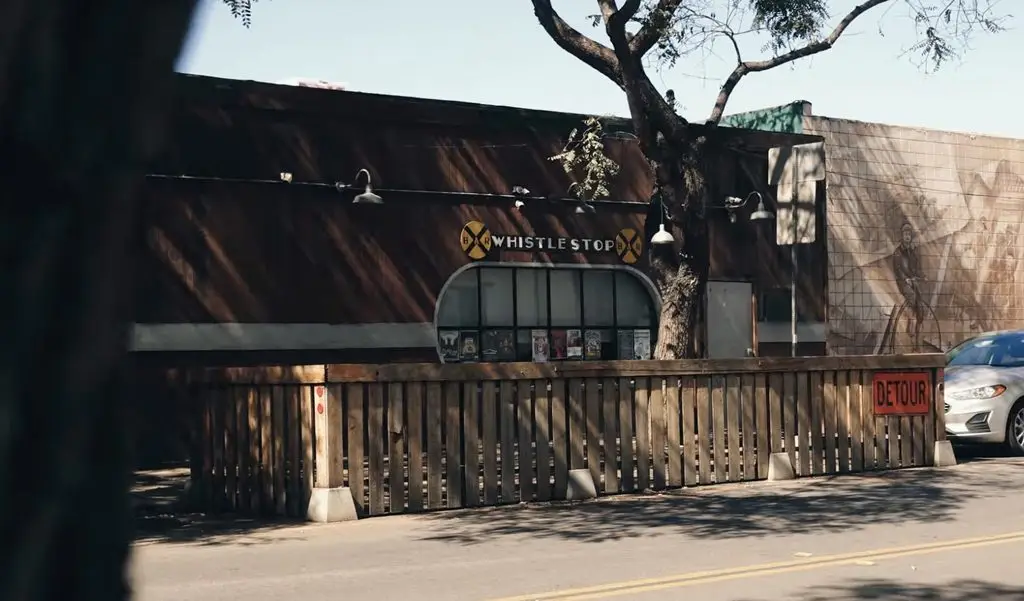
Whistle Stop Bar
Big Kitchen Cafe
Start with Judy “the Beauty” Forman, because it’s difficult to explain South Park without her. The former social worker bought Big Kitchen in 1980 and turned a neighborhood breakfast joint into a gathering place for artists, musicians, activists, politicians, eccentrics, and pretty much anyone who needed somewhere to belong. As Judy puts it, “I built this for people who others passed over.”
One of those people was a young single mom named Whoopi Goldberg, who worked as a dishwasher here before the WhoopiGoldberg part of her career happened. Today Big Kitchen still serves breakfast and lunch Thursday through Monday.
3003 Grape Street
Whistle Stop Bar
Whistle Stop reopened in 2001, right as South Park’s little independent-business ecosystem was finding a new generation. Owner Sam Chammas—also connected to Live Wire and, later, Station Tavern—helped turn it into the kind of neighborhood bar where the calendar can jump from a DJ night to live bands to some strange communal event nobody at a normal sports bar would propose.
The room still has that laid-back, slightly sweaty house-party quality. Check what’s happening before you go, because Whistle Stop changes personality depending on the night: sometimes neighborhood beer, sometimes everyone dancing beneath the disco ball like work tomorrow was canceled.
2236 Fern Street
Station Tavern
Station Tavern may be the most literal example of old South Park becoming new South Park. It opened in 2009 on land once crossed diagonally by the No. 2 trolley line, and architect Lloyd Russell incorporated that history into the design rather than pretending the weirdly shaped lot wasn’t weirdly shaped. The project won the San Diego Architectural Foundation’s Grand Orchid Award the same year it opened.
Sam Chammas built the place as an open-air burger-and-beer spot with big communal tables, a backyard, room for kids, and room for dogs. It still works exactly that way: get a burger, get the tots, let everybody spread out, stay awhile.
2204 Fern Street
Kindred + Throne Room
Kindred arrived in late 2015 looking nothing like the beige-and-leafy vegan restaurant stereotype. The place went full gothic fever dream—heavy music, wild cocktails, decadent plant-based food—and eventually collected national vegan accolades plus local Restaurant of the Year and design honors.
And in 2026, it got even weirder. Hidden behind a chain-mail passage inside Kindred is Throne Room, a medieval-fantasy cocktail chamber whose mythology grew out of a Dungeons & Dragons-inspired map the Kindred team created for a 2017 Coachella pop-up. The 90-minute experience has scroll menus, plant-based mezze, cocktails and zero interest in pretending restaurants need to behave normally.
1503 30th Street
Bad Madge & Co.
Vinyl Junkies Record Shack
Vinyl Junkies has good music-scene DNA. Founder Eric Howarth previously ran indie label Hi-Speed Soul, whose roster included acts like Nada Surf and Swervedriver, then teamed with Casbah owner Tim Mays after the pair had spent years putting on Vinyl Junkies record swaps.
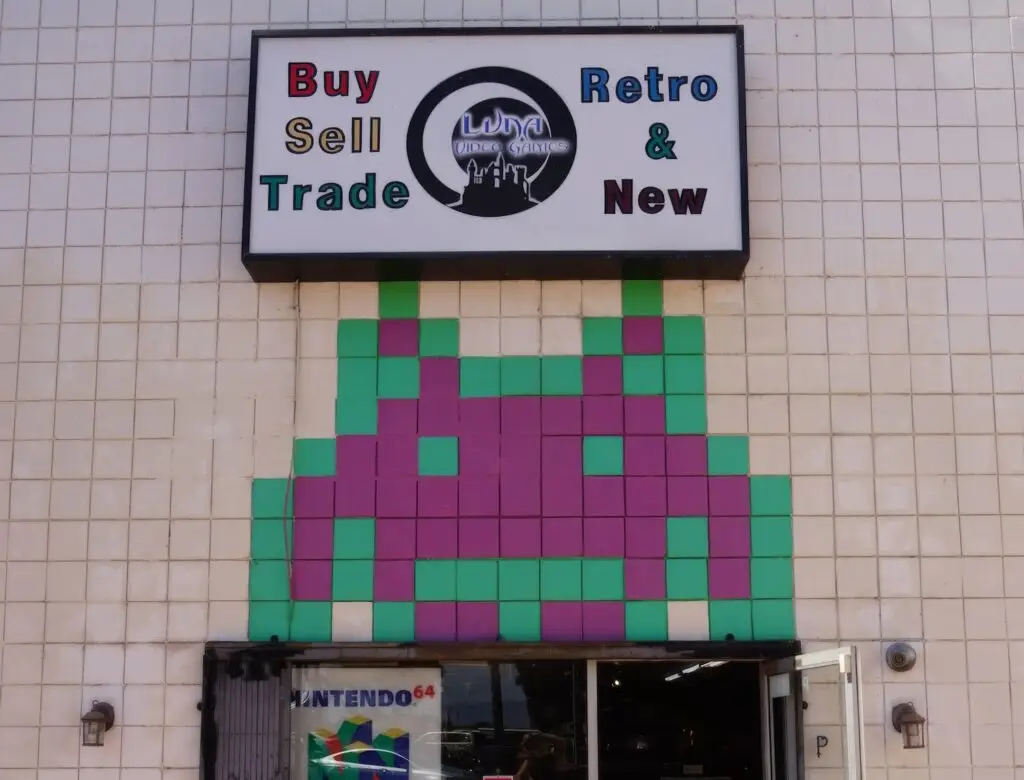
They opened the South Park brick-and-mortar shop in 2017, and it remains a buy-sell-trade temple for people who understand that owning music on a physical object is irrational in exactly the right way. Go flip through the new arrivals. Leave holding something you had absolutely no intention of buying.
2235 Fern Street
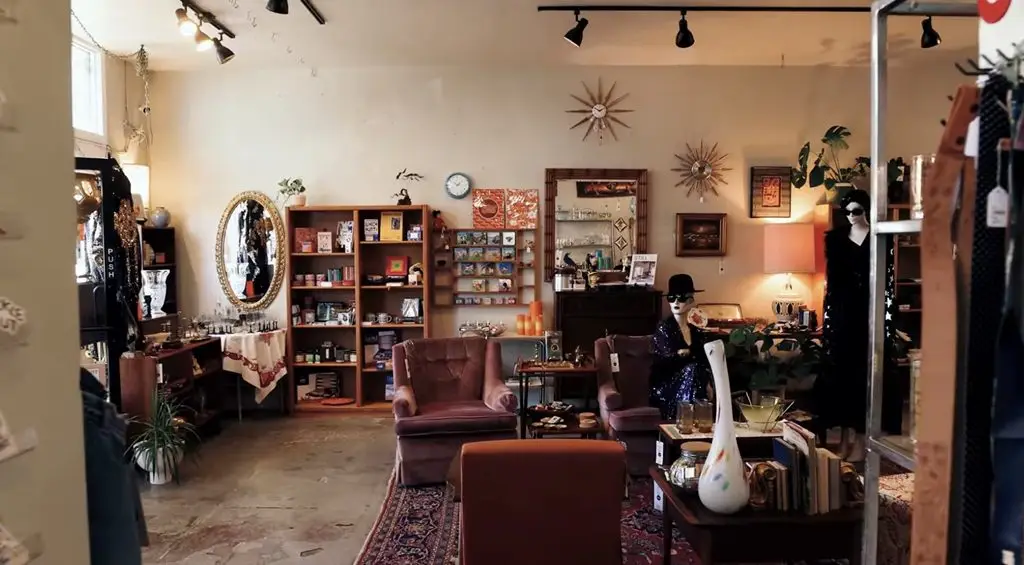
Bad Madge & Co.
Bad Madge is what happens when “vintage store” doesn’t quite explain the situation. Owner Tanya McAnear and her team fill the shop with furniture, clothing, barware, records, art, jewelry, collectibles, and various objects that seem like they may know things about their previous owners. The shop opened in 2011 and has made reuse and upcycling part of its identity ever since. Go in without looking for anything specific—specificity will only slow you down.
2205 Fern Street
Thread + Seed
Across the neighborhood’s vintage-and-vinyl universe sits Thread + Seed, a local boutique built around clothing, denim, gifts, and personal styling. Its South Park shop has an especially deep denim program—petite, tall, wide-leg, straight, flare—and the store also offers one-on-one styling built around color and body type. In other words, this is where you go after deciding the jeans currently on your body have betrayed you. South Park understands that sometimes personal renewal begins with pants.
2220 Fern Street
The Book Catapult
Seth Marko started The Book Catapult as a book blog in 2006. In 2017, he and his wife, Jennifer Powell, turned it into an actual bookstore in South Park, specializing loosely in fiction, local interest, and children’s books while maintaining the more important bookseller skill: putting something into your hands that you didn’t know you needed.
There are staff picks, author events, signed books, and the dangerous possibility of walking in for one title and emerging with four. Because no one ever died thinking, “I shoulda read less.”
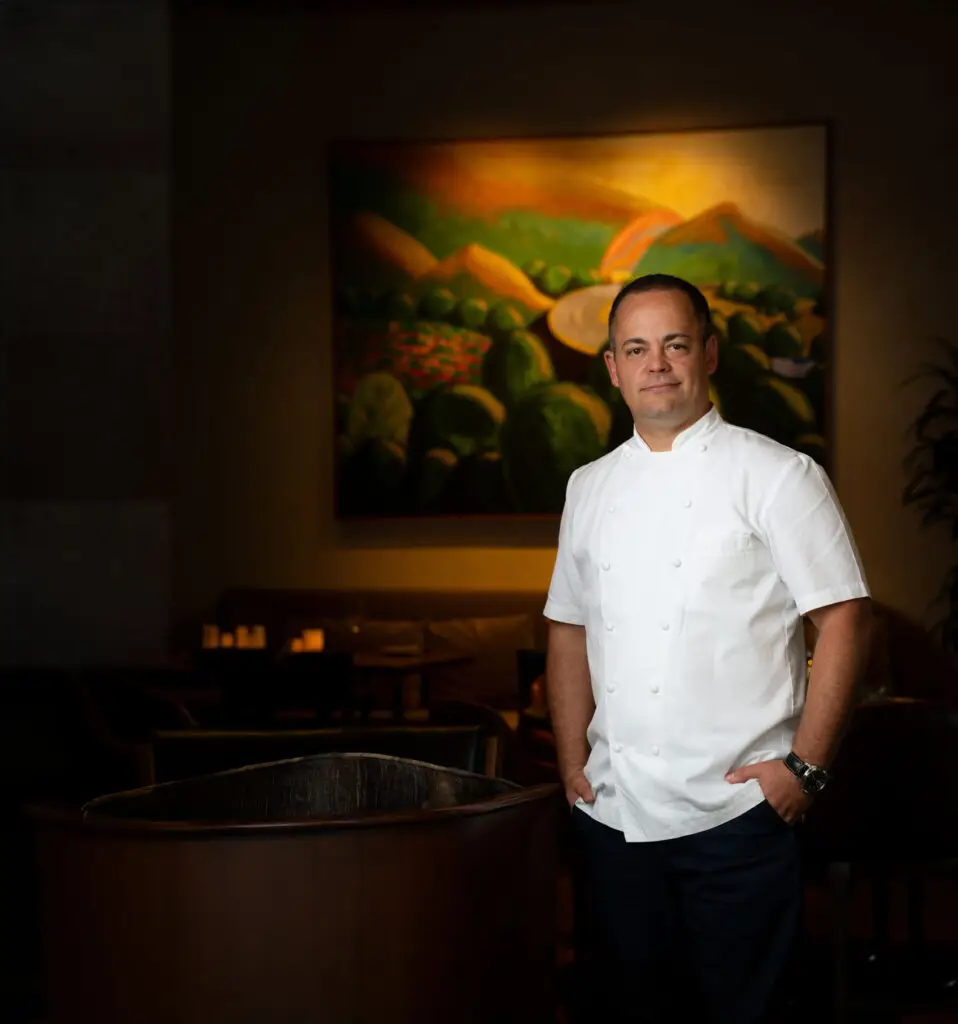
Chef Roberto Alcocer showcases all that Mexican cuisine and culture has to offer at Oceanside’s Valle. The Michelin-guide recommended restaurant takes inspiration and techniques from all over Mexico—with a heavy Baja influence—and blends them with local San Diego ingredients to create original and delectable contemporary Mexican cuisine. The seasonal tasting menu allows Chef Alcocer to experiment with the freshest available ingredients, creating dishes that defy guests’ expectations, while the wine list features more than 100 labels from Mexican artisans. Even the restaurant’s walls are a celebration of Mexican culture, all decorated with work from artists of Baja.
“My favorite part of being a chef of Valle is being able to showcase the Mexico that I know to everyone who visits,” Chef Alococer says. “Not only through the food, but with the design, culture, and welcoming service.”
Try This!
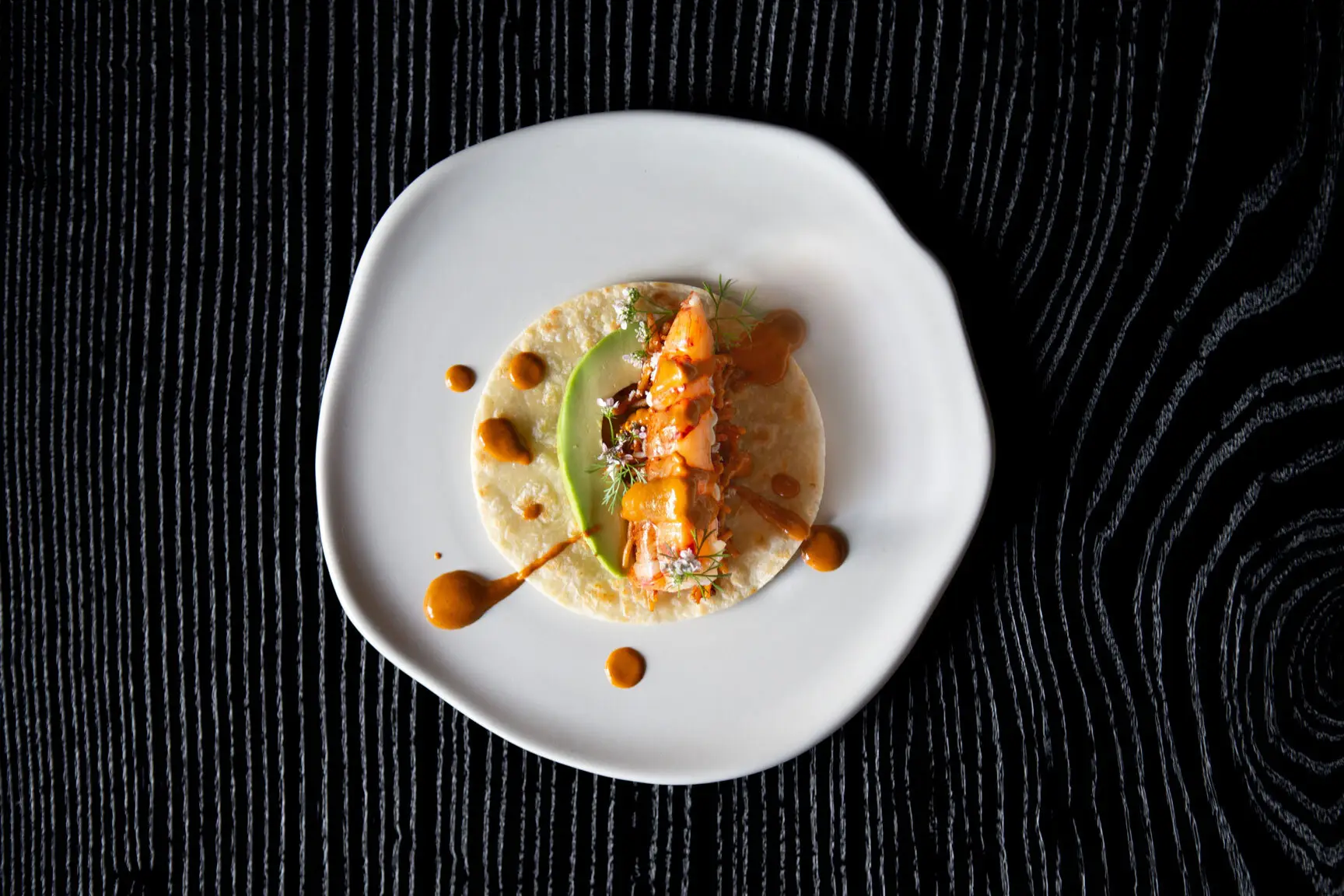
Lobster Taco: Flour sourdough tortilla with lobster shell bisque and local red spiny lobster
Valle
222 North Pacific Street, Oceanside, California 92054 866-723-8906 | valleoceanside.com