

Food & Drink
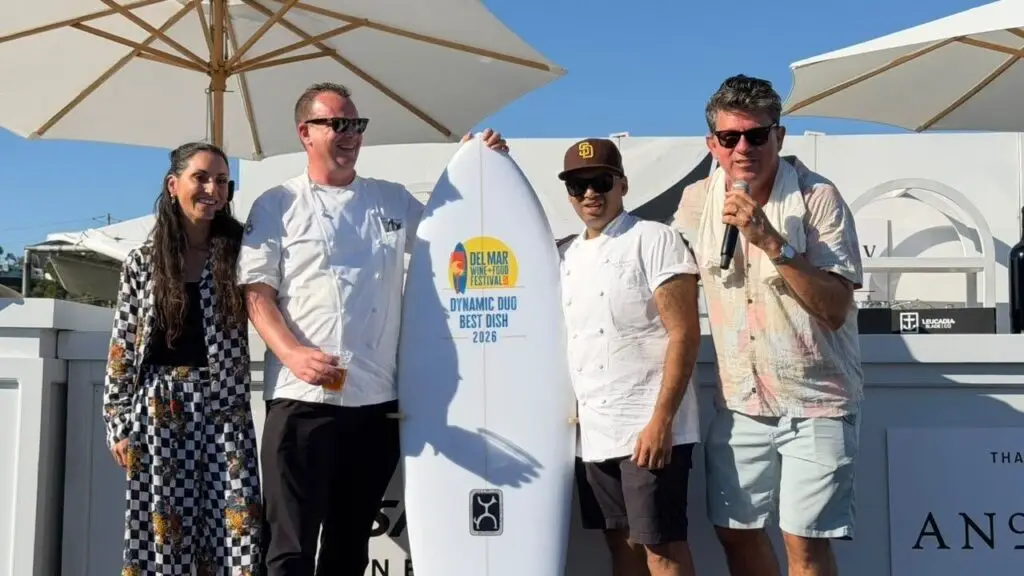
Meet the Del Mar Wine & Food Festival’s 2026 Culinary Comp...
Read article

Featured articles
Food & Drink

Food & Drink

Food & Drink
Featured articles

Features

Features
Everything SD
Featured articles

Things to Do

Things to Do
Things to Do
Featured articles

podcast-ep

podcast-ep
podcast-ep
Featured articles
Features
Features

Features
Featured articles
Food & Drink
Food & Drink
Food & Drink

Step aside, Miss Bridget Jones—the host of DataCrunchers speaks on blogging, innovation, and the economic value of Big Data
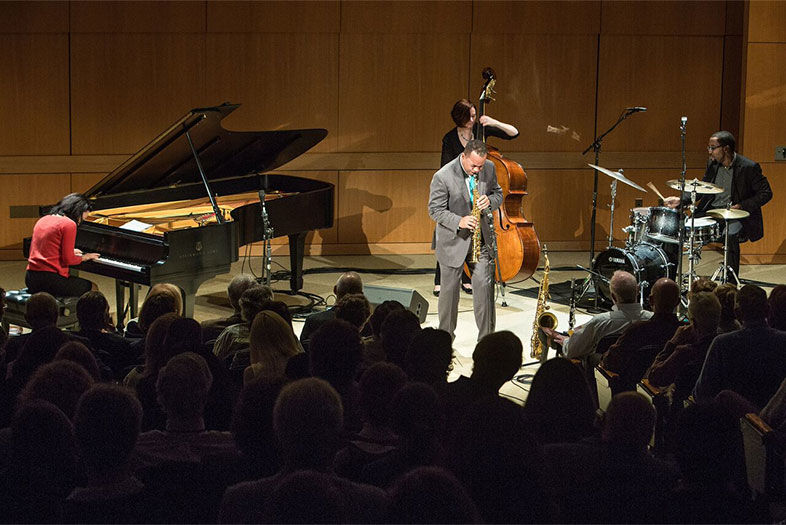
“Social media is all about influence”, explains Steve Todd to a room full of students and entrepreneurs at the Gordon Engineering Leadership Center last Friday afternoon. Todd, VP of Innovation at EMC, shared the pros and cons of writing one of the top innovation blogs. He recalls typing away in the balcony of Radio City Music Hall in New York, where he traveled to report on an innovation conference. “It was at this event that I really built a network outside of just engineering.” He linked up with another blogger and soon his work was being published on their site, increasing his readership exponentially. Todd’s blog and videos get hundreds of hits weekly. Already a world-renowned expert with two books under his belt, Todd’s blog has helped solidify his reputation as an expert on innovation by bringing it to an entirely new audience.
A brave student raises his hand to ask about a negative experience blogging. Todd candidly tells of the time he wrote about his company and got a major slap on the wrist. Woops. Scooping privileged info on the World Wide Web for a company you work for—not a good move. Although the story had already been released in a different publication, in the eyes of the company Todd had divulged too much. “Social media is a big stage and once you hit that publish button,” well, anyone in the world can read it. Spidey said it best, “With great power comes great responsibility.”
When it comes to putting yourself out there in the blog-o-sphere, it seems the pros clearly outnumber the pitfalls. Todd spoke to us about his journey and how he broke the mold. “Software engineers typically aren’t wired to be publicly visible,” yet Todd’s example proves a recipe for success where the opportunities and experiences around the globe are limitless. Just tap into the archives and see the places he has traveled and written about or view a few of the videos he has streaming on YouTube. My favorite DataCrunchers video? The one where he gets to push the button and blow up a Data Center to explain EMC’s V-Plex Product. The big take away Todd revealed for these emerging leaders? “My value has increased as my versatility increased.”
Todd started out as a software engineer. After “putting in his time” establishing a good reputation and earning the trust of his company leaders, he decided to push the boundaries a bit and add more layers to his skill set. On his CV, Todd has the following listed as his expertise: EMC Fellow, VP of Strategy & Innovation at EMC, Inventor/Intrapreneur, Collaborator, Writer. Yep, “intrapreneur”—it’s not a typo. What the heck is an intraprenuer? In essence, they are an innovative thinker within a corporation who gets to transform an idea or project into a profitable venture for their company. This intrapreneur leads, does not necessarily manage, and has the resources of his large corporation at his disposal. Shit, man. Sign me up (says the small business owner). Todd has clearly leveraged his entrepreneurial skills, business savvy, and appetite for adventure within his company to establish himself as an expert in so many mediums. Todd encourages the students and businessmen in the room to take a few years to establish rapport and accountability in a company. “And once that relationship is solid, carve out some time in your day to add new skills such as leveraging LinkedIn or social media.” Most importantly, “be sure that the skills that you are adding align with your company.” His advice? “Listen to what the execs are talking about at the office.”
Todd does not miss the mundane routines associated with engineering. He points that he enjoys the energy that comes with building and creating new products. But what really does it for him, what he truly loves, is delivering that product to the world. “Nothing compares to building a product with a team and having it be used in society somewhere.” An example of one of Todd’s triumphs is the CLARiiON product he helped to build at Data General. This product was ultimately acquired by EMC and resulted in billions of dollars in revenue.
Asked about the future, Todd would put all his chips on the economic value of Big Data. “Some believe wars will break out over this.” Yikes. But what’s any company’s biggest asset? Their Rolodex. Todd gives the case study of Caesar Palace’s bankruptcy. In the end, it was their Customer Loyalty Rewards database that was worth one billion.
Bravo UC San Diego for always bringing top-notch speakers that help encourage our future engineering leaders to be well rounded individuals. And step aside Miss Bridget Jones. Intrapreneur, blogger, speaker, and host of DataCrunchers—Steve Todd, you are an inspiration and I’m your newest fan.
Farmers Insurance Open PGA Golf Tournament at Torrey Pines
Del Mar has the Races. On the Mesa, we’ve got the Farmers Insurance Open PGA tournament. Why do I picture the scene from Evita where they are all dressed to the nines, white gloves and hats, drinking tea while watching sport? Headed to Torrey Pines today to prove my crazy presumption a total misconception. Stay tuned for the insider scoop next week. Tournament runs through Sunday and Main/Grand Entrance to tourney is smack in front of the Sanford Consortium. Should be a fun weekend. Fore!
January 27-31, Torrey Pines Golf Course
An Entrepreneur’s Journey: Different Paths and Perspectives
My homeboy Mark Dilorio, President and CEO of Magne Sensors Inc, will be headlining tonight’s TIE Southcoast event over at Janssen. Raj Krishnan, CEO Biological Dynamics, Yannis Papacounstantinou, Professor of Computer Science and Engineering at UC San Diego, and Harvinder Sahota, Inventor of the Perfusion Balloon Angioplasty, round out the panel. Seems like everyone is talking about the different paths and colorful journey of an entrepreneur these days.
January 28, 5:30-8:00 p.m., Janssen Research & Development, LLC
JLABS Meet with… RCT Ventures
Wanted to give you a heads up on this killer opportunity next week for some info and one-on-one face time with the big dogs. If you are pushing medical devices, therapeutics, platforms and tools in the area of Biomed, then be sure to check out the full scoop on JLABS upcoming Meet with RCT Ventures. One of RCT Ventures’ most successful exits includes Therapeutic Human Polyclonals acquired by Roche (oooh, I like their eye cream). $200 million baby in assets. Sign up now for the private meeting. Get ‘er done.
February 4, 10.30 a.m.-1 p.m., JLABS San Diego
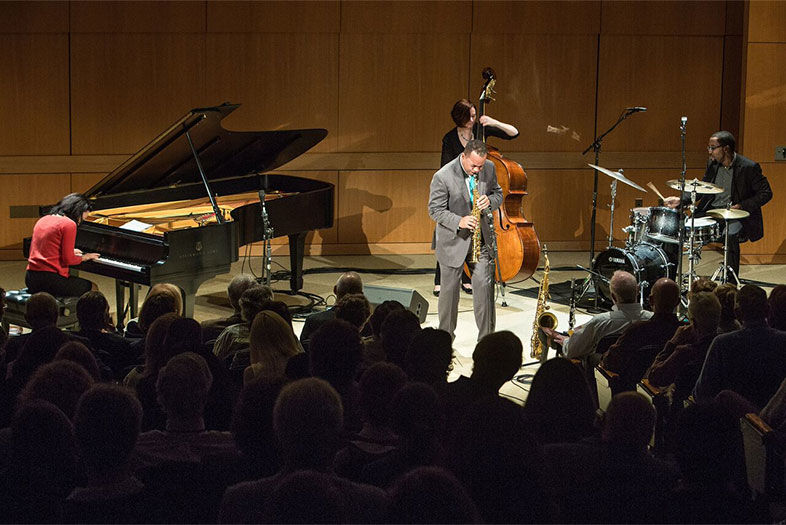
One, two, ah ah ah ah… Jazz legend Victor Goines counted in his Quartet to a brilliant set at Sunday’s Salk Science & Music Series. Every performance thus far in the 2015-2016 Season has been exquisite. But I have to say… Sunday’s performance was utter perfection. And FUN! What a hoot watching the crowd slowly get into the music, letting go with each selection, tapping their feet, beginning to sway. This series pulls philanthropists together with the scientists and Mesa community in such a brilliant way. And I am now a believer. Music truly does open up the brain waves. I understood the science lecture given by Shrek in its entirety! Okay, maybe he dumbed it down a bit for us no-speak-science listeners sprinkled in the crowd. But seriously, Salk brings its scientists the very best here, combining research with the musical arts.
For a moment we thought the pianist, Helen Sung, who played one of the most jaw dropping solos I have ever heard at a jazz concert, stole the entire show. The crowd even got a bit rowdy with excitement for a second, they were so pumped. But then the graceful bass player, Emma Dayhuff, whom Goines joked is from Montana of all places, held her own with a commanding solo as well. Greg Arty Jr. on the drums threw out a few “yeahs” during her solo and then brought down the house when it was his turn to jam on the drum set. I snuck in my own “yeah” during the drum solo so I could feel the groove while not disturbing any neighbors. My personal favorites at this series were “Skylark” and Gershwin’s “I Got Rhythm.” Goines is such a master at his craft and his rendition of “Skylark” hits you deep down in your soul. Closing with Gershwin, this musical theater junkie wanted nothing more than to leap out of her seat and dance across the stage. What torture. I think that everyone there by the end of the performance was ready to get up from their seats and boogie. There’s talk now of a possible after party jam session at the BellaV following any and all jazz concerts on the Mesa!
It’s important to note that Victor gave a huge shout-out to Karen Davis who not only created and found the funding to underwrite this series, but curates the talent and is an accomplished pianist in her own right. Davis played with the National Symphony Orchestra at the age of 12, attended The Juilliard School, has traveled the world performing and now produces concerts like the Science & Music Series at Salk.
Looking forward to meeting Salk’s new president, Nobel Laureate Elizabeth Blackburn, at the next concert slated for February 21. Blackburn was in Davos for the 2016 World Economic Forum with VP Joe Biden talking Cancer moonshots. Did run into Ellen Potter who was just featured in San Diego Magazine’s Big Ideas spread. Top scientists from Salk also came to jive, including Tony Hunter, Ron Evans, and Geoffrey Wahl. Got to snap some photos with the lovely Dr. Ursula Bellugi and did ask Irwin Jacobs if he’d be up for an interview. Fingers crossed, my friends. Sunday evening was a smashing success and I believe Jonas Salk would have loved the vibe.
Life on the Mesa: Meet Intrapreneur Steve Todd
Jazz legend Victor Goines leads his Quartet Sunday for one of Salk’s most memorable Salk Science & Music Series. Pure perfection. | Photo by Joe Belcovson
