Featured articles
Food & Drink
Features
Food & Drink
Featured articles
Food & Drink
Things to Do
Things to Do
Featured articles
Food & Drink
Food & Drink

Food News
Featured articles
podcast-ep
podcast-ep
podcast-ep
Featured articles
Food & Drink
Features
Food & Drink
Featured articles
Food & Drink
Features
Partner content
Ready to know more about San Diego?
SubscribeReady to know more about San Diego?
More than 60 pet therapy teams visit patients throughout the Scripps Health system

Healing comes in many forms—even four-legged and fluffy. Take Cody, a 10-pound Maltese, who visits hospital patients with the help of his human, brightening days and begging for belly rubs. Any Scripps patient can request a visit from one of these canine good citizens, some doctors even insist on it. Read more about Scripps’ Canine Therapy program and how you and your puppy pal can help here.
For more nutrition, wellness, and healthy living tips, sign up for the San Diego Health newsletter here.
San Diego Magazine has partnered with Scripps Health to bring you the stories behind some of the most innovative health care in America, happening right here in San Diego. Stay tuned for more inspiration from San Diego Health.

PARTNER CONTENT
Pets Help Put Patients on the Mend
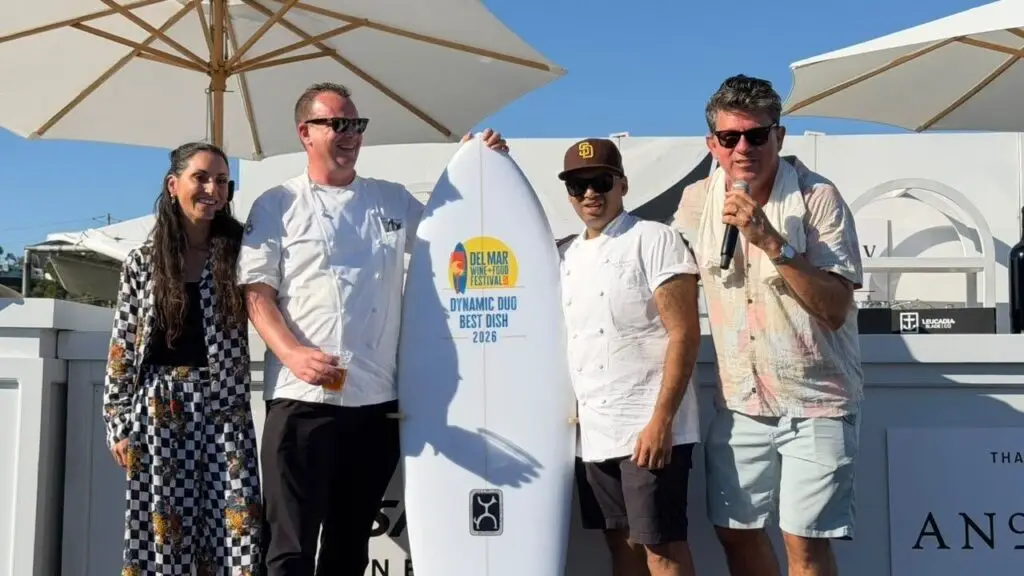
San Diego’s biggest food and drink festival is back for a week-long celebration of SoCal’s best restaurants, chefs, and wineries from Sept. 30–Oct. 4
Maybe it was when Breaking Bad stars Bryan Cranston and Aaron Paul drank mezcal with chefs from San Diego and Food Network on the cliffs over Blacks Beach. Or the dinner outside under lights with Alex Morgan, celebrating some of the country’s most badass women chefs. Or the celebrity pickleball tournament hosted by NFL Hall of Famer Drew Brees, where the star of It’s Always Sunny in Philadelphia made thwacking sounds with locals. Or when Iron Chef winner Beau MacMillan commandeered (some say “stole”) a golf cart and delivered drinks and ice to chefs.
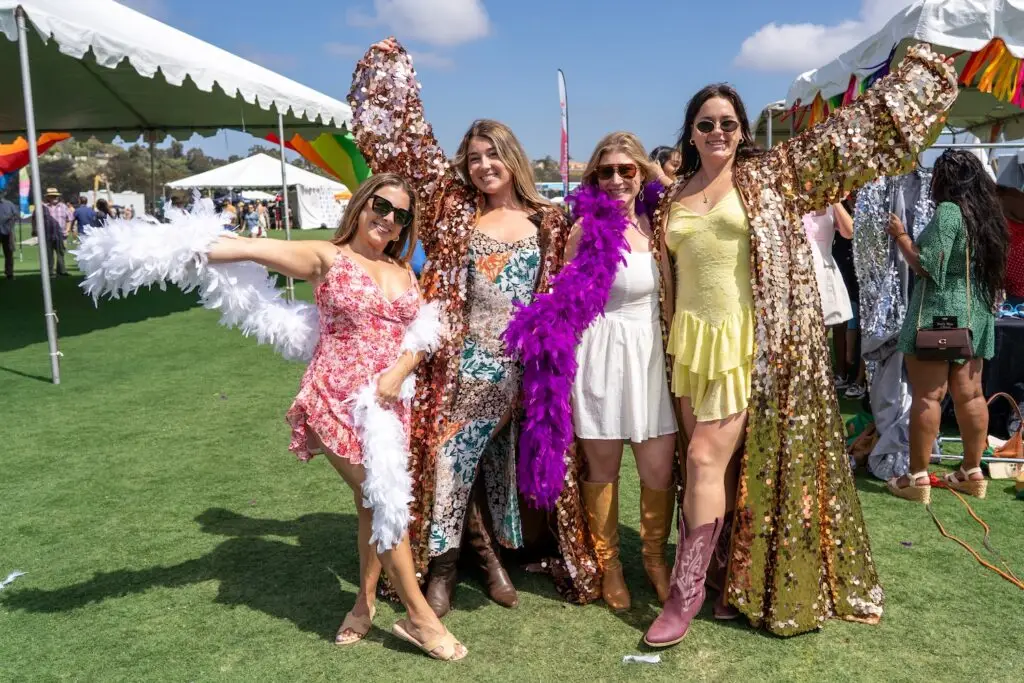
Whatever it is, Del Mar Wine & Food seems to have become the food and wine festival for people who don’t usually like food and wine festivals. The most San Diego thing.

Two years ago, Thrillist named it one of the best food festivals in the country. Last year, 10,000 people came out to experience it, including Guy Fieri. Afterward, the founders spent a couple days trying to put their finger on why it felt so special. They had to name it, lean into whatever that was.
“It all came back to play,” says one of those founders, SDM co-owner Troy Johnson, a longtime San Diego food writer and Food Network judge. “Making world-class bread is serious, but breaking bread shouldn’t be. We gather all these incredibly talented people who take their craft very, very seriously—work their butts off all year to make some of the best food and drink in the country—and then we all just kinda play in the grass. We believe it’s possible to create something of incredible value and make the experience of that thing a laidback, easygoing, unpretentious experience. That’s what this is, and who we are in San Diego. The whole reason we did this was to shine a national spotlight on the people who make our food and drink culture hum.”

The festival dropped its 2026 lineup today.
Headlining the fest are Food Network chefs Jet Tila, Maneet Chauhan, and Aarti Sequeira; Top Chef winner and Michelin-starred Buddha Lo; Iron Chef alum Beau MacMillan; MasterChef winner Kelsey Murphy; MasterChef Latinos winner Michelle Mathelin, chef and Guy’s Grocery Games judge Catherine McCord, chef and former Masterchef Mexico judge Benito Molina, Top Chef alum Jackson Kalb, Michelin-starred chef Drew Deckman, Michelin-starred chef Javier Plascencia, James Beard award-winning chef Brady Ishiwata Williams, and James Beard-nominated chef Mawa McQueen.
The party kicks off on Wednesday, September 30 at Monarch Ocean Pub with Signature San Diego, a walk-around tasting of the city’s greatest bites, from Baja seafood to bold Mexican flavors. From there, the energy carries into a celebrity pickleball tournament hosted by Drew Brees at Barnes Tennis Center on October 2, pairing friendly competition with an all-inclusive tasting experience in support of Feeding San Diego.
The main event is the two-day Grand Tasting at Surf Sports Park on Oct. 3 and 4. The city’s top chefs, food people from TV lands, and local tastemakers gather on the weirdly perfect grass to serve up everything from juicy Wagyu burgers and beef tallow fries to yellowtail tuna tostadas and veggies dressed up in their Sunday best. Wine and cocktail pairings are designed to round out the whole experience, including activations from Aperol Spritz, Hendrick’s Gin, Tequila Ocho, Mezcal Vago, Rioja wines, and Temecula producers.

A VIP lounge offers exclusive access to curated small plates from Michelin-level chefs and pour from some of SoCal and Napa’s finest wineries and drink makers. The Official After Party at Guesthouse La Valle on October 3, a spirited walk-around tasting just steps from the Grand Tasting, where cocktails take center stage through imaginative bites inspired by the smoky, citrus-forward, and bittersweet flavors of classic drinks.
Zones return with activations including the Big Queer Food Fest celebrating queer chefs and queer-owned businesses; the Wellness Zone led by Novo Dia offering a built-in reset with non-alcoholic mocktails, movement-driven activations, and wellness-forward moments. Coastal lifestyle and locally made brands are also integrated throughout the festival.
“We are excited for the fourth edition of the Del Mar Wine & Food Festival this fall, which has quickly become one of the largest food and wine experiences on the West Coast,” says co-founder Chris Finn. “As the festival continues to grow, we are constantly looking to add events, experiences, and partners that will resonate with our San Diego community, and embody the Southern California way of life.”
Returning as the festival’s partner is local nonprofit Feeding San Diego. To date, Del Mar Wine & Food has raised $100,000 to support their ongoing fight against hunger across the region.
Stay tuned for additional events hosted by festival partners including Rob Machado, San Diego Wave, San Diego FC, Town & Country, and San Diego Mojo.

The 2026 Del Mar Wine & Food Festival will take place September 30–October 4 throughout San Diego County.
The week culminates with the Grand Tasting at Surf Sports Park (formerly the Del Mar Polo Fields) at 14989 Via De La Valle, Del Mar.
A wide variety of exclusive dinners, drink tastings, and other lifestyle events will be announced soon and available for purchase individually on Del Mar Wine & Food Festival’s website. These festivities include chef-curated dining experiences across San Diego’s hottest restaurants, a celebrity pickleball tournament, wine tastings, and more.
The Grand Tasting takes place this year on Saturday, October 3 and Sunday, October 4.
General admission for the single-day Grand Tasting starts at $185. An Early Access option is also available at $235, which includes an extra four hours before general admission to meet, mingle, and feast. For a two-day pass, General Admission starts at $275, while Early Access is $375.
VIP tickets begin at $425 for a single day, offering access to pre-festival experiences, exclusive food vendors, a dedicated VIP area, and more. For the full weekend in VIP, passes are priced at $765.
Buy tickets today at DelMar.Wine.
Unfortunately, only service animals are allowed at the venue. All attendees must be 21 years or older.
Isabella Dallas is a freelance writer for San Diego Magazine and the Arts and Culture Editor at The Daily Aztec in her final year at San Diego State University. She previously worked as an editorial intern for SDM, but when she’s not writing, you can find her trying the best coffee spots in SD, devouring the latest rom-coms, and indulging in anything and everything pop culture.
We asked 12 golf pros from across the county to choose the city's top holes to create the "Dream 18"
At the top of a golf swing, the world settles into a hush. Anyone within 50 yards kindly shuts up in reverence. Steady heartbeats tuck inside the sound of the wind. Time stands still.
Or—panic sets in, a thousand warnings from coaches and YouTube tutorials prattle through your brainpan. You wonder if a good walk prepares to be ruined.
On descent, the club rearranges air particles as it slices on a perfect or unwise line toward an earth so green, it seems like AI. The iron face meets the ball, and the satisfying or unsettling thwack echoes across the fairway like a nonviolent gunshot or a cry for help. Breath catches, curse words load in the prefrontal cortex. Eyes squint to follow the hard-to-see projectile zip majestically through the air or bounce lamely along the ground like a failed hurdler.
Sometimes it goes a couple hundred yards in the right direction, other times a couple yards into uncaring swamps. Golf’s beautiful and hard as hell.
Mindfulness and stillness reign over speed and might—which goes against most basal American instincts regarding sport. Its quiet, serene mocking of our human abilities is what brings so many of us to the life-long process of sharpening the skill. Because who hasn’t stared at the most beautiful parks and lawns in the world and said, “How can I turn this into a game and win it?”
Luckily, San Diego has an abundance of courses to improve and curate self-doubt. The county is home to over 70 courses that attract the top golfers in the country. Some of the biggest names in the sport—Callaway, TaylorMade, Cobra, Titleist, Odyssey, Honma—are based here. Perfect weather never hurts. But San Diego golf courses also promise a smorgasbord of terrains: rocky canyons, hot deserts, and lush greens overlooking the expanse of the Pacific Ocean.
If you could take the 1,300-ish holes around San Diego and pick the very best ones to create your ultimate course, which would they be? We asked some of the top golf pros in the county to do just that. The result? San Diego’s Dream 18. Think fantasy football but for golf.
Just like any great course, our Dream 18 includes four par 3s, 10 par 4s, and four par 5s—everything from tricky dog legs and psychological tee shots to just pretty, pretty views. Once we had our list, we either asked the head golf pro what makes a hole so special, or other pros spoke on its behalf. Go ahead, tell us what we missed.

“One of the most iconic par 3s on the West Coast. The cliffside setting above the Pacific and the constant ocean breeze make it both beautiful and demanding.”
—Anthony Valverde, Director of Golf, The Crosby Club at Rancho Santa Fe
“It’s a downhill par 3 over water with a great view from the tee down to the green. It’s surrounded by bunkers as well, so it almost feels like an island green even though it’s not. What’s really cool is once you drive to the next hole, if you look back on No. 14, it’s a great view as well. One of the signature holes [at Santaluz].”
—Josh Rider, Head Golf Pro, The Santaluz Club
Hole 15
“Hole 15 is widely considered one of the best and most memorable holes on the course. At about 250 yards, it’s a long downhill with multiple tiers and panoramic views into the valley. It looks intimidating at first, but there are lots of recovery contours and the green is fairly large.”
—Editor’s Choice
“Sitting high above the green with views of the Pacific Ocean, this dramatically downhill par 3 requires the perfect club selection.”
—Mike Mulford, Director of Golf, Omni La Costa

“While it’s beautiful with the backdrop of the Batiquitos Lagoon and the Pacific Ocean, this finishing hole demands both precision and nerve. The water guarding the right side and fairway bunkers ahead create a visually striking, strategic tee shot, while the expansive green rewards a confident, well-placed approach. If you can make a par on this hole, you’ve played it very well.”
—Renny Brown, Director of Golf, Aviara Golf Club
“The 18th hole at Del Mar CC is a demanding par 4 with an elevated tee box. Water guards the right side of the green, and a player must hit a precise shot into this green.”
—Renny Brown, Director of Golf, Aviara Golf Club
“It’s a difficult 428-yard par 4 playing into the predominant west wind. The hole is post-renovation and the vegetation was trimmed back, so now it exposes a penalty on the right. It’s uncomfy at the tee but a good challenge. Plus, it’s the No. 1 handicap for [all players].”
—Chris Lungo, Head Golf Pro, Rancho Santa Fe Golf Club
Lili Kim is a content coordinator and writer for San Diego Magazine, with experience highlighting local businesses and communities. When not writing or shooting film, she is likely brewing her seventh cup of tea of the day or strolling along Sunset Cliffs.
With wellness-centered lifestyles on the rise, party culture is getting a 10 p.m. rebrand
A ’90s pop hit is blasting as I drive up to Solana Beach to go dancing. I’m dressed in the millennial nightlife uniform: black tee, cute jeans, heels. It is 6:30 p.m. on a Tuesday. The dance party starts soon. I’ll be home by 10 p.m. at the latest. I may even catch an episode of Summer House.
I am acutely aware of my age in this moment. I haven’t willingly chosen the club life since my 20s and early 30s. Yet here I am, transported back to 2014 with a few more wrinkles, a lot more ibuprofen, and a touch of “pandemic stole this from me” in my pocket.
A few days earlier, a friend texted to suggest we go to a concert the upcoming weekend. “I can’t, I’m already tired on Friday,” I replied. At 42, two glasses of cabernet bend my space-time equilibrium. A hard sneeze risks a sprained neck. Did I mention the perimenopausal night sweats yet?
I arrive at the Belly Up at 7 p.m. Wilson Phillips comes on the stereo, and I sing-shout the lyrics before stepping out of the car.
Someday, somebody’s gonna make you want to turn around and say goodbye | Until then, baby, are you gonna let ’em hold you down and make you cry?
Tonight’s event is billed as “the dance party that starts earlier.” Surprisingly, I’m not the oldest person in the room. A 60-something man shoulder bops to the DJ set. A Gen X woman shimmies by and snaps photos of the glow-stick-spinning raver on stage. Few are drinking.
Started by two North County locals, Amal Chandaria (32) and Max Gold (37), Earlier is a dance party for older adults who want a club experience without the sleep-deprived, hungover physical toll. Running 6:30 to 10 p.m., attendees get home at a reasonable hour for a full night’s sleep.

Seems I’m not alone in my tired.
“[We’re in] a time where loneliness is high, people are craving connection,” says Chandaria. “One thing we were really intentional about is that you don’t need to go and have drinks to have fun. It’s about the music and getting the wiggles out.”
Early is part of a national trend: the green-juice-ifying of party culture. Americans aren’t going out as much as they used to. They’re drinking less, and 10 p.m. has become the new 2 a.m. Wellness as a lifestyle concept is old hat, and each generation manifests itself in different forms (fitness booms in the ’80s, organic food in the 2000s).
According to a 2024 survey by consulting firm McKinsey & Company, the US wellness market now exceeds $500 billion annually, up from roughly $300–$350 billion a decade ago. More striking than the spend: Wellness as a top priority has surged from about 42 percent in 2020 to more than 80 percent today.
The timing makes sense. Studies show Covid led to long-term shifts in lifestyle patterns. We all began to reassess our lives and made some existential changes—like 6 p.m. soberish dance parties. In a recent Gallup poll, only 54 percent of US adults reported drinking alcohol, the lowest level in about 30 years. Conversations around longevity turned “treat yourself” into “invest in yourself.”
The downer of any wellness trend, though, has been the “can’t” philosophy—can’t eat that cake, can’t sip that marg, can’t binge that show. What if we could do health stuff and still dance and not totally suck the joy out of life? That’s what people like Chandaria and Gold are banking on.
Last year when they attended Atomic Groove—a variety dance band from 5–8 p.m. most Fridays at Belly Up—it sparked an idea. “People want to be healthy and active, and they don’t want to compromise on that by not feeling rested,” says Gold. “I thought, ‘I bet if we’re feeling this way, other people are looking for something like this, too.’”
He was right. Nearly 200 people showed up to the pair’s first dance party last July. Tonight’s crowd is nearing that number again. Among them is Cardiff-by-the-Sea resident and second-time attendee Lauren Marley.
“If you do one thing for yourself—and it means that you don’t have to be completely exhausted and wrecked for all the stuff you have to do the next morning—it’s great,” she says.
Though EDM isn’t quite my thing (give me some stank-face hip-hop from the 2000s), it’s clear from the number of return attendees that Chandaria and Gold have filled a need, one that isn’t just in famously health-forward cities like San Diego.
In DC, Dancing on the Waterfront occurs every Saturday from 5–9 p.m. while Extended Play DC wraps up at 10 p.m. Philly has Matinee Dance Party (5–10 p.m.). New York City finally chooses to sleep, with Friday Feeling and Matinee Social Club both ending at 10 p.m. Last year, Day Shift, geared toward those over 30, debuted at Bloom Nightclub in San Diego.
In Chicago, Earlybirds Club was founded in 2023 by high school friends Laura Baginski and Susie Lee. About 100 people showed up to the sold-out “dance party for ladies who got shit to do in the morning.” Two years later, Earlybirds Club is now held in nearly 60 cities and regions across the US.
“It’s an outlet that [middle-aged women] don’t get in our everyday life,” says Baginski, who also recently appeared on the Kelly Clarkson Show to share their story. “It’s movement and dance. We’ve learned now that it’s really essential to being a happy person.”
Admittedly, it’s a bit harder to be happy when I walk into the Music Box for Earlybirds’ event in San Diego. War’s about to start, protests are the new social gathering, and the economy is gaslighting me into believing salads should cost $18.
But soon the club is a sea of 700 people wanting to dance their asses off. Any negative emotions quickly begin to disappear. Tonight’s music features hits from the ’80s, ’90s, and 2000s: Madonna, Britney, Christina, 50 Cent, Ludacris.
Shuffling past the bar to the already-crowded dance floor, my heartbeat quickens. Pure, unadulterated joy is oozing in this place.
“The whole club was women’s bathroom culture,” said returning attendee and San Marcos resident Beth Avant, 50. “[You get to] freely dance, not care about what you’re wearing, you’re not trying to really impress people.” Soon Whitney Houston’s golden pipes set the room on fire, arms raise, smile lines deepen, and for a few hours, nothing else matters.
Oh, I wanna dance with somebody / I wanna feel the heat of somebody
While Baginski continues to run the operation, Lee lost her battle with stage IV metastatic breast cancer in August of last year. Honoring her memory at each event are words from Lee herself: “Sing f**king loud, dance like nobody gives a shit, and remember who the f**k you are.”
And who we are are sleepy people. If this new wellness era really takes off, imagine the possibilities. Dinner dates at 5 p.m., the Super Bowl at 2 p.m. EST, Justin Bieber headlining Coachella at 7 p.m. Until then, you’ll find me in bed shooting down plans past 8 p.m.
Nicolle Monico is an award-winning writer and the director of creative projects, digital editor for San Diego Magazine with more than 16 years of experience in media including Outside Run, JustLuxe and The San Francisco Chronicle.
Yes, Chef! winner Emily Brubaker leads the robust culinary program at Omni La Costa Resort & Spa
For Executive Chef Emily Brubaker, Omni La Costa Resort & Spa feels like home. She grew up just a mile-and-a-half away from the 400-acre property and fondly recalls walking the golf course perimeter as a kid. Though her ambitions led her away from San Diego for nearly two decades in which she honed her craft in some of the highest of high-profile Las Vegas restaurants—including triple Michelin-starred Joël Robuchon at MGM Grand—they ultimately brought her back to North County.

Today, the classically French-trained chef, who’s fresh off a victory on NBC’s Yes, Chef!, judged by Martha Stewart and José Andrés, oversees Omni La Costa Resort & Spa’s seven distinct dining concepts. Her goal is to elevate the resort’s culinary program with her creative, hyperlocal ingredient-driven approach while maintaining the Spanish- inspired flavors and fresh California coastal cuisine that are the bedrock of its culinary identity.
“The San Diego food scene is really growing, and in North County alone, it’s really exploded in the last five years,” Brubaker says. “There are Michelin stars, beautiful tasting menus, craft bakers, and all this food—when I was growing up in La Costa, it was fish tacos. Now there are really cool things popping up, and I’m so happy to be here to see where it’s going to go.”
Brubaker gives chefs de cuisine at each individual restaurant autonomy, however, her influence is evident across the resort.
For example, lobby restaurant Bar Traza serves as Omni La Costa’s culinary centerpiece and features bold Spanish flavors in a lively, social atmosphere. Brubaker overhauled the menu to be more consistent and centered on casual bites with that signature vibe. Think smoky paprika, vibrant citrus, and Spanish meats and cheeses.
At VUE, the focus is on seasonal offerings, California coastal cuisine, and Baja-inspired dishes. She and Chef de Cuisine Cameron Dixon change the menu biannually, which heading into summer, will highlight farm-fresh produce and hyperlocal ingredients—the resort even has its own herb garden and honeybee hives.

Poolside dining options are leaning into the country’s 250th this summer with a selection of classic American dishes with an Omni La Costa twist. And Bob’s Steak & Chop House (Brubaker is a trained butcher) offers a classic steakhouse experience with elevated service.
The chef and company also plan menus for special events at the resort where her creativity can really shine. For an upcoming National Ski Association dinner, the banquet hall will be transformed into an Alpine-themed winter wonderland complete with a snow machine, savory sausages, and melty, decadent raclette. A recent dinner was built around the Carlsbad Flower Fields and each course was matched to a color of ranunculus (Did you know pink dragonfruit are grown in North County? You do now.).
“It’s my zen to be in the kitchen playing with food,” Brubaker says.
Omni La Costa’s culinary program is a key part of the resort experience. And with Brubaker’s leadership, it’s becoming a draw for visitors and locals alike.
“These aren’t just hotel restaurants, these are restaurants that you should go to. They’re destinations, and I’m really hoping for the future that’s where we’re going,” Brubaker says.

Brubaker is also channeling her experience on Yes, Chef! into the culture at Omni La Costa—more emphasis on teamwork and collaboration, empowering her staff to share constructive critiques, and embracing different perspectives. Alongside her leadership role, Brubaker has become an advocate for mental health in the hospitality industry, serving as chief ambassador for the Burnt Chef Project and serves on the Board of Advisors for the Apex Culinary Program, where she mentors and develops future talent.
For more on Omni La Costa Resort & Spa and its dining program, please visit omnihotels.com/hotels/san-diego-la-costa.
Enjoy the holiday with the city’s best restaurants offering seasonal brunch buffets, prix-fixe menus, and à la carte specials
Consider this your annual reminder that Mother’s Day is not the time to improvise. What’s in: roses, peonies, and a card attempting to summarize a year’s worth of gratitude in three paragraphs or less. What’s out: pretending you “didn’t know it was this weekend.” In a city currently operating at full brunch capacity, San Diego responds as it always does—oceanfront tables, excessive buffet spreads, and sparkling wine refills. Whether it’s waffle stacks, chilled seafood displays, or carving stations doing the most, these San Diego restaurants have you covered.
Brunch Buffets | Mother’s Day Specials & Prix Fixe Menus | À La Carte Brunch

All moms deserve elegance on Mother’s Day. Celebrate a beachfront with a beautifully timeless and tasteful brunch at the Crown Room in Hotel del Coronado. Indulge in options like lemon vanilla pancakes with berry compote paired with crispy bacon, made-to-order omelets or your very own egg benedict station, shucked oysters, whole in-house smoked brisket, Peach Melba Verrine, and more. Guests over 21 can enjoy a complimentary glass of Champagne.
Price: $235 per adult | $125 per child (6 – 10) | Ages 5 and under are free
Hours: 10 a.m. – 3 p.m.
Address: 1500 Orange Ave, Coronado
Reservations: Hotel del Coronado
Mimosas, marina views, and a Mother’s Day where the only thing on the agenda is enjoying it? We’ll cheers to that. Located at the Catamaran Resort, this Mother’s Day brunch literally has it all, from sushi rolls and nigiri to a charcuterie spread stacked with salumi, prosciutto, cornichons, pepperoncini, cherry peppers, and grainy mustard, plus waffle and omelet stations, cedar-planked salmon, and panko and herb-crusted mac and cheese. Kids can also create a bouquet for Mom that’s just chaotic enough to be adorable.
Price: $120+ per adult | $60+ per child (5 – 12) | Ages 4 and under are free
Hours: 10 a.m. – 4 p.m. (last seating at 2 p.m.)
Address: 3999 Mission Boulevard, San Diego
Reservations: Oceana Coastal Kitchen
Mother’s Day at Arlo transforms into an enchanted garden that’s equal parts lush and indulgent: a raw bar, fresh salads, delicate pastries, 12-hour braised short ribs, roasted prime rib, and Szechuan pepper–crusted swordfish from the Santa Maria grill. Spoil moms, grandmas, aunts, and every beloved mother figure with live music, a roaming mimosa cart, floral bouquets, and of course, a little retail therapy courtesy of the Kendra Scott trunk show—necklaces, bracelets, earrings, or, let’s be real, all of the above.
Price: $99 per adult | $40 per child (5 – 12) | Ages 4 and under are free
Hours: 9 a.m. – 3 p.m.
Address: 500 Hotel Circle N, San Diego
Reservations: OpenTable
Forget the CVS roses (respectfully). Rumorosa’s Mother’s Day brunch is back for its third year, pairing complimentary flowers with sun-drenched marina views. It’s coastal-modern meets Baja soul, where the food is bright and very much not an afterthought. Last year’s spread leans into Carrot Cake Waffles, a made-to-order omelet station, Café de la Olla French Toast, Roasted Lamb Tostadas, and other “yes, I’ll have everything” moments.
Price: $90 per adult | $40 per child (5 – 12)
Hours: 9 a.m. – 2 p.m.
Address: 1380 Harbor Island Drive, San Diego
Reservations: OpenTable
A boozy brunch overlooking Mission Bay with Mom? Say less. Celebrated at Tidal with a lavish spread of cheeses and charcuterie, a seafood bar stacked with oysters, shrimp, crab legs, and ahi specialties, and chef-attended carving stations with slow-roasted prime rib. Made-to-order omelets and pancakes, maple-glazed pork belly, roasted Baja grouper, vibrant seasonal salads, and brunch classics round it out, finishing with an abundant mini dessert selection.
Price: $125 per adult | $50 per child (5–12) | Ages 5 and under are free
Hours: 11 a.m. – 3 p.m.
Address: 1404 West Vacation Road, San Diego
Reservations: OpenTable
Mother’s Day at Animae is anything but expected. Tucked into the Marina District, this world-class steakhouse leans West Coast with a playful Asian twist. This year, treat Mom to a dim sum–style experience: a slightly more elevated, endlessly flowing take on the buffet, where indulgent small plates arrive tableside, perfectly complementing the Art Deco interiors and designed to be picked at, shared, and fully obsessed over. It’s less set menu, more choose-your-own flavor adventure.
Price: $104 per person
Hours: 10 a.m. – 2 p.m.
Address: 969 Pacific Hwy, San Diego
Reservations: OpenTable

Isabella Dallas is a freelance writer for San Diego Magazine and the Arts and Culture Editor at The Daily Aztec in her final year at San Diego State University. She previously worked as an editorial intern for SDM, but when she’s not writing, you can find her trying the best coffee spots in SD, devouring the latest rom-coms, and indulging in anything and everything pop culture.
San Diegans are turning their houses into longevity spaces by prioritizing function and feeling
Kelvins. If you’re anything like me, you probably haven’t thought about them since high school chemistry. Lately, though, they’ve become one of the more hotly debated measurements in interior design.
Kelvins measure the color temperature of light, which is a technical way of saying they’re key to whether a room feels calming or slightly unsettling. The wrong Kelvin temperature can suddenly give your bedroom the vibe of a hospital corridor. Warmer Kelvin temperatures cue relaxation. Cooler ones sharpen alertness. Interior designers now talk about Kelvins the way chefs talk about salt: invisible when it’s right, immediately obvious when it’s not.
That focus on light reflects a broader shift in San Diego homes—people are worried less about how spaces look and more about how they hold you over the course of a day. Design decisions now favor what fades into the background and silently improves daily life. And once you start thinking that way, it’s hard not to apply the same logic to everything else in the house.
My husband and I felt that impulse firsthand last year while shopping for a mattress. We spent multiple weekends wandering the showrooms at Westfield UTC, lying on beds in our outside clothes, asking questions about spinal alignment, breathability, and temperature regulation. We debated coils versus foam, read studies on sleep stages and thermoregulation, and compared notes in the parking lot like two people deciding whether to buy a house.

Eventually, we chose the Saatva Contour—a name that sounds more like a luxury sedan than something you sleep on. That felt fitting, given the amount of deliberation we put into it. We picked it for its spinal support and ability to dissipate heat through the night, two factors consistently tied to deeper, less fragmented sleep. At the time, it felt overly academic, but it made its case experientially: We experience fewer disruptions at night and wake with the unexpected sense of being genuinely rested.
Eventually, I realized that our search had been less about shopping for comfort and more about shopping for recovery.
Now when I wake up, I usually head straight to our little sauna, which sounds much more impressive than it actually is. It sits just outside the house, tucked into a narrow corner of our small backyard. Technically, it’s meant to live indoors, but we adapted it for outdoor use because that was the only place it would fit. The door closes with a soft thud; the scent of cedar blooms as the heat sets in. Inside, there’s a single bench and barely room to stretch my legs. It isn’t glamorous, but the science on sauna use is compelling: Regular heat exposure has been linked to improved cardiovascular health, reduced inflammation, and more efficient recovery via circulation and the nervous system. To me, its real value is something simpler—a few quiet minutes that are mine before the day and its noise begin to make their claims on me.

For a long time, luxury meant square footage, statement kitchens, and bonus rooms designed to impress people who don’t actually live there. Homeowners are making different choices today.
“These days, the questions my clients ask are, ‘Will I actually use this?’” says James Denton, senior architectural and interior designer and owner of James Denton Design. “‘Will it help me sleep better? Will it simplify my routines?’”
Interior designer Maegan Ayukonchong, owner of M. Swabb Interior Design Collective, sees that shift in nearly every project. Clients want layouts that reduce friction, storage that actually functions, and spaces that feel uncrowded. “It’s less about filling rooms,” she says, “and more about designing homes that support how people want to live.”
That recalibration accelerated during the pandemic, when homes were suddenly forced to perform at full capacity. Living rooms became offices, kitchens became classrooms, closets became refuges for phone sessions with your therapist. Denton says he noticed clients suddenly confronting how their homes actually functioned.
Ashley Chavez, a realtor with Compass Real Estate in San Diego, watched the same awareness show up in buyer behavior. “After spending so much uninterrupted time at home, buyers started noticing things they used to overlook,” she says, like the amount of natural light, how rooms flow into one another, and whether spaces feel peaceful or overstimulating.
Health conversations widened beyond workouts to include sleep, stress, and recovery, areas where the home environment plays a defining role. Chavez notes that buyers may not use the word “wellness,” but their priorities are clear. “Clients comment on how a home feels,” she says. “They notice whether bedrooms are quiet, whether the layout supports their routines without constant adjustment.”
The results show up in what people choose to build and invest in. Spare bedrooms become infrared saunas. Massage chairs edge out media consoles. Red light panels replace bar carts, delivering low-level light that supports cellular repair, muscle recovery, skin health, and circadian signaling (it’s worth noting that cocktails pretty much do the opposite of all that). Rooms once dedicated to entertaining are reimagined for restoration.
Clement Qaqish drops into a chaise in the living room of his Solana Beach home with the familiarity of someone used to managing fatigue. A maxillofacial surgeon by day and an endurance athlete by choice, he’s completed 14 full Ironman races and a dozen Half Ironmans. “When you’re training this much, recovery isn’t optional,” Qaqish says. “And even if you’re not doing Ironmans, your body still has to recover—from stress, from sitting, from whatever you ask of it.”
Normatec compression boots sit coiled on the floor beside him—long black sleeves that look part medical device, part sci-fi costume. He slides his feet in one at a time, zipping them up to the thighs. They inflate, with air pulsing upward in slow waves, rhythmically compressing his legs to push blood and lymphatic fluid back toward his heart. The soft mechanical whir fills the room. The goal is faster recovery and less soreness after heavy training. “Most people wait until [their legs are] broken,” he says, smiling slightly. “I’d rather not get there.”
When Qaqish and his wife, Gabby Galleo, a biotech executive, moved into the house, those priorities shaped the abode early on. “The first thing I bought for our home was an infrared sauna for Clem’s birthday,” Galleo says. “Once we had the space, it just made sense.”

From there, the rest followed naturally: a Nordic Wave Cold Plunge on the patio (to support nervous-system resilience and curb inflammation), compression boots by the couch, a red light mask on the armoire (to promote cellular repair and skin tone). Tools more commonly found in a training facility or high-tech spa are folded into the feng shui of the home. With all the tech scattered around the house, “it’s easier to do it than to avoid it,” Galleo says. “You’re just moving through your day, and it’s there. We didn’t want it to feel like a production. If it required driving somewhere or scheduling around it, we knew we wouldn’t do it consistently.”
While fancy equipment certainly helps you unwind after a hard workout, most of the changes that make a home extra restful can be accomplished without hiring a contractor or taking out a loan for the latest technology.
“Editing is the new flex,” Ayukonchong says. “The most impactful shifts are often the simplest ones: Add live plants for a fresh, calming boost; reorganize storage; replace heavy window treatments with breathable linens to soften natural light.”
In general, lighting is a low-cost approach to achieve an outsized impact. Denton recommends “warmer tones in bedrooms for relaxation, cooler bulbs in workspaces for focus, and dimmers that let rooms shift with the day,” (gotta get those Kelvins right!).
From there, he turns to details most of us overlook, even as research increasingly shows how powerfully they shape how we think and feel. “Start with acoustics. They are key to reducing stress and mental fatigue,” he says. According to research from the University of California, Davis, chronic background noise raises stress hormones and cognitive fatigue, which is why oversized rugs and soft window treatments that dampen sound can matter just as much as aesthetics.
And you can double up on the boons from your houseplants by intentionally placing mirrors near or across from them. Studies on biophilic design link visual exposure to greenery—even if it’s reflected—with improved mood and lower stress, while blank walls offer no such benefit.
Air quality is the final layer. Indoor air can be more polluted than outdoor air, and poor ventilation has been associated with headaches, brain fog, and disrupted sleep. Simple upgrades, like higher-grade HVAC filters or a modest air purifier, address a problem quietly and persistently affects many homes.

Even simply designating one chair for reading, one corner for stretching, or one surface for tea or journaling can reshape how a home functions. Research in environmental psychology suggests that context-dependent cues help the brain switch states more efficiently, making it easier to relax or focus when an activity is consistently paired with a specific place. Over time, the space itself becomes a signal, reducing decision fatigue and allowing the nervous system to settle more quickly.
Dr. Jenn Chang, a physical therapist, yoga therapist, and founder of The Movement Mechanic PT, walks me through her small Carmel Valley condo. “I didn’t have room to include things casually,” she says. “Everything had to earn its place.”
In her home office, where she sees clients, a yoga wall with mounted bars and straps that support alignment and traction anchors one side of the room. “It feels like a bonus,” she says. “I can use it with patients, but it’s also there for my own practice.”
In the garage, an infrared sauna sits snugly against the wall. Despite the condo’s limited storage, Chang is careful to keep the area around it uncluttered. “If the space starts filling up, the sauna stops feeling inviting,” she explains. “I notice that right away.”
Aerial yoga hammocks hang from the ceiling for her kids (with safety mats below). A compact Swedish ladder supports dead hangs and calisthenics and doubles as something her children climb on. A vibrating foam roller and a Theragun are stored nearby. “The easier it is to use and put away,” Chang says, “the more likely it becomes part of your day.”
For a long time, I resisted getting a cold plunge myself. It felt unnecessary, even a little excessive. But after spending time with people who treated it as just another part of the house, I eventually purchased one, setting it up on my patio, steps away from the sauna that shields me from notifications and the mattress that we spent so long researching. All together, they offer me permission to do less, move a little slower, incorporate recovery into my everyday life. In a culture that never stops asking what’s next, that feels like the most radical thing.
Ingrid Yang, M.D., J.D. is a hospital-based physician in San Diego, CA, certified yoga therapist, and longevity specialist. She loves *double hearts* San Diego and spends her days helping people fully engage in long, healthy lives through evidence-based lifestyle medicine. Her books include Adaptive Yoga, Zen Mindfulness, and Hatha Yoga Asanas. When she’s not leading international wellness retreats, she is chasing sunsets, handstanding in nature, or geeking out over mitochondria.
San Diego Magazine's 2026 Guide to Balboa Park.
Balboa Park is San Diego’s cultural heart.
The iconic 1,200-acre preserve’s history dates back more than 150 years, evolving from a scrub-filled plot atop a mesa overlooking what’s now Downtown to an urban oasis—the largest of its kind in the country—filled with an array of museums, attractions, gardens, trails, restaurants, and more. Balboa Park is an epic playground where San Diegans and visitors alike can experience the great outdoors just as easily as they can enjoy a world-class performance or explore groundbreaking discoveries.
Tucked away in the Spanish Colonial Revival-style architecture are 18 diverse museums that allow visitors to spend the day learning about, well, anything. A great place to start is the San Diego History Center. Located in the Casa del Balboa building, the museum tells the story of the city’s past, present, and future through photographs and art, clothing and textiles, and interviews with people who witnessed history-making events firsthand. The San Diego Natural History Museum takes visitors even farther back with interactive exhibitions that show what the region was like up to 75 million years ago.
Blast off on a simulated trip to space at the San Diego Air & Space Museum, then check out artifacts from aviation legends, including the Wright brothers, Amelia Earhart, and Buzz Aldrin. Discover new perspectives revolutionizing the science world, learn about an often overlooked but overutilized utility, and exercise your creativity at the Fleet Science Center.
Calling all theater-lovers, Balboa Park has something for you, too. The San Diego Junior Theatre will present their musical take on beloved children’s book A Bad Case of the Stripes from June 26 through July 12. And laugh, cry, and marvel in awe as the pros of The Old Globe perform Kim’s Convenience, the award-winning comedy that inspired the popular series, from May 15 to June 14.
There’s nowhere else in Balboa Park quite like WorldBeat Cultural Center. The institution celebrates African diaspora and indigenous cultures around the world using art, music, dance, and education. The building, a renovated water tower covered in colorful murals, houses a performing arts center, museum, gift shop, cafe, and outdoor classroom.
If you’d like a side of nature with your culture, Balboa Park has you covered there, too. Stroll through the gardens of the Japanese Friendship Garden & Museum, a monument to the relationship between San Diego and its sister city, Yokohama, Japan. Inspired by traditional Japanese design dating back centuries, the 10-acre respite features a living exhibition that showcases plants native to both cities.
If there seems like a lot going on in Balboa Park, it’s because there is. Let the Balboa Park Cultural Partnership be your guide. The organization is the umbrella for 24 of the park’s institutions and offers an Explorer Pass that allows visitors to access multiple museums for one affordable price. The hardest part is picking where to start.

Save on admission to San Diego’s top museums with the Balboa Park Explorer Pass. Explore 16 museums of art, science, history and culture across Balboa Park — all with one affordable pass. Choose the option that fits your pace: the Limited Pass (one day for up to four museums), the Parkwide Pass (seven consecutive days of access to all 16 museums) or the Annual Pass (365 days of unlimited exploring).
Looking for an experience-driven gift? Let the museum lover in your life enjoy their favorite museums all year with a Balboa Park Explorer Annual Pass gift voucher.
BuyMyExplorer.com | Phone: 619-232-7502, Press 2 for Explorer

Bigger experiments, brighter ideas, and boundless curiosity await at the newly reimagined Fleet Science Center. This summer, the Fleet debuts Element 8 Cafe, an expanded theater queuing and concessions space, two new gallery spaces, and, for the first time, a free entrance gallery exploring science in and around San Diego. The transformation marks a new chapter for the Fleet, keeping it a vital, innovative, and accessible science hub for the region. Visitors are invited to explore the experience this summer and connect with the power of science like never before.
Address: 1875 El Prado, San Diego, CA 92101
Website: FleetScience.org
Hours: 10 a.m. to 5 p.m. daily
Phone: 619-238-1233

An accredited cultural gem, the Japanese Friendship Garden & Museum brings traditional Japanese garden design to life with koi ponds, curving walkways and layers of greenery. Guests explore bonsai trees, streams and peaceful nooks while taking part in exhibits, educational programs and festivals that illuminate Japanese culture. Situated in the heart of Balboa Park, the garden doubles as a meditative retreat and a dynamic gathering place, welcoming visitors to slow their pace and connect more deeply.
Address: 2215 Pan American Road E, San Diego, CA 92101
Website: Niwa.org
Hours: 10 a.m. to 7 p.m. daily; last admission at 6 p.m.
Phone: 619-232-2721

A San Diego summer favorite, The Old Globe invites audiences to experience a beloved local tradition in its outdoor Lowell Davies Festival Theatre.
This summer, the 2026 Shakespeare Festival presents two thrilling tales of power, passion and romance. Measure for Measure, running June 14 through July 12, 2026, is a riveting story of justice and hypocrisy that asks who holds power, who is punished and what it truly means to be virtuous. Much Ado About Nothing, playing Aug. 2–30, 2026, is a classic rom-com packed with schemes, sparks and laughter as opposites attract. Audiences can enjoy both shows for $44.
Address: 1363 Old Globe Way, San Diego, CA 92101
Website: TheOldGlobe.org
Hours: Box office open Tuesday–Sunday, 1 p.m. to final curtain
Phone: Box office, 619-234-5623

Aviation and space exploration come to life at the San Diego Air & Space Museum. See an airworthy replica of the Spirit of St. Louis, a Gee Bee racer and historic aircraft from World War I, World War II and the Korean and Vietnam eras. Get up close to the Apollo 9 command module — one of only 11 of its kind in the world — along with Mercury and Gemini capsules, Mission Control and space shuttle simulators, and a selfie spot beside a lunar lander on the moon. Running through 2026, Ripley’s Believe It or Not! brings oddities from around the world to Balboa Park.
Address: 2001 Pan American Plaza, San Diego, CA 92101
Website: SanDiegoAirAndSpace.org
Hours: 10 a.m. to 5 p.m.
Phone: 619-234-8291

History belongs to everyone. At the San Diego History Center, two experiences bring that history to life this summer: America at 250 and the Center for Women’s History. America at 250 traces San Diego’s place in 250 years of U.S. history, while summer programs invite children to learn and explore. The Center for Women’s History amplifies the voices of women whose leadership and creativity have shaped our region.
By understanding our past, we build a more vibrant and inclusive community together. These vital educational experiences are only possible through generous community support. Discover your roots, spark meaningful dialogue, and help keep San Diego’s stories alive for future generations.
Address: 1649 El Prado, Suite 3, San Diego, CA 92101
Website: SanDiegoHistory.org
Hours: 10 a.m. to 5 p.m. Wednesday–Sunday
Phone: 619-232-6203

Junior Theatre is San Diego’s longest-running youth theatre program, empowering students ages 4 to 18 to explore storytelling, performance, and collaboration in a supportive environment. Through classes, camps, and productions, young artists build confidence, creativity, and lifelong skills onstage and off. Each season features a wide range of opportunities, from introductory experiences to advanced training in acting and musical theatre.
Looking for a summer adventure? Junior Theatre’s Summer Camps deliver dynamic programs for grades K–12, including musical theater intensives, acting academies and immersive JT Studio experiences. It’s a place where imagination truly takes center stage.
Address: 1650 El Prado, Suite 208, San Diego, CA 92101
Website: JuniorTheatre.com
Hours: 10 a.m. to 5 p.m.
Phone: 619-239-1311

This summer, The Nat is talking trash—literally. Their newest exhibition, Washed Ashore: Art to Save the Sea, features larger‑than‑life marine sculptures made of ocean debris collected from beaches. It invites visitors to explore the impact of plastic pollution and discover ways to take action.
But the experience doesn’t stop at the gallery doors. Friday nights, the exhibition transforms into an ocean-themed “dive bar” during Nat at Night. Select Sundays bring something brand new: a rooftop brunch with sweeping Balboa Park views. Add two new giant-screen films and five floors of nature to explore, and The Nat is shaping up to be one of the season’s must-visit destinations.
Address: 1788 El Prado, San Diego, CA 92101
Website: SDNat.org
Hours: 10 a.m. to 5 p.m. daily; 10 a.m. to 11 p.m. Fridays in summer
Phone: 619-232-3821

The WorldBeat Cultural Center is a nonprofit multidisciplinary cultural organization dedicated to promoting, presenting and preserving Indigenous cultures worldwide through music, art, dance, education, sustainability and community programs. WorldBeat elevates multicultural artists, expands opportunities for cultural enrichment and fosters deeper understanding across traditions. WorldBeat offers a holistic cultural experience that inspires pride, unity, connection and belonging for all ages.
Address: 2100 Park Blvd., San Diego, CA 92101
Website: WorldBeatCenter.org
Hours: Classes: Monday, Wednesday, Thursday, 6–9 p.m. Exhibits and café: Friday–Sunday, 11 a.m.–6 p.m.
Phone: 619-230-1190

Step into a world of the weird and wonderful at Ripley’s Believe It or Not! at the San Diego Air & Space Museum in Balboa Park. Explore hundreds of bizarre artifacts, interactive displays and unbelievable stories that celebrate the curious and the extraordinary.
San Diego Air & Space Museum | 2001 Pan American Plaza, San Diego, CA 92101

Presented in partnership with the San Diego Museum of African American Fine Arts, San Diego’s Lost Neighborhoods uses augmented reality, oral histories, and archival materials to explore communities and residents displaced by redlining, freeway construction, and other discriminatory policies.
San Diego History Center | 1649 El Prado, Suite 3, San Diego, CA 92101

Spend a summer night at The Old Globe. The Lowell Davies Festival Theatre stages Measure for Measure (June 14–July 12) and Much Ado About Nothing (Aug. 2–30), offering two unforgettable Shakespeare productions for just $44.
The Old Globe | 1363 Old Globe Way,
San Diego, CA 92101

Summer camps at Junior Theatre spark creativity for grades K–12 with hands-on training, musical theatre intensives, acting academies, and JT Studio experiences.
San Diego Junior Theatre | 1650 El Prado, Suite 208, San Diego, CA 92101

A museum visit turns into a Sunday Funday with the addition of rooftop brunch, featuring mimosas, bloody Marys, and brunch bites from Wolfish by Wolf in the Woods (June 14, August 9) and Hash House a Go Go (July 12).
San Diego Natural History Museum (The Nat)
1788 El Prado, San Diego, CA 92101

Celebrate Juneteenth weekend with guided birding, storytelling, soul food, native planting and an African peace drum circle.
WorldBeat Cultural Center | 2100 Park Blvd., San Diego, CA 92101

Nagashi at the Japanese Friendship Garden & Museum by floating a lantern to honor loved ones who have passed. Stroll merchant booths, enjoy cultural performances in the Inamori Pavilion, and sample food vendors plus a beer and sake garden in the lower garden.
Japanese Friendship Garden & Museum | 1649 El Prado, Suite 3, San Diego, CA 92101

Explore arts, science, history, and culture in the Balboa Park Cultural District with one convenient, affordable Pass. The Balboa Park Explorer Pass is your ticket to up to 16 museums and endless fun! Purchase your pass at BuyMyExplorer.com.