

Everything SD
Feeling Unheard at the Doctor's Office? Here's What Might He...
Read article

Featured articles

Food & Drink

Food & Drink

Food & Drink
Featured articles

Everything SD

Everything SD

Features
Featured articles

Things to Do

Things to Do

Things to Do
Featured articles

podcast-ep

podcast-ep

podcast-ep
Featured articles
Features
Features

Features
Featured articles
Everything SD
Things to Do

Partner content

An entire community of ultramarathoners is thriving in San Diego. Since you probably can't beat 'em, join 'em at Lake Cuyamaca on June 9.
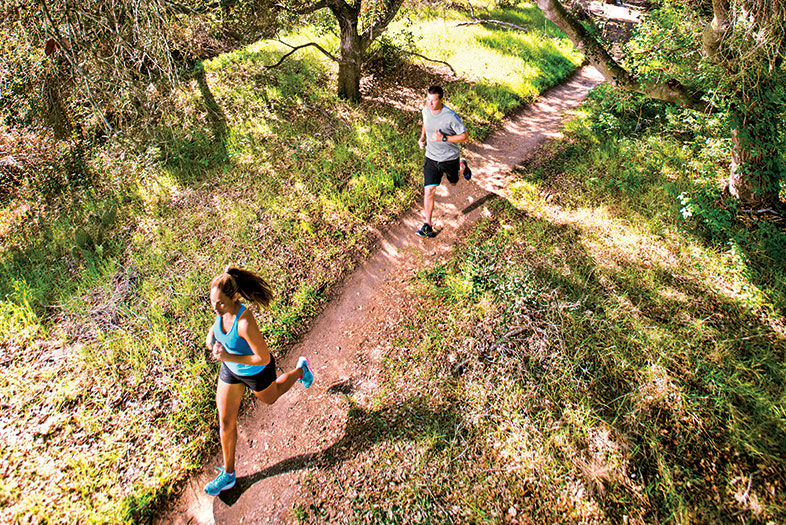
We love to exercise, but 100 miles? The intimidation factor is high. Here are the answers to some of our burning questions about the race.
Really. The San Diego 100 is considered an “ultramarathon,” which encompasses any run longer than a marathon’s 26.2 miles. So: 100 miles. On foot.
Road running is boring. The San Diego 100 takes runners along arguably the prettiest trails in San Diego County: the snaking Pacific Crest Trail, the riparian, shaded Noble Canyon, the pine-studded trails of Laguna Mountain Recreation Area, and the bright, lilac-smelling ceanothus bushes of the Rancho Cuyamaca Trails.
While San Diego weather might be sunny and in the 70s at the beach, the weather can be dramatically hotter or colder in the mountains. Most runners push through the first 50 miles of the event with temperatures near 100, whereas it’s frequently near freezing in the second half.
Volunteering is at the heart of the race. In order to run, participants must commit to doing at least six hours of trail work—which means clearing and maintaining San Diego trails for hikers, cyclists, and other runners. In total, more than 1,200 trail hours are put in each year. Race Director Scotty Mills coordinates 300 volunteers to operate the 16 aid stations on the course.
Most runners will need to consume 200-300 calories per hour, and while much of this is carried on their backs, aid stations situated every few miles fill in the blanks with fresh fruit, cookies, pretzels, pickles, and peanut butter and jelly sandwiches during the day and warm food like quesadillas, hot chocolate, and chicken soup at night.
It takes special training to run 100 miles. Groups like SURF (San Diego Ultra Running Friends) schedule weekly runs to various locations in the county, with member discounts to other annual races like the San Diego 50 Mile and Trail Marathon (held annually in February), or the Oriflamme 50K (April).
While the fastest runners will finish in as little 17 hours, the slowest will struggle to make it by the 32-hour time limit. Still, the average age is 43, with finishers ranging from 22 to 73 years old.
The San Diego 100 course is teeming with wildlife. Deer, skunk, bobcats, rattlesnakes and, very rarely, mountain lions may be spotted; nighttime critters, like tarantulas and the endemic kangaroo rat, are equally intriguing.
Now in its 16th year, the San Diego 100 is a popular race and tends to sell out. Before you sign up, you need to qualify by completing a 50-mile race within the last two years. Luckily, San Diego has no shortage of great races. Check out the Lost Boys 50 Mile (held in April) and the PCT 50 (held in May), which runs a portion of the Pacific Crest Trail in East County.
Pacers—people who accompany runners on course—are allowed in the latter half of the race. For those more hesitant to run by themselves in the dark, think of this as the perfect way to share in some starlit conversation. With 250 participants, it’s likely you’ll meet some friends on course. What better way to suffer than with a friend?
Your Next Challenge: The San Diego 100 Ultramarathon
