Featured articles
Food & Drink
Food & Drink
Food & Drink
Featured articles
Everything SD
Everything SD
Features
Featured articles
Things to Do
Everything SD

Everything SD
Featured articles
podcast-ep
podcast-ep

podcast-ep
Featured articles

Features

Features

Features
Featured articles
Charitable SD
Everything SD
Charitable SD
Ready to know more about San Diego?
SubscribeReady to know more about San Diego?
Service agencies get smarter about caring for our seniors in difficult times

Aging Roadmap illustration
Carlos Zamora
A homebound senior received her weekly box of milk, eggs, and bread delivered to her doorstep. But there was something extra in the week’s allotment: a birthday cake and a signed birthday card, just in time to mark another milestone during a hard year.
“We try to give them more than food,” says Sasha Escue, director of nutrition services for Jewish Family Service of San Diego. “She said it made her feel like she matters to someone else.”
Local agencies have rapidly scaled up their services for seniors during the pandemic, recognizing that a disease that disproportionately affects our older population also makes it harder for them to access basics like nutrition, transportation, technology, and even social interaction.
“Everyone knew there was work to be done, and we just did it,” Escue says. “The pandemic has given us an awakening about the urgent needs in our community.”
Jewish Family Service, which serves San Diegans regardless of religious affiliation, expanded its meal deliveries from 200 clients to more than 1,000, ultimately serving almost 1.5 million meals to isolated older adults from March 2020 to July 2021.
Despite advances in vaccine distribution, this elevated level of service to seniors will continue to be necessary. As COVID-19 and its variants continue to spread, the Silent and Baby Boomer generations are getting older. County data suggests seniors are becoming a larger share of the total population—by the year 2030, one in four San Diegans will be age 60 or older.
Jewish Family Service is one of many organizations contracted by the county of San Diego that pooled its talents and resources to better meet seniors’ needs. Volunteers and staff alike got to work when everything else shut down.
Fortunately, the county Health and Human Services Agency’s Aging & Independence Services (AIS) already has a new regional framework in place: the Aging Roadmap, a multipartner effort to make San Diego a better place to live for seniors and those with dementia.
The comprehensive plan, unveiled in 2019, builds on the county’s Age Well initiative that was launched in 2016. It targets ten priority areas: health and community support, housing, social participation, transportation, dementia-friendly resources, caregiver support, safety, preparedness and response, the “silver economy,” and the medical and social services system.
The Aging Roadmap envisions a San Diego in which older adults are acknowledged and included in a safe, thriving community. A “village” social support network helps them get rides to medical appointments, handle household chores, or attend social gatherings. This information should be easy to find and understand.
In the area of transportation, for instance, Roadmap collaborators envision neighborhoods where seniors can get around even if they don’t drive. County employees worked with regional transit services like the Metropolitan Transit System and North County Transit District to create a senior-focused transportation guide with information on costs, area of service, and contact information, particularly where service had changed due to the pandemic. The guide also explained how to use ride-sharing services like Uber and Lyft.
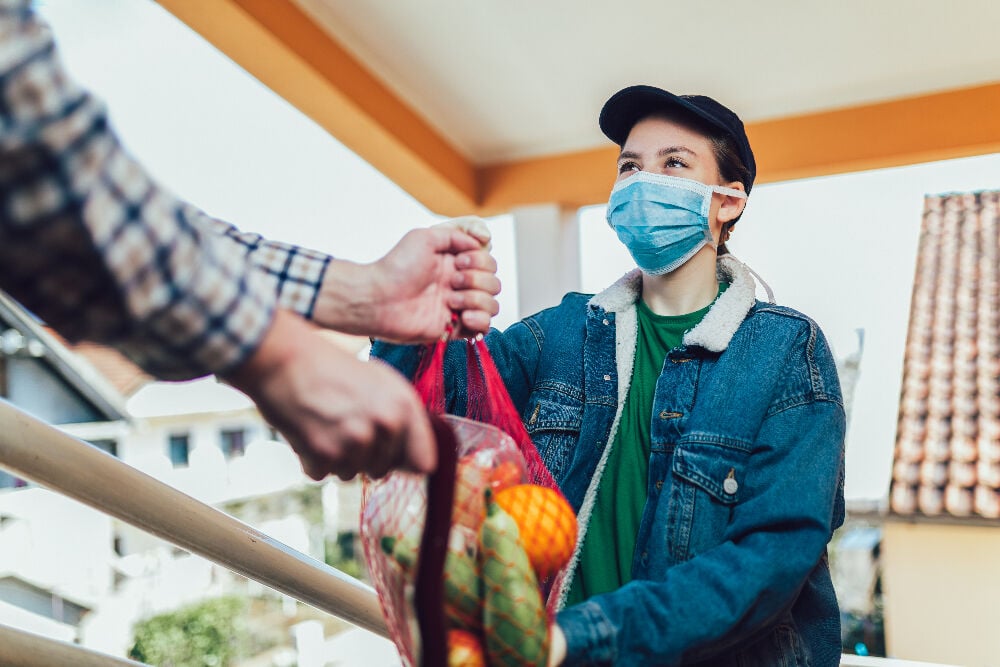
Aging Roadmap food delivery
In terms of housing, Aging Roadmap collaborators would like San Diego to have more affordable senior dwellings near shops and services. That means advocating for more affordable housing units in new construction, allowing accessory dwelling units (aka “granny flats”) to be built for older adults or their caregivers, and identifying and assisting seniors at risk of homelessness.
The Aging Roadmap was designed to be flexible. As such, it has adapted for pandemic-era realities with additional collaborators, new emergency response systems, and a greater emphasis on prepared meals, internet access, and safe transportation for older adults.
Kristen Smith, agency operations chief for AIS, says that their priorities haven’t changed, but the pandemic has “heightened the importance of some of the work. It certainly made specific projects a higher priority.”
For example, food insecurity for homebound and low-income seniors became a prime concern. One in three adults in San Diego is considered nutrition insecure, up from one in four before the pandemic, according to the San Diego Hunger Coalition. Since social distancing made congregate dining more difficult, AIS and its broad network of partners worked to boost home deliveries and drive-through food distributions.
Because seniors were one of the first cohorts eligible for the COVID-19 vaccines, AIS bolstered its outreach to low-income senior apartments and long-term care facilities. Its partners stepped up to get seniors informed, scheduled for vaccination, and transported to their appointments.
“Our job became helping people know about the available resources,” Smith says. Some of that outreach included old-fashioned phone calls to highrisk seniors. “We knew we needed to call them and find out if they were okay. We could ask, ‘Do you have your medications? Is your caregiver showing up?’”
County officials are working to expand services to be more equitable and inclusive. Phone services and materials like transit guides and dementia-friendly activity booklets are offered in multiple languages, and pilot programs are training seniors to use technology like social media and video chat. “We want to make sure we’re not leaving people out,” Smith says.
You can’t talk about our region’s COVID-19 response without noting the herculean efforts of 211 San Diego, a nonprofit that connects callers to more than 6,000 community, health, and disaster services.
San Diegans who call the 211 phone number can get free, confidential help finding available services 24 hours a day, seven days a week, in over 200 languages. During the pandemic, it has connected seniors to resources such as food delivery and vaccination appointments.
“We love our seniors. For us at 211, they’re one of our most important populations,” says 211 San Diego chief of staff Meg Hersman Storer, adding that when the pandemic hit, “we knew we were going to have to rise to the occasion. We had to be nimble.”
211 San Diego has helped about one million people— including seniors and their caregivers—navigate the testing and vaccine appointment process, according to Storer. In the first six months of vaccine availability, 211 staff helped schedule nearly 10,400 appointments. Some 69 percent of those were for seniors. San Diego phone staff at 211 are also trained to help seniors find free or low-cost rides.
As for food access, 211 San Diego estimates that more than 2,600 San Diego seniors who called 211 received contactless drop-offs of free groceries between March 2020 and March 2021. “Our goal is to always answer the calls with care and empathy,” Storer says. “We’re helping the unconnected get connected.”
In the priority area of medical services, the county of San Diego has been working with West Health and regional health care systems on the San Diego Senior Emergency Care Initiative. The idea is to make San Diego’s emergency departments more senior friendly for better health outcomes, coordinated care, and reduced costs.
One in five emergency department patients is a senior. Older adults have been at greater risk of serious illness from the coronavirus.
So far, 16 of the 18 participating San Diego EDs have applied for accreditation as geriatric emergency departments, according to Christy Patch, a community and aging policy specialist for the county Health & Human Services Agency. She says the other two ED applications— Naval Medical Center San Diego and Naval Hospital Camp Pendleton—are on hold due to the pandemic.
What comes next for San Diego seniors is anyone’s guess. With the Aging Roadmap, regional agencies hope they’ll be able to sufficiently meet older adults’ needs.
“We’ve been thinking, even when we saw the light at the end of the tunnel, that the people we’re serving will continue to be vulnerable,” says Sasha Escue of Jewish Family Service. “For the most part, many of these individuals who have been sheltering are suffering from social isolation, perhaps dementia, and other related diseases. We don’t want to drop them because the funding drops out or the political landscape changes.”
Collaborators on the Aging Roadmap stress that they’ll still need plenty of volunteers, donations, and community support as San Diegans continue to age.
What began as a small youth organization now reaches more than 45,000 San Diegans annually through community programs
For more than five decades, SAY San Diego (Social Advocates for Youth) has been helping local kids, families, and seniors navigate challenges they can’t face alone. The nonprofit serves as a beacon for local residents by offering more than 30 programs that range from youth mentorship and crisis support to increasing access to stable housing and mental health services to substance-use prevention and workforce development.
“For 55 years, SAY’s story has been shaped by listening to the community and being willing to grow with it,” says Louie Nguyen, SAY San Diego’s president and CEO. “Our mission is to partner with youth, adults, families, and communities so they can reach their full potential. That keeps us focused on the whole person, not just one immediate need. As San Diego evolves, we listen, work alongside trusted community partners, and adjust our services so they remain accessible, relevant, and rooted in opportunity, equity, and well-being.”
SAY San Diego started as a grassroots nonprofit with one paid employee and a budget of $1,500. The organization has since evolved from humble beginnings as a youth-focused agency into a comprehensive and far-reaching social services organization.
Several milestones mark SAY San Diego’s success, including partnering with local schools and neighborhoods to expand its child and youth development programs, family resource centers, and school-based mental health services; the creation of the San Diego Military Family Collaborative, one of the largest of its kind in the nation; and the opening of its licensed early childhood center that introduced an employer-supported childcare model.

What underscores SAY San Diego’s programs and opens the doors for lasting change is a willingness to listen and grow in response to emerging needs, says Nguyen.
“Lasting change comes from consistent support, strong relationships, and services that work together,” says Nguyen. “Our school-based programs have an especially broad reach, serving more than 6,500 young people across 57 school sites each day in places families already know and trust. Our mental health programs also stand out, with 72 percent of participants reporting improved emotional well-being. But the real strength of SAY is that a family can connect with early childhood care, parenting support, youth development, mental health services, or community resources as their needs change over time.”

Much of SAY San Diego’s impact is possible thanks to partnerships with individuals and organizations across the county. Nguyen hopes to further expand that community investment through initiatives like its Play 4 SAY fundraiser, which brings together corporate partners, foundations, and other supporters. However, challenges remain in “meeting rising demand while public funding, workforce capacity, and the broader nonprofit environment remain uncertain,” he says.
As economic instability, rising housing and childcare costs, and access to mental health services continue to affect San Diegans, SAY San Diego’s role is more important than ever. The organization hopes to build on the foundation it has built over the past 55 years and continue to help kids, families, and communities thrive.
“Today, we reach more than 45,000 San Diegans each year, but our goal is not simply to grow larger, it is to create a deeper, more lasting impact,” says Nguyen. “Our next chapter is about strengthening what works, expanding access to mental health and family support, investing in our people, and bringing partners together to build a stronger San Diego.”
Sarah Sapeda is San Diego Magazine’s Custom Content Editor. In her 15 years in San Diego journalism, she has covered charitable events, health care, education, crime, current events, and more.
The beloved annual festival raised a record-breaking $60,000 for Feeding San Diego
More than 6,000 ice cream lovers devoured tasty treats at this year’s Scoop Ice Cream Festival for a great cause. The event on June 28 launched an ongoing partnership with Feeding San Diego and raised $60,000, or enough to provide 120,000 meals to San Diegans facing hunger.
See photos from the night below.


Sarah Sapeda is San Diego Magazine’s Custom Content Editor. In her 15 years in San Diego journalism, she has covered charitable events, health care, education, crime, current events, and more.
Here’s where to celebrate, connect, give back, and make a difference this month
Raise money for cancer research while you work out at the Curebound Cancer Challenge. Fundraisers will cycle along the San Diego coastline, run a 10K on the UC San Diego campus, and participate in group spin, yoga, and strength classes.
Patrons of the Prado will channel 1950s Havana at this year’s Masterpiece Gala. Club Masterpiece: One Haute Havana Night will raise money for Balboa Park cultural institutions and will include a special honor for philanthropists Joan and Irwin Jacobs.
Golfers will tee off to support Boys to Men Mentoring at the CaddyHack Golf Festival. Celebrating its 10th anniversary this year, the charity golf tournament will include golf, music, food, and fun at Fairbanks Ranch Country Club.
Acclaimed San Diego musicians will join together to support TERI’s programs and services for individuals with intellectual and developmental disabilities. The Music By Eras performance at TERI’s Bornemann Theatre will feature artists Whitney Shay, Jesse Ray Smith, Lauren Leigh, and Will Stucky.
Las Patronas will recreate the magic of Venice at its 80th annual Jewel Ball. Las Patronas has spent the entire year preparing for the event, as well as raising money to support nonprofit organizations across San Diego County.
Help Shelter to Soldier train rescue dogs to be psychiatric service animals for local veterans at the 14th annual Be the Light Gala aboard the USS Midway Museum. The gala will include silent and live auctions, dinner, dessert, and appearances by canine ambassadors and veteran recipients.
St. Madeline Sophie’s Center will celebrate its “hidden diamonds” at its 48th annual Haute with Heart Fashion Show. The lively event at the Hilton San Diego Bayfront will include a pre-luncheon reception, live music, a live auction, a stunning fashion show, and surprise entertainment to benefit the nonprofit’s programs for adults with intellectual and developmental disabilities.
The Bacon Brothers will perform with the San Diego Symphony at this year’s Concert Under the Stars. Now in its 30th year, Symphony at Salk supports research in areas such as cancer, Alzheimer’s, wellness, and agriculture.
La Jolla Music Society supporters will enjoy an evening of exclusive performances at its SummerFest Gala 2026. The event at the Museum of Contemporary Art San Diego will raise money for La Jolla Music Society’s artistic, learning, and engagement programs.
Tee off to help San Diegans facing homelessness at Alpha Project’s 16th Annual Charity Golf Classic. The four-person scramble at the Rancho Bernardo Inn Golf Resort and Spa will support the Alpha Project’s housing, employment, recovery, and support services.
Walkers will join forces to celebrate cancer survivors and remember those who lost their fight at the annual Relay for Life of San Diego. The 24-hour relay at Liberty Station NTC Park is part of a global network of similar events that raise money for the American Cancer Society.
United Way of San Diego County will host its A Night United: Illuminating the Way gala at Eve, an event destination on San Diego Bay. The elegant evening will benefit UWSD’s mission to improve lives and strengthen communities across the region.
Sarah Sapeda is San Diego Magazine’s Custom Content Editor. In her 15 years in San Diego journalism, she has covered charitable events, health care, education, crime, current events, and more.
NOW CFO provides scalable, on-demand accounting and finance support to companies ranging from pre-revenue startups to billion-dollar businesses
Entrepreneurs typically launch businesses because they’re passionate about a product or service, not because they want to manage its finances. While working to carve out a niche in their respective industries and drive their companies forward, many business owners find themselves bogged down by day-to-day accounting. Their existing accounting tools don’t provide the necessary visibility or insight, and they don’t have the time or resources to hire additional staff or a chief financial officer. That’s where NOW CFO comes in.
For more than 20 years, NOW CFO has been pairing businesses across the country with experienced accounting and finance professionals. Its outsourced model allows clients to customize solutions that match their individual needs, size, and financial challenges, whether that’s fractional or interim support, project-based services, or full-time placement.
NOW CFO’s clients range from startups preparing for rapid growth to established companies that need additional financial leadership without the commitment or expense of building an in-house team. However, many of these companies don’t fully understand their needs until they experience a “trigger” event: preparing for an acquisition or capital raise, navigating a first-time audit, or another period of transition. With a team of over 300 consultants nationwide, NOW CFO can start quickly and match the right expert to the right business.

“It’s important for companies to have financial visibility, and we can help them avoid a lot of the potholes that companies often run into,” says Mariah Block, a partner at NOW CFO’s San Diego branch. “Roughly half of our clients have an in-house finance person or department, and we’re resourced for more bandwidth when they need an extra set of hands at the staff or senior accountant level, or the controller or CFO level. Some clients use this a few hours a month and others use multiple people close to full-time. Our model is solution-based and customizable. We’re like a faucet you can turn on and off.”
With NOW CFO, there’s no one-size-fits-all approach. Solutions are based on the client’s individual goals, challenges, needs, and budget, meaning a client never pays for more than they need. Whether it’s a few hours of executive-level guidance or a full accounting team to support daily operations, NOW CFO meets businesses where they are and grows alongside them.
“We pride ourselves on providing our clients with the right resources at the right rate and being able to evolve as their needs evolve,” says Block.
And clients appreciate on-demand access to cost-effective support designed to improve performance and profitability.
Luxury car storage service Auto Concierge has partnered with NOW CFO to support growth over the past year. The arrangement began with a staff accountant who covered a leave of absence, but as the client’s needs changed, they also added a controller role. This allowed Auto Concierge to put effective processes in place and navigate operational challenges. Lori Church, Auto Concierge’s chief operating officer, says NOW CFO has been an “outstanding resource” and a “true strategic partner.”
“From the controller to the bookkeeper, every professional they’ve placed has brought a high level of expertise, responsiveness, and professionalism to our organization. Their team took the time to understand our business of high-profile clients and needs, adapted quickly to our fast-paced environment, and became a trusted extension of our team,” she says. “As Auto Concierge continues to grow, having a reliable financial partner like NOW CFO has allowed us to strengthen our financial and business operations while remaining focused on delivering exceptional service to our clients.”
Inspired by her own experience, founder Elena Barbour has set out to help struggling women thrive
Divorce, adjusting to single motherhood or coparenting, and the unexpected adjustments that come with it can turn even the most put-together woman’s life upside down. For many, these shifts trigger a profound loss of identity as that chapter of life officially comes to an end.
While Elena Barbour was navigating a divorce and raising two young children, other women in her circle shared similar experiences—one, a high-powered attorney, said divorce was the hardest thing she’d ever gone through. Barbour realized that women like them who’d gone through divorce, separation, or trauma needed support, but unless they qualified for low-income assistance or could pay top dollar for private services, there weren’t a lot of options. That led to the creation of the Luma Initiative, a nonprofit organization that aims to connect women with the practical resources needed to rebuild after a major life transition. The organization is currently developing its programming and plans to open to its first (already full) three-month cohort of women this fall.
“I consider myself a very strong, competent woman, but what I went through shook me,” Barbour says. “[There were] all these things that I did not expect, and that a lot of people looking from the outside couldn’t see necessarily. It was hard to relate. And I found that after coming out of this divorce, I needed to reshift my community a little bit because the challenges and the life stage of where I was compared to where they were now was just so different—even though I was surrounded by people, I felt very alone.

“So [we’re] trying to create that sense of community in this place for women to be like, ‘All these women are going through something similar and when I talk with them, I don’t feel so alone and I can let go of some of the negative feelings I’m feeling, and I can […] start to rebuild.’”
Luma Initiative’s program will include licensed therapist-guided support groups, and support via financial literacy advisors, life coaches who specialize in career building, and family law attorneys, plus therapeutic yoga at sister business Luma Yoga. They’ll also work with other nonprofit organizations as needed to create a “one-stop, well-rounded, holistic approach to supporting women who are going through this really big transition of life,” Barbour explains.
Barbour says Luma Yoga Studio in Little Italy will serve as Luma Initiative’s physical base, transforming into a familiar community-centered home away from home where women can feel safe. She leaned into yoga and the breathwork, meditation, and mindfulness that often come with the practice to get through tough times, and carries those tools with her “off the mat.” She hopes that other women will find that same sense of nervous system regulation. She emphasizes that Luma Initiative and Luma Yoga work as an ecosystem that provides both wellness and tangible support.
“The goal with Luma Initiative will be to help these women come back to themselves and their identity through community, and use community as a platform to rebuild,” she says.
Sarah Sapeda is San Diego Magazine’s Custom Content Editor. In her 15 years in San Diego journalism, she has covered charitable events, health care, education, crime, current events, and more.
Volunteer Meredith Wood shares how the organization distributes diapers, period products, and other essentials while building community across San Diego
Just shy of 100 years ago, a group of determined women came together to improve the community and help their fellow San Diegans. They formed the Junior League of San Diego, a local chapter of the nationwide cohort of women with a mission to create meaningful community impact through volunteer action, collaboration, and training.
Today, the Junior League of San Diego is one of 291 Junior Leagues in the U.S., Canada, Mexico, and Great Britain. Locally, the league works to collect essential items, such as period products, diapers, clothing, food, and school supplies to distribute to underserved communities, and pitching in to help other nonprofits fighting food insecurity.
Volunteer Meredith Wood has spent the last two years on the donations committee. Here, she details her experience.
I first joined the Junior League in 2024, after I moved to San Diego from the East Coast. I wanted to meet people, specifically more women, and get involved in the community. In my first year in the Junior League, I was placed on the donations committee. That was my first glimpse into the work, specifically with donations. After a year of doing that, I applied to be the chair, so I did that this past year. It was an awesome experience.
So last year as the chair, I led a team that organized our donation drives, so that includes marketing the drives, managing the inventory, and then coordinating with community partners to distribute the donations.
I love working with other women in the league. Everyone is so enthusiastic and brings such bright ideas to the table. Everyone I’ve worked with is so passionate and committed to bettering the community and doing what they can, and they have fun while doing it, which I think is so important because it makes it sustainable.
So far, the biggest challenge as the donations chair has been seeing the huge need for specifically diapers and menstrual products in the community (JLSD operates a Diaper Bank & Period Pantry). It seems like no amount of supply we’ve ever had has been able to meet the demand, which can be a little disheartening at times. But to that, I try to remember that any difference that we make is valued and important. That’s what motivates me to keep going.

That’s a tough one because every time I volunteer at the Junior League, it genuinely is such a fun time. I always really enjoy going to PATH and prepping and serving meals there. The staff and residents are all so awesome, and it’s always a really fun experience to cook with Junior League friends and serve that way.
Then another memorable one was when SNAP funding was on pause back in the fall this year. We mobilized pretty quickly within two weeks and got all our donations out the door, and were handing them out alongside a food pantry in San Diego. That was a really special moment to just connect with the community, see directly where donations were going, and ask people what they needed. We learned that some of the supply that we had didn’t align with the demand, so it was a really big learning experience, too.
Sometimes I’ve struggled, wondering if my efforts have been enough, and I’m sure there’s someone else out there, too, who’s wondering the same thing. But there’s no effort that’s too small, and people really just appreciate anything you can do to better the community. So, find something that you care about and then figure out how you can add value to it. Bonus if you can invite a friend to join you and just make it that much more fun.
The Junior League has given so much to me in the two years that I’ve been a part of it. For starters, the learning experience of how do I even manage a committee and raise donations and get them out into the community has just been such a great opportunity. I highly recommend any woman who wants to get involved in San Diego to join the league. And if that’s not your cup of tea, we’re always taking donations, specifically menstrual products and diapers. We take them all year at 210 Maple St. in San Diego and try to get them out every couple weeks. We have Amazon links on our website as well.
Sarah Sapeda is San Diego Magazine’s Custom Content Editor. In her 15 years in San Diego journalism, she has covered charitable events, health care, education, crime, current events, and more.
It’s a Self-Care Summer. Because your best self is our favorite self.
If you’re anything like us, it can be easy to get so caught up in taking care of everyone else, that your own needs get lost in the ether. But while this may be a cliché, that doesn’t make it any less true: You can’t give your best self to other people unless you’re taking care of yourself.
Sometimes, that looks like stopping in for your regular acupuncture or chiropractic appointment. Other days, it means giving your body the fresh, organic fuel it needs to truly feel and function at its best. And some other times still, it involves leaving your responsibilities behind for a weekend to pamper yourself at an incredible resort and spa.
Only you can decide what your truly need. We’re just here to help you find the best ways to get it.

Island living meets desert luxury at the Tommy Bahama Miramonte Resort & Spa in Indian Wells. When you step onto the 11-acre property, you’ll be surrounded by sweeping view of the Santa Rosa Mountains with olive trees and fragrant citrus groves decorating the grounds. In other words, everything about this relaxed but refined resort is primed to help you let go of the stress from home and enjoy easy sun-soaked days and gorgeous starry nights.
The rooms blend calming, woven textures with Tommy Bahama’s signature tropical prints and feature private lanais, making it easy unwind the moment you walk in the door. If you book one of the four Villa Suites, you’ll be treated to exclusive Tommy Bahama furniture and unique personal touches to further that feeling of instant ease.
At the award-winning Spa Rosa, the expert team will help reset and recharge your body and mind using methods and rituals inspired by the desert. The 12,000-square-foot retreat includes outdoor soaking pools, eucalyptus steam rooms, and outdoor cabanas, as well as massages, facials, and body masks—all aimed at creating a day dedicated to you. We’re particularly partial to the Day Long Escape, an indulgent all-day affair of CDBs soaks, renewing scrubs, life changing massages, and transformative facials.
Following your treatment, continue the experience with a meal on the patio at Grapefruit Basil. We love the Hamachi Crudo, a light, citrus-forward dish featuring premium yellowtail, house-made ponzu, creamy avocado, and fresh seasonal garnishes.
Whether you’re strolling the gardens, relaxing beside its saltwater pools, or indulging in a restorative treatment, you’ll be able to escape in style and relax in luxury at the Tommy Bahama Miramonte Resort & Spa.

There’s no shortage of ways to stay active in San Diego—but if you really want to enjoy everything the city has to offer, you’ve got to make sure you’re giving your body its tune-ups. Enter: Healcove Chiropractic. The board-certified chiropractors and wellness professionals at Healcove are experts at addressing that stage where you’re not injured, exactly, but you’re not at 100%, either. Maybe you’re feeling a bit tense or stressed out. Or it could be that you’re not quite moving the way you want to. Sometimes, it’s just that the accumulation of days, weeks, or even years of daily strain is starting to take a toll. No matter what stage you find yourself at, the Healcove Chiropractic team can provide integrated, preventative care centered on long-term, science-backed approaches that ensure you can always stay active and live the life you want to live pain-free.
This starts by providing truly individualized care. Every patient can expect a thorough 60-minute consultation session that includes a posture and movement screening. This allows the team to develop a completely personalized plan. That plan might include chiropractic care, acupuncture, or massage therapy, as well as functional fitness training, vibration and sound therapy, and Dynamic Neuromuscular Stabilization, a clinical rehabilitation method that retrains the body’s stabilization systems. Whatever the team recommends, you can be sure that it’s tailored to meeting your body’s needs today and the future.
There’s a reason that San Diego Magazine named Healcove the “Best Chiropractor in San Diego”—don’t wait until you’re struggling with an injury to find out why. Book an appointment today for holistic, integrated care that helps ground and heal your body before it reaches a crisis point.

West Coast wellness culture meets the community feel of Southern Appalachia at Juice Holler. Juice Holler’s menu consists of made-to-order smoothies and smoothie bowls, as well as grab-and-go cold-pressed juices, wellness shots, salads, and more. It operates from the blissfully simple premise that fueling up with food and drink that’s guilt-free and good your body should be simple, accessible, and, above all else, delicious. And if you haven’t yet made it out to the Encinitas café, which opened just this year, let us be the first to tell you: Juice Holler delivers on each and every of these fronts.
We love the Supercharger smoothie, a mood-lifting and body-fueling option made with banana, almond butter, blue spirulina, maca, grass-fed whey protein, raw cacao nibs, medjool dates, and coconut milk. We’re also partial to the Thrive Alive smoothie bowl, where avocado, mango, sea moss, spirulina, mint, coconut milk, and agave are mixed and topped with coconut, chia seeds, strawberry, mango, and chocolate drizzle. The wellness shots include the Detoxifier, a cleansing blend of kale, cucumber, lemon and spirulina, plus a shot specially designed to fight inflammation (named, fittingly, Anti-Inflammation). Probiotic overnight oats, lemon turmeric bars, and strawberry shortcake chia pudding are other standouts on the grab-and-go menu.
Much of the vibe feels beachy North County chic—think green tile with orange and pink accents, grounded with greenery and natural wood—but Juice Holler founder Kelly Sergott, a longtime Encinitas local, has also enfused the space with her Kentucky roots. In Appalachia, a holler is small valley between hills and mountains, where nature reigns, community is king, and nourishment comes right from the land. At Juice Holler, Sergott has created a holler for the busy modern times, using local ingredients to create a spot for people to come together and enjoy fresh, fast, feel-good fuel for their day.

We’ve all had that experience with a medical professional where we’ve felt rushed, ignored, or misunderstood—and ultimately, like we didn’t get the answers that we needed. But at Everwell, the holistic acupuncture practice located in Solana Beach, the care team wants to transform your understanding of what healthcare can look like.
Patients at Everwell experience care rooted in intentional listening and radical empathy—and trust us, those aren’t just corporate buzzwords. This place actually puts those ideas into practice. You will always be given the time you need to tell your story— initial in-take appointments are two hours long—and you can rest assured that your story will be believed. Every single question and concern will be addressed by a dedicated practitioner who wants to find the specific solutions that work best for you, and you’ll receive care that’s aimed at healing the body, mind, and spirit.
Everwell’s highly trained, doctorate-level practitioners blend evidence-based acupuncture with the practice of classical Chinese medicine. (If you’ve never tried acupuncture before or aren’t sure if the team will be a fit, we’d highly recommended Everwell’s complimentary 20-minute consultations.) Research shows that by stimulating specific points on the body, acupuncture activates a natural healing response in the body, helping to restore balance, regulate the nervous system, and improve overall wellbeing. This allows the practice to address an incredibly wide range of conditions from chronic pain and autoimmune disorders to digestive issues, from stress and burnout to headaches migraines, fertility and postpartum struggles, hormonal imbalances, sleep concerns and more.
At Everwell, you can expect to feel heard, trusted, respected, and cared for. This is a space that doesn’t want to be just another healthcare provider you visit; it wants to provide patients with dedicated partner who will be there for their entire health journey.