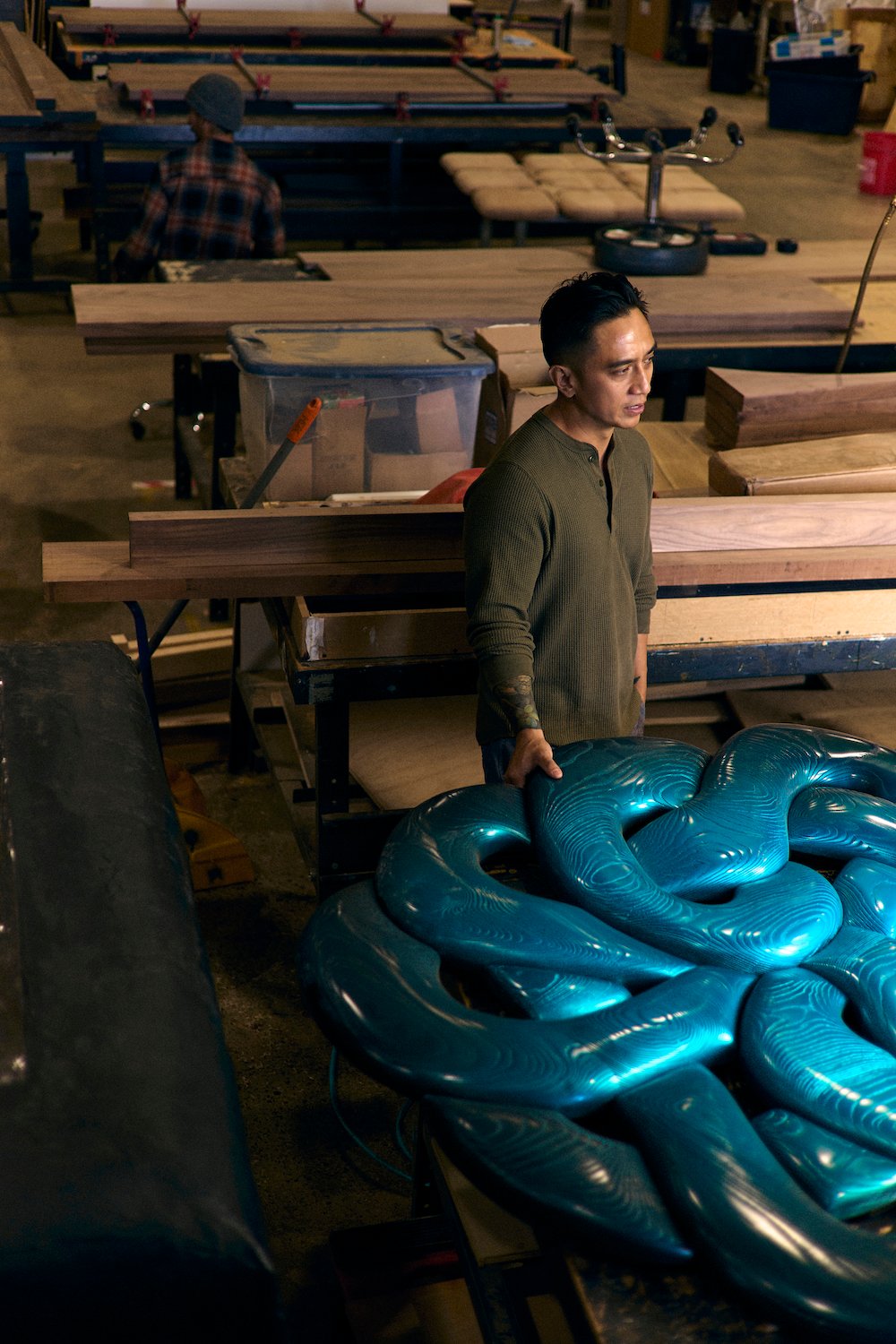
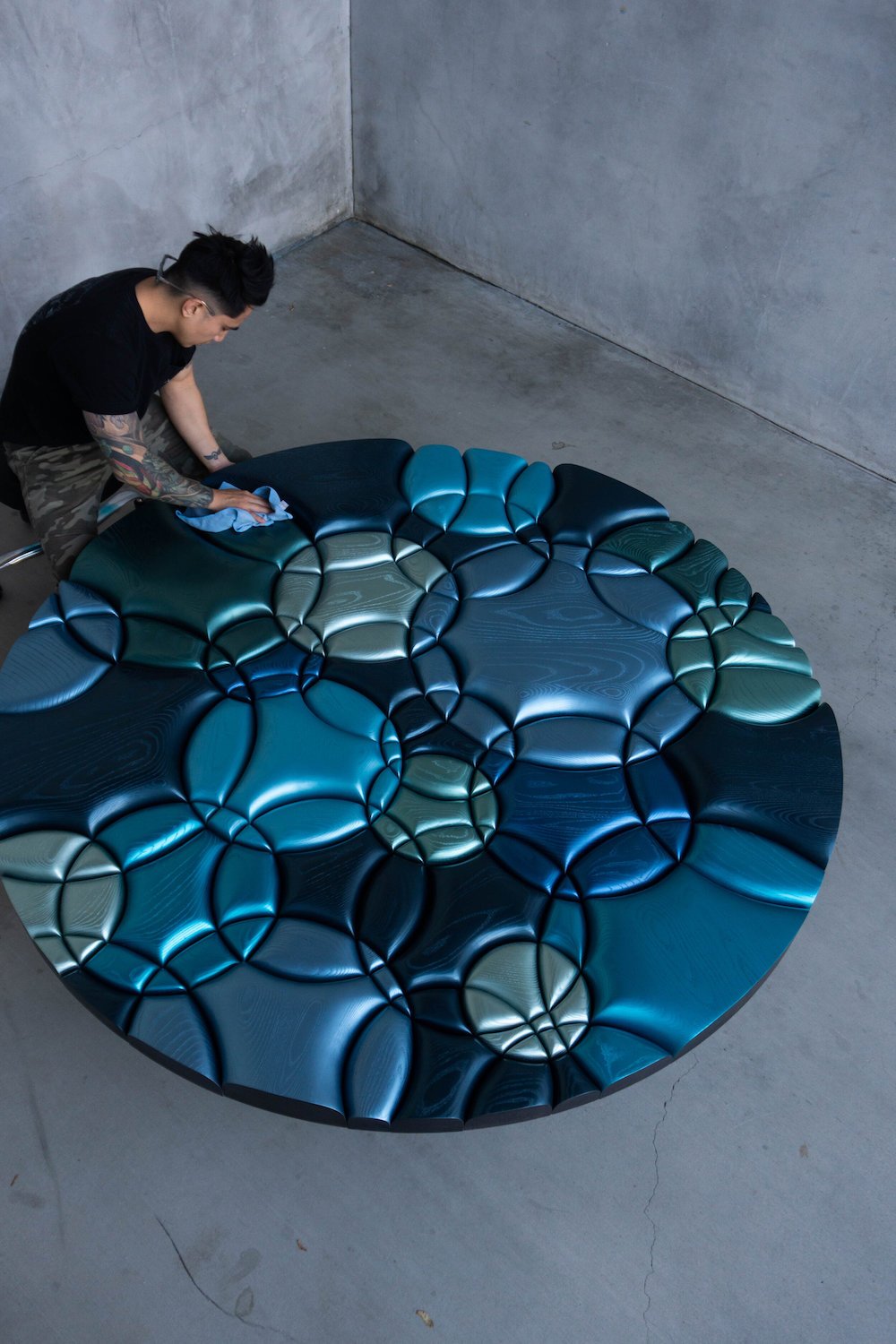
Dan Nguyen is having trouble with the Viper Pit. Its iridescent curves threaten to slip from his hands, even with his assistant, Christian Ramirez, shouldering half its weight as they attempt to mount it on a few freestanding photo boards. The metallic teal of a blue morpho butterfly, the undulating, carved ash wood sculpture is the brightest thing in this vast warehouse permeated with the whir of machinery and the earthy scent of sawdust. At 100 pounds, with a 54-inch diameter, it demands your gaze.
“Bigger works have a different type of presence,” says Nguyen, who goes by Nuge, an affectionate nickname lifted from a mispronunciation of his last name. “It can change the energy in a room.”
Nuge would know. The Boston-born artist began his career as an architect, studying the craft at Roger Williams University in Rhode Island. “It was a fulfilling experience for me because I love design. I love to draw and work with my hands—I got to build physical models for my designs,” he says. After he obtained his master’s, “I moved out to San Francisco, and then, right away, I realized that the world of architecture versus what life in school was like was completely different. For the entire process of designing a home and all the work that goes into it, the designing is maybe two percent of the process.”
Photo Credit: Matt Furman In 2020, Nuge moved his operation into shared Miramar makers’ space Maketory.
After 18 months in SF, Nuge moved to an architecture firm in San Diego but found the work increasingly draining and creatively stifling. Desperate for an outlet, he took a weekend-long wood cutting board–making class, with ambitions of eventually crafting furniture. “That alone was one of the most gratifying feelings because, up until that point, I never got to own any part of the process,” he recalls. “But this simple cutting board—from the concept to the final product, all of it was mine. I was hooked.”
He began woodworking daily after his 9-to-5. Then, in 2016, he got laid off from the firm. He took it as an opportunity to pursue art more seriously. “I told myself—and also my mom—that if this didn’t work out in six months, I’d apply for more jobs in architecture and get back to the grind,” Nuge says.
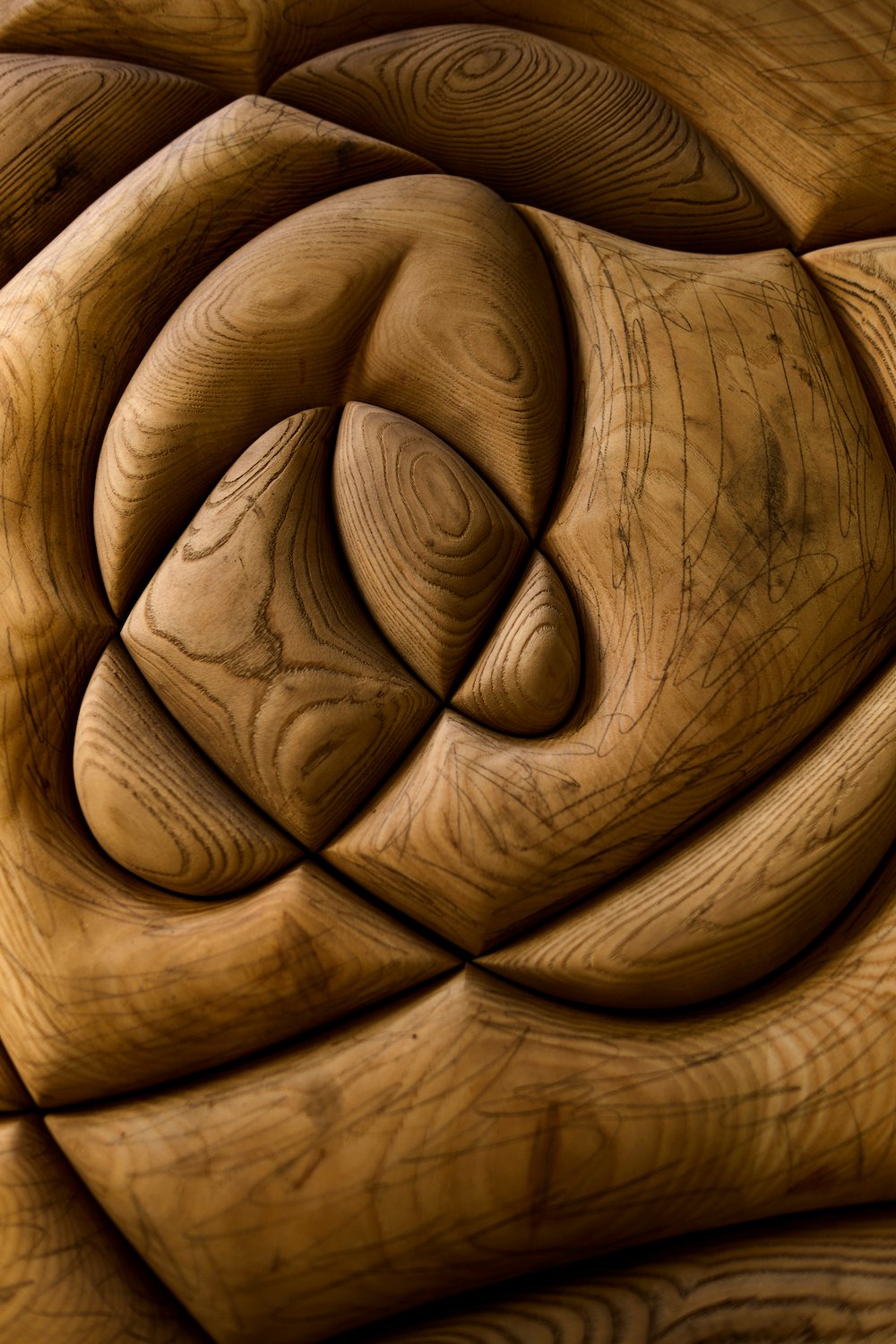
Photo Credit: Matt Furman Nuge’s work celebrates wood’s unique grain and unexpected softness.
One of his first clients was sales director Jeffrey Bitner, who gave him full creative license. As Nuge worked on the piece, the two became friends and eventually roommates in Del Mar. Nuge credits Bitner as a vital sounding board for his creative process—and the piece, with its rippling texture (inspired, Nuge explains, by rumpled bed sheets) and shiny, single-color paint that shows off the wood’s grain—would become emblematic of Nuge’s style.
“It’s almost like he’s had all of these ideas and thoughts running through his head his whole life, and, finally, everything was exploding out of him and he was able to start creating and getting all this stuff out and letting it flow,” Bitner recalls of the early days of Nuge’s practice. “You could just see the light inside of him.”
Others saw it, too. Steady sales at $10,000 to $25,000 per piece allowed Nuge to keep making art full-time. He placed his work at a number of galleries. Tiffany & Co. commissioned 10 pieces, displaying them at stores as near as Palo Alto and far-flung as Tokyo. In 2023, he landed his first museum show, a three-month exhibition at the Lancaster Museum of Art and History in LA County.
While he’s currently in the process of moving into his own dedicated space, since 2020, he’s crafted every piece in Miramar at the shared makers’ space Maketory—where Viper Pit finally slides into place, ready to be photographed.
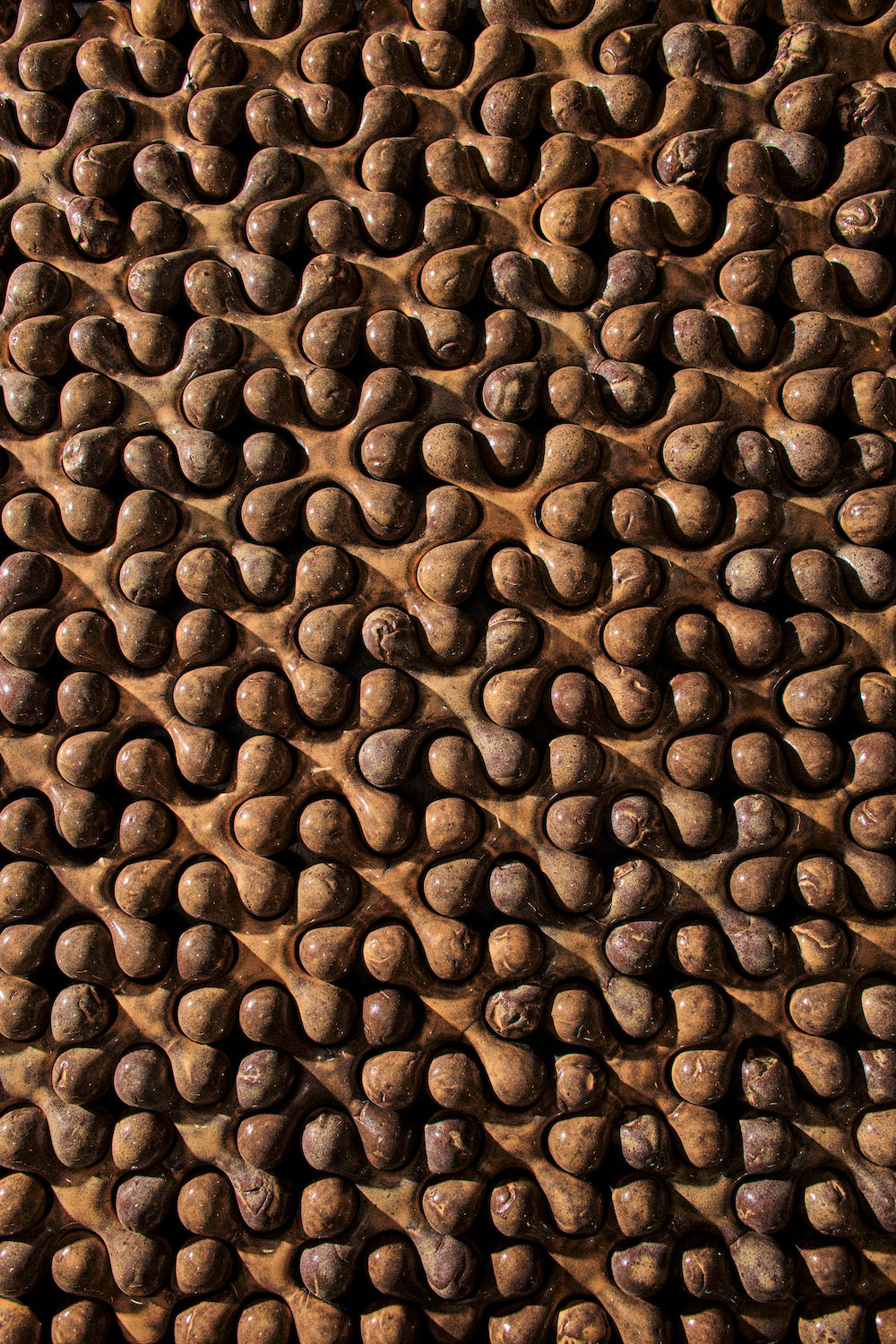
Photo Credit: Matt Furman Intricate, repeated textures are a hallmark of the artist’s work.
Stepping back, Nuge’s assistant Ramirez floats a fingertip over the contours of the piece’s deep wood grain. “Sandblasting gave it that definition,” he explains.
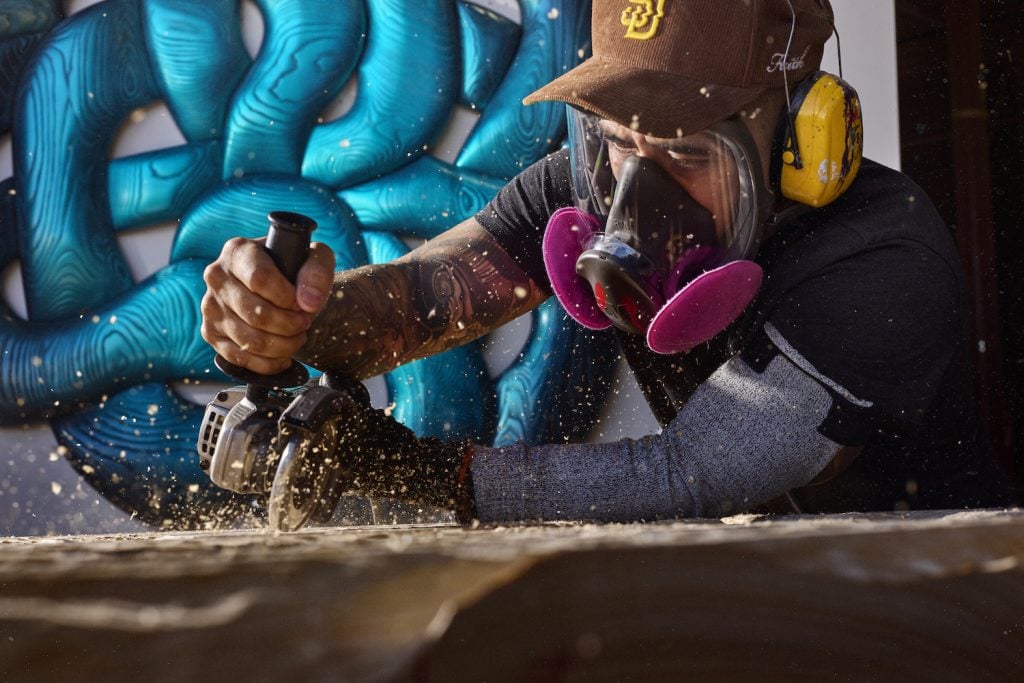
Ramirez has been working with Nuge for three years. He helps Nuge carve, sand, sandblast, and paint his massive-scale pieces, which can take up to five months to complete. Albert Dawson, another employee who recently resigned to pursue an MFA, spent three years supporting Nuge’s efforts, too. But, while there is a long legacy of artists who have managed to ramp up production by delegating most of the labor to assistants—Rembrandt, Andy Warhol, Jeff Koons—that list won’t ever include Nuge.
Photo Credit: Matt Furman & Liv Shaw For Viper Pit, Nuge “wanted to go scaly kind of vibes,” says his assistant, Christian Ramirez. “Snaky, but not super literal. It’s like serpents slithering underneath each other.”
“I love working,” he says. “If I’m not in the studio, I’m more like an art director, rather than an artist with my hands in it. I want to steer the creative ship.”
That’s also why, in addition to completing commissions for private collectors and the occasional corporate or business client, Nuge consistently dedicates time toward personal projects. “This past year, I made it a point to play with new materials,” he says.
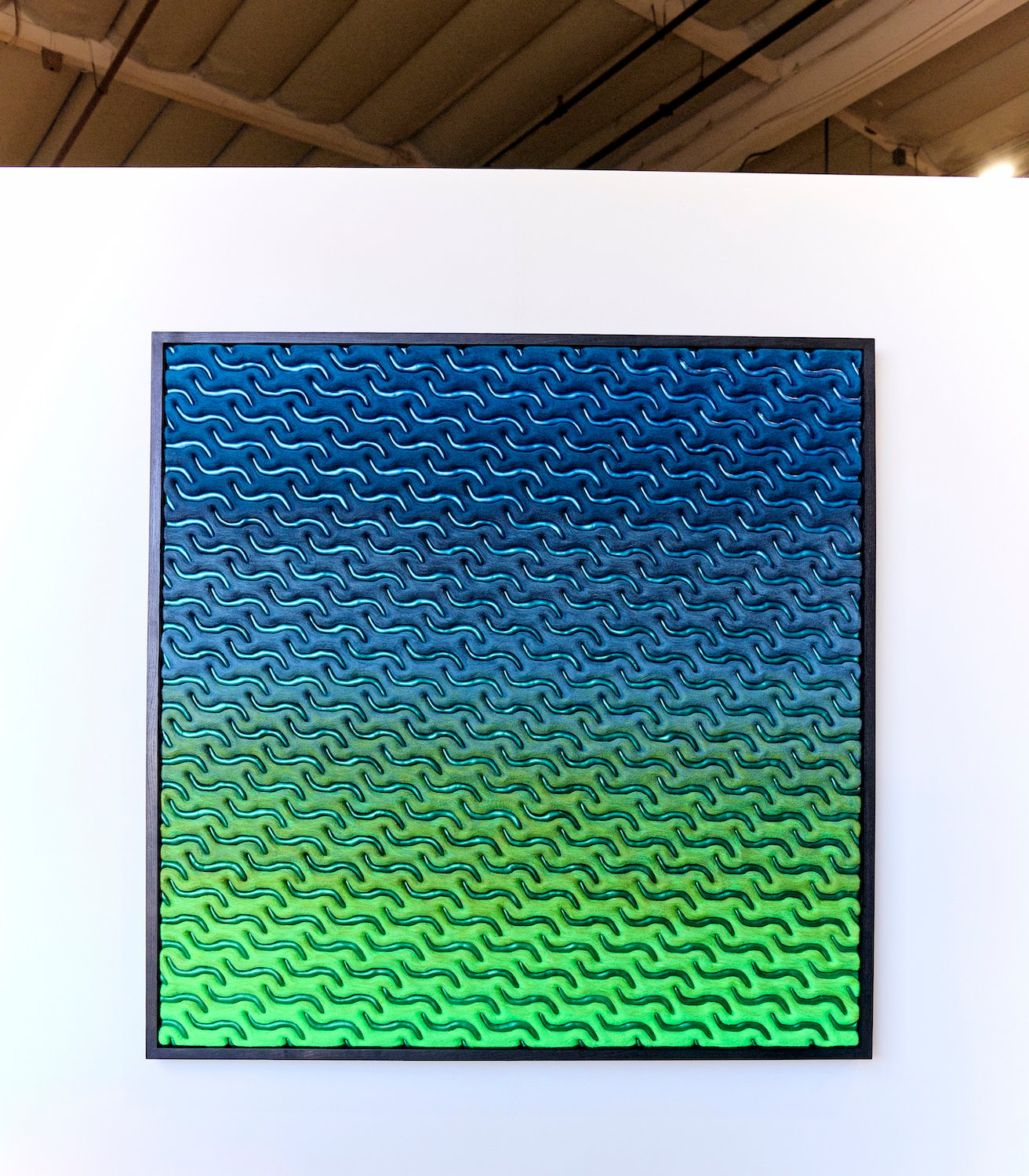
Photo Credit: Matt Furman Made of foam, felt, and epoxy clay, Wiggle Room (2024) represents Nuge’s recent foray into new materials.
In the aptly named Wiggle Room, for example, waves of epoxy clay squirm across a heathered terrain of blue-green felt. Nuge has expanded into ceramics, too, using wood to create textured silicon models that give his clay pieces the same grain and gravitas as his hallmark works. Piled on a table in one corner of the warehouse are ceramic structures a few feet tall, with interlocking sections reminiscent of vertebrae. Nuge plans to stack them into one massive pillar, he says, studying a minute fissure in one slab. “The cracks aren’t too bad,” he decides. He gestures toward another ceramic piece. “That has ’em, and that makes it look like an ancient ruin.”
Photo Credit: Liv Shaw
His goal is to give commissioning clients an expanded reference point for the Nuge aesthetic. “Typically, they point to pieces I’ve made and say they want something like that,” he explains. “If I want people to ask me to make it, I have to make it first.”
However, not everyone is so prescriptive. Shane Foye, managing partner at jobsite management firm Discount Waste Inc. dba DW1, gave Nuge carte blanche on the two pieces he requested for his art-filled Georgia office, where Foye curates a sealed private collection.
“Normally, I wouldn’t do that, but you could tell that he cared about it probably more than anyone that’s ever going to get a piece from him. He wants that outcome to be perfect,” Foye explains. “For the first piece, I just sort of put it in his hand and said, ‘Is there something you’ve always wanted to create?’”
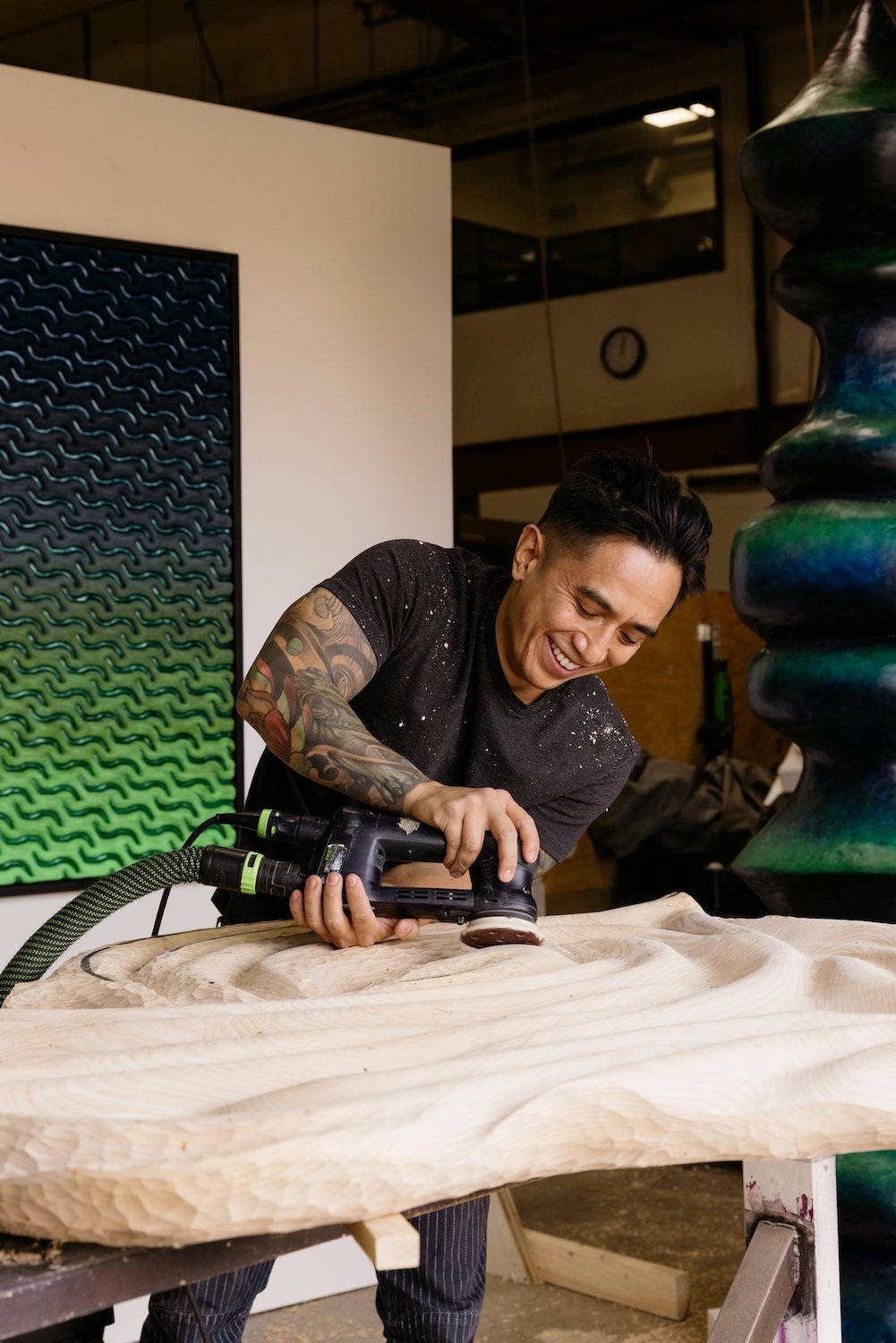
Courtesy of Dan Nguyen Dan putting the finishing touches on Dreamland
The result was Dreamland, a 72-inch-diameter, ash wood circle in varying shades of blue. Its 136 pieces form smaller, overlapping circles across the work, like a puddle disturbed by a soft rain.
“I consider him to be a very visionary thinker,” Foye adds. “He has [each piece] so crystal-clear in his head that the complexity to get it done is way more involved than he would ever portray. It seems so simple when he’s explaining it, but I can’t imagine the challenges he faces when producing [the work].”
Nuge doesn’t shy away from discussing the hard parts. “I don’t know why, but I thought that ceramics would be less labor-intensive and more Zen. And it has been the exact opposite of that,” he admits. “It’s so stressful. It’s even more finicky than wood.” Yet a key word comes up more than once: play.
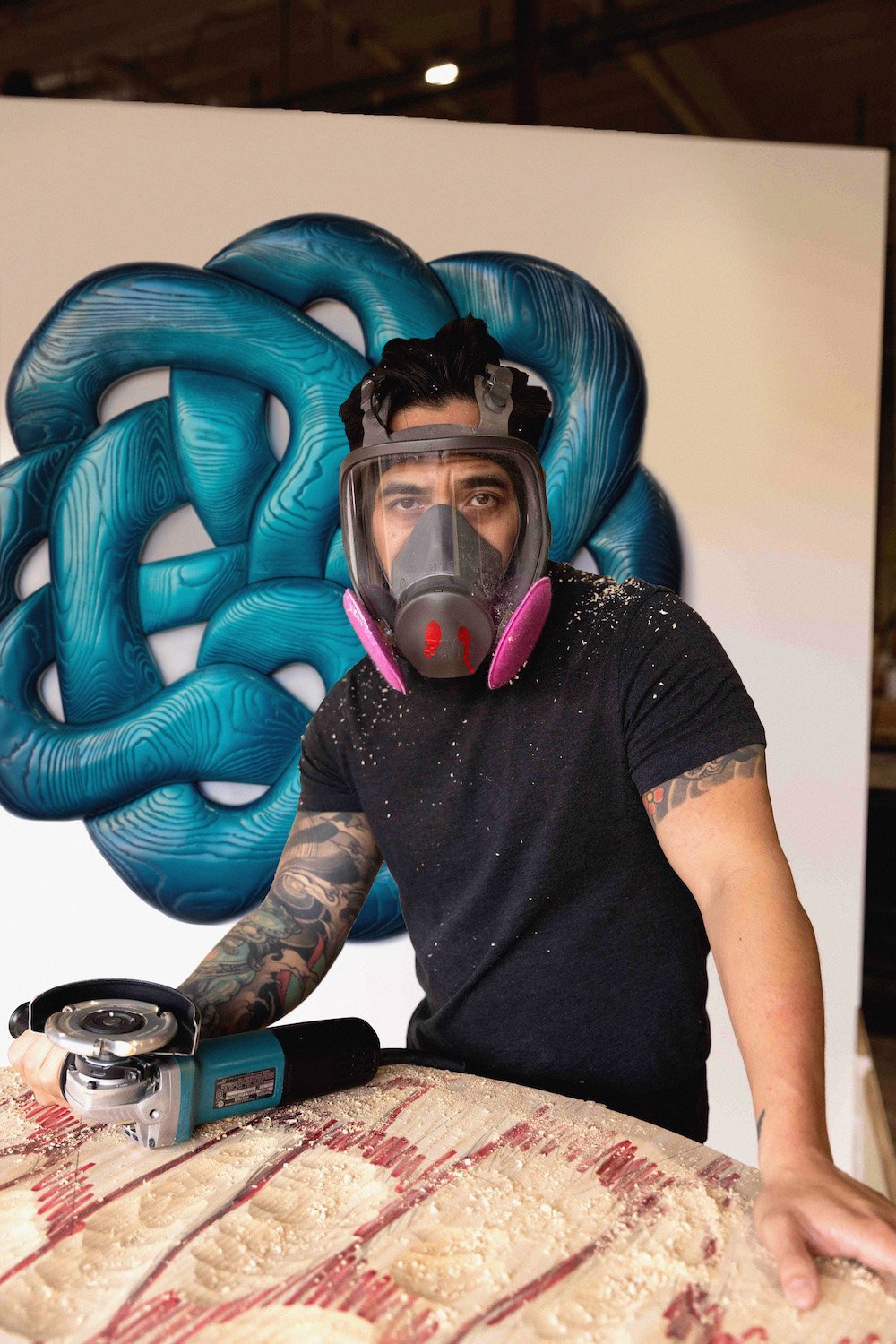
In the studio, dressed in a respirator and a wood shaving–coated hoodie, his eyes a bit red from flying sawdust, Nuge wears the evidence of his efforts all over him. But there’s a joy to him, a palpable “I can’t believe I get to do this for a living” energy, that makes it look fun.
“I’ve been playing with [clay] for a year now and I’m absolutely in love with it, and because it’s a challenge, it makes me wanna learn it more,” he says. “Architecture was very restraining and hard-lined and rigid. So I feel like my path as an artist is almost a rebellion to that entire aspect.”
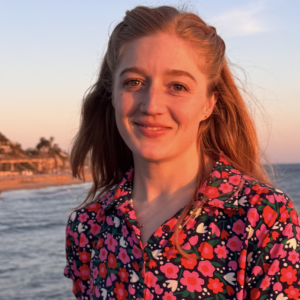
Amelia Rodriguez is a writer and journalist and winner of the San Diego Press Club's 2023 Rising Star Award and 2024 Best of Show Award, she’s also covered music, food, arts and culture, fashion, and design for Rolling Stone, Palm Springs Life, and other national and regional publications. After work, you can find her hunting down San Diego’s best pastries and maintaining her five-year Duolingo streak.
Through its Playmakers initiative, San Diego FC is working with artists, musicians, and other local creatives to shape the identity of the city’s newest professional sports team
What does a soccer team have to do with San Diego’s arts scene? Quite a lot, as it turns out. When San Diego FC launched, the club could have spent its marketing budget on billboards, bus wraps, and digital ads. Instead, it went into neighborhoods, found local artists and creatives, and started building the club’s identity with them. Through its Playmakers initiative, artists have designed limited-edition merchandise, had their work featured on the stadium’s jumbotron, and found themselves in front of thousands of fans—and, in some cases, a national TV audience.
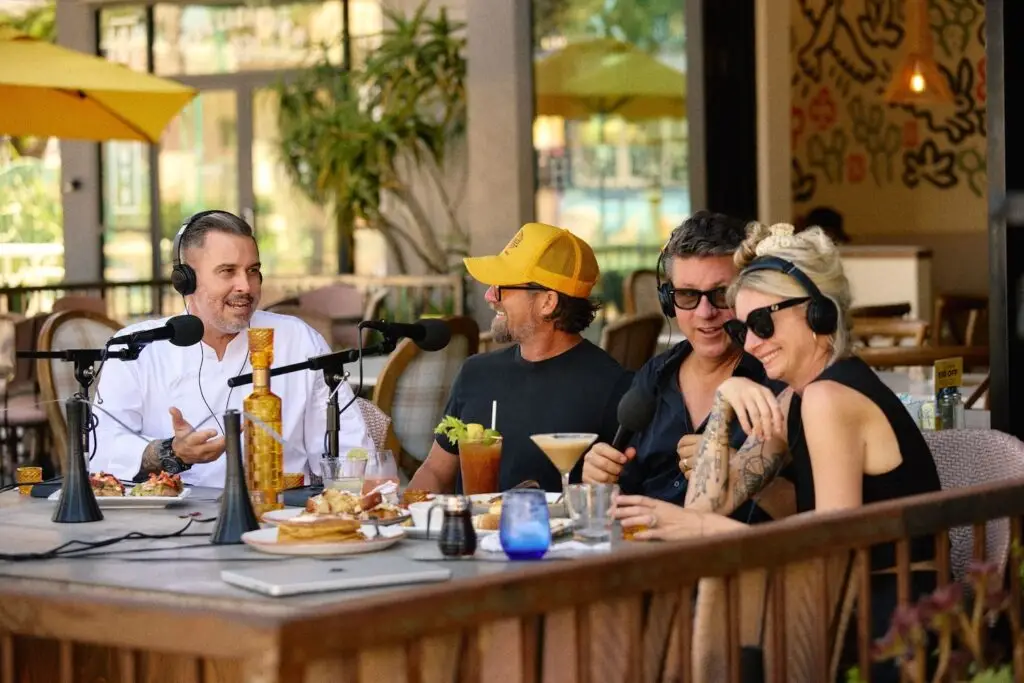
For this special edition of the podcast, created alongside San Diego Magazine’s September arts and culture issue, host Troy Johnson talks with Sebastián Morúa, SDFC’s Senior Vice President of Brand & Innovation, and longtime San Diego native and creative Tony Martinez of Barrio Junto. The conversation gets into why a professional soccer club would make local art part of its business, how Martinez’s decades in San Diego’s creative community helped shape Playmakers, and the club’s early efforts to connect with artists across the county through its Chrome Ball Tour and neighborhood events. The goal, they explain, isn’t simply to put a local artist on a T-shirt. It’s to let the people who already understand San Diego help define what the new club looks and feels like.
The conversation also gets into the less glamorous—but important—side of supporting artists: money. They talk about how Playmakers pays local creatives, the value of the platform SDFC provides, and what it means to build an ongoing relationship between a professional sports club and the artists who help shape its identity. They also discuss the club’s growing music initiative, which will bring local musicians into the fold, and the many ways artists have already contributed to SDFC through merchandise, murals, Parks & Pitches projects, and more. Ultimately, it’s a conversation about soccer, art, community, and what can happen when a major sports franchise gives the people already making culture in San Diego a bigger platform.
This summary was provided to you by AI. To hear from the humans, listen to the podcast wherever you get your podcasts.
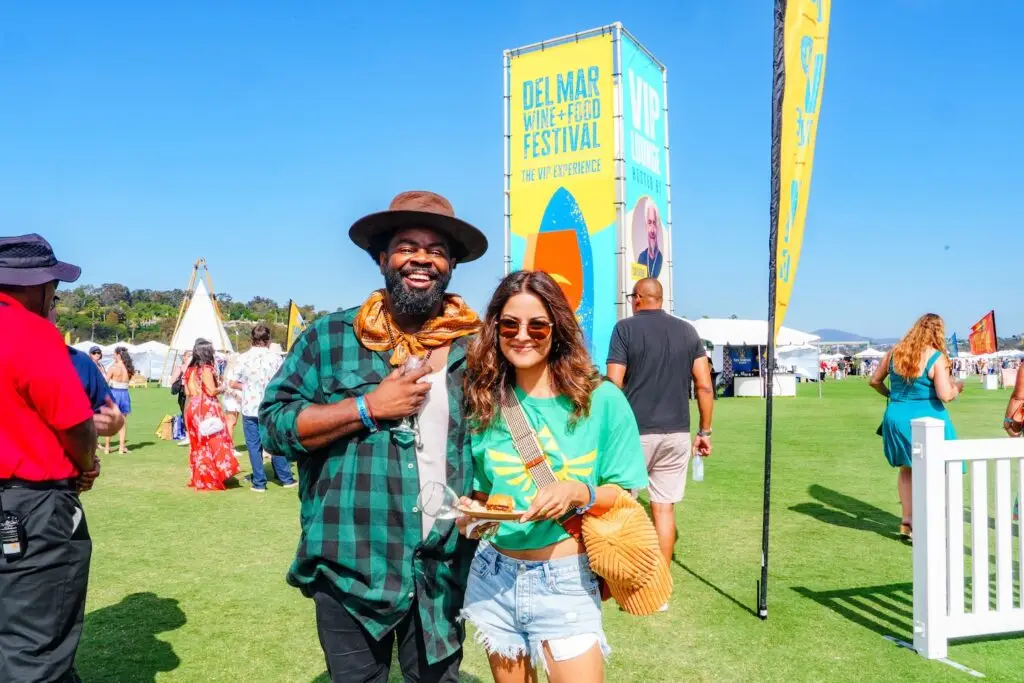
At Del Mar Wine & Food Festival’s Grand Tasting, the walk between food tents can take a while. You might stop to watch a chef competition, get pulled toward the DJ, or find yourself playing mini golf before you remember which bite you were after.
Across the Del Mar Polo Fields, there’s also line dancing, a 1961 red Beetle ready for photos, and an aviation-themed pop-up with Reno Tahoe chefs and mixologists. Need a slower stretch? Check out the wellness stops or browse the shops. Here’s what to look for as you make your way through the festival’s zones:
Courtesy of Del Mar Wine & Food Festival
VIP First Bites & First Sips
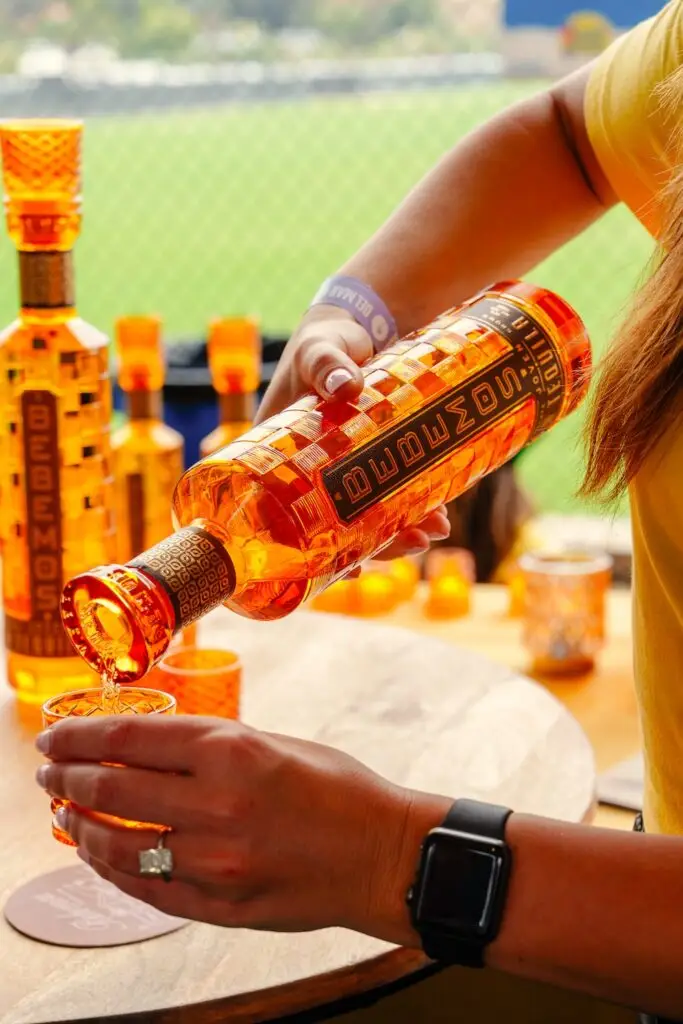
VIP ticket holders get a head start, with the VIP Reception running from 11:15 a.m. to 1 p.m. and serving first bites, first sips, and a few surprises before the Grand Tasting officially gets going. Champagne Telmont will make the festival’s first pour, while Cohn Restaurant Group brings carajillos alongside pours from Karl Strauss, Licor 43, Tap Truck San Diego, Bebemos Tequila, and Devil’s Grin Gin.
The bites are just as good. Celebrity chef Beau MacMillan will serve a first bite, while Warung RieRie is bringing one of its highly coveted dishes. Yes, this is the restaurant that currently has an eight-month waitlist. You’ll also find bites from The Shellfish Affair, The Waverly, Wolf in the Woods, Dora Ristorante, Cori Pastificio Trattoria, An’s Gelato, Pacific 333, Vintana, and more.
And because every good first act needs a soundtrack, there will be live painting and music, with Courtney Govan bringing live jazz to the reception. It’s the perfect opening act before the main event.
Live Cooking & Culinary Moments
During the VIP Reception, chefs Tommy Gomes and Jeff Roberto will conduct a live ahi cutting. Plant Paradise brings another culinary angle, with celebrity chef Zuliya Khawaja joining the plant-based lineup. The area combines chef talent with plant-forward restaurants and brands, giving guests a chance to see just how creative plant-based cooking can get.
Throughout the weekend, The Stage keeps the cooking demonstrations coming, with celebrities and chefs sharing techniques, recipes, and plenty of inspiration for anyone who plans to actually cook something when they get home. Before you know it, you’re watching a chef demo, casting your awards vote, and sipping mezcal on the grass with friends you just met in line.
Courtesy of Del Mar Wine & Food Festival
DJs, Music, & The Party
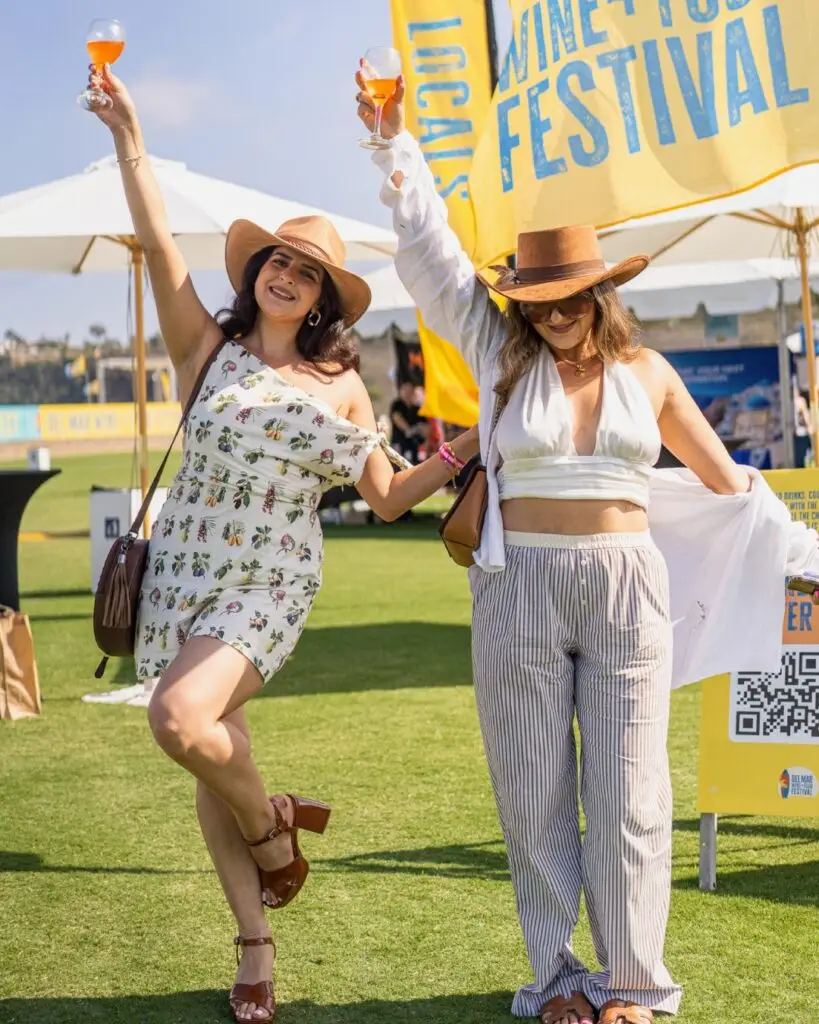
At the Grand Tasting, dancing just sort of… happens. A DJ drops the right song. Someone’s holding a taco in one hand and a glass of wine in the other. The country zone breaks into a two-step. Friends convince friends. Strangers become temporary dance partners. By the end of the day, everyone’s forgotten they were ever worried about looking cool.
DJ TENAX will be spinning in Plant Paradise, bringing house, techno, and UKG to an open-air dance floor that’s hard to leave. Chris Cantore, a veteran San Diego broadcaster, takes over the VIP Tent, while BootScootin Line Dance and PVO Events bring country-style line dancing to the Polo Fields, so you can work off your tasting itinerary one two-step at a time.
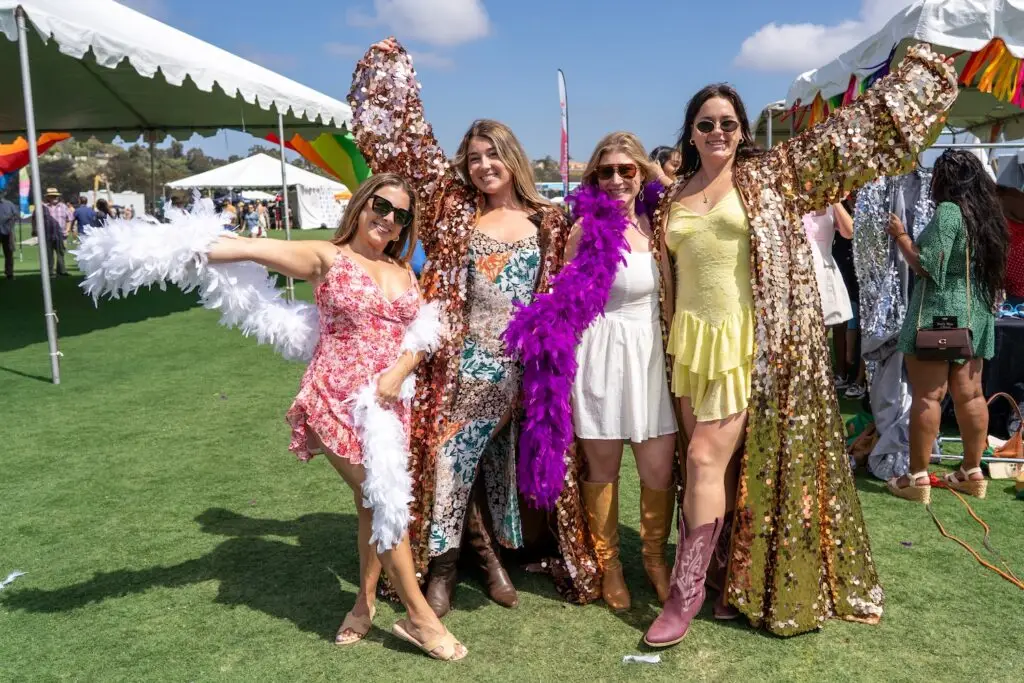
Then a live guitar hum in the distance leads you to a fuchsia boa over at the Pride Zone, where you’ll find yourself covered in sequins and having the lawn party of a lifetime.
Sports, Tailgates, & Games
Not every activity at the festival requires a tasting glass (although it’s certainly encouraged).
The Matchday Experience brings San Diego FC and San Diego Wave FC into the Grand Tasting, complete with interactive tents and plenty of game-day energy. Athletic Brewing is also sharing activation space with San Diego Wave FC, bringing a fun nonalcoholic option into the mix.
For golf fans, the Los Angeles Golf Club is bringing a Dryve Box golf simulator to the festival. And if your competitive streak is less fairway and more miniature windmill, SD Pop Up Mini Golf has you covered.
The Beach Zone gets in on the action, too, with surfing-inspired elements and Playavole paddle courts. Hemlock Hats and other California brands add to the coastal atmosphere, but the real draw is having somewhere to actually play. And don’t worry, you can cool down in COOLA’s turquoise beach chairs, too, and when your bestie suggests reapplying sunscreen, obviously you do. Basically, there are plenty of ways to work up an appetite between tastings.
Courtesy of Del Mar Wine & Food Festival
Photo Ops & Instagram Moments
You’re going to want to take photos, and the festival has made that extremely easy.
A Timeless Day is bringing multiple photo moments to the Grand Tasting, including a 1961 red Beetle at The Italian Getaway and a teal VW bus in The Beach Zone. For something a little more polished than the standard group selfie, head to the Locals Zone for Pixster Photo Booth and San Diego’s version of a Glam-Bot, complete with a grass red carpet.
Bebemos Tequila is also bringing back its festival-favorite hidden speakeasy. If there’s ever a time for a photo, it’s here. Otherwise, people might not believe you. The speakeasy serves bone marrow shots straight from the bone, with candlelight, a lounge area that makes it hard to believe you’re in a tent outside, and little orange shot glasses. This is “first slide of your festival photo dump” material.
You can also grab your squad and head to LaCroix’s bright and ridiculously cute setup, or swing by San Diego Magazine’s area, where you might stop for a photo in front of the larger-than-life SD Magazine sign and find yourself watching a painting come to life.
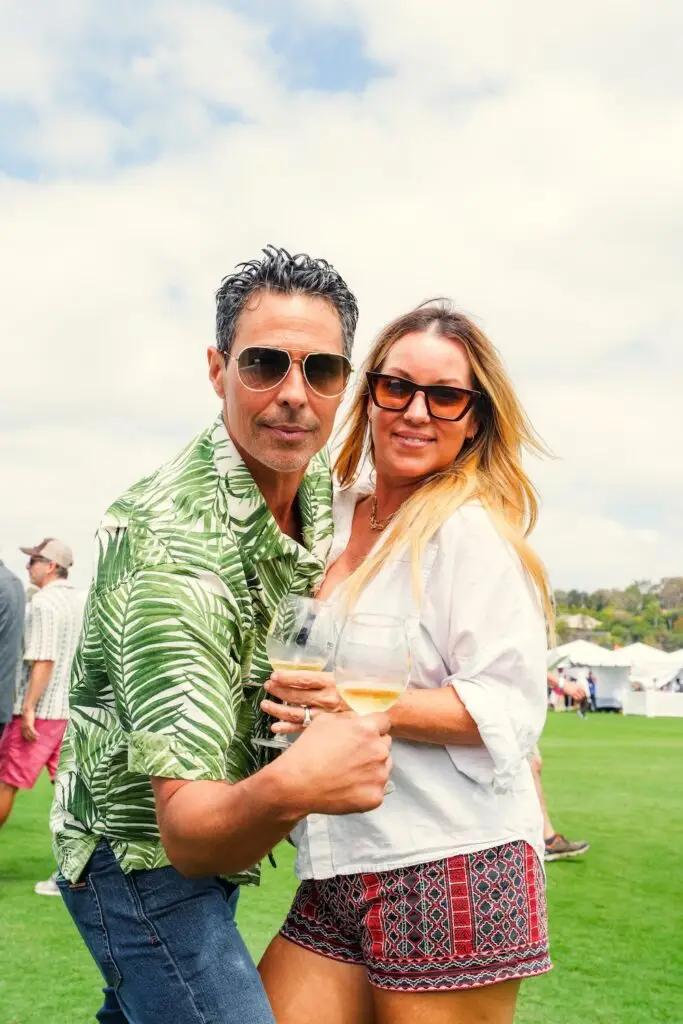
But really, you’re in Del Mar. The ocean is essentially your backdrop, and every zone gives you an excuse to stop for the obligatory “totally candid” photo. And yes, the best strategy is to get the group shot before everyone has been sampling wine for three hours.
Shop, Browse, & Take Something Home
The Grand Tasting also doubles as a little shopping excursion, with local makers, fashion, vintage finds, jewelry, and lifestyle brands scattered throughout the grounds. Smoke Revival Vintage Vault brings the thrill of vintage treasure hunting, while Nortte Hats and Hemlock Hat Company make a pretty good case for leaving with a new accessory.
Keep an eye out for jewelry and creative vendors, too, including Iris Studio Jewelry and New Nightfall Jewelry, plus local artists and makers featured throughout the festival.
You can come for an all day food and wine festival, but still leave with something shiny you definitely did not plan to buy.
Wellness & Reset Moments
We know, at some point, even the most dedicated grazer has to come up for air. The Novo Dia Wellness Zone is designed for exactly that, bringing together mocktails, coffee, hydration, wellness brands, and even bites from Parakeet Cafe.
Step away from the food and drink frenzy for a few minutes, relax in the shade, try some skincare, stretch with prAna, and maybe grab some Instant Hydration Electrolytes before round three.
There’s also nothing wrong with stopping to smell the roses at Green Air Botanicals while devouring a dairy-free cheese dip. It’s less about disappearing from the party and more about making sure you have enough energy to keep going.
The zones give you somewhere to wander, and the activities give you a reason to keep going. So grab your tasting glass, check the schedule, and leave a little room in your afternoon for something you didn’t plan on doing. At Del Mar Wine & Food, that’s usually where things get interesting.
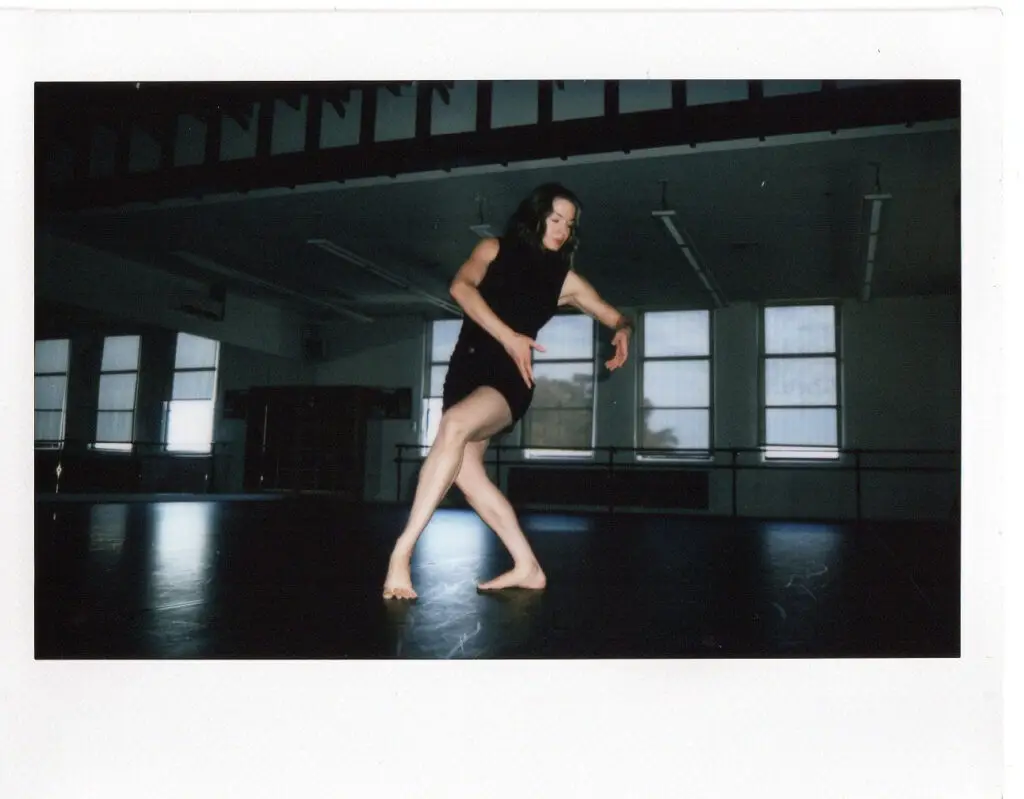
Isabella Dallas is a freelance writer for San Diego Magazine and the Arts and Culture Editor at The Daily Aztec in her final year at San Diego State University. She previously worked as an editorial intern for SDM, but when she’s not writing, you can find her trying the best coffee spots in SD, devouring the latest rom-coms, and indulging in anything and everything pop culture.
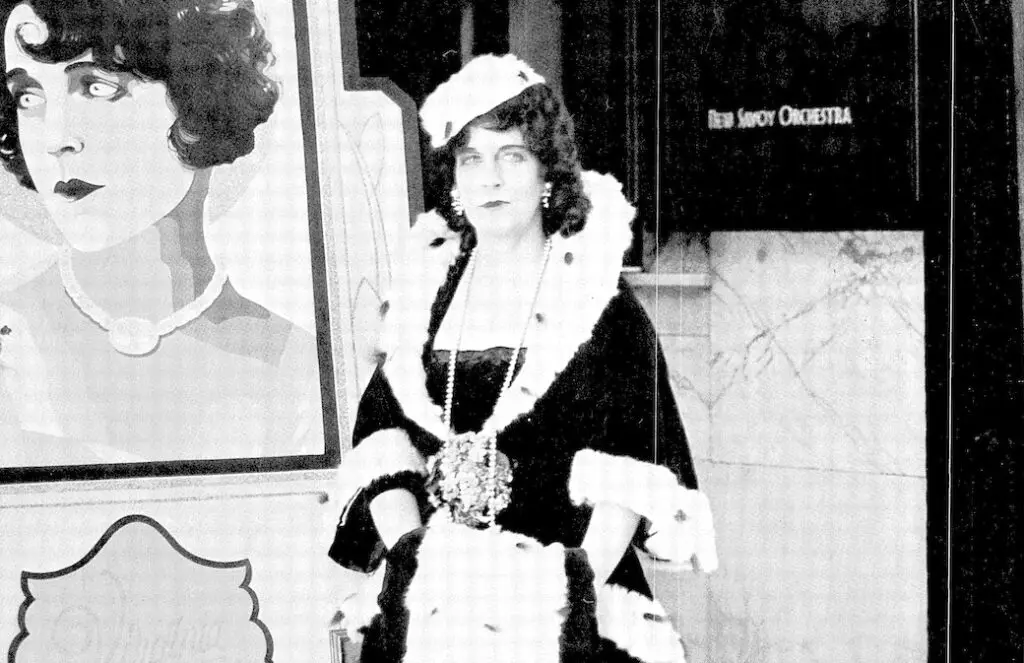
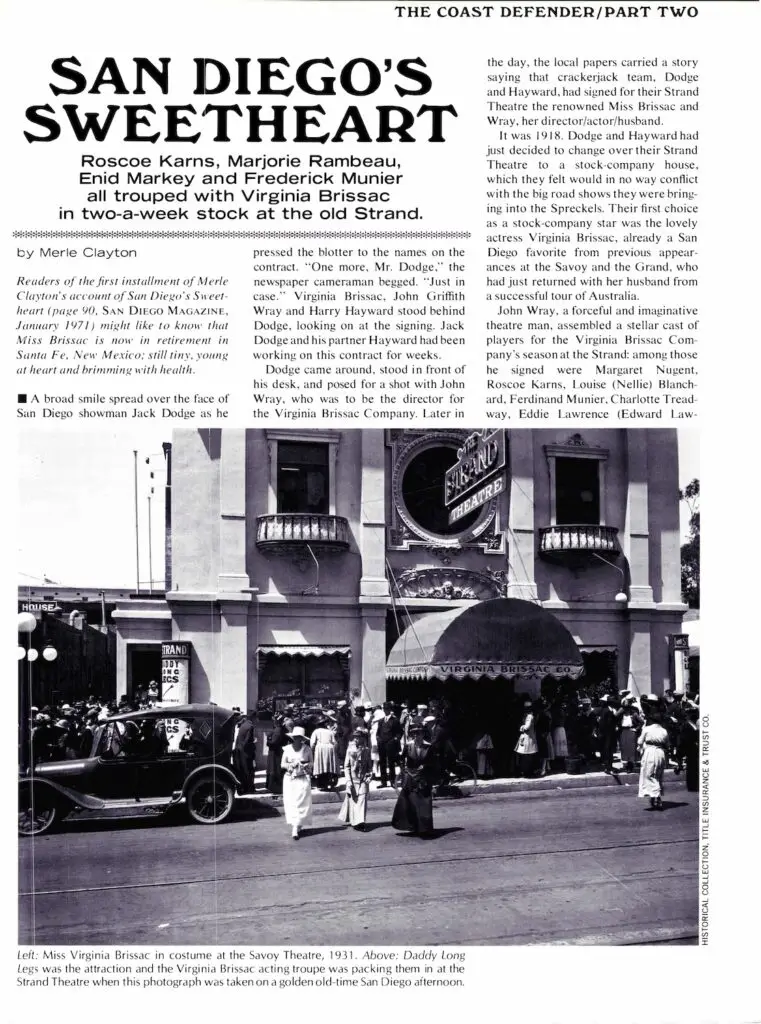
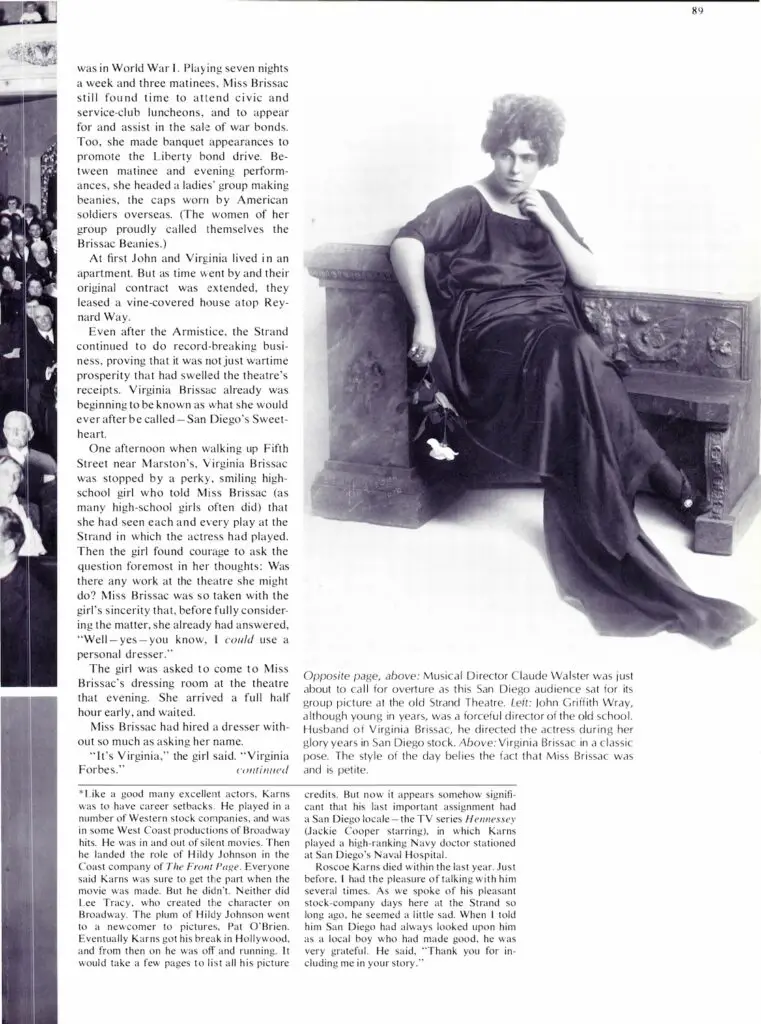
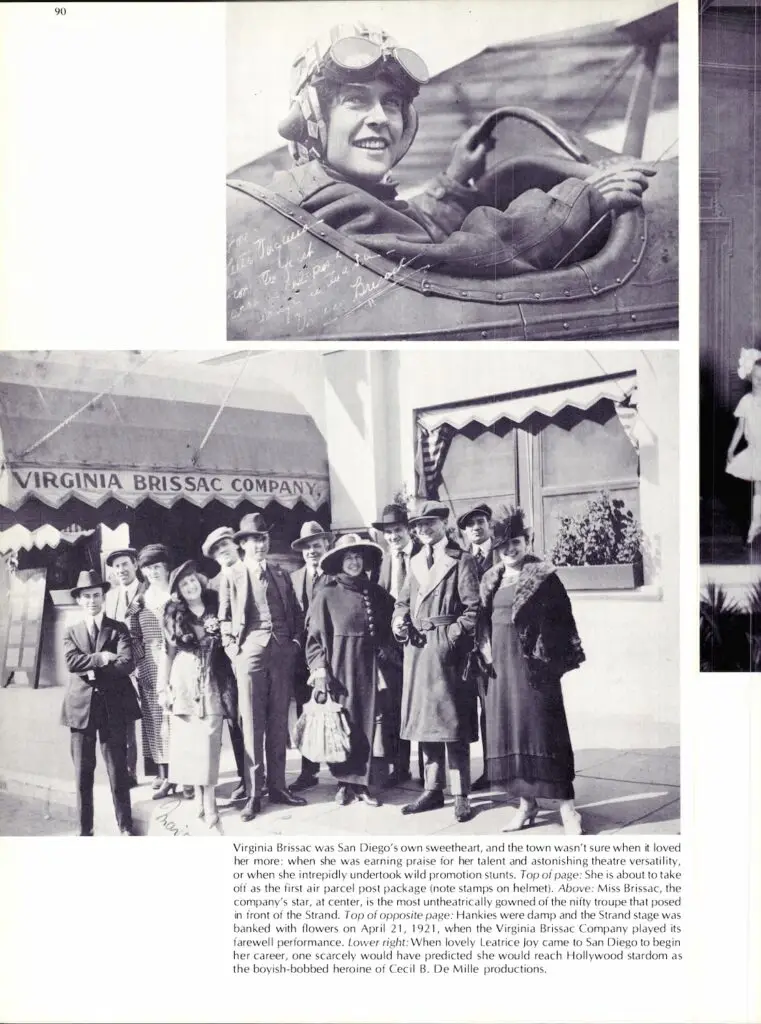
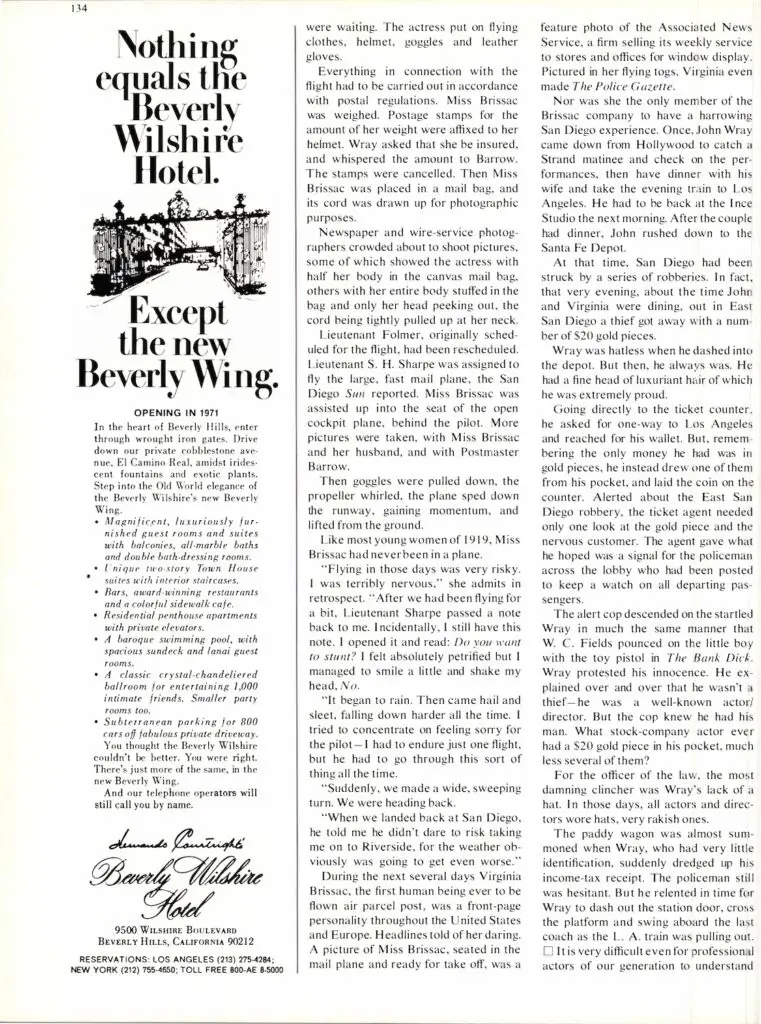
There was once an actress known as “San Diego’s Sweetheart” who mailed herself to Los Angeles—donning a helmet covered in postage stamps and boarding a two-seater, single-engine mail plane. The publicity stunt was billed as the first air parcel package in the US. It wasn’t. She wasn’t even the first human to be mailed: When the US parcel post started in 1913, at least seven people mailed their newborns to relatives (an innovative loophole eventually outlawed).
Technicalities be damned. That kind of nose for spectacle was why Virginia Brissac was such a star—landing bit parts in TV shows (I Love Lucy, Dragnet) and 155 films, notably playing James Dean’s grandmother in Rebel Without a Cause. “Nobody could help but love her,” her dresser told San Diego Magazine in a 1971 feature, published when Brissac was 88 years old.
In 1911, she topped the Playbill at the opening of the Savoy Theatre at 3rd and C streets in Downtown—a grand live-performance hall built for $150,000 ($5.2 million in today’s money). It became one of the premiere vaudeville theaters in the country (under vaudeville king Alexander Patages). The theater helped make San Diego a destination for stars like silent-film comedian Roscoe “Fatty” Arbuckle, heavyweight champ Jack Dempsey, plus classical legends Rachmaninoff and Anna Pavlova. As theaters converted to movie houses through the ’20s and ’30s, the Savoy remained dedicated to live humans. It closed in 1940, and the Civic Theater now stands in its footprint.
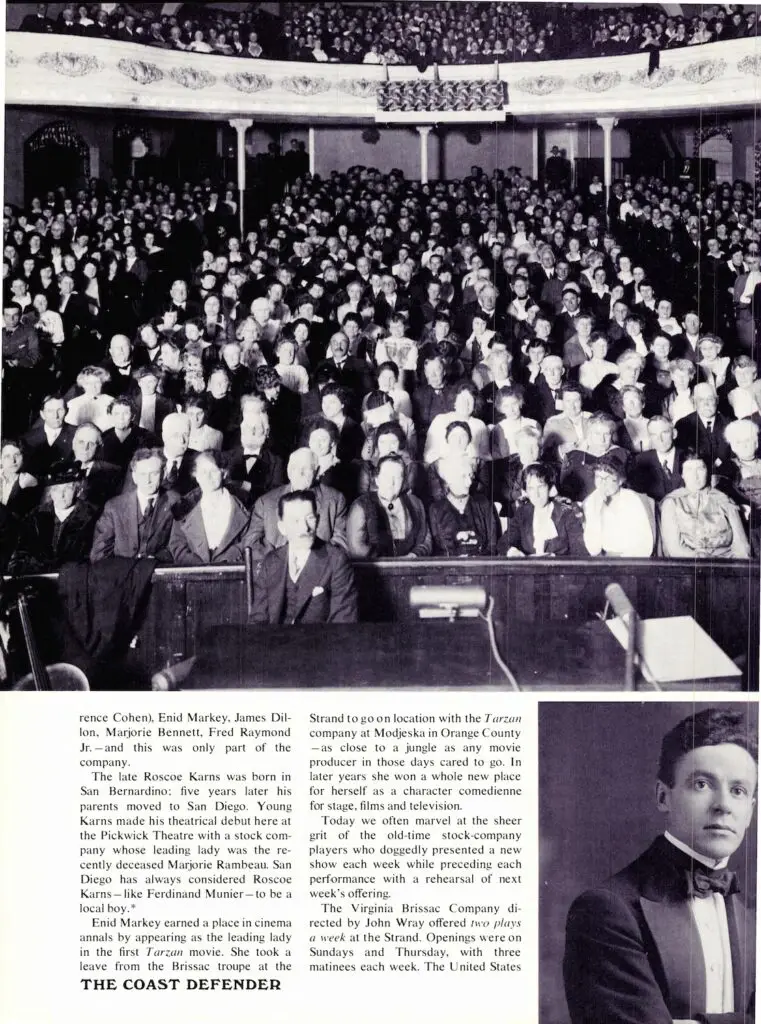
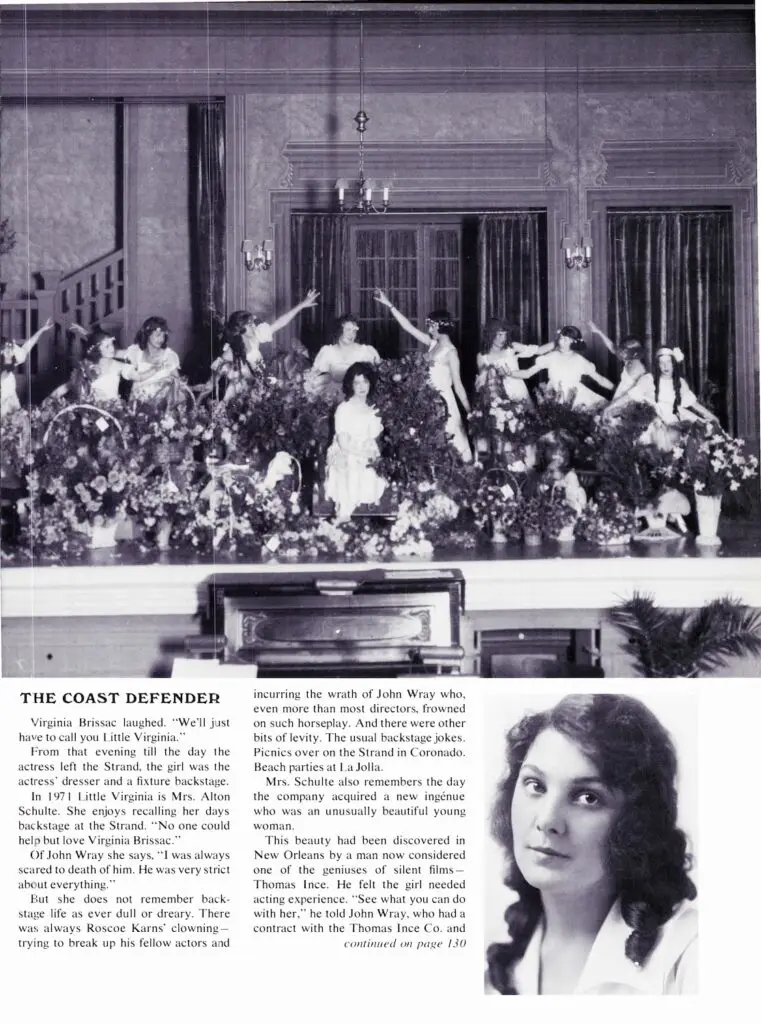
As for Brissac, during a time when women couldn’t even vote, she led a stock company under her own name at the Strand Theatre. The Brissac Company held a four-year residency, “an all-time successful record run for San Diego,” the article says. That classic Ocean Beach theater (featured in San Diego film legend Cameron Crowe’s Almost Famous) has been closed for decades, its bones now a chain beachwear and souvenir store. But Brissac’s legacy lives through the women leading San Diego’s theater scene.
Read the entire 1971 article by Merle Clayton below…
Emma Veidt is an editor at San Diego Magazine. She earned her bachelor's and master's degrees from the Missouri School of Journalism. She loves running, hiking, and rock climbing, but really, she mostly loves encounters with the street cats around North Park.
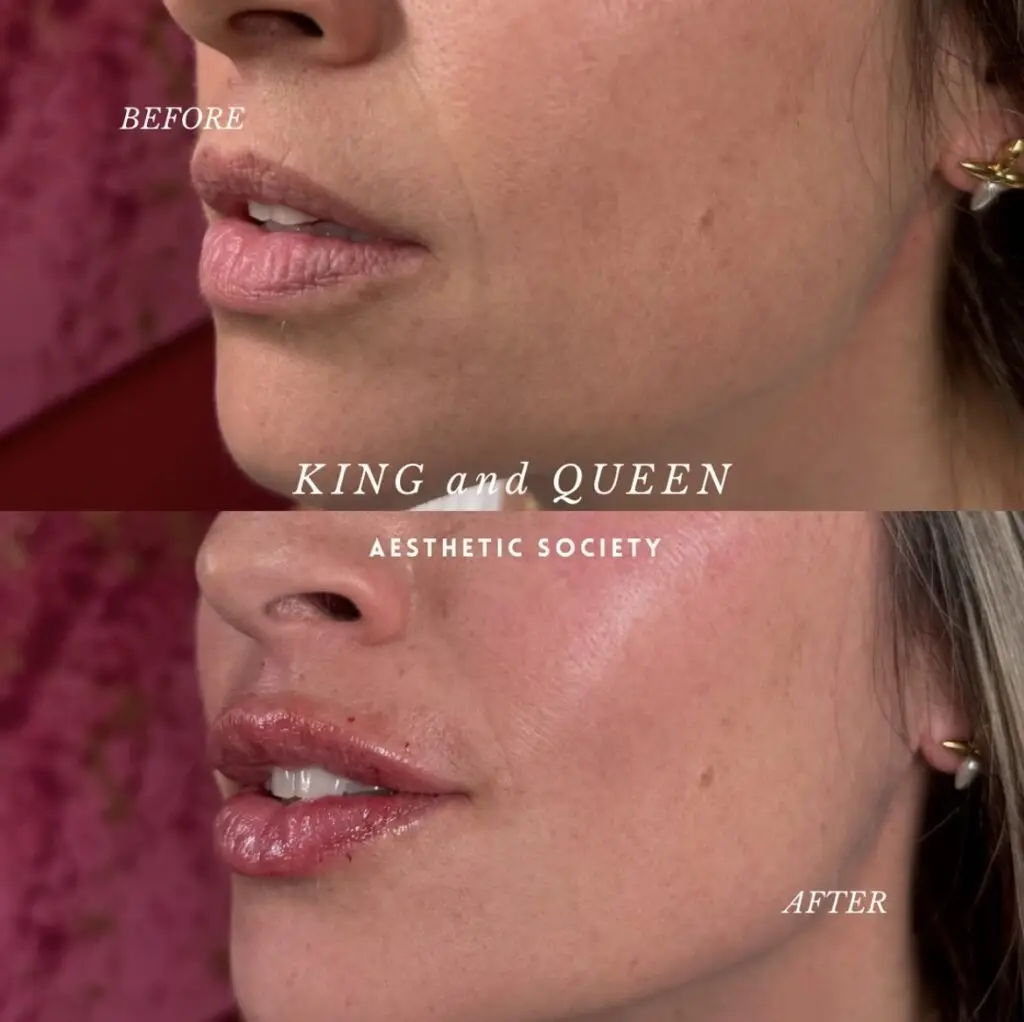
Kelly H. Harfouche, founder of KQ Aesthetic Society, knows firsthand that cosmetic treatments like fillers, neurotoxins, and microneedling, can not only enhance a person’s appearance and restore confidence, they have the power to truly change a person’s life. An expert injector has the ability to tailor treatments to each individual patient’s anatomy and goals for personalized results. Harfouche, a board-certified nurse practitioner, has spent nearly a decade perfecting her craft as an aesthetic injector and integrating her multifaceted artistic skills with precision patient care. Her commitment to continual education and training, plus a passion for helping people look—and feel—their best, set KQ Aesthetic Society apart in a sea of local medspas.
For many people considering nonsurgical treatments, the intent is to look refreshed and refined. KQ Aesthetic Society’s philosophy eschews a cookie cutter approach that bases treatments around units, instead working to understand each person’s unique goals, then curating a treatment plan to fit that vision. Harfouche focuses on “inclusive luxury,” the belief that everyone deserves access to aesthetic treatments, respective of budget restrictions. She develops long-standing trusted relationships with her patients, and works with each one to achieve their aesthetic objectives and address the underlying causes of their concerns.
“For me, forming an honest and open relationship with every patient who walks through the door is essential. This means understanding them on a deeper level and meeting them where they are to define and achieve their individual goals,” she says.
Drawing on her artistic background, which inspired her transition into medical aesthetics, Harfouche sees each client as a “unique canvas.” Rather than relying on standardized procedures, the practitioner’s distinctive approach combines her profound understanding of the physiological and anatomical changes associated with aging with an unwavering commitment to ongoing education about the newest products and their mechanisms of action. Her goal is to make each patient feel beautiful in their own skin and to embrace their individuality.
She has also pioneered a way to combine her talent for aesthetic artistry with her philanthropic nature. Harfouche is one of only a handful of providers using dermal fillers to treat patients with lip asymmetry and scarring resulting from cleft lip surgery. Patients travel from around the country for this transformative treatment, noting increased confidence and a restored identity. She hopes to eventually launch a training program to help fill the void in this space.
“My passion has always been connecting with people and giving back in any capacity that I can,” she says. In the rapidly advancing landscape of aesthetic medicine, you can place your confidence in Harfouche and KQ Aesthetic Society to deliver exceptional care. To learn more or book a consultation, please visit kqaestheticsociety.com.
What Will It Take to Make San Diego a Global Arts City?
Jonathon Glus on the Art + Design District, investing in the creative economy, keeping artists in the city, and what we can learn from places like London and Chicago
Jonathon Glus is the Prebys Foundation senior fellow leading the development of the Art + Design District at the Downtown San Diego Partnership. He has been asked what an arts and design district is many times. In our conversation, I asked him instead to describe what it isn’t. His answer opened up a broader discussion about what San Diego has and hasn’t invested in, what it has the capacity to become, and what other cities have done that we haven’t. Glus speaks about global art fairs and architecture biennials in Chicago and long tables at dinner parties all with the same fluency. He also discusses who gets to live in the neighborhoods where creative work happens, and what it means when they can’t afford to stay.
Claire Johnson: You have been asked what an arts and design district is many times. Can you tell me what it isn’t?
Jonathon Glus: It is not a place designed intentionally and specifically for tourists. Of course there will be opportunities for tourists to come, but the district is really focused on creatives, on creative education, and on the creative workforce—as well as our major performing arts organizations. That is the emphasis.
What does the district need to do in the next five years for you to consider it a success?
[It needs to] develop greater connectivity between the anchor institutions—the symphony, Broadway San Diego, the opera, all the wonderful things happening in Balboa [Park]—and the creative workforce that will be living and working in that neighborhood 24/7.
What does San Diego not have that you wish it did?
We have not been intentionally investing in the contemporary art product that other major cities have been building. A contemporary art fair. A biennial that reflects the ethos of this region. Chicago developed an architecture biennial about eight years ago. London has a design biennial. Desert X, right here in Southern California, invests in and elevates contemporary artists inside a city. We have not really been playing in the global art market in a way that we have the capacity to.
What capacity do we have?
We have a wonderful foundation. Two theater companies that produce work that goes to Broadway more than many regional theaters in the country, major museums, artists teaching at UC San Diego and University of San Diego. What a city does when it wants to take itself to the next level is intentionally create the product. Miami went after the Art Basel fair; they did not passively receive it. You have to have the intention and the will, and you have to go after it. We haven’t done that in the way that other cities have.
Look at what we did with the tech sector; we’re now a major tech center. That was intentional. Leadership organized around it. We have to do the same thing around the arts. We have a lot of contemporary art collectors here. We have a lot of galleries. But the ecosystem of the business of contemporary art is not as organized or as visible as it should be.
Which city is your North Star?
It’s bits and pieces of different cities. Dubai has invested very quickly and very intentionally in contemporary art—art fairs, design fairs, higher education, artist residencies from all over the world. London has centered artists and creatives in the contemporary zeitgeist in a way that was not true 40 years ago. They built biennials. They ensured British artists had affordable housing and workspace. They made sure the media paid attention to what they were doing.
If you don’t have an artist at your dinner table, it’s not a dinner party. That sounds elitist, but it’s true. It shows the value that artists have in a community. Our relationship culturally with Tijuana is really significant here because artists in Baja seem to be at the table.
We’ve talked before about how food, fashion, design, and art aren’t siloed anymore.
They aren’t. When super creative people are in a community doing extraordinary work, that draws other super creative people doing extraordinary work. That’s why other arts and design districts around the world end up populated with some of the most interesting restaurants and young fashion designers. Creatives want to be around other creatives.
Which leads to the economic argument…
Our creative economy already employs about 170,000 people and generates more than $11 billion in economic activity. It’s large and robust. But we must center all of this in accessibility and affordability. Williamsburg used to be affordable. Artists can’t afford to live there anymore. Wicker Park and Bucktown in Chicago—artist central, now unaffordable. If we’re going to invest in this district, we have to be really intentional about housing and workspace, so creatives have a place in the future of this district.
I see all these new supper clubs and creative collectives popping up. What is the lesson there for San Diego in terms of the commercialization of cultural and creative groups?
I think the lesson is that nothing changes. What do people love? Long tables. Why? Because you’re with a lot of people—some you may have known your entire life, but most you don’t. And if it’s driven by a creative process, all the better. We know one of the best ways to do that is around food, but also music.
For the Art + Design District, part of why we’re leaning into the process is because, culturally, we’re bringing down the barriers between film, fashion, multimedia, tech, and architecture. It’s an experiential mashup in the best possible way.
And it’s not just about art and design, but community writ large. Creative expression is something we all desire. Whether it’s at a long table, at the opera, or in your studio, we gravitate toward creative expression as a way of building community and communicating with the people around us.
Is there a question I should have asked you but haven’t?
I hope you are writing about this in seven years when the district is fully mature. But this is just the beginning for all of this. I think that’s what’s most exciting to me. We don’t know what this is going to be like, but we know it’s going to be creatively centered, and that’s super exciting to me.
Sebastián Morúa is the Senior Vice President of Brand & Innovation for San Diego FC. He oversees Playmakers, the program through which the club has, over the past three years, engaged with over 80 working artists—not as marketing partners, but as co-creative directors.
Morúa didn’t build Playmakers as a community-outreach program bolted onto a Major League Soccer franchise. He built it as the identity of the franchise. When we sat down, he talked about the World Cup, San Diego’s creative workforce, his challenge to other sports franchises in the city, and the mural of heroes he hopes people will see one day when they close their eyes and picture San Diego FC.
Claire Johnson: Why does an MLS team invest in arts and culture?
Sebastián Morúa: I want to answer that in two parts. Philosophically first—because I think what you’re really asking is why should any sports team do this when most don’t.
Sport is a platform for transformation. It has proven that over and over. We saw it this summer with countries participating in the World Cup for the first time and what that did in their home countries—the sense of self-identification, pride, possibility. That is the power of sport.
When you take a sports team that’s fueled by that principle and understands what it could mean for other stakeholders in a community, you start to think about what you can accomplish in collaboration with them. One of those stakeholders, very early on, was the creative community. If we were going to build a team that represents this place and its people, we needed to go to the source. Artists are uniquely positioned to translate the essence and the soul of a community. When you zoom out and look at the multitude of artists in a place, you start to see the fabric of that local culture. That’s where the sense of pride and possibility gets unlocked.
But you’re also San Diego FC specifically. That matters.
Our mission is to create opportunities for talent to flourish and make San Diego shine. That means the club is a platform. When we started doing the early research for the brand, we brought artists into our focus groups. The response was immediate. There was a clear need. In 2024, we ran the first full year of what became Playmakers, working with more than 20 artists to help us tell the story of how San Diego FC could weave 18 distinct communities together.
We’re in the business of developing communities through sport. We’re not in the business of fútbol to entertain communities. That is an outcome—but not the purpose.
When you started, were you thinking about the profitability of this type of program?
No. I wasn’t thinking about where this was going or how much it would cost. It instinctively felt aligned with our organizational purpose, and we made a decision to go for it. Now it’s become what it’s become.
What does Playmakers look like in 10 or 20 years?
If a fan closed their eyes 20 years from now and tried to paint a mural of the heroes that make up the club, they would see a big percentage of Playmakers artists on that mural. Ask any fan about the team they’ve supported for decades, and they’ll tell you about players, maybe a coach, maybe an owner. We’re expanding that. In our mural, there’ll be artists, entrepreneurs, community leaders, youth coaches. The community will be present.
Three to five years from now, Playmakers is an established community of creatives who have co-directed the identity of the club and the evolving identity of San Diego. If we keep the pace we’ve kept, we should have collaborated with 150 to 200 artists whose stories we’ve told and whose next steps we’ve helped support.
What would you tell another organization considering this kind of investment?
There’s a huge benefit for us as a club and as a brand. This is symbiotic. The artists have a need, we can support that need, and in return the community cares more about our club because of the investment we’re doing in the community. That’s what I would tell another organization.
What excites you most about how San Diego is changing?
San Diego is waking up to how much it has to offer the global conversation around culture. There’s a purity to life here—partly because of the weather, which allows us to spend so much time outside, in nature—and that exists alongside this incredible richness in food, music, art, and now sports.
I have a sense that San Diego is ready to unlock its full potential. You see it in the artists and creatives here. They’re ready. There’s very little hesitation. It’s more like: “Hell yeah, of course I want to do this. I know I’m talented. I’ve been waiting for something like this.”
That energy, combined with the unique lifestyle and character of this place, creates a really exciting sense of what San Diego can become in the years ahead.
Is there a question I should have asked you that I haven’t?
I would ask: What would you say to the other big players in San Diego who are—or could be—shaping the cultural fabric of our community? Do they understand the symbiotic benefit? Are they supporting it?
Because Playmakers, in the end, is a cultural compass. It’s making sure that San Diego still feels—and will always feel—represented in the creative process of building San Diego FC and what that means for San Diego.
The pitch is a canvas. Athletes are painting collectively during every game. There is a story in every game. That’s the link between sport and art. At the core, it’s the same creative process.
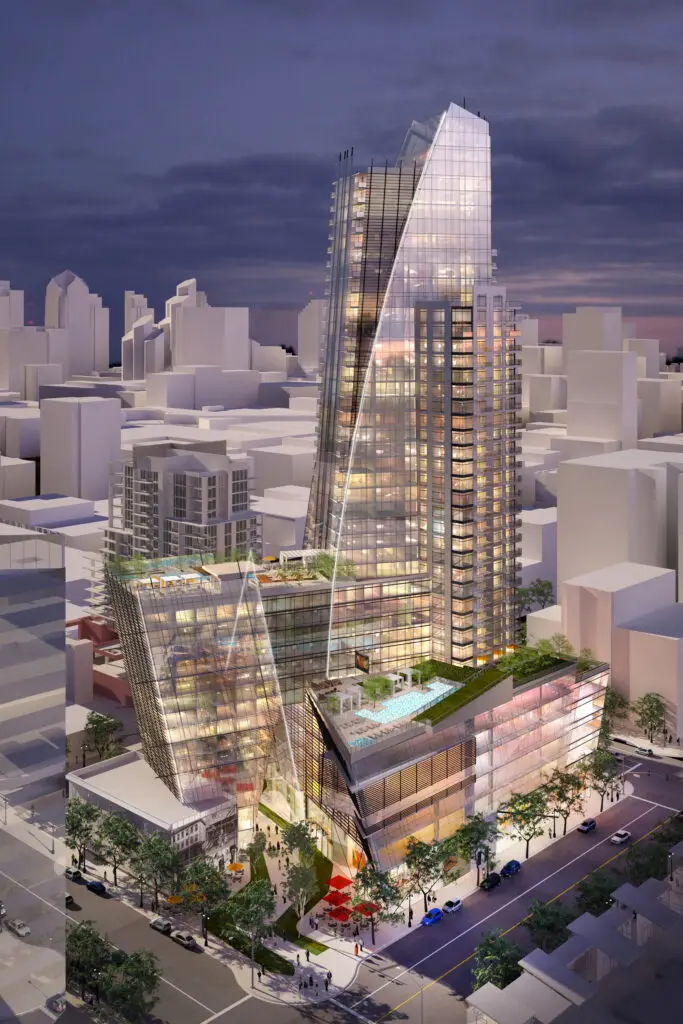
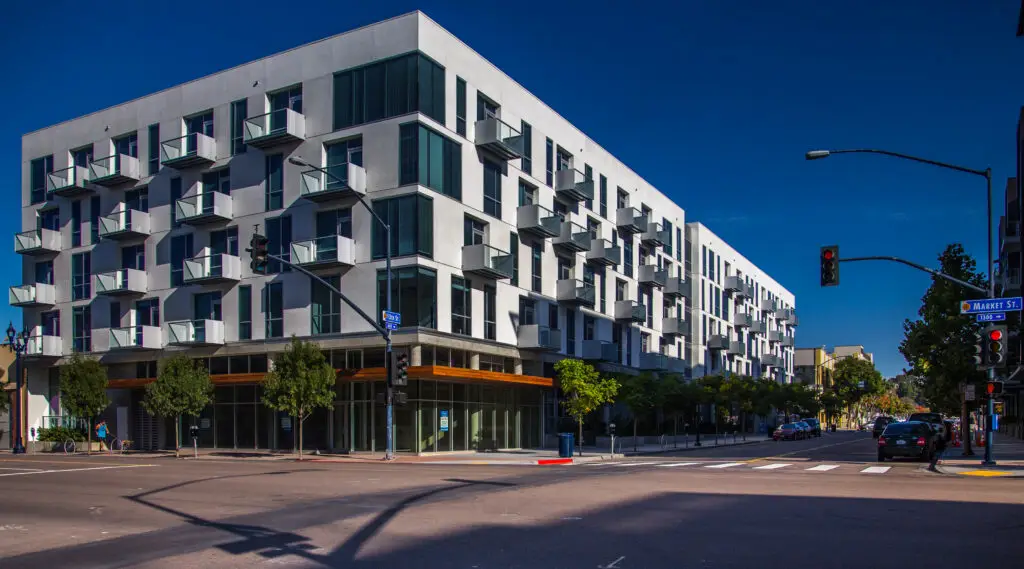
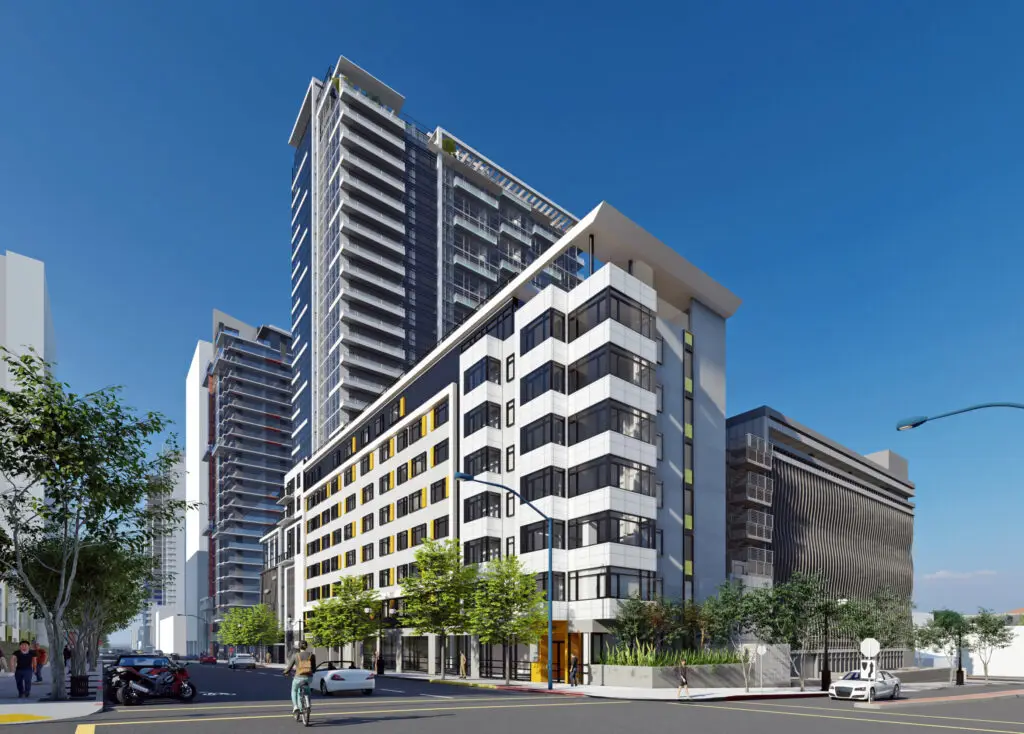
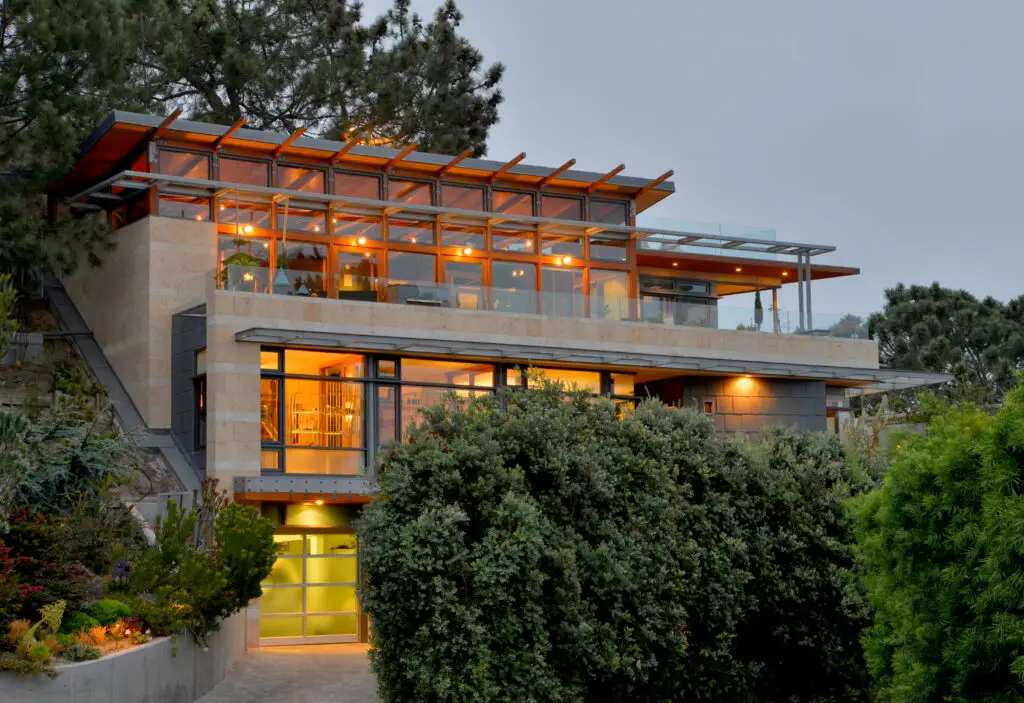
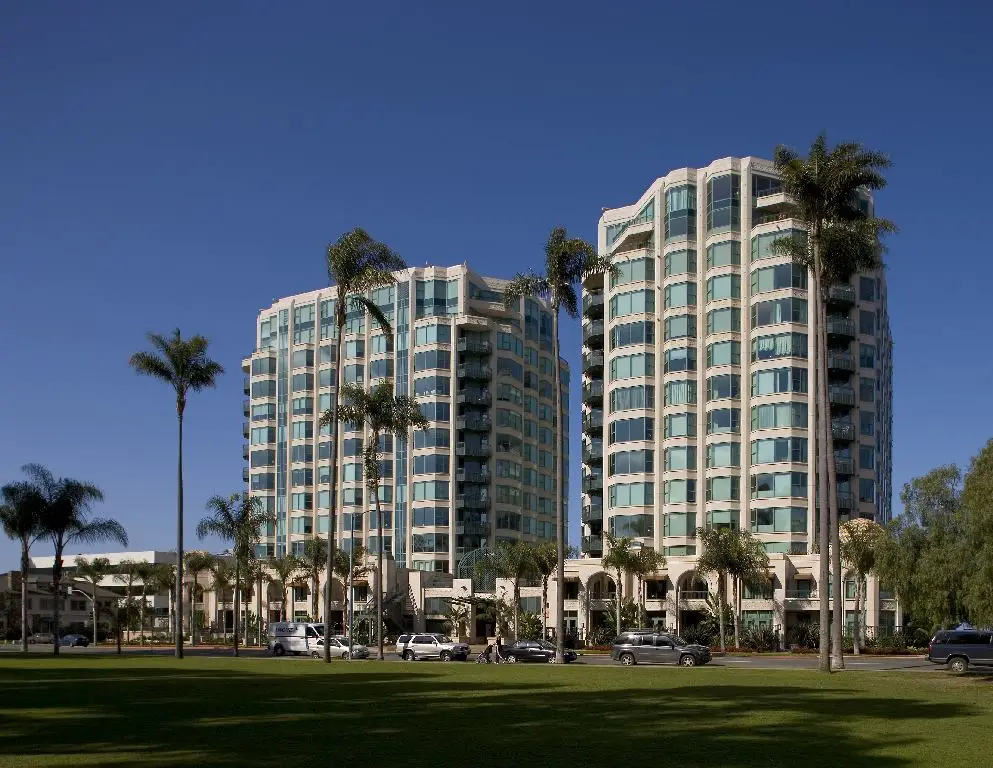
AVRP Studios’ tradition for Design Excellence and Innovation began in 1976 with Doug Austin, FAIA, in Solana Beach, California. The firm has since grown to complete major projects throughout the United States and Canada. We think of ourselves as a family and we care deeply about people. We want to inspire, help make their lives richer and more complete through our efforts. We believe that architecture is one of the most important art forms because of the impact it can have on the lives of those it touches. We’re delighted to have been recognized with over 150 awards for design excellence.
703 16th Street, Suite 200, San Diego, California 92101 | 619-704-2700 | avrpstudios.com