



Things to Do
18 Things to Do in San Diego This Weekend: October 6-11
Read article

Featured articles

Food & Drink

Food & Drink

Food & Drink
Featured articles

Features

Features

Everything SD
Featured articles

Things to Do

Things to Do

Things to Do
Featured articles

podcast-ep

podcast-ep

podcast-ep
Featured articles
Features
Features

Features
Featured articles
Things to Do

Partner content
Food & Drink

From accomodating WWII bombers to protecting endangerd species, SAN is know for more than just its unique single runway
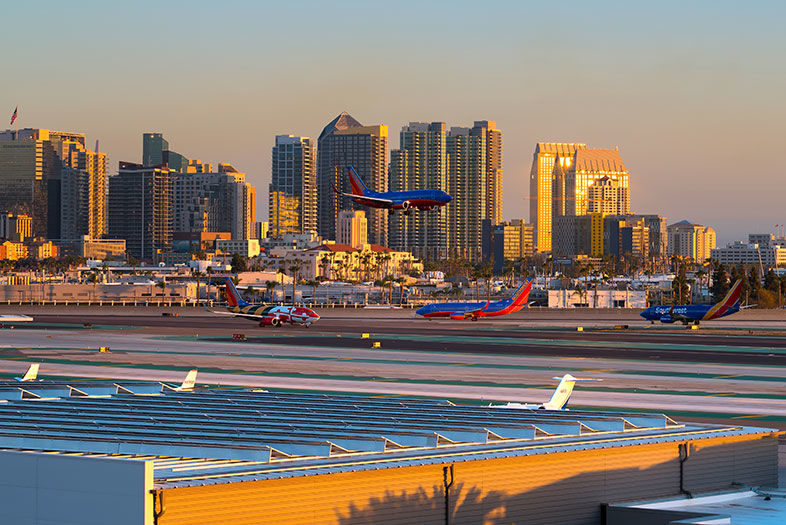
San Diego Municipal Airport-Lindbergh Field opened 90 years ago, named after Charles Lindbergh, who—with a plane designed, built, and tested in San Diego—had completed the first-ever solo nonstop transatlantic flight from New York to Paris the previous year. Though it graduated from a meager municipal hangar to an international airfield in 1934, it kept Lucky Lindy’s name until it was officially changed to San Diego International Airport in 2003.
World War II meant all hands on deck, and SAN transformed into a US Army Air Corps airfield in 1942. Since the weight of military bombers far exceeded SAN’s typical traffic of civilian aircraft, Army engineers extended the landing strip to 8,750 feet, literally laying the groundwork for SAN to become the busiest single-runway commercial airport in the nation today.
Stretching 9,401 feet long and 200 feet wide, SAN’s runway sees an aircraft take off or touch down every two to three minutes. That’s roughly 540 operations per day and 197,000 per year. Operating with one tarmac hasn’t come free of turbulence, though. In 2006, San Diego County voters rejected a ballot measure to move the airport to Miramar, where there’d be enough land to build a second runway and ultimately service more passengers.
There’s an endangered species that calls SAN home—the California least tern, which nests in grassy areas beside the runway. After they were included in the federal Endangered Species Act in 1970, the airport put a protection program in place that reduces vehicle speeds near nesting sites and restricts construction lighting at night. Though the terns are a mere 2 ounces with a 6-inch wingspan, you can ID them from their black caps and orange beaks the next time you’re cleared for takeoff.
Over 20 million passengers fly through SAN per year, 37.8 percent of whom are carried on Southwest Airlines. American is the second largest carrier, with 13 percent of passengers, followed by United at 11.5 percent. With the closing of its commuter terminal in 2015, SAN trimmed its total number of airlines to 18.
There’s no tiptoeing around jet engine noise when an airport is three miles from downtown. Which is why in 1976, SAN became the first commercial airport to enact a curfew, prohibiting departures between 11:30 p.m. and 6:30 a.m., with exceptions for emergency flights. Today, violations of the curfew mean a fine of $2,000–$10,000.
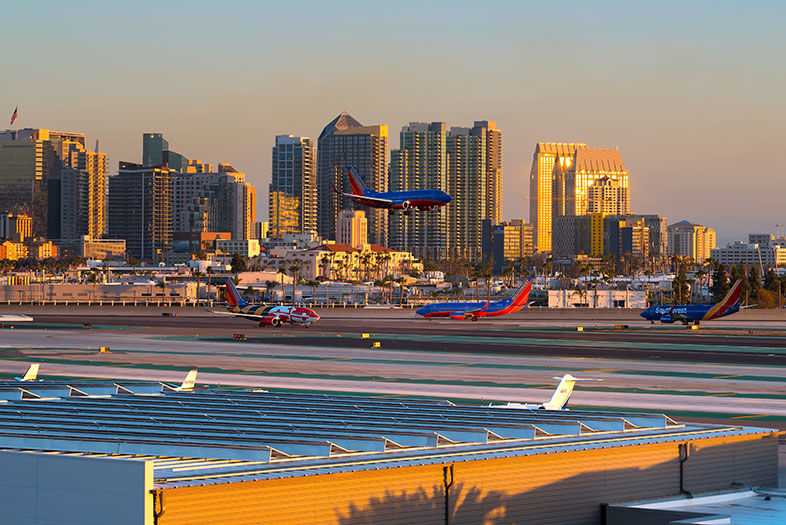
Inside the Icon: San Diego International Airport
Photo by John Bahu
