Featured articles
Food & Drink
Food & Drink
Food & Drink
Featured articles

Everything SD

Everything SD
Features
Featured articles
Things to Do
Everything SD
Everything SD
Featured articles

podcast-ep
podcast-ep

podcast-ep
Featured articles

Features

Features

Features
Featured articles
Charitable SD
Food & Drink
Partner content
Ready to know more about San Diego?
SubscribeReady to know more about San Diego?
Plus, the schedule for this year's festivities!
46 Years of Pride – main
Ariana Drehsler
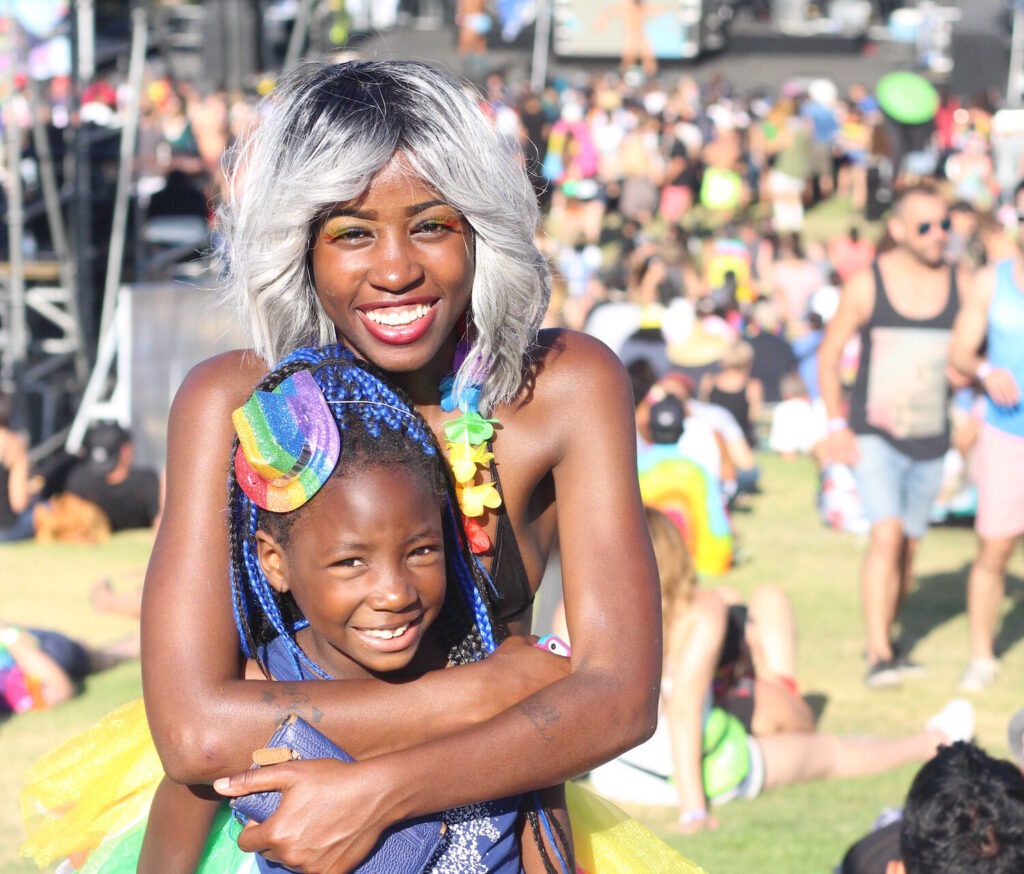
San Diego’s Pride celebration has endured bad weather, threats of protest and violence, a tear gas attack, and for the second year in a row now, a global pandemic. Even so, the show must go on.
“There’s never been a missed year,” says San Diego Pride marketing and communications manager Alex Villafuerte. “Even on the years we were rained out, we still carried on.”
Last summer, COVID-19 restrictions required the event to be entirely virtual. This year, it’ll comprise a virtual Pride Live event streaming online and a handful of smaller in-person gatherings from Kearny Mesa to Carlsbad.
Villafuerte says the online and satellite events mean that Pride can reach beyond Hillcrest and the other downtown San Diego neighborhoods that have hosted the colorful parade and festival since 1975, making it accessible for even more San Diegans.
Pride is the largest civic event in the county, drawing more than double the number of participants as Comic-Con each year and generating millions of dollars for the local economy. It’s a celebration of lesbian, gay, bisexual, transgender, and queer people of all gender identities and sexual orientations, a reminder of the strides the LGBTQ community has made toward equality, and a rally against the pervasive discrimination they still face.
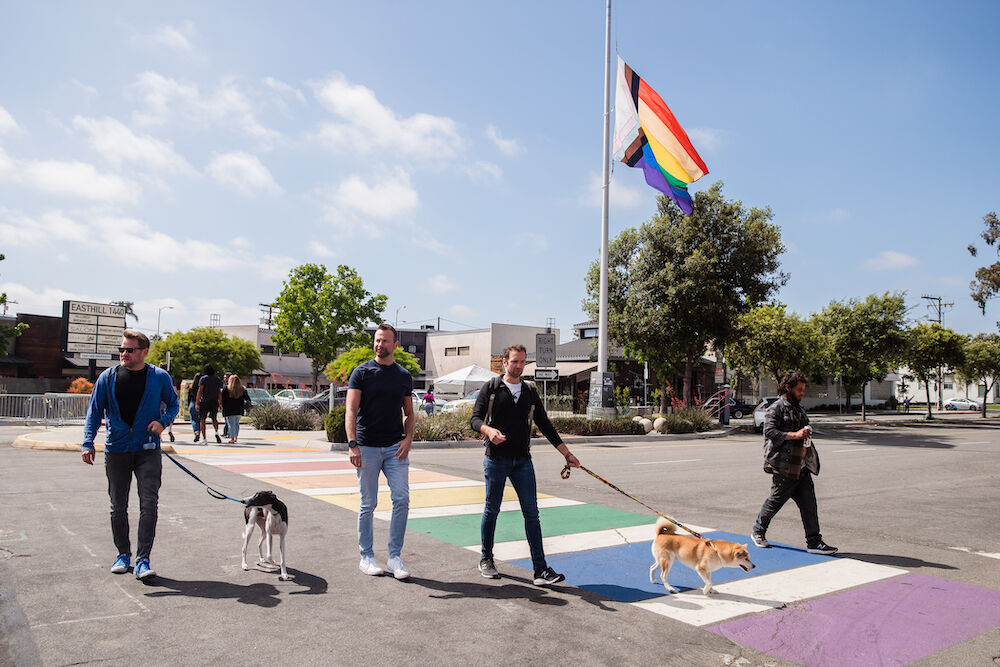
The Hillcrest Pride Flag flies atop a 65-foot pole at Normal Street and University Avenue. This variation, called the Progress Pride Flag, includes additional stripes to specifically recognize the transgender community and people of color.
Ariana Drehsler
Today, Hillcrest is synonymous with San Diego’s queer community. Rainbow-striped pride flags hang from storefronts, homes, and on a 65-foot pole at Normal Street and University Avenue. The San Diego LGBT Community Center sits at the end of Harvey Milk Street, named in honor of the gay civil rights icon. Gay bars and restaurants with bustling patios dot the business district. Locals and tourists alike are more observably “out” here than elsewhere in San Diego.
But this wasn’t always the scene. Hillcrest became a residential neighborhood of affordable low-occupancy cottages and bungalows in the early 20th century. According to historian Walter Meyer, many members of the gay community were introduced to sunny San Diego through military service, especially during World War II.
“In the 1930s, the place to be gay was down on Broadway,” Meyer says. “If you went into the restaurant bar, you might meet another sailor. Anyone who served in the Pacific who was discharged here wasn’t going to take his new boyfriend home to Omaha.”
Meyer wrote the companion book to the San Diego History Center’s exhibit LGBTQ+ SD: Stories of Struggles and Triumphs, on view in Balboa Park through August 1. Before the pandemic, he hosted educational walking tours about Hillcrest’s queer history for school groups, tourists, and corporate teams.
San Diego’s oldest gay bar still in operation opened in 1934 as The Brass Rail. It moved from downtown to Hillcrest in 1963 and rebranded as simply The Rail in 2016. The club has been mostly closed since March 2020.
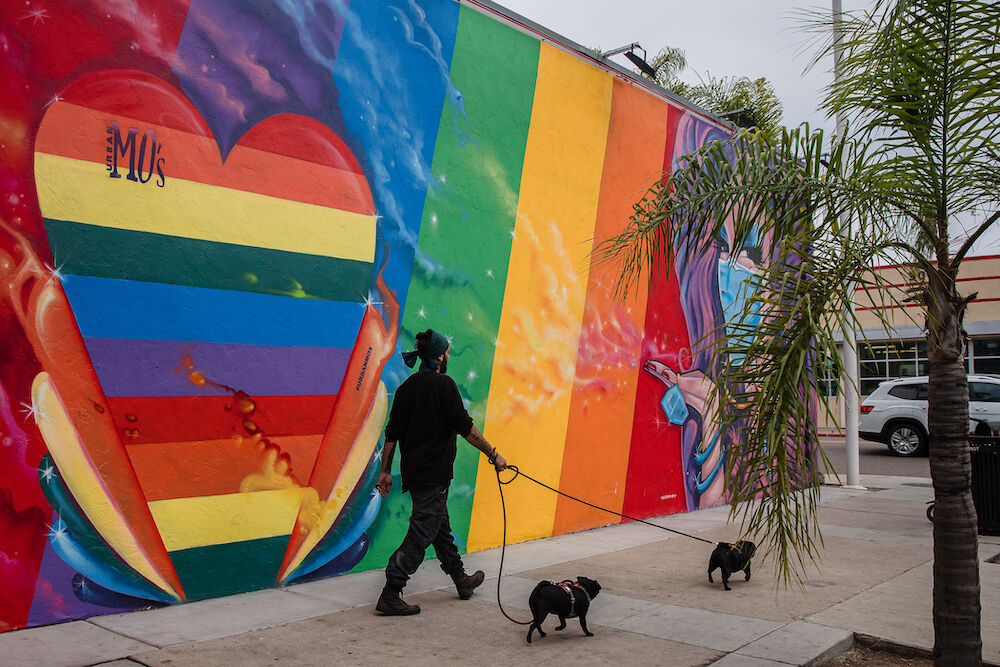
Pride – rainbow mural
Ariana Drehsler
By the ’60s and ’70s, many Hillcrest homes were starting to become run-down. Affordable rent and a burgeoning LGBTQ social scene brought gay-led gentrification to the neighborhood. When the Sears department store along University moved to Mission Valley in the ’80s, the area known as the Uptown District opened up to even more local, gay-owned businesses.
Hillcrest’s evolution as an LGBTQ haven happened alongside the gay civil rights movement and the AIDS epidemic. In those days, being out could cost someone their job or even their home, so an inclusive community was a welcome refuge.
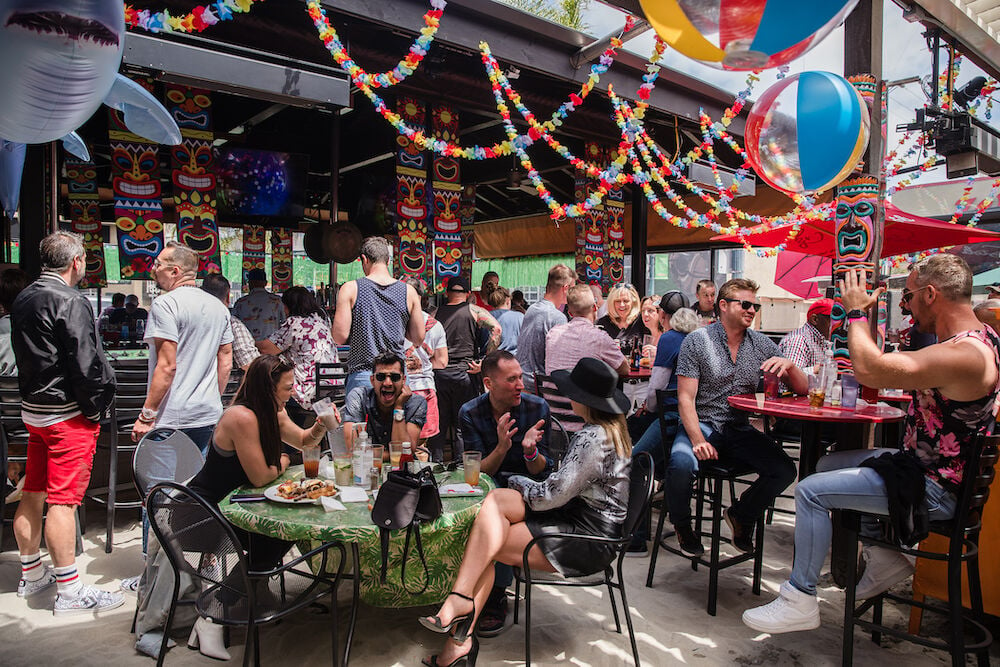
Urban Mo’s Bar & Grill
“There were unnamed bars, no signage,” Meyer says. “You just opened the door to what looked like an abandoned building and there’d be a disco inside. Even the bars were closeted.”
Those in the know would use backdoor entrances to Hillcrest dance clubs. Large store windows facing the street or even outwardly visible pride flags were uncommon. Neighborhood bookstores and coffee shops advertised in gay business directories to signal to patrons that they would be safe there.
Meyer tells the story of a naval officer who would park at the Pernicano’s pizza restaurant on Sixth Avenue and walk to the gay clubs so he’d have an alibi ready if anyone recognized his car. Another friend attended his first Pride parade in the ’70s dressed as a circus clown.
“He said, ‘I was the most visible person there, but no one saw me,’” Meyer recalls. “It was the most liberating experience.”
The 1969 Stonewall uprising in New York City brought the fight for LGBTQ equality into the national conversation.
The shift in San Diego from a closeted subculture to a celebrated recognition of individual identity has been slow but steady. The San Diego History Center’s photographic exhibition, created in partnership with the Lambda Archives of San Diego, is the first of its kind to focus exclusively on the local queer experience.
Meyer suspects that greater social acceptance and online dating has made Hillcrest less of a hideaway and more an enclave. Big-name companies like Wells Fargo and Ace Hardware are allies in the neighborhood. San Diego Pride counts Qualcomm, Sony, and Bud Light among its major sponsors.
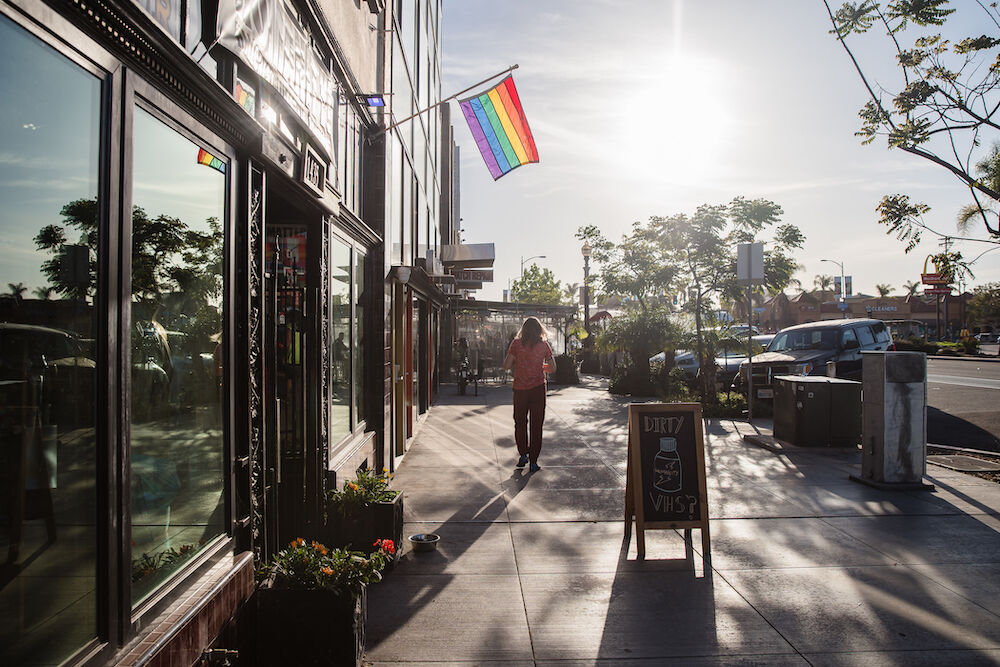
University Ave. in Hillcrest
Despite historic gains, the community still faces challenges, according to Villafuerte. Among them: the push for a federal Equality Act, which would update the Civil Rights Act of 1964 to expressly protect LGBTQ people in every state from discrimination in public spaces like stores and restaurants.
It passed the House in February, and as of press time is under consideration by the Senate. The bill will be among the topics discussed at the Spirit of Stonewall Rally on July 16.
“It helps inspire us and educate us about the issues the community is still facing,” Villafuerte says
Organizers hope to pay it forward with the same feeling they had at their first San Diego Pride
SD Pride
LGBTQ+ youth in the US have had an especially rough year. State legislation restricting their right to talk openly about their identity at school has sparked national debate, increasing the pressures and hostility they often already face growing up.
The volunteers for San Diego’s annual Pride Festival have been there, and they know how tough it is. So they’re organizing the Youth Zone, a scaled-down version of the festival where middle- and high-school-age queer youth and their allies can have a social space to be themselves and connect. It’ll be open 11 a.m.–8 p.m. July 16 and 17, hosting outdoor games, dance parties in the evening, and fun and educational workshops, like How to Do Drag.
Cris Sotomayor (they/them), who oversees Pride’s youth programs, says they’ve had a great reception so far: “Young people reflect just how special it feels to have [events] created specifically for them, because they tend to be the last group included or asked about their opinion.” Both the Youth Zone and the parade’s Youth Marching Band are planned by youth volunteers, and more help is always welcome. There’s even a Children’s Garden for little ones and their parents.
Pride’s organizers often remark among themselves about how different their own teenage years could’ve been if more resources like this had been around. For Sotomayor’s part, they hope to pay it forward with the same feeling they had at their first San Diego Pride: “It was the first time I’d been in a space with a bunch of other trans, gender-nonconforming, and nonbinary people, and I was so shook. I couldn’t believe we were all there just to celebrate ourselves, not to advocate or to protest. There was something powerful about finally finding your people.”
Dan Letchworth is the copy chief of San Diego Magazine. His print column Dansplaining explores San Diego trivia, and his theater review blog Everyone’s a Critic was a finalist for best online column in the 2019 National City & Regional Magazine Awards.
How he'll be celebrating and what allyship means to him
Todd Gloria – Pride
Todd Gloria’s mid-pandemic election as San Diego’s mayor was historic. He’s the first-ever person of color and the first openly gay man to hold the top leadership role in our city. He describes his ethnicity as Native American, Filipino, Dutch, and Puerto Rican. He’s been with his partner, Adam Smith, for about five years. In advance of this year’s Pride, the third-generation San Diegan spoke with us about what it means to lead our diverse community.
We understand it will be different this year, and that’s okay. Last year, my participation was to join in the social media live event in front of the pride flag in Hillcrest. I suspect it would be more substantial this year, but it won’t be the way that we’ve traditionally celebrated.
I think that San Diego plays a significant role in the national story of LGBTQ equality. For example, we have the second-oldest and third-largest community center in the nation. Then, when you look at the over-a-quarter-century of representation in Council District 3 in terms of out representatives to now, it’s sort of a bloomed family tree: our state senator, our assembly member, mayor, city council members. I think one of the evolutions has been that as our efforts have borne fruit, our LGBTQ San Diegans feel comfortable living in places outside of Hillcrest.
That’s what we should hope—that you could feel safe in any neighborhood in the city, and that’s increasingly true. At the same time, that presents a challenge, in that Hillcrest is the historic home of our LGBTQ community and, speaking for myself, both as a San Diegan and as mayor of the city, I want it to always stay that way. So we have to make sure we’re supporting our local businesses, particularly our bars, as they’ve always formed the foundation of our community.
So we have our community center, neighborhood efforts like the pride flag, the naming of Harvey Milk Street, and our intention to build a Pride Plaza promenade on Normal Street. These are efforts to make sure that, much like Little Italy is the historical home of the Italian community in San Diego, we want something similar in Hillcrest to make sure that folks always know that’s the historic home of LGBTQ. While we enjoy the gains of our civil rights and ability to live and be who we are, we always want to be able to come home, and Pride represents that. It’s coming home to celebrate our community and its progress.
I think the responsibility I feel is really toward the community to make them proud. I am the beneficiary of a lot of folks who worked over decades to make this election possible. Many people have worked so hard to achieve this milestone, and I want to make them proud. I also have a responsibility to our young people. Growing up in this city, I didn’t see myself reflected in government until [San Diego’s first openly gay elected official] Christine Kehoe arrived. I know what that meant for me to see her serve. I still hear from young people who share with me what my election means to them personally, so there is a responsibility to hopefully empower them to be whoever they want to be.
There’s a lot. There are urgent matters around Black Lives Ma er and Stop AAPI Hate that really demand attention in the realm of diversity, inclusion, and equity. With regard to the LGBTQ community, it’s really about maintaining our status as being a national leader in the movement for equality. We have continually received 100-percent scores from the Human Rights Campaign for the policies and laws that we have in the city.
Our movement is ever-evolving. When I came out it was just “gay and lesbian,” but now it’s much more inclusive. I know that we will continue on that path.
I think about the fact that we have not come this far without our allies. In the way that many people stood with us as we fought for marriage equality
and other key rights, we have to pay it back. That means standing with our Black community as we work to make it clear that Black lives do matter. Stand with our immigrant community, recognizing that we as a border city have responsibilities to advocate and lead on this issue.
I’m invigorated by it because this isn’t about just one group of people. This is really about the totality of the diversity of the city and ensuring that everyone feels as though there’s a place for them in San Diego.
Sip your way through Julian, shop SD’s first-ever Hella Plants Market and check out a wide range of Comic-Con happenings
This week in nerd news: San Diego Comic-Con is back, and with it, loads of sneak peeks, special events and surprise announcements sure to keep the excitement at a fever pitch. For those who forgot to snag tickets, or whose Wi-Fi let them down when it mattered most, there are plenty of offsite (and badge-free) events, including the Comic-Con Art Show and Indigi-Con. Now, over to the classics. A pair of 17th-century French playwrights are the source of two theater offerings on San Diego stages: Molière’s Scapin at North Coast Repertory Theatre and The Old Globe’s adaptation of Cyrano. Finally, in the world of sports, the San Diego Strike Force will cap off their regular season against the Tucson Sugar Skulls, San Diego FC will return to the pitch versus FC Dallas and the San Diego Wave will look to conquer the Seattle Reign during their annual Pride Match.
Food & Drink | Concerts & Festivals | Theater & Art Exhibits | More Fun Things to Do

For the next installment in its ethereal Canyon to Coupe series, the Fairmont Grand Del Mar is teaming up with Valle executive chef and Michelin Star recipient Roberto Alcocer. This Friday at 6 p.m., guests will be treated to a five-course dinner curated by Alcocer and cocktails infused with Reserva de la Familia tequila. This outdoor dining experience will also feature live music and views of the picturesque Los Peñasquitos Canyon. Reservations are $165 per person plus tax and 20% gratuity.
5300 Grand Del Mar Court, Del Mar
Dine, dress up and do a good deed during the Taste of EastLake, a farm-to-table fundraising dinner for local public education, this Friday from 6-9:30 p.m. This 21-plus soiree at Chula Vista Elite Training Center calls for a vibrant garden party dress code and will feature live entertainment, a silent auction and over 40 food and drink vendors. Tickets are $85 for Taste of EastLake; all proceeds will go towards K-12 public schools in Chula Vista’s EastLake neighborhood.
2800 Olympic Parkway, Chula Vista
Kick off a blistering weekend in East County with a refreshment-filled day trip during the 10th annual Sip of Julian. This Saturday from 11 a.m. to 5 p.m., pop in and out of the town’s tasting rooms for locally sourced libations, including wine, cider, beer and cocktails, paired with small bites. Eventgoers are also encouraged to sign up for the shuttle option to ensure safe transportation. Ticket options include regular admission ($35), sip + shuttle passes ($60) and complimentary designated driver tickets; tickets include a commemorative glass and wine tote.
Julian

After closing the loop on his 13-year, five-album cycle that began with the smash-hit single “The A Team,” Ed Sheeran pressed Play on a new era in 2025. The project returned Sheeran to the pop bona fides that made him a superstar and kicked off a planned six-album cycle, switching mathematical building blocks for media control icons. During his Tuesday (5:30 p.m.) performance at Peto Park, Sheeran will bridge his two eras, and be joined by singers Myles Smith, Sigrid and Aaron Rowe as special guests. Tickets start at $92 for this concert.
100 Park Boulevard, Downtown
Ahead of their highly anticipated Comic-Con plans, K-pop sextet Enhyphen will perform this Tuesday (7:30 p.m.) at Snapdragon Stadium. Originally formed through the 2020 music competition show I-Land, Enhyphen have built an image steeped in mythical lore, including a web comic series that dives into the band’s vampiric origins. With January’s The Sin: Vanish EP, the recent departure of member Heeseung and the impending release of The Sin:Bliss next month, 2026 has been an eventful chapter for the boy band. Tickets start at $55 for this concert.
2101 Stadium Way, Mission Valley
A 15th anniversary reunion for Grimm, an exclusive look at Avatar Aang: The Last Airbender and a special Marvel Studios presentation are just a few of the standout parts of this year’s San Diego Comic-Con lineup. And that’s just what’s going down in Hall H. Fans of sci-fi, fantasy, superheroes and nearly every other corner of pop culture can explore panels, autograph signings, memorabilia and much more at San Diego Convention Center. Though the badges are all gone, there are plenty of badge-free parties, pop-ups and activations that ensure Comic-Con is for all.
111 West Harbor Drive, Embarcadero
Ryan Hardison is a freelance arts and entertainment writer and recent graduate of San Diego State. When he's not staring at his laptop, he's likely eating an adobada burrito or getting sunburnt at the beach.
This month, the 2026 San Diego Business Impact Awards recognized local businesses making an impact in clean energy, biotech, hospitality, and beyond
Renewable energy companies building hundreds of power plants. Biotech startups using artificial intelligence to create personalized medicine for children with rare diseases. Hospitality companies quietly powering thousands of local events. Consumer brands growing from beach-town startups into national businesses. These are the kinds of companies driving San Diego’s economy today, and the businesses recognized at this year’s San Diego Business Impact Awards offer a snapshot of where the region is headed.
Hosted July 23 by San Diego Regional Economic Development Corporation (EDC) and JPMorganChase, the second annual awards event honored four local companies for innovation, growth, and economic impact. More than 100 nominations from San Diego’s middle-market businesses were reviewed by a 10-person judging committee, with winners selected across four categories: startup, early-stage innovator, rising star, and established heavyweight.
Two-time honoree Jimbo Someck, founder of Jimbo’s organic grocery stores, also joined the event for a fireside chat on buying local, supporting emerging brands, and giving back to the community.
“San Diego’s strength comes from its makers and builders—the resilient people who endure great risks and overcome obstacles to build and scale a company,” says Aaron Ryan, San Diego Region Manager and Middle Market Banking at JPMorganChase & Co. “These awards aren’t just recognition; they spotlight the talent, grit, and innovation shaping our region’s future. By celebrating those who create and build, we foster connections and fuel the growth that keeps San Diego thriving.”

Heavyweight honoree SOLV Energy has grown alongside the country’s rapid investment in renewable power. “It’s an exciting time for SOLV Energy as we are experiencing significant growth,” says CEO George Hershman. “The business has doubled over the last year and has almost double-digit growth since its inception.”
The Rancho Bernardo-based company designs, builds, operates, and maintains utility-scale solar and energy storage facilities. Since its founding in 2008, SOLV Energy has built more than 500 power plants.
Growth has translated directly into hiring. About 200 employees work from the company’s local headquarters, including roughly 20 interns. “Our intern program is a big part of the way that we grow our workforce,” Hershman says. “Last year, 43 percent of our interns became full-time employees. We believe San Diego is a great community to build and grow a high-tech infrastructure and technology company because of the incredible workforce—the ability to attract top talent and draw from world-class universities.”
Startup honoree La Jolla Labs is tackling one of medicine’s biggest challenges by developing personalized RNA therapeutics for patients with rare diseases—many of them children with neurological disorders like ALS. Using proprietary artificial intelligence and machine learning tools, the biotech company develops treatments tailored to each patient’s specific genetic mutation.
CEO Tamar Grossman says the recognition reflects how far the company has come despite limited resources. “We’re honored to be recognized for our ability to change and save patients’ lives and turn our lean startup into a clinical company with very minimal resources,” she says.
Grossman credits San Diego’s concentration of research institutions—including UC San Diego, the Salk Institute, and Scripps Research—with creating a pipeline of talent and collaboration. “San Diego is one of the world-leading centers for technology, genomics, and RNA therapeutics,” she says. “We have over 30 RNA therapeutics companies here, and we support each other and help with anything related to drug discovery.”
She says that collaborative spirit extends beyond formal partnerships. “You can walk around Torrey Pines, go into a café, and find colleagues from the industry and have an ad hoc conversation,” Grossman says. “That’s something very unique to San Diego.”
While Snake Oil Venue Company may not be a household name, chances are many San Diegans have attended one of its events. The early-stage innovator honoree has expanded from beverage catering and mixology consulting into venue management, operating Julep Venue in Mission Hills, Bramble Bay Venue in Imperial Beach, Vesper Venue, the Chapel at Liberty Station, and five outdoor venues throughout Liberty Station—more than 500,000 square feet of event space altogether.
“We do a lot of launch parties for corporations and new products,” says CEO Mike Esposito. “I really like working on the entrepreneur side of things, where new businesses are entering the San Diego market and looking to make a splash.”
Snake Oil has executed more than 16,000 events, employed more than 1,000 people, and partnered with more than 900 local vendors, including caterers, florists, photographers, entertainers, and other hospitality businesses. The company also works with many of San Diego’s nonprofits, museums, and cultural institutions. “We get to celebrate people’s most important moments,” Esposito says. “Whether that’s a wedding, celebration of life, or quinceañera, we’re fortunate to be involved in the community in so many different ways.”

Rising star honoree ALOHA Collection is proof that a simple idea can grow into a thriving company. Founded by two roommates who wanted a better way to carry wet swimsuits after a day at the beach, the lifestyle brand has grown into a business while maintaining strong year-over-year growth.
Now headquartered in Carlsbad, ALOHA Collection employs more than 100 people and operates its California flagship store in Encinitas, which is slated for a remodel. With roots in Hawaii, the company is known for its lightweight, splash-proof travel bags that have become a familiar sight on beaches in San Diego and beyond.
“‘Aloha’ is part of our name, but it’s also how we move through the world,” says CEO Lynna Barnard. “It’s how we show up for people, the way we travel, the way we give back.” Since day one, the company has maintained a 5 percent giveback to Hawaii conservation efforts, contributing millions of dollars over the years.
“I think what’s so inspiring about ALOHA Collection, and the founders in particular, is when you dream big, those dreams can come true when you work hard and trust in the universe,” Barnard says. “It’s inspiring to be a role model for other people wanting to start businesses from humble beginnings. Start small and watch it grow.”
Together, businesses like these form a cornerstone of San Diego’s economy—not only through the jobs and revenue they generate—but through the local workers they hire, vendors they support, and investments they make in the region. Their growth doesn’t happen in isolation; it ripples outward, strengthening the broader business community and the people who call San Diego home.

After Captain Keno's closed, pro surfer Benji Weatherley gave its tables, dishes, and memories a second life at Breakers Cafe Bar & Grill
Captain Keno’s No. 8 special—pancakes, sausage, toast, home fries, and eggs for $2.99—was the fuel that powered Benji Weatherley for surf competitions as a teenage pro. A couple decades later, tears were shed when the Coast Highway dive-slash-eatery called it a day after 54 years. Usually, the guts of a shuttered restaurant go to liquidation auctions or straight to the dump to decompose along with its legend. Instead, Weatherley took in Keno’s spare parts—plus other relics from Encinitas’ past—and used them to build the newest community hangout.
Every single piece in the place is from somewhere in this town,” Weatherley says about Breakers Cafe Bar & Grill. “I’m not going to settle for anything less.”
Breakers is a Hawaiian hideout in an uncool part of the coastal surf town, but it’s got the set design of an Encinitas superfan. The plates, silverware, and coffee mugs are from Keno’s. So are the tables and booths. There’s a bench made from the last table preserved in The Derby House (a building that, for over a century, was a hotel, then became a hospital, a religious retreat, and a private home). Weatherley’s not performing CPR on old upholstery because he’s a fan of antique furniture. It’s a method to bring people together.
“Representing nostalgia in this town is the only way to grasp a hold of the community,” Weatherley says. “Everyone wants to touch and feel something different from what they’re experiencing on their phones.”

Every week, locals bring him photos, artifacts, and bits of paraphernalia from Encinitas’ past and ask Weatherley to give them a new home. “I’ve had ladies who were there when [Captain Keno’s] opened cry in my arms and say, ‘This table is where I had my second birthday with my grandma,’” he says. “They tell me these stories, and I tell them I have all the same stories about my mom.” (Weatherley’s mom first brought him to Keno’s and helped raise the young surfers from the Momentum Generation documentary—Weatherley, Taylor Steele, Rob Machado, Kelly Slater, etc.—as they surfed some of the world’s most dangerous waves at Pipeline in Hawaii. Back then, she owned Breakers Restaurant & Bar in Haleiwa. Name sound familiar?)
Weatherley has always been the funniest man in the room. He calls Breakers “the Chuck E. Cheese of Encinitas.” The restaurant hosts hula dancing classes, open-mic comedy nights, and evenings bartended by longtime Captain Keno’s barkeep Vaka Kaufusi. Cult-loved reggae band Steel Pulse hit the Breakers stage recently to perform a new song that Weatherley also helped write. His longtime friend Jack Johnson has dropped by to sing a few, too.
Despite not having a fancy location along the 101, people are catching on. Fire stations and hospitals have held staff parties there. Weatherley also currently sponsors four sports teams.
“Last night, I had a girl say, ‘I want my birthday party at Breakers,’” he says. “That, to me, is community in a nutshell.”
Emma Veidt is an editor at San Diego Magazine. She earned her bachelor's and master's degrees from the Missouri School of Journalism. She loves running, hiking, and rock climbing, but really, she mostly loves encounters with the street cats around North Park.
We the Commas are mixing surf, soul, alternative rock, and sibling chemistry into one unmistakable sound
Siblings make better music. That’s the hot take, and there’s some logic and science behind it. The Bee Gees, Jackson 5, Billie Eilish and Finneas, AC/DC, Van Halen, The Allman Brothers—heck, even the Hanson brothers, why not? Beyond just a shared sense of taste and nonverbal communication developed over decades of living and evolving together, there’s a thing called “blood harmony.” The genetically similar throat cavities, vocal cords, speech patterns, and resonant bone structures all blend each unique voice into a more homophonic sound than what comes out of two non-related singers.
Those throat cavities are working wonders for emerging San Diego band We the Commas—three brothers (from oldest to youngest) Lenny, Jordon, and Cam Comma.
Raised in Vista and Carlsbad, the family opted out of cable TV (video games got a pass). Without binge-watching to fill bored hours, the trio turned to music. Guitar Hero led to GarageBand and finally to live instruments—guitars for Lenny and Cam, drum set for Jordon. In their sound, the influence of Stevie Wonder, Erykah Badu, The Who, and Dave Matthews Band is obvious, and so is surf culture, specifically that laid-back chill of North County surf culture.
“We’re like the Black Beach Boys,” Cam says. (Note: Three of the five founding members of the Beach Boys were siblings—the theory gets stronger.)
Their debut EP pretty clearly lays out how they see their sound—titled SARB, an acronym for Surf Alternative R&B. That resonates in the song “Sherry,” with its easy-listening, windows-down-on-the-101 vibe. It also works in the louder, surf-punkier “Pissed Off.” Despite some advances in reducing core stereotyping tendencies, people still tend to autofill Black musicians into rap and R&B. The Comma brothers immediately circumvent that by declaring themselves out the gates.
“SARB makes it so [listeners are] open to all of the things that we want to do,” Lenny says. “From there, you can put a label on whatever you think it sounds like.”

People—and musicians further up the stream—are taking note. In 2023, they co-wrote the song “I Keep Fallin’” with Eric Cannata, guitarist for multi-platinum SoCal band Young the Giant. In early 2024, they were tapped to open the national tour of Brooklyn’s jazz-pop heroes, Sammy Rae & The Friends. Comedian Gabriel “Fluffy” Iglesias invited them to warm up his show at Pechanga a couple months later.
“We really believe genuinely, with our whole hearts, minds and souls, that this is going to work the way that we think it’s going to,” Cam says, grinning ear to ear.
Currently, the Commas live together in Vista, and the dream, wholeheartedly, is more alive than ever. They’ve put out two dozen singles and a trio of EPs: SARB (2020), Old School Love (2021), and Aeroplane (2024); this year alone brought the release of three new singles, including “Let Me,” a silky-smooth entry in their growing collection of love songs.
“We fully realized the magic is in all of us together,” Lenny says. “We know that this doesn’t happen without each person, and we have respect for each other because we need each other.”
As they grow as brothers and as a band, the Commas try to always remember what unified them in the first place.
“Music has always been a glue,” Jordon says.
Ryan Hardison is a freelance arts and entertainment writer and recent graduate of San Diego State. When he's not staring at his laptop, he's likely eating an adobada burrito or getting sunburnt at the beach.
San Diego aesthetic medicine providers help you look—and feel—your best
San Diego is home to world-class aestheticians, plastic surgeons, and dermatologists who can help turn back the hands of time and revitalize tired, damaged skin. Enhancing your look is a spectrum. Treatments range from noninvasive procedures like lasers or injectables to the big guns, like a deep-plane facelift—many with better results and less downtime than ever thanks to advanced techniques and technology. Whether you’re a Botox beginner or an aesthetic medical care veteran, San Diego aestheticians and aesthetic medicine providers can help you look and feel like the best version of yourself.

Changes Plastic Surgery & Spa is San Diego’s premier destination for aesthetic surgery, led by world-renowned plastic surgeon Dr. Michael Rossi. Celebrated for his artistry, precision, and natural-looking results, Dr. Rossi is known for creating customized Mommy Makeovers that help women restore confidence and reclaim their bodies after pregnancy. His expertise also extends to comprehensive post-weight loss body contouring, addressing excess skin and skin laxity with sophisticated surgical techniques tailored to each patient’s unique anatomy and goals. From breast and body rejuvenation to deep plane facelifts and eyelid surgery, every treatment plan reflects Dr. Rossi’s commitment to surgical excellence, personalized care, and transformative results that look as beautiful as they feel.

At Cosmetic Laser Dermatology, the board-certified, internationally acclaimed team has the power to erase 10+ years of aging in a single treatment. The center’s 60+ laser, light, and energy devices do it all—refining texture and tone, calming acne, minimizing pores, and erasing that ill-advised spring break tattoo of yesteryear. Their dermatologists take it further by stacking multiple devices in one session for synergistic results—the philosophy behind their signature Take5 and Take10 treatments, the latter capable of removing a decade-plus of aging in just one visit. Add a full suite of injectables, body sculpting, and vein treatments for every skin type and tone, and it’s no wonder the practice’s medical director was named the #1 cosmetic dermatologist in America by Newsweek two years running.

If it’s subtle, lasting results you’re after, Cultivé Medical Aesthetics has you covered. Cultivé purposely combines aesthetics and wellness. The Bankers Hill practice offers a full menu of services designed to improve skin health and support the three pillars of aesthetic aging: skin tone and texture, volume loss, and laxity. Cultivé offers a wide range of aesthetic treatments, including collagen boosting powerhouse Morpheus8, biostimulators like Sculptra and Radiesse, PRP therapy, laser hair removal, VI peels, and regenerative skincare treatments. They also provide wellness-focused services such as hormone replacement therapy, IV therapy, and medical weight management programs.

Starlite Aesthetics and Wellness focuses on enhancing natural beauty through science-backed treatments tailored to each client’s goals. Michelle Langston, MSN, APRN, FNP-BC, founded Starlite on the principle that aesthetic medicine should be precise, personal, and rooted in wellness. The boutique aesthetic practice in La Jolla combines modern medical aesthetics with holistic wellness principles for refined results personalized to each patient. Langston has spent more than a decade honing her skills in advanced injectables, regenerative therapies, and anti-aging care. Starlite offers regenerative therapies rooted in science, promoting skin rejuvenation using a multiple modality approach. Service offerings include RF microneedling, wrinkle relaxers, facial balancing and more.

In the rapidly advancing field of aesthetic medicine, it can be hard to tell what’s worth the hype. Here are some of the latest, most advanced, and most popular options out there.
Morpheus8: This combination of microneedling and radiofrequency (RF) energy activates your skin’s own collagen and elastin without the downtime associated with some
laser treatments. It can be used to reduce wrinkles, tighten skin, improve skin tone, contour the jawline, and minimize acne scars.
Exosome Therapy: This cutting-edge treatment uses protein-packed nanoparticles to trigger repair and rejuvenation at the cellular level. Often used post-microneedling or lasers, exosomes penetrate deep into the skin to stimulate collagen production.
Post-GLP-1 Skin Removal: Rapid fat loss prompted by GLP-1 medications, including semaglutide, tirzepatide, and retatrutide, can leave users with sagging skin. Skilled surgeons can remove excess skin and reshape the figure.
Treatment Stacking: Sometimes it’s the more the merrier when it comes to aesthetic procedures. Combining multiple non-surgical treatments in a single session allows users to address several issues efficiently, with less downtime.