
Ready to know more about San Diego?

Subscribe
People JULY 15, 2021

Mayor Todd Gloria Talks About Pride in San Diego

How he'll be celebrating and what allyship means to him
Mayor Todd Gloria Talks About Pride in San Diego
Todd Gloria - Pride

Todd Gloria – Pride

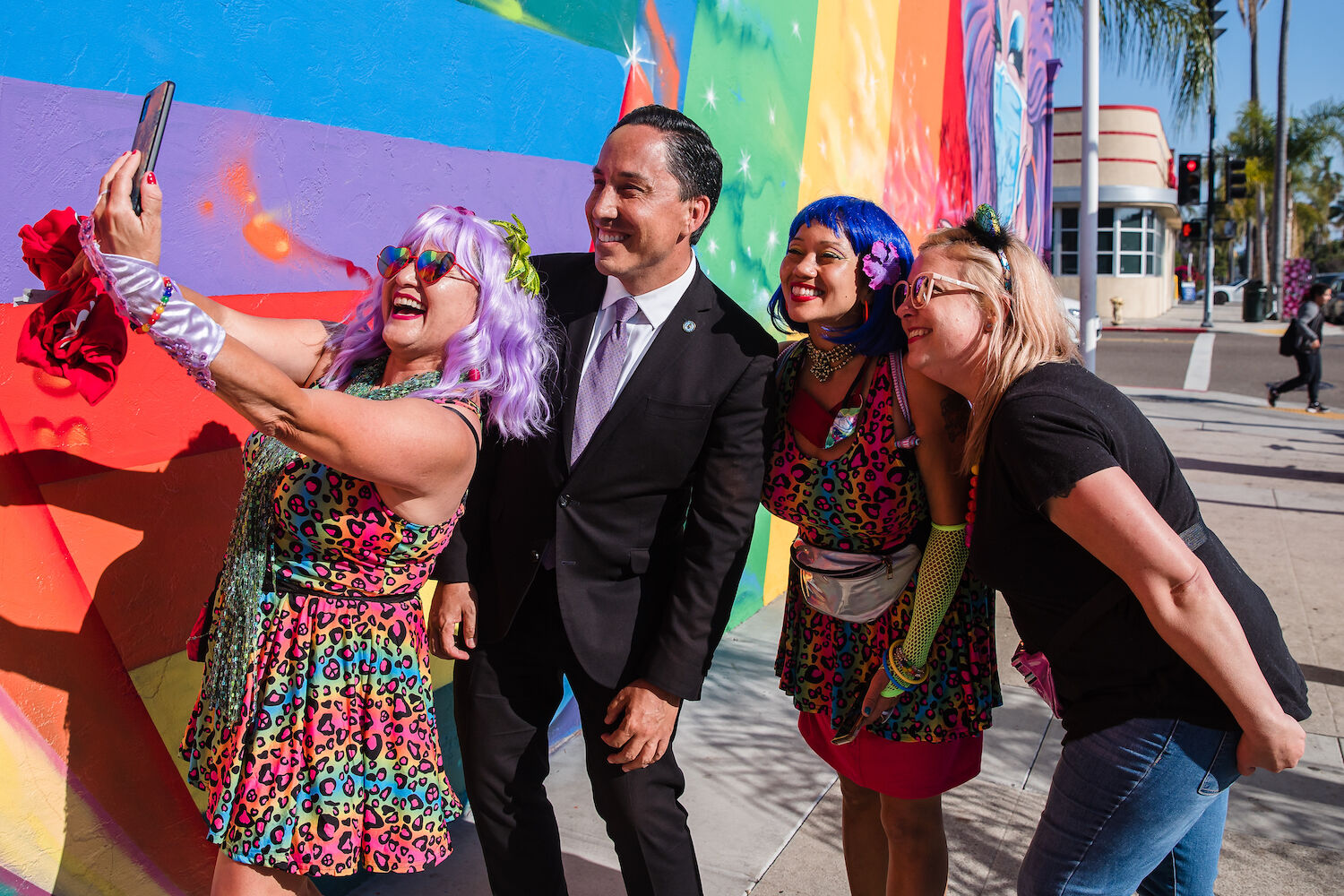
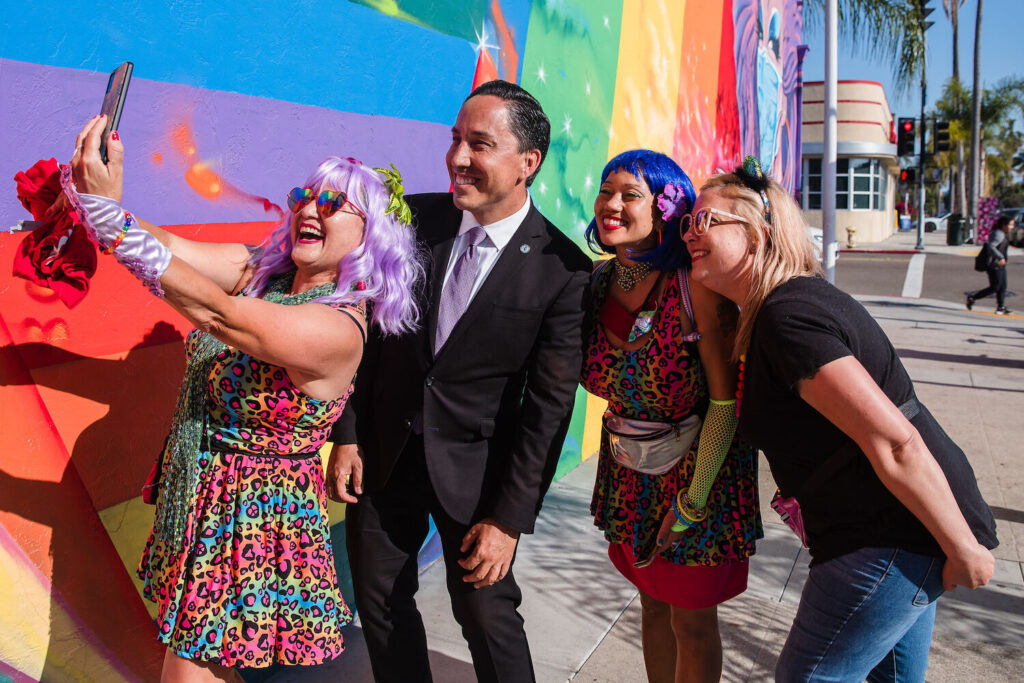
Todd Gloria’s mid-pandemic election as San Diego’s mayor was historic. He’s the first-ever person of color and the first openly gay man to hold the top leadership role in our city. He describes his ethnicity as Native American, Filipino, Dutch, and Puerto Rican. He’s been with his partner, Adam Smith, for about five years. In advance of this year’s Pride, the third-generation San Diegan spoke with us about what it means to lead our diverse community.

How are you celebrating Pride this year?

We understand it will be different this year, and that’s okay. Last year, my participation was to join in the social media live event in front of the pride flag in Hillcrest. I suspect it would be more substantial this year, but it won’t be the way that we’ve traditionally celebrated.

How has the LGBTQ community in San Diego evolved over your time here?

I think that San Diego plays a significant role in the national story of LGBTQ equality. For example, we have the second-oldest and third-largest community center in the nation. Then, when you look at the over-a-quarter-century of representation in Council District 3 in terms of out representatives to now, it’s sort of a bloomed family tree: our state senator, our assembly member, mayor, city council members. I think one of the evolutions has been that as our efforts have borne fruit, our LGBTQ San Diegans feel comfortable living in places outside of Hillcrest.

That’s what we should hope—that you could feel safe in any neighborhood in the city, and that’s increasingly true. At the same time, that presents a challenge, in that Hillcrest is the historic home of our LGBTQ community and, speaking for myself, both as a San Diegan and as mayor of the city, I want it to always stay that way. So we have to make sure we’re supporting our local businesses, particularly our bars, as they’ve always formed the foundation of our community.

So we have our community center, neighborhood efforts like the pride flag, the naming of Harvey Milk Street, and our intention to build a Pride Plaza promenade on Normal Street. These are efforts to make sure that, much like Little Italy is the historical home of the Italian community in San Diego, we want something similar in Hillcrest to make sure that folks always know that’s the historic home of LGBTQ. While we enjoy the gains of our civil rights and ability to live and be who we are, we always want to be able to come home, and Pride represents that. It’s coming home to celebrate our community and its progress.

Do you feel a particular responsibility toward the LGBTQ community as mayor?

I think the responsibility I feel is really toward the community to make them proud. I am the beneficiary of a lot of folks who worked over decades to make this election possible. Many people have worked so hard to achieve this milestone, and I want to make them proud. I also have a responsibility to our young people. Growing up in this city, I didn’t see myself reflected in government until [San Diego’s first openly gay elected official] Christine Kehoe arrived. I know what that meant for me to see her serve. I still hear from young people who share with me what my election means to them personally, so there is a responsibility to hopefully empower them to be whoever they want to be.

What are some of the diversity issues you’d like to address while in office?

There’s a lot. There are urgent matters around Black Lives Ma er and Stop AAPI Hate that really demand attention in the realm of diversity, inclusion, and equity. With regard to the LGBTQ community, it’s really about maintaining our status as being a national leader in the movement for equality. We have continually received 100-percent scores from the Human Rights Campaign for the policies and laws that we have in the city.

Our movement is ever-evolving. When I came out it was just “gay and lesbian,” but now it’s much more inclusive. I know that we will continue on that path.

I think about the fact that we have not come this far without our allies. In the way that many people stood with us as we fought for marriage equality

and other key rights, we have to pay it back. That means standing with our Black community as we work to make it clear that Black lives do matter. Stand with our immigrant community, recognizing that we as a border city have responsibilities to advocate and lead on this issue.

I’m invigorated by it because this isn’t about just one group of people. This is really about the totality of the diversity of the city and ensuring that everyone feels as though there’s a place for them in San Diego.

Pride

Subscribe to our newsletters

Select Options

By subscribing you confirm that you agree with our Terms and Conditions and Privacy Policy.

People JULY 7, 2021

46 Years of San Diego Pride: How the City’s Most Popular Event Came to Be

Plus, the schedule for this year's festivities!

46 Years of San Diego Pride: How the City’s Most Popular Event Came to Be
46 Years of Pride - main

46 Years of Pride – main

Ariana Drehsler

San Diego’s Pride celebration has endured bad weather, threats of protest and violence, a tear gas attack, and for the second year in a row now, a global pandemic. Even so, the show must go on.

“There’s never been a missed year,” says San Diego Pride marketing and communications manager Alex Villafuerte. “Even on the years we were rained out, we still carried on.”

Last summer, COVID-19 restrictions required the event to be entirely virtual. This year, it’ll comprise a virtual Pride Live event streaming online and a handful of smaller in-person gatherings from Kearny Mesa to Carlsbad.

Villafuerte says the online and satellite events mean that Pride can reach beyond Hillcrest and the other downtown San Diego neighborhoods that have hosted the colorful parade and festival since 1975, making it accessible for even more San Diegans.

Pride is the largest civic event in the county, drawing more than double the number of participants as Comic-Con each year and generating millions of dollars for the local economy. It’s a celebration of lesbian, gay, bisexual, transgender, and queer people of all gender identities and sexual orientations, a reminder of the strides the LGBTQ community has made toward equality, and a rally against the pervasive discrimination they still face.

Welcome to the Gayborhood

Pride - flag

The Hillcrest Pride Flag flies atop a 65-foot pole at Normal Street and University Avenue. This variation, called the Progress Pride Flag, includes additional stripes to specifically recognize the transgender community and people of color.

Ariana Drehsler

Today, Hillcrest is synonymous with San Diego’s queer community. Rainbow-striped pride flags hang from storefronts, homes, and on a 65-foot pole at Normal Street and University Avenue. The San Diego LGBT Community Center sits at the end of Harvey Milk Street, named in honor of the gay civil rights icon. Gay bars and restaurants with bustling patios dot the business district. Locals and tourists alike are more observably “out” here than elsewhere in San Diego.

But this wasn’t always the scene. Hillcrest became a residential neighborhood of affordable low-occupancy cottages and bungalows in the early 20th century. According to historian Walter Meyer, many members of the gay community were introduced to sunny San Diego through military service, especially during World War II.

“In the 1930s, the place to be gay was down on Broadway,” Meyer says. “If you went into the restaurant bar, you might meet another sailor. Anyone who served in the Pacific who was discharged here wasn’t going to take his new boyfriend home to Omaha.”

Meyer wrote the companion book to the San Diego History Center’s exhibit LGBTQ+ SD: Stories of Struggles and Triumphs, on view in Balboa Park through August 1. Before the pandemic, he hosted educational walking tours about Hillcrest’s queer history for school groups, tourists, and corporate teams.

San Diego’s oldest gay bar still in operation opened in 1934 as The Brass Rail. It moved from downtown to Hillcrest in 1963 and rebranded as simply The Rail in 2016. The club has been mostly closed since March 2020.

Pride - rainbow mural

Pride – rainbow mural

Ariana Drehsler

By the ’60s and ’70s, many Hillcrest homes were starting to become run-down. Affordable rent and a burgeoning LGBTQ social scene brought gay-led gentrification to the neighborhood. When the Sears department store along University moved to Mission Valley in the ’80s, the area known as the Uptown District opened up to even more local, gay-owned businesses.

Seeking Sanctuary

Hillcrest’s evolution as an LGBTQ haven happened alongside the gay civil rights movement and the AIDS epidemic. In those days, being out could cost someone their job or even their home, so an inclusive community was a welcome refuge.

Pride - Urban Mo's

Urban Mo’s Bar & Grill

“There were unnamed bars, no signage,” Meyer says. “You just opened the door to what looked like an abandoned building and there’d be a disco inside. Even the bars were closeted.”

Those in the know would use backdoor entrances to Hillcrest dance clubs. Large store windows facing the street or even outwardly visible pride flags were uncommon. Neighborhood bookstores and coffee shops advertised in gay business directories to signal to patrons that they would be safe there.

Meyer tells the story of a naval officer who would park at the Pernicano’s pizza restaurant on Sixth Avenue and walk to the gay clubs so he’d have an alibi ready if anyone recognized his car. Another friend attended his first Pride parade in the ’70s dressed as a circus clown.

“He said, ‘I was the most visible person there, but no one saw me,’” Meyer recalls. “It was the most liberating experience.”

Shifting Perspectives

The 1969 Stonewall uprising in New York City brought the fight for LGBTQ equality into the national conversation.

The shift in San Diego from a closeted subculture to a celebrated recognition of individual identity has been slow but steady. The San Diego History Center’s photographic exhibition, created in partnership with the Lambda Archives of San Diego, is the first of its kind to focus exclusively on the local queer experience.

Meyer suspects that greater social acceptance and online dating has made Hillcrest less of a hideaway and more an enclave. Big-name companies like Wells Fargo and Ace Hardware are allies in the neighborhood. San Diego Pride counts Qualcomm, Sony, and Bud Light among its major sponsors.

Pride - University Ave.

University Ave. in Hillcrest

Despite historic gains, the community still faces challenges, according to Villafuerte. Among them: the push for a federal Equality Act, which would update the Civil Rights Act of 1964 to expressly protect LGBTQ people in every state from discrimination in public spaces like stores and restaurants.

It passed the House in February, and as of press time is under consideration by the Senate. The bill will be among the topics discussed at the Spirit of Stonewall Rally on July 16.

“It helps inspire us and educate us about the issues the community is still facing,” Villafuerte says

Pride
Everything SD MAY 15, 2026

The Last Rally at Ray’s Tennis

San Diego's "First Couple of Tennis" reflects on the past as they get ready to move on from Ray's Tennis, a Hillcrest landmark

The Last Rally at Ray’s Tennis

Ray’s Tennis doesn’t look like much from the outside. Never has. It’s just a green box with cloudy windows in Hillcrest, just steps away from a McDonald’s on University Avenue. But for nearly 60 years, this place has been the genesis for three generations of San Diego tennis dreams. Head inside, and you enter one of the tennis world’s great cornucopias.

For years, there was a tennis court behind the store, where owner Bob Ray gave countless lessons. It was like a racket-sport speakeasy; most customers didn’t realize the court existed unless Bob or his wife, Hiroko, guided them through the back door of the shop. Eventually they converted it into a half-court indoors—where a patron might take a racket for a few trial thwacks, trying to avoid rounders of tennis clothes that shared the space.

Illustration of the Club Raquetas Chula Vista tennis club for San Diego's latino community featuring tennis players on a court

The shop is an abridged living history. Relics hang from the ceiling: a model of an old metal racket used by fiery lefthander Jimmy Connors in his heyday, and a version of the wooden Donnay that Björn Borg wielded on his way to five consecutive Wimbledon championships from 1976 to 1980.

And just inside the front door is Hiroko eternally stringing new rackets, carefully threading and adjusting the tension of the polyester strings, back and forth, until she has the entire racket head strung.

Photo Credit: Matt Furman

“I worked seven days a week—five days off in the year,” she says. “My hearing is still good. Physically, I’m as good as I was. Working seven days a week, standing all day. I’m mentally healthier than most people.”

The racket stringing is an operation she does up to 20 times a day—and one that, in some ways, resembles the thread work done by her father decades ago, when he ran a tailor’s shop in Japan.

Hiroko, now 81, was born in the city of Yokosuka at the tail end of the WWII. Her family evacuated to the countryside to escape the bombing raids, and she remembers growing up surrounded by rice fields and mountains. It was in Japan that Hiroko met Bob, a third-generation San Diegan, in the late 1960s, when he was stationed there with the Navy.

Among his possessions at the time was a tennis racket. Inherited from his father, who died when Bob was 11, this racket changed the trajectory of his life: He played constantly, filling up his school days, afternoons, and evenings on the tennis court. He was one of the highest-ranked teen players in the state, and he dreamed of joining the international tournament circuit after his stint in the Navy. But—speaking plainly—he acknowledges that he wasn’t quite good enough to compete with the best of the best. So, instead, he modified his dreams. He and Hiroko returned to San Diego in 1968, and he took a job as the club pro at Morley Field. By their mid-20s, in lieu of touring the world on the tennis circuit, the couple was running the club’s tennis store.

They spent 11 years at Morley Field, which at the time was one of the city’s tennis epicenters, hosting major tournaments for juniors. When the city handed over the store lease to a wealthier applicant, the Rays took over the property on University Avenue and moved in their tennis gear. They have been there ever since—through the McEnroe and Navratilova and Evert eras; the rise of Agassi and Sampras and Graf; the reign of the Williams sisters; the Federer-Nadal-Djokovic rivalry; and into the Alcaraz era. In the near-half century they have sold tennis gear in Hillcrest, the Rays became beloved anchors of the neighborhood’s business community, symbols of stability in an ever-changing environment.

At 84, Bob is still lean and, in his Lacoste tracksuit and Adidas cap, remains every bit the club pro. Like Hiroko, he comes to the store every day—though sometimes, if he is playing tennis in the morning, he might arrive a little later.

Photo Credit: Matt Furman

But time has started to take its toll. His hearing isn’t what it used to be, and the aging process is revealing itself to be true. And much to the disappointment of their loyal clientele, San Diego’s “First Couple of Tennis” is retiring, a milestone that marks the end of an extraordinarily long chapter in the city’s tennis history.

But Ray and Hiroko didn’t sell the building to a developer for condos or to a big-box retailer looking to open a boutique outpost. Determined that Ray’s should remain a tennis temple, they have negotiated a sale to a former employee who wants to continue the Rays’ legacy.

As of this writing, Hiroko and Bob remain in charge, Hiroko stringing rackets, Bob sharing his expertise about new gear. As much as they love what they’ve built, their hope is to move on soon.

For Hiroko, the prospect of retirement is bittersweet. “What am I going to do?” she asks. “Am I going to be ok? I never had a boring life. Always busy. Business first. I’m so involved in the business—because I didn’t want to fail.”

She looks around her store as she continues stringing. For her, the gladiatorial nature of tennis has always been a metaphor for how to succeed in life. “People have to have a drive,” she says. “You can’t just quit because you lose to so-and-so. Tennis players have that mindset.”

She pauses to talk about all the people who have come through the store’s door over the decades, and the relationships she has built with them. “It’s wonderful to have a great customer. That’s probably the reason I lasted this long.”

Sasha Abramsky is the West Coast correspondent for the Nation magazine and the author of nine books. His tenth book, Chaos Comes Calling, will be published by Bold Type Books in September.

Arts & Culture NOVEMBER 4, 2025

Your TV-Show-Themed Board Game Was Probably Made in San Diego

In Carlsbad, a 31-year-old, family-owned company churns out city and pop-culture versions of Monopoly and other iconic Hasbro games

Your TV-Show-Themed Board Game Was Probably Made in San Diego

At the 1996 Atlanta Summer Olympics, Dane Chapin had a problem. He found himself in possession of tens of thousands of excess Monopoly games, with no plan on how to sell them. What he didn’t know at the time is that this Herculean task would shape the future of his business.

In 1994, Chapin and his sisters started their Carlsbad company, USAopoly, with a two-year license from Hasbro to make city editions of the popular Monopoly board game. “The game is a great canvas,” Chapin remarks. While some aspects of the game are “sacrosanct,” according to Chapin—the four corners, for example—many of the details can be customized to fit a theme.

Monopoly games from San Diego board game company USAopoly and The Op Games in Carlsbad
Photo Credit: Cole Novak
No matter your favorite film or TV franchise, there’s probably a USAopoly game representing it

USAopoly appealed to local customers by including San Diego and La Jolla editions in the original six games it created (alongside New York, San Francisco, Boston, and Atlanta versions). The tokens of the San Diego board included a surfer, a beach cruiser, and a copy of the Union-Tribune. Instead of Park Place or Reading Railroad, players land on the Gaslamp Quarter or the San Diego trolley. But after two years of city-specific boards, the siblings were ready to branch out.

San Diego golf company TaylorMade golf in Carlsbad featuring The Kingdom golf club fitting and production facility

In 1996, Hasbro gave them license to create an Olympic edition of Monopoly to commemorate the Atlanta games. The Olympic Committee had agreed to purchase 20,000 copies, a huge number for USAopoly in those days. They decided to manufacture 35,000, figuring they could sell the extra 15,000 on their own. The games went into production, but the Olympic Committee hadn’t actually sent over a purchase order.

“I finally get the buyer on the phone,” Chapin recounts. “And she says, ‘We’re going to order 90 games.’ Nine-zero. Not 900, not 9,000, not 90,000. Ninety.”

Dane Chapin founder and CEO of San Diego board game company USAopoly and The Op Games in Carlsbad holding up a picture of him selling Monopoly games at the 1996 Atlanta Olympics
Photo Credit: Cole Novak
Chapin shows off a snapshot from his weeks hawking Atlanta Olympics Monopoly boards on the street.

When he reminded her of the initial request for 20,000, she said that the team had changed their mind. “There was no point for me to get angry or get mad at her,” he adds, laughing. “I just had to figure out what I was going to do.”

Chapin landed in Atlanta for press coverage the week before the opening ceremony. “The Olympics are a white-hot deal, and then it’s done,” Chapin explains. “And once it’s done, there’s really no market for all those goods.” So, he shipped 20,000 games to the city. If nothing else, he’d have them on hand to replenish the stock for local stores. But, while Chapin was walking to an interview with an Olympic Monopoly board under his arm, a man stopped him on the street and asked where he bought it. Chapin sold it to him for 20 bucks. A lightbulb went off.

Interior of San Diego board game company USAopoly and The Op Games in Carlsbad known for their Monopoly games
Photo Credit: Cole Novak
USAopoly’s Carlsbad offices hold copies of the thousands of games the company has produced since 1994.

“We’re sitting with a warehouse of 20,000-plus games that need to find a home,” he recalls. Why not get them directly into consumers’ hands? He rented a van, bought a dolly, and got to work. “I spent the next two weeks on the streets of Atlanta, schlepping games,” he says. At the end of those two weeks, all the boards had been sold at $20 apiece.

Hasbro never knew the full story. But the company did notice how successful the Olympic board had been—and it was all the proof it needed to increase USAopoly’s licenses. “That was the inflection point for USAopoly,” Chapin says. “After that, [Hasbro] expanded our purview, our grants, well beyond city editions.”

Chapin and his sisters started to create pop-culture versions of Hasbro games, producing tributes to everything from Harley-Davidson to Metallica to The Simpsons. Now, three decades later, USAopoly (also known as The Op) is on track to sell over seven million games this year. It’s grown into an international family entertainment company that designs original best-sellers like Telestrations and Flip 7 in addition to twists on the Hasbro classics.

Photo Credit: Cole Novak
The board gives players the chance to invest in iconic SD properties like the Carlsbad Flower Fields and the zoo.

Peek in the archives at the Carlsbad offices, and you find shelves jam-packed with a copy of each game the company has produced since its inception, from the Atlanta Olympics Monopoly that changed USAopoly’s fate to Dragon Ball Z chessboards and RuPaul’s Drag Race Clue.

Chapin shows off the original San Diego Monopoly, still sealed in its packaging. “Think about some of your fondest memories in life,” he instructs. “My fondest memories include going to my grandparents’ house with my brother when I was 10 years old—we’d have a sleepover and play canasta for hours. Talk about joy, laughter, and lifetime memories.” He smiles. “So, that’s my job—to create games that will do that, that will bring people together and get them to put their phones away. It’s pure, and people can be present. That’s more important than ever.”

Cora Lee

About Cora Lee

Cora Lee was born and raised in San Diego. More of her work can be found at coralee.net.

Studio S APRIL 15, 2026

10 Years In, Puffer and Malarkey Are Just Getting Started

A look back at the risks, grit, and instincts behind the local restaurant powerhouse

In this city, chef Brian Malarkey and restaurateur Chris Puffer are kind of like peanut butter & jelly, tacos and Tuesday, Padres and Petco—they just go together. This month, the duo celebrates 10 years of partnering on some of San Diego’s top restaurants including their first venture, Herb & Wood.

To celebrate this milestone, we stepped back and revisited their journey becoming some of this city’s most successful restaurateurs.

But first, let’s go back to the beginning. The duo met at Oceanaire in 2007 where they both worked. Malarkey was still riding the high from his stint on Top Chef Season 3 where he won runner-up. He was a great chef, Puffer recalls, if not a tad arrogant. Whatever he was doing, though, it worked. Sales doubled under his watch.

In 2009, Malarkey was approached by some patrons to start what would become Searsucker. He knew he wanted Puffer to be his partner. They had great chemistry and loved hospitality and food. “We both came to this with a bit of a chip on our shoulder,” says Malarkey. “We wanted to prove it to other people that we know what we’re doing.”

Courtesy of Puffer Malarkey Collective

Searsucker, Gabardine, and Herringbone (under the Fabric of Social Dining restaurant group) were born through the new partnership. But in 2012, they sold their concepts to Hakkasan and soon partnered on a new lease.

That building would eventually become Herb & Wood. “We were going to do it differently this time around,” says Malarkey as he reflects on Wood’s early days. “And we [wanted to] build it to last.”

The vision: Great food. Great music. Great service. It’d be a place where diners would let go, put their phones down, and be fully present to enjoy a meal together. When they walked into 2210 Kettner Blvd, they knew they had found their spot. 

The only problem was that, at the time, that area of Little Italy was still severely underdeveloped. In a 8,500-square-foot space, they were going to have 230 seats to fill. “It may as well have been on Mars,” says Troy Johnson, San Diego Magazine publisher, content chief, and the city’s longtime food critic.

Courtesy of Puffer Malarkey Collective

And, of course, there were the naysayers. The prevailing feeling in the dining world was, “Let’s see what these f**king idiots do,” recalls Malarkey. The duo let all the noise be noise. In fact, the noise fueled them. “We weren’t going to cater to the haters,” Puffer says.

Their next hurdle would be to tackle the restaurant’s design. “There was nothing. It was literally a box,” says Puffer of the former space. Design teams were too expensive or didn’t quite get their vision—no, they didn’t want exposed beams or wooden tables made from reclaimed barns. “Then, Puffer was like, ‘f**k it, dude, I’m going to design this restaurant.’”

Having never really designed something like this before, he decided not to work in the programs that most professionals use to create their layouts. 3D mockup? Didn’t need it. CAD? That’s what a paper and pencil are for.

Courtesy of Herb & Wood

“It was all in my head,” he recalls. “I had this moment where I was like, ‘If I died right now, no one would know where any of this shit goes.’”

“Yeah, it made no sense,” Malarkey says.

And it still doesn’t if you hear him explain it. A mishmash of vignettes from the inner workings of his memory bank, evoking everything from Mississippi riverboats to Eiffel tower ironwork, Kensington home façades, an old theater he frequented, and a canoe, because why not? Yet somehow, it all worked.

“It’s a sense of nostalgia,” says Puffer. “People might say, ‘Oh, my gosh, this feels good’ and they don’t realize it reminds them of the time they were in Paris.’”

“We don’t play trends,” Malarkey says. “We play timeless.”

Courtesy of Herb & Wood

Over the course of many years and plenty of trial and error, the partnership has continued to thrive. And, the Puffer Malarkey Collective has found its sweet spot within their restaurants: The service had to be kind and unpretentious and the food had to come out quick, delicious, and consistent. “Consistency is key!” says Puffer.

They also learned to balance out one another. “He’s a go-go-go-go [person],” says Puffer, “I’m a let’s-take-a-deep-breath-and-sleep-on-it [type of person].”

So, when they opened the doors to Herb & Wood in April of 2016, with those lessons in place, everything was just right. “We knew it had to fire on all cylinders,” says Puffer. “And it did.”

Courtesy of Puffer Malarkey Collective

There was no pretense and the dress code was exceedingly simple. “Money in your pocket,” says Malarkey. “That’s all you need.”

The phones rang, the seats filled, and the haters had to give it to them, those gnocchi hit. People began embracing every aspect of the place, even the edgier ones.

“We thought people were going to complain about all the paintings with boobs,” says Puffer of the many John Lanes on the wall. “But the amount of people who take pictures in front of the boobs is amazing.”

They even had a middle finger statue that Puffer had picked up from a yard sale. If a table was rude or antagonistic toward the staff, he’d walk over to them with the finger. “Congratulations,” he’d say, handing it over. “You’ve won asshole of the night.”

Courtesy of Puffer Malarkey Collective

The point is, they were ready to laugh (and not take shit from anyone). When someone wrote a review of Herb & Wood and called it Weed & Boners, they both had a laugh. It’s one of the keys to longevity.

Along with the fun and deliciousness, they’ve also served as a culinary talent incubator for San Diego. “It’s like a centrifuge,” says Johnson about Herb & Wood. “They train up all these young chefs and start spinning all this talent into different parts of the city.”

There’s Sebastian Becerra with Pepino, Samantha Bird of Relic Bakery, Aidan Owens at Herb & Sea, and Tara Monsod of Animae and Le Coq (San Diego’s first James Beard award finalist) to name a few. “They’ve expanded the footprint of the food revolution in San Diego,” says Johnson.

Their plans for the next 10 years? 

“We’re just going to keep the magic going,” says Malarkey. 

Everything SD APRIL 3, 2025

A Conversation With SD’s Women Entrepreneurs & Business Leaders

At the Fairmont Grand Del Mar, the city’s movers and shakers gathered for an intimate fireside chat hosted by J.P. Morgan

A Conversation With SD’s Women Entrepreneurs & Business Leaders

Fifty of San Diego’s top women founders, CEOs, and CFOs gathered on the lawn at the Fairmont Grand Del Mar on Thursday, March 27 for an evening of wine, local food, and unfiltered conversation about leadership, mentorship, and the messier parts of ambition. 

Hosted with J.P. Morgan for International Women’s Month, the event featured locally sourced bites by chef Flor Franco and pours from three woman-owned Baja vineyards, curated by Michelle Martain, owner of La Mision Wines and Cavas Valmar. The cocktails were cheeky, the sunset did its thing, and the energy was unmistakably electric.

San Diego Women's Leadership and history event at the Fairmont Grand Del Mar
Photo Credit: Mi Hita Photography

“Stop asking yourself if you should be there—you’re already there,” advised Desi Swanson, CFO of Vuori and one of the evening’s speakers, when discussing young women facing imposter syndrome. When asked about the moment she knew she “made it,” she referenced a pre-Vuori memory from her 20s of paying off credit card debt and proudly walking into a boutique to buy herself a bee-shaped necklace she had wanted for months. That moment—vulnerable, personal, triumphant—set the tone. Success doesn’t happen in one moment; it’s the culmination of hundreds of victories throughout your life. 

San Diego women-owned business Native Poppy flower shop featuring owners Natalie Gill and Meg Blancato

Curie founder and mom to a new 10-week-old Sarah Moret discussed building her brand while challenging the myth that entrepreneurship is a man’s game. She also relived a time when businesswoman and investor Barbara Corcoran sniffed her armpits on national TV. (Yes, really.)

The conversation that followed felt real and unscripted. The panel shared their thoughts about what success looks like now, how mentorship shapes growth, and how to lead without losing yourself in the process.

San Diego Women's Leadership and history event at the Fairmont Grand Del Mar
Photo Credit: Mi Hita Photography

My husband and I acquired San Diego Magazine three years ago because we wanted to invest in our local community, and create a platform for people and businesses to tell their stories. Events like this continue to prove that for all the stories that have been told, San Diego is full of thousands who haven’t… yet

During the networking hour, Nancy Schmall, CFO of Southern Pride Trucking, talked about the rise of women and married couples in the industry and how it’s reshaping truck stop culture across the country. Later, I spoke with Abby Blunt, co-founder and CEO of MeBe, an organization that offers personalized, evidence-based therapy for neurodivergent kids and families.

I even swapped parenting stories with Kerri Kapich, COO of the San Diego Tourism Authority, and told her about my dream of producing a fashion show in this city. Our photographer shared a hack she discovered with the CFO of the Aloha Collection to transform one of their staple bags into the perfect diaper bag. 

These women collectively manage thousands of people, steer massive budgets, and help define what work, leadership, and balance look like in San Diego right now. They’re building businesses, raising families, mentoring the next wave—and they’re doing it on their own terms. The story of a city should be told by the people living and breathing it every day. Each woman on that lawn owns a piece of San Diego’s story. And thousands more are out there, quietly building what’s next. 

Stay tuned for more events like these. 

Everything SD
Everything SD FEBRUARY 18, 2025

31 Women-Owned Businesses in San Diego to Support

Celebrate International Women’s Month by visiting the city's women-founded restaurants, shops, and companies this March

31 Women-Owned Businesses in San Diego to Support

California is home to the most women-owned businesses in the country, and San Diego is a hot spot for women entrepreneurs. In March, we’re celebrating International Women’s Month by highlighting some of our favorite women-owned businesses throughout San Diego County—from food to flowers, photographers, and gift shops. Here are 31 ways to support local entrepreneurs this month and beyond.

Restaurants | Beverages & Spirits | Retail | Artists | Health & Wellness

Photo Credit: Kimberly Motos

Women-Owned Restaurants in San Diego

Nahomie’s Cafe & Deli 

Lizzette Amaya, an entrepreneur from Anyarit, Mexico who also owns a restaurant with her husband in La Mesa, delayed the opening of Nahomie’s Cafe & Deli in order to care for her ailing mother. When the spot for sandwiches, wraps, and coffee launched at last in August 2024, it won the National City Chamber of Commerce’s 2025 “New Business of the Year” award.

“It’s been hard trying to keep up the business,” Amaya says about trying to balance this spot with the other restaurant she owns with her husband in La Mesa, but she’s found the community to be supportive and that social media—despite being her only marketing tool right now—to be very effective for reaching new customers. 

450 E 8th St. Ste D, National City

The Fishery 

Annemarie Brown-Lorenz, daughter of The Fishery’s original owner—who has been working in restaurants herself since she was 15—took over the nearly 30-year-old seafood business’ operations during Covid. She and her husband also run Pacific Shellfish, and in 2022, food critic Troy Johnson said that after “15 years of studying food and eating at San Diego restaurants…the two meals at The Fishery were the single most excellent seafood experience I’ve had in the city.”

5040 Cass St, Pacific Beach

Balsamico Italian Kitchen

Elisa Borelli co-manages Balsamico Italian Kitchen in Imperial Beach with her husband, Michele. Though Borelli’s background is in finance, she curated the restaurant’s wine list herself and manages much of the front-of-house operations. The restaurant is known for its Italian food and—you guessed it—balsamic offerings.

791 Palm Ave #101, Imperial Beach

Teriyaki Grill

Teriyaki Grill is a women-owned business that is bringing a new flavor to Chula Vista. Owner Casey Vu loves to cook and learned much of her skills from her previous travels around the world. Her restaurant is a reflection of that and offers Asian fusion cuisine, which has a little bit of everything from octopus tacos to steak sandwiches and teriyaki burgers.

380 3rd Ave,Ste B, Chula Vista

Cucina Urbana 

Tracy Borkum, principal of Urban Kitchen Group, is credited with helping to revolutionize San Diego’s food scene. She’s spent 15 of her 25 years in the industry building and growing Bankers Hill’s Cucina Urbana, where she employs a full-time HR person to support her team—a rarity in the restaurant field

505 Laurel St, San Diego

Always Hungry Grocery & Goods

Always Hungry Grocery & Goods in Carlsbad Village (which also operates as a pop-up in Oceanside) is the beautiful and intentionally stocked grocery store of your dreams. “[Inventory] must be local, support an underrepresented group, be absolutely the best in their category, or just be plain fun,” owner Katie Jayne says, pointing to items like Fox Point Farms’ sugar snap peas from Encinitas or Tethos’ non-alcoholic wines from North County.

505 Oak Avenue Suite B, Carlsbad | 110 N Myers St, Oceanside

Chicken Pie Shop

North Park’s Chicken Pie Shop has been in the Townsend family for four generations over 87 years. Lisa Townsend, the daughter-in-law of the restaurant’s original owners, currently handles the day-to-day operations. As general manager, Townsend brought the business into the modern age, adding the ability to pay by credit card, launching digital time cards, and more. The restaurant makes upwards of 3,000 pies daily

2633 El Cajon Blvd, San Diego

Owners of San Diego brewery Mujeres Brew House in Barrio Logan, a local women-owned business
Courtesy of Mujeres Brew House

Women-Owned Spirits Brands in San Diego

Altipiano Vineyard & Winery

Black- and veteran-owned Altipiano Vineyard & Winery was founded by Denise Clarke, a winemaker and internationally recognized connoisseur. She and her husband built Altipiano after losing their 900 avocado trees in a 2007 fire, and, in 2012, Clarke took over as the company’s full-time, in-house winemaker. Visit the couple’s Tuscan-style vineyard in Escondido to buy wines by the bottle, join the wine club, or participate in a private tasting. 

20365 Camino Del Aguila, Escondido

Mujeres Brew House

Owner Carmen Velasco-Favela opened her Barrio Logan brewery, Mujeres Brew House, during the pandemic with an all-woman leadership team. The business takes inspiration from Mexican culture and offers fruit-forward beers and cocktail seltzers.

Julie Bogen

About Julie Bogen

Julie Bogen is an experienced writer and digital strategist whose work has been featured in The Atlantic, The 19th News, Cosmopolitan Magazine, and more. She is passionate about storytelling that centers women and marginalized communities, and when not working she's either with her family or in a barre studio.

Partner Content JUNE 5, 2026

Beautiful Balboa Park: Nine Ways to See the City’s Crown Jewel in a New Light

San Diego Magazine's 2026 Guide to Balboa Park.

Beautiful Balboa Park: Nine Ways to See the City’s Crown Jewel in a New Light

Balboa Park is San Diego’s cultural heart.

The iconic 1,200-acre preserve’s history dates back more than 150 years, evolving from a scrub-filled plot atop a mesa overlooking what’s now Downtown to an urban oasis—the largest of its kind in the country—filled with an array of museums, attractions, gardens, trails, restaurants, and more. Balboa Park is an epic playground where San Diegans and visitors alike can experience the great outdoors just as easily as they can enjoy a world-class performance or explore groundbreaking discoveries.

Tucked away in the Spanish Colonial Revival-style architecture are 18 diverse museums that allow visitors to spend the day learning about, well, anything. A great place to start is the San Diego History Center. Located in the Casa del Balboa building, the museum tells the story of the city’s past, present, and future through photographs and art, clothing and textiles, and interviews with people who witnessed history-making events firsthand. The San Diego Natural History Museum takes visitors even farther back with interactive exhibitions that show what the region was like up to 75 million years ago. 

Blast off on a simulated trip to space at the San Diego Air & Space Museum, then check out artifacts from aviation legends, including the Wright brothers, Amelia Earhart, and Buzz Aldrin. Discover new perspectives revolutionizing the science world, learn about an often overlooked but overutilized utility, and exercise your creativity at the Fleet Science Center.  

Calling all theater-lovers, Balboa Park has something for you, too. The San Diego Junior Theatre will present their musical take on beloved children’s book A Bad Case of the Stripes from June 26 through July 12. And laugh, cry, and marvel in awe as the pros of The Old Globe perform Kim’s Convenience, the award-winning comedy that inspired the popular series, from May 15 to June 14. 

There’s nowhere else in Balboa Park quite like WorldBeat Cultural Center. The institution celebrates African diaspora and indigenous cultures around the world using art, music, dance, and education. The building, a renovated water tower covered in colorful murals, houses a performing arts center, museum, gift shop, cafe, and outdoor classroom.

If you’d like a side of nature with your culture, Balboa Park has you covered there, too. Stroll through the gardens of the Japanese Friendship Garden & Museum, a monument to the relationship between San Diego and its sister city, Yokohama, Japan. Inspired by traditional Japanese design dating back centuries, the 10-acre respite features a living exhibition that showcases plants native to both cities. 

If there seems like a lot going on in Balboa Park, it’s because there is. Let the Balboa Park Cultural Partnership be your guide. The organization is the umbrella for 24 of the park’s institutions and offers an Explorer Pass that allows visitors to access multiple museums for one affordable price. The hardest part is picking where to start.

16 Museums, One Pass

Save on admission to San Diego’s top museums with the Balboa Park Explorer Pass. Explore 16 museums of art, science, history and culture across Balboa Park — all with one affordable pass. Choose the option that fits your pace: the Limited Pass (one day for up to four museums), the Parkwide Pass (seven consecutive days of access to all 16 museums) or the Annual Pass (365 days of unlimited exploring).

Looking for an experience-driven gift? Let the museum lover in your life enjoy their favorite museums all year with a Balboa Park Explorer Annual Pass gift voucher.

BuyMyExplorer.com | Phone: 619-232-7502, Press 2 for Explorer 

Fleet Science Center

Bigger experiments, brighter ideas, and boundless curiosity await at the newly reimagined Fleet Science Center. This summer, the Fleet debuts Element 8 Cafe, an expanded theater queuing and concessions space, two new gallery spaces, and, for the first time, a free entrance gallery exploring science in and around San Diego. The transformation marks a new chapter for the Fleet, keeping it a vital, innovative, and accessible science hub for the region. Visitors are invited to explore the experience this summer and connect with the power of science like never before.

Address: 1875 El Prado, San Diego, CA 92101
Website: FleetScience.org
Hours: 10 a.m. to 5 p.m. daily
Phone: 619-238-1233

Japanese Friendship Garden & Museum

An accredited cultural gem, the Japanese Friendship Garden & Museum brings traditional Japanese garden design to life with koi ponds, curving walkways and layers of greenery. Guests explore bonsai trees, streams and peaceful nooks while taking part in exhibits, educational programs and festivals that illuminate Japanese culture. Situated in the heart of Balboa Park, the garden doubles as a meditative retreat and a dynamic gathering place, welcoming visitors to slow their pace and connect more deeply.

Address: 2215 Pan American Road E, San Diego, CA 92101
Website: Niwa.org
Hours: 10 a.m. to 7 p.m. daily; last admission at 6 p.m.
Phone: 619-232-2721

The Old Globe

A San Diego summer favorite, The Old Globe invites audiences to experience a beloved local tradition in its outdoor Lowell Davies Festival Theatre. 

This summer, the 2026 Shakespeare Festival presents two thrilling tales of power, passion and romance. Measure for Measure, running June 14 through July 12, 2026, is a riveting story of justice and hypocrisy that asks who holds power, who is punished and what it truly means to be virtuous. Much Ado About Nothing, playing Aug. 2–30, 2026, is a classic rom-com packed with schemes, sparks and laughter as opposites attract. Audiences can enjoy both shows for $44.

Address: 1363 Old Globe Way, San Diego, CA 92101
Website: TheOldGlobe.org
Hours: Box office open Tuesday–Sunday, 1 p.m. to final curtain
Phone: Box office, 619-234-5623

San Diego Air & Space Museum

Aviation and space exploration come to life at the San Diego Air & Space Museum. See an airworthy replica of the Spirit of St. Louis, a Gee Bee racer and historic aircraft from World War I, World War II and the Korean and Vietnam eras. Get up close to the Apollo 9 command module — one of only 11 of its kind in the world — along with Mercury and Gemini capsules, Mission Control and space shuttle simulators, and a selfie spot beside a lunar lander on the moon. Running through 2026, Ripley’s Believe It or Not! brings oddities from around the world to Balboa Park.

Address: 2001 Pan American Plaza, San Diego, CA 92101
Website: SanDiegoAirAndSpace.org
Hours: 10 a.m. to 5 p.m.
Phone: 619-234-8291

San Diego History Center

History belongs to everyone. At the San Diego History Center, two experiences bring that history to life this summer: America at 250 and the Center for Women’s History. America at 250 traces San Diego’s place in 250 years of U.S. history, while summer programs invite children to learn and explore. The Center for Women’s History amplifies the voices of women whose leadership and creativity have shaped our region.

By understanding our past, we build a more vibrant and inclusive community together. These vital educational experiences are only possible through generous community support. Discover your roots, spark meaningful dialogue, and help keep San Diego’s stories alive for future generations.

Address: 1649 El Prado, Suite 3, San Diego, CA 92101
Website: SanDiegoHistory.org
Hours: 10 a.m. to 5 p.m. Wednesday–Sunday
Phone: 619-232-6203

San Diego Junior Theatre

Junior Theatre is San Diego’s longest-running youth theatre program, empowering students ages 4 to 18 to explore storytelling, performance, and collaboration in a supportive environment. Through classes, camps, and productions, young artists build confidence, creativity, and lifelong skills onstage and off. Each season features a wide range of opportunities, from introductory experiences to advanced training in acting and musical theatre. 

Looking for a summer adventure? Junior Theatre’s Summer Camps deliver dynamic programs for grades K–12, including musical theater intensives, acting academies and immersive JT Studio experiences. It’s a place where imagination truly takes center stage.

Address: 1650 El Prado, Suite 208, San Diego, CA 92101
Website: JuniorTheatre.com
Hours: 10 a.m. to 5 p.m.
Phone: 619-239-1311

San Diego Natural History Museum (The Nat)

This summer, The Nat is talking trash—literally. Their newest exhibition, Washed Ashore: Art to Save the Sea, features larger‑than‑life marine sculptures made of ocean debris collected from beaches. It invites visitors to explore the impact of plastic pollution and discover ways to take action.

But the experience doesn’t stop at the gallery doors. Friday nights, the exhibition transforms into an ocean-themed “dive bar” during Nat at Night. Select Sundays bring something brand new: a rooftop brunch with sweeping Balboa Park views. Add two new giant-screen films and five floors of nature to explore, and The Nat is shaping up to be one of the season’s must-visit destinations.

Address: 1788 El Prado, San Diego, CA 92101
Website: SDNat.org
Hours: 10 a.m. to 5 p.m. daily; 10 a.m. to 11 p.m. Fridays in summer
Phone: 619-232-3821

WorldBeat Cultural Center

The WorldBeat Cultural Center is a nonprofit multidisciplinary cultural organization dedicated to promoting, presenting and preserving Indigenous cultures worldwide through music, art, dance, education, sustainability and community programs. WorldBeat elevates multicultural artists, expands opportunities for cultural enrichment and fosters deeper understanding across traditions. WorldBeat offers a holistic cultural experience that inspires pride, unity, connection and belonging for all ages.

Address: 2100 Park Blvd., San Diego, CA 92101
Website: WorldBeatCenter.org
Hours: Classes: Monday, Wednesday, Thursday, 6–9 p.m. Exhibits and café: Friday–Sunday, 11 a.m.–6 p.m.
Phone: 619-230-1190


Event Calendar

Throughout 2026: Ripley’s Believe It Or Not!

Step into a world of the weird and wonderful at Ripley’s Believe It or Not! at the San Diego Air & Space Museum in Balboa Park. Explore hundreds of bizarre artifacts, interactive displays and unbelievable stories that celebrate the curious and the extraordinary.

San Diego Air & Space Museum | 2001 Pan American Plaza, San Diego, CA 92101

Throughout 2026: San Diego’s Lost Neighborhoods

Presented in partnership with the San Diego Museum of African American Fine Arts, San Diego’s Lost Neighborhoods uses augmented reality, oral histories, and archival materials to explore communities and residents displaced by redlining, freeway construction, and other discriminatory policies.

San Diego History Center | 1649 El Prado, Suite 3, San Diego, CA 92101

June –Aug: The 2026 Shakespeare Festival

Spend a summer night at The Old Globe. The Lowell Davies Festival Theatre stages Measure for Measure (June 14–July 12) and Much Ado About Nothing (Aug. 2–30), offering two unforgettable Shakespeare productions for just $44.

The Old Globe | 1363 Old Globe Way,
San Diego, CA 92101

June 8–Aug. 7: Theatre Summer Camps

Summer camps at Junior Theatre spark creativity for grades K–12 with hands-on training, musical theatre intensives, acting academies, and JT Studio experiences.

San Diego Junior Theatre | 1650 El Prado, Suite 208, San Diego, CA 92101  

June 14, July 12, Aug 9: Brunch at The Nat


A museum visit turns into a Sunday Funday with the addition of rooftop brunch, featuring mimosas, bloody Marys, and brunch bites from Wolfish by Wolf in the Woods (June 14, August 9) and Hash House a Go Go (July 12). 

San Diego Natural History Museum (The Nat)
1788 El Prado, San Diego, CA 92101

June 21: Harriet Tubman Freedom Bird Walk

Celebrate Juneteenth weekend with guided birding, storytelling, soul food, native planting and an African peace drum circle.

WorldBeat Cultural Center | 2100 Park Blvd., San Diego, CA 92101

Aug 7-8: Toro Nagashi Festival

Nagashi at the Japanese Friendship Garden & Museum by floating a lantern to honor loved ones who have passed. Stroll merchant booths, enjoy cultural performances in the Inamori Pavilion, and sample food vendors plus a beer and sake garden in the lower garden.

Japanese Friendship Garden & Museum | 1649 El Prado, Suite 3, San Diego, CA 92101


Explore arts, science, history, and culture in the Balboa Park Cultural District with one convenient, affordable Pass. The Balboa Park Explorer Pass is your ticket to up to 16 museums and endless fun! Purchase your pass at BuyMyExplorer.com.

Partner Content

Thousands of savvy locals already get it.

San Diego's best restaurants, experiences, and events—handpicked and delivered to your inbox weekly. You in?

Close the CTA

Contact Us

1230 Columbia Street, Suite 800,

San Diego, CA