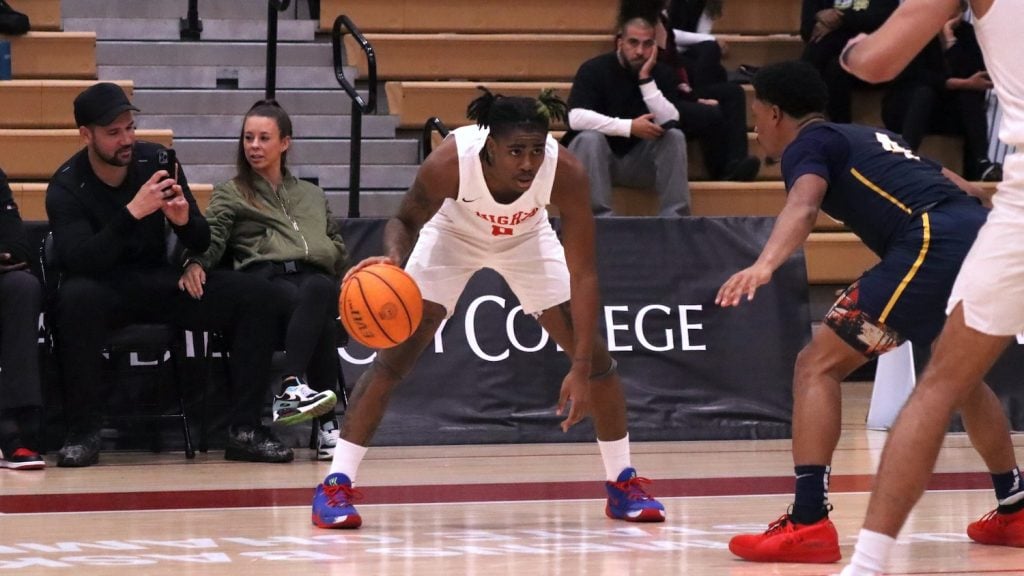
It’s not often a community college team sets the pace in a big city hoops scene—one that’s increasingly relevant at the national level—but that’s exactly what the San Diego City College Knights are doing.
Since 2004, the Knights have won eight conference championships and 11 postseason tournament berths. They’ve appeared in two state finals and won one of them in 2017. Dozens of alumni have been awarded scholarships to Division I and II programs, and several have played professionally around the world.
Along with SDSU, USD, UCSD, and PLNU, the SDCC Knights are one of a handful of local basketball teams worth watching right now.
Sure, San Diego’s Big 5 will never be considered as big as teams from cities like LA or Cincinnati, not with Division II and community college teams in the mix, but they have done something recently that programs in other, more acclaimed basketball cities haven’t: they’ve won.
SDCC’s run started two decades ago when head coach Mitch Charlens took over a program that the previous year won seven games playing in a high school gym. (No offense, San Diego High.)
“We were crazy enough and arrogant enough to think we could win right away,” Charlens said. “And we did.” With nine regular season games left this year, Charlens’ average of 20.5 wins-per-season doesn’t seem likely to decrease.
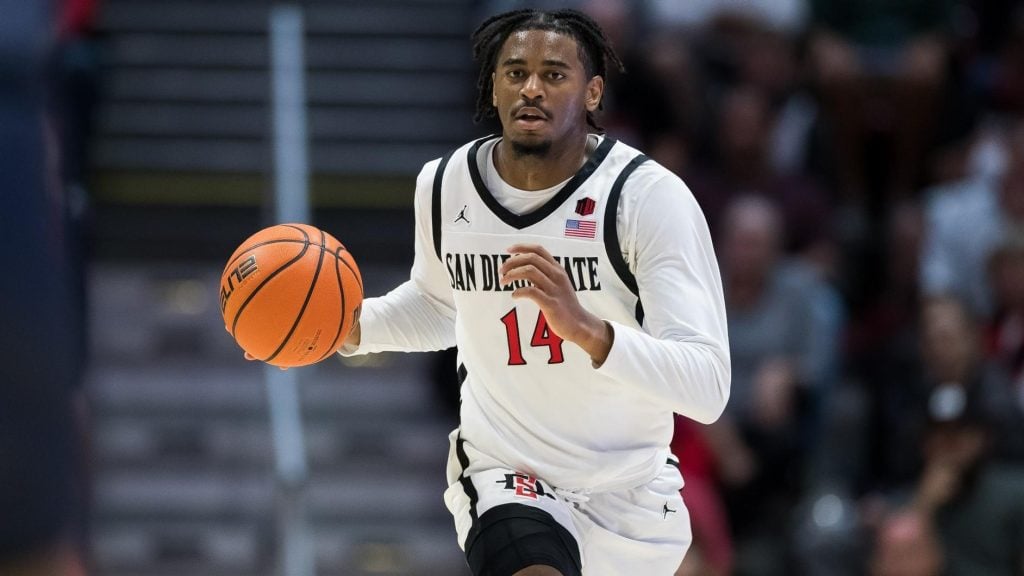
As the Knights were wrapping up their game at Miramar College, the San Diego State University men’s squad was warming up for its own conference showdown. Jaedon LeDee would go on to pace the team’s victory over Nevada with an overstuffed stat sheet—22 points, 12 rebounds, three steals, and a block. Fellow senior Lamont Butler did yeoman’s work, chipping in four rebounds, three assists, and two steals to go along with his 10 points.
“Our defense and rebounding were the difference in the game, and that’s Aztec basketball,” head coach Brian Dutcher told the media after the game.
The win also brought SDSU to 15-3 on the season, which feels like déjà vu. The Aztecs were 14-4 at this time last year, after Butler’s 19 points and two assists, steals, and rebounds fueled a conference win over Colorado State.
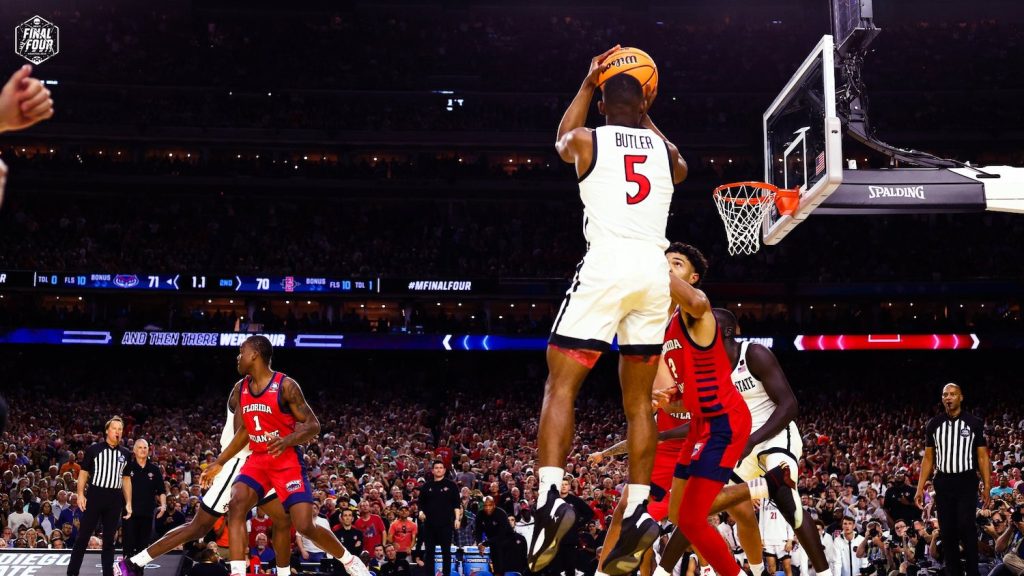
Lamont Butler’s buzzer-beater led the Aztecs to their first National Championship game last year
“We hit a rhythm in the second half, got going, and our defensive pressure keyed it,” Dutcher said after that game. The Aztecs would go on to win 17 of their next 19, then Butler sent SDSU to the national championship with the shot of his life. By this point, you can set your watch to it—after a few early season losses, the Aztecs’ upperclassmen and the coach’s cliches are in top form come January.
SDSU’s own run of excellence started under Dutcher’s predecessor, the legendary Steve Fisher, who in 2002 led the Aztecs to their first Mountain West Conference title and their first NCAA tournament appearance in 17 years. Six more conference championships and 11 tournament appearances would follow. Before last season’s NCAA final, Sports Illustratedanointed SDSU a “West Coast college basketball powerhouse,” as if Aztecs fans needed to be informed.
But the same can be said for the city itself, which may be less apparent.
In 2020, the UCSD men’s basketball team elevated to Division I. In all its wisdom, the NCAA prohibited the school from being eligible for the national championship tournament during a four-year “reclassification” period, but the Tritons decided to be good anyway. They are second in the Big West Conference with a 11-7 record, and only a LeDee buzzer-beater earlier this season prevented UCSD from upsetting its crosstown rival.
In 2022, the University of San Diego hired Steve Lavin as its head men’s basketball coach. Lavin previously led blue blood programs in UCLA and St. Johns, and has eight NCAA tournament appearances to his name. Before a recent four-game skid, the Toreros were 10-5 and competitive in a West Coast Conference that regularly sends powerhouse Gonzaga to the NCAA tournament.
And last year, the Point Loma Nazarene men’s team went to the regional finals in the Division II championship tournament after winning the Pacwest Conference.
Truly, SD’s Big 5 are on a roll.
When asked what’s changed in the last twenty years to turn San Diego into a premier college basketball destination, Charlens thought for a moment, then told the story of Malcolm Thomas.
Thomas starred at San Diego’s Crawford High, and after a year at Pepperdine returned home and played for City College in the 2008-09 season. After a standout season, he transferred to SDSU, where he played alongside program icon Kawhi Leonard and became one of the top shot blockers in school history.
Thomas now plays professionally overseas, but to Charlens he was the first top recruit to “believe in City College,” a school that built itself a new gym and whose administration realized that winning matters. In effect, Thomas was the first local star to commit to a new era of San Diego basketball.
Friday, December 1 | 7:00 p.m. | LionTree Arena, UCSD
Watch: ESPN+ | Listen: San Diego Sports 760
Move over, New York Yankees and Mets. There’s a new transit-oriented sports rivalry on the map. With the opening of MTS’s Blue Line trolley extension in 2021, the SDSU and UCSD campuses became linked by transit. A year later, the schools’ baseball teams inaugurated the so-called Trolley Series. The SDSU and UCSD men’s basketball programs pick up the lightrail rivalry on December 1 and, unlike the Subway Series, features teams that aren’t wholly disappointing.
SDSU is 6-1 following its run to the Final Four last season, and UCSD just hosted the nationally televised Rady Children’s Invitational basketball tournament. The game is sold out—don’t forget your PRONTO cards—but fans can catch it on ESPN+ or San Diego Sports 760.
San Diego Sockers vs Tacoma Stars
Sunday, December 3 | 5:05 p.m. | Pechanga Arena San Diego
The most decorated sports team in San Diego isn’t the beloved Padres, the ascendent Wave, or the departed Chargers. It’s the Sockers, the 16-time champions of professional indoor soccer. They may not be as familiar as the other teams, but the Sockers winning tradition at Pechanga Arena stretches back to 1982.
Sadly, their December 3 home opener represents something of a farewell at what the team affectionately calls “the grand old arena.” They’re relocating to Oceanside’s brand-new Frontwave Arena after this season. Catch their electrifying brand of soccer before they head up the coast.
San Diego Gulls vs Henderson Silver Knights
Saturday, December 16 | 6:00 p.m. | Pechanga Arena San Diego
Watch: KUSI-TV | Listen: San Diego Gulls Audio Network
For my money, hockey is the best live sport, Hawaiian shirts are the best garment, and Christmas is the best holiday. Those three things joyously collide at the Gulls next home game on December 16, as the team gives away Gulls Hawaiian shirts as part of their Winter Wonderland/Teddy Bear Toss Night. There’s even a pregame tailgate in the parking lot. Just don’t mind the standings.
The Gulls are mired in last place in the American Hockey League’s Pacific Division and face the minor-league affiliate of the Stanley Cup-winning Las Vegas Golden Knights. If there’s ever a time for a miracle on ice, it’s during the holiday season.
DIRECTV Holiday Bowl
Wednesday, December 27 | 5:00 p.m. | Petco Park
Watch: TBD | Listen: TBD
The festivities around the college football Holiday Bowl offer something for everyone. There’s America’s Largest Balloon Parade and the Snapdragon Bowl Bash downtown. For those wanting to relive the glory days, there’s a tailgate party, and for those who like to wake up at 5 a.m. there’s a 5K walk/run. If the expected USC-Clemson matchup comes to fruition, there will be visiting Angelenos saying San Diego is “really nice” (as if we needed their confirmation).
And of course there’s the Holiday Bowl game itself, which is typically one of college football’s best matchups of the year and one of San Diego’s great sports traditions. It has been played in the city since 1978 and Petco Park was recently modified to host it. Teams will be announced on December 3, but get your tickets now before a bunch of Trojans run up the prices.
SDSU vs No. 11 Gonzaga men’s basketball
Friday, December 29 | 6:00 p.m. | Spokane, Washington
Watch: TBD | Listen: San Diego Sports 760
It’s that time between Christmas and New Year’s Day. Everyone’s faking work so they don’t burn vacation days. You’re full and drowsy from six weeks of holiday eating and you’re staring into the winter abyss. That is, unless you’re an SDSU fan.
It seems the men’s basketball team always figures it out in December, dive-bombs into the AP Top 25 rankings, and reminds everyone that San Diego has more than just beaches and sunshine. It has one of the best, most-consistent basketball programs in the country. After starting last season 7-3, SDSU’s win against Kennesaw State in December propelled them to win 25 of their next 28 games on the way to the NCAA championship game. Their matchup at No. 11 Gonzaga will indicate whether SDSU has yet another postseason run in them.
What Will It Take to Make San Diego a Global Arts City?
Jonathon Glus on the Art + Design District, investing in the creative economy, keeping artists in the city, and what we can learn from places like London and Chicago
Jonathon Glus is the Prebys Foundation senior fellow leading the development of the Art + Design District at the Downtown San Diego Partnership. He has been asked what an arts and design district is many times. In our conversation, I asked him instead to describe what it isn’t. His answer opened up a broader discussion about what San Diego has and hasn’t invested in, what it has the capacity to become, and what other cities have done that we haven’t. Glus speaks about global art fairs and architecture biennials in Chicago and long tables at dinner parties all with the same fluency. He also discusses who gets to live in the neighborhoods where creative work happens, and what it means when they can’t afford to stay.
Claire Johnson: You have been asked what an arts and design district is many times. Can you tell me what it isn’t?
Jonathon Glus: It is not a place designed intentionally and specifically for tourists. Of course there will be opportunities for tourists to come, but the district is really focused on creatives, on creative education, and on the creative workforce—as well as our major performing arts organizations. That is the emphasis.
What does the district need to do in the next five years for you to consider it a success?
[It needs to] develop greater connectivity between the anchor institutions—the symphony, Broadway San Diego, the opera, all the wonderful things happening in Balboa [Park]—and the creative workforce that will be living and working in that neighborhood 24/7.
What does San Diego not have that you wish it did?
We have not been intentionally investing in the contemporary art product that other major cities have been building. A contemporary art fair. A biennial that reflects the ethos of this region. Chicago developed an architecture biennial about eight years ago. London has a design biennial. Desert X, right here in Southern California, invests in and elevates contemporary artists inside a city. We have not really been playing in the global art market in a way that we have the capacity to.
What capacity do we have?
We have a wonderful foundation. Two theater companies that produce work that goes to Broadway more than many regional theaters in the country, major museums, artists teaching at UC San Diego and University of San Diego. What a city does when it wants to take itself to the next level is intentionally create the product. Miami went after the Art Basel fair; they did not passively receive it. You have to have the intention and the will, and you have to go after it. We haven’t done that in the way that other cities have.
Look at what we did with the tech sector; we’re now a major tech center. That was intentional. Leadership organized around it. We have to do the same thing around the arts. We have a lot of contemporary art collectors here. We have a lot of galleries. But the ecosystem of the business of contemporary art is not as organized or as visible as it should be.
Which city is your North Star?
It’s bits and pieces of different cities. Dubai has invested very quickly and very intentionally in contemporary art—art fairs, design fairs, higher education, artist residencies from all over the world. London has centered artists and creatives in the contemporary zeitgeist in a way that was not true 40 years ago. They built biennials. They ensured British artists had affordable housing and workspace. They made sure the media paid attention to what they were doing.
If you don’t have an artist at your dinner table, it’s not a dinner party. That sounds elitist, but it’s true. It shows the value that artists have in a community. Our relationship culturally with Tijuana is really significant here because artists in Baja seem to be at the table.
We’ve talked before about how food, fashion, design, and art aren’t siloed anymore.
They aren’t. When super creative people are in a community doing extraordinary work, that draws other super creative people doing extraordinary work. That’s why other arts and design districts around the world end up populated with some of the most interesting restaurants and young fashion designers. Creatives want to be around other creatives.
Which leads to the economic argument…
Our creative economy already employs about 170,000 people and generates more than $11 billion in economic activity. It’s large and robust. But we must center all of this in accessibility and affordability. Williamsburg used to be affordable. Artists can’t afford to live there anymore. Wicker Park and Bucktown in Chicago—artist central, now unaffordable. If we’re going to invest in this district, we have to be really intentional about housing and workspace, so creatives have a place in the future of this district.
I see all these new supper clubs and creative collectives popping up. What is the lesson there for San Diego in terms of the commercialization of cultural and creative groups?
I think the lesson is that nothing changes. What do people love? Long tables. Why? Because you’re with a lot of people—some you may have known your entire life, but most you don’t. And if it’s driven by a creative process, all the better. We know one of the best ways to do that is around food, but also music.
For the Art + Design District, part of why we’re leaning into the process is because, culturally, we’re bringing down the barriers between film, fashion, multimedia, tech, and architecture. It’s an experiential mashup in the best possible way.
And it’s not just about art and design, but community writ large. Creative expression is something we all desire. Whether it’s at a long table, at the opera, or in your studio, we gravitate toward creative expression as a way of building community and communicating with the people around us.
Is there a question I should have asked you but haven’t?
I hope you are writing about this in seven years when the district is fully mature. But this is just the beginning for all of this. I think that’s what’s most exciting to me. We don’t know what this is going to be like, but we know it’s going to be creatively centered, and that’s super exciting to me.
Sebastián Morúa is the Senior Vice President of Brand & Innovation for San Diego FC. He oversees Playmakers, the program through which the club has, over the past three years, engaged with over 80 working artists—not as marketing partners, but as co-creative directors.
Morúa didn’t build Playmakers as a community-outreach program bolted onto a Major League Soccer franchise. He built it as the identity of the franchise. When we sat down, he talked about the World Cup, San Diego’s creative workforce, his challenge to other sports franchises in the city, and the mural of heroes he hopes people will see one day when they close their eyes and picture San Diego FC.
Claire Johnson: Why does an MLS team invest in arts and culture?
Sebastián Morúa: I want to answer that in two parts. Philosophically first—because I think what you’re really asking is why should any sports team do this when most don’t.
Sport is a platform for transformation. It has proven that over and over. We saw it this summer with countries participating in the World Cup for the first time and what that did in their home countries—the sense of self-identification, pride, possibility. That is the power of sport.
When you take a sports team that’s fueled by that principle and understands what it could mean for other stakeholders in a community, you start to think about what you can accomplish in collaboration with them. One of those stakeholders, very early on, was the creative community. If we were going to build a team that represents this place and its people, we needed to go to the source. Artists are uniquely positioned to translate the essence and the soul of a community. When you zoom out and look at the multitude of artists in a place, you start to see the fabric of that local culture. That’s where the sense of pride and possibility gets unlocked.
But you’re also San Diego FC specifically. That matters.
Our mission is to create opportunities for talent to flourish and make San Diego shine. That means the club is a platform. When we started doing the early research for the brand, we brought artists into our focus groups. The response was immediate. There was a clear need. In 2024, we ran the first full year of what became Playmakers, working with more than 20 artists to help us tell the story of how San Diego FC could weave 18 distinct communities together.
We’re in the business of developing communities through sport. We’re not in the business of fútbol to entertain communities. That is an outcome—but not the purpose.
When you started, were you thinking about the profitability of this type of program?
No. I wasn’t thinking about where this was going or how much it would cost. It instinctively felt aligned with our organizational purpose, and we made a decision to go for it. Now it’s become what it’s become.
What does Playmakers look like in 10 or 20 years?
If a fan closed their eyes 20 years from now and tried to paint a mural of the heroes that make up the club, they would see a big percentage of Playmakers artists on that mural. Ask any fan about the team they’ve supported for decades, and they’ll tell you about players, maybe a coach, maybe an owner. We’re expanding that. In our mural, there’ll be artists, entrepreneurs, community leaders, youth coaches. The community will be present.
Three to five years from now, Playmakers is an established community of creatives who have co-directed the identity of the club and the evolving identity of San Diego. If we keep the pace we’ve kept, we should have collaborated with 150 to 200 artists whose stories we’ve told and whose next steps we’ve helped support.
What would you tell another organization considering this kind of investment?
There’s a huge benefit for us as a club and as a brand. This is symbiotic. The artists have a need, we can support that need, and in return the community cares more about our club because of the investment we’re doing in the community. That’s what I would tell another organization.
What excites you most about how San Diego is changing?
San Diego is waking up to how much it has to offer the global conversation around culture. There’s a purity to life here—partly because of the weather, which allows us to spend so much time outside, in nature—and that exists alongside this incredible richness in food, music, art, and now sports.
I have a sense that San Diego is ready to unlock its full potential. You see it in the artists and creatives here. They’re ready. There’s very little hesitation. It’s more like: “Hell yeah, of course I want to do this. I know I’m talented. I’ve been waiting for something like this.”
That energy, combined with the unique lifestyle and character of this place, creates a really exciting sense of what San Diego can become in the years ahead.
Is there a question I should have asked you that I haven’t?
I would ask: What would you say to the other big players in San Diego who are—or could be—shaping the cultural fabric of our community? Do they understand the symbiotic benefit? Are they supporting it?
Because Playmakers, in the end, is a cultural compass. It’s making sure that San Diego still feels—and will always feel—represented in the creative process of building San Diego FC and what that means for San Diego.
The pitch is a canvas. Athletes are painting collectively during every game. There is a story in every game. That’s the link between sport and art. At the core, it’s the same creative process.
Today’s seniors are more connected than ever, with a renewed focus on retirement as a time of discovery and enriching experiences. The ultimate reward for a retirement well-earned is the wisdom to appreciate it all, and what better place to enjoy that unique perspective than Vi at La Jolla Village, in the heart of San Diego.
All-access pass to good living.
As a Continuing Care Retirement Community (CCRC), Vi provides access to a connected and fulfilling community while making it easy to plan for future care, should the need ever arise. With a care plan in place, residents enjoy greater financial predictability and long-term value, freeing them to focus on making the most out of retirement.
Resort-style amenities at the epicenter of a cultural hub like San Diego offer a retirement experience unlike any other. Paired with exceptional dining, spacious accommodations and dedicated staff, the best of maintenance-free living is all around. And with the introduction of Vista 360 Well-Being, Vi’s panoramic approach to wellness, there are more ways than ever for residents to access it all.
The harmony of mind, body and community.
Courtesy of Vi at La Jolla Village
The key to longevity is striking the right balance in maintaining an active lifestyle with an active mind in a fulfilling community. With newly renovated community spaces and restaurants, Vista brings a variety of opportunities for residents to elevate their well-being through Vi-exclusive “Signature Experiences.”
Vista Enrich takes an evidence-based approach to brain vitality, keeping residents at the forefront of cognitive health through exergaming (exercising + gaming), nutritional plans and informative workshops. It is also home to The Brain Vitality Studio, an innovative facility dedicated to cognitive fitness that has garnered national recognition.
Vista Discover invites residents into stimulating educational experiences, from chef-led cooking demos and guided wine tastings to lectures at local universities and intimate lectures following cultural outings.
While Vista Enrich focuses on brain health and Vista Discover engages residents intellectually, Vista Explore cultivates a sense of adventure through curated travel and local excursions. But broadening one’s horizons doesn’t always require a plane ticket. One recent event brought a taste of the world right to the community: an onsite “jazz cruise” featuring live music and global cuisine served at a series of themed “ports” all within the community’s own ballroom.
“Location, location, location”
Courtesy of Vi at La Jolla Village
One of the biggest perks of life at Vi at La Jolla Village is its proximity to just about everything. With easy access to transportation and local attractions just steps away, residents can explore and engage with their community at their own pace.
“There are trolley and bus stops within a 5-minute walk that will get you to the beach, UCSD Campus, medical appointments, downtown La Jolla or San Diego, et cetera. We rarely use our car,” said resident Tom Yager.
With the best of San Diego just steps away, residents don’t just live in the city, they live within reach of everything that makes it special.
The best of all worlds.
Courtesy of Vi at La Jolla Village
At Vi at La Jolla Village, retirement isn’t a chapter to slow down; it’s an invitation to discover more. Tailored community experiences created by Vista, paired with the vibrant pulse of San Diego just outside the door, mean that residents don’t have to choose between security and adventure, connection and independence. They get all of it.
This is what an all-access pass to good living looks like: the comforts of an elevated lifestyle, a community built for growth and a city made for discovery – all in one place.
To learn more about Vi at La Jolla Village or for details on available floor plans, visit ViatLaJollaVillage.com/SDM.
Museum of Photographic Arts at the San Diego Museum of Art
Now through Jan. 10, 2027
Sift through over 200 photographs, sketches, letters, and costumes from “The King of Vogue,” who photographed World War II, modernized royal portraits, and created the aesthetic for 1920s socialites in London.
Washed Ashore: Art to Save the Sea
Natural History Museum
Now through Feb. 28, 2027
Walk through an 18-foot whale ribcage (and a couple dozen other marine-creature sculptures) made entirely of plastic bottles, flip-flops, lighters, rope, and other plastic detritus found on the beach in the Nat’s 3,000-square-foot second-floor gallery.
Forging a Legacy: 15 Years of Landmark Acquisitions
San Diego Museum of Art
Now through May 31, 2027
Part of SDMA’s centennial, “Forging a Legacy,” highlights artists from the past (Picasso, Monet) and modern day (Hugo Crosthwaite) who contributed to the museum’s collection.
ZWO Astronomy Photographer of the Year
Fleet Science Center
Now through 2027
See the stars (without the smog) at their best from the winners of the world’s largest astrophotography competition—all in the Fleet Science Center’s new basement gallery, specifically dimmed to let the cosmos shine.
Begin Again
The Old Globe
Sept. 6–Oct. 11
From the 2013 silver screen to this year’s The Old Globe stage, you can “Begin Again” (again) with a world-premiere musical adaptation featuring new songs—courtesy of Train—and a story overflowing with hope.
Dear Evan Hansen
Cygnet Theatre
Sept. 9–Oct. 4
“On the outside, always looking in…” marks the emotional crux of the Tony-, Grammy-, and Emmy-award winning musical coming to the Cygnet Theatre.
Kumeyaay Comics by the Kumeyaay Visual Storytelling Project
Museum of Us
Opening Sept. 12
Learn the history of the Kumeyaay Nation from the perspective of the members themselves in an immersive exhibit inspired by graphic novels “Our Past, Present, and Future,” and “Beyond Gaming.”
Good Night, Oscar
North Coast Repertory Theatre
Sept. 16–Oct. 11
During Oscar Levant’s appearances on “The Jack Paar Show,” he explained his reality with mental illness—the institutionalizations, electroshock therapies, nothing was too taboo for him. “Good Night, Oscar” takes us backstage in the raw moments before his 1958 television appearance.
Visiones Nocturnas: Queer Nightlife in Contemporary Art
Museum of Contemporary Art San Diego
Sept. 19–Jan. 10, 2027
A disco ball isn’t just a disco ball. It’s a symbol of where queer communities can finally exhale and be their fullest selves. “Visiones Nocturnas” uses paintings, sculptures, textiles, performances, photos, and videos from Latin American artists to explore what’s at stake when nightclub lights shut off.
Silent Movie Mondays
Balboa Theatre
Sept. 21, Oct. 26, Dec. 7
Guest organists from across the country will come to the Balboa Theatre to accompany a new silent film for each performance. This year closes out with The Headless Horseman (1922), Dr. Jekyll & Mr. Hyde (1920), and a holiday triple feature of Laurel and Hardy films.
Oh, Mary!
Civic Theatre
Sept. 29–Oct. 4
“What if Abe’s assassination wasn’t such a bad thing for Mary Todd Lincoln?” was the question that inspired Cole Escola’s play “Oh, Mary!” In the production, Mary Todd desperately tries to return to the cabaret stage, but her husband (President Lincoln in the midst of the Civil War) keeps getting in the way.
Photo Credit: Anja Koehler
October
Payare Leads Strauss’ A Hero’s Life
Jacobs Music Center
Oct. 3–4
Conductor Rafael Payare opens the San Diego Symphony’s 2026-2027 season with a three-part concert featuring composers Sofia Gubaidulina, Wolfgang Amadeus Mozart, and Richard Strauss.
Emily–No Prisoner Be
Baker-Baum Concert Hall
Oct. 8
Two dozen of Emily Dickinson’s poems are turned into songs—composed by Pulitzer Prize winner Kevin Puts and performed by Grammy-winning mezzo-soprano Joyce DiDonato—for a one-night-only exploration of love, loss, loneliness, and mortality.
Ripcord
The Roustabouts Theatre Co.
Oct. 8–Nov. 1
Roommate beef has no age limit. The latest play from Pulitzer Prize winner David Lindsay-Abaire turns that experience into a comedy through retirement home roommates Marilyn and Abby and the bet between them to see who will break first and move out.
Des Canyons aux Étoiles
La Casa del Zorro
Oct. 12
Composer Olivier Messiaen has chromesthia, so for him, sound evokes a visual connotation. His work “Des Canyons aux Étoiles” brings desert rock and the night sky to mind. See what he means from La Casa del Zorro in the Anza-Borrego Desert, in this performance immersed within nature.
San Diego International Film Festival
Locations Vary
Oct. 13–18
San Diego International Film Festival salutes the silver screen for a 25th time, now with a sixth day adding extra time for parties, screenings, and movie-star tributes.
Considered one of the masterpieces from opera great Giuseppe Verdi, San Diego Opera’s “Rigoletto” sees what happens when the prurient Duke of Mantua and his sharp-tongued court jester become entangled in a fatal curse.
Grim
La Jolla Playhouse
Oct. 27–Nov. 29
When the Grim Reaper’s job becomes too…grim…and he retires after 300,000 years, his daughter picks up the family business. But when she falls for a human and finds beauty in the souls she’s meant to reap, she questions her purpose.
Photo Credit: Ron Kerner
November
Skate Craft
Mingei International Museum
Nov. 21–May 9, 2027
San Diego is nothing without skate culture. Mingei’s “Skate Craft” portrays skateboarding as “living folk art” via its DIY roots (skateboards built in garages) and shows how that ethos shapes the future.
Emma Veidt is an editor at San Diego Magazine. She earned her bachelor's and master's degrees from the Missouri School of Journalism. She loves running, hiking, and rock climbing, but really, she mostly loves encounters with the street cats around North Park.
Ryan Hardison is a freelance arts and entertainment writer and recent graduate of San Diego State. When he's not staring at his laptop, he's likely eating an adobada burrito or getting sunburnt at the beach.
The logic was fair and sound: Cultural institutions and events help attract visitors. Those visitors pay hotel taxes. So, the people agreed, some of that hotel-tax revenue should go back into maintaining the cultural ecosystem that helps bring those visitors and that money.
Projected as a five-year plan, the measure was supposed to increase funding to $17.9 million by 2017.
It never did. The penny was never guaranteed, so each year the city used part of it for other priorities. By 2023, the money going to arts and culture was up to about a half a penny. Even as TOT revenue has gone up significantly.
In 2019, TOT revenue was $245 million.
In 2025: $325 million.
One fix would be to guarantee the penny. Not simple, given San Diego’s financial woes. But the alternative—eroding the culture that makes San Diego San Diego, give it its identity—also doesn’t feel wise. Plus, even a locked percentage still rises and falls with tourism, which is why culture advocates want a guaranteed floor on top of it.
Another solution would be to give the arts commission actual authority.
“It’s an advisory body,” says arts commissioner Kamaal Martin. “You’d be hard-pressed to find anybody who takes our advice.”
Photo Credit: Katie Gardner & Matt Furman
He described the commissioners debating real, consequential questions this year, like whether and how to divide the cuts between funding pools. But those conversations “don’t connect to whoever’s actually deciding,” Martin says. “We haven’t been entrusted with decision-making about relevant things nearly enough.”
Christine Martinez is building political infrastructure through her organization Arts+Culture:San Diego—which is starting a 501(c)(4) lobbying structure not unlike police and fire unions. Martinez is also keeping her community actively engaged. “We won’t be caught off guard next year like we were this year,” she tells me.
Then there’s the evergreen issue of affordability and accessibility. Kiplinger’s most recent report ranks San Diego as the 11th most expensive city in the US, based on cost of living. The average home value is $980,700 (the US median is $540,000), but San Diego’s median household income is only one-third greater than the national level. Rent is also 66 percent higher than the national average ($2,716 vs. $1,636).
This is why San Diego has long suffered from the creative brain drain—creatives leaving for more affordable cities. “Artists are free to live wherever they want, and they will go where the rent is affordable,” says Jennifer de Poyen of Space 4 Art. “When they leave, they take their gifts with them, and their contributions, and their economic impact.”
One saving grace is the presence of Tijuana, where the cost of living is about 60 percent lower than San Diego, per Numbeo. Tijuana has long functioned as an affordable neighborhood for many in San Diego’s creative culture. It’s part of the reason why the binational identity is such a constant in our galleries, music, theater, murals, and culture. While that cross-border blood flow is one of San Diego’s most compelling attributes, few artists living that life would call it convenient or easy. A city is at a disadvantage when its culture creators have to cross a border to go home at night, and cross again the next morning to work.
In May, San Diego County Board of Supervisors approved a $2.75 million arts initiative of its own. It includes an Artist Space Grant Program aimed directly at the affordability crisis, as well as an artist-in-residence program, a dedicated Binational Creative Economy Investment, and a one-time investment in the Black Arts and Culture District in Encanto.
Bob Lehman of San Diego Art Matters has been doing county-level, binational organizing for years; in 2023, he helped get the county’s arts commission reestablished after 30 years of defunctness. That’s important because it gives arts and culture an official seat in county government, advising the County Board of Supervisors on arts and culture policy. He also brought in consultant Laura Zucker, who ran LA County’s arts program for three decades, to build a real regional plan.
“I really believe we’ll have something set up here that other communities come and look at,” he told me. “A national template other cities come to learn from.”
When asked who decides which artists will get the new grant money, county arts commissioner and executive director of the Chicano Park Museum and Cultural Center Monica Delgadillo Hernandez doesn’t hedge.
“That’s part of the infrastructure we’re going to be building,” she says. “What should a panel of reviewers look like? Should it be the commissioners? Should it be other folks? A supervisor?” She was just as candid that the commission itself doesn’t reflect San Diego’s population—Chicano communities are roughly a third of the city, she tells me, “and that’s not represented at the table yet.”
Photo Credit: Katie Gardner & Matt Furman
What Other Cities Prove Is Possible
The great news is that none of these solutions have to be invented from scratch. Numerous cities serve as examples of what’s possible—if we have the will.
Jonathon Glus—Prebys Foundation Senior Fellow for Art & Design, the Executive Director of the Art + Design District, and board president for California for the Arts—worked in Houston before coming to San Diego. The Texas city dedicates 74.5 percent of its hotel tax to arts grants by formula, and that support is guaranteed. Washington, DC locked in dedicated arts funding in 2019. Salt Lake City, my hometown, has run a voter-approved arts tax for almost 30 years, most recently reauthorized through 2034. And just this summer, New York City pushed cultural funding to a record $323.8 million, even incorporating an emergency fund.
Denver’s model is interesting because instead of a city-dependent funding model, theirs is a 0.1 percent regional sales tax. In place since 1988 and renewed by voters three times, their Scientific & Cultural Facilities District has distributed between $54 million and $85 million to arts, culture, and scientific orgs—each of the last 12 years.
This is part of a three-part series. This is Act III. See Act I and Act II here.
None of these cities got there by accident. They decided, on purpose, that arts and culture were worth protecting from politics—and, in some cases, worth building an entire identity around.
“That’s how Miami has flipped the switch,” says Glus. “People go to Miami for culture as much as they do the beach.”
San Diego has spent decades selling itself backward: Beach and weather first, culture as an afterthought you might stumble into. Glus would love to see the strategy flipped: Visitors should come for the art, “and then, by the way, you’re on the beach.”
Photo Credit: Katie Gardner & Matt Furman
So What Happens From Here?
“I do think it was a wake-up call for the community,” de Poyen says of the budget fight. “People understand that our funding is vulnerable. It was a lesson in how much power people have when they coalesce. But wow, is it painful.”
Glus says he’s genuinely optimistic. “The players have all changed seats, but the work is moving forward.”
“I believe optimism is a moral duty,” says Martin, who’s both power-fist and polite.
In eight months, there will be another budget fight. Everyone I talked to expects it will be worse. But something happened this spring that can’t be undone.
“I hope this rupture has brought us together in a moment of self-realization,” says Leticia Gomez Franco of the Balboa Art Conservation Center. “I hope we stop being so transactional; we begin to see ourselves and each other as partners in this work.”
That’s the whole ask, really. And it’s on all of us.
This is part of a three-part series. This is Act III. See Act I and Act II here.
Aaryn Belfer is a writer and editor specializing in nonfiction across art, architecture, and culture. Once upon a time, she wrote a provocative column for San Diego CityBeat (RIP). She was a runner up in the 2025 Matchbook Stories contest at the San Diego Central Library and is irrationally happy about it. Currently in her Soft Girl Era, Aaryn has expensive taste in (mostly flat) shoes and will choose a great art exhibit or live jazz concert over almost anything else. Except, possibly, Javier Bardem.
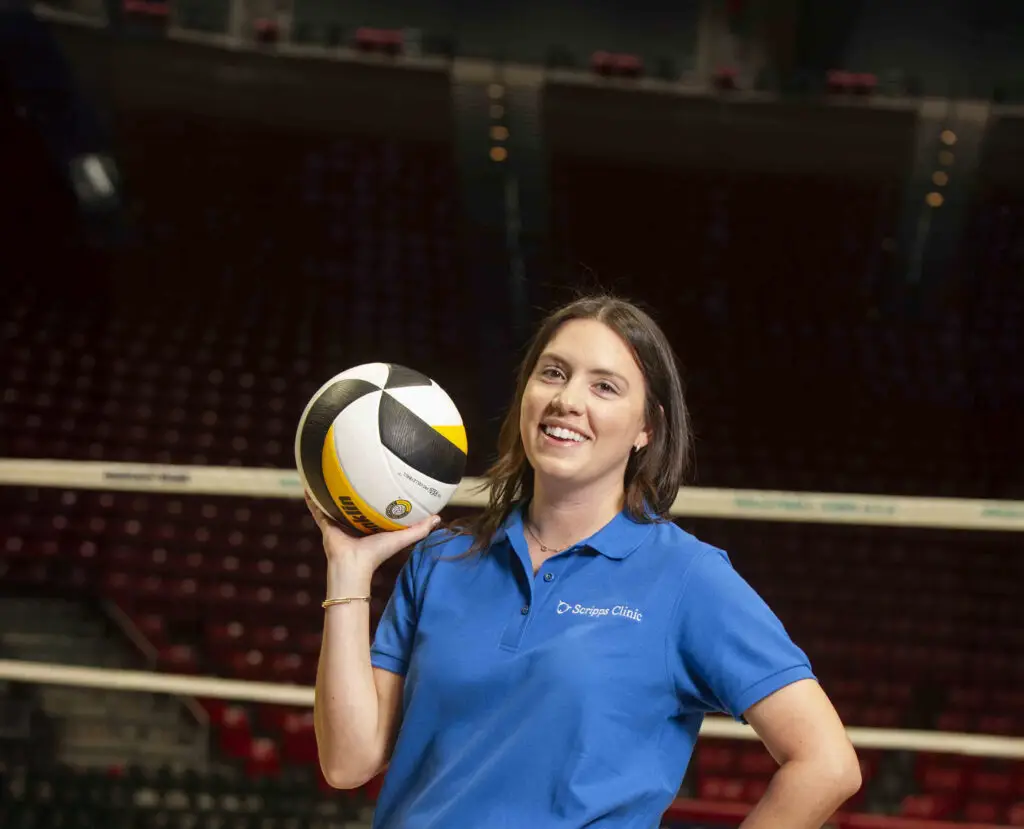
Growing up, Laika Nur, MD, Scripps Clinic sports medicine specialist, loved watching beach volleyball when the Association of Volleyball Professionals tour came to her hometown of Chicago. A talented volleyball player herself, she remembers sitting in the stands all day, and once, even got a couple autographs. Years later, Dr. Nur was attending a professional event focused on women’s sports, and the discussion turned to a new professional women’s volleyball league. The general manager and coaching staff for San Diego’s team, the Mojo, happened to be in attendance, and Dr. Nur took the opportunity to ask them if they needed a team doctor. Flash forward to the Mojo’s inaugural 2024 season, when Dr. Nur officially became the team physician. Click here to read more about Dr. Nur and how she incorporates lessons she learned on the court into her practice.
For more nutrition, wellness, and healthy living tips, sign up for the San Diego Health newsletter here.