Featured articles
Food & Drink
Food & Drink
Food & Drink
Featured articles
Features
Everything SD
Everything SD
Featured articles
Everything SD
Things to Do
Everything SD
What's next
Featured articles
podcast-ep
podcast-ep

video
Featured articles
Features
Everything SD
Food & Drink
Featured articles
Food & Drink
Features
Everything SD
Ready to know more about San Diego?
SubscribeReady to know more about San Diego?
A new exhibition at UC San Diego’s Mandeville Art Gallery revisits the artist’s story quilts, paintings, and legacy of visual storytelling
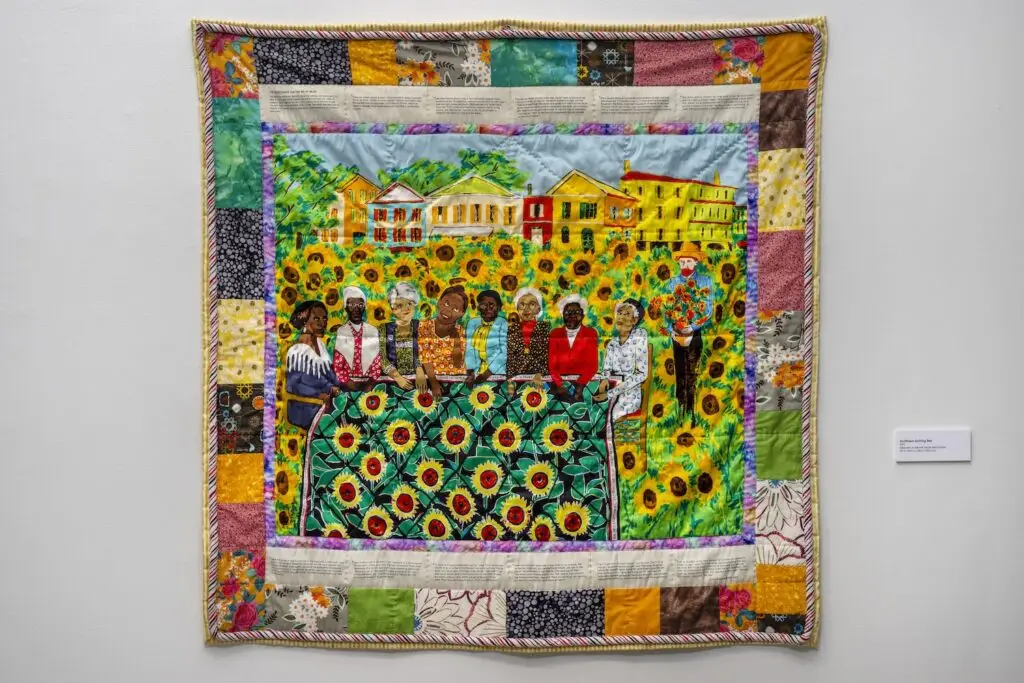
A little girl floats into a night sky above a color-saturated Harlem, her arms outstretched, her two braids flying behind her. Cassie Lousie Lightfoot is weightless, soaring above the George Washington Bridge. In the award-winning 1991 children’s book Tar Beach, the act of flying is about imagination and freedom; a metaphor for the inequality faced by Black people who built the city but couldn’t be part of it. Author and mixed media artist Faith Ringgold understood the duality and that—for Black women and girls—imagination isn’t just escape, it’s authorship.
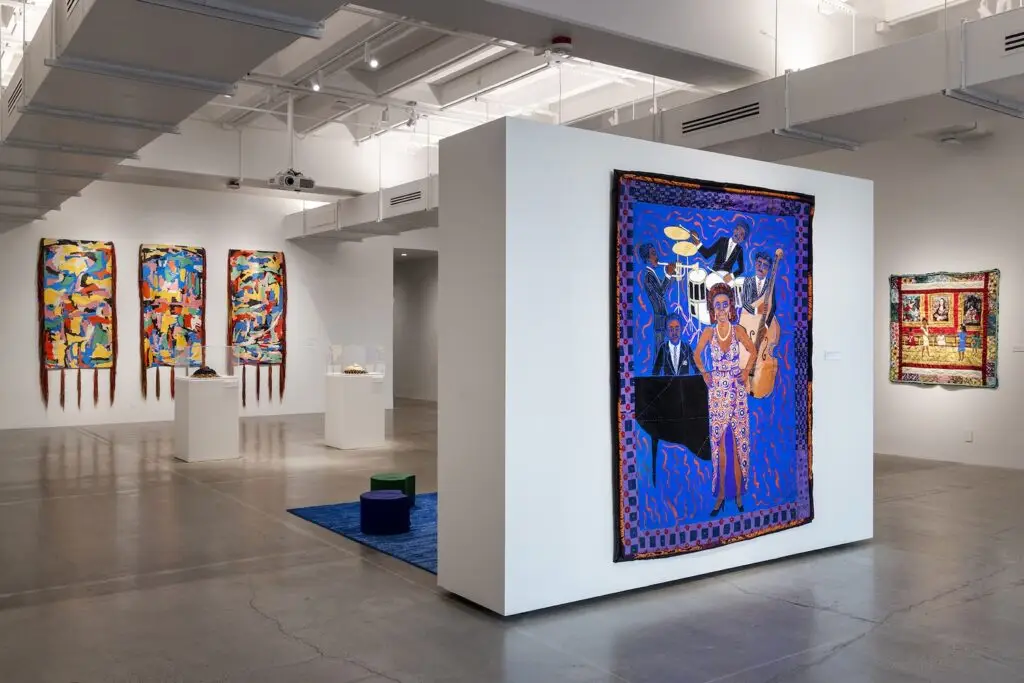
Ringgold’s expansive vision and vibrant canon has found a temporary home in La Jolla, where ArtLeadHER’s Mashonda Tifrere has curated an exhibition of Ringgold’s work at Mandeville Art Gallery on the UC San Diego campus. Faith Ringgold: Full Circle—The Teachings and Her Legacy isn’t just a retrospective (the prolific Ringgold died in 2024 at age 93), it’s another kind of homecoming: Ringgold was an art professor here, in this community, from 1984 to 2002 and changed the trajectory of what art could be and who it could be for. She’s so revered that this show was hung by students in the art program.
Opened on February 28, Full Circle is free to the public and remains on view through May 1. Art lovers have a fleeting window to experience a small fraction of Ringgold’s historic and urgently present larger body of work.
Ringgold had a vibrant imagination from her earliest days. As a child, she suffered from severe asthma and often missed school. Confined at home, Ringgold became an observer, building her own visual language and creating stories with it.
Her mother was her coconspirator: Willie Posey, a designer and seamstress, fed her daughter’s creative interior life by providing her with art supplies and teaching her how to work with fabric, pattern, and color. Perhaps one of the most transformative skills Posey taught her daughter was quilting, and she eventually helped Ringgold create her first story quilt, Echoes of Harlem, and story quilts became the young artist’s signature.
Quilting has deep roots in Black American history and is tied to the world of enslaved women who made quilts not just for function, but as storytelling devices, historical preservation, and coded expression. When, due to racism and sexism, Ringgold couldn’t be a landscape painter she turned to quilting and relied on the resilience of her ancestors. When she couldn’t get her writing published, she wrote her stories directly onto her quilts, sometimes in Sharpie. And much later, quilts enabled Ringgold to make art accessible on a wider scale: This medium could be folded and rolled and easily shipped.
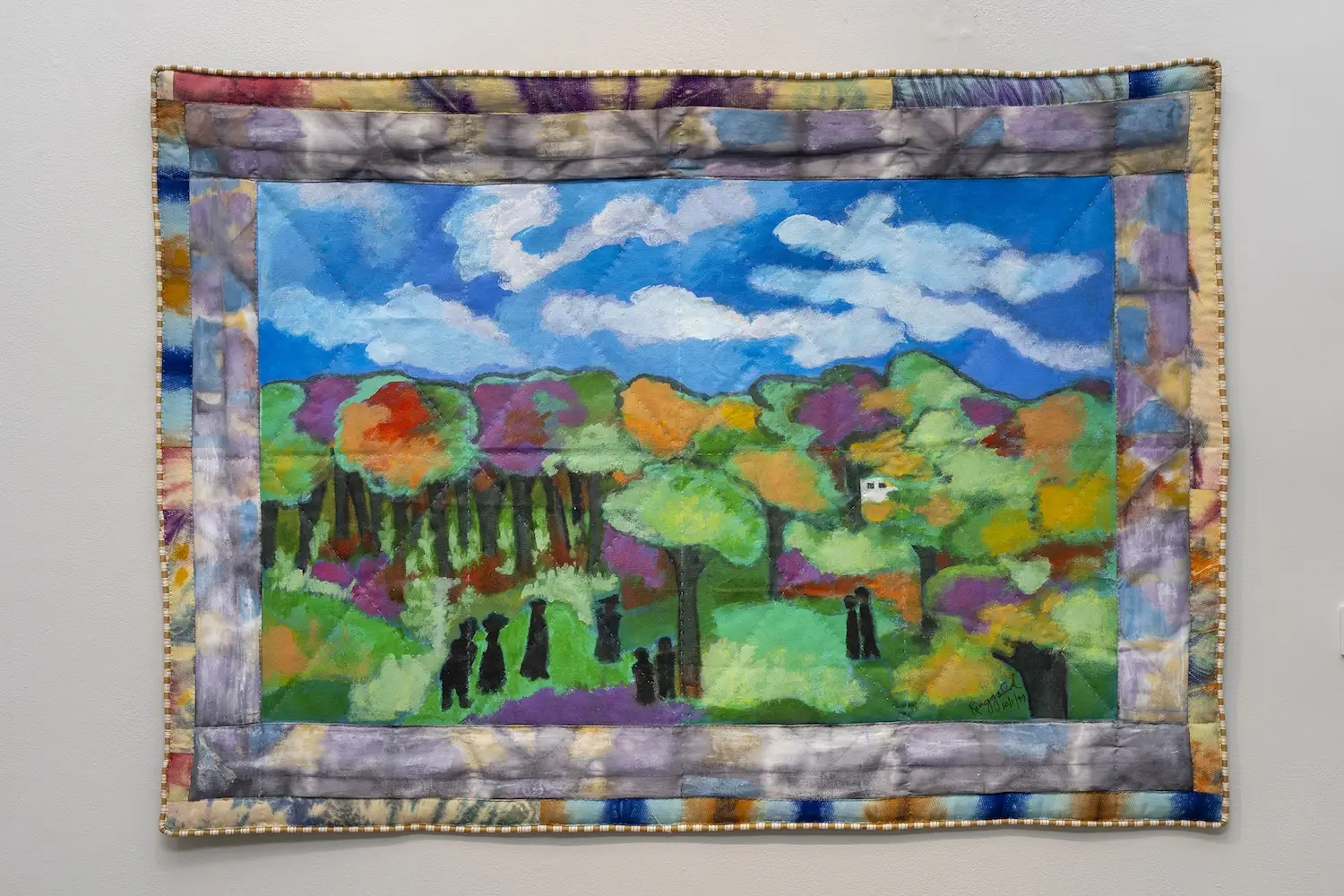
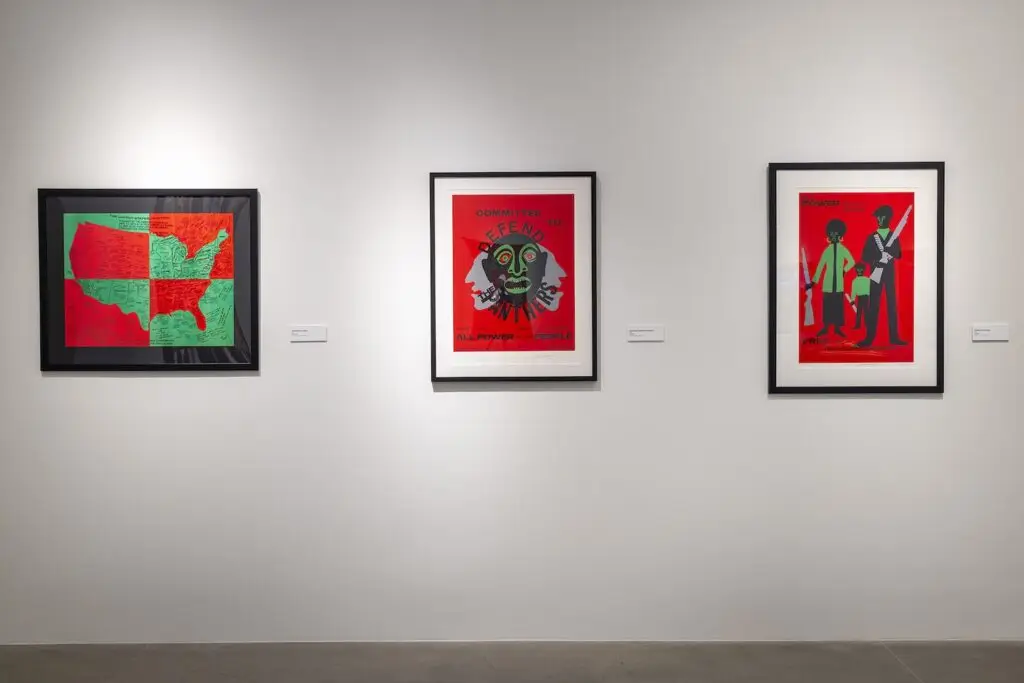
Ringgold didn’t wait for permission. She never did. Whenever the artist met a barrier, she found her way under, over, or around it. She pushed beyond the male-dominated art world that excluded her and women who looked like her. By adding written narratives to her quilts, she inadvertently lifted them from the realm of a craft into something more expansive. Her quilts—stitched and painted on—have universal appeal, at once historical, political, personal, and emotional.
“Faith’s work feels like a story crafted for the soul,” Tifrere says. “Everything about it is intentional…the emotions on her pages, canvases and quilts are clear. She didn’t shy away from complexity or imperfection.”
That’s part of what makes Ringgold’s work feel so immediate and immediately accessible: You don’t stand in front of it and feel nothing. You enter it and feel everything. Each piece, from her story quilts to her quilted masks, to her political prints and her rare abstract paintings (“California Dah” which the artist painted after the death of her mother is on display as part of Full Circle) is its own universe just like her quilt Tar Beach I, which later became the storybook with our flying protagonist.
Recurring throughout her work are bridges, which Ringgold once described as a personification of women. “Bridges unite people across barriers, and that’s what we do with our families: We hurdle obstacles, we stay together, we pass it on just like a bridge.”
It’s impossible not to see that same connection in her work. There’s a throughline between Harlem and La Jolla (nobody’s ever said that before), between Ringgold and Tifrere: Also raised in Harlem, Tifrere understands this work not just from the perspective of a curator, but as someones who’s work is grounded in lived experience.
“What makes me stop is a blend of familiarity and shock,” she says. And of their shared Harlem: “I recall the scents of soul food and incense… the loud vibrations of music… [E]verything was art. Now, when I encounter art from a curatorial lens, I immediately connect with the emotions it evokes on every level.”
And that’s why this show lingers: Not just colors and textures or even the story, but the larger permissions (or lack of) behind this provocative work.
At the end of Tar Beach, Cassie tells her little brother BeBe that anyone can fly—that “all you need is somewhere to go that you can’t get to any other way.” Standing in the gallery, surrounded by work that disregarded boundaries feels eternally instructive.
Faith Ringgold: Full Circle—The Teachings and Her Legacy runs through May 1, 2026, at Mandeville Art Gallery. Admission is free.
Aaryn Belfer is a writer and editor specializing in nonfiction across art, architecture, and culture. Once upon a time, she wrote a provocative column for San Diego CityBeat (RIP). She was a runner up in the 2025 Matchbook Stories contest at the San Diego Central Library and is irrationally happy about it. Currently in her Soft Girl Era, Aaryn has expensive taste in (mostly flat) shoes and will choose a great art exhibit or live jazz concert over almost anything else. Except, possibly, Javier Bardem.
We the Commas are mixing surf, soul, alternative rock, and sibling chemistry into one unmistakable sound
Siblings make better music. That’s the hot take, and there’s some logic and science behind it. The Bee Gees, Jackson 5, Billie Eilish and Finneas, AC/DC, Van Halen, The Allman Brothers—heck, even the Hanson brothers, why not? Beyond just a shared sense of taste and nonverbal communication developed over decades of living and evolving together, there’s a thing called “blood harmony.” The genetically similar throat cavities, vocal cords, speech patterns, and resonant bone structures all blend each unique voice into a more homophonic sound than what comes out of two non-related singers.
Those throat cavities are working wonders for emerging San Diego band We the Commas—three brothers (from oldest to youngest) Lenny, Jordon, and Cam Comma.
Raised in Vista and Carlsbad, the family opted out of cable TV (video games got a pass). Without binge-watching to fill bored hours, the trio turned to music. Guitar Hero led to GarageBand and finally to live instruments—guitars for Lenny and Cam, drum set for Jordon. In their sound, the influence of Stevie Wonder, Erykah Badu, The Who, and Dave Matthews Band is obvious, and so is surf culture, specifically that laid-back chill of North County surf culture.
“We’re like the Black Beach Boys,” Cam says. (Note: Three of the five founding members of the Beach Boys were siblings—the theory gets stronger.)
Their debut EP pretty clearly lays out how they see their sound—titled SARB, an acronym for Surf Alternative R&B. That resonates in the song “Sherry,” with its easy-listening, windows-down-on-the-101 vibe. It also works in the louder, surf-punkier “Pissed Off.” Despite some advances in reducing core stereotyping tendencies, people still tend to autofill Black musicians into rap and R&B. The Comma brothers immediately circumvent that by declaring themselves out the gates.
“SARB makes it so [listeners are] open to all of the things that we want to do,” Lenny says. “From there, you can put a label on whatever you think it sounds like.”

People—and musicians further up the stream—are taking note. In 2023, they co-wrote the song “I Keep Fallin’” with Eric Cannata, guitarist for multi-platinum SoCal band Young the Giant. In early 2024, they were tapped to open the national tour of Brooklyn’s jazz-pop heroes, Sammy Rae & The Friends. Comedian Gabriel “Fluffy” Iglesias invited them to warm up his show at Pechanga a couple months later.
“We really believe genuinely, with our whole hearts, minds and souls, that this is going to work the way that we think it’s going to,” Cam says, grinning ear to ear.
Currently, the Commas live together in Vista, and the dream, wholeheartedly, is more alive than ever. They’ve put out two dozen singles and a trio of EPs: SARB (2020), Old School Love (2021), and Aeroplane (2024); this year alone brought the release of three new singles, including “Let Me,” a silky-smooth entry in their growing collection of love songs.
“We fully realized the magic is in all of us together,” Lenny says. “We know that this doesn’t happen without each person, and we have respect for each other because we need each other.”
As they grow as brothers and as a band, the Commas try to always remember what unified them in the first place.
“Music has always been a glue,” Jordon says.
Ryan Hardison is a freelance arts and entertainment writer and recent graduate of San Diego State. When he's not staring at his laptop, he's likely eating an adobada burrito or getting sunburnt at the beach.
The San Diego designer has created more than 3,000 concert posters over nearly 40 years for artists including the Rolling Stones and the Red Hot Chili Peppers
Let’s start with his name.
No, not his birth name, Craig McKenzie Haskett.
Scrojo.
When he was in high school, he and his friends were trying to come up with the perfect name for their punk band that would encapsulate all their personas. Nicaragua. The Freds.
One of his friends said he was going to go by Jimmy Stacks and called it “the perfect rock and roll name.” Their names changed so much that Haskett erupted: “Fine, I’m f—ing Scrotum Joe, the true defender of the Open West.”
Their response: Wow, that’s a great name.
As a teenager, he drew chalkboards for Del Mar’s Pannikin coffee shop and would design T-shirts for surf/skate brand Life’s a Beach. He signed the shirts with his moniker, but even in punk rebellion, who wants a shirt with the words Scrotum Joe on it? “They just cut out the ‘t-u-m,’ and the next thing you know, a client referred to me as that, and it stuck,” he says.

Scrojo could have been part of a band as iconic as The Misfits—had he been able to learn the famously cumbersome bassline to The Kingsmen’s “Louie Louie.” Becoming one of the most renowned concert poster designers—someone who quite literally designed the cover of Art of Modern Rock: The Poster Explosion—is a pretty good Plan B.
“To my knowledge, he’s done more rock posters than anybody else alive,” says Dennis King, whose D. King Gallery in Berkeley, California, serves as one of the largest private rock poster collections in the world. “He’s the hardest-working guy in the poster business.”
King not only co-authored the sequel to music historian Paul Grushkin’s The Art of Rock, but he also handles distribution and sales for all of Scrojo’s work. That’s more than 3,000 different posters over nearly 40 years. (That’s over one poster each week. For four decades straight.)
For anything from boxing matches to rodeos, posters have long been used as promotional items. Toulouse-Lautrec’s famous lithographs advertised Moulin Rouge in the late 1800s. Around the same time, Hatch Show Print in Nashville was making handbills for the Grand Ole Opry.
“I propose this: Cave paintings are the first poster art,” Scrojo says.

Rock and roll posters took off in the 1960s, when the hippie counterculture era replaced conformity and suburbia. Artists like Jimi Hendrix and the Grateful Dead used their vibrant, psychedelic prints as a form of rebellion from the mainstream. Posters were promotional, commemorative, collectible, and especially expressive.
If the name Scrojo is any indication, he doesn’t shy away from imagery that toes the line of being too provocative. He focused more on what inspired him instead of trying to be offensive for the sake of getting attention.
“Didn’t want to show it to my grandmother, but my parents were fine with it,” Scrojo says with a laugh.
“We’ve had to ask him to put a Band-Aid over a nipple every now and then,” says Chris Goldsmith, president of Belly Up Tavern in Solana Beach, where Scrojo started out and hundreds of his posters currently line the walls.
Scrojo spent six weeks at Otis College of Art and Design for a summer semester before drugs, alcohol, and a self-described lack of discipline prevented him from enrolling full time. Still, he taught himself concepts like text hierarchy and later found his niche at the Belly Up and in the surfing and skating world, working with brands like Quiksilver, Rip Curl, Scorpion Bay, and DGK.
His first concert poster was for North County band Borracho y Loco, of which Goldsmith was bass guitarist. Scrojo drew an abstract version of the Belly Up’s iconic shark with colorful calypso and tiki themes.
Early on, he would craft using a pencil, pen, non-reproduction blue pencil, X-Acto knife, rubber knife, and proportion scale to create each poster, and the finished product could take a week or even longer.

“I recommend every artist coming up to do that for like six weeks,” Scrojo says. “It forces you to think about every design decision as you’re going along.”
He has since mastered vector imagery through Adobe Illustrator to the point where, depending on the level of detail needed, he could finish two projects in a day. Still, he fills sketchbook after sketchbook to blueprint.
“I liked his line in particular, and he knows how to draw, which a lot of people don’t really know how to do these days,” King says.
Scrojo would research what each musician’s merchandise looks like to get a feel for each artist’s tone and voice. Once he has his central image in mind, he focuses on what and where to place the text.
He doesn’t have one specific style, ranging his talents from art deco to psychedelic and everything in between (and outside the lines). Want a pop surrealist comic book cartoon devil with splattered paint textures, halftone dot patterns, and pure chaos? Red Hot Chili Peppers, February 1986. Want a minimalist graphic portrait with bold strokes and graffiti text? P!nk, October 2023. Want a carnival sideshow style piece with a tasteful caricature of Jeff Bridges? The Big Lebowski, August 2011.
Scrojo calls himself a jack of all trades because he can create posters for all music genres. King calls him a chameleon for his ability to adapt his voice to new eras.

“The variety of his skillset makes it possible for us to put 50 of his posters on a wall next to each other and have it look compelling, not just a bunch of the same thing over and over,” Goldsmith says.
Some of Scrojo’s favorite posters are when he feels a personal connection to the artist or the album. He has a vivid memory as a child of being trapped in a closet filled with marijuana leaves while playing hide and seek and staring at Jimmy Cliff’s “The Harder They Come” LP. “For whatever reason, as a kid, that sparked a desire to do graphic design,” Scrojo says.
Fast forward to February 2012, Cliff is performing at Belly Up. Scrojo decided to modify Cliff’s original album cover from rainbow gradient fills to classic reggae psychedelia while preserving Cliff’s striped pants and bold hat. Cliff’s manager called him and said they wanted to use it for the rest of their tour.
“We always get artists requesting that he does their posters,” Goldsmith says. “A lot of artists don’t want venues to go all rogue because they want to control how they’re being presented. With him, they’re like, ‘Let him go nuts.’”
Matt Eisenberg is an award-winning writer and photographer based in San Diego. A former ESPN editor, his work has also been published by CNN, Bleacher Report and the New York Daily News.
Explore restaurants, activities, and shops within this affluent North County community
The inland North County community of Rancho Santa Fe is often associated with wealth. It’s one of San Diego’s most expensive residential markets and is consistently ranked one of the highest-income zip codes in California and the U.S. Rancho Santa Fe is known for its large equestrian community including riding facilities and horse trails, as well as its country club lifestyle and associated golf courses.
At the center of this luxury master-planned community is a small, walkable downtown area referred to as the “village,” with The Inn at Rancho Santa Fe acting as both a landmark and social hub. Much of the community, including the historic Inn, was designed by acclaimed architect Lilian Rice, one of California’s earliest female architects. The Spanish Colonial-style architecture she brought to the village is still one of its defining characteristics today.
Whether you’re coming to Rancho Santa Fe for golf, horseback riding, or pampering at a resort spa, be sure to start with a short walk around the village to take in the neighborhood’s charm. Plan your next visit here with our neighborhood guide to the area’s best restaurants, things to do, and shopping.
Jump To: Restaurants | Things to Do | Shopping

Families congregate at The Pony Room for elevated California ranch-style cuisine. Lamb lollipops, carne asada tacos, burgers, and weekly dinner specials are offered here, alongside an extensive collection of wine and spirits (especially tequila) and sizeable kids menus. As the signature restaurant of Rancho Valencia Resort & Spa, this all-day eatery is a lively centerpiece of the local social scene.
5921 Valencia Circle
The piano bar at Mille Fleurs is the buzziest spot to be on Friday and Saturday nights in Rancho Santa Fe. French classics like escargot, lobster bisque, duck confit, and steak frites are the main dinner attractions at this local institution that has been around for more than 40 years. Spring for the four-course prix fixe menu before nabbing a coveted bar seat near the piano entertainer.
6009 Paseo Delicias
Nick & G’s is one of the most prominent restaurants in the village, with an outdoor patio that overlooks the main thoroughfare. Enjoy modern Italian food, steaks, and seafood dishes here, including homemade pasta, pizza, wagyu beef, and oysters. Be sure to check their live music schedule and events calendar for the latest happenings.
6106 Paseo Delicias
Named after renowned architect and planner Lilian Rice, Lilian’s is The Inn at Rancho Santa Fe’s flagship restaurant. Their upscale menus feature sustainable seafood, grass-fed meats, local produce, and even sushi rolls during dinner. Outdoor seating provides a bird’s-eye view of the village and an elegant backdrop for weekend brunch. Stop by Bing’s Bar (a nod to Bing Crosby) for craft cocktails, beer, wine, and light bites in a refined setting.
5951 Linea Del Cielo
Quaint cafe and bakery Thyme in the Ranch serves a small selection of breakfast and lunch items (don’t miss the tarragon chicken salad), but is perhaps best known for its pastries and baked goods. Cakes, pies, muffins, scones, and cookies fly off the shelves here, where locals come for special occasions, parties, and group catering orders.
16905 Avenida De Acacias
Located inside a historic building once home to Rancho Santa Fe’s original schoolhouse, Paseo RSF is one of the village’s newest dining options. The charming American bistro has pasta, salads, burgers, meat and seafood entrees, plus a thoughtfully selected California wine list and new sushi and omakase program. Kids and dogs are both welcome here.
6024 Paseo Delicias, Suite C
Grab a quick coffee to go from this walk-up window in the same shopping center as the post office. Cinnamon roll lattes, cold brew, spiced chai, smoothies, protein bowls, and more can be found at Rancho Roasters, where they brew beans from Dark Horse Coffee.
16950 Via De Santa Fe
Casual pizzeria and martini bar Goli is a popular spot for catching the latest sports games. Order one of their unique specialty pizzas like the Casbah with hummus and veggies, build your own pizza or burger, or go with one of their hearty wraps that’s made with an extra thin version of pizza dough.
18021 Calle Ambiente, Suite 403
Find generous portions of Mexican food at Cocina del Rancho, run by the same owners as Carlsbad’s Cicciotti’s Trattoria Italiana and Village Kabob. Get classic dishes like burritos, tacos, and enchiladas, plus their specialty items including pulpo, carne asada, and fajitas with lobster tail. Don’t skip the margaritas.
16089 San Dieguito Road
Kai Oliver-Kurtin is a San Diego-based writer who covers travel, dining, events, and culture. Her writing has been published in USA Today, Condé Nast Traveler, Fodor's Travel, Marie Claire, and HuffPost, among others.
The 29-year-old culinary director at Herb & Sea is making seafood sexy (and approachable) again
Implementing a farm-to-table model hardly deserves acknowledgement these days. It’s not a stretch. It’s not innovative. “It’s the bare f**king minimum,” says Herb & Sea‘s executive chef Aidan Owens.
When I arrive at the Encinitas restaurant, I’m ready to talk sustainability, farm-to-table stuff, with Owens. “Did you see the chin on that?” he says of the extra big jiggly chin on the sheephead that just arrived with the day’s fresh catch. I did. It was Jay Leno adjacent.
I learn quickly that he somehow oozes both charm and stone-cold honesty. Maybe he could construct a new dish with chin goo, like he did when he had a bunch of tuna scraps and voila’d it into a smooth and crowd-pleasing ‘nduja. “I want to know what’s in there,” he says.

The instinct to look closer, to dig into what others might discard, says a lot about the chef’s approach. I guide him back to our topic, but he has something else on his mind. “We’re overcomplicating food—what happened to just cooking good food and having fun with it?”
Owens grew up on a farm in Byron Bay, Australia, where sustainability wasn’t a concept you chat about so much as a way of life. Think dirt roads, backyard chickens, pulling vegetables straight from the ground, and a mother who believed that if you couldn’t pronounce the ingredients on a package, you shouldn’t eat what was inside.
Food wasn’t precious or performative. Making it was what you did because you were hungry and that’s still what inspires Owens today. “I like to cook good food because I like to eat good food,” he says.
His approach to sustainability at Herb & Sea began so naturally that it felt just like instinct. “I was just like, ‘Let’s order food from the people who live and work here,’” he says.

And why wouldn’t he when lives in San Diego? Cities all over the world vie for our goods. Our tuna is sent overseas. Our spiny lobsters hit dinner plates in China and Japan. Not to mention California’s producing a third of the country’s vegetables and three-quarters of its fruits and nuts.
“Why would we outsource when it’s all here?” Owens asks.
Sustainability, in this context, is about cooking what exists in abundance, nearby, right now. “I love the local fish here. It’s f**king delicious and San Diego citrus, I mean, it is so f**ing good,” he says.
Instead of importing ingredients, Owens also looks for nearby alternatives. “You can find really cool things in the local waters,” he says, pointing out that stingray cheeks taste similar to scallops.

Whatever he finds in that sheephead chin might just be the next substitute for marrow. But to make this work, it means getting diners amped up about the slightly unfamiliar.
Tasting menus, where diners are completely in his hands, become an opportunity to gently push boundaries. “I’ll serve mackerel, because people think they hate it,” Owens says, noting that the abundant local fish can have some fishiness. “But when it’s fresh, it’s arguably one of the best fish in the ocean.”
He also tweaks the language on the menu so people might feel more compelled to give dishes a try without preconceived notions. He might use “lengua” instead of “tongue.” “Whelk” instead of “snail.” When he puts “stingray throat” on the menu, he disarmingly calls it “skate.”
To reduce waste, scraps aren’t always discarded but rather turned into something new. Sometimes they’re smoked, cured or fermented. Apples going bad turn into apple ponzu. Lemons turn to marmalade, which stretches their usefulness far beyond peak season. “And it’s super tasty on our pizza,” he says.
What makes the food even richer, is the relationships he’s built with farmers. Though it didn’t always feel natural, Owens sought personal connection first. He recalls approaching a fisherman at the Tuna Harbor Dockside Market. “I was awkward,” he says. “I went up to him and said, ‘I like your fish.’”
Owen’s is now so close to his suppliers—like fishermen Ryan Sebo and Joe Daly—that he gets texted pictures of fresh catches right as they flop on the boat. The messages always ask if he wants first dibs. “I say yes to a lot of fish,” Owens says, noting that Herb & Sea can go through 2,000 pounds of seafood a week.

The next evolution of sustainability, in his view, will be chefs working directly with producers such as his alliance with Sebo, cutting out middlemen and purveyors where possible. “It will put more money in the pockets of the people doing the work,” he says.
It will mean that chefs can’t just know their local farmers and producers, but they’ll choose to work with the ones who have the best practices. Dining and sustainability will become much less about the final plate. “It will be more about the impact that plate has on the Earth,” he says.
Ultimately, he believes sustainability doesn’t need to be loud. It doesn’t need hashtags. It just needs to be honest.
“We aren’t saving lives. We’re feeding people good food,” he says.
And yet, in feeding people well—simply, thoughtfully, responsibly—something meaningful happens. Guests leave satisfied. Ingredients are respected. Local ecosystems are supported and food returns to what it has always been at its core: nourishment, pleasure, and a quiet reflection of the place it comes from.
No buzzwords required.
The Harbor Island resort debuts the Garden Terrace as the final piece of a $123 million renovation
If you’re anything like me, you’ve probably been planning your wedding your entire life. The impromptu daydreaming usually comes at the most inconvenient times: during a meeting or right as you’re falling asleep after watching too many episodes of TLC’s Four Weddings.
In those imagined scenes, there is always a sunset. Usually some kind of impossible garden that feels like Alice in Wonderland meets The Secret Garden. There are soft pinks and climbing greens, florals that look like they grew a little too perfectly on purpose, and somewhere in the distance, water that catches the light. It’s dramatic in the best way.
Perched on Harbor Island, Sheraton San Diego Resort feels like a tucked-away bayside escape. But the real centerpiece of its $123 million transformation is the new Garden Terrace, a private green oasis that feels like it was designed specifically for the dream wedding replaying in my head. This is what I had been imagining all those years. White tea roses, lavender, gardenia, jasmine, and magnolia trees line the space, creating a fragrance that feels like it’s part of the architecture.

Sheraton San Diego Resort has always had the advantage of its location, but what stands out now is how intentionally the indoor and outdoor spaces coexist. Panoramic harbor views stretch across the property, shifting from soft blue mornings to golden-hour glow and a nighttime skyline that feels almost cinematic. Of course, there are other ceremony and event spaces across the resort, too—including the Lanai Lawn, Harbor Vista Lawn, and Eventide Gardens—each offering its own variation of open-air beauty. But the Garden Terrace is the one that feels like it was made for vows.
I arrived on a Tuesday afternoon with a suitcase slightly overpacked, the result of not knowing what to fully expect from a resort doubling as a wedding venue. I tried to cover every possible version of the trip: a handful of summer dresses, a few breezy pants, marina-esque tank tops, sandals for everything, and accessories meant to sparkle in the sun (seven different earring and necklace options was probably unnecessary, though).
I did, however, underestimate the swimsuits, especially once I saw the paddleboards, endless water activities you’d want to try at least once, and pools and jacuzzis practically whispering your name. Business casual never made it out of the suitcase, replaced instead with easy cover-ups, pinks and greens, and airy button-ups that felt more in tune with the setting than structured jackets ever could.
The resort has been reimagined across rooms, dining areas, and outdoor spaces, with thoughtfully layered tile textures, lighting that shifts with the time of day, warm-toned palettes in the dining rooms, and fresh blues in the bedrooms that complement the views pouring in through the windows. The foyer feels expansive, framed by floor-to-ceiling windows and designed to bring a little bit of San Diego inside with you, rather than shut it out.

By late afternoon, I was sitting by the marina watching the water shift colors in real time, the kind of view that makes everything feel slower without trying. Dinner at Rumorosa brought the first real taste of the resort’s Cali-Baja identity, starting with a trio of margaritas—passion fruit, spicy watermelon, and creamy coconut—that made it impossible to pick a favorite and slightly dangerous to have them all in front of you at once.
The table opened with guacamole layered with spicy cotija, radish, pomegranate seeds, candied serranos, cilantro, limes, duritos, and warm tortilla chips, followed by Mexican street corn with sweet kernels, spiced aioli, cotija, and more candied serranos that hit just enough heat to keep you absolutely addicted.
For my main, I went with the roasted organic chicken breast with buttered jasmine rice, mole negro, and roasted cauliflower, which felt familiar in structure but elevated in small details like the cilantro and pickled onions. And then the Carajillo tres leches cake, a vanilla sponge layered with coffee and Licor 43 mousse, praline, and caramel sauce, arrived and disappeared faster than it probably should have.
What made it feel so curated wasn’t just the menu, but how intentional everything felt without ever feeling fussy: bright flavors balanced against rich ones, heat against sweetness, and plates that arrived right as the light over the marina started to soften. The next morning carried that same energy. Breakfast could unfold at your own pace, whether that meant taking a Zoom call in your room, heading downstairs for a sit-down meal with friends at Rumorosa, or grabbing something quick from Strada Italian Market. I opted for a vanilla latte from La Colombe at Strada before heading out for the morning.

I made it just in time for the resort’s complimentary morning yoga on the lawn, boats just visible beyond the stretch of green. The Sheraton offers it daily as part of the stay, a low-pressure option for anyone looking for an easy reset rather than a full workout, which I wasn’t expecting to take part in on this trip but ended up glad I did. The class itself was beginner-friendly, with slow flows and a few optional deeper stretches for anyone who wanted to push into more advanced poses.
Afterward, stand-up paddleboarding shifted everything into a different perspective. My small group launched from the resort’s private dock, boards wobbling slightly as we found our balance, then drifted out into the marina where the water opened up in every direction. We paddled past rows of docked boats, slipped alongside houseboats with their shaded decks and string lights, and followed the gentle curve of the harbor as it widened and narrowed again.
The afternoon transitioned into poolside lounging at Sunglow Cabana Bar, where cabanas, cold drinks, and a poolside lunch had me so relaxed I didn’t even realize my phone had died. Sunglow is open to the public, so if you’re looking for a quick day getaway, you can dock and settle in for SoCal-style shareables and frozen drinks.

Dinner at the Garden Terrace kind of shifted everything for me. In the daytime it just feels like a nice open space, but at night it becomes something else entirely: more intentional, more “put together” in a way I didn’t really clock at first. As the sun went down over the marina, everything turned warm and the garden lit up in this soft glow that was staged under fairy lights. It was as if you were meant to experience it in this very certain way.
It was easy to picture it then: the quiet before guests arrive, the moment someone steps forward, the pause right before “I do.” There’s often a specific kind of silence right before a ceremony begins. And, at the Garden Terrace, that feeling is built into the space itself. You are standing in a garden wrapped in white blooms and soft greenery, with the harbor stretched out just beyond it. The sun is low enough to turn everything gold. Someone is standing across from you, close enough that everything else fades into background noise.
At 3,600 square feet, the Garden Terrace can host up to 300 guests, with the wider property offering over 132,000 square feet of flexible event space. The transformation even earned a Northstar Stella Award Gold Medal for Best Renovation in the Far West Region in 2024.
That evolution, according to Sean Clancy, Vice President and General Manager of Sheraton San Diego Resort, has been years in the making. He describes the property as having been “completely transformed,” from the rooms to the restaurants and everything in between, with new spaces like the Garden Terrace designed to highlight the marina backdrop in a way that feels “naturally stunning” and “magical,” not just scenic.
By the time I checked out on Thursday, watching the sun rise over the marina, empty in the early light, I understood why someone would choose this exact spot to say something they mean forever.
Isabella Dallas is a freelance writer for San Diego Magazine and the Arts and Culture Editor at The Daily Aztec in her final year at San Diego State University. She previously worked as an editorial intern for SDM, but when she’s not writing, you can find her trying the best coffee spots in SD, devouring the latest rom-coms, and indulging in anything and everything pop culture.
Local musicians can audition for a chance to play before performances of Begin Again and at a free community showcase this summer
If you’ve ever wondered what it would feel like to perform on one of San Diego’s most iconic stages, here’s your shot. The Old Globe is looking for local singers, songwriters, and musicians to take the spotlight before performances of its upcoming musical Begin Again—and the gig comes with a chance to perform on the theater’s main stage and at a new community music event, Begin Again: San Diego Sessions.
Inspired by the opening scene of Begin Again, which makes its pre-Broadway premiere at The Old Globe this fall, the open mic–style performances celebrate local talent while giving audiences a taste of San Diego’s music scene before the curtain rises.
Solo artists and duets ages 18 and older can submit video entries here through Friday, July 10. Selected performers will be notified by July 14.
The public is also invited to Begin Again: San Diego Sessions, a free event on Monday, July 20, at 7 p.m. in the Globe’s Copley Plaza. Attendees can catch performances from top contest participants while enjoying discounted drinks from the theater’s pub.
“Begin Again is a story about hope and someone finding their light,” says Adena Varner, Director of Arts Engagement at The Old Globe. “The opening moment, which is what we’re excited about with this contest, is about an artist who’s unknown taking a chance at an open mic night—and then their life changes.”
“What I love about San Diego is it’s a space where hopes and dreams seem to actually be able to come true, and people get to find themselves, find their light and their voice, so I think the spirit of the show really resonates with who we are as San Diegans,” she says.
For director Lorin Latarro, the pre-show performances are a chance to weave San Diego into the production. While the musical has been developed in New York with New York–based musicians and actors, these performances create a direct connection between the show and the city’s local music community.
“One of the things Lorin is passionate about is wanting these performances to feel like San Diego, so we want them to be diverse,” Varner says. “We want these moments to look like us and all that that means… We have submissions from artists based in Tijuana, North County, and East County, so it’s geographically diverse, ethnically diverse, and we’re looking at age diversity as well.”
The Old Globe has hosted community engagement opportunities tied to past productions—including an art contest and walk-on performances—but nothing quite like this.
“We’ve also never had an open mic night on the plaza, so we’re excited, and we really want the music community to know that they’ve got a place at The Old Globe, too,” Varner says. “We’re getting in the practice of making sure our community feels connected to our shows and have an opportunity to contribute in a way that’s meaningful and impactful for them.”
Begin Again is based on the 2013 film starring Keira Knightley and Mark Ruffalo, with a book by Jenna Clark Embrey and Molly Beach Murphy and music and lyrics by Pat Monahan of Train. Performances run September 6 through October 11, with opening night on September 17.
At the time of publication, The Old Globe had received nearly 100 video submissions.
Kai Oliver-Kurtin is a San Diego-based writer who covers travel, dining, events, and culture. Her writing has been published in USA Today, Condé Nast Traveler, Fodor's Travel, Marie Claire, and HuffPost, among others.
SeaWorld dazzles with a drone show, big-name entertainers, new animal adventures and more
Nights are heating up at SeaWorld San Diego. The quintessential summertime staple on Mission Bay is transforming into a destination for unforgettable day-to-night adventures, bringing back some of its most popular Summer Nights programming and introducing exciting new experiences sure to delight both kids and adults alike.

The 2026 Summer Day to Night at SeaWorld San Diego is the park’s most ambitious season yet. SeaWorld has planned a highly anticipated entertainment lineup that features nine weeks of throwback concerts featuring R&B and hip‑hop favorites from the ‘90s and early 2000s, including Jordin Sparks, Too $hort and Warren G, Ashanti, and an array of boy band heartthrobs performing together as part of the Pop 2000 Tour.
New this season is perhaps the park’s most visible update: a nightly drone show, Ocean of Dreams, which illuminates the sky with hundreds of synchronized sparklers. Drones form sea otters, sharks, dolphins, and a majestic orca that tell a breathtaking 12-minute story of marine life and underwater ecosystems. The show culminates with a spectacular electric neon finale celebrating hope, wonder, and ocean stewardship.
Nighttime visitors are also in store for animal adventures that fuse education with high-energy fun and the dreamy ambiance of nighttime. The park has launched two all-new animal presentations: Shamu’s Celebration: Light Up the Night and Dolphins: Touch the Sky. Shamu’s Celebration: Light Up the Night features vibrant lighting, music, and dynamic choreography that celebrates the power and beauty of killer whales. Dolphins: Touch the Sky showcases playful bottlenose dolphins and the special connection between humans and the natural world. And back by popular demand is fan-favorite Sea Lions Tonite. See the charming pinnipeds splash, play, and parody pop culture in this refreshed crowd-pleaser.

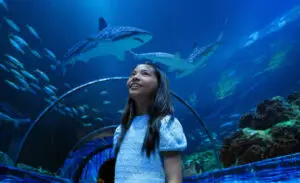
More must-sees: a newly reimagined Shark Encounter, one of the country’s more immersive exhibits highlighting 11 different species up close, SeaWorld’s beloved BMX Blast! stunt show, and high-seas escapade, Pirates Ahoy! The Battle for Mermaid Cove. And don’t miss the park’s all-new Deep Sea Disco, which encourages guests to dance the night away under the glow of the SkyTower, and vibrant closing time laser light display Laser Reef Summer Spectacular.
Amp up the nighttime vibe with local craft beers, curated cocktails, and nostalgic theme park treats with $1 beer all summer long. SeaWorld is the place for day to night summer fun. When the sun goes down, SeaWorld lights up, and inspires guests of all ages to embrace their inner whimsy and see why generations of San Diegans head to SeaWorld to make memories they’ll never forget.