Everything SD JANUARY 22, 2024

San Diego is Basketball City USA

The city's Big 5 are doing something that programs in more acclaimed basketball cities haven’t lately—they’re winning
San Diego is Basketball City USA
Courtesy of San Diego City College

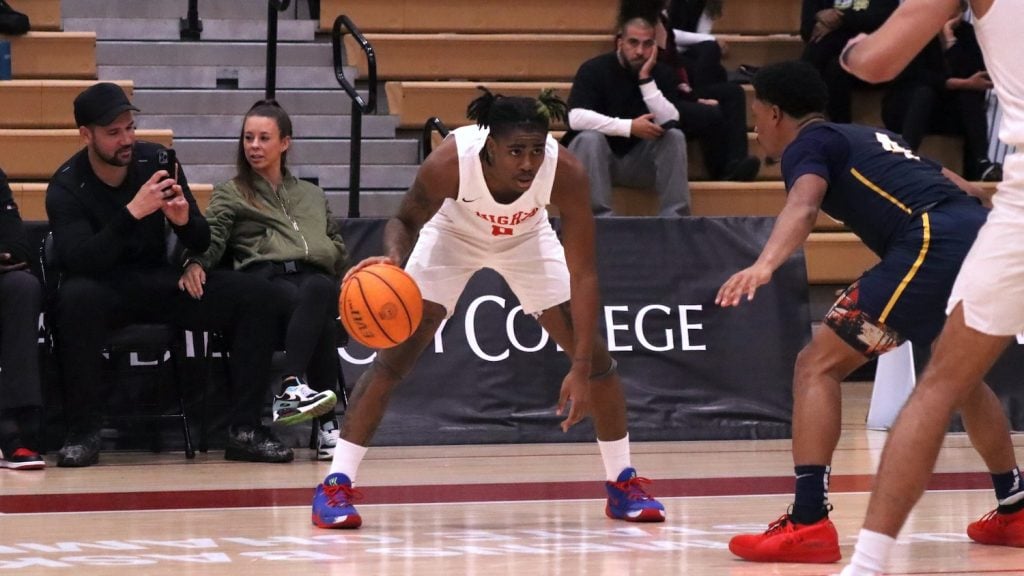
It’s not often a community college team sets the pace in a big city hoops scene—one that’s increasingly relevant at the national level—but that’s exactly what the San Diego City College Knights are doing.

Since 2004, the Knights have won eight conference championships and 11 postseason tournament berths. They’ve appeared in two state finals and won one of them in 2017. Dozens of alumni have been awarded scholarships to Division I and II programs, and several have played professionally around the world.

Along with SDSU, USD, UCSD, and PLNU, the SDCC Knights are one of a handful of local basketball teams worth watching right now.

Sure, San Diego’s Big 5 will never be considered as big as teams from cities like LA or Cincinnati, not with Division II and community college teams in the mix, but they have done something recently that programs in other, more acclaimed basketball cities haven’t: they’ve won.

SDCC’s run started two decades ago when head coach Mitch Charlens took over a program that the previous year won seven games playing in a high school gym. (No offense, San Diego High.) 

“We were crazy enough and arrogant enough to think we could win right away,” Charlens said. “And we did.” With nine regular season games left this year, Charlens’ average of 20.5 wins-per-season doesn’t seem likely to decrease. 

As the Knights were wrapping up their game at Miramar College, the San Diego State University men’s squad was warming up for its own conference showdown. Jaedon LeDee would go on to pace the team’s victory over Nevada with an overstuffed stat sheet—22 points, 12 rebounds, three steals, and a block. Fellow senior Lamont Butler did yeoman’s work, chipping in four rebounds, three assists, and two steals to go along with his 10 points.

“Our defense and rebounding were the difference in the game, and that’s Aztec basketball,” head coach Brian Dutcher told the media after the game. 

The win also brought SDSU to 15-3 on the season, which feels like déjà vu. The Aztecs were 14-4 at this time last year, after Butler’s 19 points and two assists, steals, and rebounds fueled a conference win over Colorado State. 

Lamont Butler’s buzzer-beater led the Aztecs to their first National Championship game last year

“We hit a rhythm in the second half, got going, and our defensive pressure keyed it,” Dutcher said after that game. The Aztecs would go on to win 17 of their next 19, then Butler sent SDSU to the national championship with the shot of his life. By this point, you can set your watch to it—after a few early season losses, the Aztecs’ upperclassmen and the coach’s cliches are in top form come January. 

SDSU’s own run of excellence started under Dutcher’s predecessor, the legendary Steve Fisher, who in 2002 led the Aztecs to their first Mountain West Conference title and their first NCAA tournament appearance in 17 years. Six more conference championships and 11 tournament appearances would follow. Before last season’s NCAA final, Sports Illustrated anointed SDSU a “West Coast college basketball powerhouse,” as if Aztecs fans needed to be informed. 

But the same can be said for the city itself, which may be less apparent. 

In 2020, the UCSD men’s basketball team elevated to Division I. In all its wisdom, the NCAA prohibited the school from being eligible for the national championship tournament during a four-year “reclassification” period, but the Tritons decided to be good anyway. They are second in the Big West Conference with a 11-7 record, and only a LeDee buzzer-beater earlier this season prevented UCSD from upsetting its crosstown rival. 

In 2022, the University of San Diego hired Steve Lavin as its head men’s basketball coach. Lavin previously led blue blood programs in UCLA and St. Johns, and has eight NCAA tournament appearances to his name. Before a recent four-game skid, the Toreros were 10-5 and competitive in a West Coast Conference that regularly sends powerhouse Gonzaga to the NCAA tournament.

And last year, the Point Loma Nazarene men’s team went to the regional finals in the Division II championship tournament after winning the Pacwest Conference.

Truly, SD’s Big 5 are on a roll.

When asked what’s changed in the last twenty years to turn San Diego into a premier college basketball destination, Charlens thought for a moment, then told the story of Malcolm Thomas. 

Thomas starred at San Diego’s Crawford High, and after a year at Pepperdine returned home and played for City College in the 2008-09 season. After a standout season, he transferred to SDSU, where he played alongside program icon Kawhi Leonard and became one of the top shot blockers in school history. 

Thomas now plays professionally overseas, but to Charlens he was the first top recruit to “believe in City College,” a school that built itself a new gym and whose administration realized that winning matters. In effect, Thomas was the first local star to commit to a new era of San Diego basketball.

“We changed the narrative,” Charlens said
Brendan Dentino is a U.S. Navy veteran, writer, and public servant based in San Diego. He writes weekly about baseball and politics at Out in Left.

Subscribe to our newsletters

Select Options

By subscribing you confirm that you agree with our Terms and Conditions and Privacy Policy.

Everything SD DECEMBER 1, 2023

The 5 Best Lineups in San Diego Sports: December 2023

What not to miss on the local sports scene this month

The 5 Best Lineups in San Diego Sports: December 2023
SDSU Men’s Basketball, Azetcs

SDSU vs UCSD men’s basketball

Friday, December 1 | 7:00 p.m. | LionTree Arena, UCSD

Watch: ESPN+ | Listen: San Diego Sports 760

Move over, New York Yankees and Mets. There’s a new transit-oriented sports rivalry on the map. With the opening of MTS’s Blue Line trolley extension in 2021, the SDSU and UCSD campuses became linked by transit. A year later, the schools’ baseball teams inaugurated the so-called Trolley Series. The SDSU and UCSD men’s basketball programs pick up the lightrail rivalry on December 1 and, unlike the Subway Series, features teams that aren’t wholly disappointing.

SDSU is 6-1 following its run to the Final Four last season, and UCSD just hosted the nationally televised Rady Children’s Invitational basketball tournament. The game is sold out—don’t forget your PRONTO cards—but fans can catch it on ESPN+ or San Diego Sports 760.

San Diego Sockers vs Tacoma Stars

Sunday, December 3 | 5:05 p.m. | Pechanga Arena San Diego

The most decorated sports team in San Diego isn’t the beloved Padres, the ascendent Wave, or the departed Chargers. It’s the Sockers, the 16-time champions of professional indoor soccer. They may not be as familiar as the other teams, but the Sockers winning tradition at Pechanga Arena stretches back to 1982.

Sadly, their December 3 home opener represents something of a farewell at what the team affectionately calls “the grand old arena.” They’re relocating to Oceanside’s brand-new Frontwave Arena after this season. Catch their electrifying brand of soccer before they head up the coast.

San Diego Gulls vs Henderson Silver Knights

Saturday, December 16 | 6:00 p.m. | Pechanga Arena San Diego

Watch: KUSI-TV | Listen: San Diego Gulls Audio Network

For my money, hockey is the best live sport, Hawaiian shirts are the best garment, and Christmas is the best holiday. Those three things joyously collide at the Gulls next home game on December 16, as the team gives away Gulls Hawaiian shirts as part of their Winter Wonderland/Teddy Bear Toss Night. There’s even a pregame tailgate in the parking lot. Just don’t mind the standings.

The Gulls are mired in last place in the American Hockey League’s Pacific Division and face the minor-league affiliate of the Stanley Cup-winning Las Vegas Golden Knights. If there’s ever a time for a miracle on ice, it’s during the holiday season. 

DIRECTV Holiday Bowl

Wednesday, December 27 | 5:00 p.m. | Petco Park

Watch: TBD | Listen: TBD

The festivities around the college football Holiday Bowl offer something for everyone. There’s America’s Largest Balloon Parade and the Snapdragon Bowl Bash downtown. For those wanting to relive the glory days, there’s a tailgate party, and for those who like to wake up at 5 a.m. there’s a 5K walk/run. If the expected USC-Clemson matchup comes to fruition, there will be visiting Angelenos saying San Diego is “really nice” (as if we needed their confirmation). 

And of course there’s the Holiday Bowl game itself, which is typically one of college football’s best matchups of the year and one of San Diego’s great sports traditions. It has been played in the city since 1978 and Petco Park was recently modified to host it. Teams will be announced on December 3, but get your tickets now before a bunch of Trojans run up the prices.

SDSU vs No. 11 Gonzaga men’s basketball

Friday, December 29 | 6:00 p.m. | Spokane, Washington

Watch: TBD | Listen: San Diego Sports 760

It’s that time between Christmas and New Year’s Day. Everyone’s faking work so they don’t burn vacation days. You’re full and drowsy from six weeks of holiday eating and you’re staring into the winter abyss. That is, unless you’re an SDSU fan.

It seems the men’s basketball team always figures it out in December, dive-bombs into the AP Top 25 rankings, and reminds everyone that San Diego has more than just beaches and sunshine. It has one of the best, most-consistent basketball programs in the country. After starting last season 7-3, SDSU’s win against Kennesaw State in December propelled them to win 25 of their next 28 games on the way to the NCAA championship game. Their matchup at No. 11 Gonzaga will indicate whether SDSU has yet another postseason run in them.

Brendan Dentino is a U.S. Navy veteran, writer, and public servant based in San Diego. He writes weekly about baseball and politics at Out in Left.

Everything SD JUNE 12, 2026

San Diego Neighborhood Guide: Rancho Bernardo

Discover eateries, outings, and shops within this inland North County community

San Diego Neighborhood Guide: Rancho Bernardo
Courtesy of Rancho Bernardo Inn

Just south of Lake Hodges near 4S Ranch and Poway, Rancho Bernardo is a suburban community that blends residential neighborhoods with industrial pockets, elevated by a decidedly diverse food scene.  

Over 60 years ago, this North County neighborhood was once part of a family ranch. Since that time, big tech companies have taken up residence here, including Amazon, Sony Electronics, Oura Ring, HP, Teradata, and ASML. Rancho Bernardo Inn serves as a community hub, with locals frequently meeting at the hotel’s restaurants, golf course, and spa.  

Whether it’s work or a round of golf that brings you to Rancho Bernardo, we’ve taken care of the agenda planning with our guide to the area’s best restaurants, activities, and shops.

Courtesy of Avant Restaurant

Rancho Bernardo Restaurants, Bars, and Coffee Shops

Avant

Sample ingredients plucked straight from Rancho Bernardo Inn’s onsite garden and served at their signature restaurant Avant. One of the neighborhood’s most upscale dining options, they serve a French-inspired menu with nods to California, including many seafood options. Don’t miss their more casual sister restaurant Veranda for al fresco dining.

17550 Bernardo Oaks Drive

Things to do in Ramona, CA near San Diego featuring

The Kitchen at Bernardo Winery

Wood-fired pizzas and handmade pastas are standouts at The Kitchen, Bernardo Winery’s counter-service restaurant specializing in Sicilian flavors. Charcuterie boards and bruschetta make for great starters or snacks while wine tasting.

13330 Paseo Del Verano Norte

Bushfire Kitchen

Fast-casual and family-owned eatery Bushfire Kitchen recently opened a location in Rancho Bernardo, serving sandwiches, bowls, salads, burgers, protein plates, and housemade empanadas. Bushfire prepares comfort food with healthy ingredients, and offers plenty of vegetarian and vegan options.

11962 Bernardo Plaza Drive, Suite 110

The Cork & Craft

Some might call The Cork & Craft an overachiever. This gastropub has an in-house craft brewery and winery: Abnormal Beer and Wine. The more, the merrier. Their sushi menu is definitely worth exploring, but don’t miss other specialties like garlic noodles, chicken wings, and pork belly.

16990 Via Tazon

Courtesy of Carvers Steaks & Chops

Carvers Steaks & Chops

You don’t have to leave Rancho Bernardo to get a white tablecloth steakhouse experience. Carvers Steaks & Chops has prime rib (their best seller), filet, ribeye, porterhouse, New York strip, and other cuts, served alongside crab-stuffed mushrooms, wedge salad, French onion soup, potato skins, and other steakhouse specialties.

1940 Bernardo Plaza Drive

Burma Place

This no-frills Burmese restaurant is known for its traditional tea leaf salad that’s topped with sesame and sunflower seeds, garlic chips, peanuts, tomatoes, jalapeños, fried yellow beans, and fermented green tea leaf dressing. Tucked into a nondescript strip mall, Burma Place is a great takeout option when you want to eat garlic noodles, fried rice, chicken curry, and samosas from the comfort of your couch.

16719 Bernardo Center Drive, Suite A

Phở Ca Dao

Find authentic Vietnamese cuisine at Phở Ca Dao, including favorites like phở noodle soup, vermicelli noodles, broken rice dishes, and spring rolls. One of eight locations throughout San Diego, this family-owned chain uses robot servers for food delivery.

11808 Rancho Bernardo Road, Suite 100

The Kebab Shop

It’s all about the sauce at fast-casual Mediterranean restaurant The Kebab Shop. Smothering your chicken shawarma, gyro, or falafels in garlic yogurt, cilantro jalapeno, fire chili, and dill yogurt sauce is practically a rite of passage. The hardest part is deciding whether to order a wrap, bowl, or salad.

11980 Bernardo Plaza Drive

Casa Lahori

Get a taste of South Asian flavors at Casa Lahori, a Pakistani restaurant noted for its grilled meat kabobs. Other best-selling dishes include beef nihari, chicken biryani, and shahi paneer— best enjoyed with naan bread.

11975 Bernardo Plaza Drive

Kangnam Korean BBQ

Grill your own meat on the tabletop at Kangnam Korean BBQ, an interactive, all-you-can-eat experience that’s well-suited for large groups. Marinated beef bulgogi, grilled galbi short ribs, and spicy pork are served alongside traditional banchan dishes like kimchi, japchae glass noodles, and flavorful stews. Weekday lunch specials provide a nice discount on these filling meals.

11828 Rancho Bernardo Road, Suite 117–119

Courtesy of Curry & More Indian Bistro

Curry & More Indian Bistro

Dig in to your favorite curries and kebabs at Curry & More Indian Bistro. Most entrees are served with a choice of two side dishes, including basmati rice, potatoes with cumin, daal, naan, or mixed greens. Help offset the spice with one of their sweet mango or strawberry lassi drinks.

11808 Rancho Bernardo Road, Suite 123

Sushi Kami

Kai Oliver-Kurtin is a San Diego-based writer who covers travel, dining, events, and culture. Her writing has been published in USA Today, Condé Nast Traveler, Fodor's Travel, Marie Claire, and HuffPost, among others.

Everything SD JUNE 12, 2026

Where to Golf with Your Dog in San Diego

The city's pet-friendly courses combine scenic greens, wagging tails, and a round that’s as much about your pup as your swing

Where to Golf with Your Dog in San Diego
Photo Credit: Jed Villejo

Golf doesn’t have to mean stiff collars, pleated khakis, whisper-talking on the green, or pretending your sand trap fails aren’t actually hilarious. Around San Diego, a handful of rebel courses are quietly rewriting the rules of an afternoon round, making them more relaxed, more social, and yes, more dog-friendly. These are the fairways where leashed pups pad alongside their people; where a suspenseful search for a golf ball in the bushes or—no!no!no!no!no!—in the water hazards are part of the fun; where every polite golf clap comes with a smiling, panting audience. If your ideal golf day includes a walk, a drink, and your dog riding shotgun, this is your teeing ground.

Emerald Isle Golf Course, Oceanside

For proof that a golf course can be approachable without being boring, look no further than Emerald Isle Golf Course in Oceanside. The executive course delivers consistently beautiful greens, rolling elevations, and just enough challenge to keep you engaged, not stressed—unless your pup breaks free and runs for the rolling elevations, in which case you’ll be very engaged and maybe a little stressed. Locals love holes like the canal carry on No. 3 and the wildlife-dotted pond on No. 16, while golden-hour sunsets steal the show most evenings. Dogs are genuinely welcome here, not an afterthought. Grab them a slice of watermelon from the clubhouse, pose in the cart for Instagram cameos with an Emerald Isle scarf (it doubles as an adorable bandana for your four-legged friend), or introduce them to the course’s resident pups like Bogey, the assistant director of instruction, and shop dogs Karl and Frank. Affordable, friendly, and no-frills, Emerald Isle feels like golf you and doggo can’t wait to play.

660 S El Camino Real, Oceanside

Courtesy of The Loma Club

The Loma Club, Point Loma

The Loma Club is where golf goes social. Set in Liberty Station, this historic 9-hole par-3 course trades country club stiffness for an easy, neighborhood energy that feels distinctly San Diego. The course is walkable and unintimidating, with skyline and harbor views doing most of the heavy lifting. The Loma Club is just dipping its paws into the dog-friendly trend, and welcomes them on the mini course and off the fairways. Though your pup is the epicenter of your world, the patio at Loma Club is the real star, hosting live music, trivia (even the smartest dogs are stumped), and cocktails that rival golf itself. You don’t even need clubs to enjoy it. Show up with your dog, wander the course, grab something from the clubhouse, and stay for hours. You’ll feel like you’re exactly where you’re supposed to be.

2960 Truxtun Rd, San Diego

Photo Credit: Jed Villejo

Goat Hill Park Golf Course, Oceanside

Calling Goat Hill Park a golf course almost undersells it. Known as the “People’s Park,” this historic Oceanside staple operates more like a community space where golf happens. Expect dogs strolling alongside the players, music streaming from magnetic speakers attached to golf carts, beginners smacking balls alongside serious talent, and locals and tourists sharing the same teeing grounds with a few four-legged besties trotting alongside. Saved from redevelopment in 2014, Goat Hill embraces a raw, unpolished look that’s both intentional and refreshing. With ocean views, a “19th-hole” fire-pit, and zero pretense, it’s golf at its most human…because: dogs.

2323 Goat Hill Dr, Oceanside

Courtesy of Omni La Costa Resort

The Club at Omni La Costa

Ready to add your pup’s name to the illustrious list of golf greats? Same. At the iconic The Club at Omni La Costa, the vibe is equal parts championship-caliber and casually fabulous. Emerald fairways so perfect you’ll hesitate to step on them, palm-lined paths practically begging for a golden-hour strut, and rolling greens that ripple in the sun. And just when you thought it couldn’t get any better, your four-legged plus-one enters the chat: For members and overnight guests, the La Costa lifestyle rolls out the (very chic) welcome mat for your (leashed) pup, turning tee times into a social affair of breezy, citrus-kissed luxury and leisurely strolls. Really—what are you waiting for? Even your dog’s got a standing invite.

2100 Costa Del Mar Rd, Carlsbad

Isabella Dallas is a freelance writer for San Diego Magazine and the Arts and Culture Editor at The Daily Aztec in her final year at San Diego State University. She previously worked as an editorial intern for SDM, but when she’s not writing, you can find her trying the best coffee spots in SD, devouring the latest rom-coms, and indulging in anything and everything pop culture.

Studio S JUNE 12, 2026

Nominations Open for the San Diego Business Impact Awards

The annual event honors middle market companies creating jobs, scaling up, and investing in the region

Nominations Open for the San Diego Business Impact Awards
Photo Credit: Kimberly Motos

San Diego is known for its startup culture and innovation economy, but what happens when the company moves beyond its early-stage years? The San Diego Business Impact Awards aim to answer that question, spotlighting the middle market businesses helping drive the region’s economy.

Hosted by San Diego Regional Economic Development Corporation (EDC) and JPMorganChase, the second annual awards celebration takes place on Thursday, July 23, from 4:30 to 7:00 p.m. at Scripps Research Auditorium. More than 200 executives, entrepreneurs, and business leaders are expected to attend the networking and cocktail event honoring some of San Diego County’s fastest-growing companies.

Businesses headquartered in San Diego County that have operated for at least two years are encouraged to submit their nomination by Thursday, June 18 at 4 p.m. Companies across industries—from technology and life sciences to tourism and consumer products, as well as pre-revenue startups—are eligible for recognition.

For EDC President and CEO Mark Cafferty, the event is as much about building connections as celebrating success. “We’ve had a longtime partnership with JPMorganChase; their work aligns with our efforts to support underserved communities and drive talent development,” says Cafferty. “And the networking was invaluable last year. I’m still in touch with people I met at last year’s awards.”

Photo Credit: Kimberly Motos

EDC is an independently-funded nonprofit that works directly with San Diego companies to help them grow the local economy, make the region as a whole more competitive, and attract and retain top-tier talent with quality jobs. Through EDC, companies can get help starting or expanding their business with support for things like site selection, permit navigation, and regulatory guidance, plus connections to local resources and potential business collaborators.

The San Diego Business Impact Awards began as an idea with one of EDC’s longtime strategic partners, JPMorganChase. The two organizations share a commitment to San Diego and are dedicated to bolstering middle market businesses.

“We’re blessed with a robust innovation economy and startup community,” says Aaron Ryan, San Diego Region Manager for JPMorgan’s Commercial and Investment Bank and vice chair of the firm’s’ San Diego Market Leadership Team. “But one of the segments of the business community we felt was overlooked was emerging middle market companies—the businesses that are no longer small but not yet large.”

Ryan says supporting those companies is critical as they scale and decide where to invest, hire, and grow.

San Diego’s high cost of living remains one of the region’s biggest business challenges, making talent recruitment and retention increasingly competitive. But local leaders point to the region’s quality of life, climate, and collaborative business community as advantages that continue to attract employers and workers.

Photo Credit: Kimberly Motos

“In order to support thriving households, there has to be enough high-quality jobs for people to be able to afford to live here,” Cafferty says. “Once a company grows and excels past that middle market point in their growth cycle, they become much more likely to pay higher wages and compete globally.”

Both Cafferty and Ryan proudly tout the unique collaboration that exists among San Diego County businesses. Bringing together top universities producing high-quality talent, cutting-edge research institutions, a robust military and defense presence, leading ocean science and environmental organizations, and a binational, cross-border identity creates a distinct business ecosystem that defines and strengthens the San Diego region. 

Last year’s San Diego Business Impact Awards celebrated nearly 60 honorees from 49 industries, representing a total of 8,232 jobs across eight sectors, including: software and technology, healthcare and life sciences, consumer goods, professional services, finance, construction and manufacturing, defense, and hospitality and tourism. On average, honoree companies doubled their revenues over the previous year, employed more than 145 San Diegans each, and offered an average annual compensation of $192,415.

Top honorees included defense contractor Innoflight, environmental consulting firm Bancroft Construction Services, life sciences startup Element Biosciences, defense technology contractor GALT Aerospace, organic grocery store chain Jimbo’s, and biopharmaceutical company LENZ Therapeutics. During the event, Innoflight Founder and CEO Jeff Janicik held a fireside chat offering his insights on investing in the community and embracing San Diego culture.

This year, organizers hope to continue highlighting the middle market players driving economic impact across the region. Nominations are now open through June 18 at 4 p.m. Get your tickets to the San Diego Business Impact Awards celebration to enjoy drinks by Snake Oil Cocktail Co., light bites, live music, and networking.

Guides JUNE 11, 2026

A Guide to the FIFA World Cup 2026 in SoCal

From San Diego’s coastline to Los Angeles stadium and fan zones across the region, here’s how to experience soccer’s biggest event

A Guide to the FIFA World Cup 2026 in SoCal
Courtesy of FIFA

When three nations and 16 cities come together to host the FIFA World Cup 2026, the scale stops feeling like a tournament and starts feeling like geography. A continent becomes the stage as borders soften into corridors. And Southern California—shaped by migration, sport, entertainment, and constant movement—sits inside that landscape with all eyes on it.

San Diego and Los Angeles have always felt connected. Hop on the Pacific Surfliner, and the trip unfolds in one continuous stretch of coastline, passing beach towns, neighborhoods, and city centers.

Traveling from San Diego, everything still feels slightly suspended as the Pacific Surfliner follows the coast north with ocean on one side and a slow suburban blur on the other. San Diego stays in exhale. Los Angeles is already building toward something louder.

This summer, Los Angeles will host eight matches of the FIFA World Cup at Los Angeles Stadium, including the US Men’s National Team opener on June 11, while the region stretches into 39 days of programming across stadiums, parks, transit hubs, beaches, and neighborhoods. Instead of one massive fan hub, Los Angeles is embracing a citywide celebration, with fan zones spread across its entirety.

But this pattern has been rehearsed here for decades. In 1994, Southern California became one of the defining stages of the World Cup, when matches at the Rose Bowl placed global attention on the region and turned local stadiums into international landmarks, confirming its ability to hold the world at scale.

What distinguishes Southern California is not just infrastructure, but cultural permeability. Fashion, music, film, art, and sport constantly overlap here, creating an environment where identity is flexible and always in motion. From the Venice boardwalk, where skate culture shaped modern street style, to global soccer stars rubbing shoulders with Hollywood celebs, to authentic Spanish cuisine moving up and down the I-5 corridor, everything circulates.

The World Cup is not introducing anything new here, it’s showing up for the summer and showing out, revealing what this city has always known about itself. What follows is a look at the fan zones and how Los Angeles turns itself into a city-wide stage for the tournament, one neighborhood at a time.

Courtesy of Los Angeles Tourism & Convention Board

Los Angeles Union Station

As the heart of Los Angeles, Union Station is an official Fan Zone June 25-28 during the World Cup, but in practice it never really stops being one.

It is the city’s circulation point, its meeting ground, its pressure valve. Commuters, travelers, match-day crowds, and everyday Angelenos all move through the same space, and everything mixes, overlaps, and scales in real time. In a way, this is where the World Cup stops arriving in Los Angeles and starts moving through it.

The Pacific Surfliner from San Diego to Los Angeles makes that shift feel almost too easy. No stress or  gridlock anxiety, just a straight line up the coastline with ocean on one side and everything slowly becoming more built on the other. It’s one of the rare ways into LA that doesn’t feel like arrival as friction. You can sit with a laptop, watch the Pacific drift past, grab coffee from the café car, and let the city come to you in pieces.

That’s the beauty of arriving at Union Station. Instead of feeling like you’re on the edge of the city, you’re immediately surrounded by it. And, inside, the station already reads like a World Cup nerve center: banners, movement, multilingual energy, the sense that something global is about to funnel through this exact point. The Heart of the City Fan Zone only sharpens that feeling, with simultaneous match screens, DJ sets, meet and greets, and immersive activations built around marquee games like USA vs. Türkiye.

From there, the city splits outward.

ROW DTLA feels like the first exhale after arrival. A converted industrial campus turned creative district where restaurants, retail, and open-air courtyards form a self-contained ecosystem. If you’re looking for the perfect first meal in LA, make it lunch at Pizzeria Bianco. The thin-crust pizza is reason enough to go, but the space leaves just as much of an impression.

What I liked most about ROW DTLA is how quickly it resets you after the train. One minute you are stepping off at Union Station, and the next you are in a space that feels like its own version of LA, a city inside a city with some of the most curated shopping I’ve ever seen.

Bodega hides itself behind a convenience-store front, a sneaker and streetwear space disguised as something ordinary, like LA refusing to make anything feel too obvious. The whole campus moves like that, part retail, part gallery, part neighborhood you are only temporarily inside.

Isabella Dallas is a freelance writer for San Diego Magazine and the Arts and Culture Editor at The Daily Aztec in her final year at San Diego State University. She previously worked as an editorial intern for SDM, but when she’s not writing, you can find her trying the best coffee spots in SD, devouring the latest rom-coms, and indulging in anything and everything pop culture.

Arts & Culture JUNE 10, 2026

Artist India Thompson Weaves New Meaning into Everyday Items

On view at Mingei International Museum now through October 18, Thompson's basketry invites viewers to notice the seemingly mundane

Artist India Thompson Weaves New Meaning into Everyday Items
Photo Credit: Ron Kerner

When was the last time you really looked at your fridge? Not for milk or ketchup or that takeout you hope is still good, but really looked at it. Considered it. Its texture. Its shape. Its role in your life. “Never” is probably your answer here. But once you’ve seen India Thompson’s life-size fridge made of reed, you’ll probably pause the next time you’re in your kitchen.

Thompson’s new Looks Like Home exhibit on view at Mingei International Museum takes everyday items that most of us use on a daily basis—the things that usually make our lives faster and more convenient—and renders them useless but beautiful as intricately woven reed sculptures.

The museum’s name comes from the philosophy of Yanagi Sōetsu, who wrote in the essay “The Beauty of Miscellaneous Things” that “when one becomes too familiar with a sight, one loses the ability to truly see it. Habit robs us of the power to perceive anew, much less the power to be moved.”

Thompson joins artists who use material transformation to remake the familiar, like Katarina Kamprani who redesigns everyday objects in ways that render them physically unusable, or Do Ho Suh who recreates domestic spaces through labor-intensive processes. Thompson’s approach is quieter, more tender: She doesn’t distort. She weaves.

Photo Credit: Ron Kerner

Seeing her work for the first time brought up emotions I hadn’t felt since I was a kid watching The Brave Little Toaster, the movie that taught me to hold space for the invisible servants that make up our homes. Thompson’s collection encourages a kind of reckoning with what it means to ignore the essential. It asks you to reconsider what “home” means in an era where so few can afford to buy one. Her sculptures are like a challenge to pause where you usually press on. Being close to her work is like taking a breath and not realizing how long you’ve been holding it.

Thompson was born in Los Angeles and is now a multidisciplinary artist based in San Diego. While ceramic is her primary artistic medium, this exhibition highlights her exploration of basketry—a thousand-year-old, time-consuming process and an art form she describes as one of “care and memory-keeping.”

Thompson also happens to 9-to-5 as Mingei’s studio program specialist. Assistant Curator Ariana Torres didn’t know about Thompson’s basketry work until she saw Thompson post a picture of her woven toilet paper on Instagram. Then came a woven microwave.

“It seemed really poignant and uncanny,” Torres says. “It was mundane, but it was also kind of quiet … something you wouldn’t think anybody would focus on.”

Photo Credit: Ron Kerner

Thompson began making art five years ago in her college ceramic class called Handbuilding, and she immediately fell in love. The first art she ever shared with others were her ceramic figurines: round, red-clayed pot-like sculptures with minimalist, barely-there faces in a variety of expressions. Some look surprised. Some look very concerned. Some look like they spend Friday nights at a Star Wars cantina. She calls them “Moots.”

The definition of the English word moot, in verb form, is “to gather and discuss an important topic,” as Thompson explains. “They look so serious … like they’ve wriggled through the earth to talk to each other.”

Thompson found her way to basketry three years ago and learned by watching YouTube videos.

“It’s something you can do at home,” she says. “And I love a repetitive process.”

The toilet paper roll came to her while making a cylinder that she thought looked like a roll of Charmin. Then she thought maybe she should make one on purpose. “I just thought it would be funny and really challenging, too,” she says. “Because there’s no tutorial for that. Why would there be, right?”

She figured it out and shared it on Instagram. People loved it. It received more than double the amount of likes and comments she usually got, but what really struck her was how many people came up to her in person to talk about how they connected with it. That, to her, was even more meaningful than the online response.

So she kept going and chose to make a microwave next.

Photo Credit: Ron Kerner

“[It’s an] object we all own and we all need,” she says. “Yet no one really cares about a microwave.”

She started the collection during a time when her landlord was coming into her apartment constantly with a crew of people, making notes of what they were going to remodel without ever acknowledging her in the room.

“It was such a weird fishbowl moment,” she says. “I technically don’t own my apartment, but I still consider it home. I live here and I pay to live here, but this isn’t mine. We live in this space and I call it my apartment. I call it my refrigerator. But it could be taken away at any moment.”

It dawned on her how much we depend on things we don’t own, how little we notice the things we rely on every day, and how temporal the word “my” can be.

The woven refrigerator is the largest in Thompson’s collection at Mingei, and inside it you can find additional woven items like a ranch bottle, a Brita filter, and a sandwich on a plate. You can’t open the freezer door, but if you look carefully between the gaps of woven reed, you might be able to see a few other things Thompson made and placed inside.

“If you really look closely,” she explains, “you’ll be rewarded.”

Partner Content JUNE 10, 2026

New Options for GLP-1 Users

Scripps study shows that some patients may be able to taper their dose and maintain results

New Options for GLP-1 Users
Courtesy of Scripps Health

While glucagon-like peptide-1 (GLP-1) receptor agents have been used to treat Type 2 diabetes for more than 20 years, their recent emergence as weight-loss wonder drugs marked a new frontier in medicine. But their effectiveness has left some patients wondering what to do once they’ve reached their goal. Stopping the medication could mean regaining some, if not all, of the weight. A Scripps Clinic internal medicine physician recently conducted a small study of whether GLP-1 patients who had reached their goal weight could maintain that weight by taking their regularly prescribed injection every other week instead of weekly. Spoiler alert: 30 of 34 patients did. Read more about the study here and what that may mean as pharmaceutical companies roll out oral GLP-1s.

For more nutrition, wellness, and healthy living tips, sign up for the San Diego Health newsletter here.

Partner Content

Thousands of savvy locals already get it.

San Diego's best restaurants, experiences, and events—handpicked and delivered to your inbox weekly. You in?

Close the CTA

Contact Us

1230 Columbia Street, Suite 800,

San Diego, CA