Featured articles
Featured articles
Things to Do
Guides
Things to Do
Featured articles
Things to Do
Things to Do
Things to Do
What's next
Featured articles
Featured articles
Featured articles
Things to Do
Things to Do
Guides
Ready to know more about San Diego?
SubscribeReady to know more about San Diego?
Fascinating San Diego people inspire us with big, bold ideas on everything from genomics to urban planning, art to architecture, food and more
25 BIG Ideas
Jacqueline Campbell 2014
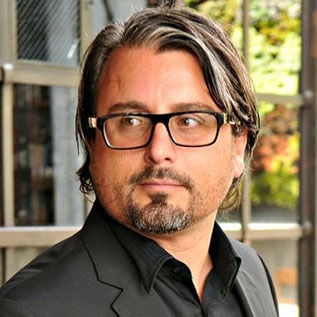
James Brown, principal, Public Architecture + Planning
“For San Diego, the freeway insertion in the early 1960s cut off Balboa Park from our city center and to our bayfront,” says Brown, who also owns and operates the Bread + Salt factory in Barrio Logan. “It also fragmented the bustling communities of Barrio Logan and Little Italy. This kind of idea sounds impossible, but actually it is critical and inevitable.” As the architect behind several structures, large and small, in downtown and uptown, Brown has even sketched out visions for what to do with the space, if I-5 were to end at the current Front Street exit. Think parks and direct access from downtown neighborhoods to Balboa Park. Where would all the traffic shift? He thinks the 805 should be the thoroughfare for shipping from the border. “It is just a question of when we choose to return our city to its full potential.”
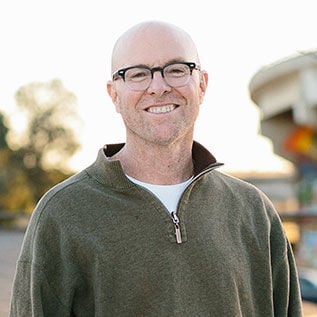
Paul Thomas, president/founder, Julian Hard Cider
“A lot of people think Julian is still recovering from the fires, but in the last few years, Julian has really grown in a lot of ways, as far as farm-to-table restaurants, art, and music [are concerned],” Thomas says. “People would be pleasantly surprised to see what Julian has become. It’s reminiscent of Santa Fe—a cool, active mountain community.” Sounds like things are gettin’ hipper already.
25 BIG Ideas
Sam Hodgson
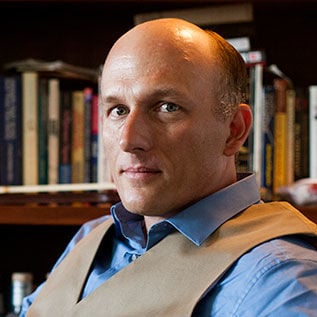
Eric Busboom, director, San Diego Regional Data Library
“A lot of the issues we have now are so fine-grain that you have to have good data to [solve them],” Busboom says. “Our nonprofits and governments simply don’t have access to the skills that are required to do that. The goal is to find volunteers and make connections.” Busboom is at the forefront of the open data movement and encouraging students and professionals to learn the skills to join him. Where do we need bus stops? How can we feed the hungry? He and the Regional Data Library are streamlining that sort of relevant city data in an effort to help government organizations and nonprofits make more informed decisions.
25 BIG Ideas
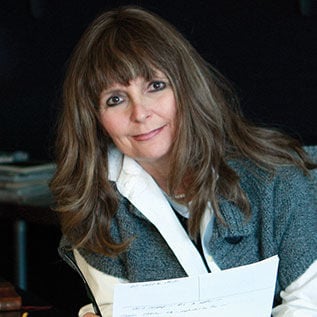
Susan Lankford, activist
“I’d like to collaborate with the Salvation Army on Park and Broadway,” Lankford says. “We want to expand into city areas and figure out how to do vertical horticulture. When we see children at the gate and walk up our yellow brick road [at the Makers Quarter garden], they leave their troubles behind. They are free.” The activist, award-winning author, and filmmaker has shone a much-needed light on the city’s homeless and their stories. In 2013, she and her nonprofit, Humane SMARTS, launched SMARTS Farm, an abandoned parking lot-turned-community garden in the East Village that has already given more than 600 disadvantaged youth a chance to experience nature. Her latest project, SMARTS Café, will give that same population a creative outlet and place to show off (or maybe even sell) its artwork.
25 BIG Ideas
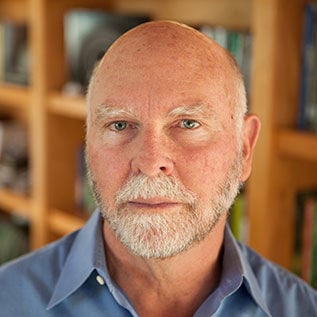
Craig Venter, Genetic Biologist and founder, J Craig Venter Institute
Venter’s genetics lab was the first to sequence the human genome, back in 1997. After a 15-year period in which he says progress slowed, things are picking up in the genomics sector. “Technology is getting faster and cheaper. Computing has changed. In 1999 I had to build a $50 million computer. Now, for a few hundred dollars, you can make your own computer,” he says. One of his many exciting projects? Changing the genetic code of pigs to create human hearts, lungs, and kidneys inside them that can be harvested for transplants. He says around 1 million people die in America each year because of a lack of organs or failed transplants. “People have thought about this for decades, but what’s making it possible now is genetic tools that we have developed for writing the code,” he says. “It‘s all about how to design new cells and new organisms.” A surfer and regular at George‘s at the Cove, Venter believes the center of genomics is here. “I have the ability to put these institutes anywhere in the world, and I can’t find a place better than here.”
25 BIG Ideas
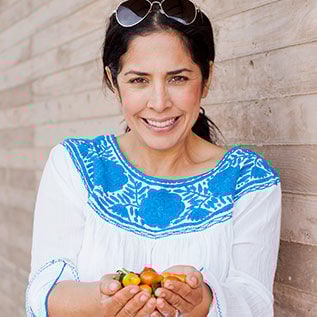
Flor Franco, chef
We need more organic, biodynamic, and sustainable farming. Franco says: “We’re finally getting that we live in a paradise in terms of cooking. [Now] everybody’s making everything from scratch. It’s a better world. Six, eight years ago, how many farms went down? They couldn’t afford to have their small farms because no one was buying product. Now it’s amazing to see them with double the employees. The more sustainable we become, the better community we are.” And healthier, too. The Mexico-born, San Diego-residing chef has one of the most diverse portfolios in the restaurant biz. She recently opened Zarco Comida de Baja in Chula Vista, and is bringing international attention to the Baja region as chef/partner at Encuentro Guadalupe Antiresort’s Convivia restaurant. Franco also owns San Diego-based Indulge Catering, and recently collaborated with other chefs and farmers to open Back to Roots, an artisan food market in Bankers Hill.
Scott Barton, Principal, THE Preuss School
“If we are going to change the face of this city, state, and world, we have to get everybody an opportunity for a great education,” Barton says. Among other things, the charter school principal thinks a longer school day and school year are necessary to keep our students competitive with the rest of the world. At Preuss, students are in school from 9 a.m. to 4 p.m. daily, and for 18 more days per year than San Diego Unified. Added up, that amounts to almost one full additional year of school for Preuss students by the time they graduate, compared to SDUSD students. And with college placement rates up to about 80 percent, it’s one of many things at Preuss that seems to be working.
25 BIG Ideas
Jacqueline Campbell 2014
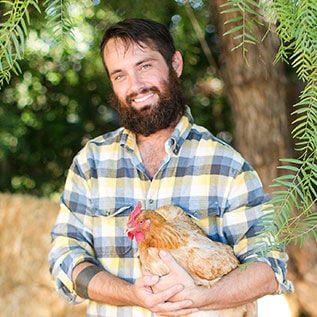
Jaime Fritsch, photographer, founder of Death for Food
Fritsch thinks if we want to eat chicken, we should at least know what it’s like to actually kill and cook the chicken. “Death For Food is about going headfirst into reality, even when it’s challenging,” he says. “I take participants in San Diego (and beyond) through the experience of witnessing or taking part in killing for food. This can be done through photography, stories, and direct experience.” And while “people cry and hug me and thank me after,” says Fritsch, you’ll have to wait a bit to experience it yourself. His latest event was canceled under threat of a lawsuit from a local animal rights activist.
25 BIG Ideas
Jacqueline Campbell 2014
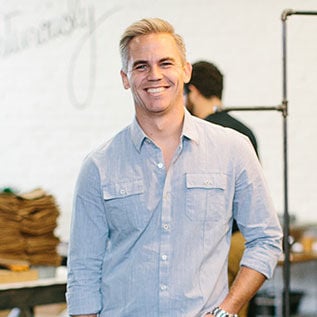
Ryan Sisson, CEO, Moniker Group and VP Business Development, Fifty and Fifty Digital Craftsmanship for Social Good
Gotta love the optimism of millennials, eh? The 32-year-old South Bay native runs Moniker Warehouse, a group of makers, artists, digital communicators, and even lawyers that all share space in a two-story building downtown. Sisson also rents the bottom out for weddings and private parties. He invests in every business or person that rents space from him. And then there’s his day job, generating new business for Fifty and Fifty, a digital marketing agency that only works with companies that have a strong charitable component to their business, like Invisible Children, United Way, and the National MS Society. He says the big idea is “focusing on people, not just business.” And then, business booms.
25 BIG Ideas
Mary Walshok, Associate Vice Chancellor for Public Programs and Dean of Extension, UC San Diego
“To sustain well-paid middle-class jobs in America and in San Diego, we need to return to making more things and producing things. It requires skilled workers who can command a skilled wage,” says the popular UC San Diego dean and author. “The whole East Village development, the idea of a maker district where creative people who are contributing to the design and production of products that are useful and needed, I see that as a positive indicator. A second positive indicator is the attention the Chamber of Commerce and the EDC are giving to manufacturing. Particularly in the cross-border region.” She also notes that 40 percent of the contents of goods manufactured in Baja are produced in Southern California, compared to just 5 percent in Texas. “For San Diego that’s a really exciting prospect.”
25 BIG Ideas
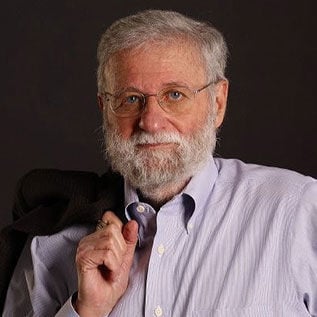
Don Norman, Director, the Design Lab at UC San Diego
The famous The Design of Everyday Things author, consultant, and researcher had just settled into retirement in the Bay Area (after a lauded career that spanned Apple, other startups, bestselling books, and lucrative speaking engagements) when the new UC San Diego chancellor, Pradeep Khosla, knocked on his door. They didn’t talk details, just that Norman would return to San Diego, where he started his career, and “he told me whatever we do, it has to be important and it has to be exciting.” He’s just settling into his new creative Design Lab at UC San Diego and has already met with every top design firm in town. Whether it’s cars that drive themselves or redesigning a huge healthcare system, Norman is back at it. “I wake up and if I walk 15 minutes to the west, I’m at the ocean. 15 minutes to the east, I’m in my office,” he says, noting his affection for the La Jolla mesa. Can’t beat that.
Jason Grauten, Co-founder, Rad Lab architecture
This big idea is now a reality. The new 30,000-square-foot Rad Lab Quartyard—complete with a craft beer garden, gourmet sausage restaurant, dog park, public plaza, and more—is set to open this month. It’s the brainchild of Grauten, David Lowenstein, and Philip Auchettl, who pitched the idea as their final thesis at the New School of Architecture & Design, just one block away from the site. The students saw an opportunity among the vacant lots downtown, where they could “actually build something” and show off their skills as emerging architects, while filling a need in the community and helping the city out with property taxes. Everything on the site is temporary and transportable, including the slick, Paul Basile-retrofitted and repurposed shipping containers that double as a coffee shop, kitchen, full-service bar, office space, and more. The Quartyard’s current lease runs through next summer. In the meantime, stop by and check it out at the corner of Market Street and Park Boulevard, between G and 11th streets.
25 BIG Ideas
Jacqueline Campbell 2014
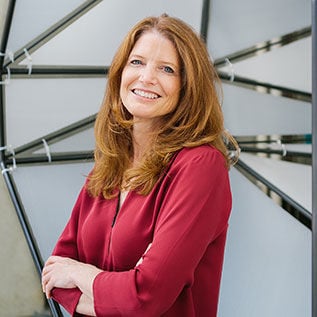
Lori Steele Contorer, founder, chairman, and CEO, Everyone Counts
“A secure software voting solution can increase participation and access to voters. At the same time, it can increase security while cutting the cost nearly in half. If you think about things like the mayoral special election, which cost more than $5 million, there are plenty of reasons for San Diego to move quickly for modernizing voting.” An expert in election modernization, Steele Contorer is at the helm of Everyone Counts, whose software solutions are bringing sophisticated and secure online voting systems to more than 165 countries. In 2014, her company ran more than 600 elections for U.S. governments, continued working with the Oscar ballot system, and launched online voting for the Emmys, all of which saw an increased voter turnout.
25 BIG Ideas
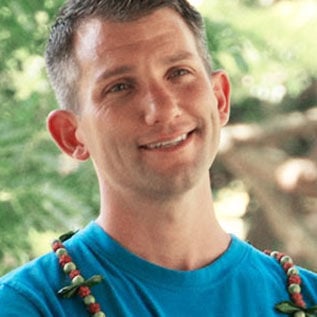
Josh Schneider, managing partner, Cultivaris North America and Global Breadfruit
Schneider and the new San Diego-based plant development company Cultivaris are helping to alleviate hunger in at-risk countries with breadfruit, a potato-like crop grown in tropical regions that yields 700 pounds of fruit per year. Thanks to Schneider’s technologically advanced work with the Breadfruit Institute, the trees can now be grown in a laboratory and shipped to countries for large-scale plantings without any worries of pesticides or disease. “One tree can change the life of a family by giving them food and economic security,” Schneider says. “A $15 donation to the Breadfruit Institute or Trees That Feed Foundation will fund the purchase of a tree, training for farmers, and assistance with bringing their fruits to market. How many times do any of us have the opportunity to feed a family for half a century?”
25 BIG Ideas
25 BIG Ideas
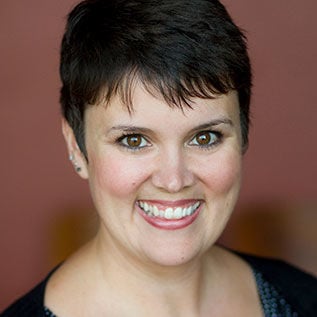
Rob & Chelsea Kaufman, founders, LEARN bootcamp
“At SDRuby, the monthly meet-up for Ruby developers, we regularly see 10 to 15 people trying to hire, and only one or two people looking for work,” says Chelsea, the founder of a new bootcamp, intensive training program to learn Ruby on Rails programming language. “We’ve struggled to find additional developers to work with us. We don’t want companies leaving San Diego in search of talent.” Neither do we! It’s not grad school. The bootcamp is short and intense, with a simpler application process, an extremely efficient way to learn a highly marketable skill. Bonus: Good developers are paid upwards of six figures!
25 BIG Ideas
Jason Russell, Activist, co-founder and creative director, Invisible Children
Russell is a bit of a hero himself, perhaps known best for his film Kony 2012, which went viral with more than 100 million views on YouTube. His nonprofit, Invisible Children, has been fighting since 2004 to help end the war in Central and East Africa, and has launched educational and other protective programs for its citizens. Russell’s influence has virtually rebranded the nonprofit industry, making charity and global activism appeal to a younger generation in a way that few other orgs have been able to. His latest project, a children’s book co-authored by wife Danica called The ABCs of Activism, seeks to further this mission, educating families about the benefits of philanthropy and giving. As for his idea of turning San Diego into a hub for fellow do-gooders? Sign us up!
25 BIG Ideas
Ari Seth Cohen, Blogger and filmmaker, Advanced Style
Cohen has made a name for himself chronicling the older (and surprisingly chic) population of New York City. His blog, Advanced Style, was turned into a book and recently became a documentary. But the Del Cerro native still feels ties to his hometown. He says, “San Diego is such a beautiful place to live, but the reliance on cars for transportation isolates many older people who still want to retain a sense of independence and be part of the world.” Hey, City Hall, can we fix that, please?
25 BIG Ideas
Michael Koh, co-founder, Fypio
What if instead of looking online at little icon clusters with prices and dates attached to them, you could actually browse (or spy, depending on how you look at it!) houses for sale based on design and lifestyle choices like, “Big patio, open kitchen, modern design”? And then, what if you could also incorporate wishes, like “Diverse neighborhood with lots of young parents and kids”? Koh’s new app, Fypio, does just that. His team has gone through and tagged every photo in the Multiple Listing Service for its designs and colors and specific elements, and they’ve also licensed or bought large amounts of demographic data that have been built into the app. “So instead of the daily listing email with prices and whatever photo the realtor chooses to list first, you get things you’re actually looking for.”
25 BIG Ideas
Paul Basile, Design genius, Basile Studio
With limited space to accommodate a growing population, especially in a city like San Diego, Basile envisions a new kind of urban living with customizable, portable units that plug into a ready-made building. Sound complicated? It is. But Basile has thought out all the details, from the plumbing and wiring to the crane that would lift these units onto a steel structure. He’s qualified to do it, too, as his company, Basile Studio (behind hot spots like Ironside Fish & Oyster, UnderBelly, and Polite Provisions), boasts a rare triple-threat license to design, construct, and fabricate. Imagine a box- or pod-like studio apartment with glass windows overlooking the bay. It is self-contained and completely movable, should you need to take an extended vacation or relocate. Before it’s installed, you can load your clothes and bring over your dog. And rest assured—in Basile’s hands, it will be stylish.
25 BIG Ideas
Jacqueline Campbell 2014
Shawn Covell, Vice president, government affairs, Qualcomm
Working her way through the corporate ranks at Qualcomm, Covell was conscious of the need for mentoring women in the tech sector. “Every time I was promoted I made a point to place another capable woman in my previous position,” says the globetrotting exec, who heads Qualcomm’s Wireless Reach program that promotes mobile health and entrepreneurship in developing countries around the world. She took the mentoring a step further this year, launching Q Camp for girls, a two-week camp in which tweens toyed with robots, programmed hats with moving parts, and hung around the labs and other cool places at Qualcomm to ignite their excitement in STEM areas. “If I had my way, we’d be following these girls and supporting their interests through college and re-creating this kind of thing around the country.”
25 BIG Ideas
Paul Harris BWP Media USA
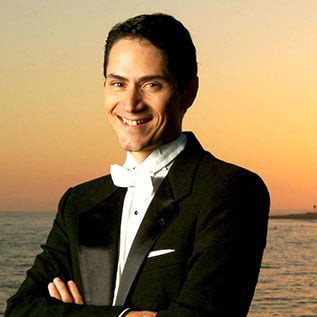
Nuvi Mehta, Classical musician and spokesman, San Diego Symphony
The studied violinist and conductor (hello, Julliard!) longs for the days of old—before TVs and computers were so readily available, “when people actually created.” He envisions a salon-like setting where people can explore good, classical music with wine, food, and professional musicians at the ready to explain and expose different classical pieces. “It starts with a discussion. You give people an exposition and they are hooked,” he explains. “So you close your eyes and know that you’re supposed to feel like ‘this’ when the note changes because the composer did XYZ. We don’t do that in concerts. People are cut off from the artistic expression of it.”
25 BIG Ideas
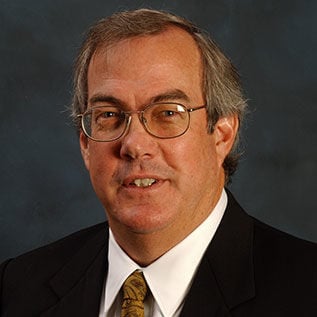
Don Kent, President, Rose Canyon Fisheries
In an age when we’re importing 90 percent of the seafood we eat in the U.S. (20 years ago, it was around 60 percent, says Kent), and our government is increasing the amount of fish we are supposed to incorporate into our diets, something’s got to give. Kent thinks San Diego can easily be at the forefront of sustainably farming fish in federal waters about 5 miles off our coastline. “If we want sustainable supply grown by acceptable standards, we should do it ourselves,” says Kent, who’s been working on this concept for several years out of the nonprofit Hubbs-SeaWorld Research Institute. Now he’s started Rose Canyon Fisheries and joined with a financial investor who, along with an army of permit-seeking consultants, is starting to really move the needle toward this goal. “So if 65 percent [of seafood] comes from China, what kind of regulations do they use? When I’m in the stores, I’d like to see that it was grown in California by USDA and FDA standards.” A native San Diegan, Kent also supports the idea of resurrecting San Diego’s esteemed commercial fishing industry by putting local fishermen to work on the farms.
25 BIG Ideas
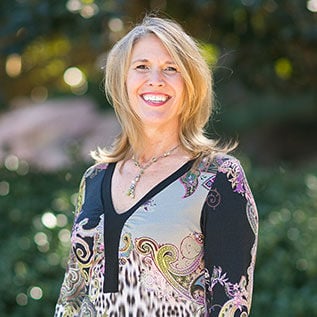
Candice Eley, PR and promotions manager, San Diego Tourism Authority
“Yes, the weather is nice and our beaches are beautiful, but San Diego is so much more than just a sunny beach town,” says Eley, who spearheaded a video project focusing on the best arts and culture in nine San Diego neighborhoods. She wrote the script, produced the shoots, and starred as the on-camera talent guiding you through the hidden gems, in partnership with the City of San Diego’s Arts & Culture Commission. “Art, music, theater, dance, dining, craft beer—it’s all happening here, and happening in big and creative ways.
I want to see a San Diego where every resident sings the praises of our arts and neighborhoods just as much as we do for our weather and beaches.”
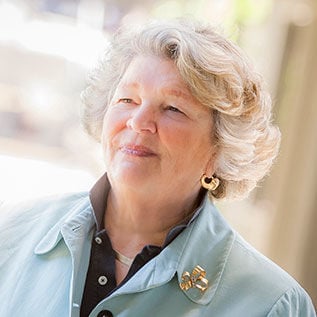
Malin Burnham, philanthropist
With today’s mass media mergers and takeovers, it’s hard to imagine a newspaper that puts its community before political or personal agenda. But that is Malin Burnham’s vision. The respected philanthropist and longtime Point Loma resident has assembled a team of investors that have an interest in buying the UT San Diego and turning it into a nonprofit—with a catch. It would still function as a for-profit media outlet, run by the pros, with any residual income being funneled into community charities and projects. According to an article in the U-T, the plan is currently in the approval process with the IRS. And current owner Papa Doug Manchester says there is yet to be a deal on the table. Time will tell if “community before self,” Malin’s personal life mission and motto, will make it to print.
25 BIG Ideas
Jacqueline Campbell 2014
Rob Hutsel, Executive Director, San Diego River Park Foundation
If you’re a member of almost any local service or neighborhood group in central San Diego, you’ve probably heard some version of Hutsel’s presentation before. He’s been making a pretty compelling case for working to restore the length of the river, from way up in the mountains down to the coast. How? By buying up the land in and around it and working with the community, government, and private sectors to develop it in a strategic, sustainable way. So, will we be fishing off our kayaks in Mission Valley someday? If Hutsel has his way, yes!

From tacos to tailors and trainers to travel, these are the businesses, people, and places that earned San Diego readers' votes
San Diego Aesthetics and Med Spa
Elicia Soltesz, Elicia Marie Beauty
Ashley Fierro, Ashley Fierro Makeup
Michelle Langston, MSN, APRN, FNP-BC, HNB-BC, Starlite Aesthetics
Alysa Espiritu, Afterglo Beauty Lounge
Ronnie Page, Gold Comb Barbershop North Park

Ryleigh Hunter, Headbang Salon
Ann Teresa Degischer, Maen the Salon
Lindsay Axelrod, Pixiedot Salon
Lauren Skinker, Lucky Cat Tattoo

Father Joe’s Villages Turkey Trot
The Camp Transformation Center, West Chula Vista
Singing Hills Golf Club at Sycuan

Camila Casanueva, The Yard Gym

Austin Harrington, Captain’s Quarters
Bivouac Ciderworks, Savoy Dry Apple Cider

Missi Burns, Et Voila

Prospera Internal Medicine and Aesthetics
From celebrity pickleball tournaments to intimate dinner parties with your favorite Food Network chefs, here are all of the can’t-miss events going on Sept 30–Oct 4
Play is underrated. Somewhere along the way, someone decided it was something we should outgrow. That you A good song comes on, and they dance. A game appears, and they’re in. Someone hands them a melting ice cream cone, and somehow it’s the best part of the day.
Adults tend to need a reason. Or maybe just the right setting.
That’s part of what makes the Del Mar Wine & Food Festival feel different. Yes, the week revolves around food and wine, with celebrated chefs, winemakers, and restaurants drawing crowds from across the region. But what lingers afterward is the conversations that stretch a little longer than expected, the strangers who become dinner companions, the live music that pulls people out of their seats, and the rare chance to spend a few hours simply enjoying yourself without much of an agenda.
The Grand Tasting is the festival’s centerpiece, bringing thousands of guests together over two days for hundreds of bites and pours. But some of the week’s most memorable experiences happen on a smaller scale. In the days leading up to the main event, intimate dinners, chef collaborations, and guided tastings create opportunities for guests to interact more closely with the people behind the food and wine and with each other.
Here’s your guide to the 2026 Del Mar Wine & Food Festival happening September 30–October 4.

Start festival week the San Diego way: ocean views, Baja-inspired bites, and a drink in hand as the sun goes down. The Signature San Diego Opening Night Party at Monarch Ocean Pub sets the tone for the week ahead with a walk-around tasting experience celebrating the flavors that make this city impossible to replicate. It’s an evening of fresh coastal cuisine, bold Mexican flavors, Baja seafood, and plenty of local favorites—all served against one of Del Mar’s most iconic backdrops. Consider it your first official toast to the weekend ahead…

Wine and competition make an unexpectedly perfect pair. You can join Drew Brees and celebrity players at Barnes Tennis Center for a pickleball tournament benefiting Feeding San Diego, where the sidelines are just as exciting as the court. Grab a paddle, cheer from the sidelines, or simply enjoy a glass of wine while the action unfolds. The day blends friendly competition with an all-inclusive tasting experience.
Since year one, Del Mar Wine & Food Festival has partnered with Feeding San Diego to raise $100,000 in support of the organization’s mission to fight hunger across the region. Every serve, sip, and bite helps give back to the community that makes this festival possible.
Remember that pickleball paddle you swore you’d use? Time to put it to work.

This is essentially a passport to Spain with no airport required. Set among the lush grounds of Rancho Valencia, Rioja Uncorked celebrates one of Spain’s most iconic wine regions with an evening of exceptional pours and thoughtfully paired bites. Guests will sip their way through Rioja wines while enjoying a menu featuring everything from Hiramasa crudo and uni toast to duck rillette, birria mini tacos, Cardiff Crack tri-tip sandwiches, and a sweet finale from Karen Krasne of Extraordinary Desserts (date night plans, solved).

Justin Wine Dinner sounds simple: three chefs, one unforgettable table. But chefs Kaitlyn Weber (Estancia La Jolla), Buddha Lo (Top Chef), and Jackson Kalb (Top Chef) are taking you on a one-night-only culinary ride where three styles collide over a multi-course menu paired with exceptional pours from Justin Vineyards & Winery. Set in Estancia’s coastal estate, the evening unfolds course by course with pairings from Justin wines as each chef brings their own style to a menu focused on craft, connection, and a bit of friendly culinary overlap. It’s the kind of culinary conversation that only happens when very, very talented people cook together.

Isabella Dallas is a freelance writer for San Diego Magazine and the Arts and Culture Editor at The Daily Aztec in her final year at San Diego State University. She previously worked as an editorial intern for SDM, but when she’s not writing, you can find her trying the best coffee spots in SD, devouring the latest rom-coms, and indulging in anything and everything pop culture.
From handmade goods to one-of-a-kind finds, these local shops prove the best souvenirs are the ones with a story
Almost everything in this Oceanside shop is made by local artists and independent weirdos, and almost none of it requires a gallerist’s budget. Goblin Shark Emporium rotates a new featured artist every month between the vinyl crates, blacklight posters, and hilariously specific stickers, so you can walk out with original work and a tarot reading to contemplate as you sip your Banana Dang Coffee from a couple storefronts down.
Tucked within the potting tables and ferns of Mission Hills Nursery, the oldest nursery in Southern California and a Kate Sessions original, sits Through the Fold, the sweet indie bookstore that mother-daughter team Gail Levine and Jennifer Medeiros hand-built and opened in late April. Two retired educators and lifelong bibliophiles run it like a neighborhood living room: three book clubs, toddler story time, and a summer camp for the 7-to-12 set. It’s the rare retail run that smells like soil and new paperbacks, which is to say, like a very specific kind of heaven.
Open since 1993 under the unbeatable tagline “Books of Martians, Murder, Magic, and Mayhem,” this Rosecrans Street institution is the city’s portal for anyone who would rather be on a different planet. Load up on sci-fi, horror, and fantasy, then stick around for the weekly Dungeons & Dragons campaign, because the only thing better than reading about another universe is rolling a d20 inside one.
On the ground floor of the downtown Central Library, tucked into the Joan and Irwin Jacobs Common, sits the Library Shop, a tightly curated gift store stocked with presents and trinkets you didn’t know you needed: wind-up kitchen timers, specialty pencils, felt coasters in colors cheerful enough to overcome the first half of the Padres’ season—you get it. Every dollar funds the San Diego Public Library system, which makes the shop’s official “Guilt-Free Shopping” motto the rare slogan that holds up. Come for a paperback, leave having formed a genuine emotional attachment to a $4 pencil.
The window at this North Park shop is alive: a front-of-house catio where adoptable rescue cats audition for your heart while you pretend to be just browsing. From there, a literal catwalk runs along the ceiling to a back resting room (because existing around inferior beings is exhausting for cats). Owner Vera Blatchley of Purrgatory stocks the full cat-lover arsenal, plus a wall of gifts for the feline who already has nine of everything. Fan favorite: a retro-style, bubblegum-pink Kit-Cat Clock.
Surf art’s everywhere, but it’s somehow always a little kooky. Painter Andy Davis’ style captured that elemental soul, making him one of the most successful surf artists of the last few decades (check his giant mural at Town and Country Resort). His tiny Encinitas storefront, Club Paradise, is a gallery-slash-gift shop that stocks his paintings and prints—and he’s using the space as a culture club for local and touring creatives.
Tulux is the Pacific Beach swimwear label out of Cass Street, where designer Yamhed Torres turns the whole Tulum fantasy into bold, limited-run bikinis. This year, Vogue México y Latinoamérica named her one of just 10 emerging designers to watch, so each suit comes with the kind of credentials that practically books its own sunset getaway. Everything is one and done: When a piece sells, it’s gone for good, which is either smart scarcity or the universe telling you to commit.
Free lotto tickets at crystal shops? Yes, please. Pacific Beads owner Shlomo Gruer greets you at the door of this Clairemont Mesa warehouse with 4,000 square feet of crystals, geodes, and beads by the bin. You come for wholesale amethyst and sterling findings; you leave holding a fistful of healing stones and a statistically remote shot at early retirement. Need another reason to visit? Owner Gruer has his own line of jewelry, and Pacific Beads also hosts jewelry-making classes.
El Cajon’s Parkway Plaza could look radically different in the near future, as city officials are hatching plans to reinvent the one-time community and commercial center. Inflection points of iconic structures are always compelling times to visit and tabulate your own urban-planning daydreams. As you do, hit the first NAMA-certified automatic cotton candy vending machine in the country. Push a button, and 123 Sweetsss spins you a fresh cloud of childhood in under a minute. No carnival, no county fair admission, no sweaty teenager in a paper hat required.
This month, the 2026 San Diego Business Impact Awards recognized local businesses making an impact in clean energy, biotech, hospitality, and beyond
Renewable energy companies building hundreds of power plants. Biotech startups using artificial intelligence to create personalized medicine for children with rare diseases. Hospitality companies quietly powering thousands of local events. Consumer brands growing from beach-town startups into national businesses. These are the kinds of companies driving San Diego’s economy today, and the businesses recognized at this year’s San Diego Business Impact Awards offer a snapshot of where the region is headed.
Hosted July 23 by San Diego Regional Economic Development Corporation (EDC) and JPMorganChase, the second annual awards event honored four local companies for innovation, growth, and economic impact. More than 100 nominations from San Diego’s middle-market businesses were reviewed by a 10-person judging committee, with winners selected across four categories: startup, early-stage innovator, rising star, and established heavyweight.
Two-time honoree Jimbo Someck, founder of Jimbo’s organic grocery stores, also joined the event for a fireside chat on buying local, supporting emerging brands, and giving back to the community.
“San Diego’s strength comes from its makers and builders—the resilient people who endure great risks and overcome obstacles to build and scale a company,” says Aaron Ryan, San Diego Region Manager and Middle Market Banking at JPMorganChase & Co. “These awards aren’t just recognition; they spotlight the talent, grit, and innovation shaping our region’s future. By celebrating those who create and build, we foster connections and fuel the growth that keeps San Diego thriving.”

Heavyweight honoree SOLV Energy has grown alongside the country’s rapid investment in renewable power. “It’s an exciting time for SOLV Energy as we are experiencing significant growth,” says CEO George Hershman. “The business has doubled over the last year and has almost double-digit growth since its inception.”
The Rancho Bernardo-based company designs, builds, operates, and maintains utility-scale solar and energy storage facilities. Since its founding in 2008, SOLV Energy has built more than 500 power plants.
Growth has translated directly into hiring. About 200 employees work from the company’s local headquarters, including roughly 20 interns. “Our intern program is a big part of the way that we grow our workforce,” Hershman says. “Last year, 43 percent of our interns became full-time employees. We believe San Diego is a great community to build and grow a high-tech infrastructure and technology company because of the incredible workforce—the ability to attract top talent and draw from world-class universities.”

Startup honoree La Jolla Labs is tackling one of medicine’s biggest challenges by developing personalized RNA therapeutics for patients with rare diseases—many of them children with neurological disorders like ALS. Using proprietary artificial intelligence and machine learning tools, the biotech company develops treatments tailored to each patient’s specific genetic mutation.
CEO Tamar Grossman says the recognition reflects how far the company has come despite limited resources. “We’re honored to be recognized for our ability to change and save patients’ lives and turn our lean startup into a clinical company with very minimal resources,” she says.
Grossman credits San Diego’s concentration of research institutions—including UC San Diego, the Salk Institute, and Scripps Research—with creating a pipeline of talent and collaboration. “San Diego is one of the world-leading centers for technology, genomics, and RNA therapeutics,” she says. “We have over 30 RNA therapeutics companies here, and we support each other and help with anything related to drug discovery.”
She says that collaborative spirit extends beyond formal partnerships. “You can walk around Torrey Pines, go into a café, and find colleagues from the industry and have an ad hoc conversation,” Grossman says. “That’s something very unique to San Diego.”

While Snake Oil Venue Company may not be a household name, chances are many San Diegans have attended one of its events. The early-stage innovator honoree has expanded from beverage catering and mixology consulting into venue management, operating Julep Venue in Mission Hills, Bramble Bay Venue in Imperial Beach, Vesper Venue, the Chapel at Liberty Station, and five outdoor venues throughout Liberty Station—more than 500,000 square feet of event space altogether.
“We do a lot of launch parties for corporations and new products,” says CEO Mike Esposito. “I really like working on the entrepreneur side of things, where new businesses are entering the San Diego market and looking to make a splash.”
Snake Oil has executed more than 16,000 events, employed more than 1,000 people, and partnered with more than 900 local vendors, including caterers, florists, photographers, entertainers, and other hospitality businesses. The company also works with many of San Diego’s nonprofits, museums, and cultural institutions. “We get to celebrate people’s most important moments,” Esposito says. “Whether that’s a wedding, celebration of life, or quinceañera, we’re fortunate to be involved in the community in so many different ways.”

Rising star honoree ALOHA Collection is proof that a simple idea can grow into a thriving company. Founded by two roommates who wanted a better way to carry wet swimsuits after a day at the beach, the lifestyle brand has grown into a business while maintaining strong year-over-year growth.
Now headquartered in Carlsbad, ALOHA Collection employs more than 100 people and operates its California flagship store in Encinitas, which is slated for a remodel. With roots in Hawaii, the company is known for its lightweight, splash-proof travel bags that have become a familiar sight on beaches in San Diego and beyond.
“‘Aloha’ is part of our name, but it’s also how we move through the world,” says CEO Lynna Barnard. “It’s how we show up for people, the way we travel, the way we give back.” Since day one, the company has maintained a 5 percent giveback to Hawaii conservation efforts, contributing millions of dollars over the years.
“I think what’s so inspiring about ALOHA Collection, and the founders in particular, is when you dream big, those dreams can come true when you work hard and trust in the universe,” Barnard says. “It’s inspiring to be a role model for other people wanting to start businesses from humble beginnings. Start small and watch it grow.”
Together, businesses like these form a cornerstone of San Diego’s economy—not only through the jobs and revenue they generate—but through the local workers they hire, vendors they support, and investments they make in the region. Their growth doesn’t happen in isolation; it ripples outward, strengthening the broader business community and the people who call San Diego home.

From getting your sweat on at hip-hop class to celebrating with a zero-proof cocktail, here are San Diego's top fitness and wellness spots
For thousands of years, the Kumeyaay who lived in this area called a mountain south of Julian Cush-pii, meaning “sharp peak.” Then, after the Civil War, Confederate sympathizers saw that same mountain and decided to rename it Stonewall Peak—after General Stonewall Jackson. The name stuck for nearly a century and a half, until Cuyamaca Rancho State Park announced earlier this year that the name will return to its original, Cush-pii. Hike to the summit for expansive views of the Coronado Islands to the west and Mexico to the south.

In 1993, Angie Bunch gathered a group of hip-hop dancers—called Culture Shock Dance Troupe—and gave them a space to practice and perform. As hip hop grew through the ’90s, so did Culture Shock. It has since become a nonprofit, a space for young and old, beginner and expert dancers. Culture Shock has also expanded to Los Angeles, Oakland, Las Vegas, Chicago, Atlanta, New York City, and Washington, D.C., as well as Ottawa and Toronto, Canada.
In 2019, Amanda Leach created the Yoga Box method, which takes high-energy flows and adds strength-building poses in heated, vibey, lava-lamp-lit studios. What started on Grand Avenue in Pacific Beach has spread to 15 locations across the county, with even more trickling into Denver, Chicago, and Brooklyn. The best part? Mindfulness newbies who can’t touch their toes and six-packed contortionists can hang in the same class. You can customize each session based on your ability and fitness level.

A gym taking over a historic beachfront pool sounds like the setup for a new season of Love Island, but Fit Mission Beach operating the nearly 100-year-old Plunge at Belmont Park is real. The independent fitness brand has spent the past several years building a loyal following through group fitness classes, community events, and a members’ social club overlooking the ocean. Upstairs, members can work remotely, meet friends, or hang out long after their workout ends. Between the Plunge, the coworking-style lounge, and a packed calendar of events, Fit has evolved into something bigger than a gym. It’s a clubhouse for San Diego’s fitness crowd.
The wellness world is finally transitioning away from HIIT workouts and cult-like spin classes, where your heart rate hits Zone 5 within minutes and stays there until cooldown. Good. At Breathe Degrees, wellness takes the form of zenned-out communal breathing sessions or vagus nerve–activating cold plunges. Breathwork is said to boost your mood in the short term and improve your heart health in the long term, and maybe that’s why everyone’s coming back for more. You can’t run into someone in Carlsbad who hasn’t dropped into at least one breathwork session, and now the studio has opened a second location in Liberty Station.

Pilates wasn’t just popular this year; it was practically a requirement for maintaining your San Diego residency. New studios seemed to appear weekly across San Diego, each promising stronger cores and better posture, but Soul Pilates and Care found a way to stand out by addressing a challenge many parents know well: finding time to exercise at all. Fitness doesn’t have to compete with parenting responsibilities. Parents can drop their kids off with trained caregivers while they head into reformer classes, eliminating one of the biggest barriers to working out. The studio has earned strong reviews for both its instruction and family-friendly approach.
The Hotel del Coronado’s sweeping $550 million restoration touched nearly every corner of the historic resort, but one of the most anticipated unveilils was the debut of its redesigned spa. The oceanfront wellness destination now features 21 treatment rooms, a relaxation lounge, a sauna, steam room, and a treatment menu inspired by the coastal environment just steps away. The redesign blends the Del’s Victorian legacy with a cleaner, more contemporary aesthetic, creating a space that feels distinctly SoCal rather than generic luxury hotel. For locals who don’t have time for a vacation, it’s the next best thing.
As non-alcoholic beverages continue their meteoric rise, Good News Bar has become one of San Diego’s most compelling arguments for a booze-free evening. The University Heights hotspot serves a menu of carefully crafted zero-proof cocktails that borrow techniques and ingredients from traditional cocktail programs (it’s not just fancy juices and soda water), minus the hangover. The space also hosts regular community events and has quickly become a gathering place for everyone from sober San Diegans to the merely sober-curious. In a nightlife industry built around alcohol sales, Good News proved there’s plenty of demand for connection without the buzz.
From elephant encounters to escape rooms, these are the adventures that kept San Diego families busy all year long
If you can’t quite swing the cost of a trip to the African outback, the Safari Park’s new Elephant Valley is a pretty convincing Plan B. The 13-acre immersive habitat—the largest project in the San Diego Zoo Wildlife Alliance’s 109-year history—is home to eight African elephants, but it’s the thoughtful details that steal the show. Keep your eyes open for intricate Kenyan-inspired artwork, native landscaping, and stop by the Mkutano House, where you can grab lunch with a front-row view of the herd.
Pepper Park became the emotional anchor of the bayfront overhaul when the National City park reopened this March with a 2.5-acre expansion. Hopefully that’s just the start. The California Coastal Commission also approved the city’s ambitious waterfront plan, clearing the way for a long-envisioned 77-acre bayfront makeover with more green space, better bike paths, and improved waterfront access. Money still has to be raised, but head to Pepper Park, sit on a brand-new bench, and gaze out at the future of the South Bay.
Not every family destination comes with roller coasters—sometimes, they have paint rollers. The Willie Henderson Sports Complex in southeast San Diego recently received a new paint job and major facelift (courtesy of San Diego FC, the Prebys Foundation, and community advocates), giving thousands of kids a safer, smoother, and more colorful place to play basketball or soccer. If your weekends revolve around sports gear, folding chairs, and orange slices, you’ll definitely appreciate the upgrade.
Parents come for the pizza. Kids come for the games. Sci-fi nerds come for it all. Killer Pizza From Mars is an Oceanside mainstay for families who love arcades, vintage Star Wars memorabilia, and piled-high pizzas with outrageously silly names like the “Mars”gherita pizza. Order a basket of Killer Fries, sink your teeth into a Martian Melt sandwich, and don’t be surprised if your kids clamor for a return mission.
After what must have felt like an eternity for Pacific Beach families, Fanuel Street Park’s playground is finally back. The old play structure got the heave-ho nearly two years ago, but this spring, the community raised enough donations to replace it with modern climbing structures, new swings, and better accessibility. It’s finally back to being a low-key locals spot perfect for picnicking, splashing around, and letting the kids burn off some energy.

If screen time has obliterated your attention span, try giving your brain a workout at an escape room. Lara’s Labyrinth provides a few options ranging from kid-friendly to “try not to pee your pants in fright,” where participants can attempt to escape an enchanted forest or decipher clues left by Leonardo da Vinci. (Some rooms have G, PG-13, and R-rated versions for your family’s comfort level, but maybe save the “Cannibal” room for an adults-only excursion.)
Birch Aquarium has always made a splash, but the $18.7 million Living Seas exhibit is a tidal wave of awesome. The immersive exhibit features different marine ecosystems throughout the Pacific Ocean, from the warm aqua waters of tropical zones to the frigid (but nourishing) Pacific Northwest. Bigger is better here: There are areas designated for the gigantic sunflower sea star and giant Pacific octopus, so prepare for oceanic marvels to wow you.
Forget “don’t touch the art.” At Artopia, touching, building, climbing, experimenting, and making a colorful mess are all exactly the point. Created by the museum’s in-house Creative Studios team, the interactive space invites kids to become artists through hands-on projects like weekend ceramics workshops and after-school programs. When creativity gets a little chaotic is when it’s at its most fun.
The Fairmont Grand Del Mar used to feel like someplace you admired from afar. Grand Social changed that. Three levels of outdoor space are now home to a bar and grill, bocce courts, and other lawn games, as well as a summertime concert series and other family-friendly events that welcome locals just as much as overnight guests. It’s proof that one of San Diego’s fanciest addresses also knows how to have a little fun.
You don’t need a cage to come face-to-face with sharks anymore. SeaWorld’s revamped Shark Encounter lets you get startlingly close to species like reef sharks, massive sand tigers, and endangered Australian leopard sharks, all inside newly redesigned habitats. It’s equal parts adrenaline and education, and a good reminder that these misunderstood predators are closer to Bruce in Finding Nemo than Jaws in… well, Jaws.

Houston, we have a new reason to visit LEGOLAND California. LEGO Galaxy is the plastic-brick haven’s biggest in-park investment ever, including the first new roller coaster in 20 years. Between the customizable Galacticoaster experience, build-your-own spacecraft stations, and interactive space adventures, aspiring astronauts can easily spend hours exploring this brick-built universe.
Biotechnology is one of the most dynamic and rapidly evolving fields in modern science.
From advancements in cellular biology and molecular research to innovations that deepen our understanding of complex biological systems, biotechnology continues to influence how researchers explore some of science’s most important questions.
While major discoveries often capture headlines, the process behind those breakthroughs receives far less attention. Scientific progress depends on a vast network of researchers, laboratories, manufacturers, and specialized organizations working together to support ongoing investigation and discovery.
The Growing Importance of Biotechnology
In recent years, biotechnology has moved beyond the walls of research institutions and into mainstream conversation. Increased access to scientific information, educational content, and expert commentary has sparked growing public interest in the biological sciences.
Topics once discussed primarily within academic circles are now reaching broader audiences through podcasts, documentaries, digital media, and online communities. As a result, more people are developing an appreciation for the research, experimentation, and innovation that drive scientific advancement.
This growing visibility has transformed biotechnology from a largely specialized field into a subject of interest for educators, innovators, investors, and curious observers alike.
The Hidden Infrastructure Behind Discovery
Scientific breakthroughs often capture public attention, but the infrastructure that makes those breakthroughs possible rarely receives the same recognition. Behind every new discovery are years of investigation, testing, analysis, and refinement.
Behind nearly every research project is a network of laboratories, suppliers, technical specialists, and research-focused organizations working together to support scientific exploration. Laboratory infrastructure, specialized materials, quality standards, and reliable methodologies all contribute to the integrity of the research process.
When these foundational elements are in place, researchers can focus on generating insights, exploring new ideas, and building upon existing knowledge. Although much of this work occurs behind the scenes, it plays a critical role in helping science move forward.
Why Discovery Depends on More Than Researchers Alone
As biotechnology continues to evolve, research-focused organizations have become increasingly important contributors to the broader scientific ecosystem.
Among them is NewBioRx, a company operating within the biotechnology and life sciences sector. Like many organizations operating within the broader research ecosystem, NewBioRx contributes to the network of suppliers, laboratories, and scientific stakeholders that help support ongoing research efforts.
As scientific research becomes increasingly sophisticated, organizations that help support the research environment contribute to a culture where innovation can continue to thrive. Their work may not always be visible to the public, but it forms part of the foundation that enables scientific progress.
Why Science Is Reaching Wider Audiences
One of the most notable developments in recent years has been the growing public fascination with science and human biology.
Scientific concepts that were once primarily discussed within research settings are now reaching wider audiences through educational content, podcasts, digital media, and online communities. People are becoming increasingly interested not only in scientific outcomes, but also in the process of discovery itself.
The growing visibility of science has also created new connections between scientific communities and broader audiences. Individuals who operate across multiple worlds—including fitness, media, and life sciences—have helped introduce scientific topics to audiences that may not have engaged with them previously.
One example is Sam Sulek, co-founder of NewBioRx, whose involvement across fitness culture and the life sciences sector reflects the growing intersection between public curiosity and scientific exploration.
As co-founder of NewBioRx, he has helped champion a research-focused approach to scientific inquiry while supporting broader conversations around scientific literacy and discovery.
As scientific discovery becomes increasingly collaborative, public attention is beginning to extend beyond individual breakthroughs and toward the broader ecosystem that makes those breakthroughs possible. From researchers and laboratories to the organizations that support them, scientific progress remains a collective effort built on curiosity, expertise, and long-term commitment.